CH 40 Basic Principles of Animal Form and Function
 Call Kai
 Learn
Learn Practice Test
 Spaced Repetition
 Match
Match Flashcards
 Knowt Play
1/32

Earn XP
Description and Tags
Bio 1270 Molloy Univeristy
Name | Mastery | Learn | Test | Matching | Spaced | Call with Kai |
|---|
No analytics yet
Send a link to your students to track their progress
33 Terms
_______ is proportional to a cell’s surface area, while amount of material that must be exchanged is proportional to ______.
Rate of exchange with environment; Volume of cell.
What evolutionary adaptations that enable more complex organisms to exchange with the environment?
Specialized structures, like lungs or gills, and increased surface area through invaginations or extensive branching or folded structures which allow for efficient gas excahnge and nutrient exchange.
What is the hierarchical organization of body plans?
Cells —> Tissues —> Organs —> Organ Systems
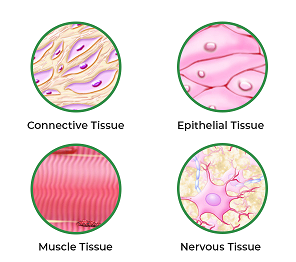
Name the four main types of animal tissues
Epithelial Tissues, Connective, Muscle, Nervous
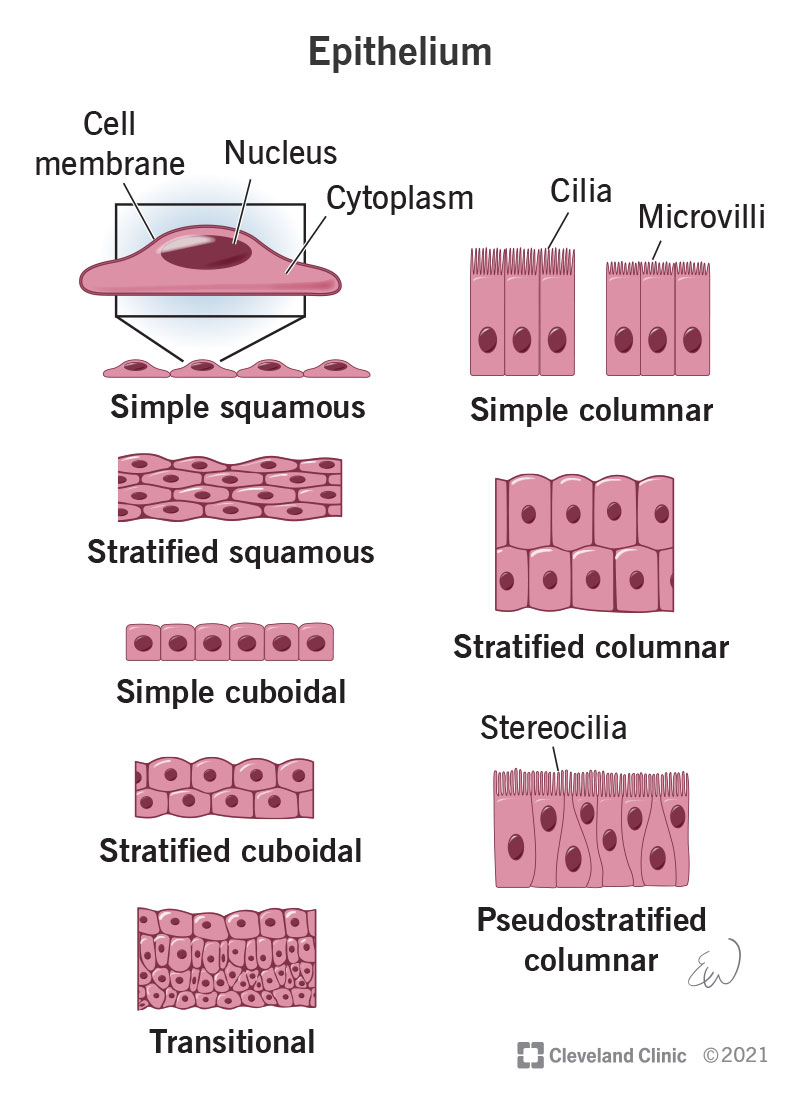
Epithelial Tissues:
Covers the outside of the body
lines the organs and cavities within the body
contain closely packed cells
Shape of the Epithelial Cells
Cuboidal (dice like)
Simple Cuboidal Epithelium: A single layer of cells specialized for secretion and absorption, commonly found in kidney tubules, thyroid follicles, and gland ducts.
Stratified Cuboidal Epithelium: Multiple layers of cube-shaped cells designed for protection, found in the excretory ducts of salivary and sweat glands
Columnar (like bricks on end)
Simple Columnar: A single layer of tall cells specialized for absorption/secretion (e.g., stomach, intestines).
Pseudostratified Columnar: Appears stratified because nuclei are at different levels, but it is actually a single layer where all cells touch the basement membrane (e.g., trachea).
Stratified Columnar: Multiple layers with apical columnar cells, found in the male urethra and conjunctiva
Squamous (floor tiles)
Simple Squamous Epithelium: A single layer of flat, thin cells, ideal for diffusion, osmosis, and filtration. Examples: Lung alveoli, capillaries, kidney glomeruli.
Stratified Squamous Epithelium: Multiple layers of cells, with flat, squamous cells on the surface and cuboidal/columnar cells at the basal layer.
Keratinized: Found on skin (epidermis); contains protective keratin and is waterproof.
Non-keratinized: Found in moist areas like the mouth, throat, and esophagus
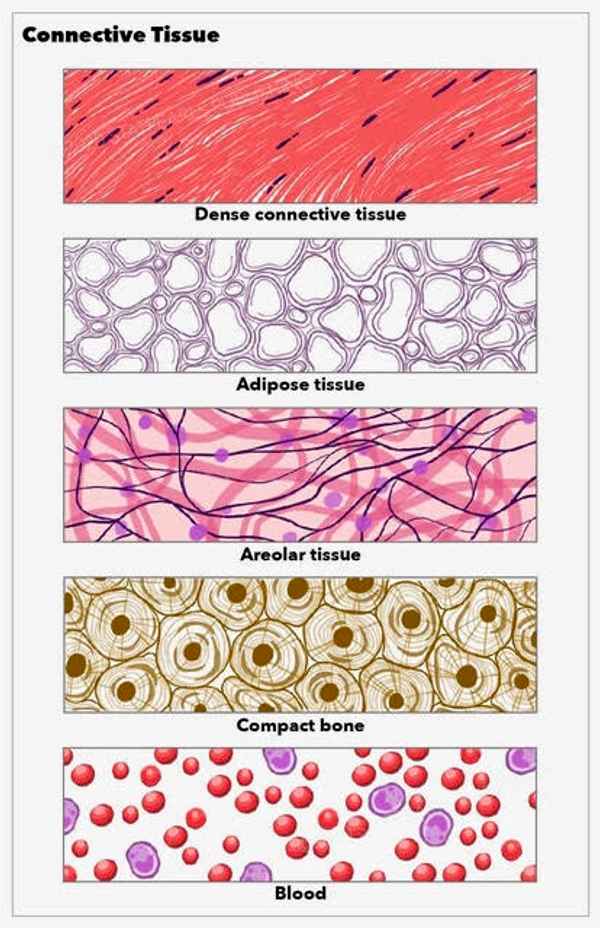
Connective Tissue
holds many tissues and organs together and in place
contains sparsely packed cells scattered through an extracellular matrix
matrix consists of fibers in a liquid, jellylike, or solid foundation
Connective Tissue Proper
Loose (Areolar, Adipose, Reticular)
Pads organs, stores fat for fuel, and provides immune defense
Dense (Regular, Irregular, Elastic)
Form tendons and ligaments; provide high tensile strength
Supportive Connective Tissue
Cartilage (Hyaline, Fibro, Elastic)
Cushions joints and provides flexible structural support
Nose & Ears
Bone (Osseous)
Forms the skeleton; protects internal organs and stores minerals
Fluid Connective Tissue
Blood & Lymph
Transports nutrients, gases, and waster; supports immune function
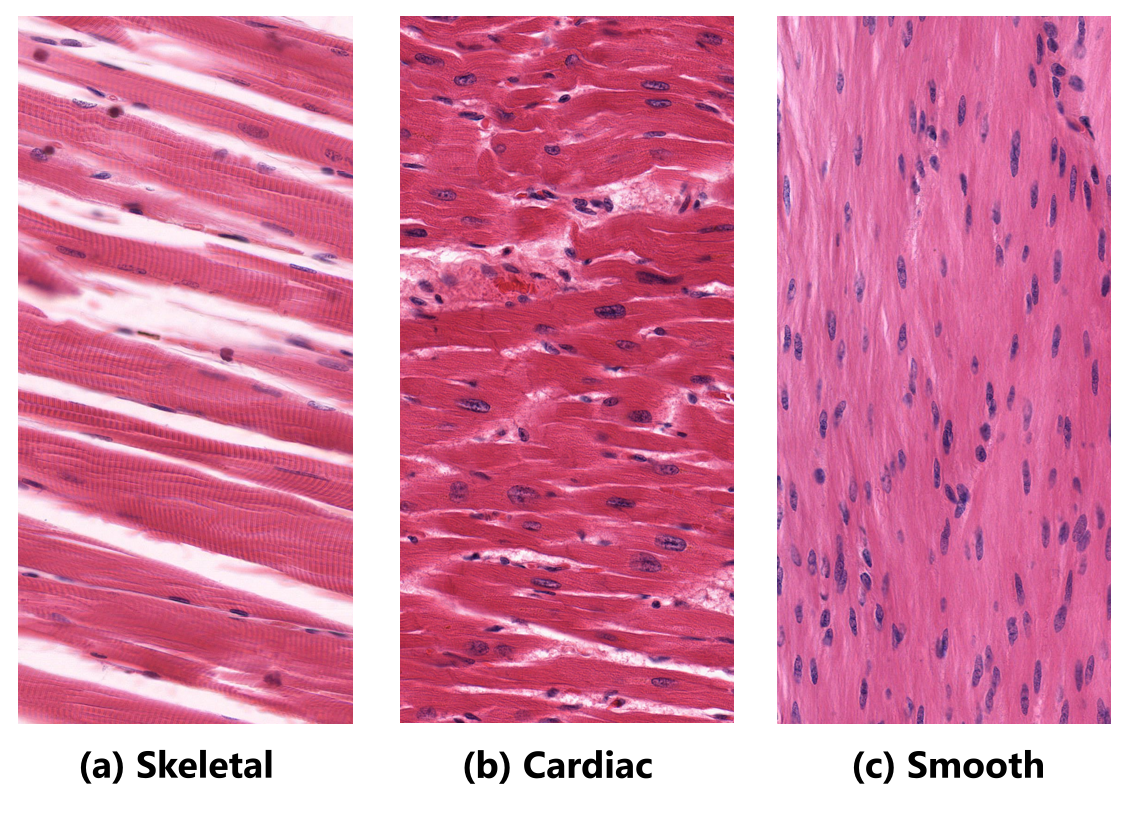
Muscle Tissue
Muscle tissue is responsible for nearly all types of body movement
Muscle cells consist of filaments of the proteins actin and myosin, which together enable muscles to contract
Skeletal Muscle: Striated, long, cylindrical, multi-nucleated fibers attached to bones via tendons. They operate under voluntary control for movement and posture.
Cardiac Muscle: Striated, branched, and uninucleated cells connected by intercalated discs. Located only in the heart, these contract involuntarily to pump blood.
Smooth Muscle: Non-striated, spindle-shaped, and involuntary cells found in the walls of internal organs (e.g., stomach, intestines, blood vessels) to move substances.
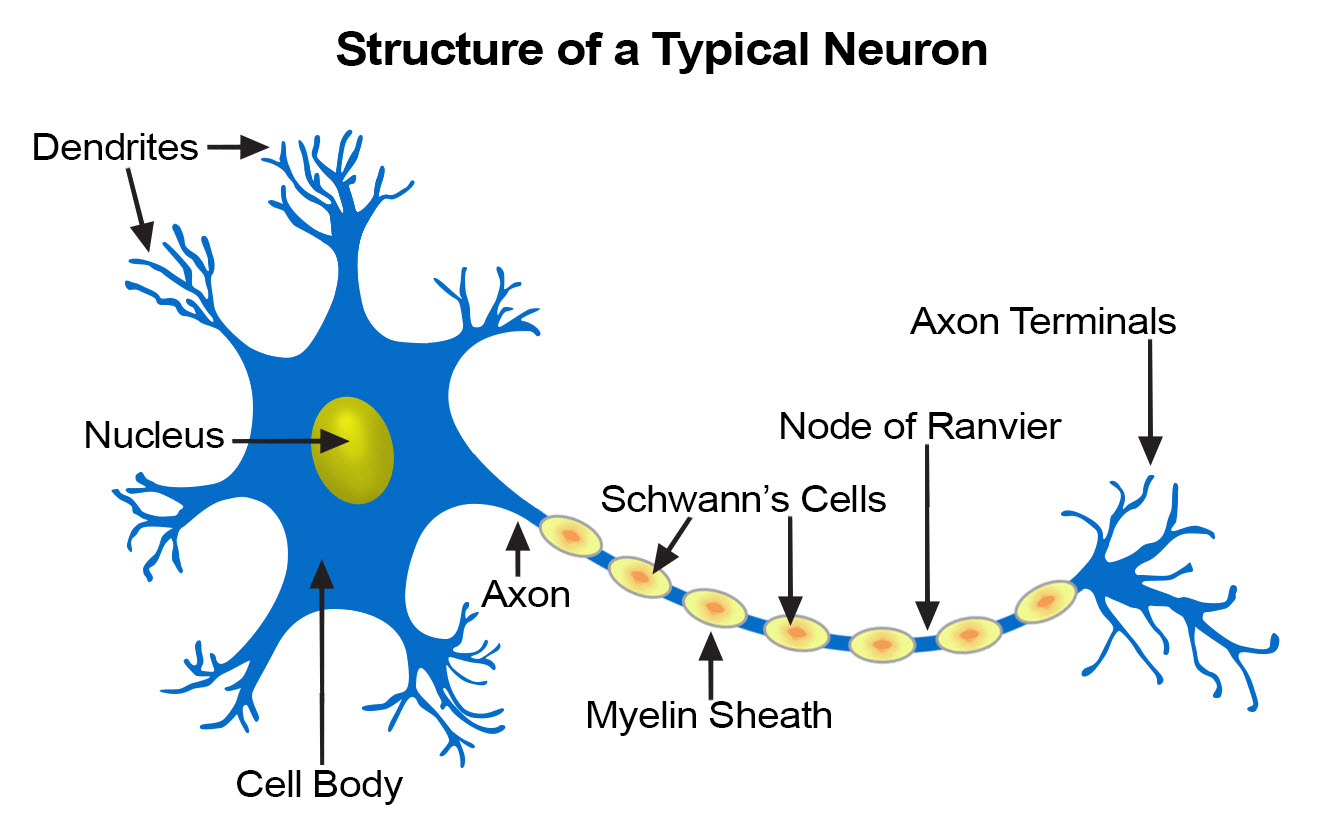
Nervous Tissue
Functions in the receipt, processing, and transmission of information
Nerous tissue contains
Nervous tissue contains
Neurons, nerves cells, which transmit nerve impulses
Glial cells, or glia, which support cells
Found in brain, spinal cord, and peripheral nerves
Where epithelial tissue can be found in an animal?
Covers the outside of the body and lines the organs and cavities within the body; closely packed
Name the three shapes of epithelial cells
Cuboidal (like dice) (flat)
Columnar (like brick on end) (Cube-Like)
Squamous (like Floor Tiles)(Tall)
Name the two major proteins in muscle filaments
Muscles cells consist of filaments of the proteins actin and myosin, which together enable muscles to contract
List the functions of Nervous Tissue
Senses stimuli, processes information, transmits signals
Name the two types of cells in the nervous tissue and define their functions, respectively
Neurons, or nerve cells, which transmit nerve impulses, transmit signals
Glial cells, or glia, which support cells, nourish, and protect neurons
Name the two major systems for coordinating and controlling responses to stimuli in animals and define their functions, respectively.
The endocrine system releases signaling molecules that are carried to all locations in the body, signaling via hormones, slower but long-lasting
The nervous system transmits information along dedicated routes, connecting specific location in the body, rapid signaling via neurons, fast responses
Compare the endocrine system with nervous systems: signaling molecules. duration/speed, targets and suited responses
Signaling Molecules
Endocrine
Hormones
Nervous
Neurotransmitters
Speed/Duration
Endocrine
Slow, Long-lasting (minutes, hours)
Nervous
Fast, Short-lived (seconds)
Targets
Endocrine
Distant Cells, All location in the body
Nervous
Specific Cells, dedicated routes, connecting specific locations in body
Suited Responses
Endocrine
Growth, Metabolism, coordinating gradual changes that affect the entire body
Nervous
Immediate Responses
Then endocrine and nervous system often work in close coordination; both help maintain in a stable internal environment
Define Regular and Conformer
Regulator:
Uses internal control mechanisms to control internal change in the face of external fluctuation.
Regulators use energy to maintain homeostasis
Ex:
Maintain body temperature around 37ºC even if it’s cold or hot —> Humans
Conformers:
allows its internal condition to vary with certain external changes
Ex:
Ectothermic reptiles —> body temperature changes with environmental temperature.
Conformers use less energy, but they tolerate environmental changes.
Define negative feedback and positive feedback
Negative Feedback
is a control mechanism that “damps” a stimulus
plays a major role in homeostasis in animals
homeostasis moderates but doesn’t eliminate changes in the internal environment
Positive Feedback
amplifies a stimulus and does not play a major role in homeostasis
it helps drive a process to completion
Ex: childbirth a mothers uterus contracts more in order to push the baby out
Define Circadian Rhythm
Set points and normal ranges can change with age and show cyclic variation (changes that happen repeatedly in a regular pattern over time).
In animals and plants, a circadian rhythm governs physiological changes that occur roughly every 24 hours.
Define Acclimation
another word for homeostasis
Change in an animal’s physiology as it adjusts to changes in its external environment
Ex: is adaption to changes in altitude
Define Thermoregulation
is the process by which animals maintain an internal temperature within a normal range
Specify endothermic animals and ectothermic animals
Endothermic- animals generate heat by metabolism; birds and mammals are endotherms
Ectothermic- animals gain heat from external sources; ectotherms include fishes, amphibians, nonavian reptiles, and most invertebrates.
Endotherms can maintain a stable body temperature even in the face of large fluctuations in environmental temperature.
Endothermy is more energetically expensive than ectothermy; ectotherms need to consume less food than equally sized endotherms
In general, ectotherms tolerate greater variation in internal temperature
Name the four physical processes that organisms exchange heat
Radiation
Heat is transferred as infrared energy without direct contact
Ex: An animal gaining heat from sunlight
Evaporation
Heat is lost when liquid (like sweat) turns into vapor
Ex: Sweating cools the body
Convection
Heat is transferred through the movement of air or water
Ex: Wind carrying heat away from the body
Conduction
Heat is transferred by direct contact between objects
Ex: An animal losing heat when ling on cold ground
List the components in the integumentary system
Skins
Hair
Nails
Sweat glands
Sebaceous glands (oil)
List the five adaptations help animals thermoregulate
Insulation
Fur, feathers, or fat that reduces heat loss.
Circulatory adaptations
Changes in blood flow (like vasodilation and vasoconstriction) to control heat loss or retention.
Evaporative cooling
Cooling by evaporation, such as sweating or panting.
Behavioral thermoregulation
Behavioral responses like moving into shade, basking in the sun, or burrowing.
Metabolic heat production
Adjusting metabolic heat production, such as shivering to generate heat.
List the body parts that serve for insulation purposes
Skin
Feathers
Fur
Blubber
Insulation is a major thermoregulatory adaption in mammals and birds
It reduces the flow of heat between an animal’s body and its environment
Insulation is especially important in marine mammals such as whale and walruses
Specify countercurrent exchange
Is a thermoregularion mechanism where heat is transferred between fluids (usually blood) flowing in opposite directions to reduce heat loss and conserve body heat.
Key points:
Blood vessels are arranged so that warm blood leaving the body core flows next to cooler blood returning from the extremities.
Heat moves from the warm blood to the cooler blood, warming the blood going back to the core.
This helps maintain body temperature while minimizing heat loss to the environment.
Ex:
Found in marine mammals, birds, sharks, fishes, and some insects.
It helps animals keep vital organs warm, especially in cold environments.
Related thermoregulation processes:
Vasodilation: Blood vessels widen → more blood flows to the skin → heat loss increases.
Vasoconstriction: Blood vessels narrow → less blood flows to the skin → heat loss decreases.
What are the cooling mechanisms in mammals?
Evaporative cooling – When the environmental temperature is higher than body temperature, evaporation helps prevent the body from overheating.
Sweating or bathing – Moisture on the skin evaporates and removes heat from the body, helping cool the animal.
Panting – Rapid breathing increases evaporation from the respiratory surfaces (mouth and lungs), which helps cool the body.
Vasodilation – Blood vessels near the skin widen, increasing blood flow to the surface so more heat can be lost to the environment.
Name the thermoregulation center in mammals and list its functions
Thermoregulation center in mammals:
Hypothalamus
Functions of the hypothalamus in thermoregulation:
Acts as the body’s thermostat by sensing changes in body temperature.
Receives signals from temperature sensors in the body and skin.
Triggers heat-loss mechanisms when the body is too warm (for example sweating and vasodilation).
Triggers heat-producing mechanisms when the body is too cold (such as shivering and vasoconstriction).
Regulates fever during infections by raising the normal temperature set point.
Coordinates responses that help maintain a stable internal body temperature (homeostasis).
Specify Bioenergics
the overall flow and transformation of energy in an animal
determines an animal’s nutritional needs, and it relates to an animal’s size, activity, and environment
Specify Metabolic Rate
the sum of all the energy an animal uses in a unit of time
Can be determined by:
animal’s heat loss
the amount of oxygen consumed or carbon dioxide produced
Measuring energy content of food consumed and energy lost in waste products
Define Basal Metabolic rate and Standard metabolic rate
Basal Metabolic Rate (BMR): The metabolic rate of an endotherm at rest, with an empty stomach, not under stress, and measured within a comfortable temperature range.
Standard Metabolic Rate (SMR): The metabolic rate of a fasting, non-stressed ectotherm at rest measured at a specific temperature.
Key point: Ectotherms generally have much lower metabolic rates than endotherms of similar size.
List the factors that influence metabolic rate
Age
Sex (gender)
Body size (mass)
Activity level
Temperature
Nutrition
Additional points:
Metabolic rate is roughly proportional to body mass³⁄⁴ (m³⁄⁴).
Smaller animals have higher metabolic rates per gram than larger animals.
Because of this, smaller animals also have:
Higher oxygen delivery rates
Faster breathing rates
Faster heart rates
Greater relative blood volume
Define torpor, hibernation and estivation
Torpor: A physiological state of reduced activity and metabolism that helps animals conserve energy during unfavorable conditions. Many small mammals and birds show daily torpor.
Hibernation: A long-term form of torpor used to survive winter cold and food shortages. During hibernation, metabolic rates can be about 20 times lower than normal.
Estivation: Also called summer torpor, it allows animals to survive high temperatures and lack of water during hot seasons.

