Quiz 3- Archaic and Classical
 Call Kai
 Learn
Learn Practice Test
 Spaced Repetition
 Match
Match Flashcards
 Knowt Play
1/24

There's no tags or description
Looks like no tags are added yet.
Name | Mastery | Learn | Test | Matching | Spaced | Call with Kai |
|---|
No analytics yet
Send a link to your students to track their progress
25 Terms
Marble statue of a Kouros/New York Kouros
c. 600-580BCE, Athens, archaic
marble
funerary sculpture, lifesized, potential reference to egypt, meant to remind people of his life and connection to family lineage as this would have been made for an aristocrat. not a true portrait, sense of contrapposto, geometric shapes. Well defined muscle but not naturalistic, would have been for sale in a market because it isn’t a portrait, it’s godlike/isotheos, idealized warrior culture.
Anavysos Kouros
c. 550-520 BCE, Athens, Archaic period
Marble
a little larger than lifesize, a powerful Greek motif. Grave markers, used in sanctuaries and rarely represented Apollo like many early archeologists believed. Would have been painted and has even weight distribution in his legs (no contrapposto yet), traditional hair braiding and an archaic smile with sense of aristocratic nobility. An inscription may have paired with him inviting people to stay and mourn, like mourning a life cut short from battle. An ideal body, not a real portrait, intention to sell it on the market outside of Greece
Phrasikleia Kore
- c. 550-530 BCE, Archaic, Athens/Attica
Marble
found in a grave near Athens with an inscription, maybe a funerary statue. Depicts an unmarried virgin, a sema, fluid and holding a lotus which is a symbol of afterlife and death with her lotus crown too. Still has color with very detailed jewlery and sandals, maybe calling back to women and their crafts like weaving
Peplos Kore
530 BCE, archaic, Athens
Eleusis Amphora
c. 650 BCE, end geo early archaic
ceramic
not red black, a funerary marker that was huge and with the bones of a seven year old boy inside. Depicts Odysseus and his men fighting the cyclops on the top from the Iliad that was a very famous motif at the time to replicate. Multiple difference scenes in the bands/registers. On the should, a scene of animals prancing, similar designs found in Syrian pottery at the time (orientalizing period) but also depicting mythological creatures like the gorgons below. Gorgons used to ward off evil, but also just a part of mythology to showcase beauty. Not sure if it was commissioned or just a predecorated amphora
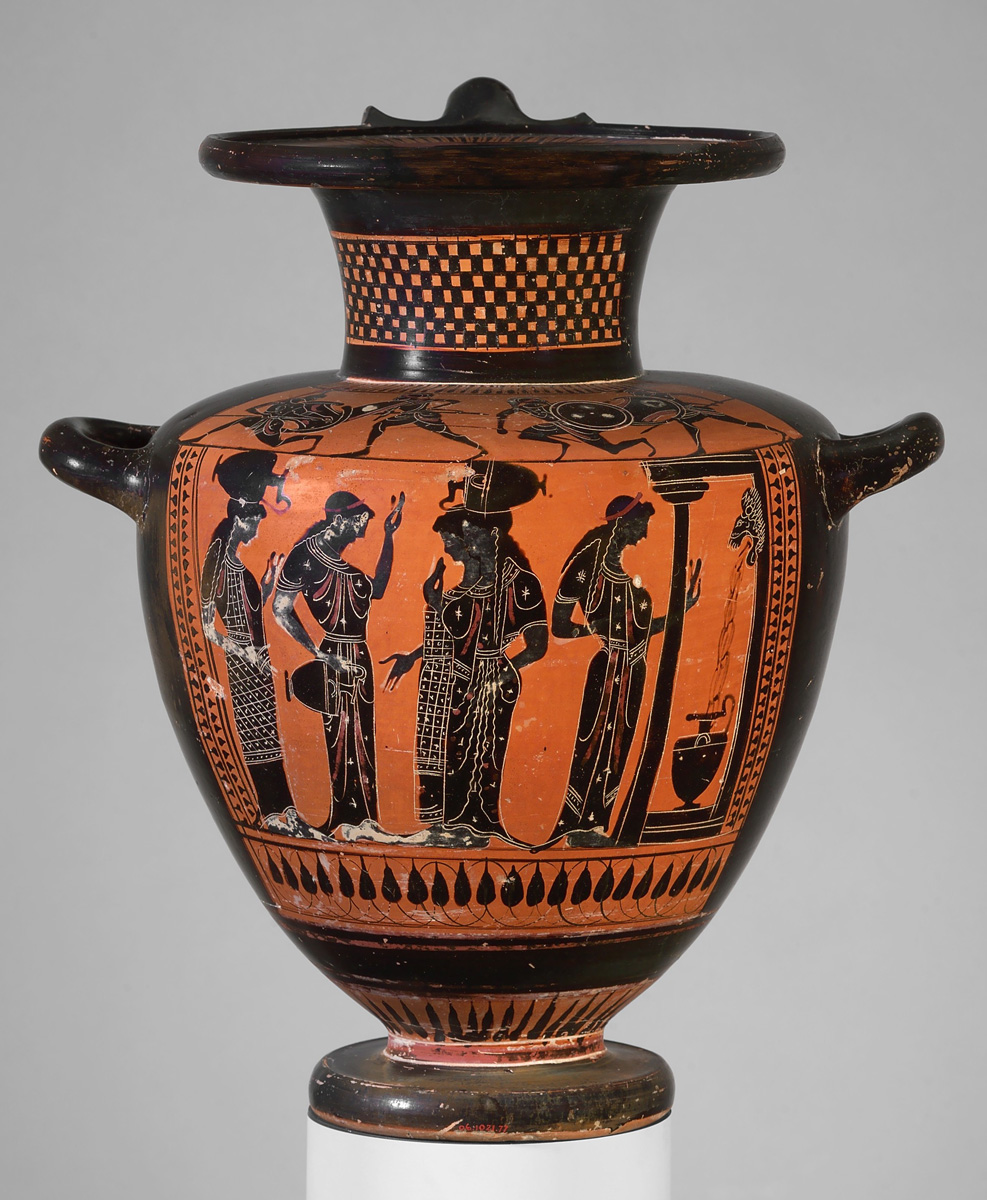
Hydria Women at Fountain House
c. 510-500 BCE, Athens or Vulci (lean to Athens)
ceramic
used to carry water, much like the women are doing. black slip technique where details would be picked out, then everything became red again. Not most expensive pottery, just nice enough. Scenes from both mythology and everyday life, likely mass-produced. Not at a temple, rather some water site. All women carrying the same water vessel, just girls chatting with no men around—the men at the top are unrelated. Greek women weren’t supposed to leave the house alone, mostly men made pottery too, detailed women’s clothing again, potentially ‘free women’ but no freedom.
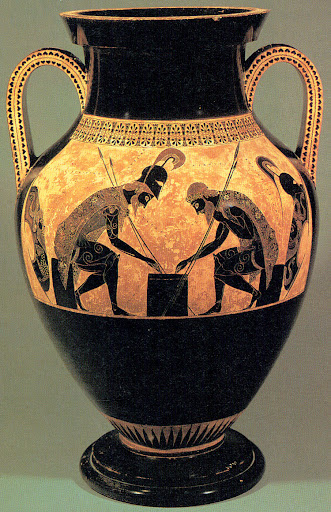
Achilles and Ajax Playing a Dice Game
c. 540-530 BCE, Archaic, Italian
ceramic
Associated with the deceased, Ajax is second best fighter aside from Achilles. Both died in Trojan War, Achilles killed crown prince of Troy out of anger after his friend died by suicide. The two are just playing a dice game, a moment of peace in war and yet tension as the game continues. Achilles rolls a four, Ajax rolls a three, in full profile yet eye is looking outward towards viewer, heavily detailed clothing but less face. Achilles is physically taller and less tense, Ajax squeezing spear tighter
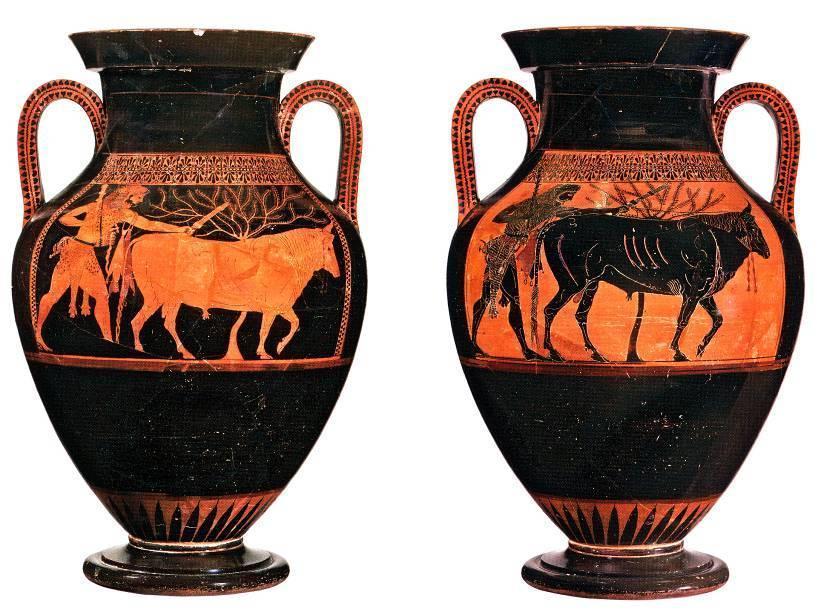
Bilingual Amphora depicting Herakles and the Cretan bull by Andokides painter
525-52o BCE, archaic, Athens
ceramic
tells the story two different ways as two artists made it, one for each side. black figure has more naturalistic features and hair, red figure is less ferocious
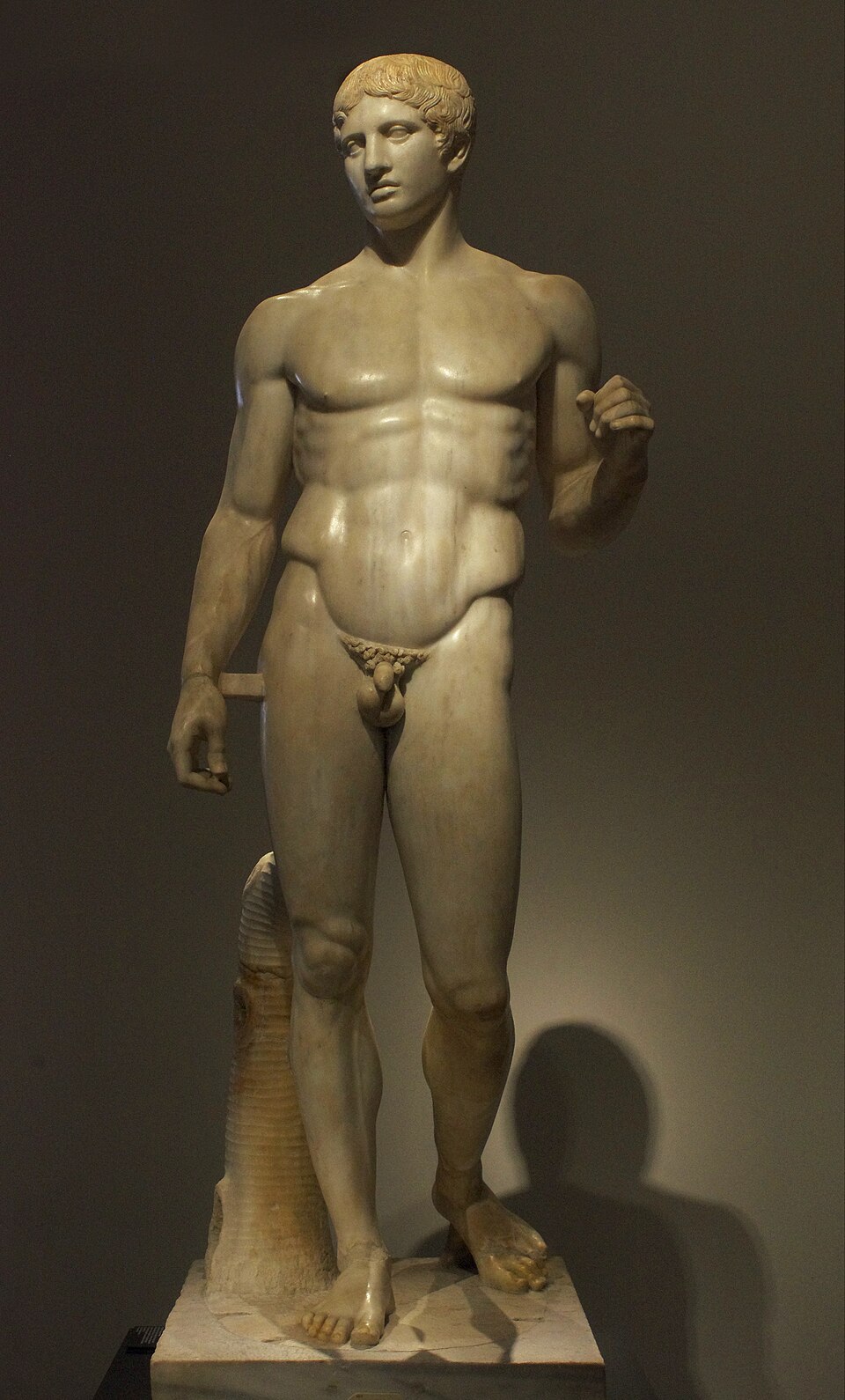
Doryphoros (spear bearer) by Polykleitos
c. 450-440BCE, classical, Pompeii
bronze copy of a marble original
found in a palestra/gym in Pompeii, potentially for athletes to look towards and strive to look like. For the Greeks, the body should be mathematically perfect, every part of the body perfect compared to the others. Original held a bronze spear, a sculpture not about warfare, body is counter-balanced with an s-curve contrapposto for human movement.
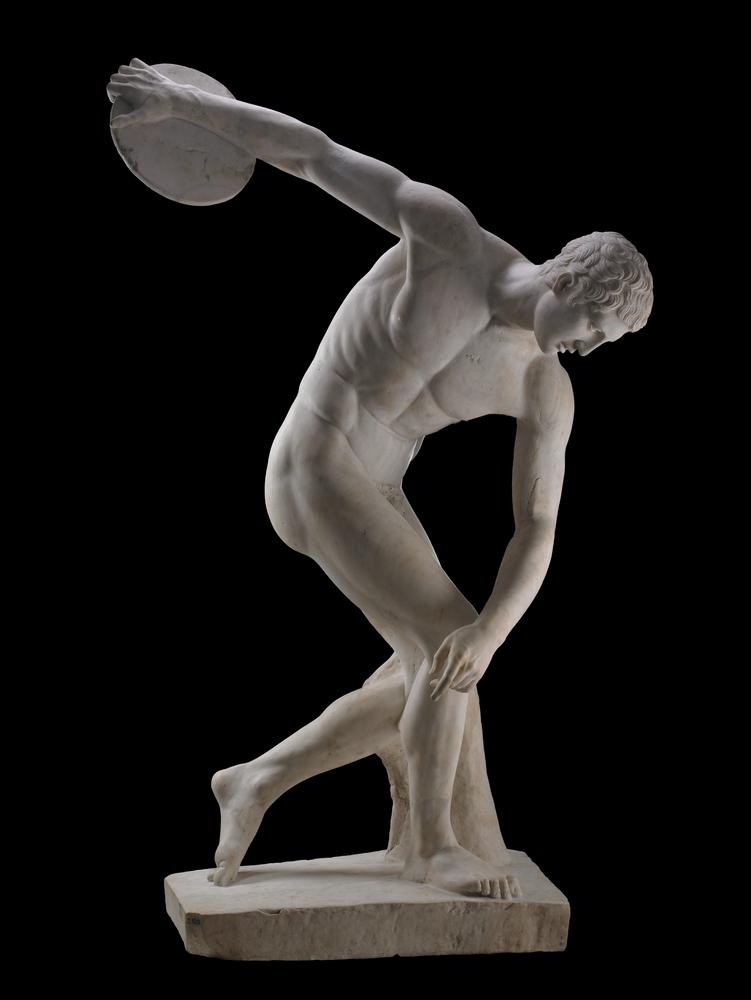
Discobolus (discus thrower) by Myron
c. 450 BCE, classical
roman bronze copy of a marble original
Romans were very infatuated with Greek art. A moment of severe tension, yet still stillness before an action. Balance and harmony, beauty of proportions, careful naturalization. Clenched teeth. Nobility and calm face for the nobility of being a human being. Sophrosune
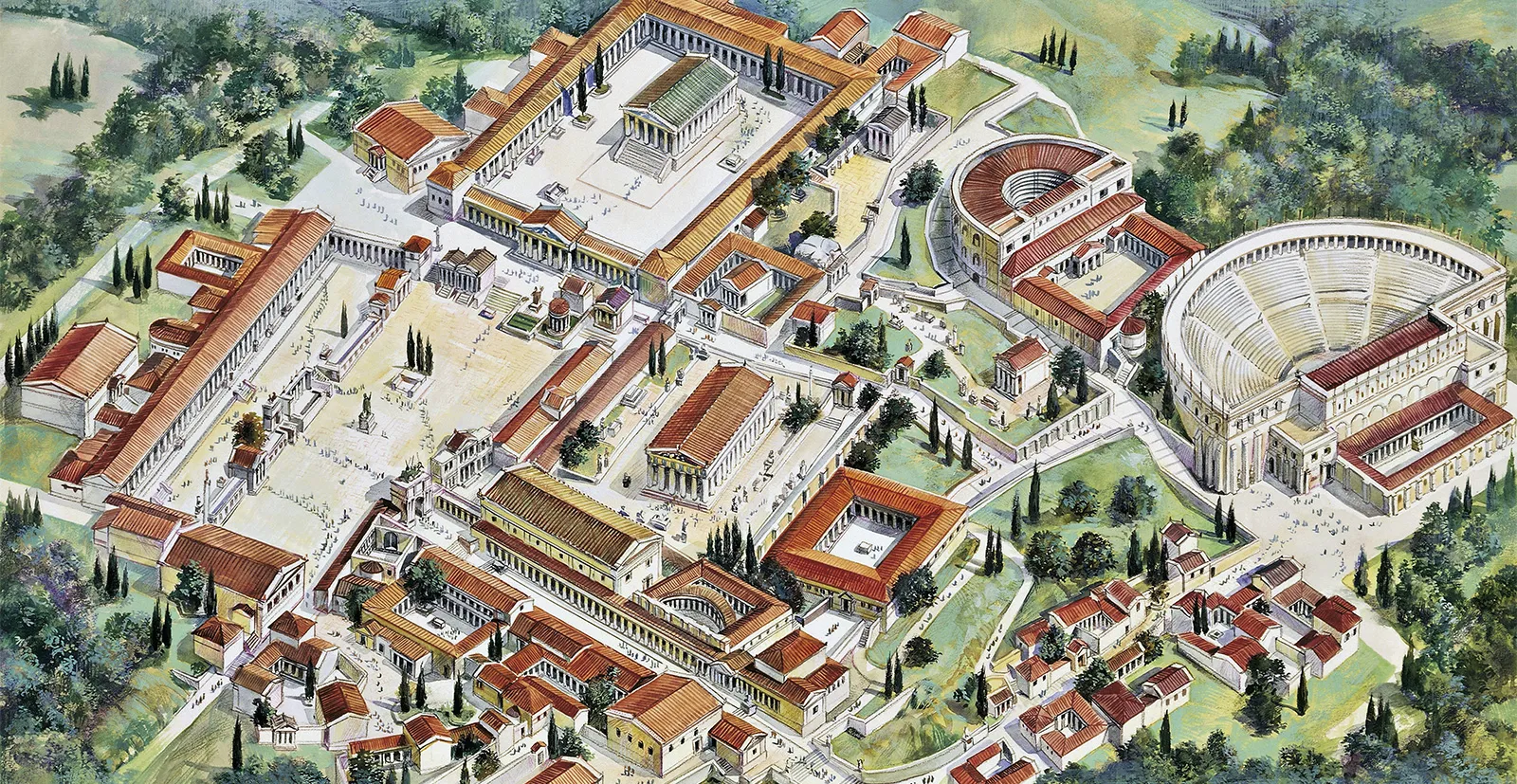
Athenian Agora
5th century BCE, Athens
most important public space for the Greeks in Athens. Opened up the citizenry to participate in the government through direct participation, not just voting for representation. Rotated office positions, rarely were people elected by vote. In order to be a citizen, you had to be a male born in Athens. Some pottery in the agora ostracized corrupt leaders, lots of checks and balances, ideas like equality before the law. Began as a market before evolving.
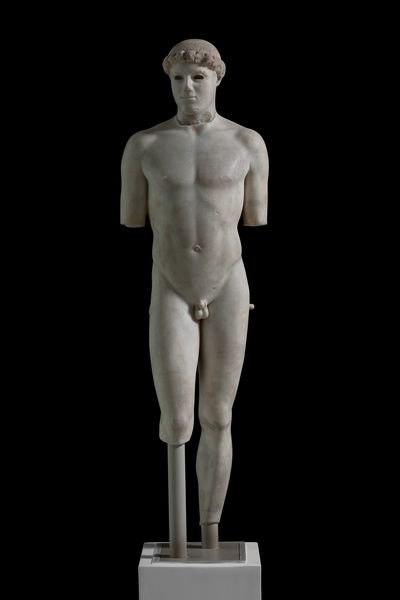
Kritios Boy
c. 480 BCE (destruction of Akropolis from Persians), classical, Athens
marble
Contrapposto/s-curve line of body, sever style (very stoic faces, not quite incredibly naturalistic yet), a kouros. Found in a pit after the fire and destruction of the Akropolis/post-Athenian destruction. Glass paste eyes, no archaic smile anymore, looking off into the distance instead of being engaged with the viewer.
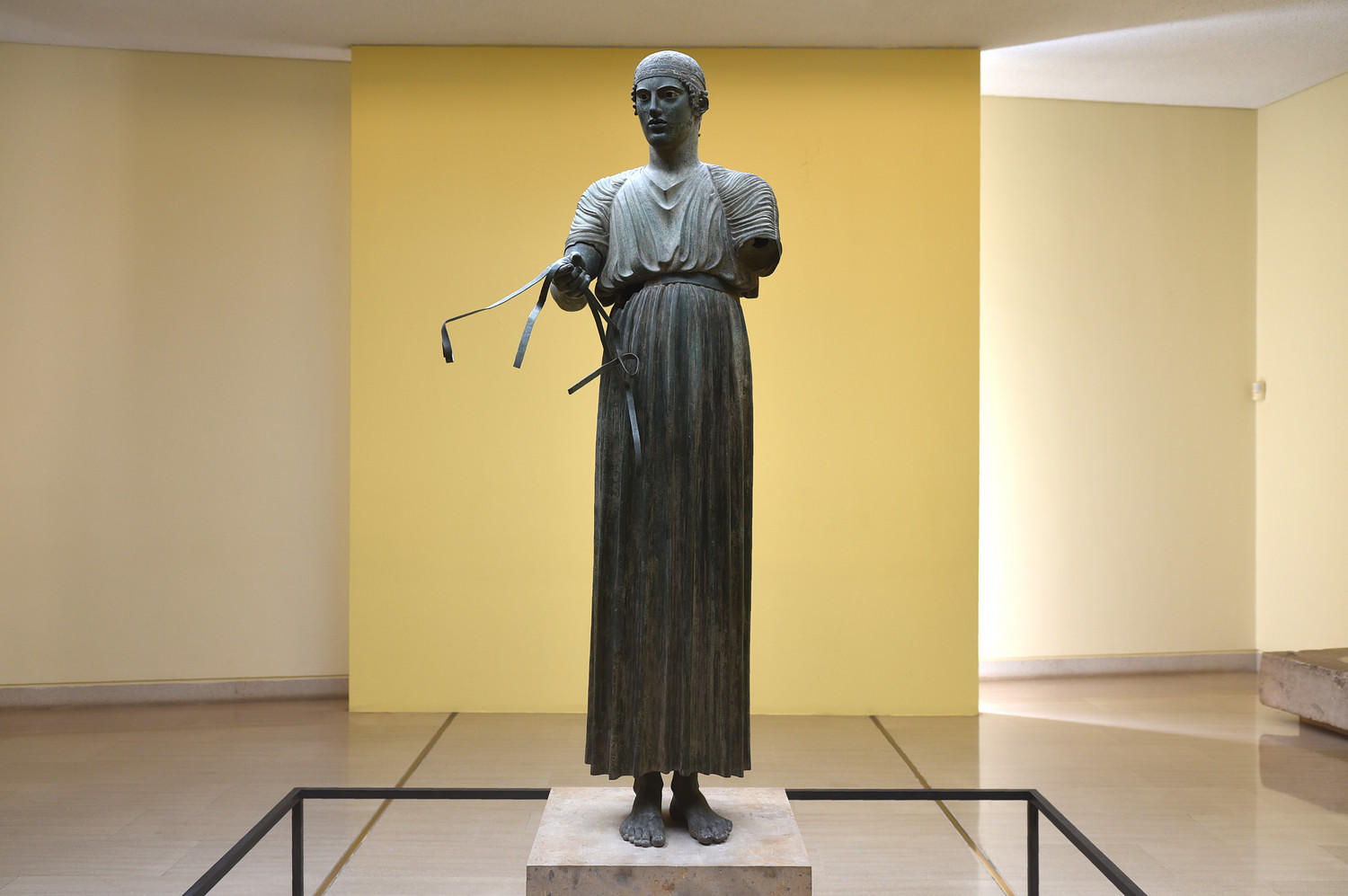
Delphi Charioteer
c. 478-474BCE, at Sanctuary at Delphi, classical
bronze
over life-sized, would’ve had a chariot and four horses originally. Severe style/stylistic naturalized, some rigidity with the column-like lower-half, yet also some movement with the upper portions. Calm, expressionless face, not archaic but not emotional either. Psychological, motional restraint. He’s dressed and not looking at the viewer, engaged in his activity which was potentially representing a victor of the chariot races at the Pythian Games in Delphi. Bronze through lost-wax technique, allows for thin details like the ropes without breaking off like marble, but harder to give texture like hair to. Some bronze mixed with materials like copper or silver to give coloration.
Made at a time when philosophy was becoming more important. Sophrosune, to have moderation (with emotions like not being too happy, or moderate with food consumption)
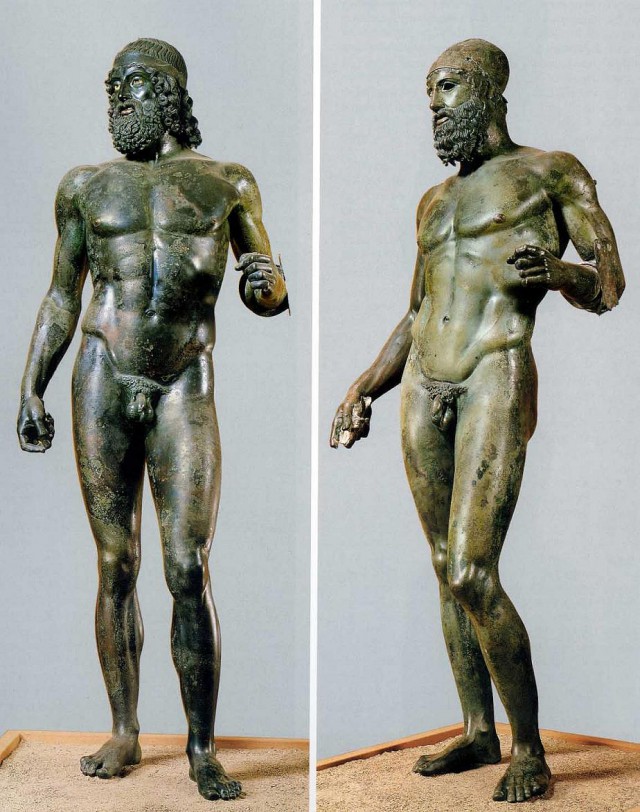
Riace Bronze Warriors
c. 460 BCE, found in a shipwreck off the coast of Sicilia, classical
bronze
Warrior A: remains because of shipwreck, otherwise a lot of bronze art was melted down for money or tools. Naked except for a space for a helmet and a shield/shield attachment. Still somewhat stiff, but some movement and his teeth are showing. Sophrosune, yet some muscles are tensed and he has forehead strain going on. Glass paste eyes, nipples, and other coloration of bronze. Aquiline features were typically reserved for nobility
Warrior B: thought of as being the older between the two because his facial hair is longer and he is less tense/more confident. Also would’ve had a shield and a helmet. Some oil on it to produce a sheen can be detected. Contrapposto, made to relate to each other, maybe in opposition
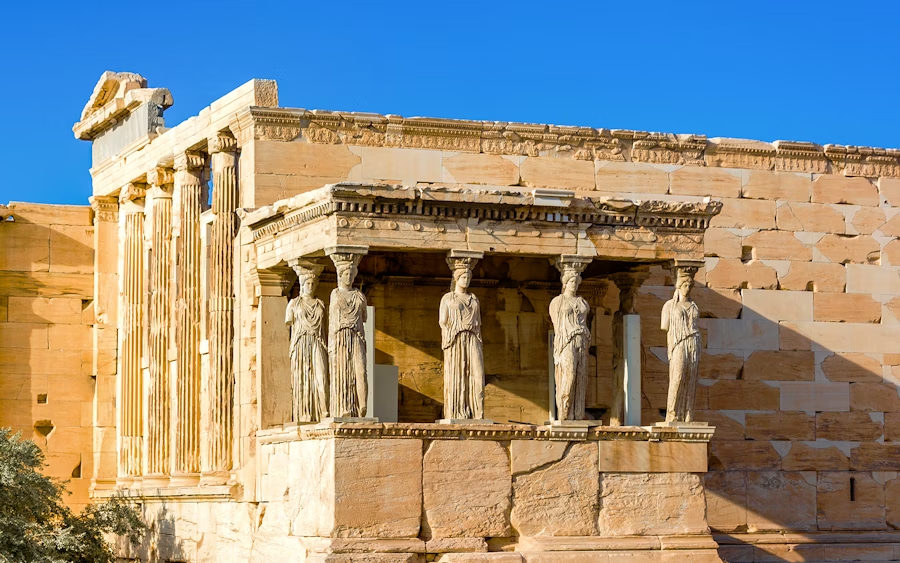
Acropolis Erechthion
c. 421-406 BCE, Athens, Classical
Ionic temple but columns have been replaced with multiple sisters whose arms have broken off over time. Post-Persian destruction, Greeks felt ambivalent about sculptures. Almost severe style, some contrapposto, realistic body proportions.
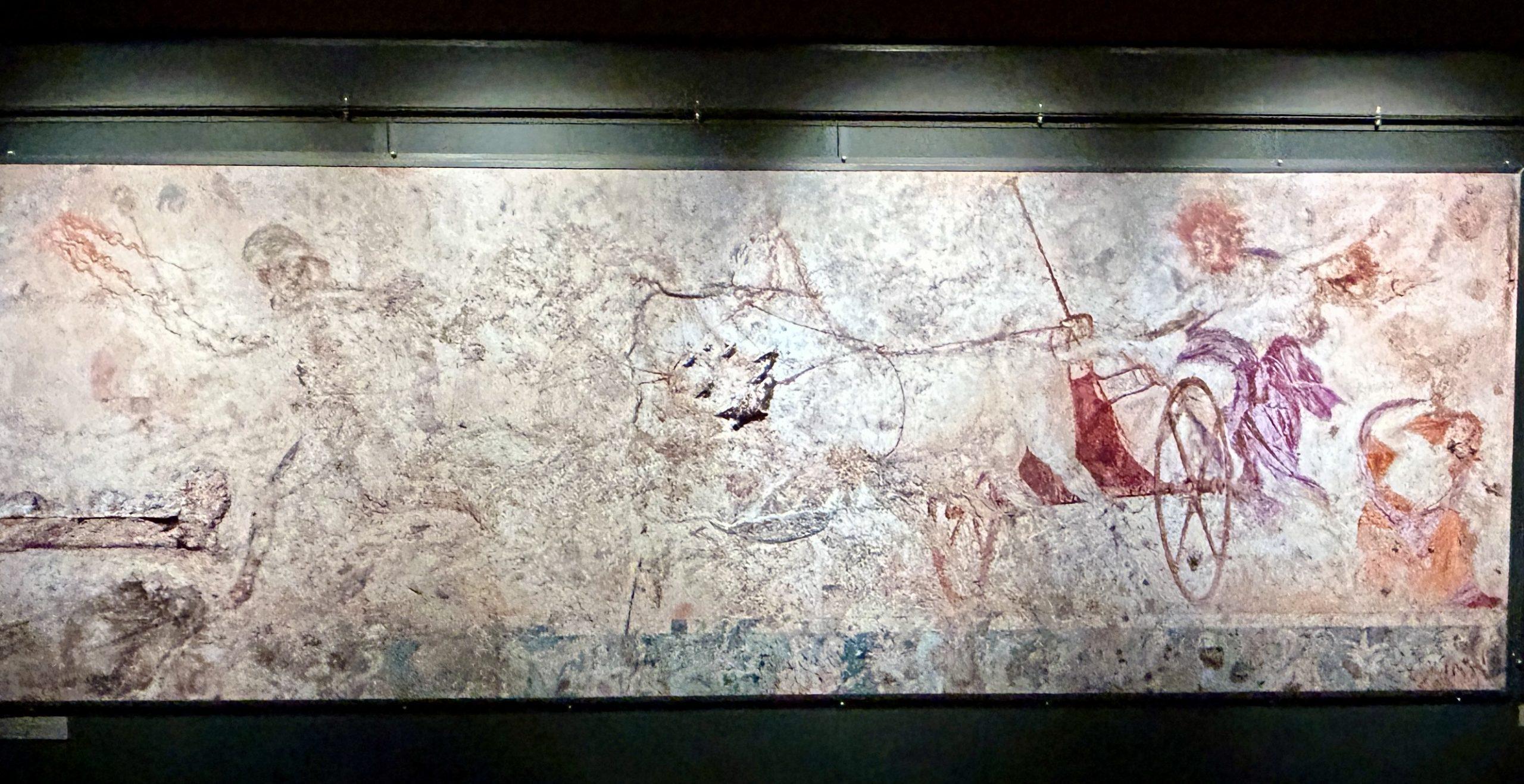
Royal Tomb I at Aigai
4th century BCE, classical, Aigai
Tomb of Persephone as depicted with the visuals of Hades and Persephone within the burial chamber which is located beneath stone blocks for protection. Shows Greek thought of afterlife and treatment of royals after death
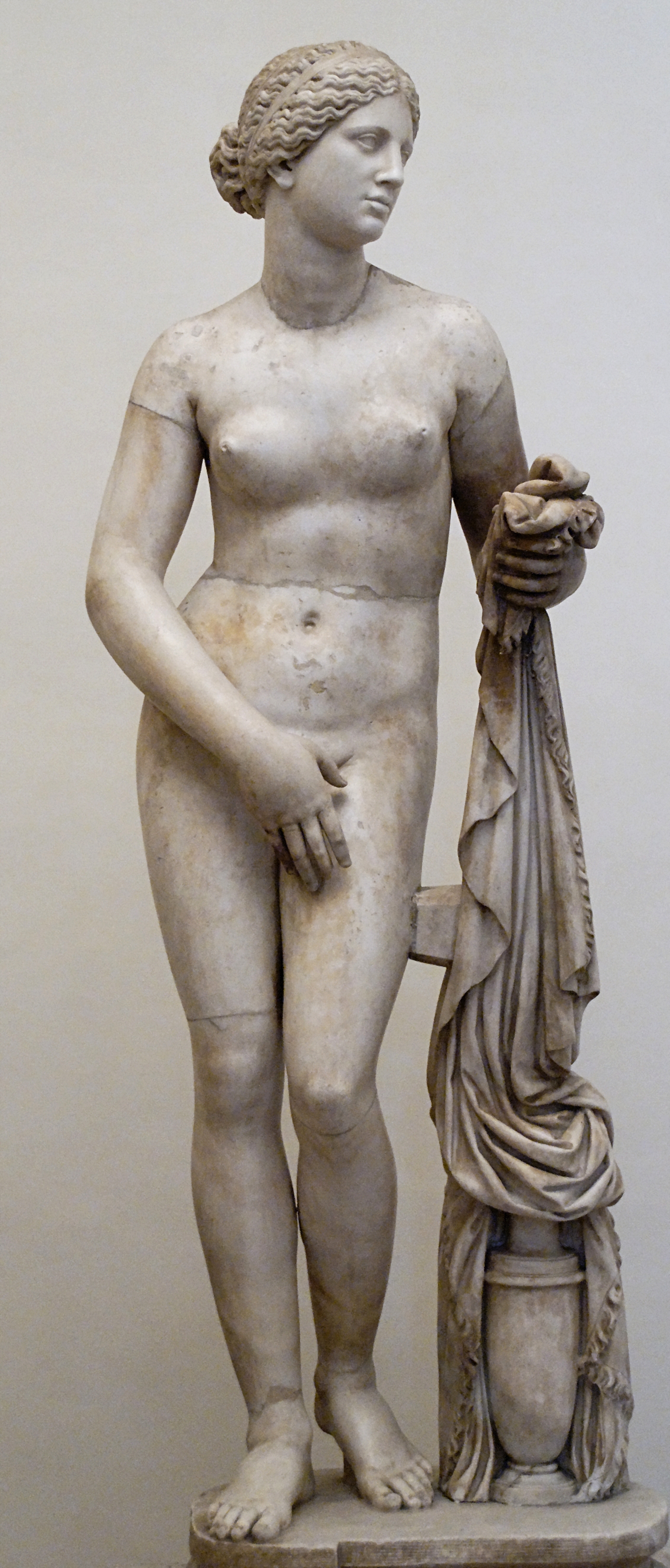
Aphrodite of Knidos by Praxiteles
original bronze is 4th century BCE, Late Classical, Knidos
marble
Praxiteles was one of the most famous Greek sculpturalists, he made two copies of this piece and one was closed. Both made to sell on the market, he sold the clothed and kept the nude in Knidos which became more famous. First instance of a fully-nude woman in Greek art, very popular for Romans to copy later on. Knidos built a circular sanctuary around her bc they loved her so much, she loosely covers herself but it’s more of a false modesty. Represented as the pinnacle of beauty. initially painted and more lifelike.
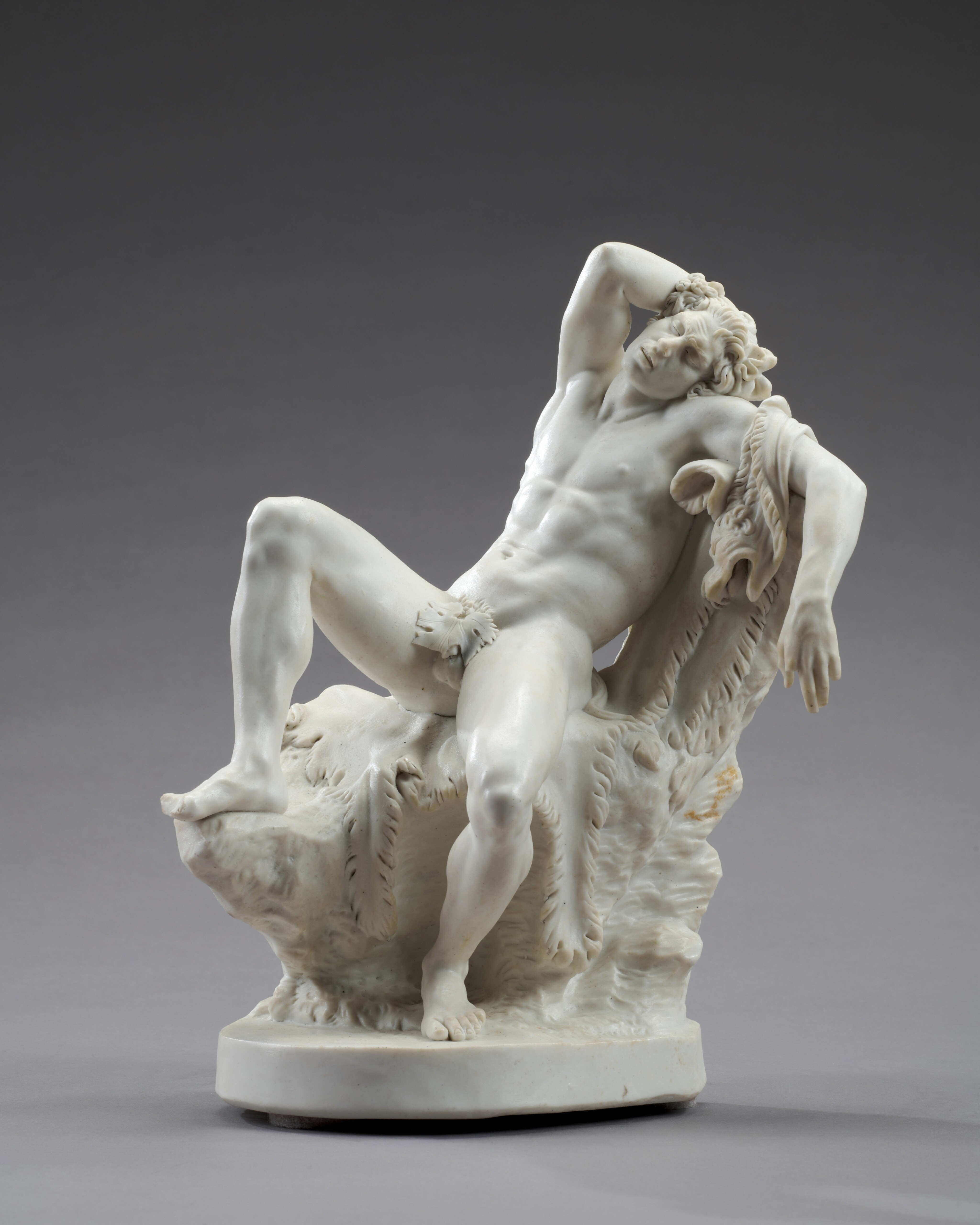
Barberini Faun (satyr)
c. 220 BCE, Rome, hellenistic
marble
discovered in 1625 in the Pope’s collection. Satyrs were close with gods like Dionysus who liked to party and would drink too much, like this satyr. But they were subhuman—not human and not monsters, they were the wild and barbaric aspects of mankind. Pointy hooves, ears, and a tail. Erotic, exhausted, and restless, we can see asymmetry as a result of gravity pulling on the face and compressing the other half. Intense naturalism, emotional subject matter with details about surroundings like the leopard skin on the rock he lays on
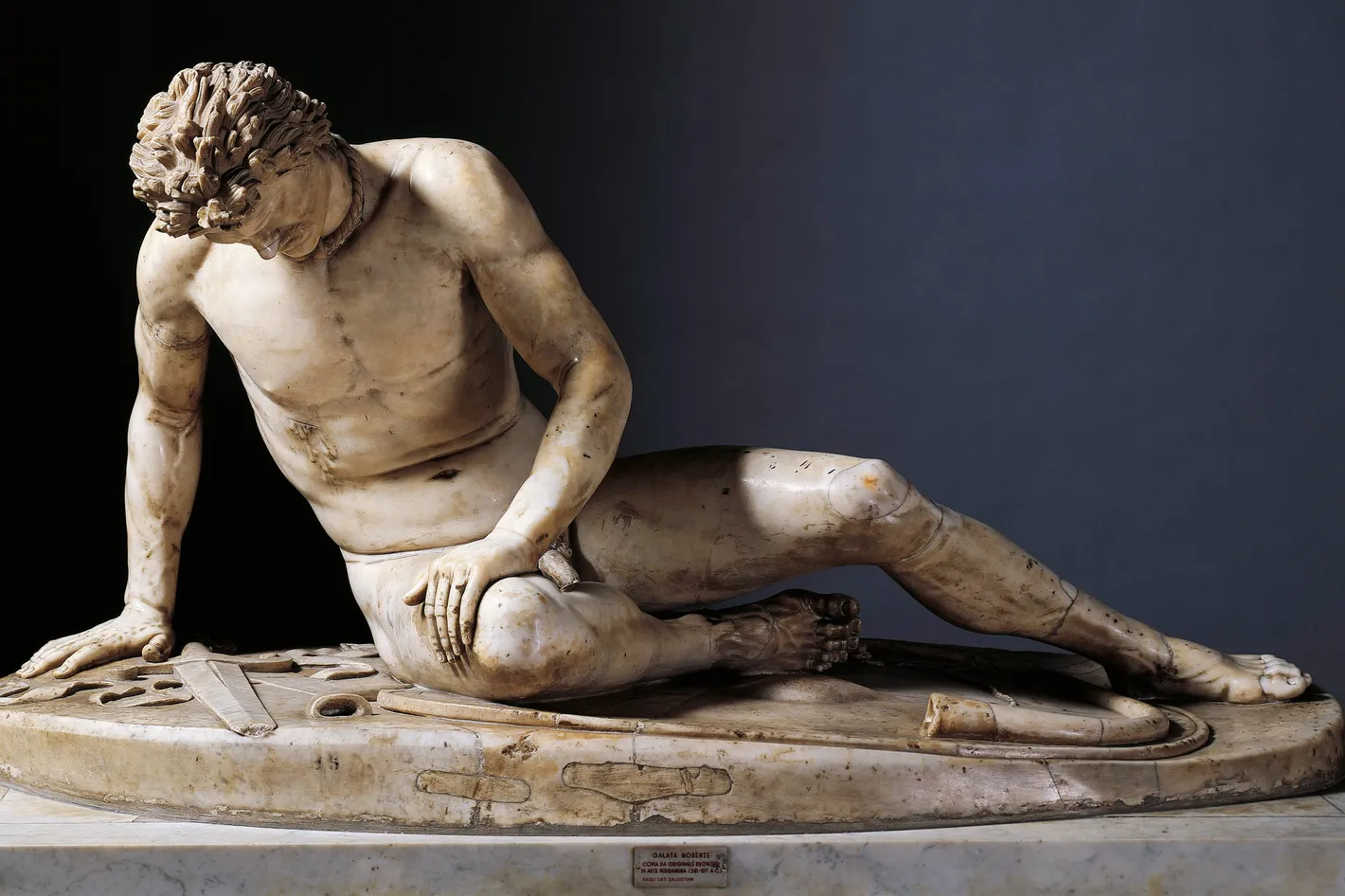
Dying Gaul
3rd century BCE, Pergamon, hellenistic
bronze
man at moments before his death, 2 horns show he was a trumpeter but he has a sword laying by him and he is bleeding out from his wound. Pain, agony, and part of a set at a monument for memorializing a victory of the Pergamon kingdom over the European Gaul. No victors are depicted in the monument, it’s a representation of the lives lost and humanizing the losers. Can tell he’s Gaul from the long hair and facial hair, but also the ring around his rope necklace
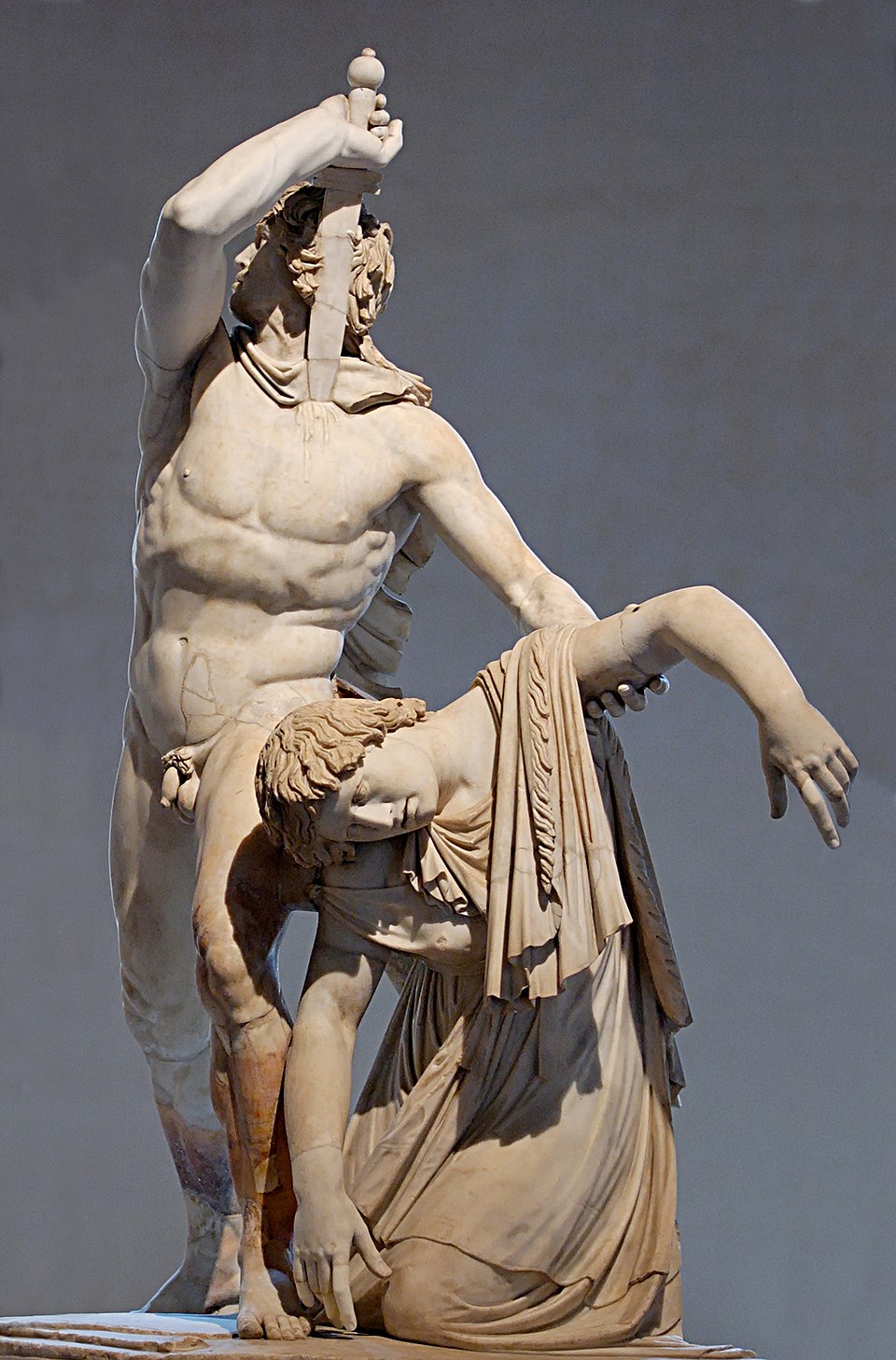
Ludovisi Gaul
3rd Century BCE, Pergamon, hellenistic
bronze original, marble copy from 1st century BCE
dramatic imagery of a man who killed his wife and is about to commit suicide next. He’s also a Gaul and this was maybe a way of saying that they would rather die than be held captive because the Gauls were known for that. Maybe a chieftain. Can only see his face in profile, otherwise when you move around him, it’s obstructed by his body, cape, or sword
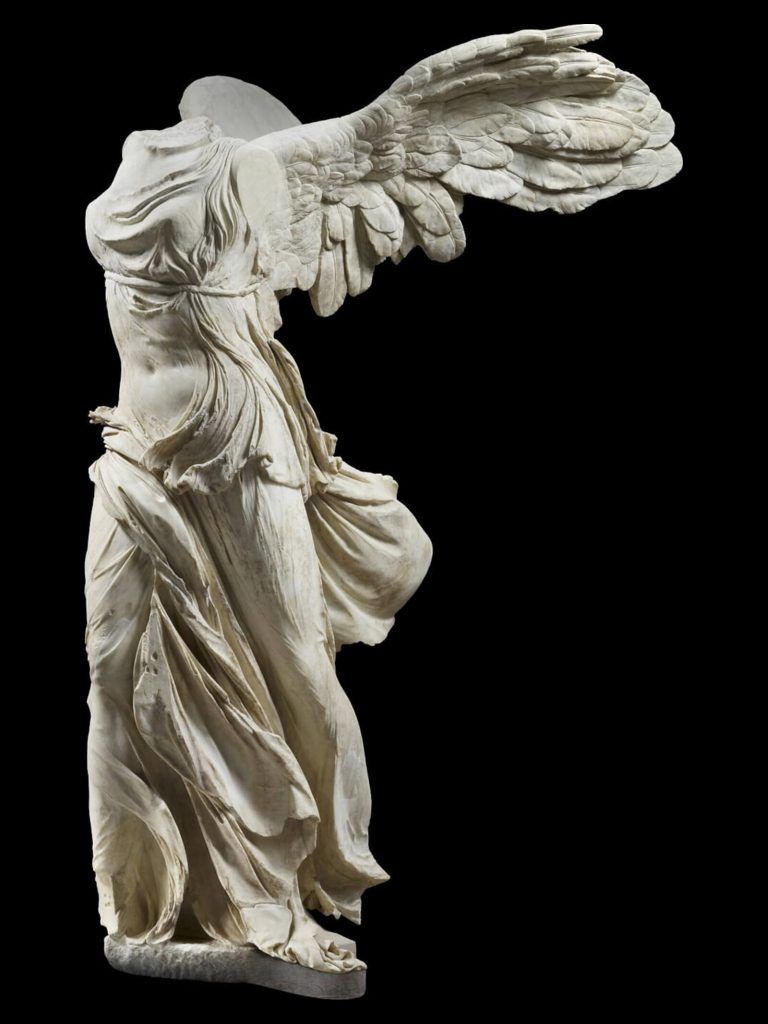
Nike (Winged Victory) of Samothrace
c. 190 BCE, Samothrace, hellenistic
marble
Goddess of victory who was a messenger to spread the news of victory. Moves in several different directions at the same time like the wind is pushing, pulling, and swirling all around her. So many uses of texture, meant to look like she’s on a ship front but never truly was. A culture that heavily studied the body and is using their knowledge of its movement
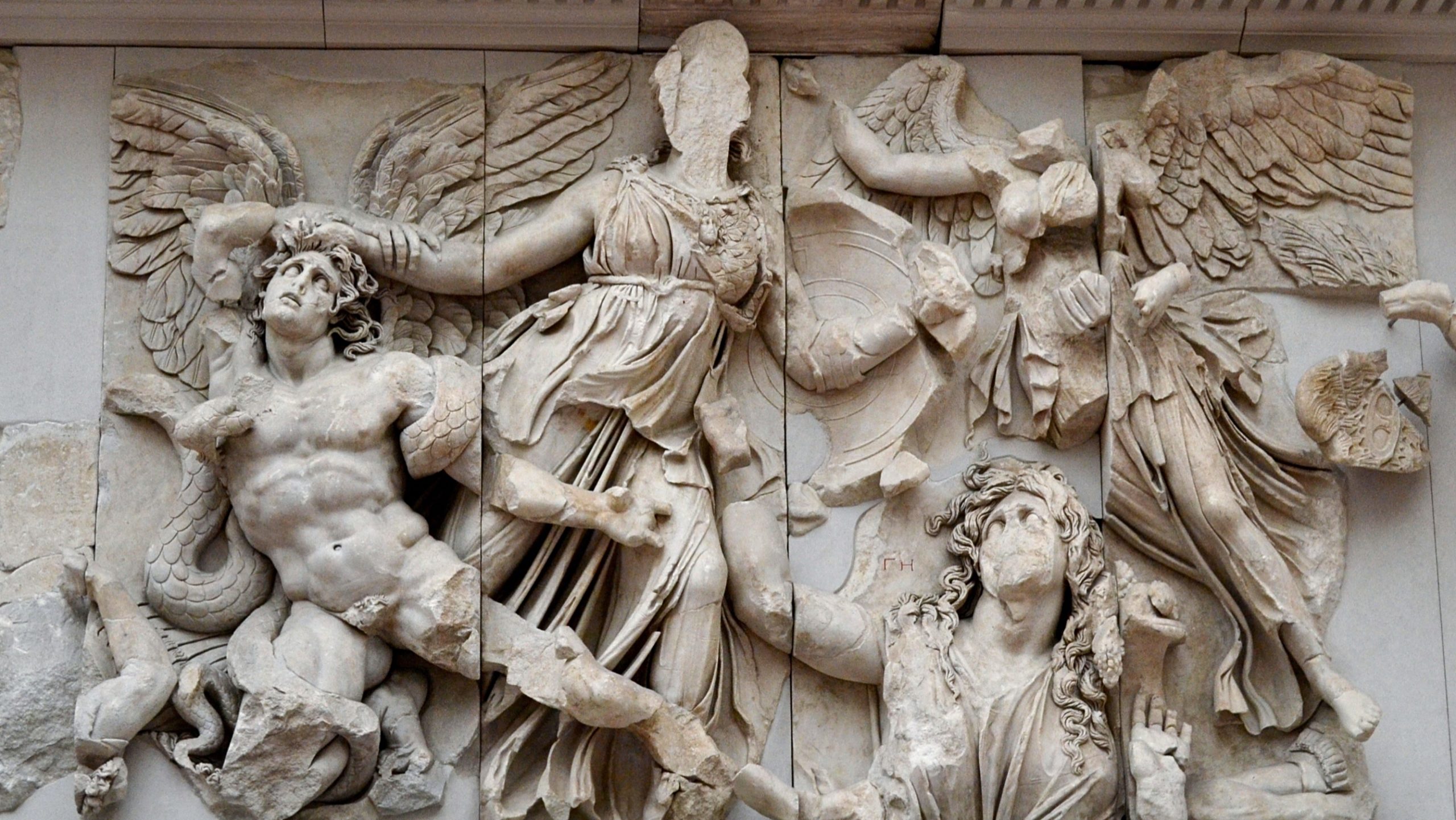
The Pergamon Altar
c. 200-150BCE, Pergamon, hellenistic
many materials
phase right after Alexander the Great really spread throughout the regions of Egypt and towards the East, then died and the territory was split up into rule of four generals. Pergamon is a kingdom of these four. The frieze has a mythical battle between the gods and giants with Athena ripping out Alcyone’s from the ground and his mother watching in distress. Other gods were depicted symbolically too like Zeus’ eagle, also represents the conquest of the gods/Greeks over enemies that they feared. Triumph over fear, heroicism and optimism
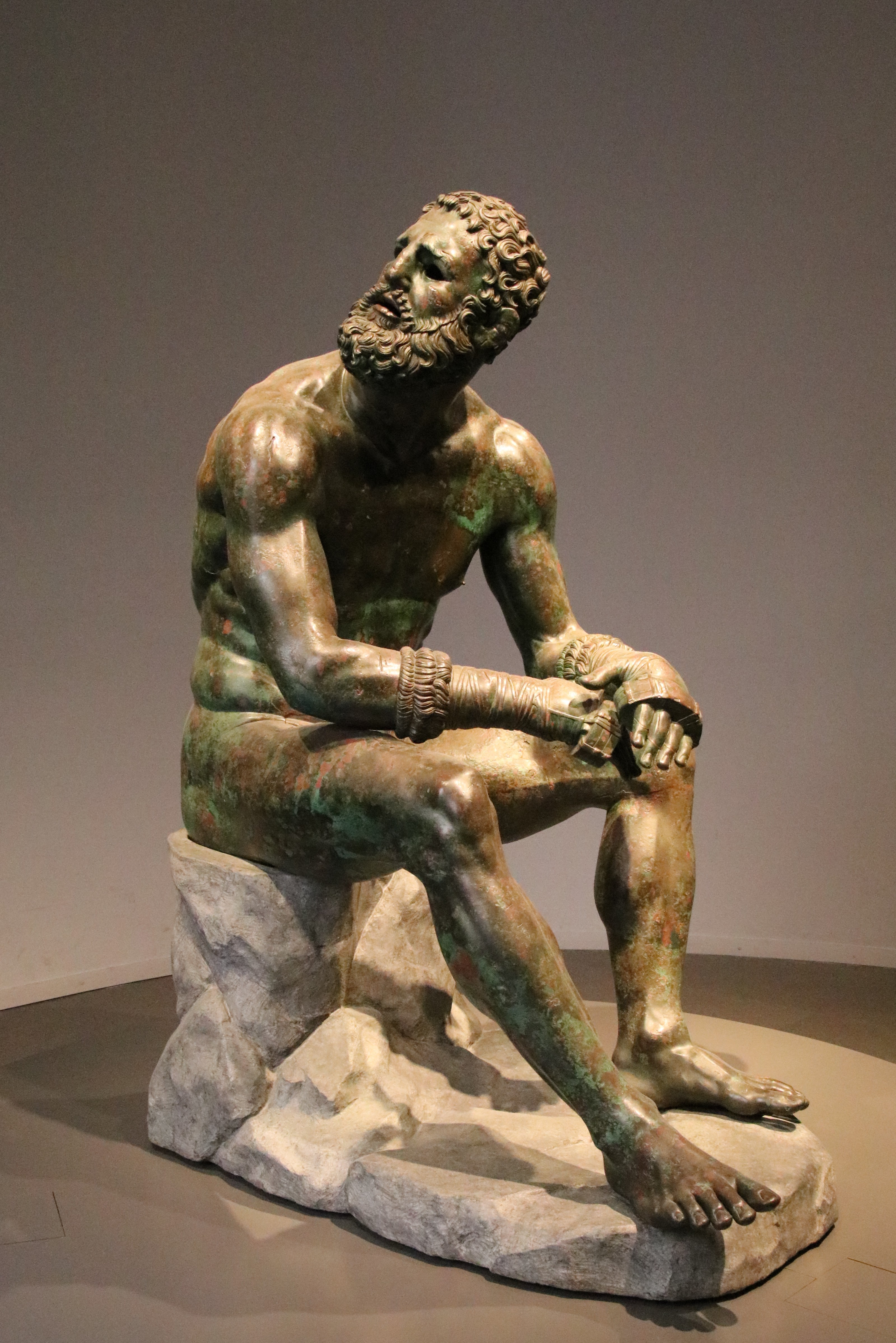
Boxer at Rest
1st century BCE, hellenistic, Rome
bronze
lost-wax casting so was hollow and would’ve had glass or ivory eyes. Different coloration of the bronze due to mixing metals. He’s beautiful but not because of his face, which shows bruises and cauliflower ear from his fights, but beautiful because of his sadness and exhaustion, beautiful in understanding he is painful. Still has the idealized Greek strength, but he is beaten down and just wants to rest, even his torso is collapsing
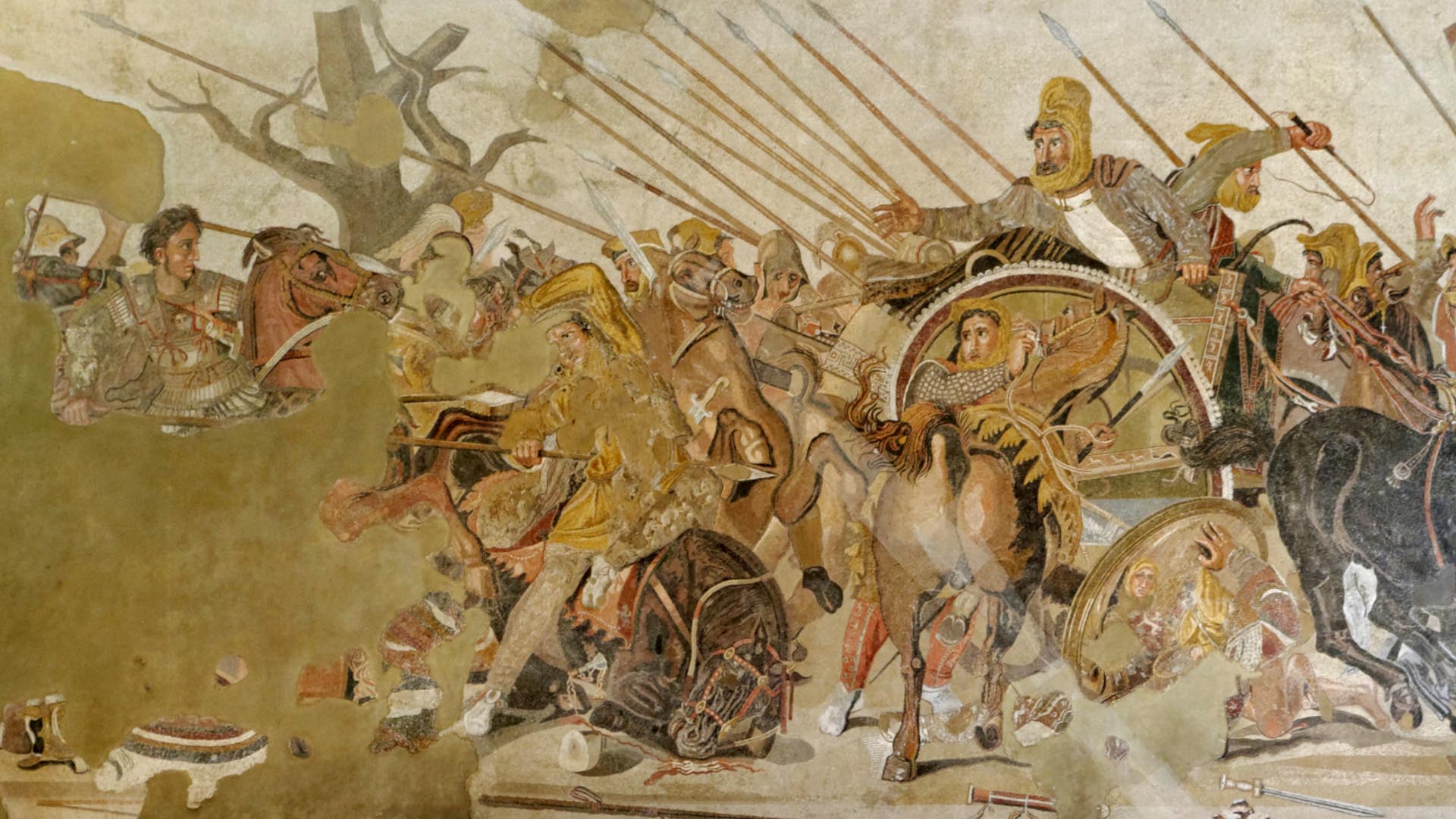
Alexander Mosaic from House of the Faun
c. 100 BCE, Pompeii, hellenistic
mosaic
A battle with Persia with so much detail that you can even see the Persian soldier’s face in a shield of another warrior. Frenetic image quality, would’ve been on a wall so it’s compositionally very short
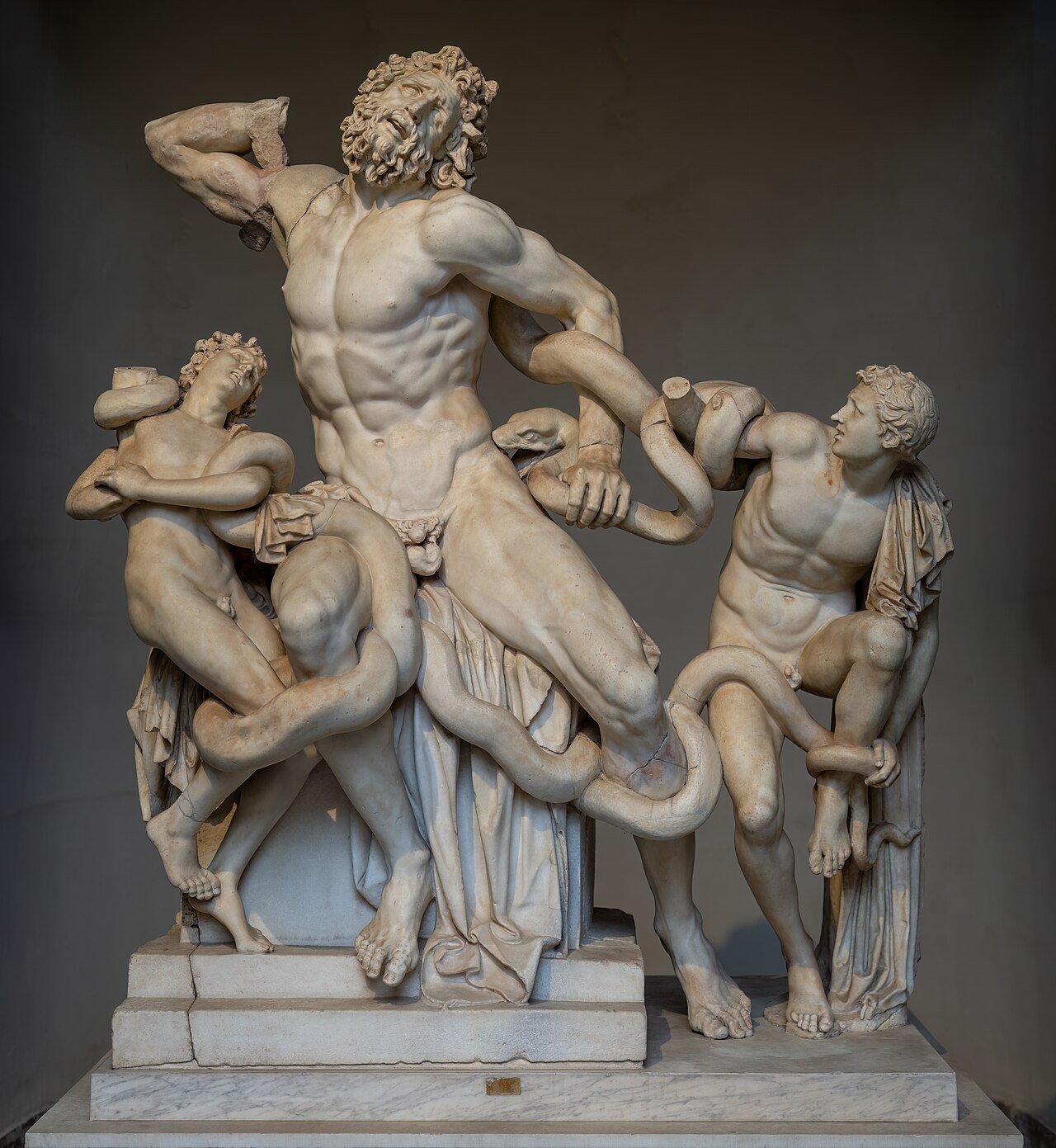
Laocoön and his Sons
early 1st century BCE, hellenistic
marble
Laocoon was a Trojan priest who knew about the horse being a false gift/trick and tried to warn the Trojan of this, but a goddess protecting the Greeks didn’t like this, so she sent serpents after him and his sons to kill them. Power and energy, dynamism. Very theatrical, beauty in tragedy and agony.

