exam 3 pt 2: digestive system
 Call Kai
 Learn
Learn Practice Test
 Spaced Repetition
 Match
Match Flashcards
 Knowt Play
1/61

There's no tags or description
Looks like no tags are added yet.
Name | Mastery | Learn | Test | Matching | Spaced | Call with Kai |
|---|
No analytics yet
Send a link to your students to track their progress
62 Terms
what are the two groups of organs that compose the digestive system?
gastrointestinal (GI) tract: mouth, most of pharynx, esophagus, stomach, small intestine, and large intestine
accessory digestive organs: teeth, tongue, salivary glands, liver, gallbladder, and pancreas
functions of the digestive system
ingestion
secretion of water, acid, buffers, and enzymes into lumen
mixing and propulsion
digestion
mechanical digestion churns food
chemical digestion through hydrolysis
absorption (passing into blood or lymph)
defecation (elimination of feces)
what are the layers of the GI tract?
muscularis and serosa
what consists of the muscularis?
voluntary skeletal muscle found in mouth, pharynx, upper 2/3 of esophagus, and anal sphincter
involuntary smooth muscle elsewhere
arranged in inner circular fibers and outer longitudinal fibers
myenteric plexus between muscle layers
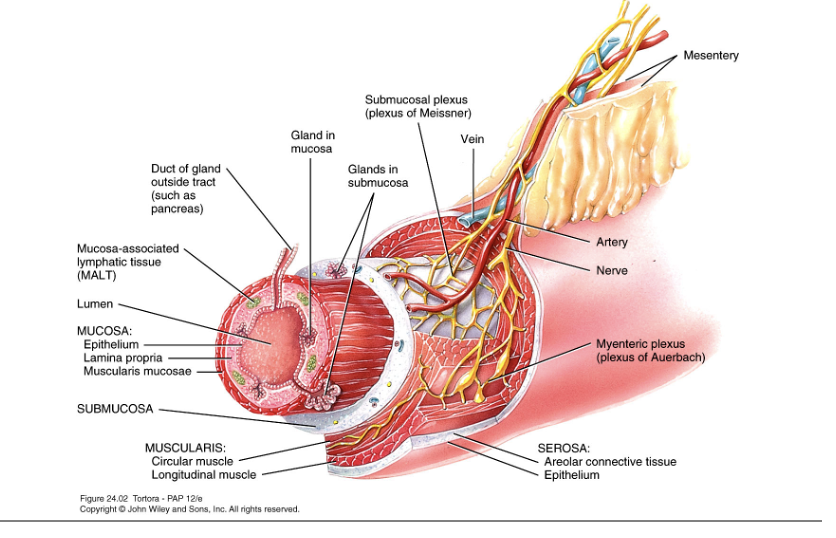
what consists of the serosa?
outermost covering of organs suspended in abdominopelvic cavity
also called visceral peritoneum
consists of areolar connective tissue and epithelium
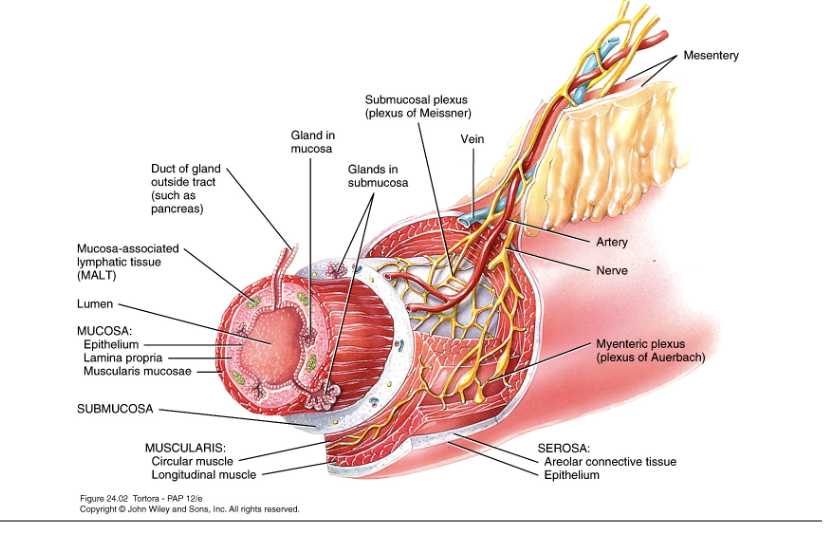
what lacks serosa?
the esophagus lacks serosa. it has adventitia; it attaches to surroundings
characterize the enteric nervous system (ENS)
“brain of gut”
neurons extend from esophagus to anus
what are the two plexuses of the enteric nervous system (ENS)
myenteric plexus - GI tract motility
submucosal plexus - controlling secretions
role of autonomic nervous system in digestive system
parasympathetic stimulation increases secretion and activity by stimulating ENS
sympathetic stimulation decreases secretions and activity by inhibiting ENS
what is the largest serous membrane of the body? what is it divided into?
peritoneum
divided into:
parietal peritoneum – lines wall of cavity
visceral peritoneum – covers some organs (also called called serosa)
space between is peritoneal cavity
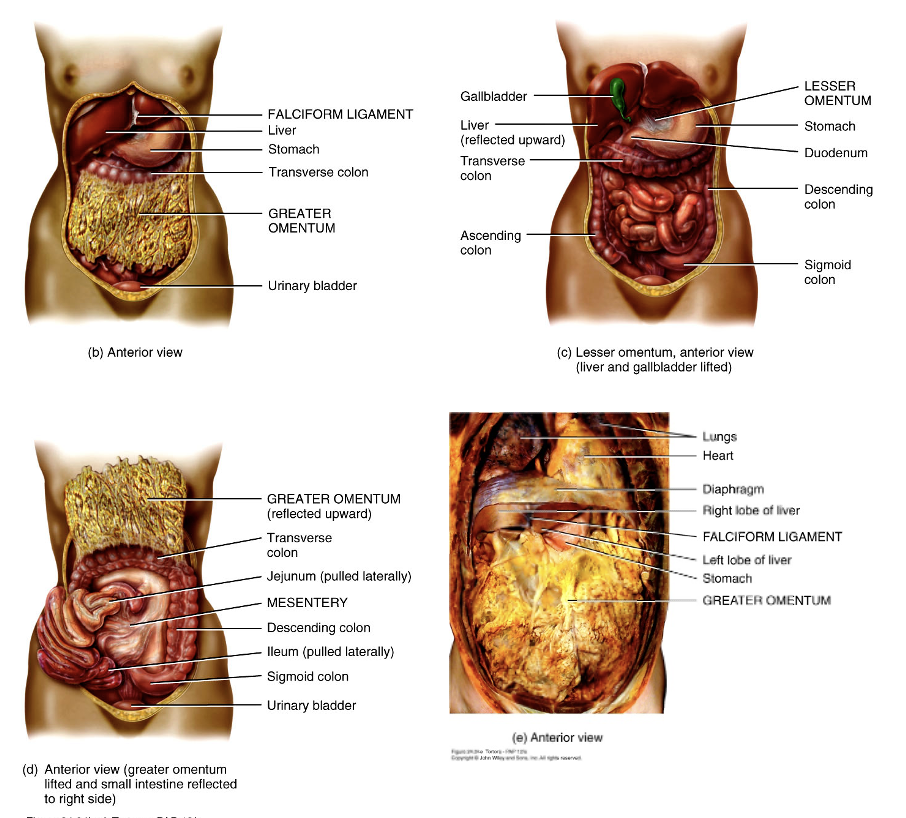
what are the five major peritoneal folds? function?
greater omentum, falciform ligament, lesser omentum, mesentery, and mesocolon
weave between viscera binding organs together
what is the mouth called? what is it formed by?
oral or buccal cavity
formed by cheeks, hard and soft palates, and tongue
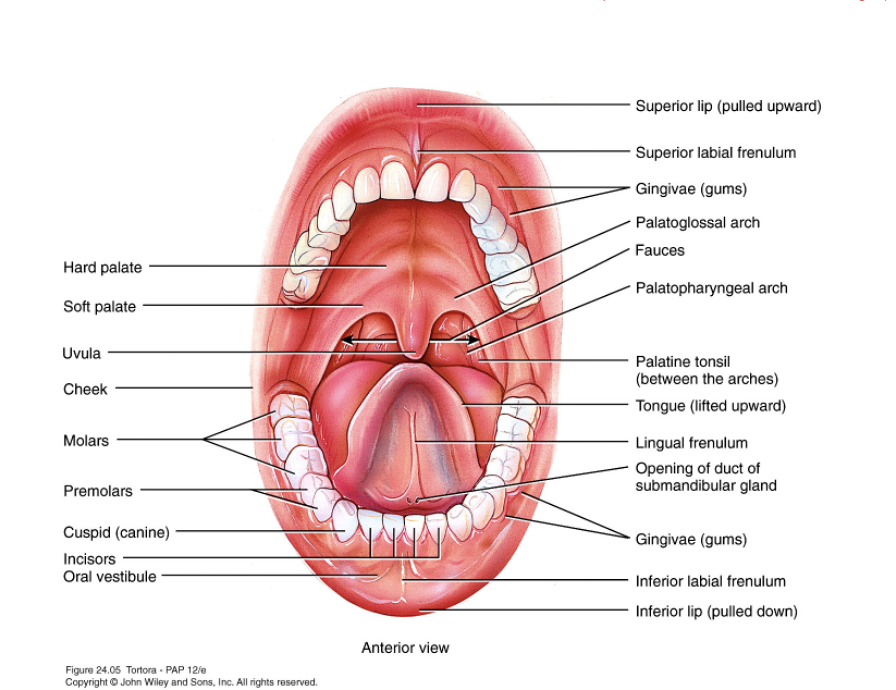
what is the oral cavity proper?
space that extends from gums and teeth to fauces (opening between oral cavity and oropharynx)
what are the three pairs of major salivary glands that secrete most of the saliva?
parotid
submandibular
sublingual
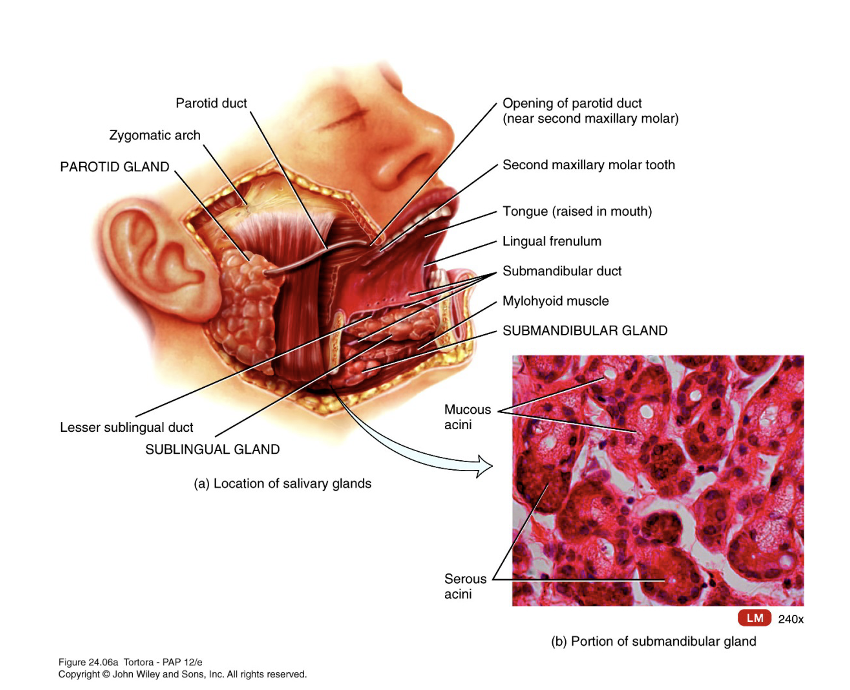
characterize saliva
mostly water (99.5%)
0.5% solutes such as lysozyme, salivary amylase, and immunoglobulin
not all salivary gland produce the same saliva
what controls salivation?
the autonomic nervous system
parasympathetic promotes secretion of moderate amount of saliva
sympathetic decreases salivation
what is the tongue considered to be? what covers it? its function? its glands function?
an accessory digestive organ
mucous membrane covers skeletal muscle
maneuvers food for chewing, shapes mass, and forces food back for swallowing
lingual glands secret salivary lipase
what is the tongue considered to be? what are the major structures?
an accessory digestive organ
three major regions include crown, root, and neck
dentin of crown covered by enamel
two dentitions include deciduous and permanent teeth
what does mechanical digestion in the mouth involve?
chewing or mastication
food manipulated by tongue, ground by teeth, and mixed with saliva
forms bolus
what does chemical digestion in the mouth involve?
secreted salivary amylase acts on starches
only monosaccharides can be absorbed
salivary amylase acts until inactivated by stomach acid
what acts on triglycerides? how does it become activated?
lingual lipase secreted by lingual glands
activated in acidic environment of stomach
triglycerides are digested into fatty acids and diglycerides
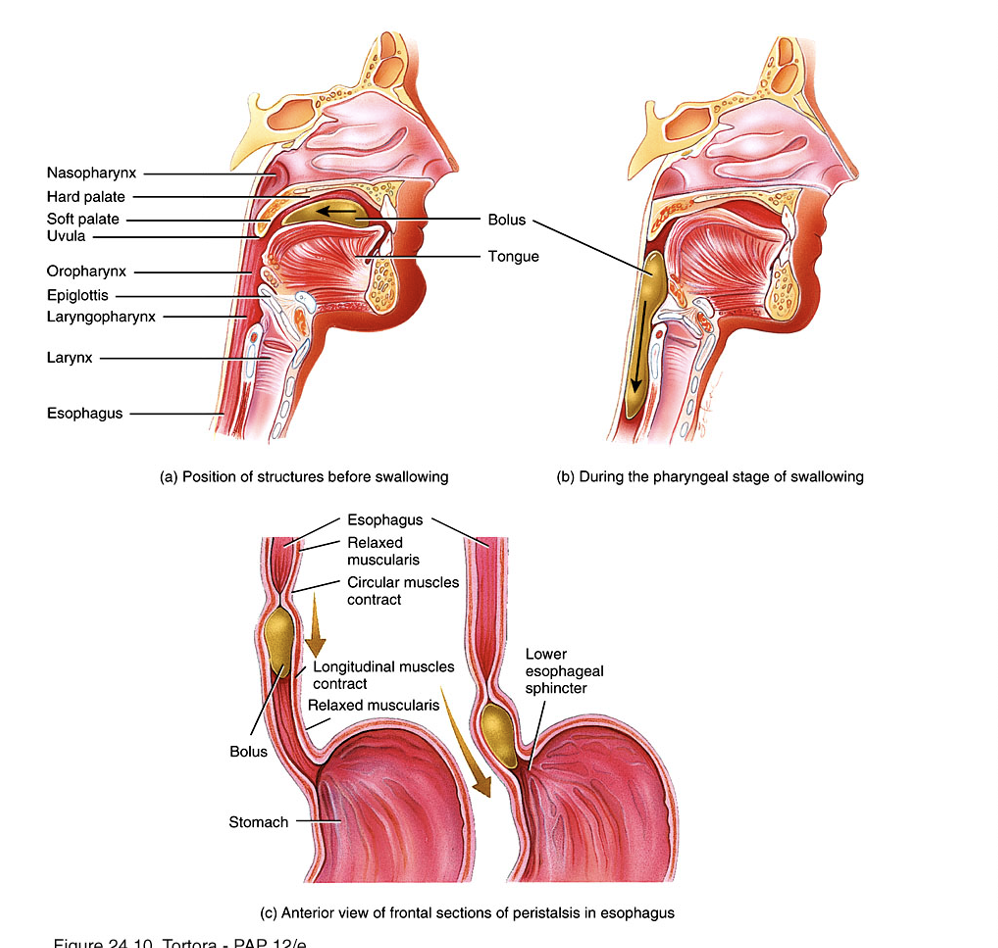
what are the three parts of the pharynx? what are their functions?
nasopharynx = respiration
oropharynx = digestive and respiratory functions
laryngopharynx = digestive and respiratory functions
function of the esophagus
secretes mucous and transports food
function of mucosa
protect against wear and tear
what is the muscularis of the esophagus divided into?
divided into thirds
superior 1/3 skeletal muscle
middle 1/3 skeletal and smooth muscle
inferior 1/3 smooth muscle
what are the two sphincters of the esophagus and their function?
upper esophageal sphincter (UES) - regulates movement into esophagus
lower esophageal sphincter (LES) - regulates movement into stomach
what epithelium lines the esophagus?
non-keratinized stratified squamous epithelium
what are the three stages of deglutition (swallowing)? describe them
voluntary - bolus passed to oropharynx
pharyngeal – involuntary passage through pharynx into esophagus
esophageal – involuntary passage through esophagus to stomach
what pushes bolus foward?
peristalsis (wave like muscular contraction and relaxation)
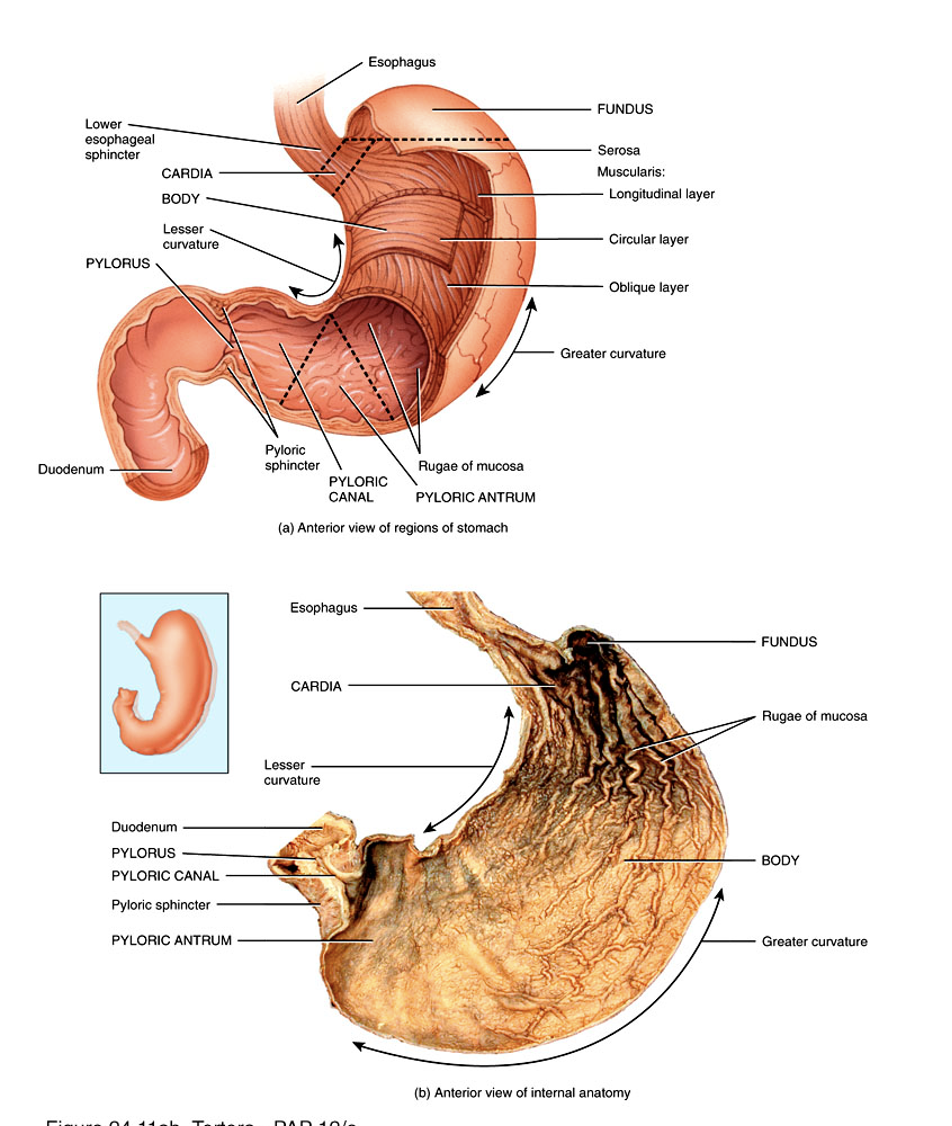
function of the stomach
serves as mixing chamber and holding reservoir
what are the four main regions of the stomach
cardia
fundus
body
pylorus
what are the three types of exocrine gland cells of the stomach?
mucous neck cells (mucus)
parietal cells (intrinsic factoe and HCl)
chief cells (pepsinogen and gastric lipase)
what is the G cell of the stomach? its function?
endocrine cell
secretes gastrin
what is chyme? what creates creates it?
partly digested food mixed with gastric juices
gentle, rippling peristaltic movements
what do parietal cells secrete?
H+ and Cl- separately which form HCl
kill many microbes and denature proteins
what is pepsin secreted by? what is it secreted as?
chief cells that digest proteins
secreted by pepsinogen
function of gastric lipase
split triglycerides into fatty acids and monoglycerides
where is pancreatic juice secreted?
into pancreatic duct, accessory duct, and small intestine
what does the pancreatic duct join?
joins common bile duct and enters duodenum at hepatopancreatic ampulla
describe pancreatic cells and their function
99% are acini (exocrine)
secrete pancreatic juice which is a mixture of fluid and digestive enzymes
1% are pancreatic islets (islets of Langerhans) and are endocrine
secrete hormones such as insulin and glucagon
how much pancreatic juice is produced daily? what is pancreatic juice made of?
1200-1500ml daily
mostly water followed by sodium bicarbonate that buffers acidic stomach enzyme, and pancreatic enzymes (amylase, lipase, etc.)
what is the heaviest gland of the body?
the liver
what are the major functional cells of the liver? their function?
hepatocytes
secrete bile and do a wide variety of metabolic, secretory, and endocrine functions
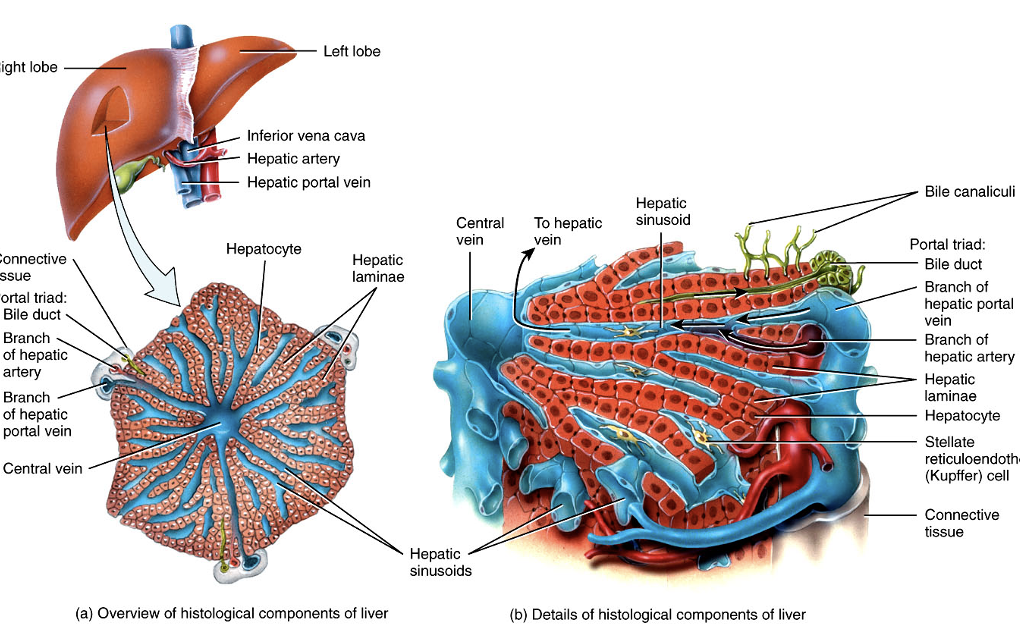
what are bile canaliculi? what does it form?
ducts between hepatocytes that collect bile
exists liver as common hepatic duct then forms common bile duct by joining cystic duct from gallbladder
what are hepatic sinusoids?
highly permeable blood capillaries receiving oxygenated blood from hepatic artery and deoxygenated nutrient-rich blood from hepatic portal vein
what is the hepatic acinus?
the functional, diamond-shaped unit of the liver that models blood flow, oxygen gradients, and metabolism
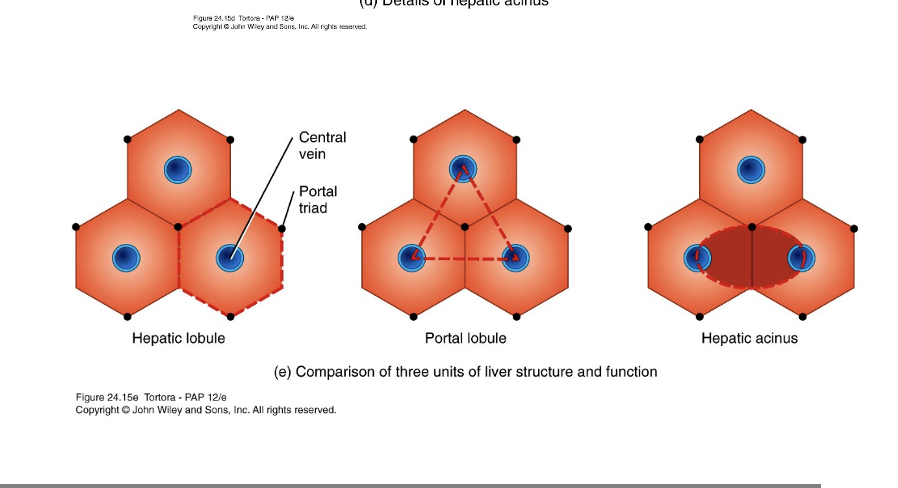
what causes the gallbladder to eject its contents?
the contraction of smooth muscle fibers eject gallbladder contents into cystic duct
function of gallbladder
store and concentrate bile produced by liver until need by small intestine
absorb water and ions to concentrate bile
hepatic blood flow
liver receives blood from hepatic artery and hepatic vein
hepatic artery carrying oxygenated blood
hepatic portal vein carrying deoxygenated blood with newly absorbed nutrients and possibly drugs, microbes or toxins from GI tract
how much bile do hepatocytes secrete daily?
800-1000mL of bile consisting of water, bile salts, cholesterol, and other substances
what is bilirubin?
principle bile pigment
derived from heme of recycled red blood cells
what gives feces brown color?
the breakdown product of bilirubin called stercobilin
role of bile salts
emulsification
absorption of lipids following digestion
what are the three regions of the small intestine?
duodenum
jejunum
ileum
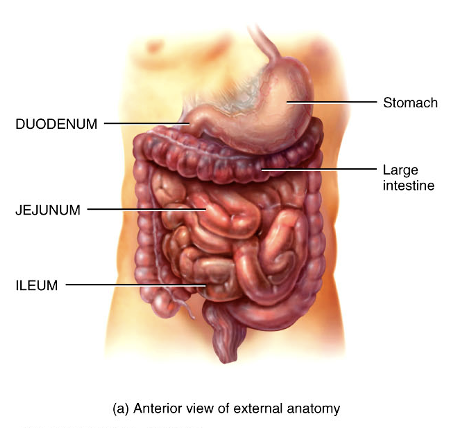
what is in the mucosa of the small intestine?
absorptive cells (digest and absorb)
goblet cells (mucus)
intestinal glands (intestinal juice)
Paneth cells (lysozyme)
enteroendocrine cells
what is in the submucosa of the small intestine?
duodenal glands secrete alkaline mucus
what is MALT and where can it be found
Mucosa-Associated Lymphoid Tissue (MALT) is in small intestine
primarily as part of the body's immune defense system
what does the serosa in the small intestine NOT cover?
major portion of duodenum
what are circular folds? their function?
permanent ridges of mucosa and submucosa
cause chyme to spiral
what are villi? what do they contain?
fingerlike projections of mucosa
contains arteriole, venule, blood capillary, and lacteal
what are microvilli? what are their function?
projects of apical membrane of absorptive cells
brush border with brush border enzymes
how much intestinal juice is produced daily? what does it contain? what is its function?
Explore top notes

Explore top flashcards
