2nd & 4th
 Studied by 0 people
 Call with Kai
 Learn
Learn Practice Test
 Spaced Repetition
 Match
Match Flashcards
 Knowt Play
1/29

There's no tags or description
Looks like no tags are added yet.
Name | Mastery | Learn | Test | Matching | Spaced | Call with Kai |
|---|
No study sessions yet.
30 Terms
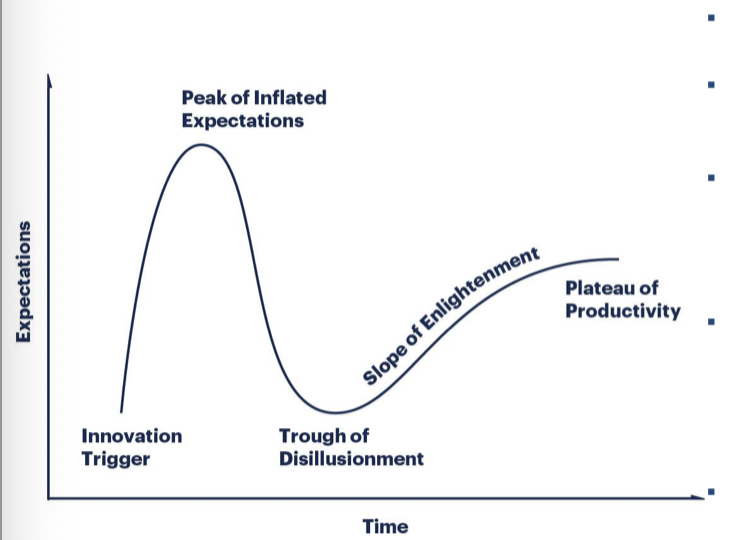
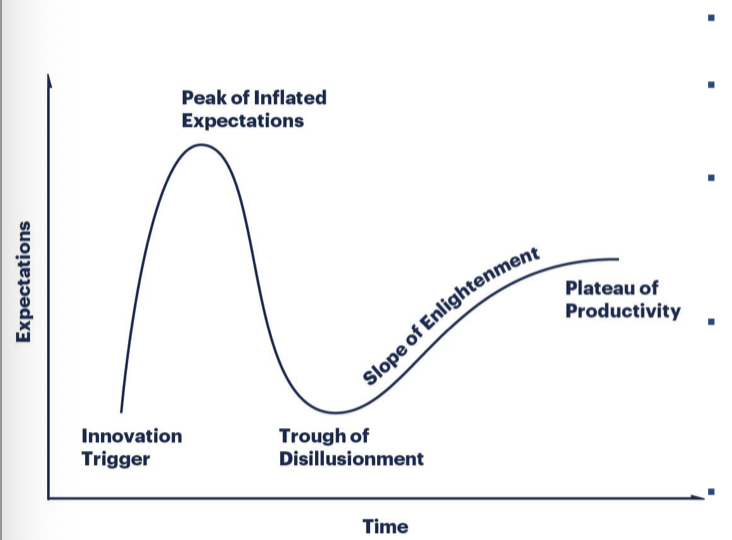
Garner hype cycle 5 stages
The Gartner Hype Cycle shows how expectations about new technologies rise and fall over time—and then stabilize.
🧭 Stages Explained:
Innovation Trigger
A breakthrough or concept gains early attention.
Hype begins—but no real product or results yet.
Peak of Inflated Expectations
Everyone’s talking about it; some success stories emerge.
But many overhyped failures happen too.
Trough of Disillusionment
Reality hits: the tech doesn’t deliver yet.
Many abandon it; only strong players survive.
Slope of Enlightenment
Use cases improve, second-gen products appear.
Understanding grows; real value begins to show.
Plateau of Productivity
Technology matures, becomes widely adopted.
It now proves its value in real-world use.
What are marketing insights and how valuable they are
Marketing insights are deep knowledge about:
The market
Consumers
Companies operating in that market
They help companies unlock opportunities by:
Understanding what drives consumer behavior
Tracking changes in consumer needs and wants
Understanding how different groups of people see the world and products
Key Elements of Market Analysis:
Industry Description and Outlook
What’s happening in the industry now?
Where is it heading? (growth trends, life cycle stage, size, segmentation)
Target Market
Who are your ideal customers?
Described by age, behavior, values, habits (demographics + psychographics).
Must be measured in terms of size and value.
Competitive Analysis
Who else is in the market?
What are their strengths and weaknesses?
What are their marketing and distribution strategies?
Distribution Channels
How do products get to customers?
Includes traditional and emerging channels (like online).
Assesses effectiveness, power dynamics, and customer connection.
Barriers to Entry
What makes it hard (or easy) to enter this market?
High costs, strong competition, regulations, or brand loyalty may block entry.
Regulation
What rules and laws apply?
How much will it cost to comply with industry or country-specific regulations?
Core element of the internal environment
People
Employees, leaders, and teams.
Their skills, motivation, and behavior shape company performance.
Structure
The way tasks, roles, and authority are organized.
Affects communication, decision-making, and flexibility.
Culture
The shared values, beliefs, and norms.
Shapes how people think, act, and respond to change.
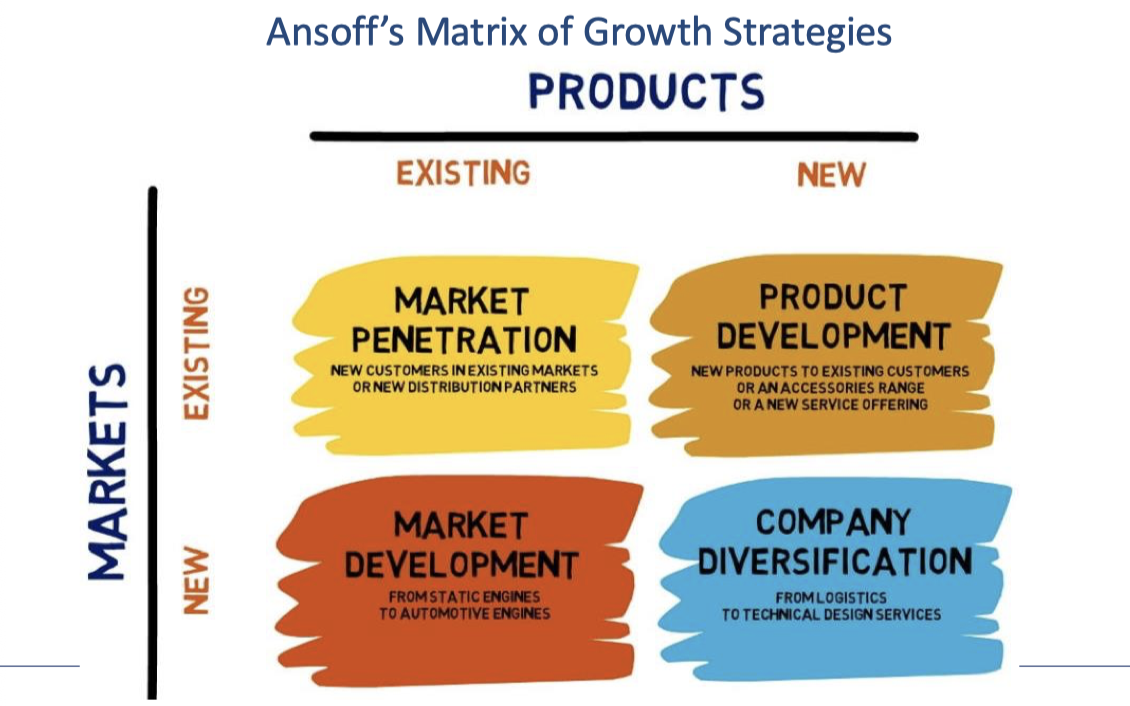
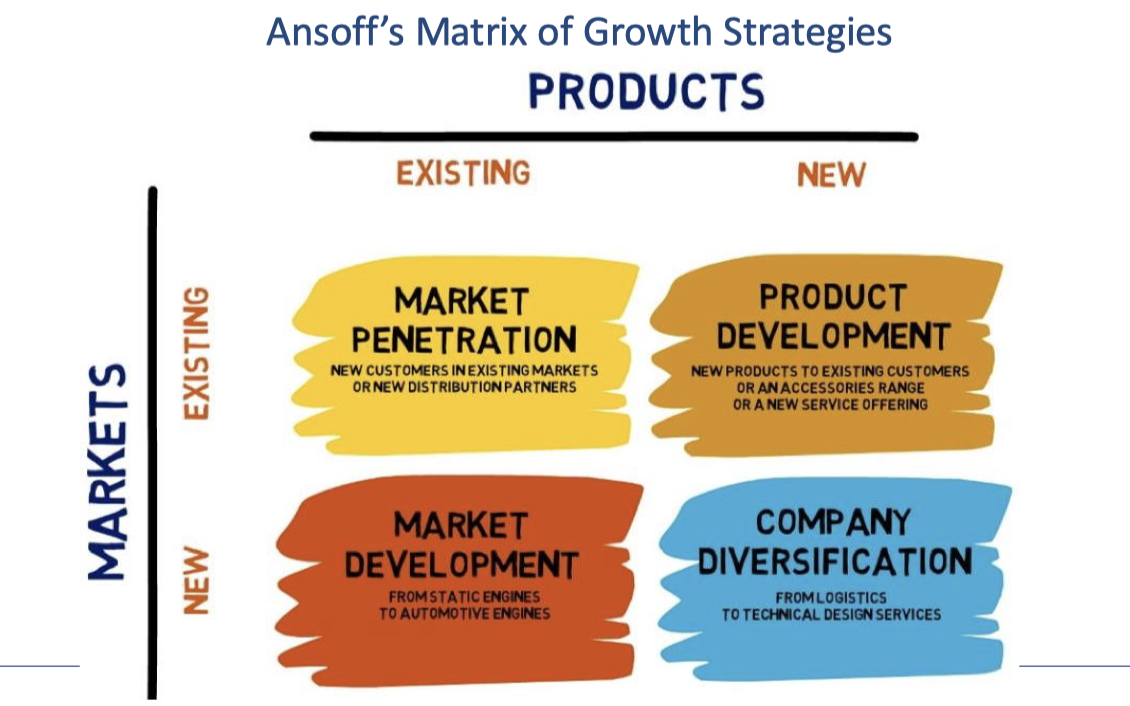
Ansoff’s Matrix of Growth Strategies
а
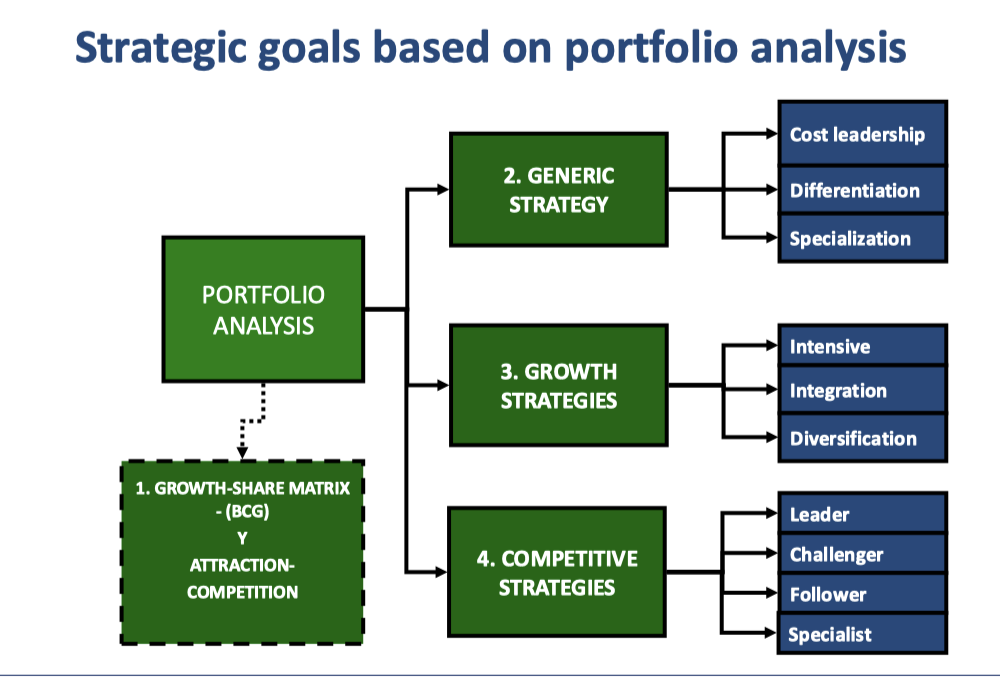
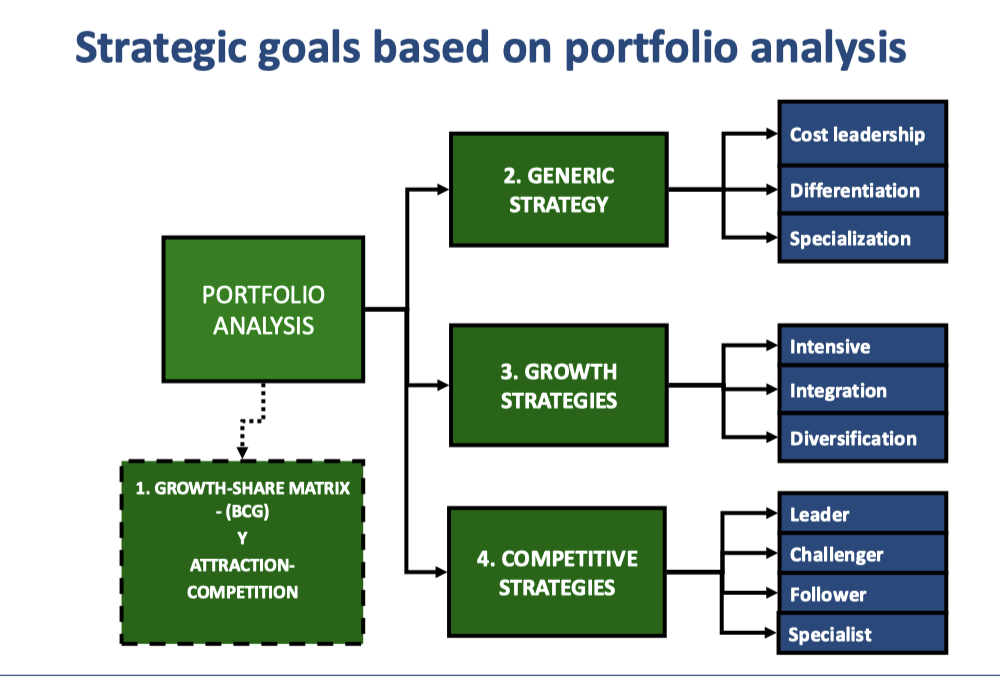
Strategic goals based on portfolio analysis
а
What is a Consumer Trend?
A consumer trend is a new pattern of behavior, attitude, or expectation that becomes noticeable among a group of people. This change reflects a deeper human need, want, or desire.
✅ In simple terms:
It’s a new way people act or think, based on basic human motivations.
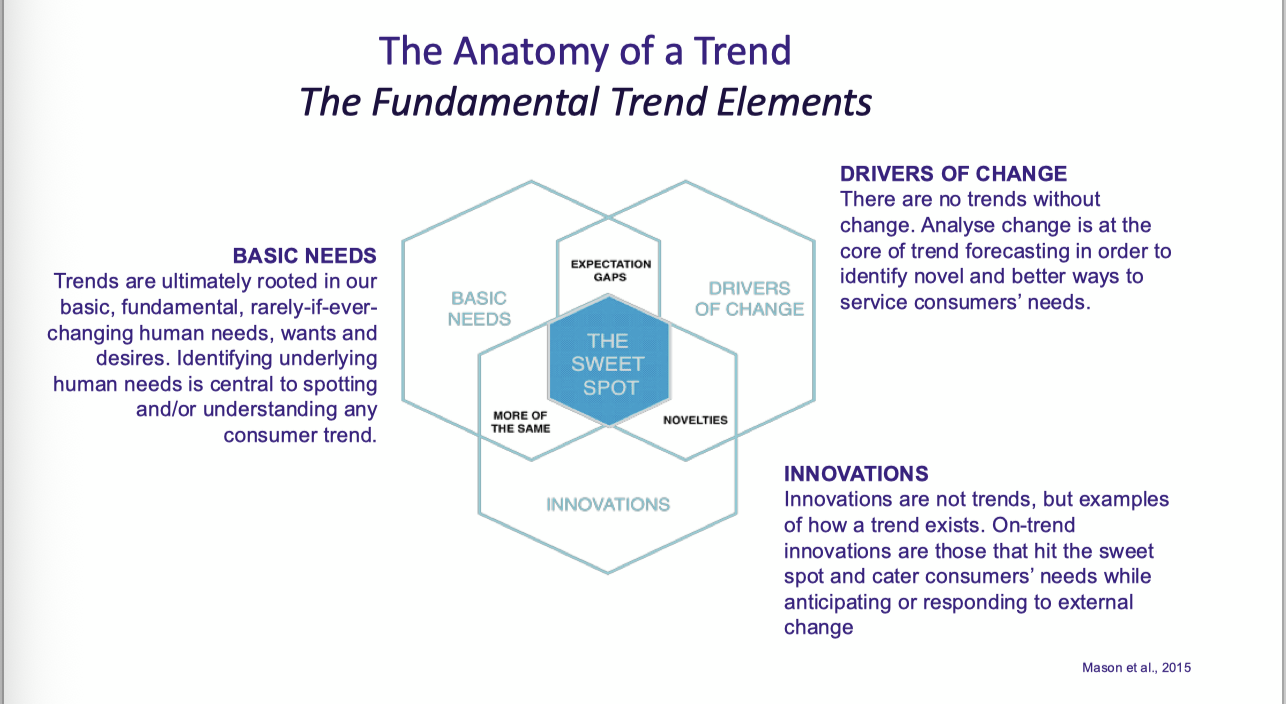
The Anatomy of a Trend
Think of a real trend like a recipe made of three ingredients:
What people always need (like feeling safe or connected)
What’s changing around us (like new technology or social changes)
A smart new idea or product that responds to both
When these three come together, you get the "sweet spot" — a product or service that people really want now.
Trends happen because:
People’s needs stay the same,
But their expectations change due to what’s happening in the world,
And innovations fill the gap between what they expect and what they get.
Would you like me to turn this into a glossary, bullet summary, or an integrated thinker view next?
This slide explains “The Anatomy of a Trend” by breaking down the Fundamental Trend Elements into key components that help identify what makes a trend and where to find its “sweet spot.”
🔷 Central Idea: The Sweet Spot
The Sweet Spot is where a true trend lies.
It’s found at the intersection of:
Basic Needs
Drivers of Change
Innovations
This is also where expectation gaps emerge—spaces between what people want and what they’re currently getting.
🧩 The Fundamental Elements of a Trend:
1. Basic Needs (Left side)
These are unchanging human needs (e.g., safety, connection, identity).
Trends are rooted in these core needs.
To understand any trend, start by understanding what deep need it connects to.
2. Drivers of Change (Right side)
Trends don’t emerge without change.
These are the external forces (tech, culture, economy, environment) shifting people’s expectations.
Trend forecasting involves analyzing these changes to spot new opportunities.
3. Innovations (Bottom side)
Innovations are not trends, but they respond to or trigger trends.
On-trend innovations succeed because they meet unmet needs and adapt to change.
Examples: A new app that helps reduce stress or a sustainable fashion brand.
🚨 What’s Not a Trend?
More of the Same: Repeating old solutions.
Novelties: Short-lived fads that don’t connect deeply with needs.
📍 Takeaway:
The “Sweet Spot” = an innovation that bridges core human needs and external changes, addressing the expectation gap.
This model helps businesses and marketers spot real trends vs. temporary hype.
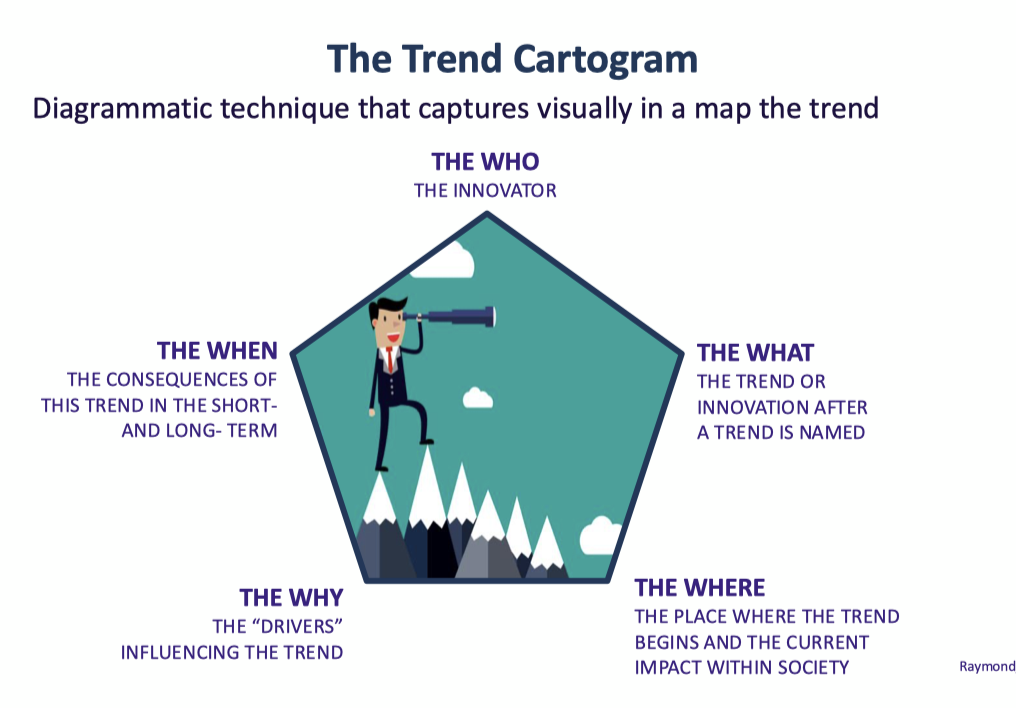
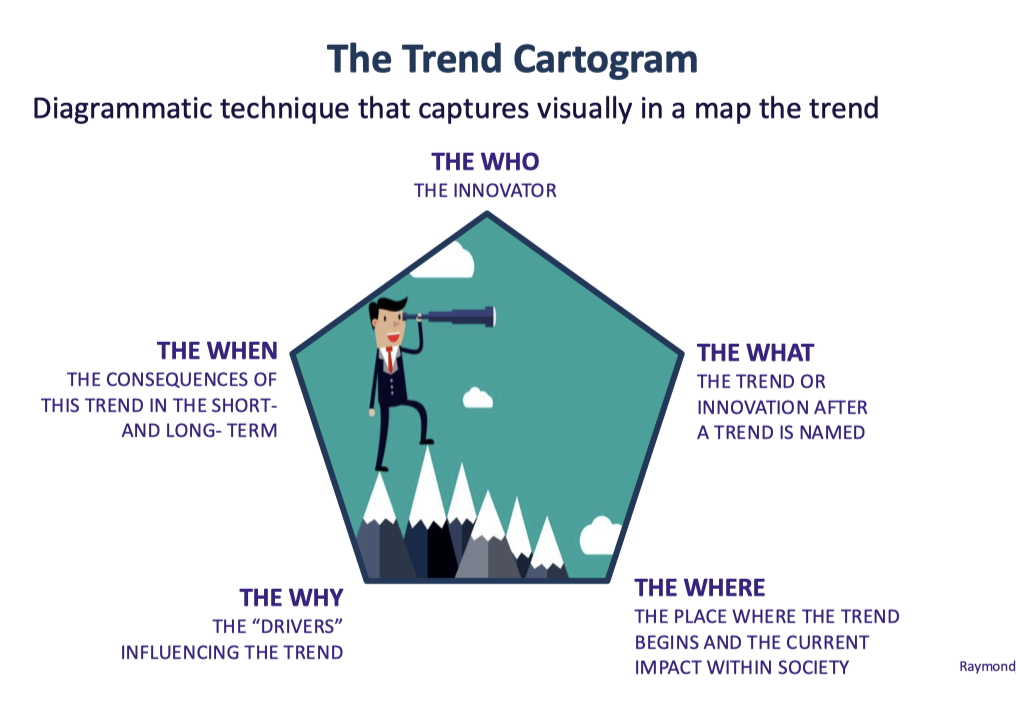
Questions of The Trend Cartogram and why use it
This tool help us to analyze trends clearly and completely by making sure they cover all the key aspects — the people, the product, the place, the cause, and the timing.
What is Social Listening?
Social Listening means:
Paying attention to what people are saying online (like on Twitter, Instagram, forums, etc.).
Looking at conversations and trends not only about your brand, but also about your whole industry.
Using that information to make better business and marketing decisions.
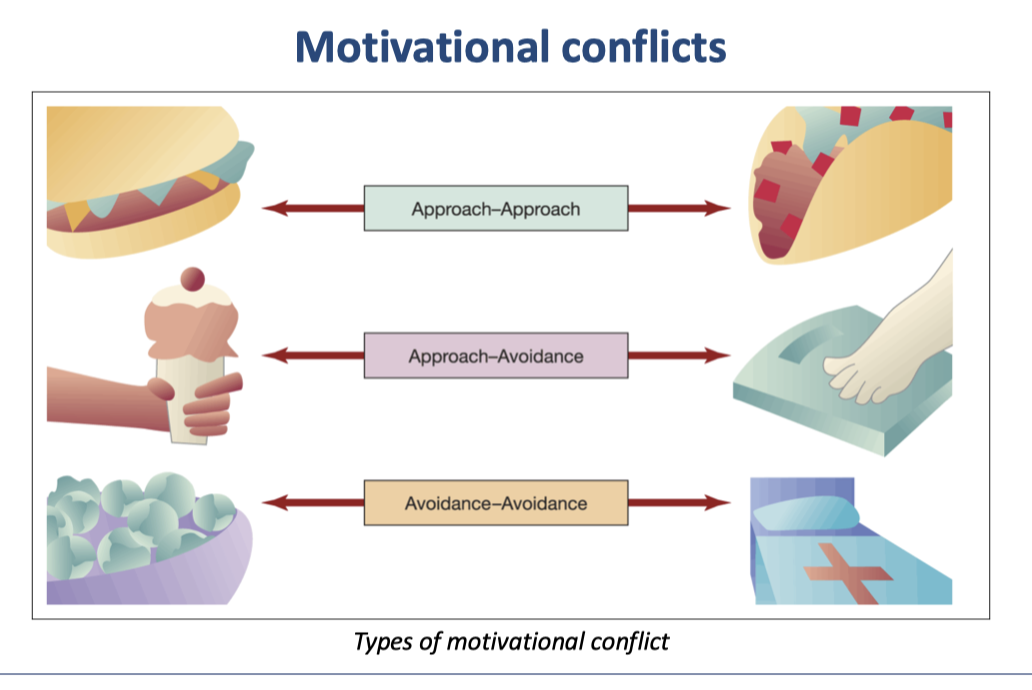
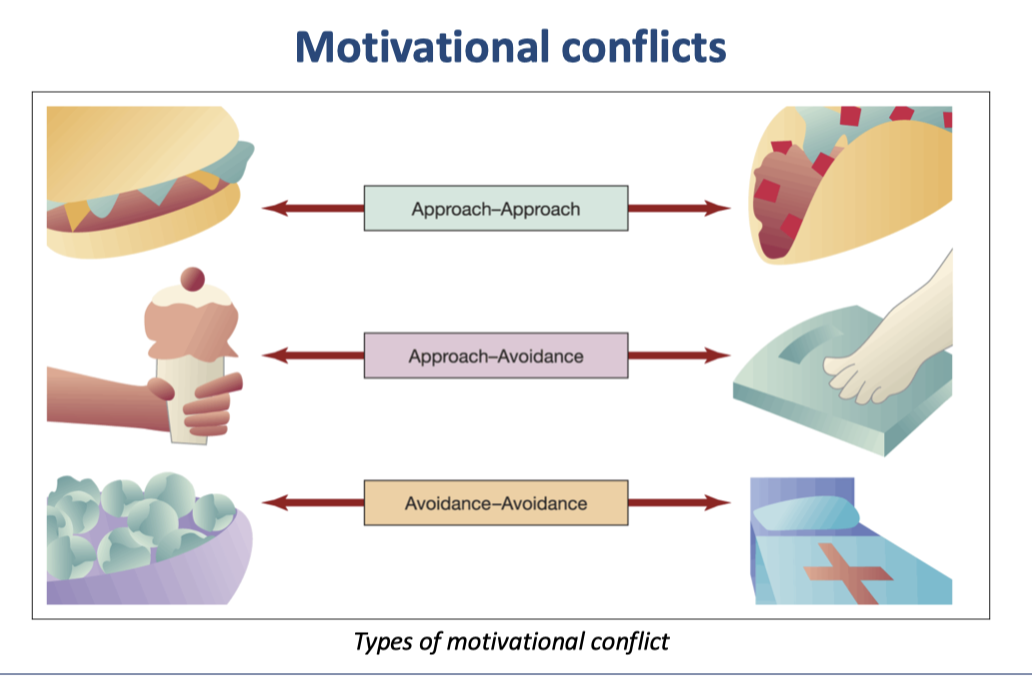
Motivational conflicts
🍔🌮 1. Approach–Approach Conflict
Two good choices—but you can only pick one.
You want both!
Example: You love burgers and tacos—but you have to choose just one for lunch. Either choice is rewarding, so it’s a "good vs. good" conflict.
🍦⚖ 2. Approach–Avoidance Conflict
One thing has both positive and negative sides.
You want it—but you also want to avoid it.
Example: Ice cream tastes amazing (approach), but it might affect your weight (avoidance). You feel torn about having it.
🥦🛏 3. Avoidance–Avoidance Conflict
Two bad choices—you must pick the lesser evil.
You don’t want either, but you must choose.
Example: You hate eating plain vegetables and going to the hospital for health problems—but you have to pick one for your health.
💡 Bottom line:
Marketers use motivational conflict to guide choices, reduce hesitation, and make their product the easiest or best choice.
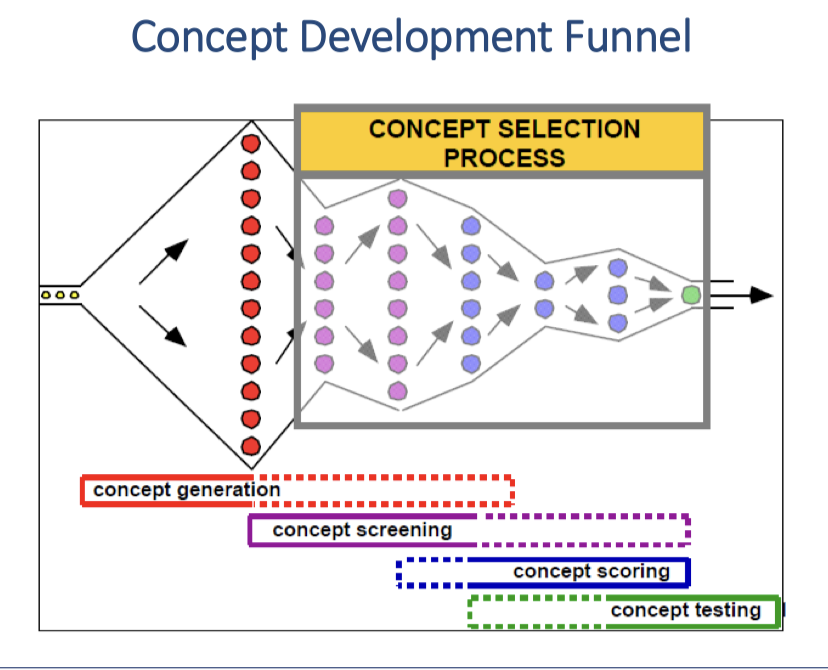
Concept Development Funnel
1⃣ Concept Generation
🔴 Lots of raw ideas are created.
🧠 Brainstorming stage – no filtering, just gather as many ideas as possible.
2⃣ Concept Screening
🟣 Weak ideas are removed early.
🗑 Quick check – get rid of ideas that clearly won’t work or don’t meet basic needs.
3⃣ Concept Scoring
🔵 The better ideas are compared and rated.
📊 More detailed evaluation – score ideas on criteria like cost, customer appeal, or feasibility.
4⃣ Concept Testing
🟢 Top idea(s) are tested with real customers.
🧪 Try it out – check if customers like it, understand it, and would buy it.
✅ Final Goal:
Choose the best idea that has the most potential for success in the market.

Concept generation (which is the first step in creating new products)
💡 What is a Product Concept?
It’s a basic idea or sketch of what a product could be — how it works, what it does, and what it might look like.
Think of it like a rough draft — not detailed yet.
⏱ Time & Budget:
This stage is fast and cheap: uses less than 5% of the budget and 15% of the time.
🔢 How many ideas?
You might come up with hundreds of ideas, but only 5 to 20 are good enough to look at closely.
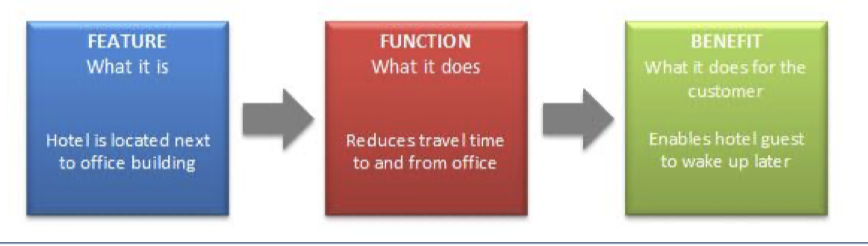
Parts of New Product Concept
💡 Simple Explanation:
🔹 Feature = What it is
A specific characteristic of the product.
Example: "Hotel is located next to an office building."
🔸 Function = What it does
The purpose or use of that feature.
Example: "Reduces travel time to and from office."
🟢 Benefit = What it does for the customer
The positive outcome or value for the user.
Example: "Lets hotel guest sleep longer (wake up later)."
🔁 Easy Formula:
Feature → Function → Benefit
👉 “What it is” leads to “What it does” which leads to “Why it matters to the customer.”
💼 Why it matters to marketers:
Marketers use this structure to clearly explain why a product is valuable to customers.
Instead of just saying what it is, they show how it helps the user — which is key for successful marketing.
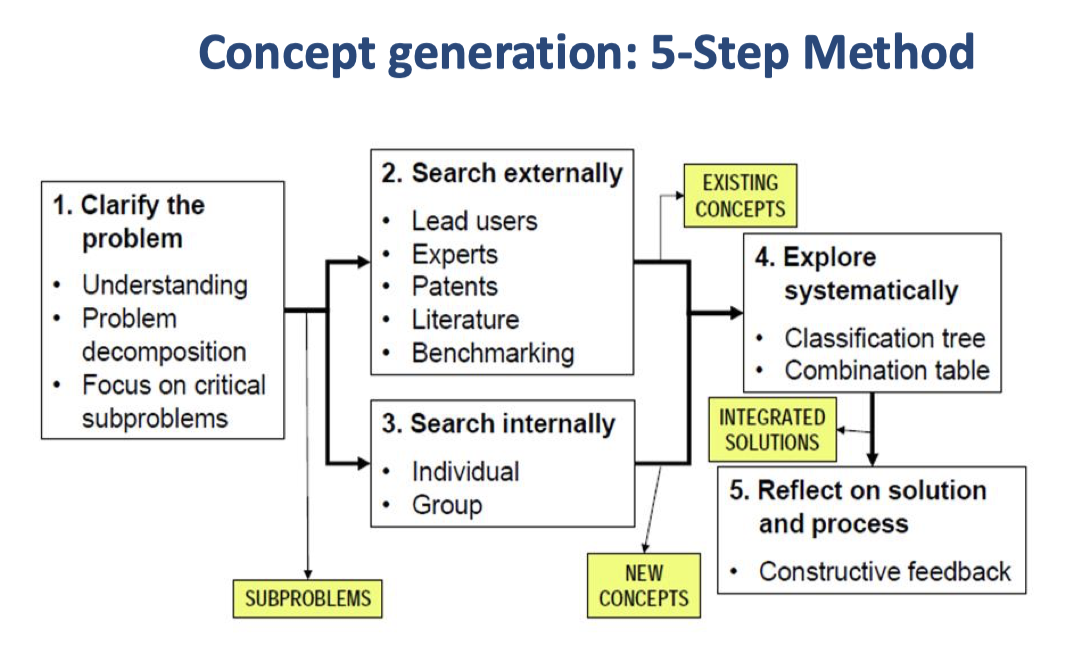
Concept generation: 5-Step Method
1. Clarify the Problem
Understand the problem clearly.
Break it into smaller pieces (subproblems).
Focus on the most important parts that need solving.
2. Search Externally
Look outside the company for ideas:
Ask experts
Study lead users
Check patents or other existing solutions
Use benchmarking and research
3. Search Internally
Brainstorm ideas inside the team:
Individually or in groups
Based on current knowledge or creative thinking
4. Explore Systematically
Organize and combine ideas using tools like:
Classification Trees (grouping ideas)
Combination Tables (mixing and matching features)
5. Reflect on the Solution and Process
Review what you’ve created
Give and receive feedback to improve both the idea and how you came up with it
🧠 Why It Matters for Marketers:
Marketers can use this method to develop better product concepts, spot opportunities earlier, and create more customer-focused solutions.
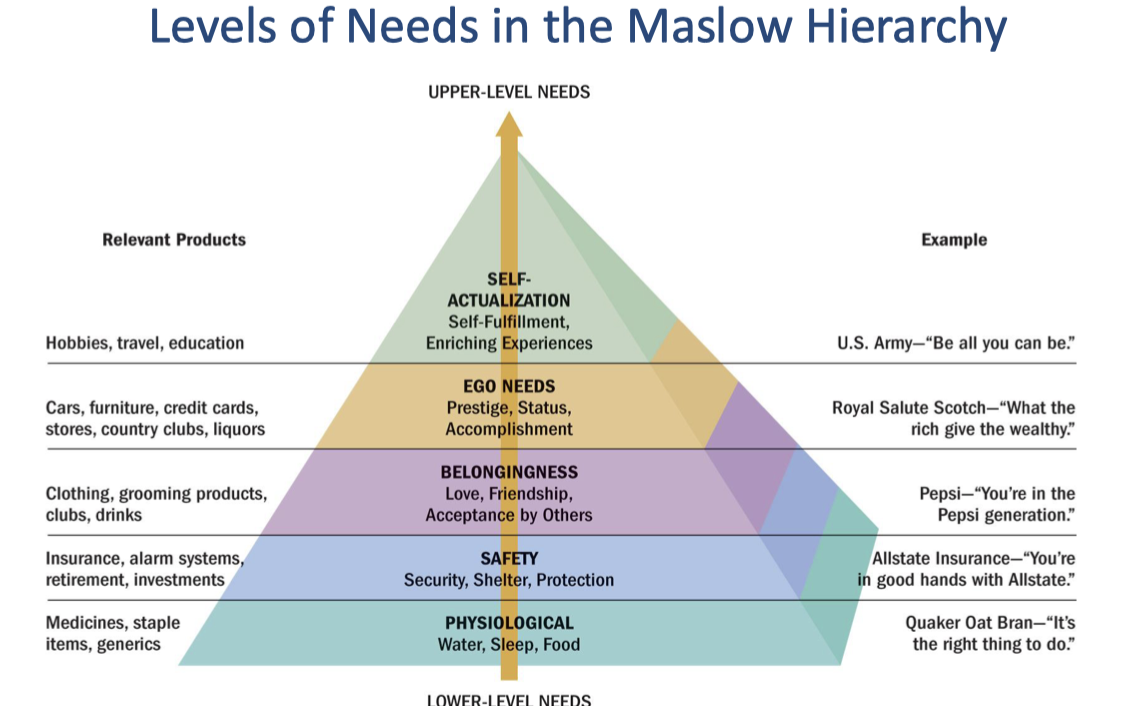
Levels of Needs in the Maslow Hierarchy
1. Physiological Needs – Basic survival
What: Water, food, sleep
Products: Medicines, staple groceries
Example: Quaker Oats – “It’s the right thing to do.”
2. Safety Needs – Feeling secure and protected
What: Shelter, financial stability, health
Products: Insurance, alarms, retirement plans
Example: Allstate Insurance – “You’re in good hands with Allstate.”
3. Belongingness – Social connection
What: Love, friendships, acceptance
Products: Clothing, clubs, drinks
Example: Pepsi – “You’re in the Pepsi generation.”
4. Ego Needs – Status and recognition
What: Achievement, prestige
Products: Luxury items (cars, credit cards, fancy furniture)
Example: Royal Salute Scotch – “What the rich give the wealthy.”
5. Self-Actualization – Personal growth and fulfillment
What: Learning, creativity, purpose
Products: Education, travel, hobbies
Example: U.S. Army – “Be all you can be.”
🧠 Why This Matters to Marketers:
Marketers use Maslow’s hierarchy to match their products and ads with the specific needs their customers are trying to meet.
→ When the message fits the need, people are more likely to buy.
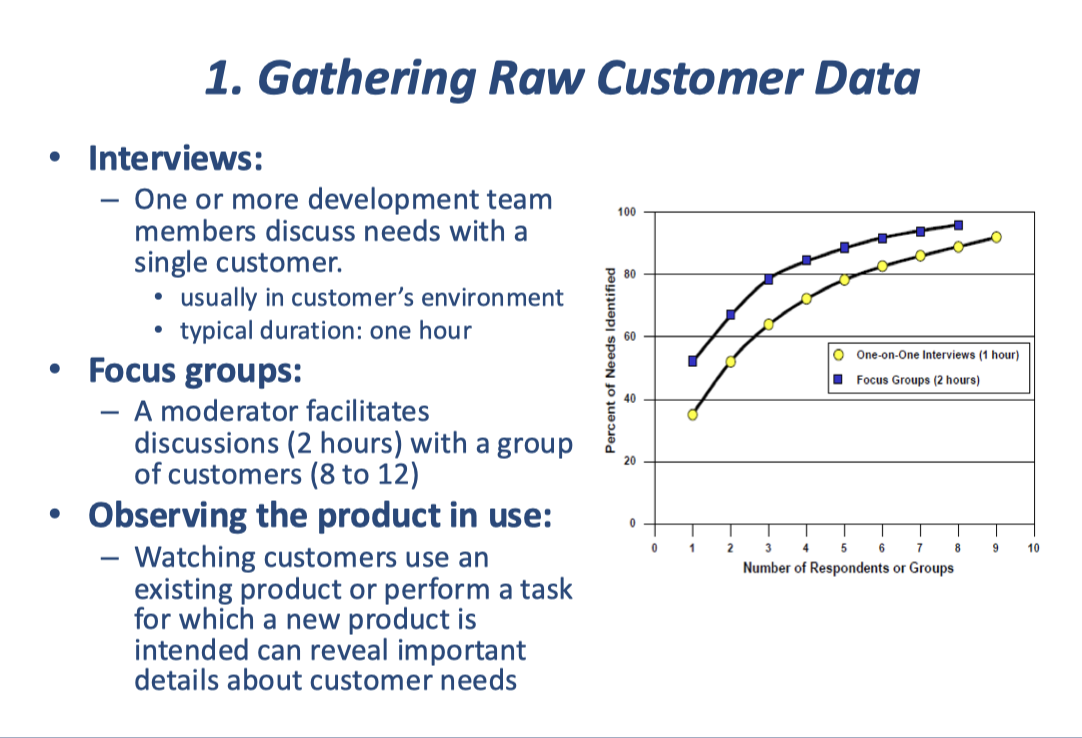
Gathering Raw Customer Data
This slide explains how companies collect raw customer data to better understand customer needs before developing a new product.
🔍 Simple Explanation: 1. Interviews
One-on-one conversations with customers
Usually done in the customer’s environment
About 1 hour long
Goal: Understand individual needs in depth
2. Focus Groups
Small group discussions (8–12 people)
Led by a moderator
About 2 hours long
Goal: Explore shared opinions and group reactions
3. Observing the Product in Use
Watch customers using the product or performing related tasks
Helps spot problems and unmet needs that customers may not mention directly
Goal: Gain real-world insights by seeing actual behavior
📊 What the Graph Shows:
Focus groups (blue squares) tend to reveal more customer needs faster than one-on-one interviews (yellow circles).
But both methods are useful and can be combined for deeper insights.
What is concept selection
It’s the process of choosing the best product ideas (concepts) to move forward with.
✅ It involves:
Evaluating — Look at how good each idea is
Comparing — Check the strengths and weaknesses of each
Selecting — Pick the most promising ones for further development or testing
🧠 Key Points:
All concepts meet basic customer needs — but you can't develop all of them.
The concepts are still early-stage ideas, not final products — so it’s hard to decide.

Concept selection - methods
🔵 External decisions
Let outsiders (like customers or clients) choose the concept.
🔵 Product champion
One powerful team member picks the concept they believe in most.
🔵 Intuition
Choose based on gut feeling — no formal process, just what “feels right.”
🔵 Multivoting
Everyone on the team votes; the idea with the most votes wins.
🔵 Pros and cons
List each idea’s good and bad points, then decide as a group.
🔵 Prototype and test
Build and test each idea — choose based on real performance.
🔴 Decision matrices (most structured)
Score each idea based on important criteria (e.g., cost, feasibility, appeal).
Scores can be weighted (some criteria matter more).
Concept selection: Why a structured method?
Using a structured method helps teams make better, faster, and fairer decisions about which product ideas to develop.
✅ Key Benefits:
Stays objective
Helps avoid personal bias or emotion when choosing ideas.Customer-focused
Ensures concepts are picked based on what customers really want.Competitive advantage
By comparing ideas with existing products (benchmarking), you can design something better.Faster product launch
Reduces confusion and wasted time = quicker results.Team decision-making improves
Everyone is aligned and decisions are based on clear, agreed criteria.Clear documentation
Keeps a record of why each idea was chosen — useful for future reference.
Concept selection and its two steps
This slide explains the two-step process of concept selection — how teams narrow down and choose the best product ideas.
🔍 In Simple Terms:
When teams have many product ideas, they need a way to filter and choose the best one. This is done in two stages:
🛠 1. Concept Screening
A quick, rough check of ideas
Goal: eliminate the weak ones and keep only the promising few
🧪 2. Concept Scoring
A deeper, more detailed analysis
Goal: pick the single best idea to develop further
🧮 How they do it:
They use a selection matrix to:
Rate each idea
Rank them from best to worst
Select the top idea(s)
Develop the winner
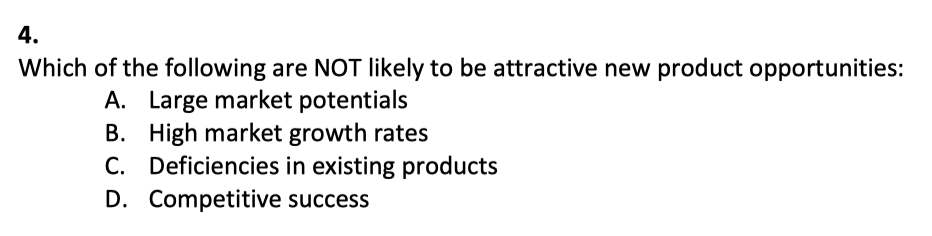
Ideas screening. Signs of a Good Product Opportunity:
Large Market Potential
A lot of people would want to buy it.High Market Growth
The market is expanding fast — good future sales potential.Problems with Current Products
Existing options don’t satisfy customers — opportunity to do better.New Technologies
Innovations that allow something new or improved.Competitor Failures
Others have failed — learn from them and offer a better solution.Strong Brand Equity
A well-known and trusted brand can make the new product succeed faster.
Five steps for concept screening
🪜 5 Steps to Screen Concepts:
Prepare a selection matrix
(Create a table to compare ideas based on key criteria)Rate the concepts
(Score each idea using the matrix)Rank the concepts
(List them from best to worst)Combine & improve
(Merge good parts from multiple ideas to make stronger ones)Select top concepts
(Pick the best one(s) to move forward)
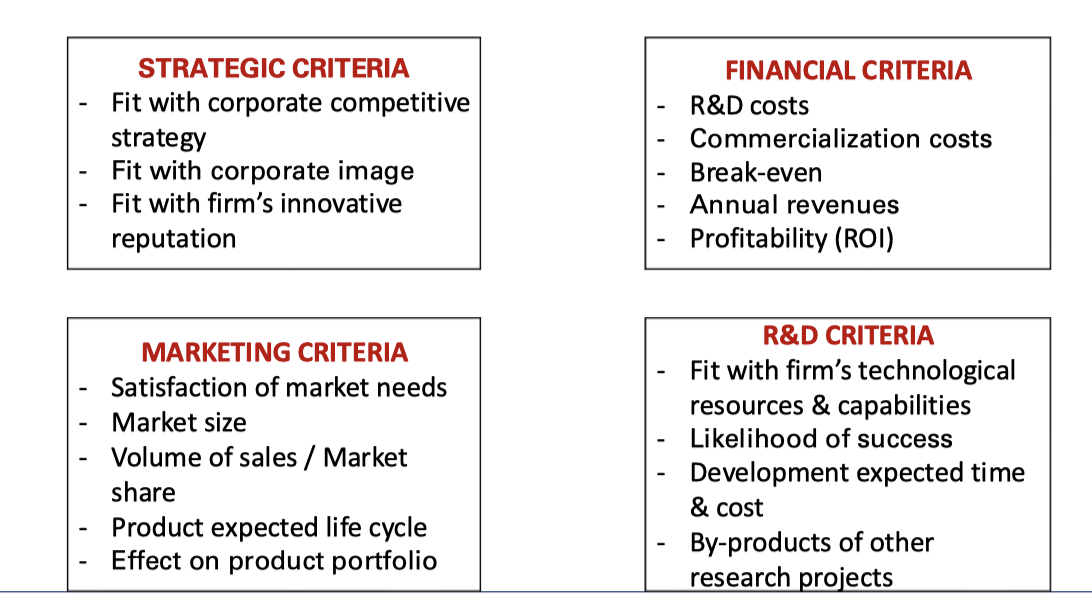
Before deciding which product idea to move forward with, companies ask:
"Does this idea make sense for us?"
To answer that, they check these 4 key areas:
1. Strategic Criteria
Does the idea match the company’s long-term goals?
Does it fit the company’s image and reputation for innovation?
2. Financial Criteria
Is it affordable to develop (R&D cost)?
Will it make money? (Profit, break-even, revenue)
3. Marketing Criteria
Is there a real need in the market?
Is the market big enough?
Will it fit well in the current product lineup?
4. R&D (Research & Development) Criteria
Can the company build it with current tech?
What’s the chance of success?
How long and expensive is development?
Does it relate to any existing research?
✅ Why It Matters for Marketers:
Using these criteria helps marketers choose ideas that are:
Profitable
Strategic
Realistic
And most importantly — wanted by the market
Let me know if you want this turned into a Quizlet flashcard set or a summary table!
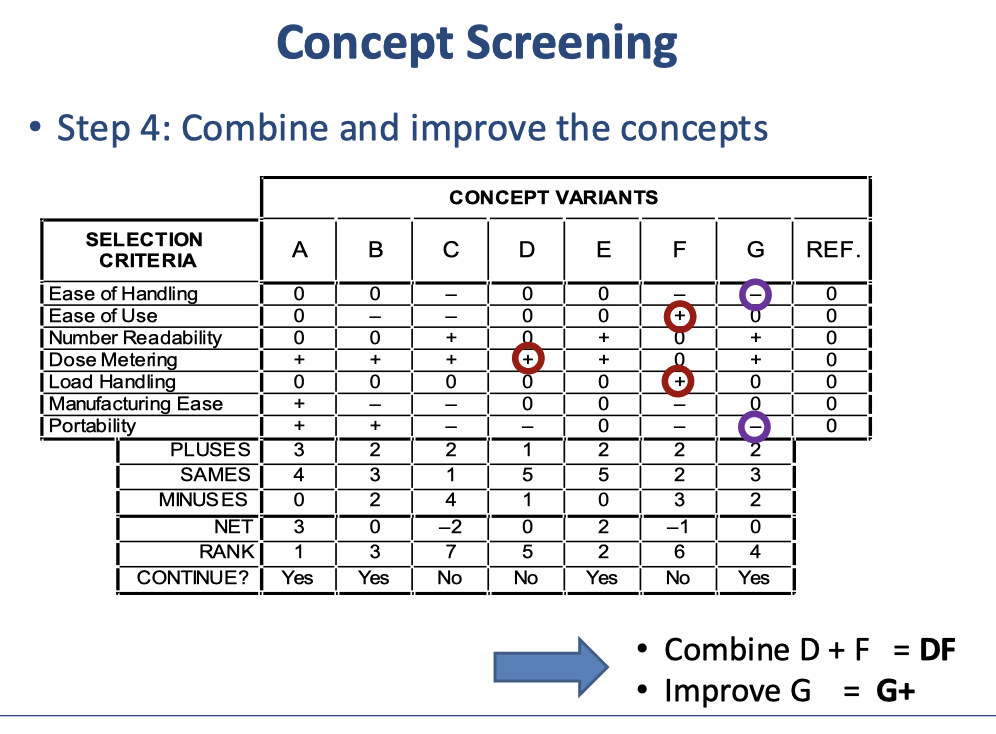
How does step 4: Combine and improve the concepts look like
This slide shows Step 4 of the Concept Screening process:
👉 “Combine and improve the concepts”
🧠 What’s Happening in Simple Terms:
You’re comparing different product ideas (A to G) based on key features (called selection criteria), like:
Ease of Use
Portability
Manufacturing Ease
Etc.
Each idea is rated:
+ means better than the reference
0 means same
– means worse
Then, for each idea, you count:
How many pluses (good things)
How many minuses (bad things)
Calculate the net score = Pluses – Minuses
Rank the ideas and decide if they should continue
🔧 Step 4: Combine or Improve
Now we ask:
Can we make a stronger concept by combining or improving others?
Combine D + F = DF
D and F both have some strengths (see red circles). Combining their best features may give us a better idea.Improve G = G+
G has potential (see purple circles), but needs improvements. Instead of rejecting it, we try to make it better.
✅ Why This Matters for Marketers:
This helps marketers and product teams:
Spot the best parts of each idea
Avoid throwing away good ideas too soon
Build a stronger, customer-friendly product
Let me know if you want a flashcard version or bullet-point summary!
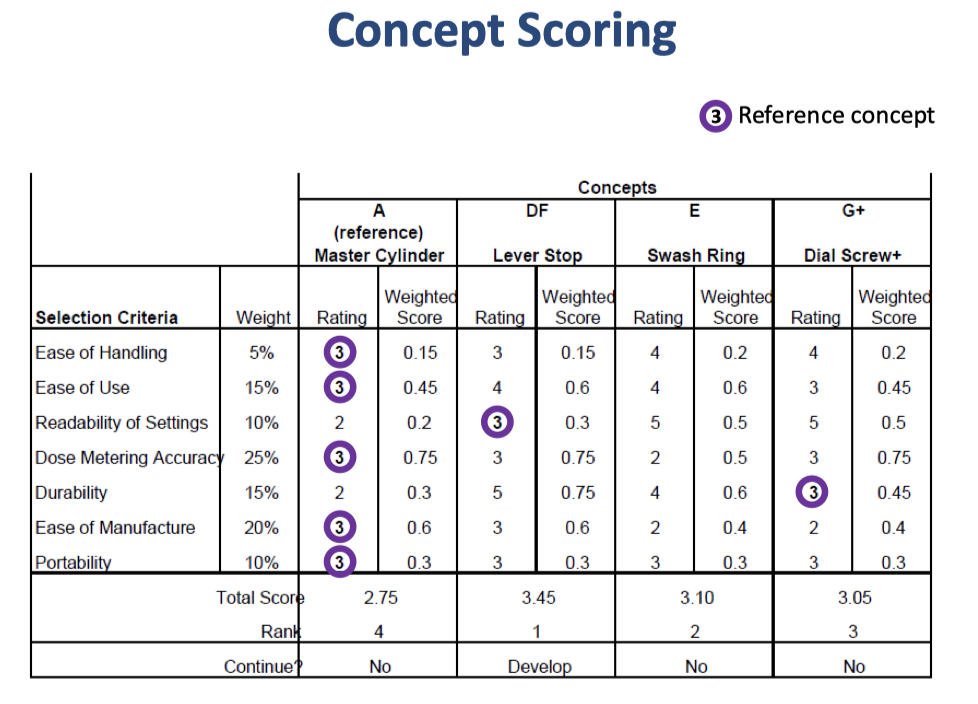
How does concept scoring look like
This slide is about Concept Scoring, the second stage of concept selection.
🔍 What Is Concept Scoring?
It’s a detailed evaluation of product ideas using a weighted scoring system. It helps pick the best idea based on what matters most to users.
✅ How It Works:
Selection Criteria: These are the most important features (e.g., ease of use, durability, etc.)
Weights: Each feature is given a percentage (%) showing how important it is.
Rating: Each concept is scored (usually 1 to 5) for each feature.
Weighted Score: Multiply rating × weight.
Total Score: Add all weighted scores for each concept.
Rank: Rank concepts based on total score.
Decision: Decide whether to continue development or not.
🧠 What’s in the Table:
Concept A (Master Cylinder) is the reference. It scores 2.75 → Rank 4 → Don't continue
Concept DF (Lever Stop) gets the highest score of 3.45 → Rank 1 → DEVELOP
Concepts E and G+ are okay but not the best, so not continued.
🧩 Why This Is Useful:
Objective Decision: It’s based on numbers, not opinions.
Focus on What Matters: It highlights what features matter most (like Dose Metering Accuracy at 25% weight).
Pick the Best Idea: Helps teams pick the idea that will most likely succeed.
Let me know if you'd like a flashcard summary or need help with how to do one yourself!
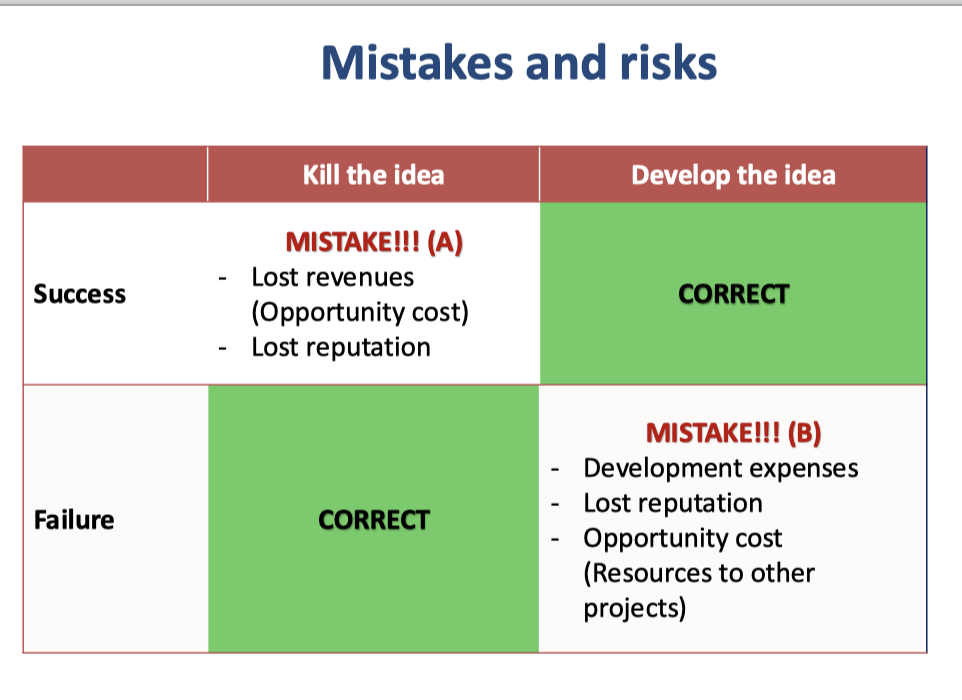
This slide explains the risks and mistakes that can happen when deciding whether to kill or develop a new product idea.
No worries! Let me explain this slide in super simple terms:
🎯 The slide is about:
What can go right or wrong when deciding to keep or reject a product idea.
Imagine you have a new product idea. You have 2 choices:
Kill the idea (don’t make it)
Develop the idea (spend money to make it)
Now… the product idea can either:
Succeed (people love it)
Fail (people don’t like it)
🔍 There are 4 possible outcomes:✅ 1. You develop the idea and it succeeds → GOOD!
You make money.
Your reputation grows.
❌ 2. You kill the idea and it would have succeeded → BAD! (Mistake A)
You miss out on money (lost opportunity).
People might think your company ignores good ideas.
✅ 3. You kill the idea and it would have failed → GOOD!
You save money and time.
❌ 4. You develop the idea and it fails → BAD! (Mistake B)
You waste money.
Your reputation suffers.
You lose time and energy that could have gone into better ideas.
🧠 Simple Summary:
What You Did | What Happened | Good or Bad? |
|---|---|---|
Developed Idea | Success | ✅ GOOD |
Killed Idea | Success | ❌ MISTAKE A |
Killed Idea | Failure | ✅ GOOD |
Developed Idea | Failure | ❌ MISTAKE B |
🛡 Why this matters:
This is why companies use concept screening and scoring tools — to avoid mistake A and B, and make smart product decisions.
Let me know if you'd like a flashcard version too!
What is Concept Testing?
Concept testing is when a team shows a product idea to real customers to get their opinions before building it.
👉 Instead of guessing, the company asks potential buyers what they think.
🧩 The Whole Picture (How Concept Testing Fits In)
You generate product ideas (Concept Generation).
You screen and score them to pick the best (Concept Selection).
Then, you test those ideas with customers (Concept Testing).
Based on feedback, you decide to improve, launch, or drop the idea.
Step | What Happens? |
|---|---|
Generate | Create many ideas |
Screen | Quickly narrow them down |
Score | Compare carefully with criteria |
Test | Ask customers what they think |
Decide | Improve, launch, or stop |
What are the Objectives of Concept Testing?
1. Check if people want to buy it
Ask: “Would you buy this?” (Scale from “Definitely yes” to “Definitely no”)
2. Improve the product idea
Ask: Do you like it? Is it useful? Is it reliable?
3. Know your target audience
Collect customer info: age, gender, lifestyle, interests
(This helps in marketing later!)
two types of customer needs
🗣 Articulated (Explicit) Needs
These are needs that customers can explain clearly.
✅ Customers know what they want.
✅ They understand product features.
✅ They can say out loud what they like or dislike.
🧠 Example:
“I want a phone with a long battery life.”
🤔 Unarticulated (Implicit or Latent) Needs
These are hidden or unspoken needs.
❌ Customers can’t clearly express them.
❌ They might not even know they have these needs.
❌ They lack the right words to explain what they want or feel.
🧠 Example:
A customer struggles with a product but doesn’t say anything—until someone observes them and notices the issue.
 Note
Note  Flashcards (30)