GOV 324F Midterm 2
 Call Kai
 Learn
Learn Practice Test
 Spaced Repetition
 Match
Match Flashcards
 Knowt Play
1/104

There's no tags or description
Looks like no tags are added yet.
Name | Mastery | Learn | Test | Matching | Spaced | Call with Kai |
|---|
No analytics yet
Send a link to your students to track their progress
105 Terms
Douglas C North
“thinking about different rules by thinking of institutions”
Institutions are:
-rules of the game
-humanly devised constraints/framework that shape human interactions
-must be enforced to be effective
Institutional functions:
-reduce uncertainty (what to do/ expectations)
-define and limit set of human choices/constraints
Formal int:
-rules human beings devise, such as laws and regualtions
Informal int:
-Those that evolved over time, such as conventions, traditions, and codes of conduct
Organizations (players of the game)
political bodies: parties, parliament, council, regulatory agency
economic bodies: firms, trade unions, farms, cooperatives
social bodies: churches, clubs, athletic associations
educational bodies: schools, universities
Int affect development (negatively or positively) by:
-altering exchange/transaction costs
-changing production costs
ex:
-transitions from centrally planned economy market econ
-constitutions
-tax regimes
-private property rights
Political regime
-set of rules determining the main rules for a country’s politics
Categorization based on:
Freedom House’s aggregate scores
electoral rights, civil rights, and rule of law
How does a political regime affect development?
Daren Acemoglu
James Robison
=Both economic prize winners (applied statistical methods)
Democratic govs tend to:
-tax and invest more than authoritarian regimes do
-They tend to invest more in medical care and education: human capital
Not all political regime transitions may be equal:
the first election of regime transition is critical
Steven Fish seminal work:
Outcome of the initial election from soviet-style socialism determined the extent of economic reform by mid-1990s
Having a high score in intial elections index scores by country
-more liberal/pro-reform the outcome of the “founding election was”
-got rid of communist ideas→ led to their extensive economic reform
Regional governor’s turnover (more uncertainty)
→ less firms entering the market especially in 1-2 years tim
More deomcartic the region
→ Higher small form entry, but lower medium to large firm entry
The BLAT
-The system of informal contacts and personal networks which was used to obtain goods and services under the rationing during the SU
-In russia it means “petty crimes”
Blatnot
-notepad for blat contacts
-social security net, a social norm, specific contacts
There is Blat refrences to:
-Getting jobs for friends and relatives
-Exemption from different campaigns
-rights to maintain religious rituals
-meeting consumption needs
-important to this day: for getting into hospital, getting to good schools, enjoying leisure activities
Should PCS develop strong int first and development will follow or do they grow together?
-If institutions don’t come first you run the risk of state capture (need a strong administration 1st)
Corruption in PCS
-PCS have relatively high level of corruption compared to other regions of the world
Corruption
Misuse of public office for private gain
-bribes, kickbakcs, embezzlement of state funds, stripping of state assets, nepotistic hiring, violations of electoral and party finance rules
Prototypical case: politicla corrpution
-an individual or group deriving a benefit through public/state channels
Measurement of corruption
NGO
World Bank
Means of measurment:
-Ratings of country experts
-risk analysts evaluations
-polls of business executives and citizens
-experience based indicators
Problems with measurement
-stereotypes/perceptions vs actual incidences: on country level the correclation is quite weak
-some key data for comparison is only available from late 1990s
-Data on prosecution and registered crimes are available in some contexts, but may be biased
Perceived corruption in PCS
-Only some PCS were included in the early years—> first decade of transition is unknown
-CPI Score: higher score=less corruption
Business corruption in PCS
Percentage of firm executives who said it was always true that firms like theirs had to make additional irregular payments or gifts to get things done (BEEPS)
Determinants of corruption
Treisman: 60-80% of differnece in corruption in PCS can be explained by:
(THINGS ARE NOT EASY TO CHANGE)
-intial GDP per capita
-the number of years the country had been communist
-a measure of the country’s natural resource endowment
-the percentage of the population that adhered to Protestantism
HOLMES:
-The more authoritatrain a country is= the more perceived corruption there is
-Culture (measured by religion) also affect perceived corruption
-Higher GDP=Less perceived corruption
More reform in the 1990s=less perceived corruption
-more liberalism=less corruption
Graft as a state institution: Ukraine
-There are circumstances under which corrupt practices, such as graft can be beneficial (It can strengthen the state!)
-Ukraine: Some types of graft maintains administrative hierarchy of the state, because it permits systematic obedience=hierarchy-reinforcing graft
Conceptualization of the state: principal agent problem
principal (the state)→agent (state officials)
Agents are contracted to perform important functions for salary
-implement/enforce laws and decrees
-appropriately employ the power and financial resources of state office
ways to solve the problem:
-reward
-monitor
-sanction for noncompliance (no beaucratic drift)
States with higher corruption
-have higher tax revenues
-more gov expenditure
Graft
-Subordinates were allowed to steal from the state
-state orgs (security service, tax police) even helped lower-level officials to cover their tracks
-tracking of graft
-gave state evidence to enforce obedience (selective prosecution)
-allowed the state to track its share from the theft
-enabled the state to blackmail subordinates to gerner votes or achieve other political ends
Georgia: Maintaining fight against corruption
-As of 2019, Georgia was the highest performer on the CPI index
-Actions under its anti-corruption reforms include:
-Strengthening tax collection
-improving and cleaning up customs collection
-deregulating businesses
-Rooting out corruption in university entrance exams
-decentralizing municipal services
Why is it starting to falter in the recent years? (Georgia)
-Lack of checks and balances
-Kept clinging to power concentration
-Dominance of informality
-lack of independent judiciary
-state capture
Russia: Putin’s palace
-Alexey Navalny’s Anti-Corruption Foundation released a two hour video in 2021
-Supposed to be worth a billion dollars and ultimate manifestation of massive corruption
Accountability
Citizens and society can hold politicians and bureaucrats accountable for corruption or misconduct.
Accountability helps reduce corruption.
Key methods include:
Elections
Performance evaluations of government officials
Audits of public institutions
Protests
Accountability:
Elections and blame attribution in Russian cities
Ø United Russia (Putin’s party) receives less
votes in regional elections in cities where
the city mayors/managers is appointed (vs.
elected) when economic conditions worsen.
Ø They attribute the blame for bad economic
conditions to the United Russia party if they
know the party appointed its leader.
Transparency
The quality of public processes and information being open and accessible
Ø Makes it harder to for elites and bureaucrats to engage in corrupt activities
Ø International financial institutions, multinational companies, transnational advocacy
groups play important roles in incentivizing postcommunist countries to pursue
transparency.
Transparency
Ø Example: Kazakhstan
-It resisted adopting international community’s
transparency standards in its extractive industry
until 2014.
-During economic difficulty, it adopted them
(information on government tax revenues and
expenditure, contract with international oil
companies)
Importance of independent media
Ø Blame attribution and ability to sanction leaders is critical for accountability and
transparency.
Ø It is only possible when there is independent media.
Ø Some argue this is why political regimes are correlated with corruption.
Ø Bad economic news is not
censored, but it is systematically
blamed on external factors.
Ø Good news is systematically
attributed to domestic politicians.
Ø Why do you think corruption levels are considered generally higher in PCS than
other regions of the world?
Weak institutiuons, communist legacies, and limited accountability made it easier for officials to misuse power
Why is corruption so hard to get rid of?
It becomes a part of the political system and benefits powerful elites who do not want change
Can corruption serve the society and economy? Can it be good?
It can help systems function short term, but in the long run it harms the economy and society
State Capacity
The state’s ability to do what it has and intends to in general or in relations to particular policies
Measuring state capacity
-Most efforts measure state failure; moderate state capacity is not accurately assessed (measuring presence vs absence)
-Others are based on expert opinions
-Most efforts do not provide a parsimonious (minimalist, simple explanaton/factor) concept of state capacity,as they bring wide raning concepts
measuring state capacity hard to measure concepts:
-Legitimacy
-Social stability
-Administrative capacity
-Coordination capacity
Public goods approach to state capacity
-Focuses on the logistical ability and infrastructural capacity of the state
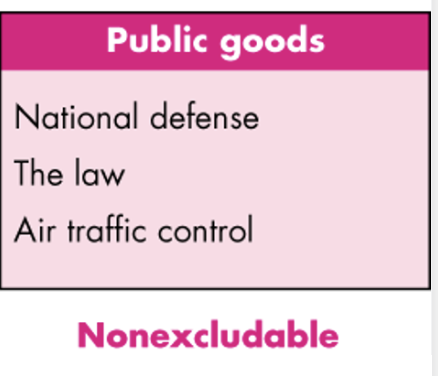
-Public Goods: Any good, potentionally provided by the gov, that is both non excludable and non rivalrous
-EX: national defense, clean air, street lighting, public parks, the radio, fire defenses.
Non-excludabe
-Impossible to exclude certain/some groups of people from consumption/access due to failure to pay
-EX:
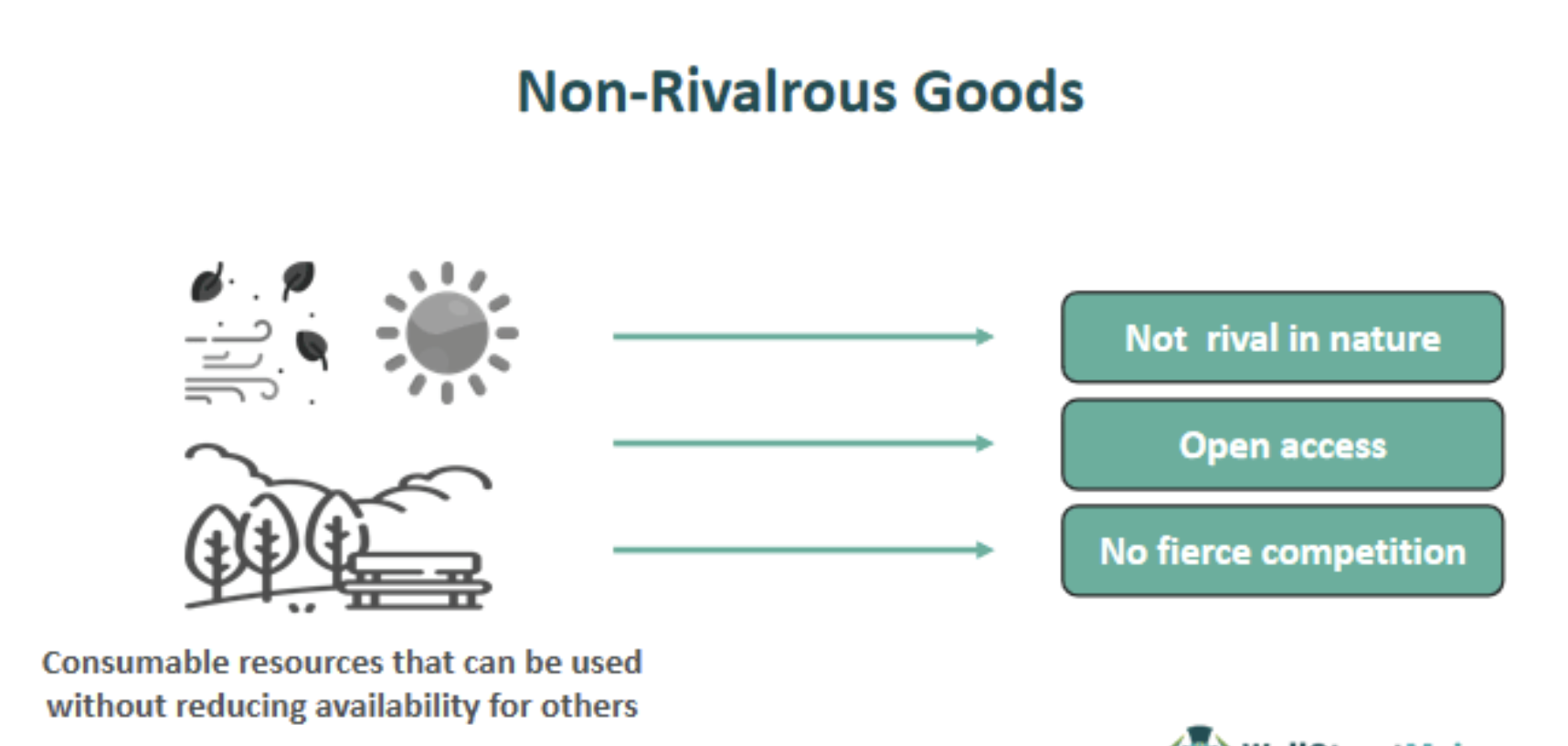
non-rivalrous
-use by one person/group does not reduce its availability to others
Taxing capacity:
Measures extractive capacity and ability to oblige its citizens
Progress in infrastructure reform:
Measures the government’s ability to formulate coherent goal and implement across its territory
Levels of corruption:
-Quality of property rights protection: Key for capacity to support development
-Ratio of noncurrency money (banks) to total money supply, or ‘contract intensive
-money’: Measures quality of contract enforcement
Ø Hungary, Estonia, Slovenia, and Czech
Republic are
The leaders
Kyrgyzstan, Tajikistan, and Turkmenistan are
the laggards
Russia is around the…..
Median
Level of state capacity stayed stable over the first and half of the second decade of transition →
State capacity is hard to change
Does state capacity promote economic development?
Yes! Through two primary channels:
• factors that enable markets to allocate resources more efficiently (law and order,
business environment)
• better performance in sectors where markets are more likely to fail (education,
infrastructure, and technology)
Reverse Causation
A situation where it is unclear whether A causes B or B causes A. In this context, economic development may increase state capacity instead of state capacity causing development.
Spurious Correlation
A relationship between two variables that appears causal but is actually caused by a third, unobserved factor (such as culture or institutions) influencing both.
EX: Shark & Ice Cream
Huge spike of ice cream sales around the same time of shark attacks; same correlation
Was the Soviet Union a capable state?
Its scope of activities was wide:
Ø Strong surveillance/coercion apparatus
Ø Reached every aspect of citizens’ lives
However, it lacked capacity:
Ø It was administratively dysfunctional
Ø Did not have funds/almost bankrupt
Administrative capacity of the state
-Bureaucracy is the interface between the state and citizens and main vehicle of policy
implementation.
-Generally, bureaucracy in transitional economics differ from the ideals of bureaucracy in market economies.
Market economy bureaucracy
(Weberian ideals):
• Professional service separate from the
political structure
• Selected competitively based on merit
• Bureaucracy makes decisions based on
rules
• Clear career path independent from
political changes
Transitional economy:
Bureaucracy is part and parcel with politics
• Bureaucracy constitutes a patronage network
for the government (e.g., state-dependent
middle class; privileged status)
• Bureaucratic discretion is rather large
• Career paths depend on political
directions/networks
Invisible hand
Bureaucracy: well-
organized, generally
uncorrupt, relatively
benevolent
• It provides public
goods and basic
regulations, but
private sector
prevails
Helping hand
Bureaucracy:
promotes private
economic activity
for some firms;
pursue industrial
policy, and often
have close economic
and family ties to
entrepreneurs.
Corruption is limited
and organized.
• The legal framework
plays a limited role--
-bureaucrats
adjudicate most
disputes
Grabbing hand
Bureaucracy:
intervenes in
economy, but not
organized---they are
independent
pursuing their own
goals and profits.
• It creates an
environment of
predatory regulation-
--harms
development.
How does bureaucracy affect development?
Through its structure
• Bureaucracies based on meritocracy and reward-based career paths tend to support
development
• Corruption networks/structures of bureaucracy determine if it helps or hurts development
• Large bureaucracies may have greater capacity to interfere with market mechanisms
More depends on the nature of bureaucracy:
-bureaucrats are substitutes for one
another: they compete to provide the
same service for the private sector
(More bureaucrats → low burden on
companies → better development)
-Bureaucrats are complements to one another: they
provide separate services for the private sector
(More bureaucrats → more burdern on
companies → worse development)
Ø How did size of bureaucracy affect privatization effectiveness?
• Data: 1985 to 2004 data on the performance of 25,000 state-owned and privatized
firms
• Method: Lab-like environment in Russian regions—77 regions
• Results: Privatization has a large and positive effect on firm performance
(productivity) in regions with relatively large state bureaucracies.
• Mechanism: The size of regional and local bureaucracies affects the post-
privatization business environment (shorter waiting times and fewer bribes when
dealing with bureaucrats).
Principal agent problem
Principal: (the state) → Agent (state officials)
Agents are contracted to perform important functions for salary
• Implement/enforce laws and decrees
• Appropriately employ the power and financial resources of state office
Moral hazard problem
Agents/political or economic actors become more risk-prone/reckless, if they believe that they are “insured” (someone else will carry the risk of loss).
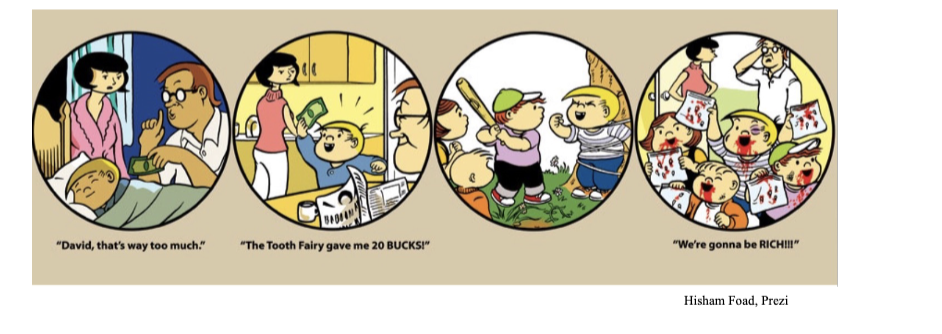
Bureaucrats can experience a moral hazard problem if the government carries the risk/they feel immune to the consequences of their action (such as in the case of politicization of the bureaucracy)
“bureaucratic drift”
Why might state capacity in PCSs not change much over time?
Institutional persistence: Bureaucratic structures, norms, and patronage networks become entrenched.
Elite incentives: Political elites may benefit from weak capacity (less accountability).
Low resources: Limited tax base restricts administrative expansion.
Path dependence: Early institutional choices shape long-term outcomes.
Conflict or instability: Repeated crises prevent long-term institutional reform.
Are shifts between different models of bureaucracy possible? Under what conditions?
Yes, but they are rare and usually require:
Major political shocks (revolution, regime change, war, economic collapse)
Strong reform coalitions with political will
External pressure or incentives (EU accession, IMF conditions)
Professionalization reforms (merit-based hiring, anti-corruption measures)
Stable economic growth to fund institutional reform
Without strong incentives or crisis, bureaucratic models tend to remain stable.
From a public goods perspective, is Russia a capable state? What about broader capacity concepts? Is the US?
🇷🇺 Russia
Public goods capacity: Mixed. Strong in defense and security, weaker in consistent service provision.
Coercive capacity: High (security apparatus, repression).
Coordination capacity: Strong centralized executive control.
➡ Capable in coercion and coordination, but uneven in broad public goods provision.
🇺🇸 United States
Public goods capacity: High in taxation, infrastructure, welfare, and administration (though uneven).
Coercive capacity: High but constrained by rule of law.
Coordination capacity: Strong but limited by federalism and polarization.
➡ Generally high capacity, but fragmentation and political polarization can reduce coordination efficiency.
resource curse
-It refers to the hypothesis that countries rich in certain natural
resources tend to perform worse economically compared to
similar countries that lack these resources (Alexeev and Conrad:
we disagree!)
-Among the PCS, we observe that resource-rich states (Russia,
Kazakhstan, Azerbaijan, Turkmenistan etc) are laggards in
economic reform and development and resource-poor states
(Estonia, Latvia, Lithuania etc) are leaders.
Economic channels:
Dutch disease: when massive foreign cash comes into the
economy from resource export, it makes non-resource sectors less competitive
Political channels:
Politicians tax less in resource-rich countries, so they become
more repressive and authoritarian. Corruption increases.
Bureaucratic channels:
Bureaucracies become lucrative during times of windfall
income. Less qualified bureaucrats become attracted to bureaucracy lowering administrative capacity of the state.
Historical development of oil industry
Soviet/Russian oil industry
started in Azerbaijan.
By the early 1800s, a primitive
oil industry developed—82
hand-dug wells by 1829.
The industry was slow due to:
Ø Poor economy
Ø Corruption
Ø State monopoly
Ø Location away from
industrial centers
after WWI,
Russia and communist countries started to truly depend on oil
revenues.
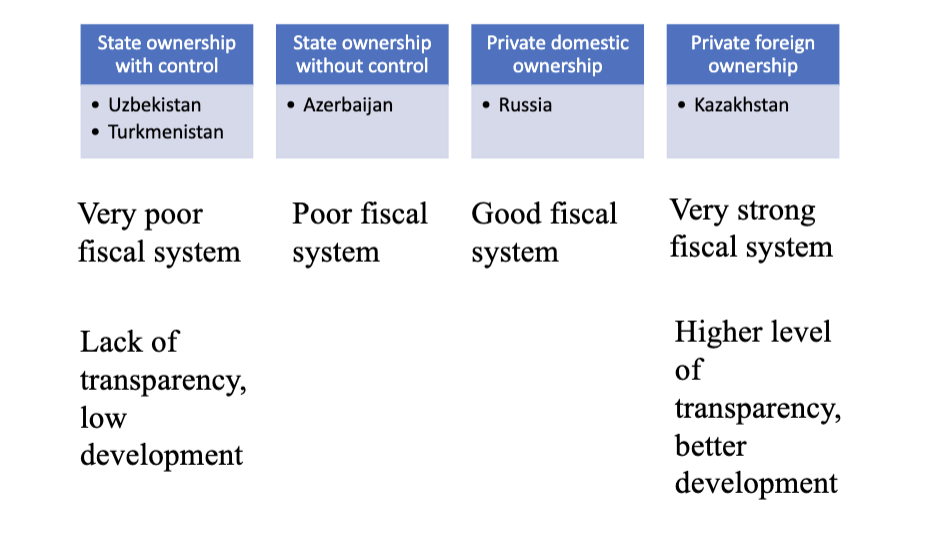
Dependent variable:
fiscal system/tax system=how well can you tax your population
Russia is rich in natural resources:
Ø Oil reserve of 106.2 thousand million barrels (~6% of world reserve)
Ø Natural gas reserve of 49 trillion cubic meet (~24% of world reserve)
Ø Coal reserve of 173 billion tonne (~19% of world reserve)
Ø Other minerals: copper, diamonds, lead, zinc, bauxite, nickel, tin, mercury, gold, and
silver
Oil and gas are wasting assets
Cheap oil is running out: The industry is not modernized enough to exploit
reserves in ”greener” fields
- Russia is notorious for failing to invest in further exploration and technology
Russia’s natural resource reserve funds
Stabilization Fund (2003): Created to save excess revenues from Russia’s oil and gas profits for future economic stability.
Split in 2008: The fund was divided into the Reserve Fund (to protect the budget during economic downturns) and the National Wealth Fund (to invest in development and support future generations).
Outcome after 2014: The Reserve Fund helped stabilize Russia’s budget when oil and gas prices dropped after 2014, and it was eventually fully used and discontinued.
Oil-war hypothesis:
countries tend to become more aggressive towards other
states when natural resource revenue, particularly oil price, is high
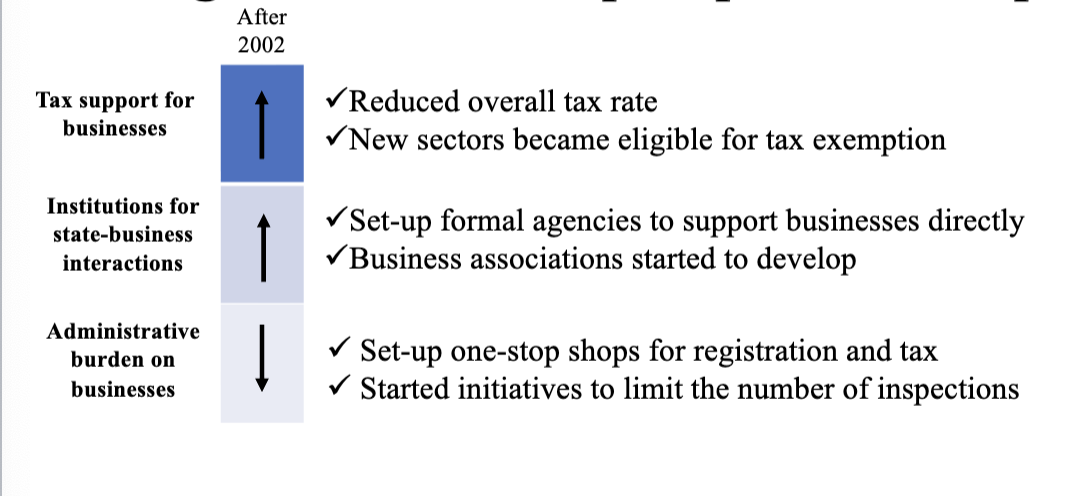
The Permanent Shock (2002):
Regional leaders adopted pro-business policies
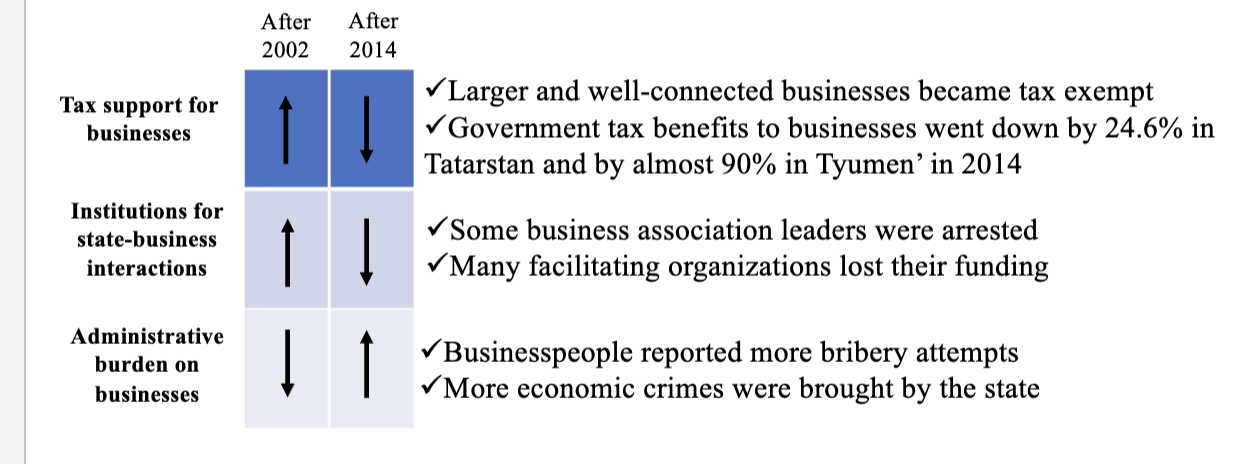
The Temporary Shock (2014):
Regional leaders did not support businesses
Geography can play a critical role in development
This is a (second) hypothesis from Adam Smith:
Physical geography can affect a country’s economic development
Ø Coastal regions has easier access to sea trade vs. inland areas,
so they are wealthier
Countries of tropical and desert climate zones have:
higher transportation cost
• higher rates of infectious diseaseà higher fertility; younger
population
• lower agricultural fertility, esp for staple foods (wheat, maze,
rice)
than nations in temperate zonesà over time larger economies
Most developed nations/regions are in
the temperate-snow zone
Almost all the temperate-zone countries have either high-income economies
(North America, western Europe, Korea and Japan) or middle- income economies
with restrictive policies (eastern Europe, the former Soviet Union and China).
Access to sea also play a role per Adam Smith
Landlocked countries of South
America, Africa and Asia, tend to be
considerably poorer than their coastal
counterparts
Ø Economic production is mostly
concentrated near coasts in temperate
zones.
Postcommunist countries
Ø They are all in the temperate/temperate-snow zone.
Ø We know that not all countries within the PC space experienced the same development.
Ø There is considerable variation within the temperate zone as well as the PC space.
Proximity to the West/border of the non-communist world
Kopstein and Reilly: This is an important factor that determined why some PCS succeeded in
adopting liberal market economy, while others have failed.
Mechanisms: spatial diffusion across borders of:
Ø Influence
Ø Institutions
Ø Norms
Ø expectations
Proximity to the West/border of the non-communist world
Distance from the West increases the economic freedom scores of a given country
significantly.
Ø Distance from the West critically affects a country’s political openness.
We need to expand our thinking about “geography” → space and diffusion may matter not
only through geographic locations but through other channels.
We need more disaggregated measure of space and diffusion? Yes!
Ø Openness (number of TVs, tourists etc): Countries that are more open have been more
advanced in their economic reforms.
Ø Neighborhood score (neighbor’s marketization level): The more open your neighbor’s
economy is, the more open your economy is.
Diffusion: spatial and temporal concept
Geographic diffusion: The more open your neighbor’s politics is, the more open your
politics is. The more developed your neighbors are, the wealthier you are.
Ø Temporal diffusion: Diffusion is the process whereby past events make future events more
likely
Diffusion explains clustering of political or economic outcomes: All CA countries are
autocracies.

