2813 2nd Slide Test
 Call Kai
 Learn
Learn Practice Test
 Spaced Repetition
 Match
Match Flashcards
 Knowt Play
1/94

There's no tags or description
Looks like no tags are added yet.
Name | Mastery | Learn | Test | Matching | Spaced | Call with Kai |
|---|
No analytics yet
Send a link to your students to track their progress
95 Terms
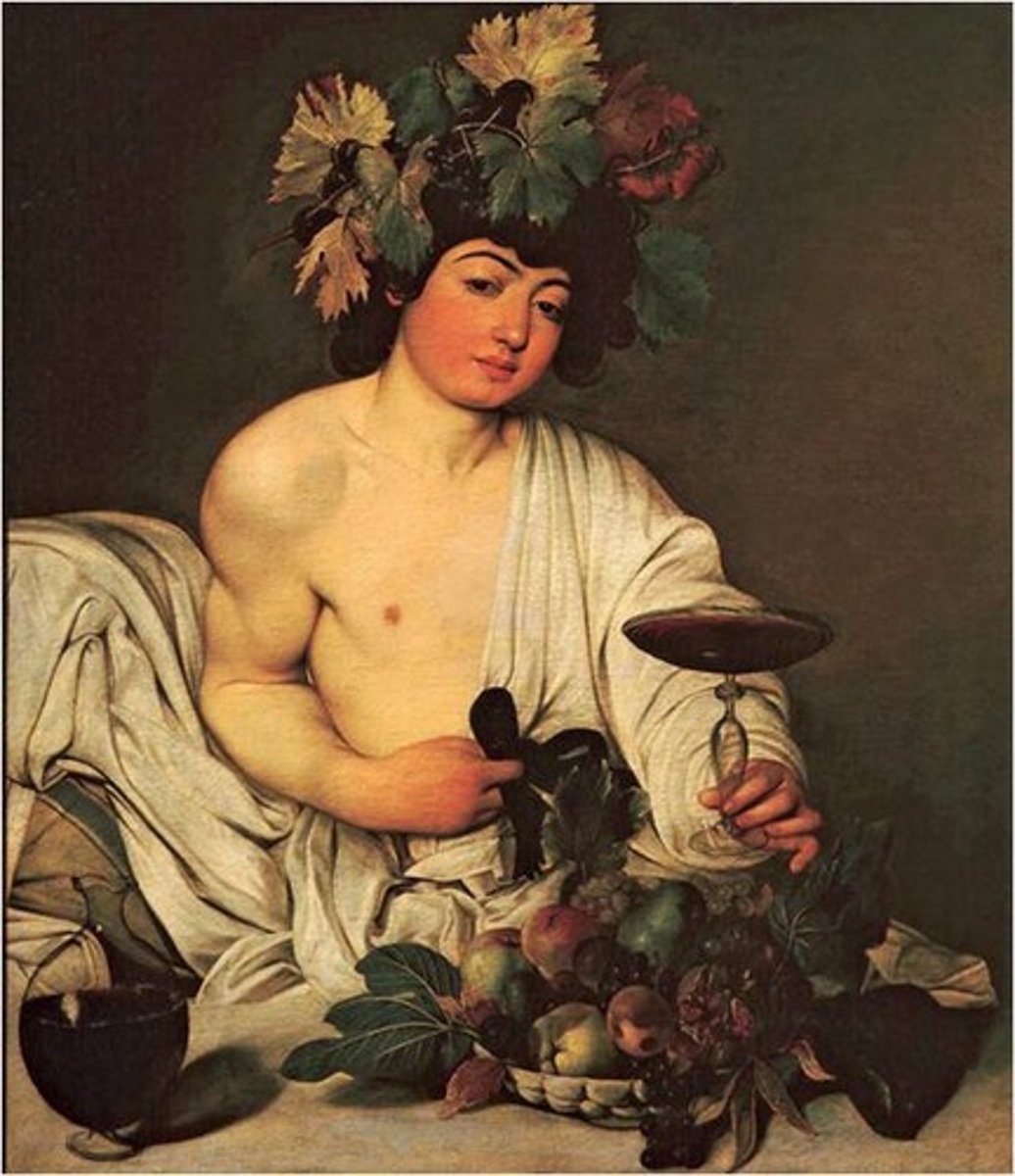
Bacchus. Caravaggio. 1595-1596. Oil on canvas.
-came to Rome with a specialization in still-life; turns up in paintings like this
-Caravaggio includes his self portrait on the wine vessel
-homoerotic
-finger in bow=Bacchus is the present
-Bacchus' hand is v naturalistic, with dirty fingernails and perhaps wine-stained
-strong observation of and adherence to life, indicated by the figure's "farmer's tan"
-Bacchus is inviting the viewer to join him
-Caravaggio was notorious for having rotten fruit in his works, perhaps a result of purchasing produce for the painting and never replacing them by the time the work was completed
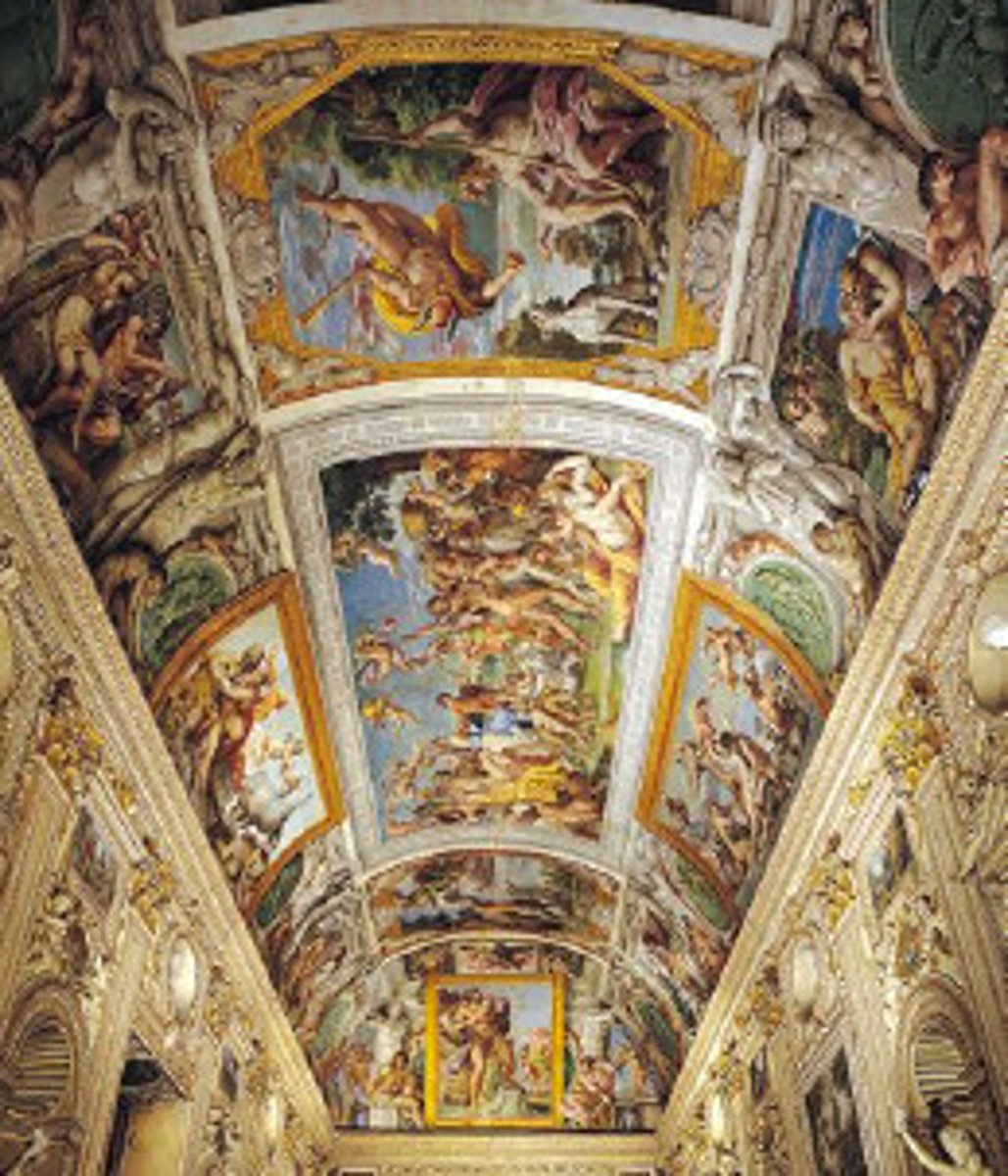
Ceiling of Gallery, Palazzo Farnese. Annibale Carracci. Rome. 1597-1601. Fresco.
-Carracci started a school of art in Bologna that was new and cutting edge for the time
-classicizing Baroque that brings dynamism with idealized body and uniform lighting
-central panel has the triumph of Bacchus
-every "painting" fresco has a scene of the Roman/Greek gods with their loves
-quadri riportati="transported paintings," the framing elements and appearance that one has taken a painting on canvas and put it on the ceiling
-also has painted bronze medallions and realistically painted ignudi; all designed for illusionistic effect
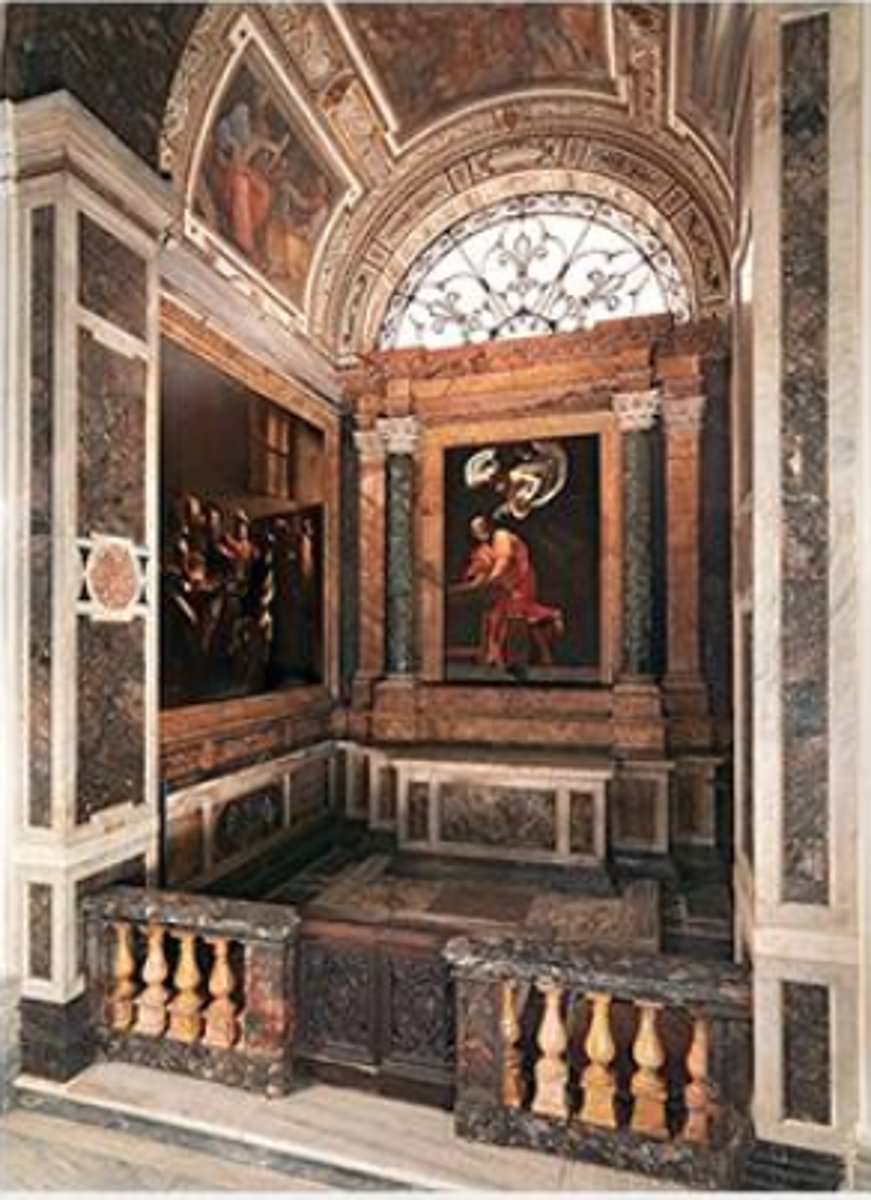
Contarelli Chapel. Rome. Paintings by Caravaggio 1599-1600.
-tenebrism light that echoes the way light comes in from the window
-tenebrism=the dramatic use of light and shadow; an especially pronounced form of chiaroscuro; associated with the Baroque and Caravaggio, specifically
-the painting against the wall with a window of St Matthew receiving the gospel was completed twice, as the first one was rejected for any number of reasons. Matthew appeared illiterate, with a scantily clad angel literally holding his hand to show him what to write for his gospel
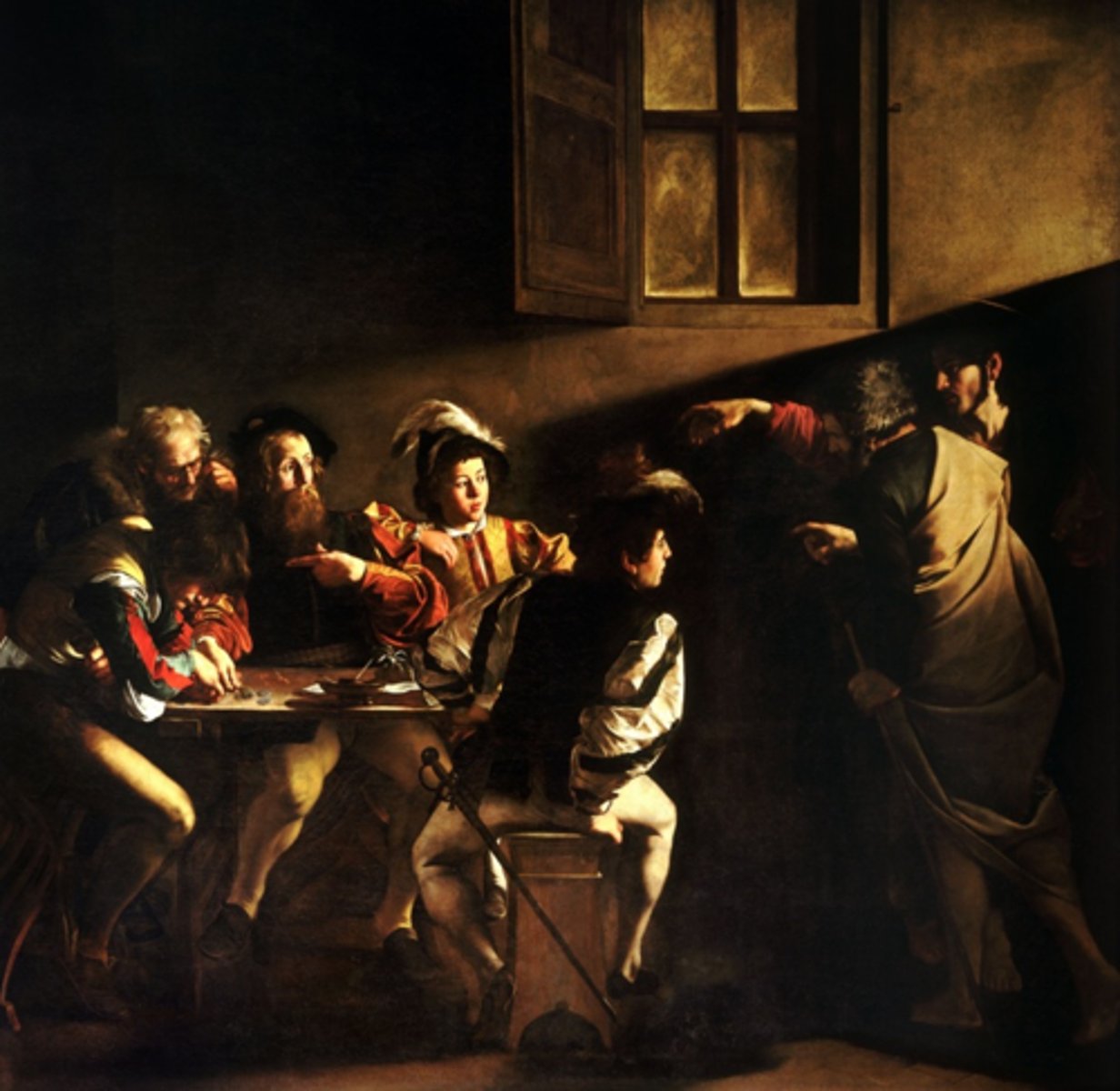
Calling of St. Matthew. Caravaggio. Contarelli Chapel, Church of San Luigi dei Francesi, Rome. 1599-1600. Oil on canvas.
-interpreted his religious subjects directly and dramatically, combining intensely observed figures, poses, and expressions with strongly contrasting effects of light and color
-tenebrism light that echoes the way light comes in from the window
-tenebrism=the dramatic use of light and shadow associated with the Baroque and Caravaggio, specifically
-great debate as to which figure is St Matthew
-Jesus' feet were changed and currently do not line up with Jesus' body
-hand of Christ mimics the hand of Adam on the Sistine Ceiling
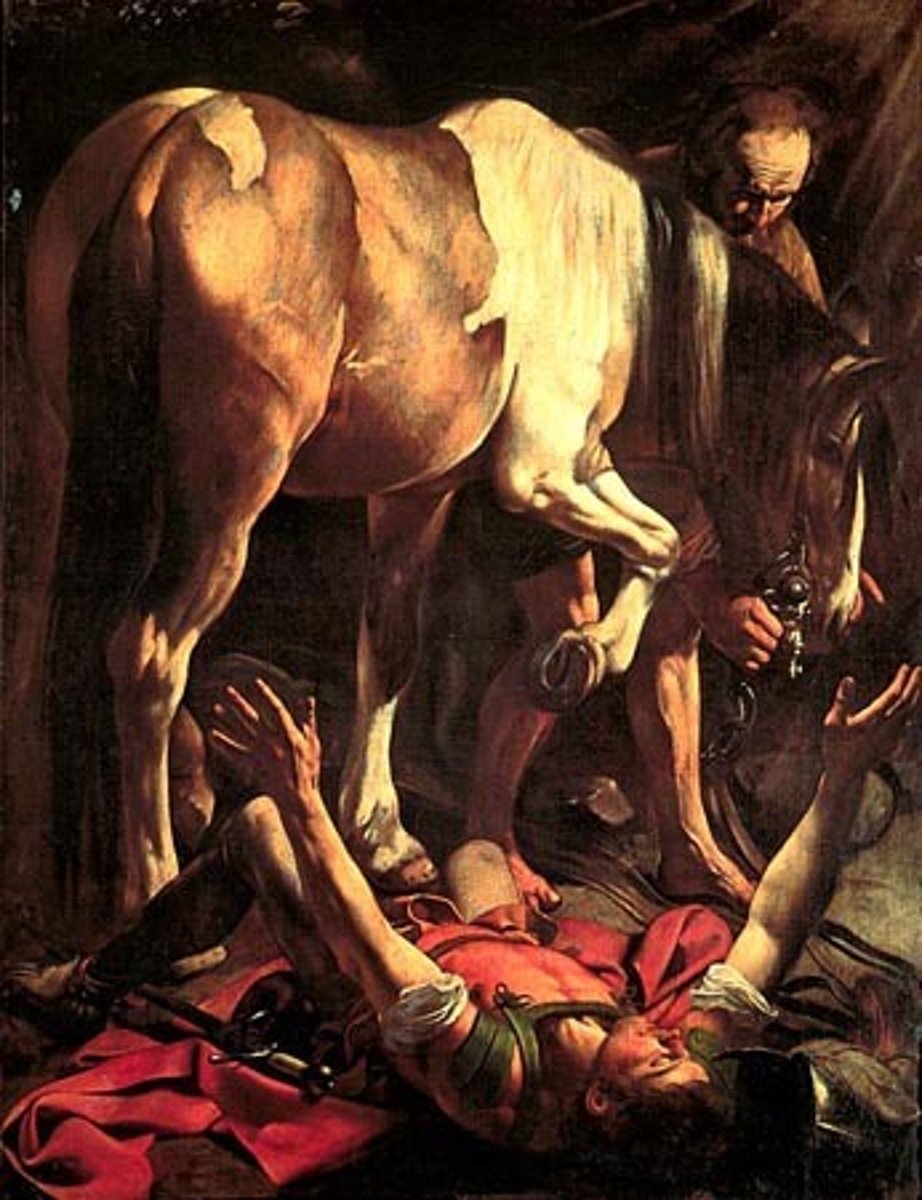
The Conversion of St. Paul. Caravaggio. Cerasi Chapel, Santa Maria del Popolo, Rome. c. 1601. Oil on canvas.
-tenebrism light that echoes the way light comes in from the window
-tenebrism=the dramatic use of light and shadow associated with the Baroque and Caravaggio, specifically
-extreme theatricality and foreshortening
-no depiction of the holy in a literal sense, only the reactions to it
-focuses on Paul’s internal involvement with a pivotal moment, not its external cause
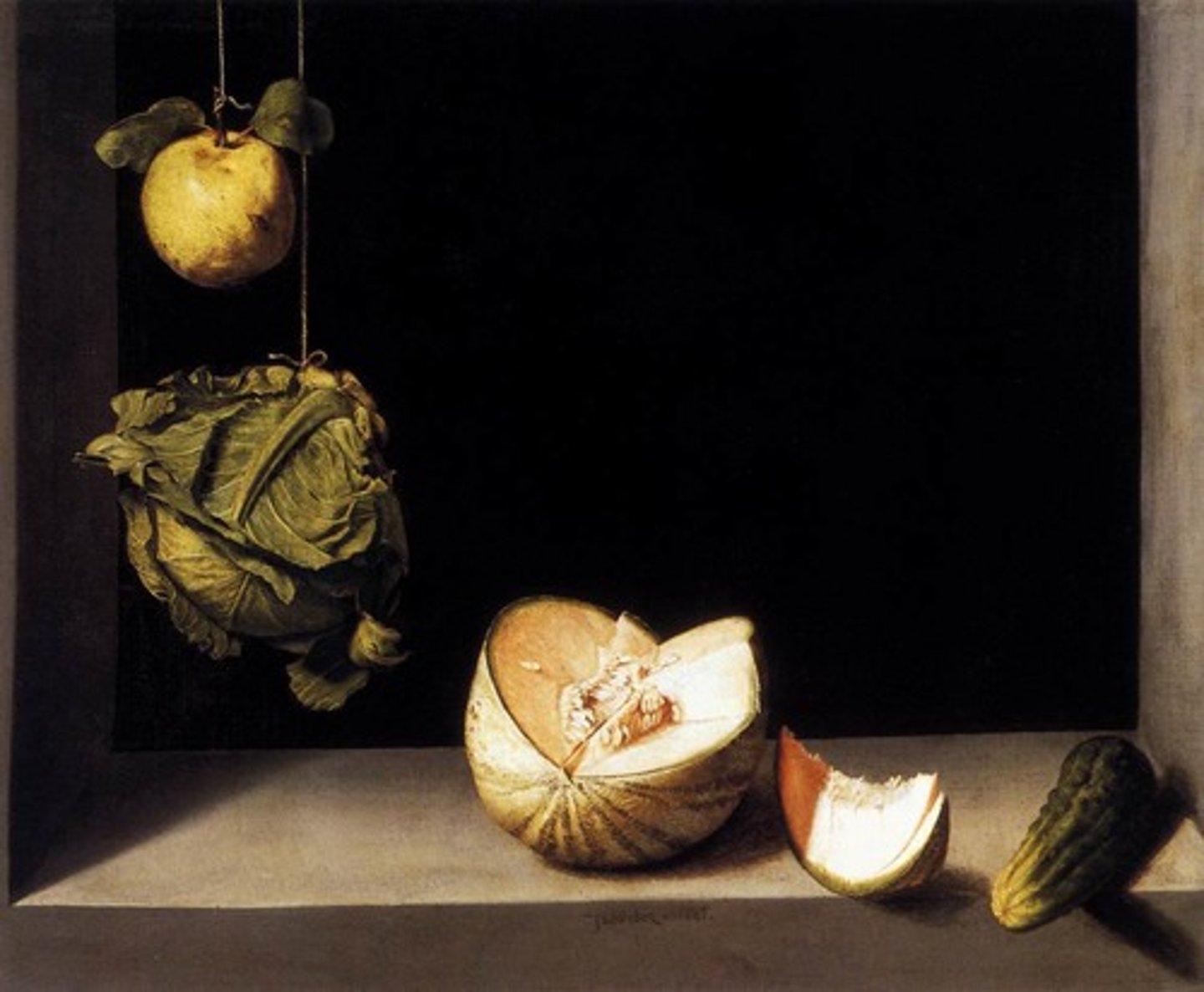
Still Life with Quince, Cabbage, Melon, and Cucumber. Juan Sánchez Cotán. c. 1602. Oil on canvas.
-17th c. Spanish painting profoundly influenced by Caravaggio; characterized by an ecstatic religiosity, as well as realistic surface detail that emerges from the deep shadows of tenebrism
-these are in a cantarero, or an early pantry type
-artfully arranged objects with an intense attention to detail
-example of a still life that has evidence of human interaction. Here, the melon has been cut into, suggesting a person's presence
-unlikely that you would hang cabbage like this, as the singular leaf of cabbage would not support the weight of the entire head
-painting as a whole suggests a fascination with spatial ambiguity, a contemplative sensibility, and an interest in the qualities of objects
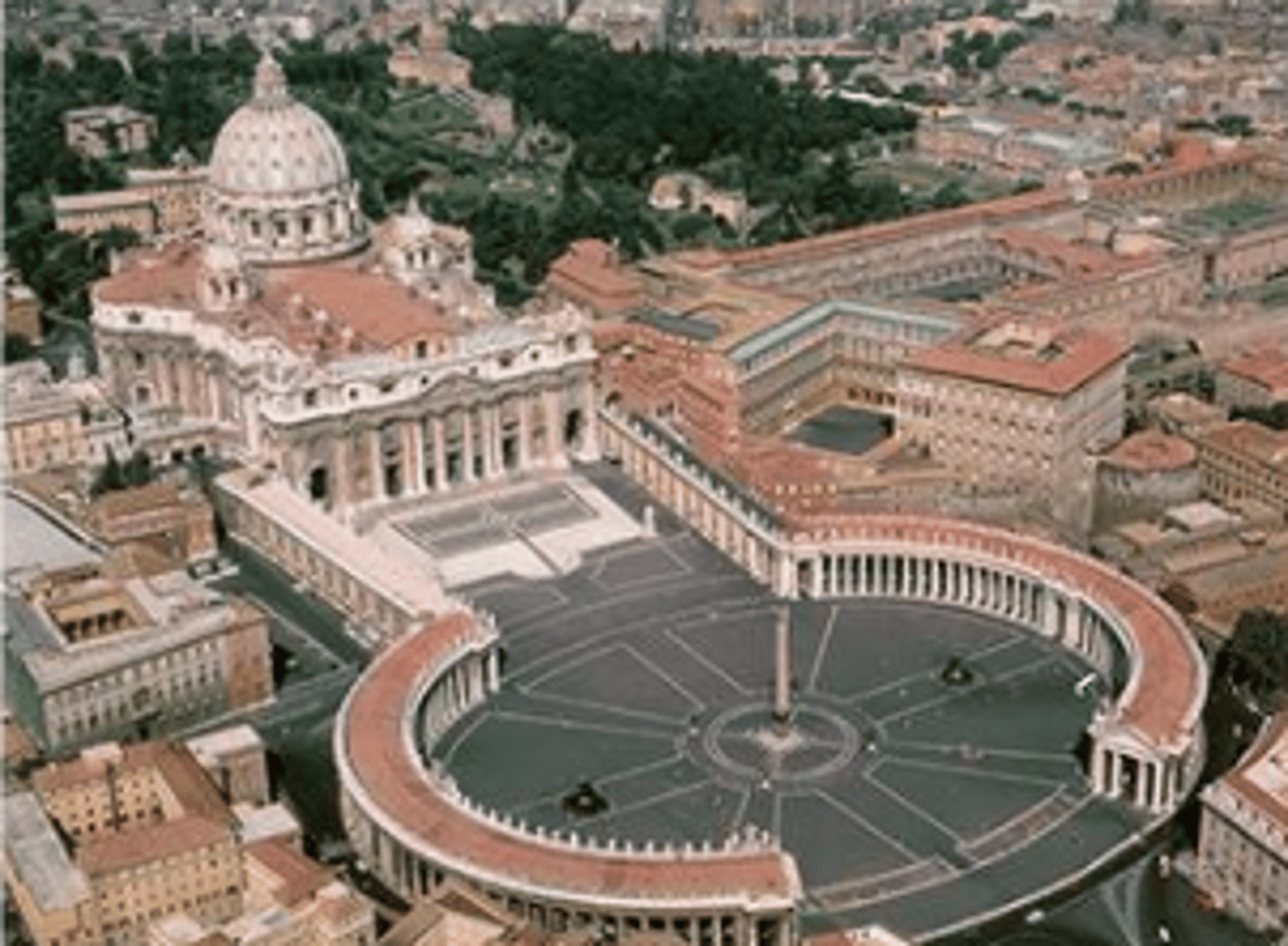
St. Peter's Basilica and Piazza. Vatican, Rome. Carlo Maderno and Gianlorenzo Bernini. Maderno, façade, 1607-1626; Bernini, piazza design, c. 1656-1657.
-Bernini unified the many artistic periods and styles that come together in St. Peter’s
-the facade was (attempted) by Bernini, but he didn't succeed. In fact, the bell towers he made collapsed, so he lost that job
-curved porticoes supported by Tuscan columns frame the piazza as though arms of the Church embracing the masses
-the columns are aligned so that they appear as single lines
-topped by statuettes
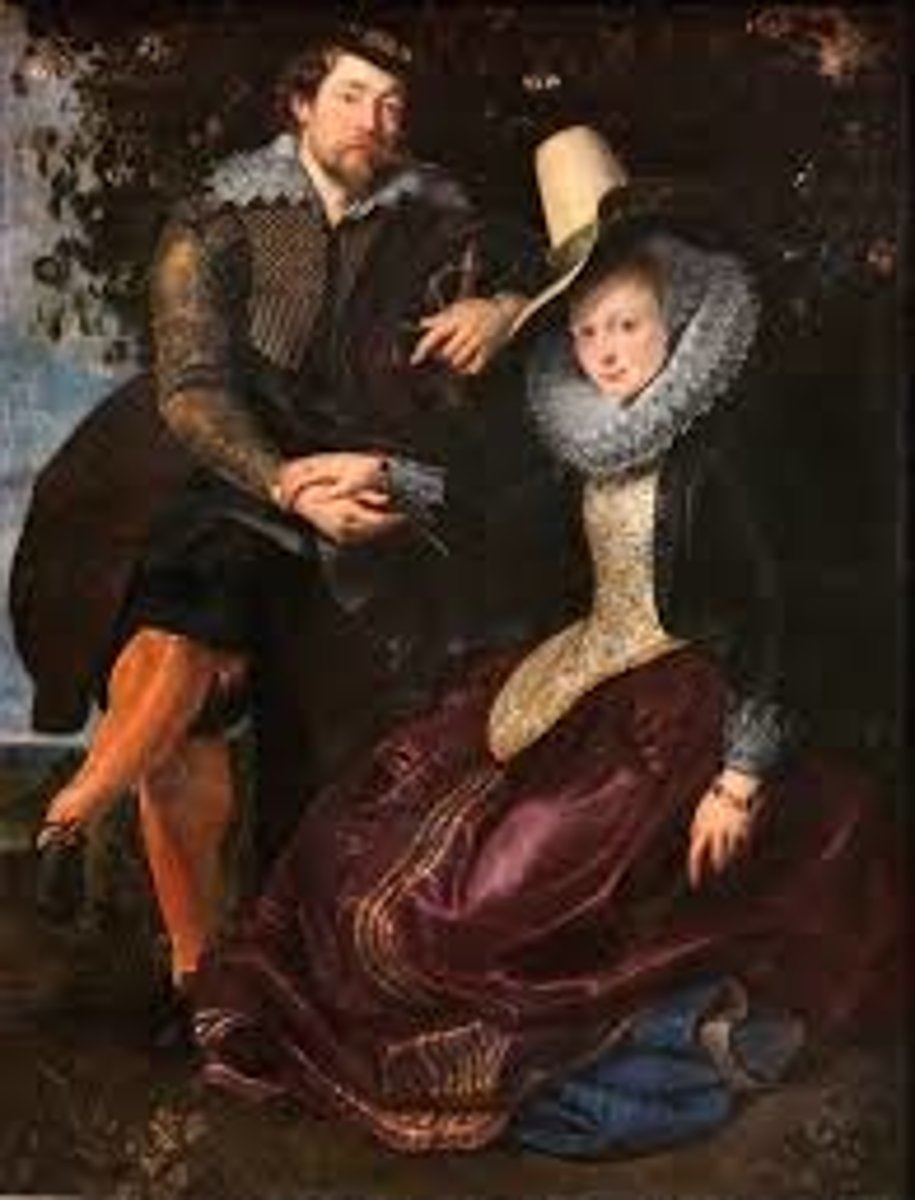
Self-Portrait with Isabella Brandt. Peter Paul Rubens. 1609-1610. Oil on canvas.
-Rubens was a scholar-ambassador-artist and sometimes spy
-gendered positions--she sits under a tree, surrounded by nature, while he sits higher closer to the open field
-they stare confidently out at the viewer, dressed in lavish clothing to demonstrate their wealth
-they join hands in a traditional indication of marriage
-Brandt's skirts are over his shoe, suggesting intimacy between the pair
-Rubens' hand on his sword--ref to nobility, as only those with status could carry a sword; he was not noble by blood but had that status granted to him in recognition of his service to the king of Spain
-Rubens and Brandt had three children, but then she died young and unexpectedly
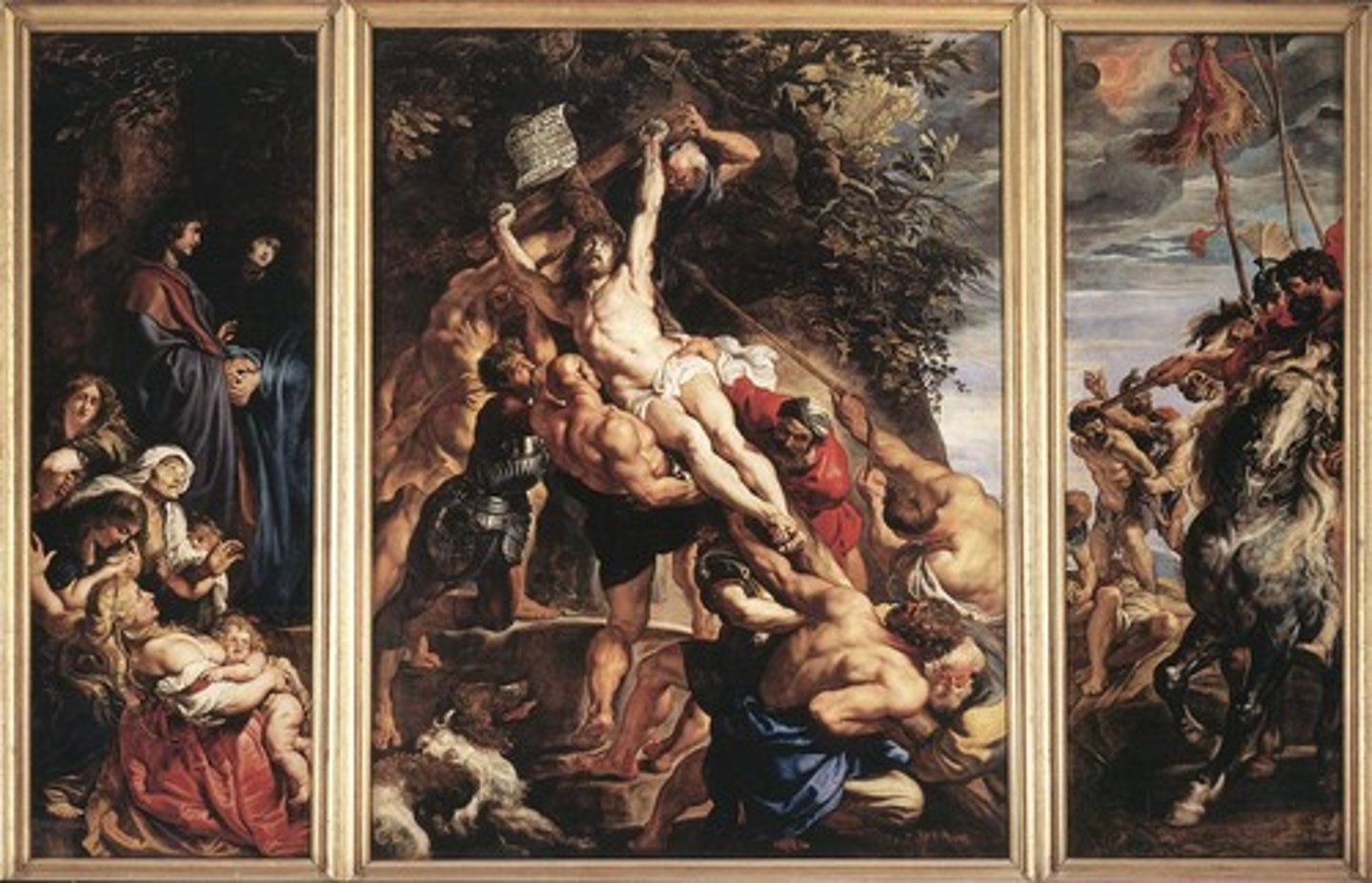
The Raising of the Cross. Peter Paul Rubens. Made for the church of St. Walpurga, Antwerp, Belgium. 1610-1611. Oil on panel.
-extended the central action and the landscape through all three panels
-extreme muscle and strain required to raise the cross in the central panel
-Mary and J the E in viewer's left panel
-soldiers supervise the event in the right panel
-woman with exposed breast=charity?
-there is an eclipse happening in the upper left corner of the viewer's right panel, ref to what is written in the Bible
-drama and intense emotion of Caravaggio is merged here with the virtuoso technique of Annibale Carracci, but transformed and reinterpreted according to Rubens’s own unique ideal of thematic and formal unity
-heroic nude figures, dramatic lighting effects, dynamic diagonal composition, and intense emotions show his debt to Italian art, but the rich colors and careful description of surface textures reflect his native Flemish tradition
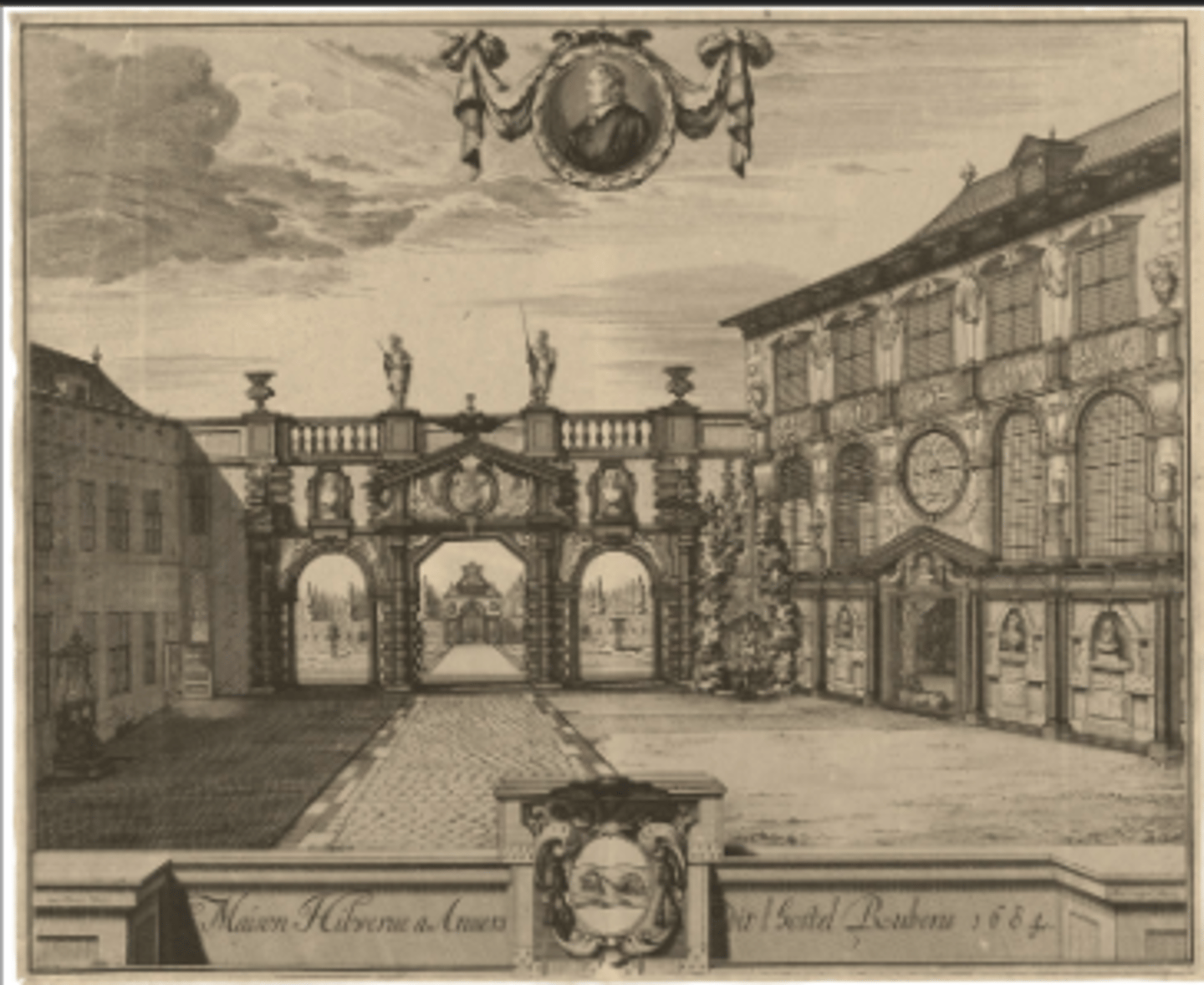
Rubens's House. Peter Paul Rubens. Italianate addition built 1610-1615. From an engraving of 1684.
-looking toward the garden: house at left, studio at right
-house restored and opened as a museum in 1946
-Rubens' home is in Antwerp
-originally very Flemish; Rubens added Italianate bits
-had a huge studio designed to accommodate large paintings and to house what became virtually a painting factory
-tall, arched windows provided light and a large door permitted the assistants to move finished paintings out to their designated owners
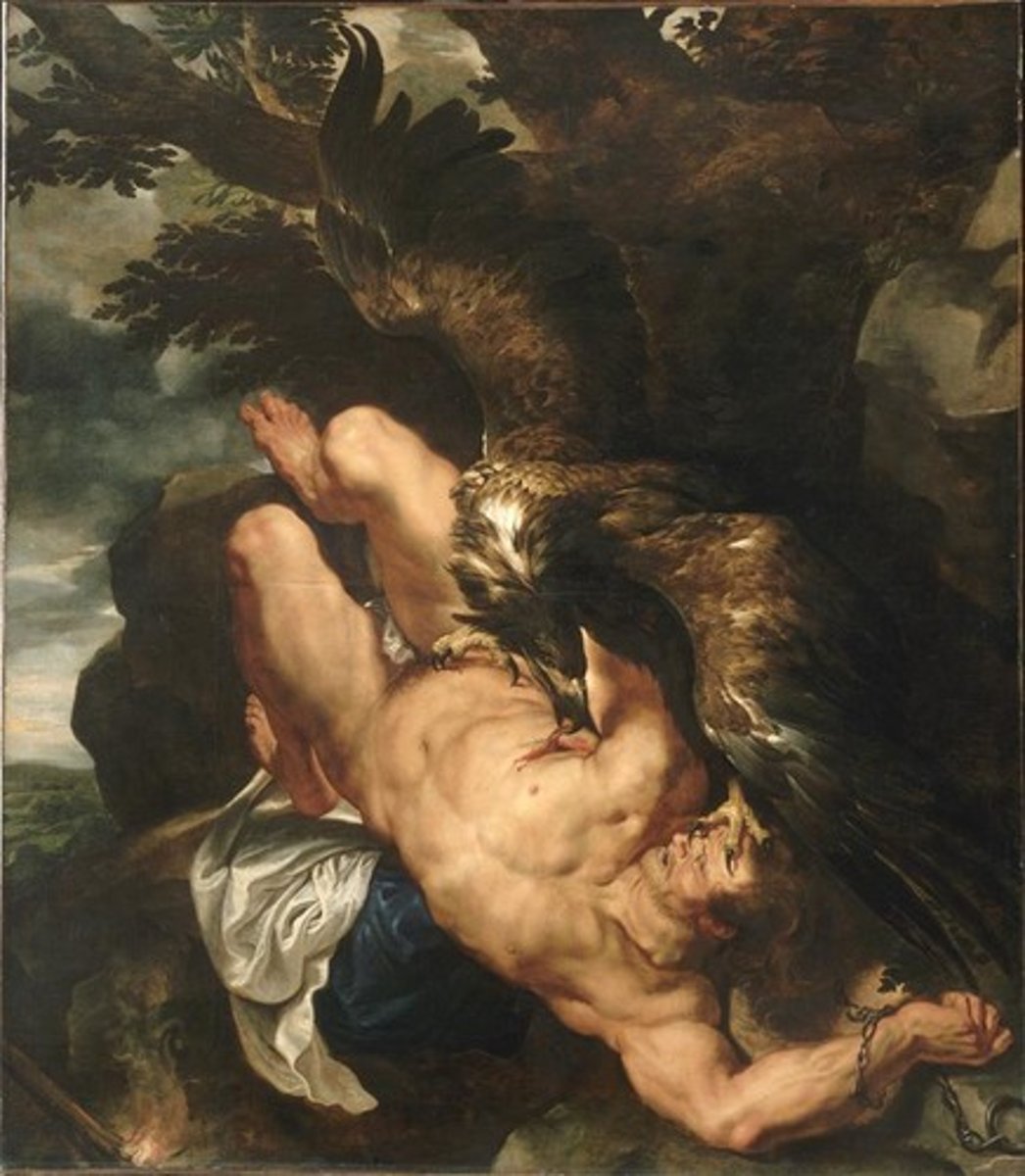
Prometheus Bound. Peter Paul Rubens and Frans Snyders. c. 1611-1618. Oil on canvas.
-Flemish tradition of artist collaboration
-Frans Snyders is well known for his depictions of dead animals, and Rubens for his people
-Prometheus stole fire from the gods, and was punished by being chained to a rock to have his liver eaten by an eagle every day, only to have it regrown at the end of the day
-eagle=Jupiter/Zeus' critter
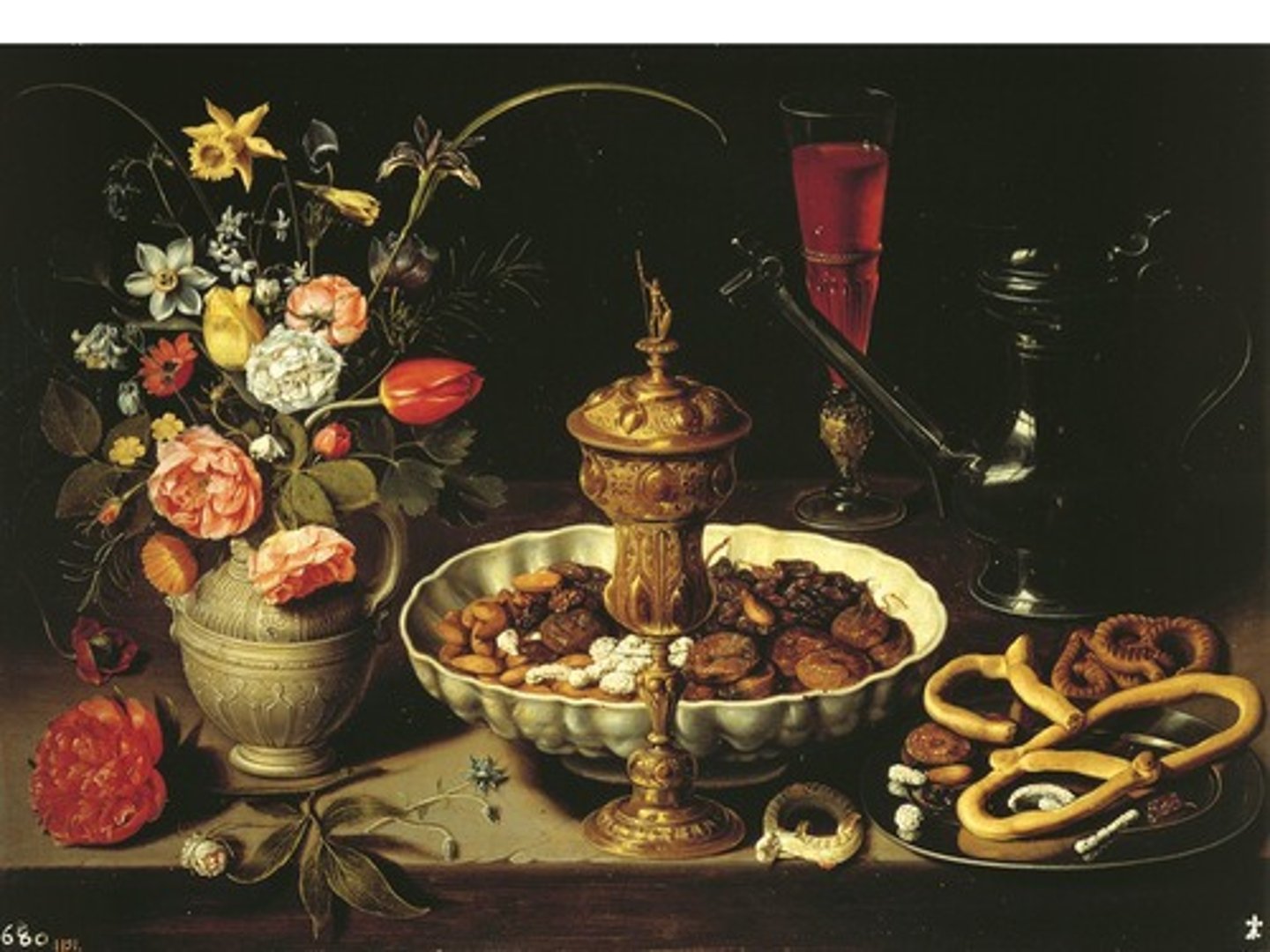
Still Life with Flowers, Goblet, Dried Fruit, and Pretzels. Clara Peeters. 1611. Oil on panel.
-a breakfast piece, identified by the pretzel
-a "lived in" breakfast piece; someone has eaten parts of the pretzels
-Peeters included her portrait in the shiny vessels
-was one of the first artists to combine flowers and food in a single painting
-all about sumptuousness, textures, surface, bounty
-female artist who started her career at 14. At least 30 works signed by her, 50 known in total
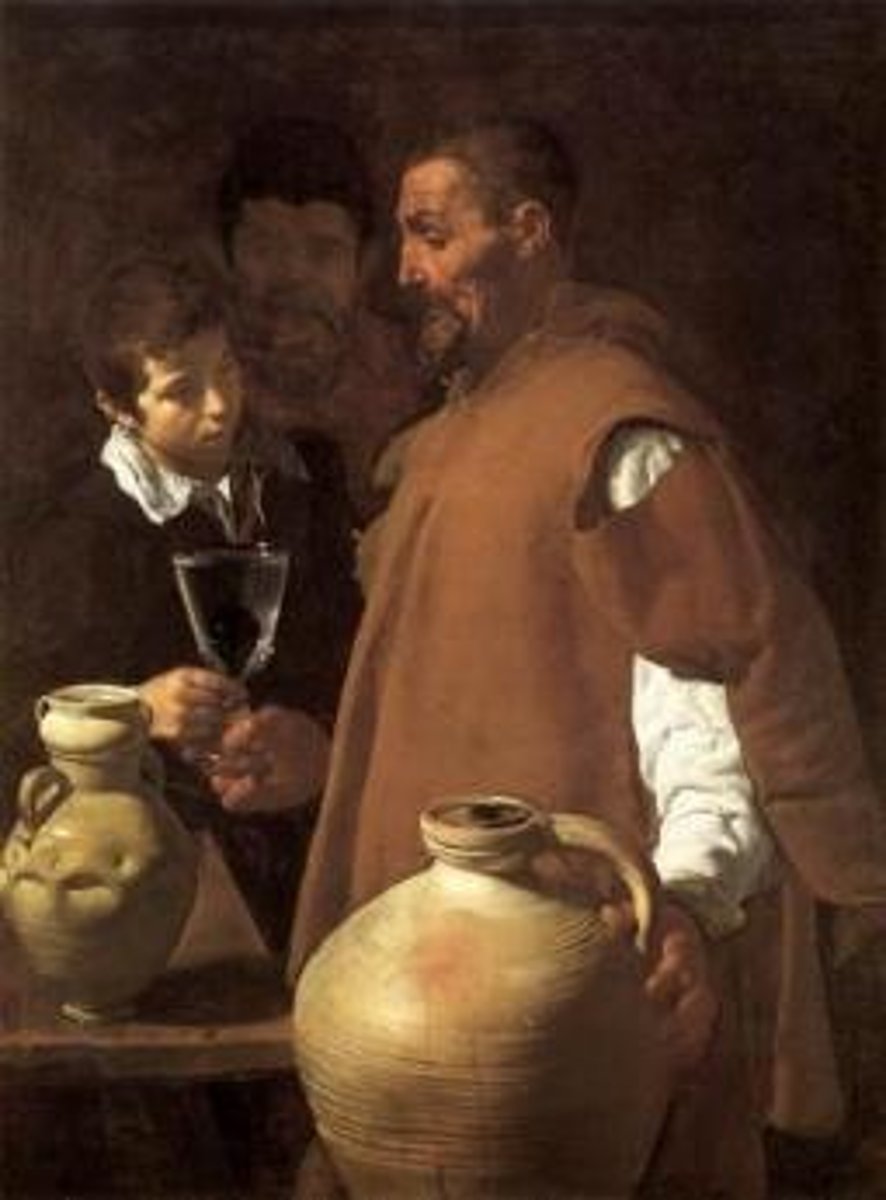
Water Carrier of Seville. Diego Velázquez. c. 1619. Oil on canvas.
-during his early years, he painted scenes set in taverns, markets, and kitchens, and emphasized still lifes of various foods and kitchen utensils
-later became court painter to King Philip IV
-Caravagesque, leaning into naturalism
-the depicted man was very well-known in Seville
-very careful detailing of water on the clay jug filled with water
-objects and figures allow the artist to exhibit his virtuosity in rendering volumes and contrasting textures in dramatic natural light
-ambiguous background
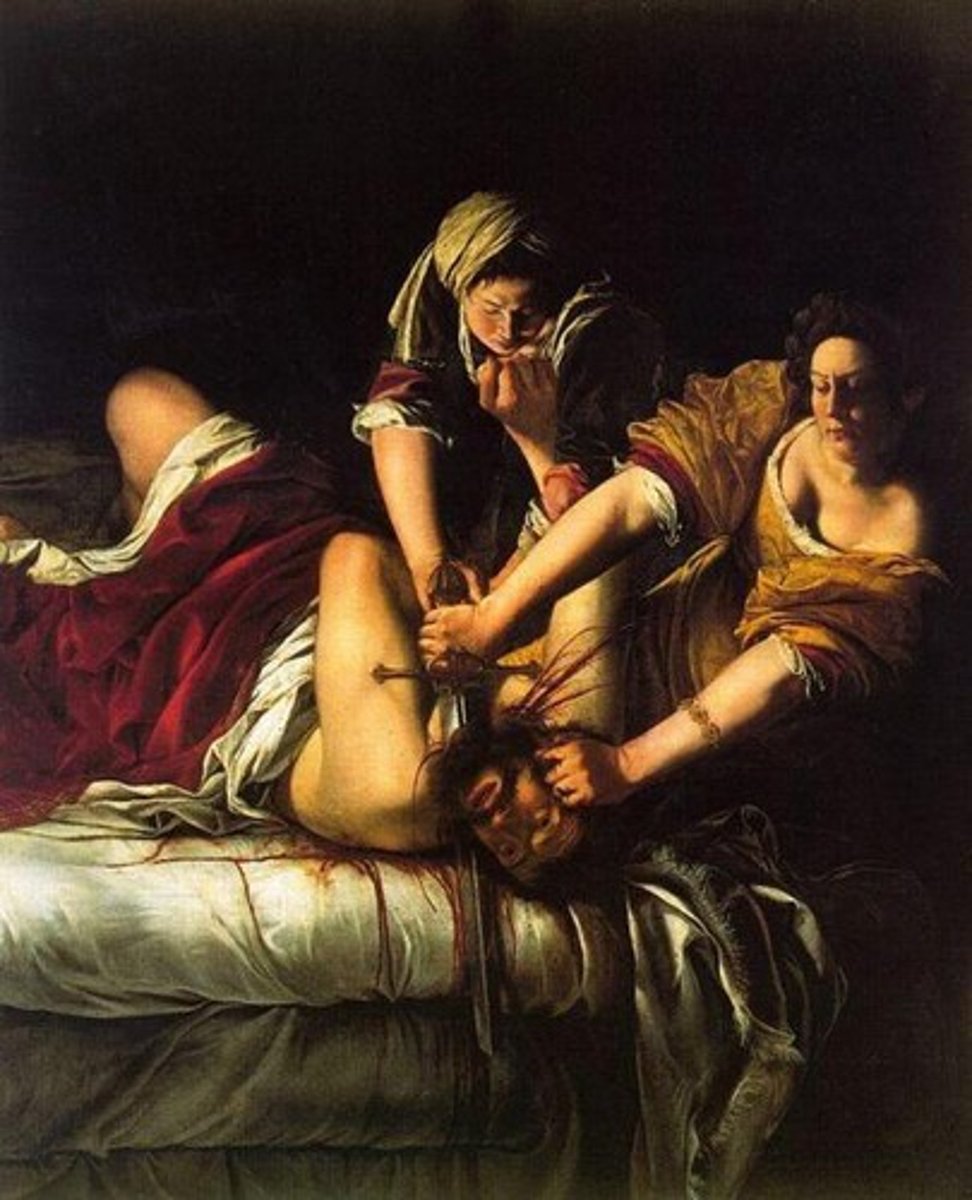
Judith Beheading Holofernes. Artemisia Gentileschi. c. 1619-20. Oil on canvas.
-refelcts Caravaggio's tenebrism and naturalism
-one of two depictions of this scene with a near-identical image by Gentileschi
-successful pinwheel composition
-Gentileschi depicts the visceral human force and strength needed for this biblical story
-Judith is fleshy, with breasts that actually behave as women's real breasts, rather than two orbs on a person's chest
-Story of Judith, which recounts the story of the destructive invasion of Judah by the Assyrian general Holofernes, when the brave Jewish widow Judith risked her life to save her people
-Gentileschi was raped by her teacher, Tassi, and tortured in the subsequent trial. Tassi was found guilty, but never punished, Gentileschi quickly married and moved. However, there may not be a connection between that and this, as Judith Beheading Holofernes was a popular subject at the time
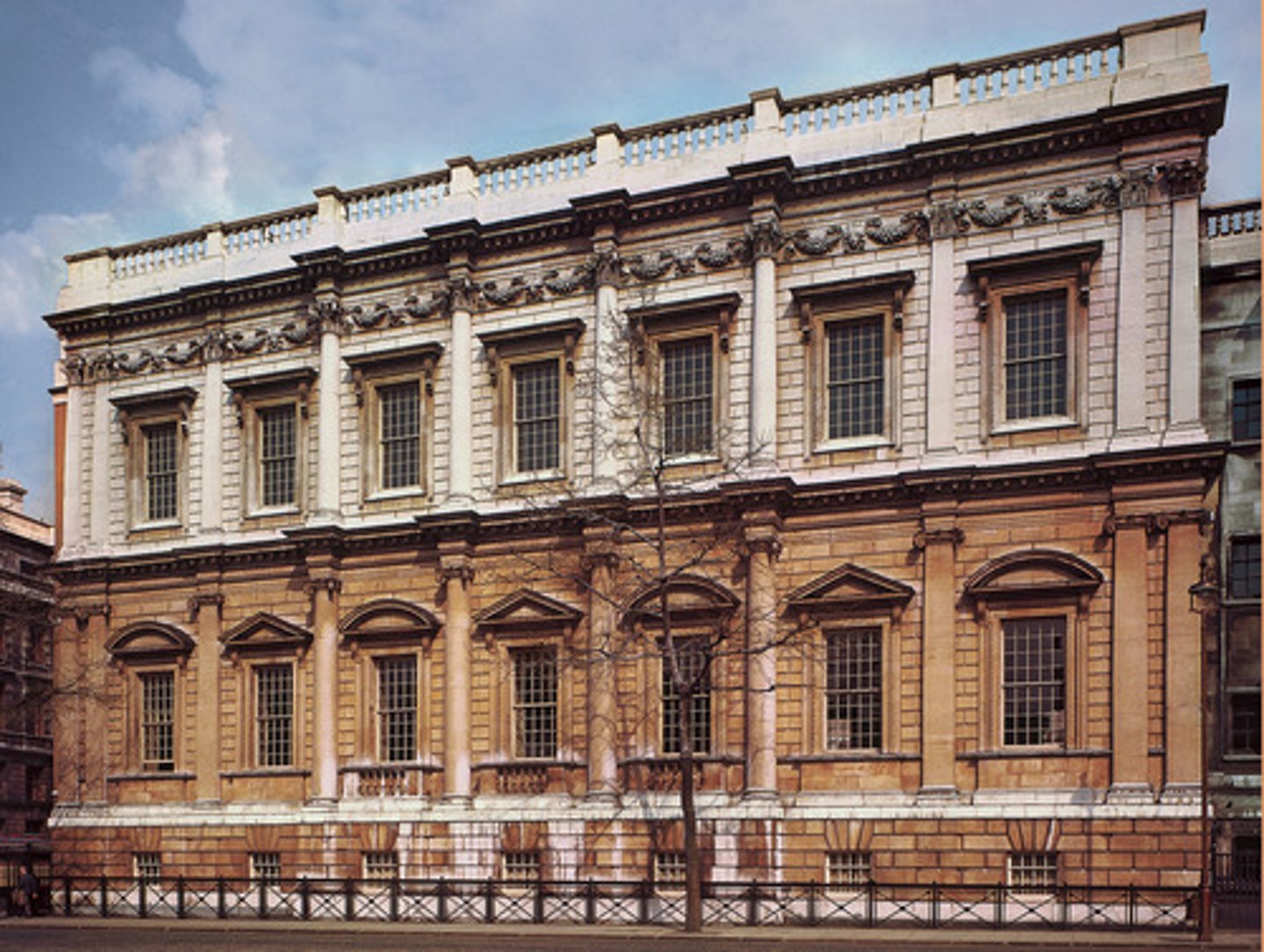
Banqueting House, Whitehall Palace. Inigo Jones. London. 1619-1622.
-the exterior appears to have two floors, however, it is only a single story building with a tall ceiling
-Jones was known for his version of Renaissance Classicism, based on the style of Italian architect Andrea Palladio
-superimposed Ionic and Composite orders raised over a plain basement level
-pilasters flank the end bays and engaged columns subtly emphasize the three bays at the center
-rhythmic effect that results from varying window treatments—triangular and semicircular pediments on the first level, cornices with volute (scroll-form) brackets on the second
-after the completion of the internal ceiling painting by Rubens, the owner ceased to hold evening events here, because he did not want candle soot to get onto the canvas and darken it
-made for masques (drama/theatre with music and dance performed by performers, aristocrats, and nobility) and court ceremonies
-based on a Palladian design
-Rubens' paintings glorify K James I
-central ceiling painting is the Birth of a Nation in allegory form
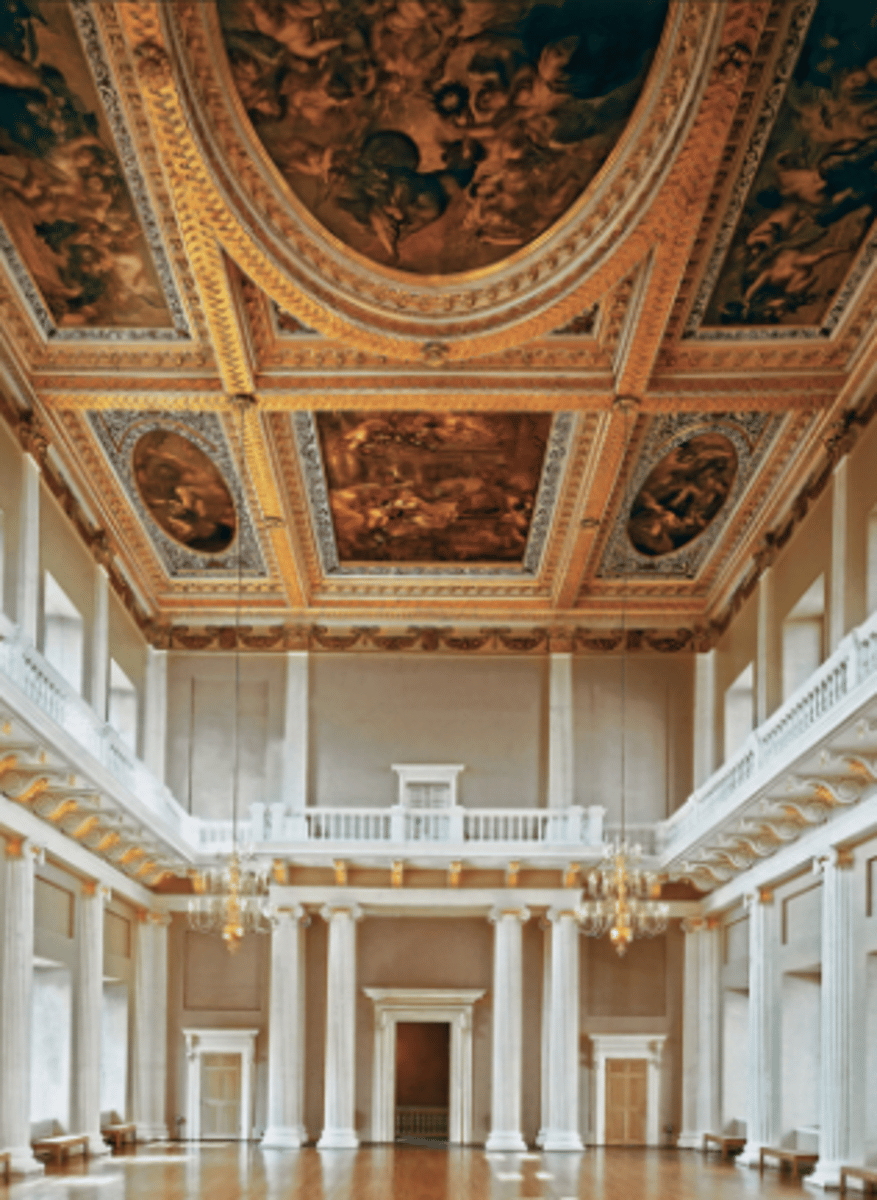
Interior, Banqueting House, Whitehall Palace. Ceiling paintings of the apotheosis of King James and the glorification of the Stuart monarchy by Peter Paul Rubens. 1630-1635.
-the exterior appears to have two floors, however, it is only a single story building with a tall ceiling
-after the completion of the internal ceiling painting by Rubens, the owner ceased to hold evening events here, because he did not want candle soot to get onto the canvas and darken it
-made for masques (drama/theatre with music and dance performed by performers, aristocrats, and nobility) and court ceremonies
-Rubens' paintings glorify K James I
-central ceiling painting shows the apotheosis of James I, the king being carried into heaven on clouds of glory
-large rectangular panel beyond it depicts the birth of the new nation, flanked by allegorical paintings of heroic strength and virtue overcoming vice
-long paintings alongside the oval show putti holding the fruits of the earth symbolizing the peace and prosperity of England and Scotland under Stuart rule
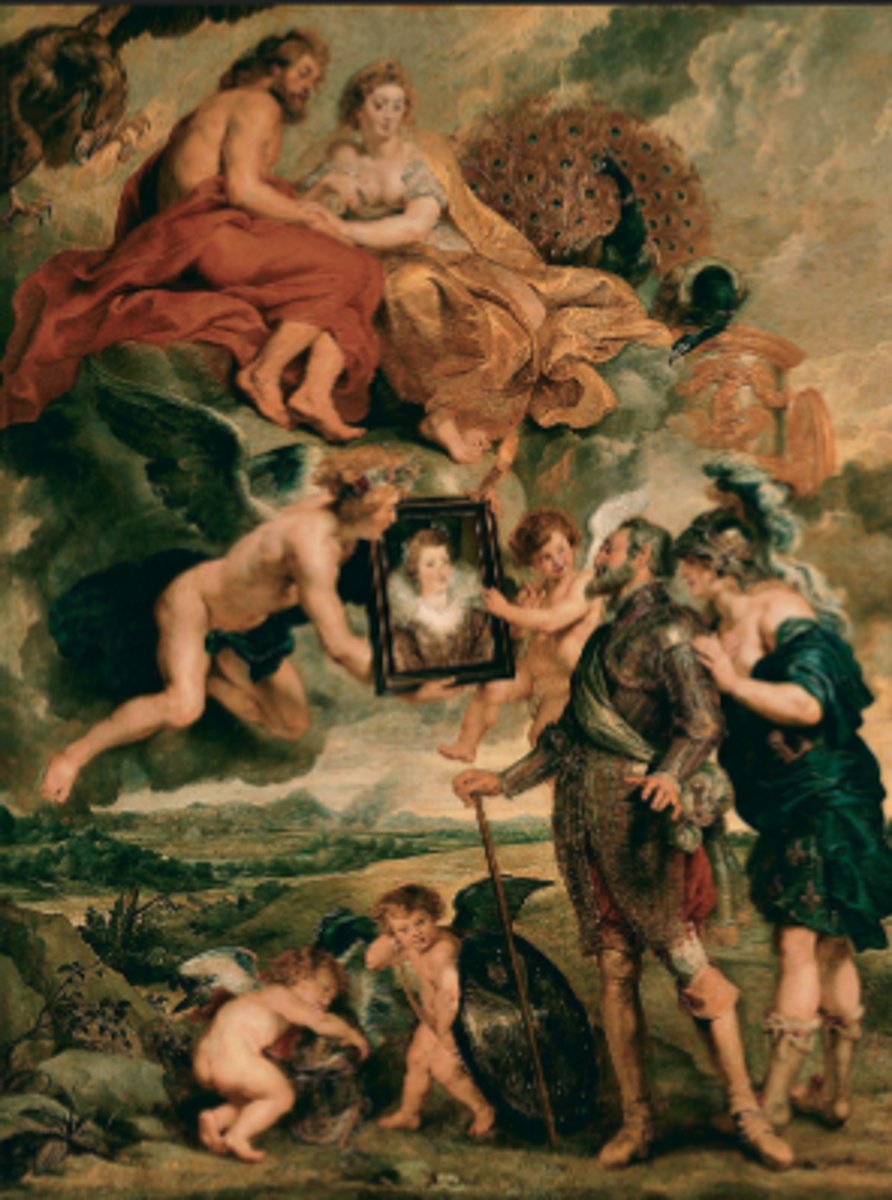
Henry IV Receiving the Portrait of Marie De'Medici. Peter Paul Rubens. 1621-1625. Oil on canvas.
-part of a series depicting the life story of Marie de Medici, who had been regent for her son Louis XIII
-Rubens portrayed Marie’s life and career as one continuous triumph overseen by the ancient gods of Greece and Rome
-Henry IV never saw Marie de'Medici when he married her
-here, Cupid and Hymen, the god of marriage, show Henry a portrait of Marie and he falls instantly in love with her
-the woman behind Henry IV=personification of France herself
-Jupiter and Juno in the heavens look down over
-functions as political propaganda
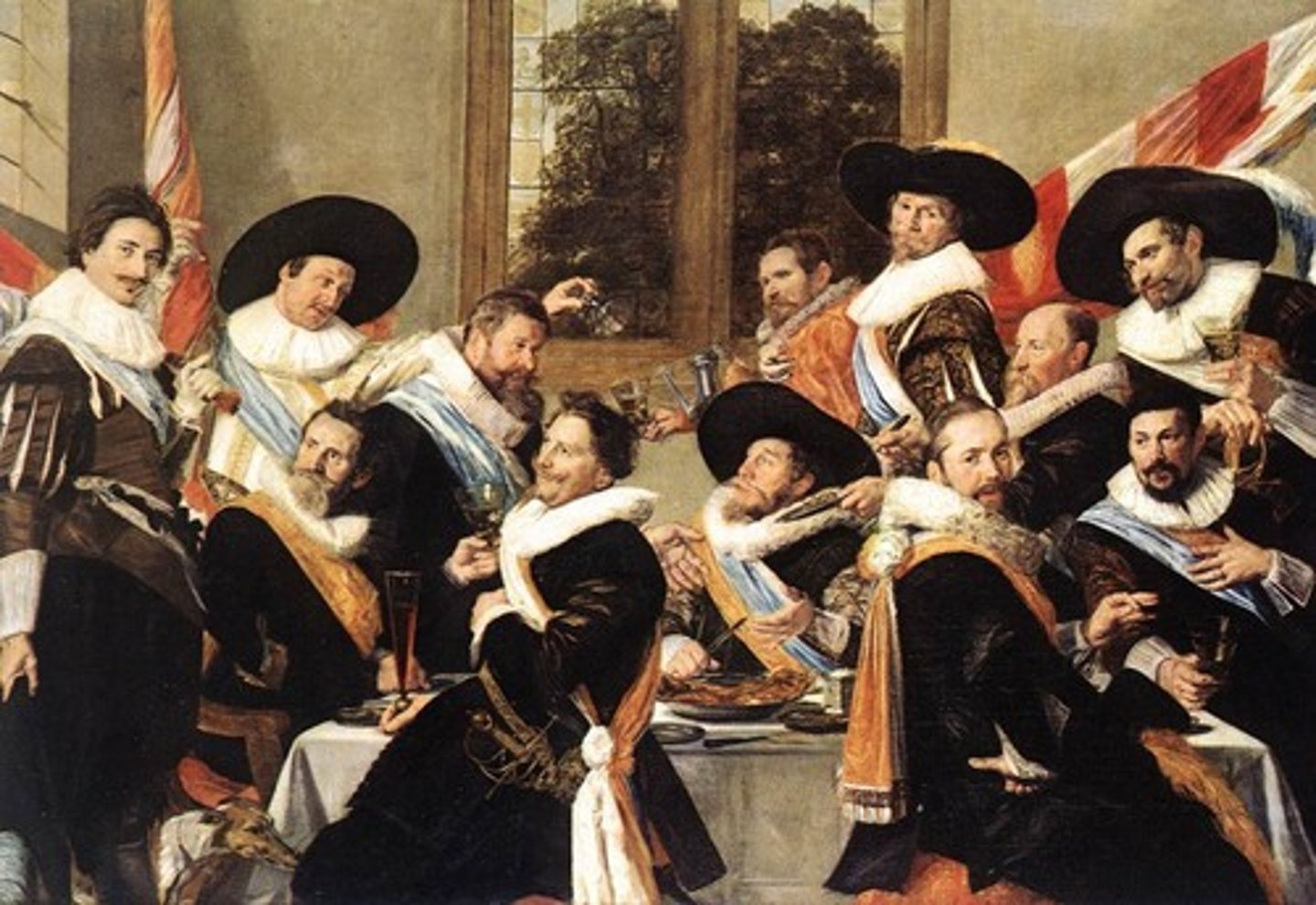
Officers of the Haarlem Militia Company of St. Adrian. Frans Hals. c. 1627. Oil on canvas.
-militia company group portraits became a thing
-they were charged with the protection of a town, but functioned more like a fraternal order
-challenge to depict a group portrait that is engaging and includes all the people
-most artists arranged their sitters in neat rows to depict every face clearly, but here, Hals transforms the group portrait into a lively social event
-the more you pay, the more visible you are
-the emptied glass in the middle=refill me or I'm abstaining from alcohol
-diagonal lines—gestures, banners, and sashes—balanced by the stabilizing perpendiculars of table, window, and tall glass
-known for his bold, slashing brushstrokes that convey a sense of liveliness and spontaneity
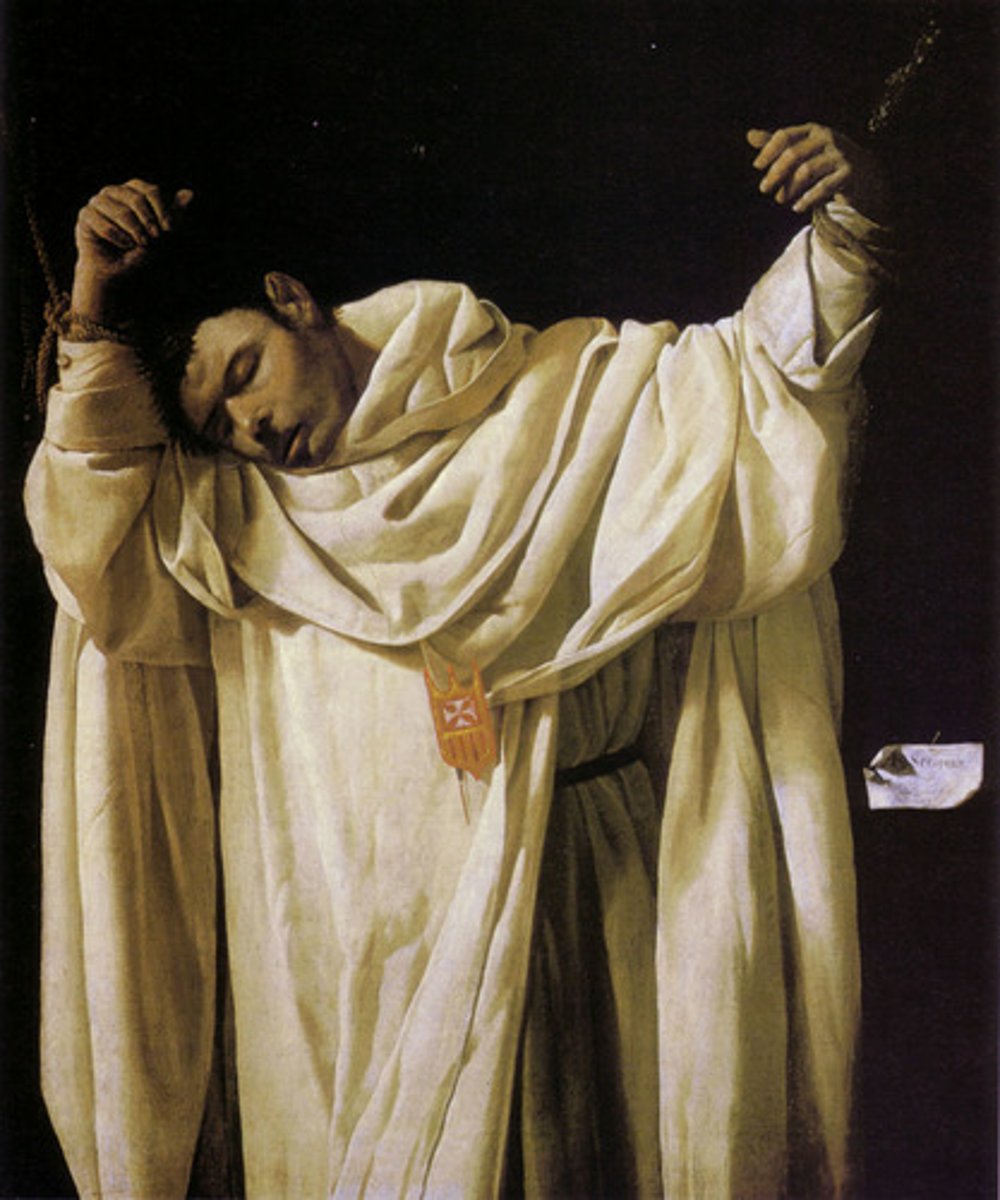
St. Serapion. Francisco de Zurbarán. 1628. Oil on canvas.
-Zurburan is particularly notable for his sharp depictions of fabric
-Caravaggesque style, including the dramatic lighting and naturalism
-Serapion was a member of the Mercedarians, a Spanish monastic order that would rescue Christian prisoners from Muslim captors
-Serapion sacrificed himself in exchange for Christian captives
-immobile, quiet composition allowing for deep reflection on the saint's sacrifice
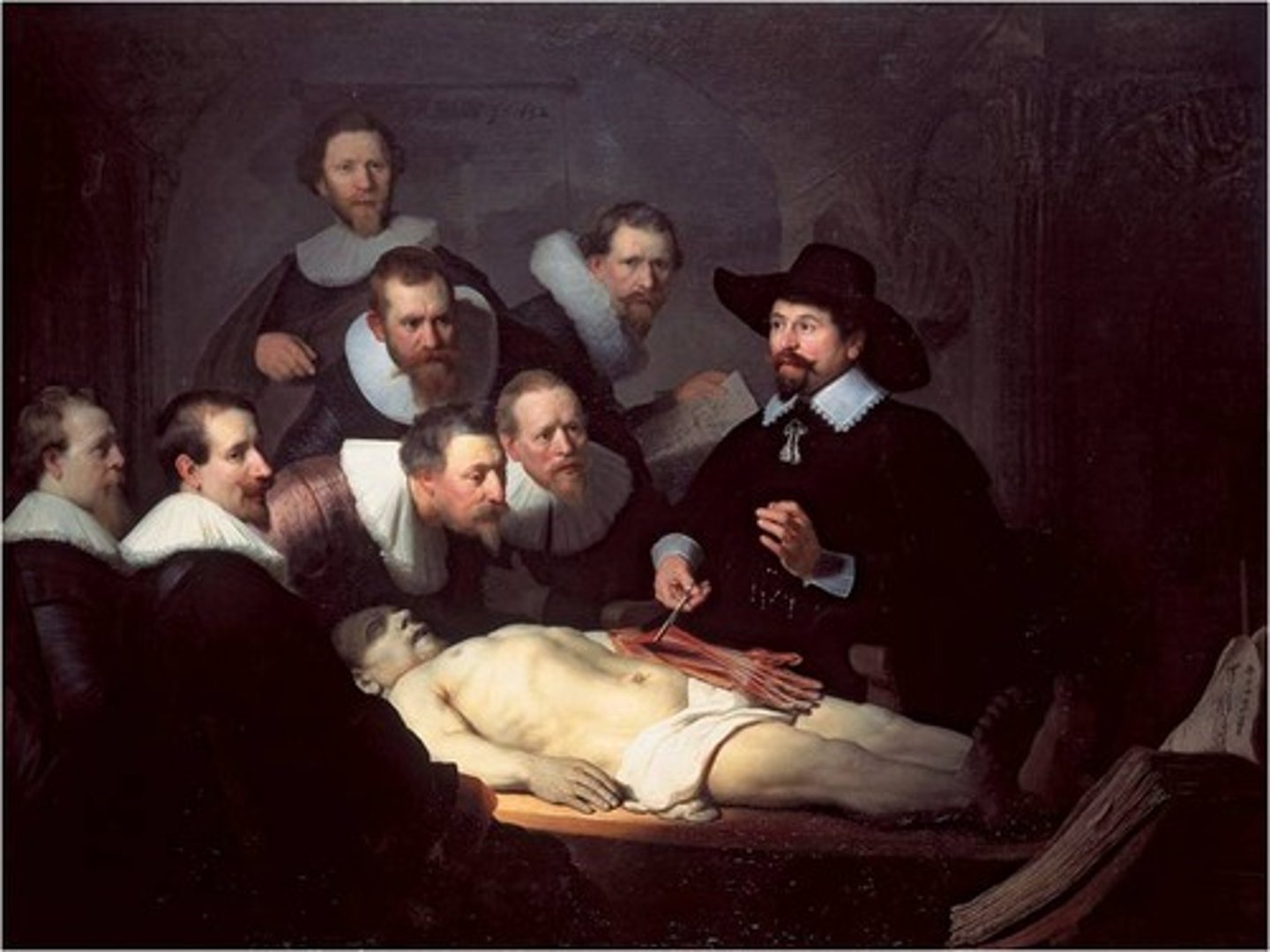
The Anatomy Lesson of Dr. Nicolaes Tulp. Rembrandt van Rijn. 1632. Oil on canvas.
-Tulp changed his name to Tulp because of the tulip craze
-the students are fully trained doctors--only fully trained doctors could observe dissections
-only criminals could be dissected, as that could be a way to beg for forgiveness
-not an accurate dissection, as you would start with the soft tissue first
-interest in naturalism, drama, and tenebrism
-combines his scientific and humanistic interests
-transforms the static group portrait into a charged moment from a life story
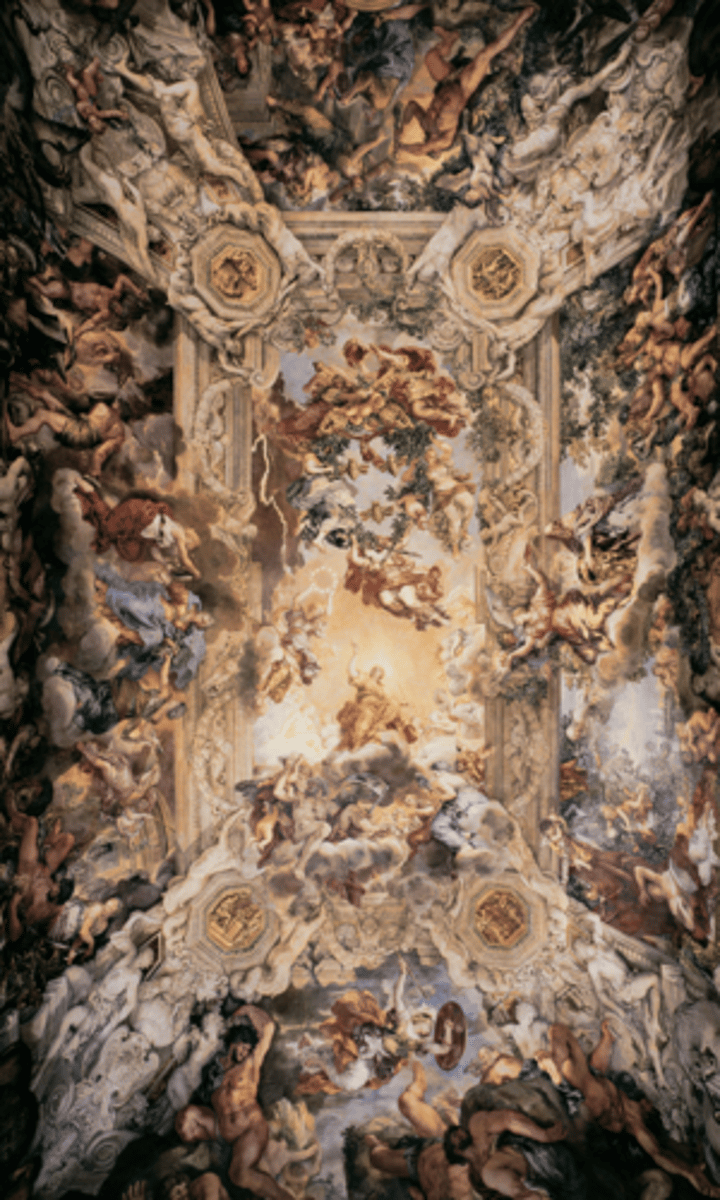
The Glorification of the Papacy of Urban VIII. Pietro da Cortona. Palazzo Barberini, Rome. 1632-1639. Fresco.
-illusionistic ceilings were complex constructions combining architecture, painting, and stucco sculpture
-they were the utmost in Baroque theatricality and drama
-quadratura (literally, “squaring” or “gridwork”): an architectural setting painted in meticulous perspective and usually requiring viewing from a specific spot to achieve the desired effect of soaring space. The resulting viewpoint is called di sotto in sù (“from below upwards”)
-this is painted on a flat ceiling, but shrinks as you get closer to the center, creating the illusion of a dome
-subject is an elaborate allegory of the virtues of the Pope
-Urban VIII was a Barberini, thus the three Barberini bees are included
-Athena on the bottom killing giants, Forge of Vulcan on the upper left, Bucchus on the right, Hercules on the top
-the papal crown is being placed over the Barberini Bees and the keys to Heaven (St Peter's Keys)
-Divine Providence is the woman with a star
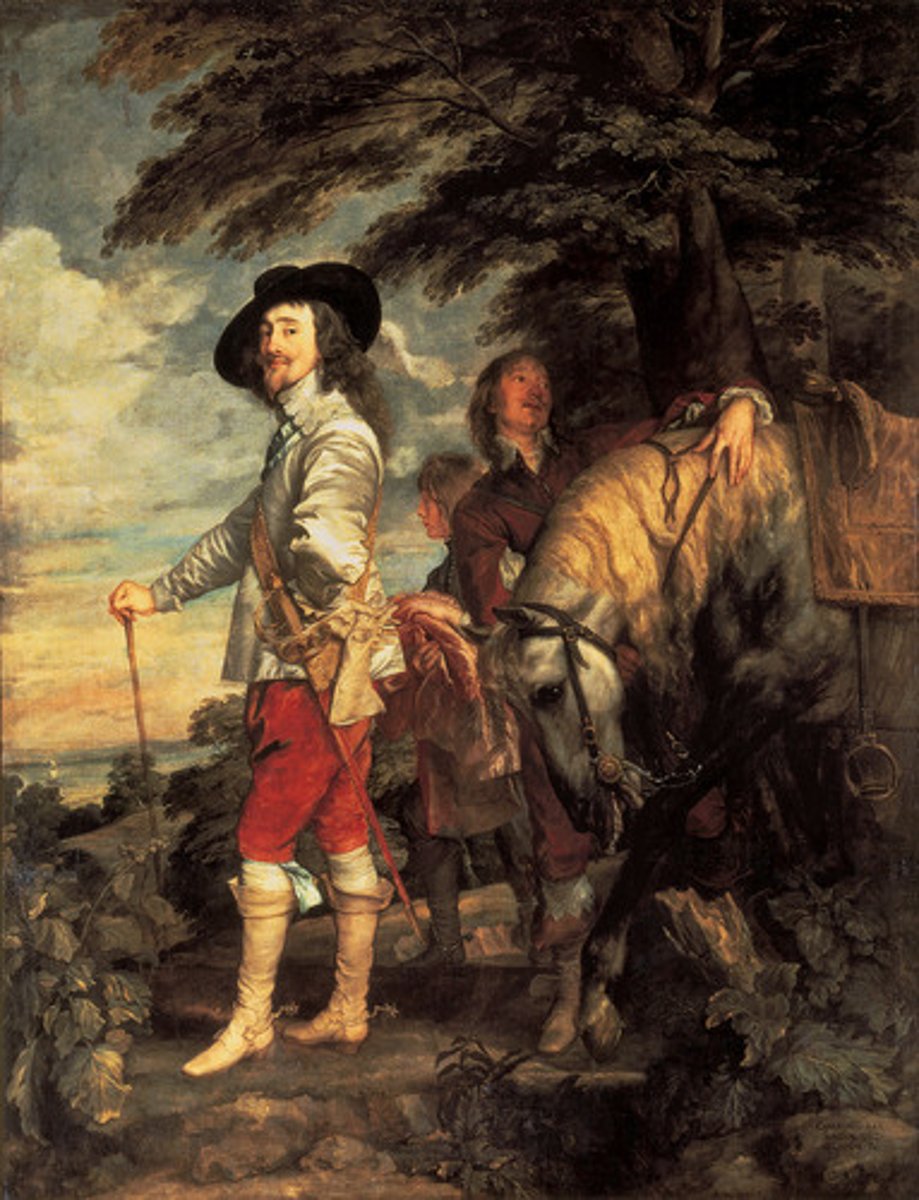
Charles I at the Hunt. Anthony van Dyck. 1635. Oil on canvas.
-Van Dyck was somewhat of a prodigy; he also worked closely with Rubens
-became court painter to Charles I, for whom he painted many family portraits
-Charles I was not tall. To create the illusion of height, the horse bows
-horse bowing=Charles I has power over nature
-Charles I is hunting, however, he is dressed in extreme finery
-Van Dyck is known for his more idealized figures in portraits, Charles I here presented as jaunty and graceful
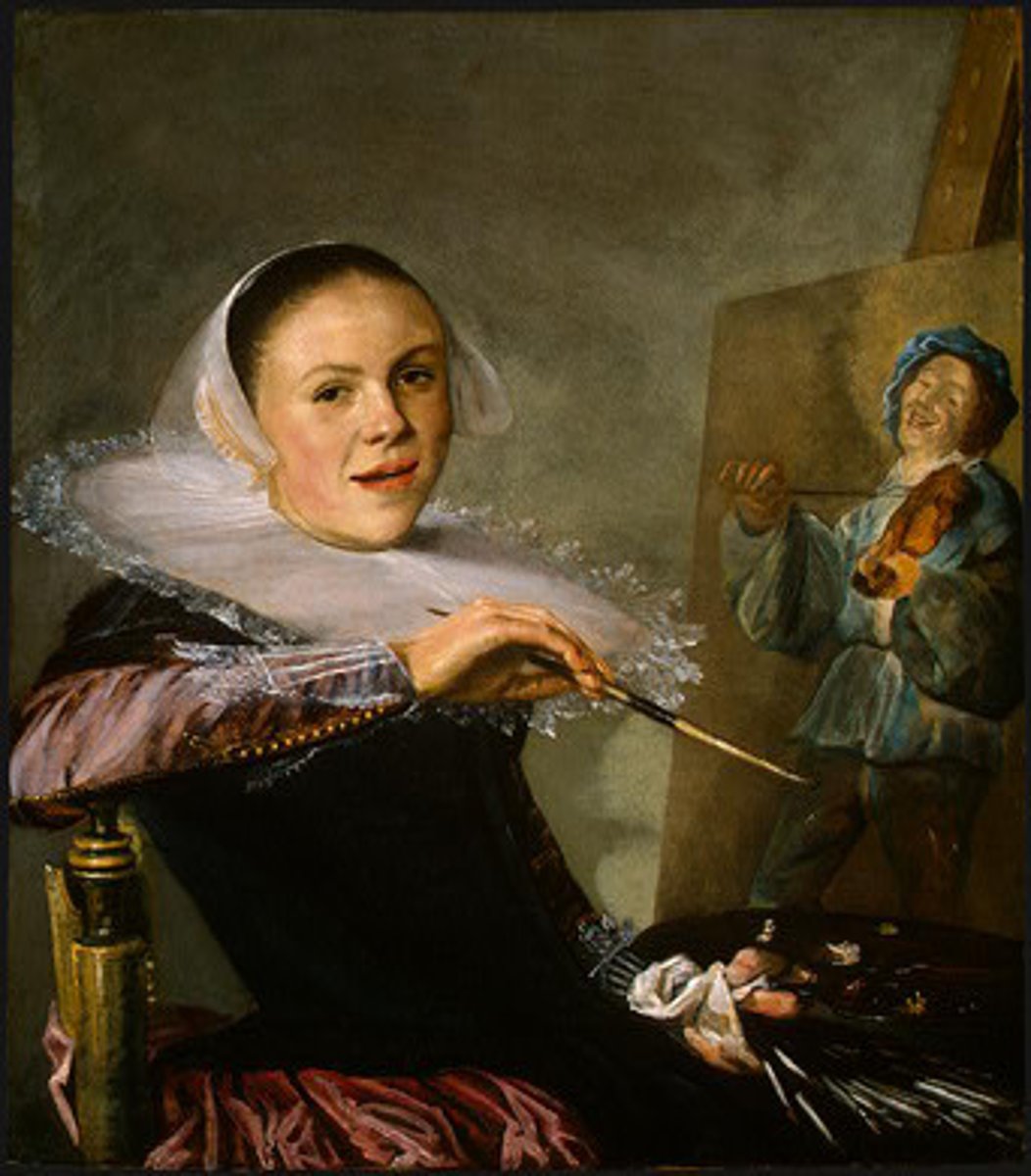
Self-Portrait. Judith Leyster. 1635. Oil on canvas.
-long thought to be by Hals, until a cleaning revealed her signature
-she had a competition with Hals and even accused him of stealing away one of her students
-Leyster was a very economically successful artist
-known primarily for informal scenes of daily life, which often carry an underlying moralistic theme
-she wears extravagant clothes to underscore her success; she probably wouldn't have worn such clothes while painting
-speaking portrait--her mouth is open as if to address the viewer who has just interrupted her work
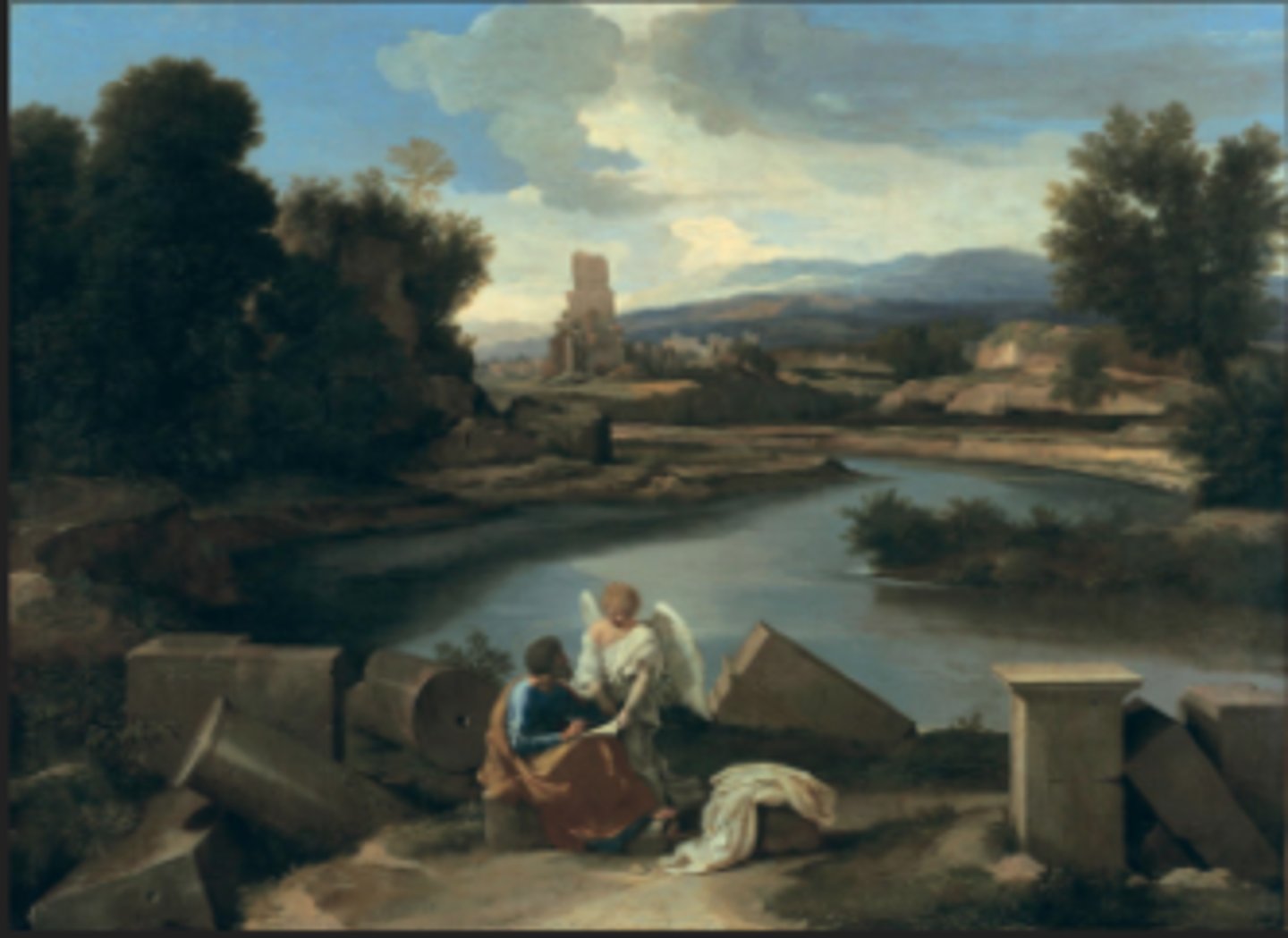
Landscape with St. Matthew and the Angel. Nicolas Poussin. 1639-1640. Oil on canvas.
-classical landscape=idealized, domesticated nature made to be visually appealing
-more about the landscape than the activity of the figures
-commissioned by Giovanni Maria Roscioli, the secretary to the Pope
-shows the evangelist Matthew composing his text within and expansive landscape dotted with Classical buildings and antique ruin
-companion to one showing Saint John; meant to be displayed together as aspects of the landscape and ruins correspond across the canvases
-clearly defined foreground, middle ground, and background, illuminated by an even light with gentle shadows and highlights
-likely part of a series that was left incomplete
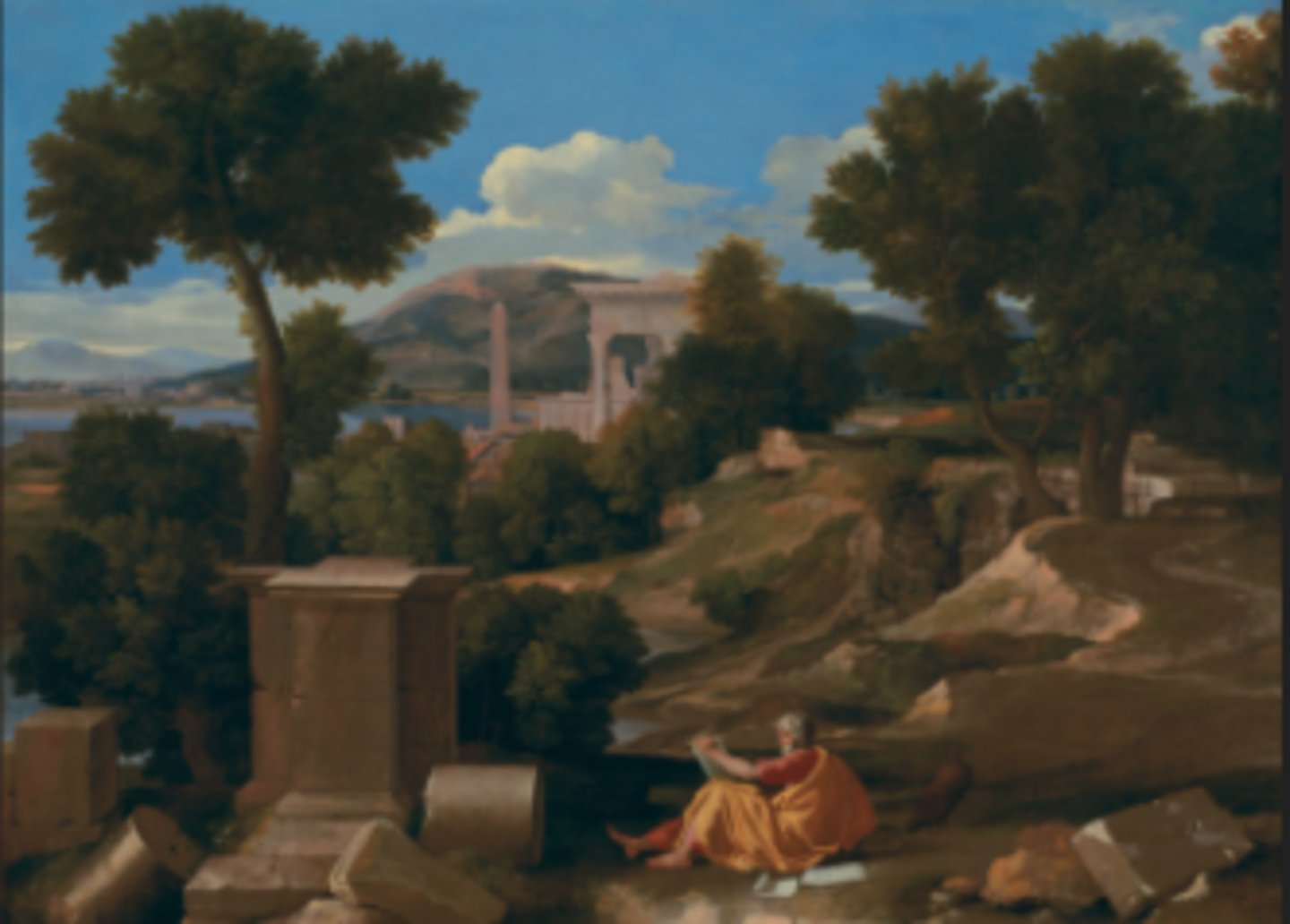
Landscape with St. John on Patmos. Nicolas Poussin. 1640. Oil on canvas.
-classical landscape=idealized, domesticated nature made to be visually appealing
-more about the landscape than the activity of the figures
-commissioned by Giovanni Maria Roscioli, the secretary to the Pope
-shows the evangelist John composing his text within and expansive landscape dotted with Classical buildings and antique ruin
-companion to one showing Saint Matthew; meant to be displayed together as aspects of the landscape and ruins correspond across the canvases
-clearly defined foreground, middle ground, and background, illuminated by an even light with gentle shadows and highlights
-likely part of a series that was left incomplete
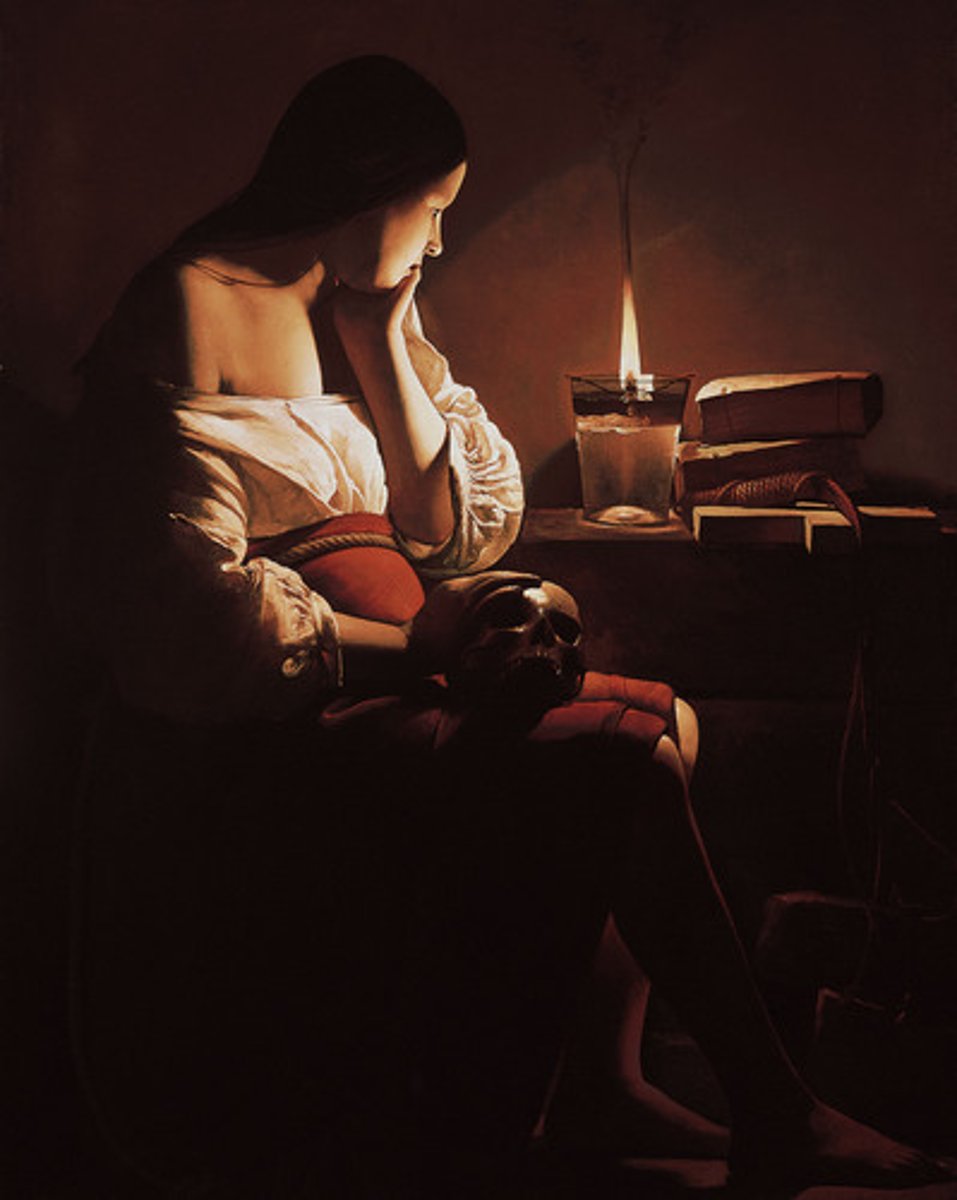
Mary Magdalen with the Smoking Flame. Georges de la Tour. c. 1640. Oil on canvas.
-court painter to Louis XIII
-de la Tour is an important French follower of Caravaggio
-French Caravagesque: tenebrism and compression of large-scale figures into the foreground
-smoothed over, includes direct reference to the light source
-Vanitas/Memento mori=the skull
-sense of intimacy between the saint and viewers, although she is completely unaware of our presence
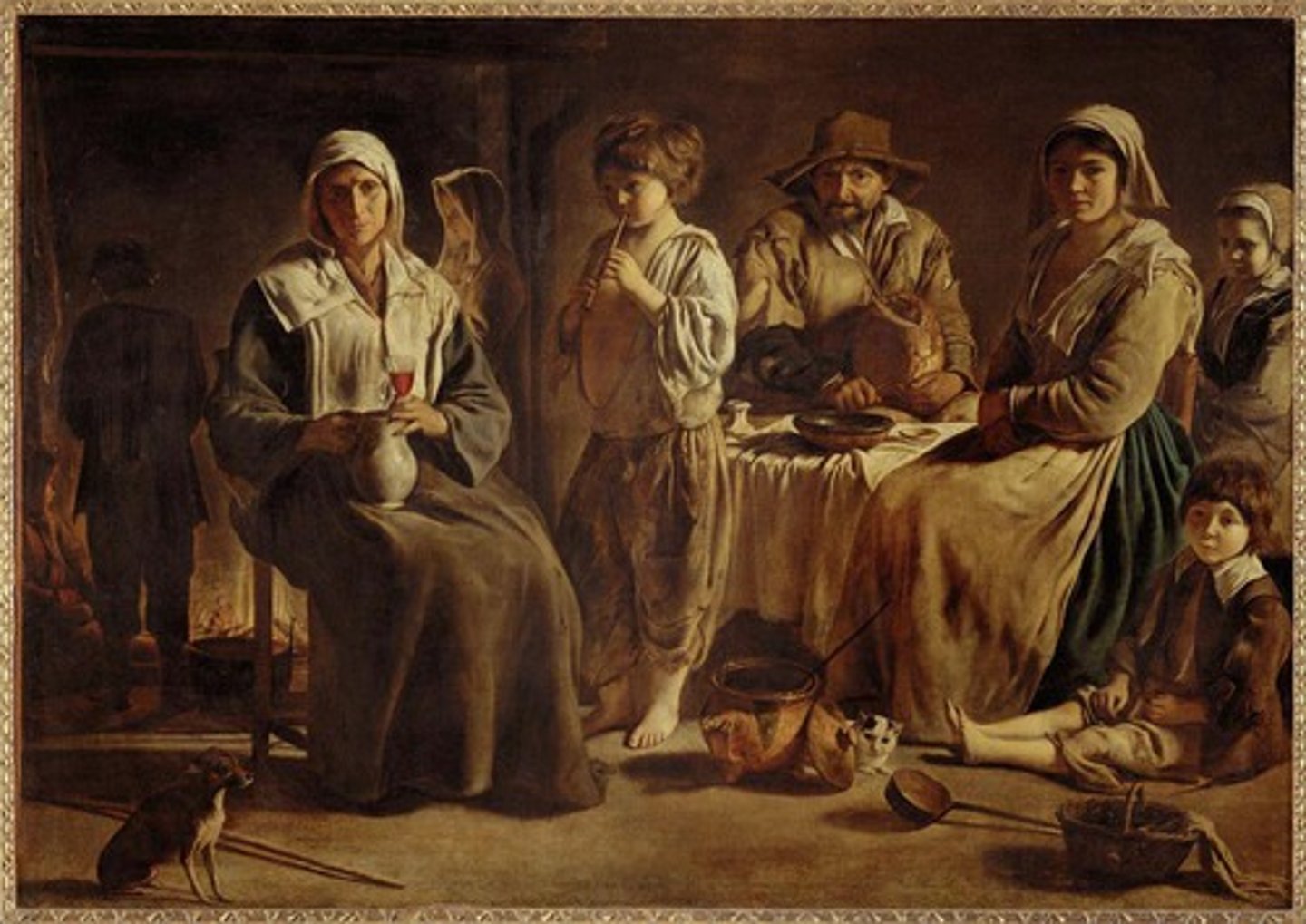
A Peasant Family in an Interior. Louis or Antoine Le Nain. c. 1640. Oil on canvas.
-little is known about the Le Nain brothers, but they often collaborated and were founding members of the Royal Academy of Painting and Sculpture in 1648
-best known for their painting of genre scenes in which French peasants pause from labor for quiet family diversions
-Caravaggesque leaning Naturalism-"dirty" figures
-interest in the effects of light
-a peasant genre scene
-3 gens at one table
-casualness of costume and behavior
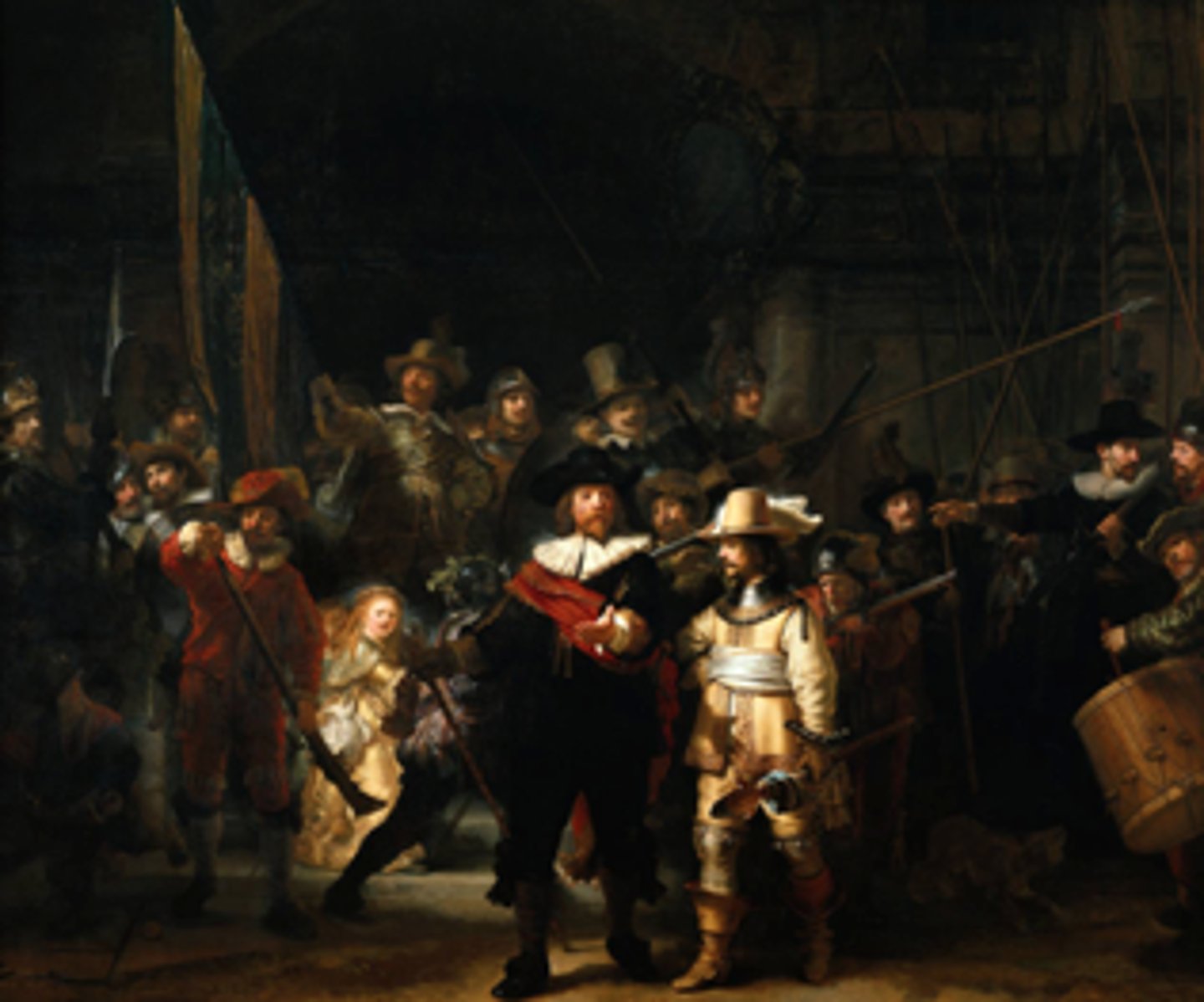
The Company of Captain Frans Banning Cocq (The Night Watch). Rembrandt van Rijn. 1642. Oil on canvas.
-commissioned by a wealthy civic-guard company to create large group portraits of its members for its new meeting hall
-carries the idea of a group portrait as a dramatic event even further
-woman with chickens from her waist is the mascot of the company; claws (klauw in Dutch), may be a pun on the kind of guns (klower) that gave the name (the Kloveniers) to the company. Chicken legs with claws also are part of its coat of arms
-caravaggist use of light
-not happening at night, it's just painted v dark and needs cleaning
-they are lining up to parade
-complex, dynamic, and active composition; highly innovative for this type of group portraiture
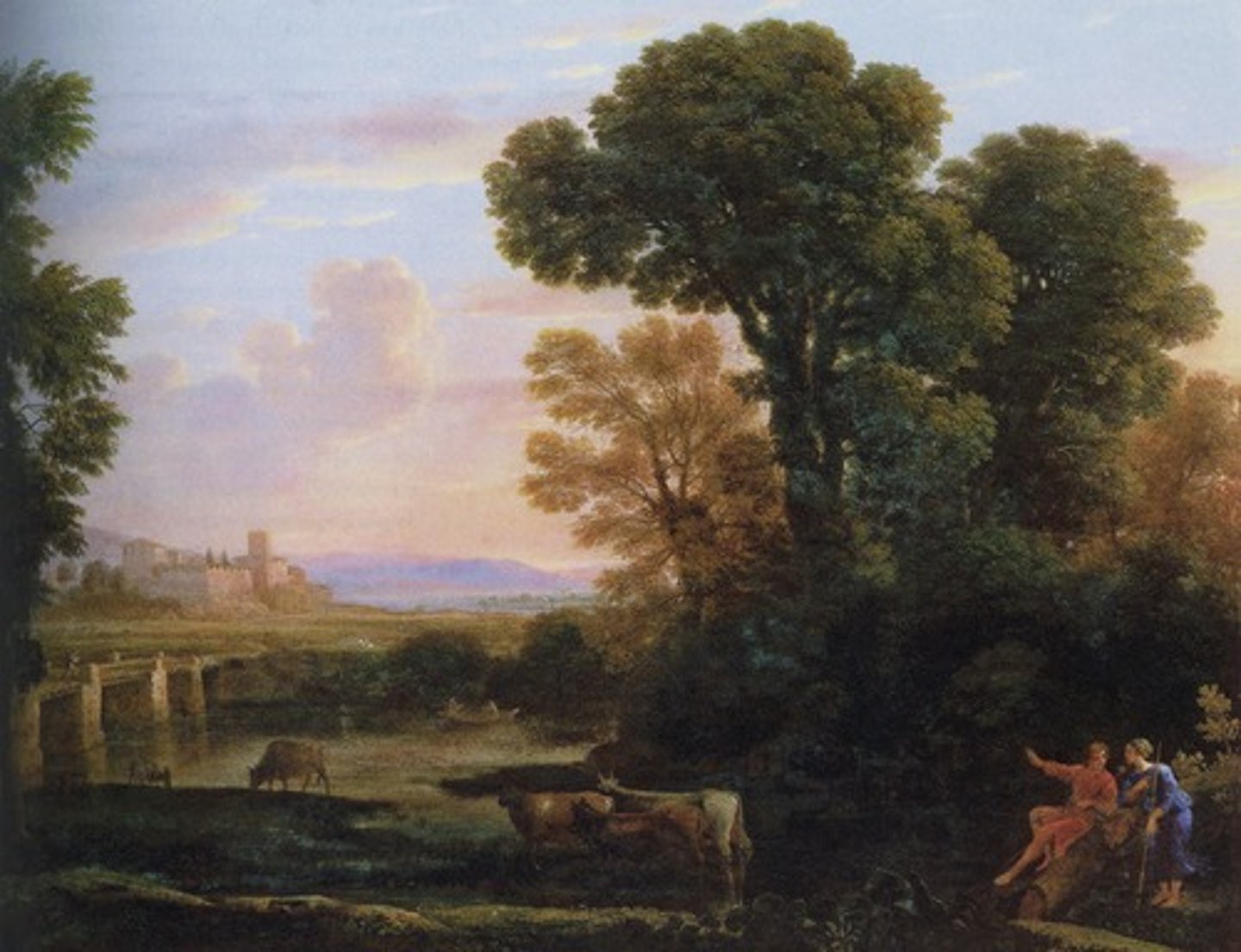
A Pastoral Landscape. Claude Lorrain. c. 1648. Oil on copper.
-copper is noted for its luminosity
-classical landscape=idealized, domesticated nature made to be visually appealing
-more about the landscape than the figures
-interested in the effects of light in the creation of a sense of atmosphere
-pastoral scenes were very popular among the aristocrats for the idealization of the peasant's life, invoking nostalgia upon the viewer
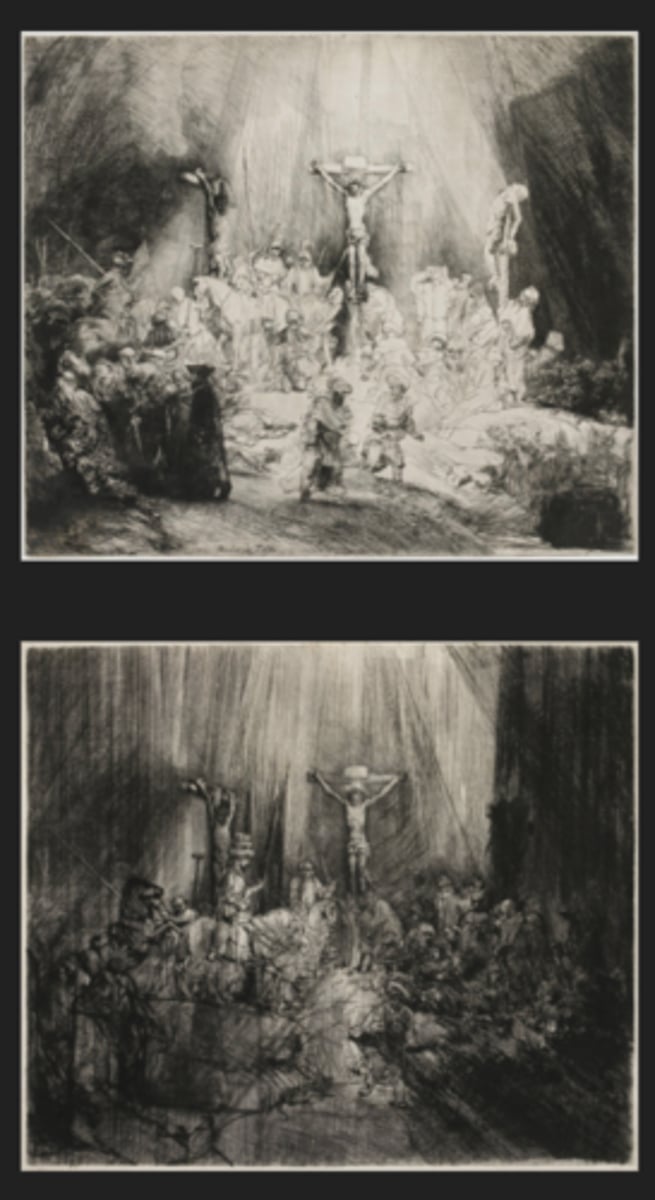
Three Crosses (First State) and Three Crosses (Fourth State). Rembrandt van Rijn. 1653. Drypoint.
-first state on top, 4th state on bottom
-there are 5 total states
-4th state more compact
-4th state has more concentrated light, thus concentrating which figures we see as important
-first state is a rendering of a narrative moment, bustling with detail; the fourth state reduces the event to its mysterious essence
-created entirely with drypoint, which was unusual; drypoint gives it the rich shadowy blurriness
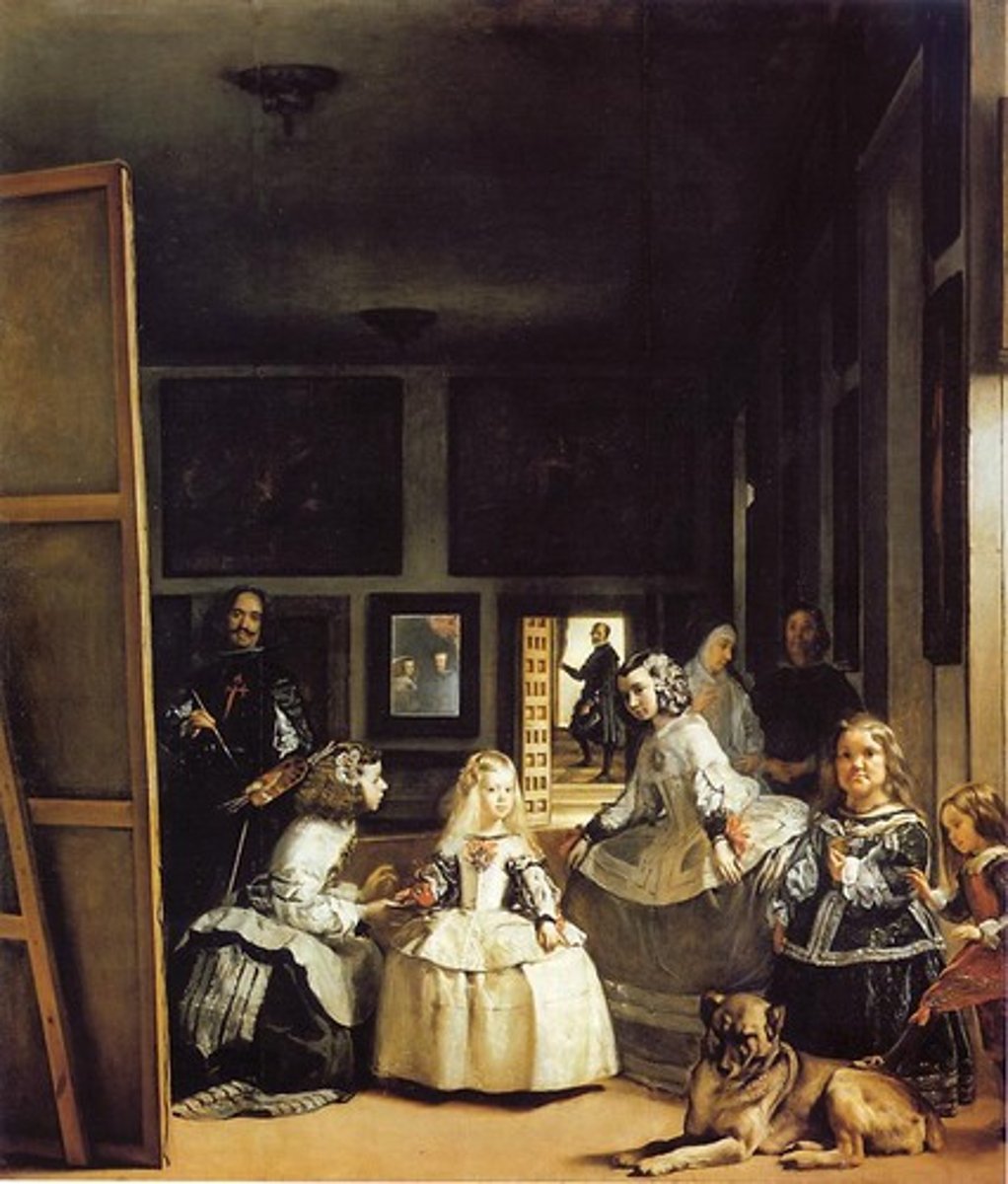
Las Meninas (The Maids of Honor). Diego Velázquez. 1656. Oil on canvas.
-Las Meninas refers to the ladies in waiting
-dog=fidelity
-dwarfs were sought after at court as friends for the children of the kings and queens. That's because a dwarf might be the same height as the child, but have the mind of an adult and be able to teach their child better
-can actually identify the figures as real-life members of the court
-queen and king are depicted in the mirror in the background
-Velasquez desperately wanted to be a knight of Santiago. He didn't receive entry until after his death, at which time the red cross was painted onto his breast
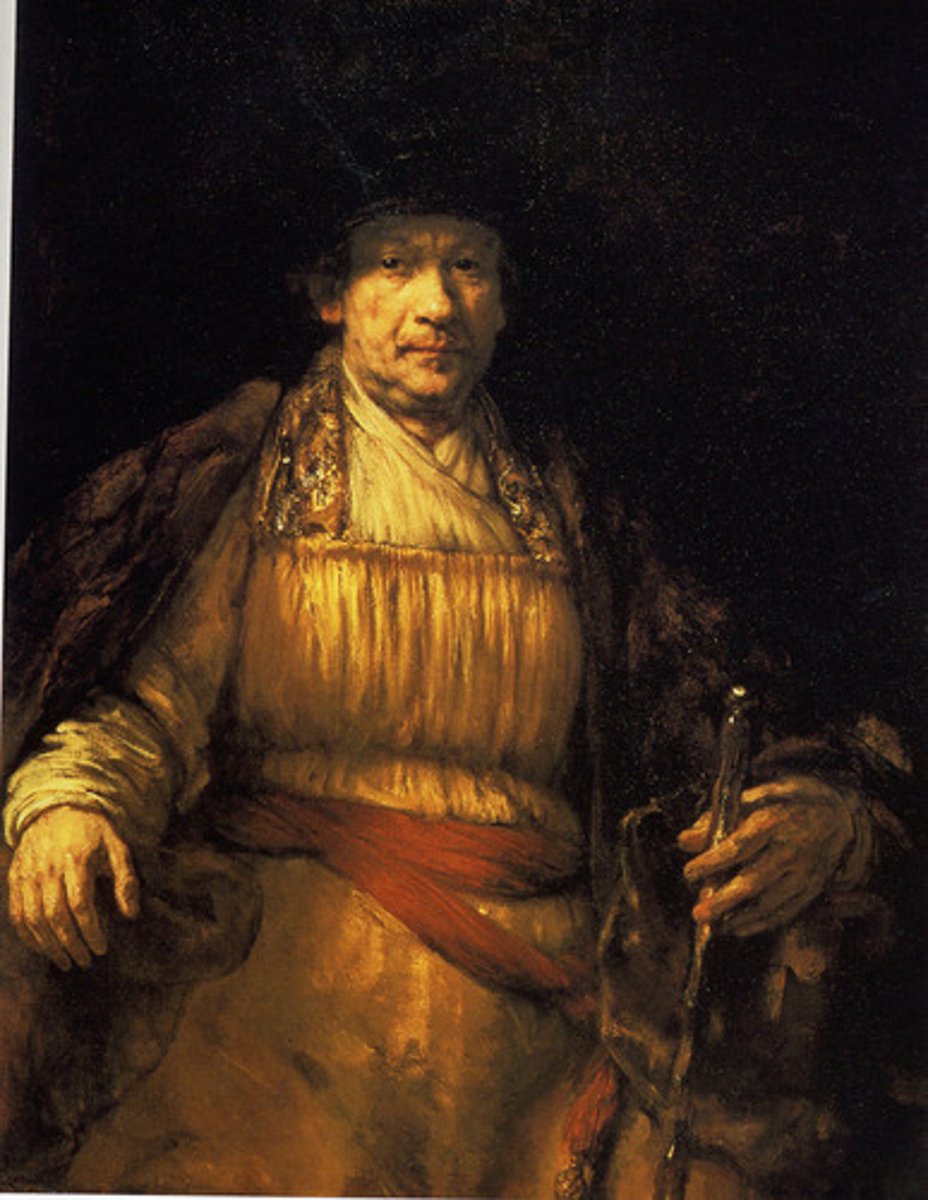
Self-Portrait. Rembrandt van Rijn. 1658. Oil on canvas.
-Rem painted himself A LOT
-impasto=heavily applied paint
-extreme chiaroscuro
-this is 2 years after he declared bankruptcy
-still depicting himself as dignified although the furrowed brow, sagging flesh, and aging face demonstrate the trials he's gone through
-sensitivity to the human condition
-internalized spirituality
-rich, luminous chiaroscuro ranging from deepest shadow to brilliant highlights in a dazzling display of gold, red, and chestnut-brown
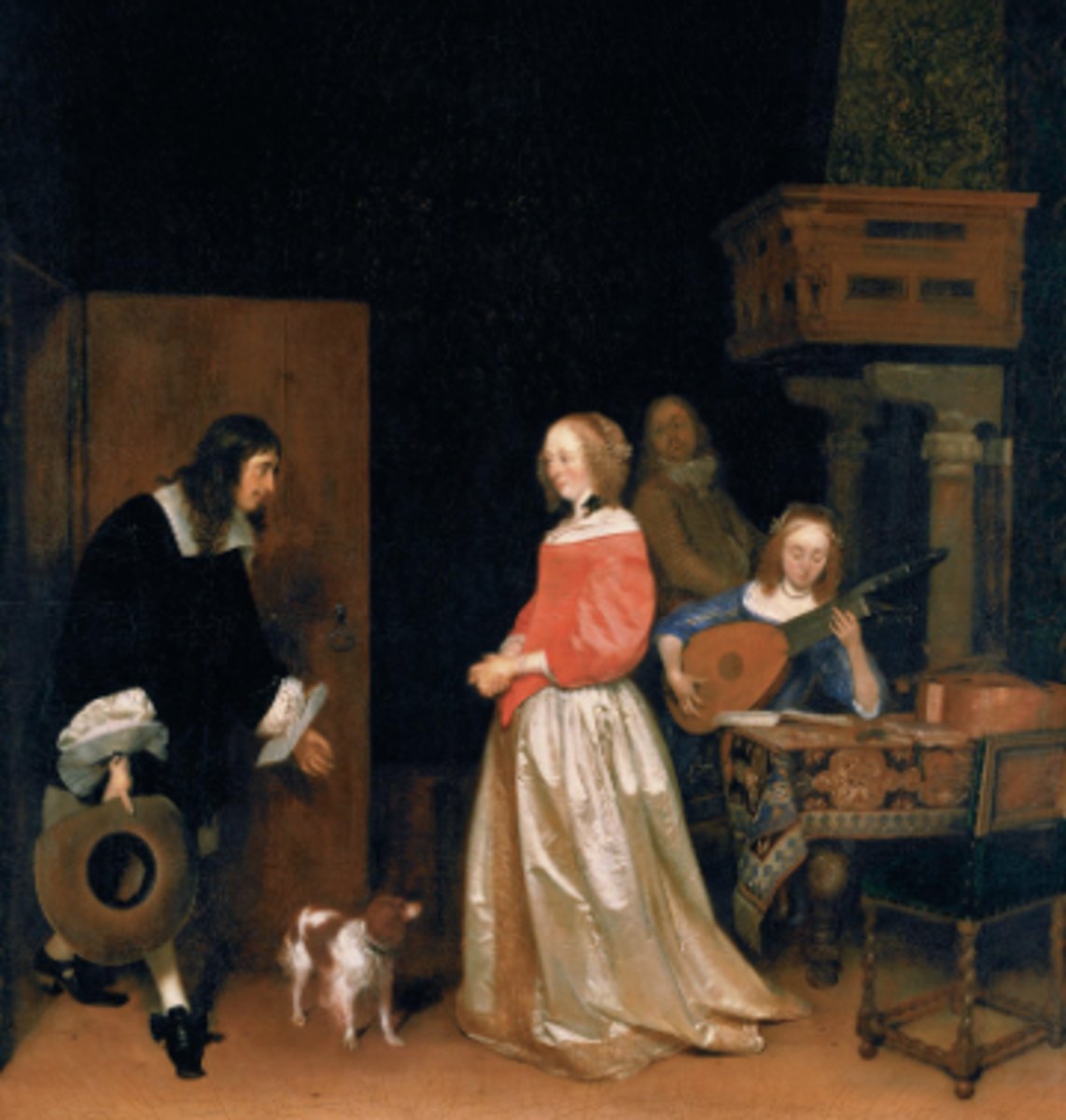
The Suitor's Visit. Gerard ter Borch. c. 1658. Oil on canvas.
-genre painting depicting scenes of every, contemporary life; sometimes held specific meaning although that's lost to us today
-may represent a courtship scene
-instrument=harmony and good relationships; but music also evoked worldly pleasures
-dog=fidelity
-rugs were considered too precious to be placed on the ground, and instead they served as table coverings
-the man stepping inside is in high fashion
-extreme attention to rendering materials
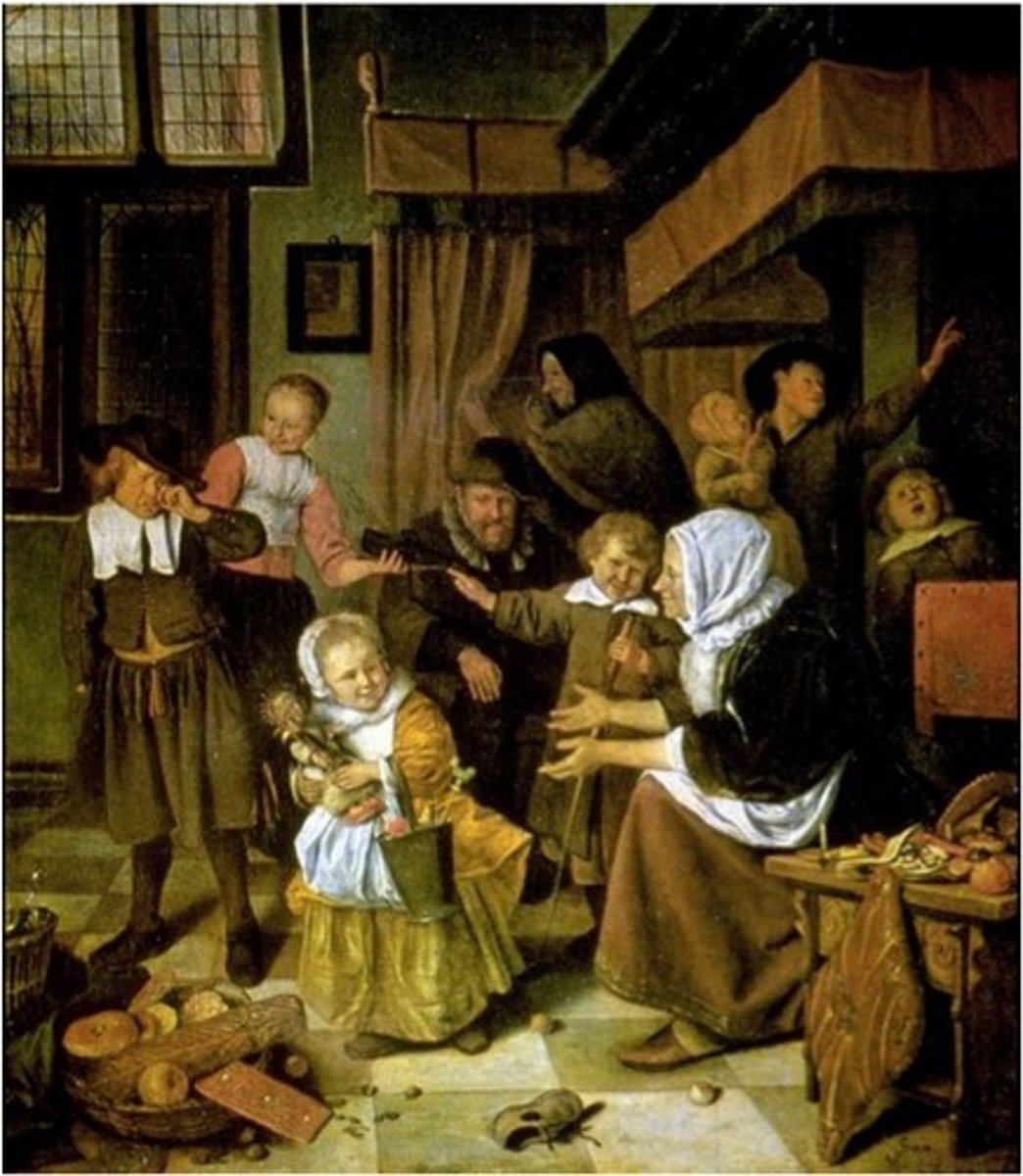
The Feast of St. Nicholas. Jan Steen. c. 1660-1665. Oil on canvas.
-Jan Steen is known for rowdy house scenes
-portrays everyday life to portray moral tales, illustrate proverbs and folk sayings, or make puns to amuse the spectator
-break from decorum to underscore the rambunctious scene
-the people are celebrating the pre-Christmas gifts they have (or haven't) received from St Nicholas
-was a tavern owner and, as such, had access to observing many types of behavior
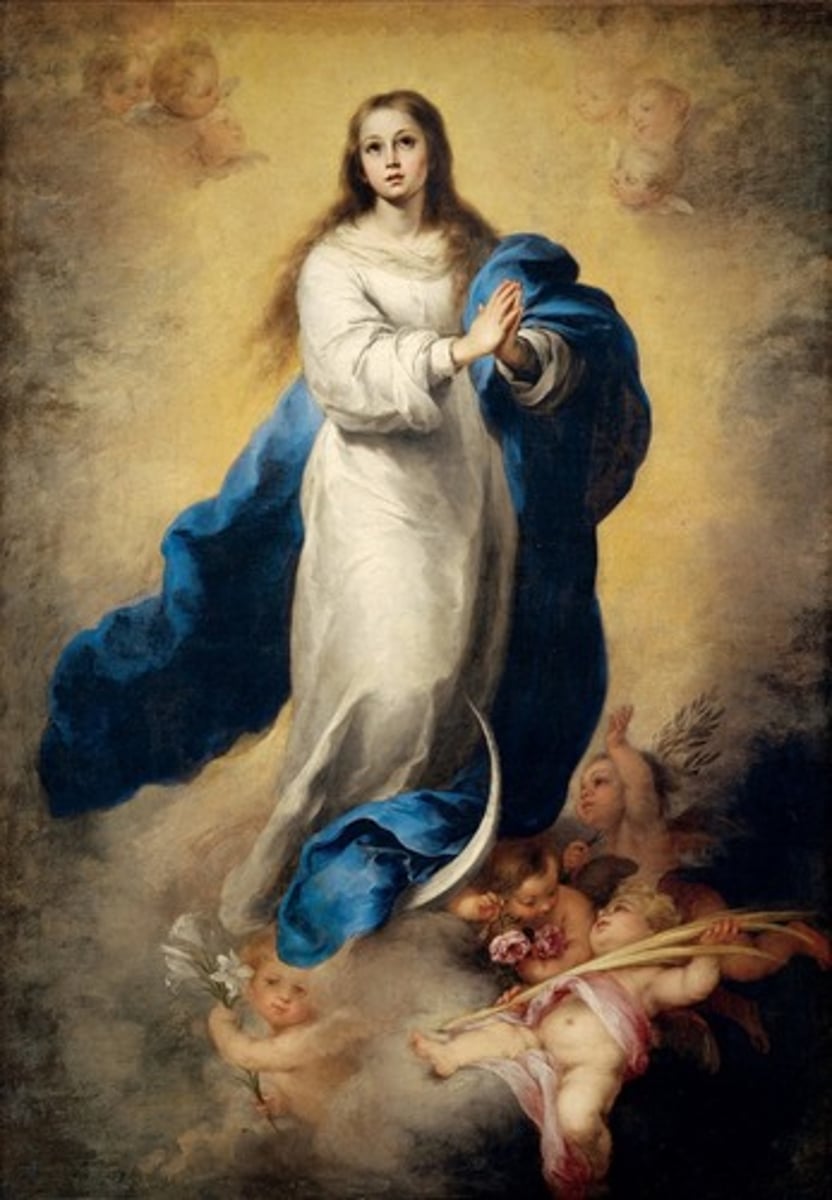
The Immaculate Conception. Bartolomé Esteban Murillo. c. 1660-1665. Oil on canvas.
-popularity of the theme of the Immaculate Conception, the controversial idea that Mary was born free from original sin (not yet Catholic dogma at the time, but still popular)
-Murillo is following a set canon established in Counter-Reformation art, which stated that Mary was to be depicted in white with a blue sash with her hands clasped in prayer as she's carried up into the heavens by angels
-may be surrounded by an unearthly light (“clothed in the sun”) and may stand on a crescent moon in reference to the woman of the Apocalypse
-angels often carry palms and symbols of the Virgin, such as a mirror, a fountain, roses, and lilies, and they may vanquish the serpent, Satan
-the lilies are a symbol of Mary
-roses are a symbol of Mary
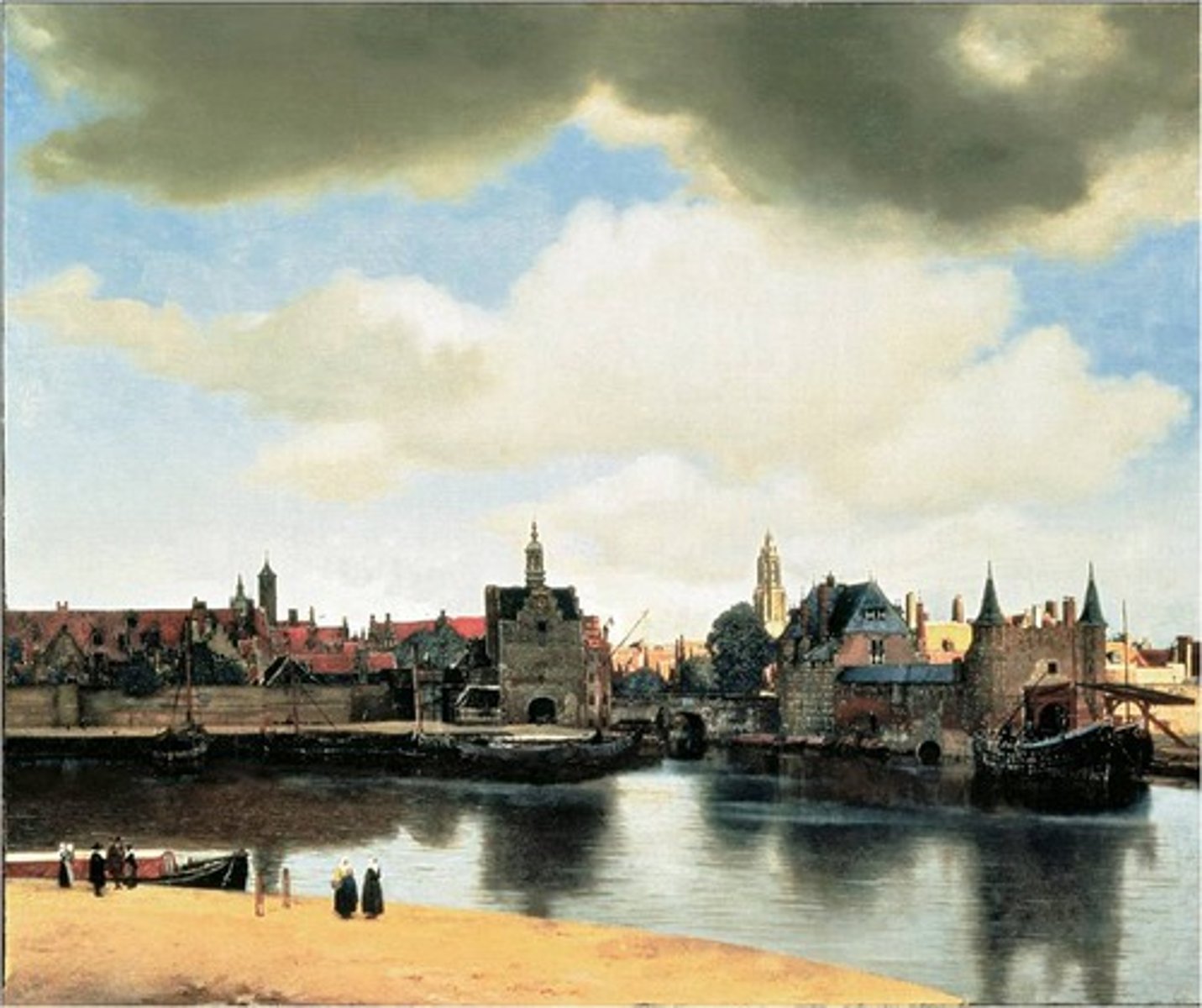
View of Delft. Johannes Vermeer. c. 1662. Oil on canvas.
-highly structured compositional approach and soft, liquid painting style
-Dutch paint inhabited still lives--there are people in the foreground
-this is idealized; buildings have been moved to create a "perfect" landscape
-endows the city with a timeless stability through a stress on horizontal lines, the careful placement of buildings, the quiet atmosphere, and the clear, even light
-Vermeer might've used a camera obscura to get the level of detail and beading of the highlights
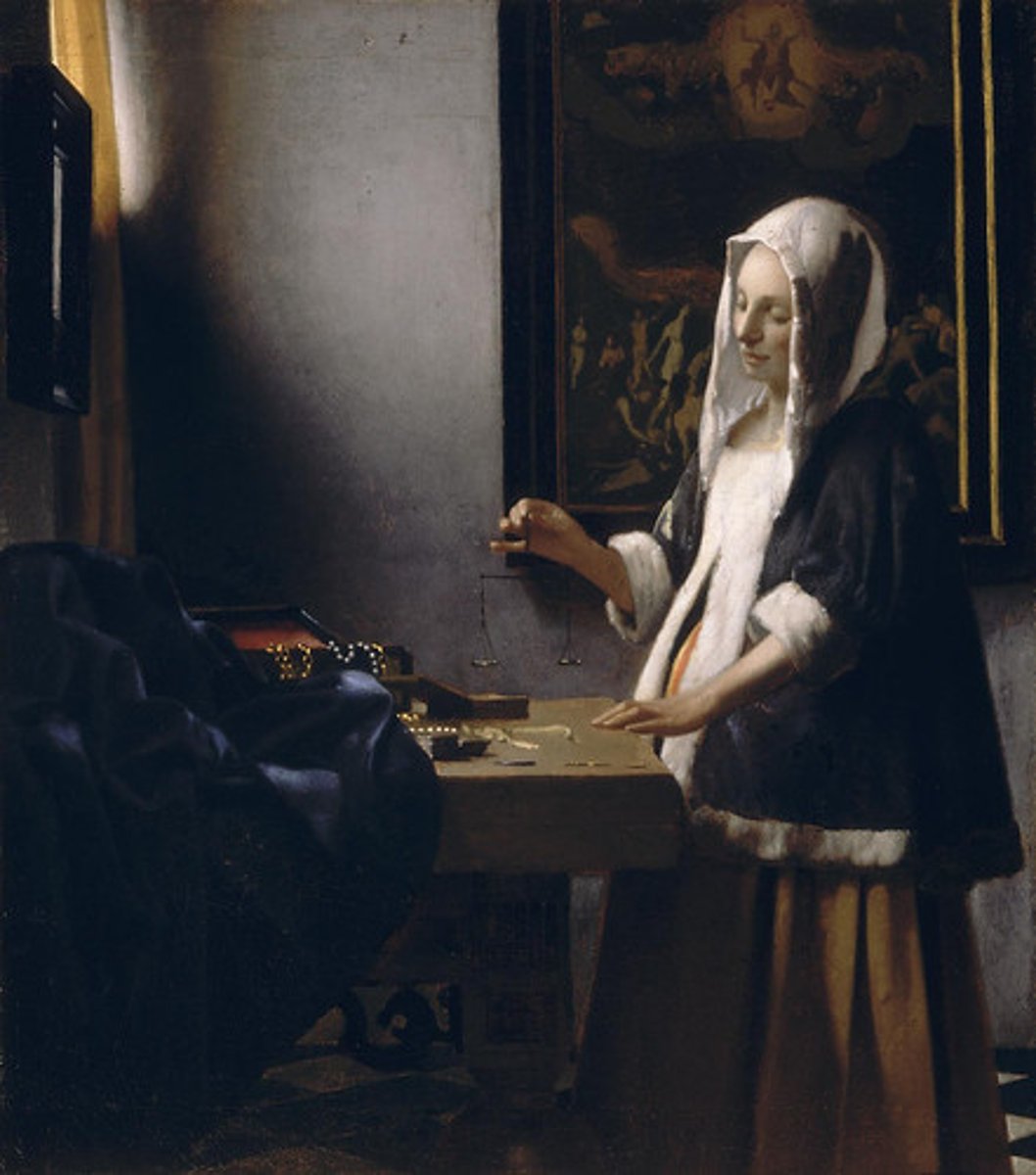
Woman Holding a Balance. Johannes Vermeer. c. 1664. Oil on canvas.
-enigmatic scenes of women in their homes, alone or with a servant, occupied with a refined activity such as writing, reading letters, or playing a musical instrument
-quiet and still interior scenes, gentle in color, asymmetrical but strongly geometric in organization
-clarity and balance in the composition
-nearly invisible brushwork
-shimmering light
-woman measuring mimics the Last Judgment scene behind her
-the contemplation of life also is an example of vanitas
-transience of earthly life
-she might not be pregnant
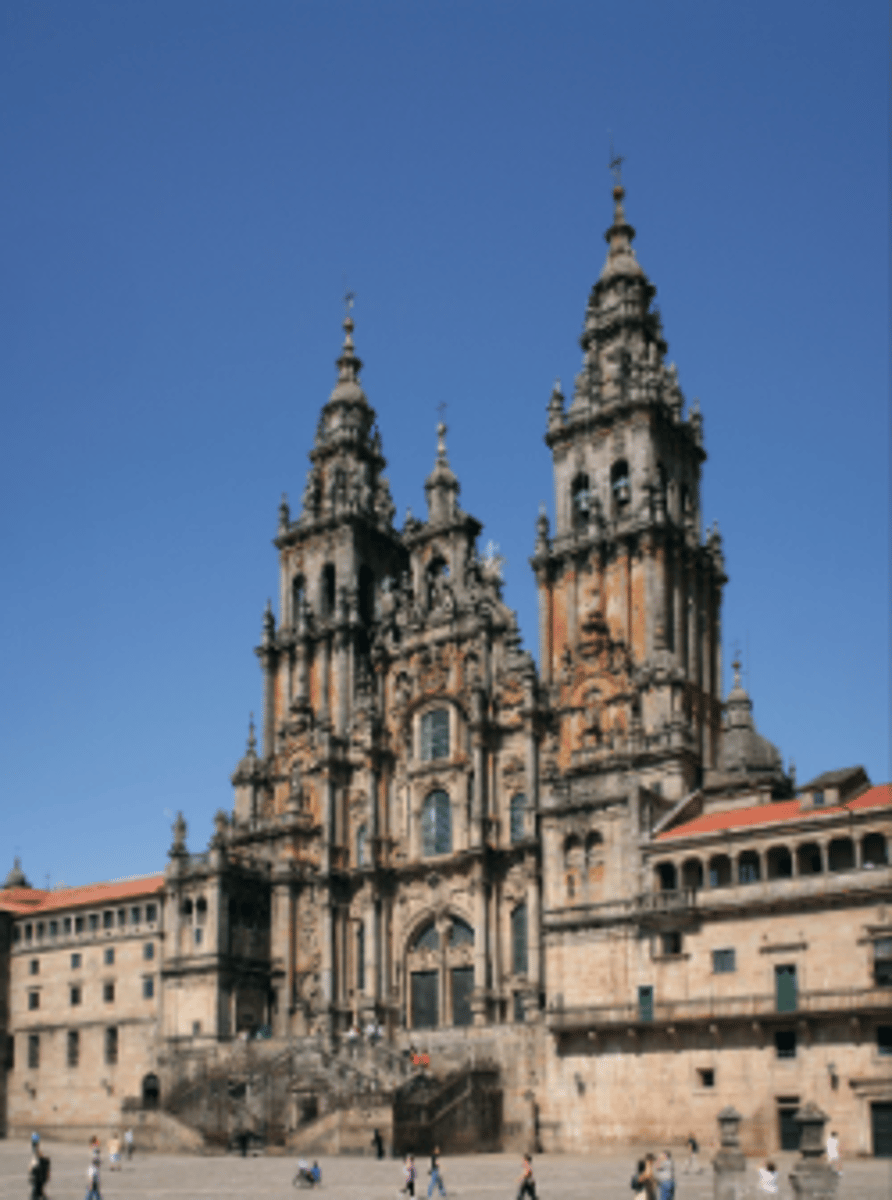
West Facade, Cathedral of Saint James, Santiago de Compostela. Spain. South tower 1667-1680; north tower and central block finished mid 18th century by Fernando de Casas y Nóvoas.
-17th century, St James was falling from popularity as Spain sought to claim other saints as their patron saint, so to counteract that, they renovated this cathedral
-a grab for more pilgrims in the city
-architect tied the disparate elements—towers, portal, stairs—together at the west end in a grand design
-free-standing gable soaring above the roof, visually linking the towers and framing a statue of St. James
-the windows were the latest addition and are referred to as "the Mirror"
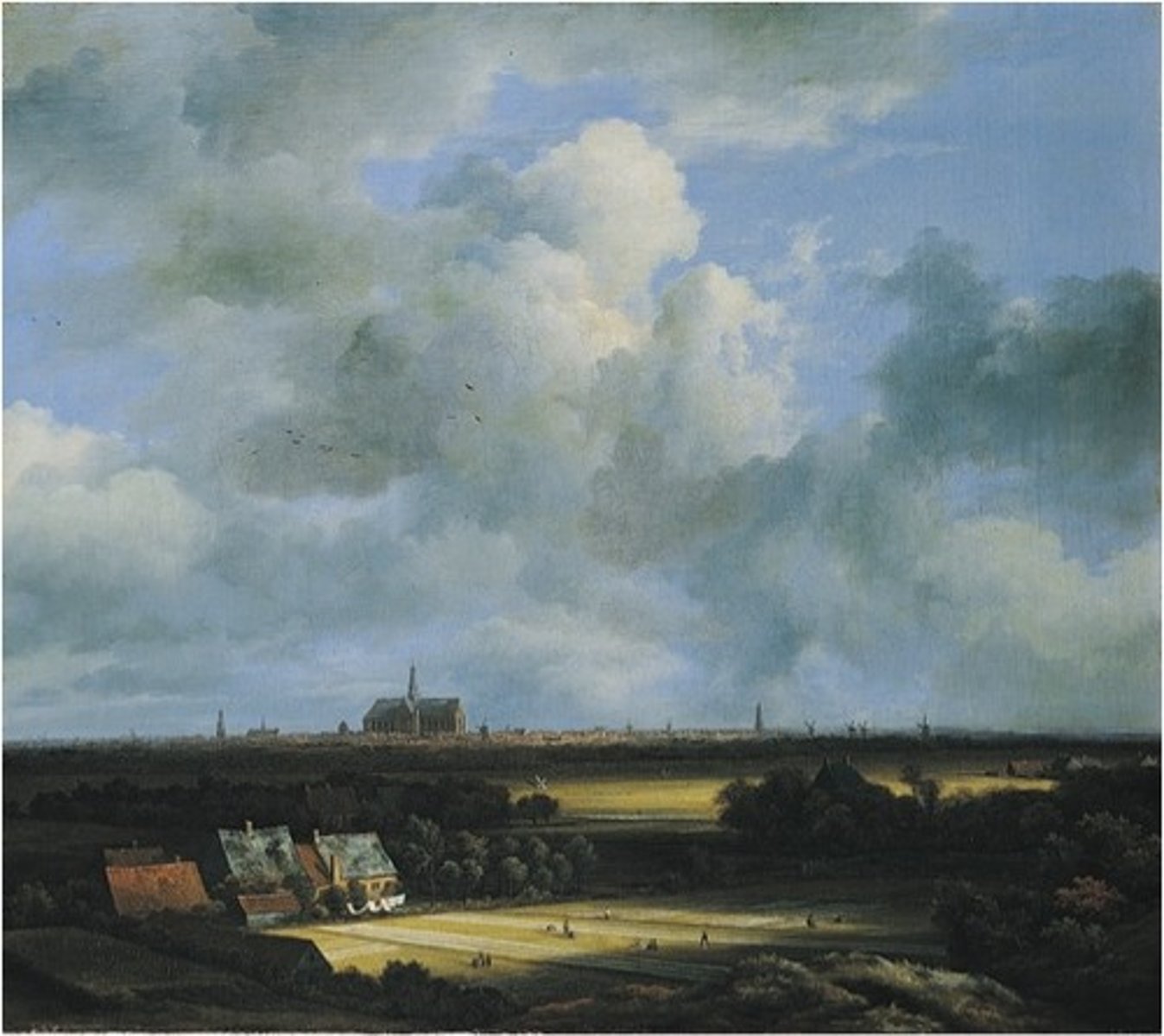
View of Haarlem from the Dunes at Overveen. Jacob van Ruisdael. c. 1670. Oil on canvas.
-continuing motif in Dutch landscape was the emphasis on cloud-filled expanses of sky dominating a relatively narrow horizontal band of earth below
-a celebration of the flatlands outside of Haarlem, that had been reclaimed from the sea as part of a massive landfill project that the Dutch compared with God’s restoration of the Earth after Noah’s Flood
-the massive structure in the back is St Bavo's
-inhabited landscape--see little people in the field
-they are caught in the process of spreading white linen across the broad fields to bleach in the sun - glorification of the industriousness of citizens engaged in one of Haarlem’s principal industries
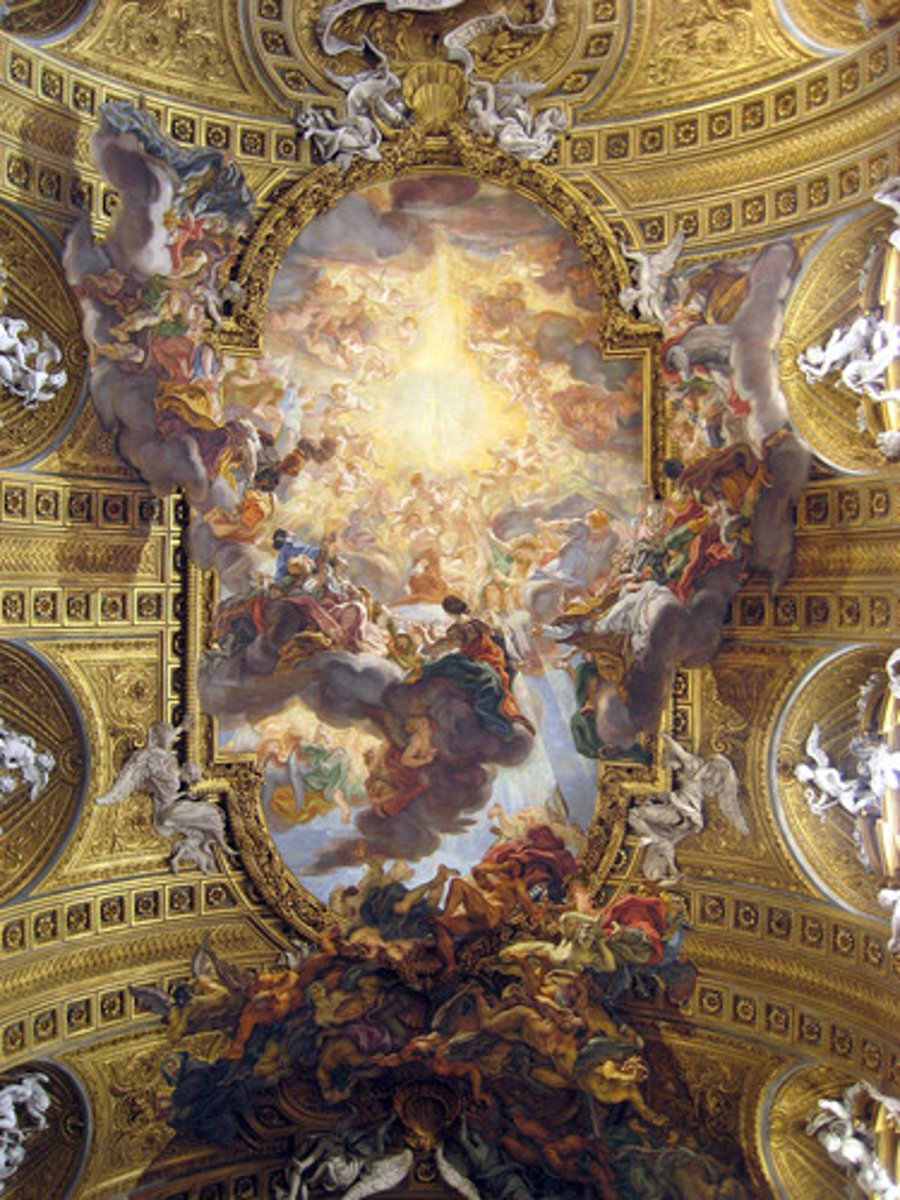
The Triumph of the Name of Jesus and Fall of the Damned. Giovanni Battista Gaulli. Church of Il Gesù, Rome. 1672-1685. Fresco with stucco figures.
-fuses sculpture and painting to eliminate any appearance of architectural division
-the bits that appear to sweep out of the central space are wooden pieces that hang from the ceiling
-subject is the Last Judgment, with the elect rising toward the name of God and the damned plummeting through the ceiling toward the nave floor
-in a Jesuit church
-stucco figures give the appearence of marble without the weight and cost
-rather than having a dove in the bright white light, there is the acronym for Christ's name - IHS - which is also the Jesuit monogram
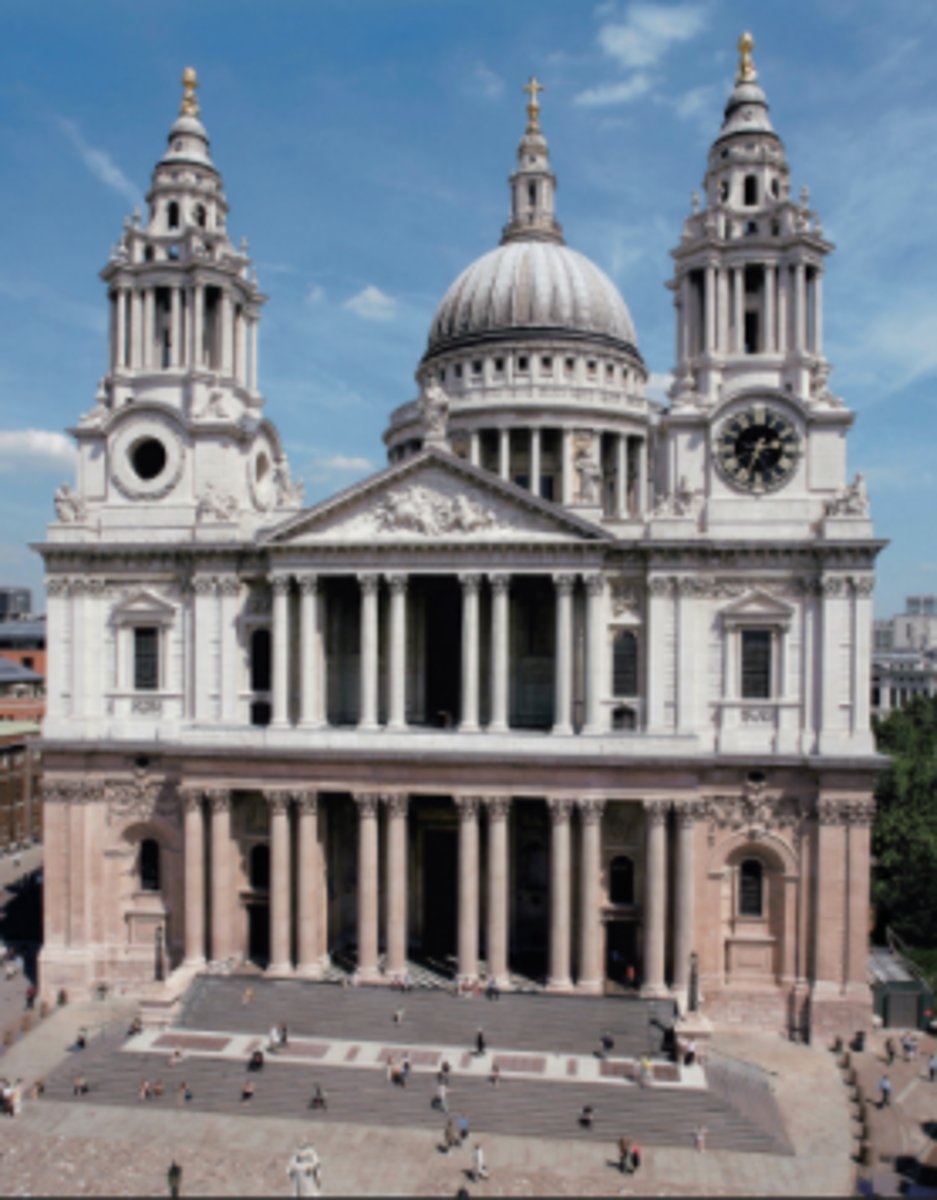
St. Paul's Cathedral, London. Christopher Wren. Designed 1673, built 1675-1710.
-after the Great Fire of 1666, which destroyed much of central London, Wren got the commission to build this
-the original church was Gothic
-modeled on St Peter's in Rome; basilica with a dome
-Wren was a mathematician and astronomy prof from Oxford
-columns around the drum are made to visually ref Bramante's Tempietto in Rome
-two levels of paired Corinthian columns support a carved pediment
-deep-set porticos and columned pavilions atop the towers create dramatic areas of light and shadow
-Wren never went to Italy, but he did meet Bernini in France and admired the French Baroque style
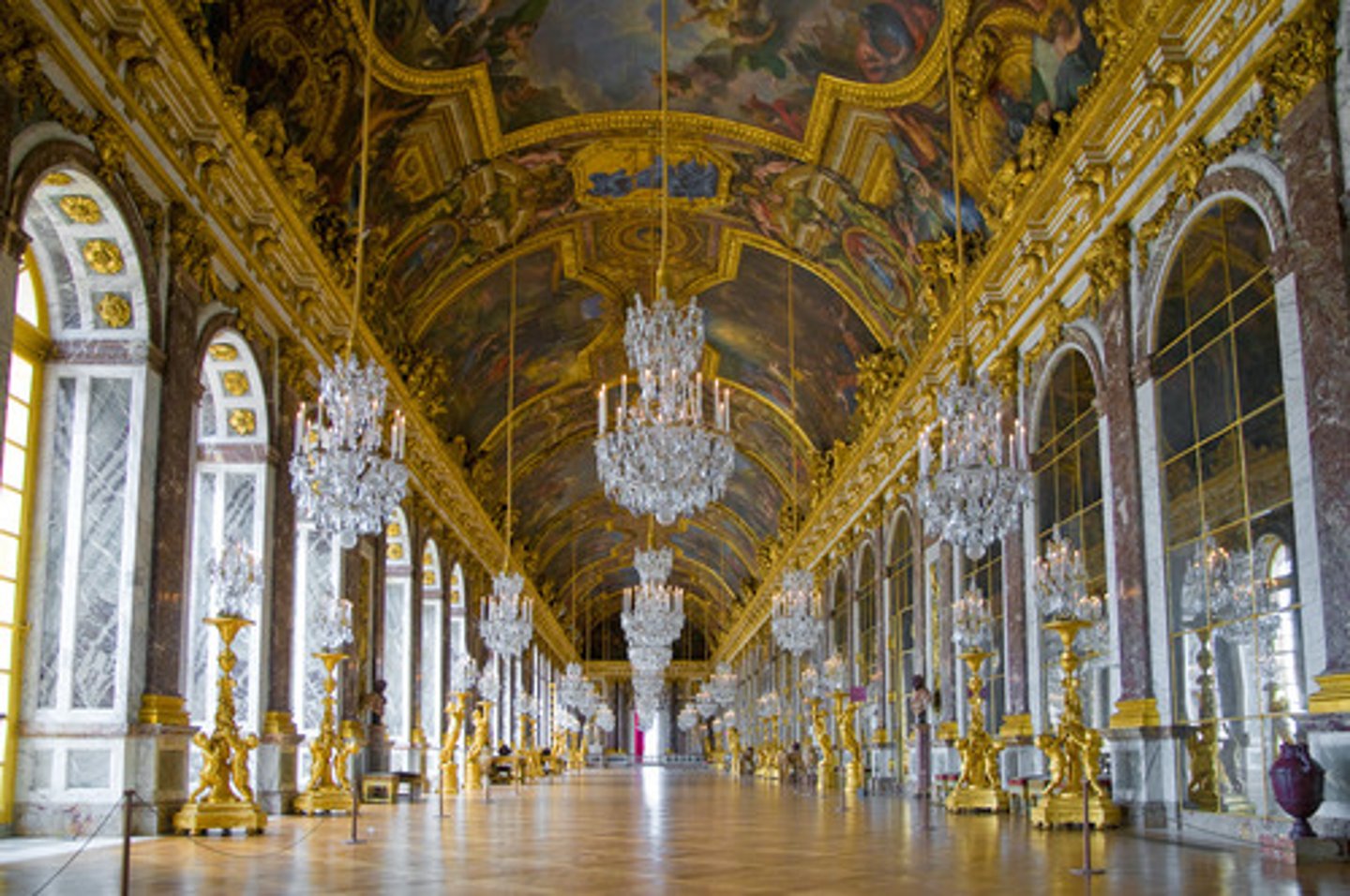
Hall of Mirrors, Palace of Versailles. Jules Hardouin-Mansart and Charles Le Brun. Begun 1678.
-mirrors were exceptionally expensive to make and install, for they are breakable and made of delicate glass
-the extensive use of mirrors creates the illusion of greater depth in the hall
-electric light wasn't a thing yet, so the use of mirrors at this height assisted to brighten the space by reflecting both natural and candle light
-the ceiling frescos depict the military victories of Louis XIV in association with Classical gods
-underlying theme for his design and decoration of Versailles was the glorification of the king as Apollo the sun god, with whom Louis identified
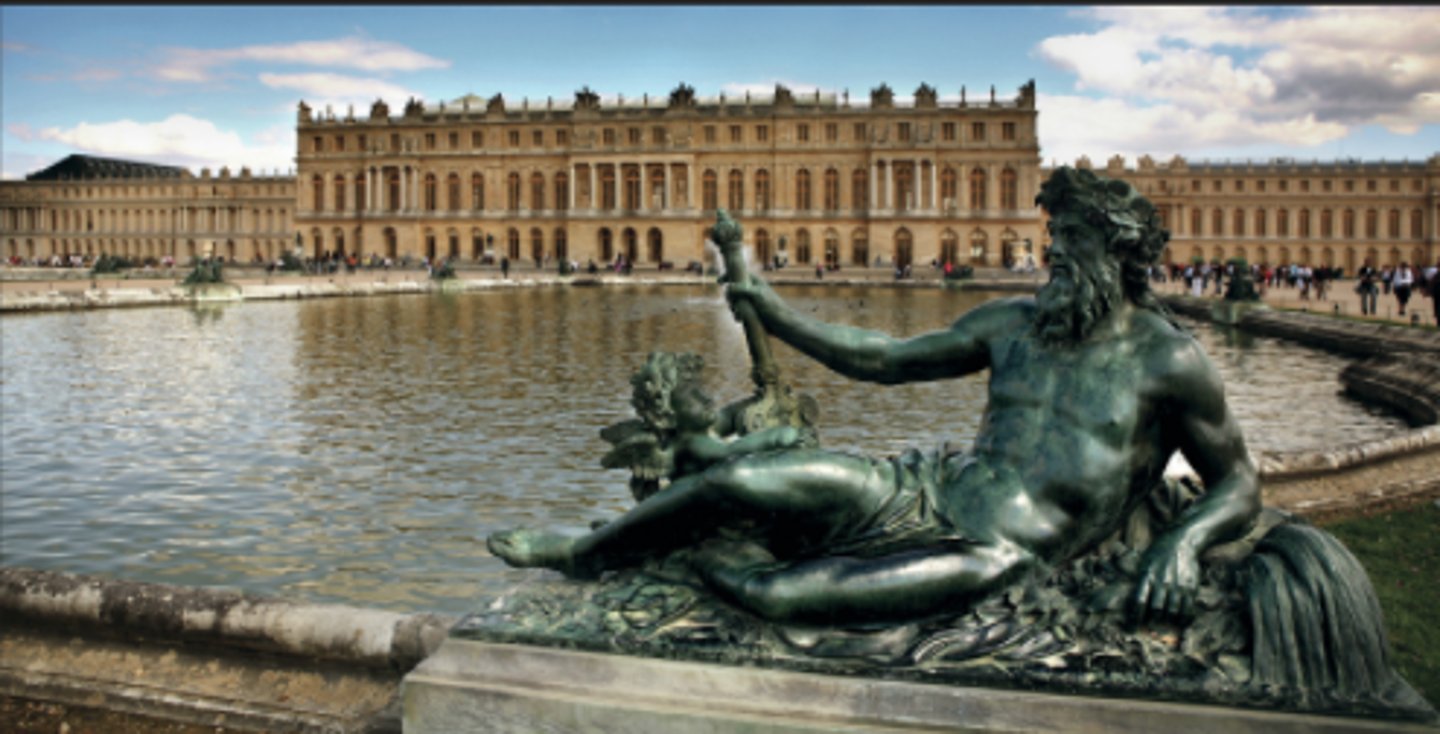
Garden Facade of the Palace of Versailles. Louis Le Vau and Jules Hardouin-Mansart. 1678-1685. Foreground: Jean-Baptiste Tuby, Personification of the Rhone River.
-Versailles was Kouis XIV's dad's hunting lodge, which Louis XIV decided to turn into a grand palace
-Louis XIV made all of the aristocracy live at Versailles with him and vie for his favor. Loss of his favor could result in expulsion from the palace and, ultimately, loss of all nobility
-Hardouin-Mansart was responsible for the addition of the long lateral wings and the renovation of Le Vau’s central block on the garden side to match these wings
-three-story façade has a lightly rusticated ground floor, a main floor lined with enormous arched windows separated by Ionic columns or pilasters, an attic level whose rectangular windows are also flanked by pilasters, and a flat, terraced roof.
-overall design is a sensitive balance of horizontals and verticals relieved by a restrained overlay of regularly spaced projecting blocks with open, colonnaded porches
-the sculpture in front is a depiction of a classical river god
-the amount of water used to make the fountains run is so great that, today, the fountains can only be on occasionally
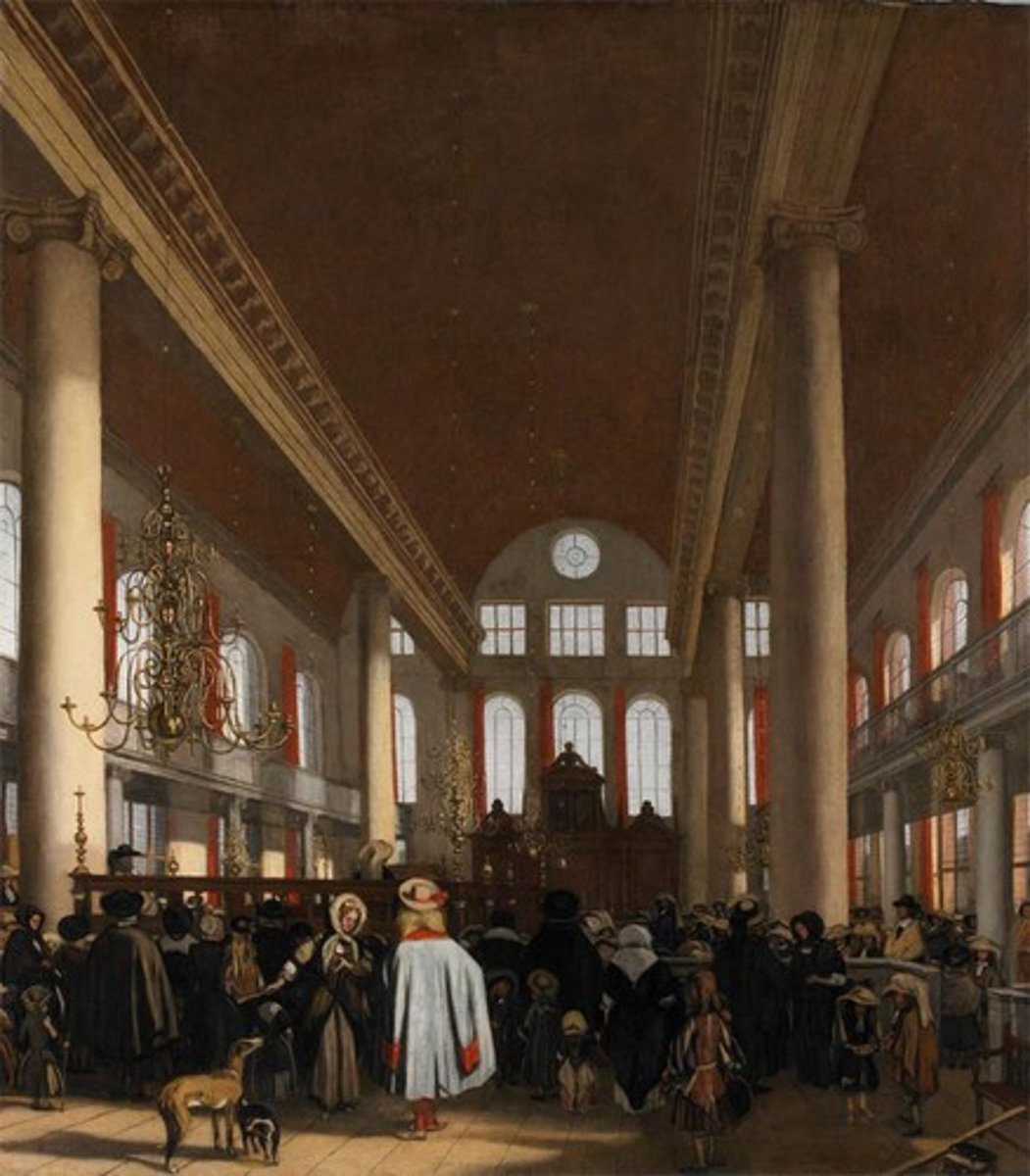
Portuguese Synagogue, Amsterdam. Emanuel de Witte. 1680. Oil on canvas.
-de Witte specialized in architectural interiors
-Jews were generally accepted citizens in the Dutch Republic and could openly worship
-this Synagogue was very new when this was painted. The Synagogue was completed in 1675 and considered one of the most impressive buildings at the time
-a "portrait" of a building
-rectangular hall divided into one wide central aisle with narrow side aisles, each covered with a wooden barrel vault resting on lintels supported by columns
-angle emphasizes the space in the building itself
-contrasts of light and shade add dramatic movement to the simple interior
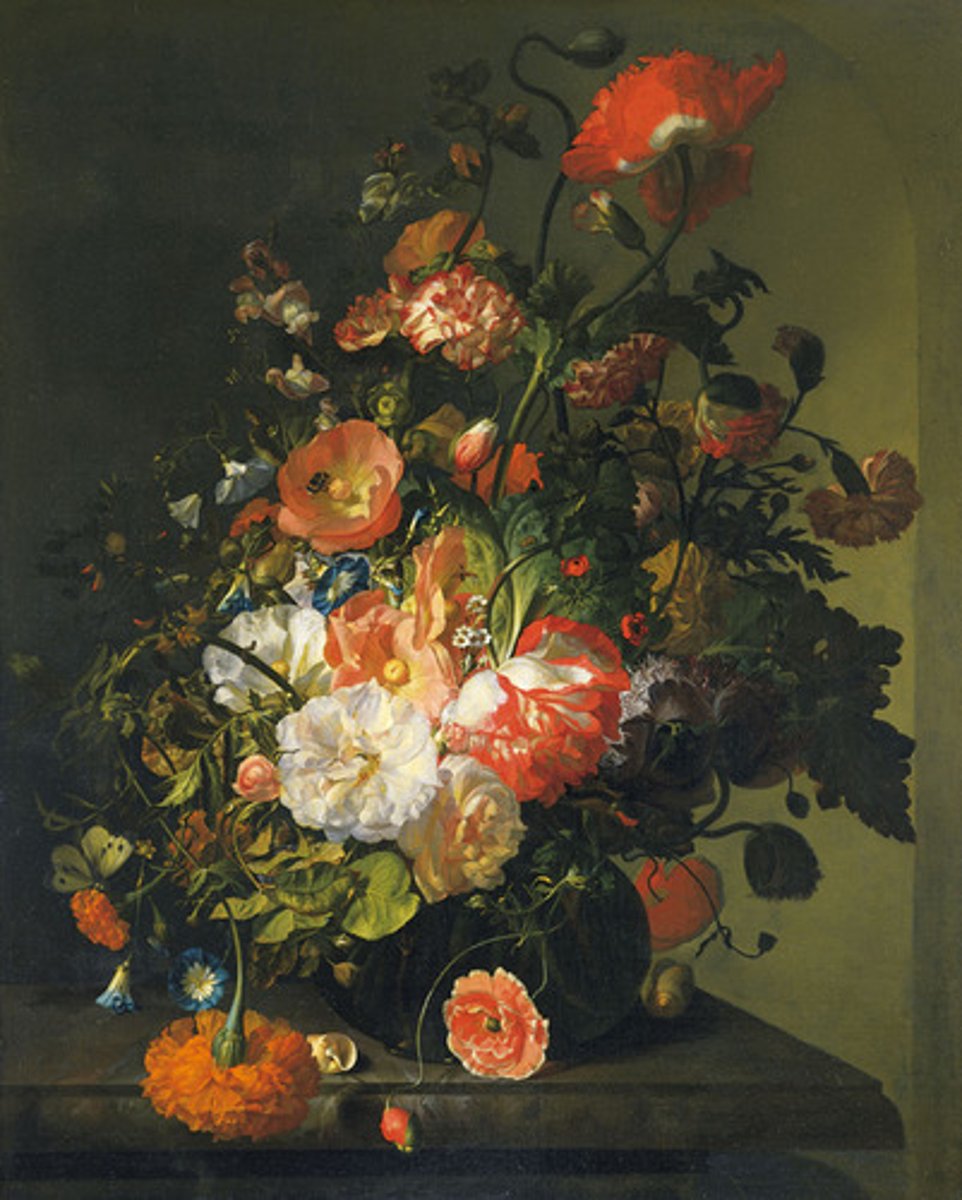
Flower Still Life. Rachel Ruysch. After 1700. Oil on canvas.
-significant advances were made in botany during the 17th century
-Dutch were major growers and exporters of flowers, especially tulips that appear in these flower pieces
-asymmetrical flower vase creates dynamism
-often studied forms in botanical treatises and then combined them all in one composition
-flowers that don't bloom at the same time, creating a fantastical depiction of a flower arrangement that couldn't exist
-seashell collecting was considered an elite hobby, and there were shell connoisseurs
-mixing land and sea naturalia for the viewer's edification
-short life of flowers was a poignant reminder of the fleeting nature of beauty and of human life
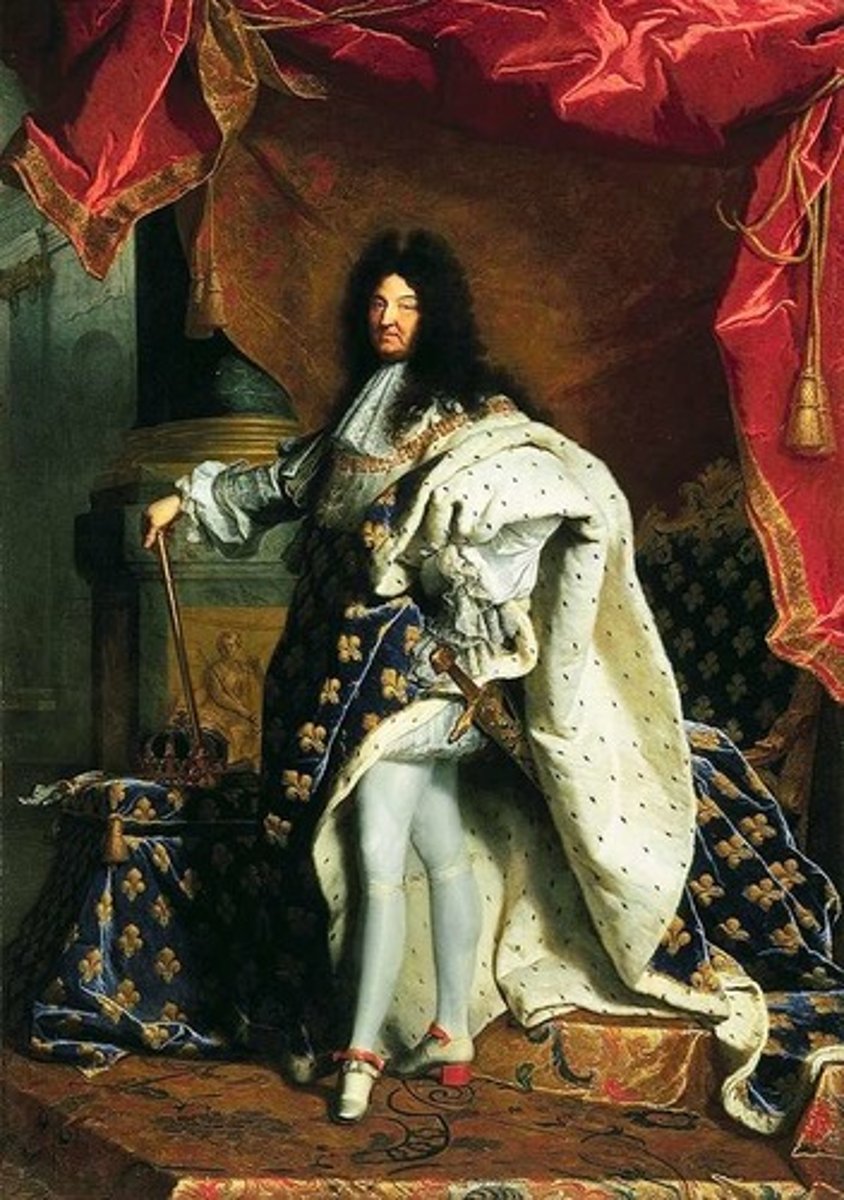
Louis XIV. Hyacinthe Rigaud. 1701. Oil on canvas.
-Louis XIV=the Sun King
-sometimes glorified in art through identification with the Classical sun god, Apollo
-the hair is a wig
-poses in a blue robe of state, trimmed with gold fleurs-de-lis and lined with white ermine
-framed by a lavish, billowing curtain
-baton=phallic, and power symbol
-K Louis XIV invented heels to compensate his shortness
-despite the pompous pose, the directness of the king’s gaze and the frankness of his aging face make him appear surprisingly human
-this painting was meant to be a gift to his grandson, the future Philip V of Spain, but Louis XIV liked it so much he had a copy made, and the copy became the gift
-practice of giving portraits as royal gifts: memorialized important political alliances by recording them in visual form
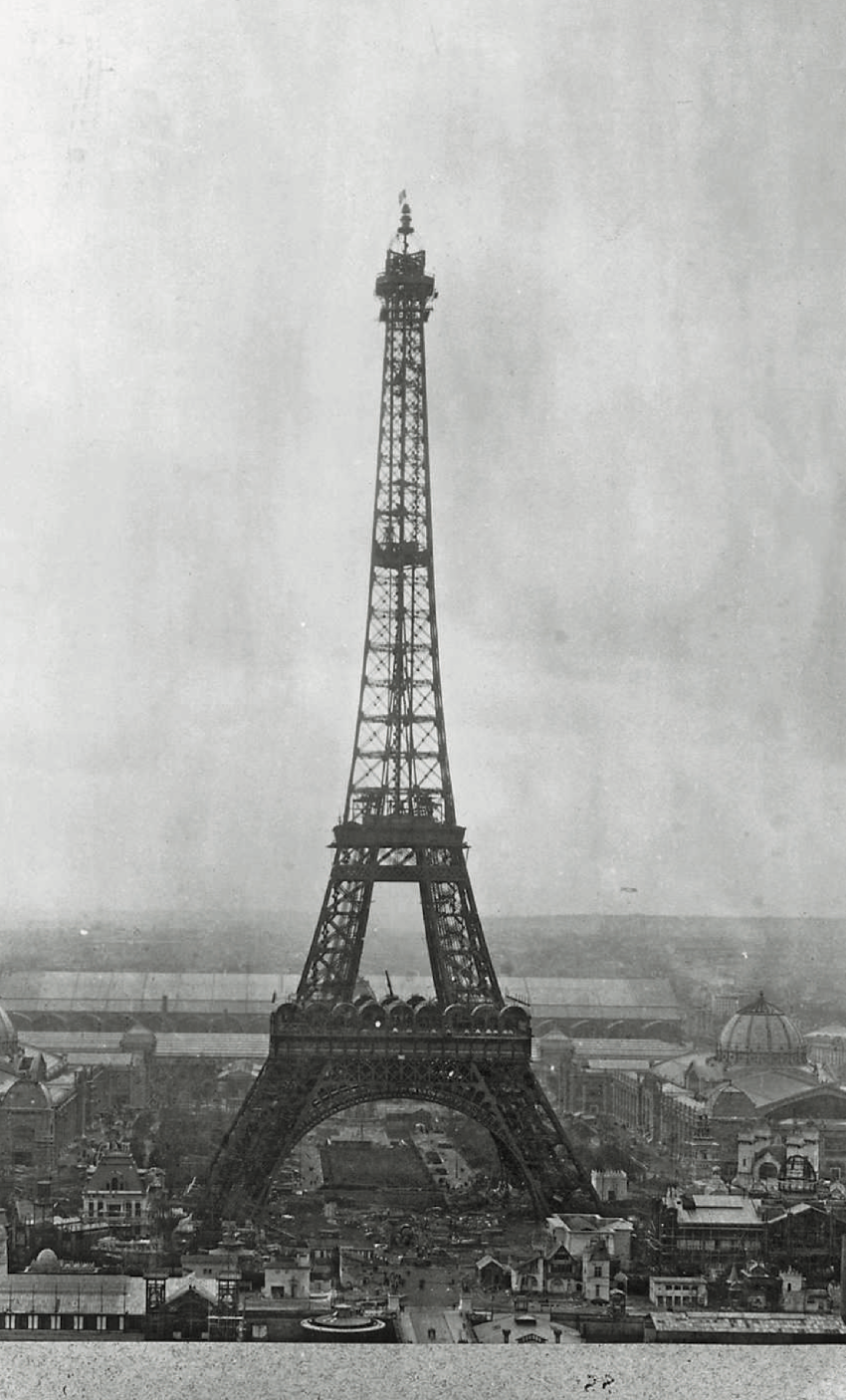
Gustava Eiffel, Eiffel Tower, 1889, Paris, Brass
Brass, Expo entrance.
Hated as an eyesore, showing off colonization, tech, it was a stage of granduer.
Thiugh to be unifinished.
Show superior engineering,

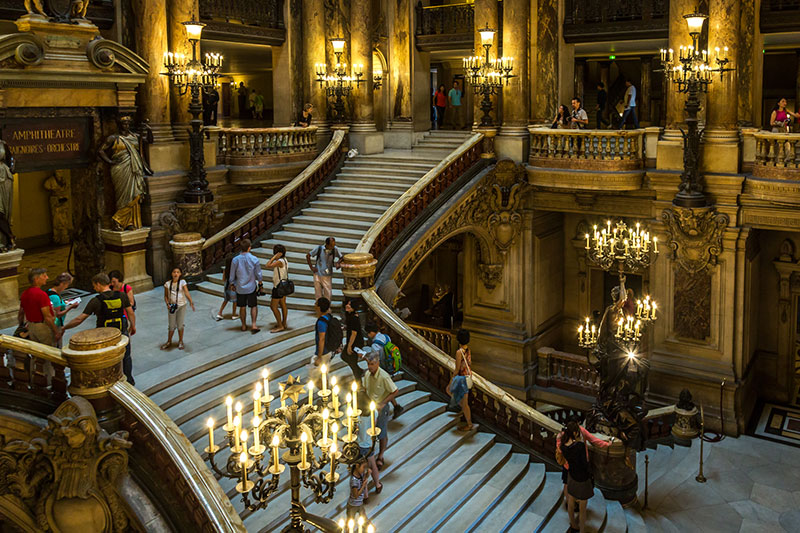
Gustav Eiffel, Opera House and Grand Staircase, Paris, 1861.
Academic style, it was an opulent building and was meant to look lavish with made up historicisim.
Decrotive and idealized features it is a pastiche of fake historicism.
Seen as such a sham becuase the colums and decoration was not strucural, just decroative.
Beauz-Arts tradition
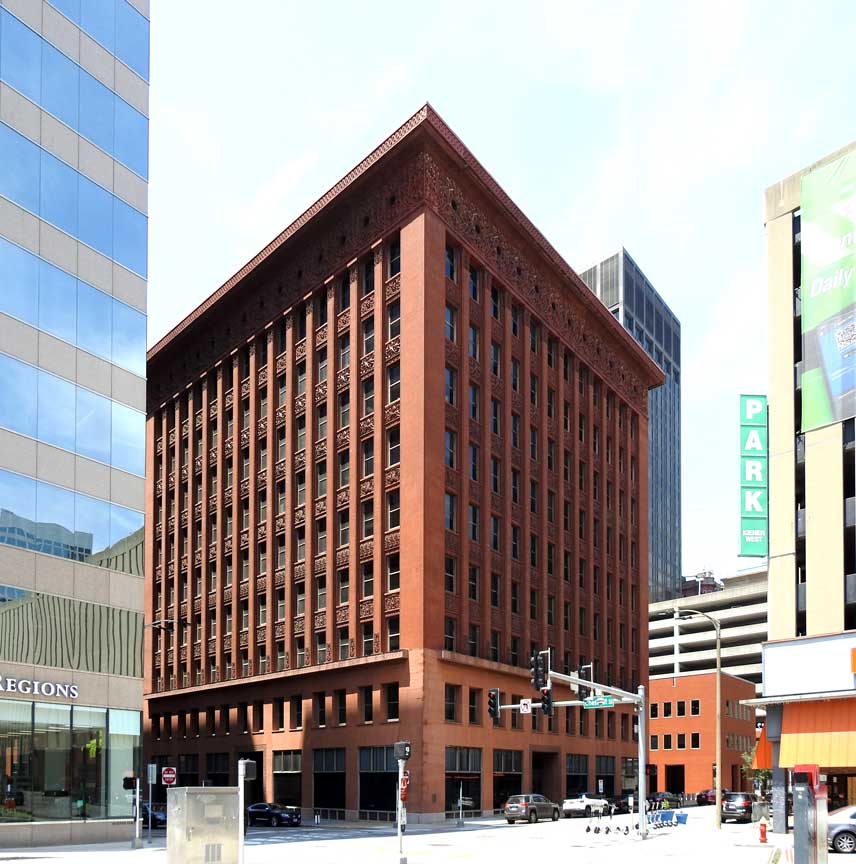
Louis Sulivan, Wainwright Bulding, St. Louis, 1890
Brickand terracotta bulding with steel and brass skeleton.
Chicago School tradition, simple tall buildings, empahszing scale and strucural adfvances
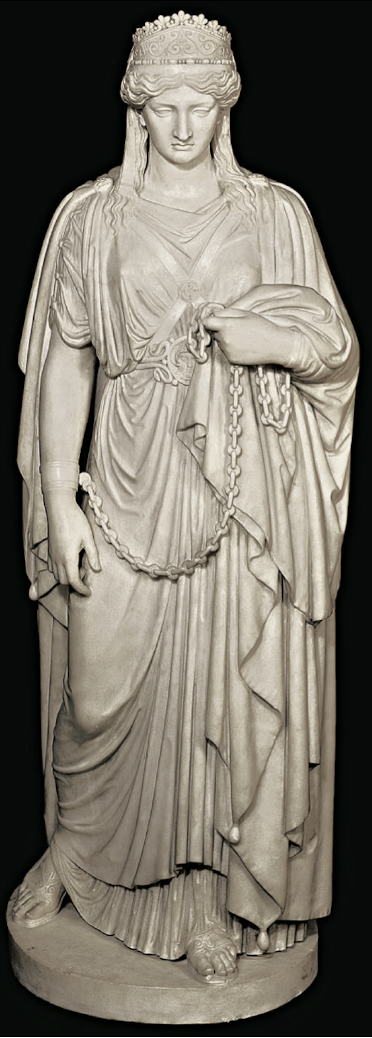
Harriet Hosmer, Zenobia in Chains, Marble, 1859.
Neoclassical but romanitc in content
Represents exoxtic historical subject, appeal to emtions.
The character is a thrid centry queen who the romans defeated.
Shows her rosulte in defeat.
embdoies the ideal woman, stikily modern in defiance of female victorian ideals.
Part of the Italian
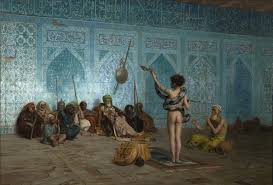
Jeaon Leon Gerome, The Snake Chamber, Oil on Canvas, 1870
Ex of Orientalism.
Phorgopahic clairty and attention to detial - makes it look real
Pastiche fo ehyptian, indian, and islamic culture, it is a fantasy.
Photographic studios were established by British, French, and Italian photographers at major tourist sites in the Middle East in order to provide photographs for European visitors and armchair tourists at home, thus satisfying and fueling a popular interest in the region.
Orientalism is found in both academic and avant-garde modern art;
Orientalism, the colonial gaze, depicts the colonized Orient (the Middle East) as a “primitive” or “exotic” playground for the “civilized” European visitor. It portrays “native” men as savage and despotic, while “native” women, and here boys, are sensuously described and sexually alluring.
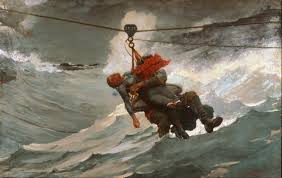
Winslow Homer, The Life Line, 1883, US.
Part of the realism in the US, and a dramatic post CW peice,
part of Homer’s focus on the working poor. showing the strength of hard lives.
shows a woman being saved from a ship wreck, and human ingenuity.
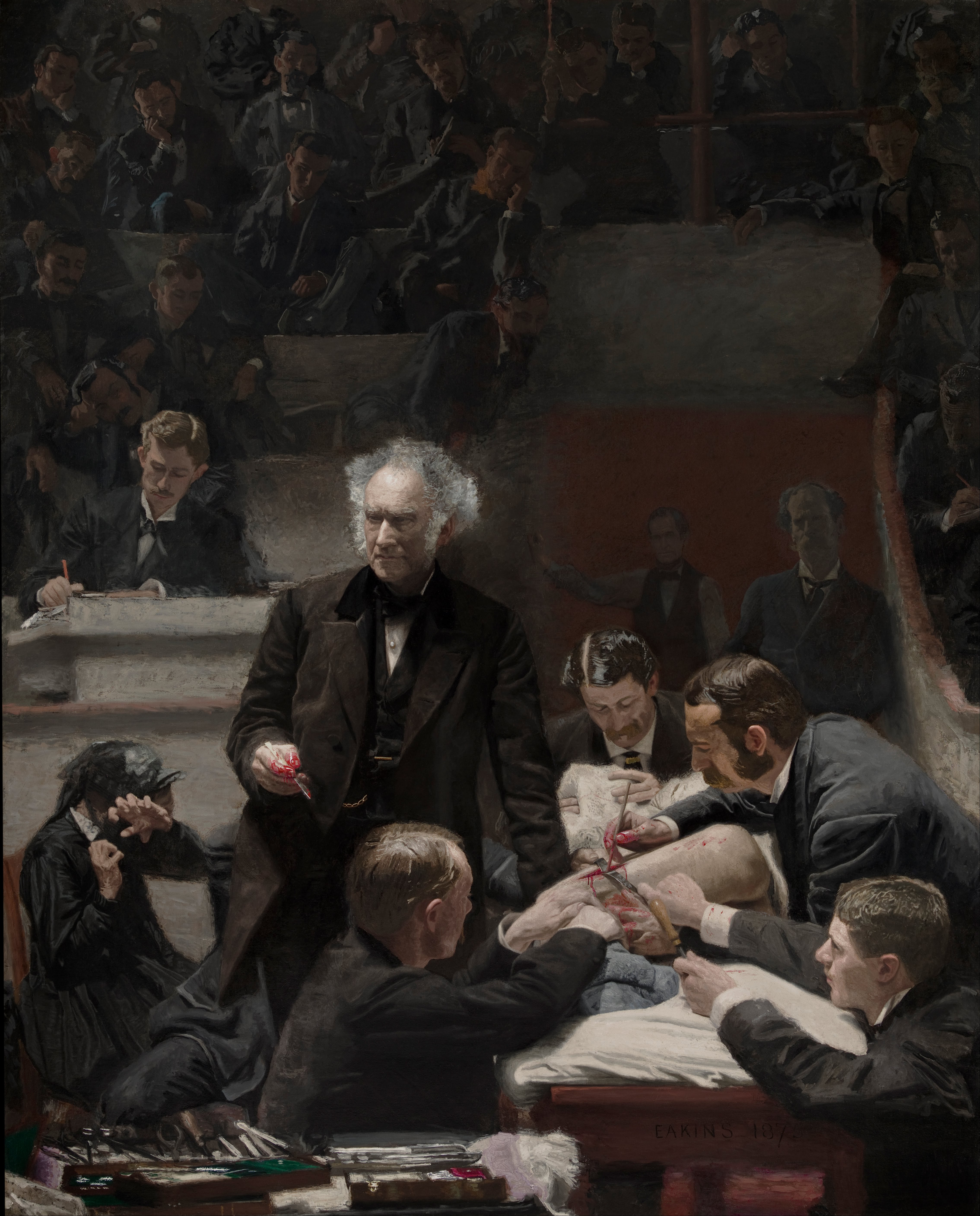
Thomas Eakins, The Gross Clinic, 1875, Oil on canvas.
This is contrvserial becuase ti shows surguery, and medicl and scienfific display was not meant for Ar
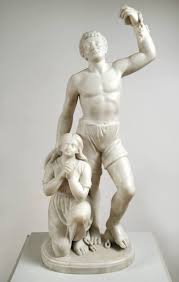
Edonminia Lewis, Forever Free, 1867, marble.
Between Neoclassical in style, but it has heavy social commentary.
conetnet is more realist, and focusing on social life.
About emancipation proclamation,

Dante Gabriel Rosetti, La Pia De Tolemei, Oil on Canvas, 1868.
PreRahealites based in London, and they were critical of Industrial Rev.
Find the productions to be poor quality and they go back to Medival tradition of teaching groups in a monestary.
Believe in the medieval tradition of local craft.
Woman is covered in nautre.
Tends to be women.
Personal relevance: As the woman was his mistress, the symbols in the painting hold personal significance. Ravens and sundials represent time and eternity, while the evergreen ivy symbolizes the woman’s love for her husband. The fig tree represents original sin, and the prayer book and beads signify her piety.
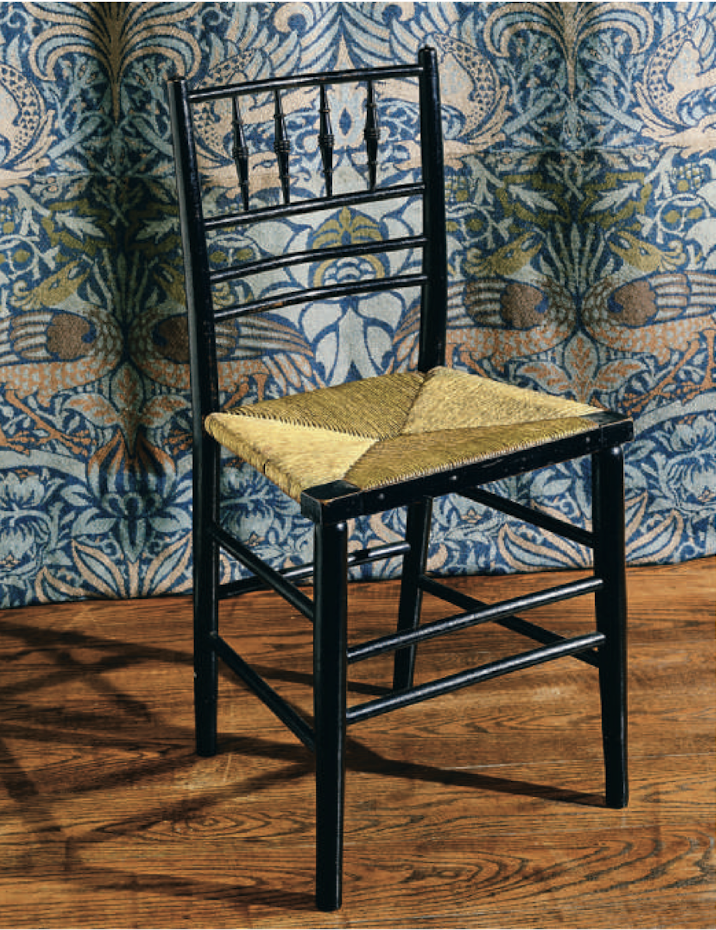
Webb, single chair, 1878, woven twill and wood.
inexpseinve materisl, in harmony of arichtiture,
The pinnacle of function over form.
James Whistler, Nocturne in Black and Gold, 1875, oil
low narrative adn
demmeed unfished by john ruskin, and devoid of moral purpose.
idea of art for enjoyment not messaging or moral reason.
Nocturne was alluded to music, which could be abstracted with no story or rhyme of reason.
Brits breaking from acadmeic strucure
Victor Horta, stairway at Tassel House, Brussels, 1890s
Vinelike work, curvilinear look to go upward, make it look natural.
iron column exposed but has orngicism.
Truth to materials, it is not hidden with stone or decor, it is shown.
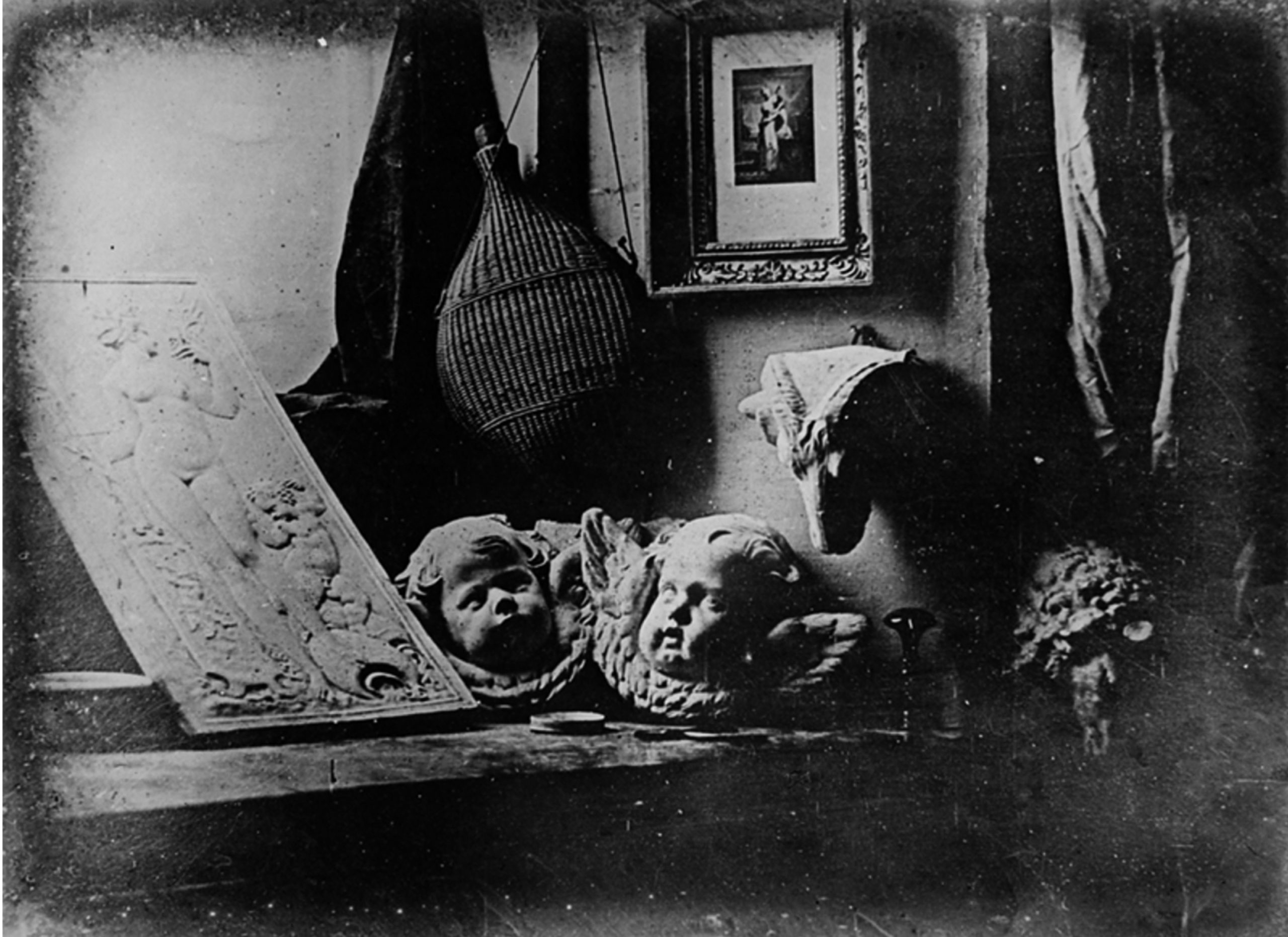
Louis Daguerre, The Artists Studio, 1837, Daguerrerotype, France.
Photogprah that was fixed with 30min ecposure. Made with silver coated metal plating tech.
Still life of plaster casrs and framed drawing. artistic subejct amtter.
Sig: First camera image to popualrize the duagrrotype way.
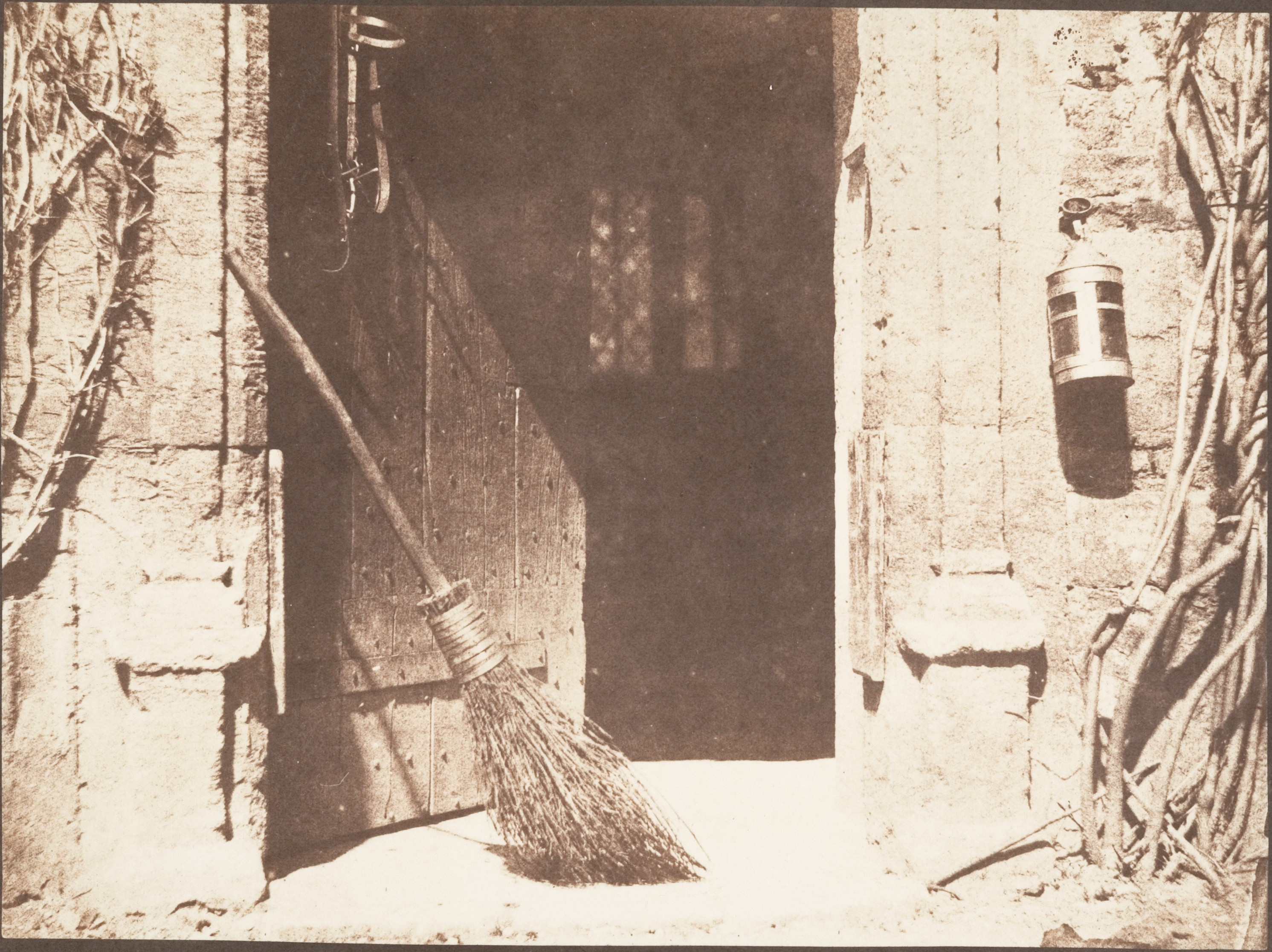
Henry Fox Talbot. The Open door, 1843, salt print from calotype negative, London.
Fox used a new method of photo devleopment, made images from shrot sun exspoure and chemical development, not long expsoiure.
Could make an unlimited numebr of prints.
icon: agrarian way of life, mass producrion, handcrafted broom and lantern are obslete.
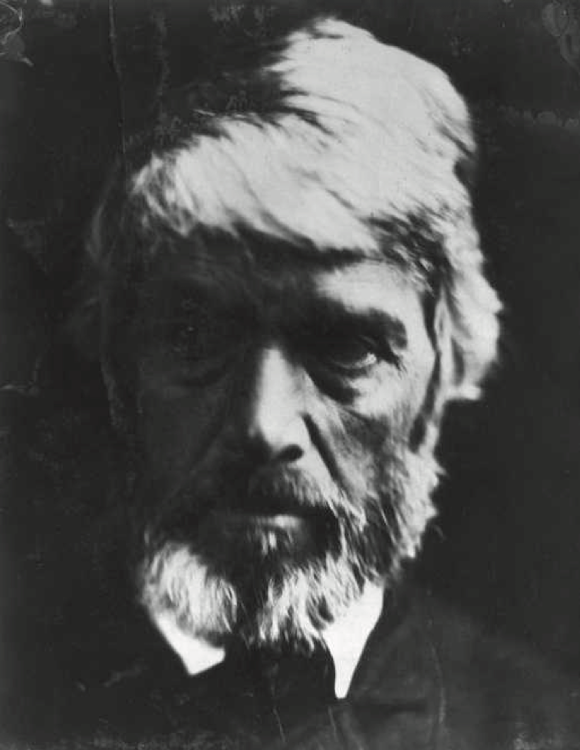
Julia Cameron, Protait of Thomas Carlyle, 1867, London
slighlt out of focus on purpose, call to attention to the light surfacing on subjects.
carlys concrtated expression is so intesne that his facial fearues seem to be eminating from within.
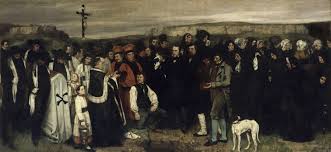
Courbet, A Burial at Oranan, 1849, Oil on Canvas
Realist artist, sex addict, man eating and rinking, bachelor of all.
first indpednt exhibitiona fter rjectionf rom the estblihshment.
made money from it svieweing.
burial of most likely his grandfather
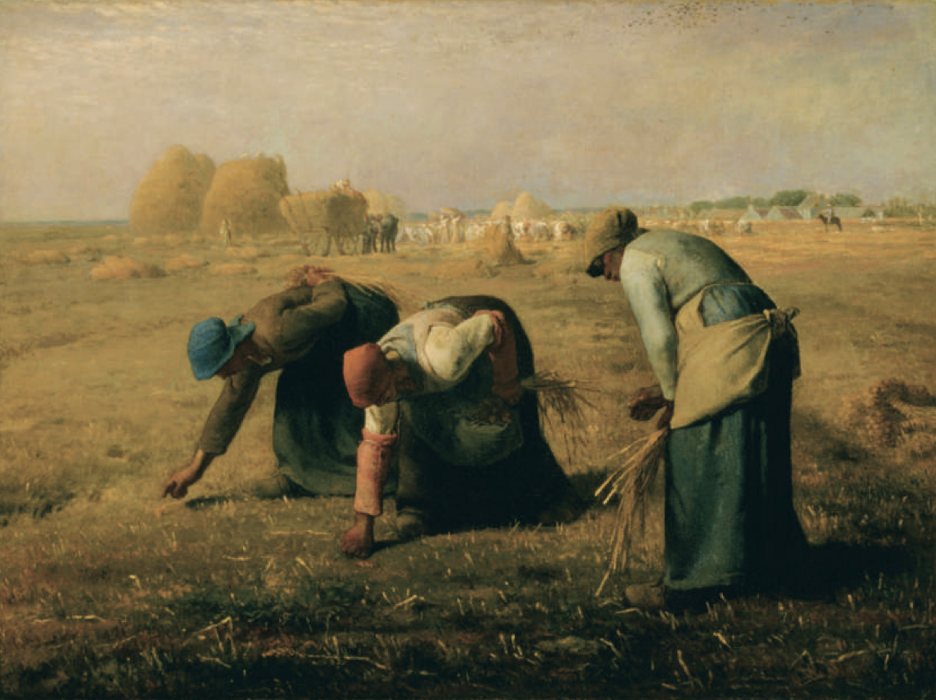
Millet, The Gleaners, oil on canvas 1857
issues with apritlemnt, style is fomantic
Artistic Focus: Millet shifted to depicting peasant life, capturing both hardships and simple joys.
Notable Work: “The Gleaners” portrays the poverty of rural life through the act of gleaning leftover grain.
Social Commentary: Despite Millet’s denial, critics recognized the implicit social criticism in his paintings.
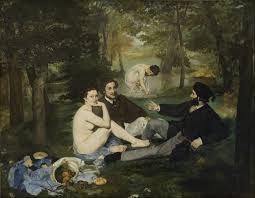
Manet, Luncheon on the Grass, Oil on vanvas, 1863.
Continuenace of Titian pastroal cocnert.
painting rejects traditional shdowing, with flat outlined, cartoony like figurre.
Immorality ws shown, a subana picnic with a bathin womean in the bavkgorund and a nude woman with clothed men.
Assumed women were seen prostitiutes,
The radical painting’s underlying meanings remain debated. Some view it as a commentary on modern alienation, as the figures lack psychological connection. Even the man on the right gestures, while the other looks off, and the nude boldly turns to the viewer, highlighting our estrangement from the painting.
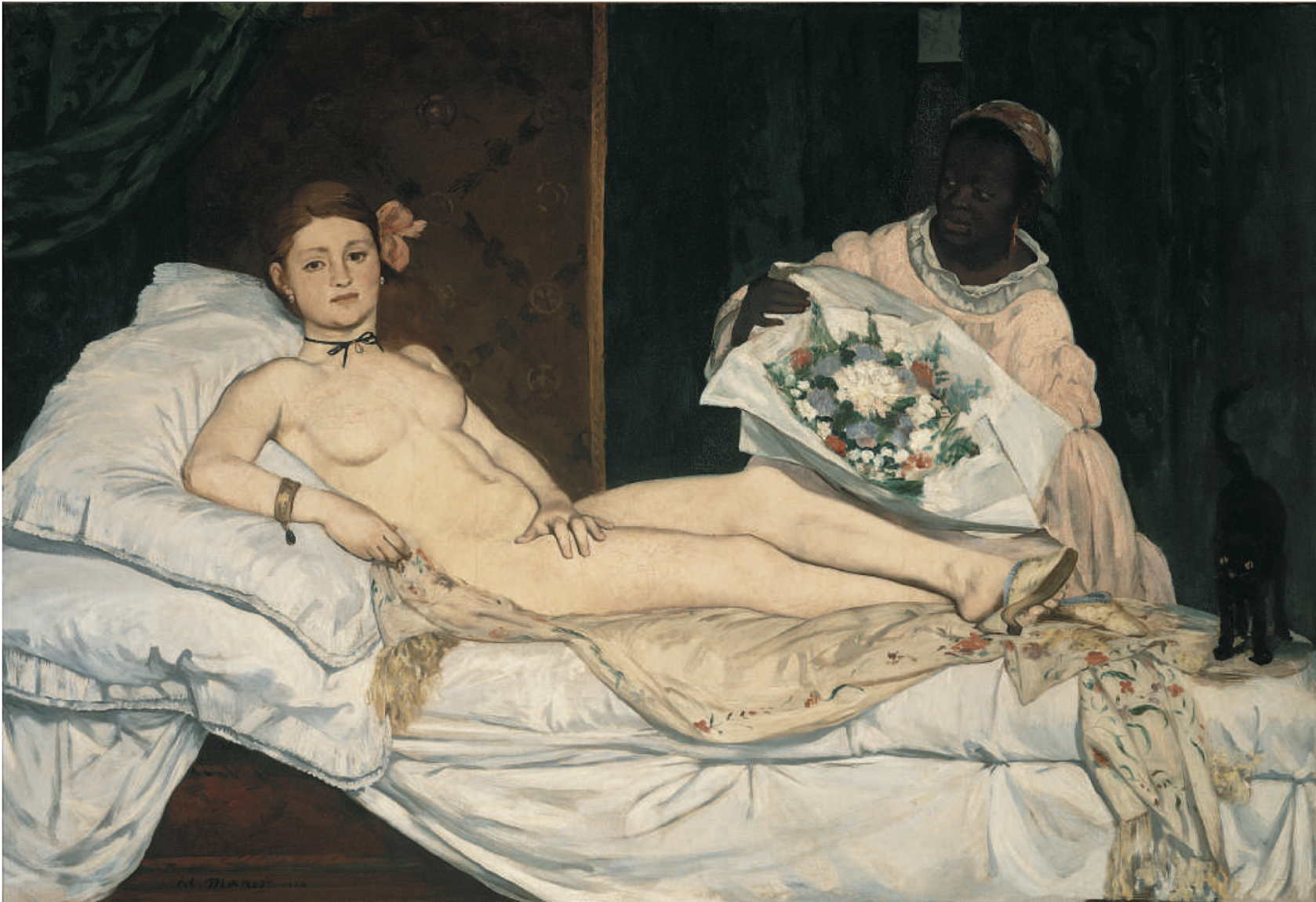
Manet Olympia, Oil on canvas, 1863
Once hated when it was made.
her body is not smooth and she is not relaxed.
This was outlined, and it was flattened and she was not an idealized body or face
The cat is black and also hunched.
Maid bringing a boquet of flowers (not a slave). Flowers means the pople, the viewer is the lover bringing her flowers.
SHE IS A HOOKER. Olympia is a name for a high end hooker.
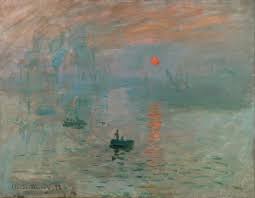
Monet, Impression, Sunrise, oil on vanvas, 1872, Paris.
Critics called it an unfifnished sckeitch, ti’s an impressio
paints an instantaneous impression of a fleeting moment
Monet was known for applying strokes of paint with perscion, yet it looked unplanned.
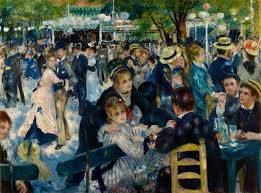
Renir, Moulon de la Gallete, oil on canvas, 1867
Working class artist.
the outdits are of the working class, it i ssunday ball.
glamroizes the working class and relaxed the congelity of the them,
played with light, uses motteling
cropping used, it makes it look less posed
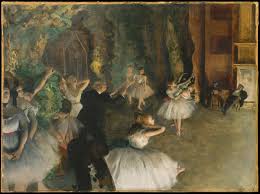
Egas, Rehearsal on the Ballet Stage, Postel over brush and ink, 1874.
A lot of grace and movement that speak to naturalism, feels fresh and common.e
delgight the eye and fecous the eye
BAllerinas were considered prosiittude, and guards in the back.
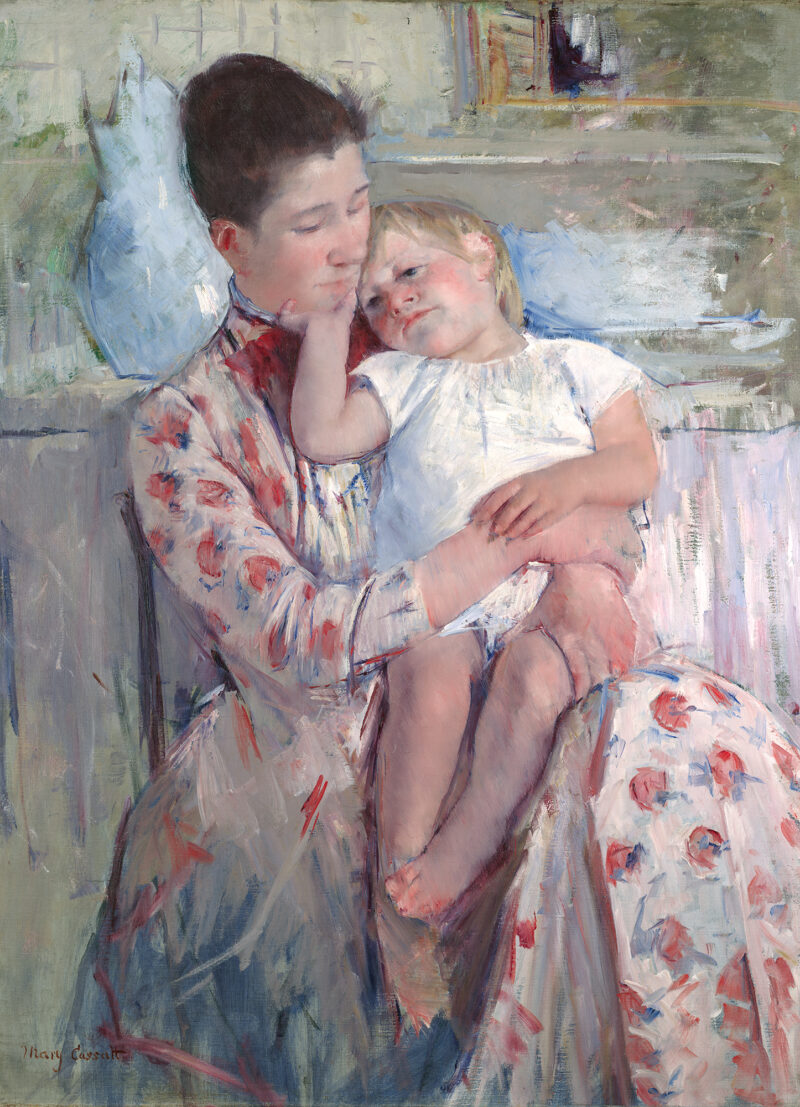
Mary Cassatt, Mother and CHild, Oil, 1890
simple scene, she has access to it, female impressionist.
Able to be trained in art.
Japanese influence by dress and print influence, and the sketchiness it grdaully embraces.
Artists were feminized in the Impressionist era.
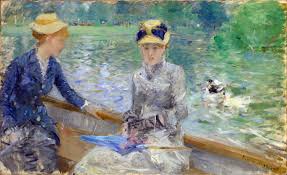
Berthe Morisot, Summer Day’s, Oil, 1879.
Man accompanying her to the site.
Short brush strokes, impressionistically.
Looseness was admired, things are disolved and shimmering.
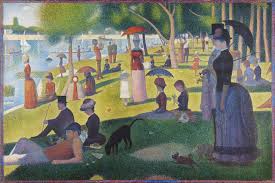
Georges Searut, A sunday Afternoon on the Island of Le Grande Jette, Oil, 1886.
Working class sunday, kids, dogs, animals.
simplistic humnan form.
inspired by the frieze in the parthenon.
based on goblin taprestires in paris.
pointalism was wrong - still subject on working class
rejecting empehrmal imp for a science-backed style.
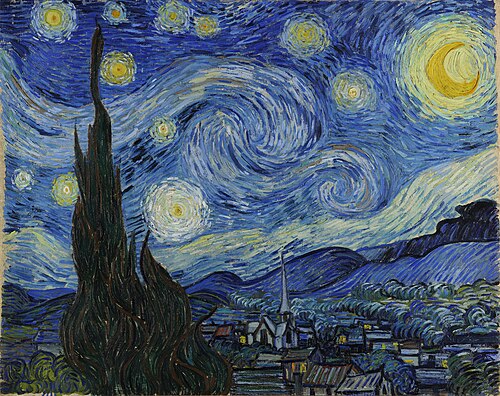
Starry Night, Van Gough, 1889, Oil.
Built up brush strokes, thick and bumpy, depth.
light reflects from it and the brush strokes were adding dimension.
halos in the sky, Buddhism and the chi and life force.
Pastiche of a town, cypress tree, and mountains, church from amstersam.
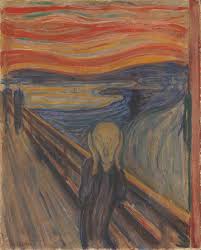
Ddvard Munch, The Scream, oil 1879
Backgorund is a scream.
mental illness
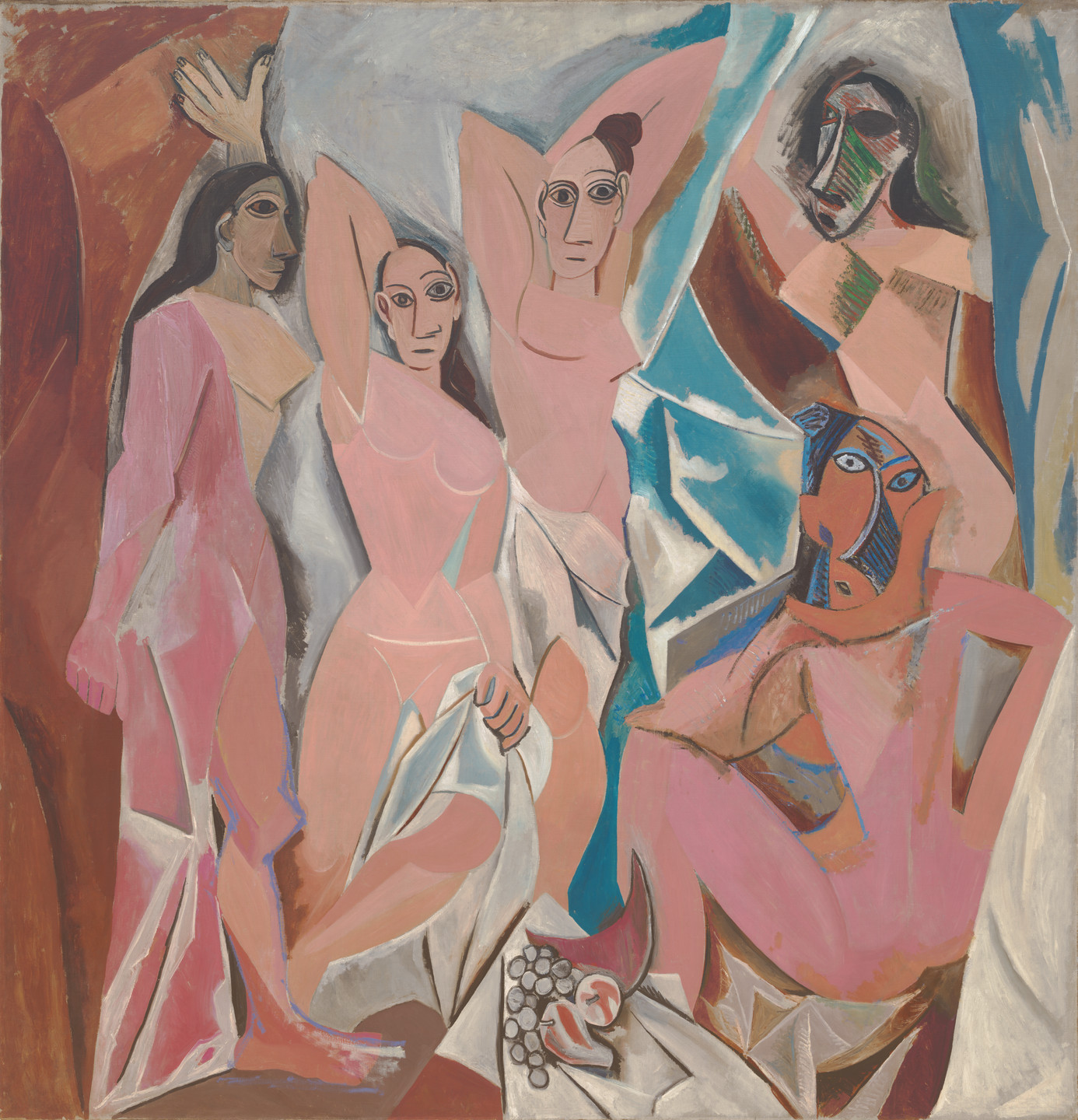
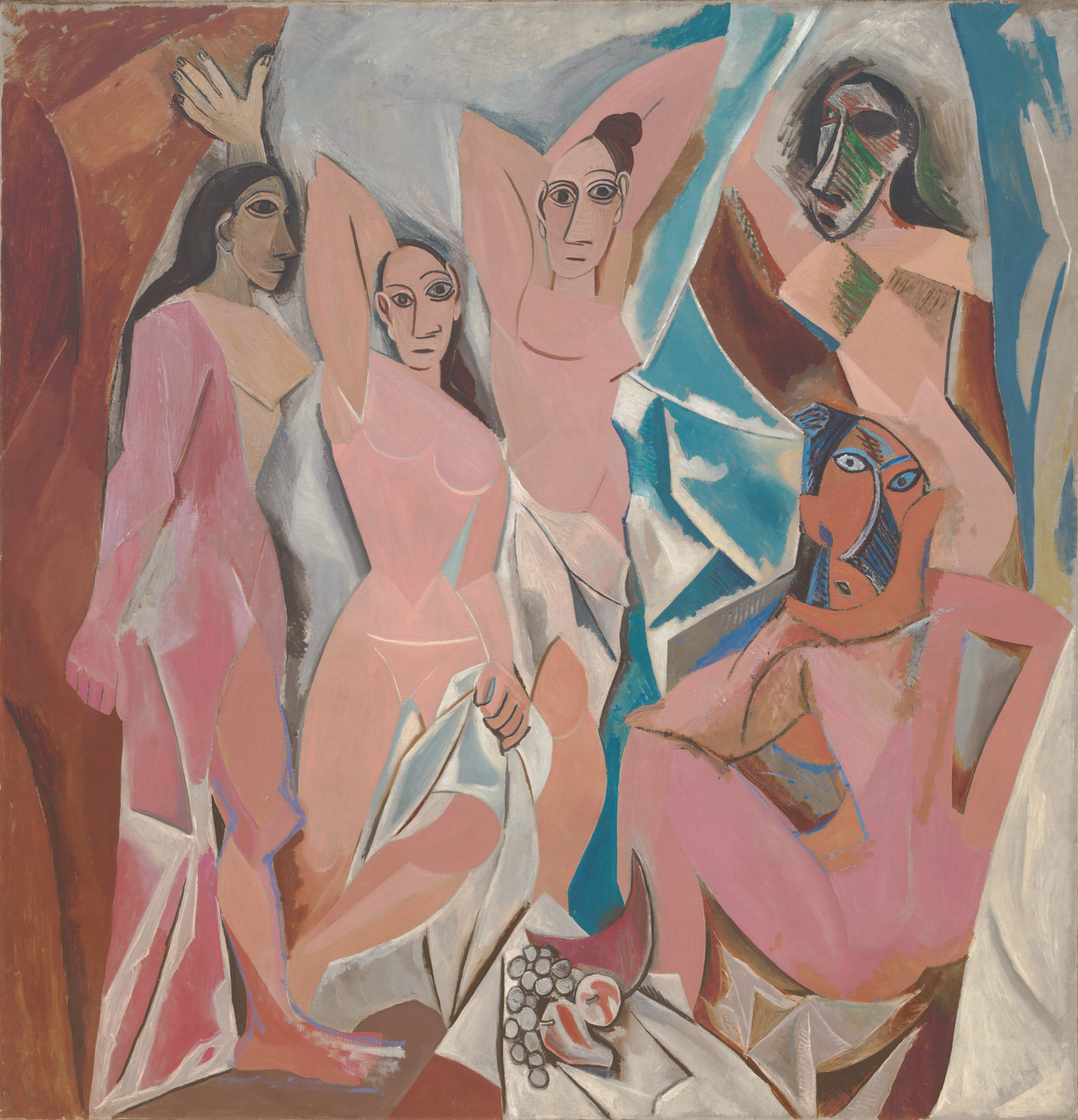
Picasso, Les demsiless d Aviagoin, 20s
more 20th century, direct confr3ontation of viewer and prostitutjjes
african mask inspired, was his freinds, colonialism.
cubified
rebellion of classical 4h wall.
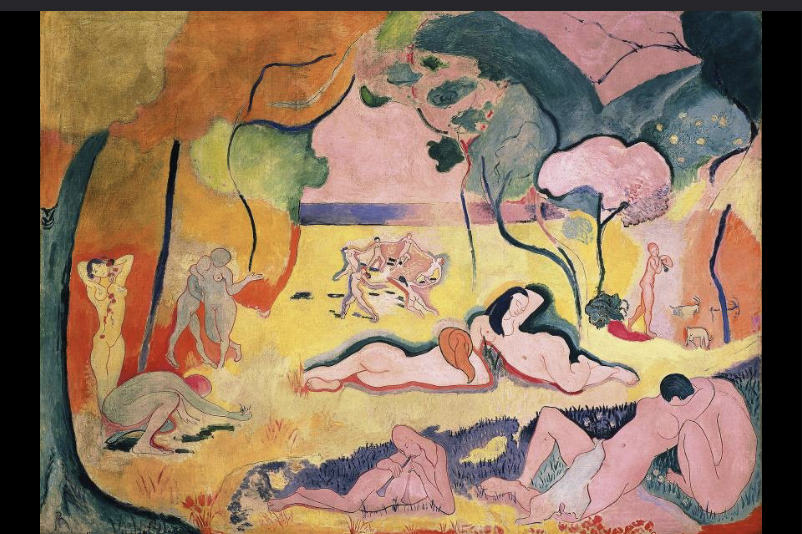
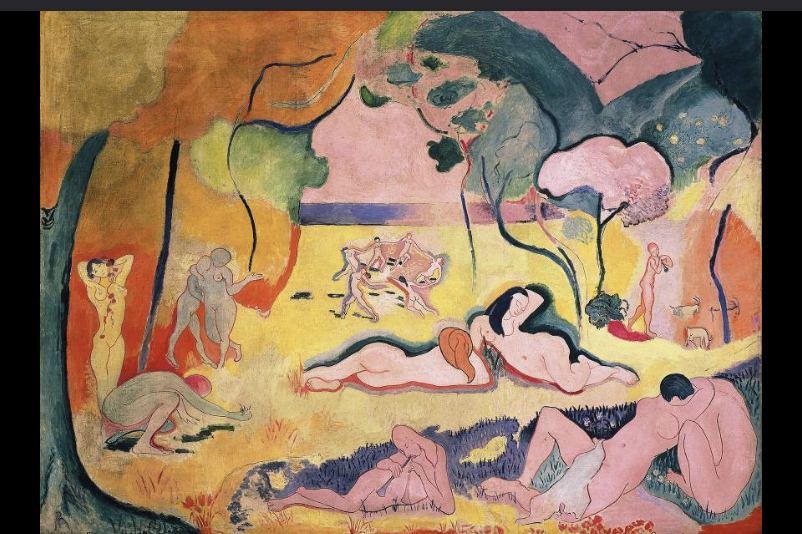
Manet, The Joy of life, 1905, Penn. Oil on Cancas.
naked dance in a freeform way. they are pen to be unique and NOT NATURALISTIC
contiual movement
fauvism in the wilduntamenesss of the peice
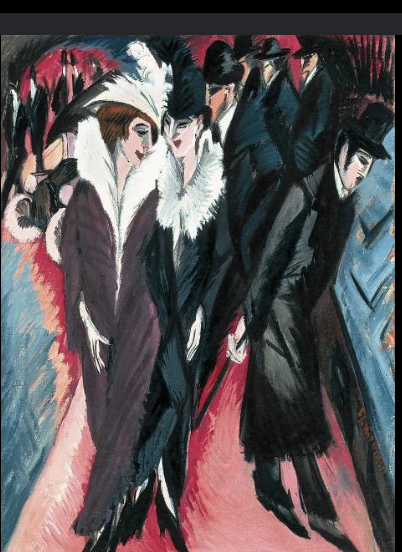
Krichner, Street, Berlin, 1913
German Expressionsit, creating a current art representive of Germany.
Negative reprexeation of upper middle class -
AVANTE garde are socialist and.
Wanted to renew society
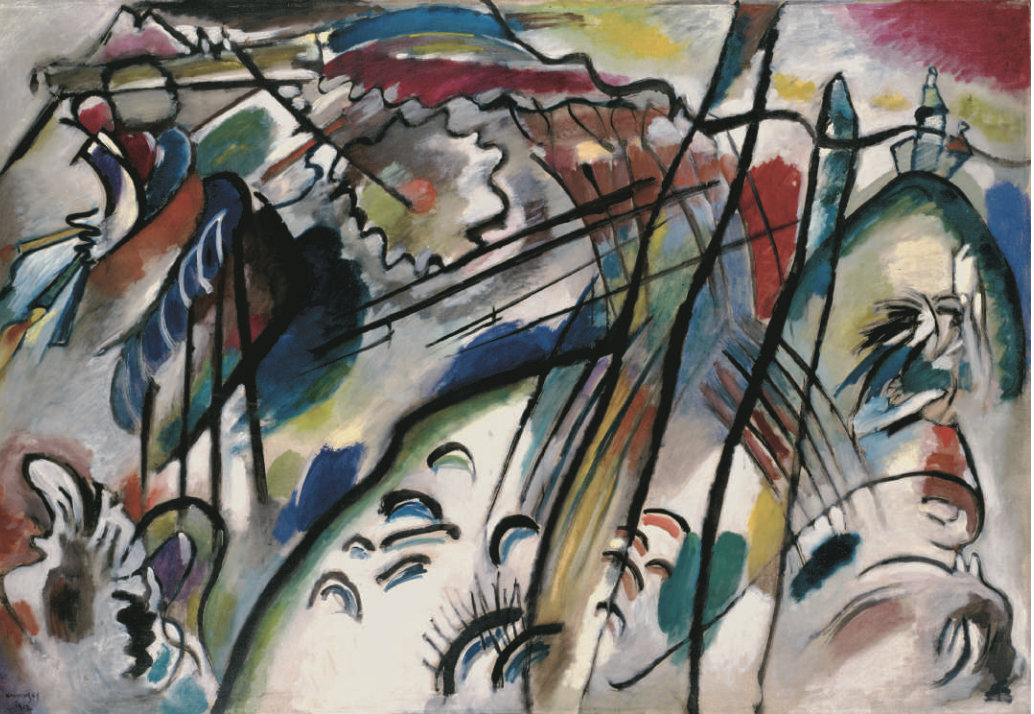
Kandisky, Improvisation 28, Oil on Canvas 1812
angel playing trumpet - apocalypse.
He encouraged viewers to experience his paintings like a symphony, responding instinctively to the dynamic lines and vibrant colors.
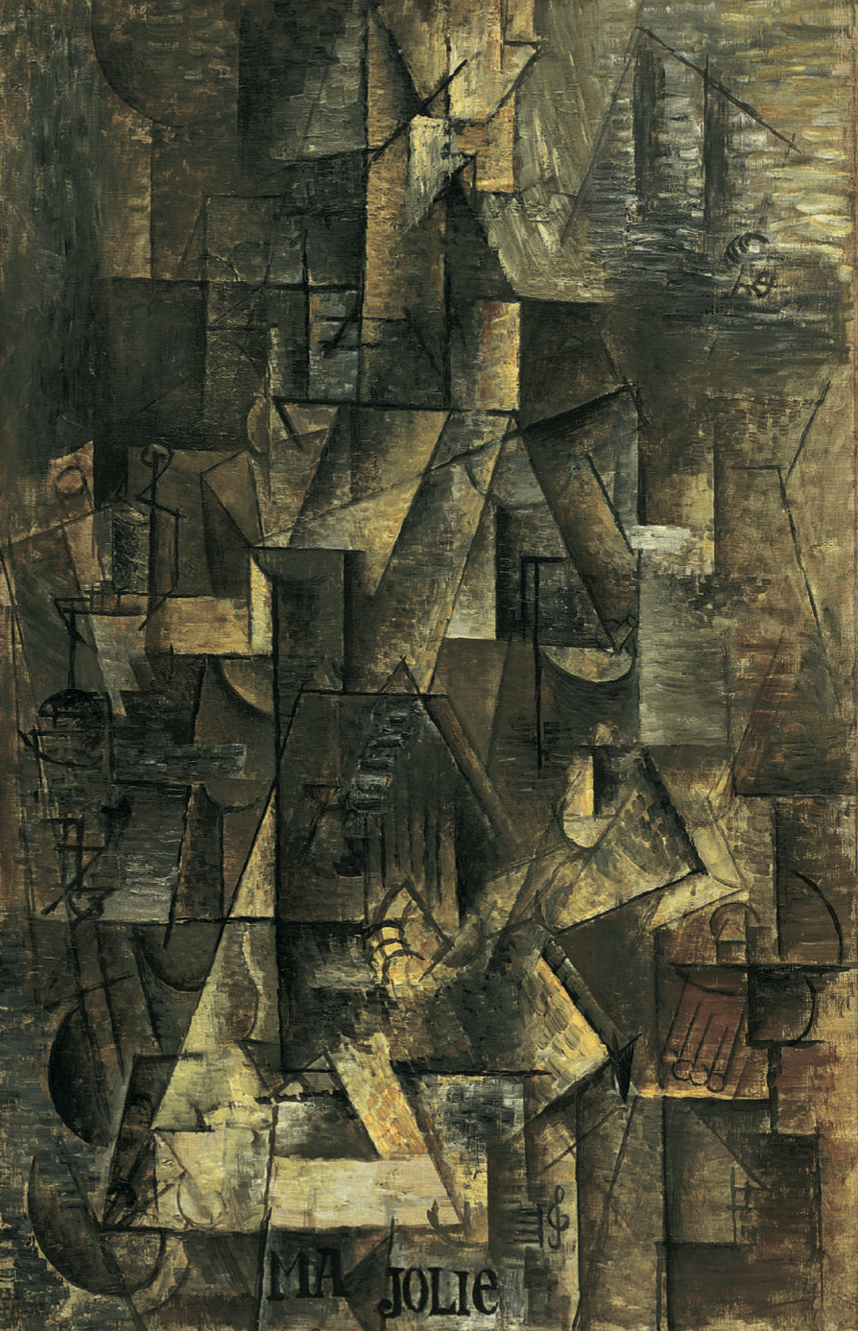
Ma Jolie, Picasso, 1911, oil
- “Ma Jolie” translates to “My Pretty One” in English.
- The title may refer to a woman with a stringed instrument, or a popualr 1911 song adding layers of meaning.
- The painting challenges viewers to consider the nature of communication and representation in art.
Cubism to the max - It features remnants of a woman with a stringed instrument, though the subject is difficult to reconstruct.
The inclusion of writing and a musical staff suggests additional meanings and connections to music.
The surface texture is a delicately patterned mix of grays and browns, unified by short, horizontal brushstrokes.
- Strict horizontals and verticals dominate the linear elements, with irregular curves and angles breaking their regularity.
- A grid is established through the combination of horizontal brushwork and right angles, counteracting surface flux.
- Repetition of certain diagonals and lack of details in the upper corners create a pyramidal shape, reminiscent of Classical compositional stability.
- The painting balances chaos and order, offering aesthetic satisfaction through the resolution of chaos into order.
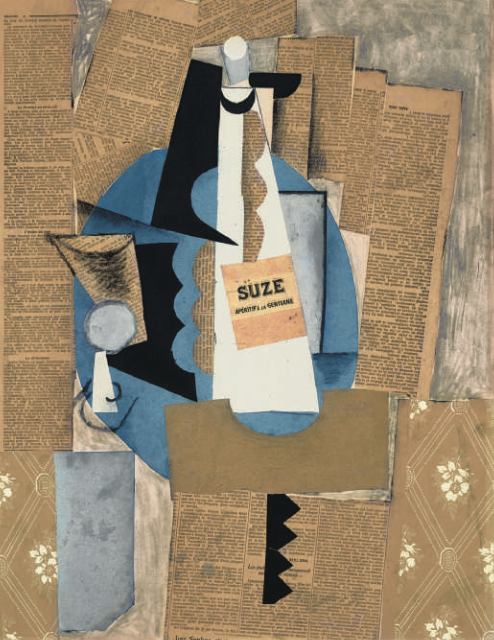
Glass and Bottle of Suze, 1912, Picasso, pastiche
- Formal Elements:
- Collage Technique: Utilizes separate elements like newsprint, construction paper, newspaper, and wallpaper pasted together.
- Multiple Perspectives: Displays the top of a blue table, the side of a glass, the label and opening of a bottle, and the top of a cork simultaneously.
- Composition: Central arrangement of a tray or round table with a glass and bottle, surrounded by larger newspaper and wallpaper pieces.
- Textural Contrast: Combines smooth surfaces of the glass and bottle with the rough textures of paper and wallpaper.
- Iconography:
- Bar Setting: Suggests a place for leisure and solitude, with a newspaper and a bottle of liquor.
- Actual Label: The use of a real bottle label adds a layer of realism and authenticity.
- Newspaper Clippings: Reference the First Balkan War, introducing themes of chaos and conflict, possibly commenting on the disorder in the world.
- Suze Liquor: The brand name may symbolize a specific cultural or personal context, adding depth to the narrative.
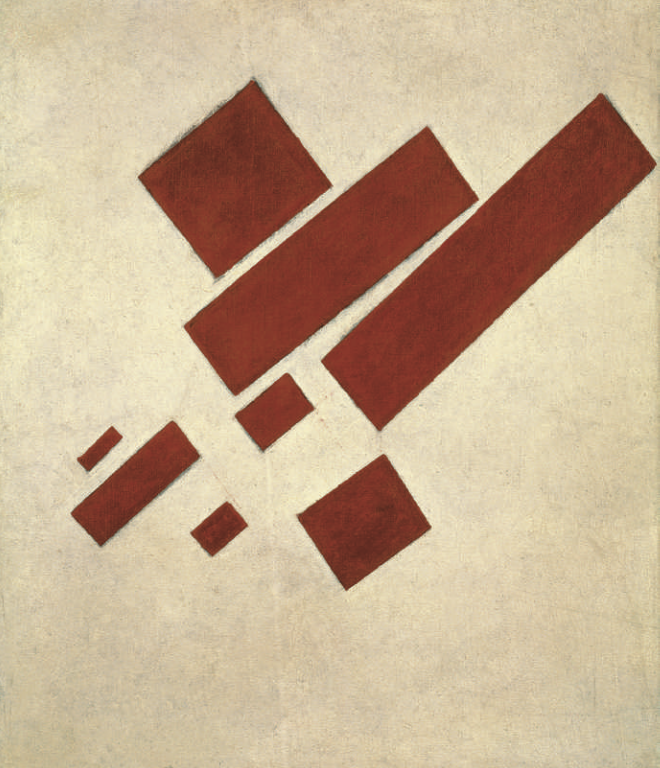
Malevich, Supermaist Painting, oil on canvas, 1915
the most pure form of painting, simple shapes, no blending, pure red flat.
Reduce everything to essential features.
Regeneration and spiritual reenchantment, for many artists, it was theosophy
Modernism
True to materialists, show brush strokes, show the metal.
Modernity = social condition that inspired modern art and architecture
Minimalist aesthetic.
Historical period
Be true to one’s own material.
Growth of capitalist system in the West and with it consumerism, tourism, industrialization, imperialism
Development of growth
Post-positivism/scientism
Belief of positive value fo progrewss
Rejection of canon st, le, reject orthodoxies of illusionism and linear style.
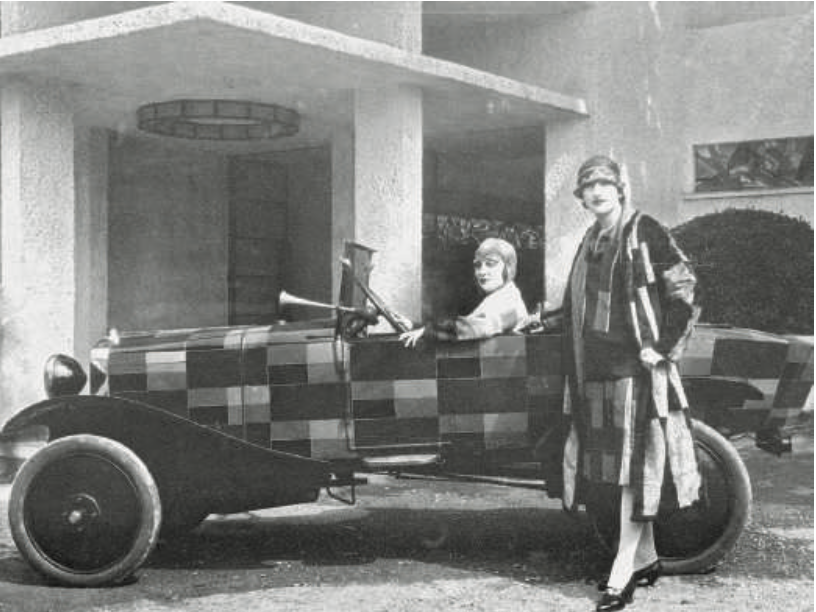
Clothes and Customized Citroen, Sonia Delauney-Terk, 1925
Function creates the form - Car is a symbol. It must work as a vehicle before an artwork.
Pattern used to make the car feminine.
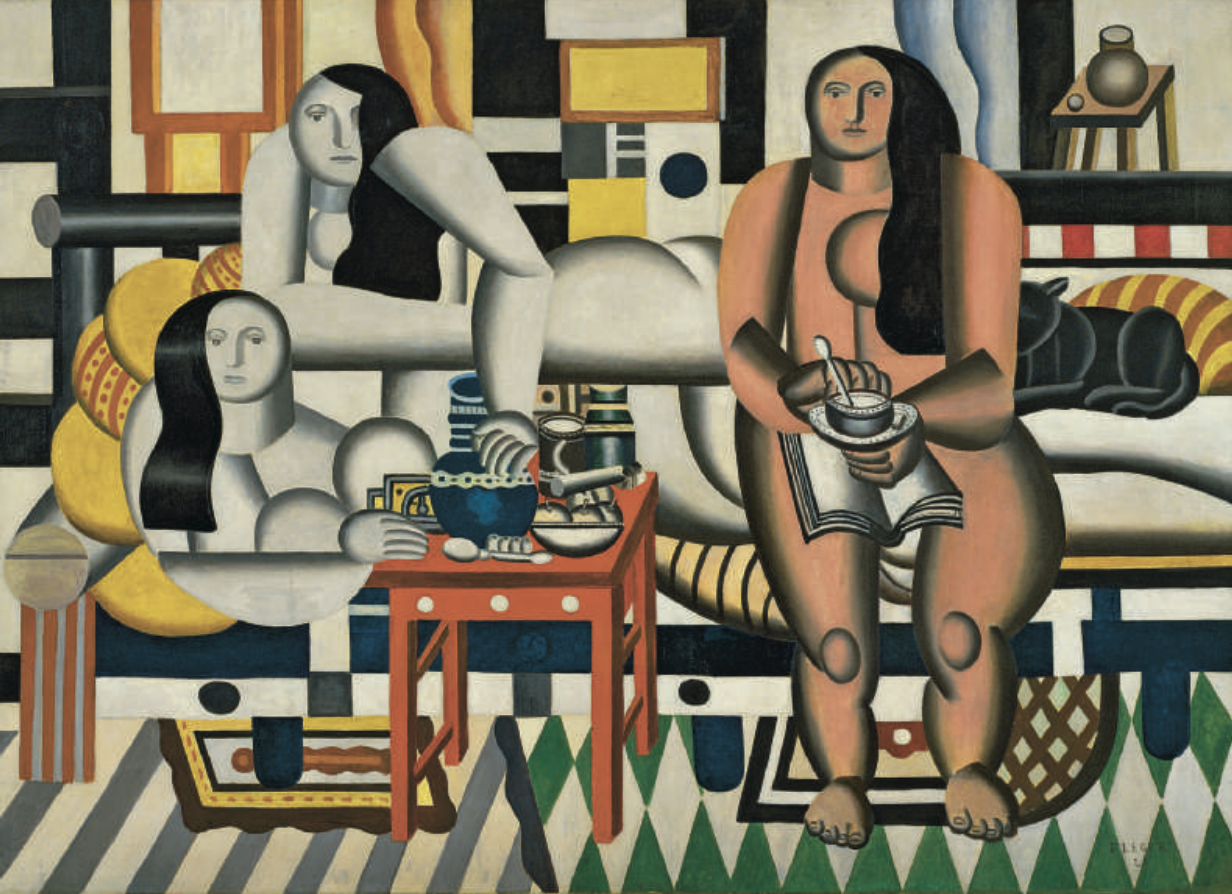
Fernand Léger THREE WOMEN, 1921. Oil on canvas,
Art Deco
The symmetry and sameness in women = industrial life and mass production
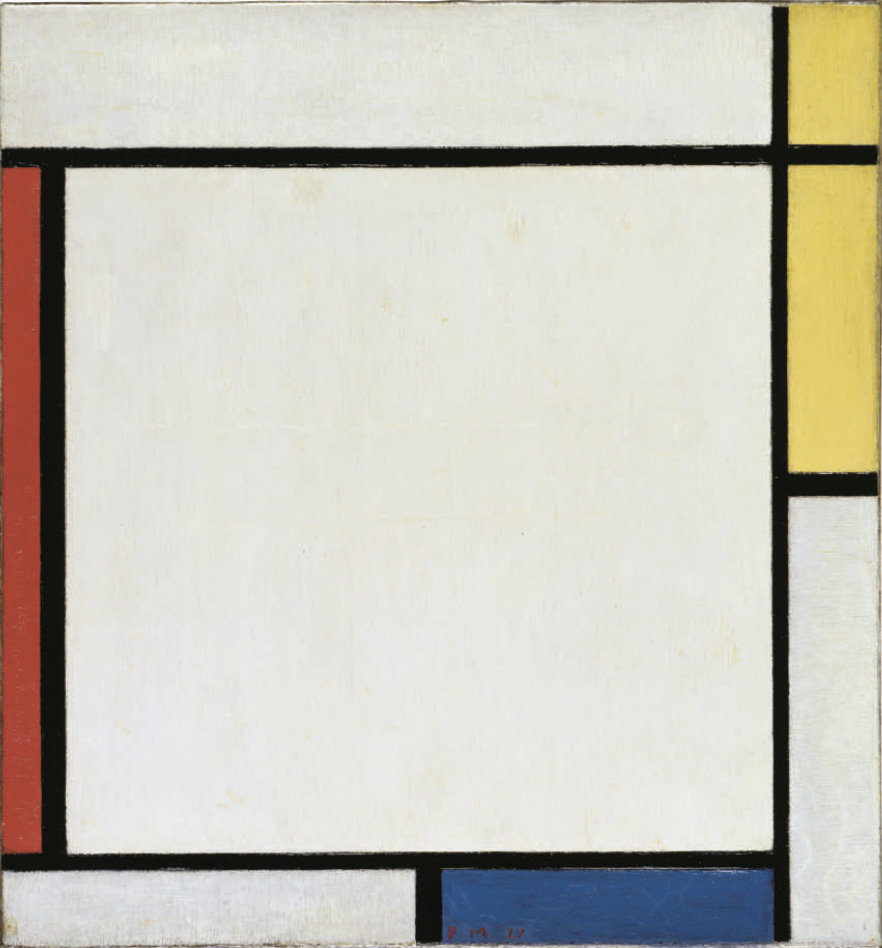
Mondrian, composition of red, blue, and yellow. 1920
powerful direct colors, Red= earhtly, blue= elevating, yellow= enlightended.
Vertcle lines are male, horizontal is female.
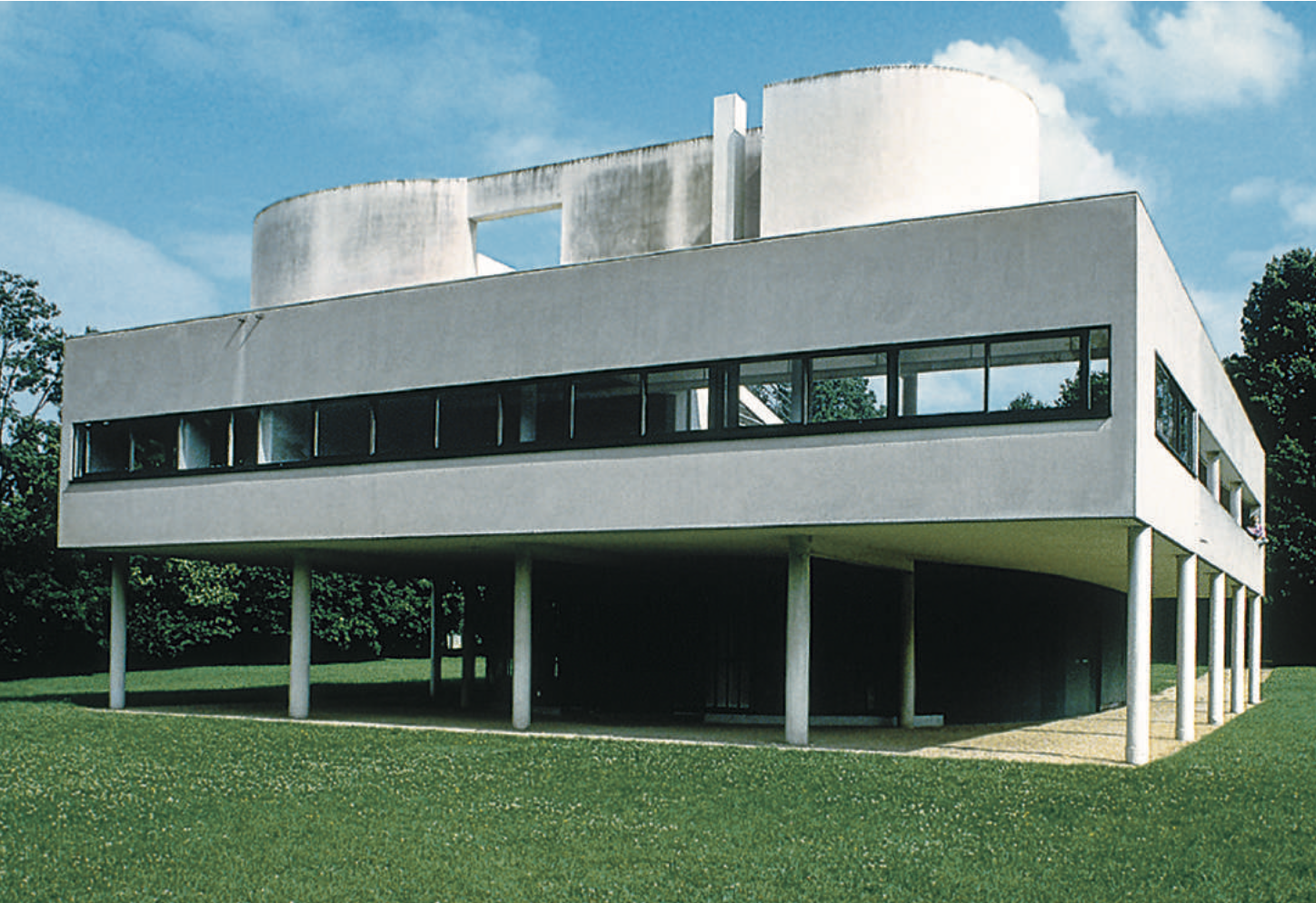
Corbusier, Villa Savoye, 1930.
Functioning home, vessle for living.
mass housing for lots fo epople s cheap as possible.
on stilts, free plan,
Health focuse, less surfaces to collect dust (germ theroy)
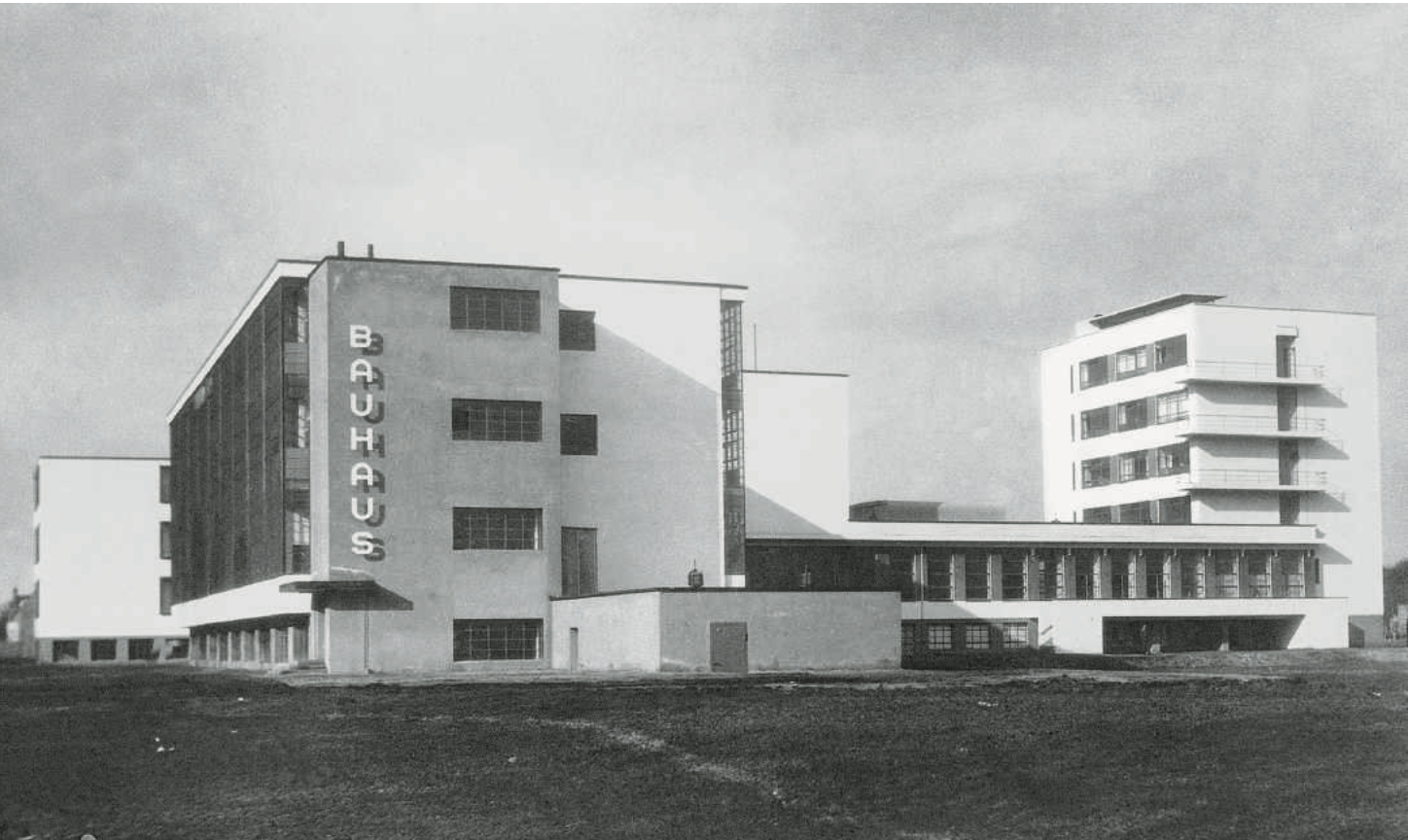
Gropius, Bauhaus Building, Germany, 1920s.
rejected reivials, accepted new materials, new techniques.
Social reformism ideology.
Engineering style is the kind that inspired 20th to 21st c.
Dadaism
Dada meant nothing, but this was reactionary to the highly crafted processed.
absurdist humor, process over product, just make and create.
creative unconscious mind, just make something.
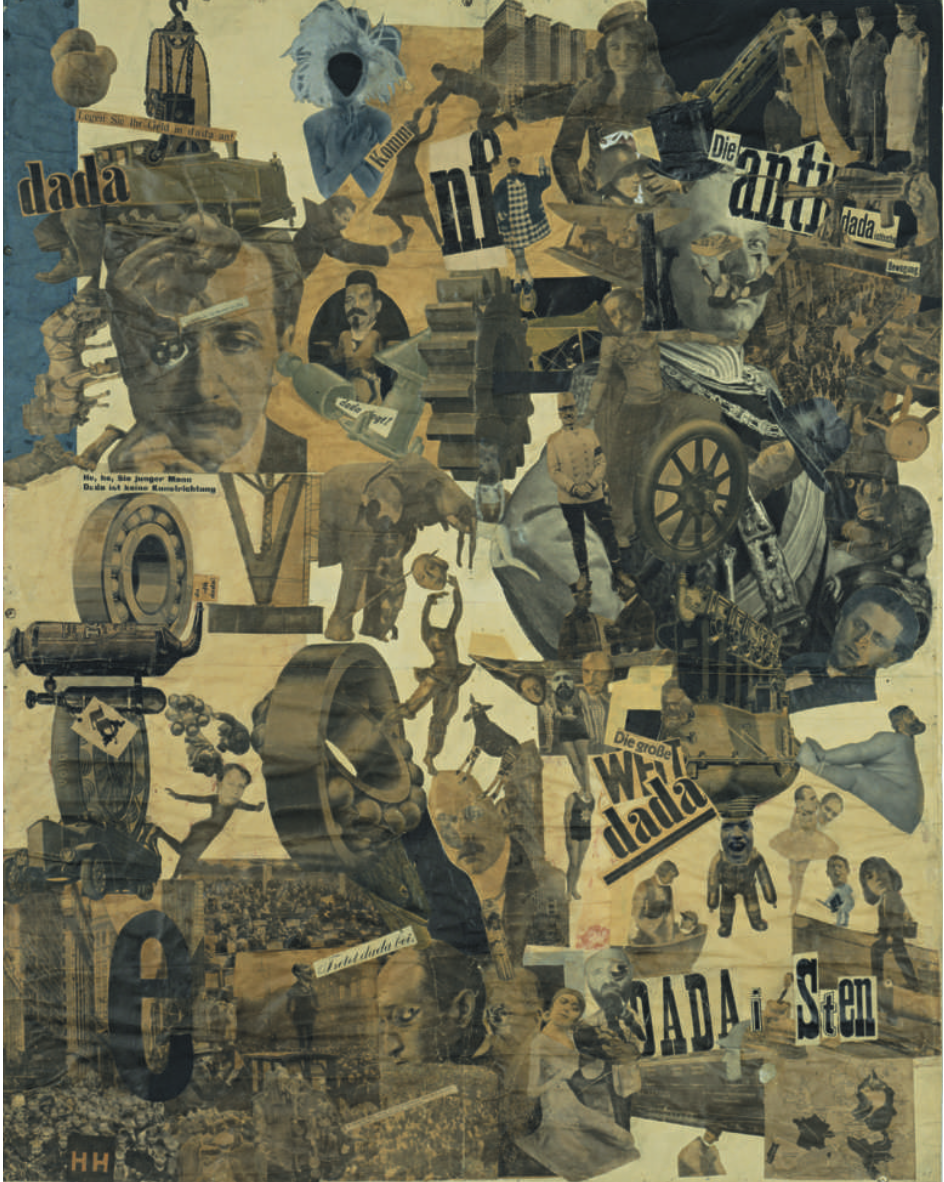
Hoch, Cut with a Kitchen Knife, 1919, collage.
pastiche agasinst the woman palce in the kitchen.
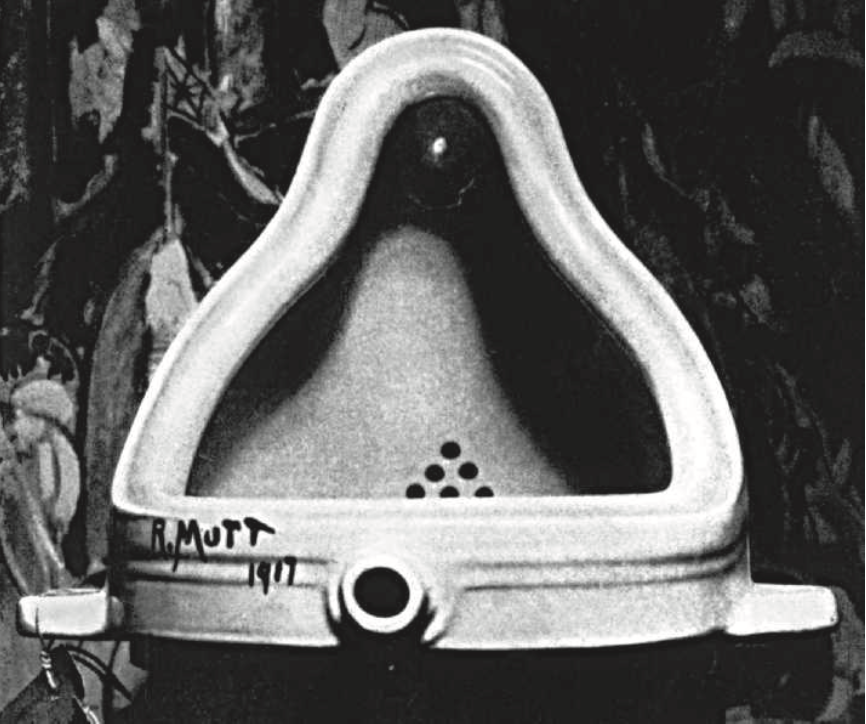
Duchamp, The Fountain 1917.
Pure white, proceline, very neoclassical in idea, fountains were usually centred, classical triangle shape.
but it is defaced with the name of a different artist,
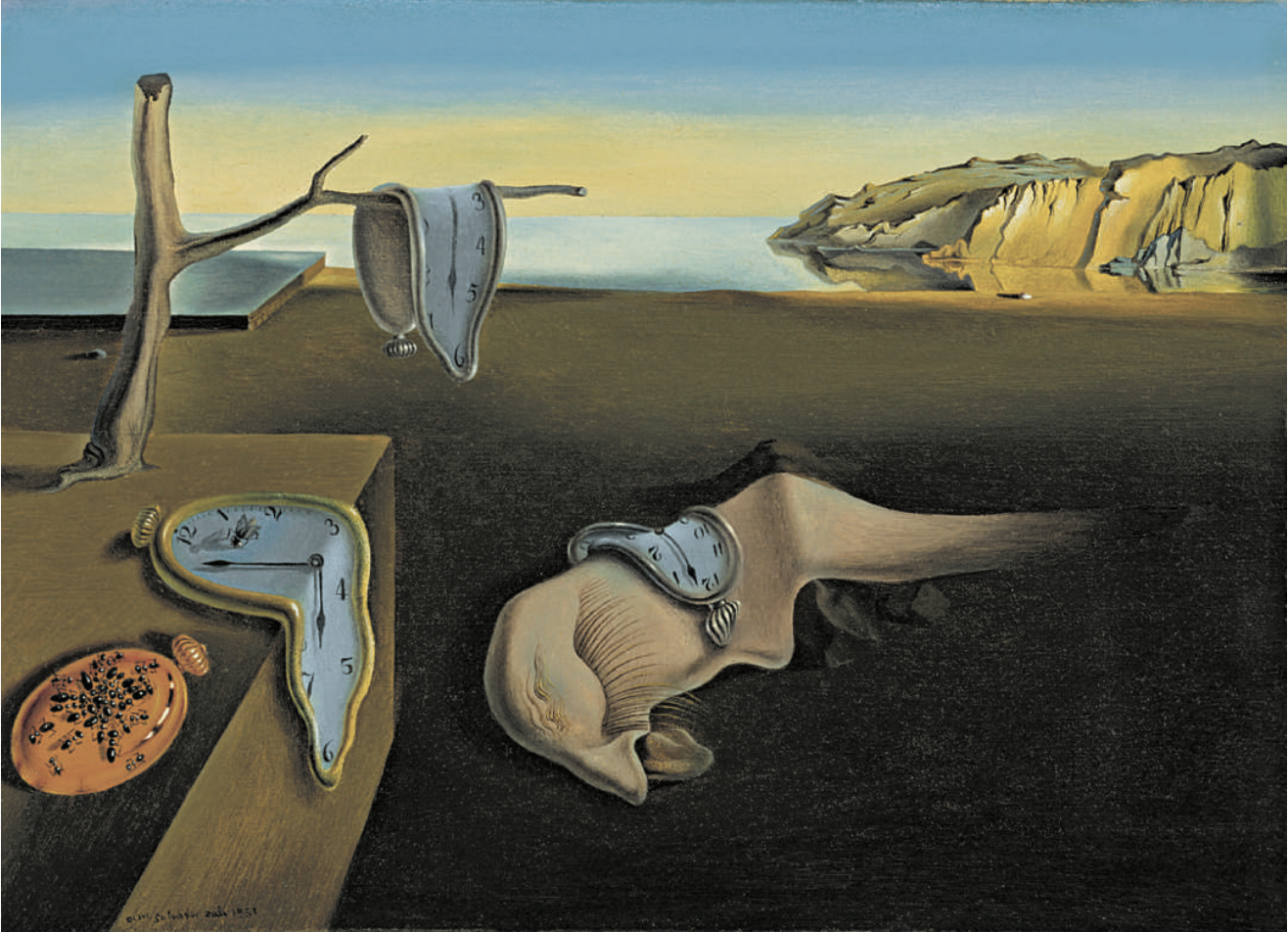
Salvatore Dali, 1931, Persistence of Memory.
Dreamlike,
limp arms = secuality.
nt covered wathc, childhood of seeing dead animals
ansts feeling of emtallic surrelaist interest in unexpcated jusaxstpositons.
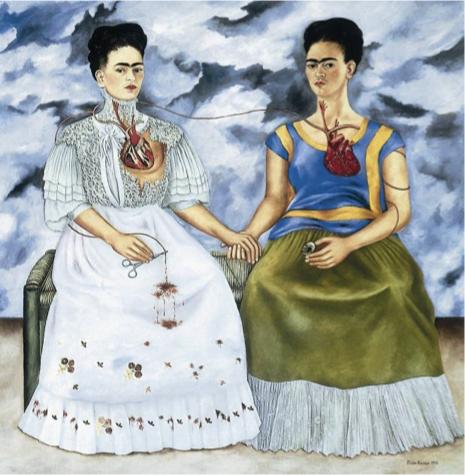
TWO FRIDAS, FRIDAO KHALO, Oil on Canvas,
The Two Fridas is a symmetrical double-figure composition, presenting two seated versions of Kahlo that emphasize balance and duality.
The figures are rendered in a realistic yet introspective style, with clearly detailed clothing (Victorian vs. traditional Mexican dress) highlighting contrasting identities.
A key formal element is the exposed anatomical hearts connected by a visible artery, creating a striking visual link between the two figures.
Iconography centers on dual identity (European vs. Mexican heritage), reinforced through costume, posture, and the joined hands.
The miniature portrait of Diego Rivera and the flowing blood symbolize Kahlo’s emotional pain and fractured relationship, with the inability to stop the bleeding representing heartbreak and loss.
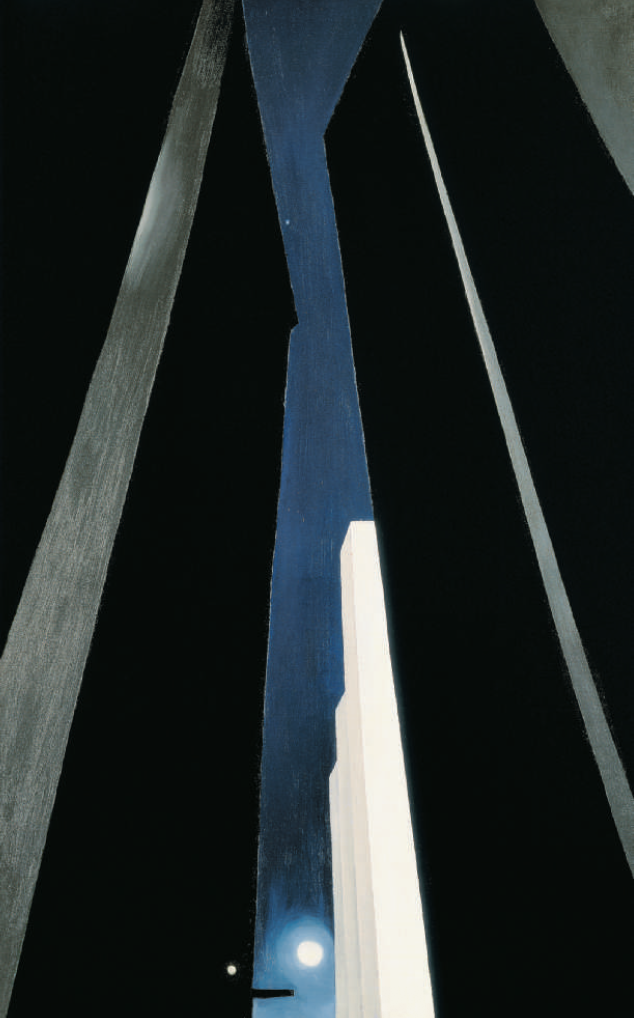
OKeffe, 1926, City Night, Oil on canvas
O’Keeffe fre-quently portrayed her architectural subjects from a low vantage
point so that they appear to loom ominously over the viewer.
The dark tonalities, stark forms, and exaggerated perspective produce a sense of menace that also appears in the art of other American Modernists. I
n 1929, O’Keeffe began spending her summers in New Mexico and moved permanently
to a ranch north of Santa Fe in the 1940s, dedicating her art to
evocative representations of the local landscape and culture.
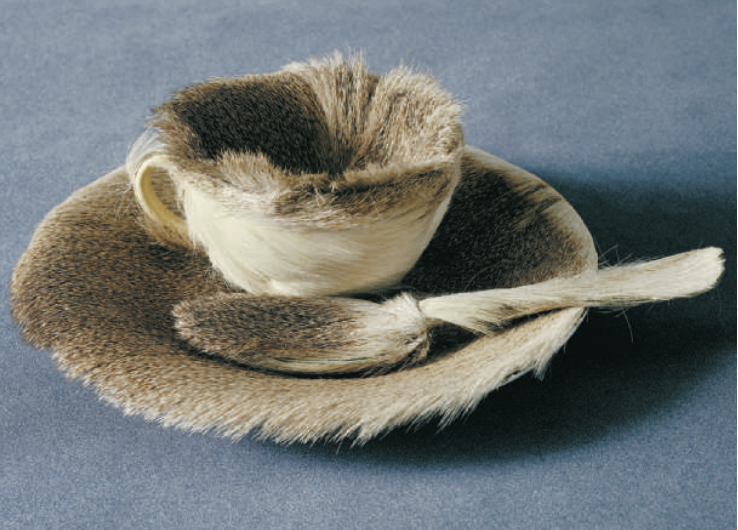
Oppenhiem, OBJECT, 1936,. (fig. 19–29).
Consisting of a cup, saucer, and
spoon covered with the fur of a Chinese gazelle, Oppenheim’s
work transforms implements normally used for drinking tea
into a hairy ensemble that simultaneously attracts and repels
the viewer.
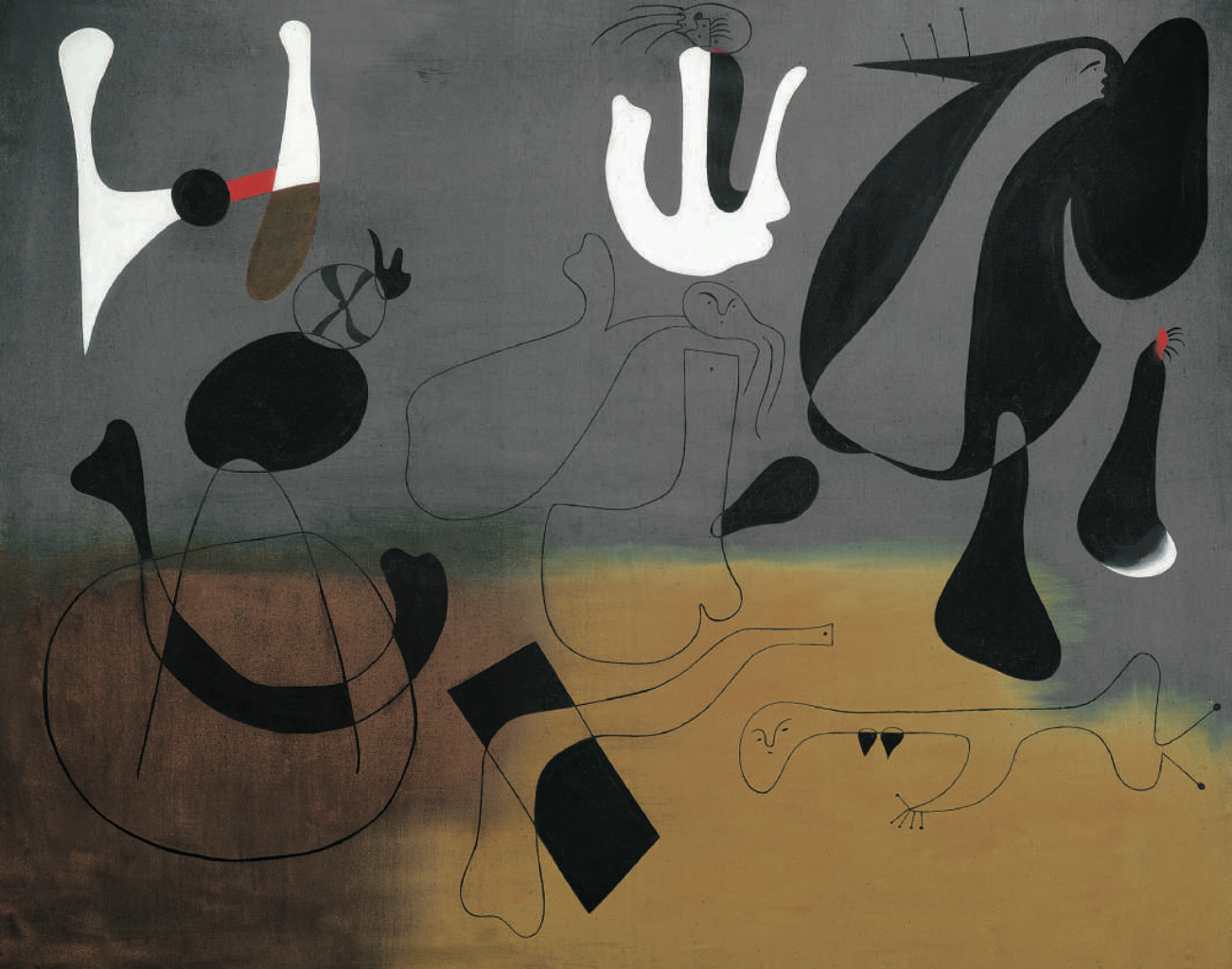
Joan Miró COMPOSITION, oil on canvas, 1933
The abstract composition, with its biomorphic contours, evokes organic forms reminiscent of human figures. The identity of these forms is ambiguous, suggesting ancestral spirits, menacing ghosts, or a primal, mythic meaning.
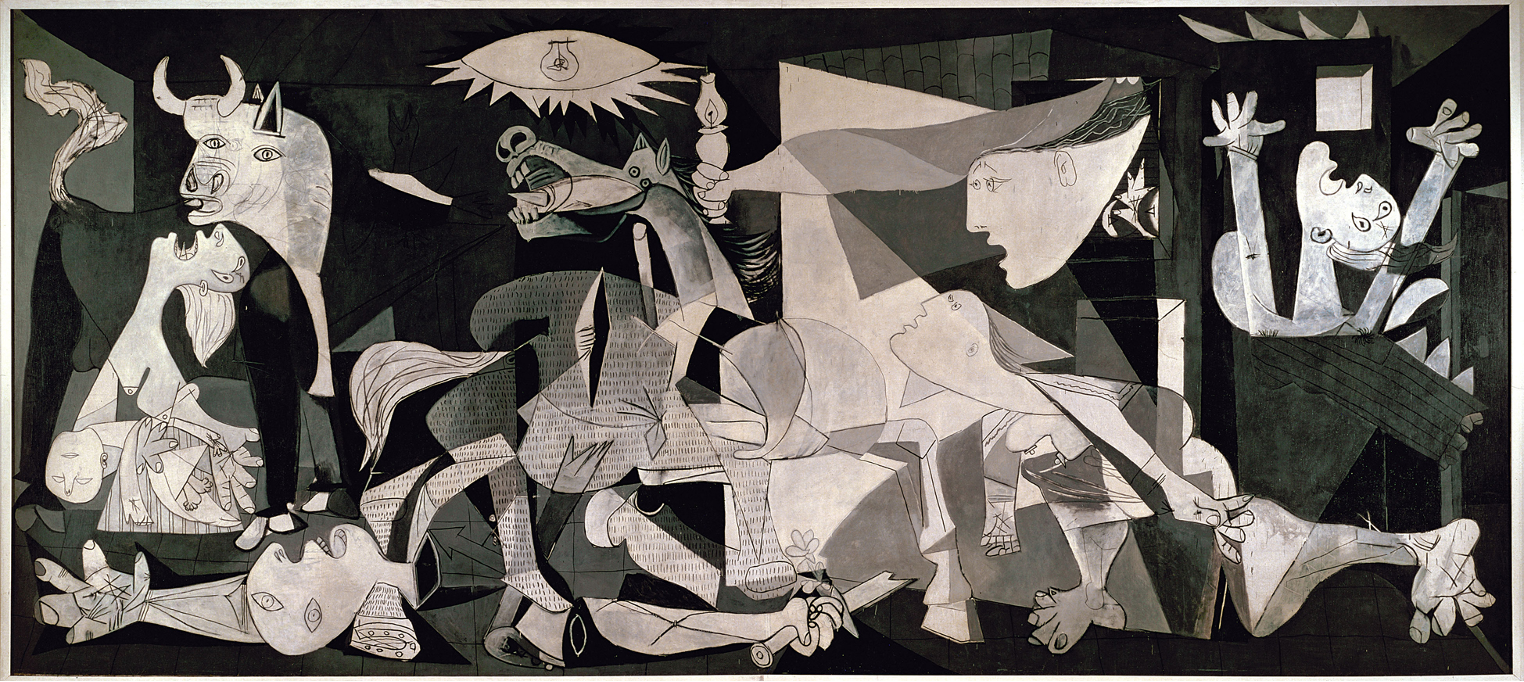
Guernica uses a monochromatic palette (black, gray, white), reflecting the look of newspaper photos and emphasizing the stark, documentary quality of the event.
The composition features fragmented, distorted figures frozen mid-motion, creating a chaotic, hallucinatory scene that heightens emotional intensity and confusion.
Expressive forms and exaggerated anatomy (wailing women, twisted bodies) serve as key formal elements to convey anguish, terror, and devastation.
Iconography includes a dead child, a screaming horse, and a bull, which have been interpreted as symbols of innocence, suffering, and political forces, though meanings remain intentionally open.
The overall imagery focuses on victims of violence—humans and animals—rather than heroes, making the painting a universal symbol of the brutality and horror of war.

