7. Genetics, Development, and Environmental Influences in Human Traits
 Studied by 0 people
 Call Kai
 Learn
Learn Practice Test
 Spaced Repetition
 Match
Match Flashcards
 Knowt Play
1/101

There's no tags or description
Looks like no tags are added yet.
Name | Mastery | Learn | Test | Matching | Spaced | Call with Kai |
|---|
No analytics yet
Send a link to your students to track their progress
102 Terms
Genotype
The genetic constitution of an individual, which interacts with the environment to produce the phenotype.
Phenotype
The observable characteristics of an individual resulting from the interaction of the genotype with the environment, Genotype + Environment
Chromosomes
threadlike structures made of DNA molecules that contain the genes
Polygenic inheritance
Inheritance of traits that are determined by multiple genes.
Dominant gene
A gene that requires only one copy to reveal its trait.
Recessive gene
A gene that requires two copies to reveal its trait.
Disorders caused by dominant genes
Huntington's disease
- Rare neurodegenerative disease, onset around 40
- Affects muscle coordination (Huntington's Chorea)
Disorders caused by recessive genes
Phenylketonuria (PKU)
- Inability to metabolise phenylalanine, leading to cognitive deficits.
chromosomal abnormalities
Irregularities in chromosome number or structure.
example of chromosomal abnormalities
Down syndrome
Down Syndrome (Trisomy 21)
A genetic disorder caused by the presence of an extra 21st chromosome, resulting in low IQ and various physical and cognitive challenges.
behavioural genetics
the study of how genes and the environment influence behaviour
Heritability
The proportion of a given behavior that is due to genetics rather than environmental factors.
Heritability coefficient
A measure of the degree of association between the traits of identical twins and fraternal twins; If identical twins are more similar on a given behaviour than fraternal twins, then that behaviour has a heritable component
Identical twins
Twins that result from the splitting of a single fertilized egg and share the same DNA.
Fraternal twins
Twins that result from the separate fertilization of two eggs and have different DNA.
Twin studies
Research methods that compare the similarities between identical and fraternal twins to understand the influence of genetics and environment.
Abnormalities of sex chromosomes
Genetic conditions resulting from irregularities in the sex chromosomes, which can affect development and health.
Adoption studies
Research that compares adopted children with their biological and adoptive families to assess genetic and environmental influences.
twin seperation study
1960s-70s study that separated twins and tripletts into different families and were observed by researcher
limitations of twin studies
- being identical may change how we treat them
- environments may be similar between families
- how representative are adoptive parents and their environment?
prenatal development
period of development from conception until birth, most. rapid and dramatic period of change across the lifespan
3 stages of prenatal development
1. zygotic
2. embyonic
3. feotal
Zygotic stage
The first stage of development, lasting for the first 2 weeks after conception, cell division and implantation
Embryonic stage
The second stage of development (2-8 weeks), organ systems, limbs
Foetal period
The final stage of development, (9 to birth), growth, refinement of processes and function development
Teratogenic influences
Environmental factors that can cause malformations during embryonic or foetal development.
examples of teratogens
drugs, alcohol, bacteria, viruses, chemicals
drugs as teratogens
Thalidomide
-Morning-sickness medication in the 1960s; Associated with limb deformities
Quinine
-Malaria medication (less commonly used now, but still in circulation); Associated with hearing loss/deafness
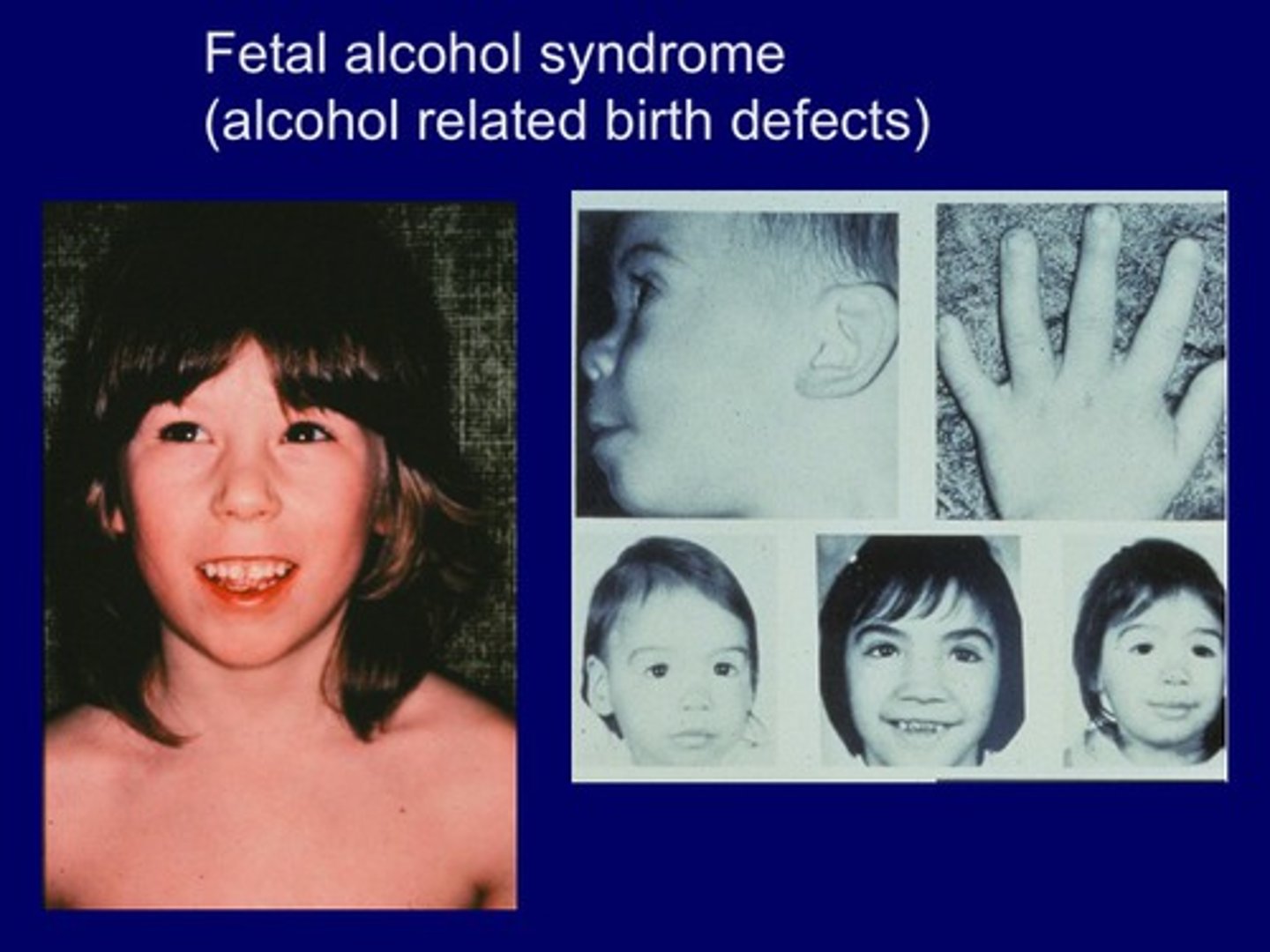
Alcohol as a teratogen
alcohol is a teratogen at any stage of pregnancy, but the type of damage depends on timing and can range on a spectrum
Cognitive development
The progression of a child's ability to think and understand; usually with categories (but children dont begin with categories)
Category
A class of things or events in the world, such as humans, animals, and plants.
Broad categories
General classifications that children form early in life, including people, animals (excluding plants), and inanimate objects.
Habituation-dishabituation paradigm
A research method used to study infants' ability to recognize and differentiate between stimuli.
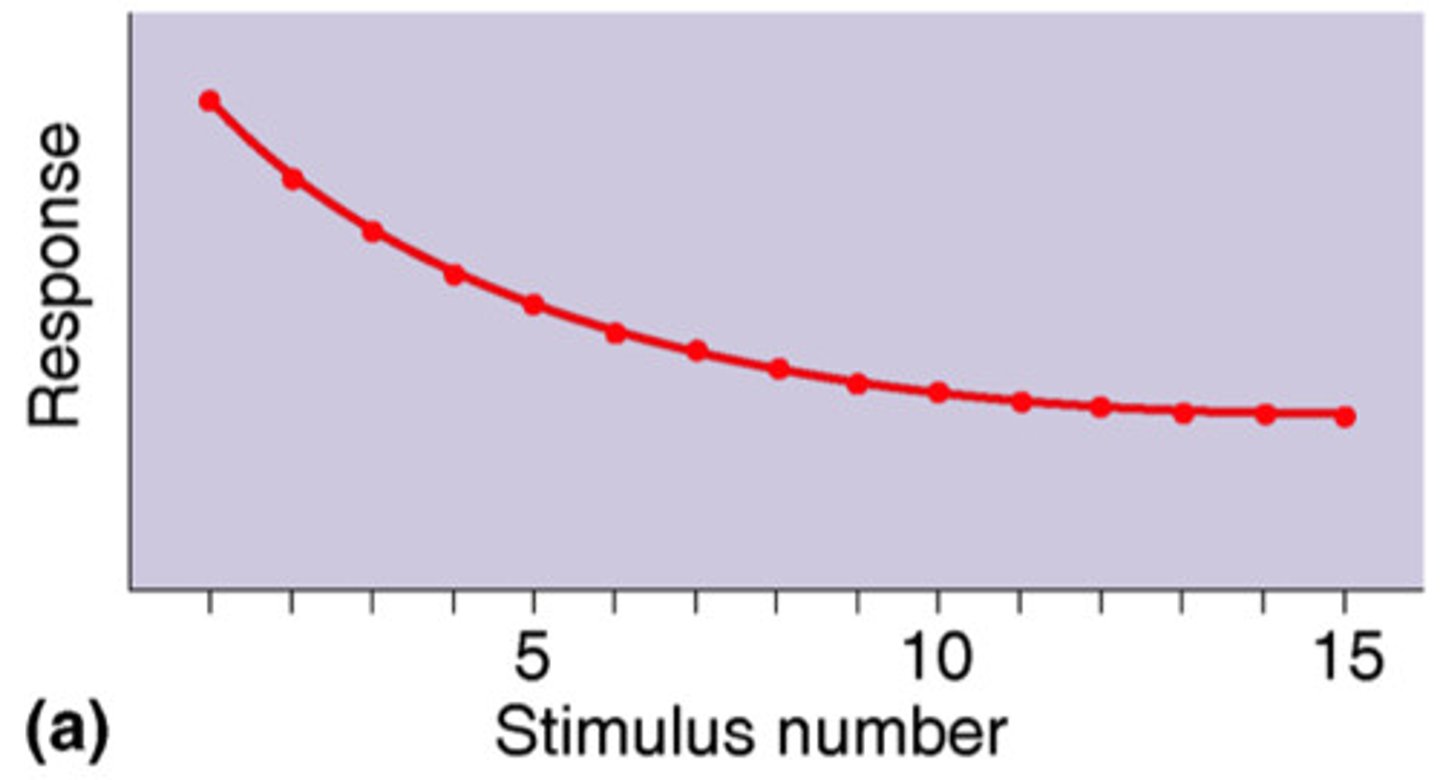
habituation
decreasing responsiveness with repeated stimulation. As infants gain familiarity with repeated exposure to a visual stimulus, their interest wanes and they look away sooner.
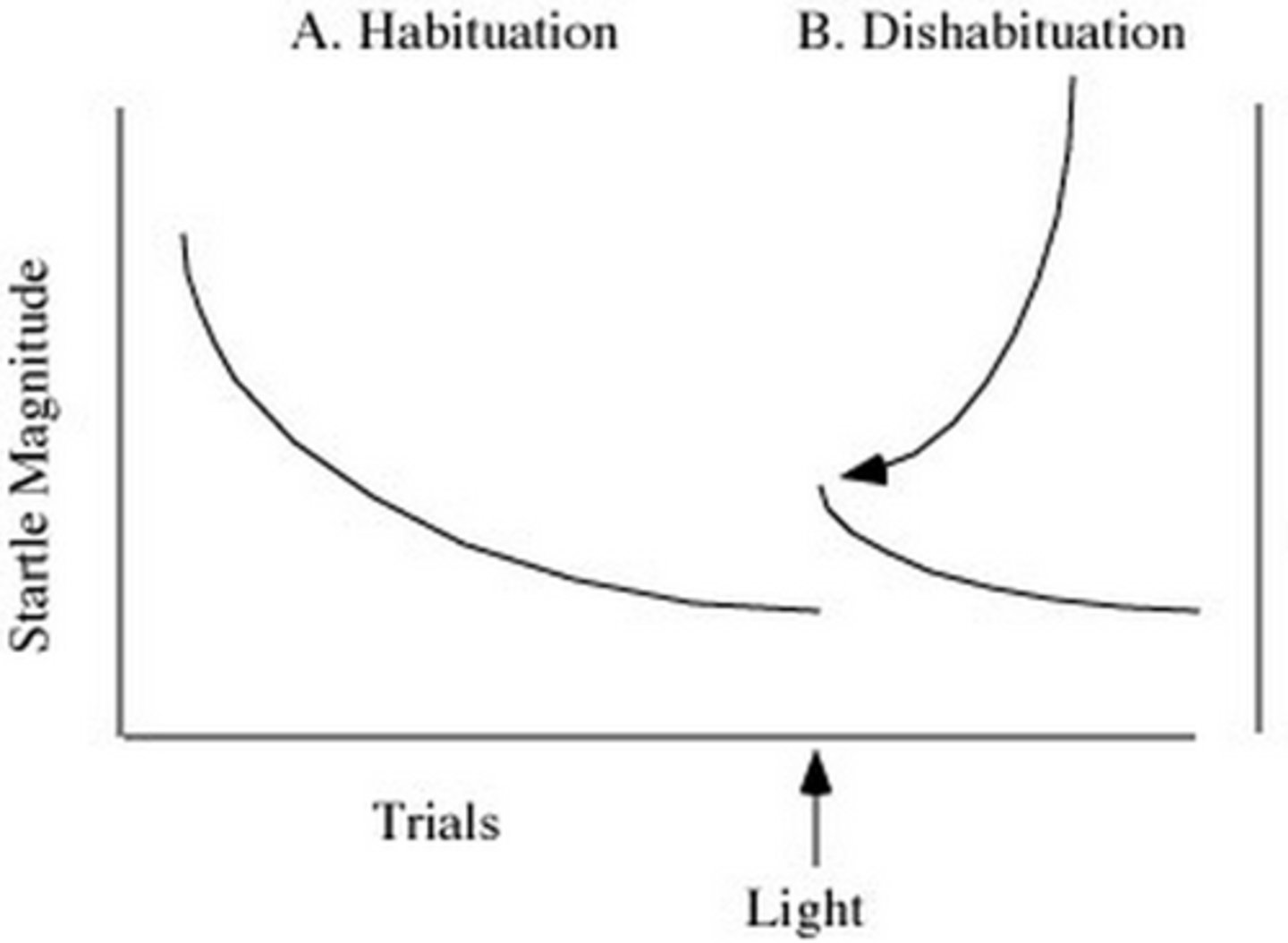
Dishabituation
increase in responsiveness after presentation of a new stimulus
Perceptual similarity
Young infants appear to categorise on the basis of perceptual similarity.
concept
a mental representation of aclass of things or events: what we knowabout these categories
Category hierarchies
The organization of categories into broader classes, indicating that older children can differentiate between various groups.
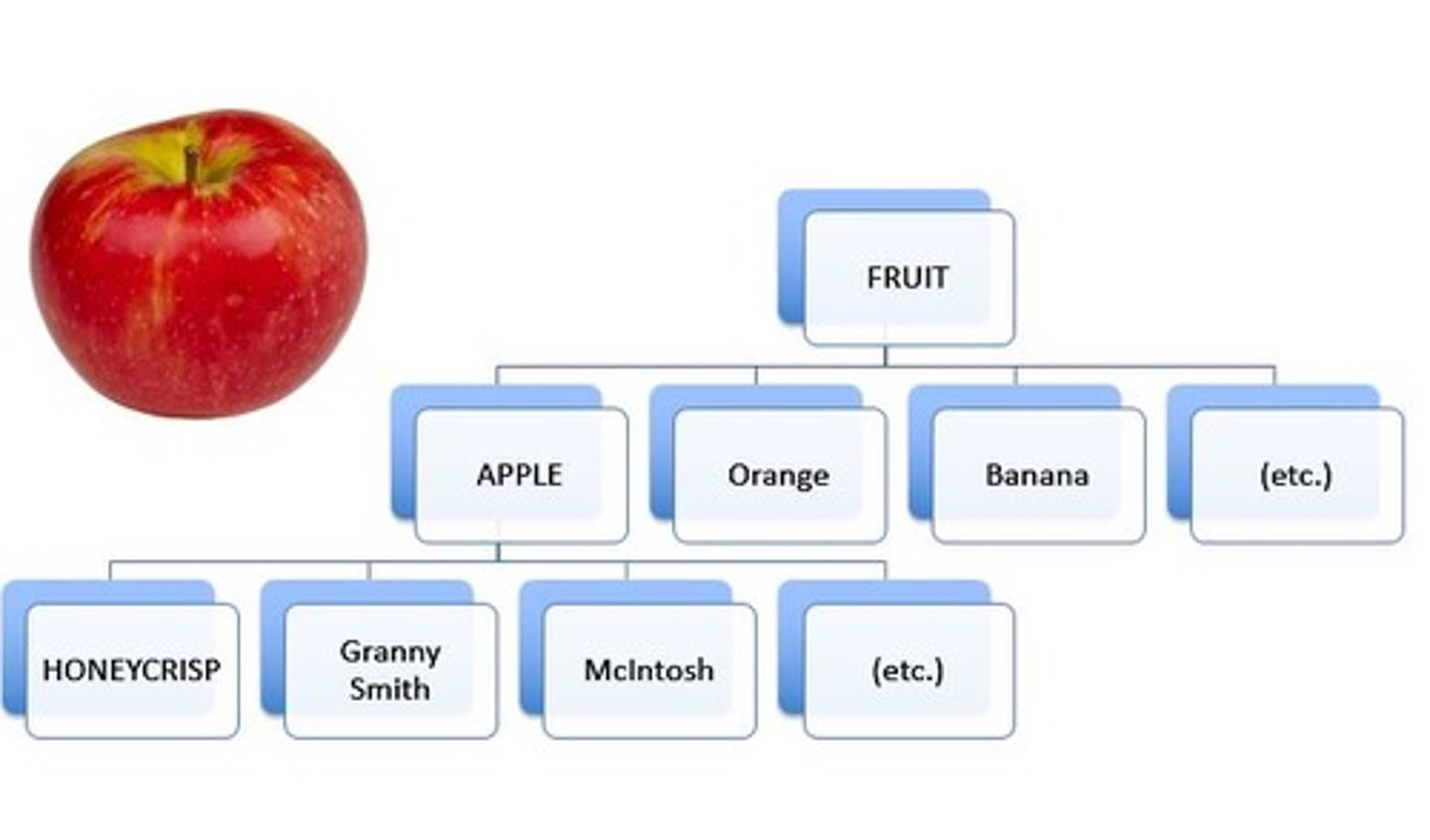
Category hierarchy levels
Basic levels typically acquired first, covering important features of thatcategory; superordinate and subordinate categories follow.
Casual understanding
The basic comprehension that children develop regarding the relationships and differences between categories.
example of casual understanding
Understanding why something is so enriches and contextualises knowledge.
e.g., understanding that clouds are condensed water vapour explains rain.
Superordinate and subordinate categories
How do children learn superordinate and subordinate categories? Basic level provide a foundation; parents make use of this.
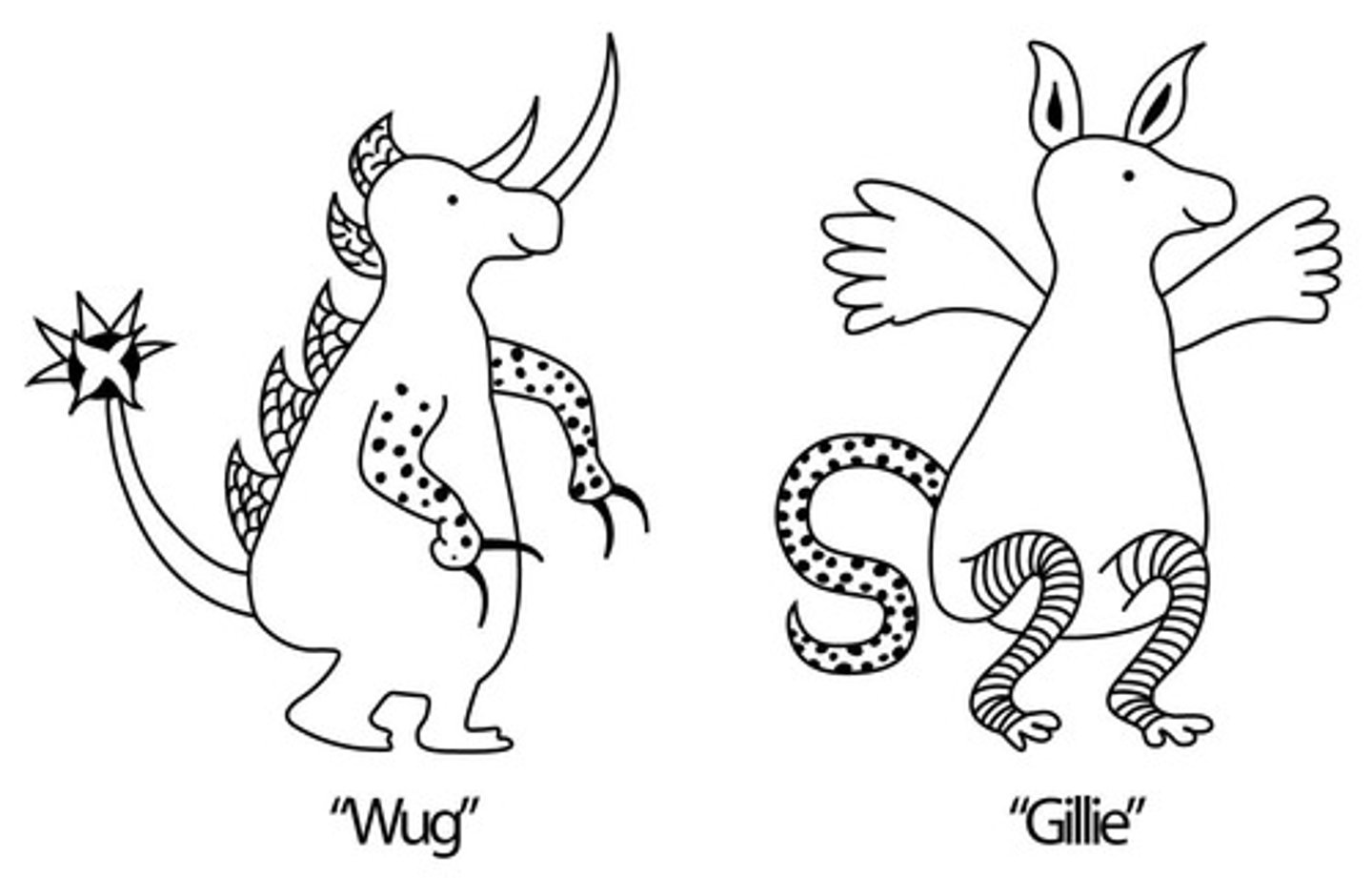
Wugs and Gillies
4-5yo children told about two categories of monsters: Wugs (claws, spikes on tail, horns on head, armour on backs) and Gillies (wings, big ears, long tails, long toes), half told just features, other half causal reasons; Children who were told function of features better at categorising.
Naïve psychology
the ordinary, intuitive way people understand and explain human behavior and mental states through their own beliefs, experiences, and intuitions; even children have
Three concepts of understanding behavior w/h naive psych
Desires, Beliefs, Action.
infants naive psychology
-Prefer to look at human faces rather than at objects.
-Prefer to watch human bodies moving rather than other displays with equal amounts of movement
-Imitate people's facial movements
Meltzoff & Moore (1977) (newborn naive psych)
Imitation suggests children represent actions of self and other using common representations
-when children saw experimental model → had to make a representation of the other (experimentor) → then make another representation to do the gesture
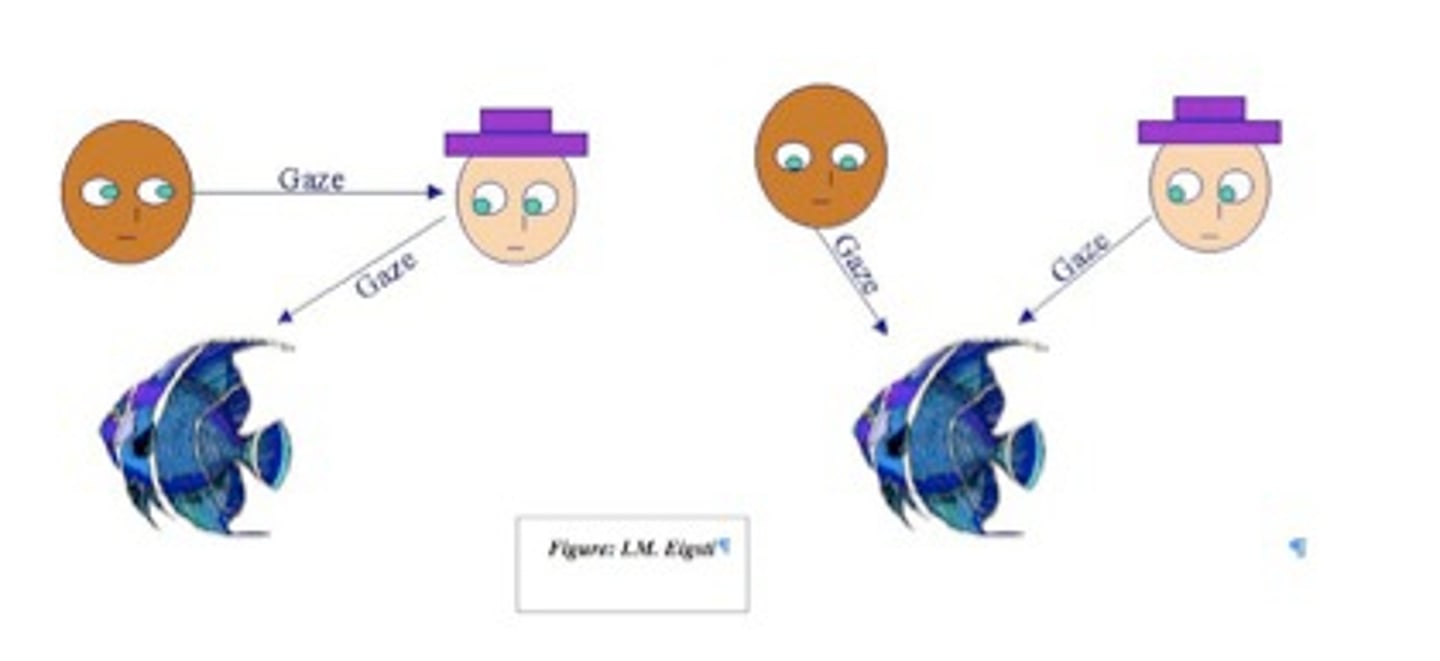
joint attention
the ability to focus on what another person is focused on
Theory of Mind
an organised understanding of how mental processes (intentions, emotions, beliefs, desires, perceptions) influence behaviour.
Development of Theory of Mind
takes a considerably long time.
Phillips et al. (2002)
showed that 12-month-olds (but not 8-month-olds) understand that actions are linked to desires; experimentor showed child 2 cats, e expressed desire in one of the kitties. A screen went up for 2 sec. When it went down, E was holding one of the kittens. Children looked longer (=surprised) when E holding kitten in which she didn't show interest.
Gopnik & Slaughter (1991)
showed that 2yo understand that desires are subjective, even when another person's desire conflicts with their own; For instance, if child likes trucks, and told story of another child who prefers the opposite, they will predict that, given a choice, the child in the story will choose a doll (But 2yo and 3yo children don't understand that beliefs determine action.)
False belief task
test whether children understand peoples actions are based on beliefs rather than the realistic case
Unexpected Location Task (false belief task)
child (3-6yr) introduced to character (sally) who has a doll, puts doll into dollhouse. her friends come over to play outside, but little brother takes doll and puts it into cupboard. then sally and friends come back and want to play with doll. child is asked where should sally look for doll; if child understands sallys behvaiour will be based on her belief on what in reality is case → shell look in dollhouse; if child cant represent sallys false belief → theyll say sally will look in cupboard
importance of theory of mind
Children's understanding others' minds continues to develop into adulthood (empathy, communication), Is delayed or impaired in several developmental disorders (ASD, deaf)
play
Non-serious activities in which children structure behaviour in idiosyncratic ways not necessarily related to reality
types of play
-Social contingency play (e.g., 'peek-a-boo').
-Object play (e.g., lego).
-Language play (e.g., babbling, rhymes).
-Physical play.
-Fantasy or Pretend play.
Imaginary Companions
A very vivid imaginary character with which the child interacts during play and daily activities.
history of research into ICs
'must have some personality problem: Problem! No control groups; most children recruited from special educational or mental health units
characteristics of children with ICs
-Up to 65% of children have an IC at one point in dev.
-Most often first born and only children.
-Generally between ages of 3 - 9-years.
types of ICs
invisible friends, personified objects
ic children
more likely to
-be reported by parents to be highly imaginative
- incorporate myth into their play
- explain events as magical
- Do not differ from non-IC children in number of real friends (at least when < 10 years of age)
functions of ICs
-Fun and companionship.
-Loneliness ('Aloneness').
-Issues of Competence.
-Restrictions or limitations in one's own life.
-Blame avoidance.
-Means of communication.
-Response to trauma.
-Method of processing interesting or significant events.
Theory of Mind and ICs
4-year-old 'High Fantasy' children passed ToM tasks at a greater rate then 'Low fantasy' Children
Private Speech
A form of self-talk used by children, which can serve various functions including communication and processing events.
roby and kidd (2008) refential communication study
experimenter sits opposite child and have book of pictures infront of them. child has to describe one picture to experimenter, so experimenter can find same picture in their book
Narrative Skills and ICs
The ability to tell stories, which is found to be better in children with imaginary companions.
Covert Private Speech and ICs
A type of private speech used more by children with imaginary companions, facilitating their development.
Self-Knowledge in IC Children
Children with imaginary companions ascribe more self-knowledge to themselves compared to non-imaginative peers.
negative associations with IC
-higher anxiety
-teachers judged children with ICs as less competent and less socially accepted
---Parents may project anxieties onto children with ICs; Dawson et al. (2000): teachers tend to dislike creative children
What does heritability indicate?
Heritability indicates the percentage of trait variation attributable to genetics.
What ethical issues arose from twin studies in the 1960s-1970s?
Ethical issues included lack of informed consent from children and families involved in the studies.
What is cognitive development characterized by?
Cognitive development is characterized by the formation of categories that help children understand the world.
What are the types of categories children develop during cognitive growth?
Children develop perceptual categories, hierarchical categories, and causal/theory-based categories.
What is naive psychology in early social development?
Naive psychology refers to the innate tendency to infer intentions, beliefs, and desires from others' actions.
What is the significance of causal understanding in cognitive development?
Causal understanding promotes deeper processing, organization, memory, and generalization.
What is the role of category hierarchies in cognitive development?
Category hierarchies help children organize information, starting from basic levels to superordinate and subordinate categories.
What is the effect of causal explanations on memory and learning?
Causal explanations enhance memory retention, engagement, and the ability to generalize knowledge.
What is the general progression of category development in children?
Children typically start with very general categories and progress to more specific and theory-based concepts.
What is the importance of genetic and environmental interactions in behavior?
Genetic and environmental interactions significantly shape behavior, influencing personality and health.
What are the limitations of twin studies in behavioral genetics?
Limitations include difficulty controlling for environmental similarity and representativeness of adoptive families.
How do infants learn categories?
Infants use tasks like habituation and dishabituation to learn and categorize stimuli.
What is the significance of the timing of teratogen exposure during pregnancy?
The timing of exposure to teratogens can lead to varying degrees of cognitive and physical impairments.
What is Theory of Mind (ToM)?
The ability to recognize that others have beliefs, intentions, and knowledge separate from one's own.
How is Theory of Mind typically tested?
Through the 'Sally-Anne' task, where children predict where a character will look for an object based on their beliefs.
At what age do most children pass the Sally-Anne task?
Around age 5.
What factors can shape the development of Theory of Mind?
Socialization, language exposure, and culture.
How does bilingualism affect Theory of Mind development?
Bilingual children often pass ToM tasks faster than monolingual peers.
What are the benefits of play in child development?
Refining motor skills, developing theory of mind, promoting cooperation, and managing conflict.
What are the types of play identified in child development?
Social contingency, sensory motor play, object play, language play, physical play, and fantasy/pretend play.
What are imaginary companions (ICs)?
Prevalent in childhood, ICs can be invisible friends, personified objects, or pretend identities.
How are imaginary companions viewed in modern psychology?
They are seen as developmentally beneficial, supporting creativity and language skills.
What is the relationship between play and cognitive growth?
Cognitive growth involves forming categories and theory of mind, with play enriching language and social understanding.
How does culture influence Theory of Mind?
Cultural and linguistic experiences can shape the age of mastery and the understanding of mental states.
What is the significance of play in educational settings?
Play is central to development and is increasingly incorporated into educational and therapeutic settings.
What are the implications of social reinforcement in play?
Social reinforcement through play helps children learn cooperation and conflict management.
What is the impact of pretend play on children?
Pretend play enhances creativity, language skills, and referential communication.
What are the cognitive benefits of having imaginary companions?
ICs support narrative skills, language richness, and theory of mind development.
What is the difference between individualistic and collectivistic cultures regarding play?
Western cultures tend to have more invisible friends, while non-Western cultures may have more personified objects.
 Note
Note  Flashcards (49)