LM 14: CELLULAR RESPIRATION!
 Studied by 4 people
 Call Kai
 Learn
Learn Practice Test
 Spaced Repetition
 Match
Match Flashcards
 Knowt Play
1/20

Earn XP
Description and Tags
-key vocab, learning module questions, and images
Name | Mastery | Learn | Test | Matching | Spaced | Call with Kai |
|---|
No analytics yet
Send a link to your students to track their progress
21 Terms
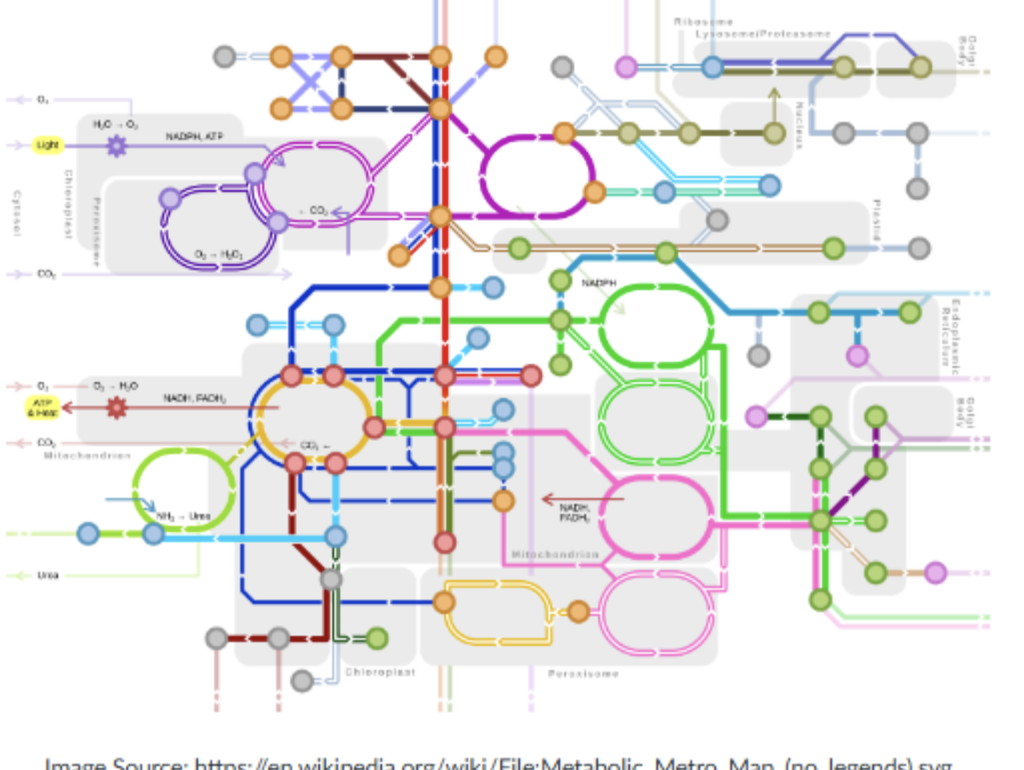
Metabolism Review
-includes all of the chemical reactions in a cell, both anabolic and catabolic.
-The products of one reaction serve as the reactants for the next reaction in the pathway.
-Any factor that slows down one chemical reaction will affect many upstream reactions.

Catabolic Reactions
-Exergonic
-They break down large organic molecules into smaller molecules, releasing the energy contained in the chemical bonds.
The oxidation of glucose powers the reduction of:
- NAD+ to NADH
- FAD to FADH2
The oxidation of NADH and FADH2 powers the phosphorylation of:
- ADP to ATP
Flow of energy in cellular respiration:
Glucose → NADH or FADH2 → ATP
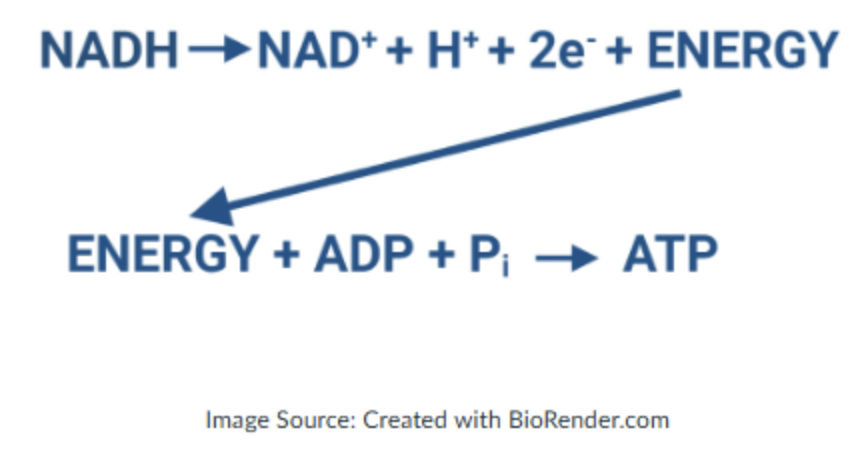
What is the process of Oxidative Phosphorylation?
-The energy that is released by the oxidation of NADH and FADH2 is coupled with the phosphorylation of ADP in order to create an energy-rich ATP molecule.
-The energy released from the oxidation of NADH is used in the phosphorylation of ADP.
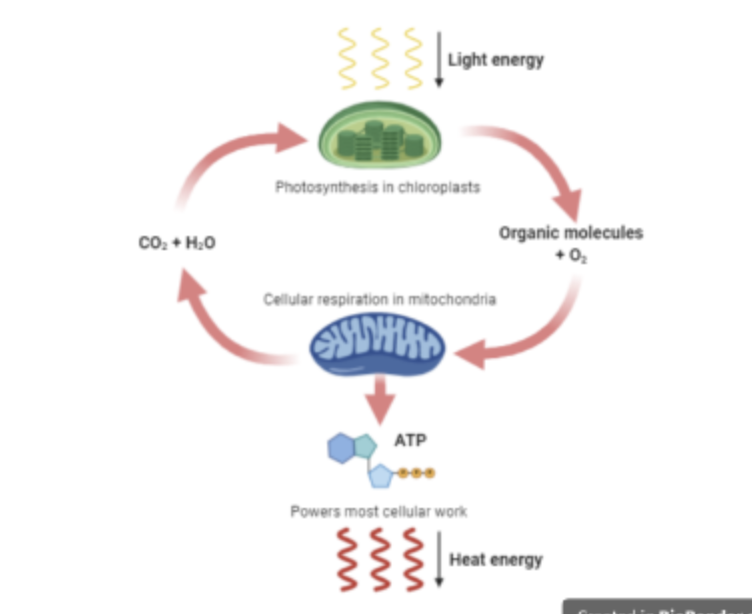
What is the process depicted in the image?
Cellular Respiration
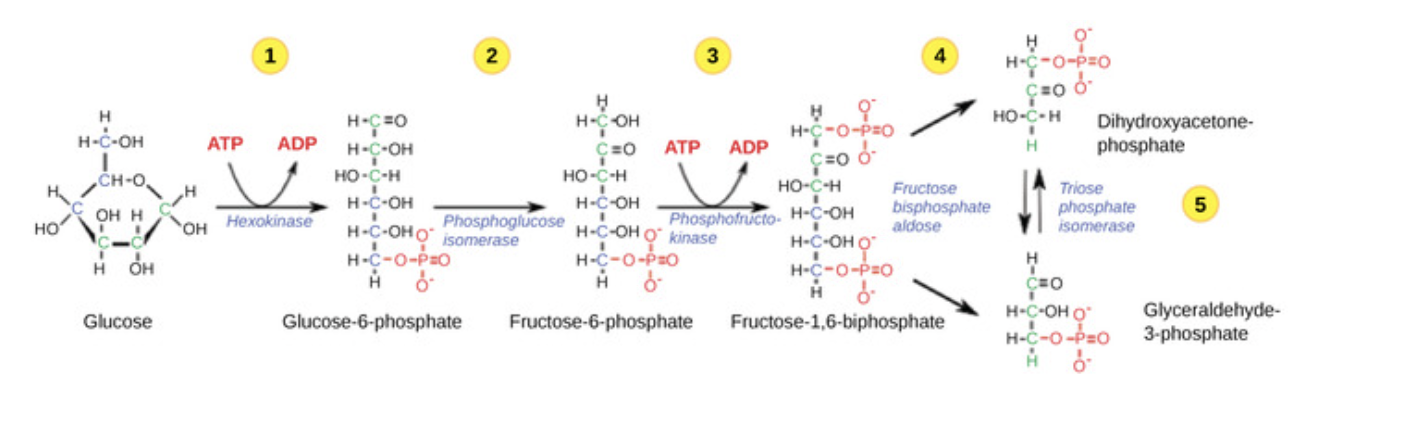
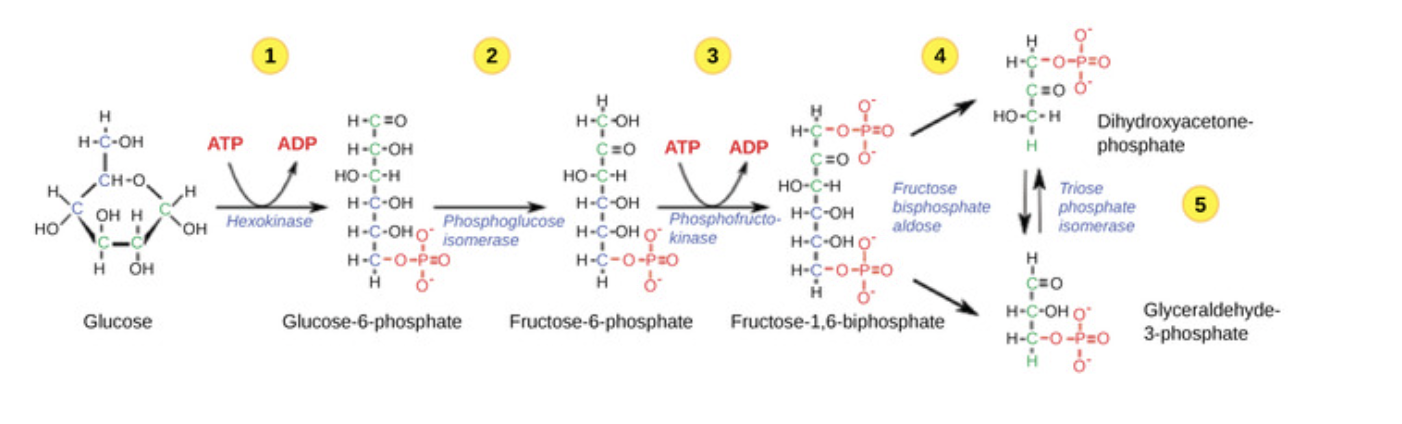
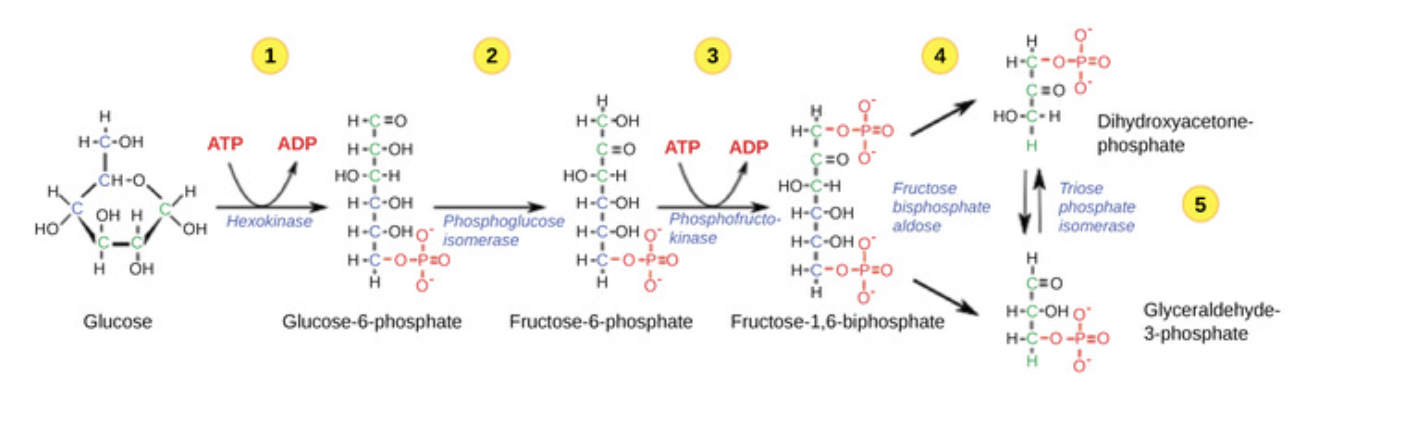
What is the name of the class of enzymes that can transfer and covalently bond phosphate groups to molecules?
Kinases: a type of Phosphotransferase, transferring phosphates (often from ATP) to proteins, lipids, or carbs; they are vital for cellular signaling, working with Phosphatases (which remove phosphates) to regulate cell functions.
What product of step 2 suggests that pyruvate is oxidized?
NADH: Oxidation means loss of electrons. When pyruvate is oxidized, electrons are transferred to NAD⁺, reducing it to NADH. The formation of NADH is the clearest evidence that oxidation has occurred (CO₂ is also released, but NADH directly reflects electron loss).
Find the carboxyl group on the pyruvate.
The carboxyl group on pyruvate is the –COO⁻ (or –COOH) group at one end of the molecule.
Pyruvate has 3 carbons, arranged like this:
CH₃ — C=O — COO⁻
Carbon 1 (left end): Carboxyl group (–COO⁻) ← this is what you’re looking for
Carbon 2: Carbonyl group (C=O)
Carbon 3: Methyl group (CH₃)
So, the carboxyl group is the terminal carbon with two oxygens (one double-bonded, one single-bonded), often shown as –COO⁻ in physiological conditions.
What is the result of Kreb’s Cycle (Citric Acid Cycle)
Oxidation of Acetyl (Co-A) to CO2
Reduction of NAD+ and FAD
Phosphorylation of GDP
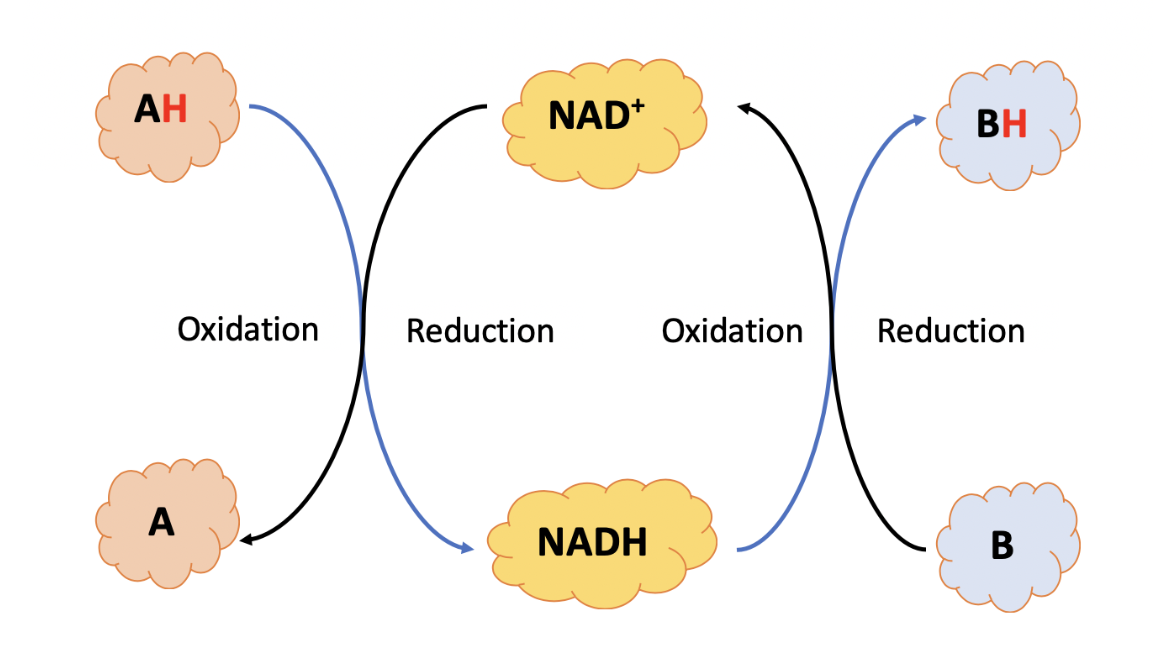
The blue arrows show the path of the electrons as they move from molecule to molecule.
Which molecules are being oxidized (losing electrons)?
AH and NADH
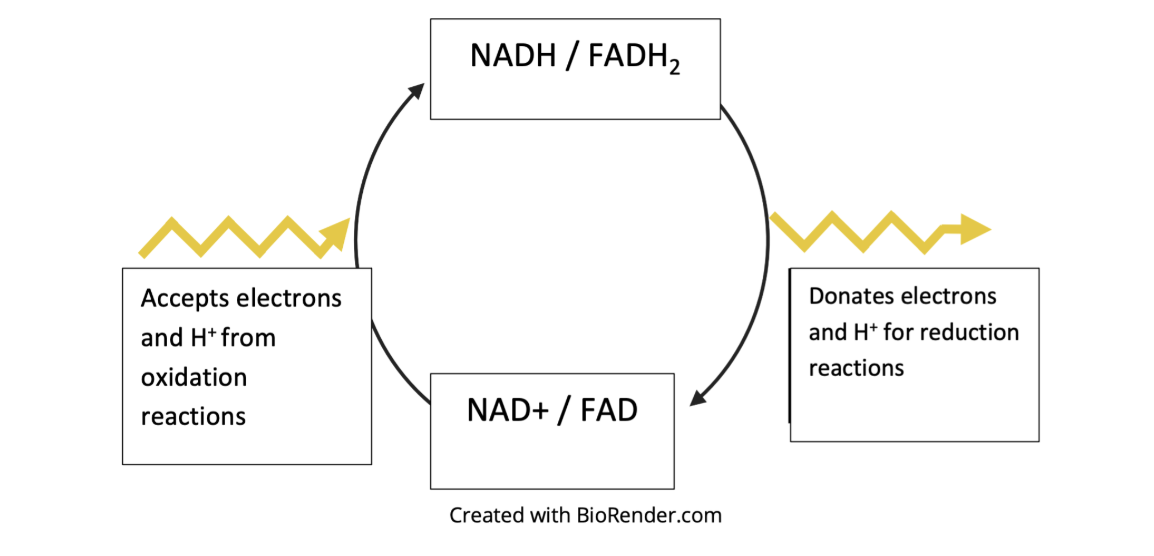
When NAD+ accepts electrons and protons and becomes NADH, the coenzyme has been..?
Reduced
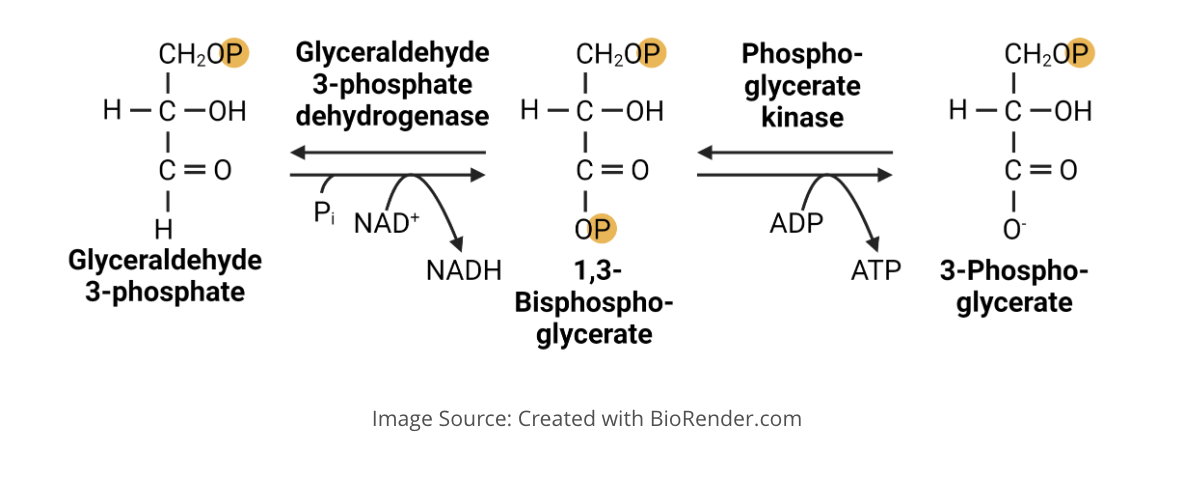
What type of reactions are observed in this image?
Enzyme-Catalyzed Reactions
What is the name of the first pathway of glucose oxidation in all cells on Earth?
Glycolysis
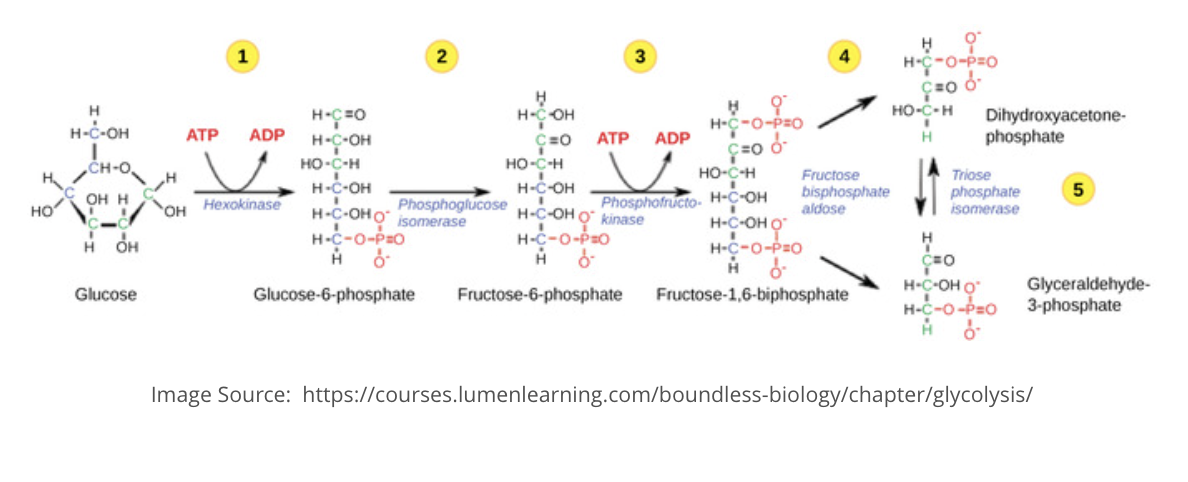
The hydrolysis of ATP occurs in steps 1 and 3 of glycolysis (shown below). Track the transfer of the phosphate group from the reactant of ATP to the phosphorylated product. What is the name of the class of enzymes that can transfer and covalently bond phosphate groups to molecules?
Kinases
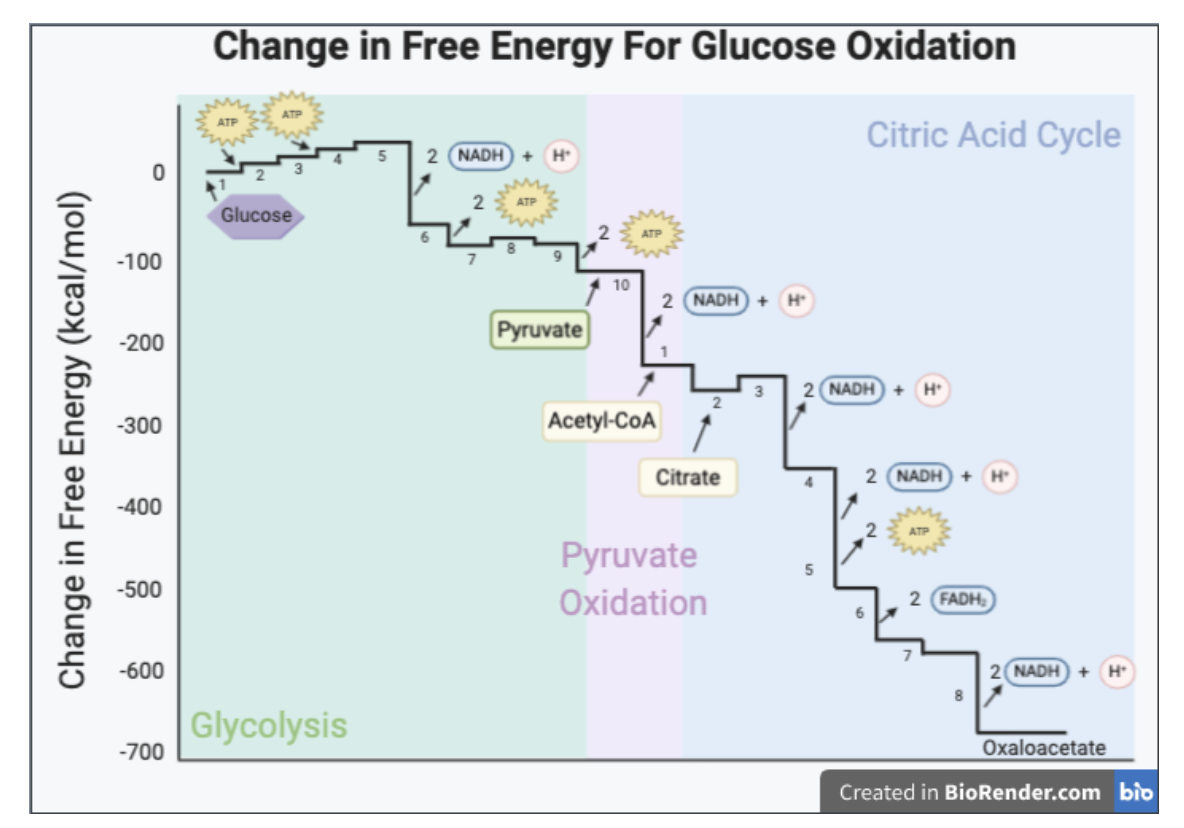
The graph illustrates the free energy changes during the stages of glucose oxidation. Notice how each drop of energy during the process is associated with the production an energetic product of NADH/FADH2/ATP. In contrast, the first steps of glycolysis are called the energy investment steps. What evidence suggests that the hydrolysis of ATP is exergonic?
The energy state of the system is higher after ATP is hydrolyzed.
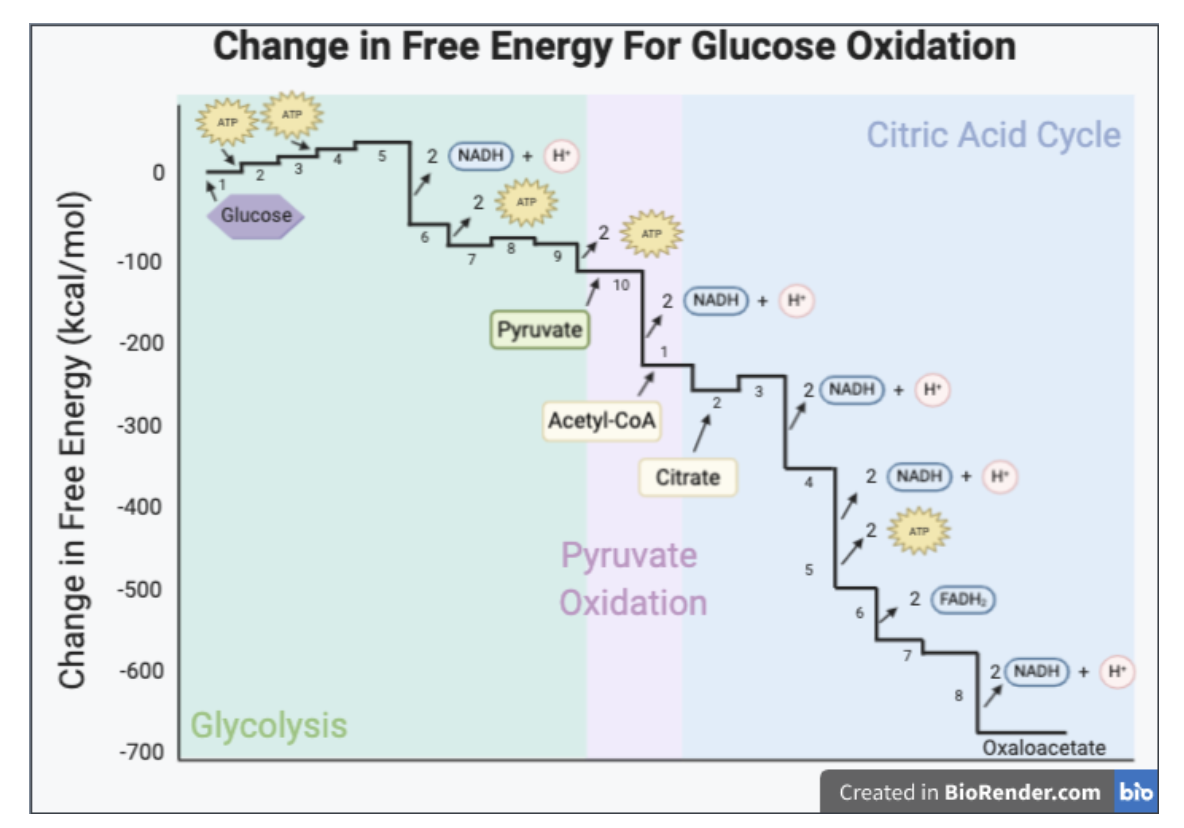
The graph illustrates the free energy changes during the stages of glucose oxidation.
What evidence suggests that after glycolysis pyruvate is oxidized to acetyl CoA?
NADH is generated
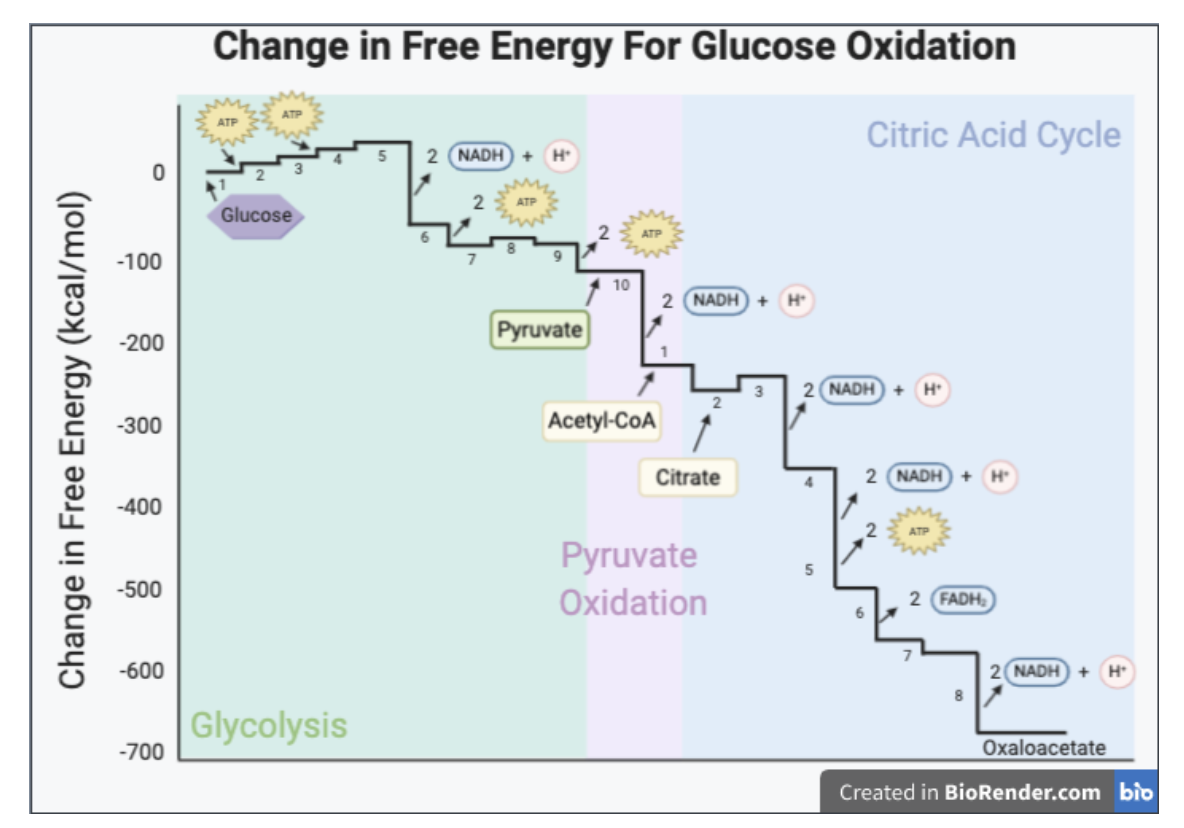
What is the exact amount of the energy input required to begin the process of cellular respiration?
2 ATP
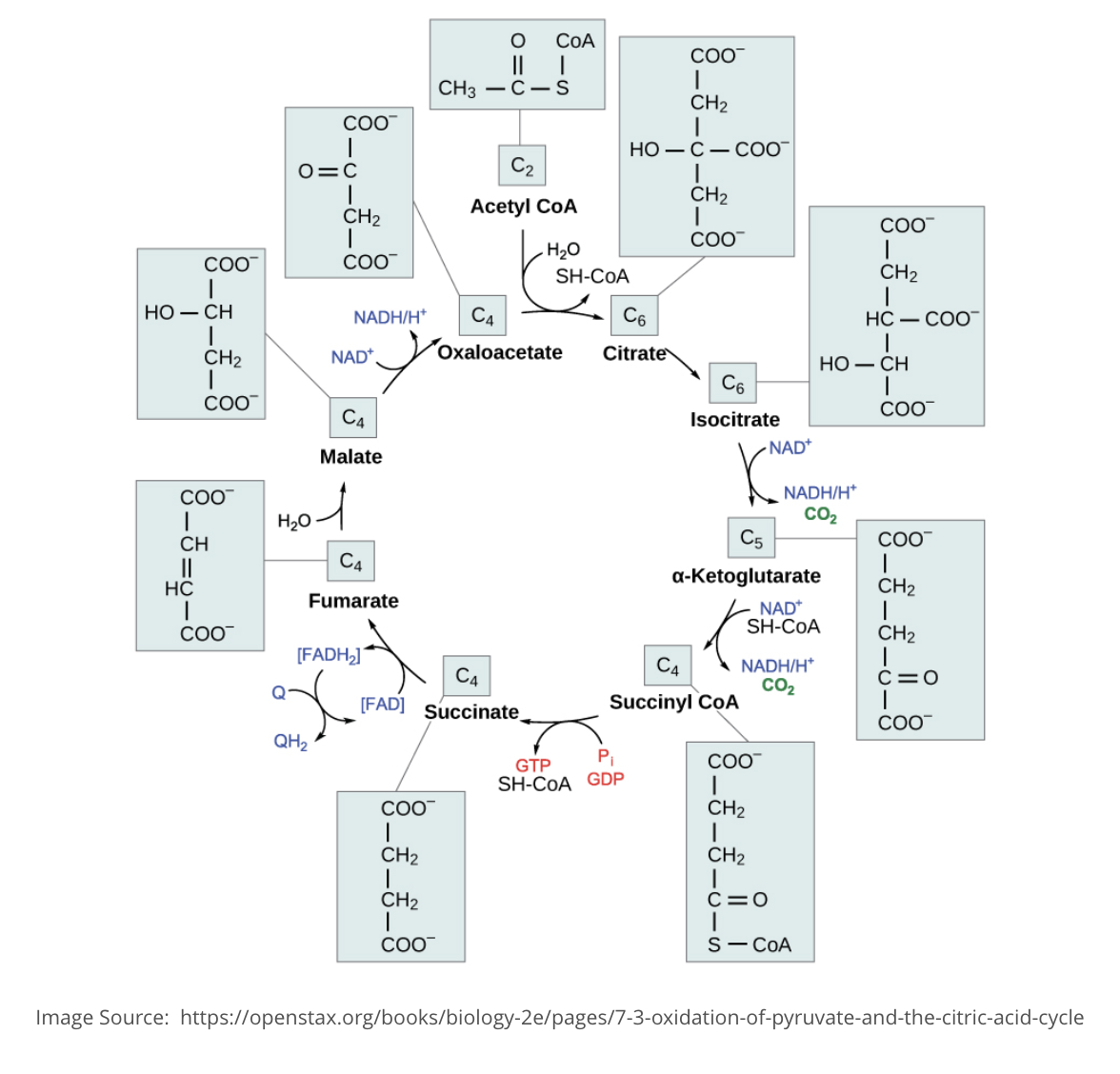
How many molecules of carbon dioxide are released during one turn of the citric acid cycle?
One CO2 is released from isocitrate and one CO2 is released from alpha keto-glutarate.
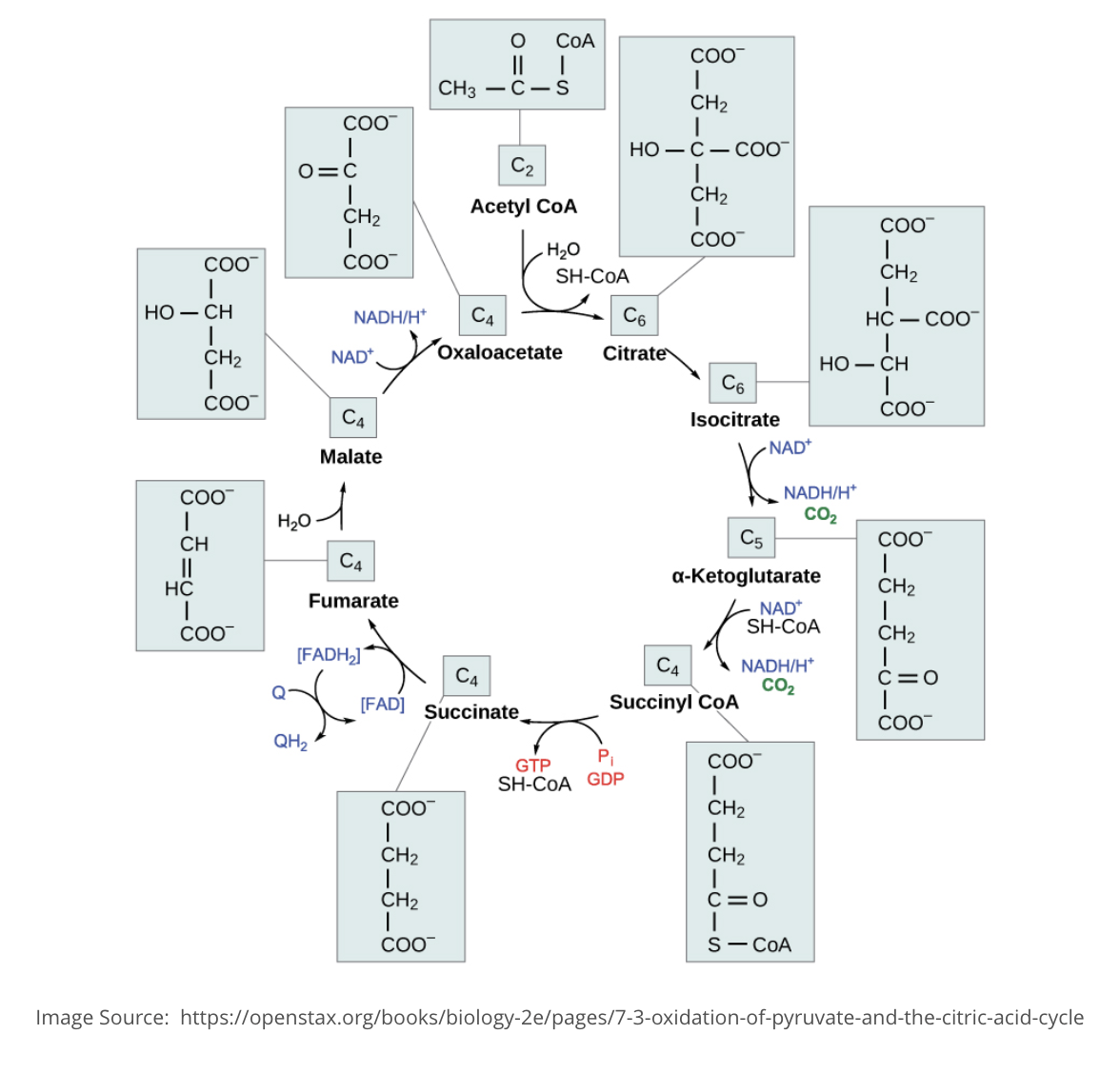
Which of the following correctly describes the flow of energy in the citric acid cycle?
Energy is transformed by the oxidation of acetyl CoA and reduction of NAD+ and FAD.
 Note
Note  Flashcards (49)