Chapter 2: cells
 Call Kai
 Learn
Learn Practice Test
 Spaced Repetition
 Match
Match Flashcards
 Knowt Play
1/16

Earn XP
Description and Tags
Cells as the basic structural feature of life on Earth, including the distinction between prokaryotic and eukaryotic cells // Surface area to volume ratio as an important factor in the limitations of cell size and the need for internal compartments (organelles) with specific cellular functions
Name | Mastery | Learn | Test | Matching | Spaced | Call with Kai |
|---|
No analytics yet
Send a link to your students to track their progress
17 Terms
cell theory
all living things are made of cells
cells are the smallest and most basic unit of life
all cells come from pre-existing cells
MRS GREEN
Movement
Respiration
Sensitivity to Stimuli
Growth
Reproduction
Equilibrium (homeostasis)
Excretion
Nutrition
are viruses considered an organism?
no
no movement
no respiration / metabolism
no growth
cannot reproduce independently
prokaryotes
no membrane-bound organelles
minimal defined internal structure
no defined structure to hold DNA (e.g. nucleus)
forms unicellular organisms
e.g. bacteria, archaea
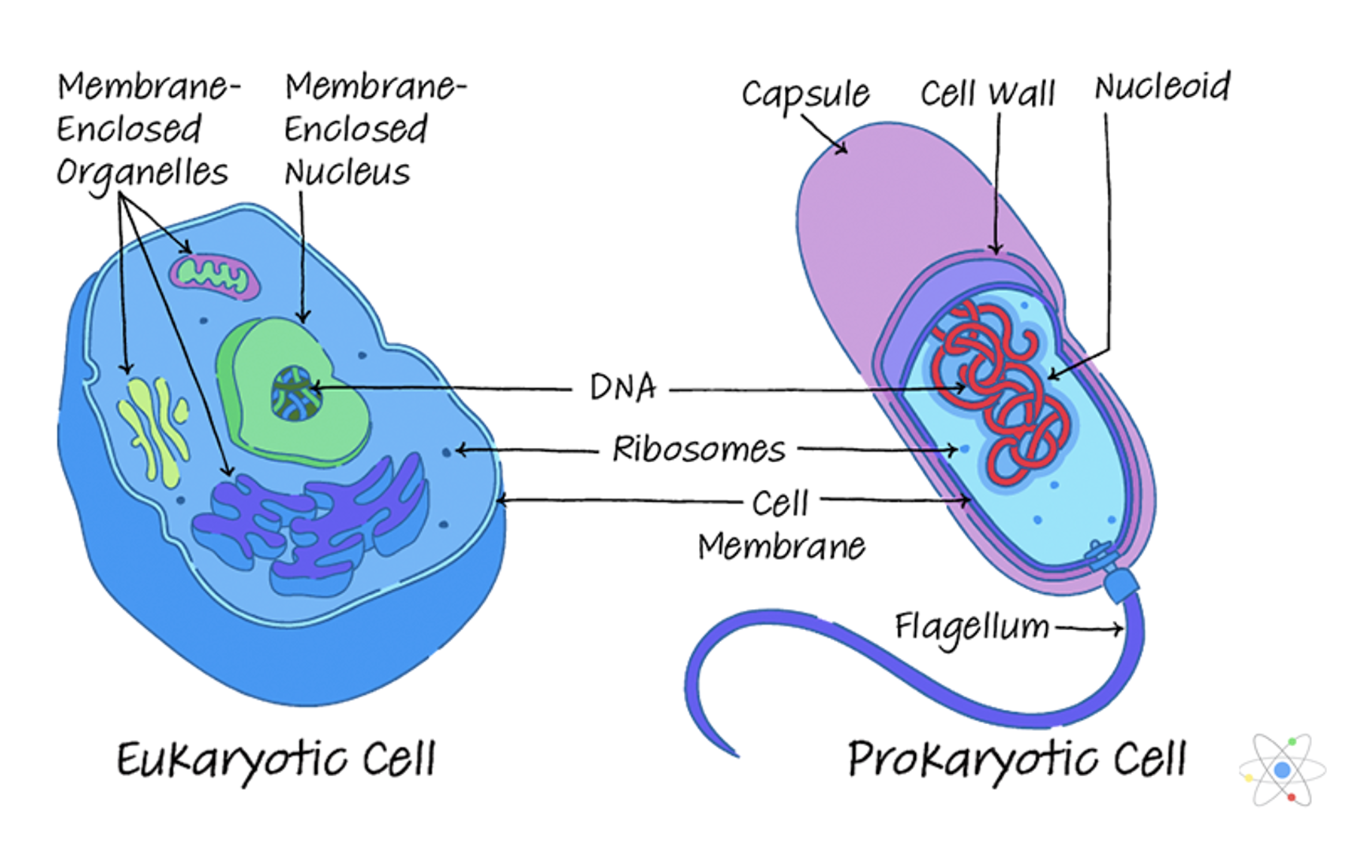
eukaryotes
more complex
membrane-bound structures (organelles)
unicellular / multicellular
multicellular = animalia, plantae, fungi, protista
unicellular = paramecium
organelles held by cytoskeleton
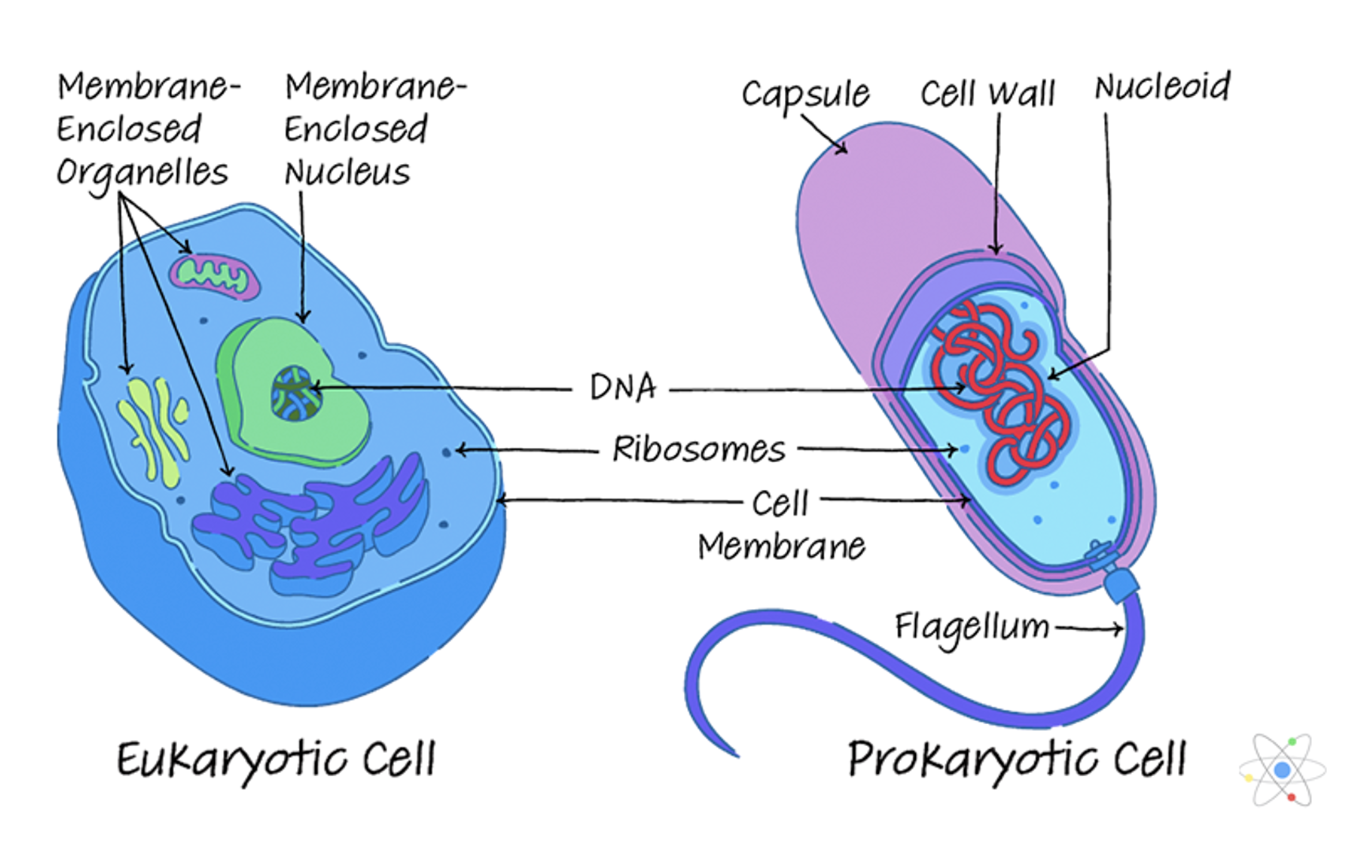
differences between prokaryotes and eukaryotes
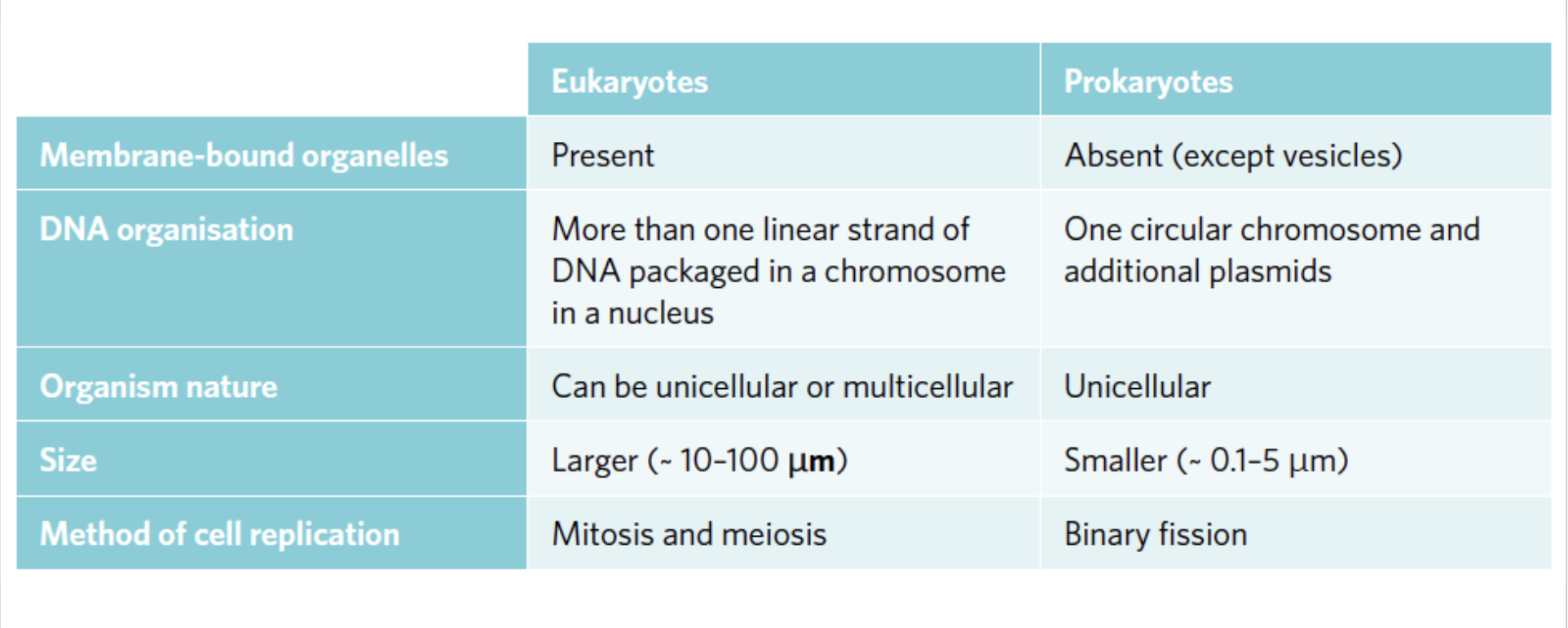
similarities between prokaryotes and eukaryotes
both have cell membrane / plasma membrane
cytoplasm
both use DNA as genetic blueprint
ribosomes
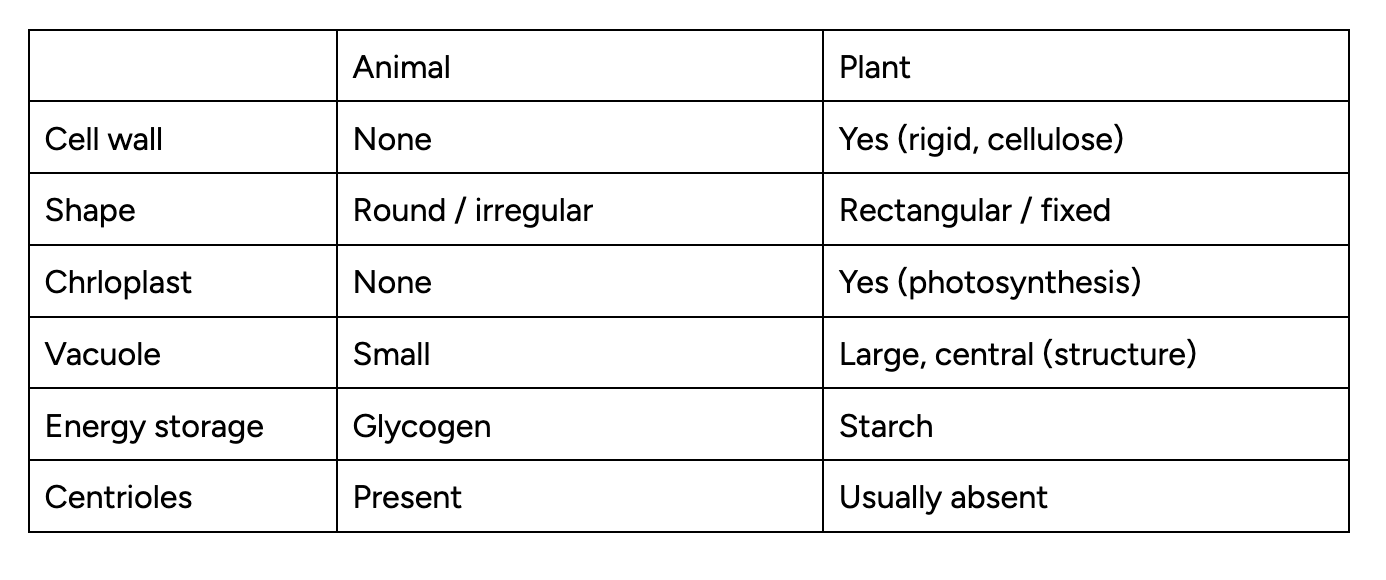
animal vs plant cells
surface area
the area of the plasma membrane
nutrient exchange, waste removal, communication
increased SA = increased efficiency of molecule exchange with external environment
volume
cytoplasm
increased volume = increased metabolic needs
as the cell gets larger…
SA:V decreases
how do larger cells overcome size?
grow more nuclei for proteins
cell protrusions —> folds —> increased SA
divide into smaller cells
effective shapes of cells
highest in flattened
lowest in spheres
purpose of SA:V
exchange of materials (e.g. glucose, oxygen) between cell and environment can be exchanged quickly
electron microscopes
powerful
uses beams of electrons, not light
transmission = inside
scanning = surface
x million magnification
types of microscopes
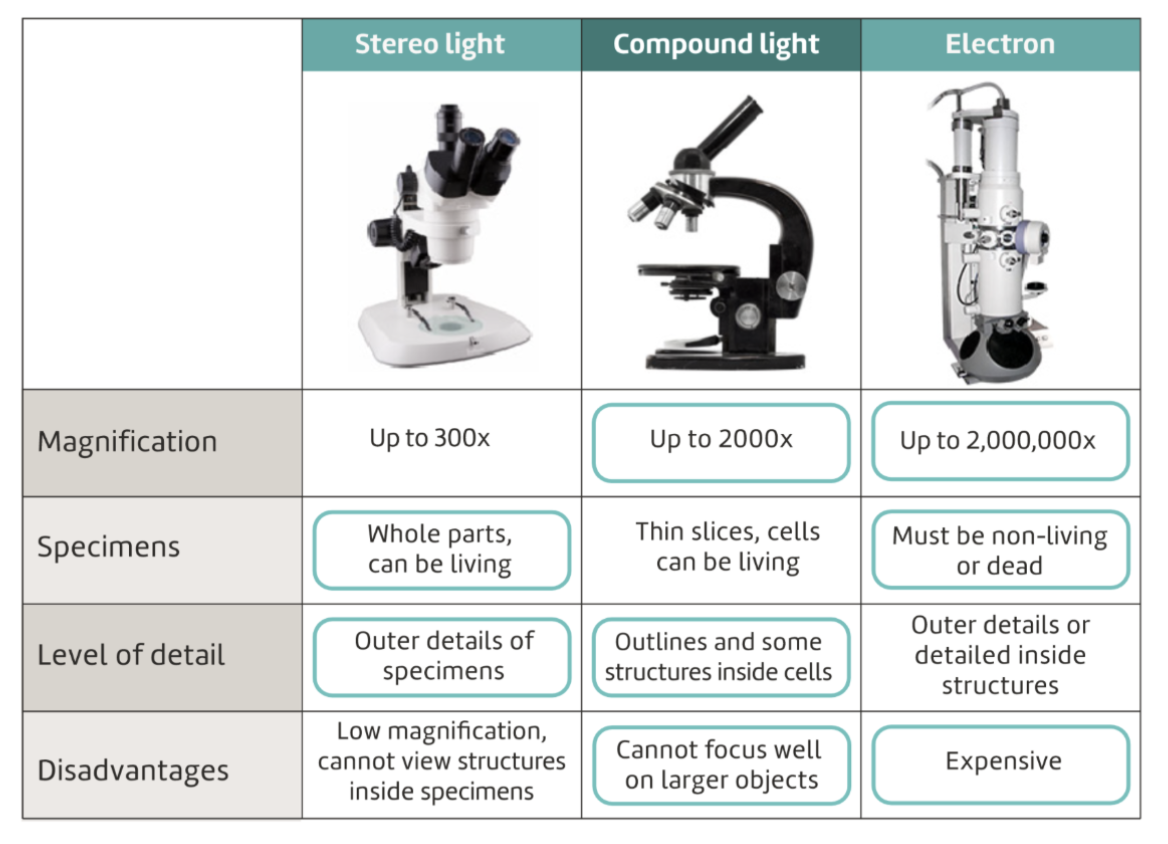
steps for using a light microscope
select lowest power objective lens
specimen must be in the center
adjust coarse focus knob
adjust fine focus knob
zoom in (highest power objective lens)
re-adjust fine focus lens
Explore top notes

Explore top flashcards
