Lesson 6: Vision
 Call Kai
 Learn
Learn Practice Test
 Spaced Repetition
 Match
Match Flashcards
 Knowt Play
1/29

There's no tags or description
Looks like no tags are added yet.
Name | Mastery | Learn | Test | Matching | Spaced | Call with Kai |
|---|
No analytics yet
Send a link to your students to track their progress
30 Terms
hue
dimension of color as determined by the wavelength of light
rods
retinal photoreceptors that detect black, white, and gray, and are sensitive to peripheral vision and movement
fovea
central focal point in the retina, around which the eye’s cones cluster
lens
transparent structure behind the pupil that changes its shape to focus images on the retina
opponent-process theory
theory that opposing retinal processes (red-green, blue-yellow, white-black) enable color vision
wavelength
distance between peaks of waves, for sound or light
cornea
protective, clear outer layer that covers the pupil and iris
accomodation
process by which the eye’s lens changes shape to focus images of near or far objects on the retina
retina
light-sensitive back inner surface of the eye, containing the receptor rods and cones plus layers of neurons that begin the processing of visual information
iris
ring of muscle that controls the size of the pupil opening and forms the colored portion of the eye around the pupil
optic nerve
nerve that carries neural impulses from the eye to the brain; made up of ganglion cells
intensity
amount of energy in a light wave as determined by the wave’s amplitude
intensity influences what one perceives as…
brightness
blind spot
point at which the optic nerve leaves the eye; no receptor cells are located there
cones
retinal photoreceptors that detect detail and color, and function in bright light, including daylight
pupil
adjustable opening in the center of the eye through which light enters
Young-Helmholtz trichromatic theory
theory that the retina contains sensitivity to three color receptors (red, green, and blue) and, when stimulated in combination, the perception of any color is created
how does light enter the eye?
light enters the eye through the cornea, which bends light to help provide focus; the light then passes through the pupil and hits the transparent lens; the lens changes its shape and thickness to focus in accomodation; the lens then focuses the light rays into an upside-down image on the retina
what happens to a light-energy particle after it reaches the retina?
the particle threads its way through the retina’s sparse outer layer of cells to reach the back of the eye; it then encounters the rods and cones, where the light energy triggers chemical changes; the chemical reaction sparks neural signals in nearby bipolar cells, which then activate the ganglion cells that make up the optic nerve; after briefly stopping at the thalamus, the information reaches the visual cortex
cones (number, location in retina, sensitivity in dim light, color sensitivity, detail sensitivity)
6 million, center, low, high, high
rods (number, location in retina, sensitivity in dim light, color sensitivity, detail sensitivity)
120 million, periphery, high, low, low
feature detectors
nerve cells in the brain’s visual cortex that respond to specific features of stimuli, such as shape, angle, or movement
parallel processing
processing multiple aspects of a stimulus or problem simultaneously
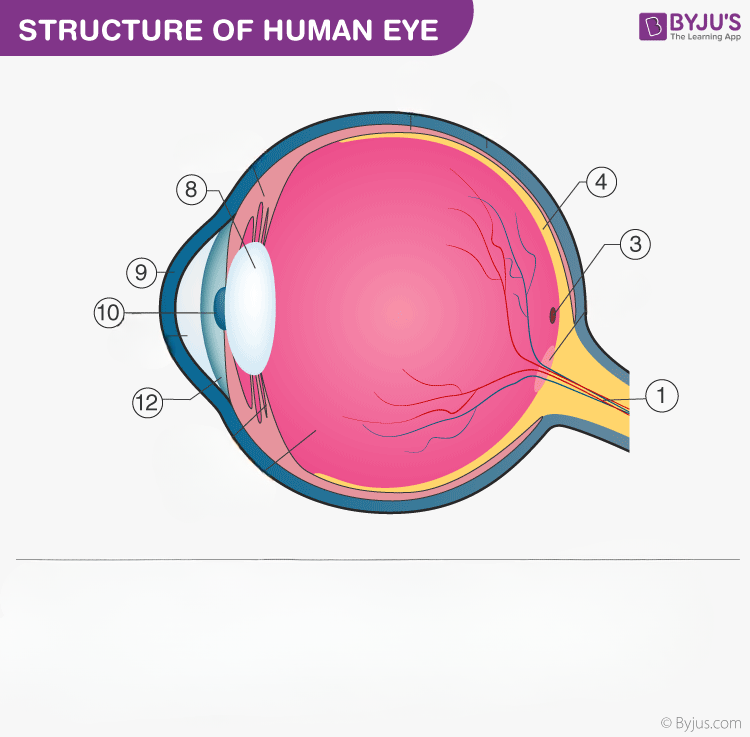
1
optic nerve
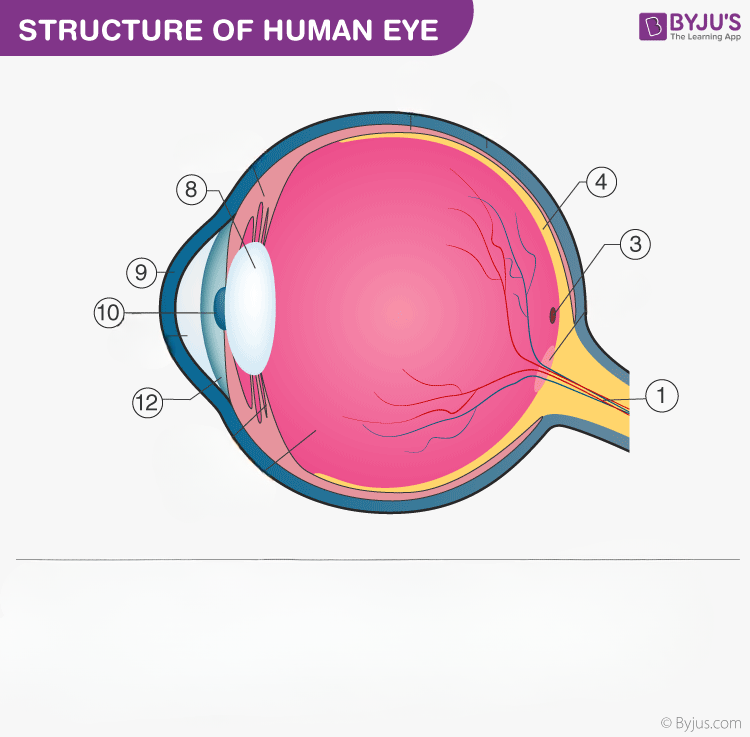
3
fovea
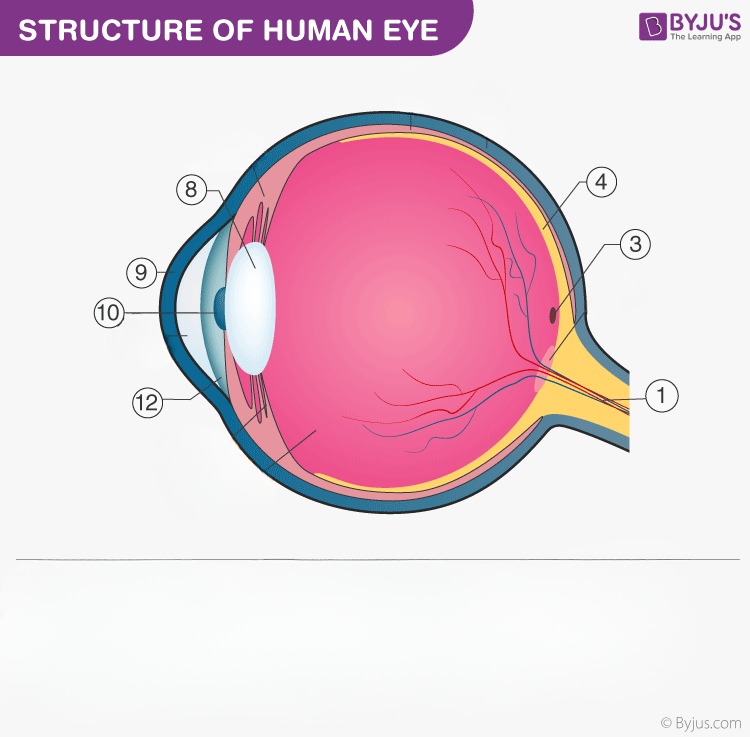
4
retina
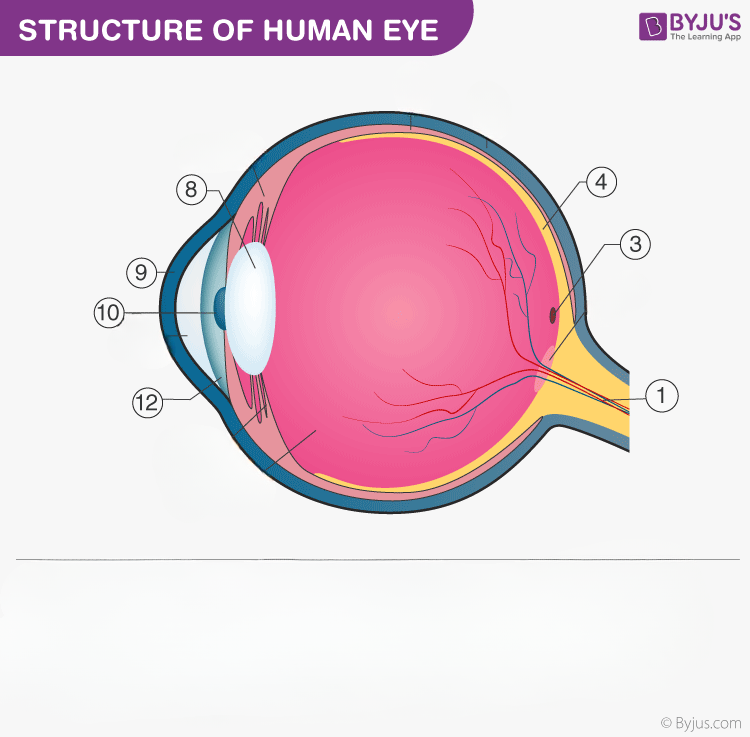
8
lens
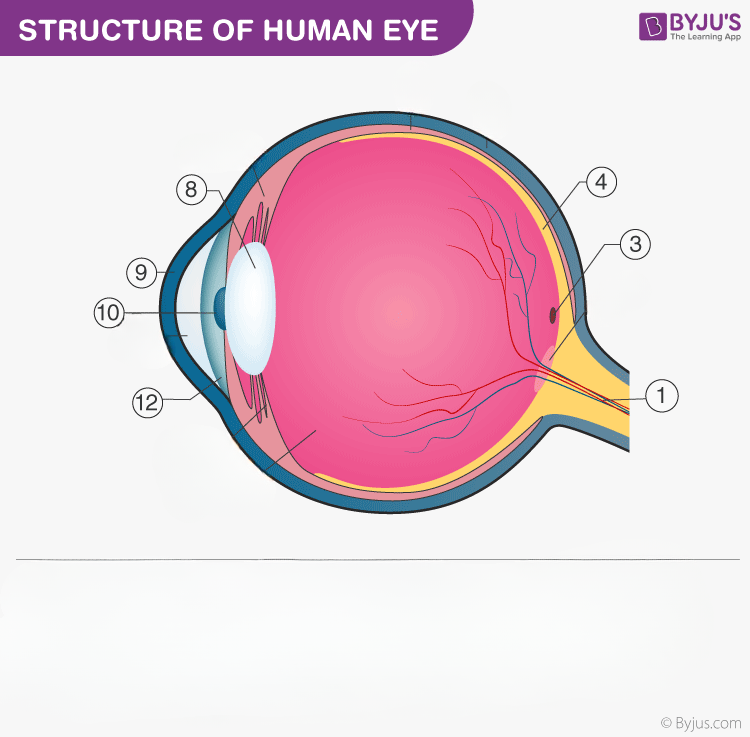
9
cornea
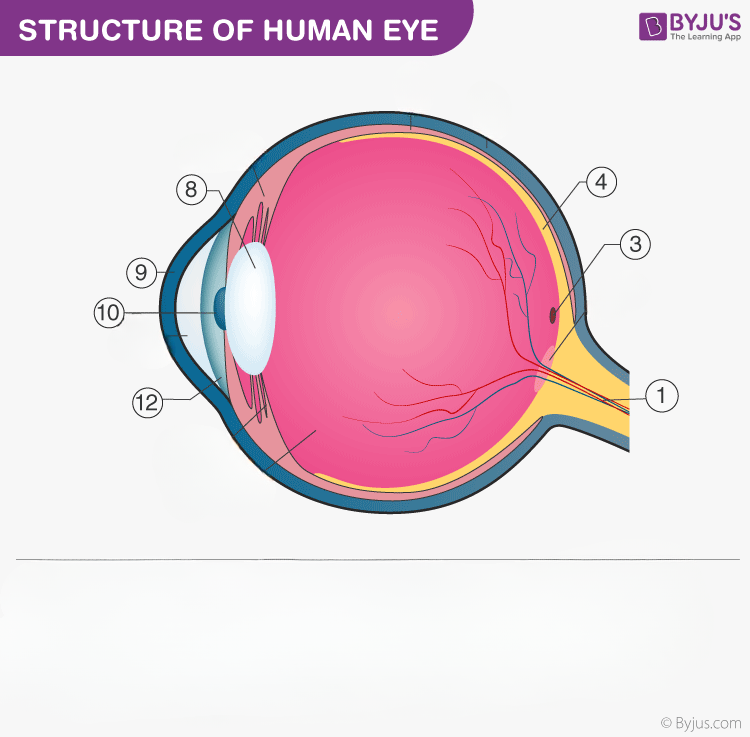
10
pupil
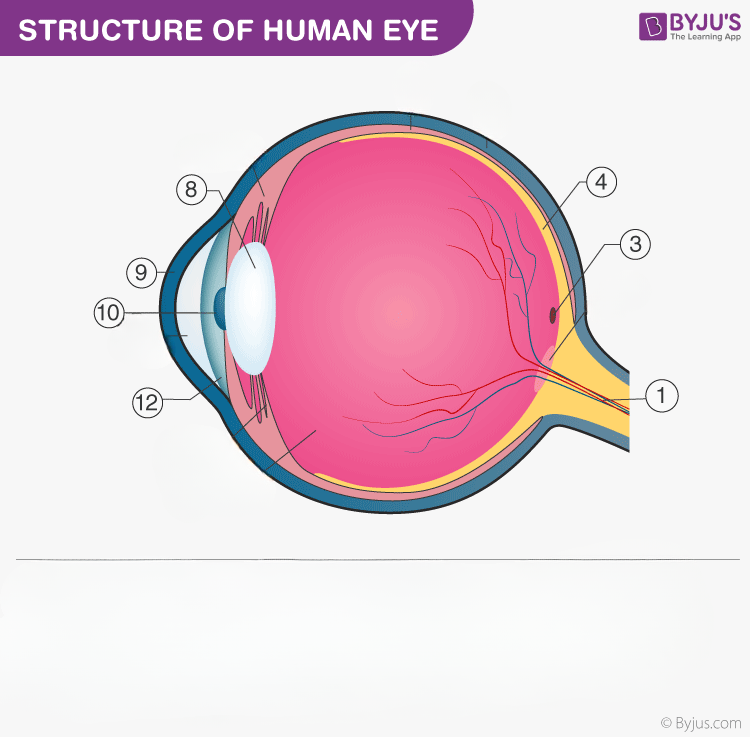
12
iris

