Digestive system
 Call Kai
 Learn
Learn Practice Test
 Spaced Repetition
 Match
Match Flashcards
 Knowt Play
1/72

There's no tags or description
Looks like no tags are added yet.
Name | Mastery | Learn | Test | Matching | Spaced | Call with Kai |
|---|
No analytics yet
Send a link to your students to track their progress
73 Terms
Major function of the digestive system
Process (digest) consumed food/drink
Alimentary canal (GI tract)
Mouth → Anus
Digestion & absorption
Accessory digestive organs
Teeth, tongue, salivary glands, gallbladder, liver, & pancreas
Support actions of GI tract
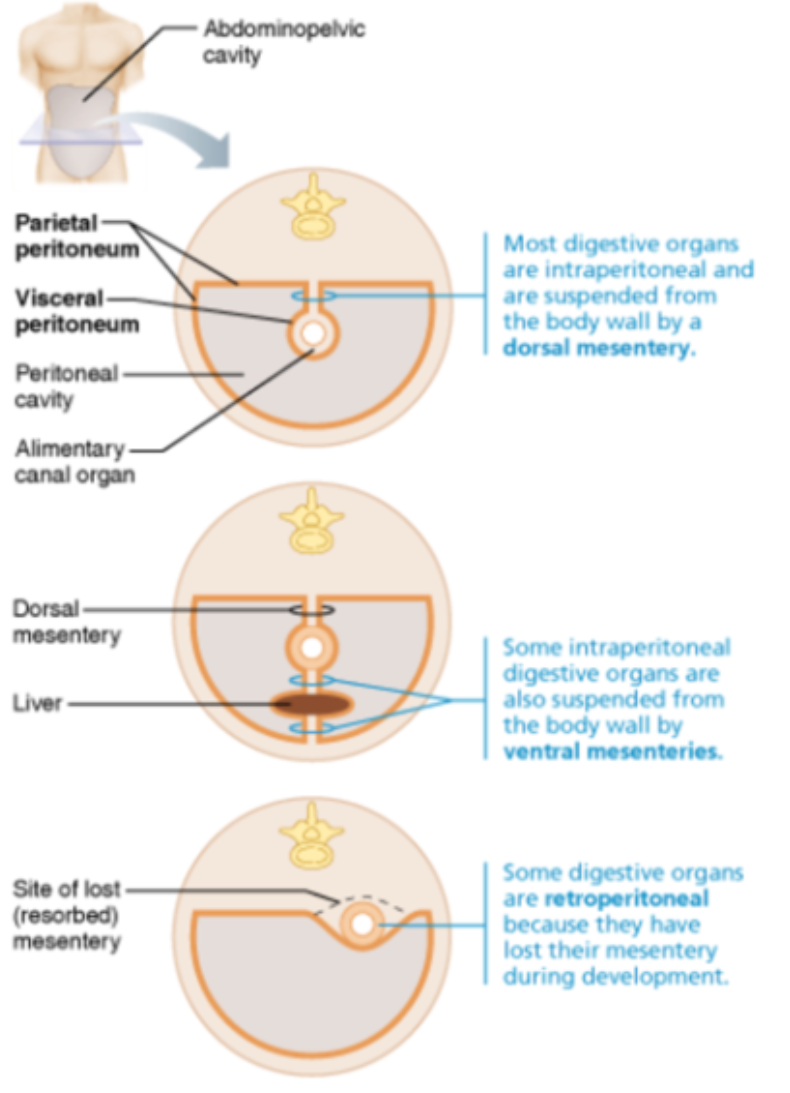
Peritoneum
Serous membrane of abdominal cavity
Visceral peritoneum
On the external surface of most digestive organs
Parietal peritoneum
Lines body wall
Peritoneal cavity
Fluid lubricates mobile organs
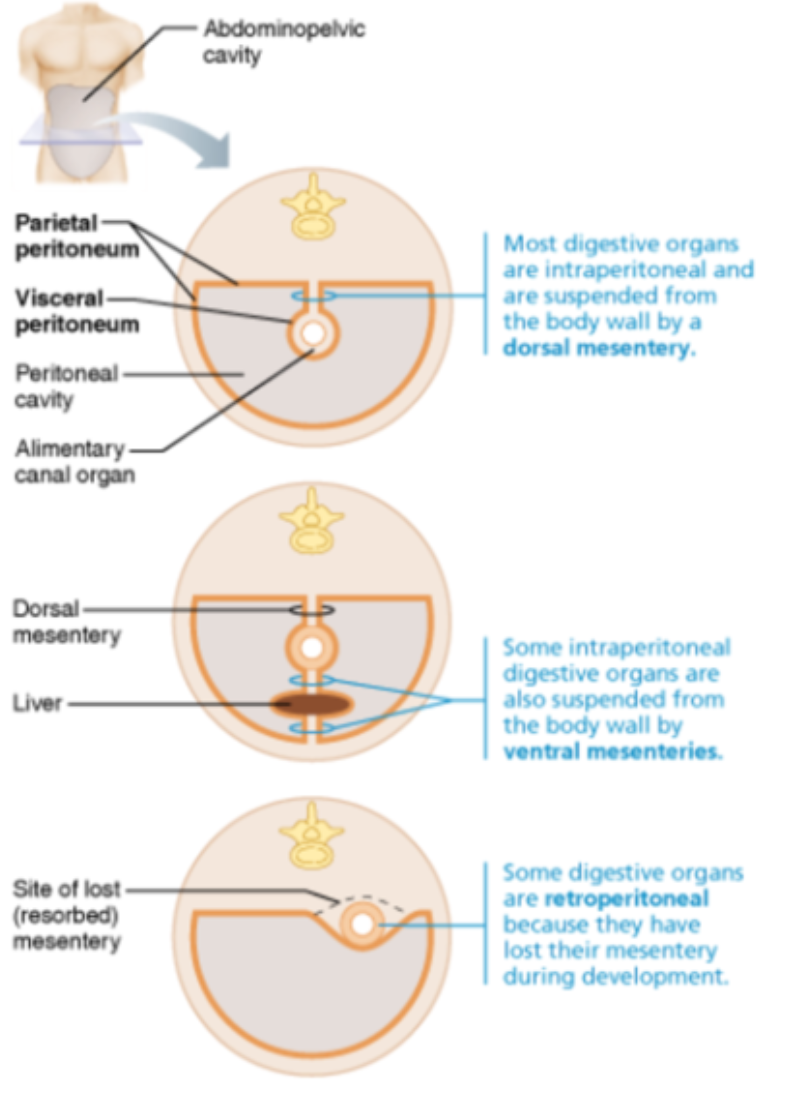
Retroperitoneal organs
Structures posterior to the peritoneum
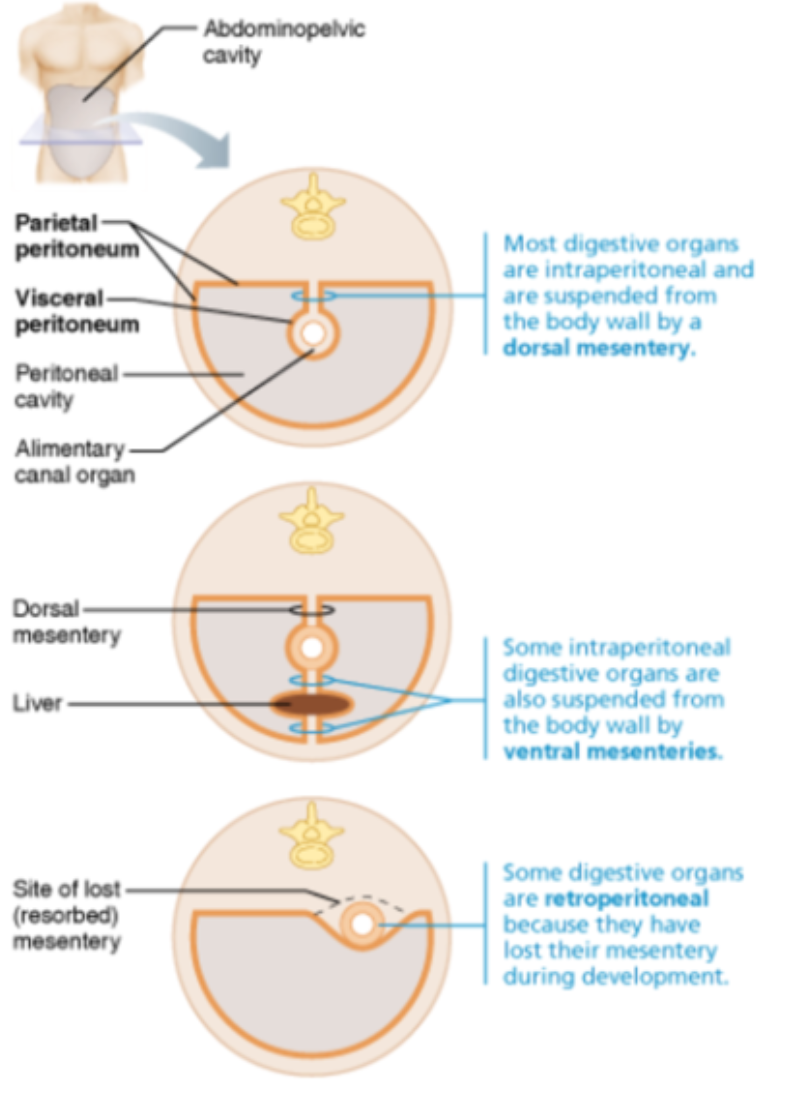
Intraperitoneal organs
Structures surrounded by peritoneum
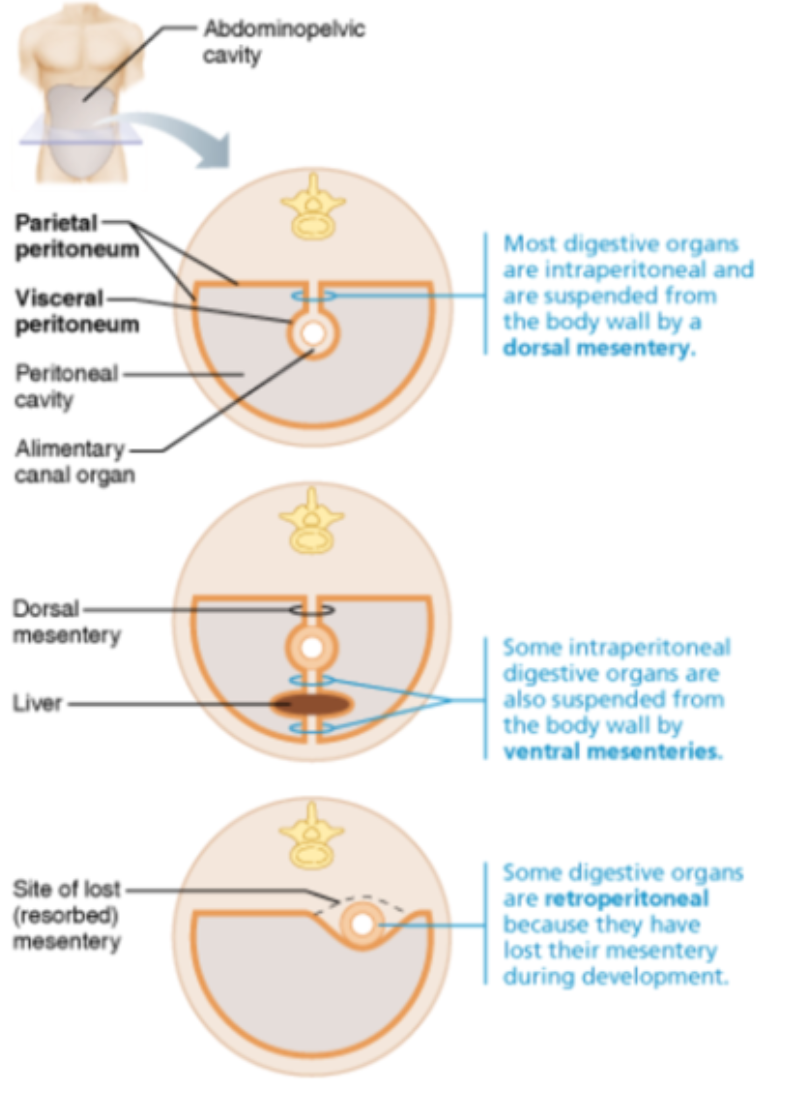
Mesentery
Double layer of peritoneum
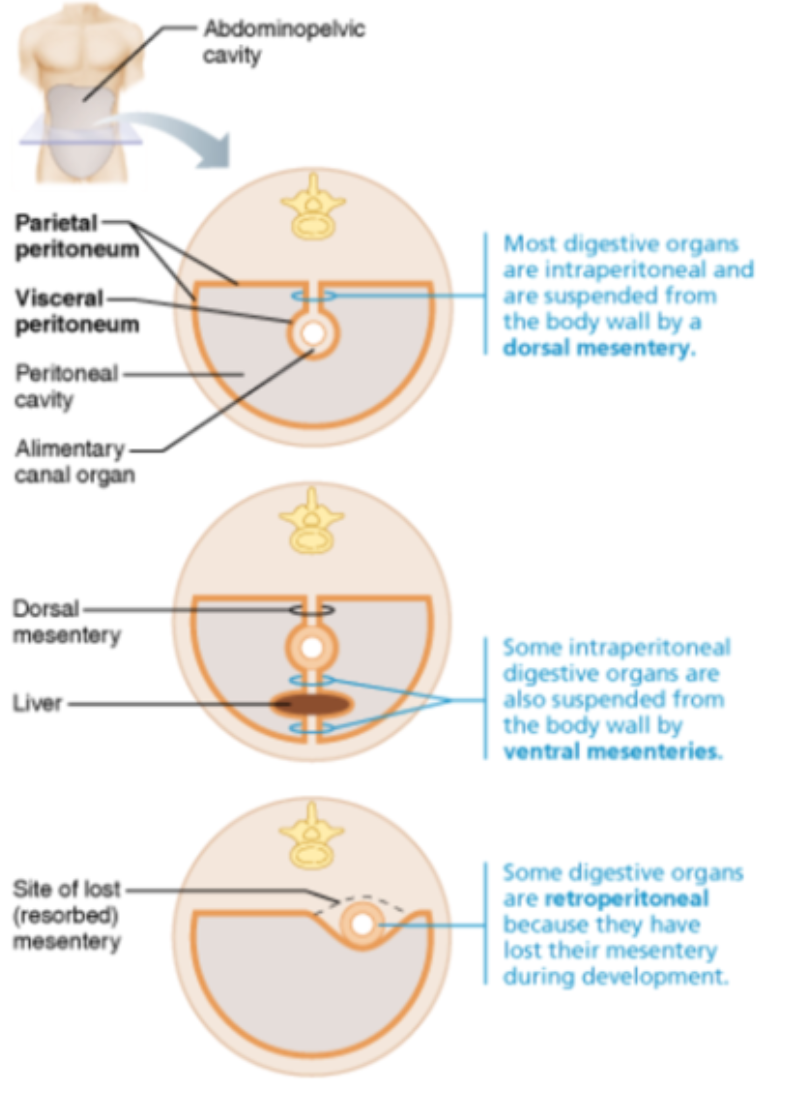
The Mesentery holds and stores
Organs, fat
The mesentery routes for?
Blood vessels, lymphatics, and nerves
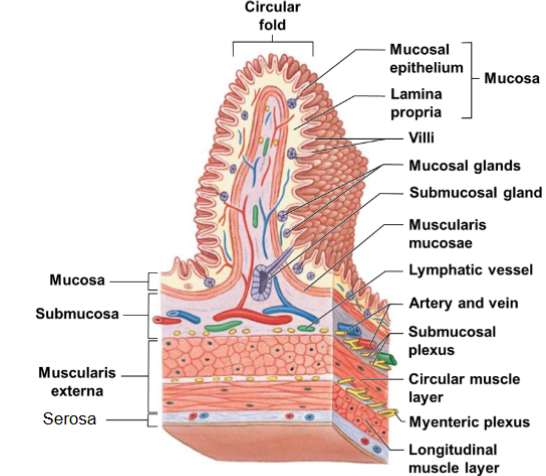
Mucosa and Submucosa overall handles?
Absorption
Muscularis externa overall handles?
Peristalsis (The involuntary constriction and relaxation of the muscles)
Serosa overall handles?
Serous fluid & connection to body walls
Mucosa lines?
Lumen
Functions of Mucosa?
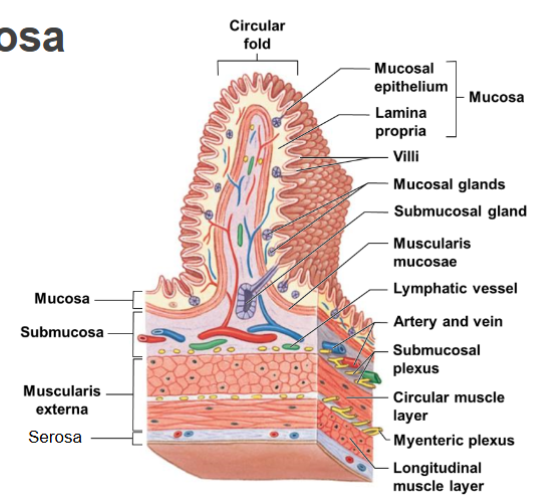
Secretes mucus, digestive enzymes, and hormones
Absorbs end products of digestion
Protects against infection
Submucosa is made with what kind of connective tissue?
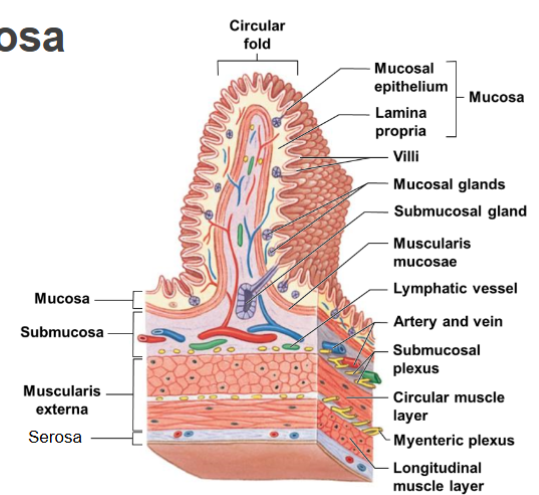
Dense irregular
Submucosa maintain?
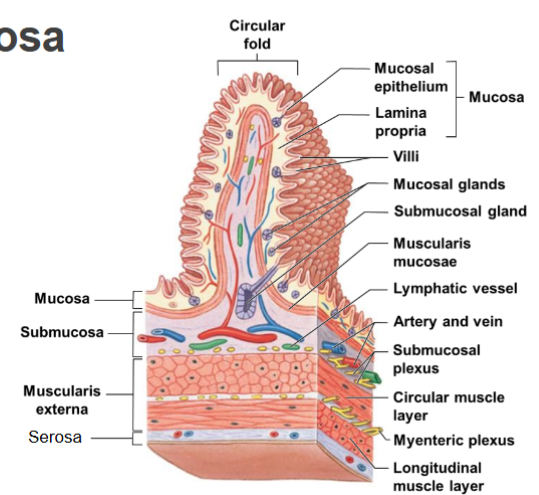
Blood and lymphatic vessels, and lymphoid follicles
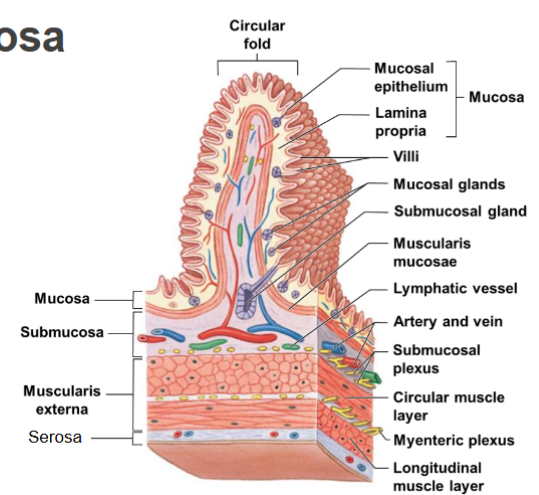
What does the submucosa have to do with the Nerve plexus?
Houses the plexus which controls secretomotor activity and vasomotor activity.
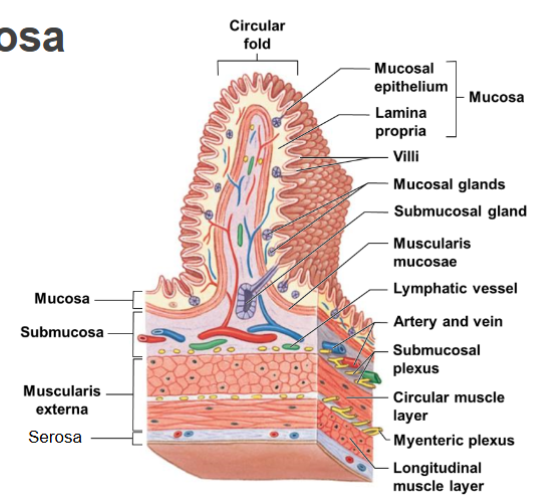
Specific areas of the Submucosa have?
Exocrine glands to provide lubrication and protection
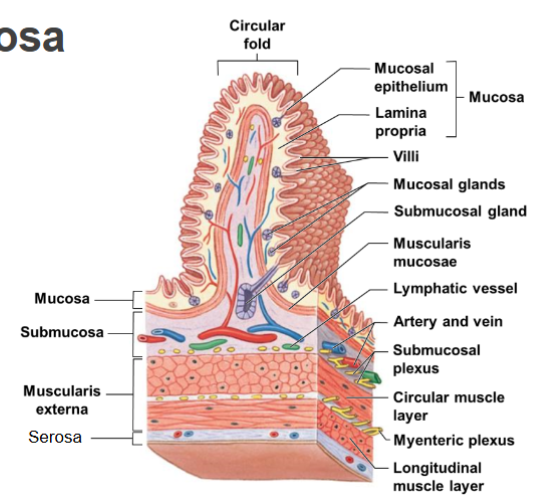
Muscularis Externa is in charge of peristalsis and?
Segmentation
The Muscularis Externa has inner ___ layers and outer ___ layers.
Circular and longitudinal
The Muscularis Externa is controlled by?
Enteric nervous system through the myenteric plexus
Sphincters
Circular layer thickened in some areas in the Muscular externa
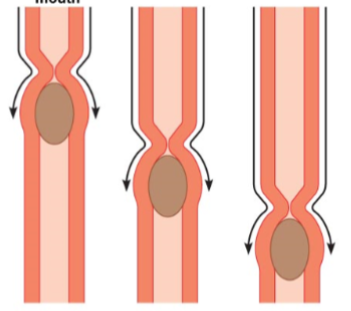
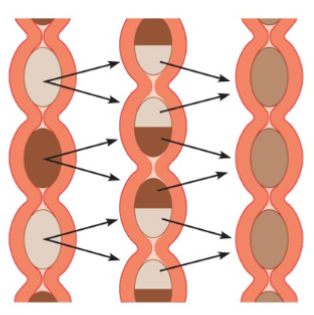
Peristalsis
Adjacent segments of the alimentary tract organs alternately contract and relax, and move the bolus along tract
Segmentation
Nonadjacent segments of alimentary tract organs alternately contract and relax, moving food forward, then backward.
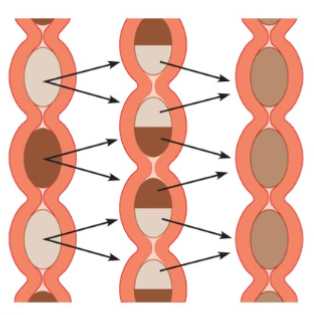
What else happens during segmentation?
Food mixing and slow food propulsion happen.
Serosa is made with what kind of tissue?
Areolar connective tissue
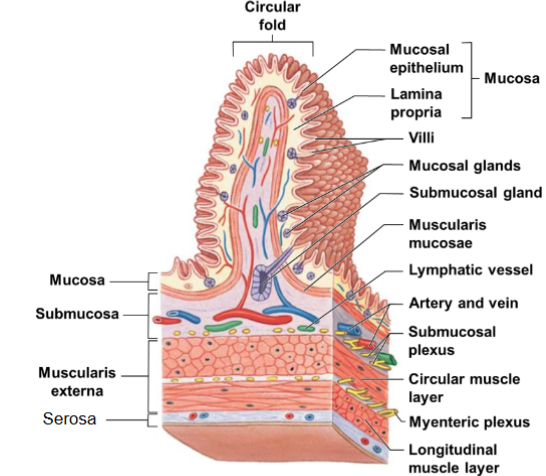
The serous membrane connected to?
Visceral peritoneum
Adventitia
Dense collagen layer
The serosa is replaced by adventitia in?
Esophagus, pharynx, mouth, and rectum
Mechanical digestion
Increases surface area of food
Muscles, teeth, & bile
Chemical digestion
Breaks chemical bonds within
molecules
Stomach acid & digestive enzymes
Oral Cavity
place of taste eval. mastication, lubrication, start of digestion
Hard Palate
Corrugated for tongue friction
Soft palate
Closes off nasopharynx during swallowing (uvula helps too!)
Tongue
Moves food, helps form bolus, swallowing, speech, & taste
Salivary glands
Produce saliva
Bolus
Mass of chewed food
Mechanical digestion involves?
Teeth break up food, increasing surface area
At first humans have?
20 deciduous teeth
Once deciduous teeth fall out then what teeth come in?
32 permanent teeth
When do deciduous teeth fall out?
6-12 yrs of age
What time do 3rd molars usually errupt?
17-25 yrs old
Teeth are covered with?
Enamel
Enamel-producing cells degenerate when..?
Tooth erupts
The decay of enamel producing cells can cause for the tooth to be unable to?
Heal/repair itself
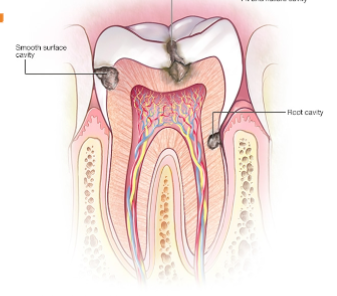
Dental Caries (cavities)
Demineralization of enamel and dentin from bacteria
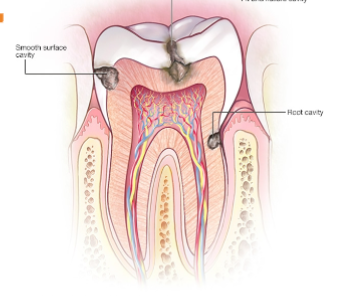
Gingivitis
Plaque calcifies to form calculus (tarter)
Periodontitis
Destruction/reduction of gums & bone
Chemical digestion involves?
Saliva lubricates food & contains salivary amylase that breaks down polysaccharides
Salivary amylase
Enzyme in human saliva produced by the salivary glands
Parotid
produces salivary amylase (carbs)
Submandibular
Mixture of mucus (buffers, lubricant) and amylase
Sublingual
produces mostly mucus (buffers & lubricant)
Food passes from?
Mouth → oropharynx → laryngopharynx
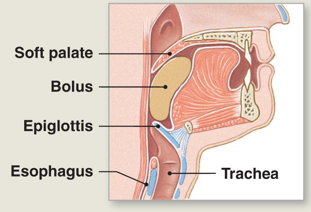
Step 1 of mouth propulsion
Buccal phase
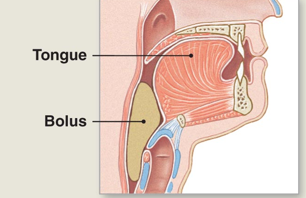
Step 2 of mouth propulsion
Pharyngeal phase
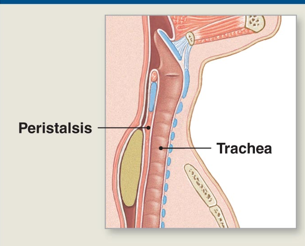
Step 3 of mouth propulsion
Esophageal phase
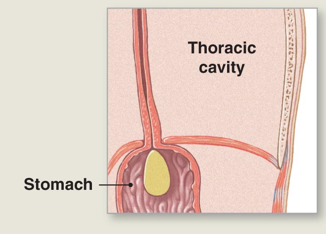
Step 4 of mouth propulsion
Bolus enters stomach
Esophagus is how long?
25cm or 10in
Esophageal hiatus
allowing the esophagus to pass from the thorax into the abdomen
Esophagus joins stomach at?
cardiac orifice/sphincter
cardiac orifice/sphincter
The opening where the esophagus joins the stomach, located behind the 7th left costal cartilage
Gastric folds (rugae)
longitudinal folds of the mucosa and submucosa layers in the stomach that allow it to expand and increase volume, accommodating food without increasing pressure
Stomach has how many muscle layers?
3
3 regions of the stomach
Cardiac, Fundus, and body
What controls entry of chyme into duodenum?
Pyloric sphincter
Mucosa
Mucus membrane
Simple columnar epithelium
Gastric pits
Gateways to gastric glands
Gastric glands
Create gastric juice
Explore top notes

Explore top flashcards
