bio 2 - ch 30 plants (post)
 Call Kai
 Learn
Learn Practice Test
 Spaced Repetition
 Match
Match Flashcards
 Knowt Play
1/71

There's no tags or description
Looks like no tags are added yet.
Name | Mastery | Learn | Test | Matching | Spaced | Call with Kai |
|---|
No analytics yet
Send a link to your students to track their progress
72 Terms
plants
multicellular, photosynthetic eukaryotes; member of the supergroup Archaeplastida
evolution marked by adaptations from water to land survival - internal vascular system
other members of archaeplastida: red algae, green algae, and charophytes
the three categories of plants:
nonvascular (bryophytes)
Seedless vascular (lycophytes, ferns, and fern allies)
Seed plants (gymnosperms and angiosperms)
common characteristics that show evolutionary history of plants from green algae
have chlorophylls a and b and various accessory pigments
store excess carbs as starch
cellulose cell walls
closest related to charophyte green algae - the common ancestors are chara and coelchaete
challenges of evolution to land
desiccation
All reproductive stages (gametes, zygote, and embryo) must be protected from drying effects of air
must develop structures to acquire and transport water
chara - ancestor of plants
single file long cells anchored in mud
Whorls of branches at regions called nodes
Male and female structures grow at nodes
coleochaete - ancestor of plants
Grows on flat, aquatic surfaces
Used as a model organism in biotechnology studies
the five major evolutionary events that are adaptations to plants surviving on land
Development of
Embryo protection
Vascular tissue (transports water and nutrients)
Megaphylls - large leaves → photosynthesis
Seeds → protective coat and supportive nutrients
Flowers → give rise to fruit
alternation of generations
lifecycle has two different multicellular individuals that alternate to produce each other
sporophyte (2n or diploid generation)
gametophyte (n or haploid generation)
one is dominant
in nonvascular plants gametophyte is dominant and in the other three sporophyte is dominant
sporophytes are the only ones with vascular tissue showing that this shift in dominance is an adaptation to life on land
appearance of generations varies widely
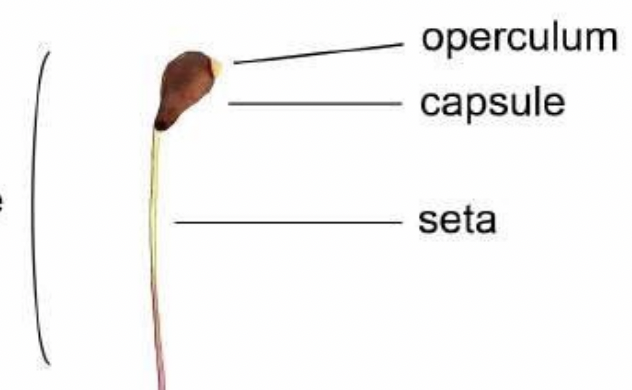
sporophyte - alternation of generations
2n or diploid generation
produces haploid spores via meoisis
a spore is a reproductive cell that can develop into a new organism without having to fuse with another cell
spore undergoes mitosis to become gametophyte
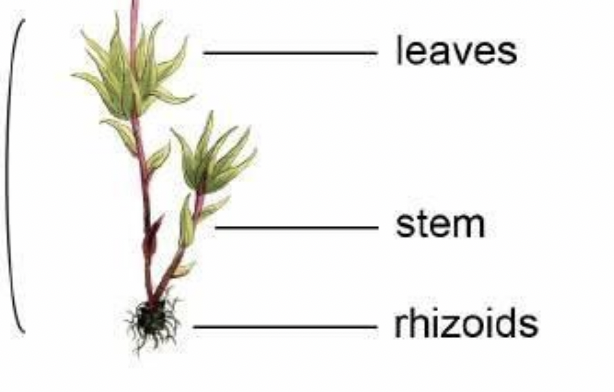
gametophyte - alternation of generations
n or haploid generation
Produces gametes (sperm and egg) by mitosis
Sperm and egg fuse to form a diploid zygote
Zygote divides by mitosis and becomes a diploid zygote to become a sporophyte
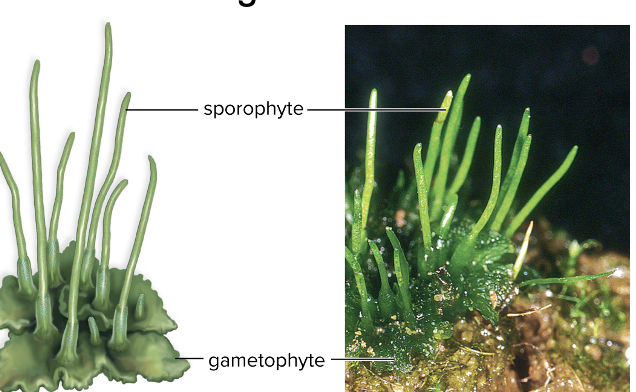
bryophytes and ferns appearance of generations
Gametophyte is small and independent
Archegonia produce eggs, antheridia produce sperm
Eggs fertilized by flagellated sperm, requiring water
seed plants appearance of generations
Female gametophyte retained within sporophyte
Embryo sac within ovule
Male gametophytes (pollen grains); don’t require water for transport
Ovule becomes a seed after fertilization
nonvascular plants aka bryophytes
Lack true roots, stems, and leaves
Low-lying, with max height of only about 20 cm
Have cuticle and complex tissues
Gametophyte generation is dominant
Flagellated sperm swim to the egg
three divisions: hornworts, liverworts, mosses
liverworts - nonvascular plants/bryophytes
phylum Hepaticophyta
two types: leafy and those with flat lobed bodies called thallus
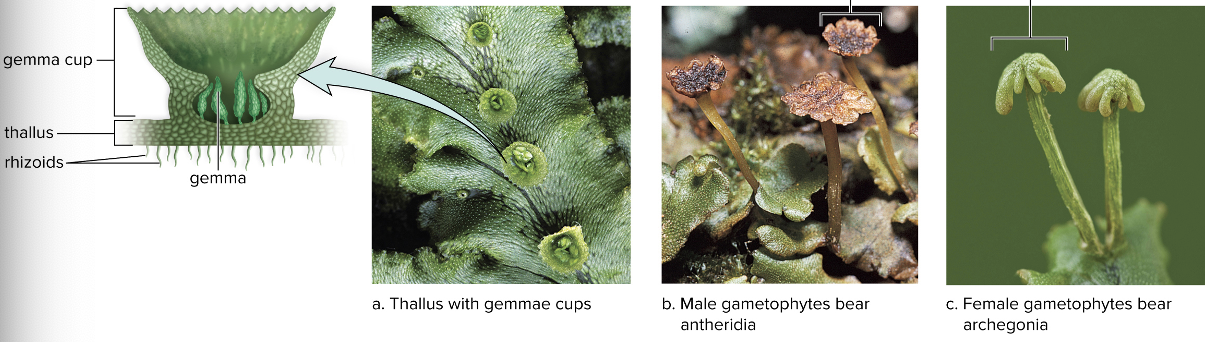
Merchantia are a type of thallus
smooth upper surface
rhizoids on lower surface
•Asexual and sexual reproduction
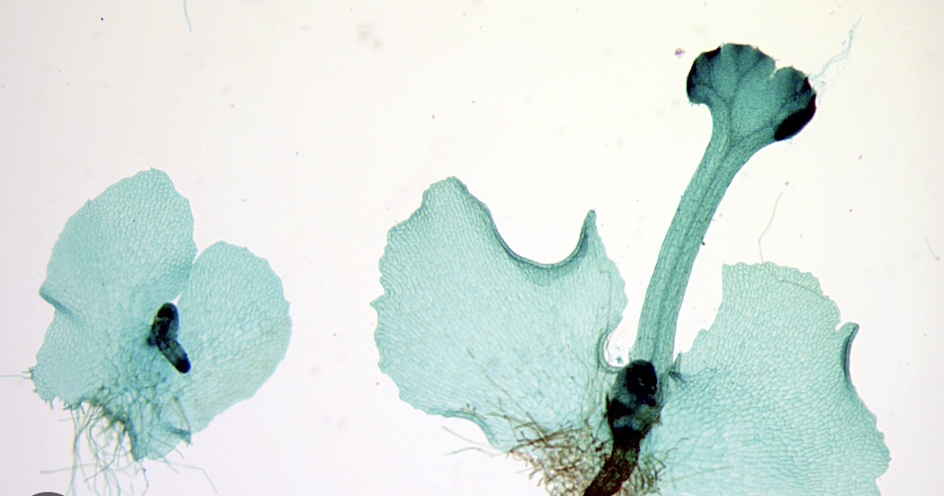
Marchantia liverwort reproduction
Asexual reproduction by gemmae on upper surface - Groups of cells that detach and form new thallus
Sexual reproduction:
Stalks have antheridia, where sperm are produced
Umbrella-headed stalks that bear archegonia, where eggs are produced
After fertilization, sporophytes begin growth in archegonia
hornworts - nonvascular plants/bryophytes
mostly found in moist and shadey areas
photosynthesize with small sporophytes - only one chloroplast per cell
Have a symbiotic relationship with cyanobacteria, which can pull nitrogen from air
Reproduce asexually through fragmentation → can bypass the alternation of generations life cycle with this method
mosses - nonvascular plants/bryophytes
phylum Bryophyta
found in damp, shaded locations in the temperate zone but also can be in deserts and streams
Can store large amounts of water but become dormant during dry periods
produce asexually via fragmentation - Almost any part of the plant is able to grow thalli
produce sexually with gametophyte being dominant
sexual reproduction of moss
gametophyte is dominant
dev in two stages: protonema forms first then becomes a mature gametophyte
rhizoid anchor thalli which bear antheridia and archegonia
the sporophyte is dependent on the gametophyte
The sporophyte consists of a foot that grows into the gametophyte
Develops a stalk and a capsule (sporangium)
The sporophyte is photosynthetic early; turns brown and nonphotosynthetic at maturity
Spores are released from the sporangium
•Spores germinate and produce a gametophyte in a new location
antheridium of plant reproduction
a sperm producer
uses of moss
can help convert rocks to soil to attract other organisms, can be used as fuel, can hold water, and can improve soil
seedless vascular plants
have true roots, stems, and leaves
vascular tissue: xylem and phloem
The sporophyte is the dominant generation
diploid
two groups: lycophytes and ferns and their allies
produce windblown spores
Small gametophytes produced when spores germinate
Independent of sporophyte for its nutrition
Flagellated sperm released by antheridia
Sperm swim in film of external water to archegonia
xylem of seedless vascular plants
conducts water and minerals; strong cell walls support plant body against gravity
phloem of seedless vascular plants
transports organic nutrients
archegonia for plant reproduction
the egg producer with one egg at base
lycophytes
phylum Lycophyta aka club mosses
Among first land plants with vascular tissue
Well-developed roots, stems, and leaves
Fleshy underground and rhizome
Scalelike leaves
Small leaves called microphylls with single vein
Sporangia borne on terminal clusters of leaves called strobili, which are club-shaped
Highly flammable spores
common in moist woodlands and in tropics and subtropics
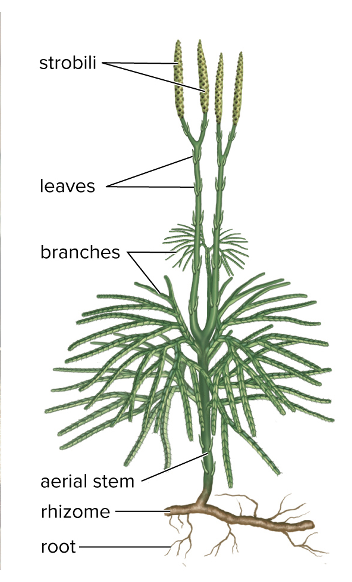
rhizome
horizontal stem
ferns - seedless vascular
phylum Polypodiophyta
lots of diversity - Most abundant in warm, moist tropical regions; also found in temperate areas
leaves are called fronds and grow from rhizome
•Dominant sporophyte stage produces windblown spores
have true roots, stems, and leaves with vascular tissue
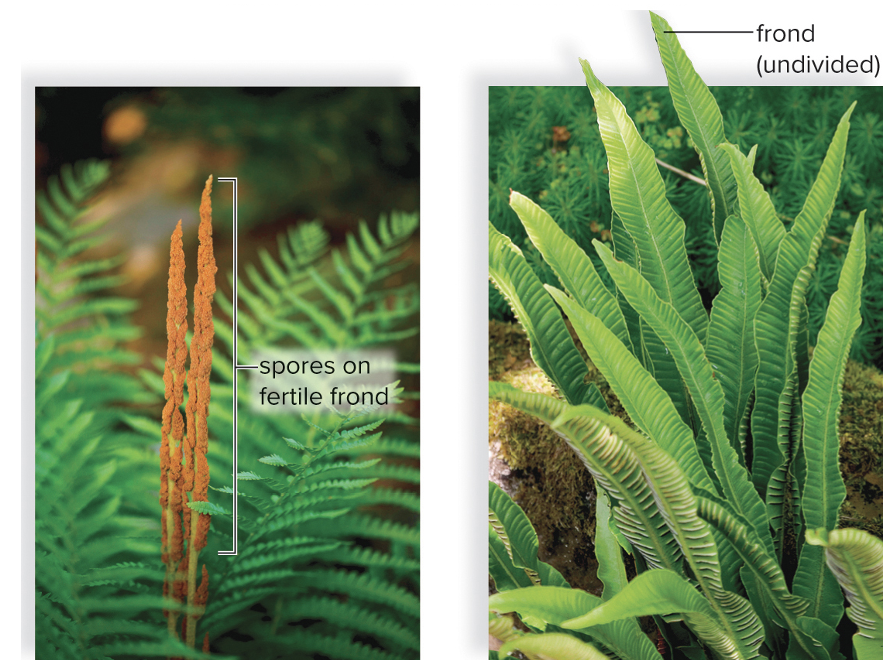
fern reproduction
Spores germinate into gametophyte
Independent from the sporophyte
Dependent on water (lack vascular tissue)
Swimming sperm produced by antheridia and swim to archegonia
At fertilization, a zygote develops into a sporophyte
Leaves of sporophyte start as fiddleheads that unroll
Some ferns can spread into drier areas by asexual reproduction (vegetative)
Their rhizomes grow horizontally in soil, producing fiddleheads that become new fronds
whisk ferns - fern allies - seedless vascular plants
phylum Psilotophyta
Arial stem with many forks
Attached to rhizome—underground stem
No leaves—photosynthesis occurs in stems
Sporangia at ends of short branches produce spores
Independent gametophyte found underground
psilotum - no roots or leaves and yellow sporangia
horsetails - fern allies - seedless vascular plants
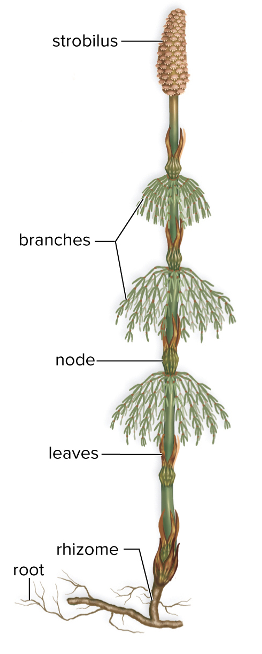
phylum Equisetophyta
found in moist habitats worldwide
Genus Equisetum
Rhizome produces aerial stems
In some species, whorls of side branches come off the main stem at regions called nodes
Leaves are scalelike and whorled at nodes
Strobili are at the tips of stems in most
Silica deposits found in cell walls
Called “scouring rushes
seed plants
includes: Gymnosperms (naked-seed plants) and angiosperms (flowering plants)
most plentiful plants on Earth
Seed contains a sporophyte embryo and stored food within protective seed coat
Allows an embryo to survive during long periods of dormancy
Seeds germinate under favorable conditions
Stored food is the source of nutrition
heterosporous - produce two types of spores
produce two types of gametophytes
male gametophytes of seed plants are:
they are pollen grains
Pollination—deposition of pollen on a female gametophyte
Pollen tube—formed after pollen grain germinates and carries sperm; external water not needed for fertilization
Female gametophyte develops within ovule
gymnosperm - in seed plants
naked seeds
Most are cone-bearing
Ovules located on the surfaces of their cone scales - later becomes seeds
Ovules not completely enclosed by diploid tissue
Unlike angiosperms that have covered ovules
four groups: Conifers, cycads, ginkgos, and gnetophytes
conifers - types of gymnosperm seed plants
phylum Pinophyta
evergren and cone bearing
examples: Pine, spruce, fir, cedar, hemlock, and redwood
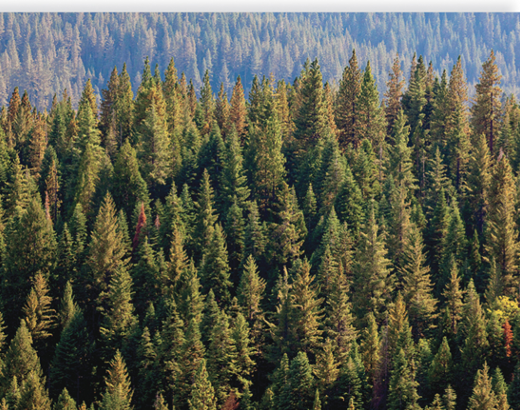
adaptations and uses of conifers
Adapted to cold, dry weather such as northern temperate regions
Needlelike leaves conserve water with thick cuticle and recessed stomata
Dominant sporophyte produces two types of cones
pollen cones and seed cones
wood uses in construction and to make paper
cycads - gymnosperm seed plants
phylum Cycadophyta
Resemble palms or ferns with finely divided leaves that grow in clusters at the top of the stem
Pollen or seed cones also at the top of the stem
slow rate of growth puts them in danger of extinction
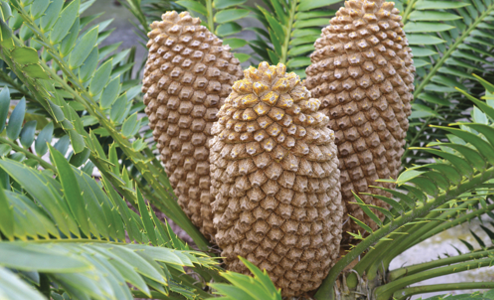
ginkgos - gymnosperm seed plants
phylum Ginkgophyta
Female trees produce fleshy seeds that give off a foul odor
Male trees are preferred for ornamental planting
Resistant to pollution - do well in urban areas
gnetophytes - gymnosperm seed plants
three different living genera:
gnetum - in tropics → tress or climbing vines
ephedra - in southwestern NA and southeastern Asia → shrump with small scalelike leaves
Welwitschia - in deserts of southwestern Africa → has two large straplike leaves
angiosperms - seed plants
phylum Magnoliophyta
angio = vessel
flowering plants
lots of variety in appearance, sizes, and habitats
seeds develop from an ovule within an ovary
overy becomes fruit
produces covered seeds
hypothesized to have arose 200 MYA - coevolved with the insects that act as pollinators
monocots
Monocotyledones (Liliopsida)
one cotyledon in their seeds
Flower parts in threes or multiples of three
usually herbaceous
usually parallel venation
scattere dbundes in stem
fibrous root system
pollen grain with one pore
cotyledon - flowering plants
seed that leaves that nourish the developing embryo
eudicots - flowering plants
Eudicotyledones
two cotyledons in their seeds
Flower parts in fours or fives or multiples of four or five
Vascular bundles in a ring
Woody or herbaceous
Taproot system
Usually net venation
Pollen grain with three pores
common flower structures
receptacles
bear the sepals, petals, stamens, and carpals
attached to receptacle in whorls
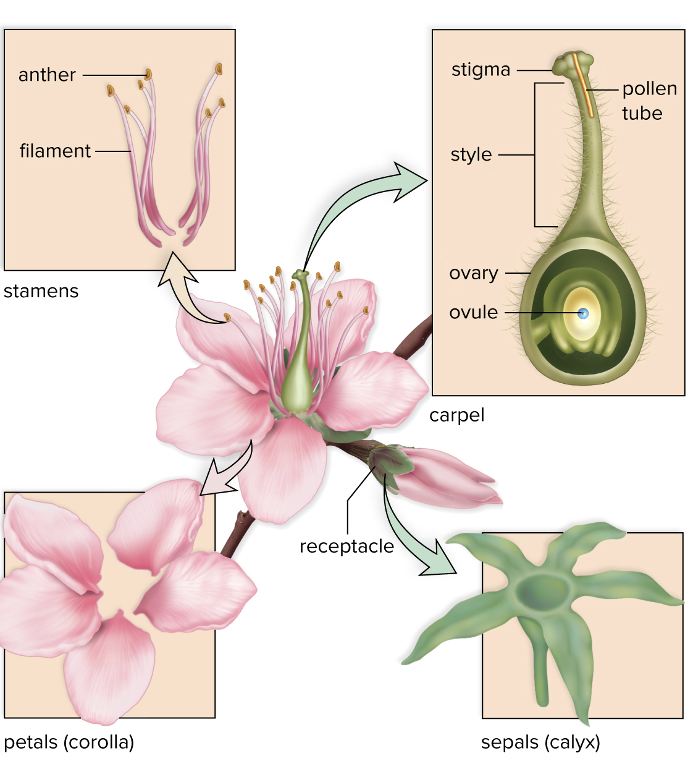
receptacle
tip of stalk that bears flowers
Bears other flower parts that include sepals, petals, stamens, and carpels which attach via whorls
sepals
calyx - modified leaves that protect bud
petals
corolla - modified leaves, may be colorful
diverse in size, shape, and color
attract a particular pollinator
stamens
male reproductive structures
•Anther: pollen production
•Filament: stalk
carpel/pistil
female reproductive structures
stigma of a flower
place for reception of pollen
style of flower
elevates the stigma
ovary of flower
swollen base of carpel
•Contains one to hundreds of ovules
•Nectar produced near ovary
sexual reproduction of a flower
dependent on species
The flower produces both pollen and seeds
Pollination can be by wind or pollinator
Nectar is provided to pollinators
Pollinators carry pollen between flowers of the same
species
flowering plant life cycle
seed
mature seed
mitsos
sporophyte
pollen sac
male gametophyte: meiosis → microspores → pollen grain → pollenation
mature male gamoetophyte
female gametophyte: ovule → meoisis → megaspores → embryo sac
mature female gamoetophyte
double fertilization
flowering plants with windblown pollen
•Not as showy or colorful as insect- or bird-pollinated flowers
•Night-blooming flowers
•Usually aromatic and white or cream-colored
•Smell alone attracts nocturnal pollinators, such as bats
fruits
the final product of a flower, aid in dispersal of seeds
•Dry fruits (pods) assist in the dispersal of windblown seeds
•Mature pods sometimes explode and shoot out the seeds
•Some pods (peas) simply break open to scatter seeds
•Dandelions produce a one-seeded fruit with branched hairs that are easily windblown
pinus staminate cone
male
Cone is a modified shoot exhibiting a spiral arrangement of microsporophylls, each producing microspores that develop into winged pollen grains
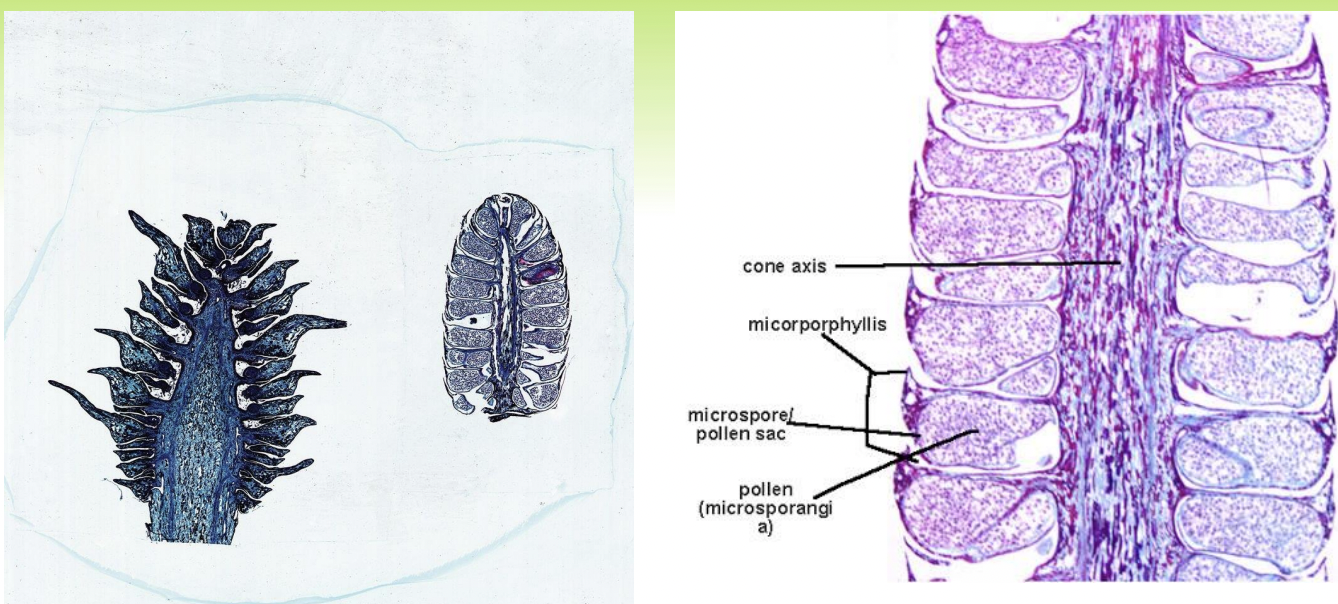
pinus embryo
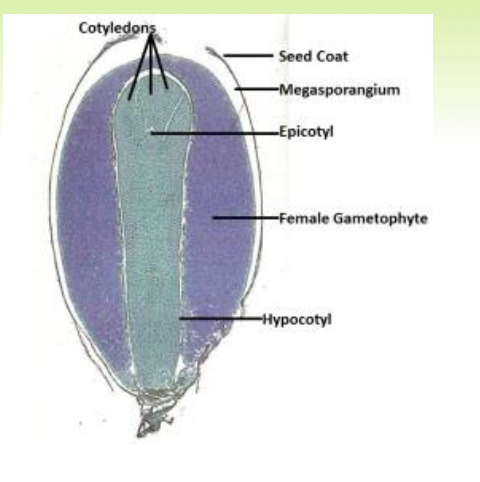
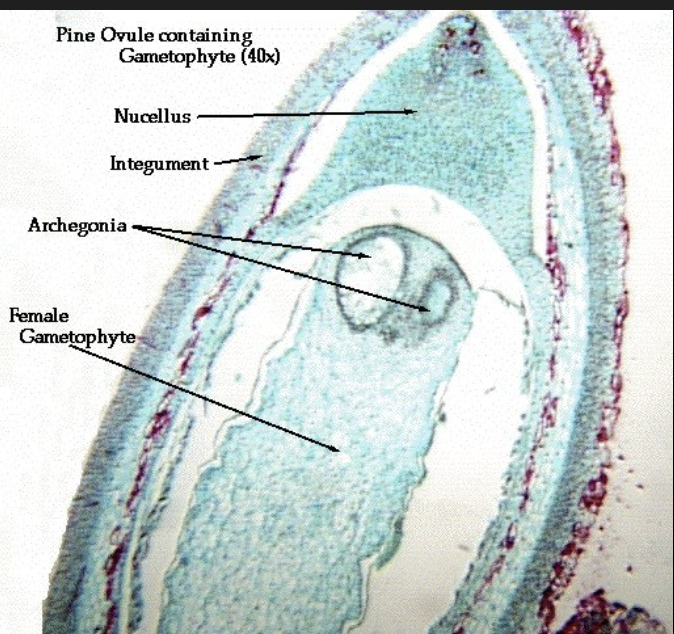
pinus ovule archegonium egg nucleus
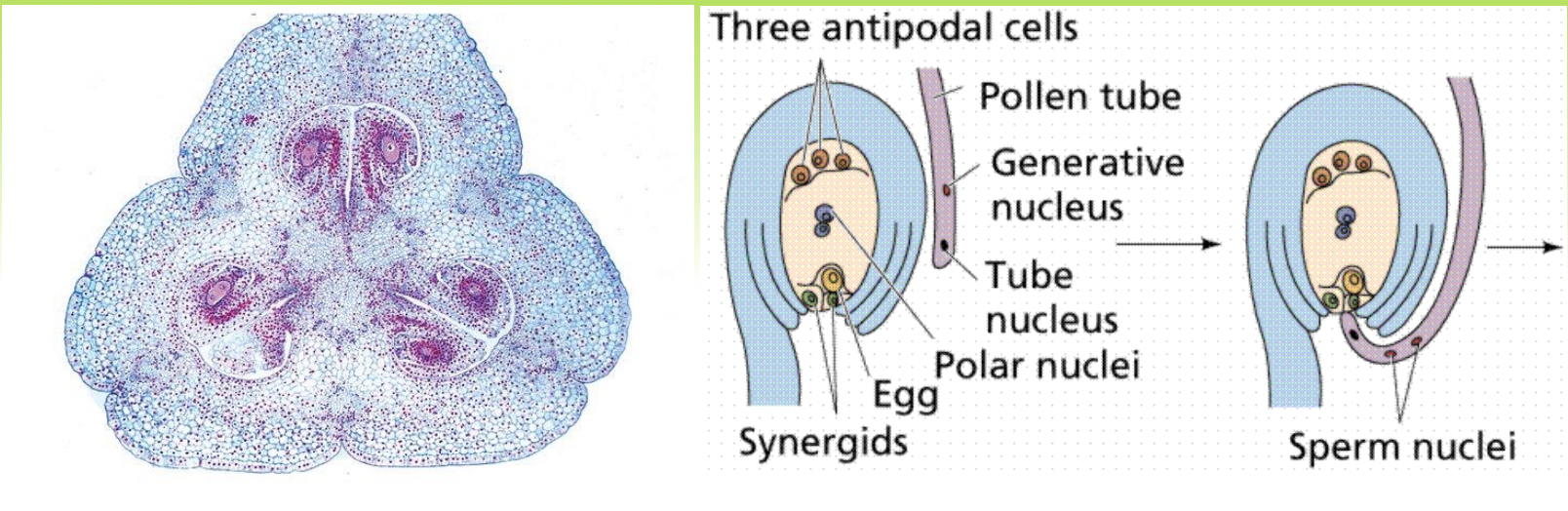
lillium ovary
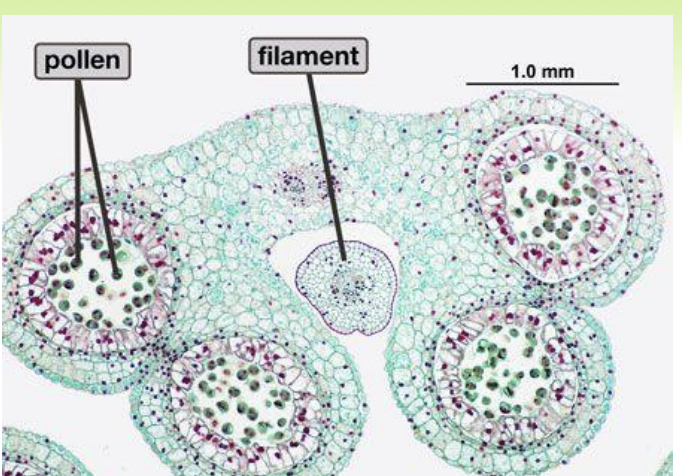
lilium anthers
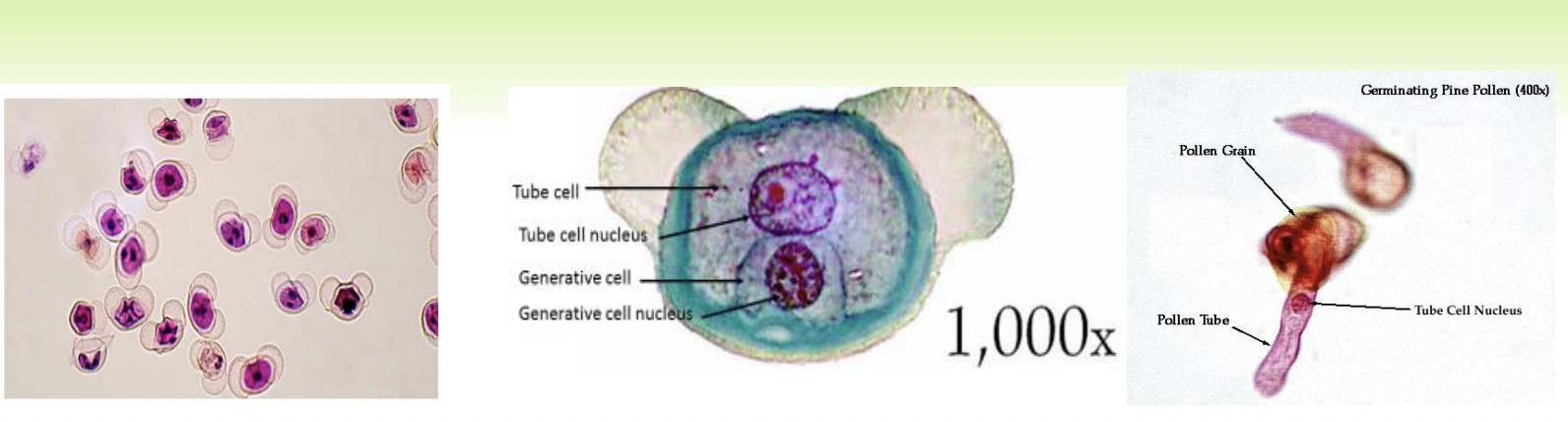
pine pollen grains
fern young sporophyte
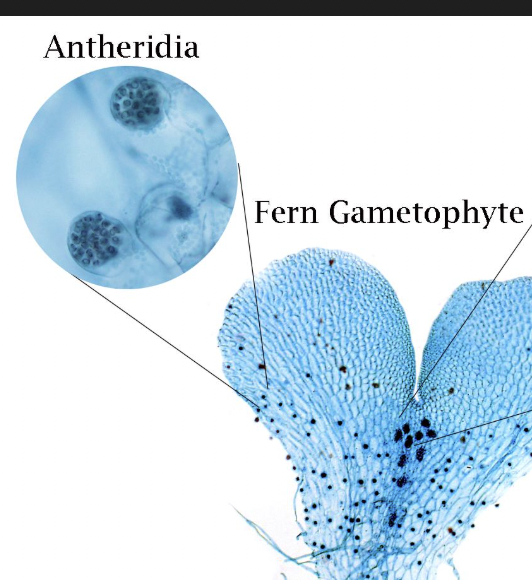
fern prothallium antheridia
Small, spherical, or knob-like structures
Usually found on the lower surface, often in the basal region
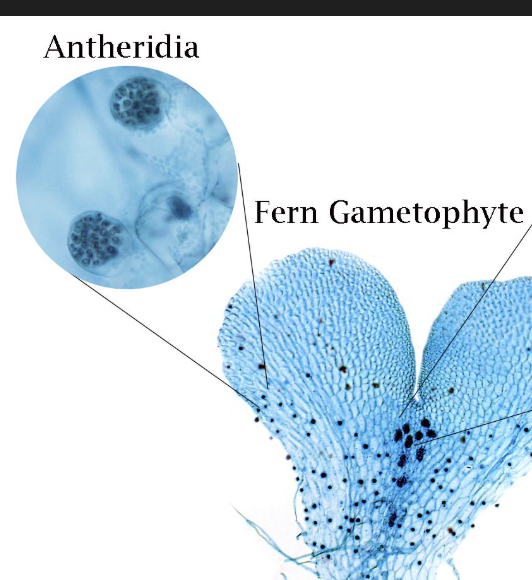
fern prothallium archegonia
Located on the underside and generally situated near the notch (the "V" of the heart) on the thickest part of the thallus
Flask-shaped, consisting of an elongated neck that projects outward and a venter (swollen base) embedded in the thallus tissue
Has a single egg (gamete) located in the basal venter
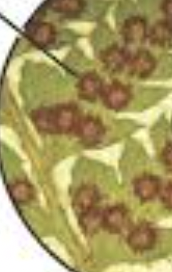
fern sori
on the underside of fertile fronds, typically looking like brown-yellow spots or lines. Key microscopic traits include clusters of spore-filled sporangia, often protected by a specialized membrane called an indusium, which is surrounded by unique, thick-walled cells known as the annulus
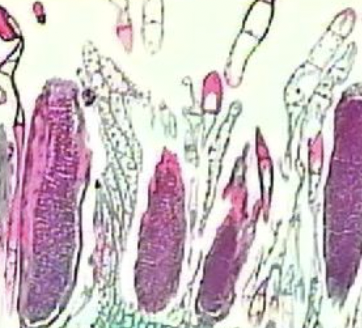
moss antheridia
male reproductive organs
multicellular structures found in clusters within the "splash cup" or apical rosettes of male gametophytes. looks like a club
Produce and release biflagellate sperm
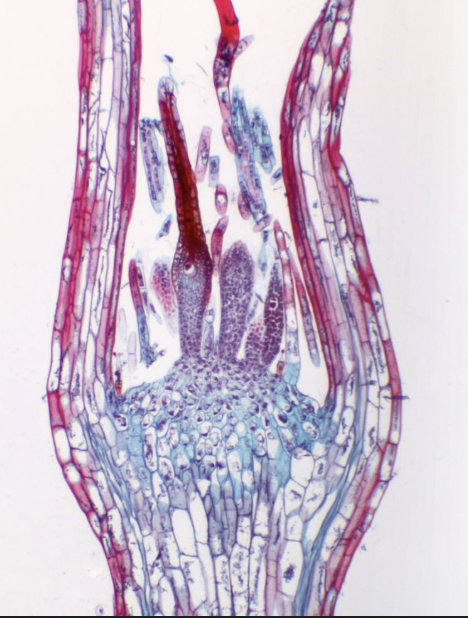
archegonial head
flask-Shaped Structure - slender neck and a swollen basal portion
The neck contains a row of neck canal cells that disintegrate at maturity to form a fluid-filled channel for sperm to swim toward the egg.
Often surrounded by sterile, hair-like filaments called paraphyses that provide protection and help maintain moisture
Because they are part of the gametophyte generation they are haploid
Resembles a tiny, hanging palm tree, with THIS hanging down with their necks oriented downward
pollen cones life cycle
dev near tip of lower branches
two pollen sacs that lie on the underside of each scale
within the pollen sacs meiosis produces four microspores
each microspore becomes a pollen grain which has two wings and is carried by the wind to the see cone during pollination
the mature female gametophyte: only one of the megaspores undergoes mitosis and develops into a mature female gametophyte, having two-six archegonia. each archegonium has a single large egg lying near the ovule opening
the zygote: once a pollen grain reaches a seed cone it becomes a mature male gametophyte. a pollen tube digests its way toward the female and discharges two nonflagellated sperm and one will fertilize an egg in the archegonium resulting in a zygote
the sporophyte: after fertilization the ovule matures and becomes the seed composed of the embryo, reserve food, and a sed coat. the seed cone will be woody and hard after a while and opens to release winged seeds. when a seed germinates the sporophyte embryo develops into a new pine tree
seed cone life cycle
they are larger than their counterparts and are located near the tips of the higher branches
the ovules: the seed cone has two ovules that lie on the upper surface of each scale
the megaspore: within an ovule meiosis produces four megaspores but one survives
each microspore becomes a pollen grain which has two wings and is carried by the wind to the see cone during pollination
the mature female gametophyte: only one of the megaspores undergoes mitosis and develops into a mature female gametophyte, having two-six archegonia. each archegonium has a single large egg lying near the ovule opening
the zygote: once a pollen grain reaches a seed cone it becomes a mature male gametophyte. a pollen tube digests its way toward the female and discharges two nonflagellated sperm and one will fertilize an egg in the archegonium resulting in a zygote
the sporophyte: after fertilization the ovule matures and becomes the seed composed of the embryo, reserve food, and a sed coat. the seed cone will be woody and hard after a while and opens to release winged seeds. when a seed germinates the sporophyte embryo develops into a new pine tree
male pathway (microsporogenisis) angiosperm Flowering plant life cycle
starts as the Sporophyte (Diploid, 2n)
The mature flowering plant (tree) produces flowers containing both male (stamen) and female (carpel) structures
Anther contains pollen sacs (microsporangia)
Microspore mother cells undergo meiosis → produce microspores (haploid, n)
Microspores undergo mitosis → form pollen grains (immature male gametophytes) containing a tube cell and generative cell
Pollination transfers pollen grain to the stigma
The pollen grain becomes the mature male gametophyte, growing a pollen tube with 2 sperm cells
The pollen tube delivers 2 sperm into the embryo sac
Sperm #1 + egg → embryo (2n)
Sperm #2 + 2 polar nuclei → endosperm (3n) — nutrient tissue
The ovule matures into a seed (containing seed coat, embryo, and endosperm)
The ovary wall matures into the fruit
The seed germinates and the embryo grows via mitosis back into a new sporophyte
female pathway (megasporogenisis) angiosperm Flowering plant life cycle
starts as the Sporophyte (Diploid, 2n)
The mature flowering plant (tree) produces flowers containing both male (stamen) and female (carpel) structures
Ovule inside the ovary contains a megaspore mother cell
It undergoes meiosis → produces 4 megaspores, but 3 degenerate
The surviving megaspore undergoes mitosis → forms the embryo sac (mature female gametophyte)
The embryo sac contains: egg cell, polar nuclei, and other cells
Sperm #1 + egg → embryo (2n)
Sperm #2 + 2 polar nuclei → endosperm (3n) — nutrient tissue
The ovule matures into a seed (containing seed coat, embryo, and endosperm)
The ovary wall matures into the fruit
The seed germinates and the embryo grows via mitosis back into a new sporophyte
fern life cycle
Step 1: The Sporophyte (Diploid, 2n) - It has a rhizome (underground stem), roots, and fronds (leaves) that uncoil from fiddleheads
Step 2: The Sporangia — On the underside of the leaflets, sporangia are clustered into groups called sori (singular: sorus). Each sporangium has an annulus, a ring of thick-walled cells that helps launch spores
Step 3: The Spores (Meiosis → Haploid) — Inside each sporangium, meiosis occurs producing haploid (n) spores. When the sporangium opens, the spores are released into the environment
Step 4: The Gametophyte — A spore germinates and grows into a small heart-shaped prothallus (the gametophyte), which anchors with rhizoids and bears archegonia (female organs containing eggs) at the notch and antheridia (male organs producing sperm) near the rhizoids
Step 5: Fertilization — Fertilization requires moisture because sperm are flagellated and must swim from the antheridia to the egg inside the archegonium — this is why ferns depend on moist environments
Step 6: The Zygote (Back to Diploid, 2n) — The fertilized egg becomes a zygote that develops inside the archegonium, growing via mitosis into a young sporophyte on top of the gametophyte until its roots and first leaf allow it to become independent
Step 7: The Fronds — The sporophyte develops a root-bearing rhizome from which aerial fronds project upward, completing the cycle back to Step 1

