Art After 1945 Midterm (copy)
 Call Kai
 Learn
Learn Practice Test
 Spaced Repetition
 Match
Match Flashcards
 Knowt Play
1/33

Earn XP
Description and Tags
Format: Artist, Art Work, Date
Name | Mastery | Learn | Test | Matching | Spaced | Call with Kai | Chat |
|---|
No analytics yet
Send a link to your students to track their progress
34 Terms
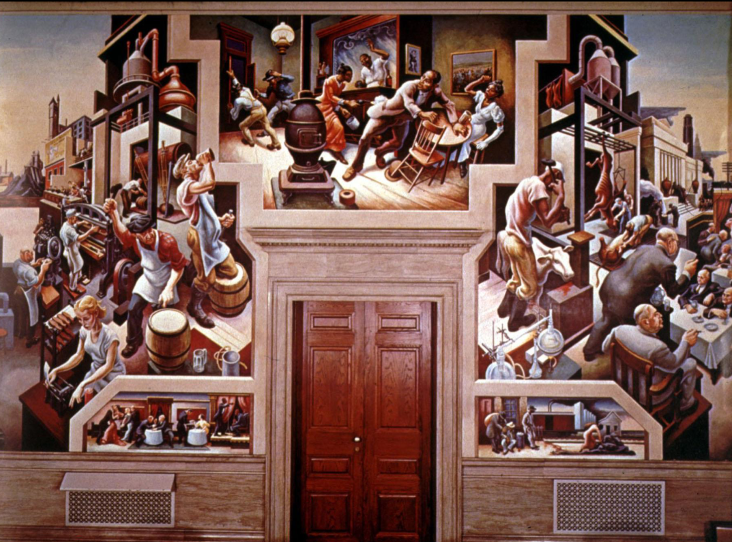
Thomas Hart Benton, Missouri State Capitol Mural, 1936
only example of regionalism
The mural celebrates the everyday labor and achievements of the American Midwest, emphasizing regional identity and civic pride during the Great Depression.
Government sponsored project
celebrating regionalism
Created in 1936 under New Deal art programs
focusing on local landscapes, people, and history rather than European abstraction.
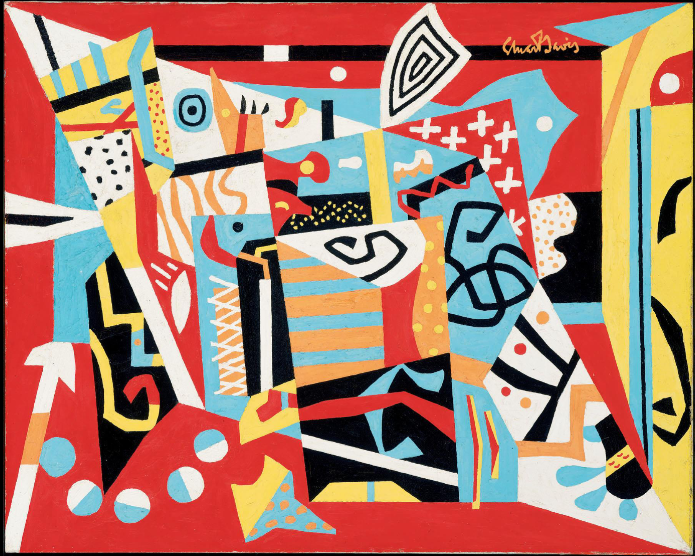
Stuart Davis, Hot Still-Scape for Six Colors Seventh Avenue Style, 1940
example of modernism
combines Cubist fragmentation, jazz-like rhythm, and commercial signage motifs to create a vibrant depiction of the modern cityscape
emphasizes color, shape, and dynamic composition rather than literal representation
Experimenting with abstraction
finding more modern for american expression
influenced by cubism
promotes his own take of modern art
hired by WPA to do murals like this
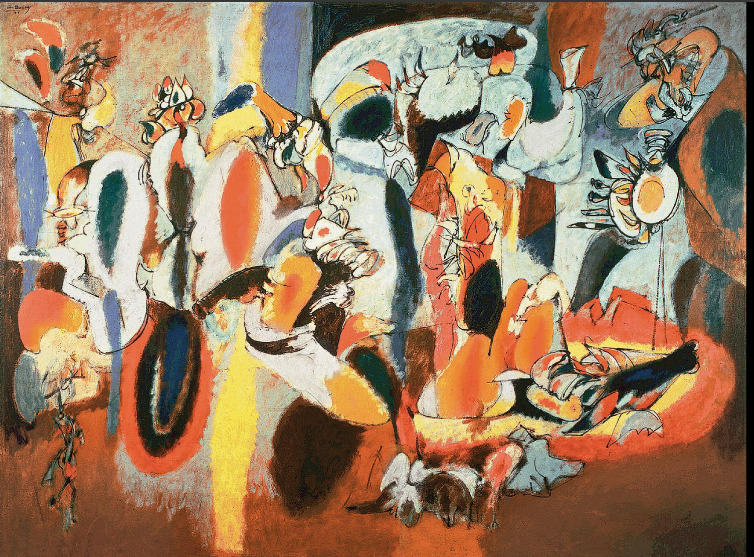
Arshile Gorky, The Liver is the Cock’s Comb, 1944
example of abstract expressionism and Surrealism
merges personal memory, myth, and subconscious imagery to create a visceral, emotionally charged composition.
Use of spontaneity
mystical, no rational space, dreamlike forms
Combines Surrealist automatism with gestural abstraction
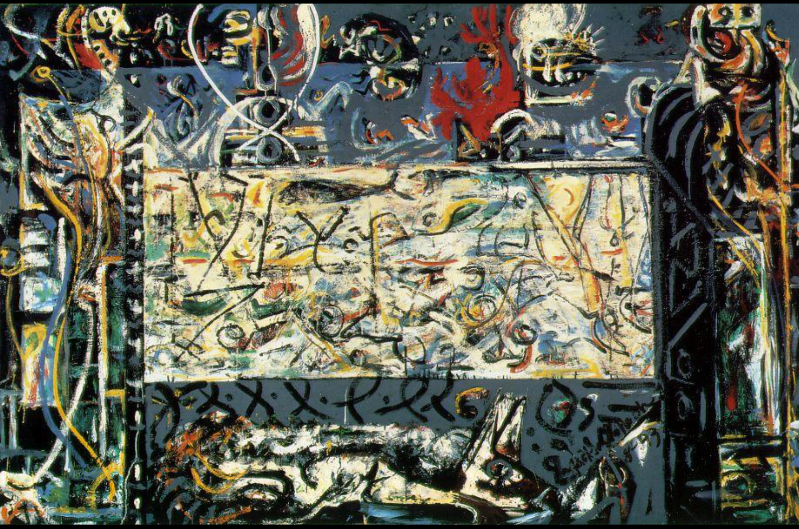
Jackson Pollock, Guardians of the Secret, 1943
example of abstract expressionism and surrealism
a complex, semi-abstract painting that bridges Pollock’s early surrealist-influenced style with his later drip technique
composition features chaotic, biomorphic forms, masked figures, and mysterious symbols, creating a dreamlike, ritualistic atmosphere
explores themes of psychological tension, secrecy, and existential anxiety
inspired by native american art
dog like creatures
free formed brushwork
theorism of movement: applied movement
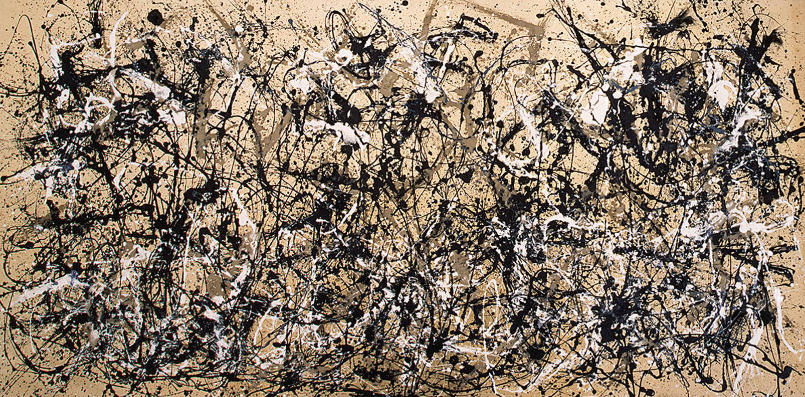
Jackson Pollock, Autumn Rhythm, 1950
example of abstract expressionism
covered with a dense network of dripped, poured, and splattered lines, creating a dynamic, all-over composition without a central focal point
emphasizes the act of painting as performance, capturing energy, rhythm, and the unconscious in visual form
Gestural
use of spontaneity, movement/energy
drip painting
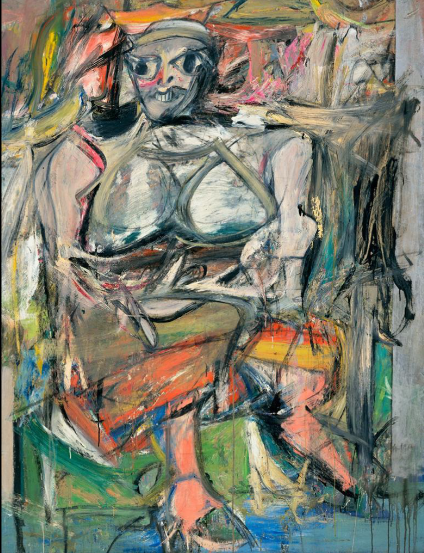
Willem de Kooning, Woman I, 1950
example of abstract expressionism
creating a raw, visceral depiction of the female body that oscillates between representation and pure painterly energy.
archetype, semi recognizable subject
embracing flatness of painting and acknowledges paint
known for use of distorted figures
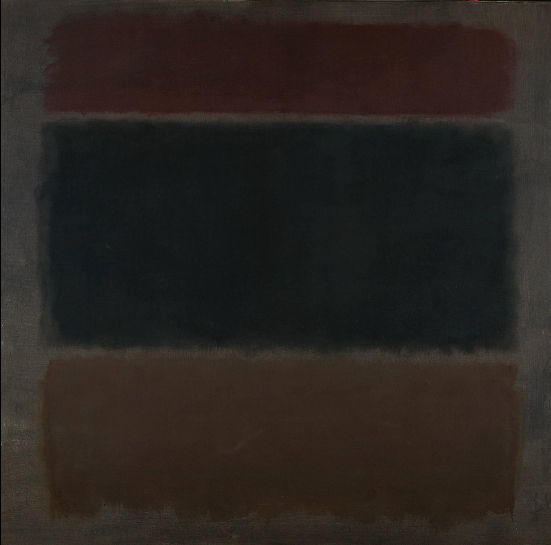
Mark Rothko, Red Maroons, 1962
Example of abstract expressionism and color field painting
Rothko emphasizes color, scale, and spatial depth to create an immersive, meditative experience
focuses on emotion, spirituality, and human contemplation rather than figuration or narrative
Purpose is to evoke human reaction
uses color field painting technique
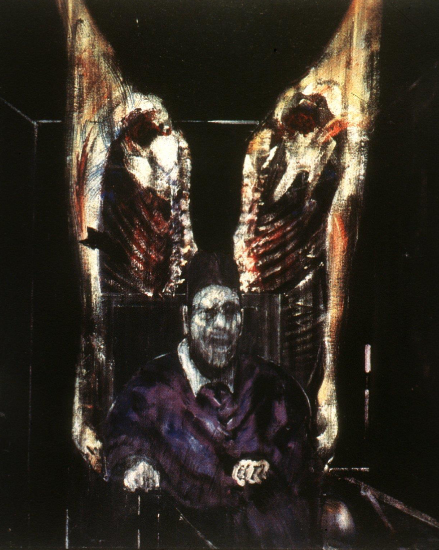
Francis Bacon, Head Surrounded by Sides of Beef, 1954
example of Postwar Modernism
combines raw physicality, violent imagery, and expressive distortion to explore mortality, vulnerability, and the fragility of the human condition
Existentialism
use of post war imagery
creates a sense of anxiety and decay
he reduced the subject to a state of rawness and vulnerability
this work embodied existential terror and universal suffering
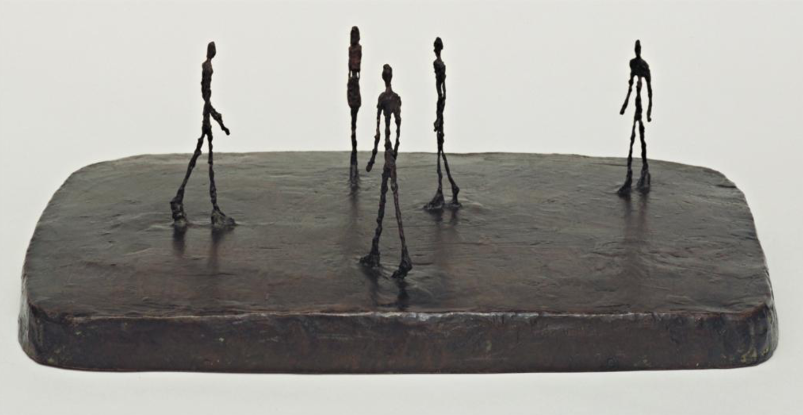
Alberto Giacometti, City Square, 1948
Use of existentialism and Postwar Modernism
bronze sculpture depicting a group of elongated, emaciated figures arranged on a flat base
appear isolated and introspective, evoking feelings of existential alienation, fragility, and vulnerability.
captures the psychological essence of human existence rather than realistic physical detail
existentialism : a sense of an individual that has lost supporting structure of society
post world war 2
literary movement, manifestation
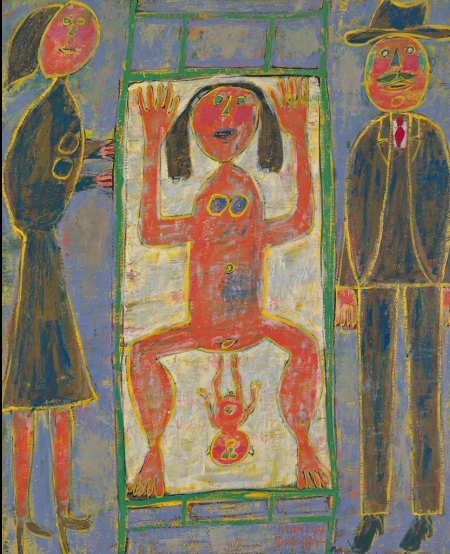
Jean Dubuffet, Childbirth, 1944
example of art brut
emphasizing untrained, primal expression over traditional artistic refinement.
style of child like drawings / purity
goal was to disturb the viewer
use of flattened forms
this is an early example of art brut: creating art outside the boundaries of official culture and academic training
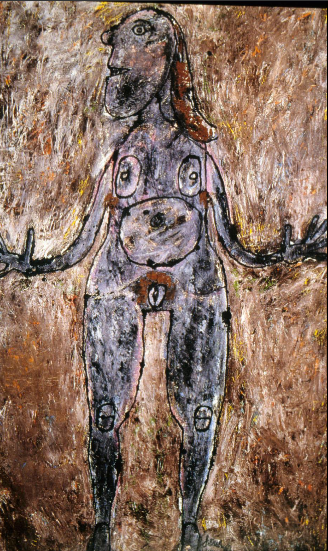
Jean Dubuffet, Large Sooty Nude, 1944
Example of art brut
prioritizing raw, instinctive expression over traditional ideals of beauty, anatomy, or refinement
depicts a monumental female figure in a deliberately crude, primitive style
uses bold, simplified shapes and dark, earthy tones, emphasizing physical presence and tactile energy
idealized
break from traditional paintings
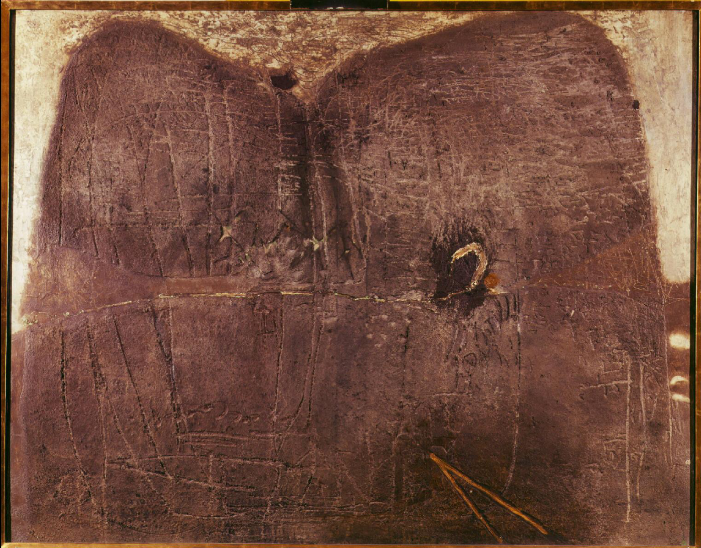
Antoni Tapies, Painting, 1955
example of art informel
The composition incorporates sand, dust, and other earthy materials, highlighting the tactile and visceral qualities of the medium / adds sand to the painting
has architectural quality
shaped by the trauma of the Spanish Civil War and the aftermath of World War II
in his youth was deeply affected by the Spanish Civil War
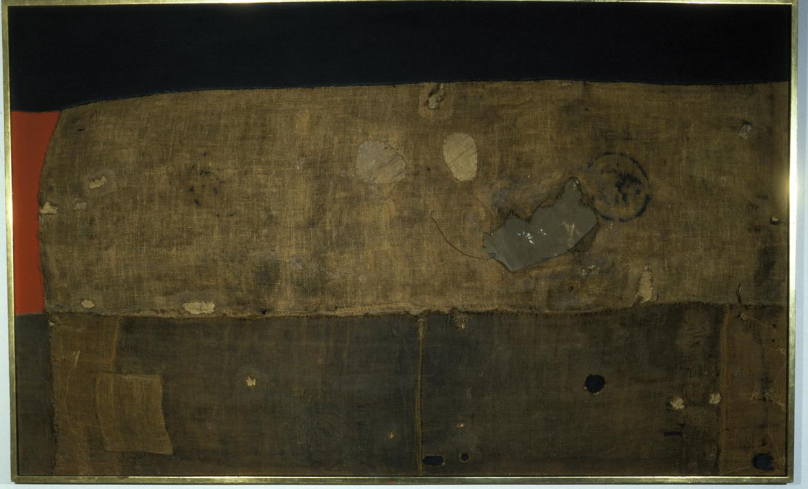
Alberto Burri, Grande Sacco, 1954
example of Informalism / art informel
a large-scale abstract work composed of stitched and patched burlap sacks, emphasizing texture, materiality, and the physical presence of the object
transforms humble, everyday materials—sacks, twine, and industrial debris—into expressive compositions that convey violence, decay, and tactile energy.
post world war 2
material based abstraction
painted on rough burlap bags
focusing on materiality, texture, and the "trauma" of discarded, everyday materials over traditional painting techniques.
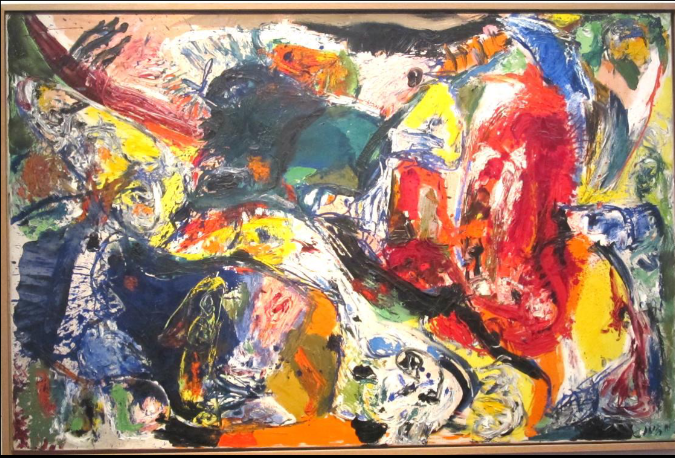
Asger Jorn, Dead Drunk Danes, 1960
example of Abstract Expressionism
vividly expressive painting that showcases Jorn’s interest in gestural abstraction, raw color, and spontaneous mark-making
depicts figures in states of revelry or disarray, reflecting human energy, folly, and humor in a distorted, almost grotesque visual style
uses brushwork and color as tools
expressive
he was part of the group CoBrA
Influenced by primitive art, folk art, and mythic imagery
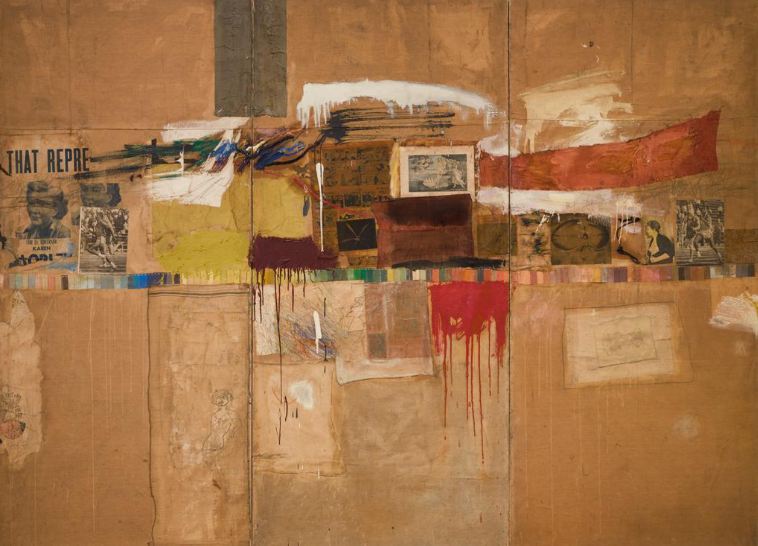
Robert Rauschenberg, Rebus, 1955
example of a combine
variety of strokes, drips, and paint
early Pop Art
Rebus - puzzle made of pictures and symbols representing words, suggesting that the artwork itself is meant to be “read” and interpreted.
Rebus reflects The rise of consumer culture and Mass reproduction and media saturation
mocking serious art in a way
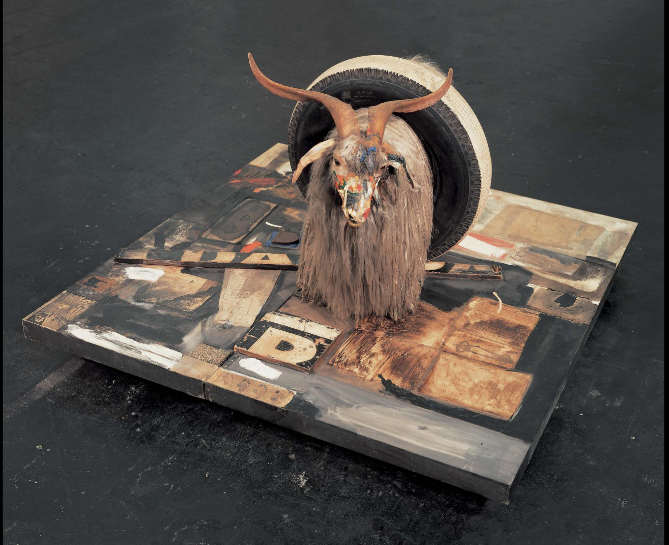
Robert Rauschenberg, Monogram, 1955-9
example of Proto–Pop Art
a combine with use of mixed media to create structures
hybrid of painting and structure
challenged abstract expressionism with irony, absurdity and chaotic composition
questioning of traditional art hierarchies
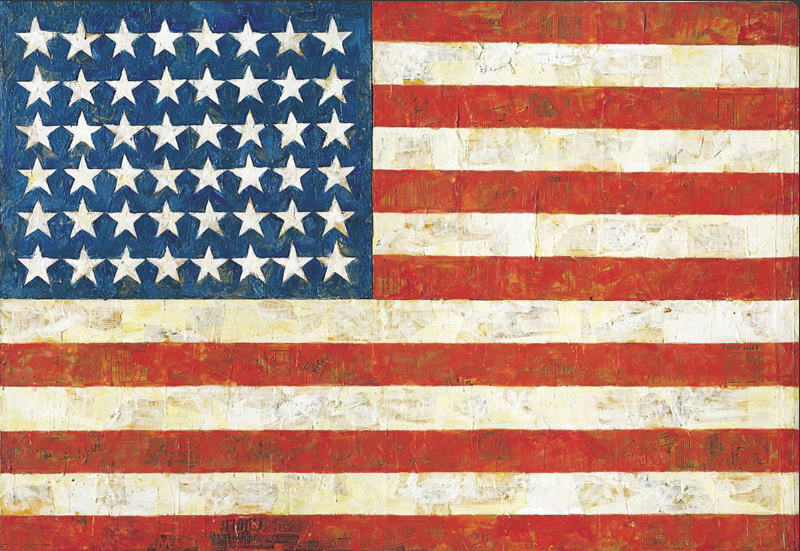
Jasper Johns, Flag, 1955
example of Proto–Pop Art
medium was Encaustic (pigment mixed with hot wax)
Beneath the paint, scraps of newspaper are visible, embedded into the wax.
Emphasizes materiality
redefined the relationship between image and object
questioned the meaning of national symbols
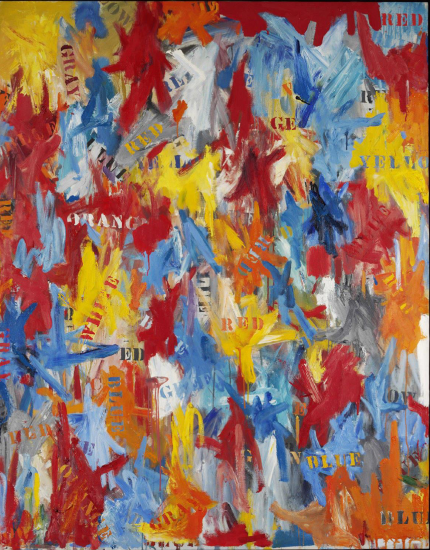
Jasper Johns, False Start, 1959
example of Post–Abstract Expressionism
playful gestures in color / playing with color language
symbolizes irony
the idea of Language vs. Perception
creates tension between what we see and what we read
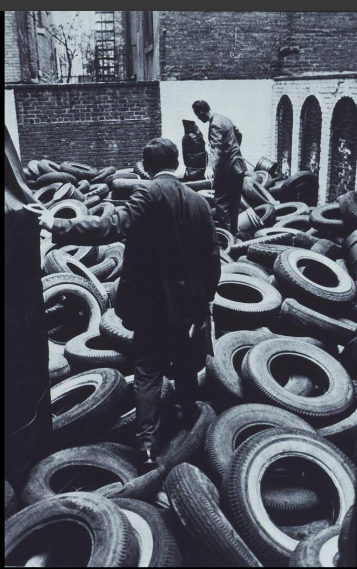
Allan Kaprow, Yard, 1961
example of Happenings
Visitors were invited to walk, climb, move, and rearrange them.
Rather than creating a static object, Kaprow created an environment activated by audience participation.
viewed Art as Experience, Not Object
One of the earliest major environmental installations
Helped establish Happenings and performances as an art form
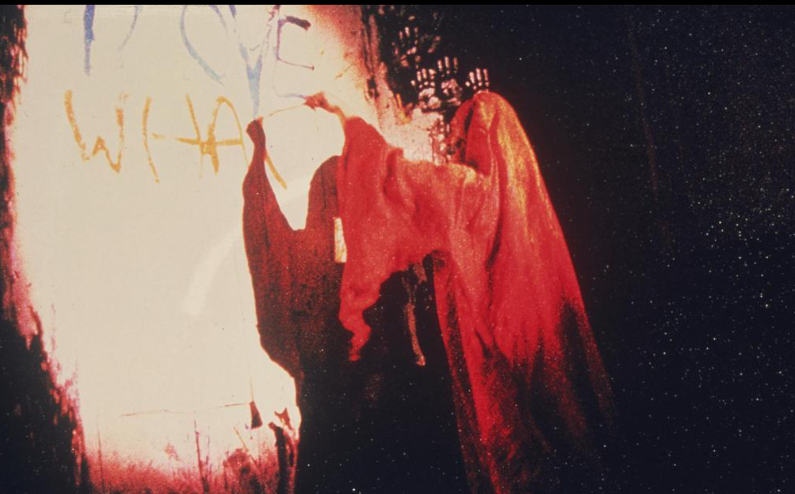
Jim Dine, The Smiling Workman, 1960
an example of Happenings and action painting
incorporates everyday tools and work-related imagery into an expressive, assemblage-like composition
evokes cheerful labor, yet the physical presence of tools and rough materials complicates this image
Ironic in a sense by making fun of abstract expressionism
Demonstrates the transition from Abstract Expressionism to object-based art
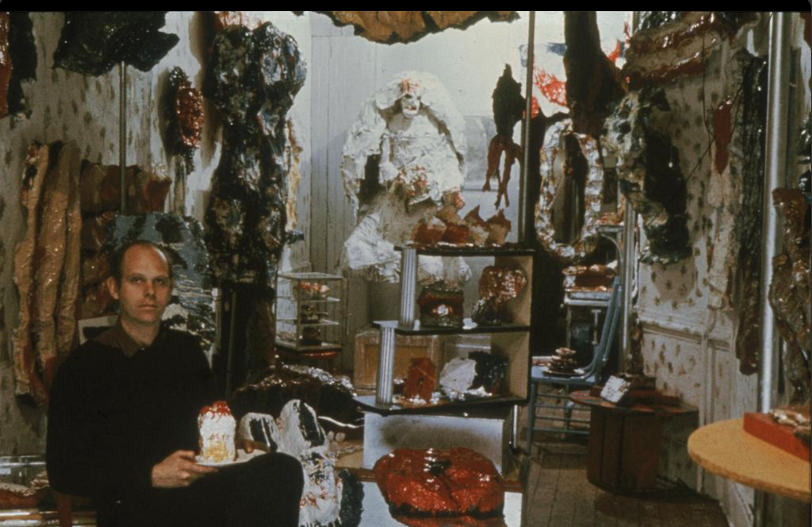
Claes Oldenburg, The Store, 1961-2
example of Happenings
The Store was both an installation and a functioning shop
Oldenburg recreated consumer culture in a exaggerated, messy, and humorous form
Challenged boundaries between art and consumer goods
Critiqued the commercialization of both products and art
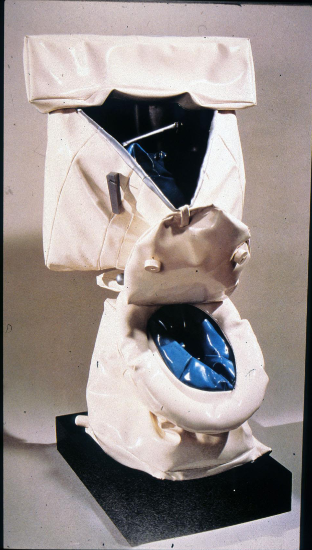
Claes Oldenberg, Soft Toilet, 1966
example of pop art
soft sculptures (not functional)
The object can no longer serve its purpose. It becomes purely visual and sculptural.
Transforms everyday objects into humorous critique
Challenges traditional ideas of sculpture
similar to dada
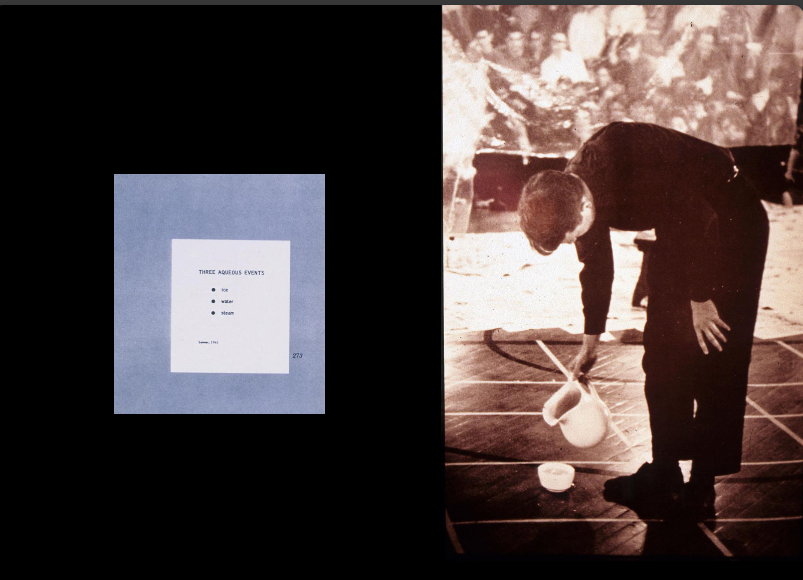
George Brecht, Three Aqueous Events, 1961, as performed 1963
example of fluxus
Brecht developed the use of “event score,” a brief written instruction that invites performance
including the audience in the environment
Collapses boundaries between art and everyday life
Prioritizes concept over object
open ended / up to interpretation
the language defines the piece itself

Yves Klein, IKB74, 1958
example of new realism and avant garde
International Kline Blue copyrighted
believed in Rosicrucianism and revolving around fire and the void
Klein called the color a way to evoke the “immaterial” and the void.
spiritual / mystical reality / lack of reality
patented color but believes in spirituality / irony
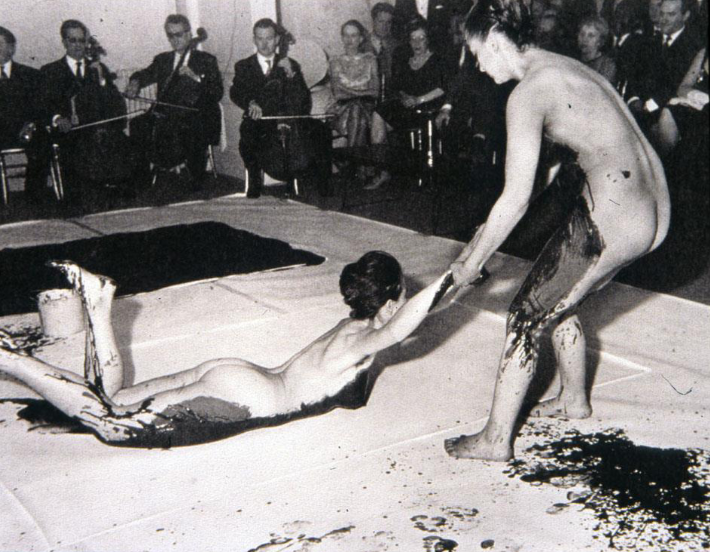
Yves Klein, Monotone Symphony Performance, 1960
example of new realism and Performance Art
activity is the work of art
a performance consisting of a single sustained note lasting 20 minutes, followed by 20 minutes of silence
immerse the audience in sound and its absence, creating a meditative and spatial experience
Challenges traditional notions of music and art
Demonstrates Klein’s interest in immaterial experience and perception
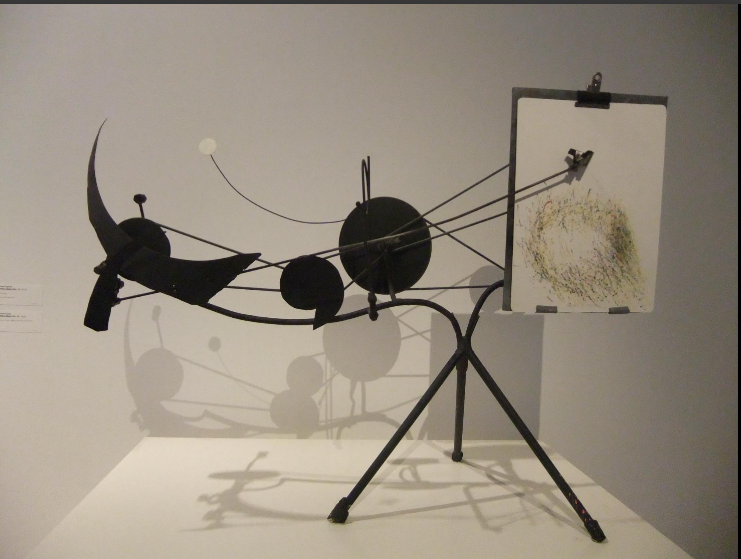
Jean Tinguely, Metamatic No. 9, 1954
example of new realism and Kinetic Art
mechanical devices designed to create art autonomously
Rather than focusing on the artist’s hand, the artwork emphasizes movement, process, and chance, making the machine itself the primary agent of creation.
Shifted focus from artist’s hand to machine and process
Critiqued industrial society and notions of artistic control
interpreted as a satire or critique of Abstract Expressionism
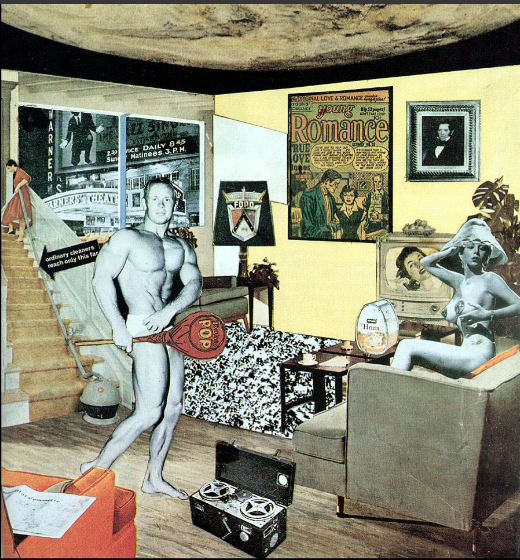
Richard Hamilton, Just what is it that makes today's homes so different, so appealing? 1956
example of pop art
one of the first works of Pop Art
functions as a satirical snapshot of 1950s consumer culture, emphasizing the growing influence of mass media, advertising, and commodities on domestic life.
contains elements from Consumerism and Popular Culture
Merges high art with mass culture imagery
Critiques and celebrates consumerism simultaneously
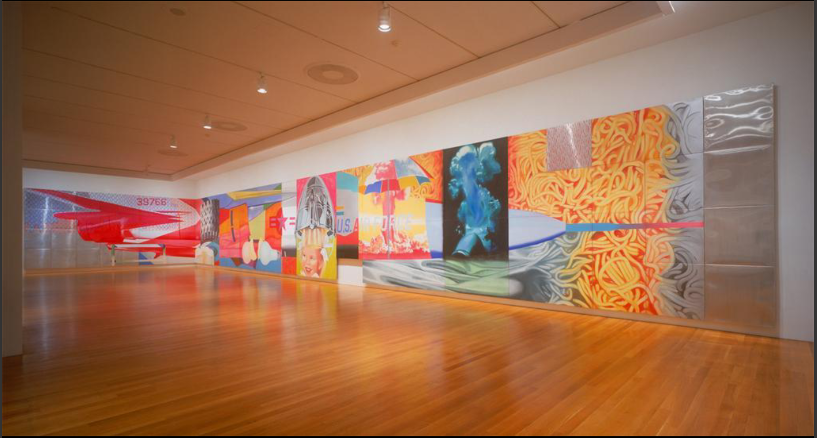
James Rosenquist, F-111, 1964-5
example of pop art
massive multi-panel painting that combines imagery from advertising, popular culture, and military technology
war machinery with consumer culture
reflection of American identity
Critiques the relationship between consumerism and military-industrial complex
socially critical / Created during the Vietnam War era
The work immerses viewers in a simultaneous experience of war and consumption, mirroring the overload of media imagery.
collage like
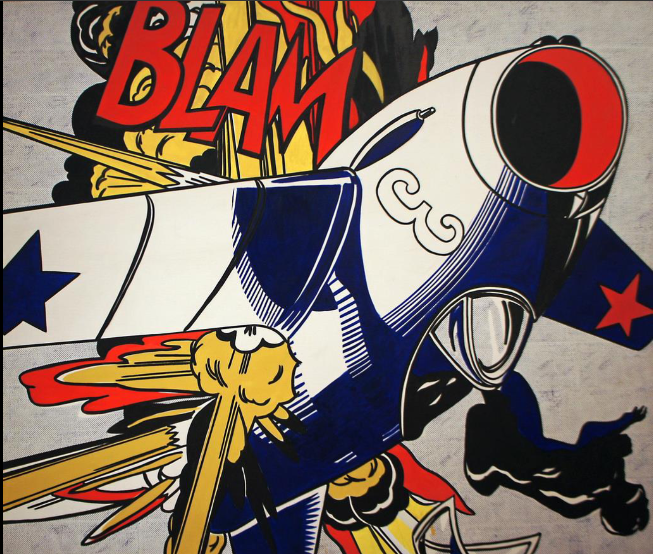
Roy Lichtenstein, Blam, 1962
example of pop art
adjusts the composition to fit his vision not exactly copying the comic
highlights the tension between high art and popular culture, elevating commercial imagery to the level of museum painting
known for use of bold outlines, bright primary colors, and (Ben-Day dots)
Ben-Day dots to simulate commercial printing
Coincides with the Cold War era, when military themes dominated popular culture
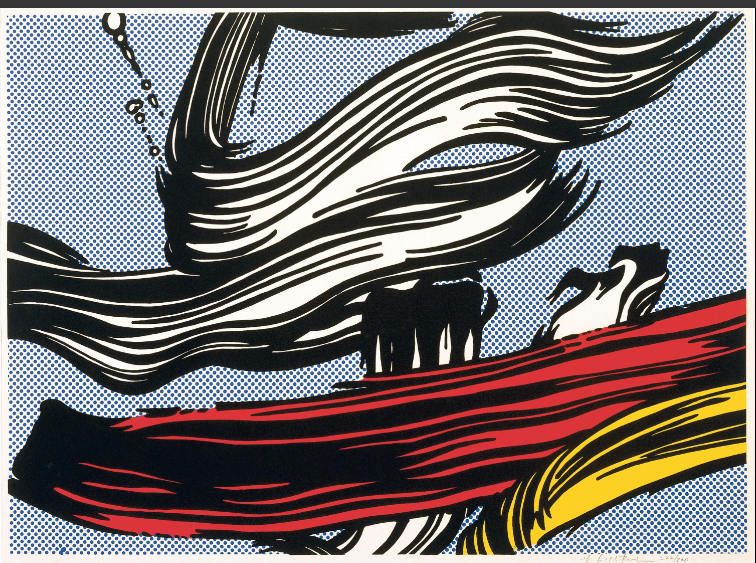
Roy Lichtenstein, Brushstrokes, 1967
example of pop art
mimics the energy of gestural painting, yet presents it through hand-painted mechanical precision, comic-strip flatness, and Ben-Day dots.
highlights the tension between high art and popular culture, transforming the spontaneous gestures of Abstract Expressionism into a reproduced, commercialized aesthetic suitable for a gallery or museum.
a critical and ironic commentary on the spontaneous, emotional gestural painting of Abstract Expressionism
reference of spontaneity and free flowing form
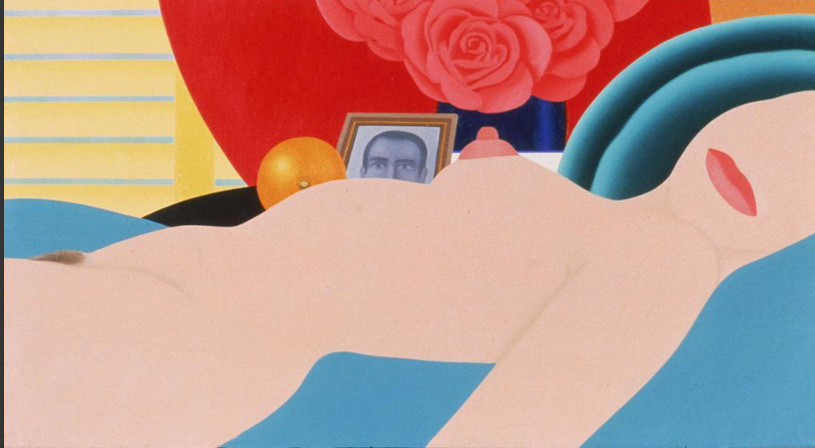
Tom Wesselman, Nude #1, 1970
example of pop art
references the commercialization of women in consumer culture and how art is for the male gaze (male eyes in the back)
combined imagery of the female nude with bold, flat colors and elements of everyday consumer culture
transforms ordinary visual motifs—magazines, advertisements, and domestic objects—into stylized, monumental representations of the body
Explores the relationship between objectification, desire, and consumer aesthetics
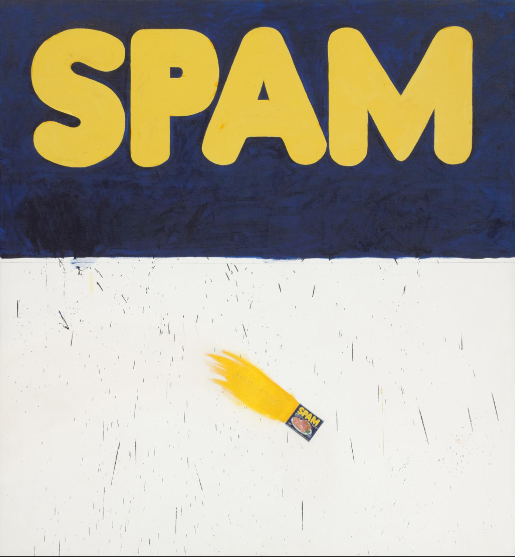
Edward Ruscha, Actual Size, 1962
example of pop art
life-size reproductions of a single object
emphasizing everyday familiarity while simultaneously drawing attention to formal and visual qualities of consumer goods while playing with scale
Encourages viewers to reconsider perception, measurement, and the significance of everyday objects
explorations of consumer and commercial imagery
Focuses on ordinary objects elevated through scale and attention
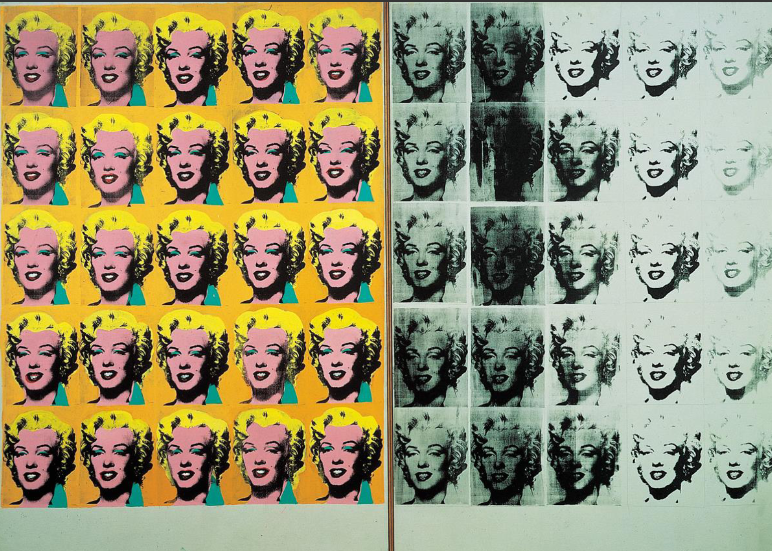
Andy Warhol, Marilyn Diptych, 1962
example of pop art
decreasing value of a product through mass production
uses silk screen process aka screen printing
The repetition and contrast explore themes of celebrity, mortality, and mass media, turning Monroe into both an icon and an object of cultural consumption.
Explores the tension between individuality and mass reproduction
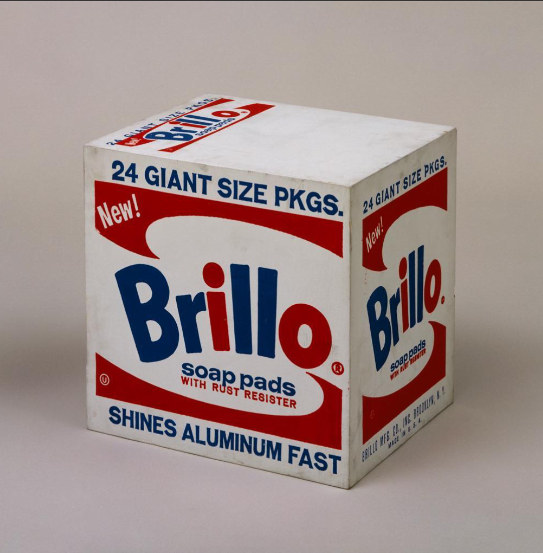
Andy Warhol, Brillo Box, 1964
example of pop art
recognized as a sculpture not an actual brillo box / reconstructed to resemble a brillo box
wooden replicas of commercial Brillo soap pad boxes
challenges the boundaries between fine art and mass-produced commodities
turning a mundane object into a provocative gallery piece.
Highlights seriality, mass production, and consumerism