BM-U1A2- Internal business environment and planning
 Call Kai
 Learn
Learn Practice Test
 Spaced Repetition
 Match
Match Flashcards
 Knowt Play
1/61

There's no tags or description
Looks like no tags are added yet.
Name | Mastery | Learn | Test | Matching | Spaced | Call with Kai |
|---|
No analytics yet
Send a link to your students to track their progress
62 Terms
What is a business environment?
The surrounding conditions in which the business operates. It can be divided into two broad categories; internal and external.
What does a business environment consist of?
Various stakeholders. Each stakeholder has an interest in the business and places different demands on the business. Sometimes, their interests may be similar or in conflict. Management, therefore, must balance the interests of all stakeholders in its decision-making and planning.
What does the internal environment, or micro environment include.
Factors over which the business has some control, such as employees, managers, management style, corporate culture and company policies.
Internal environment meaning=factors over which the business has some degree of control.
What does the external environment include.
Consists of all the elements outside a business that may act as pressures or forces on business operations. This includes legal, political, social, economic, technological, global and corporate social responsibility factors. The external environment may be further divided into the operating environment and the macro environment.
External environment meaning= Factors over which the business has little control. It may firther divide into two categories; operating and macro.
What is the operating environment in the external environment?
The specific outside stakeholders with whom the business interacts in conducting its business; it is sometimes called the task environment.
What is the macro environment in the external environment?
The broad conditions and trends in the economy and society within which a business operates.
What is happening to the factors that make up the business environment?
The factors that make up the business environment are continually undergoing change and act as pressures on the operations of a business.
Overall, within a business environment there is the internal, and external environment (operating and macro)
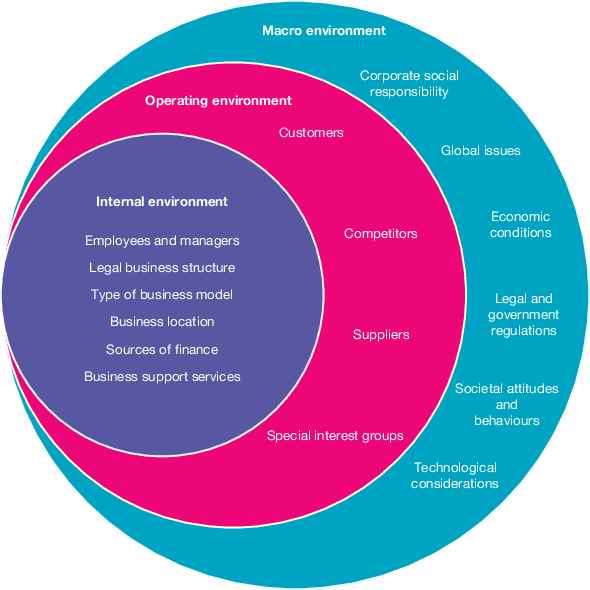
What is the internal environment made up of?
Elements created by the people within the business. Over time, these forces interact with each other to give each business its unique characteristics.

What are the main elements that make up the internal environment?
Employees | These are the people working for a business who expect to be paid fairly, trained properly and treated ethically in return for their contribution to production. |
Managers | These are the people who have the responsibility for successfully achieving the objectives of the business. |
Location | The location of the business will determine whether or not the business is visible and accessible to potential customers. |
Legal business structure | One of the main decisions that the business owner will need to make is about the most appropriate legal structure to use. The four main structures include sole trader, partnership, private limited company or public listed company. |
What makes up the operating environment (external)
Stakeholders external to the business which have a direct impact on the operation of the business. The business has less control over these factors.
What is a stakeholder and what is the four main stakeholders?
Individuals or groups who have a vested interest in the activities of a business
Stakeholder | Description |
|---|---|
Customers | The people who purchase goods and services from the business, expecting high quality at competitive prices |
Competitors | Other businesses or individuals who produce and sell rival, or competing, goods or services to the ones offered by the business |
Suppliers | The businesses or individuals that supply materials and other resources that the business needs to conduct its operations |
Special interest groups | The groups of people who attempt to directly influence or persuade a business to adopt particular policies or procedures, including lobby groups, business associations and unions |
What makes up the macro environment (external)
Comprises the broad forces, conditions and trends in the economy and society within which the business operates. Changes in this environment affects all businesses.
The business has no control over these factors. Main factors that make up are:
Legal and government regulations | The laws or regulations made by parliaments and courts, which affect how businesses operate and behave |
Societal attitudes and behavior | The factors relating to changes in the attitudes, behaviour, tastes and lifestyles of communities on a local, national and international scale |
Economic conditions | The set of influences that relate to economic activity, including interest rates, wages, unemployment, exchange rates and inflation |
Technological considerations | The issues related to the growing use of tools, techniques or systems |
Global considerations | The pressures that arise as a result of businesses operating in worldwide markets and competing on a global scale |
Corporate social responsibility considerations | The pressures on a business to take into account environmental considerations to ensure broader social welfare |

What are ways the external environment can affect the internal environment of a business?
The external environment has a much greater degree of influence on the internal environment of a business than the internal environment has on the external environment of a business.
Because of this imbalance of influence, a business often finds itself at the mercy of factors from the external environment. To increase its chances of success, a business must take a proactive approach to planning for, and responding to, such external factors.
Example:
Scientists predict that over the next several decades, climate change will reduce cocoa production and cause chocolate shortages. This is an external factor that the Mars business may not be able to control.
What are the ways the internal environment can affect the external environment of a business?
Businesses can have an impact on the various aspects of their operating environment and, in rare instances, can even affect the macro environment to a small degree. Businesses can affect the external environment in the following ways:
Factor from the internal environment | Impact on external environment |
|---|---|
Choice of marketing | Often, the products and how they are marketed can affect a business’s customers. For example, smartphones and social media applications have changed the way humans think and behave. |
Policies | Businesses can implement supplier policies that ensure that suppliers source their raw materials in accordance with the values of the business. |
Pricing strategies | In the quest for greater market share, competing businesses will regularly respond to each other’s behaviour. For example, if a business lowers the price of its products, a competitor may do the same in order to retain its share of the market. |
Employees | How a business operates can have a significant impact on the local community. While businesses often create jobs for people living in the local community, in some cases, they can also cause pollution, increased traffic and noise. This may affect how the community feels about the business. |
Innovation | While the internal environment of most businesses will have no noticeable effect on the macro environment, there are rare instances where innovations from within a business can drive widespread change. Many technological developments come from the internal environment of businesses. |
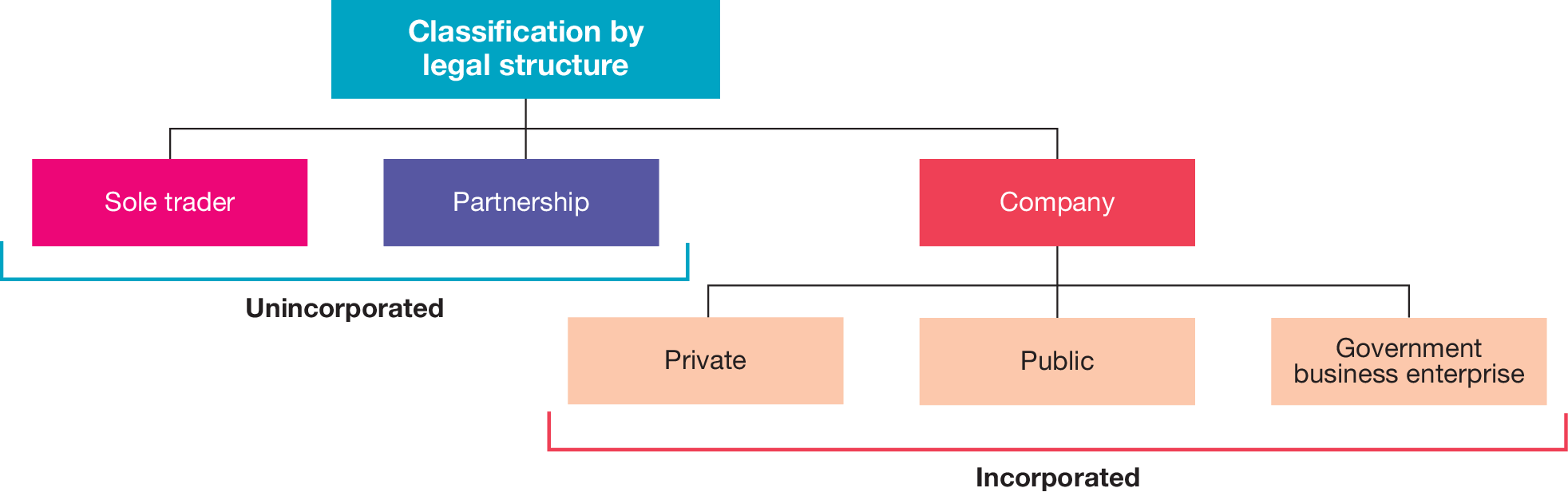
What are the three main types of legal structures? (further separated). These are privately owned known as a ……
Business entity is an organization that exists separately to its owner in order to produce and sell goods and services.
Sole trader
partnership
SOLE TRADER AND PARTNERSHIP AND UNICORPORATED
company
COMPANY IS INCORPORATED- FURHTER SPILT INTO PRIVATE, PUBLIC OR GOVERNMNET BUSINESS ENTERPRISE.
What is incorporation?
the process that companies go through to become a separate legal entity from the owner/s.
An incorporated business has its own separate legal existence. Regardless of what happens to individual owners (shareholders) of the company, the business can continue to operate.
What is unicorporation?
An unincorporated business has no separate legal existence from its owner(s), and will be either a sole trader or partnership. The most common legal structure for businesses in Australia is the unincorporated enterprise, because this structure is the easiest and cheapest to establish.
What is a sole trader?
A sole trader or proprietor is a business owned and operated by one person.
The owner may employ other people to work in the business, but the owner or sole trader is the person who provides all the finance, makes all the decisions and takes all the responsibility for the operation of the business.
It is easy to establish.
What is the only legal requirement for a sole trader?
The name of the business be registered with the Australian Securities and Investments Commission (ASIC) — but this is only if the business name is different from the name of the owner.
Explain how a sole trader has unlimited liability?
This means the business owner is personally responsible for all the debts of their business. The owner and the business are regarded as the same.
Example:
This means that if the business is sued, then the owner is sued
Advantages and disadvantages of a sole trader
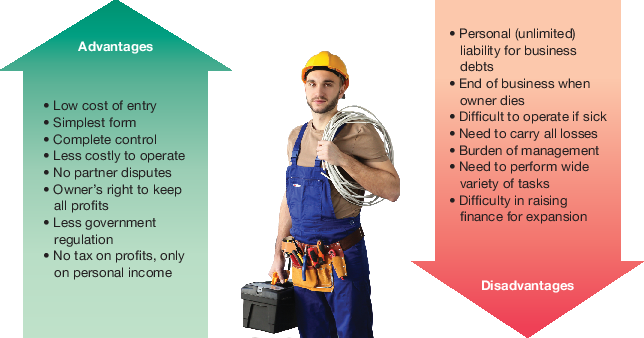
What are some key factors a prospective business owner should evaluate when deciding to be a sole trader?
Is the owner prepared to risk the unlimited liability of operating their business?
Will the owner have enough finances, skills and expertise to establish and grow the business?
Is the owner prepared to take complete responsibility of the business in exchange for complete control and the right to keep all profits?
Does the lower cost of establishing and maintaining a business as a sole trader outweigh the benefits of incorporation?
What is a partnership?
A unincorporated business structure with a minimum of 2 and maximum of 20 owners.
There are exceptions to this rule, including medical practitioners and stockbrokers (allowed up to 50 partners); veterinarians, architects and chemists (allowed up to 100 partners); and solicitors and accountants (allowed up to 400 partners). A partnership is similar to a sole trader in that the owners and the business are regarded as the same — that is, there is no separate legal entity. Like sole traders, the partners in a business are also subject to unlimited liability, and so may be personally responsible for the debts of the business.
How can a partnership be made?
verbally or in writing, or by implication (i.e. if two people set up a business together without a legally binding partnership agreement). A written partnership agreement is not compulsory, but it is certainly worthwhile if disputes arise. A partnership agreement usually has a standard set of conditions.
What is a silent or sleeping partner?
One who contributes financially to a business but takes no part in the running of the business.
The main reason for their investment is to add more capital or finance to an existing partnership.
What are the advantages and disadvantages to a partnership?
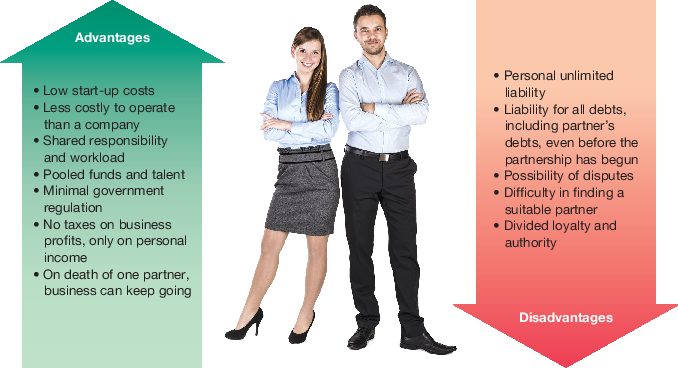
What are the key factors of consideration a business owner of owners should evaluate as a partnership?
Are the owners prepared to risk the unlimited liability of operating their business?
Will the prospective partners have enough finances, skills and expertise to establish and grow the business?
Do the individuals believe that their prospective partners will act in the best interests of the business?
Is each individual certain that their prospective partners will not expose them to personal debts?
Can the prospective partners foresee disputes arising due to a clash of personalities or opinions?
What happens once a business is incorporated?
The company has separate legal identity to its owners, now known as shareholders (the owners of a company who are entitled to a share of it’s profits)
What are the benefits of shareholders when having incorporation?
Limited liability which means the shareholders of a company cannot be held personally responsible for the debts of the business.
the most money that a shareholder can lose is the amount that they paid for their shares. If the company goes into liquidation, the shareholders cannot be forced to sell their personal assets to pay for the debts of the business. This same protection does not extend to the directors of a company, as they have an obligation to ensure the company obeys the law and acts in the interests of the shareholders.
What does Ltd signify?
a business is a company that has limited liability
How can a company be organized?
as either a proprietary (private) or public company
What is a private limited company or proprietary company?
An incorporated business with a min of one shareholder and a max of 50 non-employee shareholders.
It is the most common type of structure in Australia and must also have at least one director.
Therefore, it is quite possible for a private limited company to be owned by a single shareholder, who is also the director of the company. Proprietary companies tend to be small to medium-sized, family-owned businesses, although Mars Inc. is one example of a private company that is larger than most publicly listed companies. In many cases, one family owns most of the shares in a proprietary company.
Who can shares be offered to in a private company?
Only to those people whom the business wishes to have as part owners (or members). Shareholders can sell their shares only to people who are approved by the other directors. This is why it is called a ‘private’ company. It is not listed on, and its shares are not sold through, a stock exchange. A private company must have the words ‘Proprietary Limited’, abbreviated to ‘Pty Ltd’, after its name.
What does a private company have to have?
Must have the words ‘Proprietary Limited’, abbreviated to ‘Pty Ltd’, after its name.
What is a public listed company?
Incorporated business with a min of one shareholder and no max, whose shares are openly traded on the Australian Securities Exchange.
The general public may buy and sell shares in this type of company. Whereas private companies tend to be small or medium-sized businesses, most public companies are large in size and market a large range of products
A public company has…?
A public company has:
a minimum of one shareholder, with no maximum number
no restrictions on the transfer of shares or raising of money from the public via share offers
a requirement to issue a prospectus when selling its shares for the first time
a minimum requirement of three directors (of whom two must live in Australia)
the word ‘Limited’ or ‘Ltd’ in its name
a requirement to publish its audited financial accounts each year — the annual report.
The advantages and disadvantages of the company form of business ownership
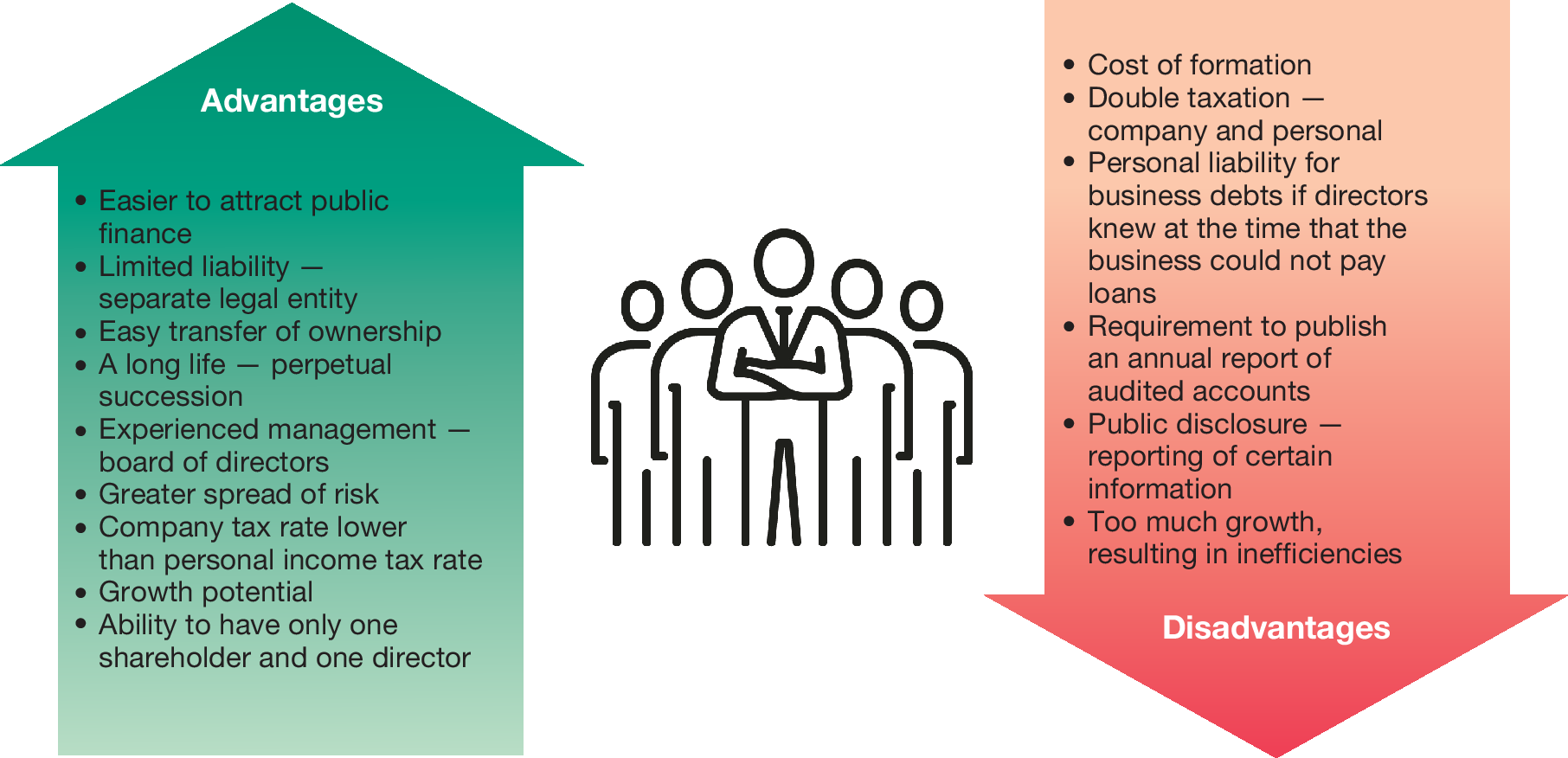
What are the key factors for consideration a business owner should evaluate when planning and deciding on the legal structure of a business before deciding to be a private or public company?
Does the owner need the extra legal security offered by limited liability?
Will the business need public finance, as is possible with a public company?
Will the owners be willing to relinquish control of the company to unknown investors by going public?
Is it worth the extra costs associated with establishing a company and preparing separate yearly tax returns?
What is a social enterprise?
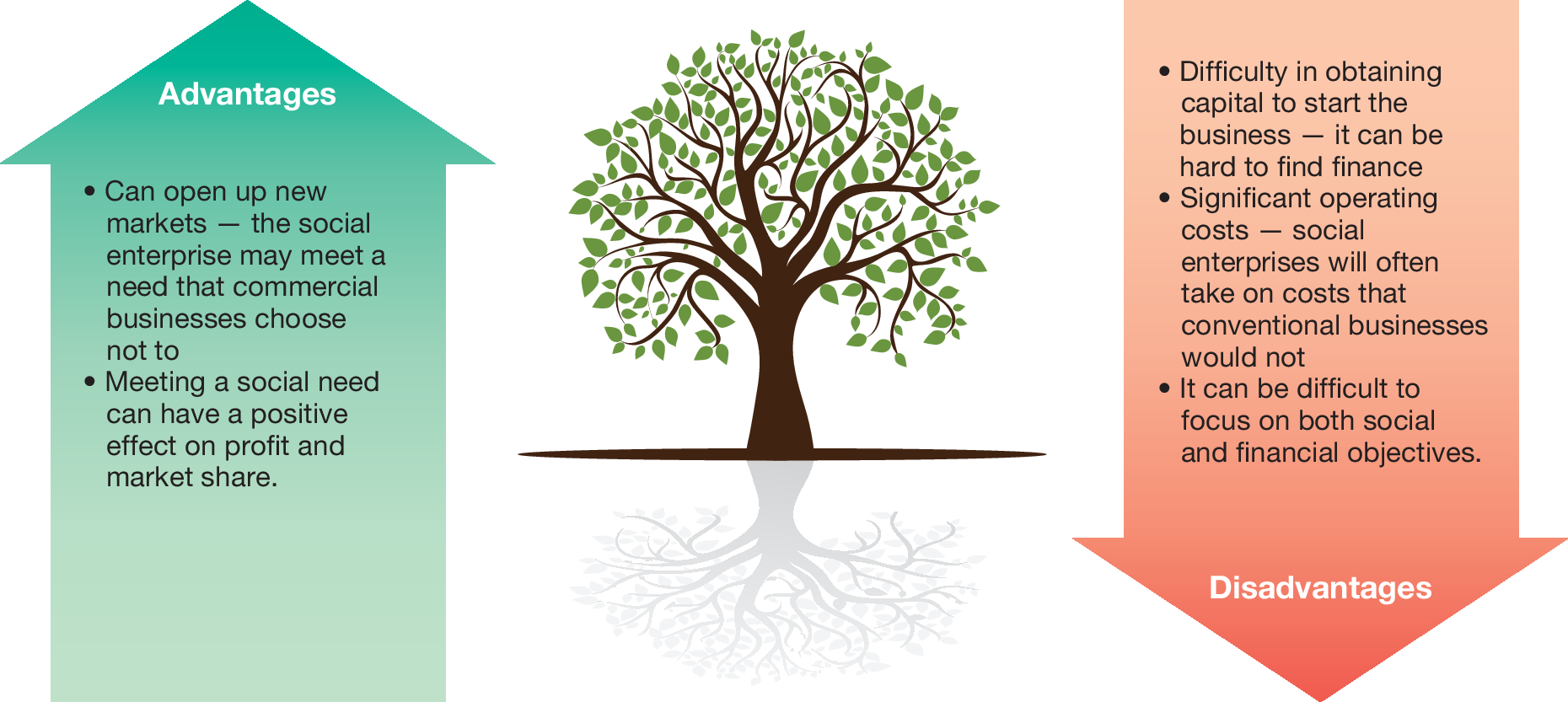
is a type of business that produces goods and services for the market, but this kind of business operates with the primary objective of fulfilling a social need. These businesses still have the objective of making a profit, however, the profit will be allocated to a community or environmental need. A social enterprise falls in the gap between a traditional business and a charity. Social enterprise businesses are becoming increasingly common as Australia's entrepreneurs attempt to respond to social, environmental and economic issues.
Social enterprises can adopt a variety of legal structures, including being incorporated, which gives the owners and the business a separate legal identity.
The advantages and disadvantages of social enterprises
What is a government business enterprise (GBE)?
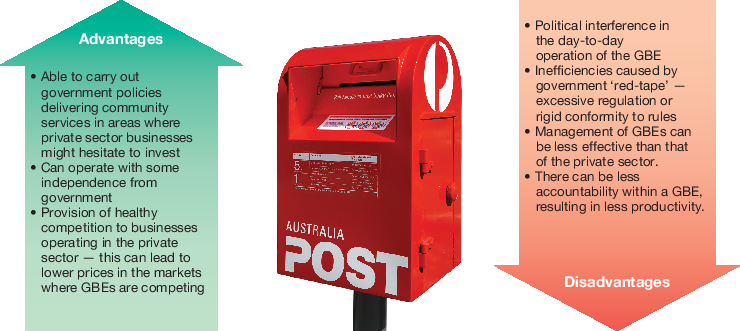
A government business enterprise (GBE) is a type of business which is ultimately controlled by the government. These types of businesses provide a range of essential services, and they run in a similar way to companies. This means that they have shareholders, a board of directors, and they have the objective of making a profit. Perhaps the best-known example of a GBE in Australia is AusPost.
Advantages and disadvantages of a social enterprise?
What is a business model?
is the way in which the business will run its operations to generate a profit.
It acts as a general framework for how the business will earn its income and function on a day-to-day basis. In many instances the business model arises in the earliest stages of planning for a business. As the business grows and circumstances change, the business model may need to be adapted to reflect changes in the way in which the business operates.
What are the key elements that may be considered as part of planning a business model?
What is the main goal of the business?
What type of goods or services will the business offer?
How will the business sell these goods/services?
Who are the target customers?
What types of costs will the business expect to incur?
Will a new business be established or will a franchise agreement be entered into?
What are the main types of business models that a business may choose as apart of it’s planning?
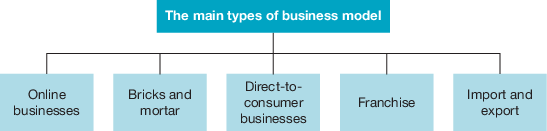
What are the different types of online business models?
Descriptions of different types of online business models | |
|---|---|
Advertising-based websites | Many websites offer free access to people on the internet and generate revenue through advertising. Other businesses will pay the website to feature their advertisements because it reaches their target markets. This is how many blogs have grown into successful businesses. After attracting enough followers, a blog becomes an attractive space for advertisers. |
Freemium | Some websites or applications, such as Spotify, attract a large customer base with their free service offers. They generate income through advertisements or the offer of a subscription premium service option. |
Brokerage | Websites such as eBay bring buyers and sellers together in exchange for a brokerage fee when sales are made. |
Merchant | Merchants are online sellers that operate through their own independent website or through the use of platforms such as eBay. These online retailers generally buy in bulk directly from manufacturers or wholesalers and sell the products to customers for a profit. |
Advantages and disadvantages of online businesses over other business models
Advantages:
The increased accessibility of the internet through the use of smartphones
Rapid internet growth
Online businesses have a distinct advantage over physical bricks and mortar stores because they are able to reach customers across the globe via the internet. They also avoid many of the expenses associated with having a physical store, such as rent and wages for shop staff.
Disadvantages:
Customers are not able to physically see, touch or try an item before purchasing it. Furthermore, some online businesses may expose customers to the risk of credit card theft when making payments online.
What is a bricks and mortar business model?
businesses that have a physical location, such as a store in a shopping centre. Bricks and mortar business models have been around for many years and are the chosen business model for many of the biggest retail, manufacturing and wholesale businesses in the world.
Advantages and disadvantages of bricks and mortar business model?
Advantages:
Disadvantages: Far more expensive to establish and maintain than online businesses, and this can make it difficult for them to remain competitive on price.
What are bricks and clicks?
traditional bricks and mortar businesses have had to adapt their business model and establish an online presence to complement their physical stores. Such models are sometimes referred to as bricks and clicks.
What is a direct to consumer business within a business model? (DTC) (BTC)
usinesses that sell their products directly to consumers without any intermediaries, such as retailers or wholesalers. These businesses can take the form of bricks-and-mortar, clicks-and-mortar and, most commonly, online retail businesses.
Advantages and disadvantages to a direct to consumer business?
Advantages
businesses have a strong focus on and connection with their customers, which tends to build customer loyalty. They also tend to have lower costs when compared with models that rely on more complicated networks to reach their customers, particularly as they often don’t require expensive real estate for shops and warehouses. These lower costs allow the business to be more competitive in terms of price
Disadvantages
The model does have problems, however. The business must master all the steps required for each product to reach the customer, which can be time consuming and less efficient than selling to retailers that specialise in selling. Furthermore, if the business relies on online selling, it is exposed to the risks associated with cybersecurity and data protection.
What is a franchise?
When a business sells to others the right to distribute its goods and the use of the business name.
It is the fastest area of business growth in Australia.
What is a franchise agreement?
An agreement whereby the franchisor grants the franchisee the rights to use its business name and distribute its goods or services.
What’s a franchisor and franchisee?
he business that grants the right to others to use its name and products is known as a franchisor, while the business that buys those rights is known as a franchisee.
The franchisor supplies a known and advertised business name, the required training and staff development, a method of doing business, management skills and materials. The franchisee supplies the start-up money and labour, operates the franchise business and agrees to abide by the terms and conditions of the franchise agreement.
Advantages and disadvantages to a franchise
Advantages:
People choose to buy a franchise in the hope of avoiding many of the problems of starting a new business. For a set fee, the business owner receives the benefits of a successful business formula, a well-recognised name and established trademarks. Franchising has a success rate of almost three times that of independent businesses, largely because it involves an established business name backed up by managerial expertise.
Disadvantages:
The franchisee has little scope for making independent decisions as the franchisor has control over much of the operations. The share of the profits and fees can be quite favourable to the franchisor, and the franchisee’s business forgoes the possibility of expanding an original brand as a franchisor.
What is an import and export within a business model?
businesses generating sales revenue by trading goods internationally.
What allows import
What are imports?
goods and services that are produced overseas and sold to Australian consumers.
Advantages and disadvantages to importer business models
Advantages
Access to cheaper production costs
Ability to sell higher quality or unique products
Provide goods not available locally
Opportunity to grow and expand the business
Disadvantages
Cost of buying goods overseasShipping and distribution costs
Tariffs (import taxes)
Must meet Australian health, safety and quality standards
What are exports?
re goods and services that are produced in Australia to be sold overseas.
Advantages and disadvantages of exporting
Advantages:
Expand into new international markets
Reduce reliance on local markets
Extend product life cycle
Increase competitiveness and customer base
Disadvantages:
Foreign exchange changes
Political issues
Shipping problems
Quarantine regulations
Different legal requirements in other countries

