Classification of Micoorganisms
 Call Kai
 Learn
Learn Practice Test
 Spaced Repetition
 Match
Match Flashcards
 Knowt Play
1/55

There's no tags or description
Looks like no tags are added yet.
Name | Mastery | Learn | Test | Matching | Spaced | Call with Kai |
|---|
No analytics yet
Send a link to your students to track their progress
56 Terms
Organism – general definition
living form capable of autonomous functions such as reproduction, metabolism, and growth
Basic unit of living organisms
Cell
Structure of Prokaryotic cells
Free flowing genetic material
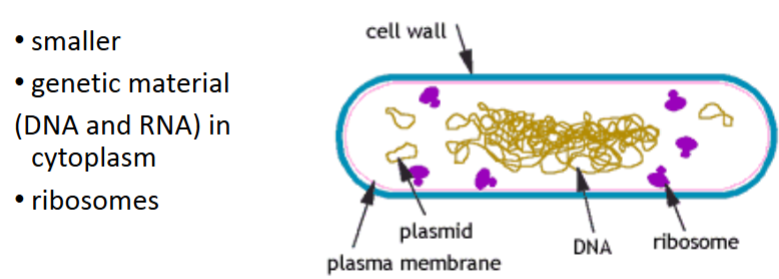
What are plasmids
Extra-chromosomal DNA - acquired along with the cell’s own genetic material (acquired from other cells / bacterial species) that code things such as toxic material or antibiotic resistance
Structure of Eukaryotic cells
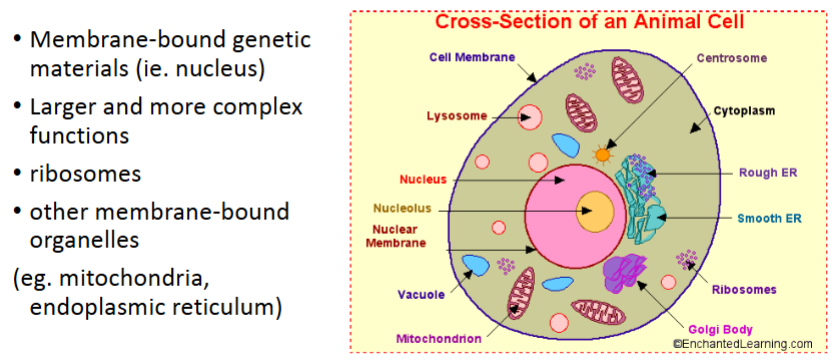
Put these into groups of pro vs eukaryotes
• Bacteria
• Fungi
• Protozoa
• Archaea
• Animals
• Plants
Eukaryotes
• Animals
• Plants
• Certain micro-organisms (fungi, protozoa)
Prokaryotes
• Bacteria
• Archaea

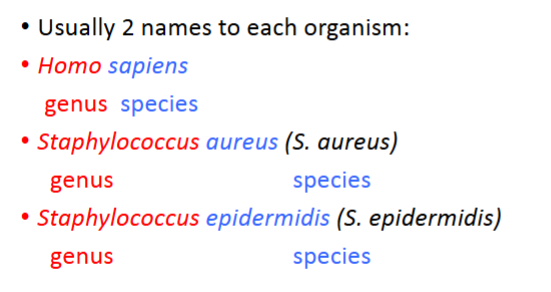
What levels of the Taxonomic Hierarchy do we use to name species
Give 4 types of microorganisms
• Bacteria
• Viruses
• Fungi
• Protozoa
What transmits Borrelia burgdorferi (& what is this also called)
Certain ticks → transmit Borrelia burgdorferi → Lyme Disease
What transmits Yersinia pestis (& what is this also called)
Rat fleas → transmit Yersinia pestis → Plague (‘Black Death’)
Are fungi pro/eukaryotic & uni/multicellular
Eukaryotic organisms
Can be unicellular or multicellular
Protozoa are eukaryotes that feed on what
bacteria, other protozoa, organic matter and fungi
Name 2 protozoa
Cryptosporidium, Plasmodium
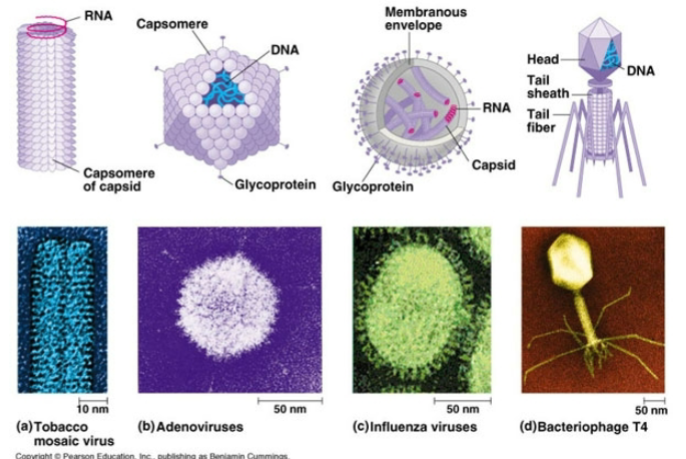
Structure of a virus
• DNA/RNA in a viral coat
• Single- or double-stranded
Are viruses living organisms
No - Generally considered infectious ‘agents’
Not living because they can’t reproduce on their own
Are viruses selective about what cells they infect
Yes
Viruses exist for one primary purpose - what is it?
To reproduce
How do viruses reproduce
Take over reproductive machinery of suitable host cells
Then split by binary fission
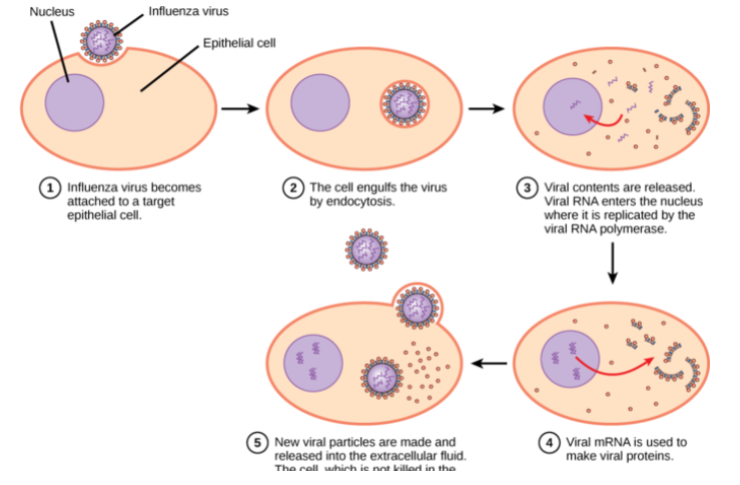
6 steps of the Viral replication cycle

What are Prion diseases
Rare group of diseases caused by misfolding of proteins in the central nervous system
True/False: Prion diseases can occur in humans and animals
True - Can occur in humans and animals (eg. cattle)
Give an example of a Prion disease
Familial and sporadic forms of Creutzfeld-Jakob disease (CJD)
How are Prion diseases transmitted
consumption of prion proteins (misfolded proteins) → induce normal proteins to develop into prion proteins
True/False the transmissible agent in prion diseases is genetic material
False: protein (not genetic material)
E.g. of prion disease in cattle (scientific name), what causes it & how it is passed onto humans
bovine spongiform encephalopathy (BSE; ‘Mad Cow Disease’) following consumption of feeds contaminated by prion proteins
Humans develop a variant CJD (vCJD) following consumption of meats contaminated with the above proteins
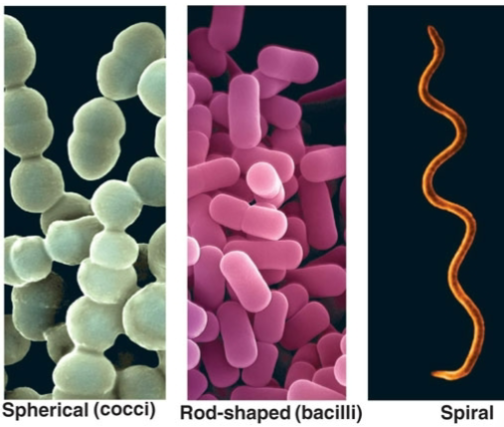
2 main shapes of bacteria & 1 other
Usually rod- shaped (bacillus) or spherical (coccus) cells
Less commonly: spiral cells known as spirochaetes
4 Laboratory methods to test for bacteria
• Microscopy and staining
• Culture & identification of bacteria
• Antimicrobial susceptibility testing
• Molecular tests
Bacteria can be grown on solid/liquid mediums. Give an example of 1 such medium
Blood agar
Commonly used staining method for bacterial cells
Gram stain
Effect of crystal violet on Gram + and Gram - bacteria
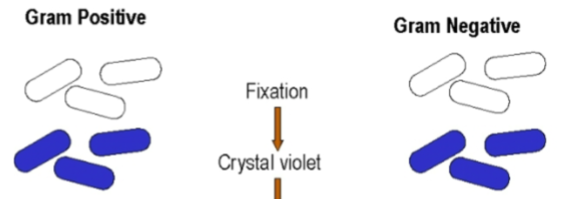
Effect of iodine treatment on Gram + and Gram - bacteria
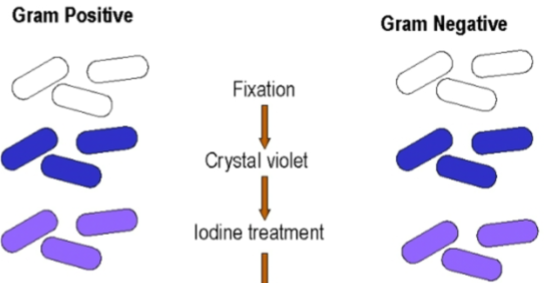
Effect of decolourisation on Gram + and Gram - bacteria
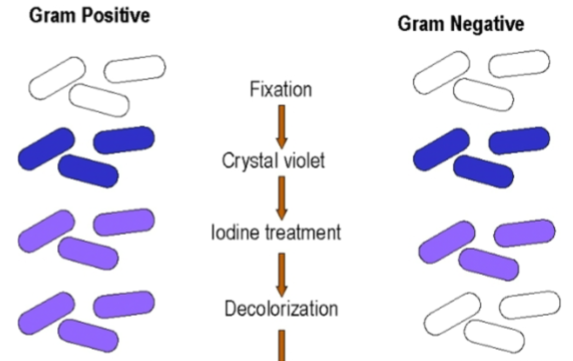
Effect of counter stain safranin on Gram + and Gram - bacteria
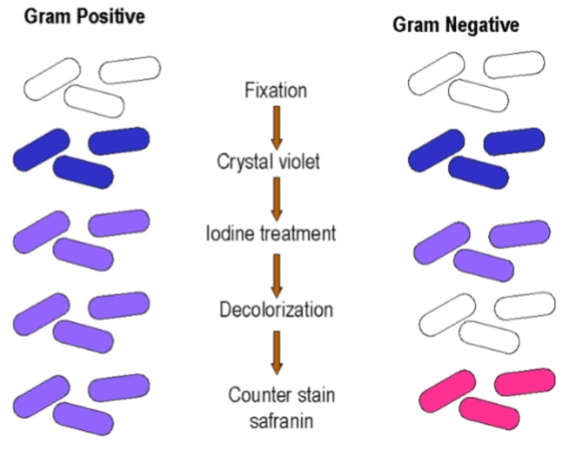
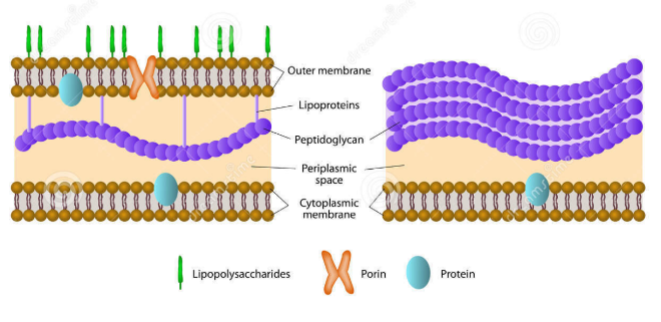
Which is gram + or -
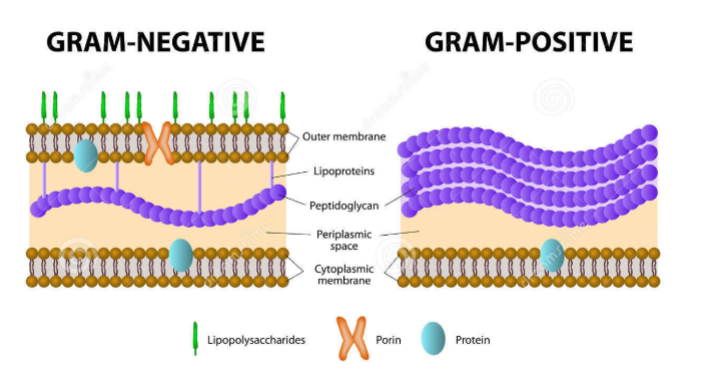
What is the general difference in staining between gram+ and - cells
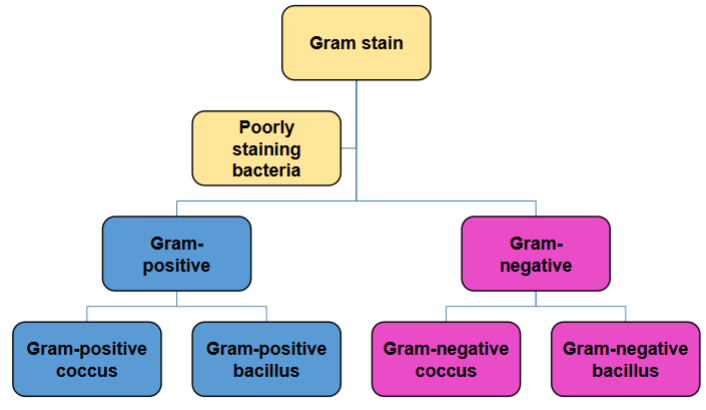
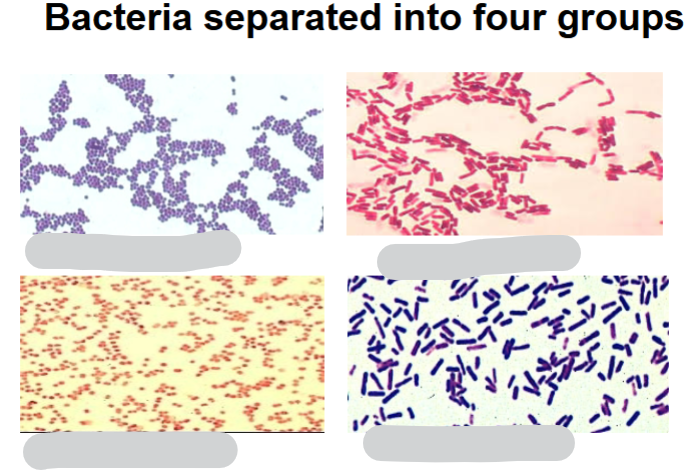
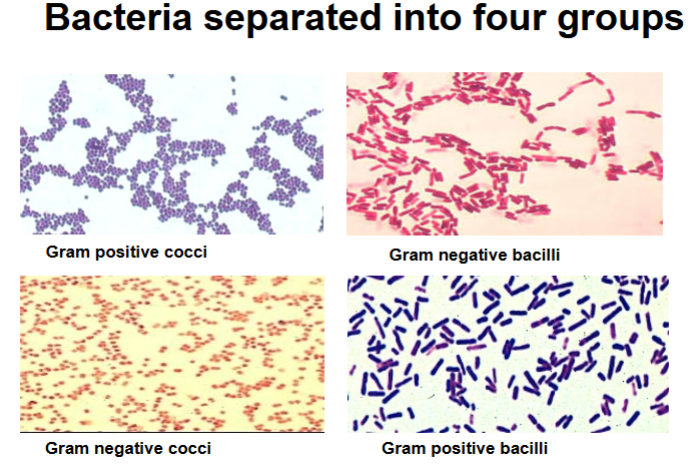
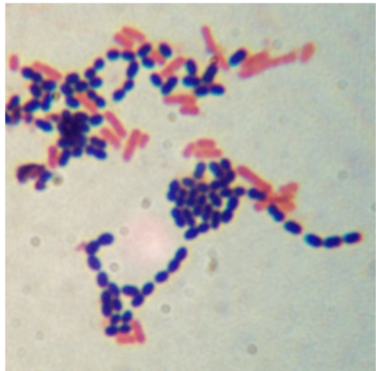
Can you identify the groups of bacteria present in this image, based on Gram stain?
Gram - bacilli
Gram + cocci
Give 3 e.g. of Gram-positive cocci
• Staphylococcus aureus
• Streptococcus pneumoniae
• Streptococcus pyogenes (‘flesh-eating bug’) (Group A Streptococcus)
Give 2 examples of infections caused by Streptococcus pneumoniae
Pneumonia
Meningitis
Give 3 examples of infections caused by Streptococcus pyogenes (‘flesh-eating bug’) (Group A Streptococcus)
Cellulitis
Pharyngitis
Necrotising fasciitis
Give 2 examples of Gram-negative cocci
Neisseria meningitidis
Neisseria gonorrhoeae
Infections caused by Neisseria meningitidis
Meningitis
Septicaemia
Infection caused by Neisseria gonorrhoeae
gonorrhoea
2 examples of Gram-positive bacilli
Clostridium spp
Bacillus spp
3 examples of subsets of Clostridium spp & their associated infections
• C. difficile → colitis
• C. tetani → tetanus
• C. botulinum → botulism
Give an example of a Bacillus spp bacteria & its unfection
B. anthracis → anthrax
Give 2 examples of Gram-negative bacilli
Escherichia coli
Pseudomonas aeruginosa
2 infections caused by Escherichia coli
Urinary tract infection
Abdominal infections
2 infections caused by Pseudomonas aeruginosa
Pneumonia (cystic fibrosis), bloodstream infections, etc
7 types of infections caused by Staphylococcus aureus
Boils/abscesses
Skin infections eg. Cellulitis
Joint infections (septic arthritis)
Bone infections
Lung infections (pneumonia)
Heart valve infections (endocarditis)
Bloodstream infection; etc.
Give 2 examples of specialist bacteria
Neisseria meningitidis (meningococcus) → meningitis & septicaemia
Neisseria gonorrhoeae (gonococcus) → gonorrhoea
Give an example of an opportunist bacteria
Pseudomonas aeruginosa found in cystic fibrosis & severely immunocompromised patients
Clinical utility of Gram staining of bacteria
Identification
Certain antibiotics may be effective/ineffective against certain bacterial groups
vancomycin is ineffective against Gram-positive/negative bacteria
Vancomycin is ineffective against Gram-negative bacteria
True of False - Presence of microbes = infection
False: Presence of microbes ≠ infection
It could be a potential pathogen or innocent bystander