sat math formulas
 Studied by 7 people
 Call Kai
 Learn
Learn Practice Test
 Spaced Repetition
 Match
Match Flashcards
 Knowt Play
1/27

There's no tags or description
Looks like no tags are added yet.
Name | Mastery | Learn | Test | Matching | Spaced | Call with Kai |
|---|
No analytics yet
Send a link to your students to track their progress
28 Terms
growth rate q
present=past(1+growth rate)^t/n
n> the time
what happens when you:
add or subtract all numbers in the data set
multiply or divide all numbers in the data set
mean, median and mode changes
everything chnages
avg/ mean
sum/number
what makes a odd/ even function
odd> f(-x)=-f(x)
even> f(-x)=f(x)
perpendicular line
neg reciprocal slope
of=
is=
of= multiplication
is= equals
exponent rules:
x^a*x^b
x^a/x^b
x^a*x^b=x^a+b
x^a/x^b=x^a-b
interor angles for any shape
180(n-2)
density=
D=M/V
% eq
final=intial (1plusorminus p/100)^t
midpoint formula
(x1-x2)/2
range
largest #-smallest#
Standard deviation
data is scrunched together (even if there are outliers) = SD is low
rational vs irrational vs integer
rational is any number and fractions
irrational is like pi
integer is any whole number positive or negative including 0
increasing x by 30%
decreasing x by 30%
increasing= 1.3x
decreasing= .7x
find slope of tangent line
1) find center and the point where we want the tangent line (h,k) and (x,y)
2) (k-y)/(h-x)
3) ^negative reciprocal of that
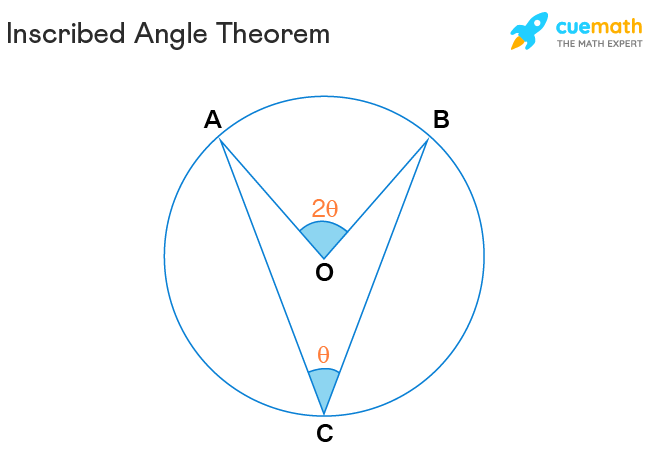
inscribed angle theorem
<ABC=1/2<AOB
<ABC=1/2arcAB
what is a tangent line
a line that only hits a fucntion once
a line that hits a circle only at one point so its 180 @ that point
quadratic formula(vertex and standard)
ax²+bx+x=0
y=a(x-h)²+k
midpoint
((x1 + x2)/2, (y1 + y2)/2) or -b/2a
sum and prod of quadratic solutions
-b/a or c/a
sin and cos relationship
sin=cos(90-x)
cos=sin(90-x)
what does doubling side length do to area and volume
x² turns into 4x²
x³ turns into 8x³
x is length
discriminant
b²-4ac=x
x>0 two solutions (irrational/ rational)
x=0 one solution (rational)
x<0 no solution
quadratic formula x=
x=(-b plusorminus sqrt b²-4ac)/2a
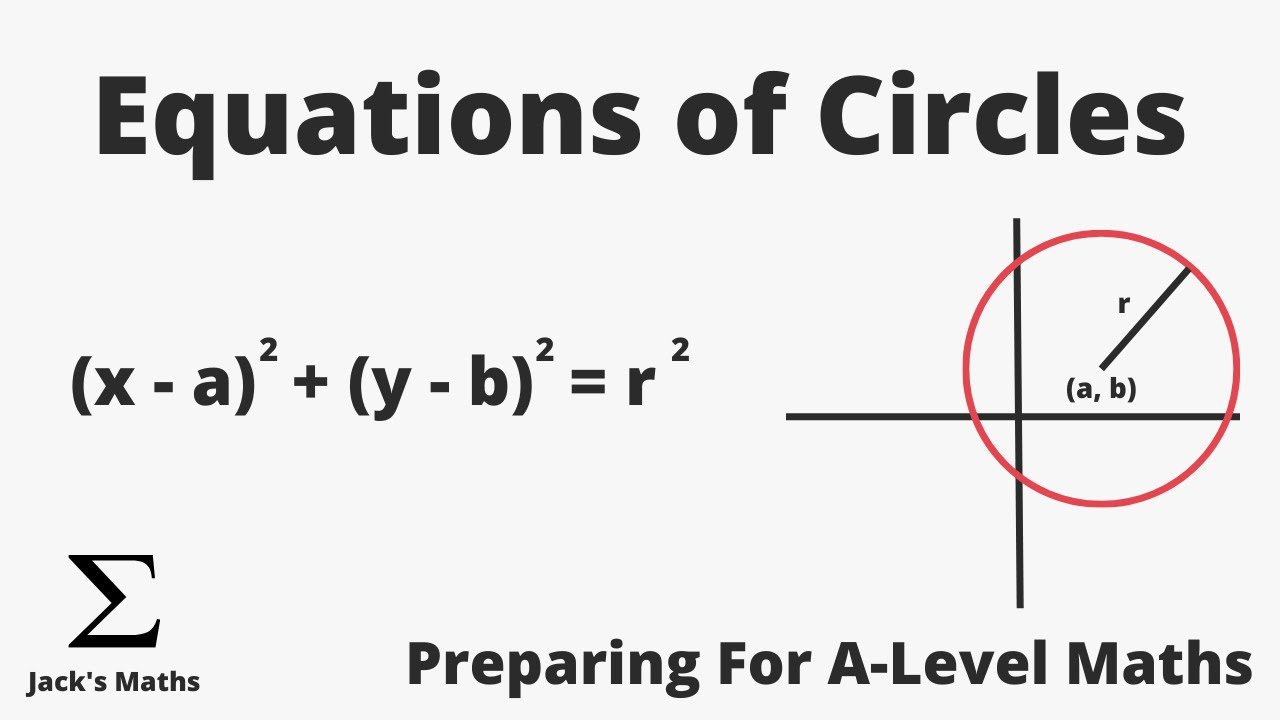
circle formula
arc length
s = (θ/360) * 2πr where s is the arc length, θ is the central angle in degrees, and r is the radius.
sector area
A = (θ/360) * πr² where A is the sector area, θ is the central angle in degrees, and r is the radius.
 Note
Note  Flashcards (24)