Species Identification 2
 Studied by 0 people
 Call Kai
 Learn
Learn Practice Test
 Spaced Repetition
 Match
Match Flashcards
 Knowt Play
1/44

There's no tags or description
Looks like no tags are added yet.
Name | Mastery | Learn | Test | Matching | Spaced | Call with Kai |
|---|
No study sessions yet.
45 Terms
Western Redcedar
Tree of Life
- Every part of the tree had a use- practical, cultural or spiritual.
e.g. Bark: for rope and clothing. Wood: for canoes, houses, totem poles, and tools. Oils: for medicine and ceremony. Branches: for purification. Roots: weaving baskets and cordage…
Tree also used for bentwood boxes and ceremonial regalia.
Ecological role
- Repels insects because its wood contains natural oils that are toxic or unappealing to many pests.
- Used throughout Vancouver as shakes & shingles for homes in the early 1900’s through today. Many of you probably have cedar shingles on your roof now.
- Can live over 1,000 years and grow more than 60 metres tall (~ a 20-storey building!), with trunks over 6 metres wide (~ a two-lane road!).
- Often acts as a nurse log tree in old growth systems: providing moisture, nutrients, and a stable surface for seedlings and other forest life to grow.
Species ID tips:
stringy somewhat reddish bark, scale-like leaves in flat sprays, and small, woody, rosebud-shaped cones.
Moist to wet soils, lower to medium elevation
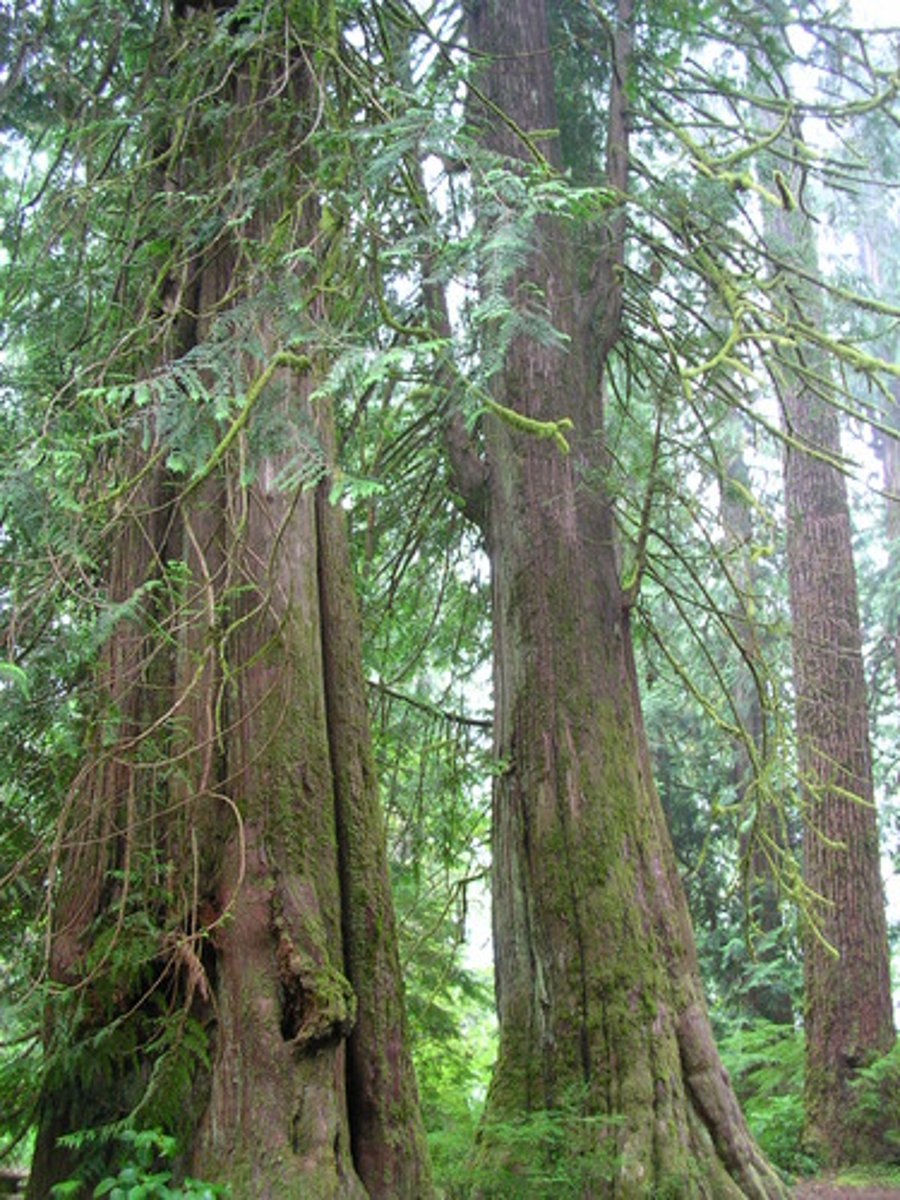
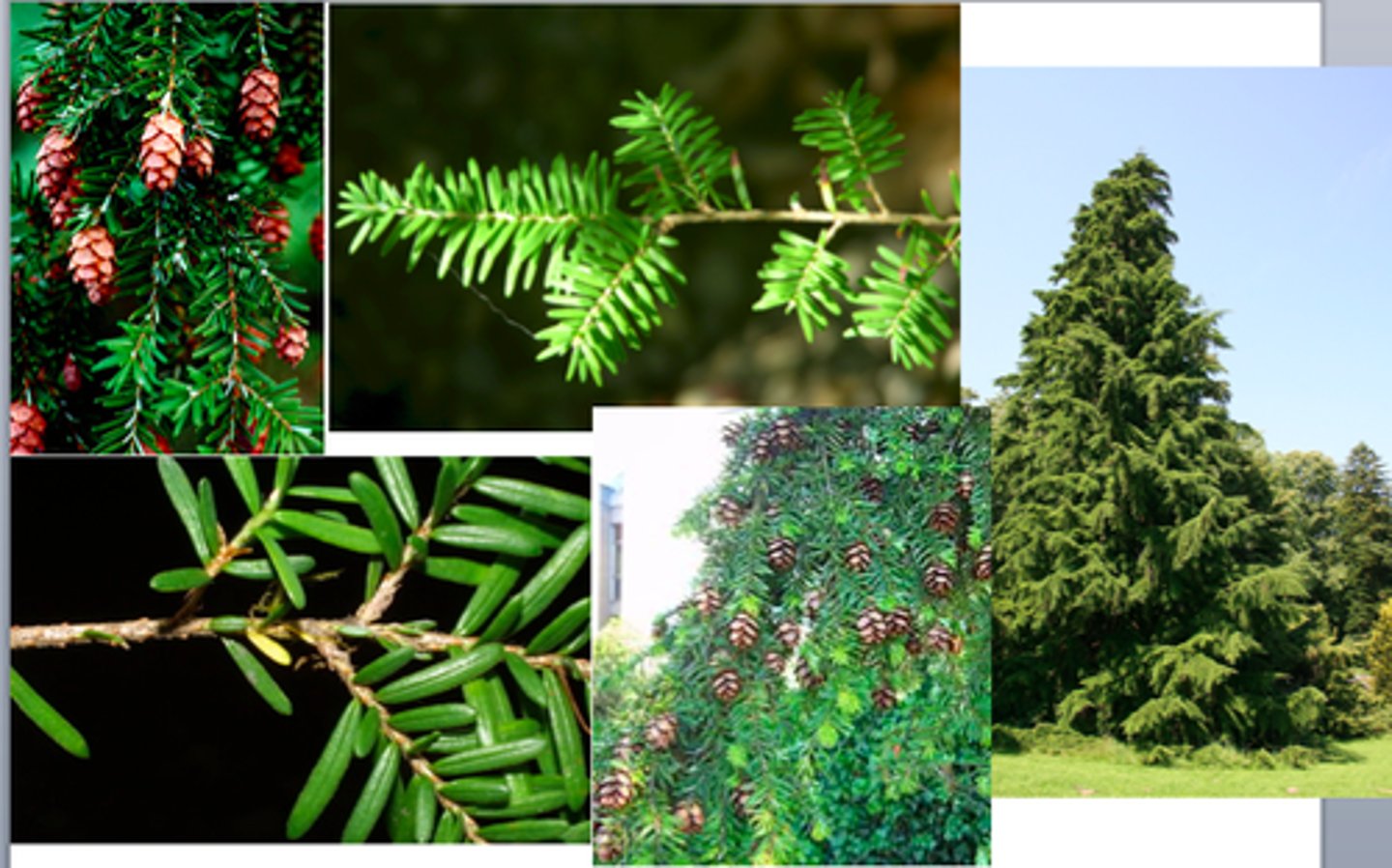
Western Hemlock
Coastal Indicator
- Dominant tree in the Coastal Western Hemlock biogeoclimatic zone- Where CapU is!
- If you live on the North Shore, it’s probably on or near where you live.
- Tolerates deep shade and wet conditions- growing beneath other trees and quickly filling gaps to dominate long-term succession.
Distinguishing Feature and uses
- Drooping top leader is a key ID trait as are the small cones
- Bark is high in tannin content- so used to tan hides. Also used to tan fishnets brown to make them less visible to fish.
- Carved into combs, wedges, children’s bowls, halibut hooks and spear shafts
- Branches used to collect herring eggs by suspending them in water- egg laden branches then hung to dry
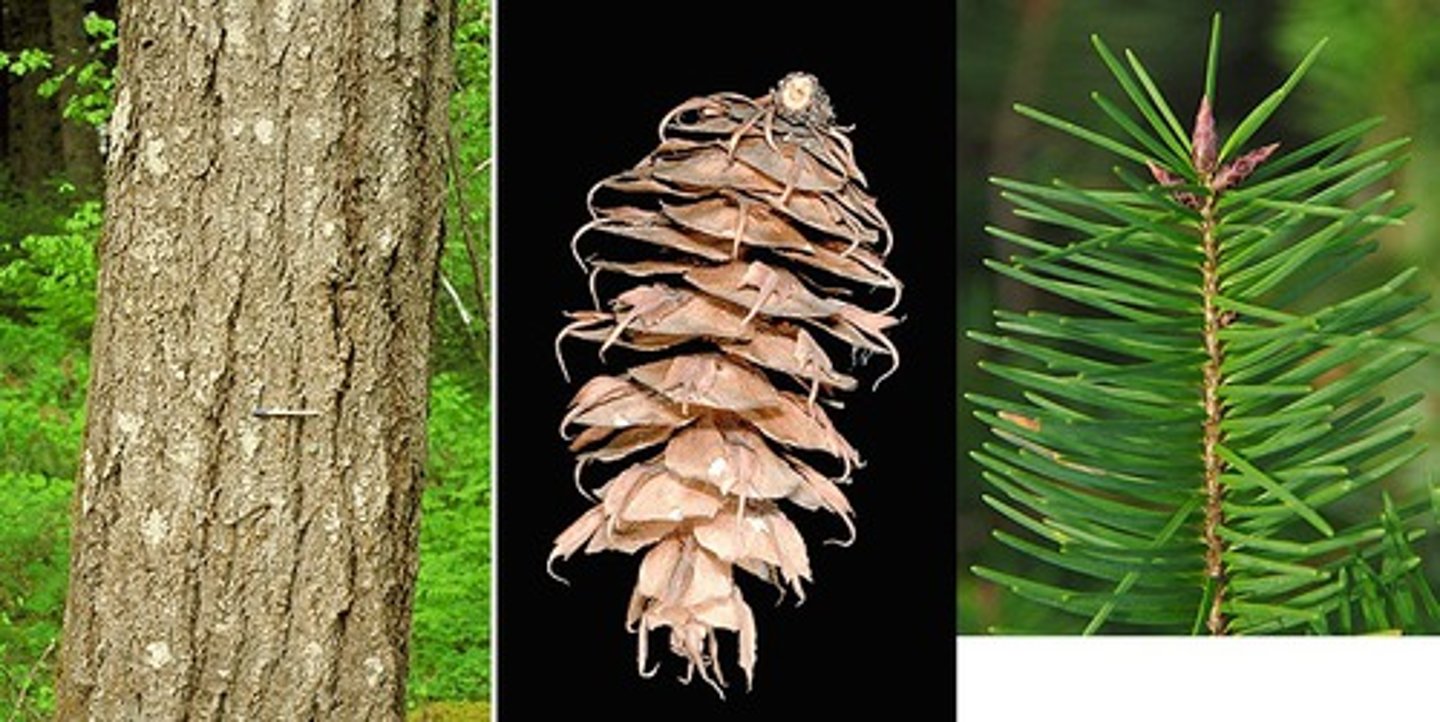
Douglas Fir
ID features and uses
- Douglas-fir trees have both male and female cones. The small ones make pollen, and the big hanging ones—like in this photo—are the female cones that grow seeds.
- The big cone has little “mouse tails” sticking out- can see the feet and the tail, like they’re burrowing into the cone.
- Thick bark protects from low-intensity fires.
- Among the tallest trees on the West Coast, it can soar over 85 metres—taller than a 25-storey building—and live for more than 1,000 years.
- Hardness of wood means it’s used for harpoon shafts, salmon weirs and spoons
- Pitch used for sealing joints, caulking canoes and water vessels
Forestry connections
- Most logged tree in BC; major source of 2x4s and structural timber.
Mycorrhizal connections
Forms underground partnerships with over 30 species of mycorrhizal fungi, creating a vast forest communication and nutrient-sharing network
Not a true fir
It belongs to its own genus Pseudotsuga menziesii (Pseudotsuga literally means “false hemlock”)
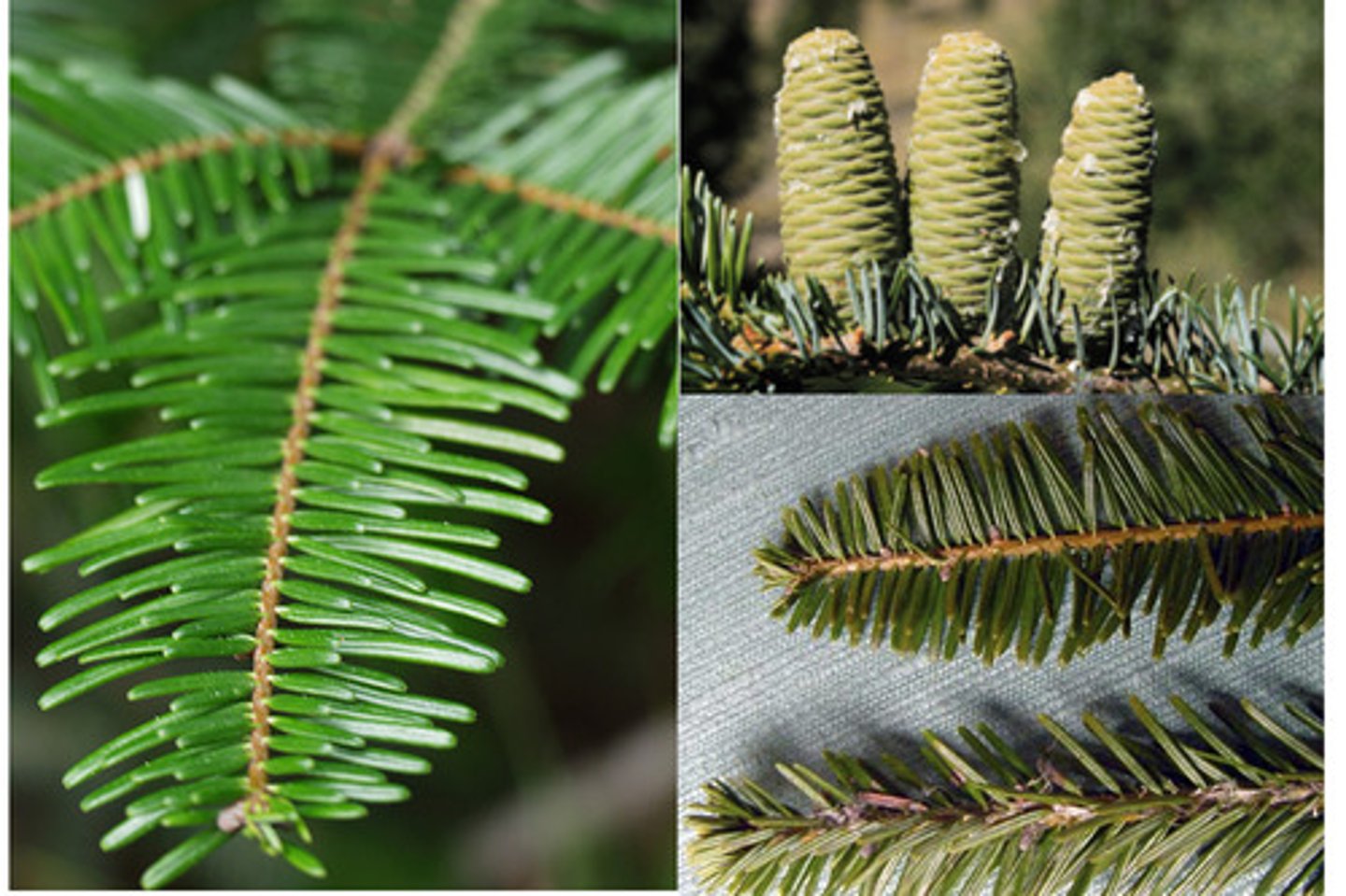
True firs: cones stand upright and fall apart on the tree; the needles are different (firs attach to the twig with suction-cup like attachments)
Grand Fir
Sitka Spruce
Tallest Coastal Tree
- Canada’s tallest tree, with some individuals soaring over 95 metres (as tall as a 30-story building!) along the coastal rainforests of British Columbia.
- Often found near the ocean or river mouths, needs moist air and rich soils but is extremely salt tolerant and wind firm (hence thriving on coastal spray zones)
- Never shake the hands of a spruce- their needles are sharp and poky! The needles grow around the twig- giving a bottle-brush look.
- Bark is flaky and grey-brown
Wood Properties and other uses
- Excellent sound transmission; used for guitars and pianos.
- Strong and lightweight; historically, used for aircraft in WWII and hockey sticks as well.
- Young shoots eaten and contain much vitamin C
- Pitch used to ease sore throats and toothaches
- Roots used to watertight hats and baskets
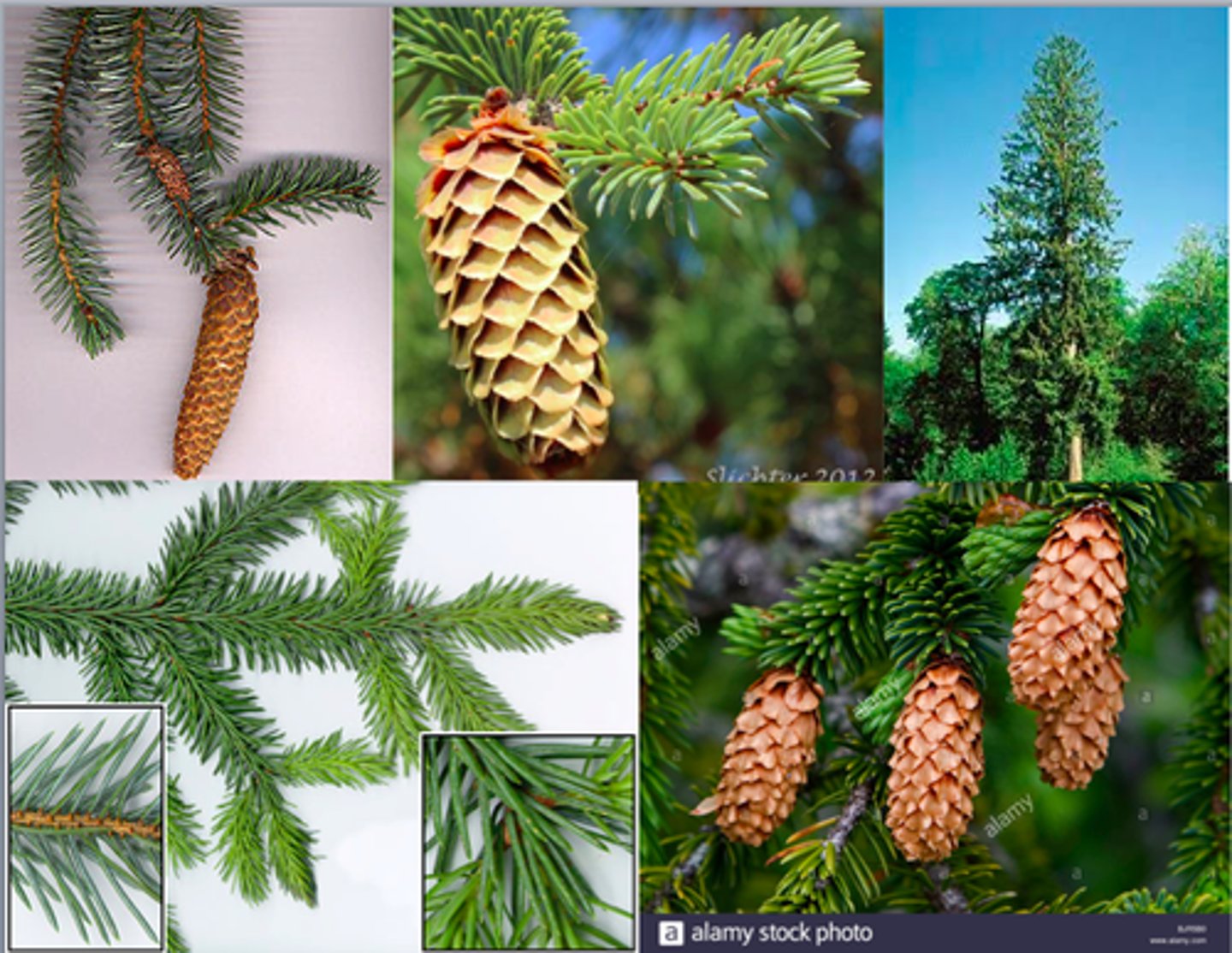
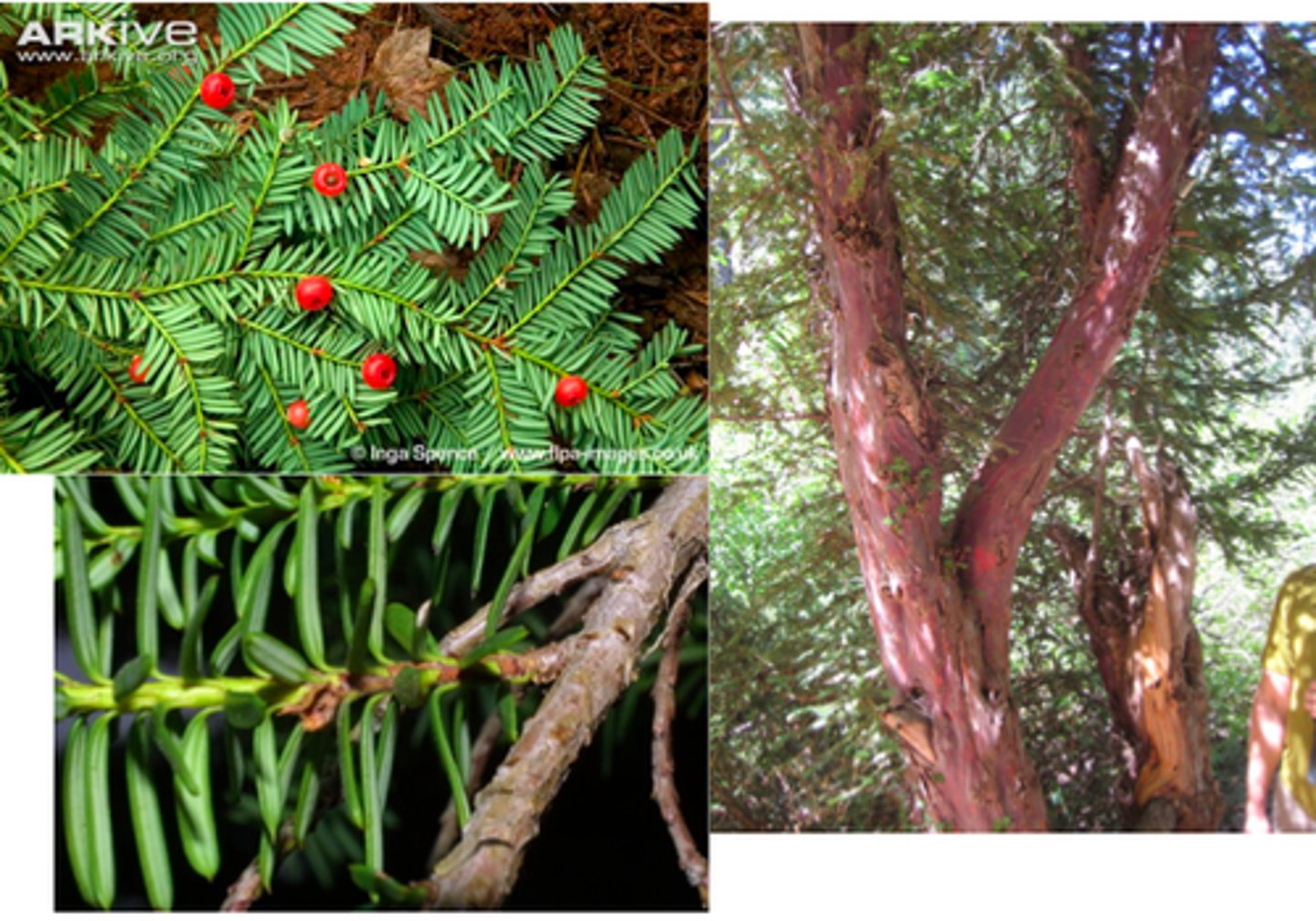
Pacific yew
Unique attributes
- Slow-growing, small conifer found beneath the canopy of moist forests.
- Can live for centuries
- All parts of the tree—except the fleshy red aril around the seed—are toxic, containing compounds that can affect the heart and nervous system if ingested. (livestock deaths- horses and cows, particularly when it’s but and left where animals can access it)
- Has males and female trees—only the females produce the red, berry-like arils that hold the seeds, while males produce small pollen cones.
- It’s ecologically rare. Why? It grows slowly meaning if it’s disturbed or cut down it takes a long time to recover; It prefers specific habitats (shady understory of mature forests); it was heavily harvested for Taxol when first discovered; having female and male trees means both need to be nearby to reproduce.
Medicinal and other uses
- Taxol is a powerful chemical compound originally derived from the bark of the Pacific yew.
- It has been widely used to treat breast, ovarian, and other cancers—and is one of the most significant medicinal products to come out of BC.
- Wod extremely flexible and strong- used for hunting bows
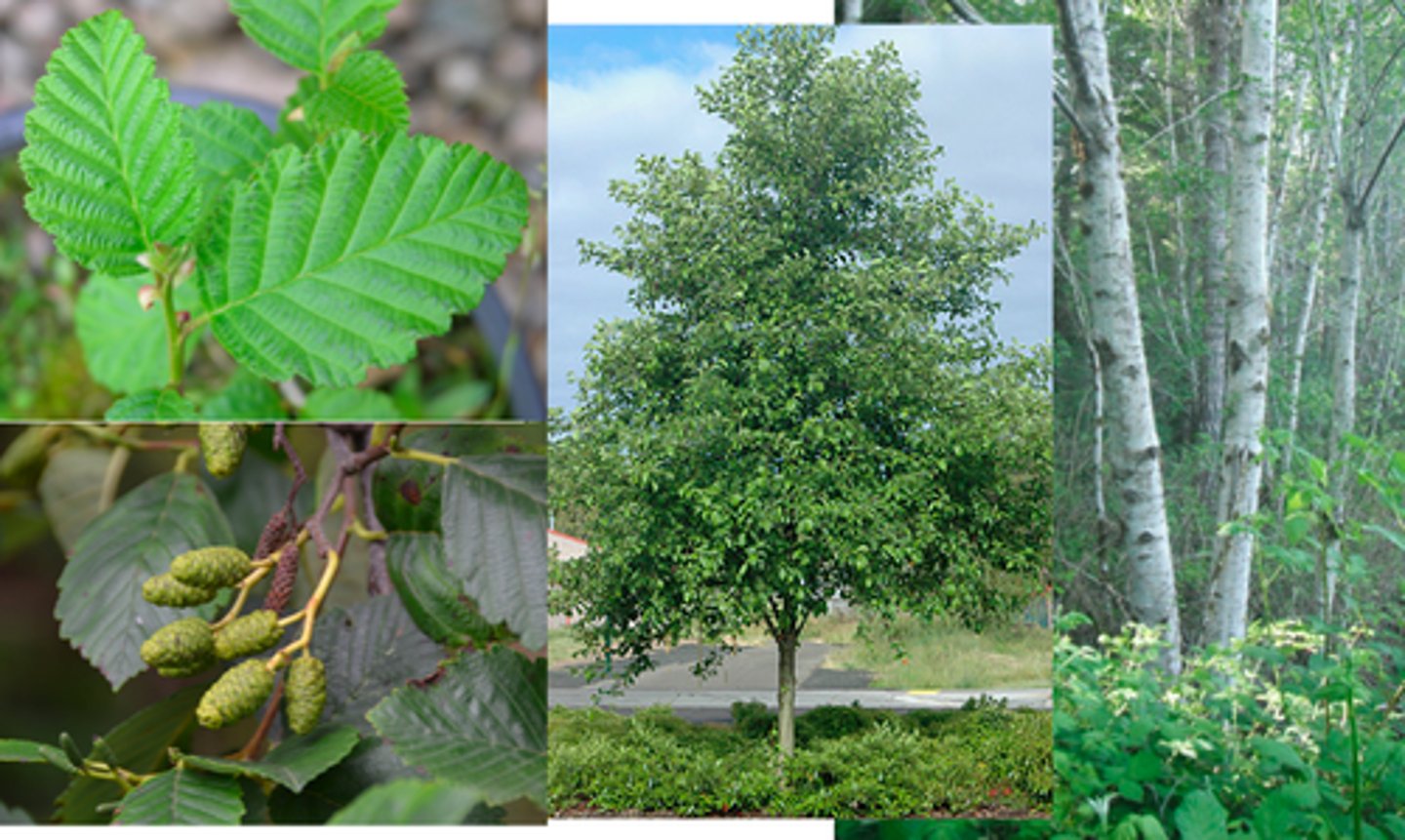
Red Alder
Key ID traits
- Red alder has smooth, gray bark often mottled with white lichens, and oval, toothed leaves with rolled-under edges on the back of the leaf
Pioneer Species
- One of the first trees to colonize disturbed areas like clearings or roadsides.
- Fast-growing and often forms dense stands in early successional forests.
Nitrogen Fixer
- A super important nitrogen fixer! Forms a symbiotic relationship with nitrogen-fixing bacteria (from the genus Frankia), which live in nodules on its roots and convert atmospheric nitrogen into a form the tree can use (and anybody who has a garden knows how important nitrogen is)
- This process enriches the surrounding soil, benefiting nearby plants and playing a key role in forest regeneration—especially after disturbances like logging or landslides
Uses
- Many craftsman like the woodgrain & often use in woodwork projects.
- Good fuel for smoking salmon and other fish
- Inner bark eaten (strong antibiotic components)
- Catkins are a strong antifungal- used as an external wash
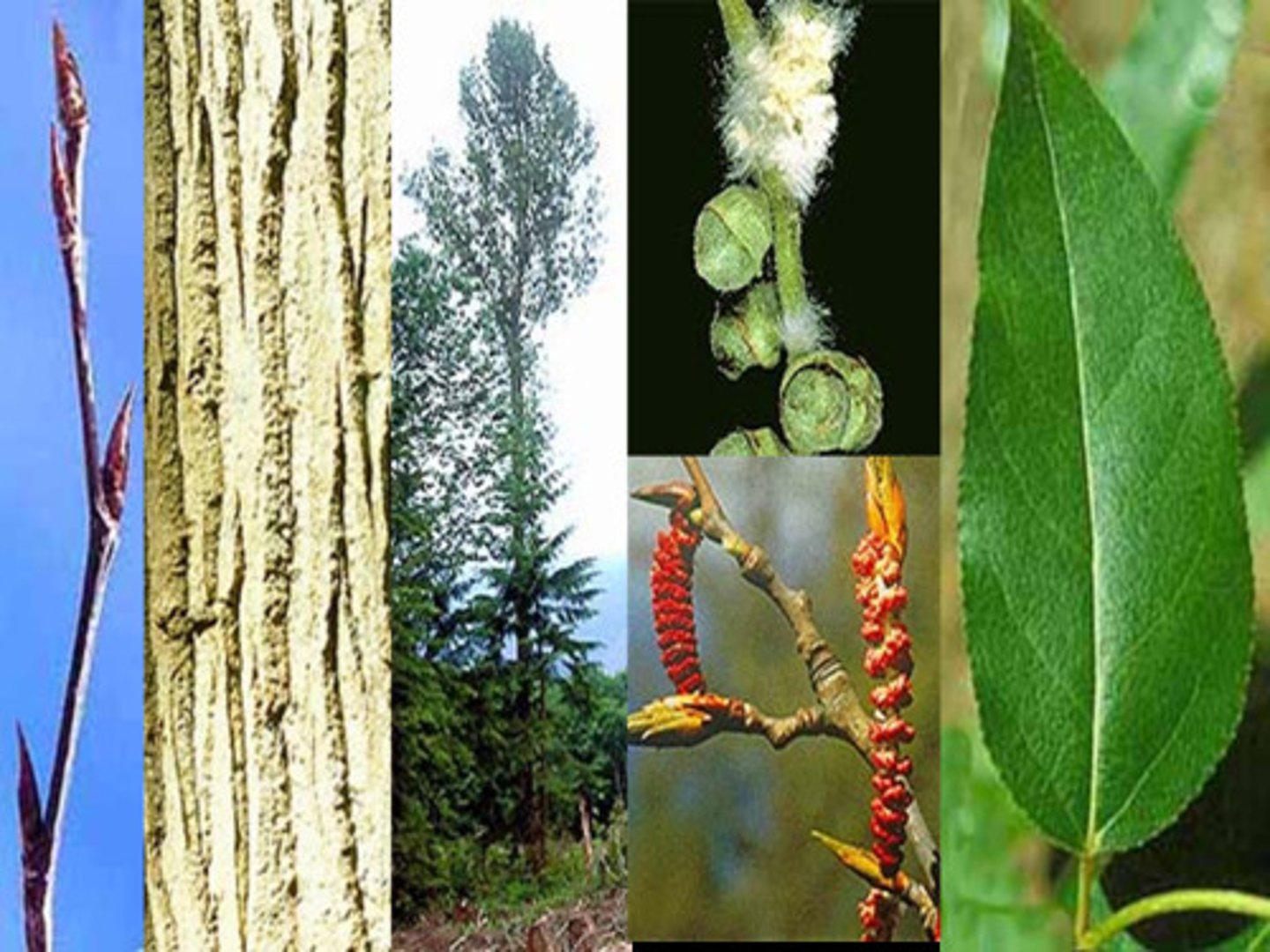
Black Cottonwood
Riparian Stabilizer
- Grows along rivers and streams, where its roots stabilize soil and reduce erosion.
- One of the first trees to colonize disturbed, wet sites, especially after floods or logging.
- Larger and longer lived than Red Alder and grows quickly in moist conditions.
- Cottonwood releases huge amounts of fluffy, white seed hairs (wind dispersal adaptation!) Covers everything. Hence don’t park under it when seeding (June ish in BC).
Uses
- The wood is light and soft, used primarily for pulp, which ends up in tissue, toilet paper, and newsprint.
- Soap and shampoo made from its ashes
- Young shoots used for sweat lodge frames
- Roots used for rope
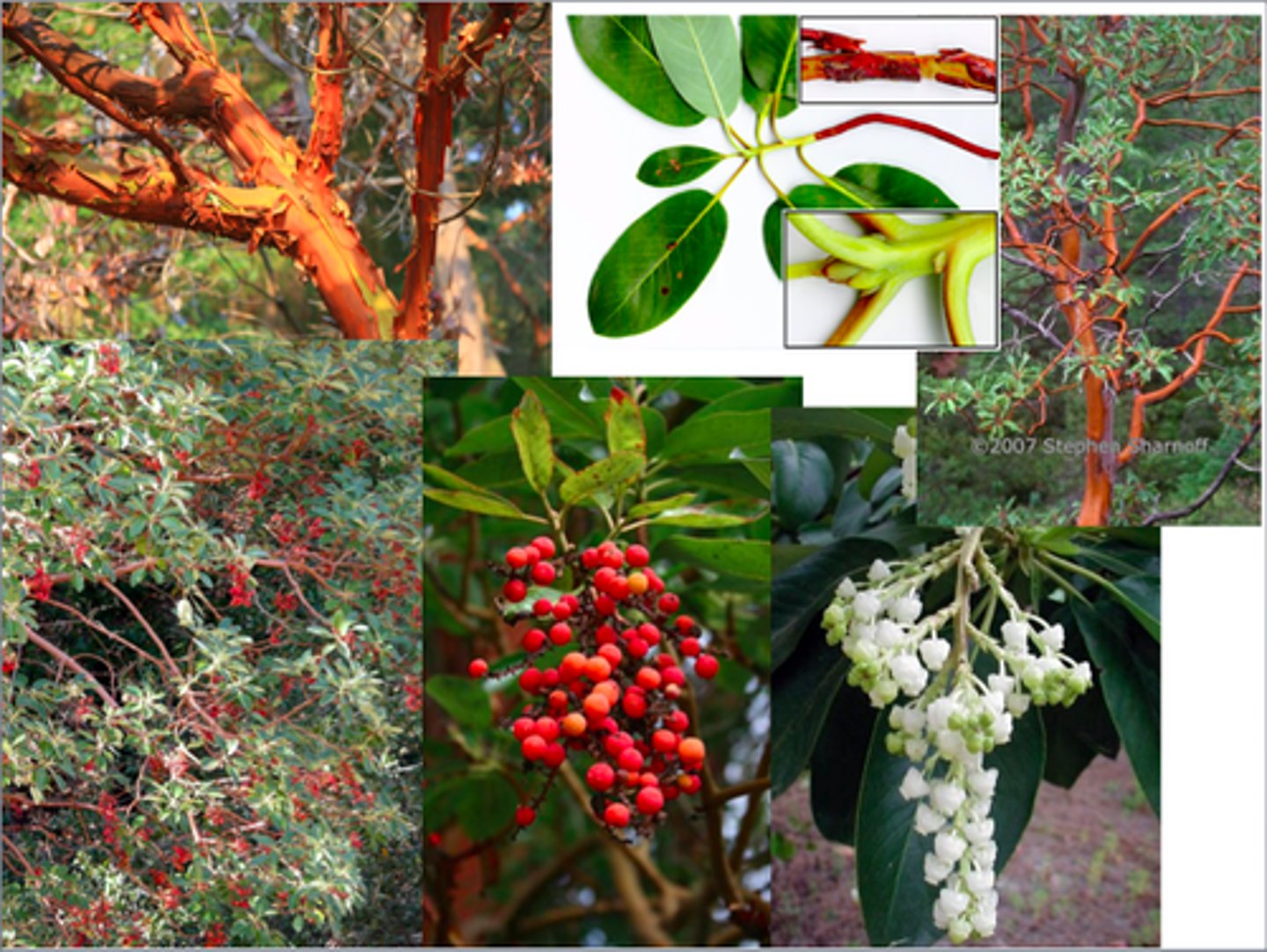
Arbutus
Iconic Coastal Tree
- Grows along rocky bluffs from California to Campbell River.
- Deep roots help stabilize rocky coastal slopes
- Only broadleaf evergreen tree in Canada.
Distinct Appearance
- Smooth reddish bark peels away to reveal fresh greenish bark beneath.
- White flowers and red berries support pollinators and birds.
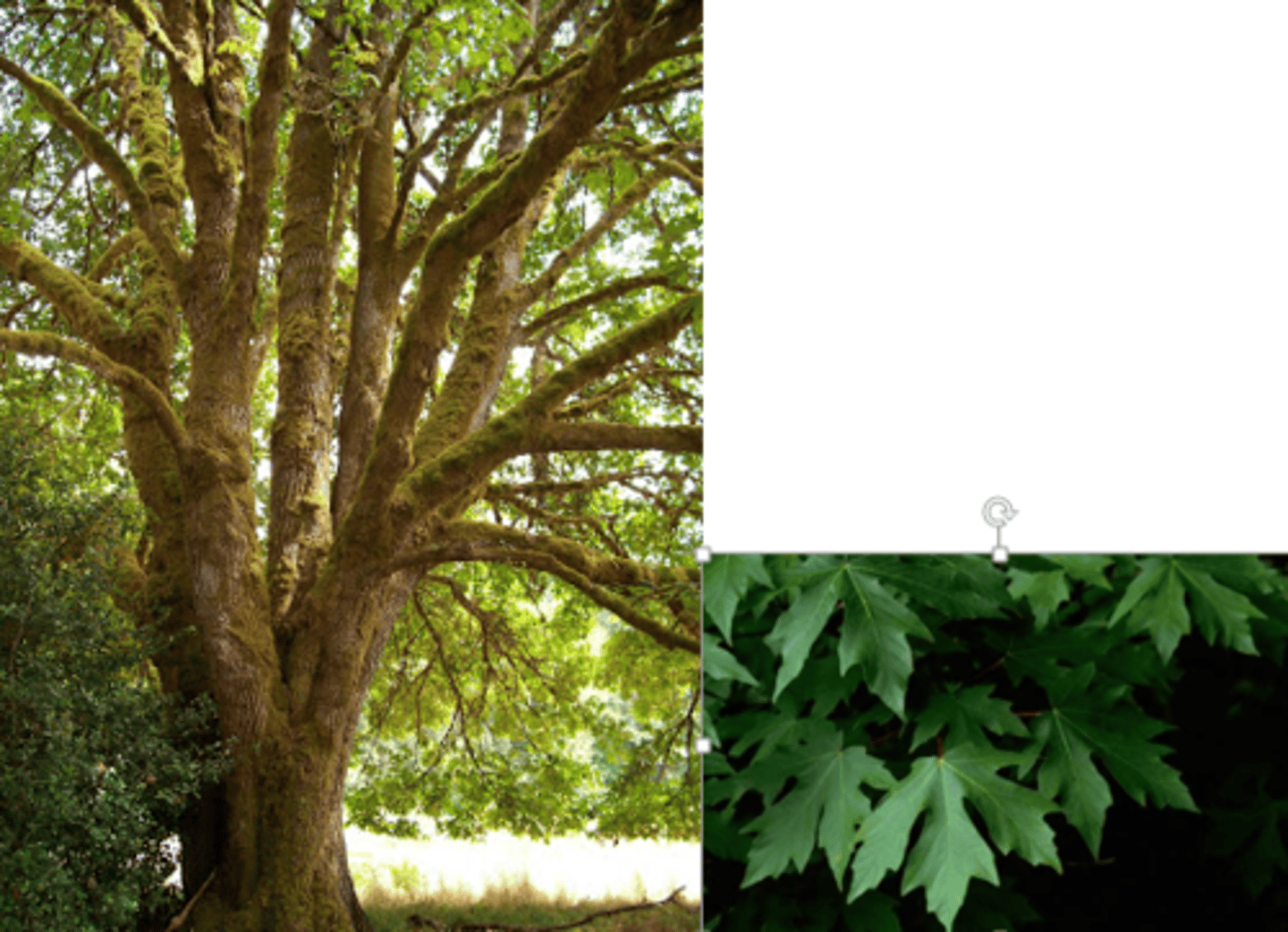
Bigleaf Maple
Iconic
- Canada’s largest maple, with leaves up to 30 cm wide—the biggest of any maple species in the world
- Grows rapidly and can reach heights of 30+ metres, with a wide, spreading crown
Friend to wildlife and kids! Other uses
- Provides shade, shelter, and nesting habitat for birds, squirrels, and insects.
- Canopy and trunk often carpeted in moss, licorice fern, and other species—supporting a whole mini-ecosystem on a single tree.
- Broad, sturdy limbs make it a favourite for treehouses and climbing.
- Main wood used to make paddles
- Leaves used as temporary containers
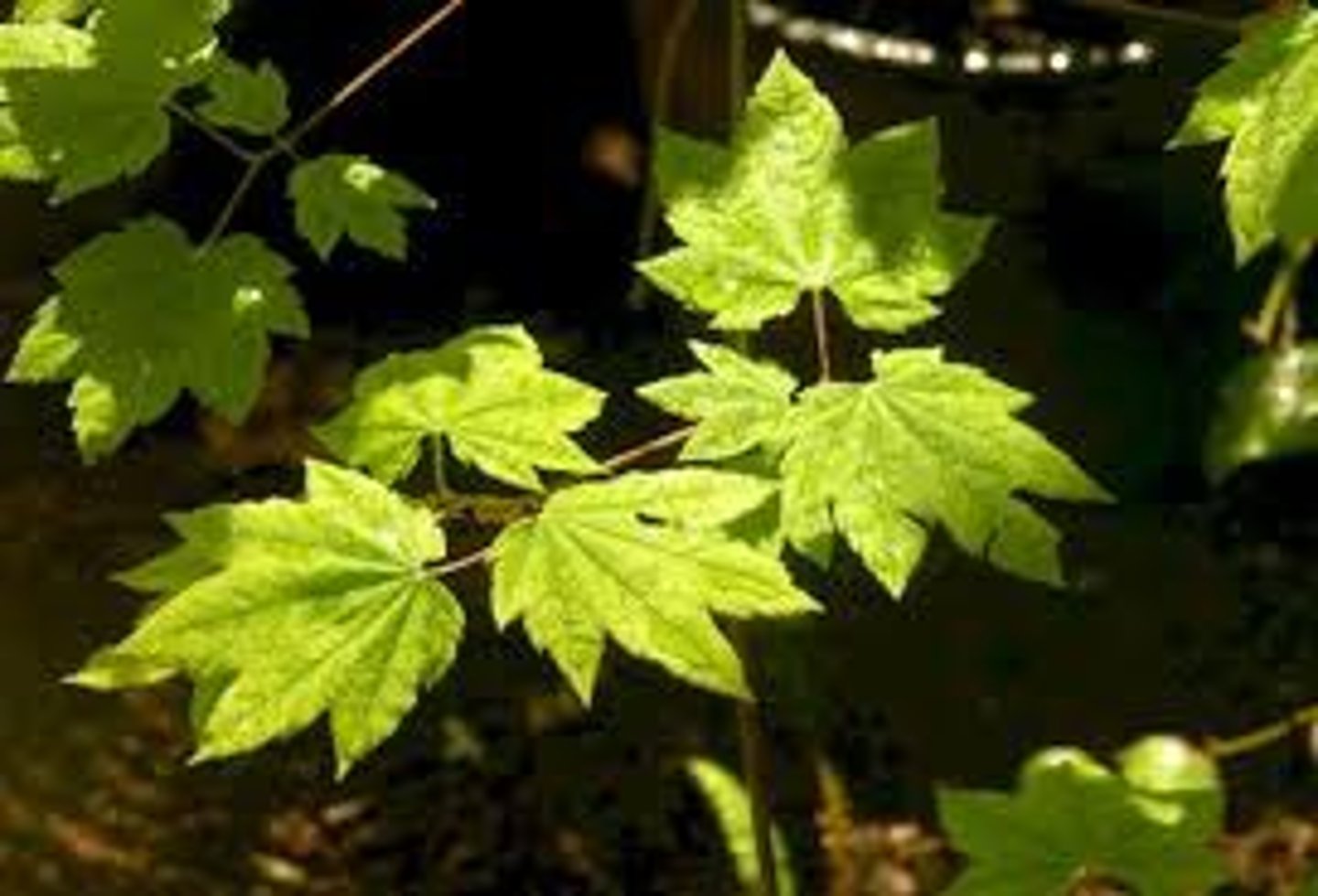
Vine Maple
ID traits
- Iconic maple leaf shape but much smaller than bigleaf maple.
- Often grows as a large shrub under forest canopy, bending toward light.
- Flexible wood makes it resistant to wind damage.
- Known for brilliant red-orange fall foliage.
Uses
- Indigenous groups use the strong, flexible branches to make fish traps, snowshoes and other items, especially for bentwood work (e.g. drums)
- Pro tip: Vine maple doesn’t burn well, especially when green, so useful for fire sticks or pot rests.
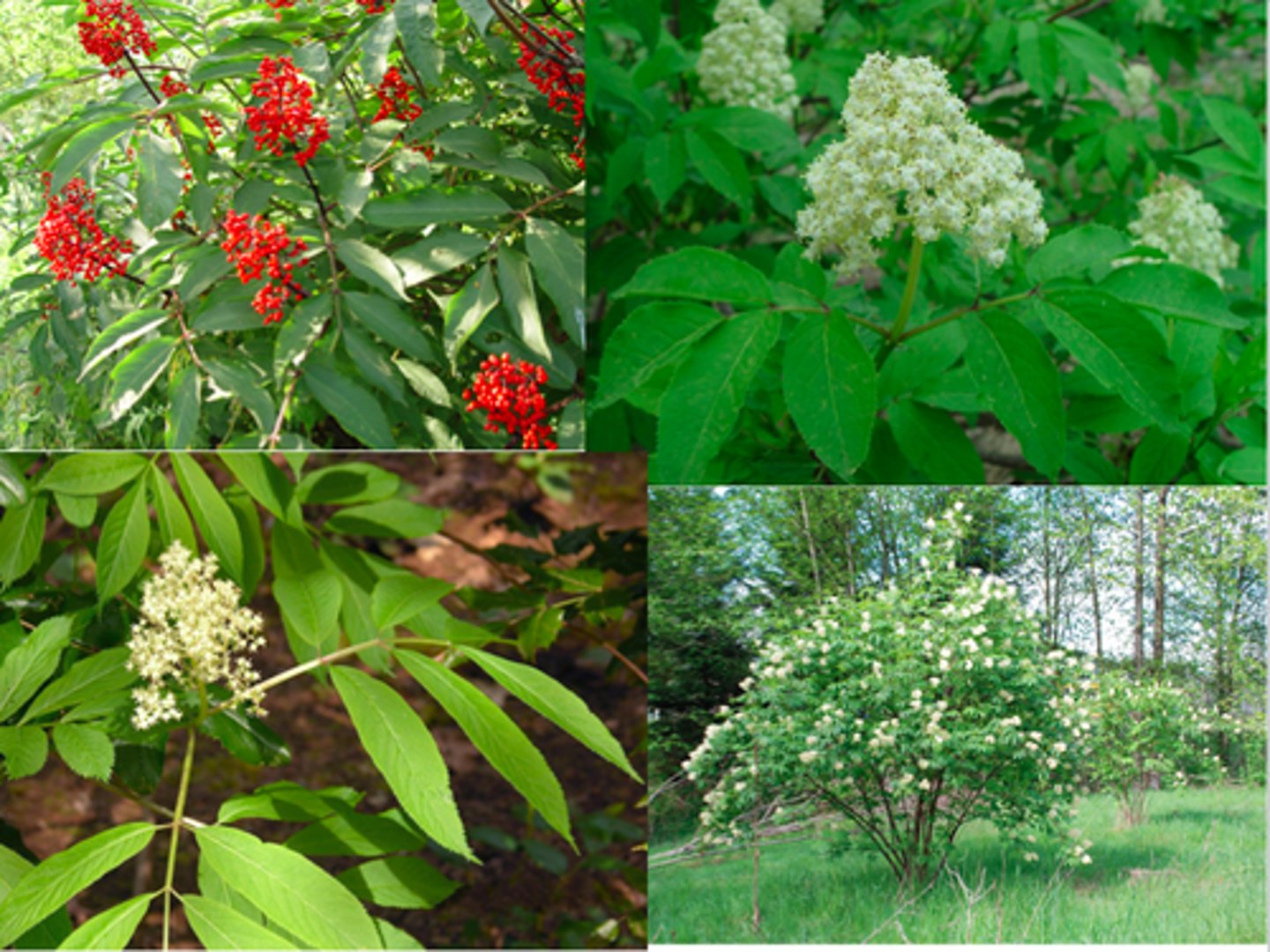
Red Elderberry
Edibility
- The fragrant blossoms of red elderberry are used to make refreshing drinks and cordials.
- The berries, however, are toxic when raw and must be cooked thoroughly to be safely eaten
Seasonal Bloomer and ID traits
- Flowers in mid-spring, one of the earliest shrubs to blossom.
- Leaf smells like peanuts or peanut butter
Fruit and Wildlife
- Produces bright red berries that are a key food source for birds.
- Fermenting berries can intoxicate birds — a fun and memorable ecological fact.
- Drunk birds (fly erratically, crash into things, and wobble. Maybe even fall off branches)
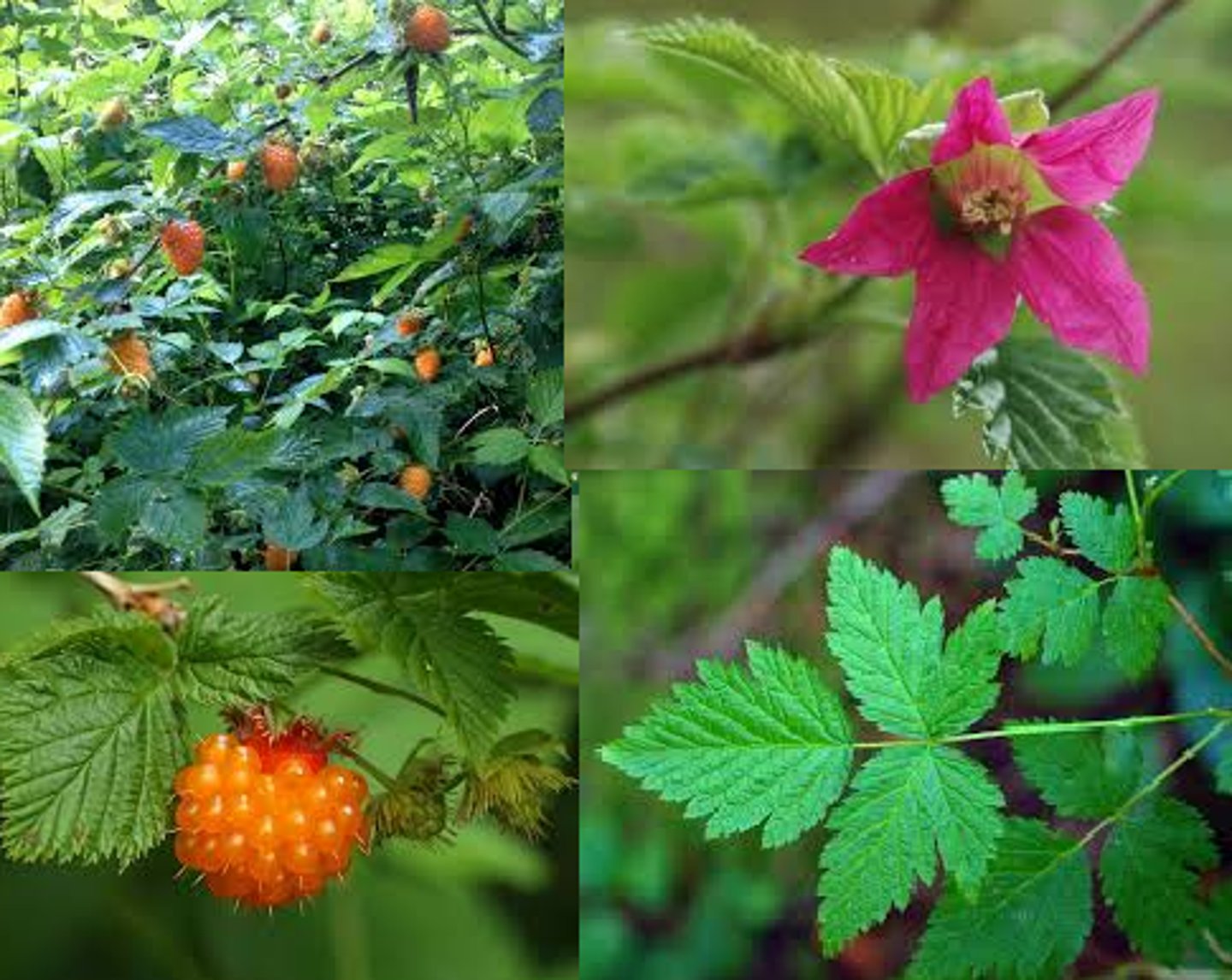
Salmonberry
Early Emerger
- One of the first shrubs to leaf and flower in spring (March).
- Flowers are attractive to early pollinators like hummingbirds.
Edibility and associations
- Young shoots are edible when peeled; berries are often gathered with family in May.
- Salmon run: ripening coincides with the salmon’s return to spawn in many coastal streams- a seasonal marker with deep Indigenous significance
- Ripening is also associated with the arrival of the salmonberry bird- the Swainson’s thrush
ID tips
- “Butterfly” shaped leaves (when you fold the top leaf down) make it a good ID point for learners.
- Or the “mustache and goatee” without
Red Huckleberry
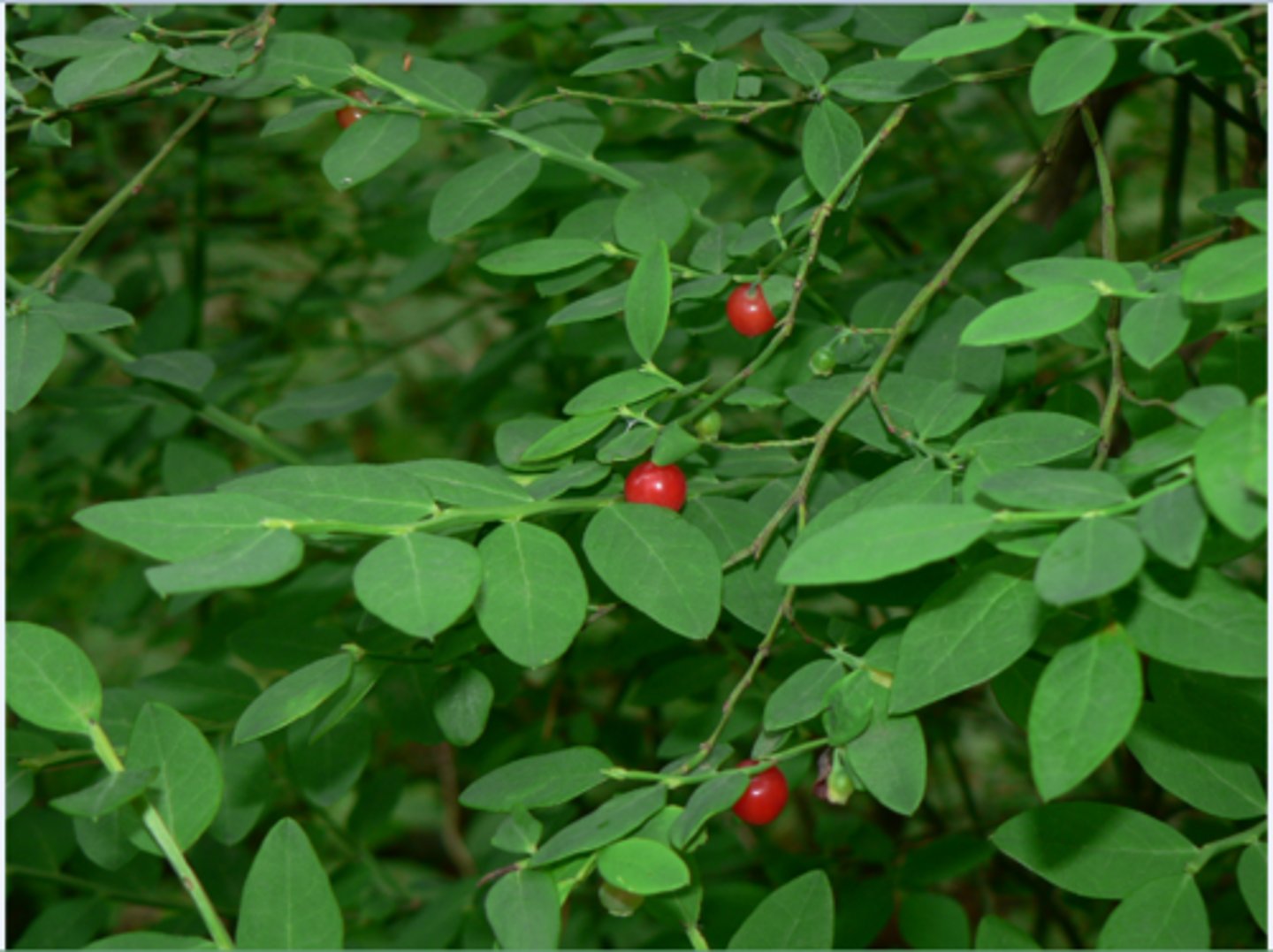
Classic Forest Shrub
- Bright green stems and scattered red berries perched above old logs.
- Often (but not always) grows out of rotting stumps, showing forest nutrient cycling.
- Interestingly the plant is evergreen when it's young, and deciduous when it's older- a rare trait
Wildlife Connections
- Important berry for birds and bears.
- Commonly picked and remembered by locals, especially on coastal trips
Uses
- Red berries used as fish bait
- Berries dried like raisins, mashed into cakes or stored in grease or oil
- Berry juice used as a mouthwash
Thimbleberry
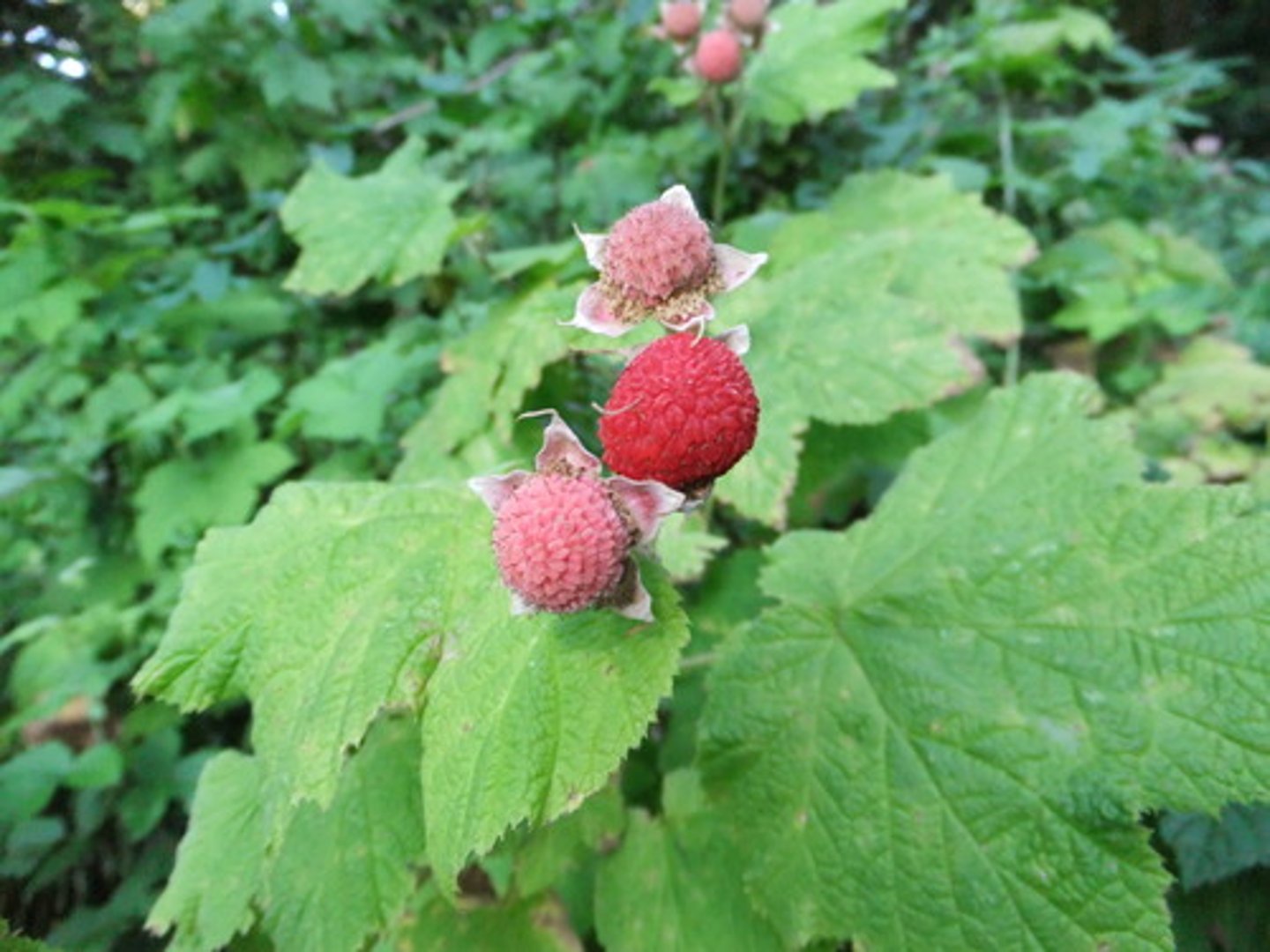
ID tips
- Berries are like flattened raspberries, seedy but flavorful (very soft and don’t store well — meant to be eaten fresh on the trail.)
- Leaves are large and fuzzy, useful for plant ID and forest floor coverage (and TP in a pinch…)
- Unlike relatives (like salmonberry or blackberry), thimbleberry has no thorns.
Salal
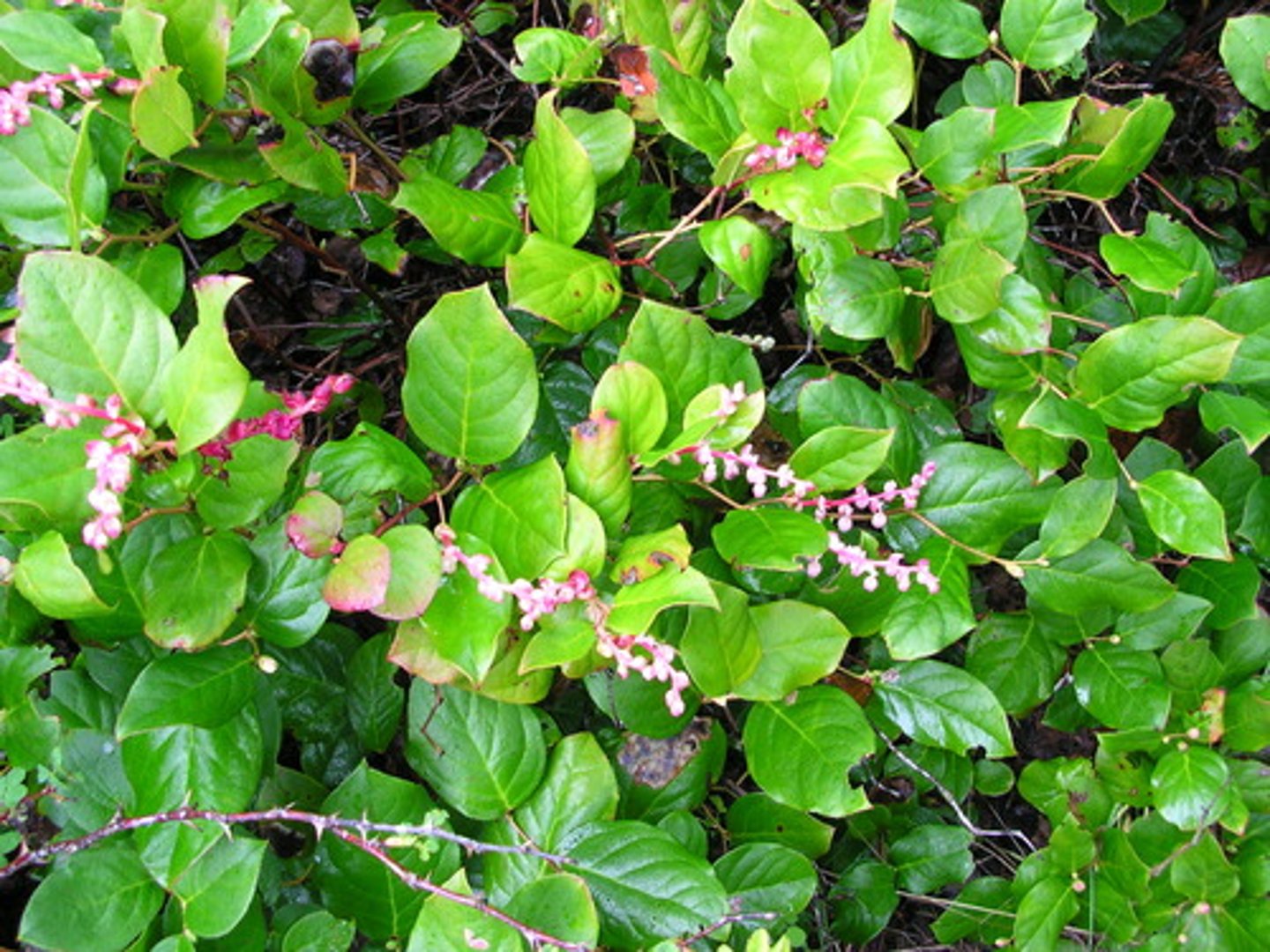
Evergreen Resilience
- Thick, waxy leaves help the plant survive dry summers.
- One of the most common understory shrubs on the coast.
Berries!
- Most people don’t know you can eat them. And they can be pretty yummy!
- Produces dark blue-purple berries in late summer (August) that are important for birds and bears
- Used in Indigenous communities for salal cakes
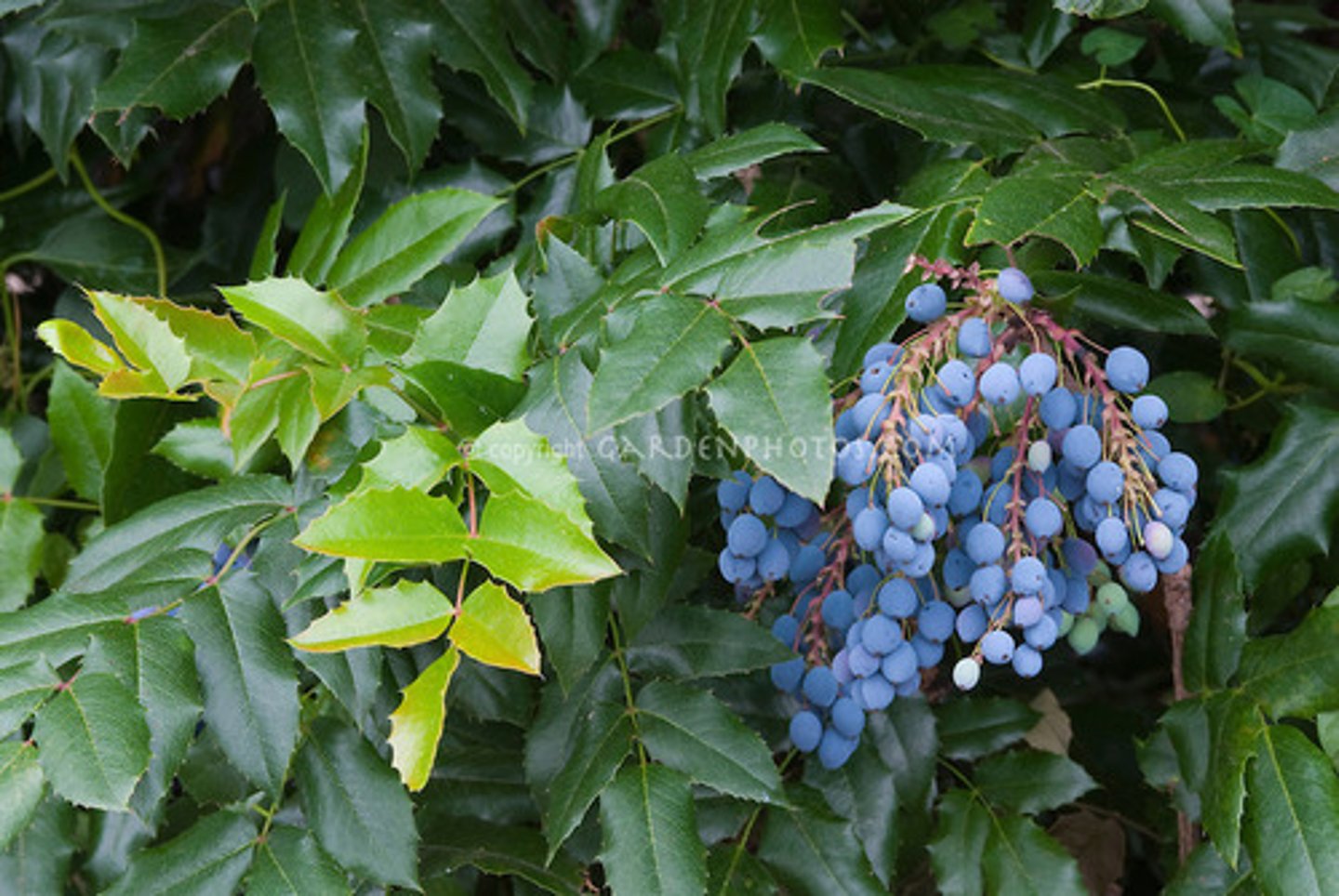
Oregon Grape
Seasonal Bloomer & uses
- Flowers appear in mid-April, followed by berries in late May.
- Leaves emerge early in spring and are edible in small amounts.
- Berries make a good jelly (with some sugar)- traditionally dried and saved for winter
- Bark and berries used as medicine for respiratory, liver, gall-bladder and eye problems
- Shredded bark of the roots and stems used to make a bright yellow dye for basket materials
Wildlife & Landscaping
- Berries are eaten by birds and small mammals. They are edible but sour.
- Commonly planted in local gardens due to its resilience and evergreen leaves.
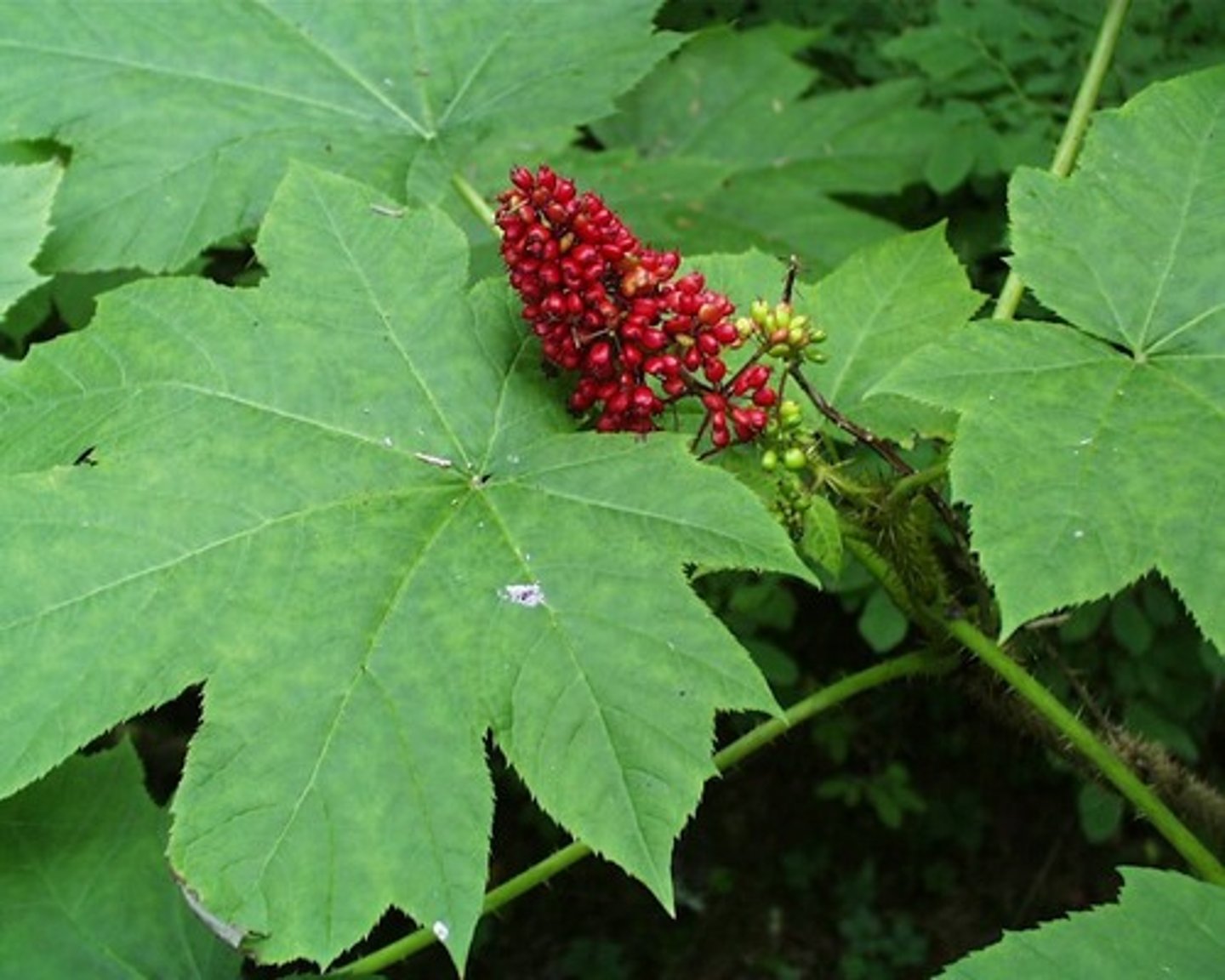
Devils Club
Medicinal Powerhouse and other uses
- A close relative of ginseng, devil’s club has been used for generations by Indigenous peoples to treat conditions like arthritis (and other inflammatory conditions), tuberculosis, diabetes, digestive issues, and for spiritual protection
- Berries rubbed on head to make hair shiny
- Used charcoal from plant with bear grease to insert under skin as tattoo
Physical Features
- Tall, woody stems (up to 3 metres)
- Covered in painful yellowish spines, even on the undersides of leaves.
- Massive, maple-like leaves and bright red berry clusters (in late summer)
- Grows in moist forest areas and near streams.
Caution
- The spines are not stinging, but they pierce easily and can break off under the skin, sometimes causing infection or long-lasting irritation.
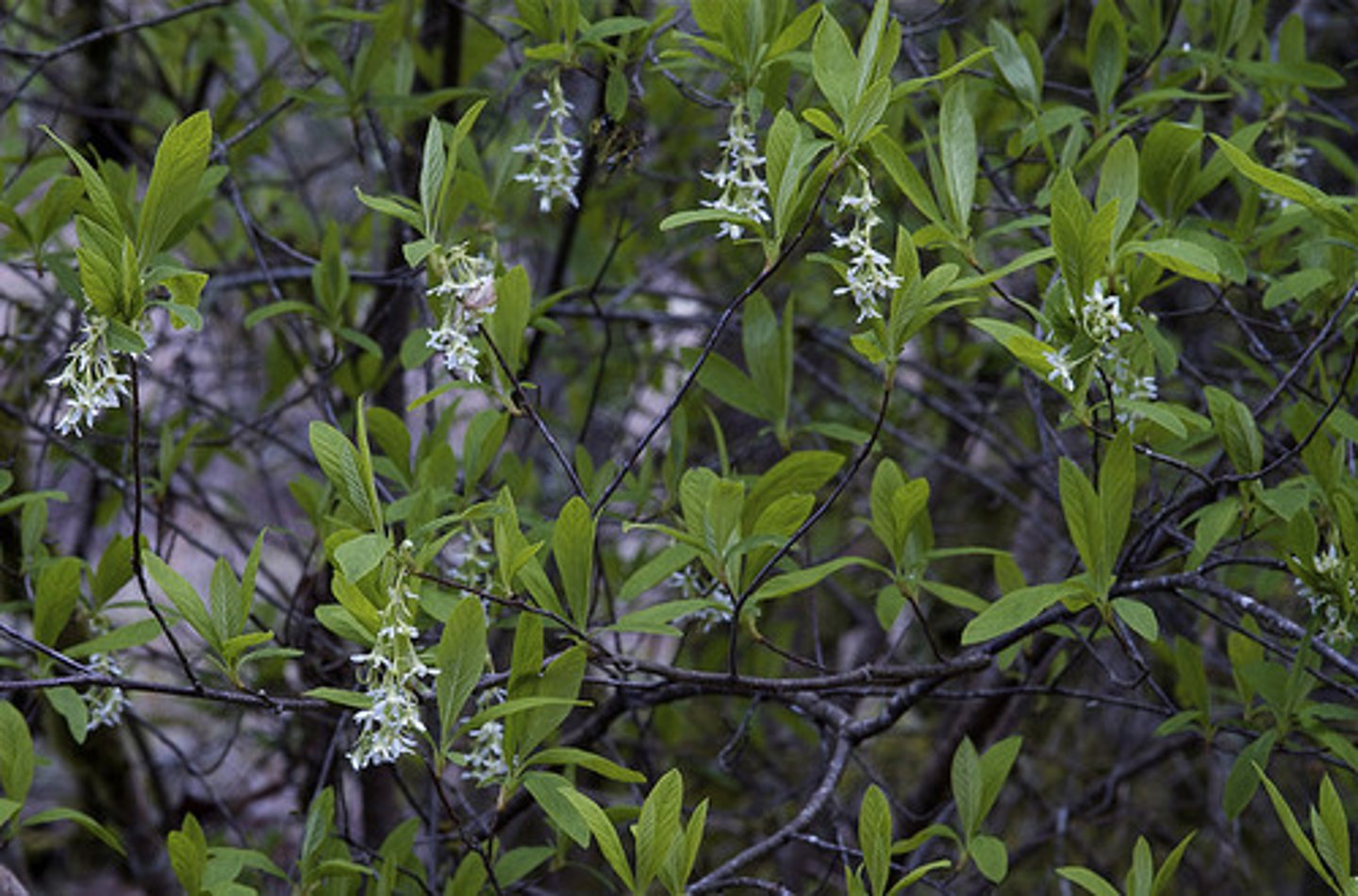
Osoberry
First Signs of Spring
- Among the first plants to flower in late winter or early spring.
- Also, among the first to fruit with small purple berries.
Ecological & Cultural Role
- Important for early pollinators and birds.
- Formerly called Indian Plum; name changed as part of reconciliation efforts.
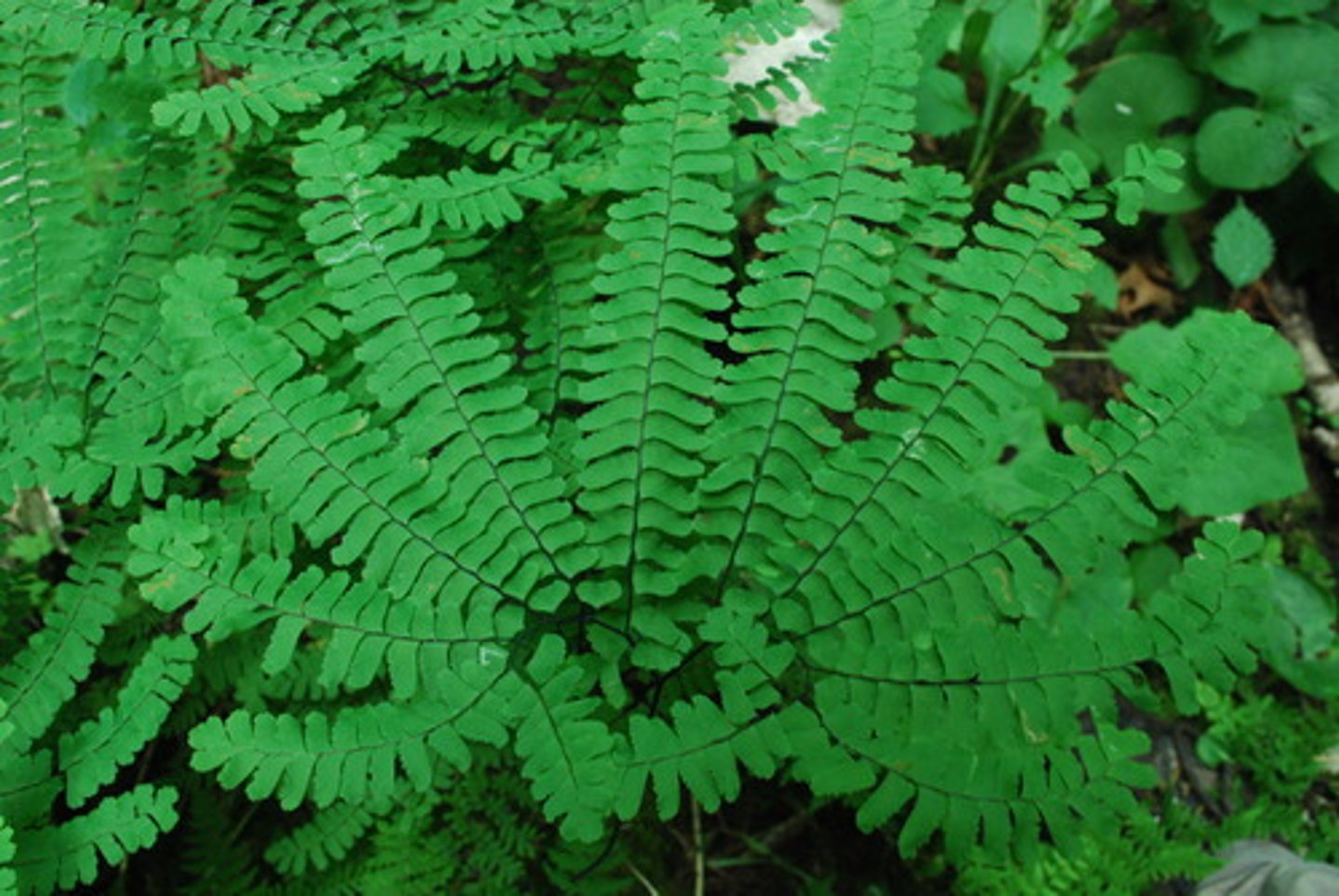
Maidenhair Fern
Delicate Structure
- Recognizable by its thin black stems and circular arrangement of leaflets.
- Prefers wet, shaded habitats such as near waterfalls or seeps.
Cultural Use
- Used in First Nations basketry for decoration and structure.
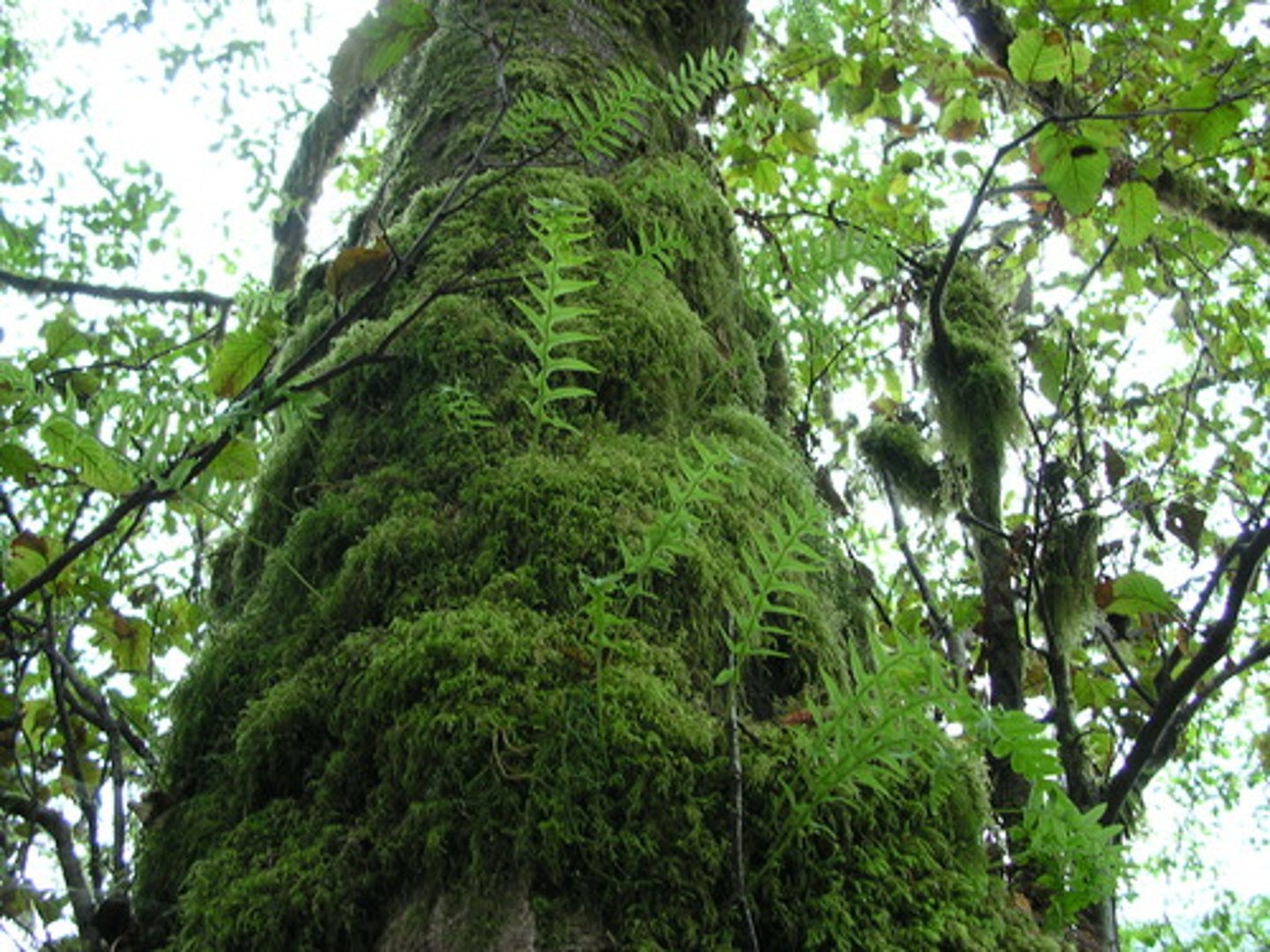
Licorice Fern
Licorice Fern
Root end tastes like anise, it’s sweet, thrives in winter, grows in moss on maples or rocks
root end tastes like anise – bring a small swiss army type knife to let everyone try the root of this plant. It’s sweet, thrives in winter, and grows in moss on maple trees or on mossy rocks,
Winter Specialist
- Green and active in winter when other ferns are dormant.
- Grows epiphytically on mossy trees and rocks.
Edible Root
- Root tastes like anise and has been used medicinally.
- Used to treat sore throats and colds
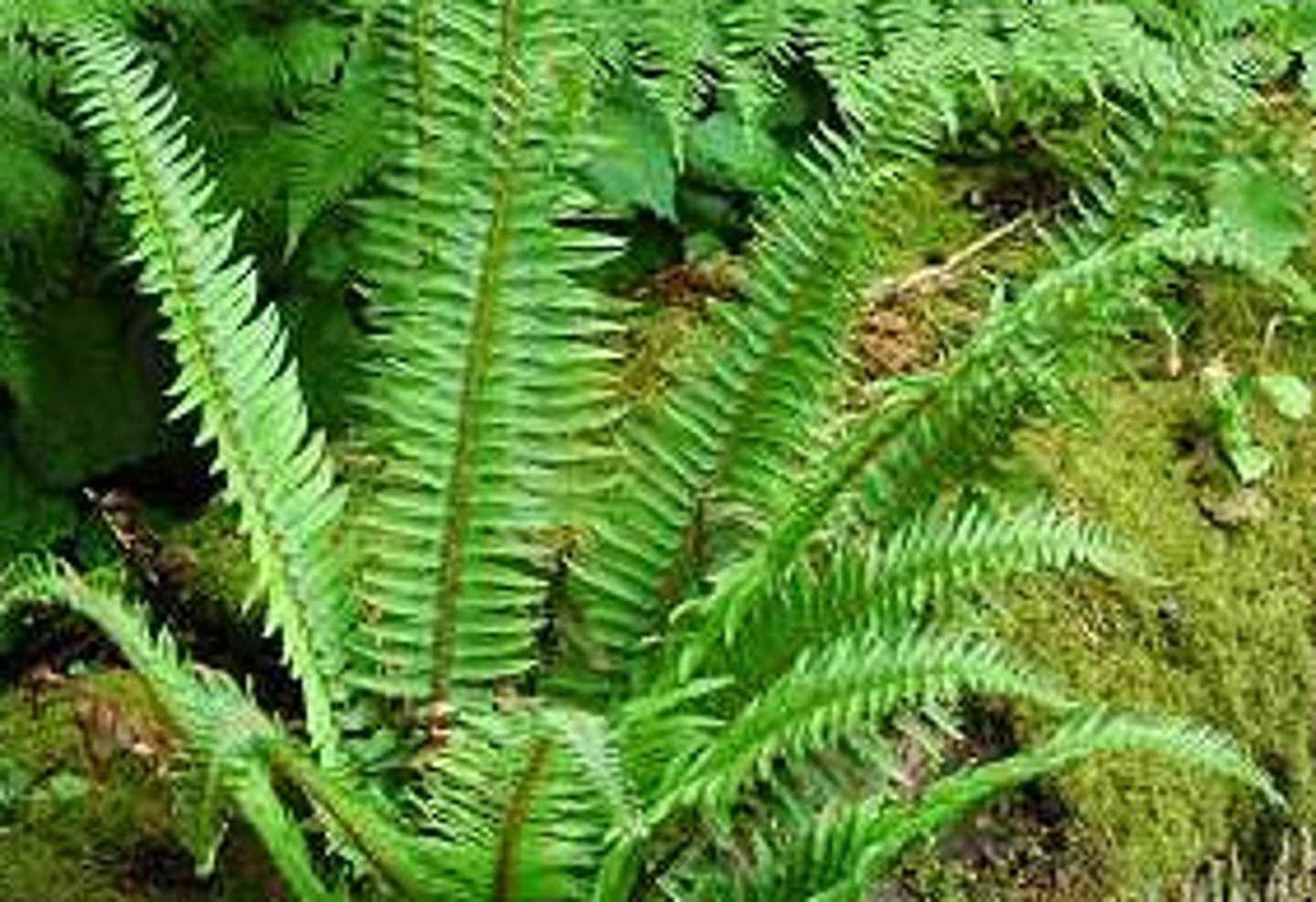
Sword Fern
Common and Recognizable
- Large, robust fronds with sword-like leaflets.
- Found in most lowland coastal forests, and in many home gardens (including mine!)
- Evergreen fern, providing green ground cover year-round
Indigenous Use
- Used in First Nations pit cooking (as insulation and covering) and as padding (for bedding or floor pats)
- Technology: Long stiff fronds used to line steaming pits, storage boxes, baskets, berry drying racks, etc.
- Known as “pala-pala” by Ditidaht FN (on Vancouver Island)- used as a training for young men to hold their breath (as divers). Pull each leaflet off and say “pala” as you do working up one side and down the other. Whoever could do the most without stopping for breath won. Learn about the pala pala game from Ethnobotanist Nancy Turner - https://youtu.be/X1lbFfsE-l0
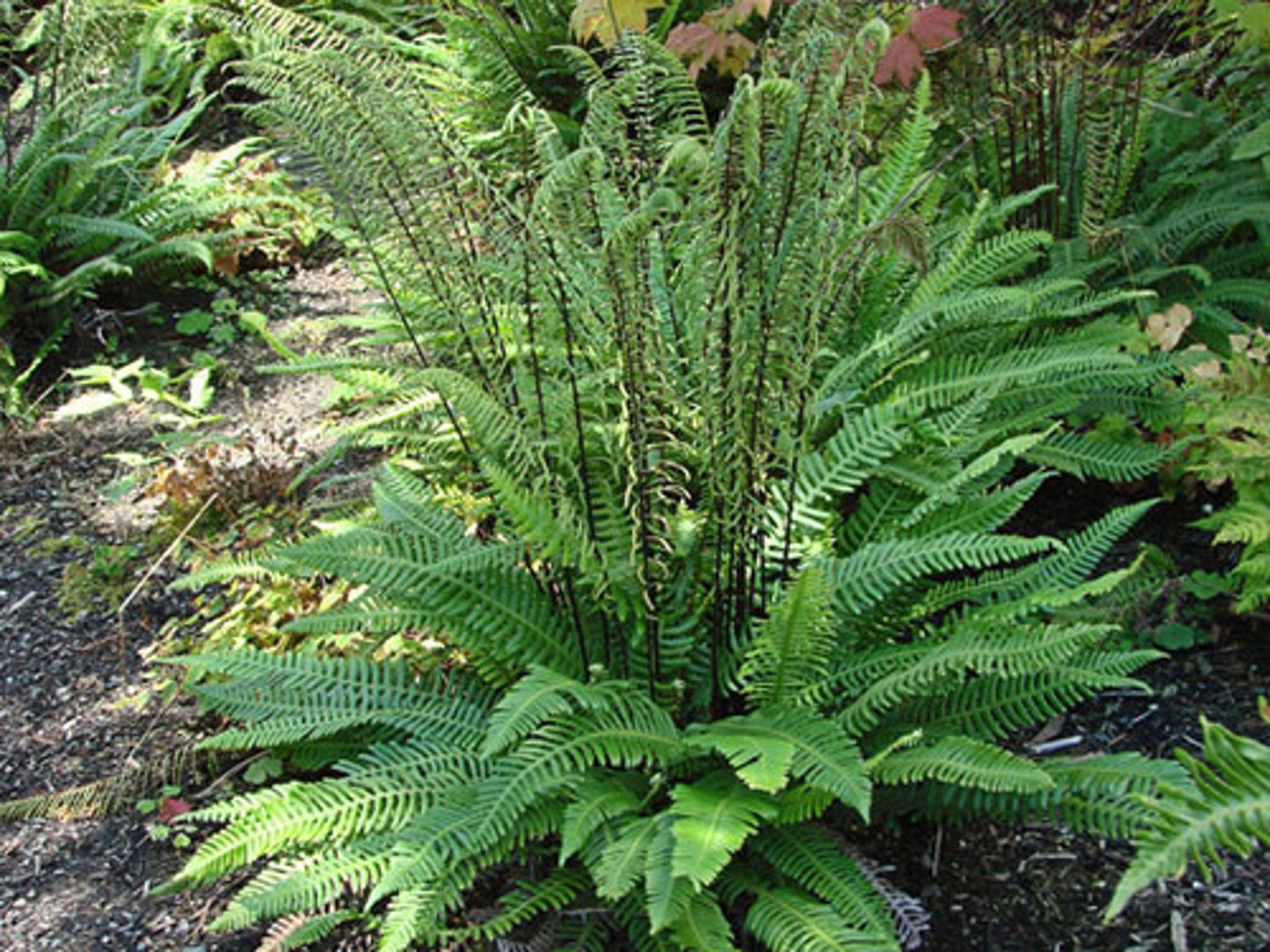
Deer Fern
Dual Frond Strategy
- Has two types of fronds: sterile spreading fronds (for photosynthesis) and upright fertile fronds (releasing spores for reproduction).
- Compact growth form compared to sword fern.
“Deer” Fern
Browsed by deer, especially in winter when few other green plants remain
More delicate in texture, making it more palatable than other ferns like sword fern
Ferns and spores
In general, ferns are an incredibly ancient plant (hundreds of millions of years) and come in many shapes and sizes around the world.
Ferns use spores to reproduce (spores are tiny reproductive cells released from the undersides of fertile fronds; when they land in a moist, shady place, they can grow into a small, heart-shaped plant that starts the next stage of the fern life cycle.)
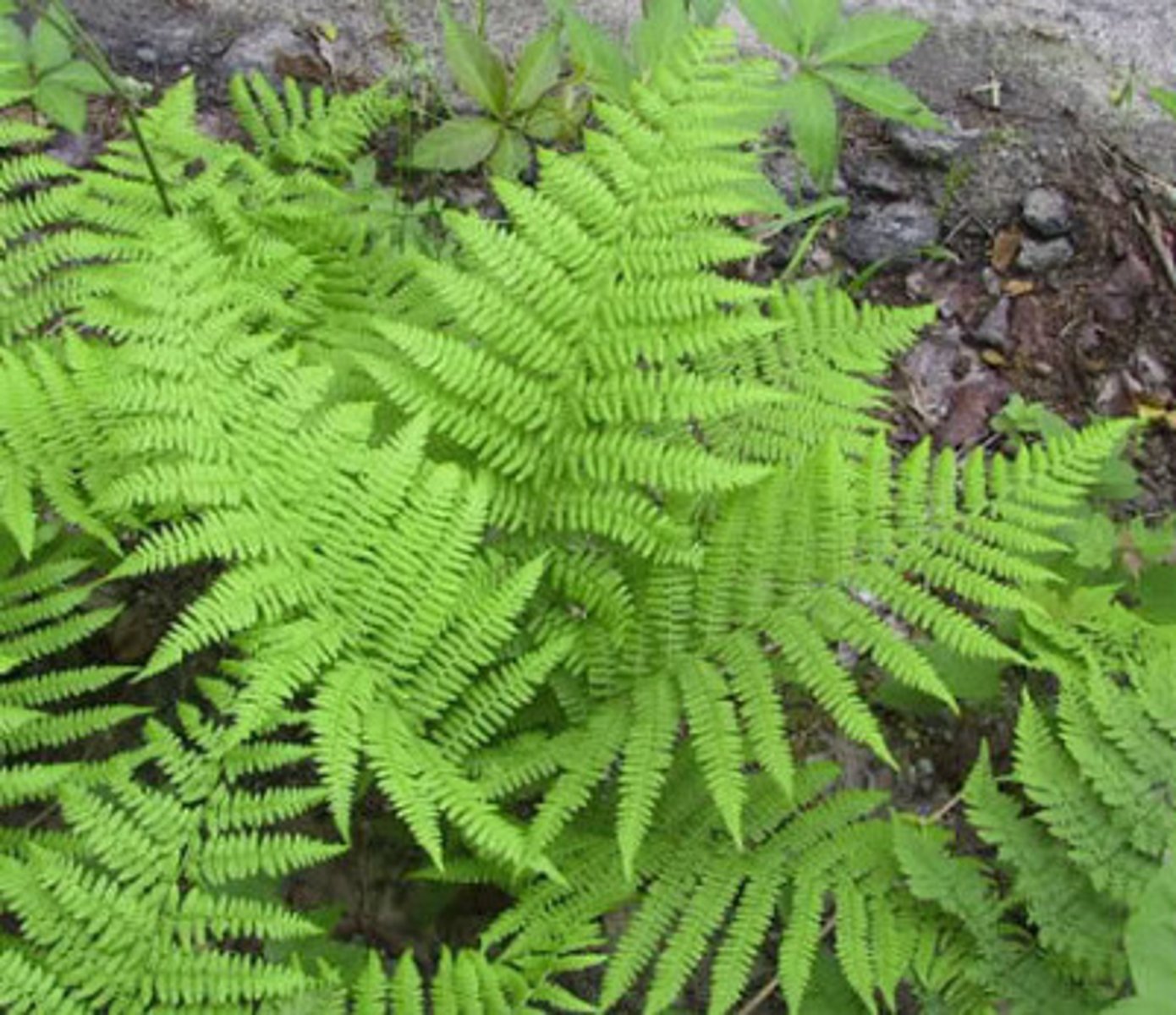
Lady Fern
Elegant Appearance
- Soft features and a diamond-shaped fronds with delicate divisions.
- Common in shady forests and riparian areas.
- Can be confused with spiny wood fern (AKA spreading wood fern), but that fern has a triangle shape.
Edibility & ID
- Can resemble bracken but lacks toxic qualities.
- Used sparingly in traditional medicine.
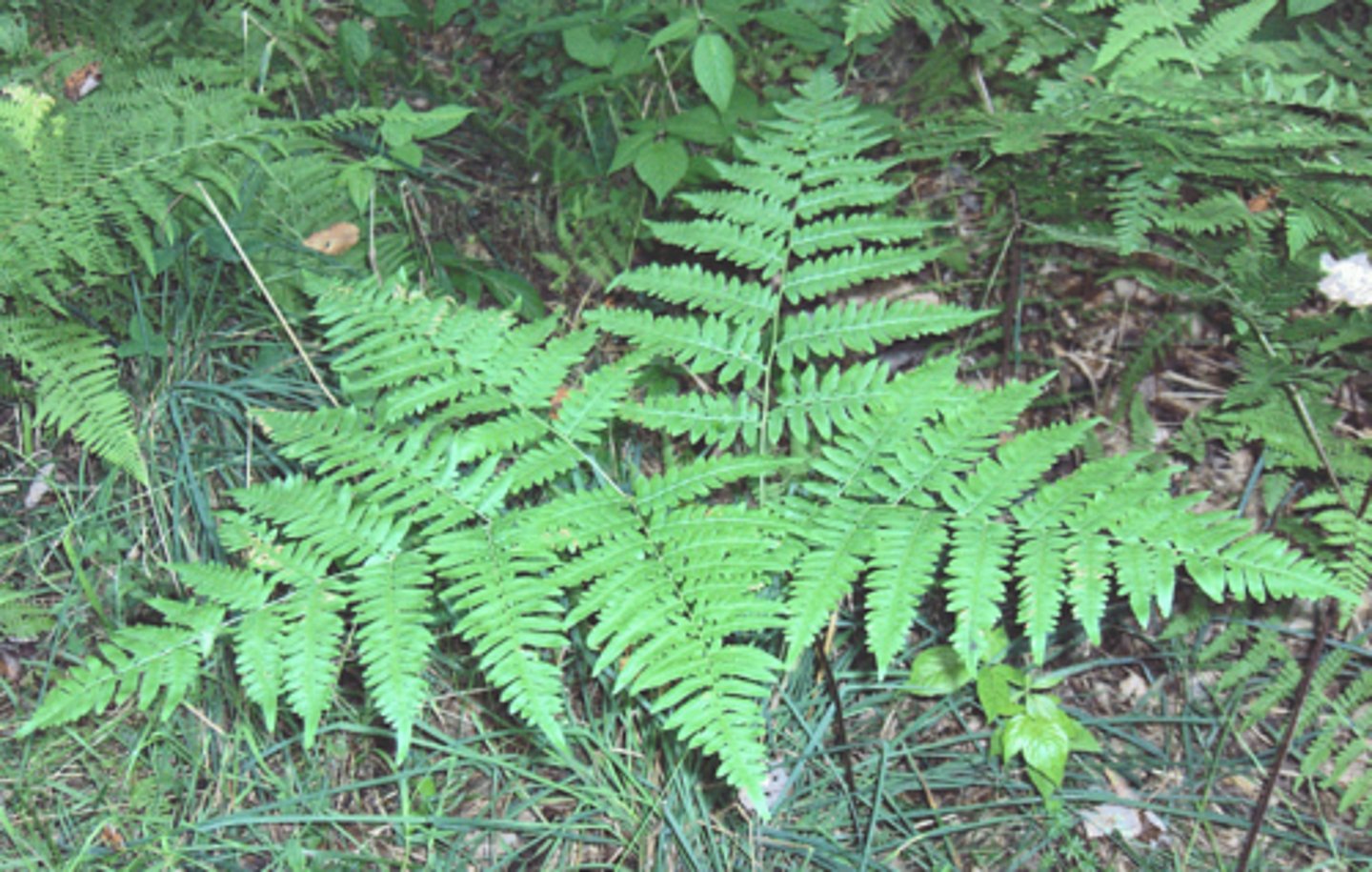
Bracken Fern
Ecological Role
Common in disturbed areas (e.g. fire, logging, landslides, roadsides)
Spreads through rhizomes (underground stems that send up new fronts) allowing it to form dense colonies.
Competes with other ground-layer species and can dominate if unmanaged.
Species ID tips
Bracken fern has tall, triangular fronds that grow singly from the ground on long stalks unlike clumping ferns like sword fern
Unlike most ferns, it often (but not always) grows in sunny, open areas.
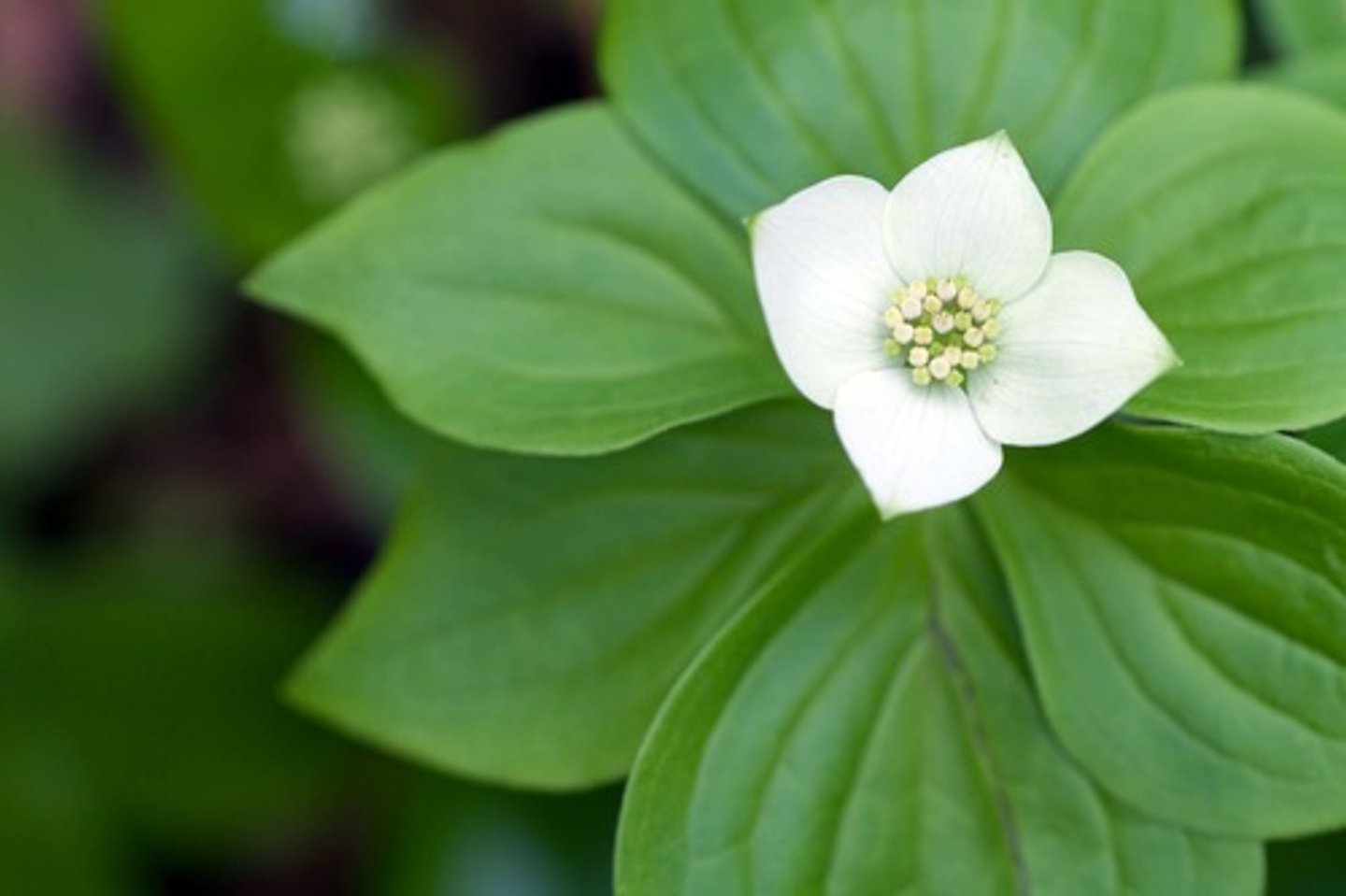
Dwarf Dogwood/Bunchberry
Groundcover with Seasons
- A member of the dogwood family that grows low to the ground, often forming lush mats on the forest floor.
- White flowers in mid-May followed by red berries in summer.
Fun fact: the showy white “petals” are actually bracts—modified leaves that surround a cluster of tiny true flowers in the center.
Bracts are modified leaves that often look like petals and help attract pollinators, but they aren't part of the flower itself.
Wildlife Connection
- Berries are eaten by birds and bears (helps with seed dispersal)
Provides ground-level cover for insects and amphibians
Some Indigenous groups ate the berries thought they’re mealy and not highly sought after.
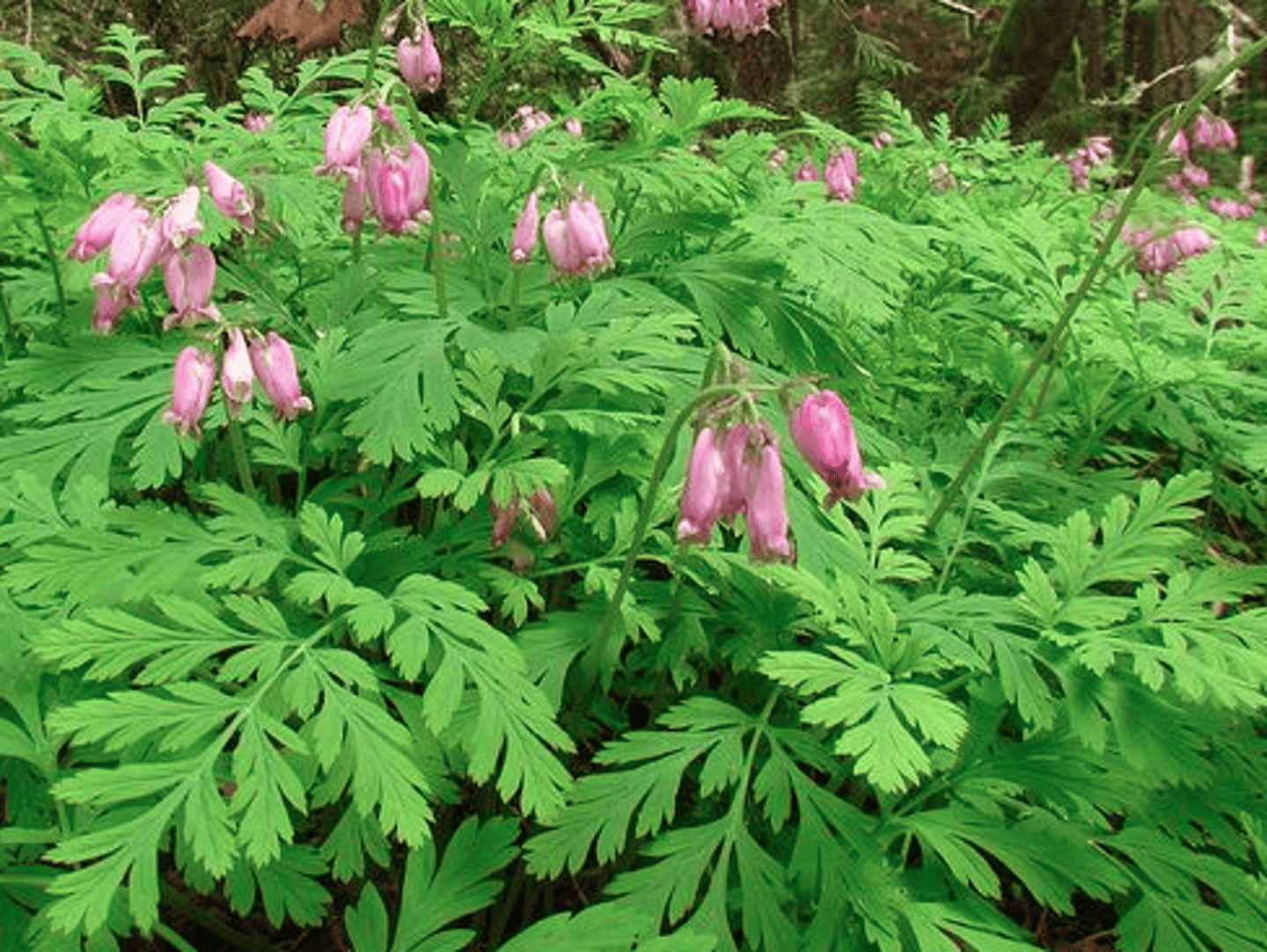
Pacific Bleeding Heart
Early Bloomer
- One of the first forest wildflowers to emerge in March.
- Delicate pink heart-shaped flowers.
Garden & Wild Appeal
- Common in moist forest understories especially near creeks and shaded slopes
- Popular in home gardens due to share tolerance, long bloom period and attractive leaves
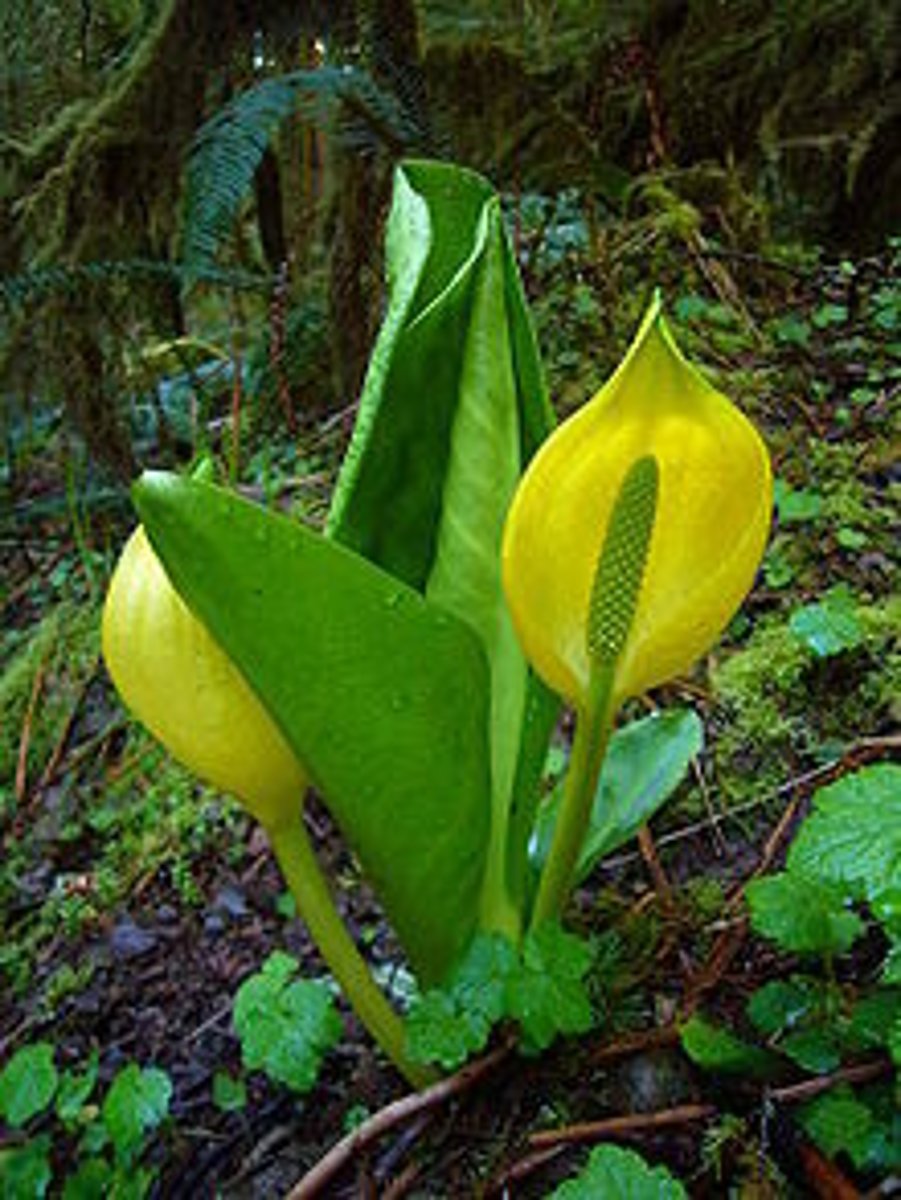
Skunk Cabbage
Wetland Pioneer
- Among the first plants to emerge in late February- a bright yellow colour of spring!
- Large yellow spathe (modified leaf) surrounds central spike, which holds the tiny true flowers
- Found in wet areas, mucky areas
- The flower spike produces its own heat (a rare trait in plants), helping it melt snow
- The flower emits a skunky odor to attract certain insects, but if you get your nose close and smell the flower as it actually smells really nice, like the lily it is!
- Sometimes called “swamp lantern” for its vivid glow in dark wetland habitats
Ecological and Cultural Uses
- Bears dig up the roots for food when they emerge from hibernation- helps get their digestive system moving after being asleep for so long (helps “get things moving”)
- Indigenous groups use the large leaves for wrapping food in pit cooking (though not for direct consumption)
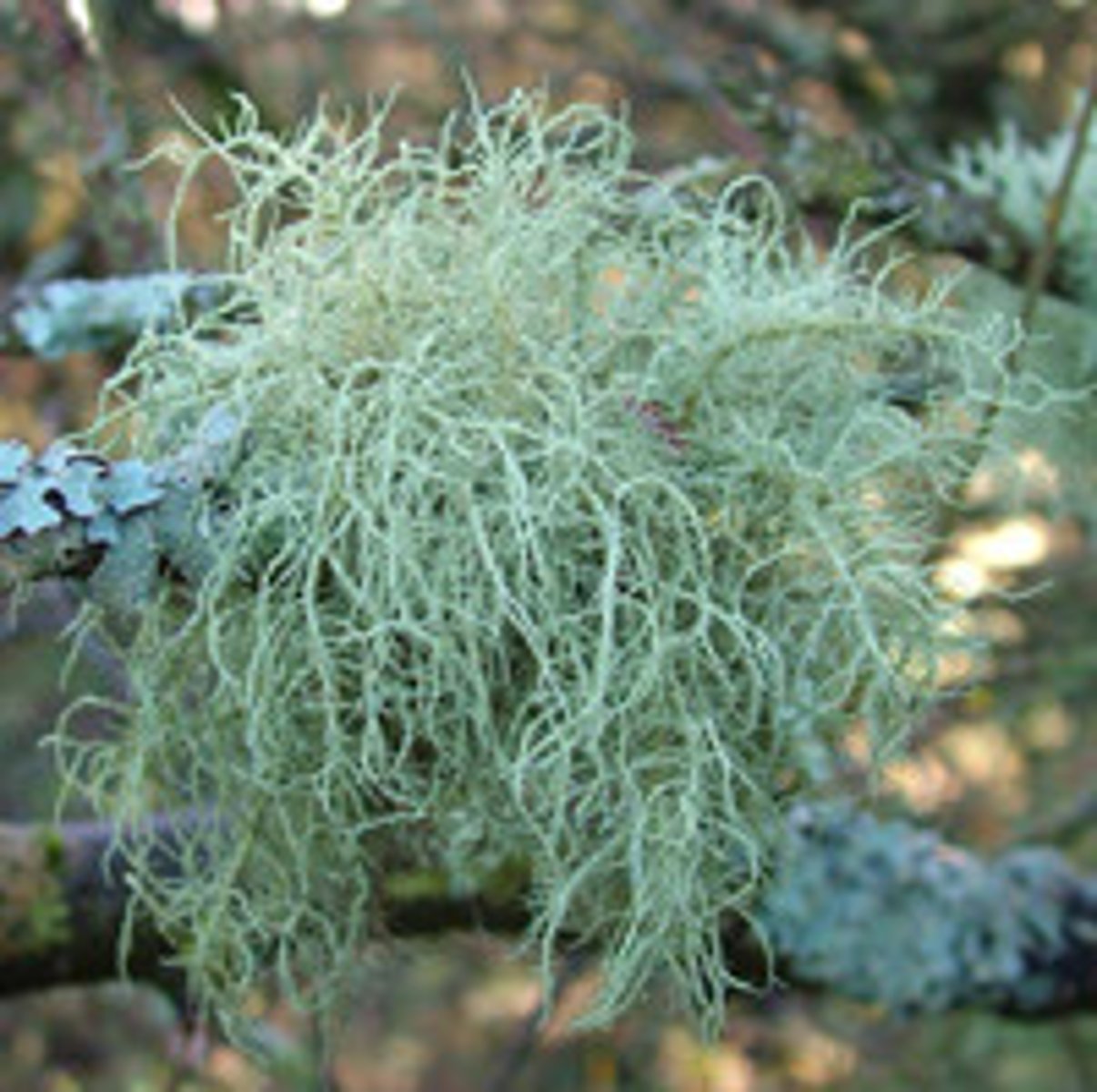
Old Mans Beard
Usnea spp. (spp. = “species pluralis”- that is multiple species within a genus)
- Long, pale green ‘beard-like’ strands dangle from branches.
- It’s a lichen: a partnership between two species: a fungus and algae (or sometimes bacteria) living together. The fungus provides the structure; the algae the food via photosynthesis.
Air Quality Indicator
- Lichen that grows on trees in moist, shaded forests with clean-air.
- Acts as a bioindicator- meaning its presence signals low levels of air pollution (it struggles to survive in polluted areas)
Ecological Role
- Absorbs nutrients from the air; no roots in soil.
- Winter food for caribou and nesting material for birds
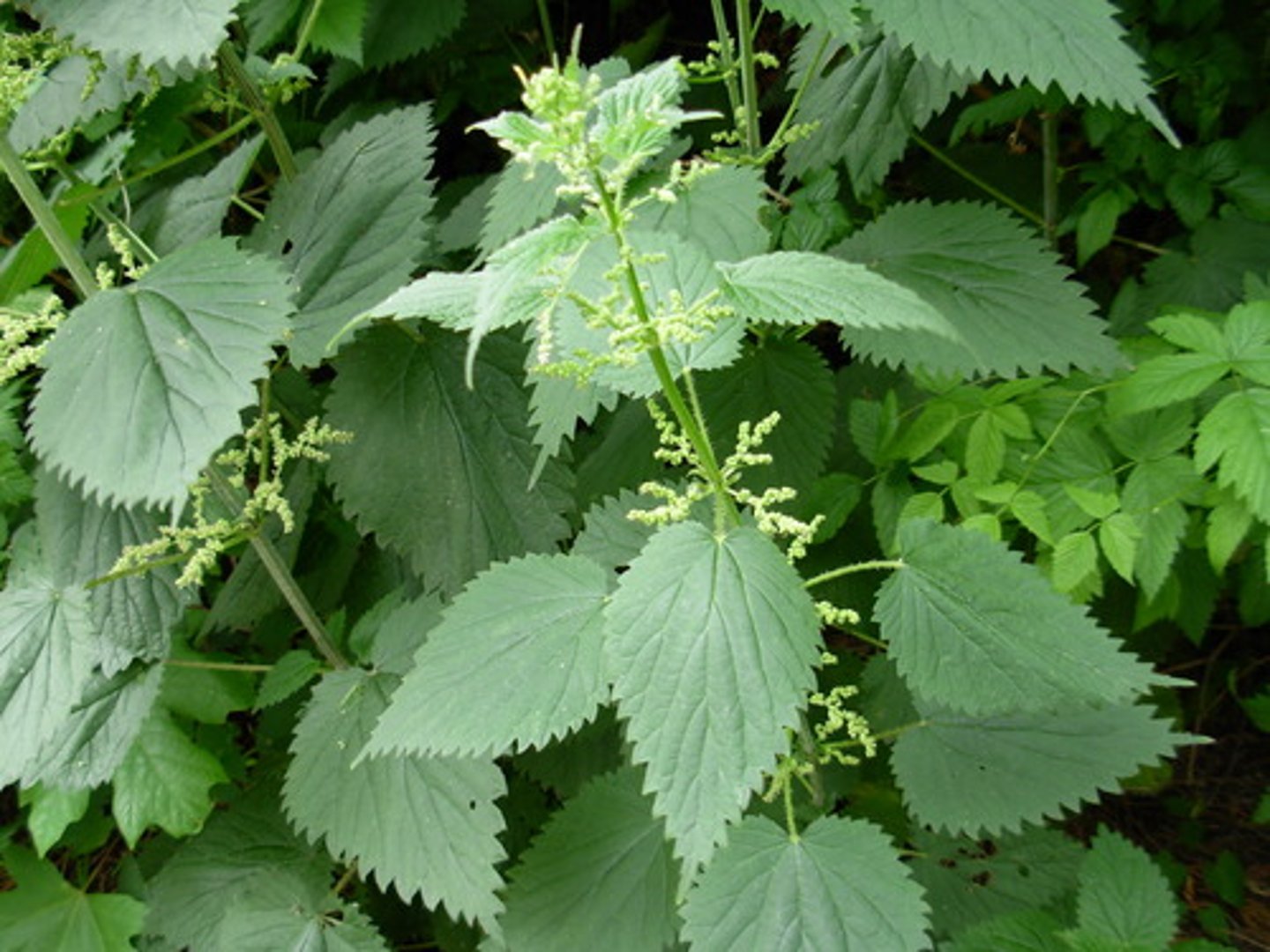
Stinging Nettle
Prickly but Edible
- Recognizable by its stinging hairs that release formic acid (and sting!).
- Edible when young and properly prepared (e.g. steaming, boiling)
- Highly nutritious
Disturbance Adaptor
- Thrives in disturbed soils, along trail edges, floodplains, and old homestead sites.
- Often one of the first plants to colonize nutrient-rich but disturbed ground.
Species ID tips
- Look for opposite, toothed leaves with deep veins and a rough texture.
- The stinging hairs are most noticeable on the stem and underside of leaves
- Often grows in dense patches
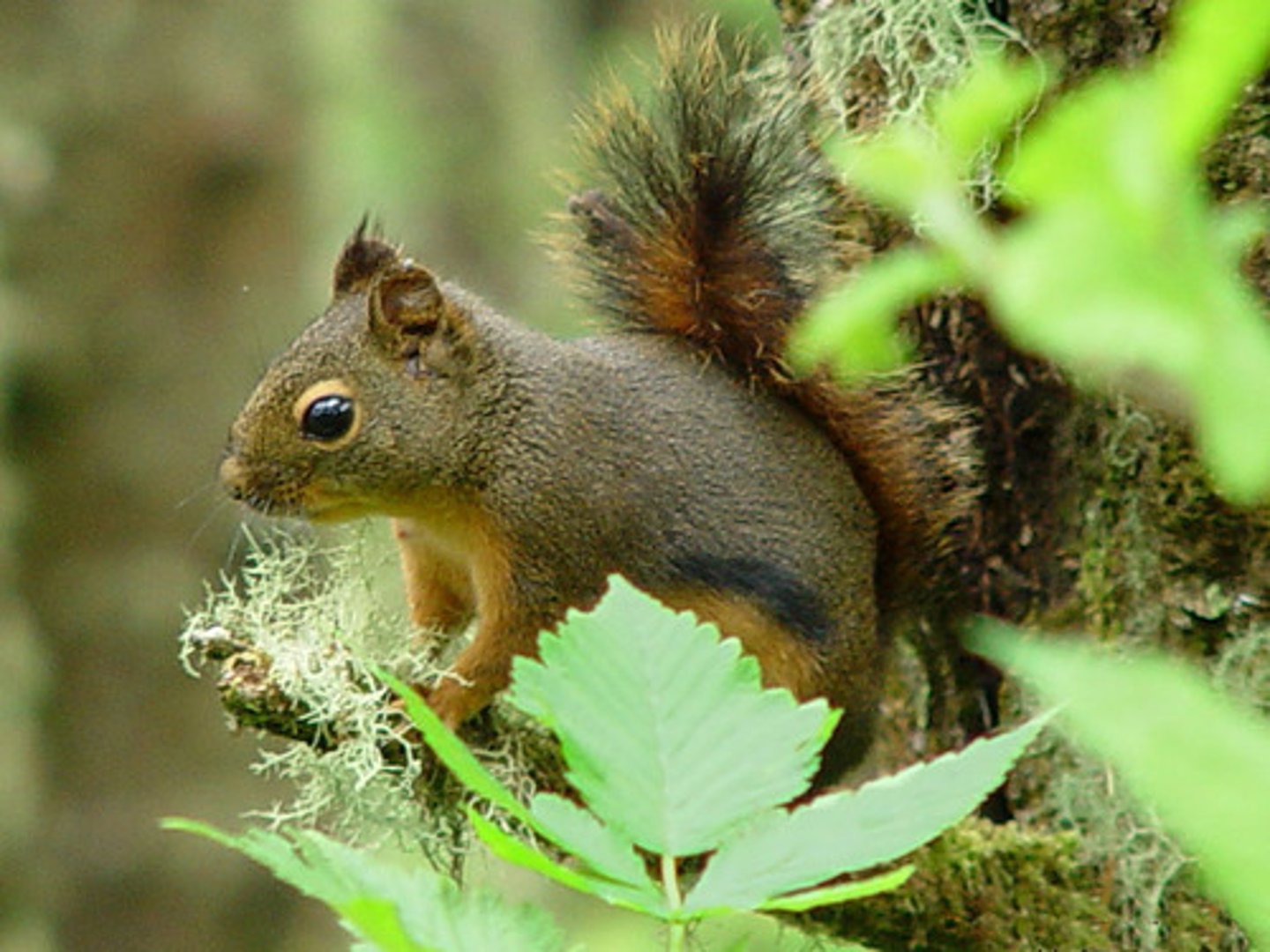
Douglas Squirrel
Traits
- Small, high-energy native squirrel of BC’s conifer forests—often seen chasing rivals, foraging, or scolding intruders (including humans!).
- Famous for its nonstop chattering, often used to defend territory and warn off other animals.
- Builds nests in trees and creates cone middens—piles of chewed cone scales from where it feeds and stores food.
- This native species is small- especially compared to the Eastern grey squirrel, an invasive species introduced to Stanley Park and now common in urban areas.
Ecological role
Confider seed dispersal
Territory often centres around a favourite food tree (especial Douglas-fir, cedar or hemlock)
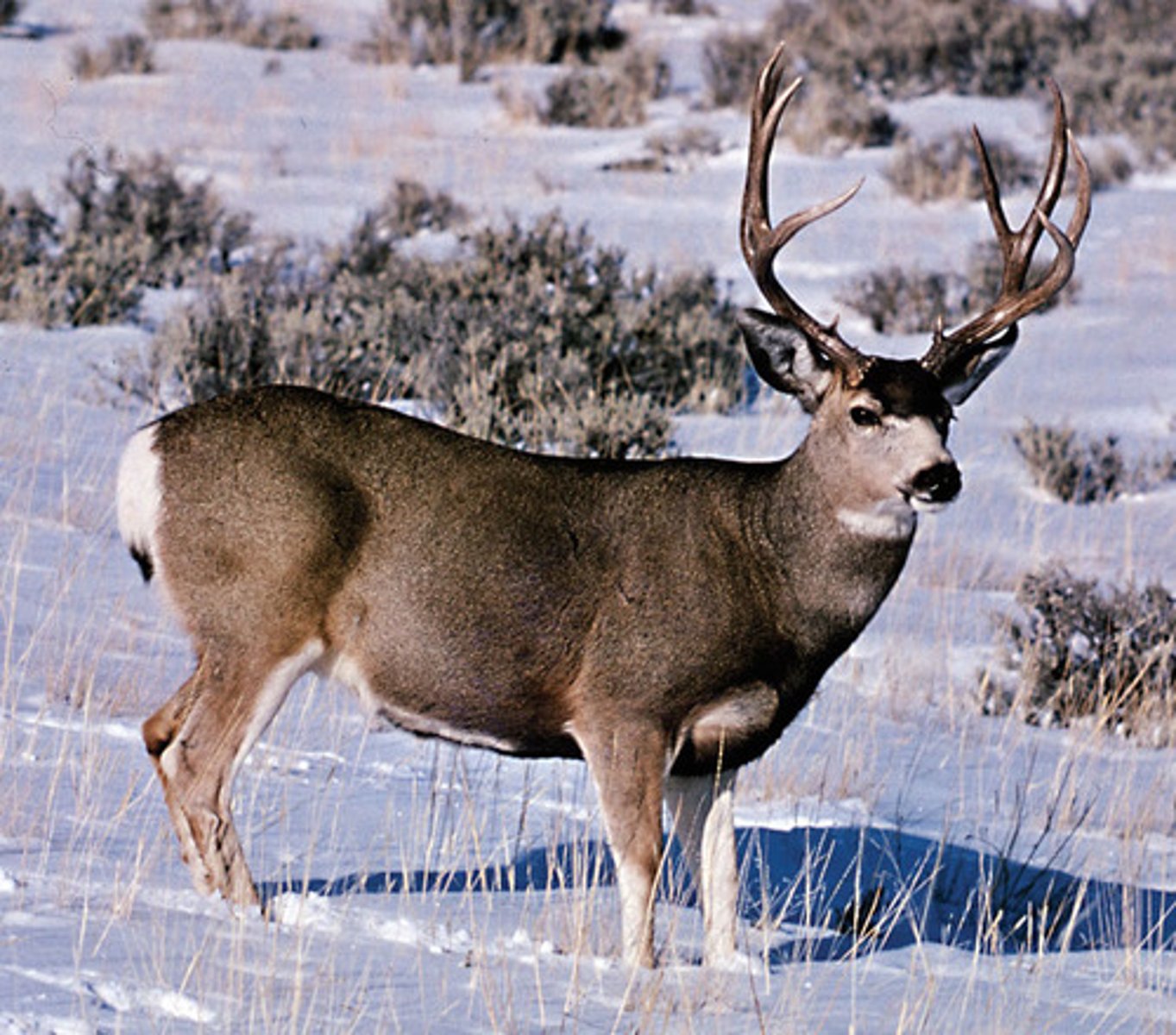
Mule deer
Large-Eared Herbivore
- Recognized by large ears and high, bounding hops they use when fleeing
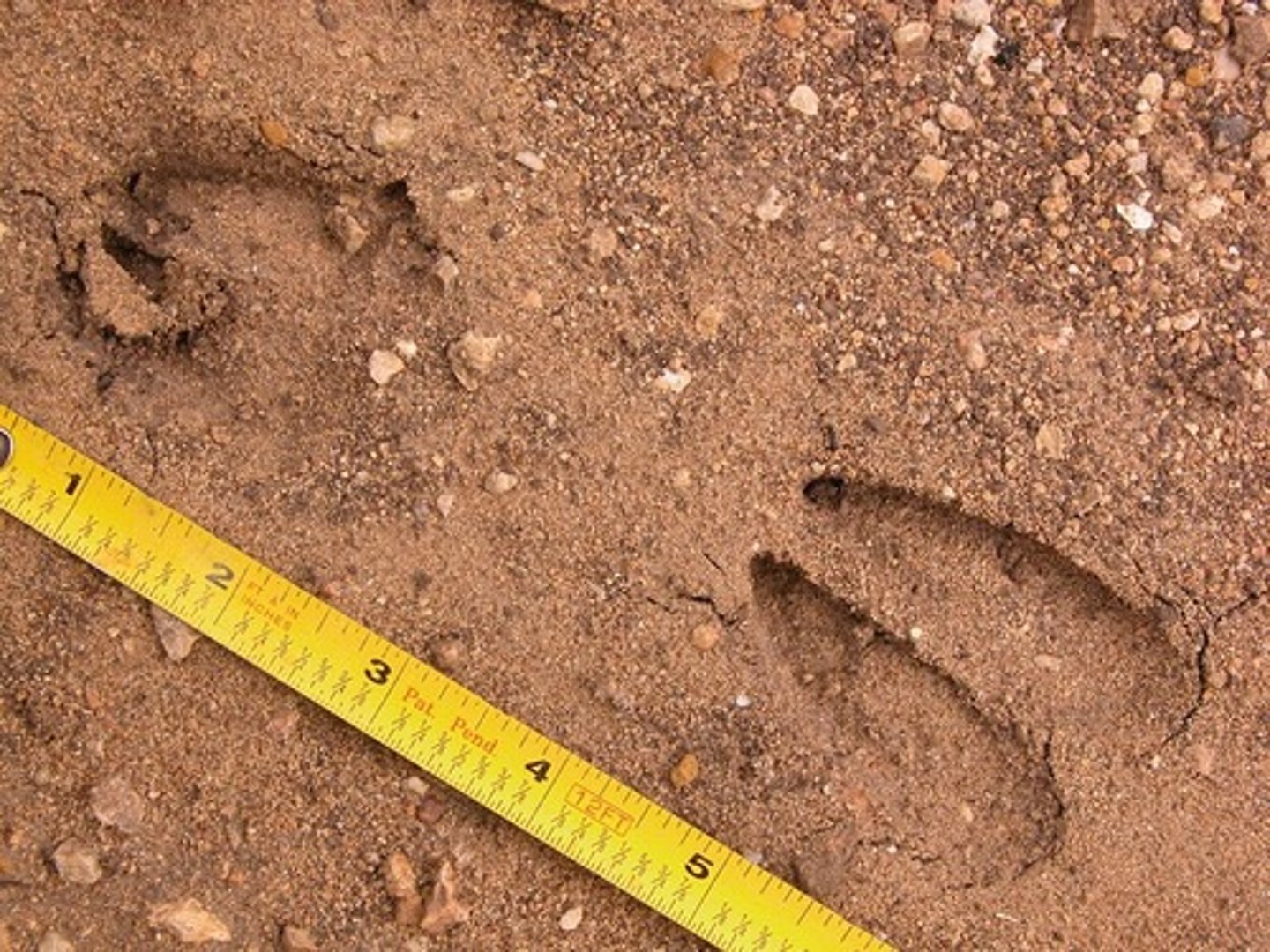
- Tracks have two pointed hooves
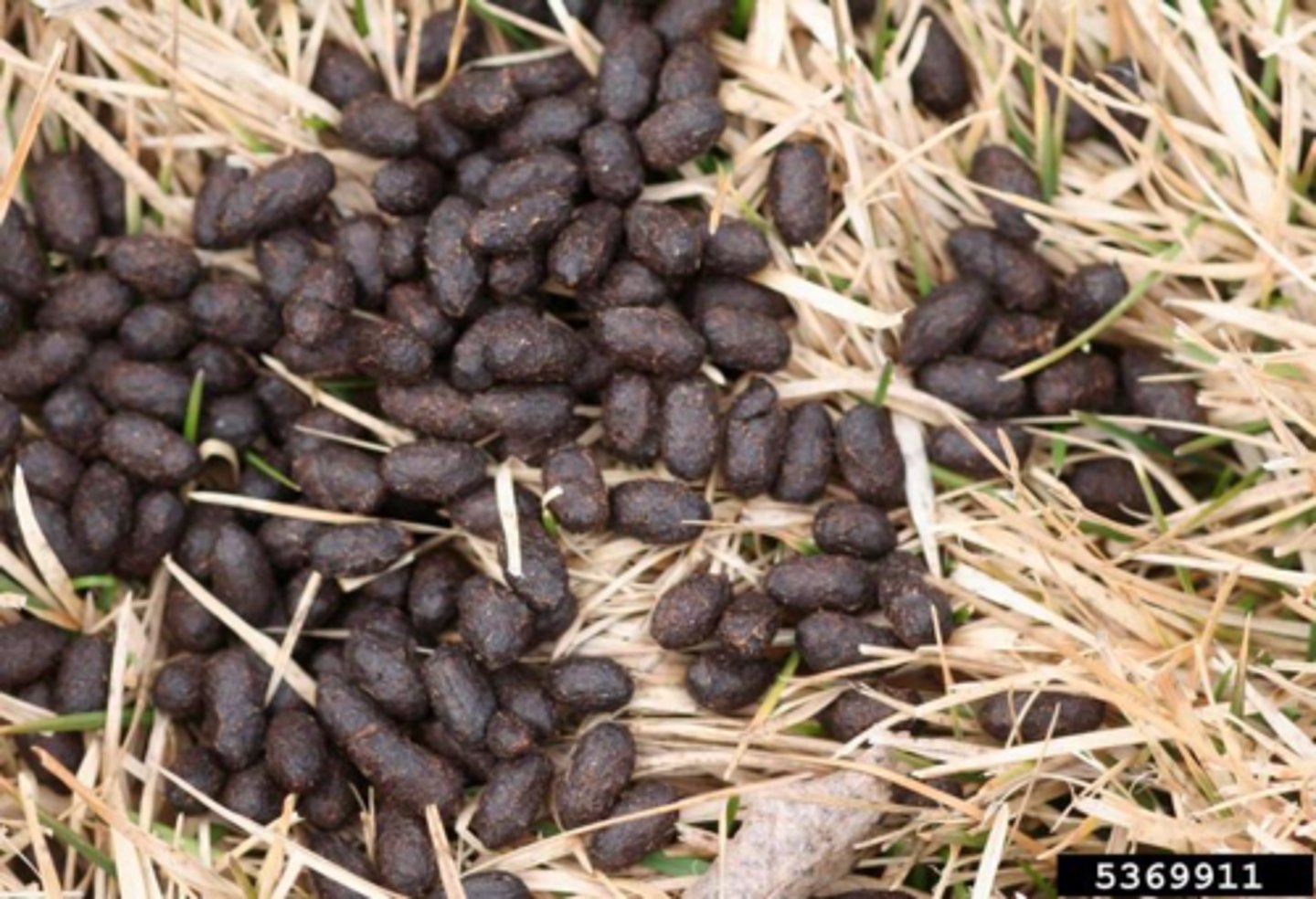
- Scat is pellet-shaped with shiny appearance when new and dry when old
- Bucks grow forked antlers, does are antlerless
Habitat Interaction
- Often found near edge habitats: areas between forest and meadow, or rural and urban spaces
- Found in suburban areas where they find food and can avoid predators (like wolves and cougars)
- Primarily browsers, feeding on shrubs, leaves, and twigs rather than grass.
Mule deer tracks
Mule deer scat
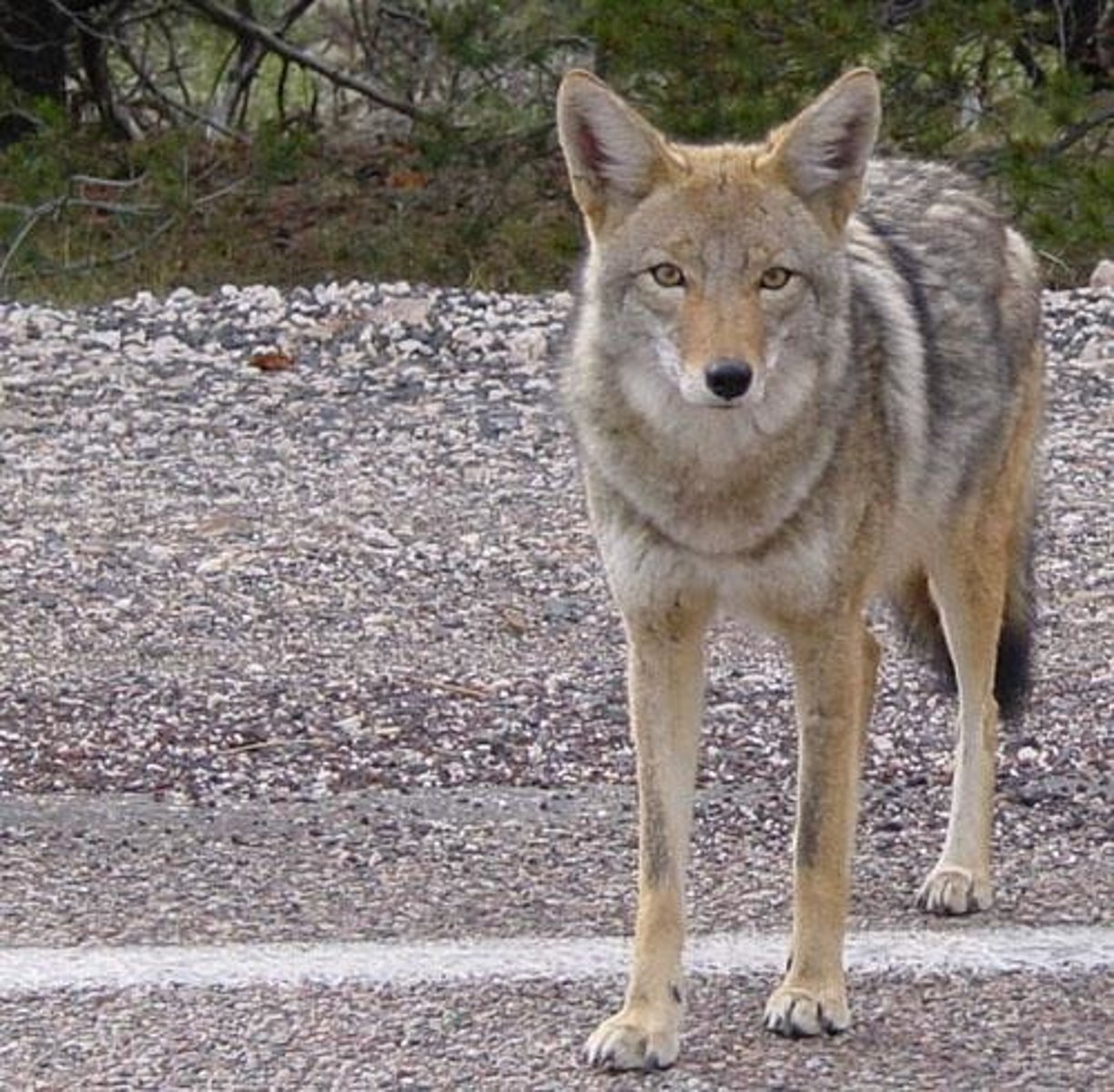
Coyote
Adaptable Predator
- Highly intelligent and flexible, coyotes can survive in a wide range of habitats, from remote backcountry to downtown urban parks.
- Omnivore diet: eats small mammals, berries, insects, carrion, and even garbage—whatever is available.
- More slender than wolves with a bushy tail and pointed muzzle
- Controls rodent populations in ecosystems.
Coexistence Practices
- Can become habituated to people especially when fed or unintentionally rewarded with food
- Important to instill healthy fear of humans to avoid conflict: make noise, keep pets leashed (and if the pet is small, pick it up)
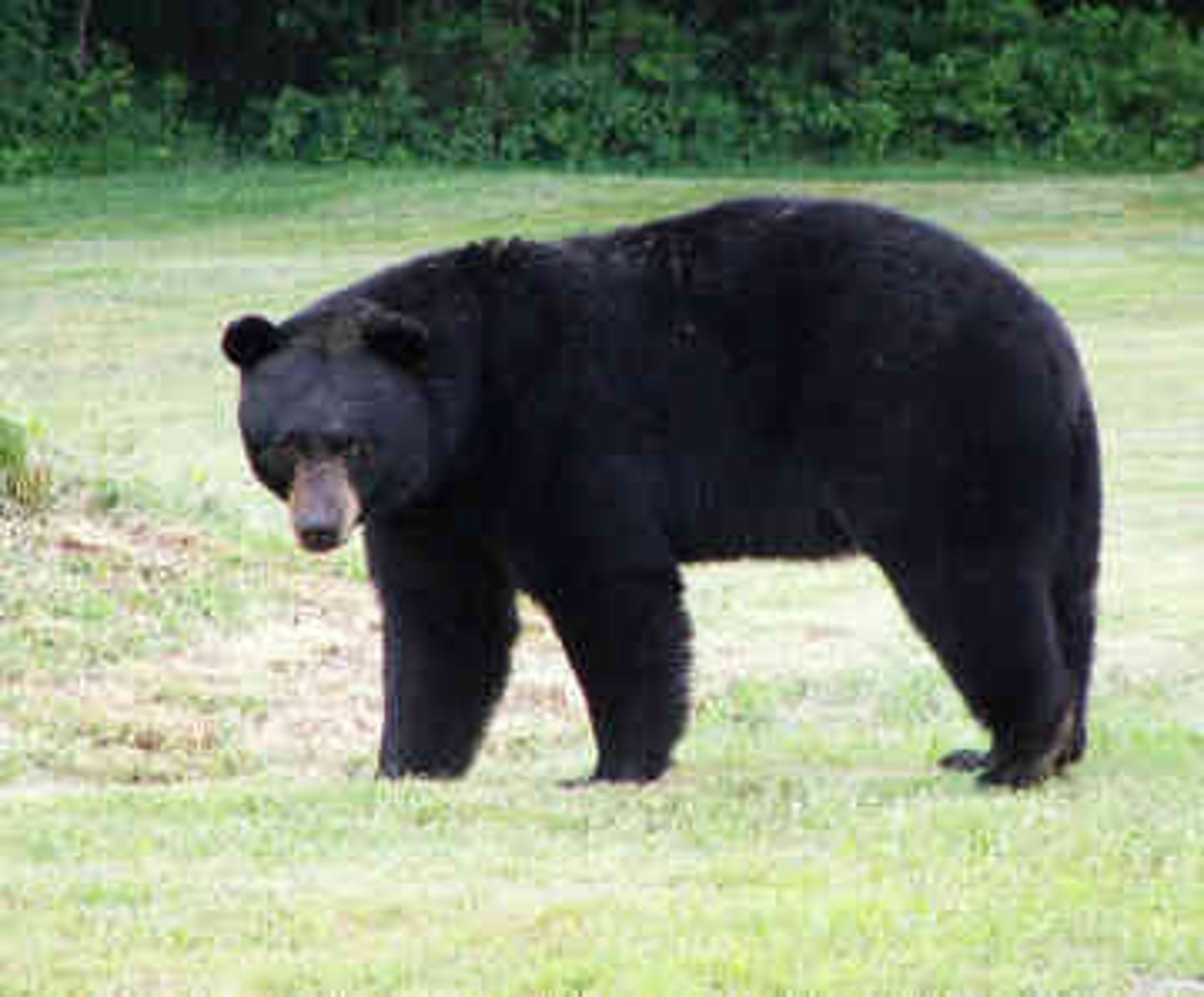
Black bear
Omnivorous Mammal
- Eats berries, insects, fish, plants, and yes, human garbage—very adaptable.
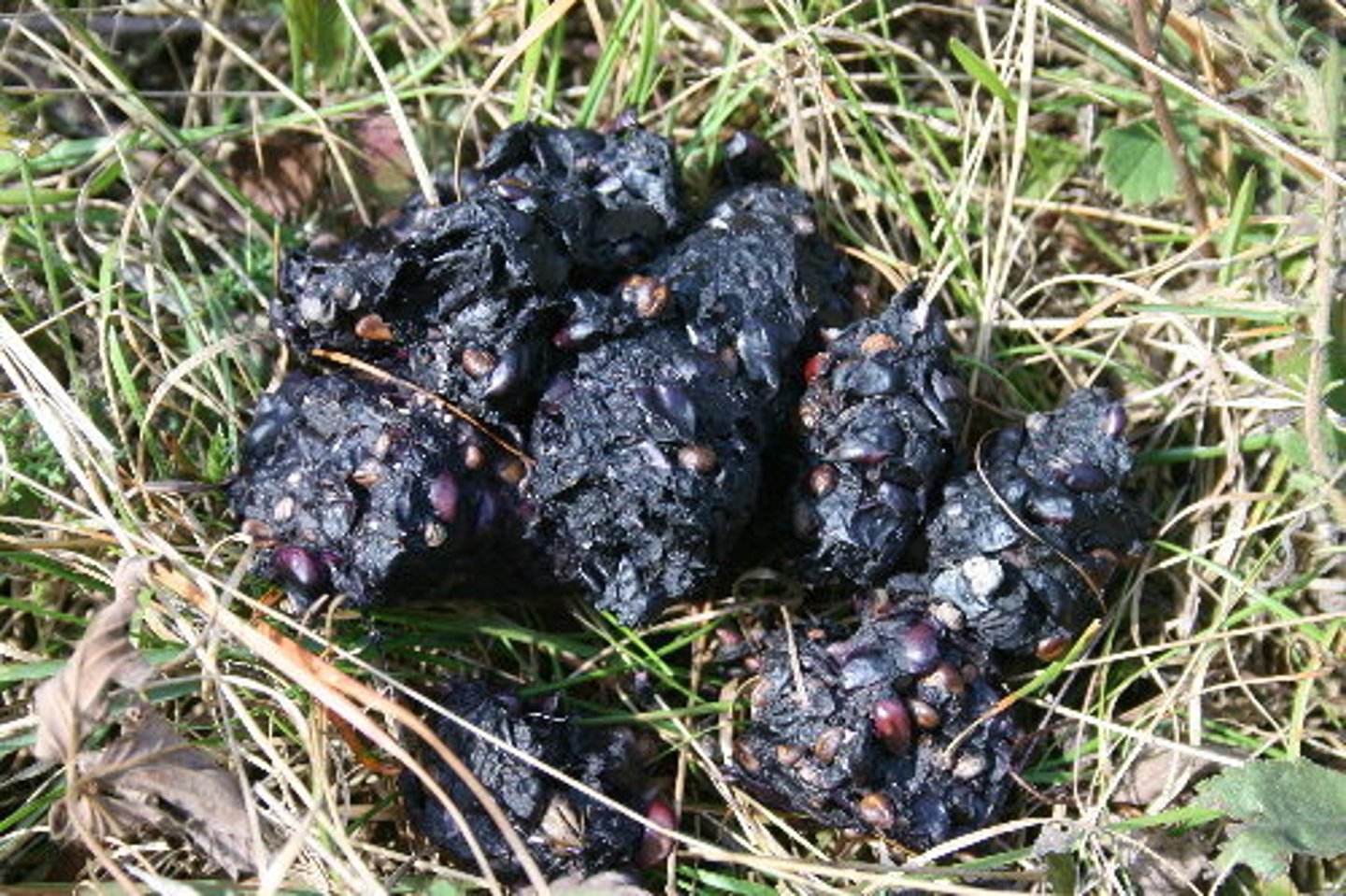
- Important seed disperser as you can see from its scat which is full of seeds!
- Scat also tells story of recent diet (seeds, berries, fish remains).
Safety and Awareness
- Most bear encounters are a real gift! In my experience, they usually just run away or ignore you completely.
- Bears clack their teeth, huff or bluff charge as a warning sign to back off- this means they’re uncomfortable and want space.
- If you feel threatened, stay calm, make yourself look big, speak firmly, and walk back slowly (no running)
- Do not “play dead”- a persistent myth. This may just confuse the bear and invite curiosity rather than protect you.
- Prevention is key: keep campsites clean, store food properly and never feed bears.
Black bear tracks

Black bear Scat
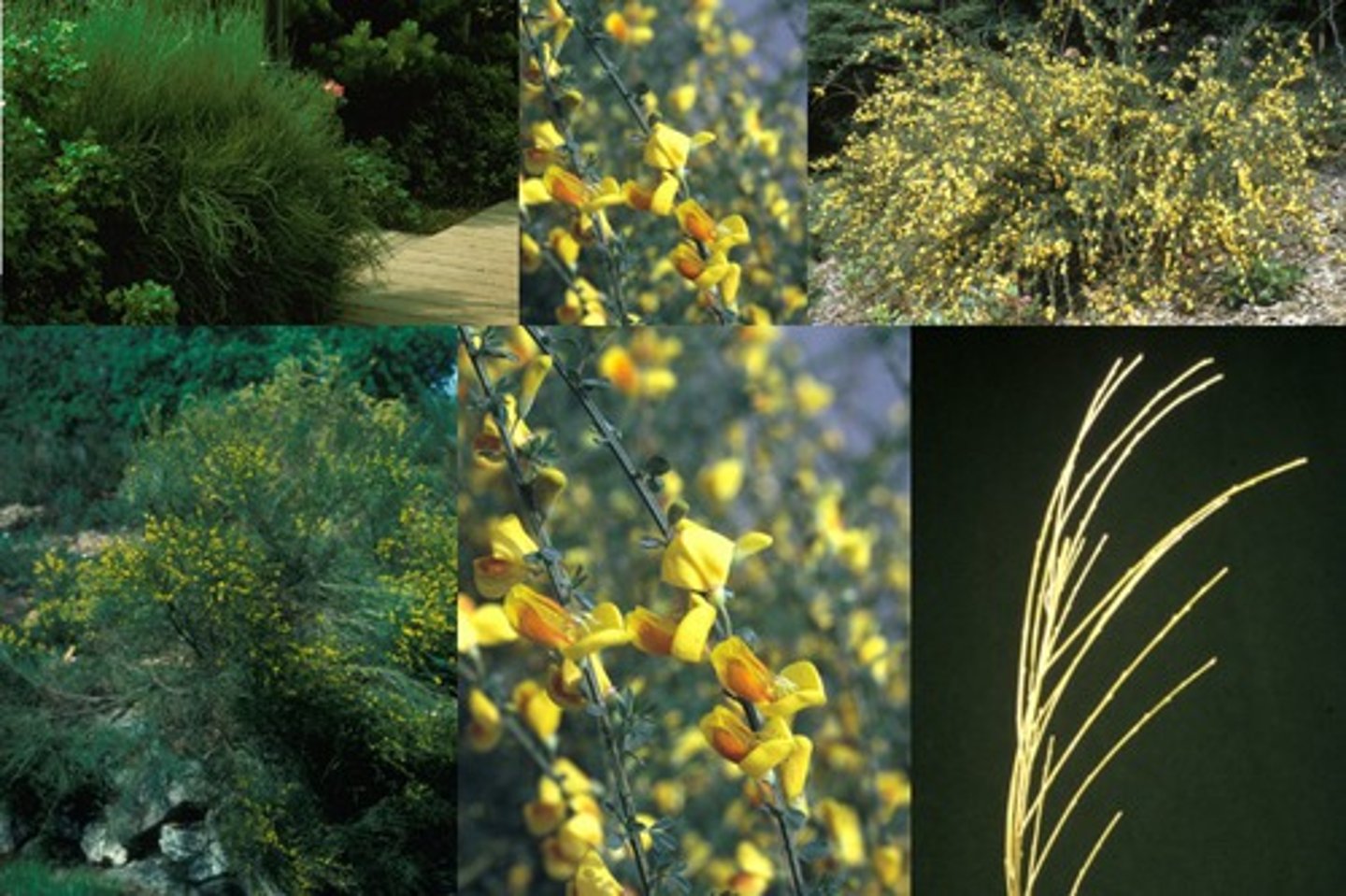
Scotch broom
Scotch Broom
Invasive shrub with bright yellow flowers, displaces native species, spreads rapidly along roadsides.
Bright but Invasive
- Introduced from Europe to stabilize slopes and decorate gardens—now a major invasive plant in BC.
- Yellow flowers bloom in early spring.
- So many seed pods on each plant which burst open and scatter seeds (sometime up to several metres). They spread rapidly.
- Seeds can remain viable in soil for decades
Ecological Impact
- They spread rapidly in dry, disturbed areas, especially roadsides, clearcuts, and grasslands and outcompete native plants
- Creates dense thickets that reduce biodiversity and make habitat unsuitable for many native animals and plants.
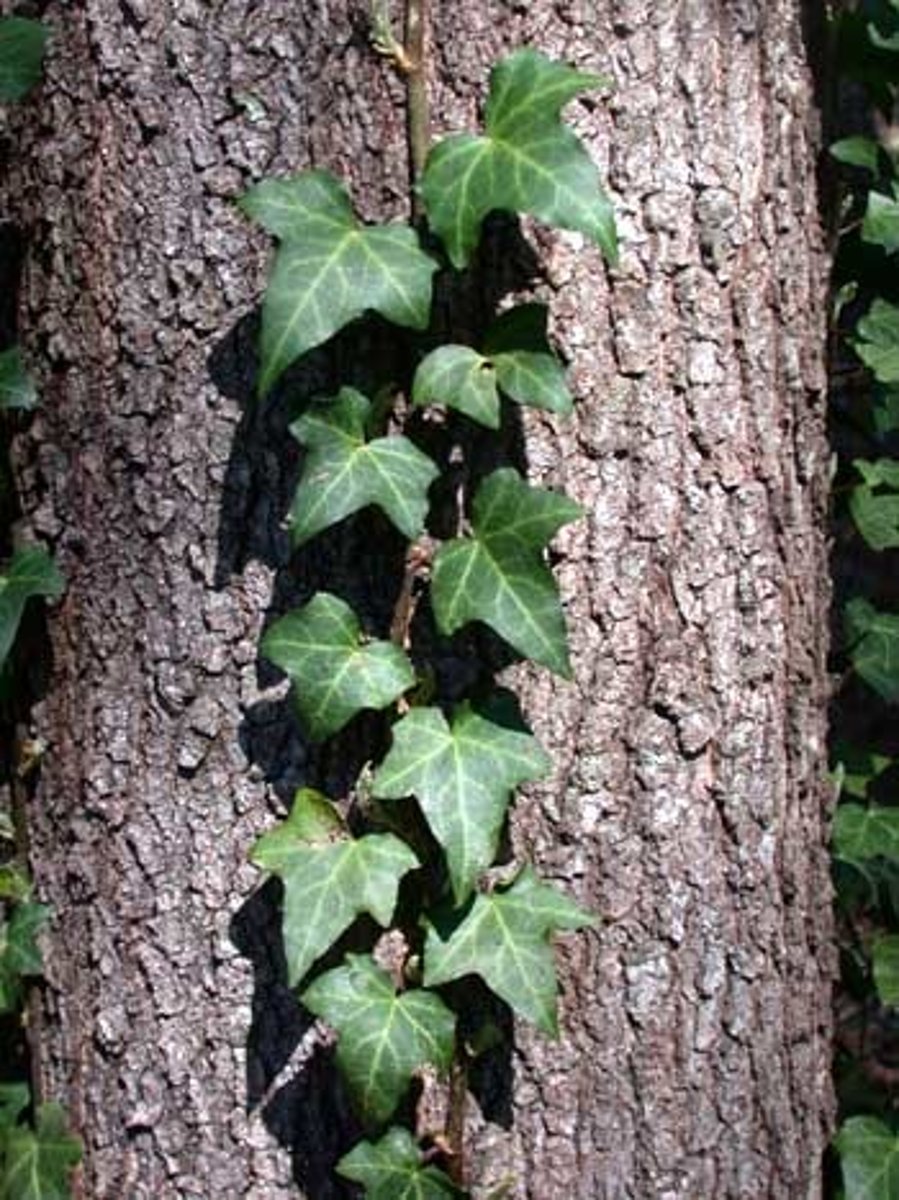
English Ivy
Fast-Growing Invader
- Originally introduced as a decorative groundcover and wall climber, but now a problematic invasive species across southwest BC.
- Evergreen vine with dark green, lobed leaves that spreads both along the ground and up trees.
Ecological Impact
- Smothers native plants, shades out wildflowers, and reduces biodiversity on the forest floor.
- Climbs up trees, adding weight and wind resistance that can lead to fallen limbs or tree collapse.
Control
- Best removed by cutting vines at the base and removing mats from the ground—but it’s persistent and labor-intensive to fully control.
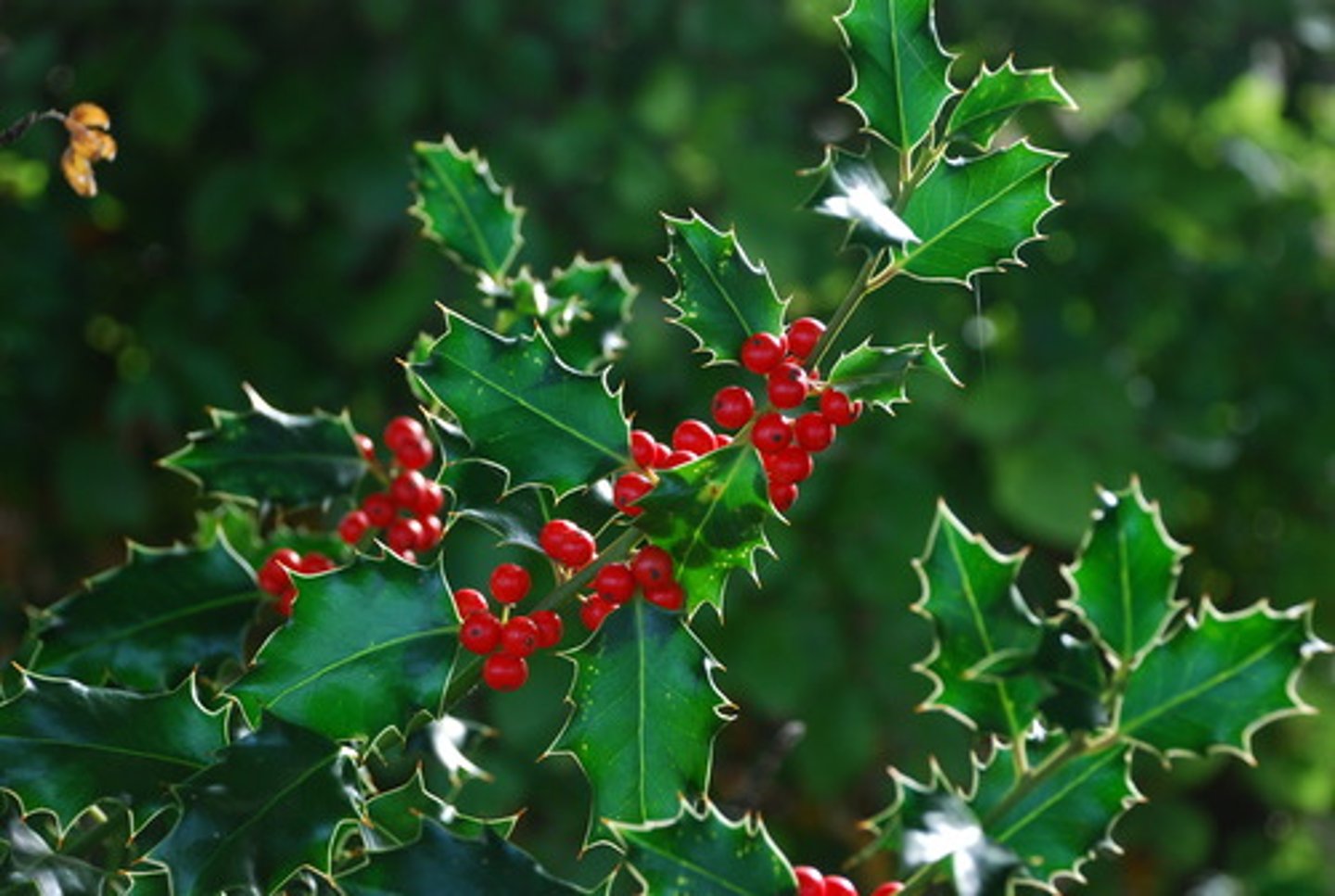
English Holly
Festive but Invasive
- Introduced from Europe as a decorative garden shrub and source of holiday greenery. Now an invasive evergreen.
- Recognizable by its glossy, dark green leaves with sharp spines and red berries in winter.
Ecological Impact
- Grows in dense thickets that shade out native plants, reducing biodiversity in the understory.
- Birds eat the berries and spread the seeds deep into forests, where holly can thrive in both sun and shade.
- Its tough leaves and lack of natural predators in North America give it a competitive edge over native shrubs.
Identification & Control
- Leaves are simple (not compound), with a shiny surface and spiny edges, unlike the leaves of Oregon grape.
- Can grow as a shrub or small tree, up to 10 metres tall in some areas.
- Removal is challenging—plants often resprout from roots, so full extraction or repeated cutting is needed for control.
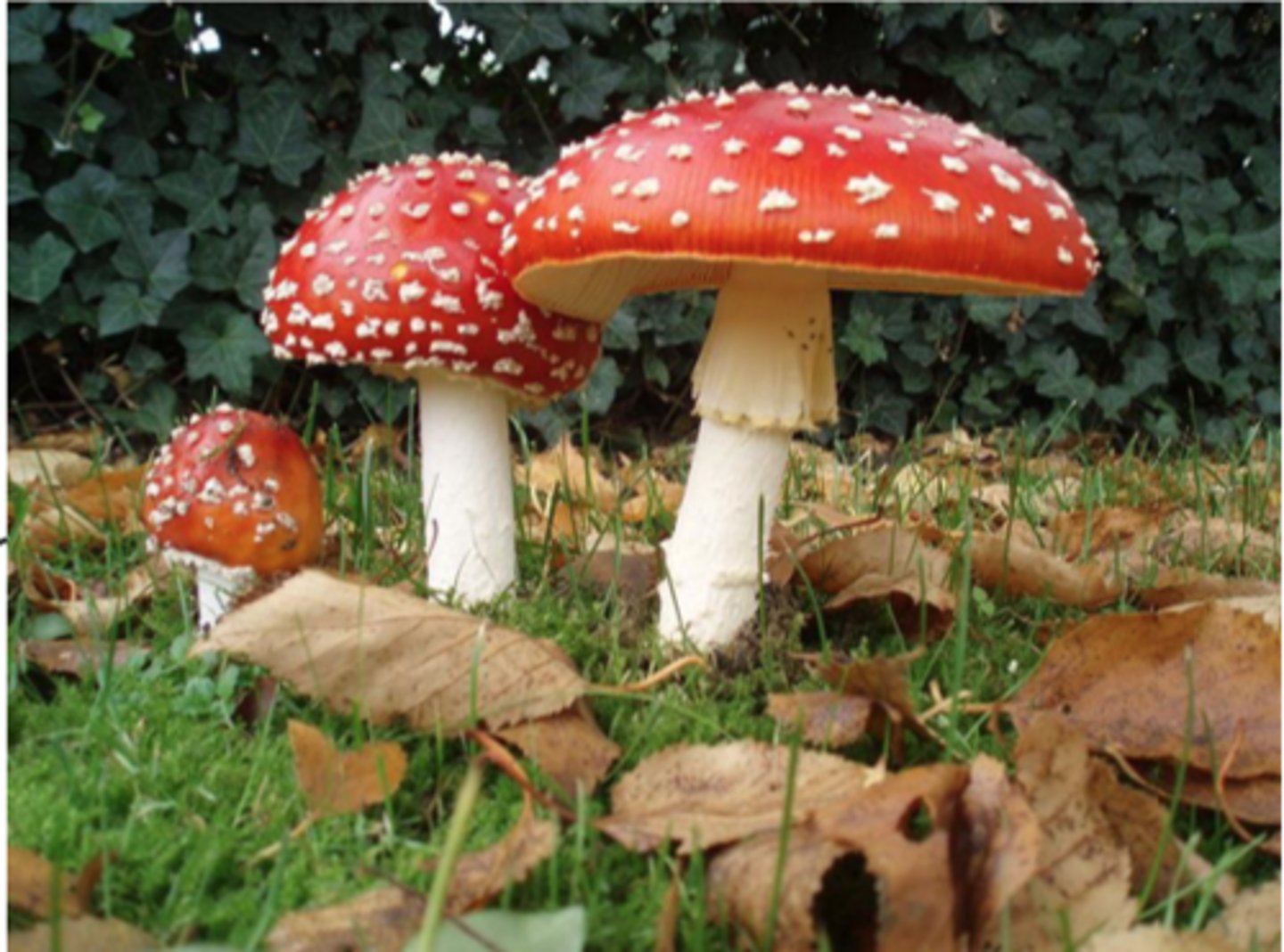
Fly Amanita (Fly Agaric)
Traits
- Common in coniferous and mixed forests. Also found in the city!
- Typically appears in late summer to early fall, often in clusters.
- Contains toxic compounds that can cause nausea, hallucinations, and confusion if ingested—not safe to eat.
Appearance
- Distinctive bright red cap with white, wart-like spots
Ecological Role
Forms mycorrhizal relationships with trees—exchanging nutrients through underground root partnerships.
Cultural role
- Fly amanita is one of the most iconic mushrooms in the world, often featured in myths, fairytales, and folklore as the classic “toadstool”
- Seen in storybooks and even video games—thanks to its striking red-and-white appearance.
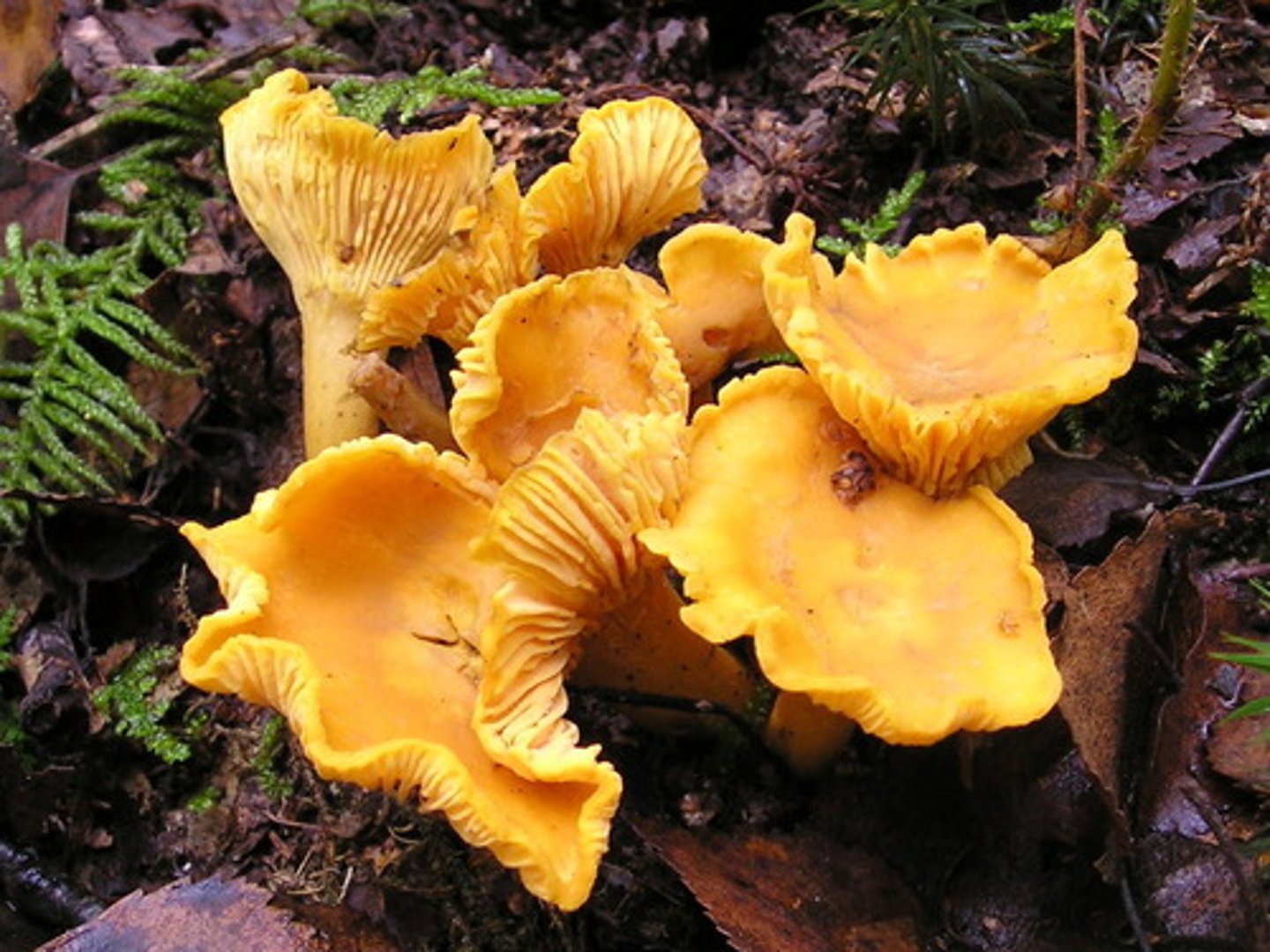
Yellow Chanterelle
Edible & Delicious
- Golden to orange trumpet-shaped caps with wavy edges and ridges instead of true gills running down the stem.
- Popular wild food often sautéed with garlic and butter with a firm, meaty texture. (can be confused with the toxic lookalikes (e.g. Jack-o’-lantern mushroom- although that’s not found in BC) know your ID!)
Habitat
- Found in late summer to early fall, often in mossy forest floors under deciduous trees like maple, birch, or alder—sometimes under conifers as well.
- Grows in association with tree roots through a mycorrhizal relationship
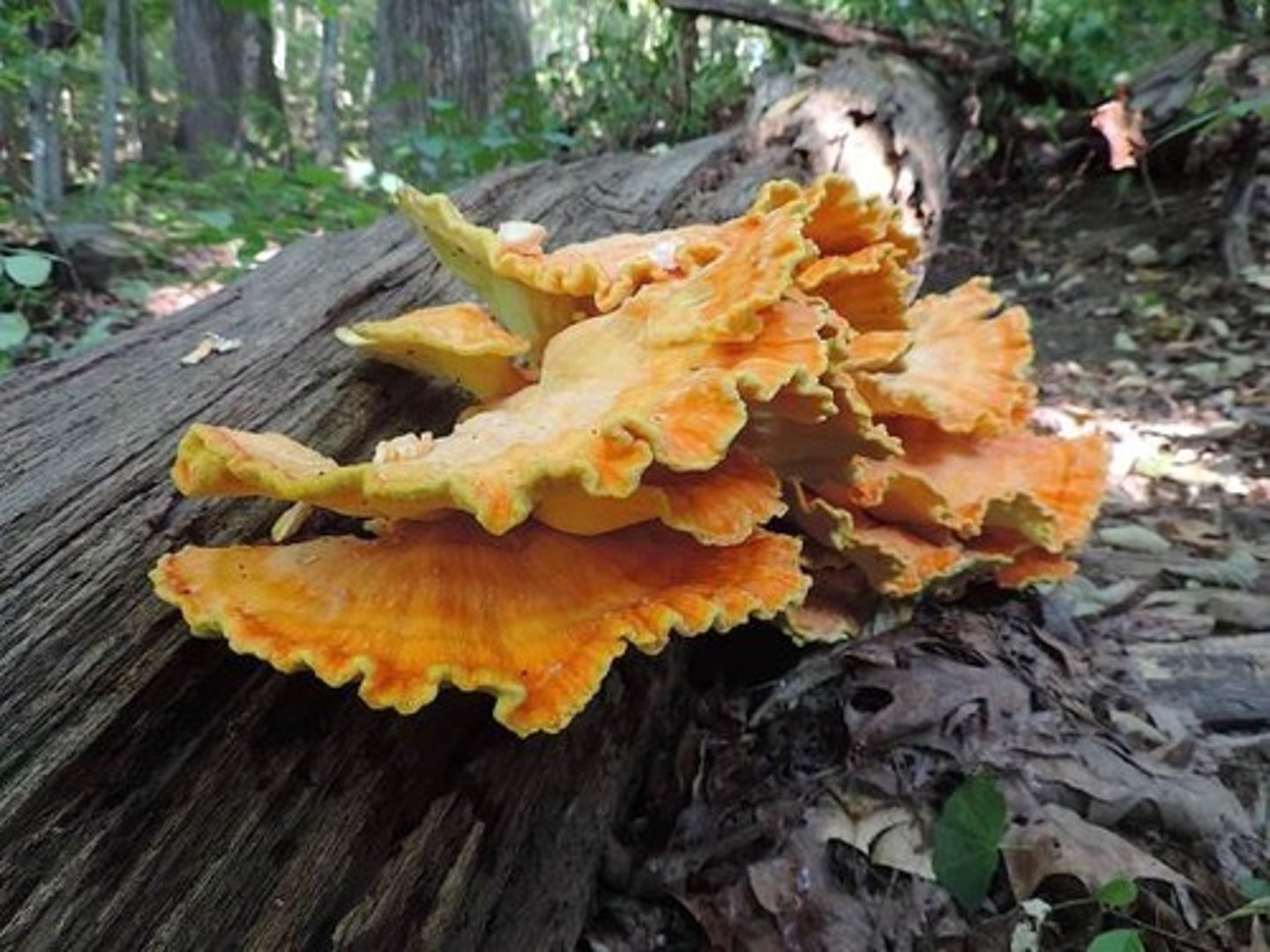
Chicken of the woods
Bright and Bold
- Vivid orange to yellow shelf fungus with overlapping, fan-shaped caps—often looks like neon flames on a tree trunk.
- Found on trunks, stumps and logs
- Stalk absent or nearly absent.
Edible with caution
- Edible with chicken-like texture and savory flavor
- Must be cooked thoroughly! Try a bit first- can cause stomach upset in some people
- Some find those on conifers upset the stomach, while deciduous don’t
- Best when young and tender, not old, tough and crumbly
 Note
Note  Flashcards (59)