Astronomy Exam 1 Answers
 Studied by 7 people
 Call Kai
 Learn
Learn Practice Test
 Spaced Repetition
 Match
Match Flashcards
 Knowt Play
1/62

There's no tags or description
Looks like no tags are added yet.
Name | Mastery | Learn | Test | Matching | Spaced | Call with Kai |
|---|
No analytics yet
Send a link to your students to track their progress
63 Terms
Debris deposited globally in the geologic record at the end of the Cretaceous period was enriched in this element supporting the hypothesis of an asteroid impact leading to the extinction of non-avian dinosaurs.
Iridium
Meteorites are frequently magnetic. (T/F)
True
Which of the following is NOT a classification of meteorites? (Stony, Stony-Iron, Iron, Tektite)
Tektite
Which of the following refers to a rock visibly glowing as it passes through the Earth’s atmosphere? (asteroid, meteoroid, meteor, meteorite)
Meteor
This term is used to describe the days when the entire Earth experiences 12 hours of light and 12 hours of darkness.
Equinox
During which season (in the USA) is the Earth closest to the Sun?
Winter
Which planet could NEVER be seen on the meridian at midnight?
Mercury
On or about March 21st the Sun will shine directly on the…
Equator
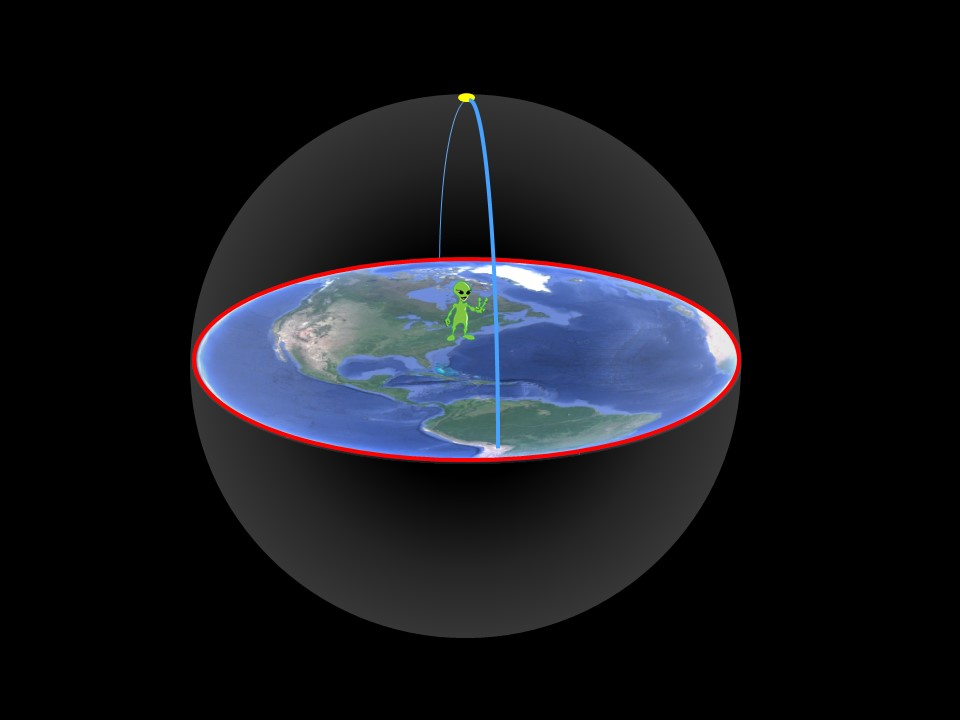
What is the name given to the yellow point on this diagram of the celestial sphere?
Zenith
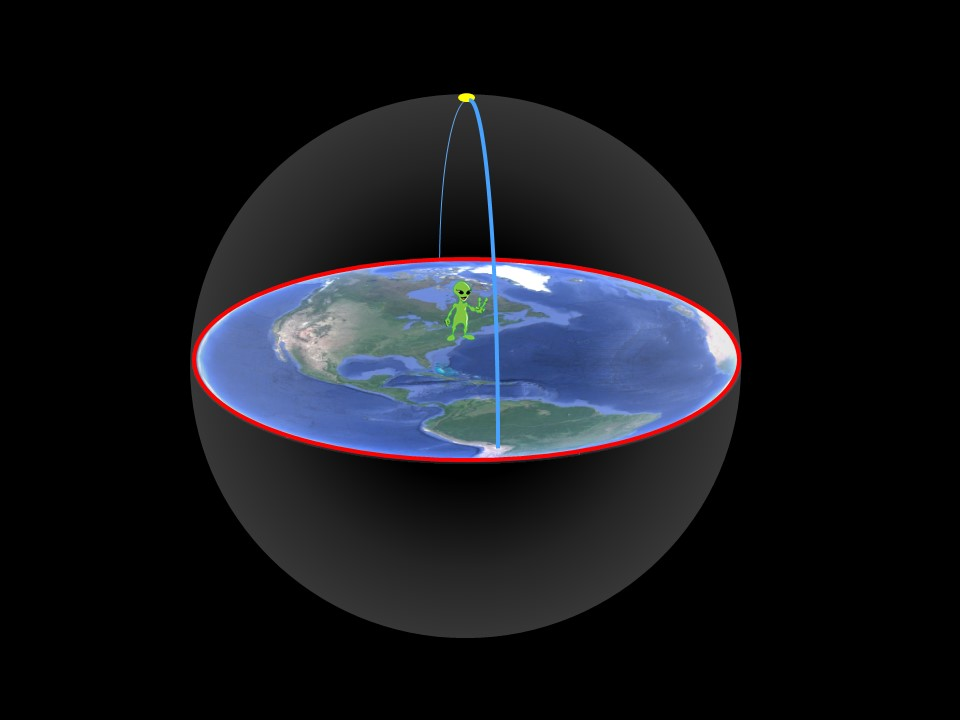
What is represented by the blue line on this diagram of the celestial sphere?
meridian
In the continental US, the Sun will reach the highest point in the sky closest to this date
Summer Solstice
The grid system used to indicate locations in the sky
Altitude and Azimuth
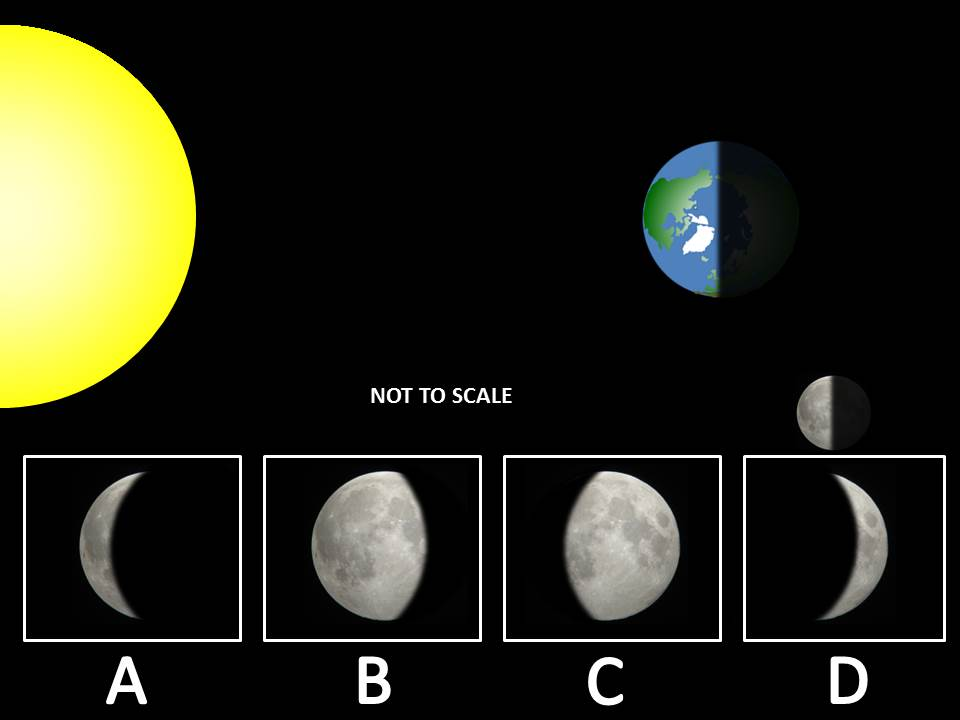
Which letter best represents the view from Earth?
C
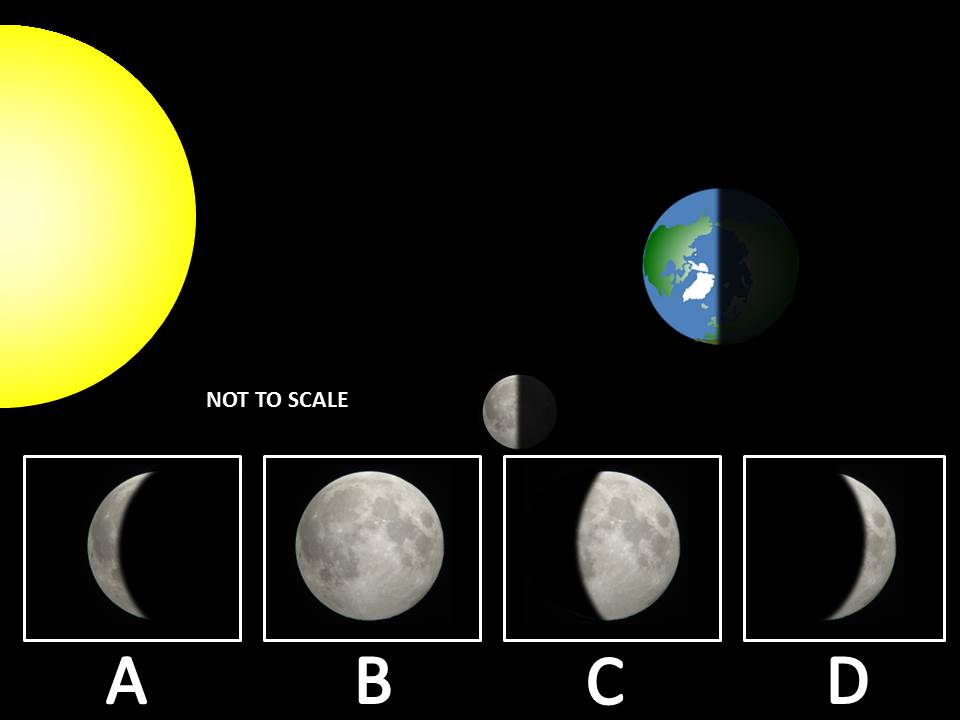
Which letter best represents the view from Earth?
D
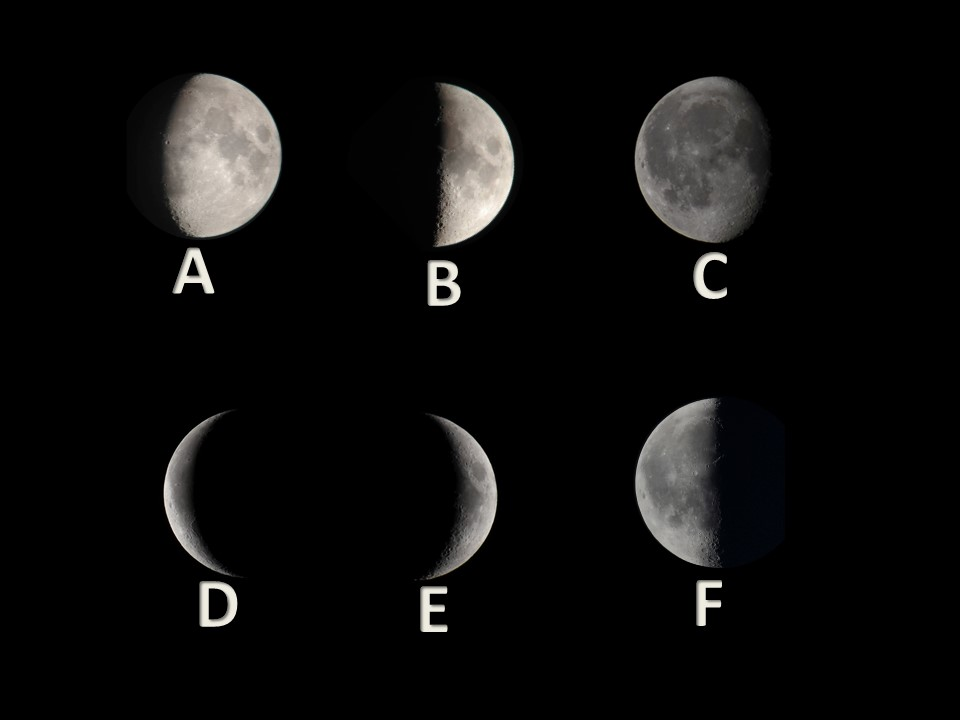
Which letter shows a waxing crescent moon?
E
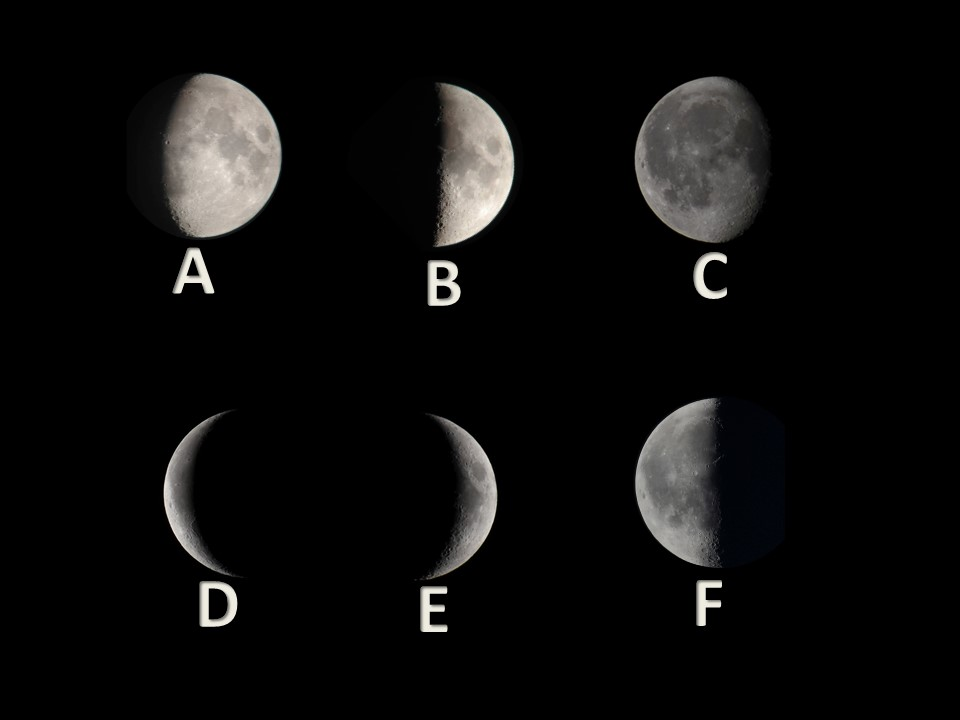
Which letter shows a waning crescent moon?
D
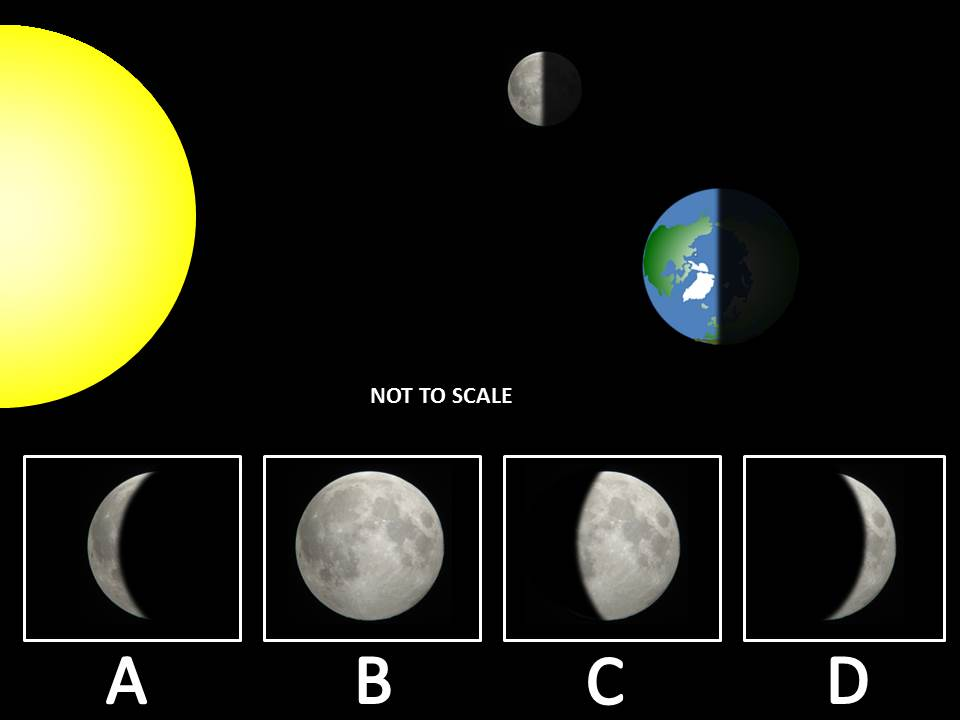
Which letter best represents the view from Earth?
A
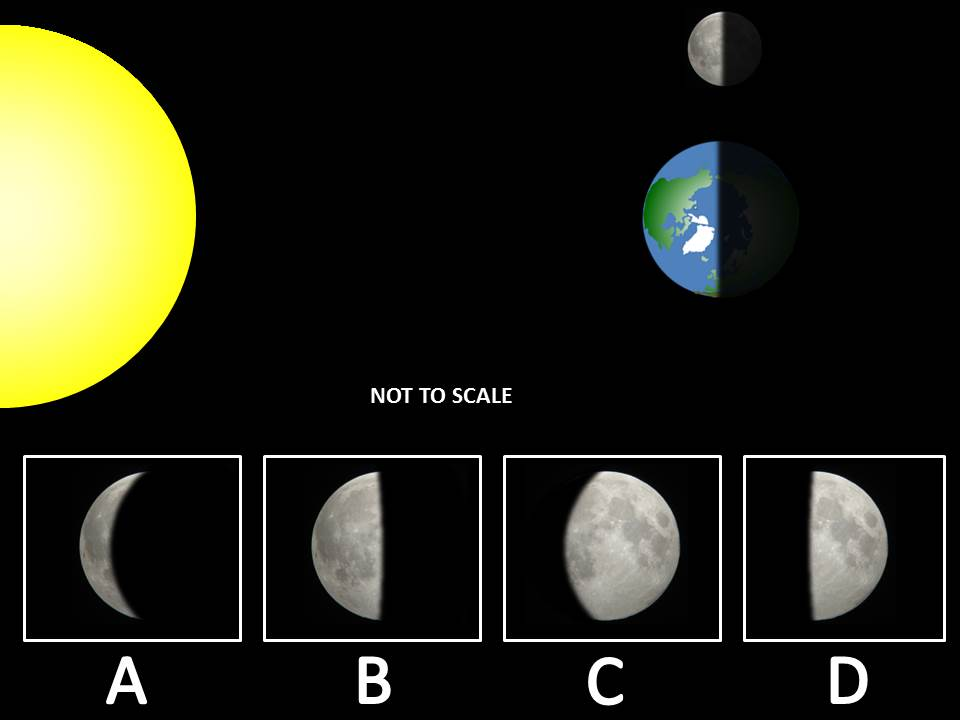
Which letter best represents the view from Earth?
B
What time does the new moon set?
6 PM
What time does the first quarter moon rise?
Noon
What time does the first quarter moon set?
Midnight
If the moon was rising at 3 PM what does it look like?
waxing gibbous
What time does the new moon rise?
6 AM
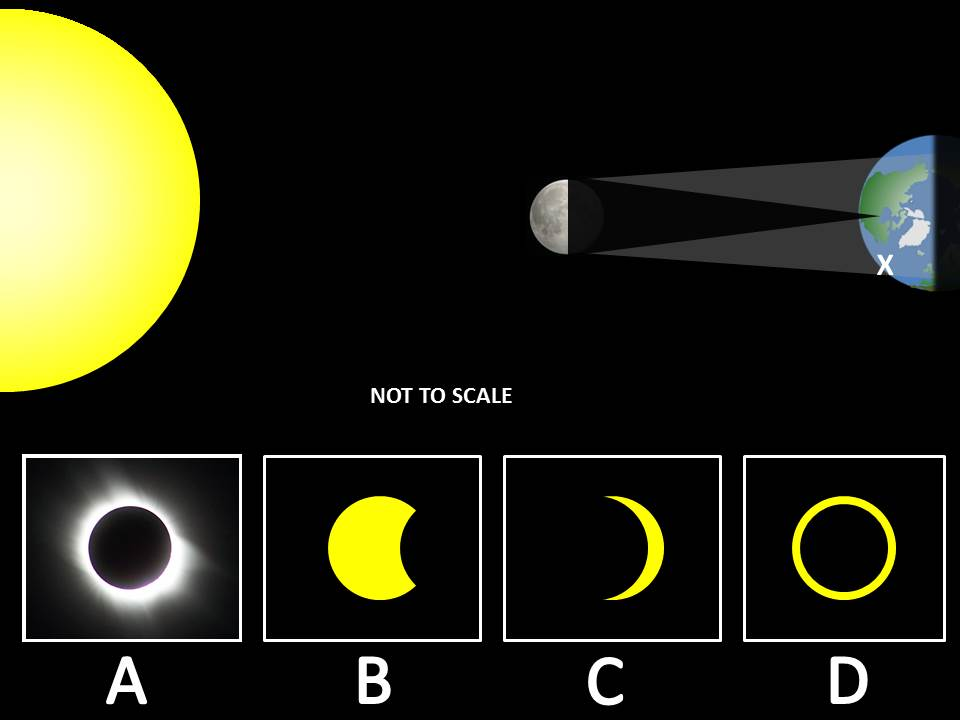
Which letter best represents the view from the X?
B
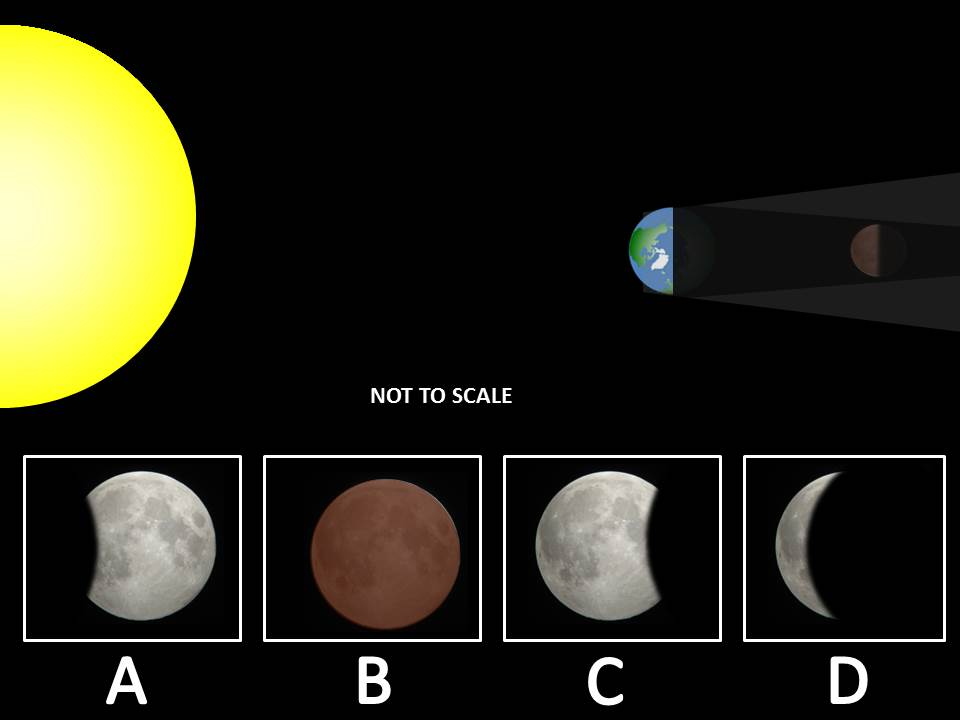
Which letter best represents the view from Earth?
B
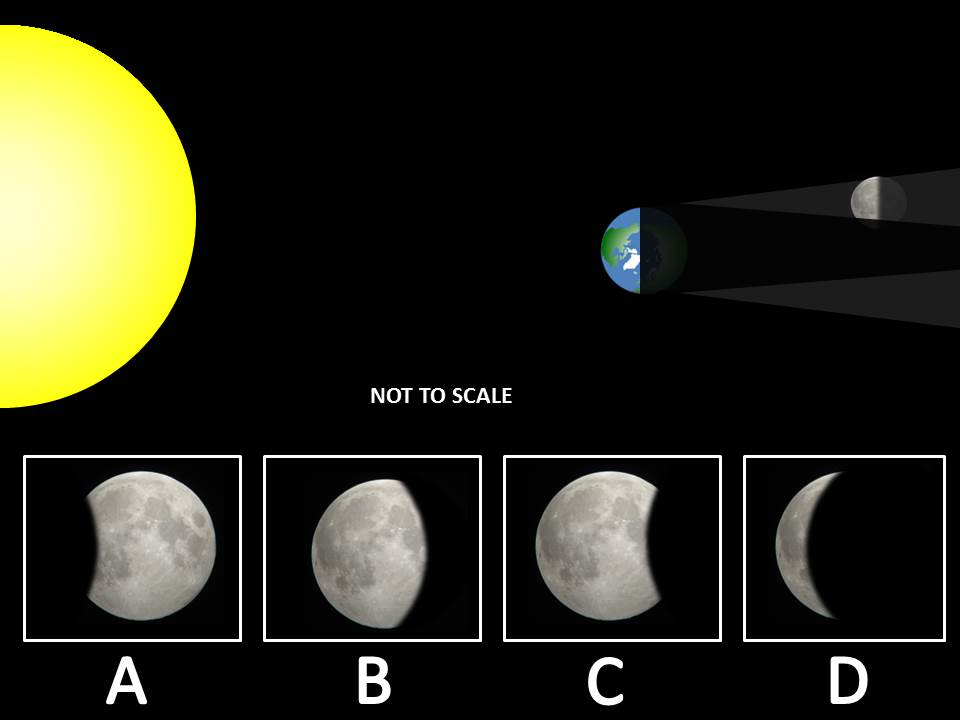
Which letter best represents the view from Earth?
C
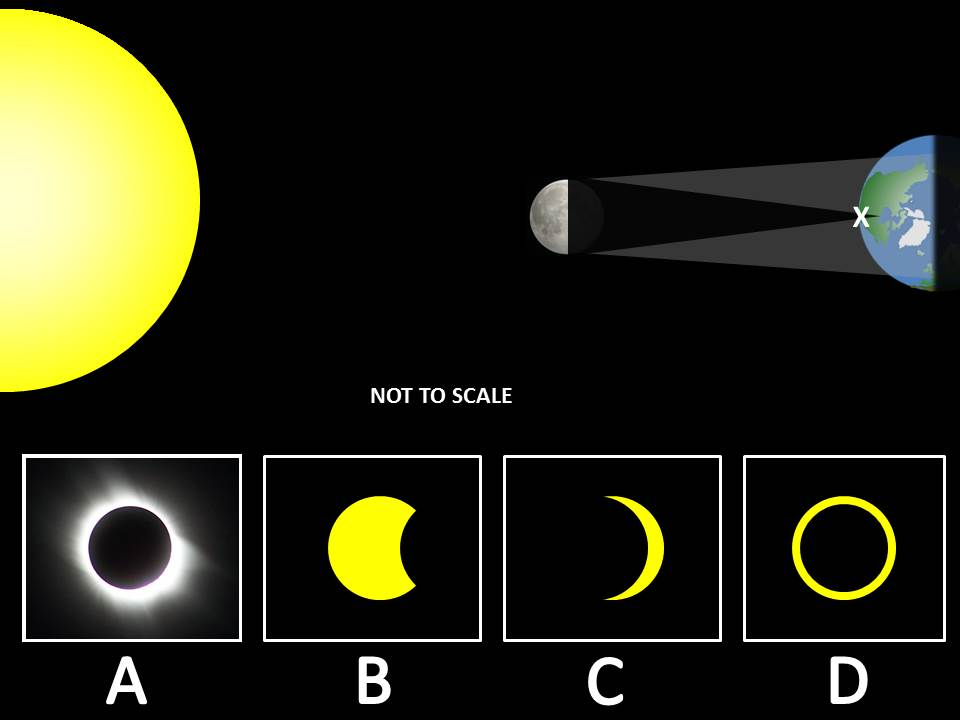
Which letter best represents the view from the X?
A
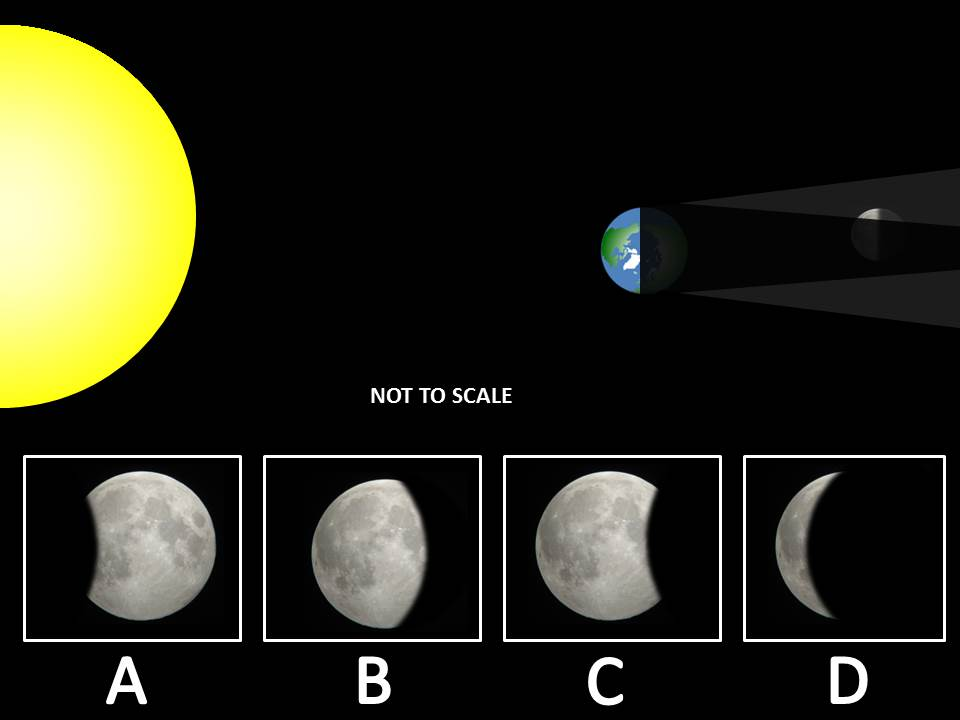
Which letter best represents the view from Earth?
D
This is the term used to describe the complete shadow of an object:
Umbra
Which statement correctly describes the term "node" as it applies to orbits and eclipses.
The node is the point where the plane of the Moon's orbit around Earth intersects the plane of the Earth's orbit around the Sun.
Select the conditions necessary for an annular solar eclipse
New moon at apogee
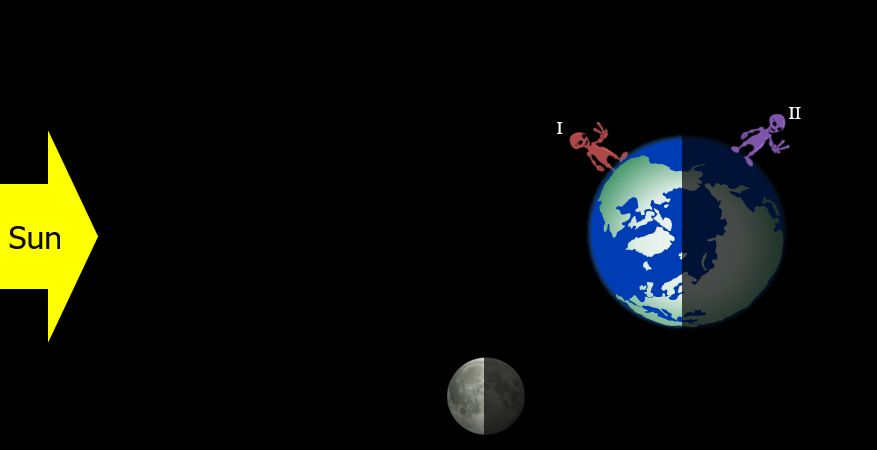
What is the phase of the Moon and the tide for the purple alien? (II)
Waxing crescent / high
Spring tides occur during which phase of the Moon?
Full and New moons
The current calendar used by most of the world has a leap year (366 day year) every 4 years. (T/F)
False
This scientist studied the laws of motion for planets and formulated the idea of Gravity to explain why the planets were in orbit of the Sun.
Newton
Although Copernicus proposed the idea of a heliocentric model, observations did not fit his predictions because...
he incorrectly assumed that planets orbit the sun in circles
In western culture, this was the first individual to propose the idea of a spherical Earth.
Pythagoras
2020 QX 6 is a near Earth asteroid that was discovered in 2020. On August 31, 2020 it passed the Earth just beyond the Moons orbit! Observations indicate that it will take 0.75 years to orbit the Sun. What is the semi-major axis of its orbit around the Sun in Astronomical Units? (Include Units, Round your answer to the nearest hundredth place .00)
0.83 AU
2007 JJ 43 is a transneptunian object that was discovered in 2007. It orbits the Sun at a distance of 48.4 AU What is its orbital period in years? (Include Units, Round your answer to the nearest whole number)
377 years
With constant distance, according to Newton’s law of Gravity, if the mass of the Sun decreased by 10 times, the force of gravity would …
decrease by 10 times
Which of the following would make you weigh half as much as you do right now?
Take away half of the Earth's mass
With constant distance, according to Newton’s law of Gravity, if the mass of the Sun increased by 3 times, the force of gravity would …
increase by 3 times
Using a 100 cm cross staff, a cell phone tower appears to be 48 cm tall. If the tower is 12 meters tall, what is the distance to the pole? h/d=H/D (Round to the nearest whole number and include units)
25 m
Using the small angle relationship: Jupiter is 139,800 km in diameter, on a specific night Jupiter's angular diameter was measured to be 0.0107 of a degree. What was the distance to Jupiter in kilometers on this night? a/360 = d/2(pi)r (Include units, Round your answer to the nearest million km )
749,000,000 km
A radar beam sent from Earth traveled to an asteroid and back in 382.2 seconds. What was the distance from Earth to Asteroid?
D = vt/2
(Include units, Round your answer to the nearest 100,000 km)
57,300,000 km
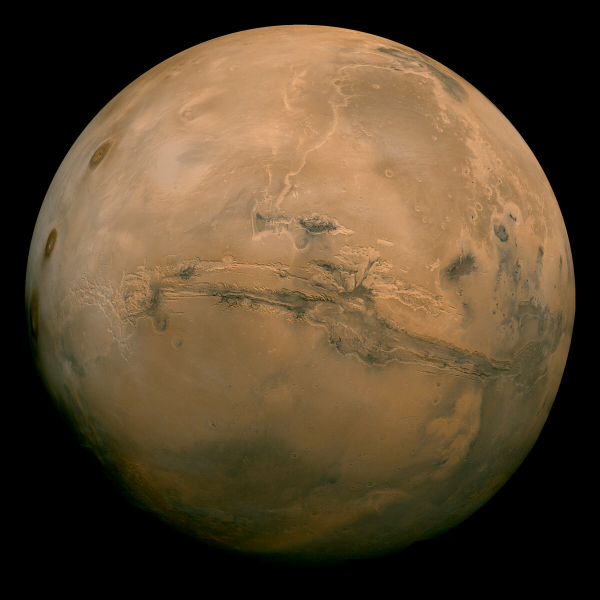
What is the name of the planet shown in this image?
Mars
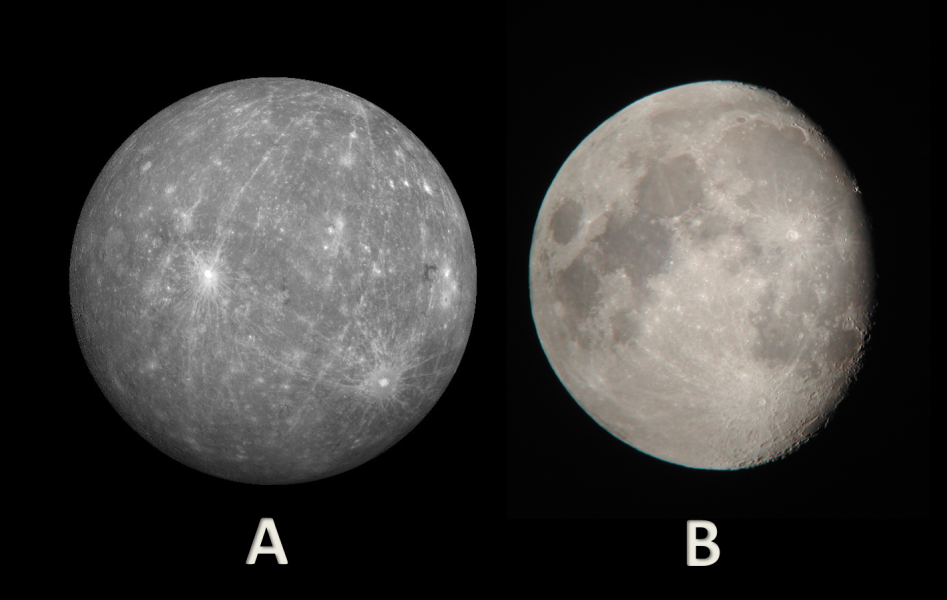
Which of the objects in the image is the planet?
A
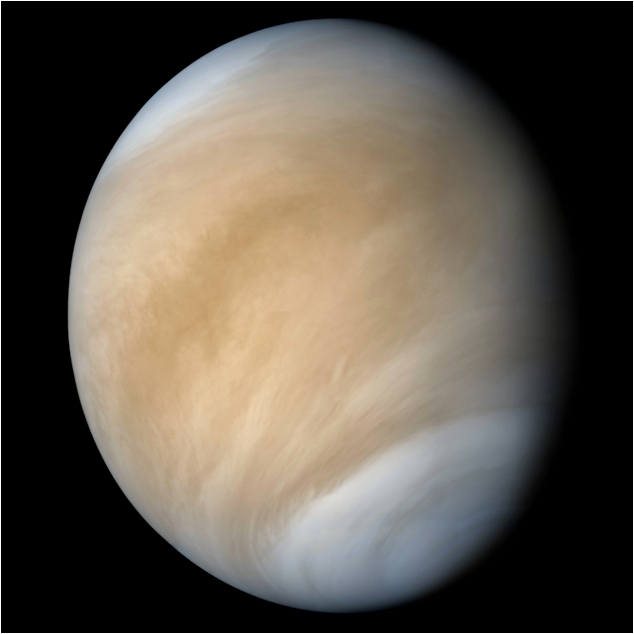
What is the name of the planet shown in this image?
Venus
Orbiting spacecraft have been used to detect evidence of recent active geology on all terrestrial planets EXCEPT
Mercury
This planet orbits the Sun in approximately 3 months at a distance less than half of the distance between the Sun and Earth.
Mercury
Of the terrestrial planets, this planet has the thickest atmosphere. (Greatest atmospheric pressure)
Venus
Which atmospheric component is NOT significant as a “green-house” or atmospheric warming gas? (Argon, Carbon Dioxide, Methane, Water Vapor)
Argon
Gravitational interactions between moons and ring particles can change the shape and organization of planetary rings. (T/F)
True
With a density less than 1 g/cc, and located nearly 10X the Earth-Sun distance, this planet takes approximately 29 years to orbit the Sun.
Saturn
Requiring over 160 years to complete an orbit of the Sun, this planet was predicted to exist prior to its discovery in the mid-1800s.
Neptune
All the Jovian planets have evidence of large storm systems except
All have large storms
Rings on Neptune and Uranus were first discovered by:
blinking star light prior to the planet occulting a background star
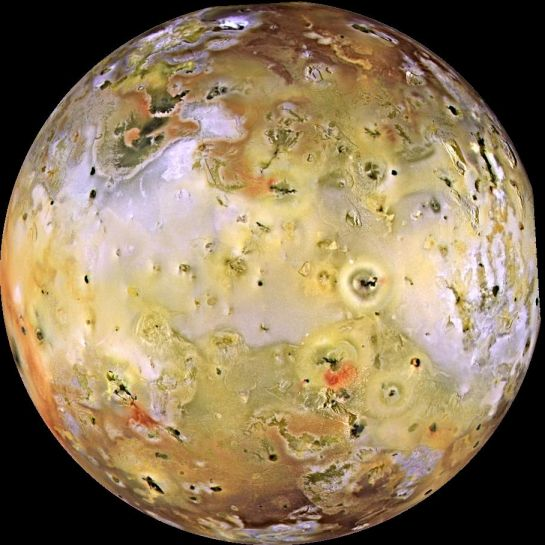
This moon of Jupiter is known to be the most volcanically active object in the solar system.
Io
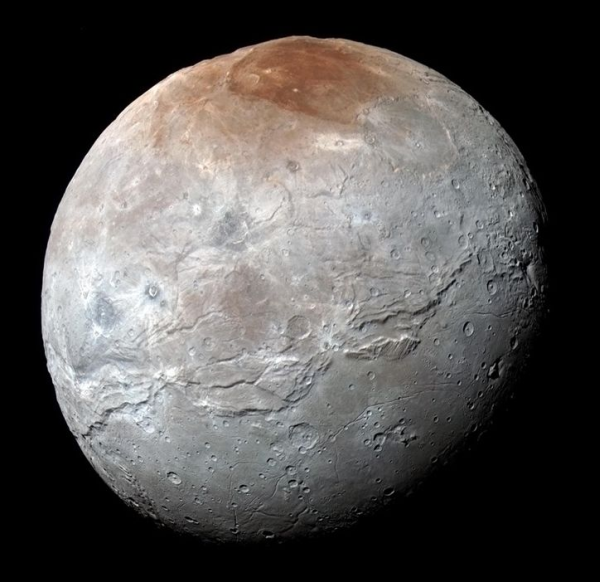
Largest of any moon in comparison to the size of its host planet/dwarf planet, this moon is one of only four Kuiper Belt objects explored by spacecraft.
Charon moon of Pluto
The Moons of the planet Mars are best described as:
Main belt asteroids captured by the gravity of Mars
When visited by the New Horizons space probe in 2015 planetary scientists observed all of the following on the dwarf planet Pluto except: (many similarities with the neighboring moon Charon / an atmosphere / large smooth icy plains / a heavily cratered surface)
a heavily cratered surface
With elliptical orbits typically extending far beyond the orbit of Neptune, these “dirty snow-balls” are frequently composed of a mixture of rock and various ices.
Comets
As a comet nears the inner solar system, solar heating causes ices to sublimate and form a spherical atmosphere around the central object. This is known as:
Coma
 Note
Note  Flashcards (115)