biochem 10 Nucleic acids
 Call Kai
 Learn
Learn Practice Test
 Spaced Repetition
 Match
Match Flashcards
 Knowt Play
1/106

There's no tags or description
Looks like no tags are added yet.
Name | Mastery | Learn | Test | Matching | Spaced | Call with Kai |
|---|
No analytics yet
Send a link to your students to track their progress
107 Terms
when was DNA discovered and by who
1869
friedrich Miescher
what was DNA first called
nuclein (since found in nucleus of white blood cells)
what does it mean for nulcleic to be a polymeric chain
made of many monomers linked together
what are the monomers of a nucleotide
sugar (ribose or deoxyribose), nitrogenous bases, and a phosphate group
monomer units are connected by ______________ bonds (specific link:___________-)
covalent; phosphodiester link
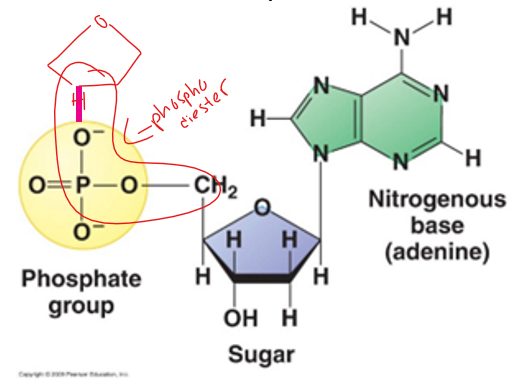
how do we read a nucleic acid chain
5’-3’
nucleotide functions (3)
energy for metabolism (ATP)
enzyme cofactors (NAD+)
signal transduction (cAMP)
nulceic acid functions
storage of genetic information (DNA)
transmission of genetic info (mRNA)
processing of genetic info (ribozomes)
protein synthesis (tRNA and rRNA)
a nucleotide contains
nitrogenous base. sugar, phosphate group
nucleoside contains
nitrogenous base and sugar
nucleobase contains
nitrogenous base
nitrogenous bases are either
pyrimidines or purines
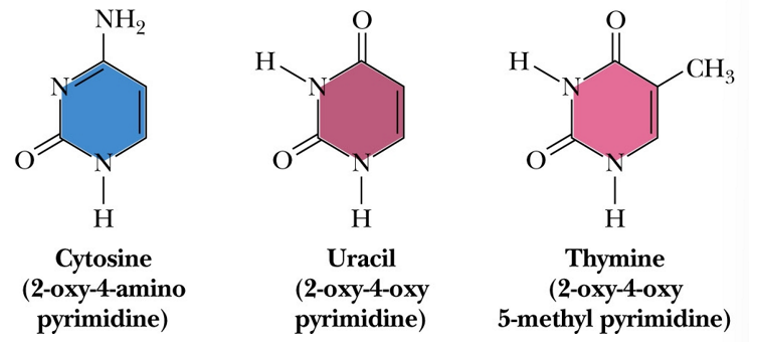
pyrimidines (which ones are these; structure)
cytosine
uracil
thymine
planar, single hexagone
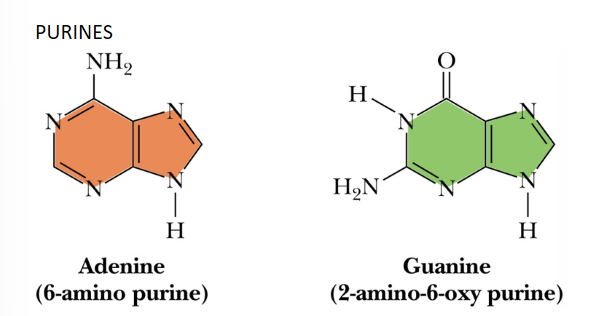
purines (structure, which ones are these)
adenine
guanine
a hexagone+pentagon
almost planar
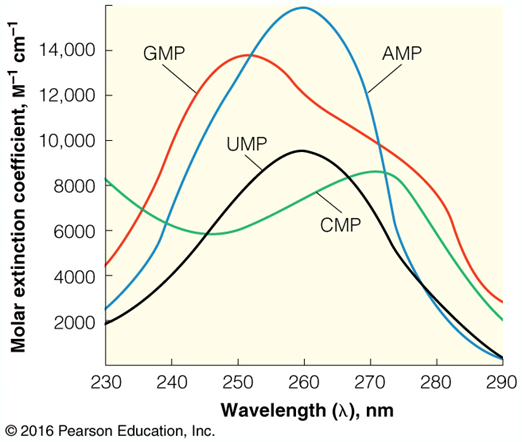
uv light absorption of nitrogenous bases
250-270 nm
UV light absorption is used to detect and quantitate nucleic acids
what are the pentose sugars in nucleotides
either a ribose or a deoxyribose
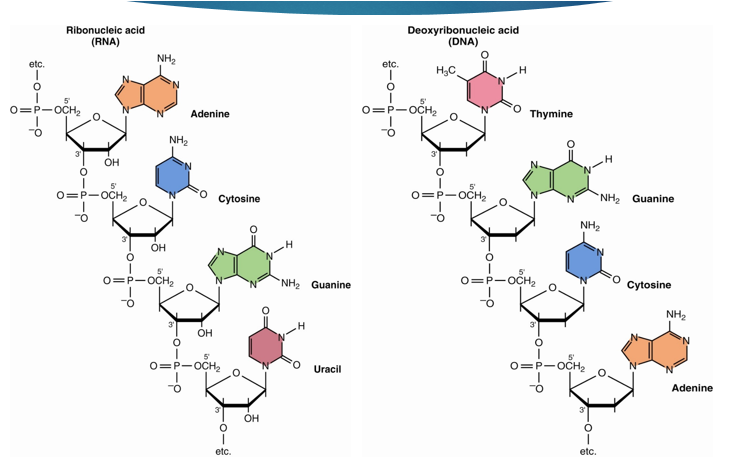
what identifies if something is DNA or RNA
if it has ribose or deoxyribose
EVEN IF deoxyribose has uracil (STILL DNA)
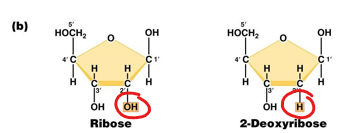
ribose vs deoxyribose
ribose has a oxygen on the 2C’ and is in RNA
deoxyribose has no oxygen on C2’ and is in DNA
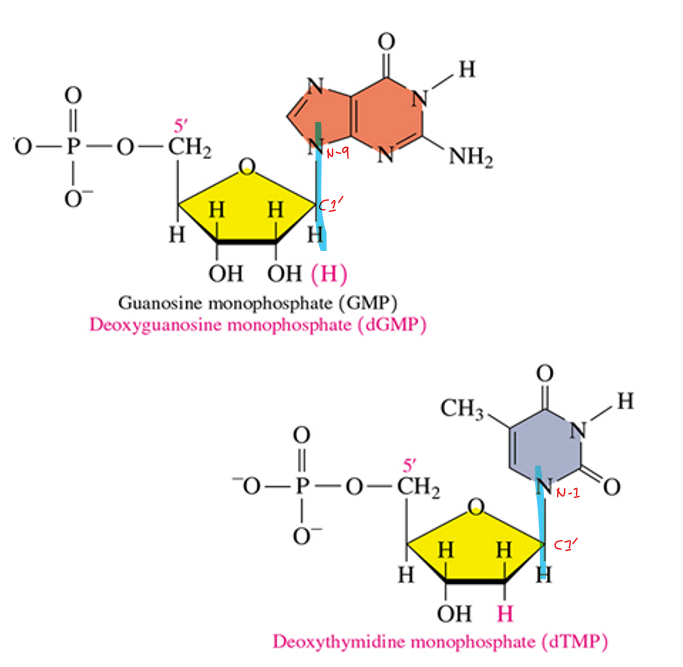
how does the sugar bind to the nitrogenous base
if it is a purine, C1’ binds to N9
if it is a pyrimidine, C1’ binds to N1
it is a COVALENT —> beta-N-glycosidic bond
adenosine functions as a what (3) and what does it cause (4)
functions as a autocoid/ local hormone, and neuromodulator in which it is in the bloodstream influencing blood vessel dilation, smooth muscle contraction, neurotransmitter release, and fat metabolism
is also a sleep regulator where rises when we wake up to promote an eventual sleep (caffeine blocks it)
nucleotides are (another name)
nucleoside phosphates
most nucleotides have ribose or deoxyribose?
ribose —> ribonucleotides
phosphate group (charge)
negative charged at neutral pH
phosphate group attached to sugar how
attached in the 5’ position
how are nucleic acids built (where energy)
5’ triphosphates like ATP, GTP, TTP, CTP
atp does what
central to energy metabolism
GTP does what
drives protein synthesis
CTP does what
drives lipid synthesis
UTP does what
drives carb metabolism
nucleic acids contain ___ phosphate moiety (part) per nucleotide
one
how are nucleic acids formed (the bonds)
covalent bonds formed by phosphodiester linkages
the backbone of a nucleic acid is _______ charged
neg charged (at pH 7)
the backbone of nucleic acid consist of
the phosphate group and the pentose sugar
DNA Backbone (stability and hydrolysis)
fairly stable
subject to slow hydrolysis (when no enzyme present)
accelerated hydrolyses by enzyme DNAse
The hydrogen instead of OH in RNA is more stable (not broken apart as easily)
nucleic acids structure in terms of branching
linear and no branching
RNA backbone (stability, hydrolysis)
stable but rapidly hydrolyzed in alkaline conditions (DNA IS NOT)
-in water, RNA last a few years but in a cell it mRNA is degraded in a few hours due to OH group on C2’
nucleic acids directionality (differences on ends)
5’-3’
the 5’ end lacks a nucleotide (ends with the sugar attached to is phosphate)
the 3’ lacks another phosphate on the C3’ of the pentose sugar (lacks a nucleoside)
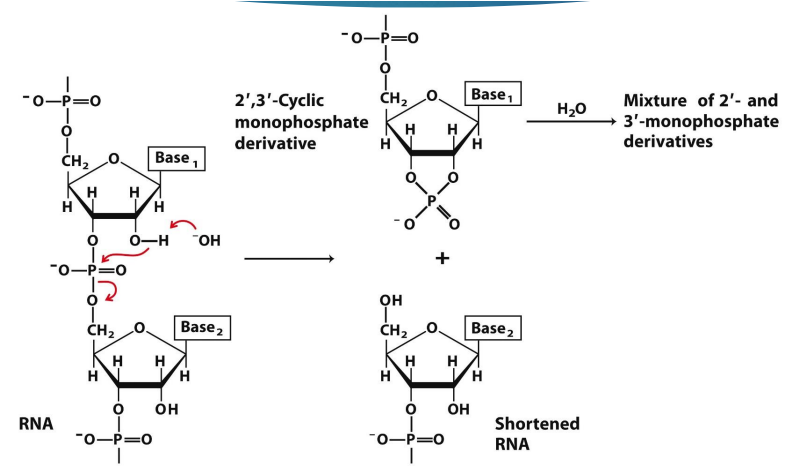
hydrolysis of RNA
unstable in alkaline conditions
can by hydrolyzed by enzyme RNase
what is dicer
is an enzyme that cleaves double-stranded RNA (dsRNA) into oligonucleotides
-protection from viral genomes
RNase is a what, how common, example of one
RNase enzymes are abundant around us:
S-RNase in plants prevents inbreeding
Dicer is an enzyme that cleaves double-stranded RNA (dsRNA) into oligonucleotides
protection from viral genomes
MECHANISNS OF BASE CATALYZED RNA HYDROLYSIS
The -OH will want to pull the H from OH on the sugar to make water. So then the other O doesn’t have partner, and will attack the phosphate. Then phosphate breaks bond with the oxygen that attaches to the lower sugar, and then the 2 nucleotides that were together have broken into 2
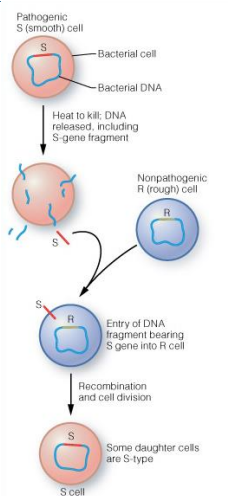
how was DNA discovered (2)
One of the most important discoveries in biology
DNA extracted from a virulent bacterium was injected into a nonvirulent strain of the same bacterium
The nonvirulent strain became virulent (1940s)
Chargaff found that the 4 nucleotide bases of DNA occur in different ratios in the DNAs of different organisms and that the amounts of certain bases are closely related (late 1940s)
Clue to how genetic information is based down
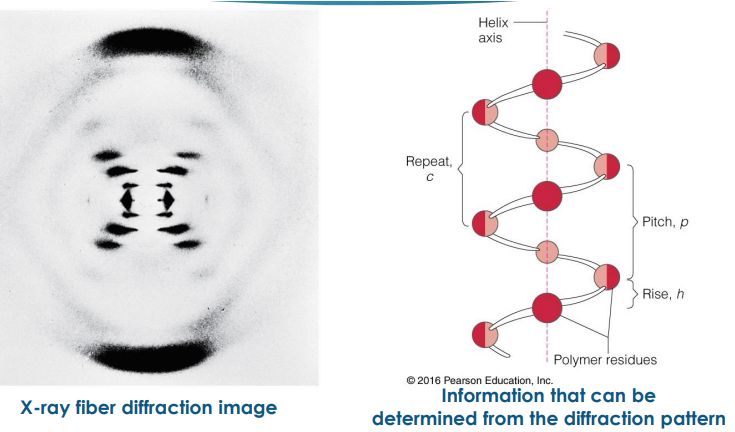
Franklin and Wilkins used X-ray diffraction to analyze DNA (early 1950s)
how did we figure structure of DNA
Franklin and Wilkins used X-ray diffraction to analyze DNA (early 1950s)
chargraff’s rules of DNA (4)
The base composition (A,G,C,T) of DNA generally varies from one species to another
DNA specimens isolated from different tissues of the same species have the same base composition.
So sample of skin and then my adipose tissue, they have the same base composition because same species/ person
The base composition of DNA in a given species does not change with an organism’s age, nutritional state, or changing environment.
Genetic code itself does not change. Genes off or on can, but not the code
In all cellular DNAs,
the number of adenine residues is equal to the number of thymine residues (A=T)
the number of guanine residues is equal to the number of cytosine residues (G=C).
So, the sum of the purine residues and pyrimidine residues is: A+G = T+ C
what is the equation for bases
A+G = T+C
SUM OF PURINES = SUM OF PYRIMIDINES
-because A pairs with T and G pairs with C
so if A is 30 then T is 30 and then that means that is 60. So C would be 20 and G 20. So 20 + 30 is 50 (A+G) and 20+30 is 50 (T+C)
how do bases bond with each other in DNA
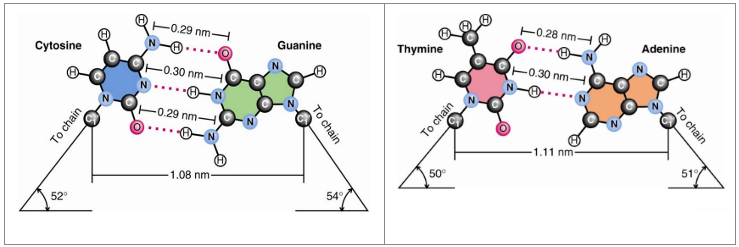
hydrogen bonds
what bonds with what, how many bonds
PURINES PAIR WITH PYRIMIDINES
A with T —> 2 bonds
C with G —> 3 bonds
A with U —> 2 bonds (mRNA)
who was rosalind Franklin, what did she do
Best known for her work on the X-ray diffraction images of DNA which led to the discovery of the DNA double helix
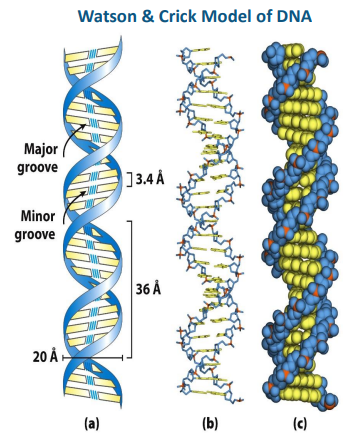
watson and crick model of DNA
Missing layer means alternating pattern (major 22A & minor groove 12A)
Hydrogen bonding:
A pairs with T
G pairs with C
Double helix fits the data!
Watson, Crick, and Wilkins shared 1962 Nobel
complementary strands of DNA (4 things- characteristics and bonds)
the Two chains differ in sequence
Sequence is read from 5’ to 3’
the Two chains are complementary
When they come together = hybridize
the Two chains run antiparallel
i.e. one chain is 5’ to 3’ the other 3’ to 5’
the two chains Held together by 2 forces:
Hydrogen bonding between bases
Base-stacking interactions
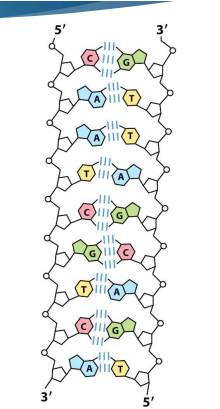
what are the 2 interactions that hold the 2 chains together AND how to they make it stable
hydrogen bonds and base staking bases (dipole-dipole and vander waals interactions)
Help minimize contact of bases with water. The bases are more hydrophobic so want to be inside
DNA replication
-strands separate by helicase
-each strand serves as a template for the new strand
-DNA polymerase catalyzes the synthesis of new strands (in the 5’-3’ direction)
-lagging strands still goes in 5-3’ direction but is build in Okazaki fragments going 3’-’5 direction
-ends up with 2 DNA molecules, each one with a parent and a daughter strand
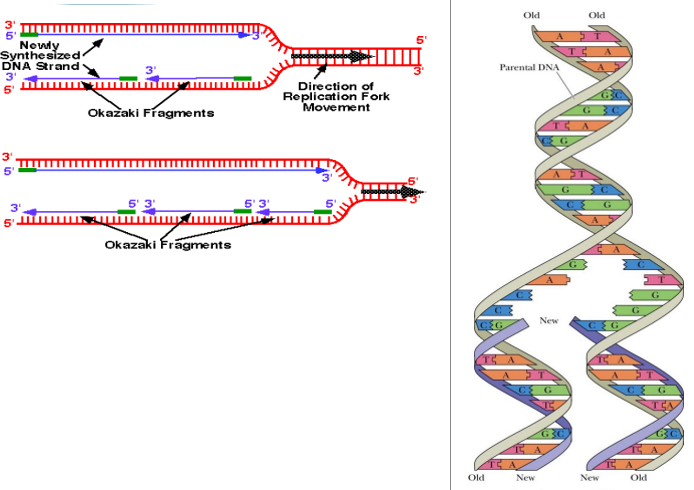
steps of DNA replication (wether it is DNA or RNA)
initiation, elongation, termination
DNA IN CELLS OCCURS IN THE FORM OF
chromosomes
DNA--> Histones --> chromosomes
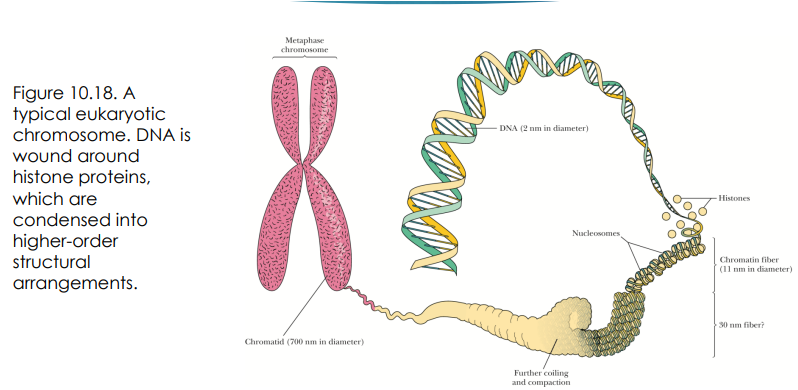
how is information transferred in cells
-transcription and translation are
transcription
information encoded by the DNA molecule is transcribed via synthesis of mRNA
translation
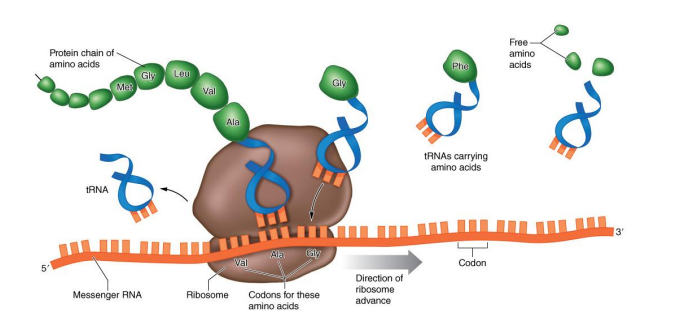
3 base codons on the mRNA corrsponding to the specific amino acids directs the sequence of building a protein. tRNA brings them to the ribosome to form the amino acid chain.
what is the central dogma
A theory that states that genetic info flows only In one direction: from DNA--> RNA--> protein OR from RNA --> directly to protein
So replication--> transcription--> translation
DNA vs RNA (in types)
DNA- one type , one purpose
RNA - several types and purposes
rRNA
mRNA
tRNA
small nuclear RNA (snRNA)
small RNAs (RNAi, miRNA, snoRNA, sRNA)
long nocoding RNA (lincRNA and lncRNA)
ribosomal RNA function
the basis of structure and function of ribosomes
messenger RNA frunction
carries the message for protein synthesis
transfer RNA function
carries the amino acids for protein synthesis
messenger RNA (made how)
using DNA template
mRNA (components)
-ribose instead of deoxyribose
-uracil instead of thymine
one mRNA may code for how many proteins
more than one
how does mRNA length vary depending on how many genes its coding for
AND concentration (amount) correlates with
mRNA from a specific gene is usually always the same length
mRNA from different genes varies in length
mRNA cytoplasmic concentrations (how much) correlate with protein synthesis
tRNA works how
tRNA are covalently linked to an AA and join with the mRNA to add the AA to the growing polypeptide (location: ribosomes)
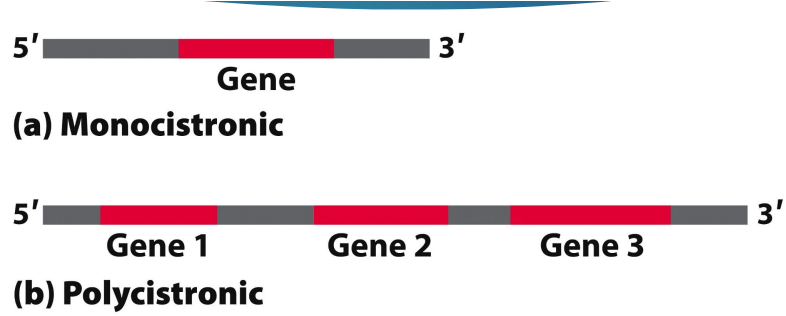
MONOSCISTRONIC VS POLYCISTRONIC MRNA
mono- one gene
poly- codes for multiple genes
Minimum length of mRNA is set by the length of the polypeptide chain for which it codes
Ex: 100 AA polypeptide requires 300 nucleotide mRNA coding sequence
in eukaryotes, DNA is transcribed to produce
heterogeneous nuclear RNA (hnRNA)- pre mRNA
mixed introns and exons with poly A
intron = intervening sequence
exon = coding sequence
poly A tail - stability? Added on to the end and we think it has to be with stability while removing introns
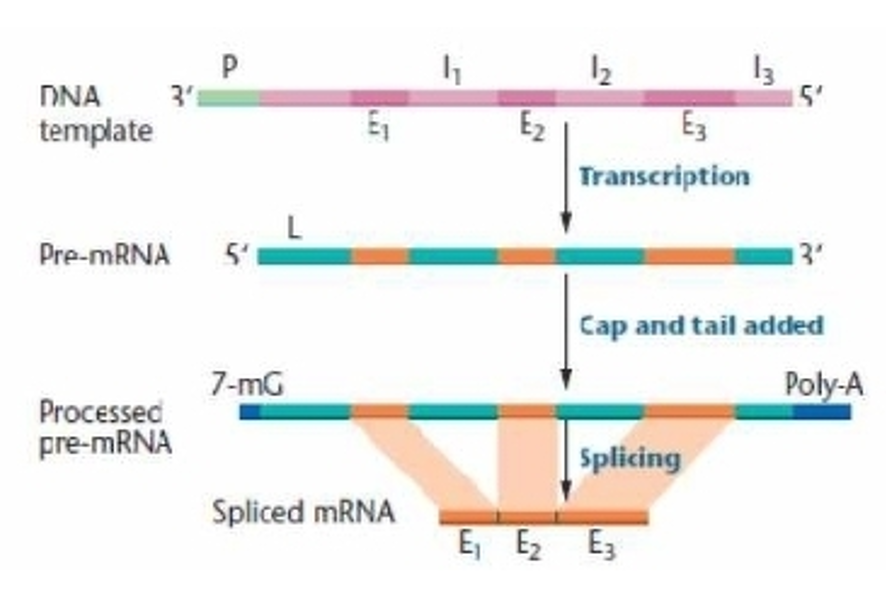
introns and extrons
introns are those we get rid of
extrons are those we keep
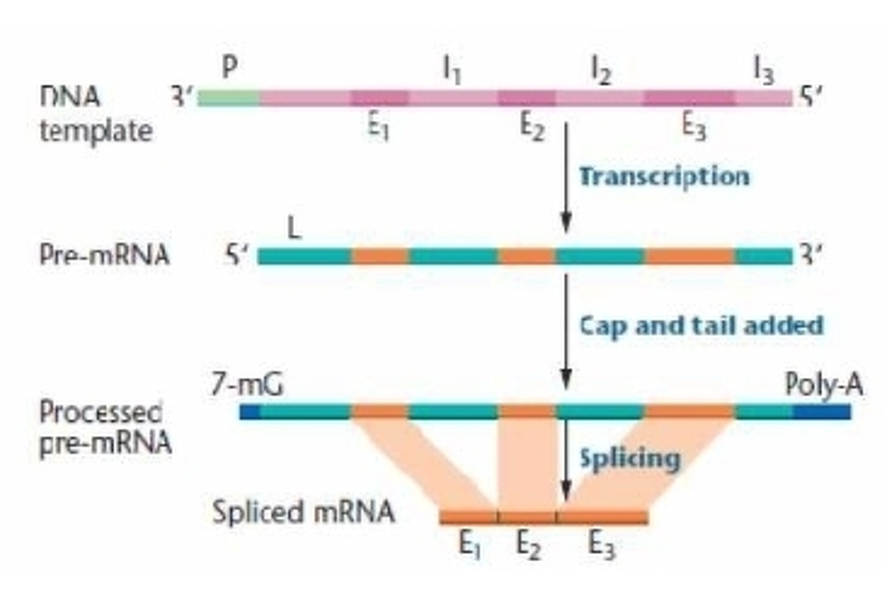
what is splicing
Splicing produces final mRNA without intron
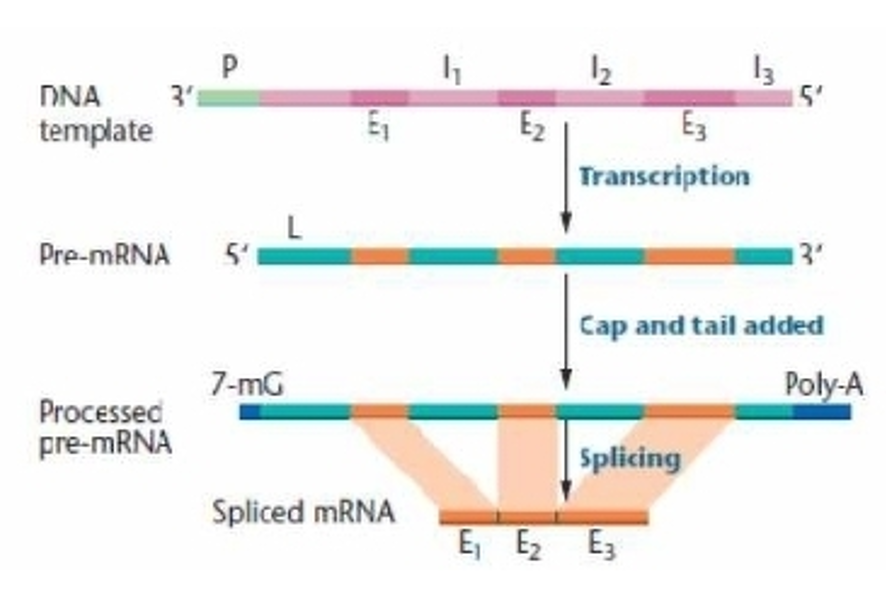
what does rRNA provide
PROVIDES THE STRUCTURE AND FUNCTIONAL FOUNDATION FOR RIBOSOMES
ribosomes structure and components
-Ribosomes are about 2/3 RNA, 1/3 protein
- rRNA serves as a scaffold for ribosomal proteins
role of ribosomes
biosynthesis of proteins
Genetic information in the nucleotide sequence of mRNA is translated into the amino acid sequence of a polypeptide chain by ribosomes
ribosomes in prokaryotes vs eukaryotes
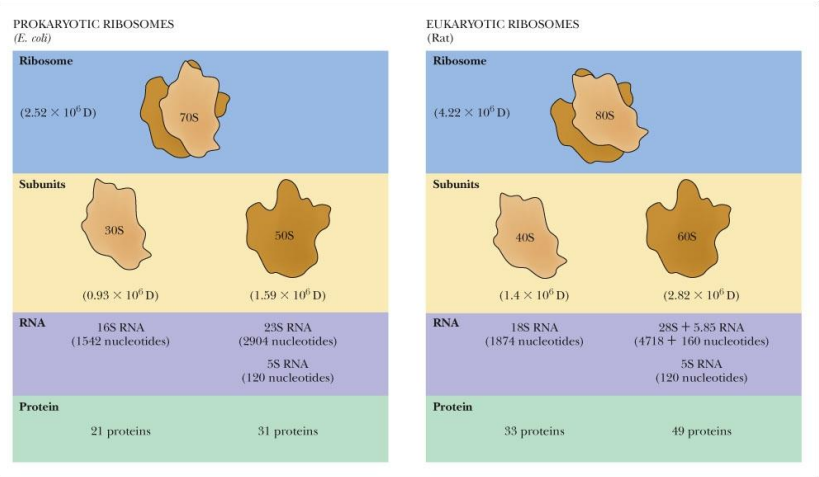
tRNA is composed of what
Small polynucleotide chains 73 to 94 residues each
Several bases usually methylated
Each AA has at least one unique tRNA which carries the AA to the ribosome
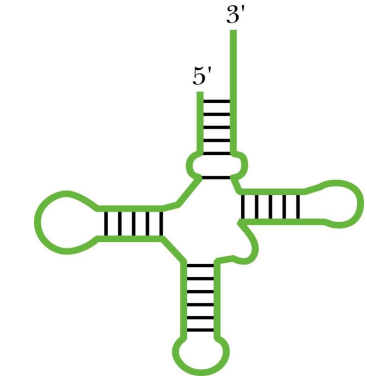
translation (explain the process)
the genetic code (and start and stop codons)
Different codons, or base triplets, correspond to each amino acid residue
Wobble effect
The AUG start codon places a Met at the beginning of eukaryotic proteins
Often removed by proteases
Three codons, UAA, UGA and UAG, are stop codons, which signal termination of translation
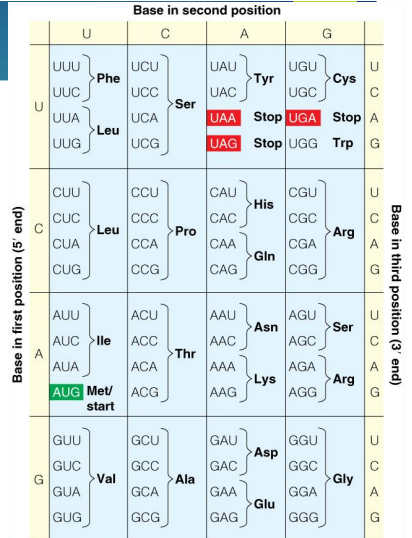
what is the wobble effect
Allows for some wiggle room with mutations since like AGU and AGC both code for Serine
what does non-coding RNA refer to
commonly employed for RNA that does not encode a protein
what RNA’s are noncoding RNA’s
RNAi, small interfering RNA, microRNA
RNA interference (RNAi)
Attracted considerable attention because their role in gene regulation makes them likely targets for drug discovery and development
which is blocking the synthesis of RNA
siRNA
Exogenous (not from the body that somehow gets into the cells)
double-stranded RNA that is taken up by cells
Typically binds perfectly to its mRNA target in animals
miRNA
Single-stranded molecule from endogenous (we make in our bodies) noncoding RNA
Can inhibit the translation of many different mRNA sequences because its pairing is imperfect
Imperfect match to mRNA which allows to inhibit multiple protein synthesis
miRNAs in glucose homeostatis
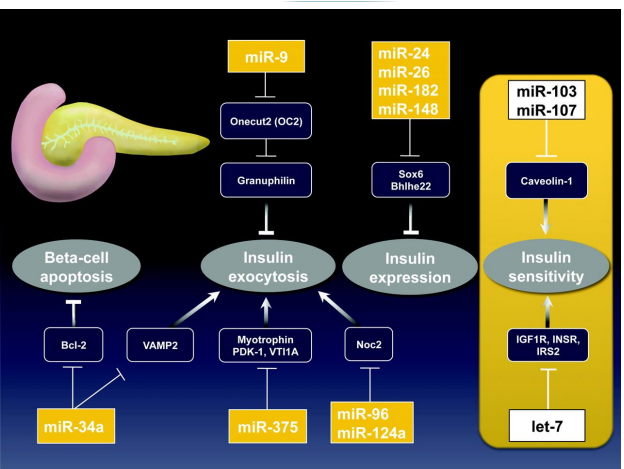
do nutritional components change your DNA?
NO, they impact the way DNA is expressed--> gene expression
Hormones are influenced by dietary factors
Clear relationship between excessive CHO (mostly simple) consumption and lipid biosynthesis
2 ways in which hormones can impact gene expression and protein synthesis
direct method (fat soluble) and cell surface receptors (water soluble)
fat soluble hormone action on gene regulation
Direct method: the thing can go into cell and nucleus and bind to receptor on DNA
Fat soluble go into cell
polar hormone action on gene expression
Cell surface receptors : attach to receptor--> sends cascades--> lead to turning on or off of gene
Water soluble target cell receptor
what vitamin A molecule goes directly into nucleus to affect gene regulation
retinoic acid
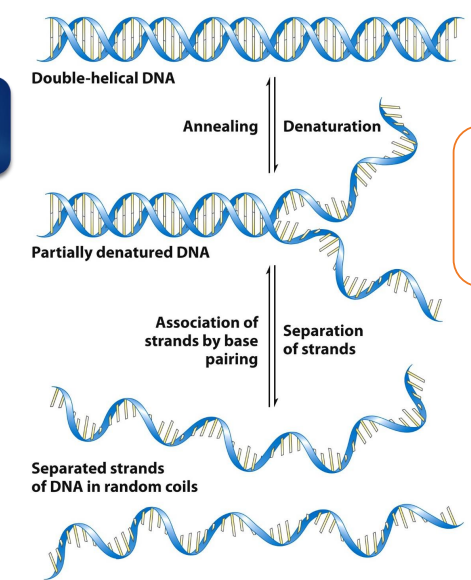
what is denaturation
is talking about unfolding and breaking noncovalent bonds
DNA denaturation is promoted by
Electrostatic repulsion (phosphate group negative charge) between chains (charge neutralized to some extent by anions: Na+, K+, Mg2+);
High ionic strength stabilizes duplex structure
Using high salt to separate the strands
Backbone is negative, so if we add a lot of negatives, they will repulse as neg doesn’t want neg.
Or positive and positive
Altering pH or temperature (increase)
when DNA denatures, what remains intact
covalent bonds (all but the hydrogen bonds holding complementary bases together)
-so the phosphodiester bonds between sugar and phosphate, and the glycosidic bond between the sugar and the base
Genetic code remains intact
in DNA denaturation, what is borken
Hydrogen bonds are broken
Two strands separate (denature)
Base stacking is lost (the ladder steps)
UV absorbance increases = hyperchromic affect
what is the hyperchromic affect
because the bases in single-stranded DNA are more exposed (due to denaturation), they can absorb more light than the same bases in double-stranded DNA.
is denaturing reversible
Denaturation may be reversible: annealing (aka renaturation
what is annealing
reversible denaturation
the rate of DNA annealing depends on (4)
Temperature
Length and concentration of DNA
Salt concentration
Properties of sequence (C -G and A -T)
DNA is denatured at what temps (not PCR)
specific Temps (melting points)
Each DNA molecule is unique.
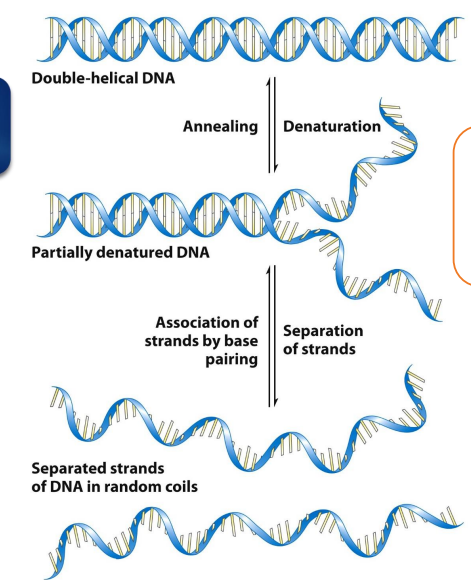
when temp is normal DNA is a __________, when does it denature, when does it anneal?(what temps- not specific numbers)
aka melting
DNA exists as double helix at normal temperatures
Two DNA strands dissociate at elevated temperatures
the strands reanneal when temp is lowered

