Chemistry AQA
 Call Kai
 Learn
Learn Practice Test
 Spaced Repetition
 Match
Match Flashcards
 Knowt Play
1/162

Earn XP
Description and Tags
E v e r y t h i n g
Name | Mastery | Learn | Test | Matching | Spaced | Call with Kai |
|---|
No analytics yet
Send a link to your students to track their progress
163 Terms
What product is formed from the gentle heating of a primary alcohol?
An aldehyde is formed. (Oxidation reaction, + [O])
R–CH2OH + [O] → R–CHO + H2O
What product is formed from a primary alcohol when heated under reflux?
A carboxylic acid is formed. (Oxidation reaction, + [O])
R–CHO + [O] → R–COOH
What reagent is used for the formation of aldehydes and carboxylic acids from a primary alcohol?
Acidified potassium dichromate (K2Cr2O7). (This is the oxidising agent, the alcohol is the reducing agent.)
What classes of alcohols react with acidified potassium dichromate and what is observed?
Primary and secondary alcohols react, tertiary alcohols do not.
A colour change from orange to green is observed.
What is the chemical reagent used to confirm the presence of a carboxylic acid and what is observed?
Sodium carbonate/hydrogencarbonate (Na2CO3 / NaHCO3), produces CO2, effervescence.
(Limewater turns colourless to milky when CO2 bubbled through.)
What is the name of the process where glucose forms ethanol and what conditions are necessary?
Fermentation, no oxygen present, yeast must be present.
Temperature must be 298K <= T <= 315K.
What are stereoisomers?
Stereoisomers are molecules with the same structural and molecular formulae but have their atoms arranged differently in space.
Are primary or tertiary carbocations more stable?
Tertiary carbocations are more stable, therefore often form more readily as a major product.
What is the reagent to turn a ketone back into an alcohol?
NaBH4, is the reducing agent, reduces the ketone. (NaBH4 itself is oxidised).
R–CO–R’ + 2[H] → R–CHOH–R’
Definition of standard enthalpy change of combustion.
Enthalpy change when 1 mole of substance is burned in excess oxygen with all reactants and products in standard states.
State the meaning of hydration.
Addition of water.
Define mean bond enthalpy.
Enthalpy change needed to break 1 mol of covalent bonds averaged over a range of molecules.
What alcohol and carboxylic acid is used to form the ester methyl ethanoate + water. What catalyst is required for this reaction?
The acid ethanoic acid and the alcohol methanol. Strong acid catalyst required. (e.g. H2SO4, H+ Required, done under reflux.)
Carboxylic acid + Alcohol ⇌ Ester + Water
State in general terms how a catalyst works.
Catalyst provides an alternative mechanism for a reaction that has a lower activation energy.
What products are formed when a carboxylic acid reacts with sodium hydroxide?
Sodium salt and water.
R–COOH + NaOH → R–COO−Na+ + H2O
(Acid-base neutralisation.)
What does an acid anhydride and alcohol react to make?
Produces an ester and carboxylic acid.
E.g. Ethanoic anhydride + Methanol → Methyl Ethanoate + Ethanoic Acid
What does an acyl chloride and alcohol produce?
Produces an ester and HCL
E.g. Ethanoyl Chloride + Methanol → Methyl Ethanoate + HCL
How is biodiesel created from a fat/oil ester and methanol, what are the products?
Glycerol and methyl esters are produced. Long chain methyl esters are used as biodiesel.
Fat/Oil + 3 Methanol → Glycerol + 3 Methyl ester
What is the reaction between propanal and HCN? Name products.
Produces 2-hydroxybutanenitrile.
What is produced from the hydrolysis of an ester in the presence of concentrated H2SO4 catalyst and performed under reflux?
A carboxylic acid and alcohol is produced.
Ester + Water ⇌ Carboxylic acid + Alcohol
What is the test for confirming the presence of acyl chlorides?
Silver nitrate solution, white precipitate is formed. (AgCl)
What does an aldehyde and HCN react to from?
A hydroxynitrile.
(Requires slight alkaline conditions).
What is a pair of enantiomers?
Two stereoisomers that have different arrangement of atoms in space around a chiral carbon atom.
(The two are mirror images when the structures are compared, and can both rotate plane polarised light in different directions.)
What is produced when an acyl chloride reacts with a primary amine?
An N substituted amide and HCl is formed.
(Substituted amide functional group is R-C(=O)-NH-R’. Amide group is C(=O)-NH2.)
What does an acyl chloride and ammonia react to produce?
An amide (C=ONH2 functional group) and HCl.
What is produced from salicylic acid and ethanoic anhydride?
Aspirin and ethanoic acid.
Why may a reaction have a small enthalpy change?
same types of bonds may have been broken/made and the same number of bonds must’ve been broken/made.
Why is a minimum amount of solvent used when purifying a substance via recrystallisation?
Why is it filtered hot?
To form a saturated (or highly concentrated) solution.
Filtered hot to prevent crystallisation during filtration.
What is the enthalpy of hydration?
When 1 mole of gaseous ions is converted into 1 mole of aqueous ions.
Define the term enthalpy change.
Heat change at constant pressure.
What compound is used for the salt bridge in electrode potentials?
Potassium nitrate.
What 2 reagents are needed to produce the electrophile NO2+ for the nitration of benzene.
Conc H2SO4 and conc HNO3.
HNO3 + H2SO4 → HSO4- + NO2+ + H2O
Catalyst is H2SO4. (This is regenerated as HSO4- and H+ react again.)
What’s the reducing agent to turn an NO2 on a benzene ring into NH2?
H2 and Ni catalyst.
Reducing agent for benzene ring into cyclohexane?
H2 and Ni catalyst.
Why do molecules that contain one element have 0 enthalpy of formation? (e.g. Δ𝐻f H2 = 0)
Molecule already exists within its standard state.
At what temperature does entropy = 0 for any substance?
0K
Products of 2NaBr + 2H2SO4 redox reaction?
Na2SO4 + Br2 + SO2 + 2H2O.
(Orange-brown fumes formed.)
(H2S is never produced with bromine.)
What is [ C16H33N(CH3)3 ]+ Br- used for ?
Used in shampoos, fabric softeners.
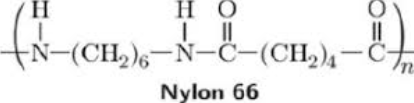
What is nylon 6, 6 and what is it used in?
Polyamide, condensation polymer made from hexane-1,6-diamine and hexanedioic acid.
Used in tights.
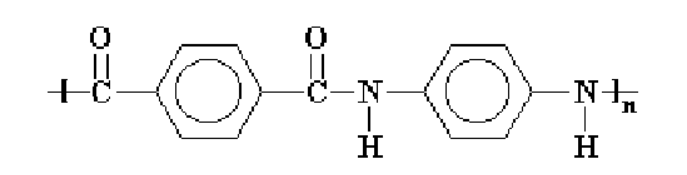
What is Kevlar and what is it used in?
Polyamide, condensation polymer made from benzene-1,4-dicarboxylic acid and benzene-1,4-diamine.
Used in bullet proof vests.
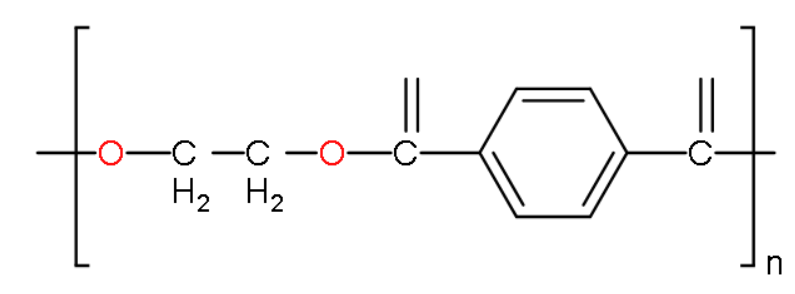
What is Terylene and what is it used in?
Polyester, condensation polymer made from benzene-1,4-dicarboxylic acid and ethane-1,2-diol.
Used in clothing.
What is produced when an amide is hydrolysed in acidic or in alkali (NaOH) conditions?
In acidic conditions, an ammonium salt (-NH2 → -NH3+) and carboxylic acid is formed.
In alkali conditions, an amine is formed and sodium salt produced (COO- Na+).
How is a quaternary ammonium ion produced and what are they used in?
They are produced by reacting NH3 with a large excess of haloalkanes (all H’s on NH3 are substituted by new alkyl groups from haloalkane, NR4+).
Used in conditioners/shampoos.
Acylation is the process of adding a C=O group to a molecule. What is the catalyst?
AlCl3 is the condition / catalyst, often acylation is an addition-elimination mechanism.
What is the formula and structure of phosphorus (V) oxide, how does it react with water and what the pH of solution formed?
P4O10 is the formula. Structure is simple covalent molecule.
P4O10 + 6H2O → 4H3PO4 .
pH: -1 to 1
Equations for redox reactions when lithium cobalt oxide and lithium electrodes are used. (Equations when discharging, cell in use.)
Li+ + CoO2 + e- → LiCoO2
Li → Li+ + e- (Lithium has a very negative electrode potential, oxidised very easily).
Why is there a difference between theoretical and experimental values for enthalpy lattice formation.
Covalent character exists with some compounds, not perfect ionic model. Heat loss during experimentation.
What is observed when sodium bromide is added to aqueous chlorine ? What is the ionic equation?
Yellow/orange solution is seen.
Cl- + Na+ → NaCl.
Cl2 + 2Br- → Br2 + 2Cl-
What is the standard electrochemical cell convention for zinc and copper electrodes?
Zn (s) | Zn2+(aq) || Cu2+ (aq) | Cu (s)
An Ox / Red Cat
Zn (s) → Zn2+(aq) + 2e-
Cu2+ (aq) + 2e- → Cu (s)
Anode, Oxidation, Reduction, Cathode
Zn is oxidised, more negative Eo .
What are the redox equations for the hydrogen-oxygen fuel cell under alkali conditions?
Overall: 2H2 + O2 → 2H2O
Hydrogen electrode: 4OH- + 2H2 → 4H2O + 4e- (Oxidation)
Oxygen electrode: O2 + 2H2O + 4e- → 4OH- (Reduction)
How to test for SO2 vs SO3 with acidified potassium dichromate?
Acidified potassium dichromate, solution will turn from orange to green with SO2 as it can be reduced.
SO3 will have no reaction, as S cant be oxidised further (can’t reach a higher oxidation state than +6).
What is observed when acidified silver nitrate is added to sodium halides NaF, NaCl, NaBr and NaI?
NaF: No reaction takes place.
NaCl: White precipitate forms.
NaBr: Cream precipitate forms.
NaI: Yellow precipitate forms.
(ETHANOLIC CONDITIONS ARE FOR HALOALKANE NOT HALID ION.)
Why is ethanol a suitable solvent when heating oil with KOH?
Ethanol can dissolve BOTH oil and KOH.
(Has a non polar alkyl chain and polar -OH group.)
Define what a fraction is.
A group of hydrocarbons with similar boiling points.
Which pair of repulsions in shapes of molecules provides the greatest repulsion?
LP-LP > LP-BP > BP-BP.
What 2 factors may lead to inaccurate measurement of enthalpy change of combustion experiment?
Incomplete combustion occurring.
Heat loss to surroundings, poor insulation (therefore inaccurate temp change measured.)
What colour is phenolphthalein in acidic conditions?
Is colourless when in an acid, pink in alkali conditions. (e.g. when in conical flask at start of titration, would have NaOH in burette.)
Define first electron affinity.
Enthalpy change when 1 mol of electrons are added to 1 mol of gaseous atoms to form 1 mol of gaseous ions.
What is the catalyst used in the Haber process and what is the possible contaminant that may poison the catalyst?
Iron is the catalyst, sulphur is the contaminant.
Why do complex ions containing Al3+ or Fe3+ form solutions with an acidic pH?
Both ions have a high charge density, weakening the O - H bond in water ligand releasing H+ .
(2H+ can react with CO32- to form CO2 and H2O, effervescence.)
What’s the reducing agent for turning Fe3+ into Fe2+?
Zn, zinc (II).
What makes Al2O3 amphoteric? What can it react with showing this?
It can react with acids and bases.
Al2O3 + 6HCl → 2AlCl3 + 3H2O
Al2O3 + 2NaOH + 3H2O → 2[Al(OH)4]- + 2Na+
What is Enthalpy of lattice dissociation?
Enthalpy change when 1 mol of ionic compound dissociates into its constituent gaseous ions.
Half equation for when potassium dichromate is reduced in acidic conditions? K2Cr2O7
Cr2O72- + 14H+ + 6e- → 2Cr3+ + 7H2O
What is the half equation for when Tollen’s reagent is reduced?
[Ag(NH3)2]+ + e- → Ag + 2NH3
What solvent is used for NMR spectrums?
CDCL3 , D is deuterium (H2 , has a neutron and proton, nmr only works with H1).
Is used as it has no protons.
What is dynamic equilibrium?
Forward and backward rates are the same.
Concentrations of reactions and products are constant.
Exists in a closed system.
What does the area beneath a Max-Boltzmann distribution curve show?
Total number of molecules.
Colours of vanadium ions (V), (IV), (III), (II).
Yellow, blue, green, purple.
[VO2(H2O)4]+, [VO(H2O)5]2+, [V(H2O)6]3+, [V(H2O)6]2+ respectively.
Each one is reduced further, loss of oxygen, reduction of oxidation state.
What is the catalyst for SO2 + ½ O2 → SO3
V2O5 is the catalyst.
SO2 + V2O5 → SO3 + V2O4
V2O4 + ½ O2 → V2O5
What is the homogenous catalyst half-equation reaction between I- and S2O82- ? What is their catalyst and half equation reactions with each left side species?
2I- + S2O82- → I2 + 2SO42-
Catalyst is Fe2+/Fe3+ .
2I- + 2Fe3+ → I2 + 2Fe2+ .
2Fe2+ + S2O82- → 2Fe3+ + 2SO42- .
Remember 2:1 !
What is the autocatalysis half-equation reaction between MnO4- and C2O42- ? What is their catalyst and half equation reactions with each left side species?
2MnO4- + 5C2O42- + 16H+ → 2Mn2+ + 10CO2 + 8H2O
Catalyst is Mn2+ .
4Mn2+ + MnO4- + 8H+ → 5Mn3+ + 4H2O . (x2 For full equation)
(4Mn (II) give 1 electron each to reduce Mn (VII) producing 5 Mn (III))
2Mn3+ + C2O42- → 2CO2 + 2Mn2+ . (x5 For full equation)
Remember 2:5 !
What are the three solutions and four aqueous metal ion reactions to remember? Which ones react further with excess solution?
Solutions: NaOH, NH3, NaCO3 .
Metal ions: Cu (II), Fe (II), Fe (III), Al (III).
Cu reacts further with excess NH3 forming [Cu(NH3)4(H2O)2)2+ (aq), is deep blue colour instead of just blue.
Al reacts further with excess NaOH, forming [Al(OH)4]- (aq), colourless solution.
What are the four reactions between hexaaqua metal ions and Na2CO3?
[Cu(H2O)6]2+ + CO32+ → CuCO3 (s) + 6H2O (blue-green ppt)
[Fe(H2O)6]2+ + CO32+ → FeCO3 (s) + 6H2O (green ppt)
2[Fe(H2O)6]3+ + 2CO32+ → 3CO2 + 2[Fe(H2O)3(OH)3] (s) (brown ppt)
2[Al(H2O)6]3+ + 2CO32+ → 3CO2 + 2[Al(H2O)3(OH)3] (s) (white ppt)
Name the mechanism in which CH4 reacts with bromine to form bromomethane CH3Br.
Free radical substitution.
Name of mechanism that takes place in the reaction between ethanoyl chloride and benzene? What is the catalyst and how is it regenerated?
Electrophilic substitution (Friedel-Crafts acylation).
Overall Reaction: C6H6 + C+OCH3 → C6H5COCH3 + H+ (Phenylethanone produced)
Catalyst: AlCl3
AlCl3 + CH3COCl → CH3C+O + AlCl4-
AlCl4- + H+ → AlCl3 + HCl (regeneration)
Describe structure of benzene.
Planar ring of 6 carbon atoms.
120 degrees bond angle between them, all C-C bonds are same length.
Each carbon uses 3/4 of its electrons for bonding, 4th electron exists in a delocalised p-orbital.
P-orbitals overlap to form a ring of negative charge density, a pi-ring, ring of delocalised electrons.
Enthalpy of hydrogenation for cyclohexene (C6H10) is -119.6kJmol-1 .
Enthalpy of hydrogenation for benzene is -208.4kJmol-1 .
Explain why benzene is more stable than a theoretical cyclohexa-1,3,5-triene.
Enthalpy of hydrogenation is the enthalpy change when 1 mol of gaseous hydrogen H2 molecules react with a compound under standard conditions.
Cyclohexa-1,3,5-triene has 3 double bonds therefore hydrogenation is 3 x -119.6kJmol-1 = -358.8kJmol-1 .
Therefore since enthalpy of hydrogenation is less, -358.8kJmol-1 < -208.4kJmol-1 , benzene is more stable.
In benzene electrons are in a delocalised ring structure, repel each other less than if they were in a double bond structure, therefore more stable.
What conditions and reagents required for a haloalkane to undergo elimination reaction?
NaOH and hot ethanolic conditions.
What conditions and reagents required for an alcohol to undergo elimination reaction?
Conc H2SO4 and heat.
Two ways to make an acidic buffer solution?
Weak acid + one of its salts.
Weak acid + partial neutralisation with strong base.
Define Enthalpy of solution.
Enthalpy change when 1 mol of solid ionic compound is dissolved in water into its constituent aqueous ions under standard conditions.
Before a titration, why is a sample quenched by adding ice-cold water.
Stops any further reactions taking place. Prevents the equilibrium from shifting / no more of a specific product will form if reversible reaction.
Why are anti bumping granules added to a pear shaped flask during reflux?
Prevents large bubbles of gas forming.
What does the 1’, 3’ and 5’ carbons on 2-deoxyribose have bonded in a nucleic acid.
1’ is has a base attatched, H from NH2 of base is lost, OH on C 1’ is lost, water formed, bond between base and sugar formed.
3’ and 5’ have the phosphate bonded, phosphate loses OH group, sugar loses H, water formed, base and phosphate bonded.
Define relative atomic mass.
(Average mass of 1 atom of an element) / (1/12th the mass of 1 atom of Carbon 12)
Is the mass number of 1 atom an integer or decimal?
Integer when talking about 1 atom. Is decimal when referring to average masses.
Why are solutions stored in a stoppered flask?
Prevents evaporation (of water or other solution).
Explain the meaning of the chelate effect.
When bidentate or multidentate ligands fully substitute monodentate ligands causing an increase in entropy as more particles are formed.
How do Fe2+ ions catalyse the reaction between S2O82- ions?
Fe2+ ions have a positive charge and S2O82- ions have a negative charge, ions are attracted and therefore have a lower Ea. (Whereas e.g. I- would have a higher Ea due to repulsion of ions, slower reaction.)
What is the solid precipitate formed from when CO32- ions are added to [Fe(H2O)6]2+ ?
FeCO3 is formed for Fe2+ . Similar product for other 2+ ions.
Why do equilibrium constants Kp sometimes have no units?
Moles of reactants = moles of products.
Equation for how chlorine forms an acidic solution in water.
Cl2 + H2O ⇌ HC + HClO
OR
2Cl2 + 2H2O → 4HCl + O2
Equation for how chlorine and sodium hydroxide react.
Cl2 + 2NaOH → NaCl + H2O + NaOCl
Why does a molecule with 2 bonding pairs have a bond angle of 180 degrees?
Bond pairs repel to be as far away from each other as possible.
What does the acronym ROOR help remember?
Oxidised species are always nearest to the salt bridge in cell notation, e.g.
Fe(s) | Fe2+(aq) || VO22+ (aq), V3+(aq) | Pt (s)
Define enthalpy of atomisation and what is the equation for oxygen?
The enthalpy change when 1 mole of gaseous atoms is formed from the element in its standard state under standard conditions.
½ O2 (g) → O (g)
Why do data books not contain a value for enthalpy of solution of certain compounds? e.g. NaO (s)
The compound may react with water therefore not just dissolving. NaO (s) for example forms NaOH, solid doesn’t just dissolve.
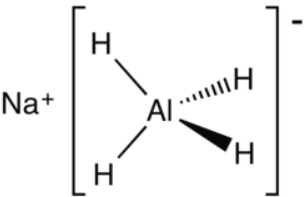
Why does NaAlH4 have a high melting point?
Contains strong ionic bonds, oppositely charged Na+ and AlH4- ions which have strong electrostatic forces of attraction.
What is the formula of cobalt oxide and of lithium cobalt oxide?
Cobalt oxide is CoO2, lithium cobalt oxide is Li(CoO2).