Behavioral Neuroscience Exam 2
 Call Kai
 Learn
Learn Practice Test
 Spaced Repetition
 Match
Match Flashcards
 Knowt Play
1/307

There's no tags or description
Looks like no tags are added yet.
Name | Mastery | Learn | Test | Matching | Spaced | Call with Kai |
|---|
No analytics yet
Send a link to your students to track their progress
308 Terms
Emotions
subjective mental state that is usually accompanied by distinctive behaviors, feelings, and involuntary physiological changes
autonomic nervous system
activation of this system elicits physical sensations that relate to emotions
sympathetic nervous system
"fight or flight" system; prepares the body for action
parasympathetic nervous system
prepares the body to relax and recuperate
core set of basic emotions
-joy/sadness
-affection/disgust
-anger/fear
-expectation/surprise
darwin’s claim about emotional expression
may have originated from a common ancestor, and that nonhuman animals show comparable emotional expressions
8 distinctive emotional expressions
anger, sadness, happiness, fear, disgust, surprise, contempt, and embarrassment
Darwin’s reasoning regarding emotional expression
highlighted the appearance of facial expressions, as well as pointing out that facial muscles and innervation patterns are the same
evolutionary perspective of emotions
Emotions act as motivational programs that evolved to coordinate responses to solve adaptive problems
facial feedback hypothesis
suggests that sensory feedback from our facial expressions can affect or mood
example of facial feedback hypothesis
People performing a task who take on a happy or sad face report stronger feelings of the emotions they were simulating.
effect of botox injections on emotions
paralyze facial muscles => cause people to experience emotions less intensely
There is _____ simple, one-to-one relation between a specific emotion and charged activity of a particular brain region
NO
the limbic system in relation to emotions
different patterns of activation across a network of brain regions associated with emotion
emotions are associated with bilateral changes in…
the insula, amygdala, caudate, putamen, cingulate cortex, and prefrontal cortex activity
fear conditioning
A type of classical condition where a previously neutral stimulus is repeatedly paired with an unpleasant experience, causing the subject to act fearfully in response to the previously neutral stimulus
fear conditioning helps researchers identify…
important brain mechanisms involved in learning, memory, and threat detection
rapid changes that occur during fear conditioning highlight…
brain plasticity that is important for learning and fear
Exploring these neural circuits (limbic system) can help researchers develop therapies for treating…
anxiety disorders and PTSD
structures important in fear conditioning
amygdala, hippocampus, cortex
learned fears are notoriously ____ to extinguish the learned behavior
SLOW
damage to this area causes people to have little to know fear
amygdala
Love (compared to friendship) results in increased activity in the…
insula, anterior cingulate cortex, caudate, and putamen
Love (compared to friendship) results in reduced activity in the…
posterior cingulate, amygdala, and right prefrontal cortex
stressor
anything that disrupts the physiological balance in an organism
types of stressors
Environmental, Physical, Immunological, Psychological
the stress response is the brain’s adaptations designed to aid in…
survival in response to a threat or perception of a threat or perception of a threat
Types of stress responses
Neuroendocrine, immunological, behavioral
allostasis
The brain carefully monitors and controls stress responses and adjusts physiological parameters to accommodate current or anticipated stressors
allostatic load
Continually adapting to stressors incurs costs—energy expenditure, tissue damage, vulnerability to disease
FAST stress-activated pathway
“fight or flight” response => hypothalamus activates the sympathetic nervous system to cause the adrenal medulla to release epinephrine (adrenaline) and norepinephrine (noradrenaline)
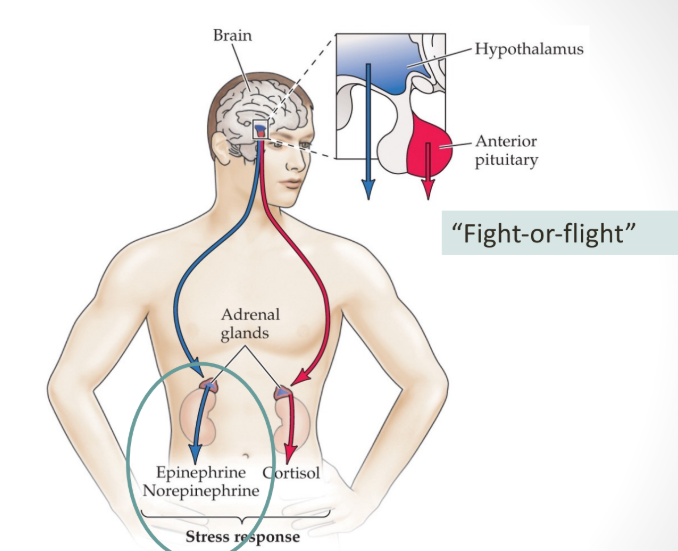
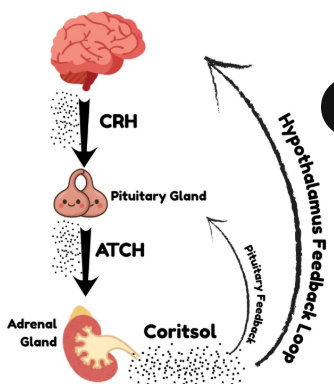
SLOW stress-activated pathway
The hypothalamic-pituitary-adrenal (HPA) axis => The hypothalamus releases CRH (corticotropic releasing hormone), which acts on the anterior pituitary. The pituitary then releases ACTH (adrenocorticotropic hormone), which causes the adrenal cortex to release adrenal steroid hormones such as cortisol to ready the body for action
Stress-related disease
appears when the stress-response is activated for too long or too frequently, and when it is not activated for a physiological reason (e.g., psychological or social stresses)
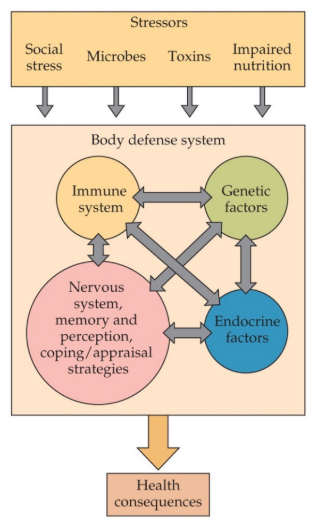
People with happy social lives and lower stress are _______ to develop a cold when exposed to the virus
LESS LIKELY
People exposed to viruses have __________ symptoms if they are experiencing conflict with someone
MORE SEVERE
Individuals who feel they have more social support exhibit less severe symptoms and produce __________________ in response to a flu vaccination
MORE ANTIBODIES
relations of the nervous, endocrine, and immune systems
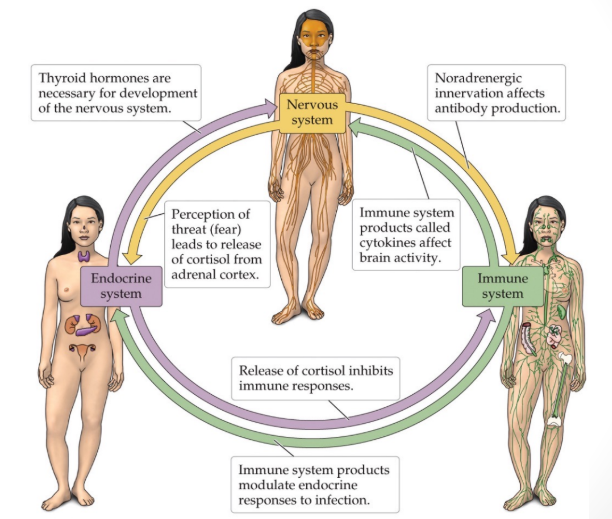
Psychological Factors in Stress and Coping
control, predictability, outlet for frustration, social support, personality
Psychological factors in stress and coping: CONTROL
As long as there is (even an illusion of) control over the occurrence of a stressful event, stress (and thus glucocorticoid levels) remains low
Psychological factors in stress and coping: PREDICTABILITY
Unpredicted, and thus unexpected, stressors are more stressful than predicted stressors
Psychological factors in stress and coping: OUTLET FOR FRUSTRATION
If there is an outlet for frustration (e.g., a piece of wood to gnaw on or a conspecific to attack), ulceration likelihood and glucocorticoid levels remain low under stress
Psychological factors in stress and coping: SOCIAL SUPPORT
Other things being equal, isolated animals show stronger stress responses to a stressor than group-housed animals (this is also true in humans!).
Psychological factors in stress and coping: PERSONALITY
What is stressful, depends on the goals of the organism (e.g., dominance, affiliation) and on genetically determined differences in overall fearfulness.
early life stress
chronic activation of the stress response early in life => Known to “scar” the brain and reshape mental health trajectories
Example of early childhood stressors
Adverse Childhood Experiences (ACEs)
Example of postnatal early live stressors
The longer the child spent in the orphanage, the higher their resting glucocorticoid level (even after getting adopted!)
example of prenatal early life stressors
Fetuses ”learned” about food availability during this famine, resulting in babies that were born having severely altered metabolism and increased risks of metabolic disorders such as diabetes, heart disease, obesity, and unhealthy cholesterol profiles
maternal immune activation (MIA)
Maternal infections can negatively alter typical neurodevelopment => Byproducts of the immune system activation can make their way into the embryo
Plays a vital role in autism spectrum disorder
Environmental pollution and stress play a vital role in development and diagnosis
early life stress and resilience
A large chunk of children faced with adversity develop adaptive coping strategies
stress is adaptive
Coping strategies can help reframe psychological stressors
Evolutionary neuroendocrinology
The study of how neuroendocrine systems arose and changed over time
Comparative neuroendocrinology
the study of how neuroendocrine systems are similar/different throughout the animal kingdom
Types of adrenal corticosteroids
Glucocorticoids, mineralocorticoids
Glucocorticocoids
“classic” stress response, bind to glucocorticoid receptor, e.g. cortisol/corticosterone
mineralocorticoids
blood pressure/osmolarity, bind to mineralocorticoid receptor, e.g. aldosterone
similarities between glucocorticoids and mineralocorticoids
derived from cholesterol, secreted from the adrenal cortex, exert effects via transcriptional regulation
measure glucocorticoids
types of samples: blood, saliva, fur/hair, urine, feces
outward markers of stress
repetitive behaviors, lethargy, weight loss or gain, aggression
Baseline circulating glucocorticoids are ______variable
HIGHLY
Circadian regulation
Cortisol/corticosterone peaks around the time of awakening and is lowest in the middle of the inactive (sleeping) phase
Circannual regulation
Day length modulates daily glucocorticoid rhythms Shorter days → sharper peak at beginning of waking phase
Monogamous animals may have evolved different behavioral and physiological adaptations to stress
higher circulating glucocorticoids than their promiscuous counterparts, behavior is more exploratory, and they seem to be more resilient to stress
If the predicted environment matches the actual future environment (“match”), this ______the individual’s fitness
IMPROVES
Telomeres
Repetitive sequences located at the ends of chromosomes => They protect DNA from degradation
adrenal fatigue
prolonged and severe stress that their adrenal glands stopped producing CORT altogether!
Sensory receptor organs
organs specialized to detect a certain stimulus
Receptor cells within sensory receptor organs
convert the stimulus into an electrical signal
adequate stimulus
type of stimulus to which a sensory organ is particularly adapted
ex: photic (light) energy detected by the eye
Sensory organs are very diverse, but all senses have the same end point:
converting information to neural signals
sensory transduction
conversion of energy from a stimulus into a change in membrane potential in a receptor cell
The doctrine of specific nerve energies states that
Receptors and neural channels for different senses are independent
labeled lines
The brain recognizes distinct senses because action potentials travel along separate nerve tracts
→ Neural activity in one line signals sound, activity in another line signals smell, and another line signals touch
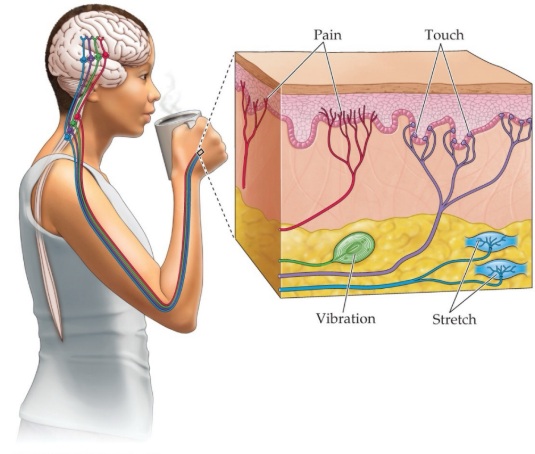
receptors in skin
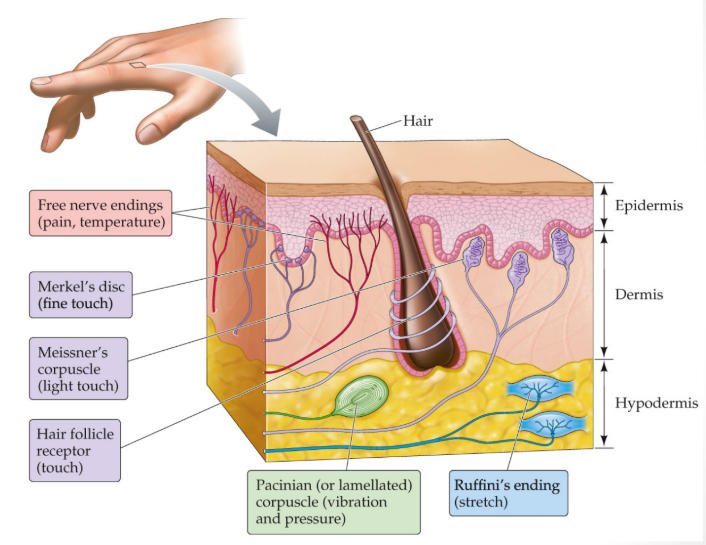
properties of skin receptors
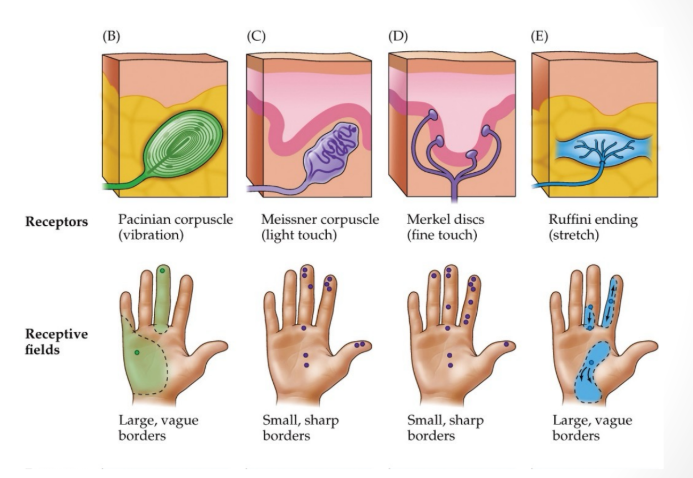
Pacinian corpuscle
skin receptor that detects vibration and pressure
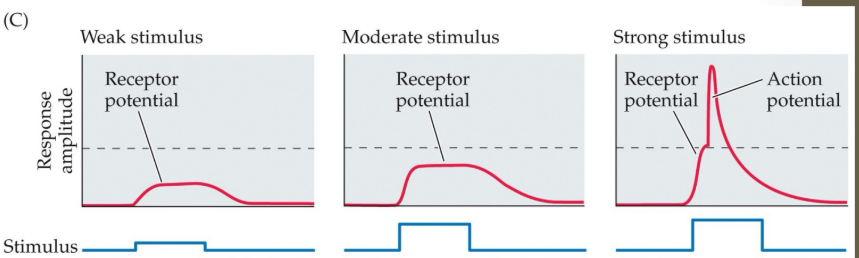
A stimulus to the corpuscle opens stretch-sensitive sodium channels made of a protein called Piezo, and produces a _____________ receptor potential (or generator potential)
GRADED
When the potential is big enough, the receptor reaches ________ and generates an action potential
→ only if AP generated do you detect the touch
THRESHOLD
Stimulus ________________ is determined from the position of the activated receptors
LOCATION
The action potentials produced by a sensory neuron always have the same size and duration, so one way the intensity of sensory events are encoded is in _____________ and ___________ of action potentials
NUMBER; FREQUENCY
range fractionation
Some sensory systems employ multiple sensory receptor cells that specialize in one part of a range of intensities; as the strength of a stimulus increases, more neurons sensitive to higher intensities are recruited
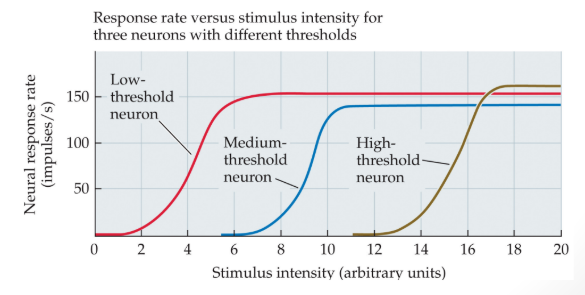
adaptation
progressive loss of response to a maintained stimulus
Phasic receptors
display adaptation and decrease frequency of action potentials with constant stimulation
tonic receptors
show slow or no decline in action potential frequency
Sensory systems emphasize ____________________, as that is more important for survival; prevents the nervous system from being overwhelmed by too much info coming in
CHANGE IN STIMULI
Control Incoming Information
Accessory structure, i.e. eyelids
Top-down processing
top-down processing
higher brain centers (like the cortex) suppress some sensory inputs and amplify others
dorsal column system
delivers touch information to the brain
→ receptors send projections via the dorsal column of the spinal cord, where they synapse on dorsal column nuclei in the medulla (brain stem)
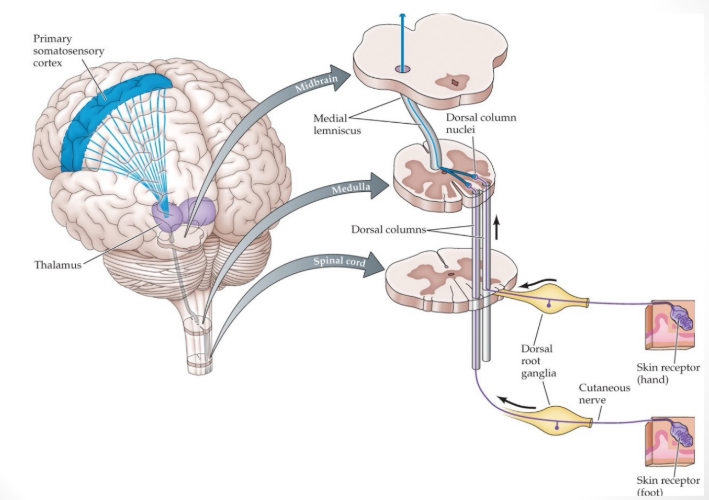
stimulus triggers the _______ of a neuron
receptive field
Axons from neurons in the medulla _______ and go to the _______ for initial processing, and then on to the _______
cross the midline; thalamus; primary somatosensory cortex
the brain processes touch information from the __________________ side of the body
contralateral
The receptive field is the region in which a stimulus will alter a sensory neuron’s ________________
firing rate
Receptive fields differ in_________ to types of stimulation
size, shape, and response
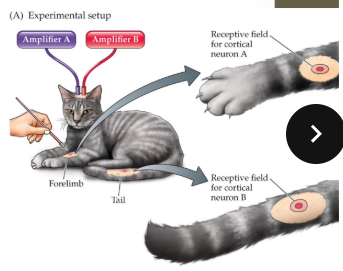
→ To determine what touch a cortical neuron responds to, you can record from the cell and touch different parts of the body
→ The cell will fire when you touch the area it responds to, after following the dorsal column pathway and ending in the primary somatosensory cortex
The more neurons in the cortex dedicated to that area = the _____ the receptive field = the ____ that body part is at detecting touch
SMALLER; BETTER
The cortical map represents…
the distribution or supply of nerves to a specific body part, organ, or muscle of a body region
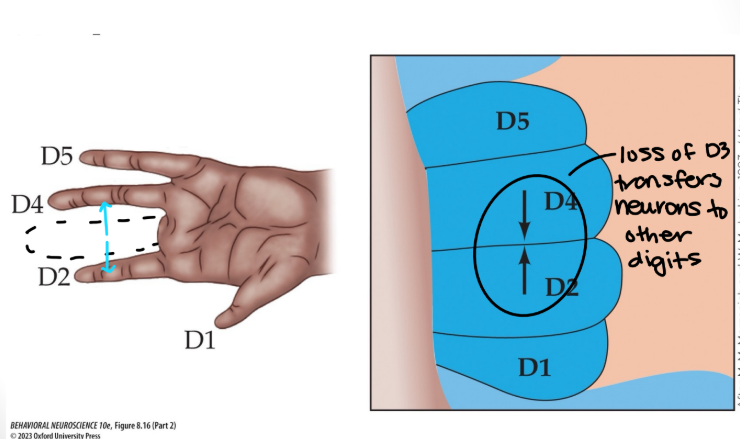
Neuron number dedicated to a region can be changed by _______
experience
Intentional stimulation of a specific body region can _____________ its cortical representation Loss of use will cause it to _____________
EXPAND; SHRINK
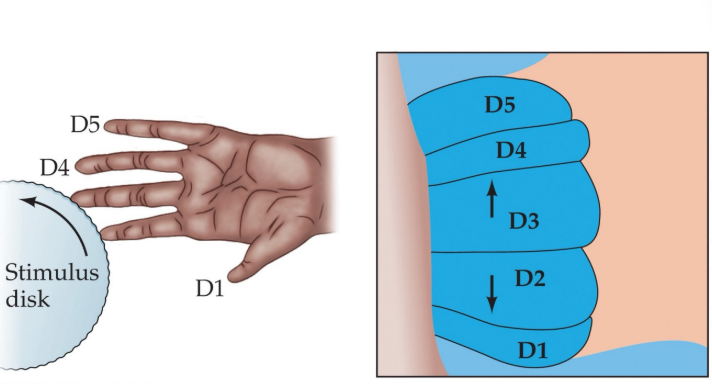
Phantom limb explains the plasticity of somatosensory representations
pain
An unpleasant experience associated with tissue damage

