Plants & Fungi #18
 Studied by 0 people
 Call Kai
 Learn
Learn Practice Test
 Spaced Repetition
 Match
Match Flashcards
 Knowt Play
1/28

There's no tags or description
Looks like no tags are added yet.
Name | Mastery | Learn | Test | Matching | Spaced | Call with Kai |
|---|
No study sessions yet.
29 Terms
Eukaryota
Large group of photosynthetic autotrophs
Green Algae
The first appearance of Chloroplasts
an Archaeplastid
Chlorophytes and Charophytes
a paraphyletic group who evolved around 1 billion years ago
Primarily freshwater adapted
not considered “true plants”
still protists
most are unicellular, but some have independently evolved multicellularity
Chloroplast
contain both chlorophyll a & chlorophyll b in membrane proteins called photosystems
Symbiosis
a close, long-term interaction between two different species, where at least one organism benefits
mutualism - both benefit
commensalism - one benefits, other unaffected
parasitism - one benefits, other harmed
Green algae and symbiosis
Green algae (w/ their endosymbiotic chloroplasts) are found to be living symbiotically with many other organisms
ex)
Protists - euglenids, ciliates etc.
Fungi - lichen
Animals
corals
flatworms
salamanders
Embryophyta
the True Plants / Land plants
the ancestors of the lineage that green algae came from that allows the green algae to evolve the ability to survive out of the water
Gametophyte
a unique reproductive cycle involving alternating generations that was evolved by Land plants (Embryophyta)
Haploid - single set of unpaired chromosomes
Sporophyte
a unique reproductive cycle involving alternating generations that was evolved by Land plants (Embryophyta)
Diploid - two complete sets of chromosomes, one from each parent
Bryophytes
the First Land Plants
include:
Mosses
Liverworts
Hornworts
have free swimming sperm produced by gametophytes that get around when under water (are restricted to very moist or wet locations)
Plants evolved specialized tissues and organs
Remember: Plants evolved specialized tissues and organs
Vasculature
tissues specialized in moving solutions across large distances in an organism
like vessels and arteries in animals
Xylem
dead, hollow cells lined up like pipes to convey water and minerals up from the roots
use adhesion & cohesion
cell walls are lined with lignin - provides extra strength and stability
source of sap
Phloem
living cells arranged end-to-end into long tubes
transport sugar, nutrients, hormones and other substances in water, often towards roots
Roots
Main functions:
anchor the plant to the substrate (soil/ground)
absorb and transport water and mineral nutrients from soil
Secondary functions:
store excess sugars, starches, and water
growth regulations
vegetative propagation (they spread and develop new stems)
symbiotic partnerships with fungi and/or bacteria
Stem
Leaves
evolved to maximize surface area for light absorption
light absorption is essential for:
photosynthesis
gas exchange
transpiration
Plasmodesmata
small openings between cell walls and plasma membranes that link the cytoplasm of adjacent cells
vasculature moves solutions throughout plant cell through this
Vascular plants
Clubmosses / Lycophytes
Ferns / Polypodiopsida
Ferns
the first group of vascular plants to evolve flattened leaves
primary phase = sporophyte phase
Spermatophytes
seed plants
350 mill yrs ago plants evolved a new reproductive strategy where their fertilized embryos were packaged in protective cases along with a food supply
Seeds
reproductive strategy where the fertilized embryos were packaged in protective cases along with a food supply
the plant equivalent of the amniotic egg
form of sexual reproduction
designed to survive drying out
allow plants to move away from the standing water necessary for spore germination
plants started to colonize dryer places on land bc of them
fertilized by pollination
Gymnosperms
The FIRST seeds
arose 350 mill yrs ago
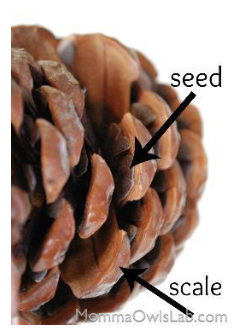
seeds and pollen produced in cones or cone-like structures
cone = modified branch with leaves
center of cone = branch
hard scales of cones = leaves
significant bc evolution rarely invents something completely new
Pollination
the pollen of the plant (pollen = plant sperm) is transported physically to the egg cell of the plant (female gamete)
how seeds are fertilized
Angiosperms
Flowering plants
the FIRST flowers
evolved 140 mill yrs ago
in response to pollination competition
The majority of plants today
flower = modified leaves surrounding the reproductive organs
endosperm = expanded food source for fertilized seeds
fruit = upon fertilization of the ovules, a special tissue grows around the seeds for protection
Fungi
Holomycota
Composition:
Cell walls composed of chitin
“body” composes of hyphae
Diverse reproductive strategies:
asexual reproduction
& sexual reproduction
form significant symbiotic relationships with most plants
ecologically important decomposers
evolved 800 mill yrs ago
ex) mushrooms, yeast, molds
Chitin
makes up the cell walls of fungi
A strong, insoluble, crystalline biopolymer
Provides armor, structural support, and protection for organisms
Its structure is comparable to cellulose, and its function is similar to keratin (in hair/nails)
Hyphae
root-like webs of tissues
form extensive networks called Mycelia
Mycelia
extensive networks formed from Hyphae
have complex dynamics and relationships between them:
involved in interspecies communication, parasitism, nutrient absorption etc.
Decomposer
Fungi / Holomycota
Organisms that obtain energy by digesting dead organic matter
 Note
Note  Flashcards (26)