Frescoes - Homeric World
 Call Kai
 Learn
Learn Practice Test
 Spaced Repetition
 Match
Match Flashcards
 Knowt Play
1/20

Earn XP
Description and Tags
Name | Mastery | Learn | Test | Matching | Spaced | Call with Kai | Chat |
|---|
No analytics yet
Send a link to your students to track their progress
21 Terms
What were these frescoes influenced by ?
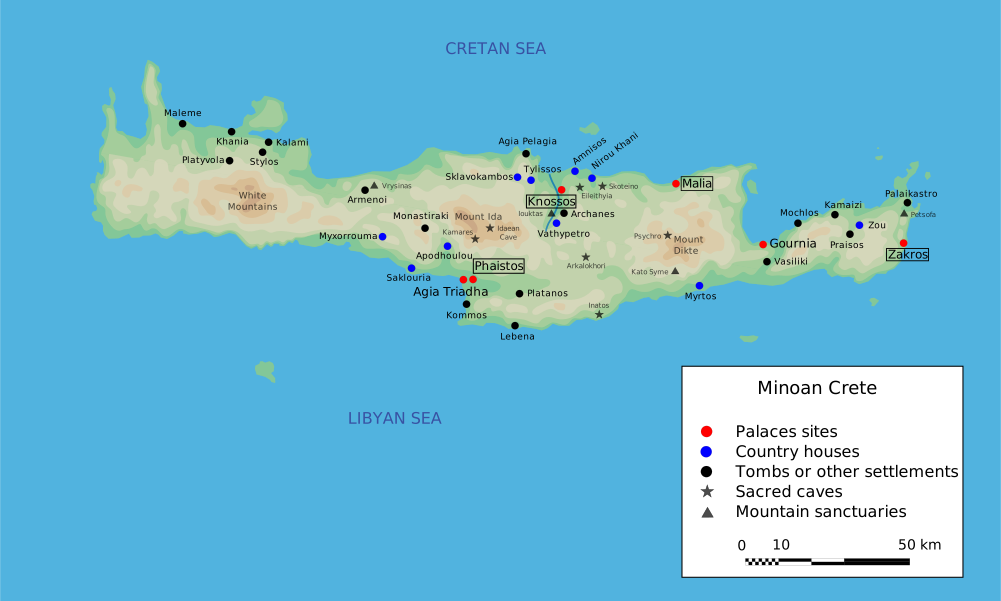
they were influenced by earlier frescoes from Crete in the Minoan Age.
Why was Mycenaean frescoes admired ?
The frescoes were admired for :
Their use of colour
their attention to detail
Grand buildings had frescoes of important individuals and detailed scenes.
Simple homes also had painted walls.
How to make one
A thick layer of lime plaster would be put on a stone wall
a finer layer of plaster would then be added.
Both natural and manufactured products would be painted on the walls before they dried.
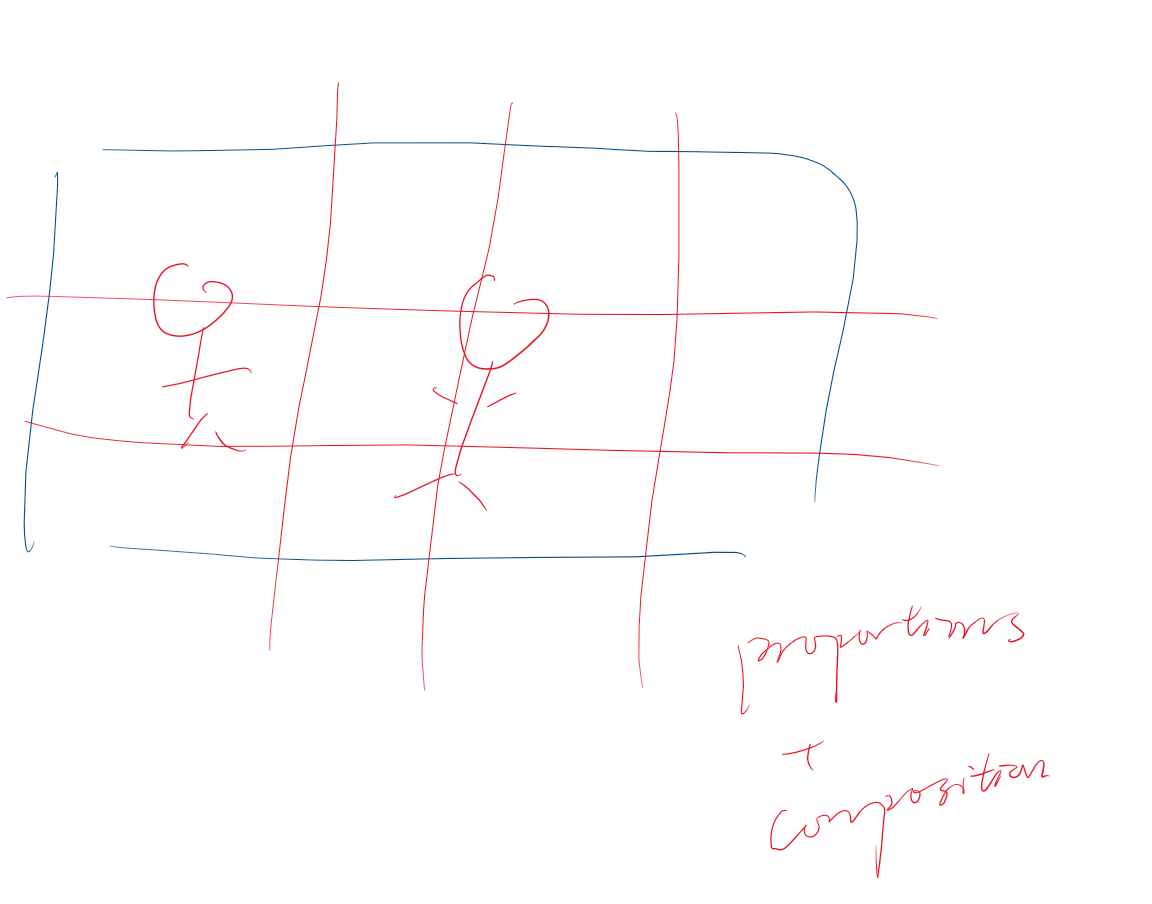
Strings would have been added to help with composition and painting of the Frescoes.

Black
made from carbon

Blue
manufactured from copper compound
Since this wasn’t natural, it would have been quite expensive.

Red
from a mineral called haematite

White
adding more lime plaster on top
Or
by cutting through to the plaster on the bottom.

Yellow
From mineral stone called Ochre

Green
From mixing blue and yellow
Or
grinding a mineral ore called malachite
What colours were used for humans
Men : red skin colour
Women : white skin colour, since they didn’t go outside much
What colours were used for animals most commonly ?
Yellow was used for lions
Blue for monkeys
Who else were they inspired by ?
Mycenaean frescoes could have definitely been inspired by frescoes from Akrotiri
Akrotiri - site was destroyed at the start of the Mycenaean Age.
What is commonly seen on frescoes ?
scenes of nature - different types of flowers and animals
several religious scenes in frescoes :
women carrying objects -
flowers
jewellery boxes
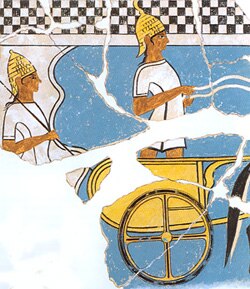
Images of war with individuals holding figure of 8 shields
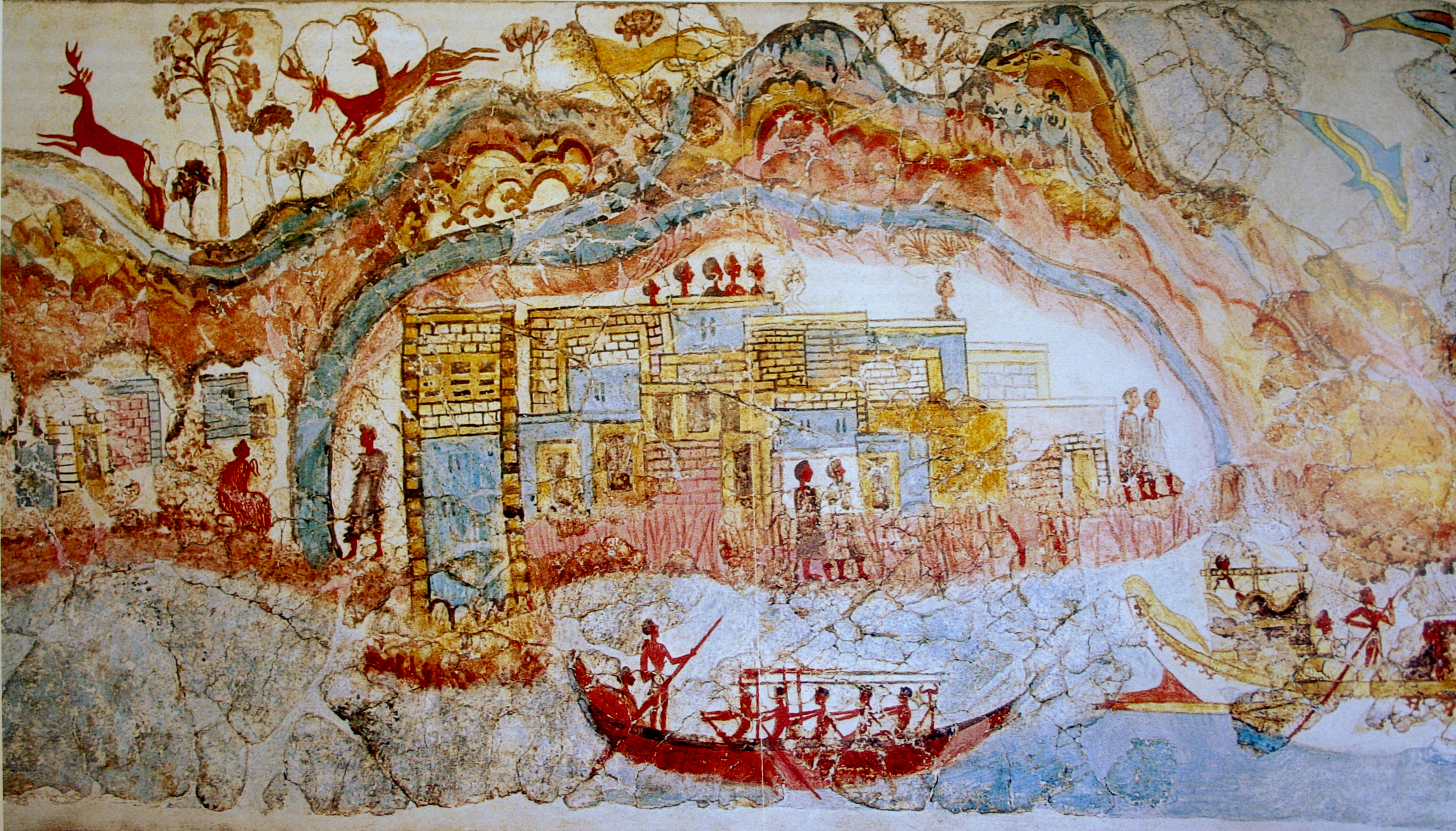
Ship procession fresco ( Akrotiri)
Date : 16th century BC
Location : Akrotiri, Santorini
Material : Plaster and paint
Details :
8 large ships and 3 boats
Ships decorated with many flowers.
The town is very detailed and expansive
individual clothing is very detailed
Some believe to be a procession - smart clothes + flowers
Some believe to show war - helmets hanging on the ships
Significance :
evidence of clothing
evidence of hunting
evidence of wealth - two storey housing
evidence of war
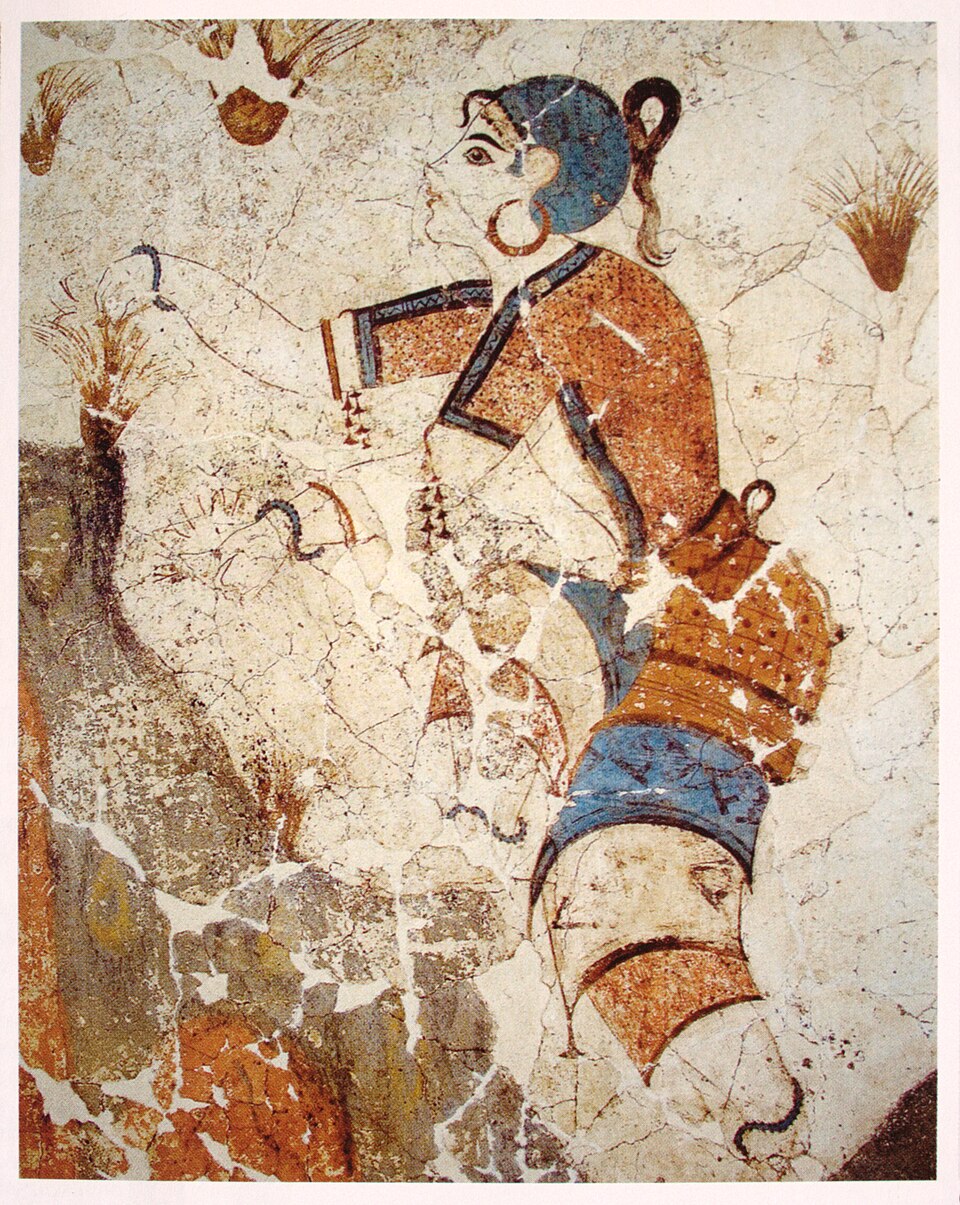
Fresco of woman collecting saffron ( Akrotiri )
Date : 16th century BC
Location : Akrotiri, Santorini
Material : plaster + paint
Details :
contains many colours - woman is detailed
detailed bracelets on her wrists
brown outfit has pattern on it
delicate facial features and slight smile - create a sense of energy + emotion.
significance :
evidence of clothing
evidence of jewellery
evidence of wealth
evidence of farming
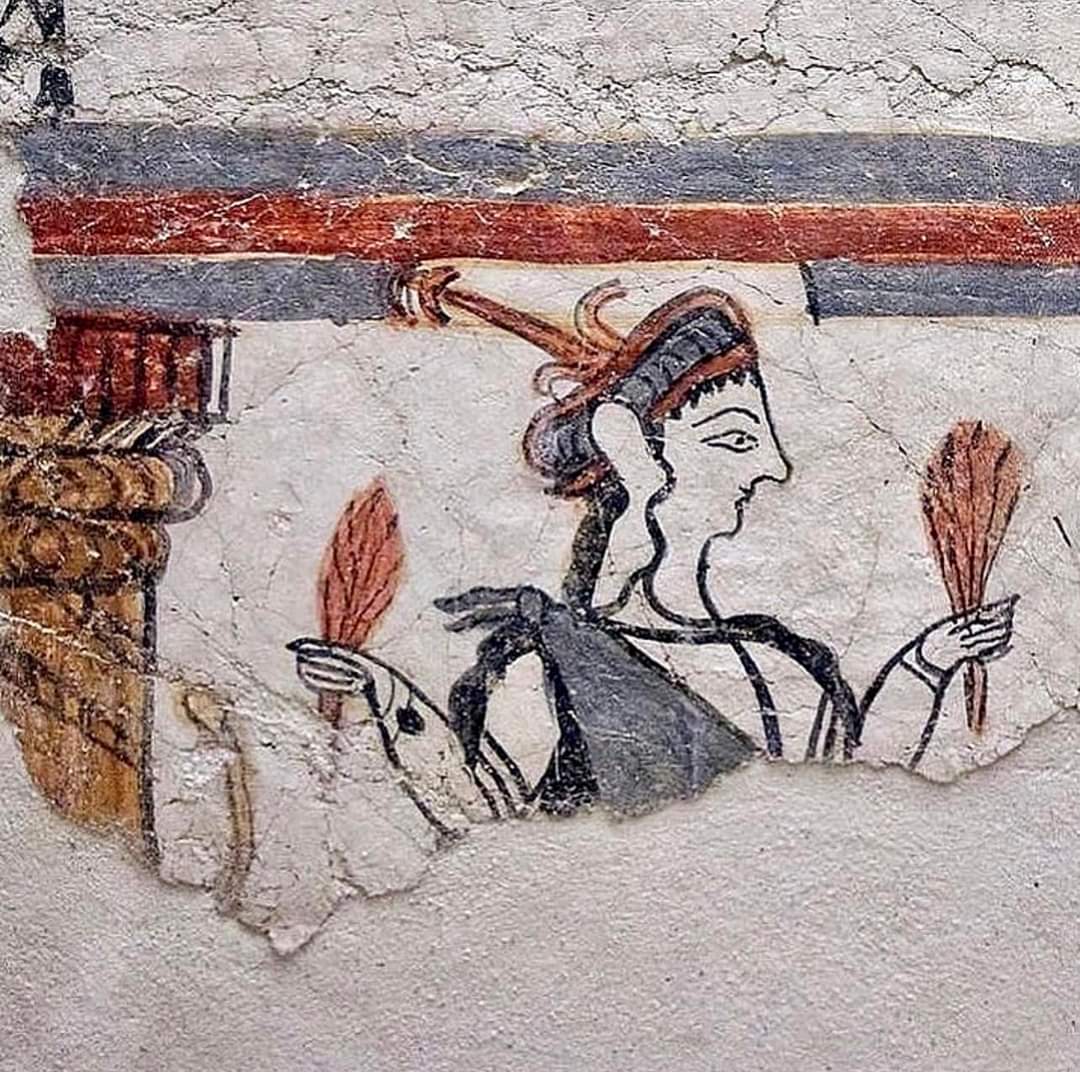
Fresco of goddess / priestess holding plants/flowers ( Mycenae )
Date : 13th century BC
Location : Mycenae
details :
we believe it’s a goddess/priestess because of her hat
Material : plaster + paint
Significance :
Evidence of clothing
Evidence of religion
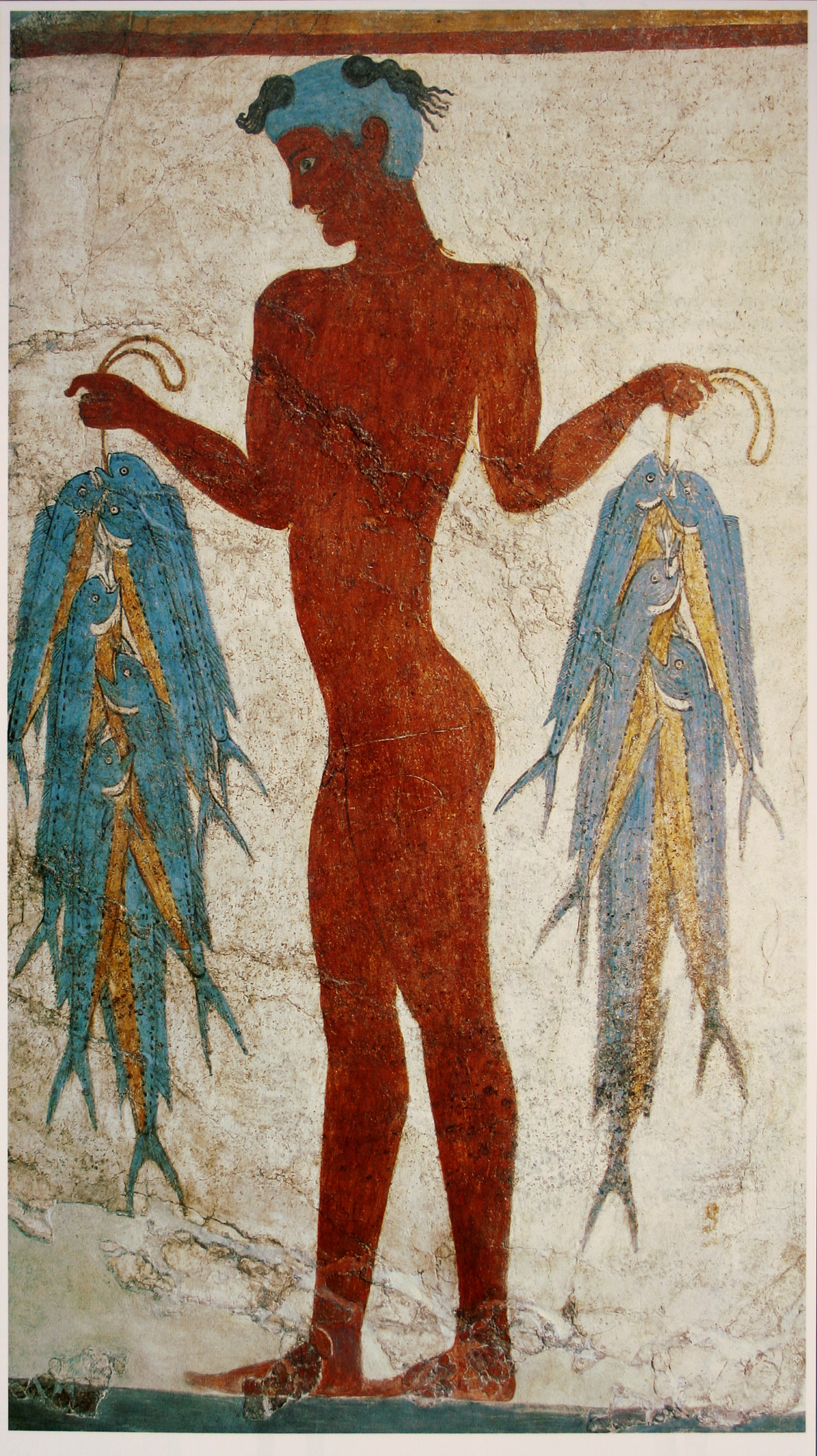
Fresco of Fisherman with his catch ( Akrotiri )
Date : 16th century BC
Location : Akrotiri
Material : plaster + paint
Significance :
shaved head painted blue, then dark strands of hair - sign of youth
fish caught are plentiful - suggests what food they had
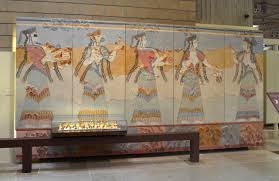
Fresco of women offering various objects ( box, jug, flower, fruit )
Date : 13th Century BC
Location : Thebes, Greece
Material : plaster + paint
Significance :
evidence of clothing
evidence of religion - offering, sacrifice ?
artistic skill - multitude of colours
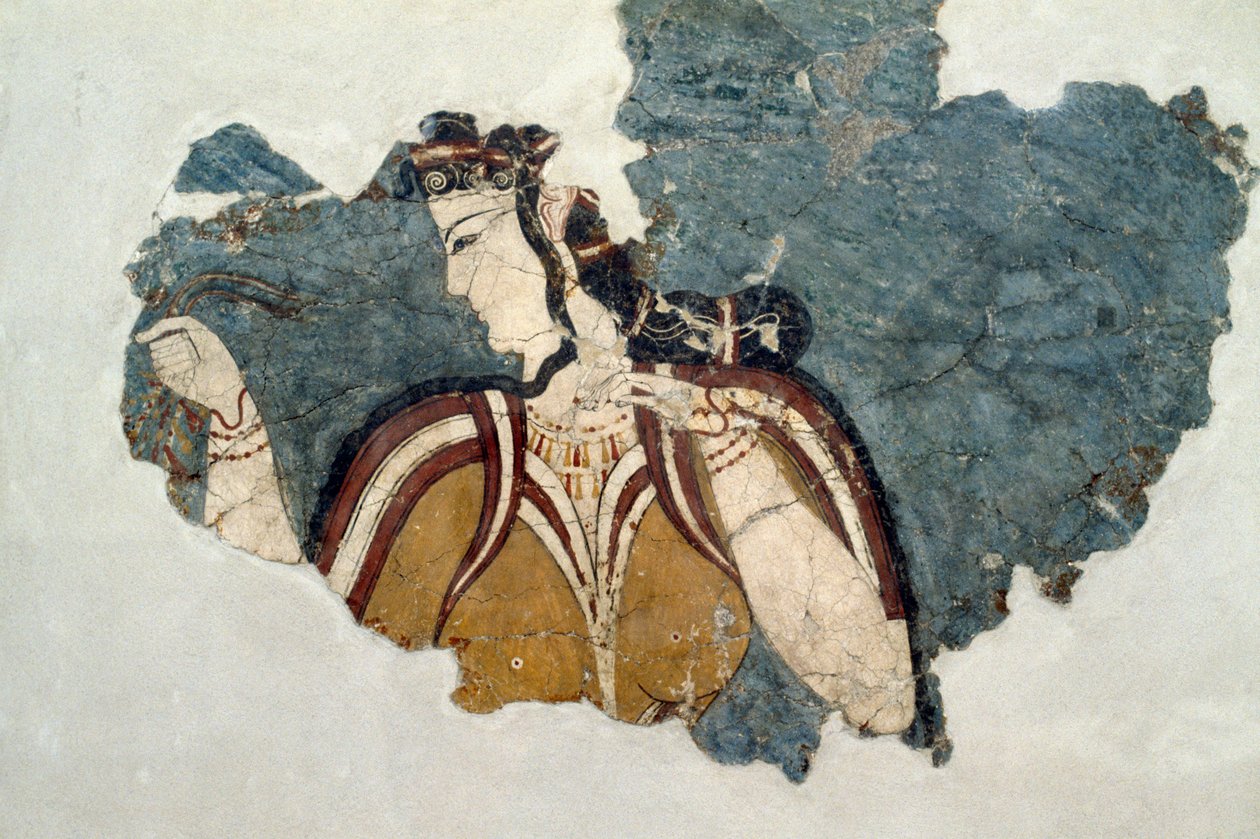
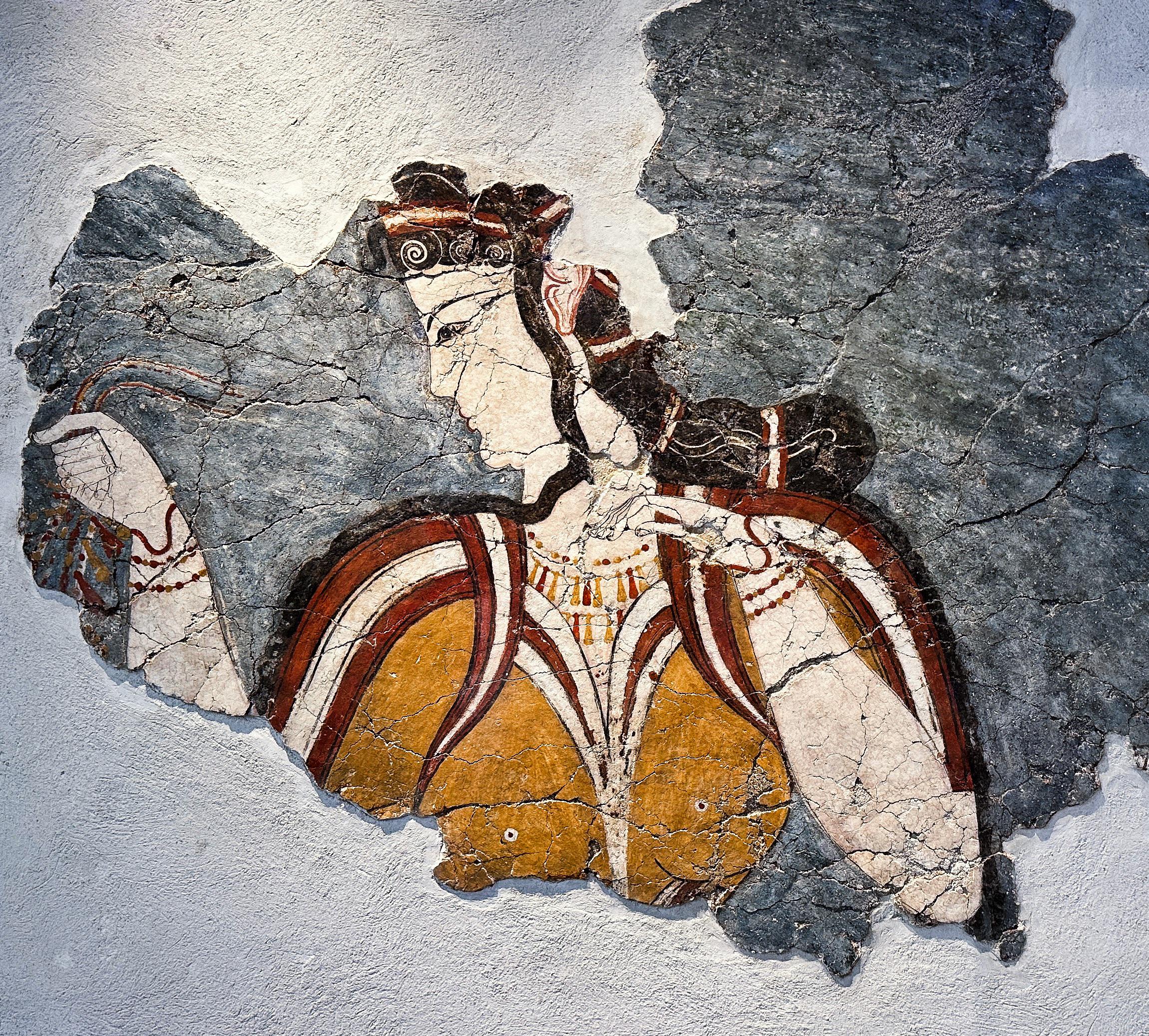
Fresco of Mycenaean Lady holding a necklace
Date : 13th century BC
Location : House of the Chief Priest, Mycenae
Material : plaster and paint
Details :
patterned cuts and strands at the front - evidence of women’s hair, appearance
Many colours used : Black, red, white, yellow
Short sleeved blouse with red + white stripes on the shoulders and around chest - accentuates her body shape ( typical of Mycenaean female depictions )
Pendant necklace with red and beads, necklace ( red + yellow beads ) - Amber stones
Significance :
evidence of artistic skill
evidence of jewellery
evidence of clothing
evidence of beauty
Typical images and patterns
Animals commonly depicted :
Octopi
Cuttlefish
Horses
Bulls
Lions
Dogs
Deersboars
Repeated patterns :
Swirls
Spirals
wavy lines
Mythical creatures depicted :
Sphinx
Griffins
Limitations of frescoes
The Mycenaeans did not use perspective
sometimes people or objects appeared disproportionately large or small.
The Mycenaeans made no attempt to give images a 3D feel
faces are shown with their eyes forward even though their head is facing sideways.