Community Ecology: Species Interactions, Competition, Predation, and Succession
 Studied by 0 people
 Call Kai
 Learn
Learn Practice Test
 Spaced Repetition
 Match
Match Flashcards
 Knowt Play
1/81

There's no tags or description
Looks like no tags are added yet.
Name | Mastery | Learn | Test | Matching | Spaced |
|---|
No study sessions yet.
82 Terms
Community
Species that occur at any particular locality.
Species richness
Number of species present.
Primary productivity
Amount of energy produced.
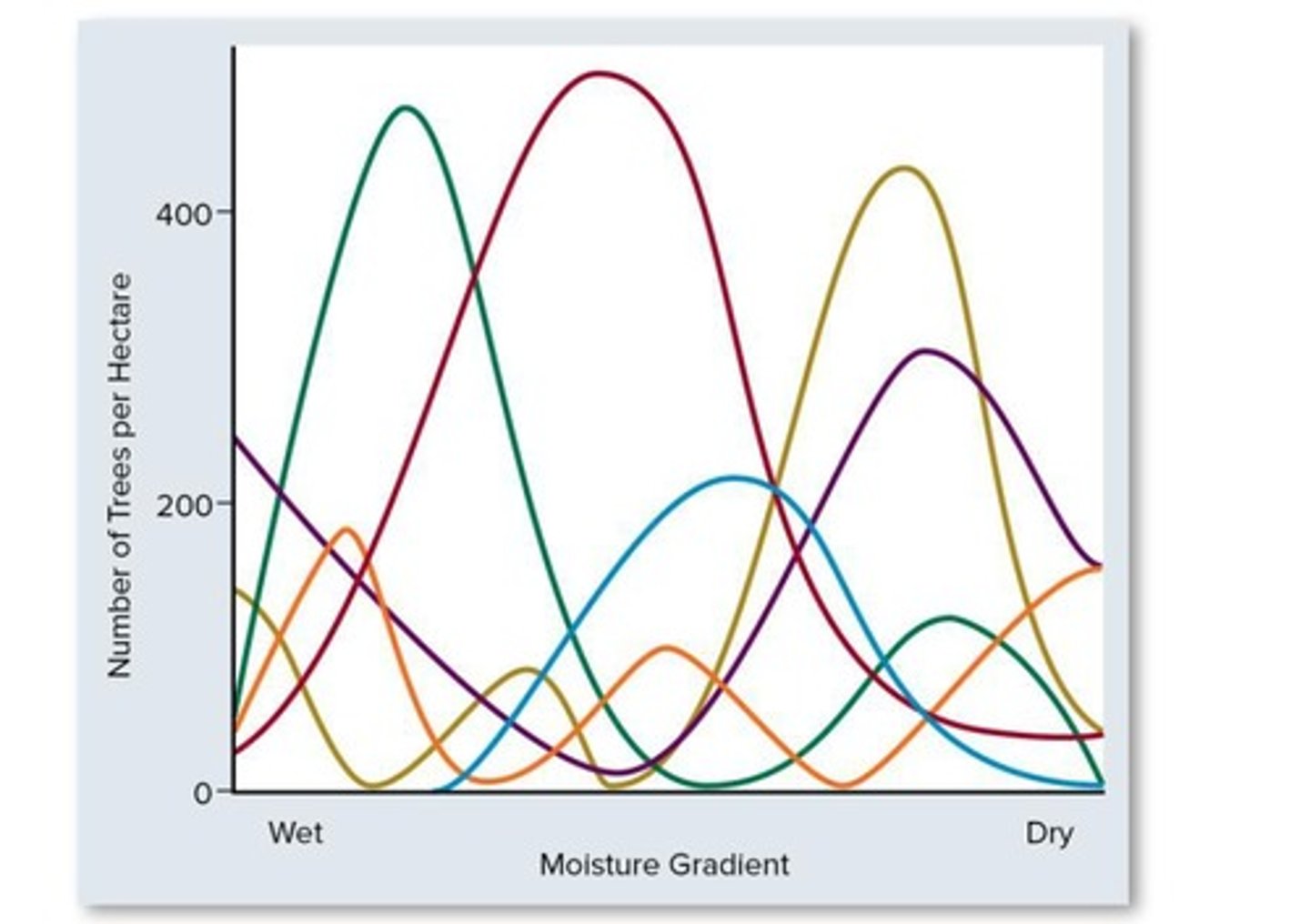
Community composition
Abundance of tree species along a moisture gradient in the Santa Catalina Mountains of Southeastern Arizona.
Niche
The total of all the ways an organism uses the resources of its environment.
Space utilization
One aspect of how an organism uses resources in its environment.
Food consumption
One aspect of how an organism uses resources in its environment.
Temperature range
One aspect of how an organism uses resources in its environment.
Appropriate conditions for mating
One aspect of how an organism uses resources in its environment.
Requirements for moisture
One aspect of how an organism uses resources in its environment.
Interspecific competition
Occurs when two species attempt to use the same resource and there is not enough resource to satisfy both.
Interference competition
Physical interactions over access to resources.
Exploitative competition
Consuming the same resources.
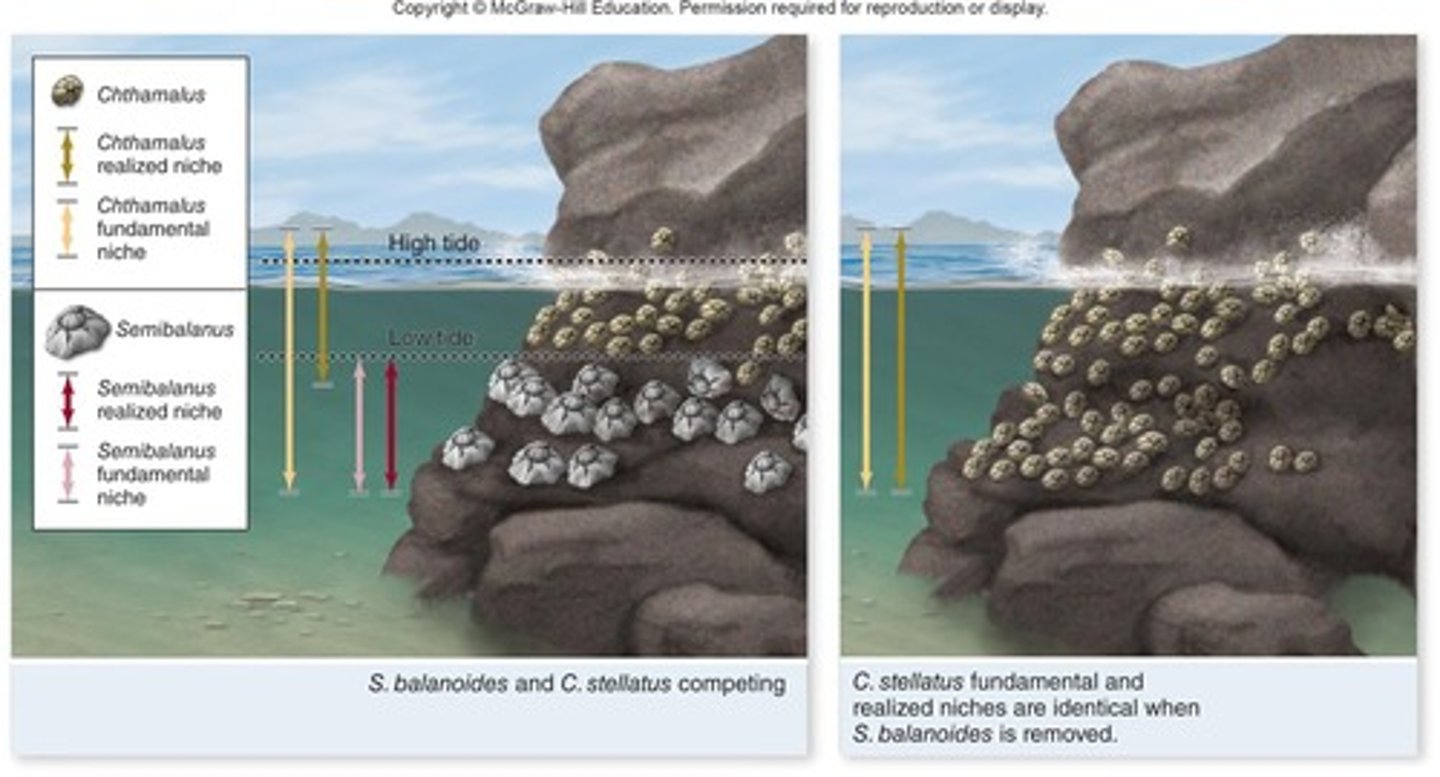
Fundamental niche
Entire niche that a species is capable of using, based on physiological tolerance limits and resource needs.
Realized niche
Actual set of environmental conditions, presence or absence of other species, in which the species can establish a stable population.
Niche restriction causes
Predator absence or presence and absence of pollinators.
Competitive exclusion
Species with the same requirements cannot live together in the same place with the same resources.
Competitive exclusion principle
Complete competitors cannot coexist.
G.F. Gause's experiment
Classic experiment on competitive exclusion using three Paramecium species shows this principle in action.
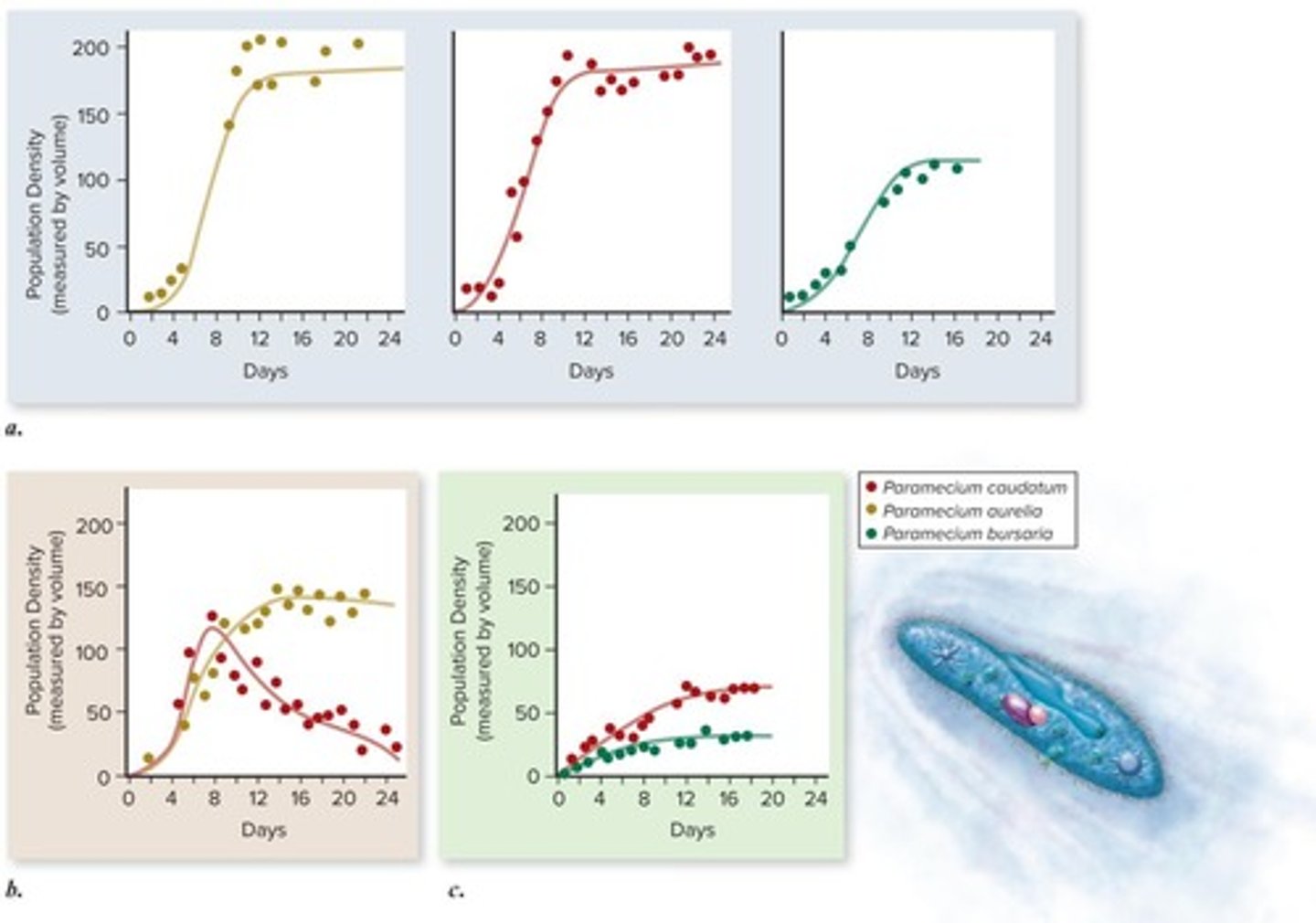
P. bursaria
A species of Paramecium that survives by dividing resources with other species.
Paramecium caudatum
A species of Paramecium that, along with P. bursaria, survives by dividing resources.
Resource partitioning
The process by which similar species divide resources to avoid direct competition.
Sympatric species
Species that occupy the same geographic area and may compete for resources.
Natural selection
The process through which species adapt to their environment, often leading to resource partitioning.
Character displacement
Differences in morphology that develop between sympatric species to reduce competition.
Adaptive radiation
The diversification of a group of organisms into forms filling different ecological niches.
Predation
The act of consuming one organism by another, which strongly influences prey populations.
Invasive species
Non-native species that, when introduced to a new environment, can cause significant ecological disruption.
Burmese python
An invasive species in the Florida Everglades that has led to a major decline in local wildlife populations.
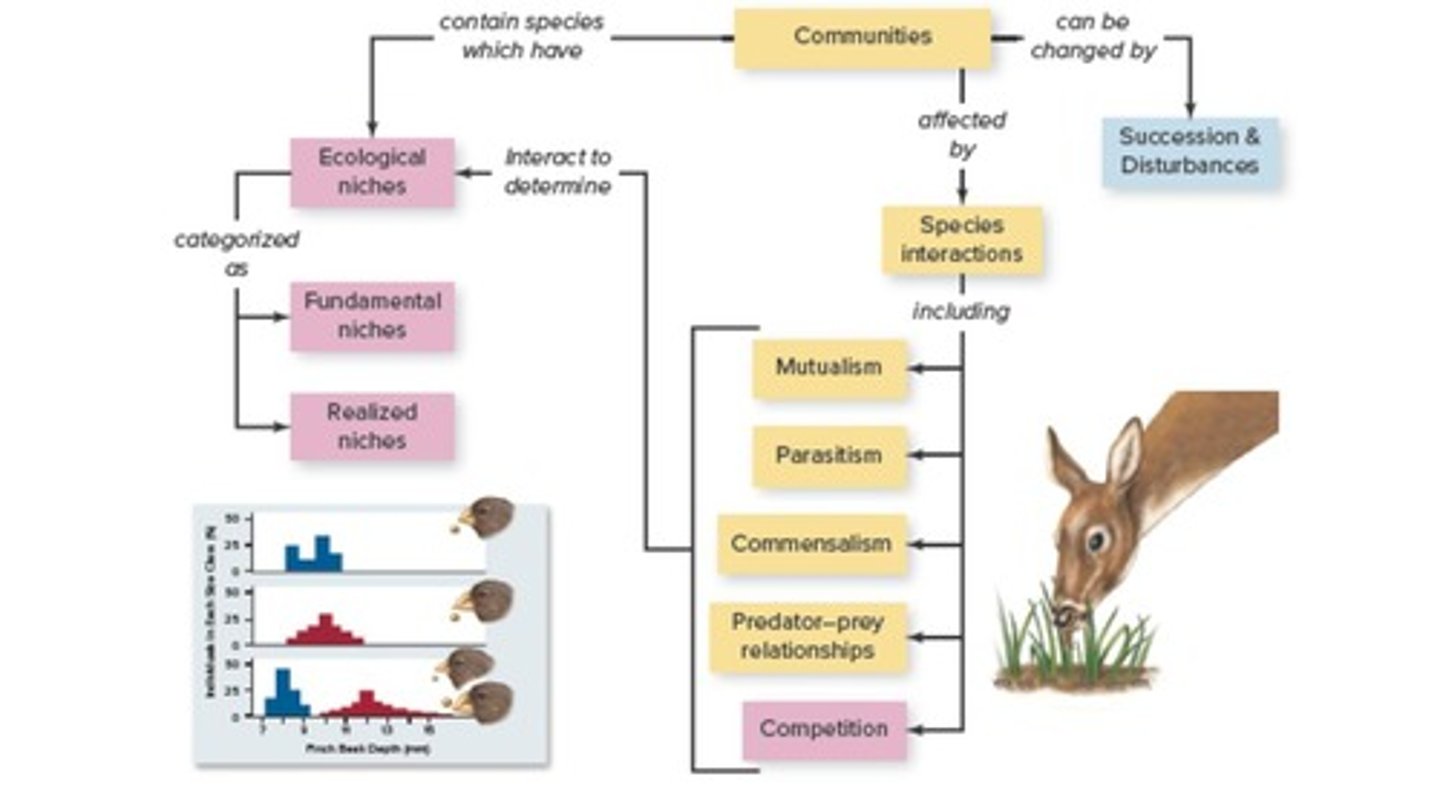
Prey population explosions
Rapid increases in prey populations, often followed by crashes due to predation or resource limitations.
Coevolution
The process by which two or more species influence each other's evolution, often seen in predator-prey relationships.
Chemical defenses
Mechanisms evolved by plants and animals to deter herbivores or predators, such as secondary compounds.
Monarch butterfly caterpillars
Caterpillars that feed on milkweed and incorporate cardiac glycosides for protection from predation.
Cardiac glycosides
Toxic compounds obtained from milkweed by monarch butterflies, which make predators sick.
Herbivory
The consumption of plants by herbivores, which can lead to evolutionary adaptations in plants.
Prickly pear cactus in Australia
An example of a plant that faced predation pressure leading to significant ecological changes.
Stephen Island wren
A bird species that became extinct due to predation by a single introduced cat.
Predation and coevolution
The interaction where predation exerts selective pressure on prey populations, leading to adaptations.
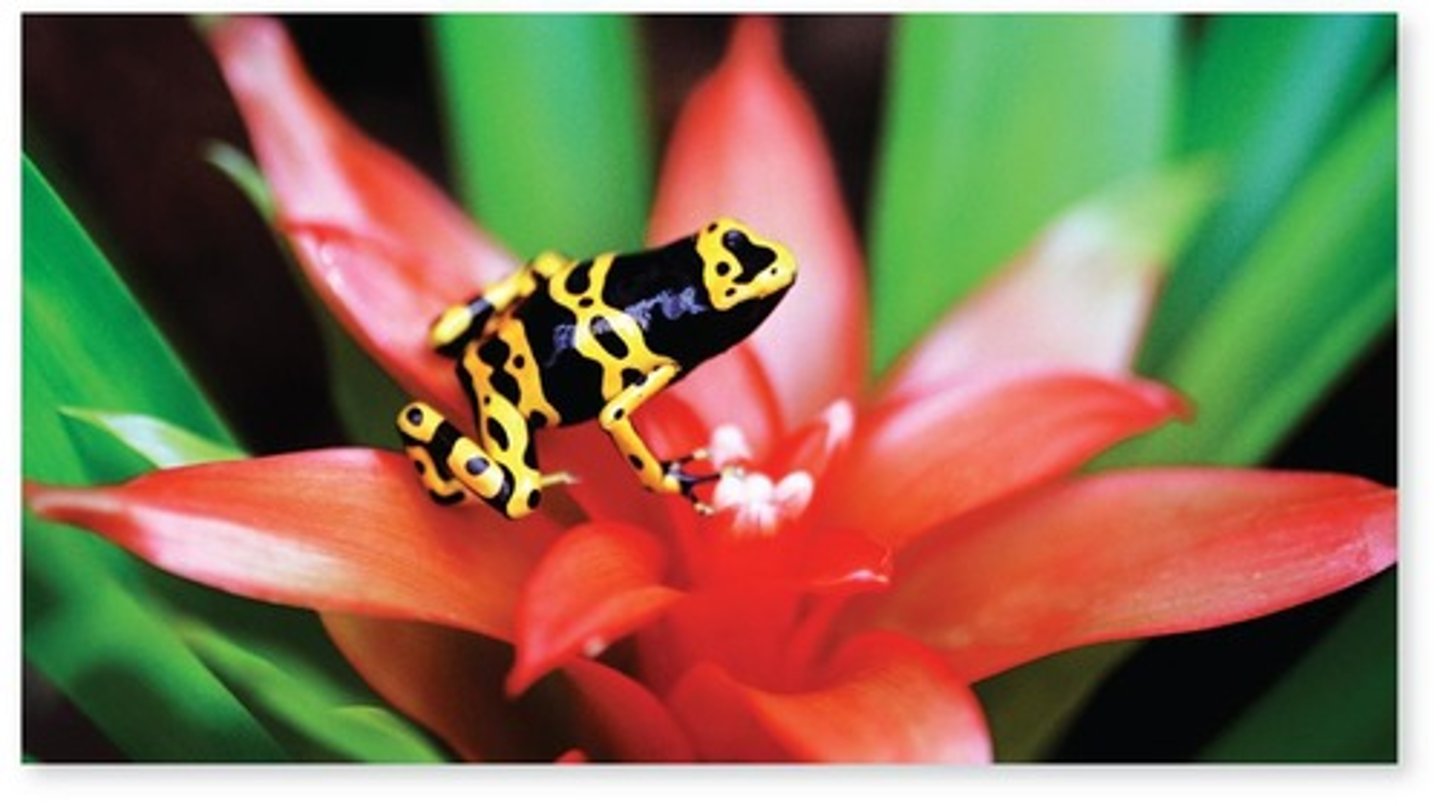
Poison-dart frogs
Frogs of the family Dendrobatidae that produce toxic alkaloids in the mucus covering their brightly colored skin.
Aposematism
Warning coloration used by poisonous insects and other animals.
Cryptic coloration
Camouflage that allows organisms like the Pygmy sea horse (Hippocampus bargibanti) to blend in with their background.
Mimicry
A phenomenon that allows one species to capitalize on the defensive strategies of another.
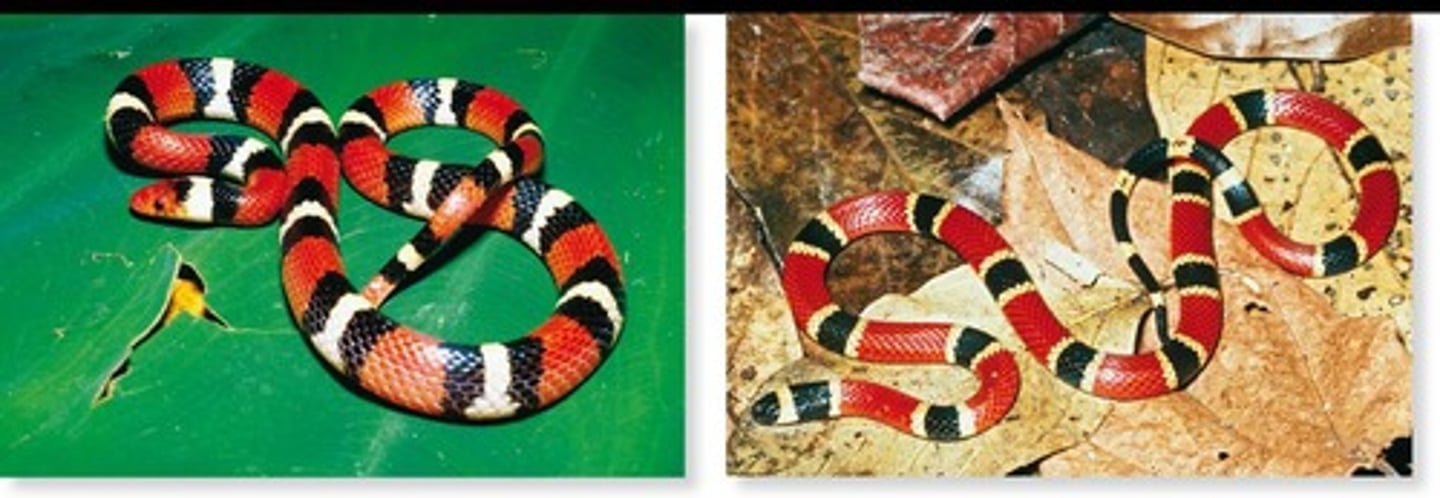
Batesian mimicry
A type of mimicry where a palatable mimic copies an unpalatable model.
Müllerian mimicry
A type of mimicry where several unrelated but poisonous species come to resemble one another.
Scarlet king snake
An innocuous snake (Lampropeltis elapsoides) that mimics the poisonous coral snake (Micrurus fulvius).
Symbiosis
Interactions between two or more kinds of organisms in more-or-less permanent relationships.
Commensalism
A type of symbiosis where one organism benefits while the other is neither helped nor harmed.
Mutualism
A type of symbiosis where both organisms benefit from the interaction.
Parasitism
A type of symbiosis where one organism benefits at the expense of another.
Parasites
Organisms that live on or in a host and cause harm to the host.
Parasitoids
Organisms that lay eggs on or in a host, leading to the host's death.
Lethality
The degree to which a predator or parasite is lethal to its prey or host.
Duration of interaction
The length of time that a consumer interacts with its prey or host.
Competition
An interaction where organisms vie for the same resources in an ecosystem.
Disease-causing organisms
Organisms that can cause disease in their hosts, often classified under parasitism.
Ants and Acacias
Acacias provide hollow thorns and food; ants provide protection from herbivores.
Pseudomyrmex
Ants of the genus Pseudomyrmex live within the hollow thorns of certain species of acacia trees in Latin America.
Parasitic Relationship
Not all ant and acacia relationships are mutualism; some can be parasitic, such as when ants clip acacia branches, sterilizing the tree.
Ectoparasites
Ectoparasites feed on the exterior surface of an organism.
Wasp Parasitoid
A wasp whose larvae feed on the body of the host, killing it.
External Parasite
The yellow vines are the flowering plant dodder; it is a parasite that obtains its food from the host plant it grows on.
Endoparasites
Endoparasites live inside the host.
Parasite Specialization
Extreme specialization by the parasite as to which host it invades.
Dicrocoelium dendriticum
A flatworm that lives in ants as an intermediate host with cattle as its definitive host.
Behavior Modification
Dicrocoelium dendriticum changes the behavior of the ant, causing it to climb to the top of a blade of grass to be eaten with the grass.
Spanish Moss
Spanish moss is an epiphyte that hangs from trees.
Oxpeckers and Grazing Animals
Oxpeckers eat parasites off of grazers, sometimes picking scabs and drinking blood; grazers could be unharmed by the insects the oxpeckers eat.
Keystone Species
Species whose effects on the composition of communities are greater than one might expect based on their abundance.
Sea Star Predation
Sea star predation on barnacles greatly alters the species richness of the marine community.
Habitat Manipulation
Keystone species can manipulate the environment in ways that create new habitats for other species.
Beavers
Beavers are an example of a keystone species.
Beavers as a Keystone Species
Beavers construct dams and transform flowing streams into ponds, creating new habitats for many plants and animals.
Succession
Communities have a tendency to change from simple to complex.
Primary Succession
Occurs on bare, lifeless substrate such as open water and rocks, where organisms gradually move into an area and change its nature.
Secondary Succession
Occurs in areas where an existing community has been disturbed but organisms still remain, such as a field left uncultivated or a forest after a fire.
Establishment
Early successional species are characterized by r-selected species tolerant of harsh conditions.
Facilitation
Early successional species introduce local changes in the habitat, leading to K-selected species replacing r-selected species.
Inhibition
Changes in the habitat caused by one species inhibit the growth of the original species.
Krakatau Island
A volcanic eruption that caused fauna to change in synchrony with vegetation, affecting plant occurrences, pollination, and animal dispersion.
Change in Communities
Communities are constantly changing as a result of climatic changes, species invasions, and disturbance events.
Intermediate Disturbance Hypothesis
Communities experiencing moderate amounts of disturbance will have higher levels of species richness than communities experiencing either little or great amounts of disturbance.
Role of Disturbance
Disturbance is common, rather than exceptional in many communities, and understanding its role in structuring communities is an important area of ecology.
 Note
Note  Flashcards (107)