APBI 419 - Module 1
 Call Kai
 Learn
Learn Practice Test
 Spaced Repetition
 Match
Match Flashcards
 Knowt Play
1/26

There's no tags or description
Looks like no tags are added yet.
Name | Mastery | Learn | Test | Matching | Spaced | Call with Kai |
|---|
No analytics yet
Send a link to your students to track their progress
27 Terms
Disease
any change in structure / function of a body that presents particular set of signs that’re different from what is considered normal state
for a disease to occur:
fish must become susceptible to orgs or agents causing disease
hosts must be present
agent (chemical or biological) must be capable of causing disease outcome and be in a dose big enough to incite negative host response
environment is essential element determining whether or not disease occurs
host + agent + environment determines likelihood of serious / irreversible disease
Health
extent that indiv / group is able to satisfy needs + cope with environment changes
Infection
detrimental colonization of a host org by a foreign species resulting in host response
the infecting org tries to use host resources to multiply; @ host's expense
the pathogen will interfere w/ normal functioning of host
may lead to chronic wounds + maybe death
the host's general response to infection = inflammation + mounting of immune response
Pathogen
any disease-producing microorg; bacteria, viruses, fungi, and parasites
not normal flora
under specific circumstances of changed host susceptibility / movement of normal flora to unusual body locations, normal flora bacteria can become pathogens
Obligate
sub-type of pathogen
depends on host for survival
Opportunistic/facultative
sub-type of pathogen
might require host tissues as part of normal life cycle
Pathogenicity
ability of org to induce disease
Virulence
ability of infectious agent to invade host tissues and cause disease; severity
highly virulent - causes severe disease / death
varies between + within species / strain; depends on host response to org
Cause of disease
what brings about a condition or produces an effect
caused by interaction of host, disease causing agent, + shared environment
results when certain combo of risk factors develops
Risk factor
any host, agent, environmental factor that increases probability that adverse health effect will happen
has to be multiple factors to cause disease
factors cause disease under certain circumstances
if interactions between the 3 vary, it can make it hard to predict outcome of changes in risk factors
Necessary factors
those required to produce disease
like certain diseases can't occur without certain bacteria
Contagious
refers to easily transmitted
microorg can be infectious without being contagious
Infectious
ability of a pathogen to cause disease
can be highly contagious while being relatively non-infectious
a pathogen can be highly infectious while not being really contagious
OR
disease causing agent
infectious agents incite host response designed to eliminate invading orgs
Transmission
transfer of a pathogenic agent from infected host to uninfected one
Vertical transmission
spread of infection parent → offspring during development → fertilization
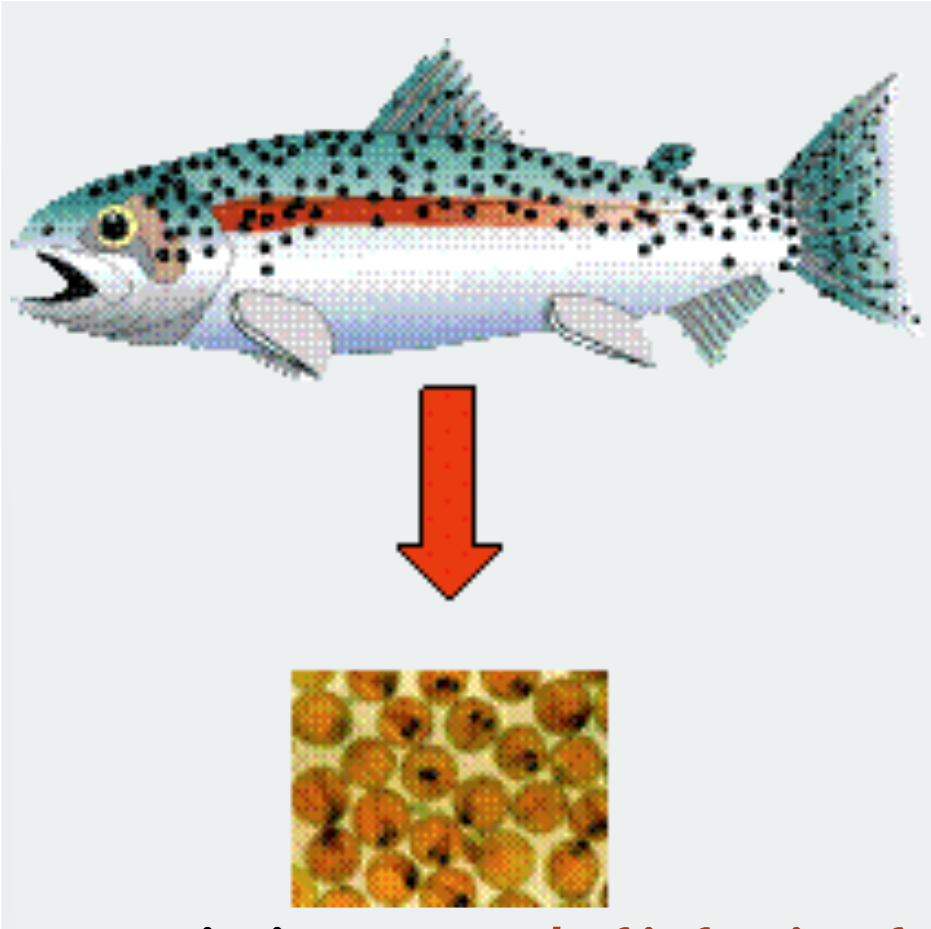
Horizontal transmission
transmission @ any other life stage
Parasite
animal that lives on/in another animal (the host) @ expense of the animal
Infestation
considering macro-parasites (worms or lice); this term used interchangeably w/ infection but principles of interaction w/ host are similar
Disease control
actions taken to reduce probability of occurrence of disease in indivs; to reduce incidence of disease in pops
Disinfection
destruction of pathogenic orgs associated w/ inanimate objects / on the external surface of fish or eggs
physical or chemical means
Sterilization
complete elimination of all viable orgs
Sanitization
inhibition of growth
Mutualistic
host and microbe pop benefit
ex. bacteria in gastrointestinal tract of vertebrates
Reservoirs (carriers)
Pathogens can be present in fish without causing disease
fish can suppress pathogen enough so it's latent (present but not acting; dormant)
those reservoirs = silent sources
fish don't appear ill despite some degree of host response and may act as carriers
Asymptomatic infections
don't cause signs that're readily observed
asymptomatic fish are capable of shedding infectious orgs and are termed as carriers
they might not display signs of disease but are capable of transmitting infectious disease to other fish in system
Infections can be _____ @ time of initial infection, mid-infection, upon recovery
Subclinical infections
infection that doesn't result in obvious clinical signs but does reduce the productivity of affected indivs or pops

