4.2/4.3 Poverty and Inequality/Emerging and Developing Economies
 Call Kai
 Learn
Learn Practice Test
 Spaced Repetition
 Match
Match Flashcards
 Knowt Play
1/75

There's no tags or description
Looks like no tags are added yet.
Name | Mastery | Learn | Test | Matching | Spaced | Call with Kai |
|---|
No analytics yet
Send a link to your students to track their progress
76 Terms
Absolute poverty
When a household does not have sufficient income to sustain even a basic acceptable standard of living and can’t afford basic needs e.g. food, shelter, clothing and access to basic healthcare and education
Countries with lowest GDP per capita
Burundi, South Sudan, Central African Republic
Measures of absolute poverty
Basic income thresholds
e.g. world bank → $2.15 a day (PPP adjusted) using 2017 prices
Relative poverty
When a household income is considerably lower than the median income, usually when disposable income is less than 60% of median income
Difference between wealth and income
Wealth - assets
Income - flow of earnings
Causes of poverty
Level of indebtedness (debt → compound interest)
Health issues
Relatively low wages (least resilient to increase inflation)
Unemployment
Little access to education (public services)
Welfare system is very limited
Regressive taxation - increase income inequality e.g. VAT
Wealth inequality
The difference in the value of stocks and assets held by individual
Income inequality
Occurs when the distribution of income is unequal
Measures of income inequality
Lorenz curve
Gini coefficient
Lorenz curve
Graphical representation of the distribution of income or wealth in society
The curve plots the proportion of total income or wealth that is held by each percentile of the population from the poorest to the richest
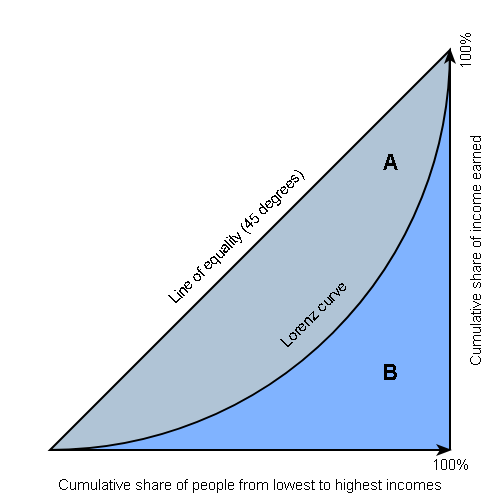
How is the gini coefficent measured from the Lorenz curve
Area A divided by (area A + B)
Gini coefficent
Condense the entire distribution of income in a country into a number between 0 (everyone has the same income) and 1 (single individual receives all the income)
The higher the number, the greater the degree of income inequality
Above 0.4 is often seen as an important point. Inequality above this level is frequently associated with political instability and growing social tensions
Causes of income and wealth inequality within countries
Globalisation
Education and skills
Wage rates in different occupation
Strength in trade union
Degree of employment protection
Level of welfare benefits
Progressiveness of tax system
Cause of income and wealth inequality between countries
Natural resources → S.Arabia, although not a guarantee → e.g Venezuela
Geography e.g whether a country is and locked or close to large markets
History e.g. impact of colonialism on a country’s economic growth
Degree of political stability
Macroeconomics policies
Amount of FDI attracted by different countries
Degree of trade liberalisation e.g North Korea - virtually closed → low econ growth, contrast with Singapore → very open and market orientated
Degree of technological change
Investment in education + training e.g. good governance
Impact of econ change + development on inequality on developing countries
Econ change + development- a country moving from “developing” to “developed”
Developing countries e.g. Mexico → initially low levels of inequality
During development → inequality rises (incentives due to capitalism)
However, the extent of the increase depends on government
Capitalist economies
Generally more inequality than no-capitalist
Significance of capitalism for inequality
Owners of production resources → see income and wealth rise faster than non-owners
Capitalism facilitate greater private ownership → e.g. privatisation etc
Returns on wealth greater than increase in income + increase wealth increase income inequality e.g. buy land generate rent
However, capitalism - increase productivity - increase competitiveness - increase GDP, “rising tide floats all boats”
Some countries harness capitalism + focus on decreasing inequality
Measures of development
Human development index
Human poverty index
Gender related development index → Afghanistan
Access to social justice → N.Korea
Environment → happy planet index → Costa Rica
Human development index
Used by UN and based on:
Real GDP per capita (PPP adjusted)
Health - based on life expectancy
Education - based on mean expected school years
Advantages of HDI
Broader measure than GDP - more useful
Income health + education are good indicators of development
Measures are quantifiable therefore useful to compare between countries
Disadvantages of HDI
Still a narrow measure → gender? inequality? Poverty?
Quality of education not measured - Afghanistan etc
Social justice?
Economic development
Fundamentally about peoples development over time
Factors influencing growth and development
Primary product dependency
Prebisch-Singer hypothesis
Dutch disease
Harrod-Domar model
Capital flight
Primary product dependancy
When countries export a narrow range of products
Many developing countries have high dependence on extraction and exportation of primary commodities, vulnerable to volatile prices and terms of trade
how to reduce PPD
Diversification
Agricultural and rural development
Export diversification
Human capital development
Add value to products
Export commodity dependant
When a country is more than 60% of its total merchandise exports are primary commodities
commodities
products stemming from agricultural or mining production that have not yet been transformed e.g ivory coast - cocoa beans 27.8% 2018
prebisch singer hypothesis
suggests that over the long run, real prices of primary commodities (such as coffee and cocoas) decline relative to prices for manufactured goods (sucha as cars and washing machines)
because YED for commodities is lower than manufactured goods
falling prices then worsen the terms of trade for countries that are primary product exporters, worsening development
solutions to prebisch singer hypothesis
Diversify your exports
Develop a manufacturing base
counters to prebisch singer hypothesis
labour intensive manufactured goods are now cheaper because of globalisation
rising global population and increasing per capita incomes - sizable increase in the price of commodities
prices of rare earths
TOT improve due to increasing world commodity prices
dutch disease
the adverse impact of discovery of natural resources on the economy e.g oil → appreciates real ER and worserns current account
Harrod-Domar model
shows the importance in fostering growth, particularly with developing countries
assumes a closed economy(no international trade) and that investment is entirely financed by savings (increase in I = increase in S)
model suggests a higher S ratio lead to an increased rate of I → increasing capital stock → increase output
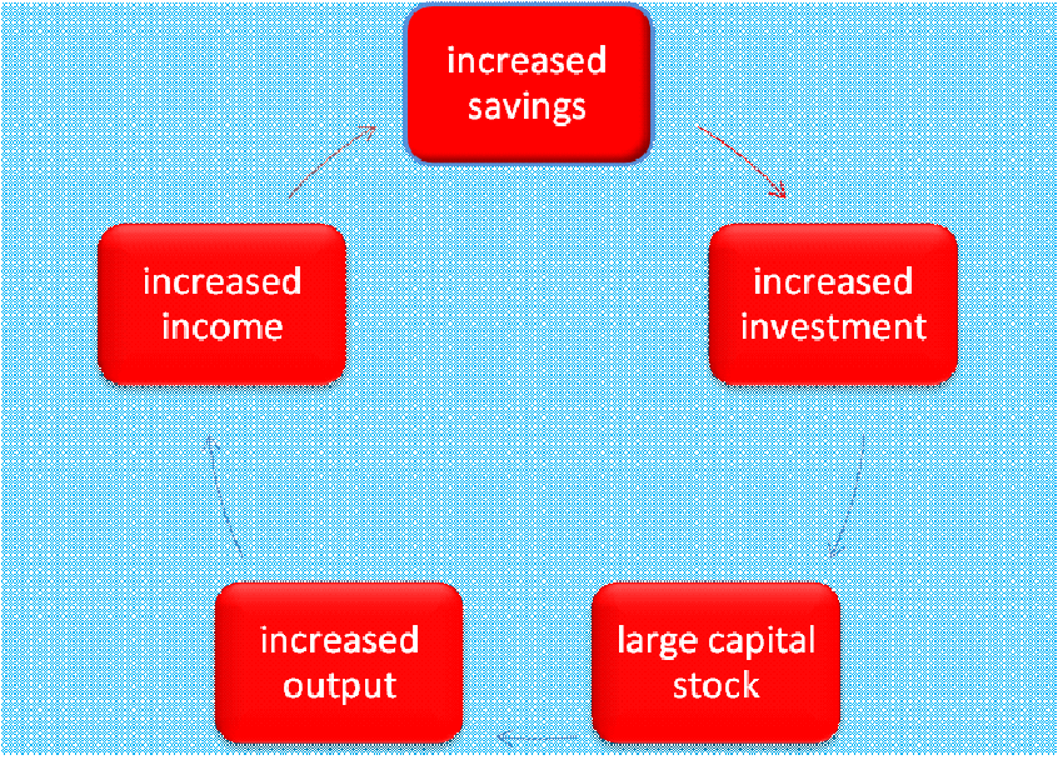
savings gap
refernce to the Harrod-Domar model
countries with low GDP per capita → low stock and savings to fund investments → low I→ low capital stock, low productivity →low GDP per capita …
increases reliance on foreign aid and borrowing
Sub Saharan Africa - savings rate of around 17% of GDP compared to 31% on average middle income countries.
capital flight
Rapid outflow of capital from one country to another, often as a response to instability in a country.
can include the trasnfer of funds to foreign bank accounts, the sale of assets, or the conversion of domestic currency into a more stable foreign currency
access to credit + banking
economy needs credible financial system (confidence and cash)
banks facilitate savings + loans
problem:
lack of income → lack of savings → lack of loans
therefore business activity held back by lack of access to credit/loans
infrastructure
Physical, financial and legal systems required for businesss activity
e.g
energy, transport, communication - physical
patents - IPR - legal
N.B patents provide incentive to invest → R+D plus increase ER
drug co’s - V.expensive to develop… need monopoly tyre profit
education + skills
literacy + numeracy → key to worker productivity
increase labour occupational mobility
skilled workforce → attract FDI
problem:
developing economies struggle to finance this
foreign currency gaps
dependancy on primary product exports lead to lower export earnings
leads to foreign currency shortages, countries unable to pay imports i.e medicine
problem: debt interest is often required to be paid in foreign currency
absence of property rights (legal systems)
property rights → essential for business activity
enforcement of laws + contracts are essential to maintain business C+I
debt
debt interest represents → significant opportunity cost
issue due to low foreign currency earnings(diffcult to repay) and if loans spent innapropriately
N.B however if spent on health + ED + infrastructure → beneficial
demographic factors
developing countries → rising population → increase GDP → reduce GDP per capita
also increase labour supply → wages? comparitive advantage?
ageing population → increase D for public services, fewer taxpayers
barriers to development and poverty reduction
infrastructure gaps
primary export dependancy
conflict and corruption
human capital weakness
savings and foreign exchange gaps
natural capital depletion
high inequality of income and wealth
lack of competition in markets
non-economic factors
civil unrest
political instability
corruption
cliamte issues e.g floods worsen due to poor infrastructure
cultural factor → empowerment of women e.g Afghanistan
2 types of strategies that influence growth and development
market orientated strategies
interventionist strategies
market orientated strategies
trade liberisation
promotions of FDI
removal of govt subsidies
floating exchange rates
microfinance schemes
privatisation
trade liberisation
remove trade barriers e.g tariffs, quotas
encourage competition, increase access to foreign markets
promotions of FDI
foreign entities investing in countries economy
brings in capital
creates jobs
removal of govt subsidies
leads to more efficient allocation of resources
reduces market distortion
improve fiscal sustainability
floating exchange rates
allows currency value to fluctuate based on market forces,
natural mechanism for trade balance adjustment,
reduce need for govt intervention
microfinance schemes
proving small loans and financial services to low income individuals and businesses
promotes entrepreneurship and alleviates poverty
privatisation
assets are transferred from public sector to private sector,
increases efficiency and competitiveness,
generates revenue for govt
interventionist strategies
government takes an active role
development of human capital
protectionism
managed exchange rates
infrastructure development
promoting joint ventures with global companies
buffer stock schemes
development of human capital
investment into developing skills in the economy
improve productivity and innovation
improves quality of life
alleviates poverty
protectionism
helps reduce trade deficit
protect infant industries
higher prices and less variety
managed exchange rates
combines fixed and float
ER floats on the market but central bank buys and sells currencies to influence exchange rates,
stability for international trade,
prevent currency rises
infrastructure development
lower costs and increase labour mobility
positive social benefits
may cause environmental damage,
increase productivity and investment
Promoting joint ventures with global companies
partnership is formed with 2 or more firms based in multiple countries,
new markets,
spreads risk,
transfer of knowledge and skills
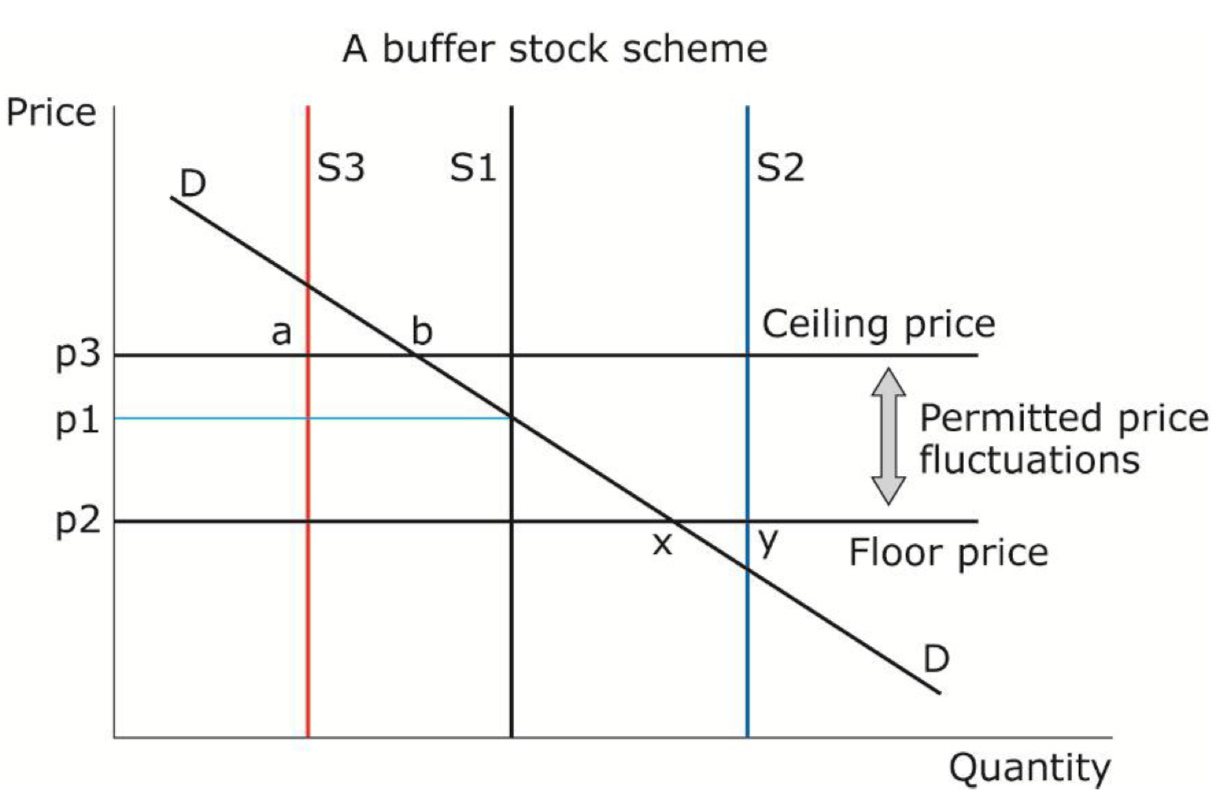
buffer stock schemes
price ceiling and price floor
Price of commodity falls too low -> government or buffer stock authority purchase large amounts to decrease supply therefore raising price
Price of commodity rises too high -> government or buffer stock authority releases amounts of good into the market bringing price down
Problems : storage and transport is expensive
other strategies
industrialisation - the Lewis model
development of tourism
development of primary industries
industrialisation - the Lewis model
increase wages in industrial urban sector -> increase migration of workers to urban sector from rural primary sector -> increase savings and investment → increase growth
Problem for emerging economies were high unemployment in urban sector
assumes labour productivity is so low that people leaving the rural sector wouldnt change output,
however although is low for some parts of the year, during planting and harvesting, requires high labour
development of tourism
LDCs are highly dependant on tourism from the developed world as incomes rise
Increases foreign currency earnings
create jobs
May be some significant negative externalities e.g clean water for tourists not locals, pollution
development of primary industries
Develop using comparative advantage on primary products e.g. chile benefitted from high copper prices and other high YED products
Saudi Arabia, Norway and Australia developed due to natural resources
provides funds
address the dutch disease - Norway invest overseas - depreciation - helps industries overseas competitiveness
fairtrade schemes
fair price, community development, fair working conditions and protecting the environment
agreements to buy guaranteed amount above market price - gives producers stability and income
higher income and satisfaction
Problem:
makes non-fair trade producers worse off
Higher incomes reduce the incentive to diversify And keep farmers in low profit activities
aid
When a country voluntarily transfers resources to another or give loans on concessionary terms
UN - 0.7% GDP -> aid
tier aid
aid with conditions attached, such as economic, political reforms or commitments to buy goods from donor country
bilateral aid
assistance, such as money, loans, or resources, given directly from one government to another, often influenced by political, strategic, or economic interests
directly between donor country and recipient country
Multilateral aid
when countries give aid to an international organisation which then distributes with other countries
concession loans
loans given with little or no interest
debt relief
Renegotiate debt payments - decrease IRs -> decrease repayments -> Increase funding of public services and infrastructure
Debt cancellation
why can debt relief cause problems
creates a precedent that poor countries expect to receive debt relief
Eases pressure for weak governments to improve policies
role of the world bank
provides financing, policy advice, and technical assistance to developing countries to reduce poverty, foster sustainable growth, and invest in projects like education, health, and infrastructure
role of the IMF
international monetary fund
Ensure the exchange rates systems works well
Provide loans during international exchange rate crisis
why do countries join the IMF
May need loan
Ensure more stable global macro environment
Increase certainty globally
why is following IMF advice better than defaulting
IMF asks for macroeconomic reforms to resolve problems when providing loans, e.g. reduce imports or cut Govt spending
Alternative is defaulting on loans rather than conforming to policy reforms
But defaulting is more damaging than reforms which help the country to overcome issues
NGOs
Non-profit organisation that are run independently from the government that focus on community based projects
Water, healthcare, schools
Direct assistance to countries e.g. Oxfam or CAFOD
problem of NGOs
limited to HDI,
Seen as anti-capitalists who blames problems on the World Bank, IMF and WTO

