Synaptic plasticity
 Studied by 0 people
 Call Kai
 Learn
Learn Practice Test
 Spaced Repetition
 Match
Match Flashcards
 Knowt Play
1/20

There's no tags or description
Looks like no tags are added yet.
Name | Mastery | Learn | Test | Matching | Spaced | Call with Kai |
|---|
No analytics yet
Send a link to your students to track their progress
21 Terms
Early theories of cellular mechanisms of memory
Santiago Ramon y Cajal - neuron doctrine 1894 → memories might be formed by strengthening if connections between neurons
Donald Herb: the organisation of behaviour 1949 (book)
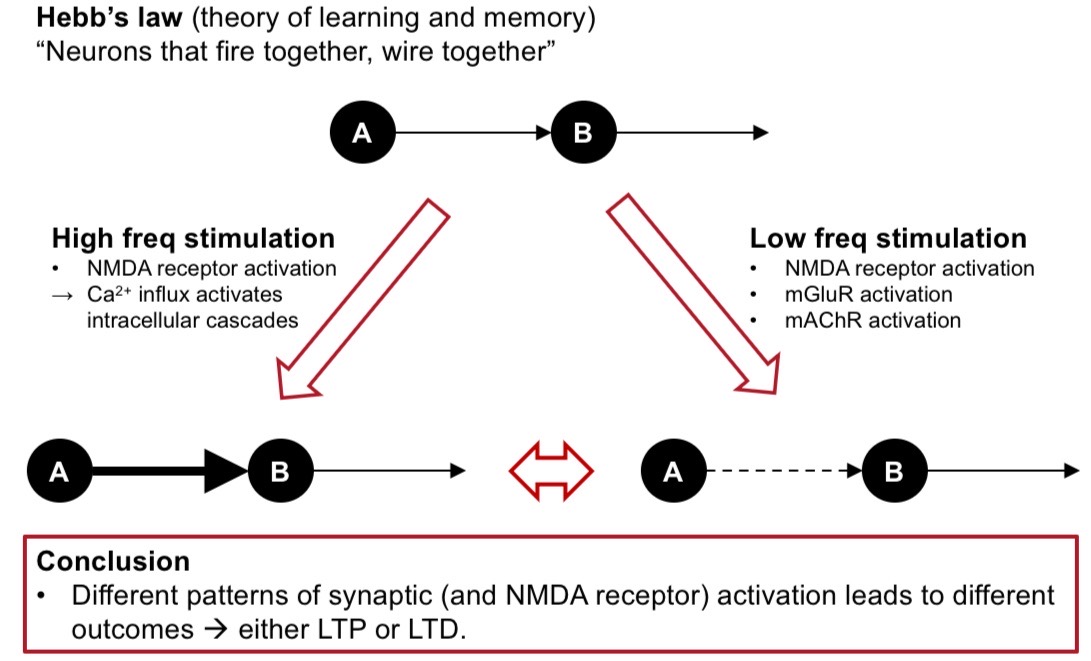
Hebb’s law
→ when an axo of cell A is near enough to excite cell B, and repeatedly fires it, some growth processes/metabolic change takes place in one/both cells so cell A’s efficiency to fire B is increased
‘neurons that fire together wire together’
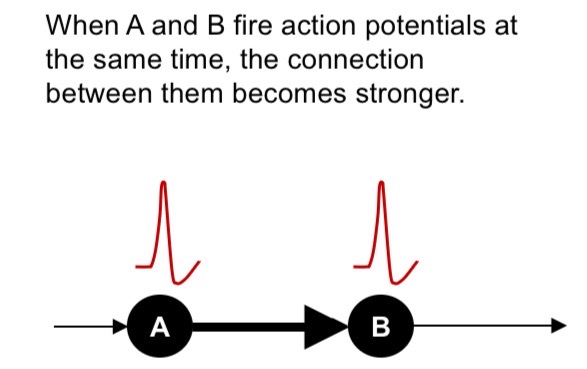
Synaptic plasticity
→ change in strength of synaptic communication
the strength of synaptic communication between two neurons is not fixed
Short and long term potentiation exists = brain processes that temporarily or permanently alter synaptic strength
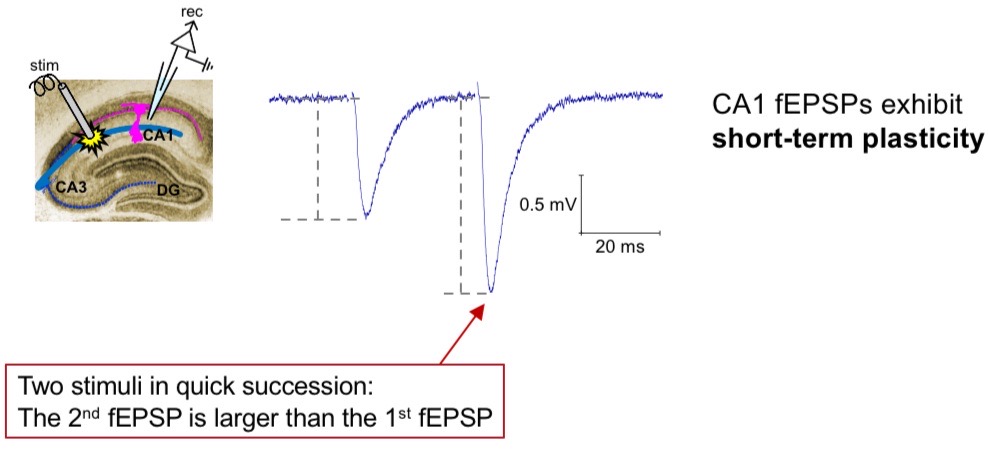
Who were Bliss and Lomo?
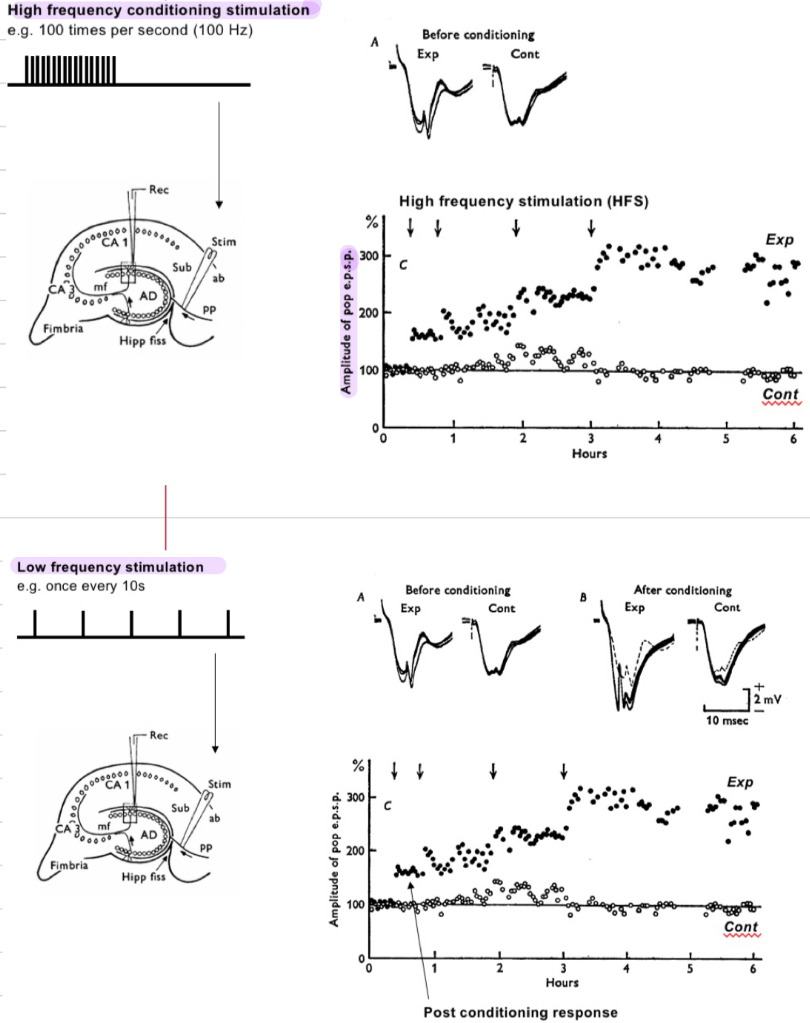
First description of long term potentiation (LTP) of synaptic strength in 1973
Recorded fEPSPs (field excitatory postsynaptic potentials) in the performance pathway of anaesthetised rabbits
What is LTP
Persistent strengthening of synapses based on patterns of recent activity
What did Bliss and Lomo do in their study?
Low frequency baseline stimulation→ stimulate the performant pathway and record fEPSP amplitude
High frequency conditioning stimulus→ continue to measure fEPSP, shows an increase in amplitude of synaptic response, remains increased overtime
Low frequency stimulation again→ after conditioning, the response is larger, follows Hebb’s law
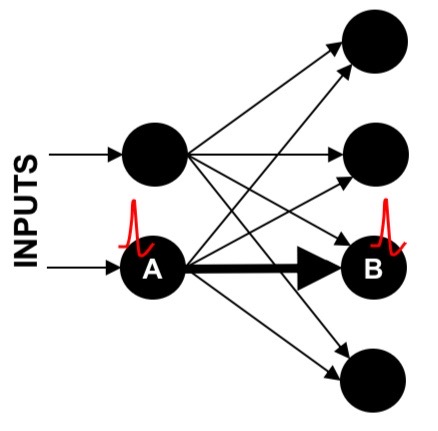
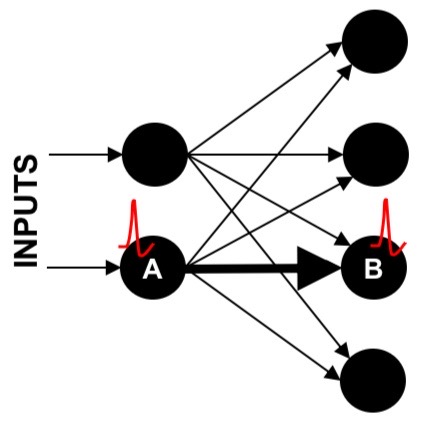
Properties of LTP: input specificity
change in synaptic strength occurs specifically at synapses that are activated e.g. between A and B that are simultaneously fired together
Spiking in A&B increases strength between A&B but not between A and others.
Properties of LTP: associativity
a weak stimulus in one pathway is not sufficient to elicits LTP
When paired with activity in another stronger pathway, LTP occurs in both
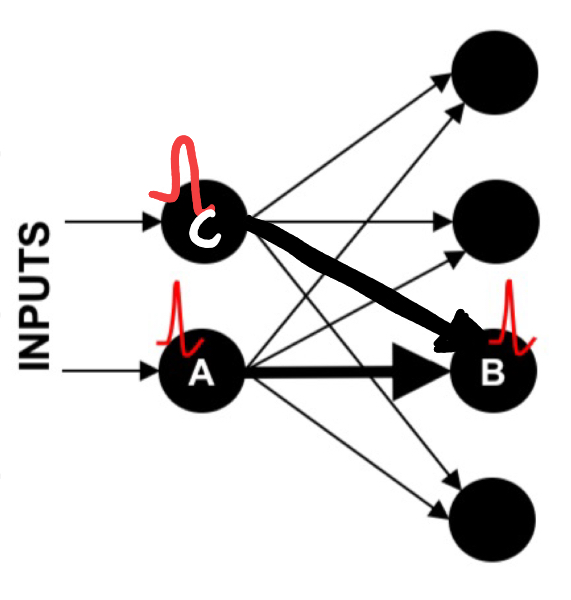
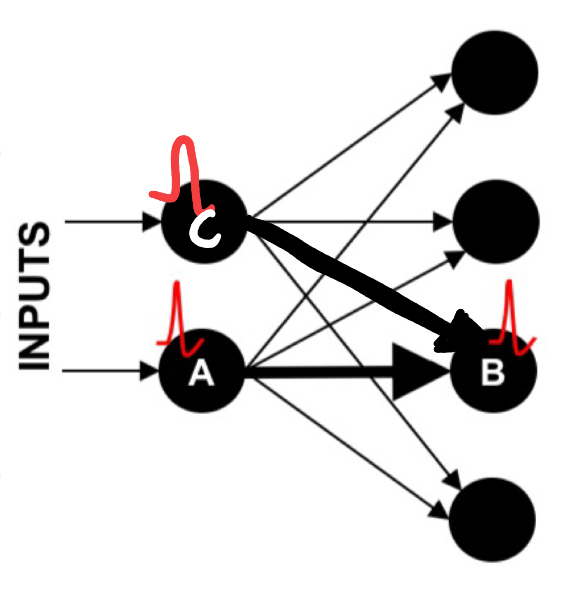
Properties of LTP: cooperativity
same as associativity but doesn’t require the second pathway to have a strong stimulus, just requires a second pathway active at the same time
Even if A and C are equal in stimulation = LTP in both
Properties of LTP: persistence
changes in synaptic strength will last across time
“Long” term
Mechanism of LTP induction
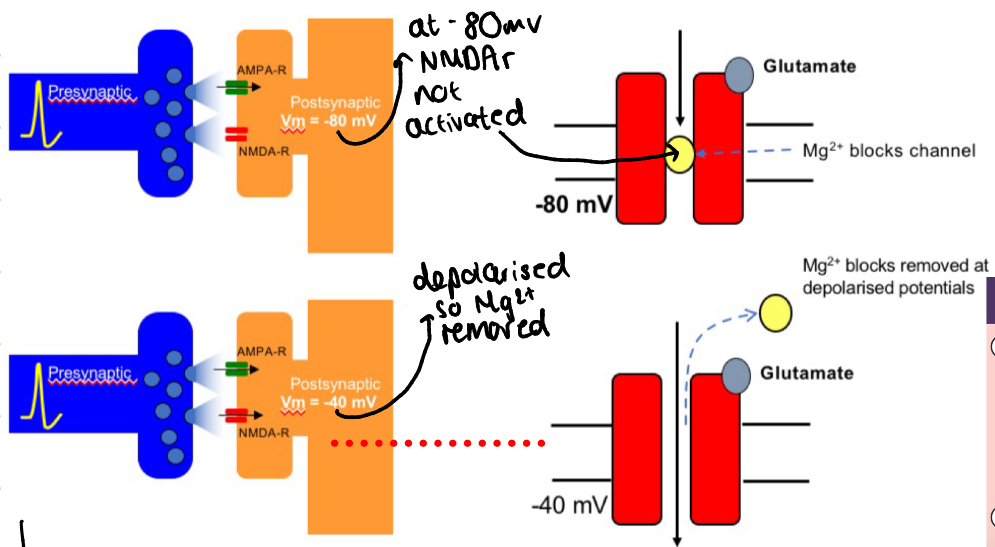
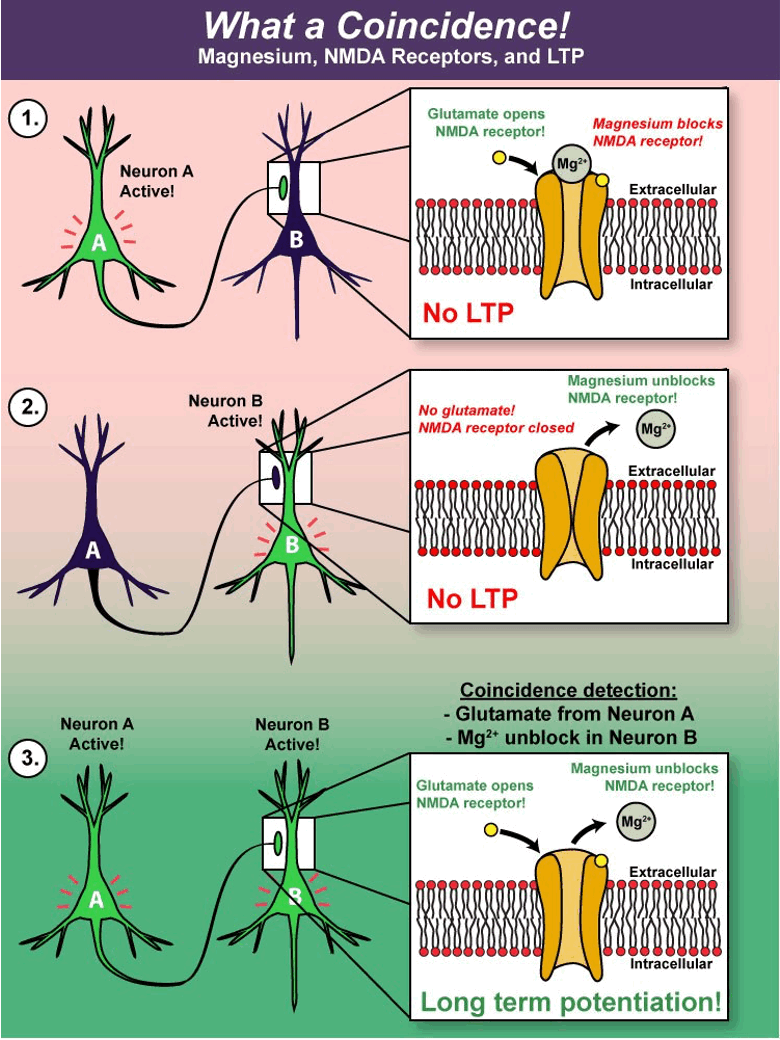
NMDA receptors are required for LTP
They act as coincidence detectors to detect pre and post synaptic activity at the same time
NMDA receptors activate at depolarised potentials and Mg2+ bock is removed
When does LTP occur/not occur?
no postsynaptic spiking = Mg block→ no LTP
Postsynaptic spiking but no glutamate = Mg block removed but no glutamate to open NMDA receptor
Glutamate from A and Mg unblocked in B = LTP!!!
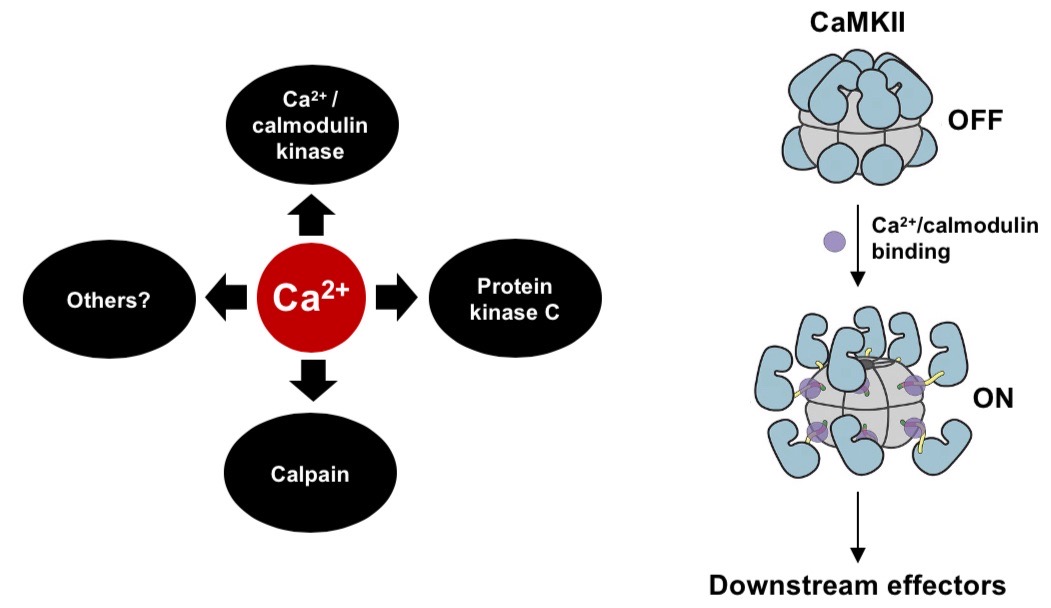
Why does NMDA activation lead to LTP
NMDA receptors also allow Ca2+ into the cell, which activates intracellular signalling cascades
These cascades drive LTP in downstream effectors, strengthening the synaptic connection
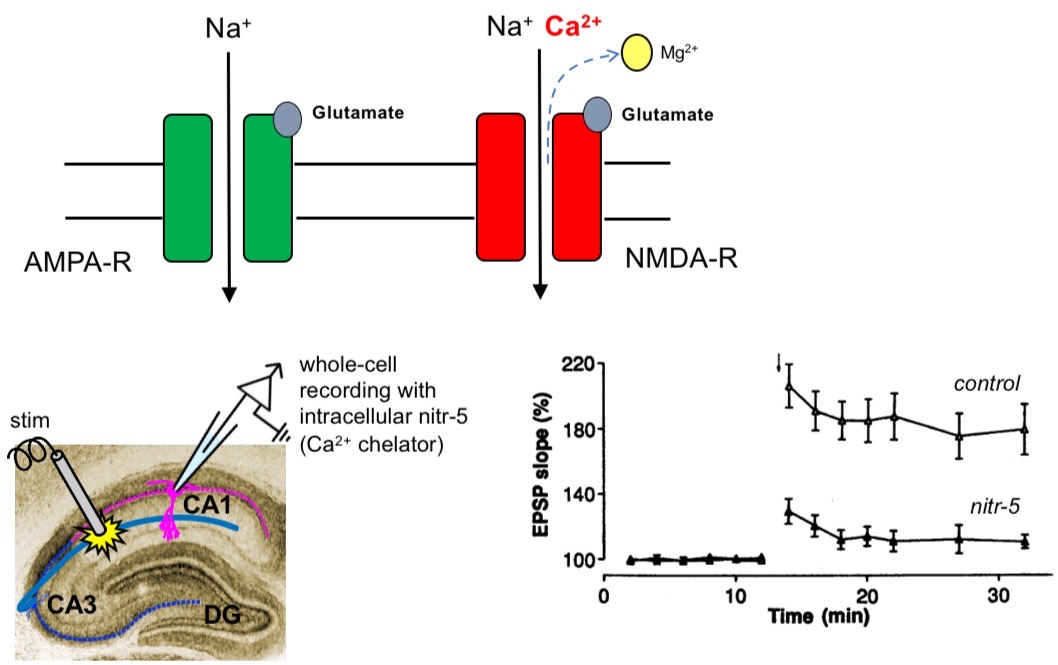
Proof of Ca2+ role in LTP
CA1 hippocampal recording of control (LTP occurring)
one group injected with nitr-5 (Ca2= chelator - binds to free calcium)
Nitr-5 group had significant decrease in LTP, shows calcium’s role in LTP
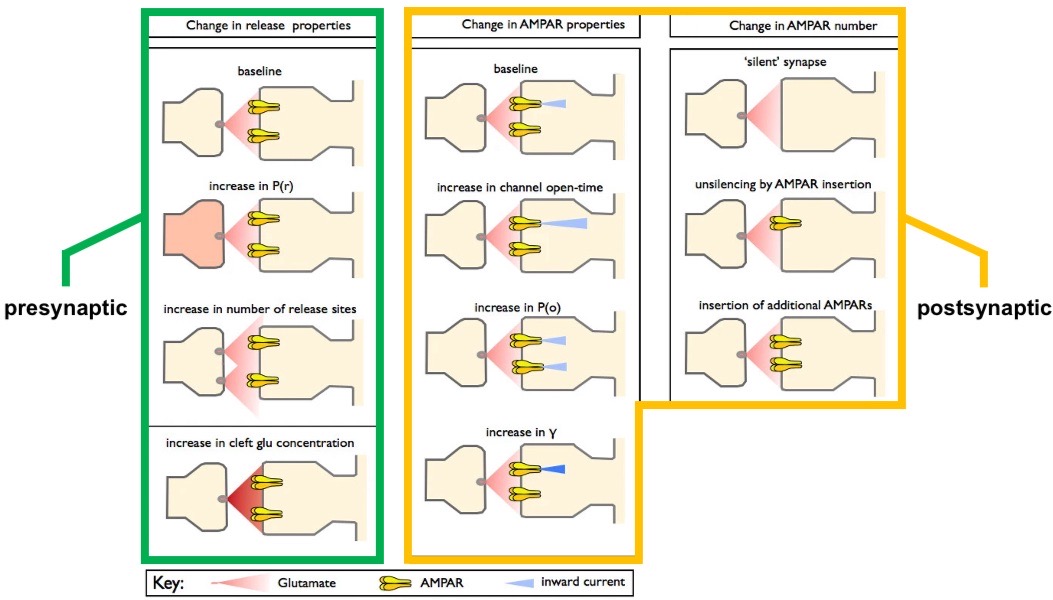
Potential mechanisms where LTP is expressed
Change in release properties→ presynaptic
increased probability of release
Increase no. Of release sites
Increase cleft glutaate conc
Chnage in AMPAR properties→ postsynaptic
increase channel open-time
Increase in probability of opening of channel
Increase in gamma
Chnage in AMPAR no.→ postsynaptic
unsilencing AMPAR insertion
Insertion of additional AMPARs
Long term depression
→ a persistent decrease in synaptic strength
found in many synapses in the brain, including the hippocampus
Usually achieved by prolonged ow frequency stimulation
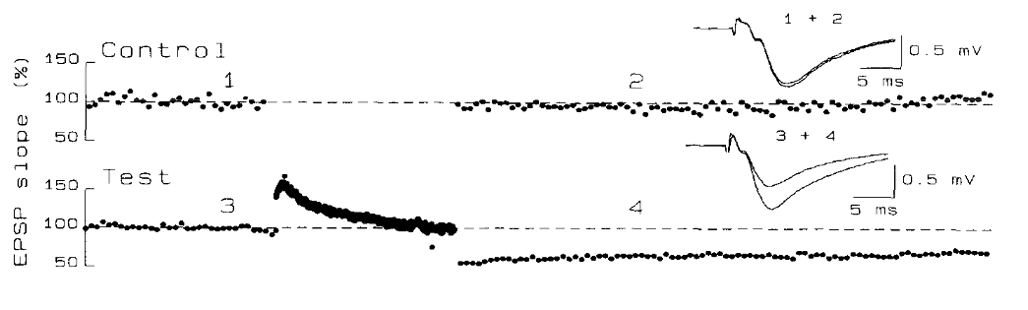
LTD dependence on NMDA Proof
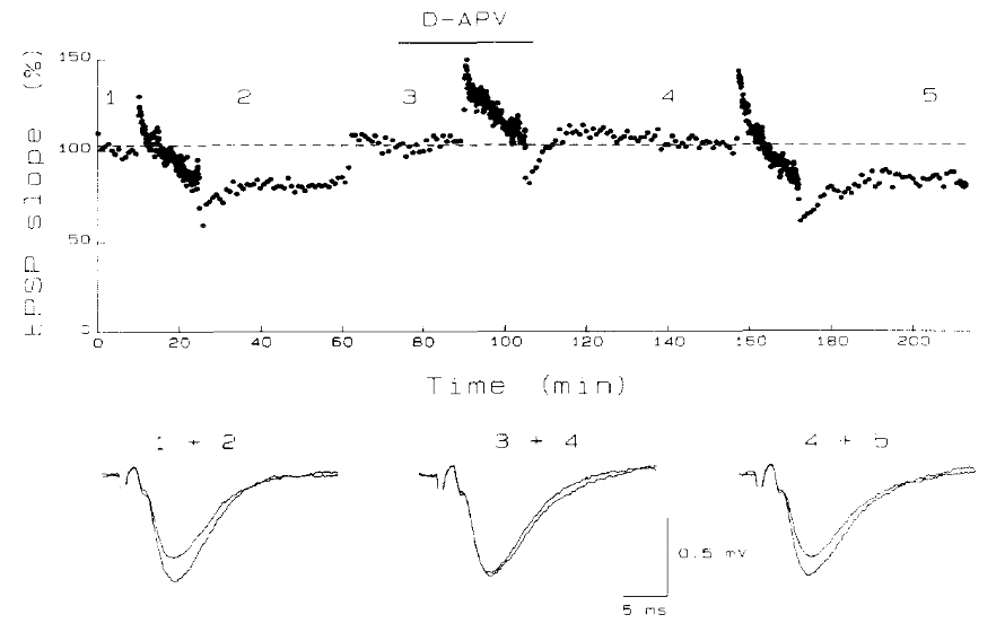
some forms of LTD are dependant on NMDA receptors
Proof = D-APV which is a NMDA receptors antagonist, shown to block LTD
Collingridge et.al.
After D-APV was applied, LTD did not occur
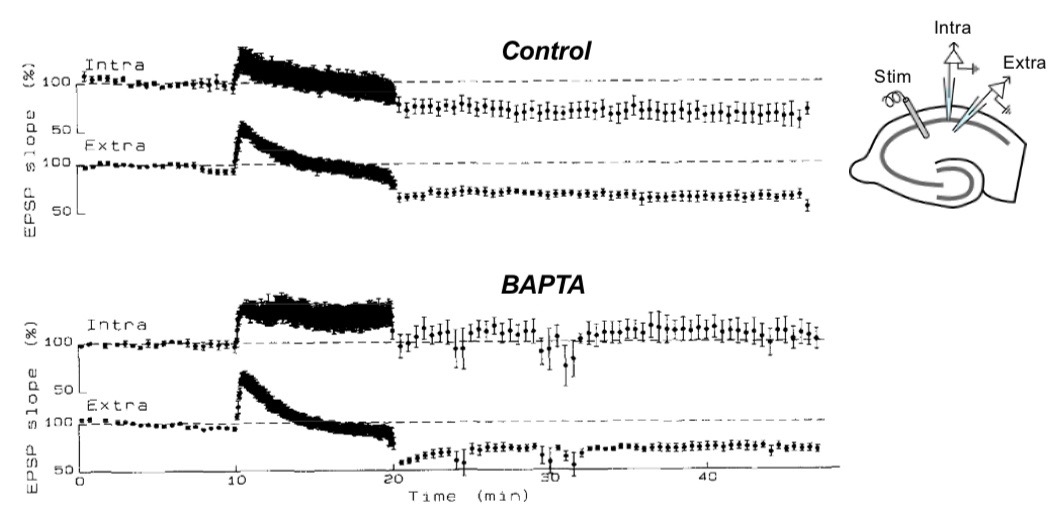
Proof LTD depends on Ca2+ entry
some forms of LTD depend on postsynaptic Ca2+ entry
Used intracellular Ca2+ chelation using BAPTA to block LTD
With BAPTA applied, no LTD occurred
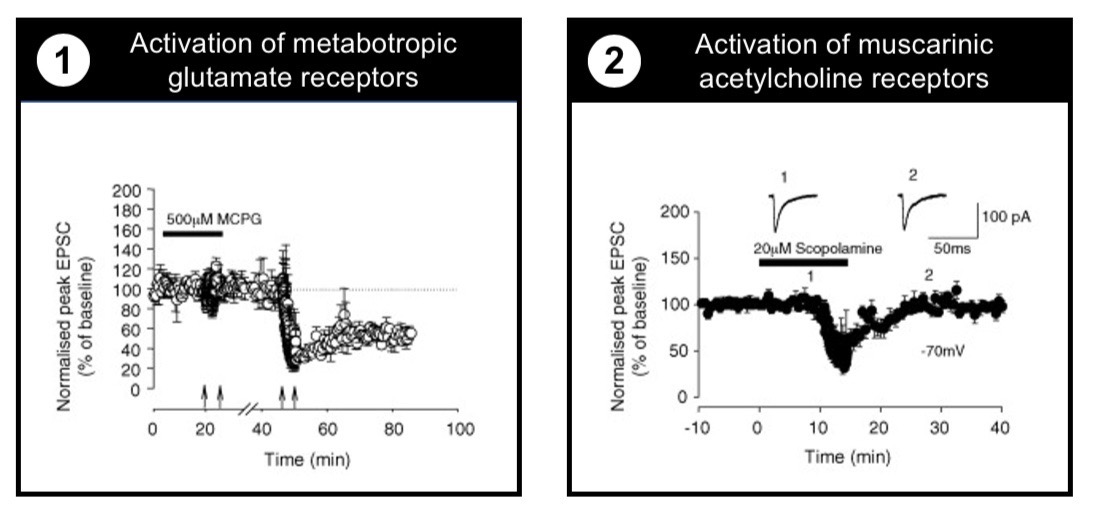
LTD alternative inducing mechanisms
Metabotropic glutamate receptors
Muscarinic acetylchoine receptors
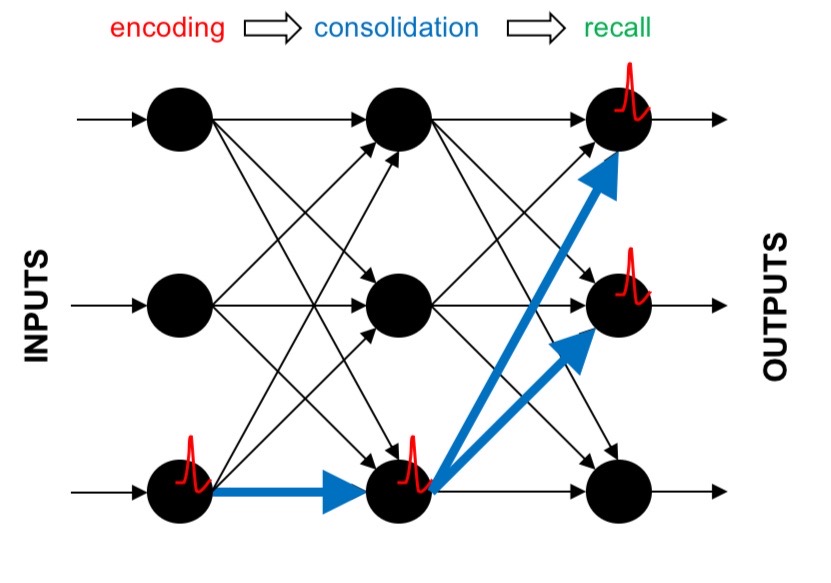
How do neuronal networks remember things?
Encoding first, then consolidation second, then each time after that is recal
Summary of mechanisms of LTP vs LTD
 Note
Note  Flashcards (99)