CSDS 200: Exam #2 - Module 5
 Call Kai
 Learn
Learn Practice Test
 Spaced Repetition
 Match
Match Flashcards
 Knowt Play
1/26

There's no tags or description
Looks like no tags are added yet.
Name | Mastery | Learn | Test | Matching | Spaced | Call with Kai |
|---|
No analytics yet
Send a link to your students to track their progress
27 Terms
Where does control come from in single-subject research
Dependent variables are measured continuously, graphed, and analyzed using visual inspection (only way to establish control is by observing): predicition, verification, and replication
Prediction
once they level out they will likely continue
Verification
verify a change occurred when the independent variable was manipulated
Replication
replicate so we can confirm that the cause of the change was the independent variable and not another variable
How are treatment phases used within single-subject research designs
At minimum, these conditions include baseline (A) and intervention (B) phases
Baselines establish a benchmark against which the participant’s behavior in subsequent conditions can be compared
Baseline data must:
Be stable
lack a clear trend of improvement
include at least 3 points to establish stability of the dependent variable
Benefits of single-subject designs
Often, less costly to implement
Can be used to establish the viability of a treatment method prior to expending the resources needed to conduct a study utilizing a group design
Help determine effective treatments for specific clients
Limitations of single subject designs
Individual studies cannot demonstrate external validity
Advantages of AB design
serves as a building block for true experimental designs
Disadvantages of AB design
Cannot establish efficacy; however, they can demonstrate improvement
Does not sufficiently control for many threats to internal validity and, therefore, does not demonstrate experimental control
Demonstrates a potential link between the independent and dependent variables, but not necessarily causation
Advantages of ABA and ABAB designs
Provide degree of experimental control while being easy/straightforward to plan and implement
Often require fewer participants, resources, etc.
In ABAB provides more replication, demonstrating even greater control
Disadvantages of ABA and ABAB designs
If the DV does not reverse in the second “A” phase, a functional relationship cannot be claimed
As a result, may be difficult to implement for some DVs
Ethical issue associated with withdrawing an apparently effective intervention
Advantages of Multiple Baseline and Multiple Probe Designs
Avoid the disadvantage of a withdrawal of the IV (always end in a treatment phase)
Appropriate for behaviors that may not return to baseline levels
Disadvantages of Multiple Baseline and Multiple Probe Designs
Treatment is withheld for a time for certain participants, behaviors, and/or settings
Potential for generalization which would serve as a threat to validity
It may not be appropriate to use a multiple-probe design if there is significant variability in the DV
Advantages of Multiple Treatment Designs
Useful when determining the effects of multiple treatment methods
Provide strong internal validity
Helpful to consult when selecting a treatment method to use with a given client
Disadvantages of Multiple Treatment Designs
Can only compare adjacent phases
Potential multiple-treatment interference
If the DV does not reverse in the second “A” phase, a functional relationship cannot be claimed
Advantages of Alternative Treatment Designs
Useful in comparing the effects of two or more IVs
Allow multiple comparisons in relatively few sessions (very efficient way to compare independent variables)
Disadvantages of Alternative Treatment Designs
Potential multiple-treatment interference
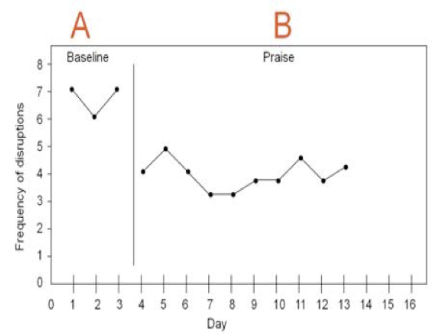
Pre-experimental AB Design graph
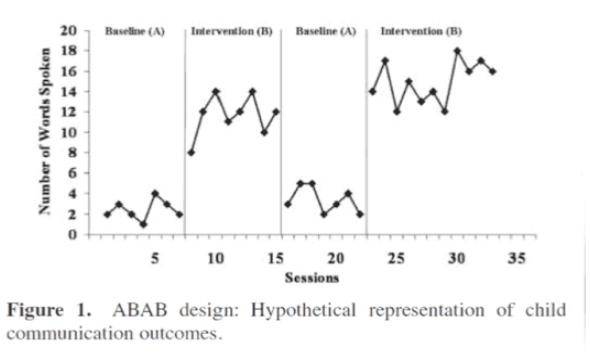
ABAB Design Graph
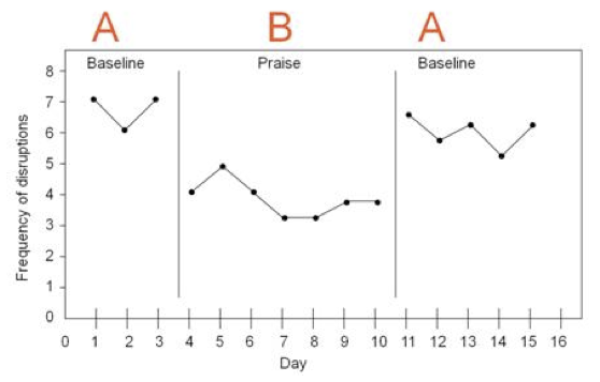
ABA Design Graph
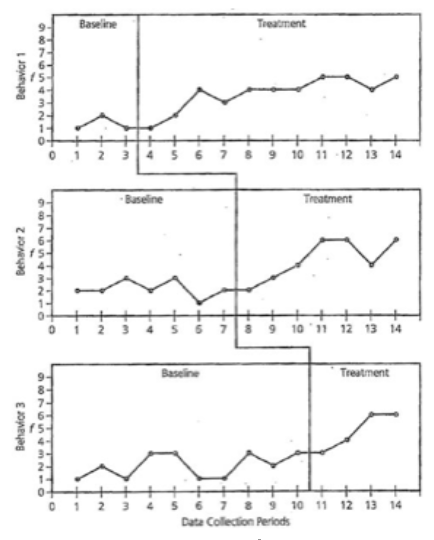
Multiple Baseline Designs Graph
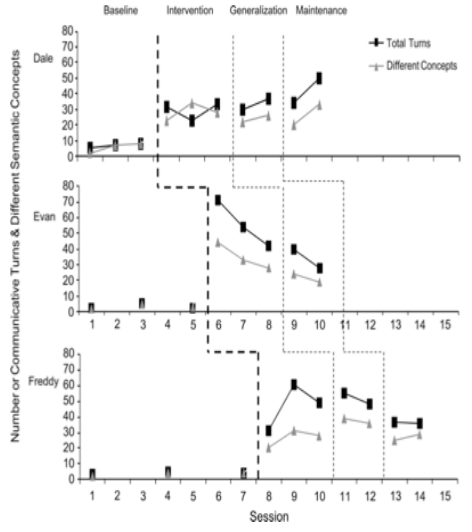
Multiple Probe Design Graph
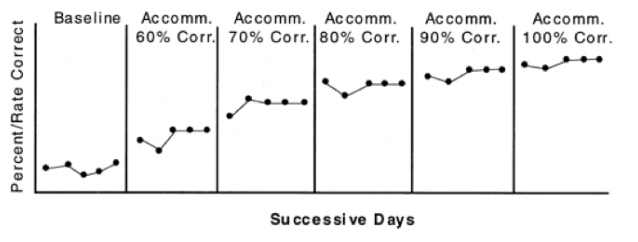
Changing Criterion Design Graph
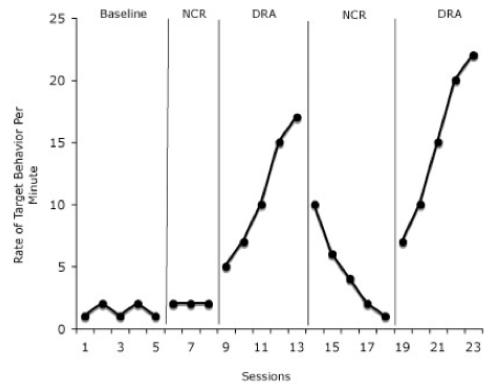
Multiple Treatment Design Graph
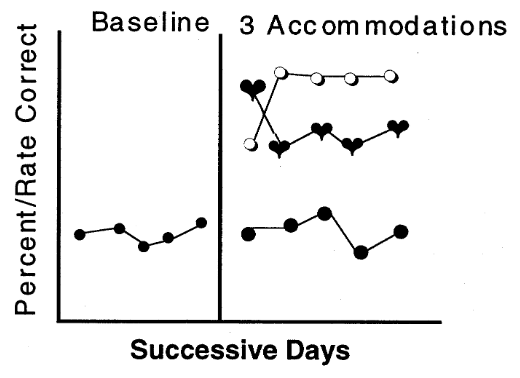
Alternating Treatment Design Graph
Which single-subject treatment designs can be used to examine. theefficacy of more than one independent variable
Alternating treatment designs and multiple treatment designs

