Impedance & DI boxes
 Studied by 0 people
 Call with Kai
 Learn
Learn Practice Test
 Spaced Repetition
 Match
Match Flashcards
 Knowt Play
1/13

There's no tags or description
Looks like no tags are added yet.
Name | Mastery | Learn | Test | Matching | Spaced | Call with Kai |
|---|
No study sessions yet.
14 Terms
What is impedance?
The resistance to electrical current, which is measured in ohms Ω.
What is output impedance?
This is the impedance at the output of the mic or instrument e.g. electric guitar, synth or electronic drums
What is the input impedance?
This is the impedance at the input of what the mic or instrument is plugged into e.g. the input of an amp, a mixing desk or audio interface.
What’s the short name for high and low impedance?
High impedance = Hi-Z
Low impedance = Lo-Z
What’s the difference between instrument and mic output?
Electric instruments have a higher output impedance than mics.
What’s the impedance of the following inputs:
Microphone
Line
Instrument
Microphone: 1000-3000 ohms
Line: 10,000-60,000 ohms
Instrument: 1.5m ohms.
Why does impedance need to be matched?
If mis-matched, it causes distortion so it needs to be avoided.
How do you correctly match impedance in audio equipment?
The input impedance should be at least 10× higher than the output impedance to avoid signal loss, distortion, and changes to frequency response.
Since instrument level has an impedance of 1.5m ohms, why not use it instead of line level?
Most mixing desks don’t have instrument level, just mic and line level.
What does a DI box do?
It lowers impedance which prevents distortion and converts the unbalanced cable into a balanced cable eliminating RF interference allowing for the cable to be longer.
What is the need for LINK (THU-PUT)?
It allows an amped and a clean version of the signal to be recorded simultaneously.
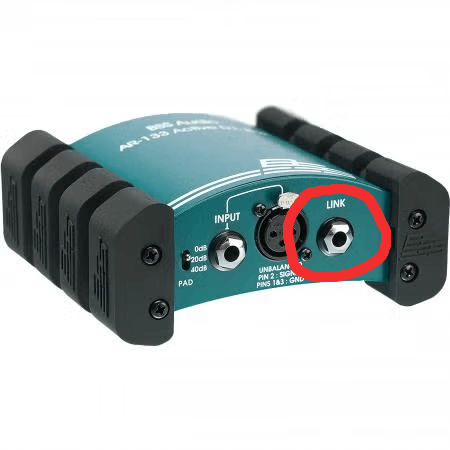
What can be plugged in here and what does it do?
Unbalanced TS cables (LINK or THRUPUT), taking the high impedance signal from electric guitar, which is sent straight to a guitar amp without being converted.
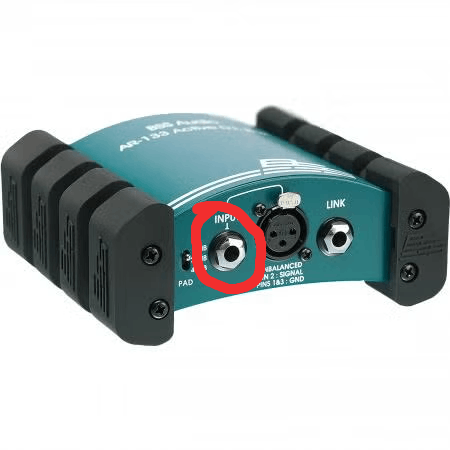
What is plugged in here and what does it do?
Unbalanced TS cable, carrying high impedance signal from electric guitar.
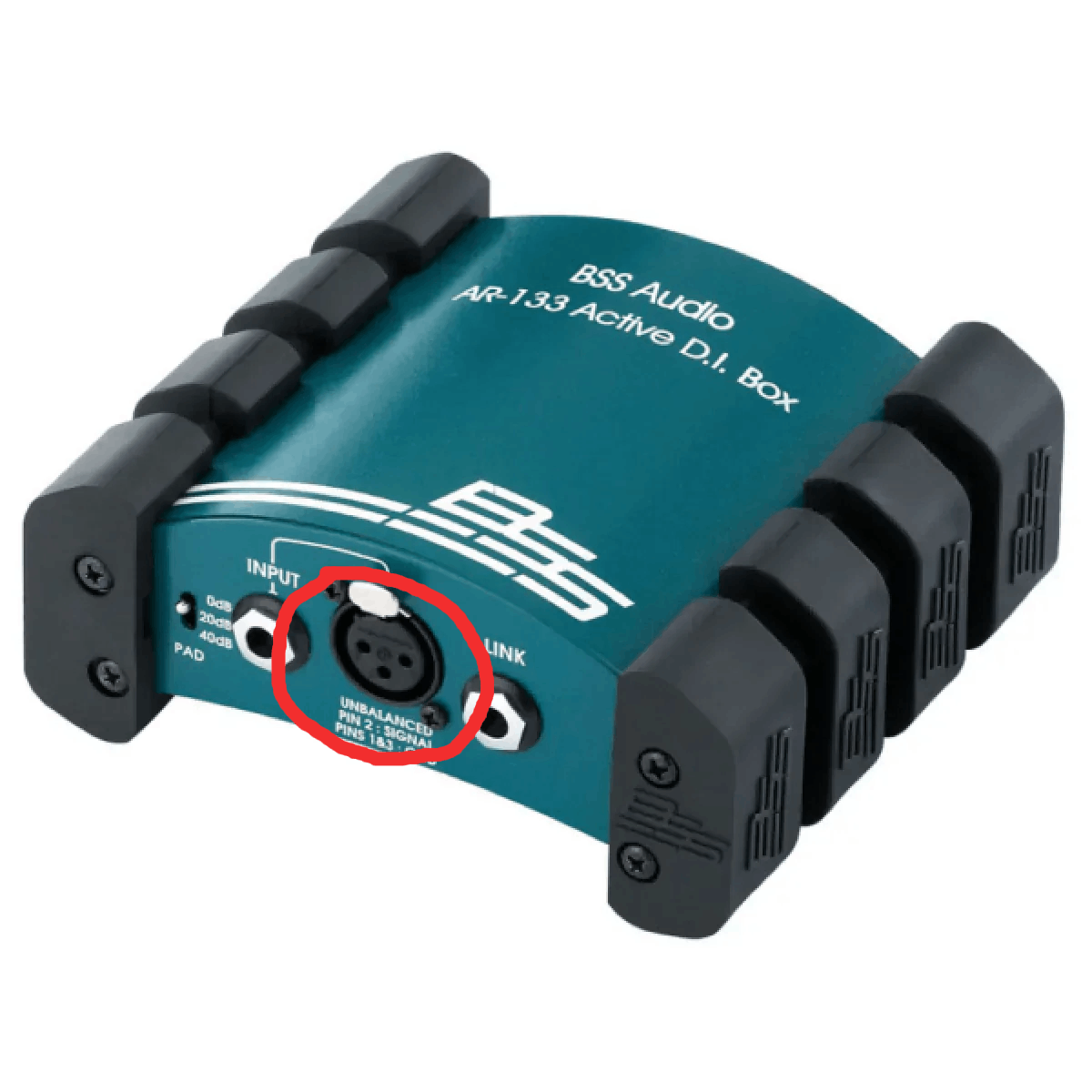
What is plugged in here and what does it do? (INPUT)
Balanced XLR cable, carrying the converted low impedance signal to the mixing desk (OUTPUT)
 Note
Note  Flashcards (20)