England and American Colonies. Commonwealth Period through the English Baroque
 Call Kai
 Learn
Learn Practice Test
 Spaced Repetition
 Match
Match Flashcards
 Knowt Play
1/37

There's no tags or description
Looks like no tags are added yet.
Name | Mastery | Learn | Test | Matching | Spaced | Call with Kai |
|---|
No analytics yet
Send a link to your students to track their progress
38 Terms
War of Roses
- conflict between House of York vs. House of Lancaster
- delayed the Renaissance in England
Early Renaissance (Tudor)
- Henry VII and VIII, Mary I, Elizabeth I
- Style: Elizabethan
High Renaissance (Jacobean)
- James I, Charles I
- Style: Jacobean
Civil War
- Oliver Cromwell (Puritan rule)
- Style: stark and severe design
Baroque/ Carolean (Restoration)
- Charles II, James II, William and Mary, Queen Anne
- Style: English Baroque
Oliver Cromwell
- led the Commonwealth Period
- design: plain, severe, minimal decoration
English Baroque Architecture Characteristics
- complex floorplan
- monumental scale
- emphasis on central space
- curved/undulating walls
- movement and dynamism
- rich carvings
- luxurious materials (gold, marble)
- integration of architecture + sculpture + painting
English Baroque Architecture Interior Elements
- Corinthian columns
- dramatic lighting
- marble floors (gold, white, black)
Sir Christopher Wren
- important architect
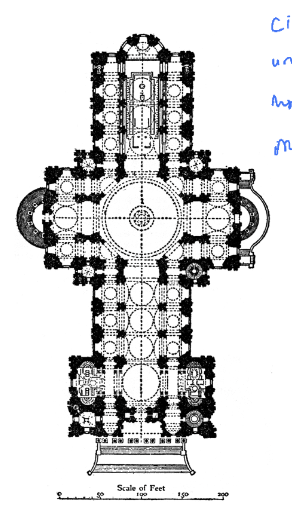
- built St. Paul's Cathedral (London) in the English Baroque Style
St. Paul's Cathedral
- former Cathedral was medieval Gothic
- destroyed in the Great Fire of London (1666)
- main entrance called the West Front
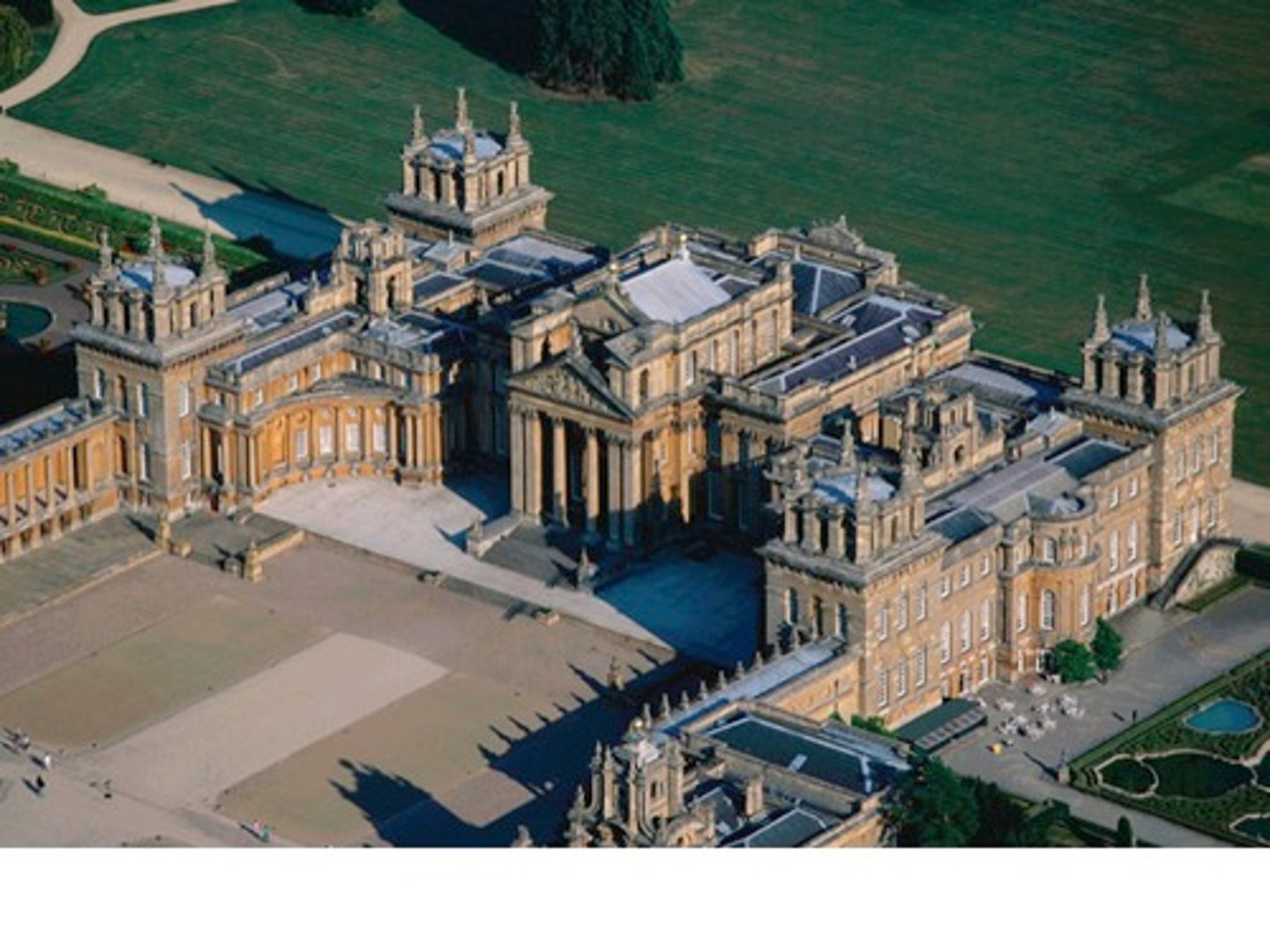
Blenheim Palace
- by Sir John Vanbrugh, Nicholas Hawksmoor
- built for John Churchill, Duke of Marlborough
- to compete with Versailles
Blenheim Palace Features
- English Baroque Style
- Large Scale
- Enfilade room layout
- 3 building blocks connected by colonnades
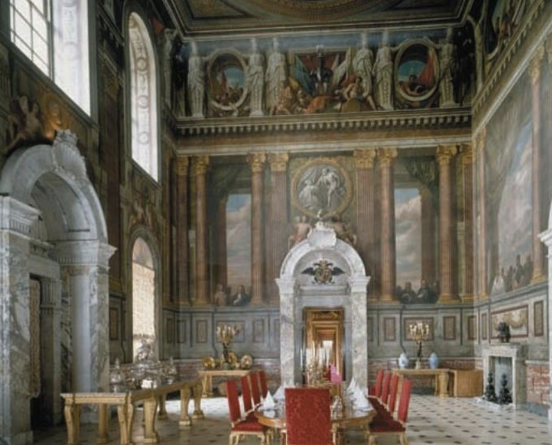
Blenheim's Great gallery
- 180 feet
- 20th century furniture
- Baroque style fireplace
Blenheim's Saloon
- typically the center room
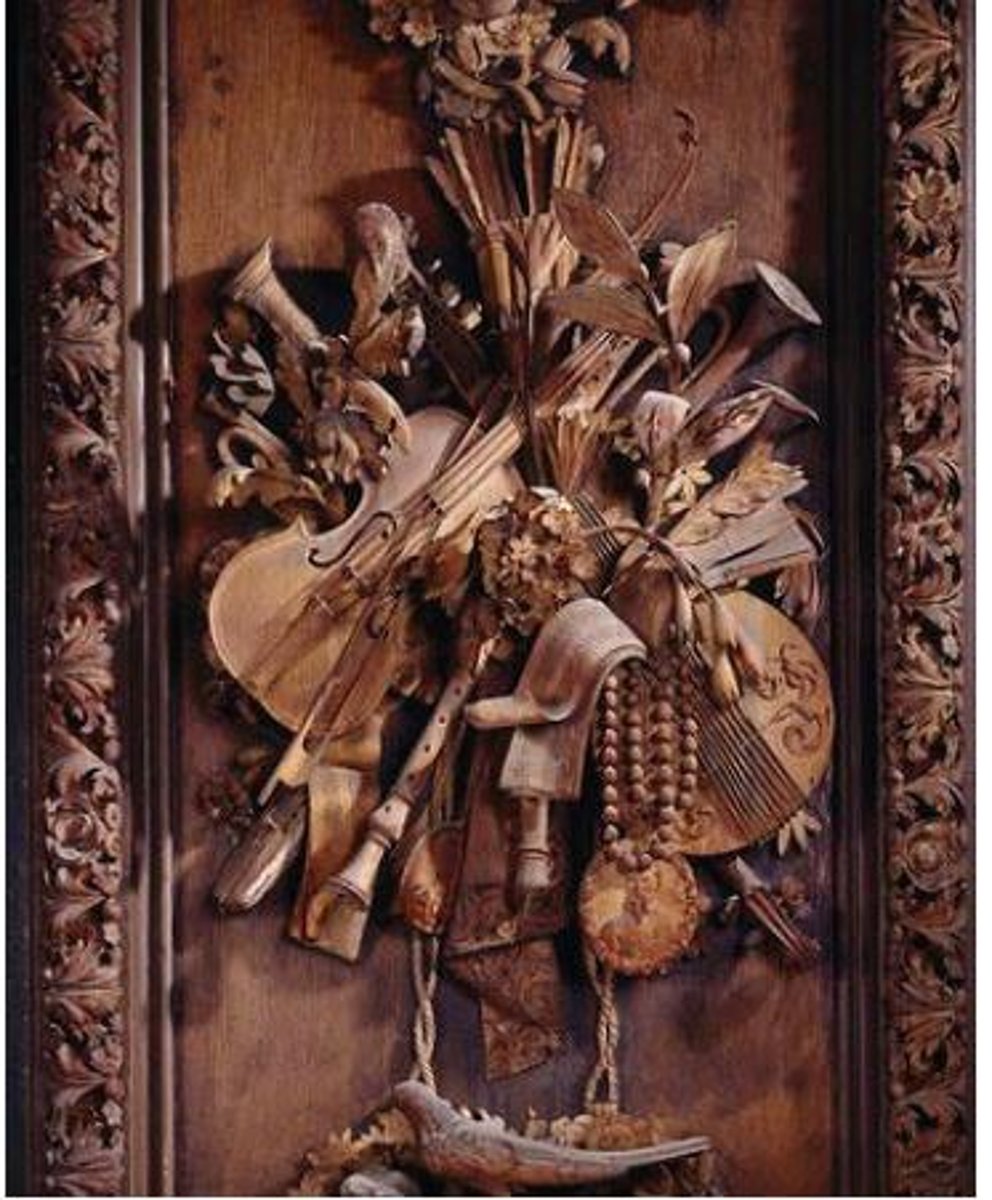
Grinling Gibbons
- England's finest wood carver
- worked with oak, walnut, fruitwoods
- created swags and garlands
- "The King's Carver"
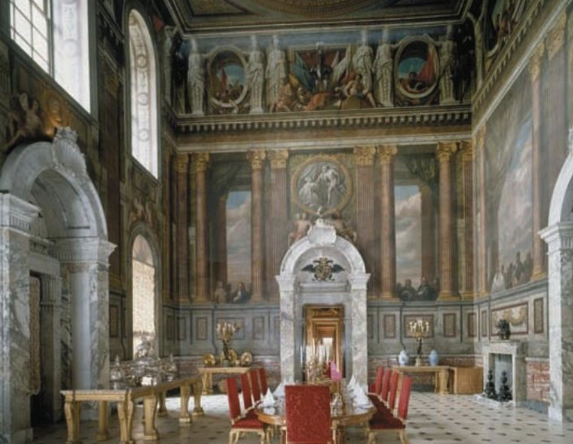
Louis Laguerre
- French decorative painter
- painted murals at Blenheim
- known for trompe l'oeil (illusionistic painting)
Sarah Churchill
- Duchess of Marlborough
- close friend of Queen Anne
- major trend setter in England
English Baroque Furnitures
- Charles II style, also called Jacobean furniture
- scroll arms
- curved legs
- heavy forms
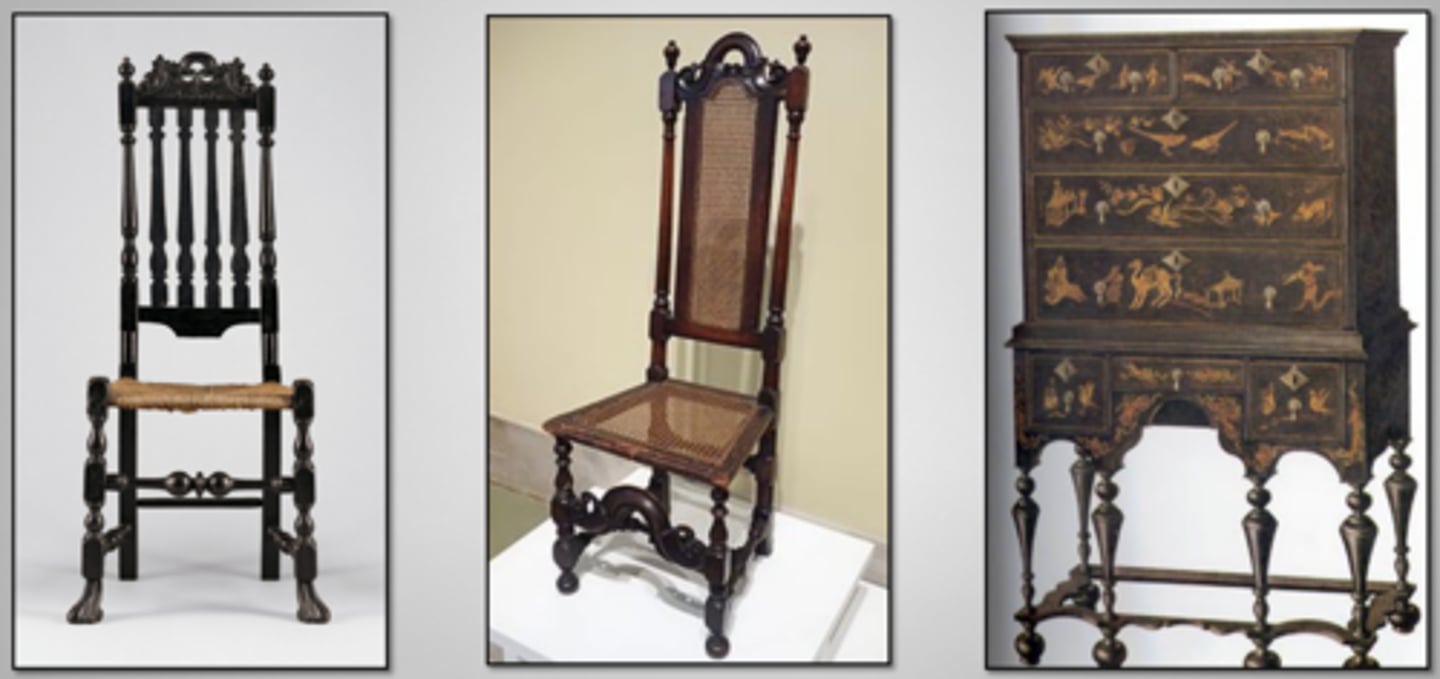
William and Mary Furniture
- continuation of Jacobean style
- ball turning on legs
- X-shaped stretchers
- Gate-leg tables
- Marquetry decoration
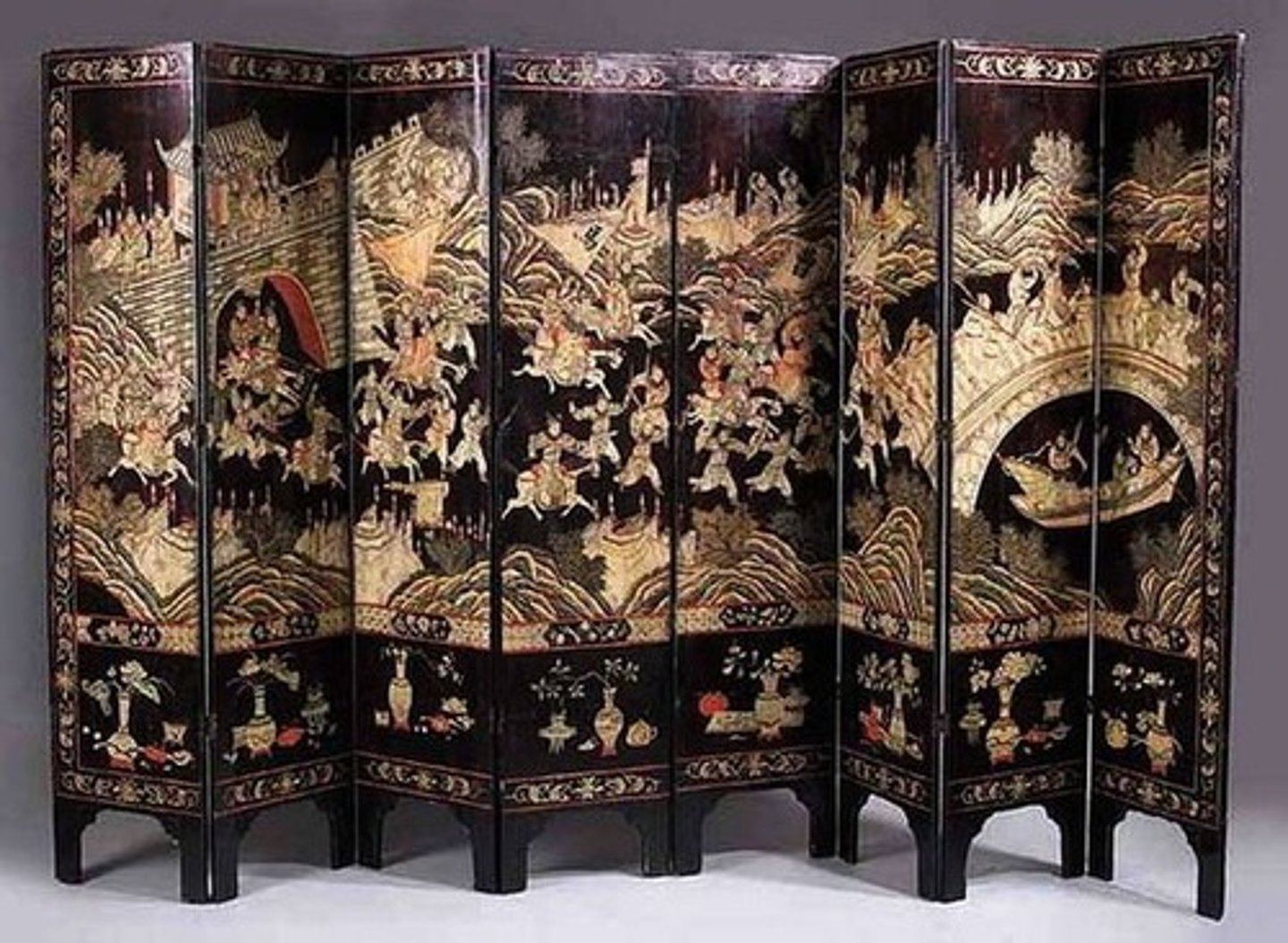
Chinoiserie Influence
- black lacquer furniture
- gold leaf
- Asian landscapes and scenes
- inspired by imported objects like Chinese Coromandel Screens
Colonial America
- colonies depended on England
- colonist were not allowed to manufacture many goods
- resources: timber and tobacco
Colonial America Early homes
- wooden frame house
- shingled roofs
- shuttered windows
Early Settlements
- St. Augustine, FL: oldest continuously inhabited European settlement in the US
- Santa Fe, NM: oldest state capital in the US
Colonial Furniture
- influenced by English styles and shipbuilding techniques
Draw Table and Stools
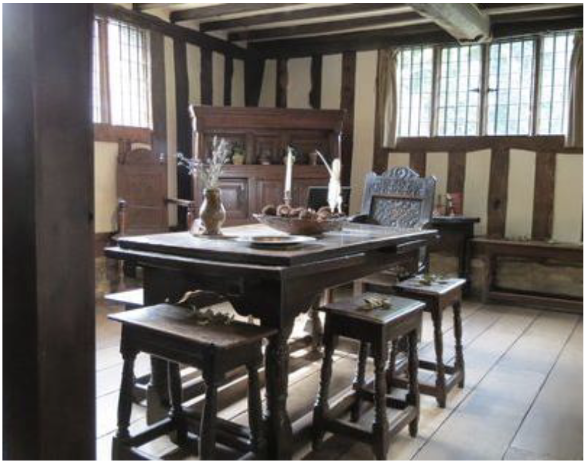
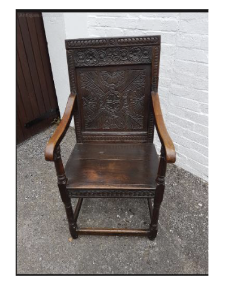
Wainscot Chair
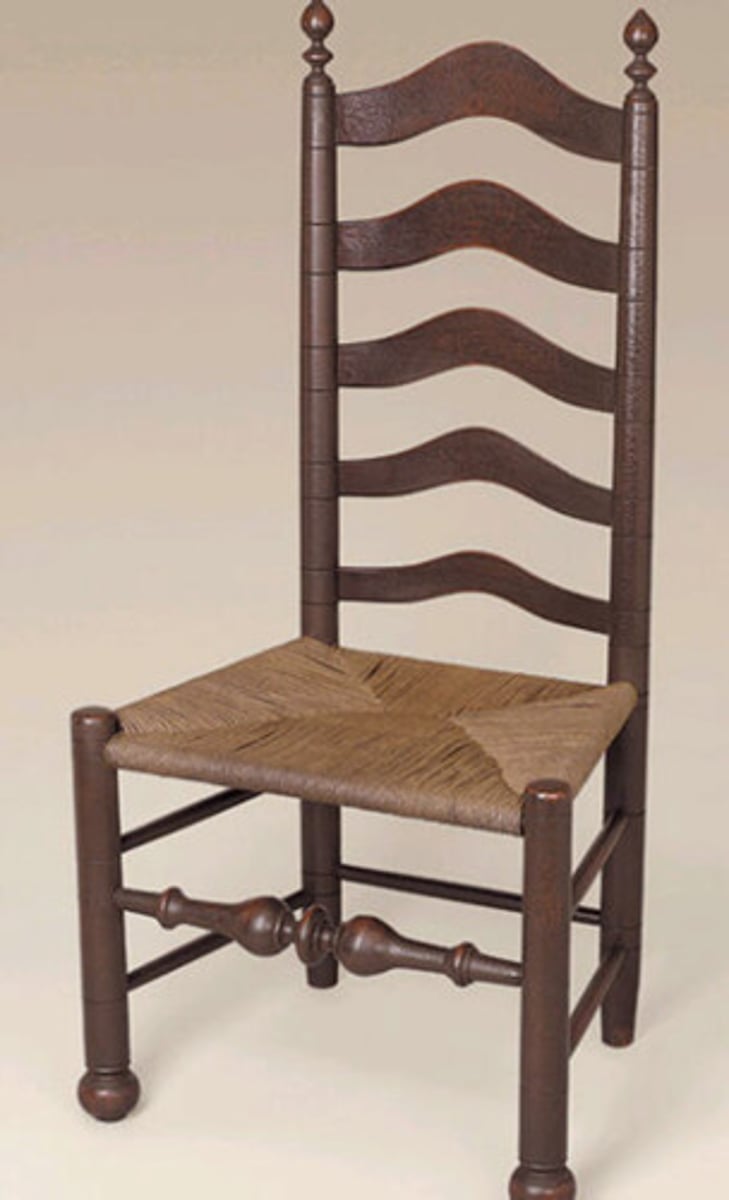
Ladder-back chair
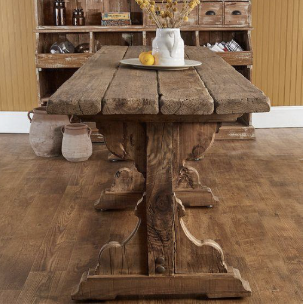
Trestle Table
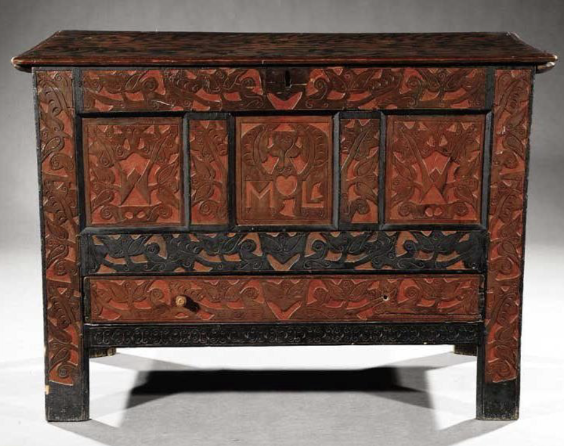
Hadley Chest
Brewster Chair
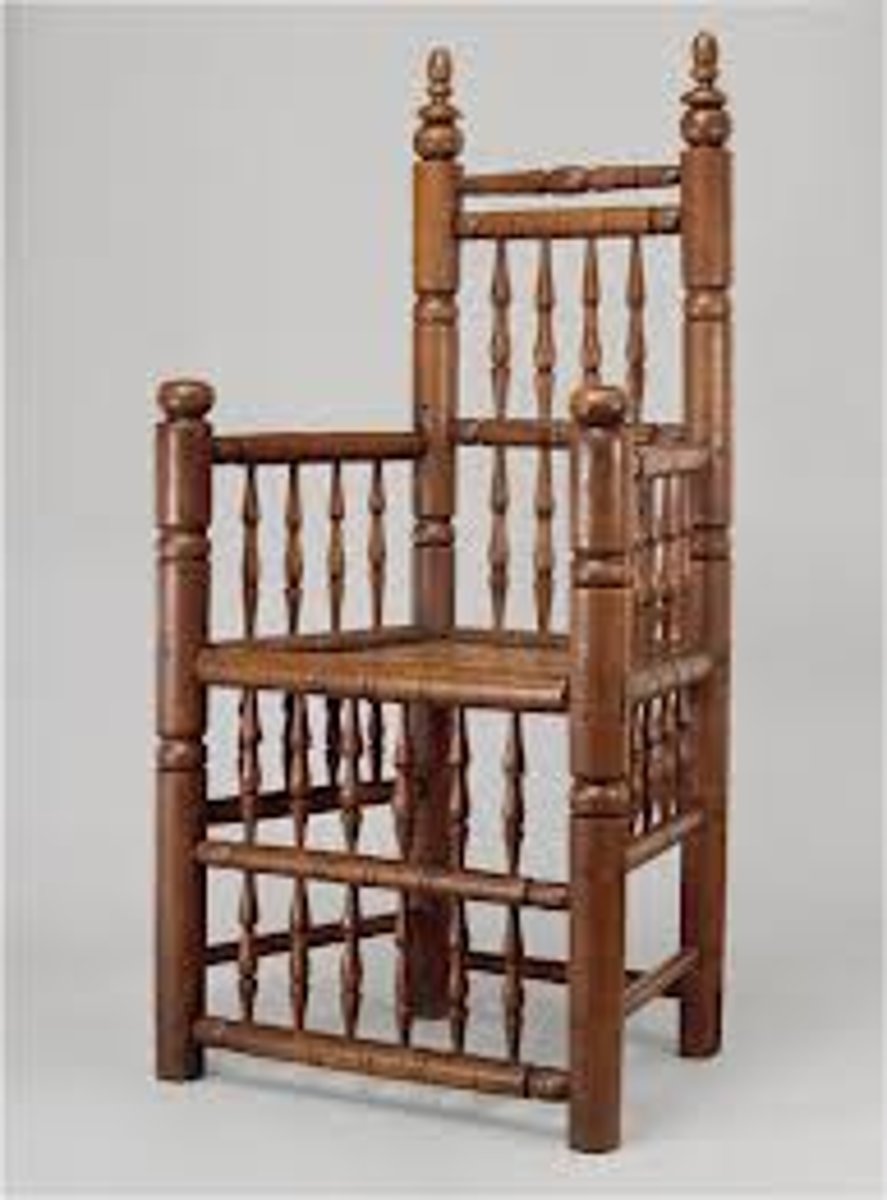
Colonial Interiors
- fireplace as the center of home
- wood or stone mantels
- wainscoting
- diaper-pattern window mullions
- rush seats on chairs
Colonial Textiles
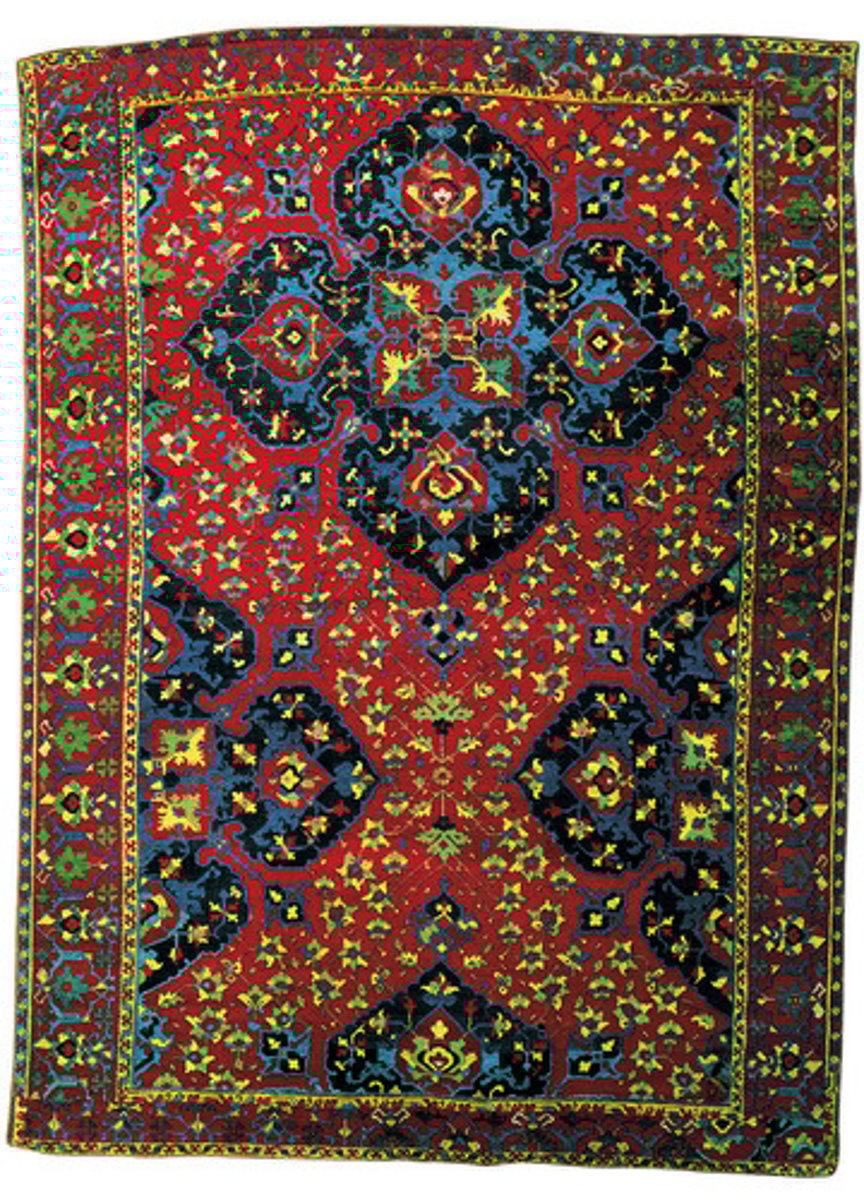
- Turkey-work rugs
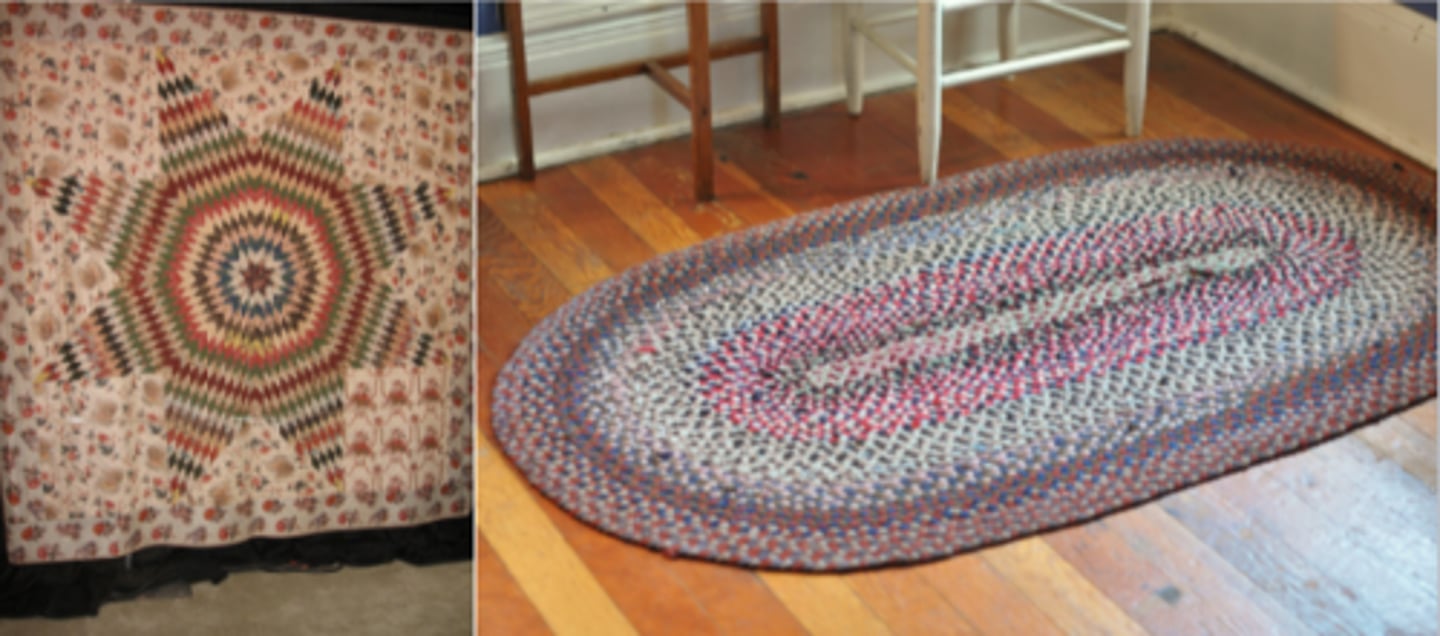
- rag rugs
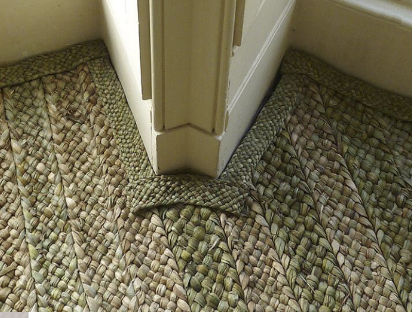
- rush rugs
Turkey-work Rugs
- based on Turkish knot weaving
- inspired by Ottoman carpets
Rag Rugs
- made from braided cloth strips
Rush Rugs
- made from plant fibers
- similar to modern sisal rugs
Limner Portraits
- painted by traveling artists
- often untrained
- paid with goods instead of money
Limner Portraits Pigments
- made from: burnt walnuts, chicken bones, eggshells, blueberries, clay and mud
Pewter
- metal alloy used for household items
- composition: tin (85-99%), antimony, copper and sometimes silver
- old ones contained led

