Practical 18: Pathogenic and commensal bacteria of the gastrointestinal and genitourinary tracts

0.0(0)
Studied by 0 people
call kaiCall Kai
learnLearn
examPractice Test
spaced repetitionSpaced Repetition
heart puzzleMatch
flashcardsFlashcards
GameKnowt Play
Card Sorting

1/13

encourage image

There's no tags or description

Looks like no tags are added yet.

Last updated 2:51 AM on 3/26/26
Name
Mastery
Learn
Test
Matching
Spaced
Call with Kai

No analytics yet

Send a link to your students to track their progress

14 Terms
1
New cards
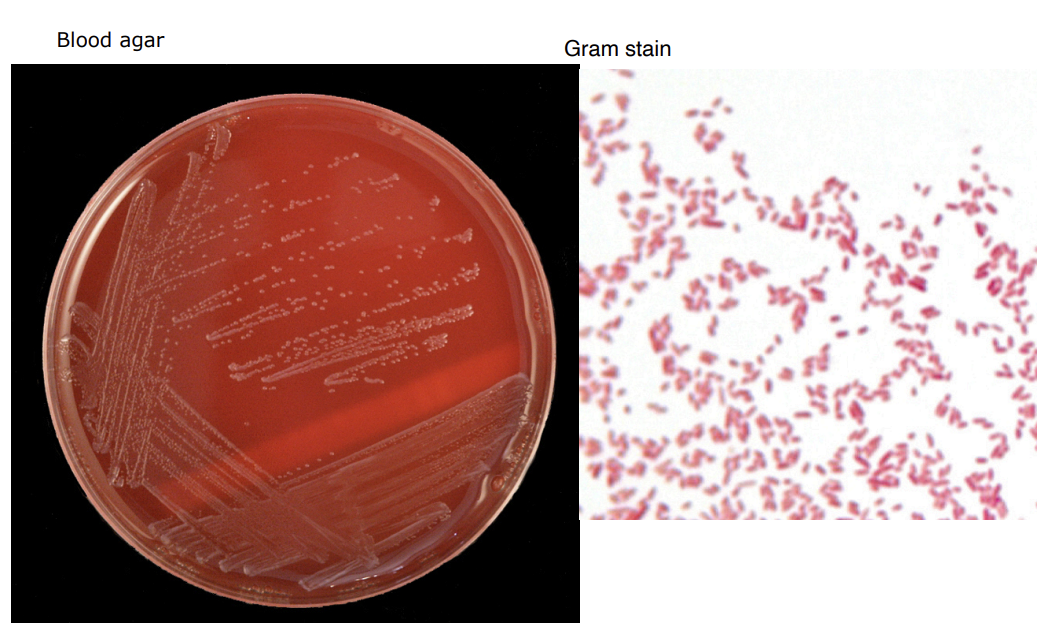
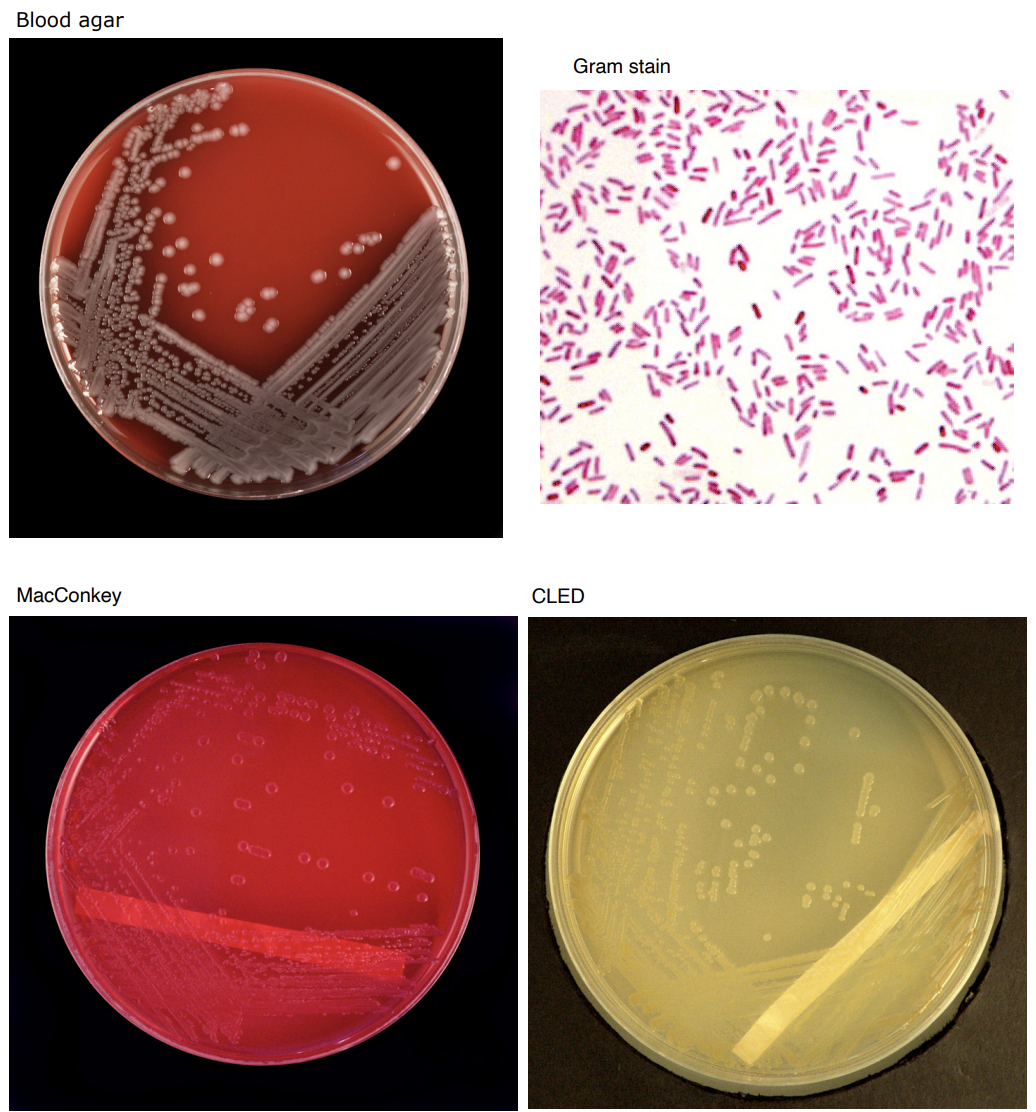
<p>E.coli</p>

E.coli

knowt flashcard image
2
New cards
<p>Salmonella</p>

Salmonella

knowt flashcard image
3
New cards
<p>Enterococcus faecalis</p>

Enterococcus faecalis

knowt flashcard image
4
New cards
<p>Neisseria gonorrhoeae</p>

Neisseria gonorrhoeae

knowt flashcard image
5
New cards
<p>Bacteroides fragilis</p>

Bacteroides fragilis

knowt flashcard image
6
New cards
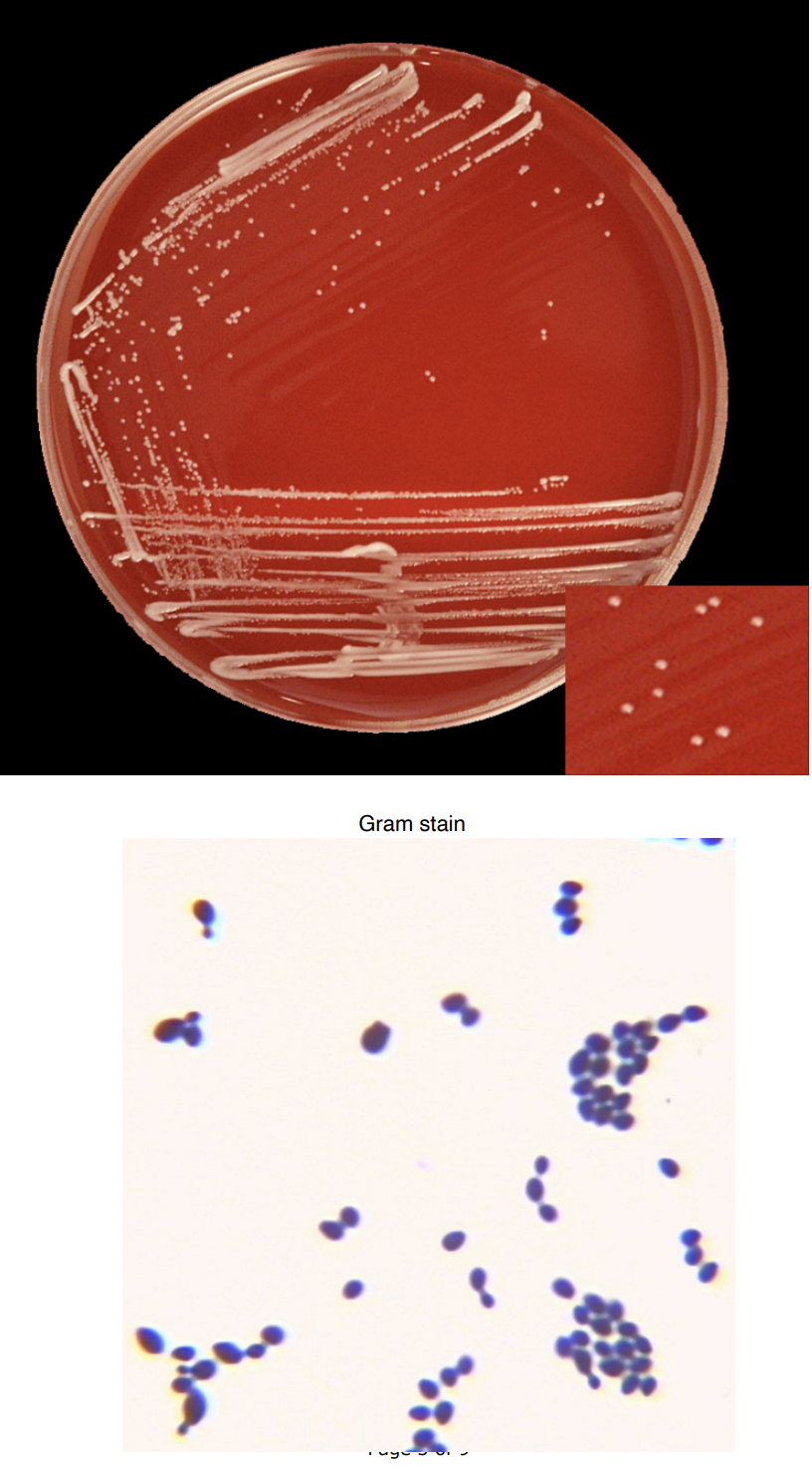
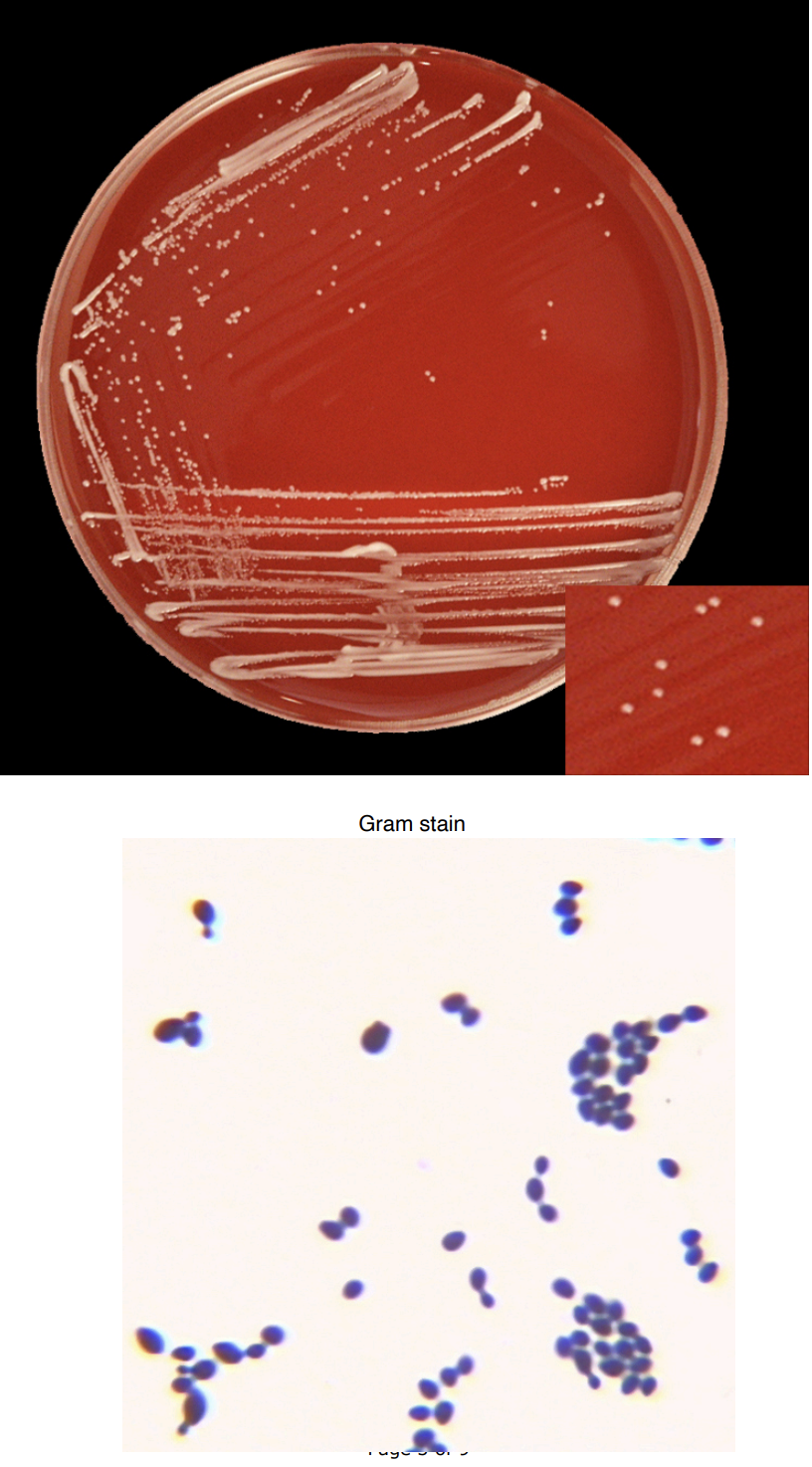
<p>Candida albicans</p>

Candida albicans

knowt flashcard image
7
New cards

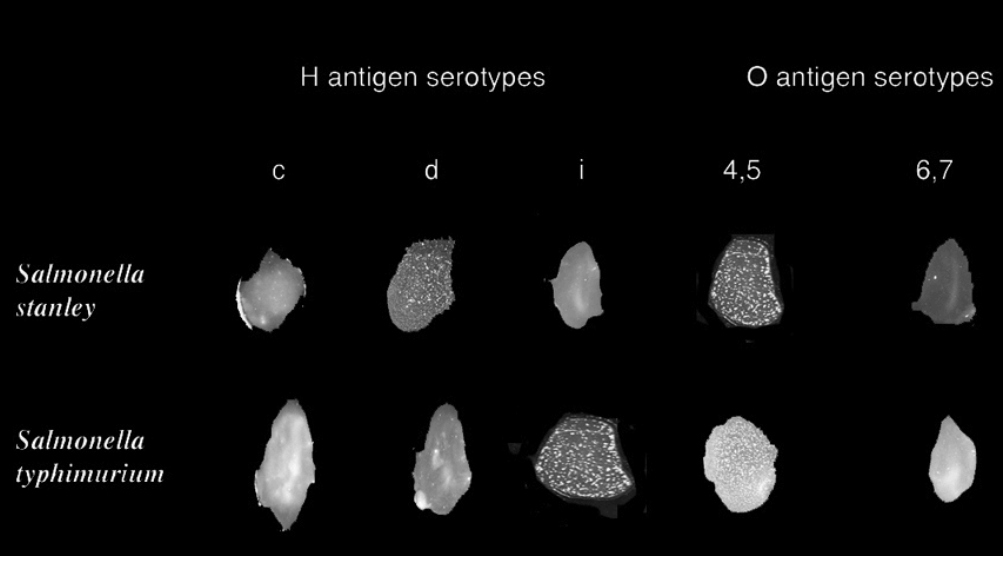
SEROLOGICAL IDENTIFICATION OF SALMONELLAE
knowt flashcard image
8
New cards
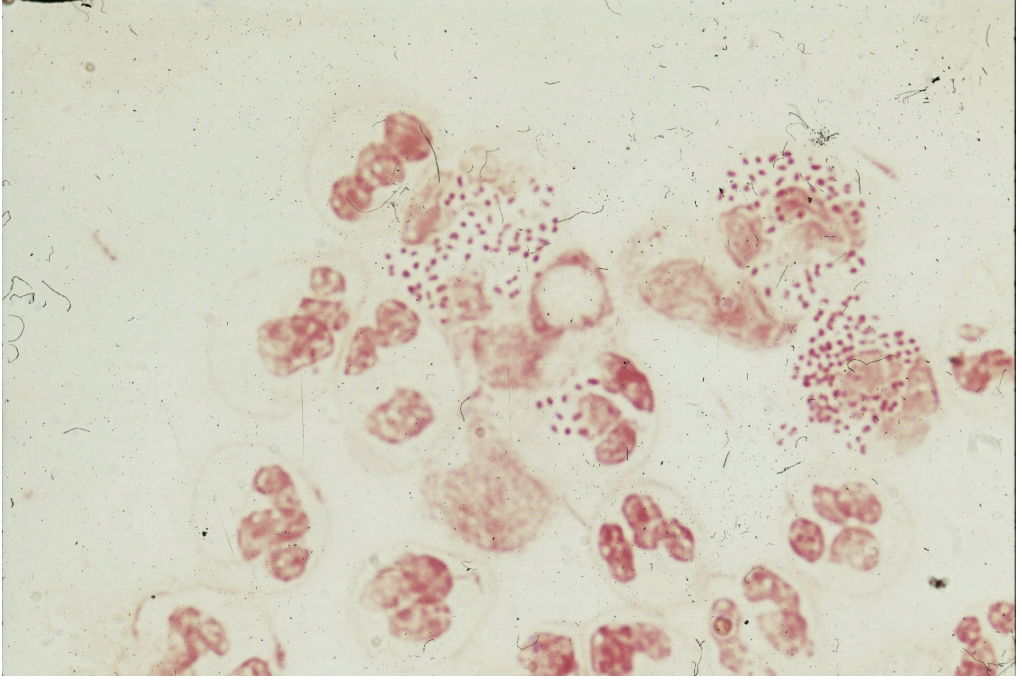
<p>URETHRAL SMEAR FROM A PATIENT WITH GONORRHOEA </p>

URETHRAL SMEAR FROM A PATIENT WITH GONORRHOEA

A purulent urethral discharge stained by Gram's method. The slide shows a large number of Gramnegative diplococci present in a few of the pus cells (polymorph neutrophil leukocytes). A similar appearance is seen in cerebrospinal fluid smears in meningococcal meningitis.
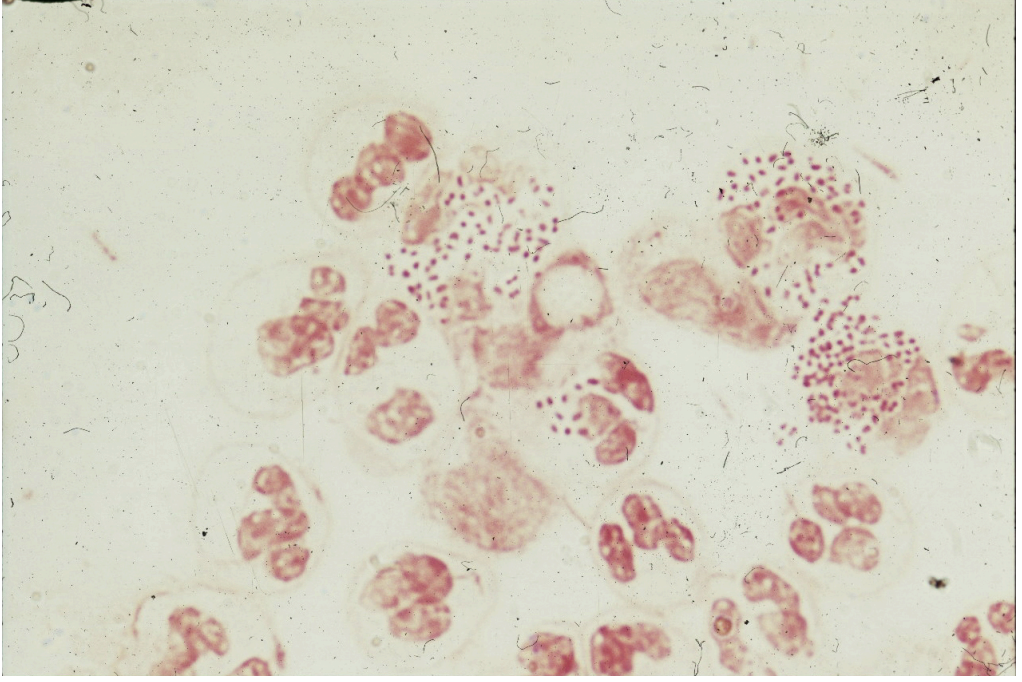
<p>A purulent urethral discharge stained by Gram's method. The slide shows a large number of Gramnegative diplococci present in a few of the pus cells (polymorph neutrophil leukocytes). A similar appearance is seen in cerebrospinal fluid smears in meningococcal meningitis.</p>
9
New cards
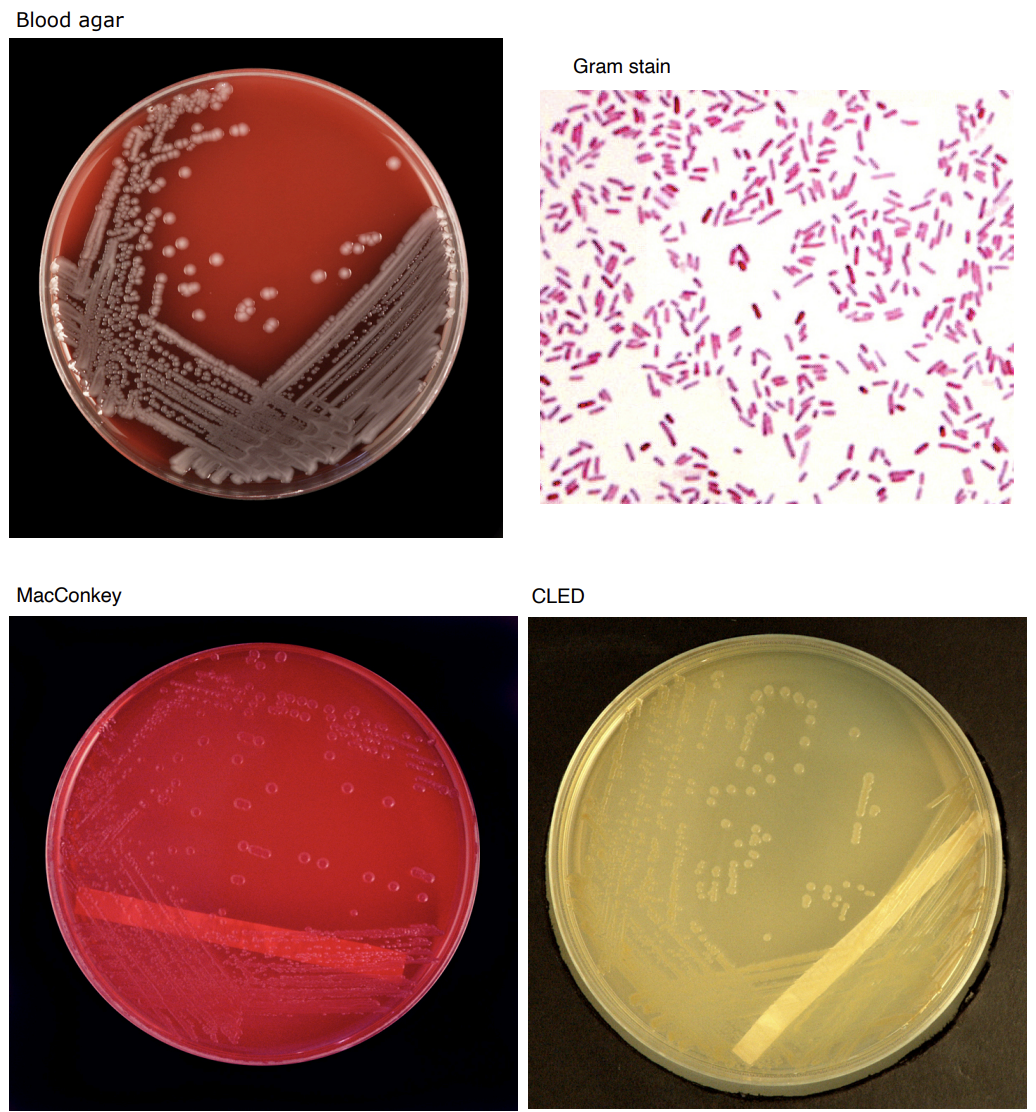
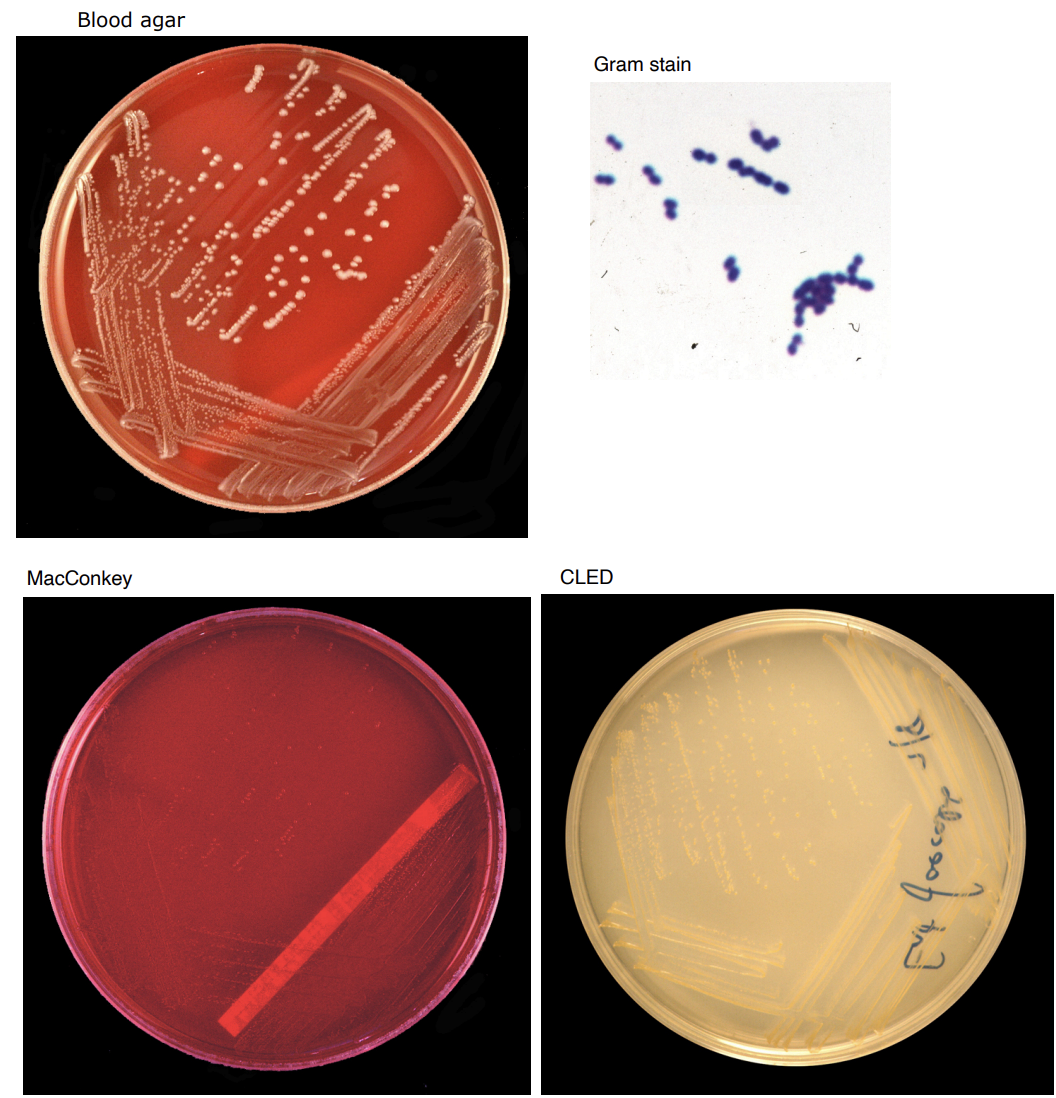
<p>USE OF INDICATOR MEDIUM: CULTURE FROM A FAECAL SWAB</p>

USE OF INDICATOR MEDIUM: CULTURE FROM A FAECAL SWAB

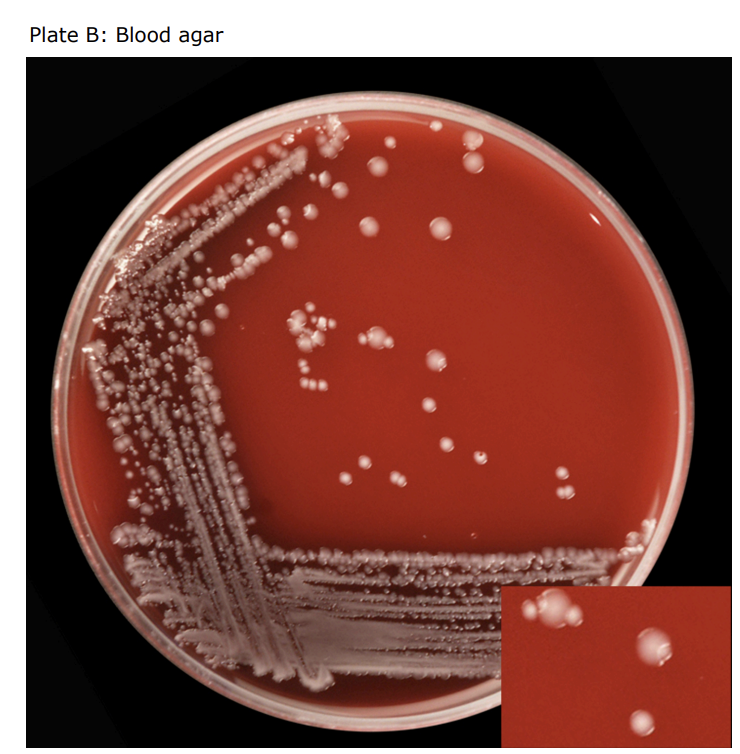
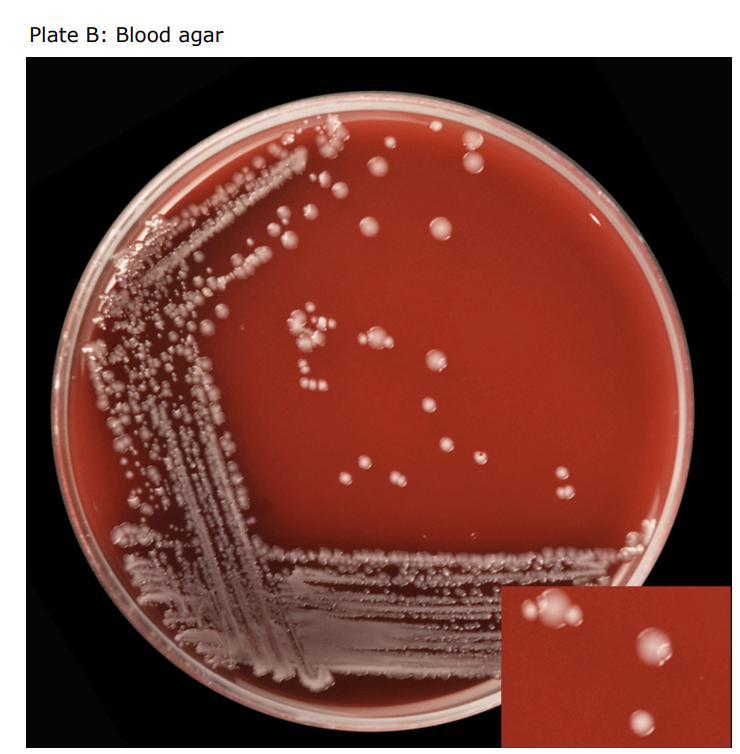
PLATE B:

Salmonella / E.coli

Ent. faecalis

Blood agar plate shows colonies with two distinct morphologies, large white-ish colonies with watery, diffuse edges and similar smaller white colonies. None of the colonies exhibit any haemolysis. Given the origin of the swab, it is possible that the larger colonies are either Salmonella or E.coli that cannot be distinguished on this medium and the smaller with watery edges are likely to be Enterococcus faecalis, a prevalent commensal. No Gram stains are provided but were this the case it would be predicted that the larger colonies are Gramnegative bacilli, whereas the smaller would be Gram-positive cocci. Thus, using this culture alone it would not be possible to distinguish definitively whether two or more different bacterial species are present.
<p>PLATE B: </p><p>Salmonella / E.coli </p><p>Ent. faecalis </p><p>Blood agar plate shows colonies with two distinct morphologies, large white-ish colonies with watery, diffuse edges and similar smaller white colonies. None of the colonies exhibit any haemolysis. Given the origin of the swab, it is possible that the larger colonies are either Salmonella or E.coli that cannot be distinguished on this medium and the smaller with watery edges are likely to be Enterococcus faecalis, a prevalent commensal. No Gram stains are provided but were this the case it would be predicted that the larger colonies are Gramnegative bacilli, whereas the smaller would be Gram-positive cocci. Thus, using this culture alone it would not be possible to distinguish definitively whether two or more different bacterial species are present.</p>
10
New cards
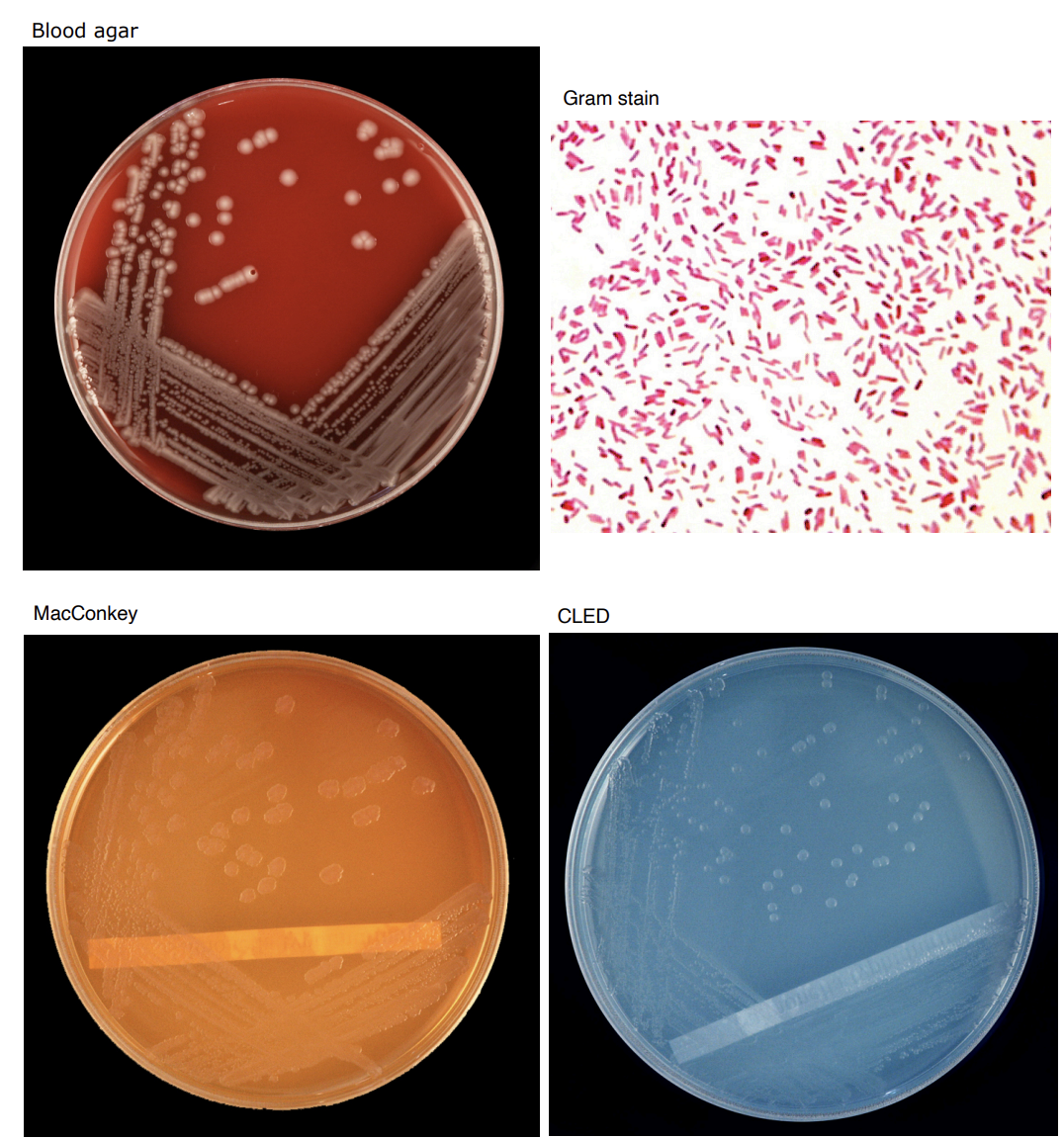
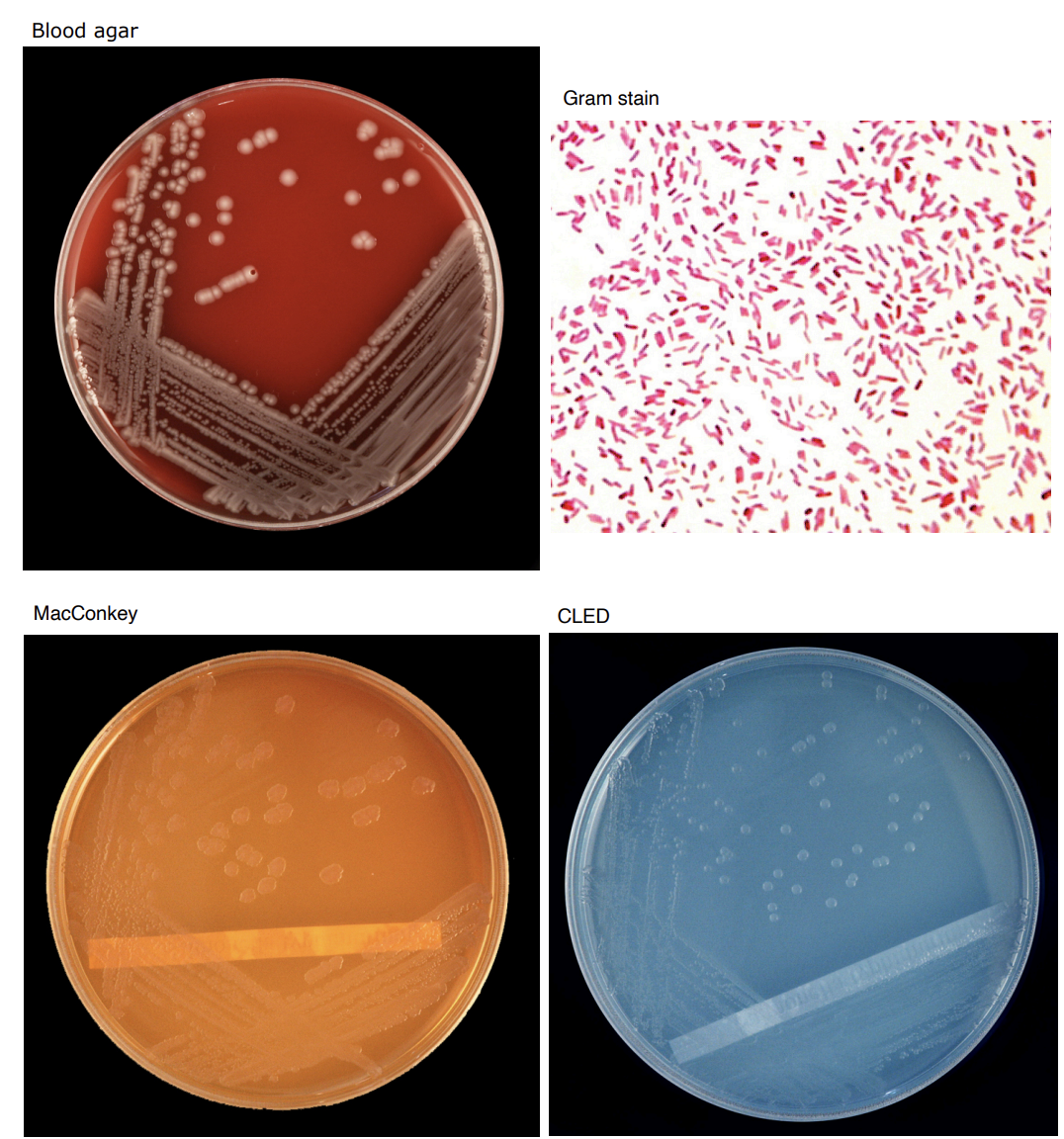
<p>USE OF INDICATOR MEDIUM: CULTURE FROM A FAECAL SWAB</p>

USE OF INDICATOR MEDIUM: CULTURE FROM A FAECAL SWAB

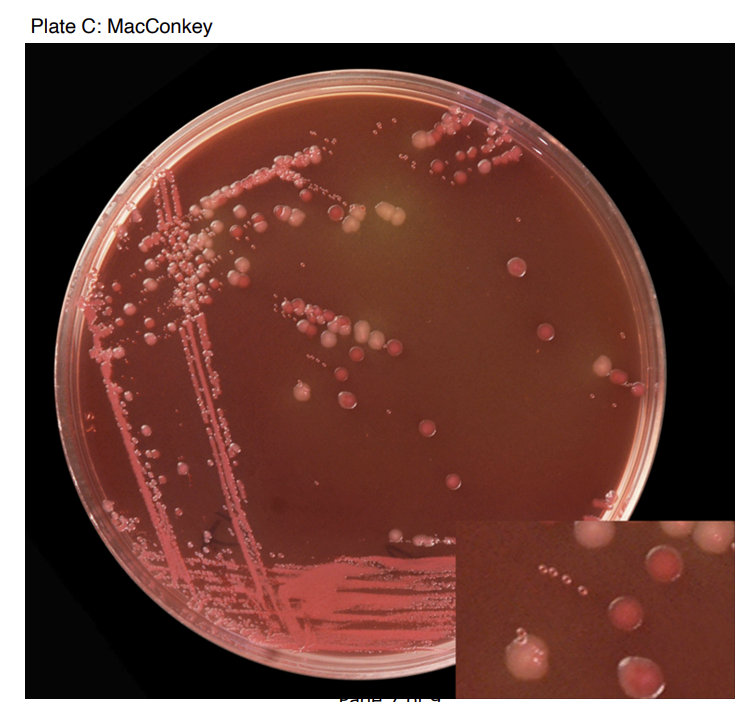
PLATE C:

Salmonella

E.coli

Ent. faecalis

The MacConkey indicator medium reveals that the larger colonies previously observed on the blood agar are in fact a mixture – large colonies which turn red on the indicator are E.coli and those that remain yellow/white are Salmonella. Consistent with the identification of Ent faecalis, the smaller colonies also turn red on the indicator plate, due to pH reaction.
<p>PLATE C: </p><p>Salmonella </p><p>E.coli </p><p>Ent. faecalis </p><p>The MacConkey indicator medium reveals that the larger colonies previously observed on the blood agar are in fact a mixture – large colonies which turn red on the indicator are E.coli and those that remain yellow/white are Salmonella. Consistent with the identification of Ent faecalis, the smaller colonies also turn red on the indicator plate, due to pH reaction.</p>
11
New cards
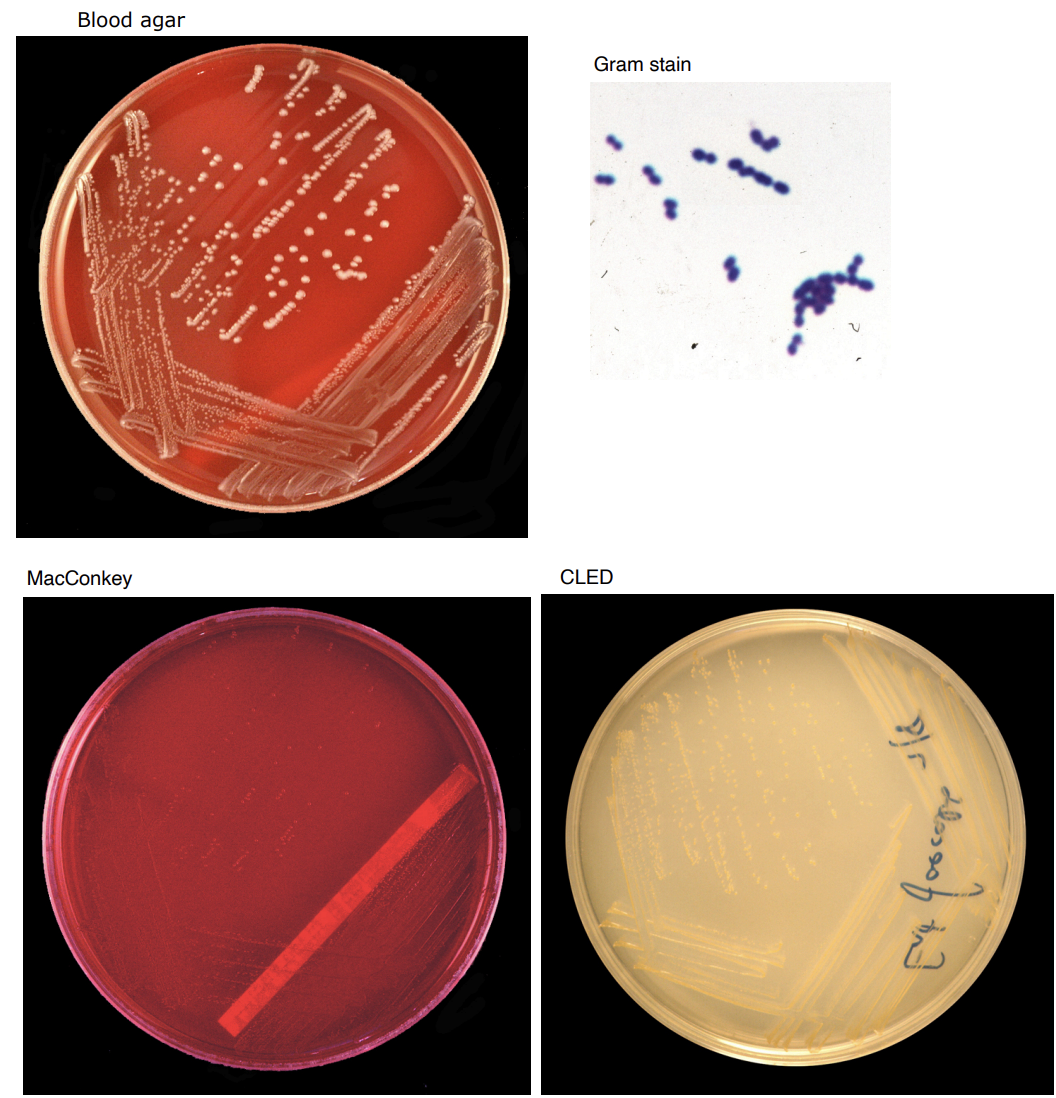
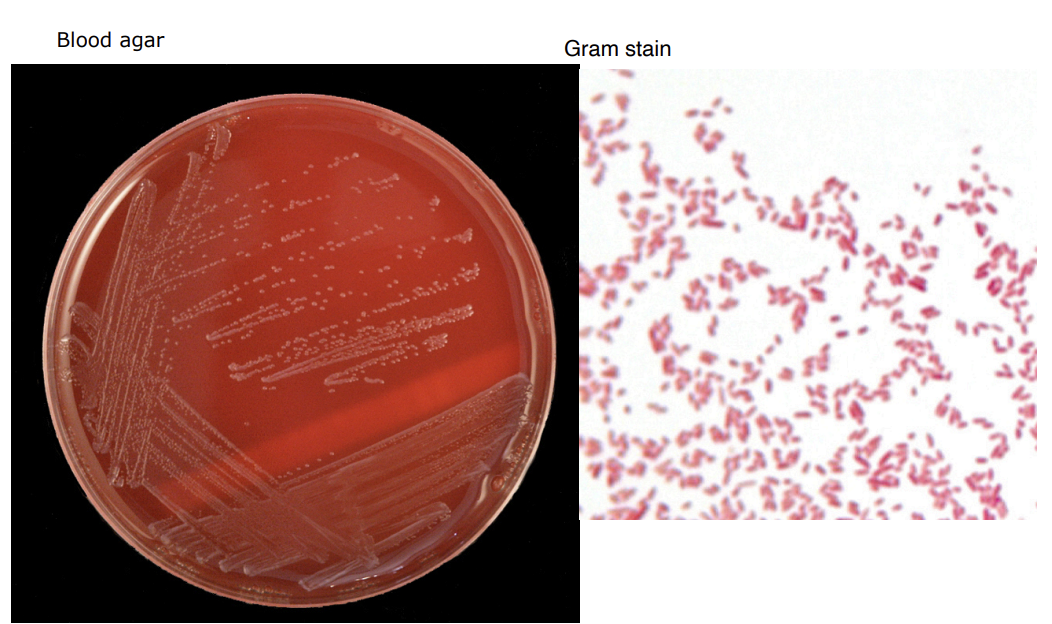
<p>IDENTIFICATION OF ORGANISMS ISOLATED FROM A PATIENT WITH A URINARY TRACT INFECTION</p>

IDENTIFICATION OF ORGANISMS ISOLATED FROM A PATIENT WITH A URINARY TRACT INFECTION

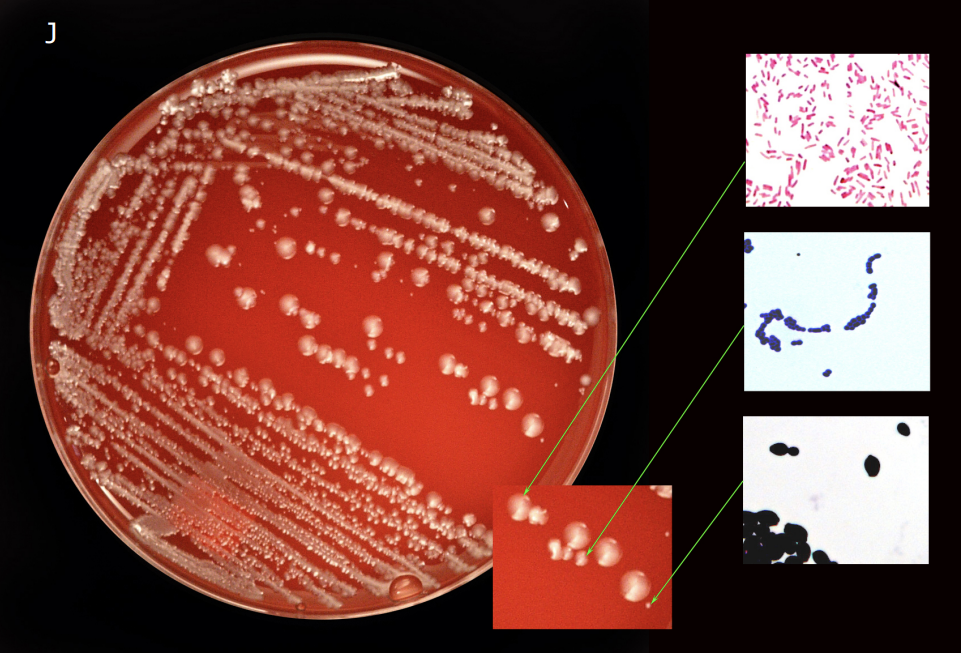
PLATE J:

Candida albicans

E. coli

Ent. faecalis

There are three colonies present. One large cream colony, a Gram-negative bacillus, which could be either E.coli or Salmonella (considering the source, likely to be E.coli). A medium colony with watery edges, a Gram-positive coccus, that may show chain formation suggesting Ent faecalis. The small colony is small and chalky white and when the organisms are Gram stained appear as large ovoid Gram-positive yeast, which may show some evidence of budding, so is probably Candida albicans.
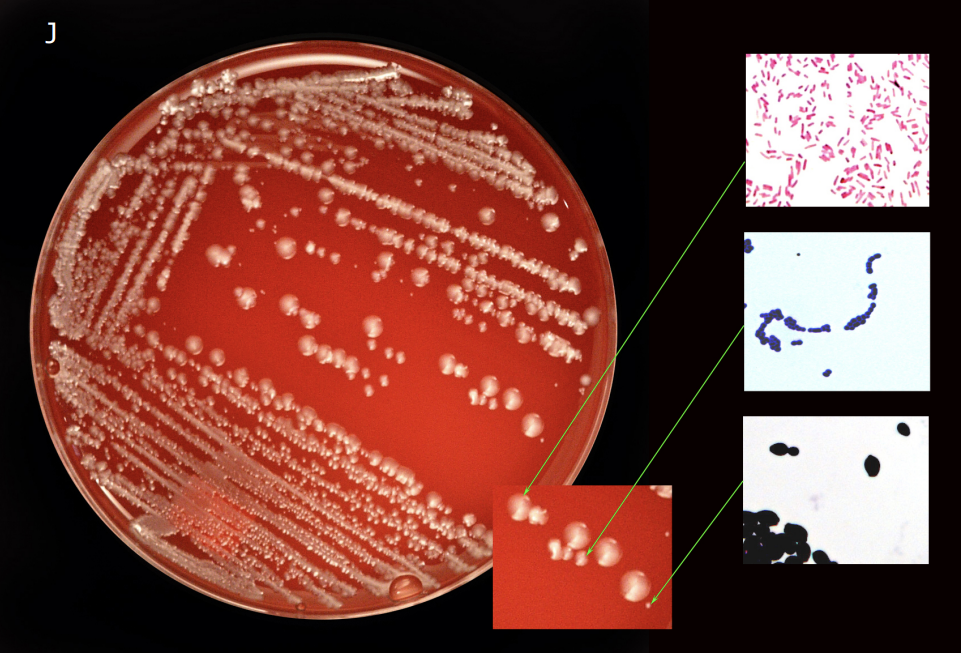
<p>PLATE J: </p><p>Candida albicans </p><p>E. coli </p><p>Ent. faecalis </p><p>There are three colonies present. One large cream colony, a Gram-negative bacillus, which could be either E.coli or Salmonella (considering the source, likely to be E.coli). A medium colony with watery edges, a Gram-positive coccus, that may show chain formation suggesting Ent faecalis. The small colony is small and chalky white and when the organisms are Gram stained appear as large ovoid Gram-positive yeast, which may show some evidence of budding, so is probably Candida albicans.</p>
12
New cards
<p>IDENTIFICATION OF ORGANISMS ISOLATED FROM A PATIENT WITH A URINARY TRACT INFECTION</p>

IDENTIFICATION OF ORGANISMS ISOLATED FROM A PATIENT WITH A URINARY TRACT INFECTION

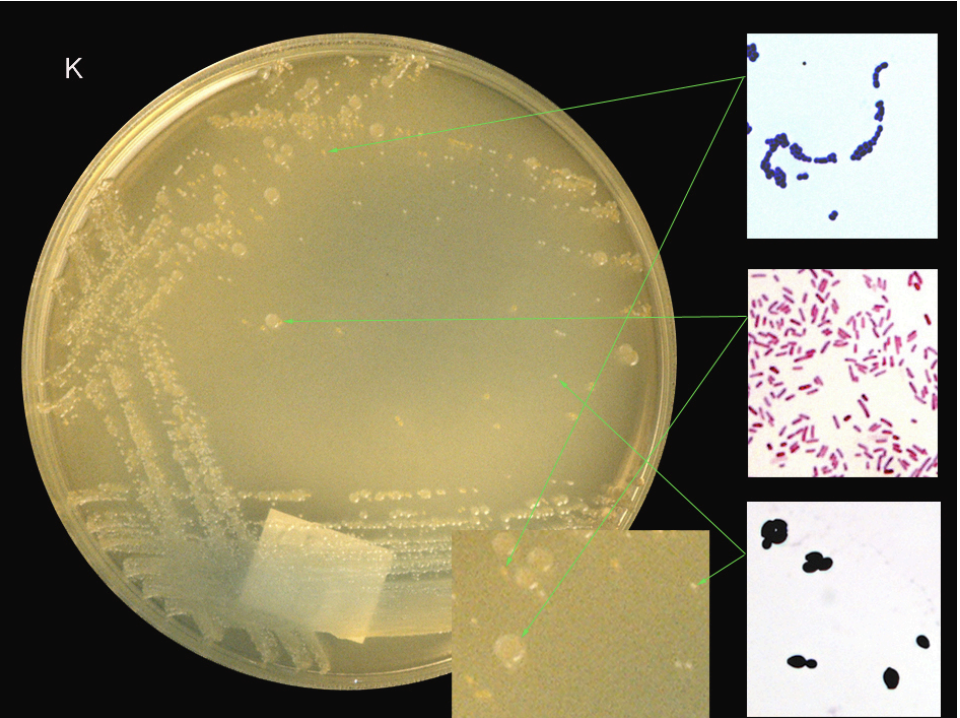
PLATE K:

Candida albicans

E. coli

Ent. faecalis

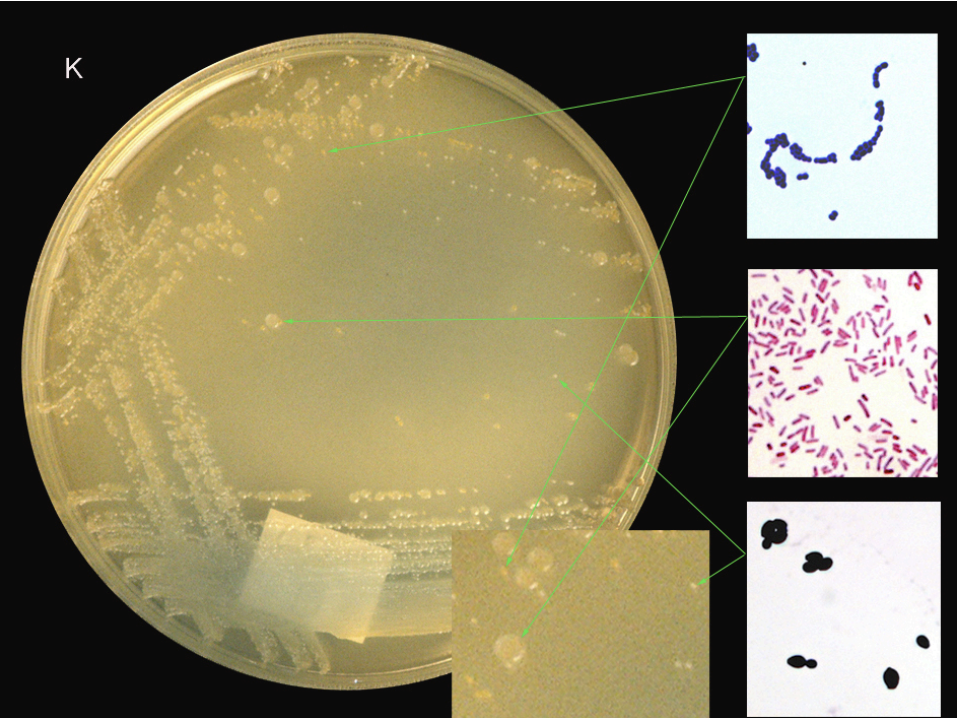
Three colonies are present. On CLED, E.coli is confirmed by the creamy-yellow pH reaction, Ent faecalis is confirmed as bright yellow, the third matt-white colony is C.albicans which does not ferment lactose and so does not cause a pH change.
<p>PLATE K: </p><p>Candida albicans </p><p>E. coli </p><p>Ent. faecalis </p><p>Three colonies are present. On CLED, E.coli is confirmed by the creamy-yellow pH reaction, Ent faecalis is confirmed as bright yellow, the third matt-white colony is C.albicans which does not ferment lactose and so does not cause a pH change.</p>
13
New cards
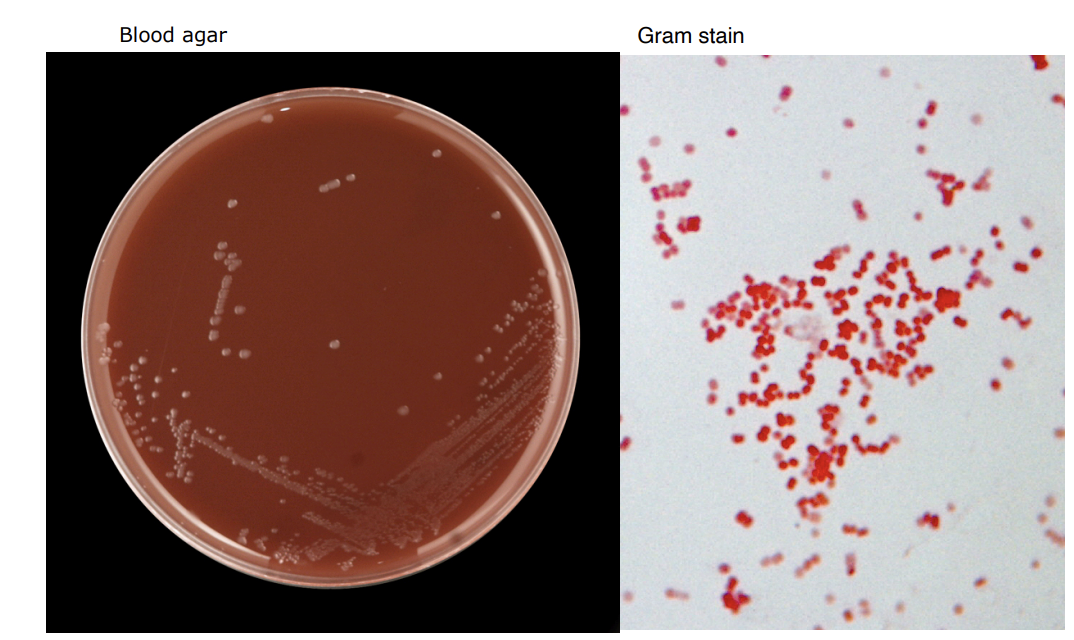
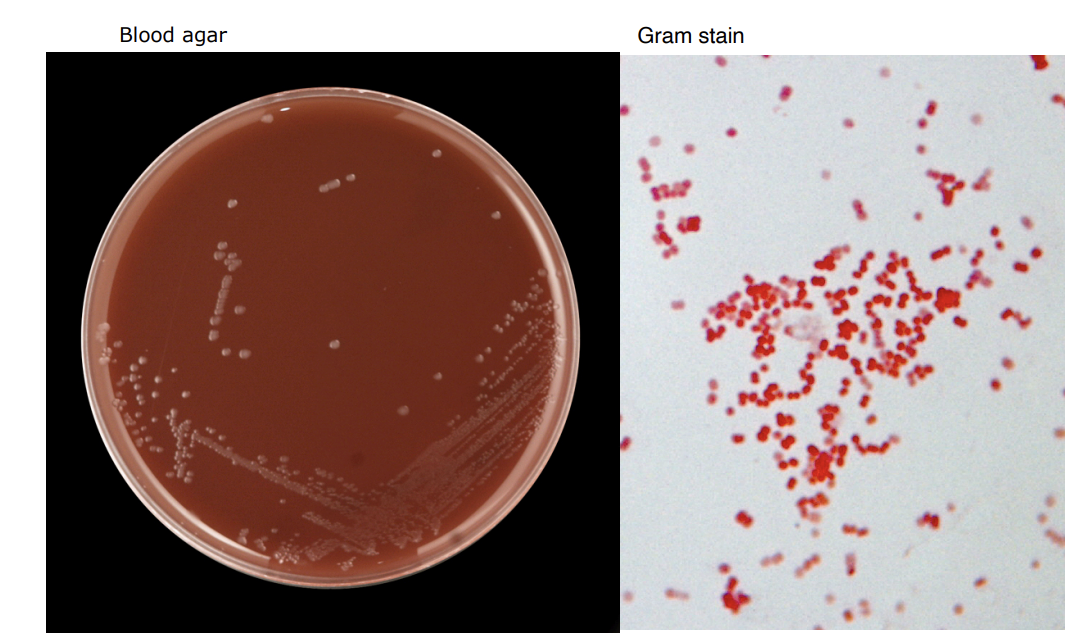
<p>IDENTIFICATION OF ORGANISMS ISOLATED FROM AN INFECTED BURN IN THE INGUINAL (GROIN) REGION</p>

IDENTIFICATION OF ORGANISMS ISOLATED FROM AN INFECTED BURN IN THE INGUINAL (GROIN) REGION

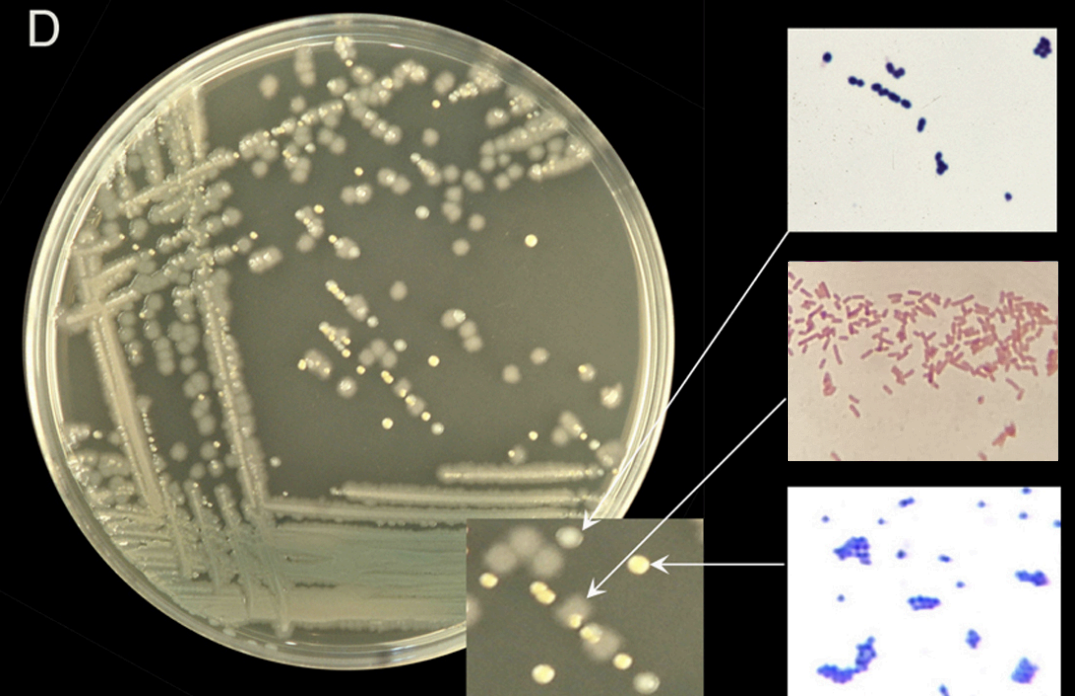
PLATE D:

Ent. faecalis

Pseudomonas aeruginosa

S. aureus

There are three colonies present. The large amorphous colony producing green pigment is a Gram-negative bacillus, P. aeruginosa. The golden circular colony is a Gram-positive coccus in grape-like clusters, S.aureus. The semi-translucent colony with watery edges is a Grampositive coccus which may show chain formation and is therefore Ent. faecalis.
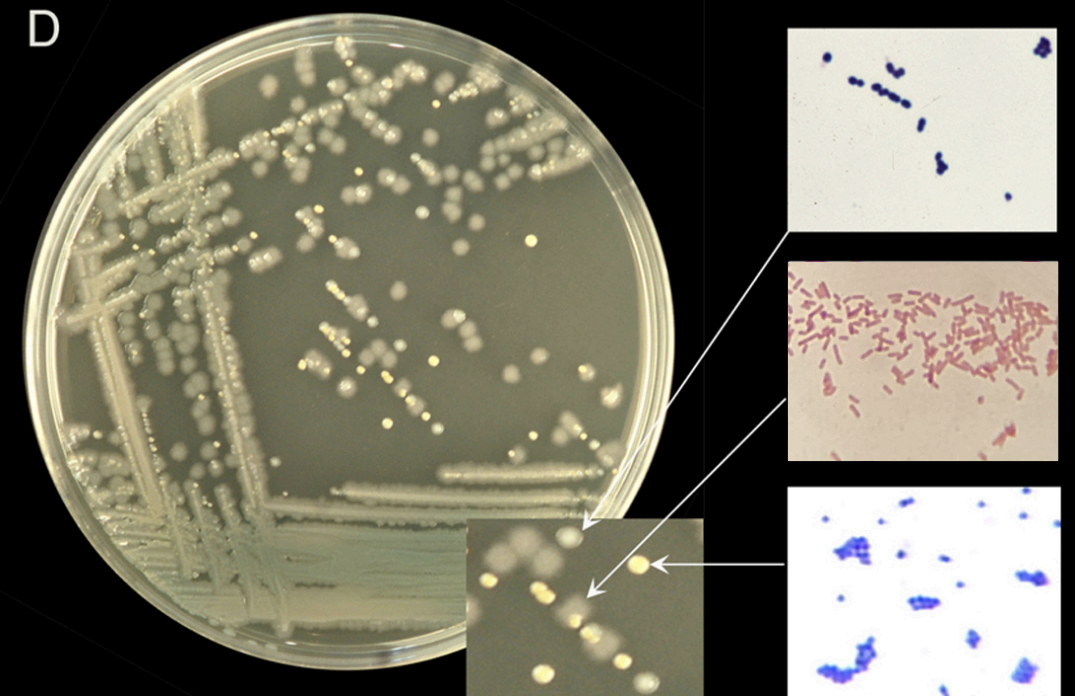
<p>PLATE D: </p><p>Ent. faecalis </p><p>Pseudomonas aeruginosa </p><p>S. aureus </p><p>There are three colonies present. The large amorphous colony producing green pigment is a Gram-negative bacillus, P. aeruginosa. The golden circular colony is a Gram-positive coccus in grape-like clusters, S.aureus. The semi-translucent colony with watery edges is a Grampositive coccus which may show chain formation and is therefore Ent. faecalis.</p>
14
New cards

Explore top notes

note
Key Stuff - All Ideologies
Updated 1017d ago
0.0(0)
note
Aniline differentiation
Updated 351d ago
0.0(0)
note
Chapter 27 - The Cold War
Updated 1441d ago
0.0(0)
note
CGO casus 4
Updated 434d ago
0.0(0)
note
Key Stuff - All Ideologies
Updated 1017d ago
0.0(0)
note
Aniline differentiation
Updated 351d ago
0.0(0)
note
Chapter 27 - The Cold War
Updated 1441d ago
0.0(0)
note
CGO casus 4
Updated 434d ago
0.0(0)

Explore top flashcards

flashcards
Unit 6 Gradesavers Kaji
47
Updated 1102d ago
0.0(0)
flashcards
patho chapter 5
31
Updated 1136d ago
0.0(0)
flashcards
Vocabulary Power Unit 3
42
Updated 414d ago
0.0(0)
flashcards
APUSH Unit 5
111
Updated 1176d ago
0.0(0)
flashcards
english final
53
Updated 104d ago
0.0(0)
flashcards
TUTTO PARZIALE 2
169
Updated 464d ago
0.0(0)
flashcards
troika chapter 4
68
Updated 1119d ago
0.0(0)
flashcards
Unit 6 Gradesavers Kaji
47
Updated 1102d ago
0.0(0)
flashcards
patho chapter 5
31
Updated 1136d ago
0.0(0)
flashcards
Vocabulary Power Unit 3
42
Updated 414d ago
0.0(0)
flashcards
APUSH Unit 5
111
Updated 1176d ago
0.0(0)
flashcards
english final
53
Updated 104d ago
0.0(0)
flashcards
TUTTO PARZIALE 2
169
Updated 464d ago
0.0(0)
flashcards
troika chapter 4
68
Updated 1119d ago
0.0(0)