Marketing Exam 2
 Call Kai
 Learn
Learn Practice Test
 Spaced Repetition
 Match
Match Flashcards
 Knowt Play
1/75

There's no tags or description
Looks like no tags are added yet.
Name | Mastery | Learn | Test | Matching | Spaced | Call with Kai |
|---|
No analytics yet
Send a link to your students to track their progress
76 Terms
Strategic Brand Management
build, measure, and manage brands to maximize their value
Brand
a name, term, sign, symbol, design, or a combination that identifies the maker or seller of a product
Branding
creating meaningful differences between products
Brands role for a company
Brand loyalty
Create a competitive advantage
Legal protection
Simplify product handling
Brands role for consumers
Ease of decision
Trustworthiness
Take on personal meaning
Become part of identity
Set and fulfill expectations
Reduce risk
Brand equity
the positive differential effect thak knowing the brand name has on customer response to the product or its warketing
Brand value
the total financial value of a brand
Three Major Brand Strategy Decisions
Brand name selection
Brand sponsorship
Brand development
Brand sponsorship (4 options)
Manufacturer’s brand
Private (store) brand
Licensed brand
Co-brand
Licensed brand
one firm allows another to use its brand names/IP in exchange for a fee by contract (ex. BC and new balance)
Co-branding
when two established brand names of different companies are used on the same product to create superior market value (ex. coca cola crocs)
Brand development strategies (matrix)
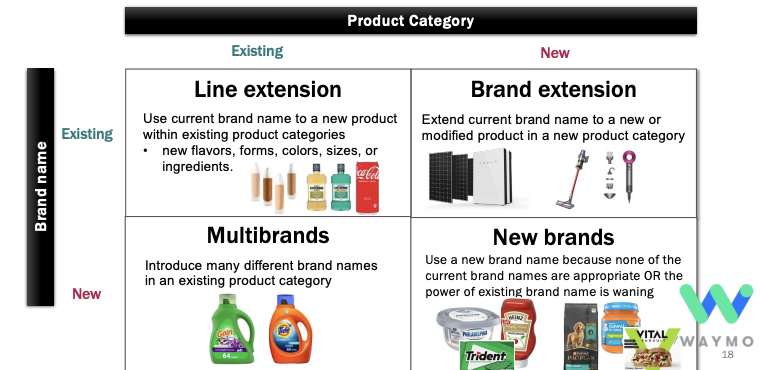
Brand Extension (advantages/disadvantages)
Advantages
Borrow existing brand equity
faster consumer acceptance
Disadvantages
Brand dilution/failure/poor fit weakness parent brand equity
forgo chance to create new brand image
Multibrands (advantages/disadvantages)
Advantages
Target different segments
capture more shelf space
You are your own competition
Disadvantages
Each brand gets small market share
none may be very profitable
New Brand (advantages/disadvantages)
Advantages
Protects parent brand equity from failure
tailored positioning for new segment
new category where existing name doesn’t fit
Disadvantages
More expensive
building brand recognition takes longer
Premium brand experiment
willingness to pay for a brand premium is driven by an information barrier, not actual product quality
Why new products fail
No clear new benefits
Incongruent brand extension
Product design problems
Product incorrectly positioned, priced or advertised
Overestimation of market size
Costs of product development
Competitive actions
New Product Development Process
Idea generation
Concept Testing
Product Development
Market testing
product launch
evaluation of result
Idea generation
development of viable new product ideas
Concept testing
process in which the product concept is presented to and evaluated by a group of target consumers (potential buyers or users)
(Product) concept
Brief written description of a product idea stated in meaningful consumer terms
Product development
development of prototypes and or the product
Alpha testing- evaluation of prototype within firm
Beta testing- testing the prototype with potential customers in real-use situations
Prototype
First physical form or service description of a new product, still in rough/tentative form
Market testing
Testing the actual products in a few test markets
Premarket tests- Predict adoption and determine potential demand before launch with a group of potential consumers
Test marketing- Evaluate actual sales, marketing effectiveness in a real market setting
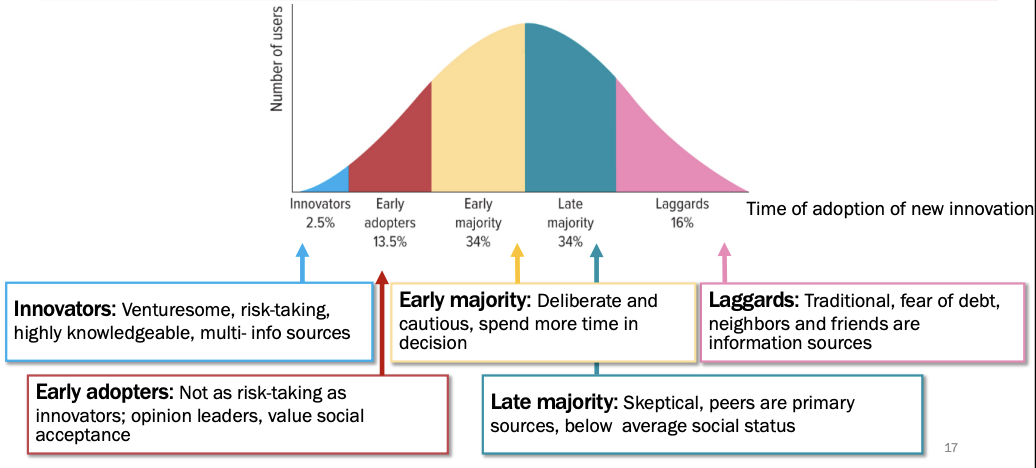
Diffusion of Innovation
new products/innovations are adopted in stages by different customer segments
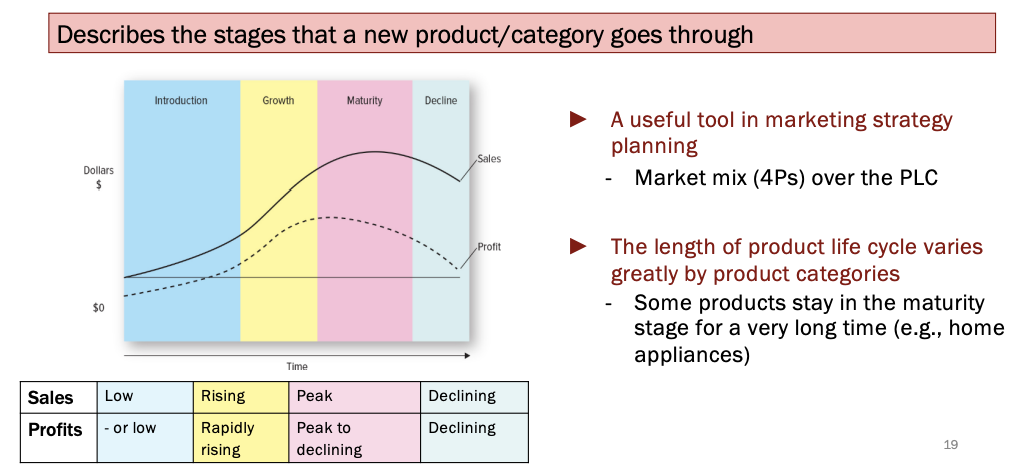
Product life cycle
Describes the stages that a new product/category goes through
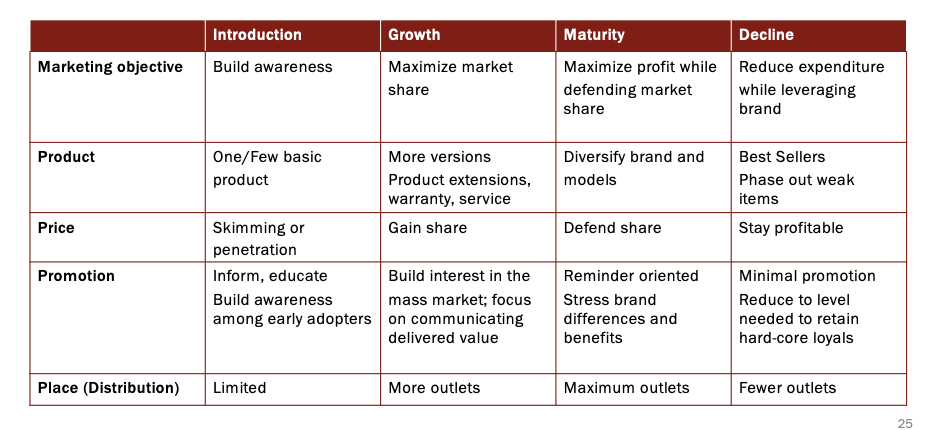
Product life cycle/ 4Ps and marketing objective
Promotion
Communications- informs relevant marketing entities about the specifics of the offering
Incentives- Tools that enhance the value of the offering by reducing costs an/or increasing benefits
Integrated Marketing Communications (IMC)
Represents the promotion dimension of the four Ps; Encompasses a variety of communication disciplines (e.g., advertising, personal selling) in combination to provide clarity, consistency, and maximum communication impact
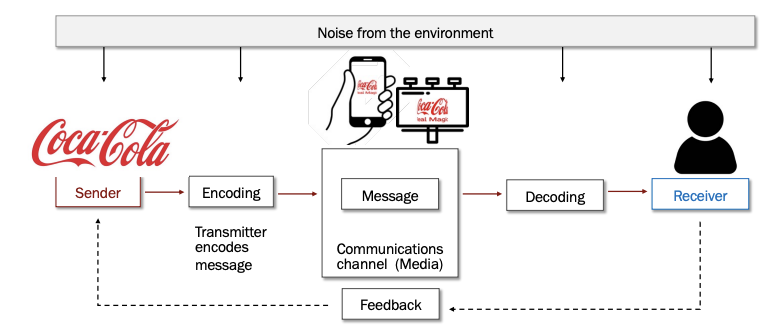
The communication process
Sender
Encoding
Message
Decoding
Receiver
Feedback
All with noise from the environment
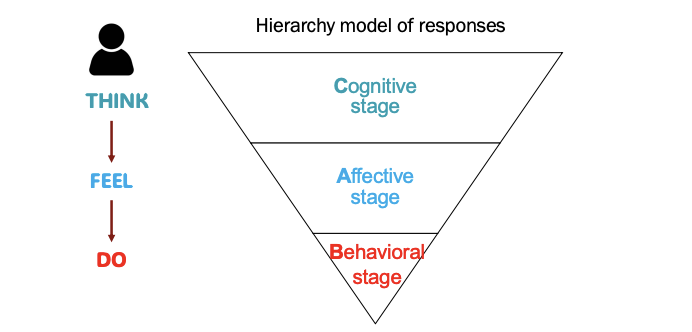
Hierarchy model of responses (communication process)
AIDA
Awareness- gain attention
Interest- increase interest to further investigate the product; persuade that it is worth investigating
Desire- transition a like to a want; build emotional preference for the brand
Action- ultimate goal; purchase/download/subscribe
Role of marketing communications in decision making process
Need recognition- help identify new needs and remind existing needs
Information search- make consumers aware and educate them on features and benefits
Evaluation of alternatives- assist in making comparisons among options
purchase decision- prompt consumers into making the purchase
post-purchase behavior- encourage product usage and make consumers satisfied about their purchase decision
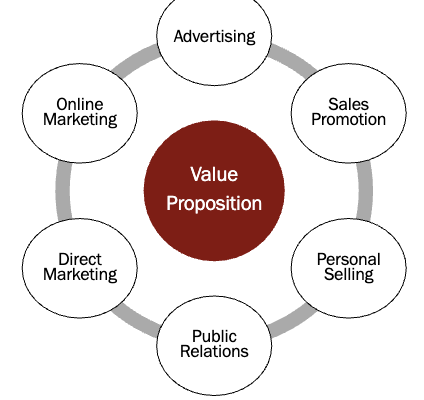
Communication channels used in IMC Strategy
Advertising
Sales promotion
Personal selling
Public relations
Direct marketing
Online marketing
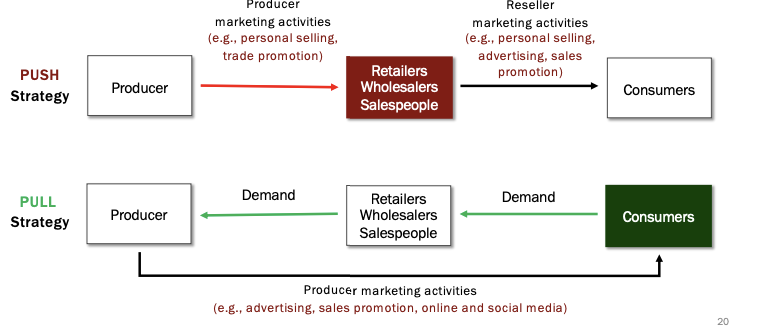
Push pull communications
Push-market to wholesalers; give them deal on mass purchases
Pull- market to consumers who will put pressure on retailers
Above the line vs below the line
ATL-broad reach
BTL- targeted, personal communication
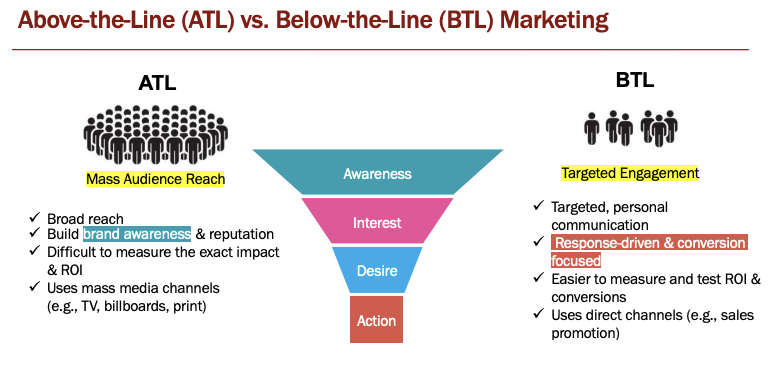
ATL
Broad reach
Build brand awareness & reputation
Difficult to measure the exact impact & ROI
Uses mass media channels (e.g., TV, billboards, print)
BTL
Targeted, personal communication
Response-driven & conversion focused
Easier to measure and test ROI & conversions
Uses direct channels (e.g., sales promotion)
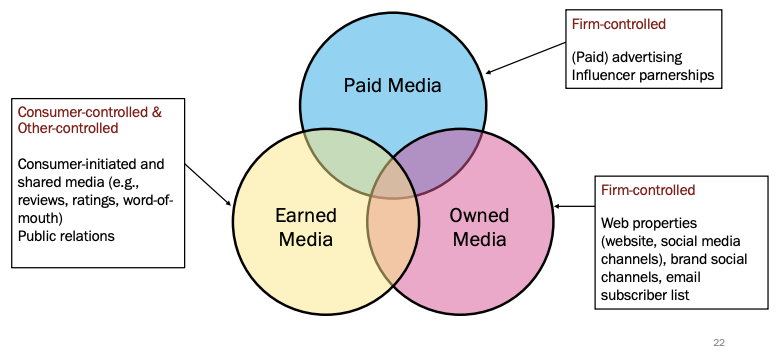
Media types
Paid
Owned
Earned
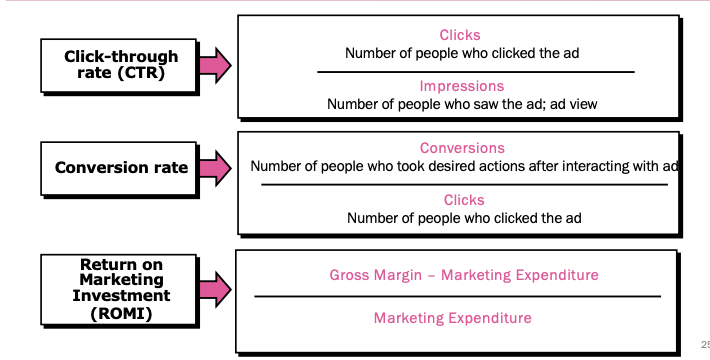
Marketing Metrics
Click through rate (CTR)- clicks/impressions
Conversion rate- conversions(took action)/clicks
Return on Marketing Investment (ROMI)- (gross margin - marketing expense)/marketing expense
Advertising
Paid form of communication from an identifiable source designed to inform, persuade, and remind
Sales promotion
provides incentives
Can target both end user consumers (pull strategy) or channel members (push strategy) - Used with other forms of IMC
Short-term: coupons (BOGO), deals, contests, sweepstakes, samples, POP displays,
Long-term: Loyalty programs, product placement
Short term incentives (sales promotion)
Encourages immediate purchases
Tradeoffs: may only attract price sensitive people, could weaken loyalty and encourage people to purchase on deals, stockpile
Long term incentives (sales promotion)
Build repeat purchases and retention
Loyalty programs: Offer ongoing incentives (e.g., points, rewards, status) to customers who make multiple purchases over time
Personal selling
Direct, personal interaction by a firm’s sales force to make sales and build customer relationships; one to one
Public relations (PR)
Earned, credibility-based communication
Maintain a positive brand image
Planning and executing an ad campaign
Identify target audience- who are we trying to reach; shape the message (how to reach them)
Set advertising objectives- derived from overall marketing strategy (ex. pull strategy); inform, persuade, or remind
Determine the advertising budget
Convey the message- Unique selling proposition (USP); informational and emotional appeal (emotional better)
Evaluate and select media - media mix and how often; reach the right audience efficiently; mass vs. niche
Create advertisements
Assess impact- metrics
Informative advertising
Build brand awareness
Inform new product/feature
explain how a product works
Announce price change
Persuasive advertising
Motivate consumers to take action
Encourage to purchase now or switch brands
Build brand preference
Reminder Advertising
Remind consumers of a product or to prompt repurchases
Encourage repeat purchases
Maintain loyalty
Keep at top of mind
Advertising across the product life cycle
Introduction- informing is important
Growth/Early maturity- persuading is important
Maturity/Decline- Reminding
Search ads
Firms can pay to appear at the top of google pages either by a branded keyword (alo) or a generic keyword (yoga wear); lululemon could pay to appear at the top of “alo” search
Why bid on Branded keywords
Defense- maintain top visibility
Offense- increase visibility; increase total clicks
Why bid on generic keywords
Customer acquisition- attract new customers searching category terms
Increase awareness- expose brand to consumers early in search process; build recognition to people who dont know your brand
Price
The amount of money charged for a product/service
More broadly, the sum of all the values that customers exchange for the benefits of having or using the product/service
The only P that generates revenue
Price isn’t always what is most important, but rather how it is perceived
Right company brings both value to customer and profits to comapny
Reference prices
External- a visible comparison; one is on sale from 550 to 500, another from 1000 to 500
Internal- I remember the price being 500
5 Cs of Pricing
Company objectives
Customers
Costs
Competition
Channel members
Company objectives
Profit oriented- maximize profits
Sales oriented- increase sales or market share
Competitor oriented- compare prices relatively to competition
Customer oriented- pricing strategy based on customer value
Customers
Elasticity is important
Inelastic- price doesn’t impact quantity demanded as much; it is a necesity
Elastic- price drives demand heavily; people will go to substitutes
Price elasticity of demand (PED)
𝜀 = %change in quantity / %change in price
If 𝜀 > 1, then the product’s demand is “elastic”
If 𝜀 = 1, then the product’s demand is “unit elastic”
If 𝜀 < 1, then the product’s demand is “inelastic”
Related goods
Substitute: any alternative product that can replace another (typically makes demand more elastic)
Complement: a product that is used together with another
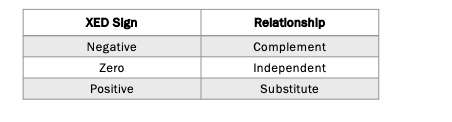
Cross price elasticity of demand (XED)
% change in quantity of good A / % change in price of good B
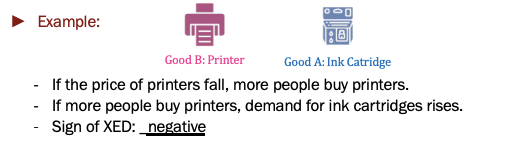
XED signs
Costs
Fixed + variable = total
cost plus pricing (markup)= cost *1+ markup
Break even pricing
Setting price to break even on costs or to make a target return
Break even analysis
BEP
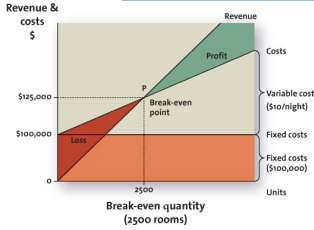
Contribution per unit
unit price-unit variable cost
Competition
Consider
Competitions prices, costs, and reactions if we change prices
Channel members
Channel members may want different prices
Manufacturers/suppliers: higher prices to protect margins
Retailers: lower prices to drive sales and traffic
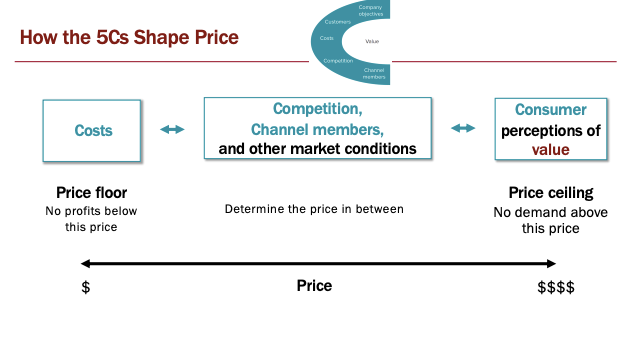
5 Cs shape price
Must be above costs
No one will demand it if the money is valued higher
Comp, channel members, and other market conditions determine the price in between
Value based pricing
starts with the consumer
Perceived value → willingness to pay → consumer choice
Perceived value shapes WTP
Price < WTP; consumer is more likely to buy
Price > WTP; consumer is less likely to buy
EDLP Vs High/Low
EDLP- always in between comps regular and comps sale price; constant; adds value by reducing search costs of finding lowest overall value (less useful today since you can search online)
High/Low- involves periods of sales where prices are reduced in order to encourage purchasing; fluctuating; attracts two distinct market segments; creates excitement of the hunt for the lowest price
New product pricing strategies
Penetrative- Initial price set relatively low to penetrate the market – to quickly and deeply build sales, market share, and profit and to deter competition entering (echo dot)
Skimming- Sell at high price that innovators/early adopters are willing to pay before aiming at more price sensitive market segments and reducing to next price level (vision pro)
Segmentation based pricing
Customers differ in their WTP
Observable segments- age (student/senior discounts), location (college), time(happy hour)
Self selection- product tiers, quantity pricing (single can vs packs), versioning (student vs. professional software)
Three product mix pricing strategies
Optional product pricing- optional/accessory to add on to the main product
Captive product pricing- required add-on used with the main product
Bundle pricing- several products sold together at a discount
Why new products may be introduced
Changing customer needs
Market saturation
Short product cycles
Managing risk through diversity

