IMPERIAL IMAGE - Prescribed Sources Dates
 Studied by 0 people
 Call Kai
 Learn
Learn Practice Test
 Spaced Repetition
 Match
Match Flashcards
 Knowt Play
1/24

There's no tags or description
Looks like no tags are added yet.
Name | Mastery | Learn | Test | Matching | Spaced | Call with Kai |
|---|
No analytics yet
Send a link to your students to track their progress
25 Terms
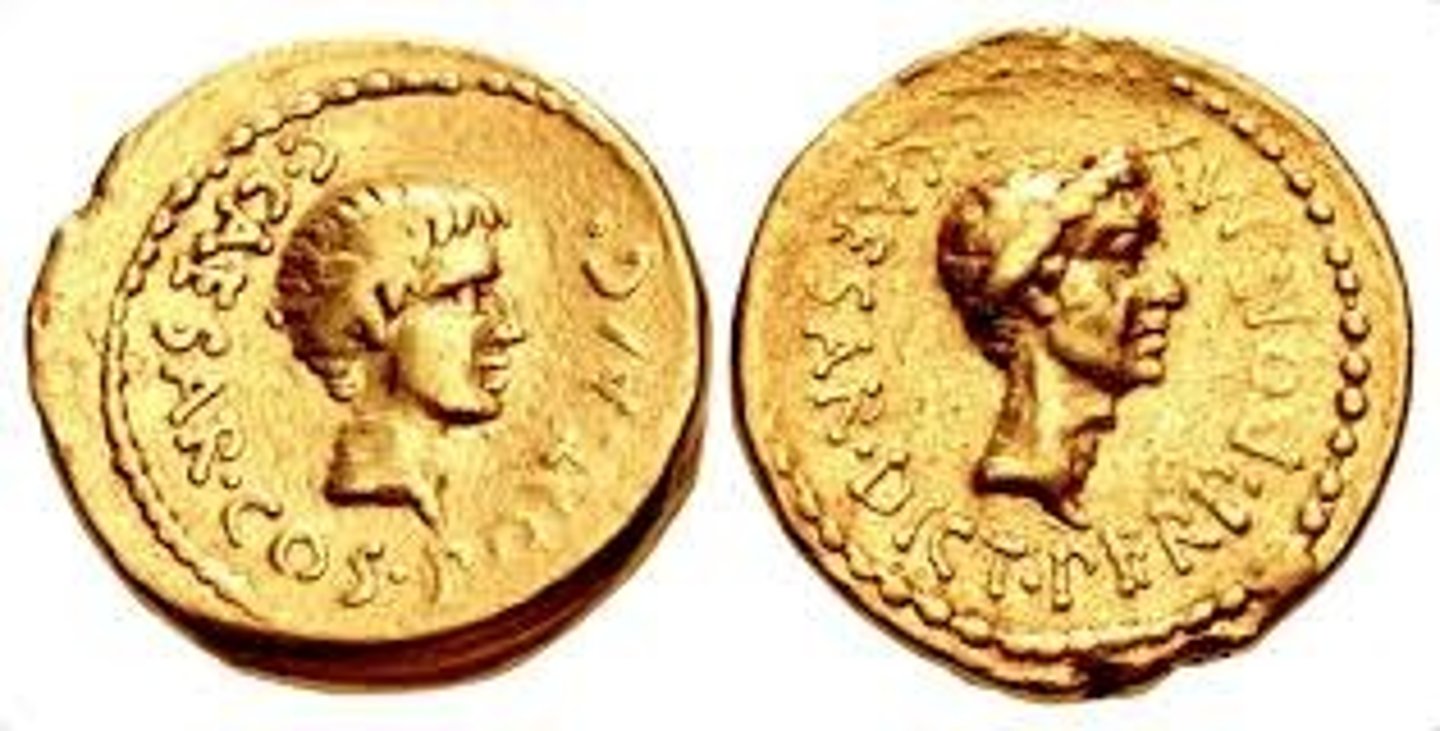
Octavian and Julius Caesar aureus
43BC
shows them as in the same family - same divine heritage
ceasar wears a wreath but Oct doesnt —> showing he is just a normal man of the poeple
unlike his father ceasar who was more of a king
inscription says the name Ceasar —> showing both men share the powerful name
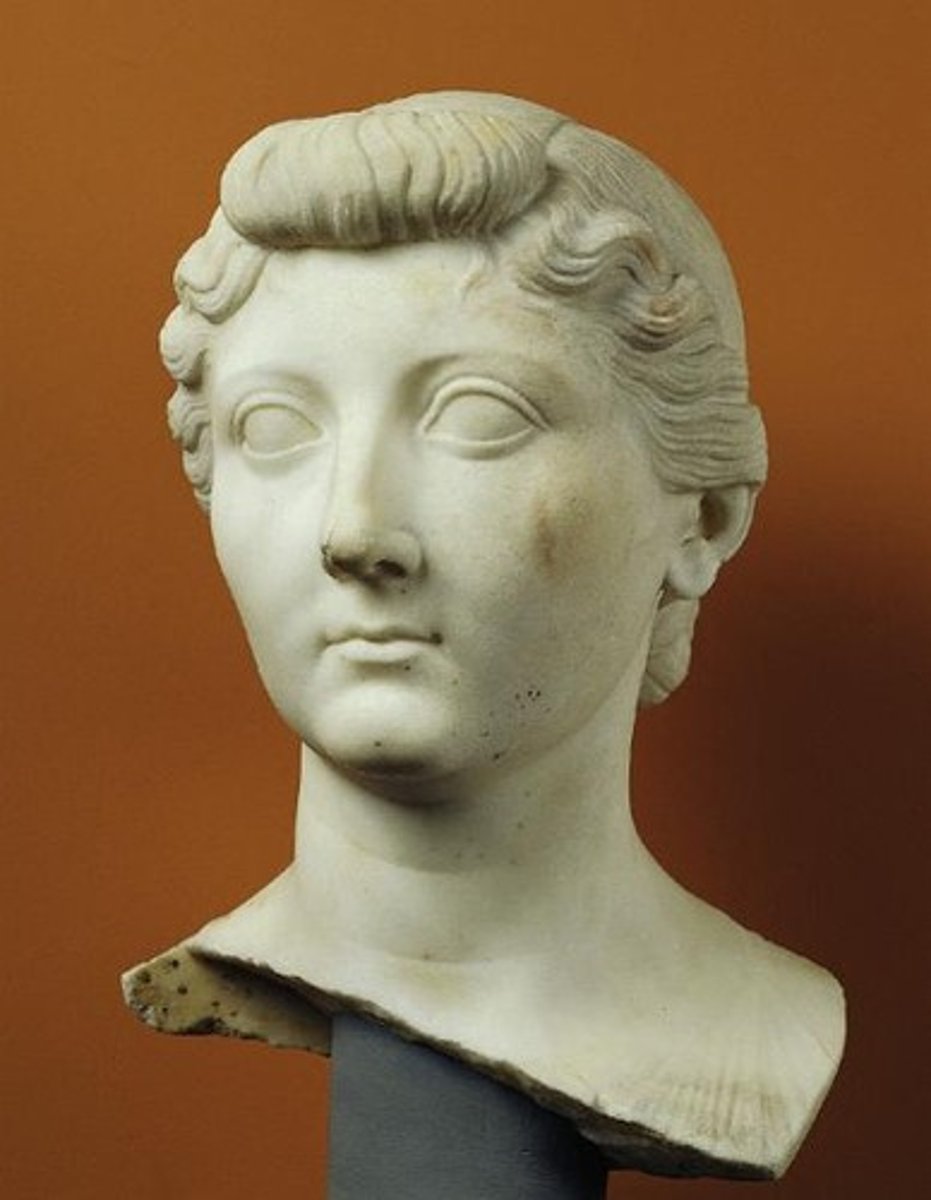
Bust of Livia
31BC
shows her as:
matronly
conservative
typical Roman woman - perfect role model
wants her to be presented this way as they due to their marriage scandals
Oct divorcing his wife the day of his daughters birth
Livia leaving her husband for Oct
also contrasts the appearance of Cleopatra - who is flamboyant and very eastern - opposite of roman beauty standards.
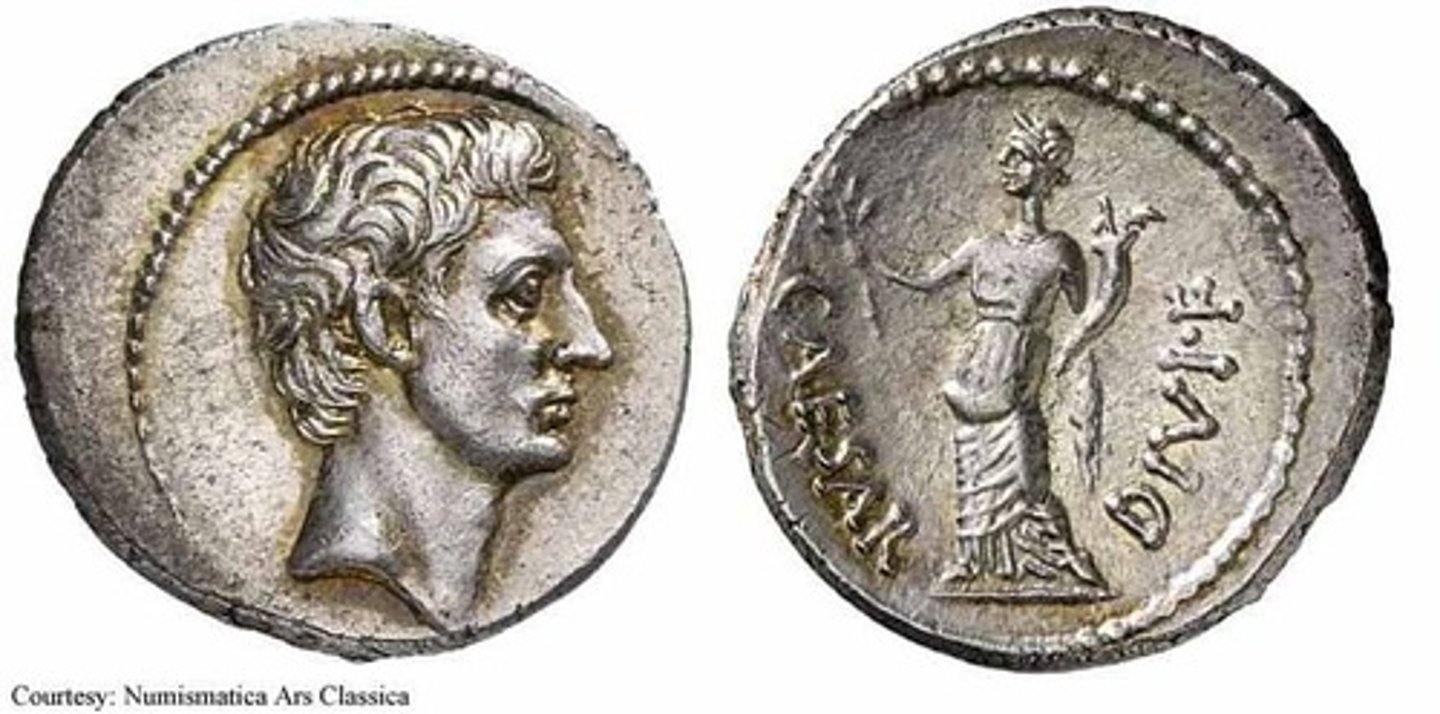
Pax denarius
32-29BC
displays Pax goddess who is the personification of peace
shows how Oct is the bringer of peace
Symbolised stability and prosperity
Oct still has no laurel wreath - not aligning himself with caesars image too closely
the legend says: ‘divi fillius‘
meaning son of a god
legitimising Octs power + powerful propagnda tool
A Toast to Actium - Horace
30BC
Augustan propaganda, disguised as a drinking song, celebrating Octavian's victory at Actium
by framing it as a triumph over Antony and Cleopatra's "oriental" corruption
portraying Octavian as Rome's savior and legitimising his new imperial rule
He had the patronage of Maecenas, Augustus's close friend
suggesting political bias
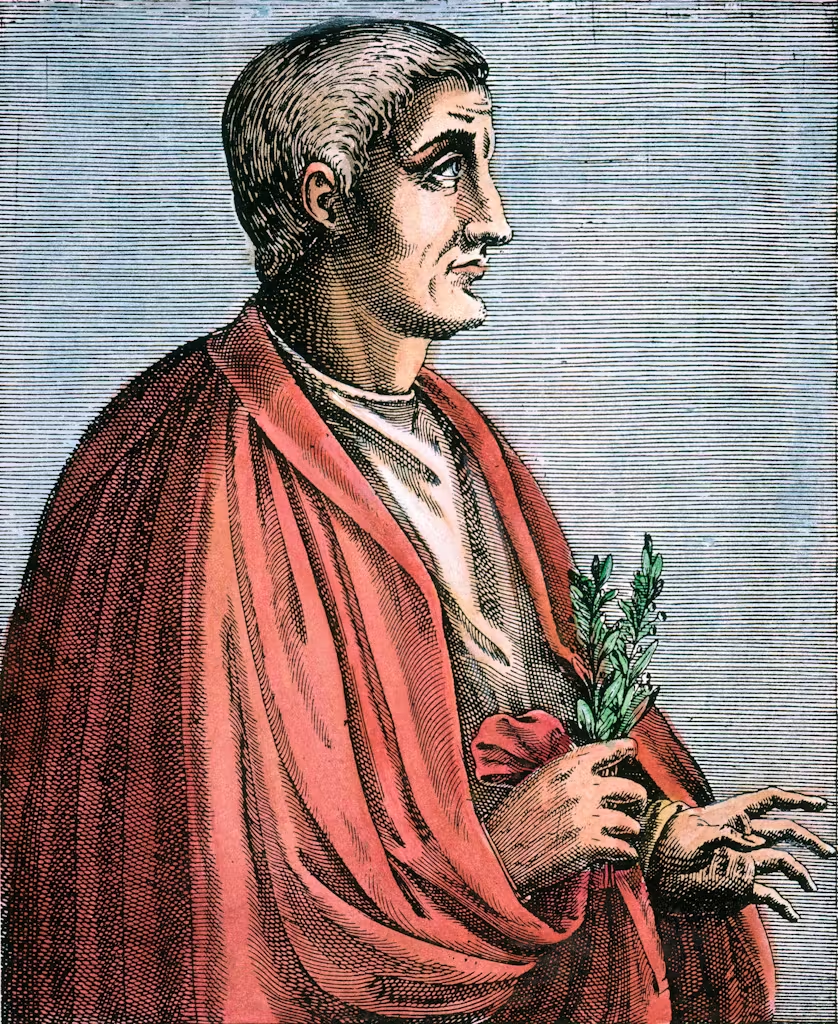
Cleopatra - Horace
23BC
a complex poem celebrating Octavian's victory (Augustus) over Cleopatra
shifting from condemnation of her perceived threat to Rome to grudging admiration for her courageous, self-chosen death
portraying her as a powerful, fatalistic queen.
choosing dignified suicide over Roman humiliation.
despite initial portrayals as a dangerous "monstrum" (monster) and a drunken queen.
The poem uses a drinking song framework to transition from Roman revelry to acknowledging Cleopatra's defiant control over her final fate, elevating her from mere enemy to a figure of tragic grandeur
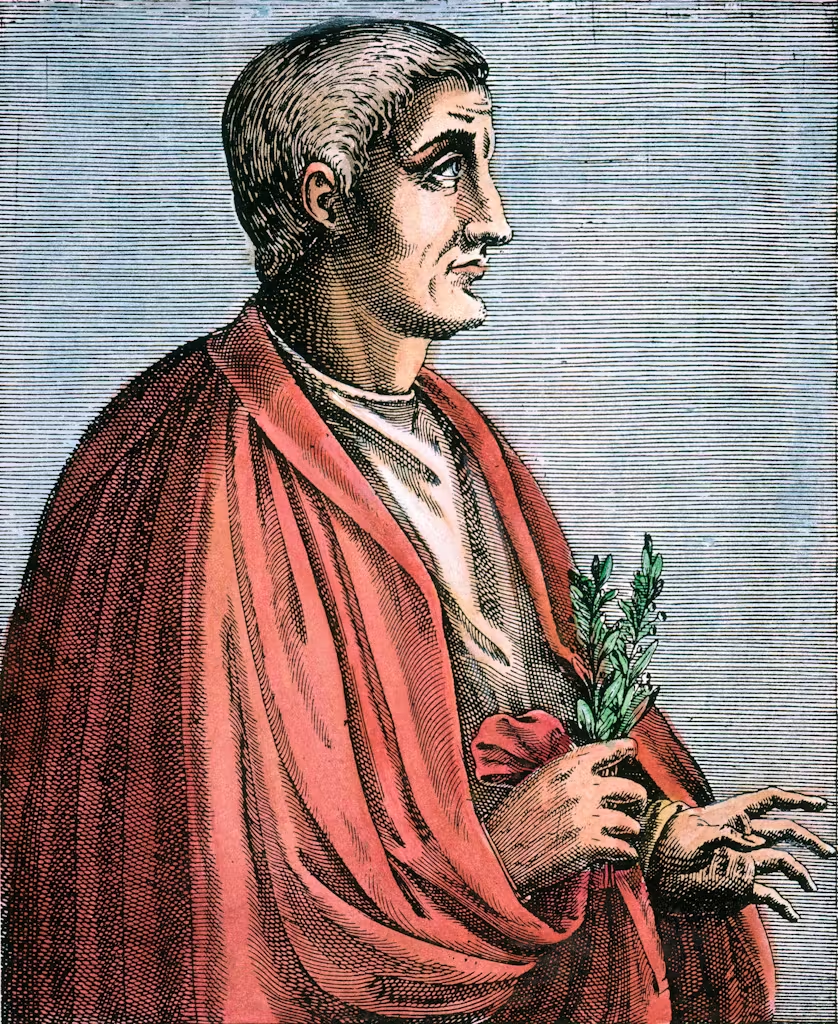
Woman's Power - Propertius
23BC
analyzes female influence through historical and mythological figures like Cleopatra, Medea, and Amazons, contrasting powerful women with Roman ideals
while exploring themes of love as enslavement, female agency, foreign threat, and the poet's own vulnerability,
ultimately linking personal romantic subjugation to political power struggles.
He uses mythological figures to show women's formidable power
but then shifts to critique Cleopatra as a dangerous "other,"
glorifying Augustus's victory and Rome's strength,
he admits his own enslavement to his beloved Cynthia
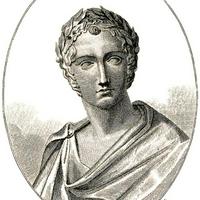
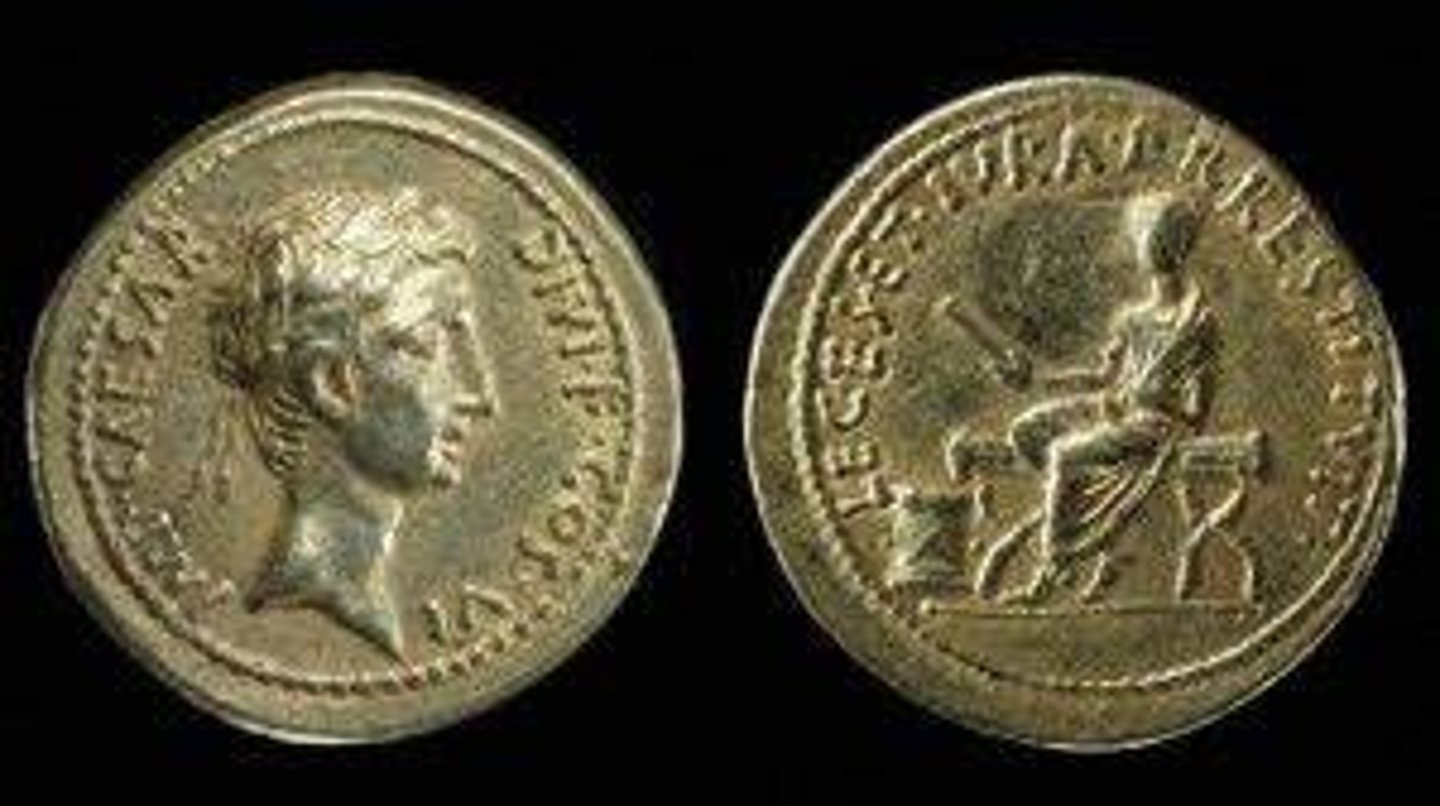
Seated aureus
28BC
Depiction: Octavian is shown seated on a sella curulis (curule chair), the traditional symbol of Roman magisterial authority.
This reinforces his image as a lawful magistrate rather than a military dictator.
Restoration of Law: He is depicted holding a scroll (volumen), representing the return to civil administration and the rule of law.
Legend/Inscription: Features the text 'LEGES ET IURA P. R. RESTITUIT' (He restored the laws and rights to the Roman people).
Political Context: Issued during his sixth consulship, the coin is a key piece of propaganda used to signal the end of the Triumviral period and the supposed restoration of the republic
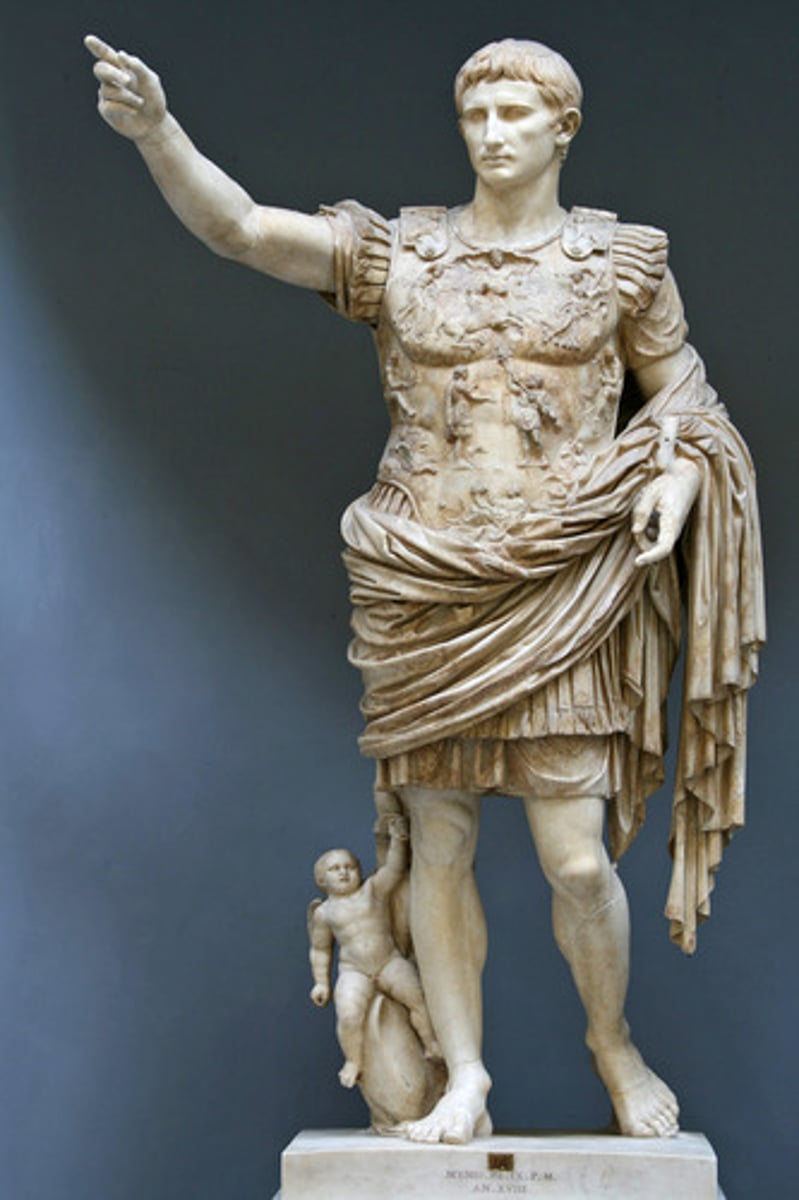
Prima Porta
20BC-14AD
Visual Imagery:
Statue of Augustus found at Livia's villa, shown in the adlocutio pose (addressing his army).
Cupid on a dolphin at his feet: Symbolises divine descent from Venus (Aeneas' mother).
The Breastplate (Thorax):
Central scene: A Parthian returning the Roman standards lost by Crassus in 53BC.
Represents a diplomatic victory presented as a military triumph.
Surrounded by cosmic deities like Sol, Luna, Caelus, and Tellus (Earth), suggesting the Pax Romana is divinely ordained.
Political Significance:
Portrays Augustus as an eternal, youthfully vigorous leader, departing from realistic 'veristic' Republic styles.
Legitimises his rule by combining military command with divine approval.
Emphasises the restoration of Roman honour and the global stability of his regime.
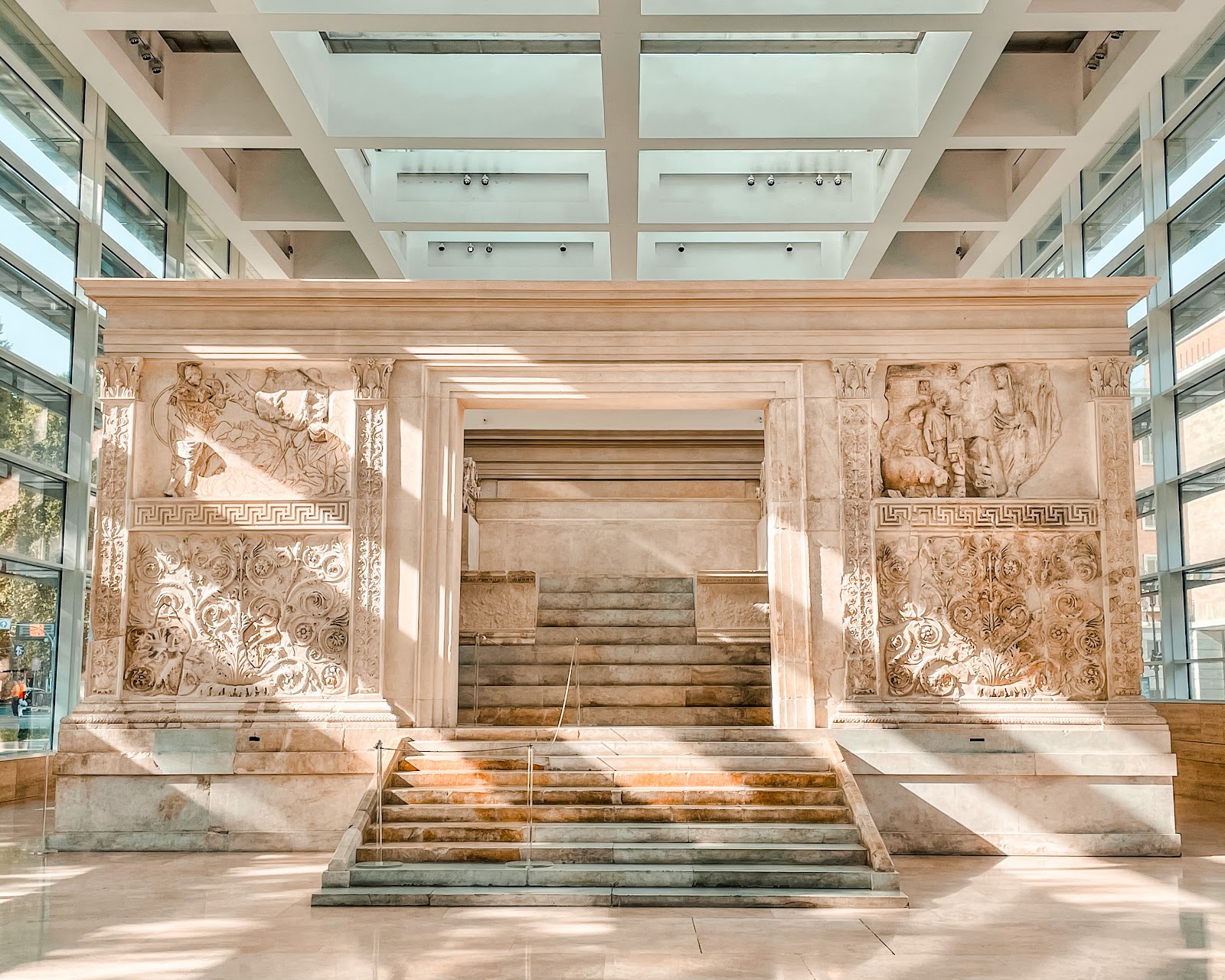
Ara Pacis
13-9BC
The Ara Pacis presents Augustus as a peaceful, divinely favored leader whose rule brought stability, prosperity, and the Pax Romana to Rome through political authority, religion, and family succession
It promotes Augustus’ achievements and legitimizes his authority without showing him as a tyrant
it uses Images of fertility, abundance, and harmony suggest prosperity under Augustus’ rule
It shows Augustus as pontifex maximus, reinforcing his role as a religious and moral leader.
Including his family emphasizes dynastic succession and political stability
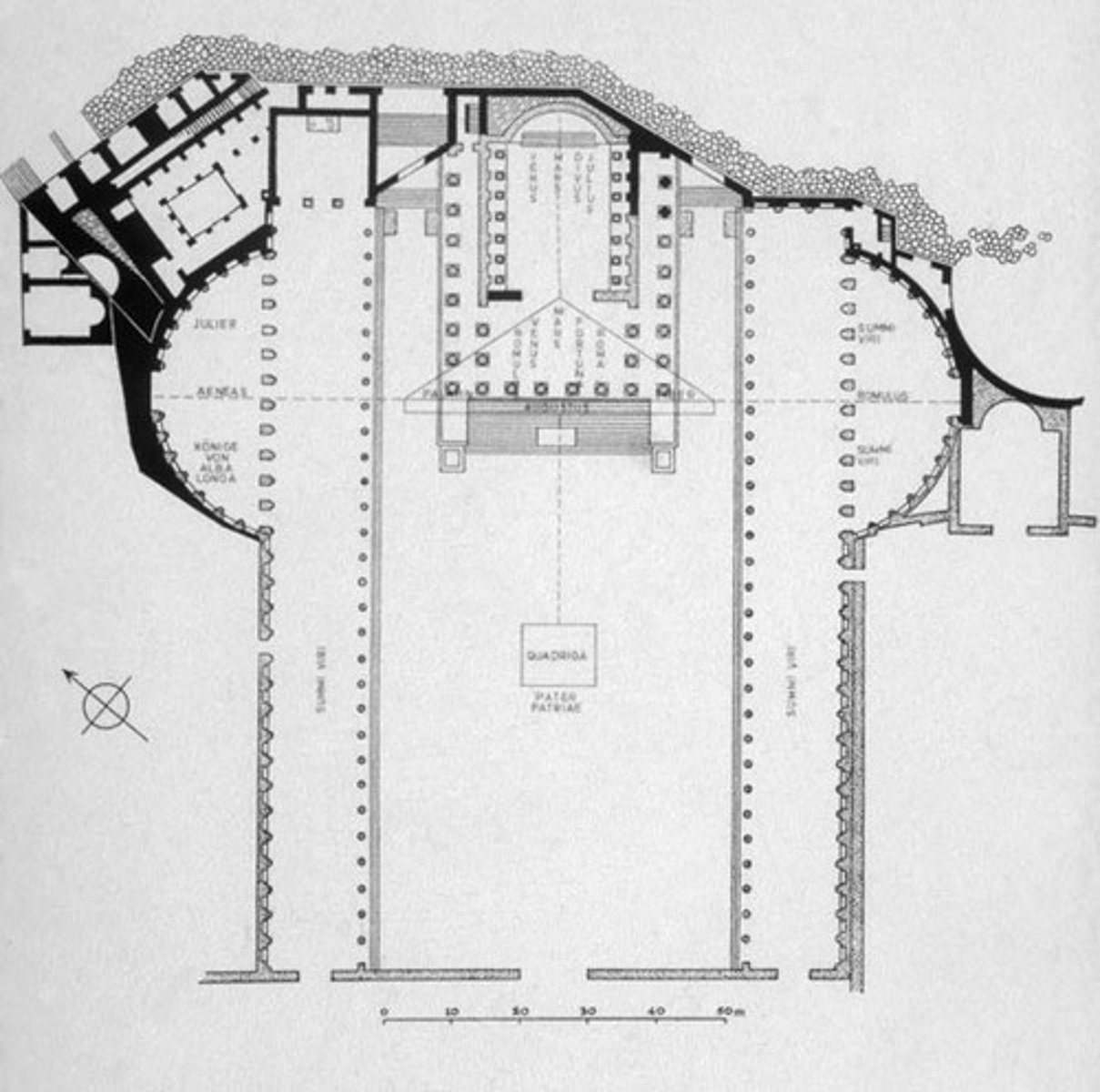
Forum of Augustus
2BC
The Forum of Augustus reinforces Augustus’ authority by linking his rule to Rome’s heroic past and divine destiny.
Statues of Aeneas, Romulus, and great Roman leaders (summi viri) associate Augustus with legendary founders and moral exemplars, presenting him as their rightful successor.
The Temple of Mars Ultor emphasizes Augustus’ role as avenger of Julius Caesar and protector of Roman values
promoting justice, military virtue, and the legitimacy of his rule within a restored Roman tradition.
The Temple of Palatine Apollo - Propertius
16BC
promotes Augustus as a divinely favored, morally upright ruler chosen by Apollo.
Built next to Augustus’ home, the temple closely links the god of order, prophecy, and harmony with Augustus’ leadership.
Propertius’ poetic description emphasizes Apollo’s support in Augustus’ victory at Actium, contrasting Roman order with Eastern excess,
presenting Augustus as the restorer of traditional values, peace, and cultural renewal under divine guidance.
War and Peace - Propertius
20BC
Augustus’ military victories are framed as a necessary means to achieve lasting peace for Rome.
Propertius contrasts the violence of civil war with the harmony of the Augustan age, presenting Augustus as a ruler who ends conflict rather than glorifies it.
This poetic narrative supports Augustan propaganda by justifying war under Augustus as divinely sanctioned and morally necessary, ultimately celebrating the peace, stability, and cultural renewal of the Pax Romana.
Chaste and Faithful Galla - Propertius
20BC
Propertius promotes Augustan moral ideals by praising female chastity, marital loyalty, and traditional Roman virtue.
The poem aligns with Augustus’ moral legislation by presenting sexual restraint and fidelity as the foundation of social stability.
By idealizing Galla’s behavior, Propertius reinforces Augustus’ program of moral renewal, suggesting that personal virtue supports the peace and order of the Augustan state.
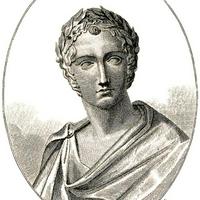
Deification of Julius Caesar - Ovid
8AD
Caesar is transformed into a god, legitimising Augustus’ authority as the divi filius (son of a god).
By emphasising divine intervention and celestial approval, Ovid elevates Caesar’s legacy while indirectly glorifying Augustus as his rightful heir.
The mythic transformation reinforces the idea that Augustus’ rule is sanctioned by the gods, strengthening his political legitimacy and presenting his power as part of Rome’s divine destiny.
Ovid's celebration of Augustus - Ovid
8AD
Ovid celebrates Augustus as a divinely favored ruler whose leadership brings peace, order, and prosperity to Rome.
By linking Augustus to Jupiter and portraying his reign as part of a cosmic plan,
Ovid elevates the emperor above ordinary mortals while stopping short of calling him a god.
This praise reinforces Augustan ideology by presenting Augustus as the guarantor of the Pax Romana and the restorer of moral and political stability.
Moral Decadence - Horace
23BC
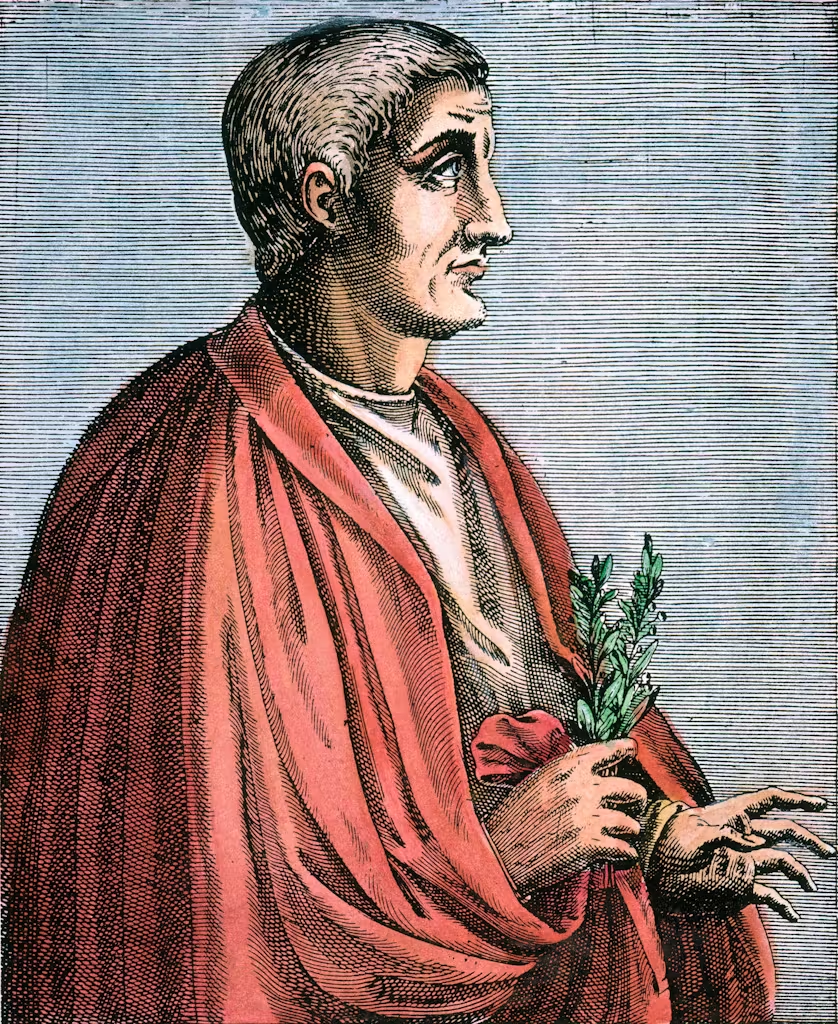
Augustus Returns - Horace
23BC
Written by Horace to praise Emperor Augustus
Focuses on the longing for Augustus’s return to Rome
Augustus is portrayed as god-like and divinely favored
His absence causes anxiety and instability in Rome
His presence brings peace, safety, and prosperity
Law, morality, and traditional Roman values are restored under him
Agriculture and daily life flourish when he rules
Augustus protects Rome from foreign enemies
Uses religious imagery to elevate Augustus’s authority
Serves as political propaganda supporting imperial power
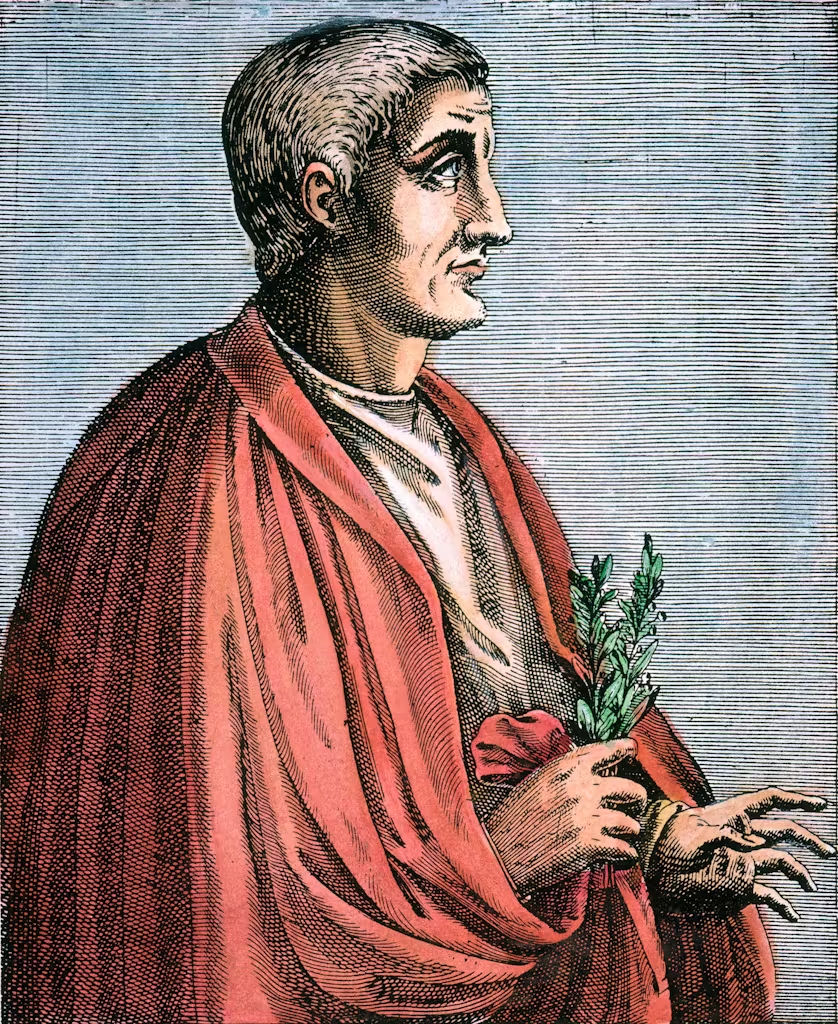
Drusus and the Claudians - Horace
13BC
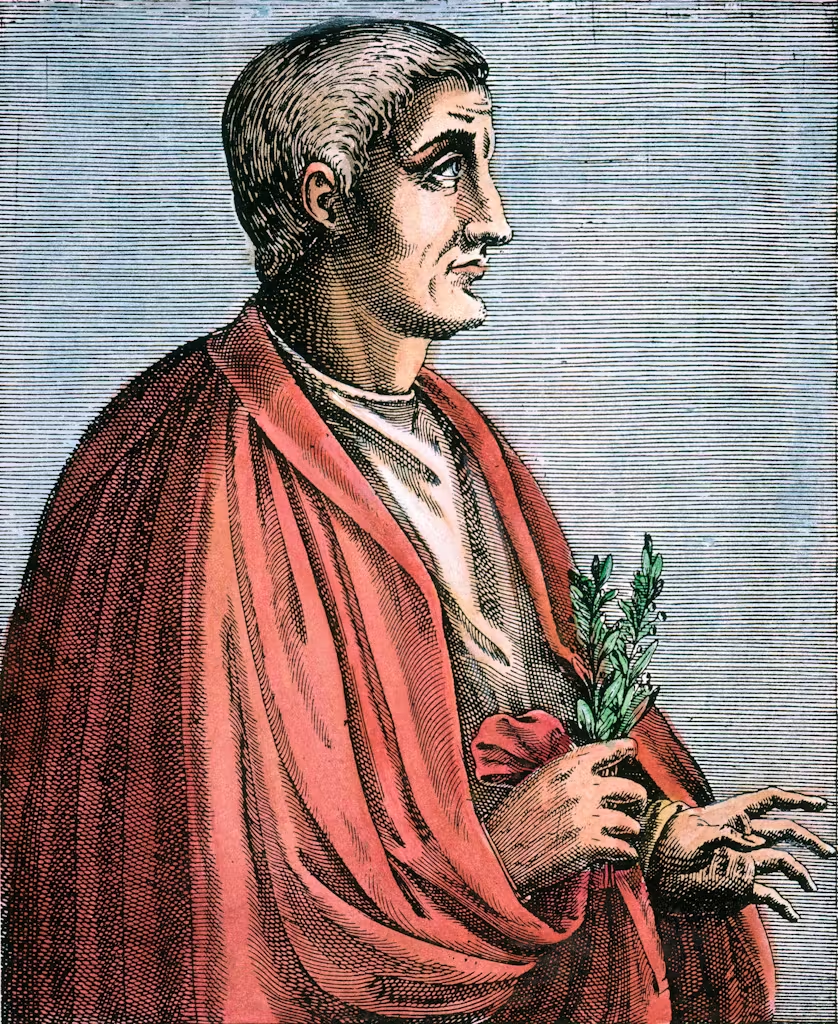
Carmen Seculare - Horace
17BC
Written by Horace and commissioned by Augustus for the Ludi Saeculares (17 BC).
Performed by a chorus of 54 youths, symbolising renewal and Rome’s future.
The poem is a religious hymn, not open political praise.
Key ideas:
The gods (especially Apollo, Diana, and Jupiter) favour Rome and Augustus.
Augustus is presented indirectly as the leader chosen by the gods.
Peace under Augustus brings:
Fertility
Prosperity
Moral renewal.
The poem promotes the idea of a new Golden Age, like the age of Saturn.
Strong emphasis on:
Family values
Good morals
Stability after civil war.
Overall message:
Horace’s Carmen Saeculare presents Augustus as the divinely supported restorer of peace and morality, ushering in a new Golden Age for Rome, while carefully avoiding overt monarchy by embedding praise within religious worship.
To Augustus - Horace
13BC
Poem written by Horace in praise of Emperor Augustus
Celebrates Augustus as Rome’s saviour after civil war
Augustus is presented as chosen and supported by the gods
He restores peace and political stability
Ends internal conflict and defeats foreign enemies
Strengthens laws, morality, and traditional Roman values
Agriculture and daily life prosper under his rule
Rome’s power expands while peace is maintained at home
Augustus compared to legendary heroes of the past
Future generations will sing of Augustus’s achievements
Poem acts as imperial propaganda
Reinforces Augustus as the ideal Roman ruler
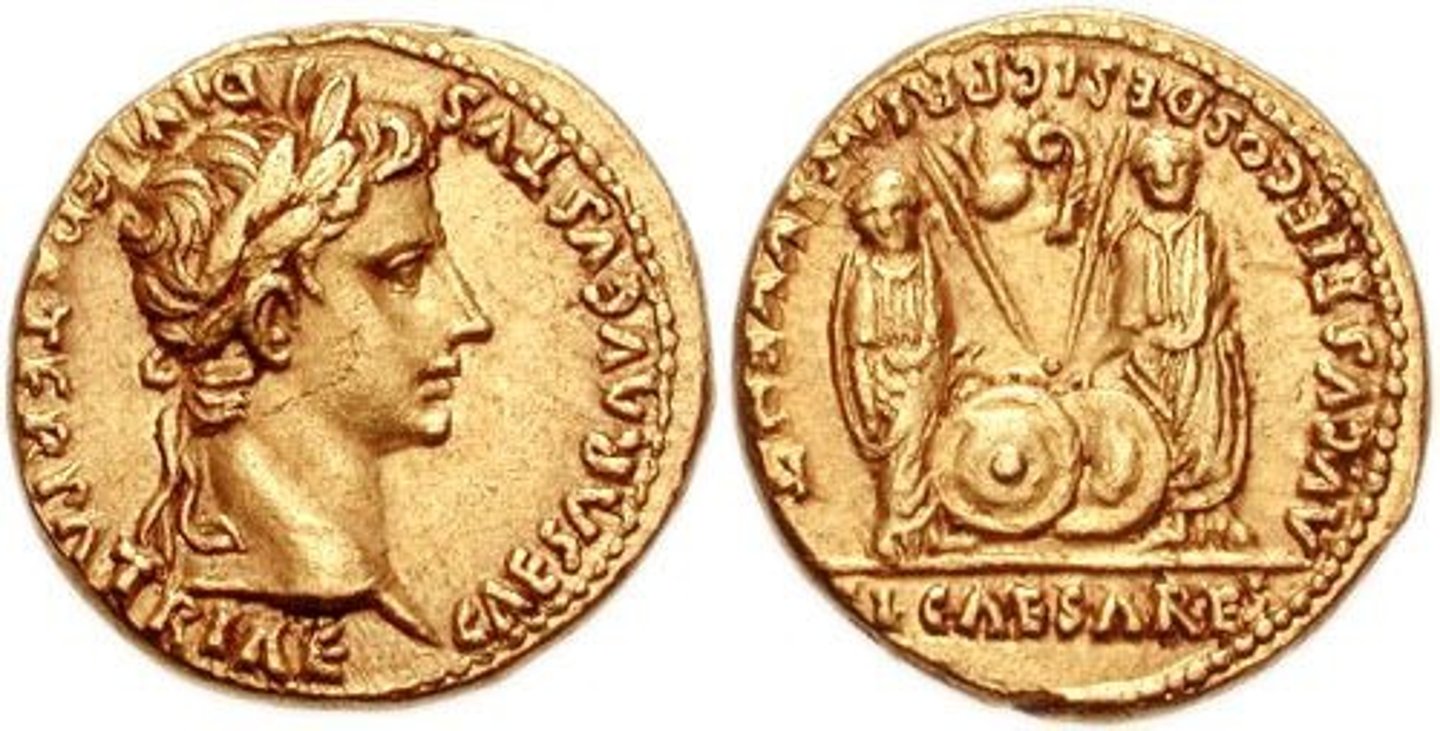
Gaius and Lucius aureus
2BC-4AD
gold aureus honoring Gaius and Lucius, Augustus’ adopted sons
promotes dynastic succession and political stability under Augustus’ rule.
By depicting the boys as heirs holding priestly symbols (the simpulum and lituus), the coin links Augustus’ family to religious authority, tradition, and moral legitimacy.
Issued across the empire, the coin reassured Romans that Augustus had secure successors, reinforcing the idea that his leadership—and the Pax Romana—would continue beyond his lifetime.
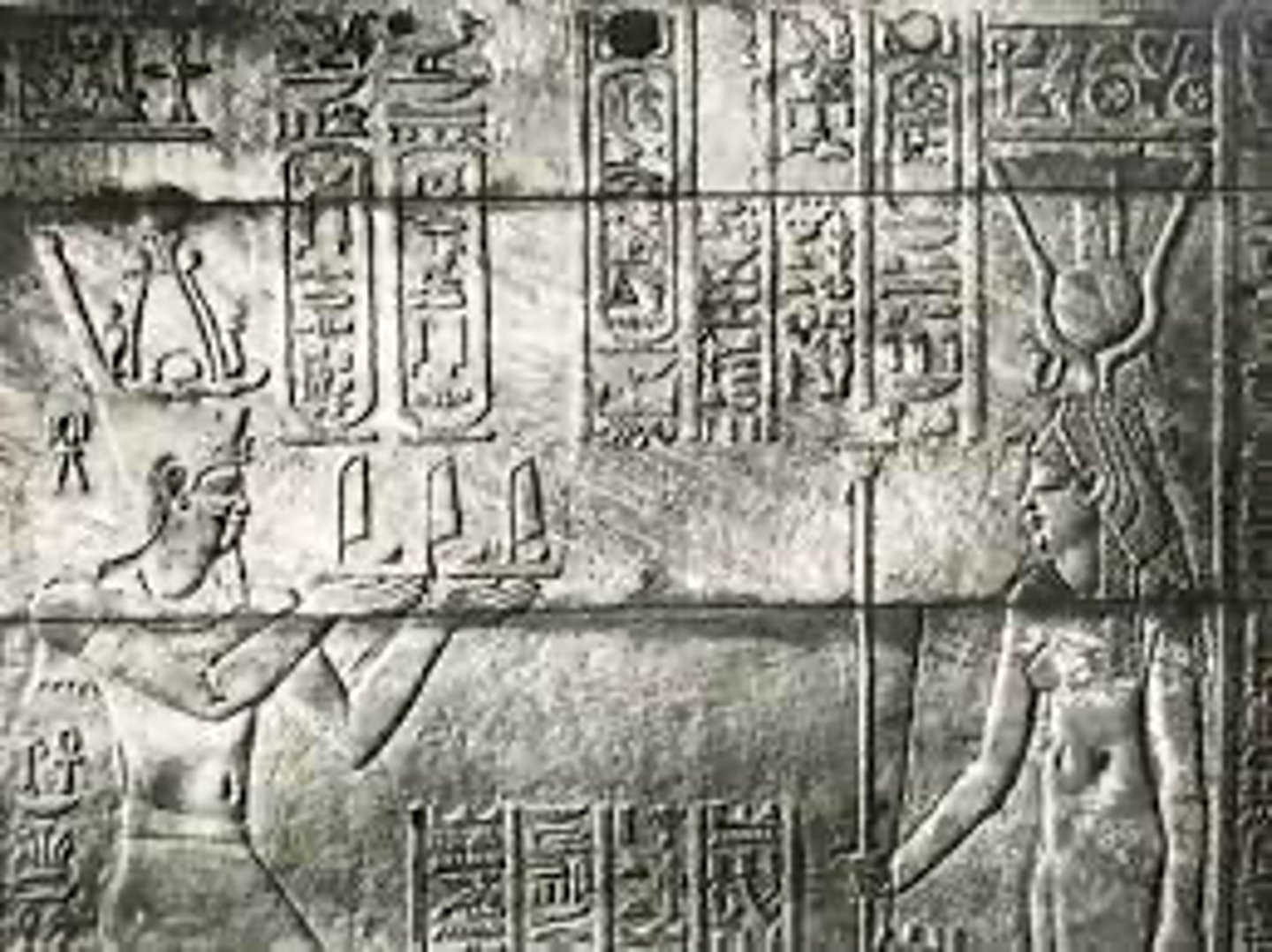
Augustus Relief - Kalabsha Gate
30BC
The Augustus Relief at the Kalabsha Gate presents Augustus as a divine, authoritative ruler over both Rome and its provinces, particularly Egypt.
Shown in traditional Egyptian pharaonic style making offerings to the gods, Augustus adopts local visual language to legitimize his power as Pharaoh.
This imagery emphasizes his universal rule, divine approval, and control over Egypt after the defeat of Mark Antony and Cleopatra
reinforcing Augustus’ dominance while blending Roman authority with local religious tradition.
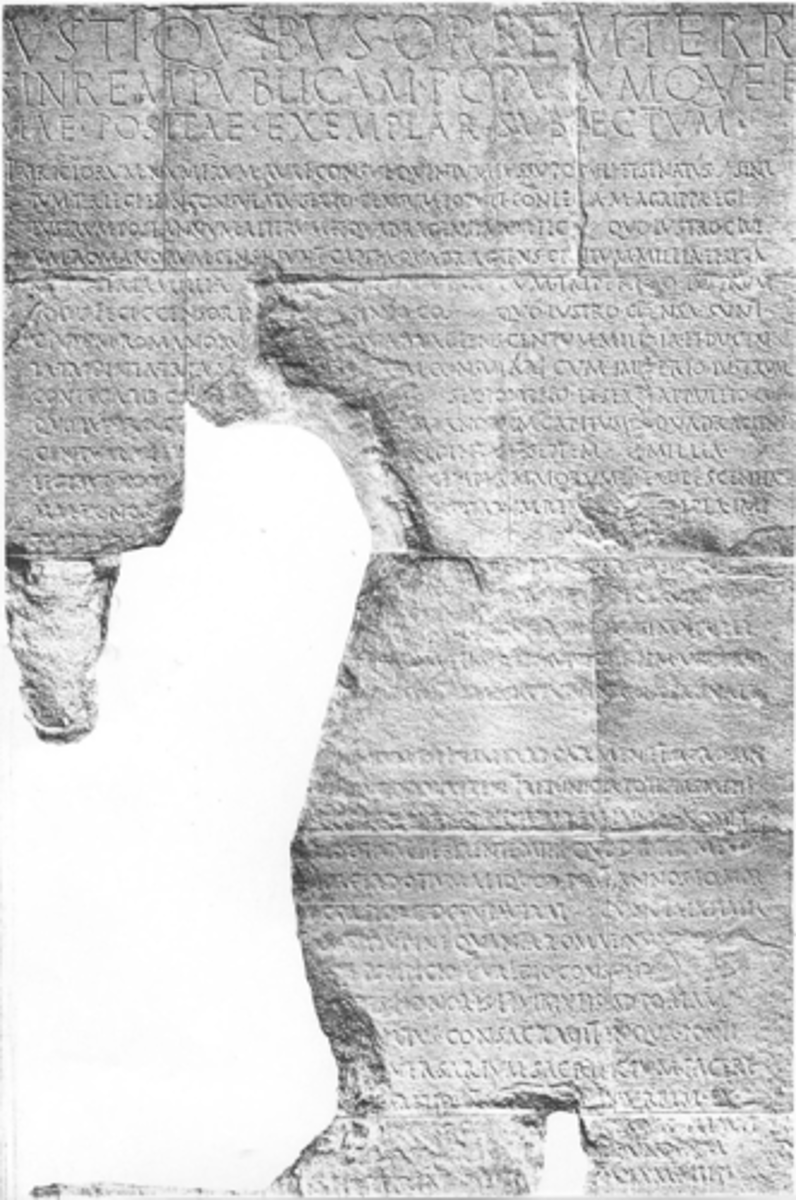
Res Gestae Divi Augusti
13AD-14AD
Mausoleum of Augustus
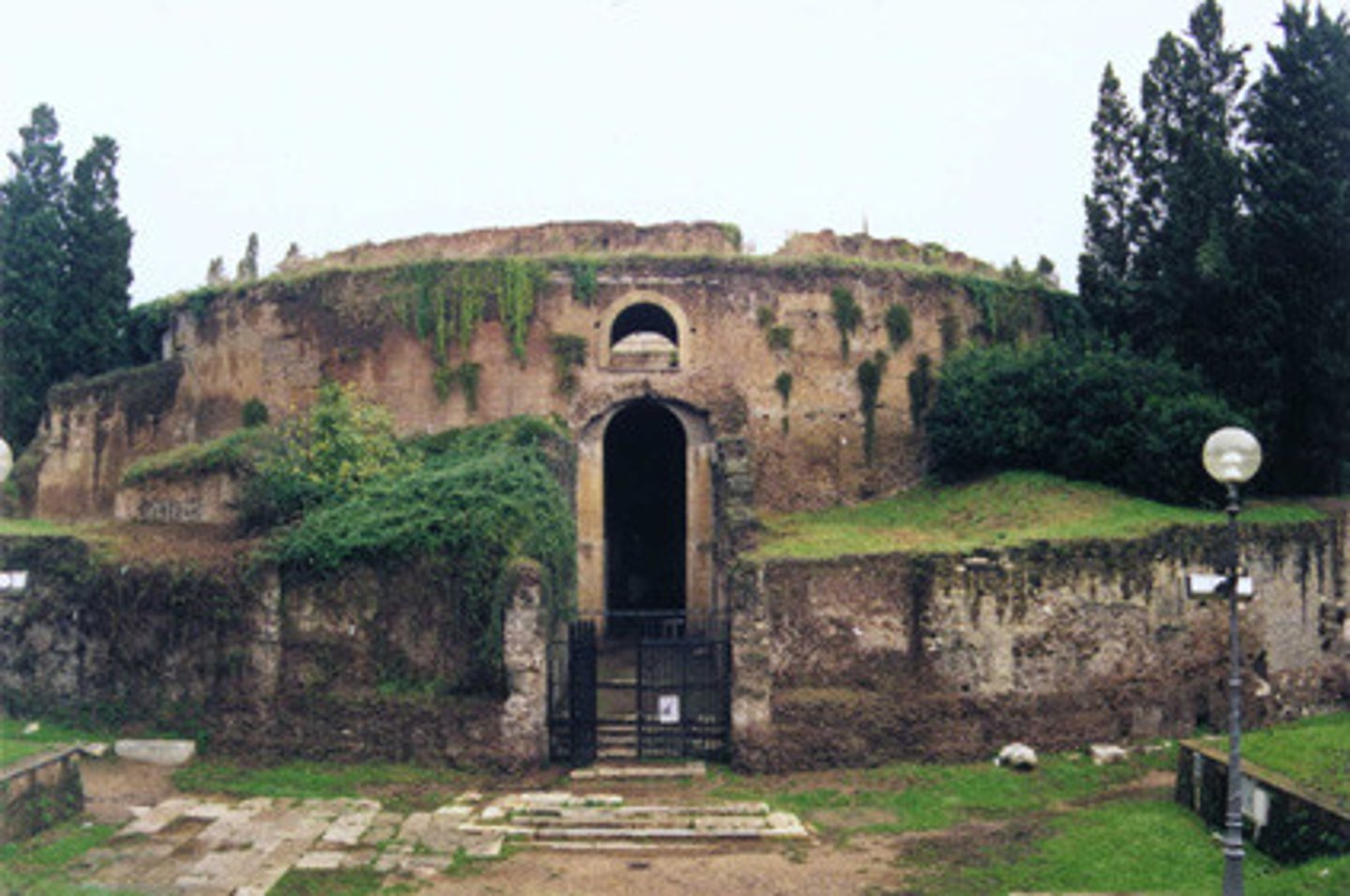
28-23BC
The Mausoleum of Augustus projects Augustus’ power and legacy by presenting him as Rome’s eternal leader.
Its massive scale and prominent location assert his dominance and permanence, while serving as a dynastic tomb for his family reinforces continuity and stability under his rule.
By choosing a monumental, circular form inspired by Etruscan and heroic burial traditions, Augustus links himself to Rome’s ancient past, ensuring his memory and authority endure beyond his lifetime
This directly contrasts with Mark Antony, who aligned himself with Cleopatra and the East, planning to be buried in Alexandria.
By establishing a grand tomb in Rome for himself and his family, Augustus presented himself as the true Roman leader, loyal to Rome’s values and future, while portraying Antony as foreign, un-Roman, and disloyal
The Lives of the Twelve Caesars - Suetonius
121AD
 Note
Note  Flashcards (34)