Module 2: Oral Manifestations of Hematological Disorders

0.0(0)
studied byStudied by 3 people
0.0(0)
full-widthCall Kai
learnLearn
examPractice Test
spaced repetitionSpaced Repetition
heart puzzleMatch
flashcardsFlashcards
GameKnowt Play
Card Sorting

1/75

encourage image

There's no tags or description

Looks like no tags are added yet.

Study Analytics
Name
Mastery
Learn
Test
Matching
Spaced

No study sessions yet.

76 Terms

1
New cards

anemia

-decreased volume of RBCs (hematocrit)

-decreased concentration of Hb and/or O2 binding capacity of Hb

-often a sign of an underlying disease (liver disease, chronic inflammatory conditions, malignancies, vitamin/mineral deficiencies)

2
New cards

anemia signs/symptoms

-mostly non-specific: weakness, fatigue, poor concentration, shortness of breath on exertion, skin and mucosal pallor

-less common: swelling of legs/arms, chronic heartburn, vague bruises, vomiting, increased sweating, blood in stool

-in severe anemia: body may compensate by increasing CO (symptoms may include palpitations)

3
New cards

anemia diagnosis

*Blood test:

  1. RBC count

  2. Hb concentration

  3. MCV (normo-, micro-, macro- cytic)

  4. Red cell distribution width (RDW)

→ calculate hemocrit, MCH, MCHC to compare values adjusted for age and sex

*Other tests: serum iron, serum B12, Hb electrophoresis

*Microscopic examination of a stained blood smear

*Can also do bone marrow biopsy if diagnosis still difficult

NORMAL RBCS:

*uniform in size and shape

*diameter ~ nucleus of a lymphocyte

*central pallor = 1/3 of rbc diameter
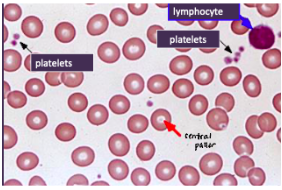
<p><span style="background-color: transparent; font-family: &quot;Times New Roman&quot;, serif;">*Blood test:</span></p><p><span style="background-color: transparent; font-family: &quot;Times New Roman&quot;, serif;">&nbsp;&nbsp;1. RBC count</span></p><p><span style="background-color: transparent; font-family: &quot;Times New Roman&quot;, serif;">&nbsp;&nbsp;2. Hb concentration</span></p><p><span style="background-color: transparent; font-family: &quot;Times New Roman&quot;, serif;">&nbsp;&nbsp;3. MCV (normo-, micro-, macro- cytic)</span></p><p><span style="background-color: transparent; font-family: &quot;Times New Roman&quot;, serif;">&nbsp;&nbsp;4. Red cell distribution width (RDW)</span></p><p><span style="background-color: transparent; font-family: &quot;Times New Roman&quot;, serif;">→ calculate hemocrit, MCH, MCHC to compare values adjusted for age and sex</span></p><p><span style="background-color: transparent; font-family: &quot;Times New Roman&quot;, serif;">*Other tests: serum iron, serum B12, Hb electrophoresis</span></p><p><span style="background-color: transparent; font-family: &quot;Times New Roman&quot;, serif;">*Microscopic examination of a stained blood smear</span></p><p><span style="background-color: transparent; font-family: &quot;Times New Roman&quot;, serif;">*Can also do bone marrow biopsy if diagnosis still difficult</span><br></p><p><span style="background-color: transparent; font-family: &quot;Times New Roman&quot;, serif;">NORMAL RBCS:</span></p><p><span style="background-color: transparent; font-family: &quot;Times New Roman&quot;, serif;">*uniform in size and shape</span></p><p><span style="background-color: transparent; font-family: &quot;Times New Roman&quot;, serif;">*<strong>diameter ~ nucleus of a lymphocyte</strong></span></p><p><span style="background-color: transparent; font-family: &quot;Times New Roman&quot;, serif;">*<strong>central pallor = 1/3 of rbc diameter</strong></span></p>
4
New cards

iron-deficiency anemia etiology

*Occurs in 4 different settings:

  1. Excessive blood loss

  2. Increased demand for rbcs (pregnancy)

  3. Decreased uptake of iron (dietary restriction)

  4. Decreased absorption of iron (Celiac Disease)

*Most common cause of anemia in the world

  - U.S: men → GI disease; women → excessive menstrual flow

  - Developing nations: parasite infection

5
New cards

iron-deficiency anemia clinical features

SYSTEMIC:

*Fatigue, lightheadedness, lack of energy

*Skin pallor

*Atrophy of gastric mucosa

*Alopecia

*Koilonychia (spoon-shaped nails)

*Restless Leg Syndrome

*Pica (consumption of non-food based items)

ORAL:

*Atrophic glossitis +/- burning sensation

*Generalized mucosal atrophy

*Gingival pallor

*Angular cheilitis (may predispose to candidiasis)
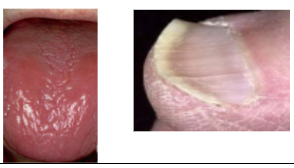
<p><span style="background-color: transparent; font-family: &quot;Times New Roman&quot;, serif;"><u>SYSTEMIC</u>:</span></p><p><span style="background-color: transparent; font-family: &quot;Times New Roman&quot;, serif;">*Fatigue, lightheadedness, lack of energy</span></p><p><span style="background-color: transparent; font-family: &quot;Times New Roman&quot;, serif;">*Skin pallor</span></p><p><span style="background-color: transparent; font-family: &quot;Times New Roman&quot;, serif;">*Atrophy of gastric mucosa</span></p><p><span style="background-color: transparent; font-family: &quot;Times New Roman&quot;, serif;">*Alopecia</span></p><p><span style="background-color: transparent; font-family: &quot;Times New Roman&quot;, serif;">*<strong>Koilonychia </strong>(spoon-shaped nails)</span></p><p><span style="background-color: transparent; font-family: &quot;Times New Roman&quot;, serif;">*<strong>Restless Leg Syndrome</strong></span></p><p><span style="background-color: transparent; font-family: &quot;Times New Roman&quot;, serif;">*<strong>Pica</strong> (consumption of non-food based items)</span></p><p></p><p><span style="background-color: transparent; font-family: &quot;Times New Roman&quot;, serif;"><u>ORAL</u>:</span></p><p><span style="background-color: transparent; font-family: &quot;Times New Roman&quot;, serif;">*<strong>Atrophic glossitis +/- burning sensation</strong></span></p><p><span style="background-color: transparent; font-family: &quot;Times New Roman&quot;, serif;">*<strong>Generalized mucosal atrophy</strong></span></p><p><span style="background-color: transparent; font-family: &quot;Times New Roman&quot;, serif;">*<strong>Gingival pallor</strong></span></p><p><span style="background-color: transparent; font-family: &quot;Times New Roman&quot;, serif;">*<strong>Angular cheilitis</strong> (may predispose to candidiasis)</span></p>
6
New cards

iron-deficiency anemia diagnosis

*Complete blood count: decreased MCV and MCHC

*Peripheral blood smear: hypochromic (paler) micocytic (smaller than nucleus of lymphocytes)

*Reduced blood iron levels
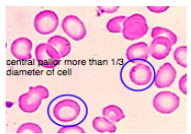
<p><span style="background-color: transparent; font-family: &quot;Times New Roman&quot;, serif;">*Complete blood count: decreased MCV and MCHC</span></p><p><span style="background-color: transparent; font-family: &quot;Times New Roman&quot;, serif;">*Peripheral blood smear: <strong>hypochromic </strong>(paler)<strong> micocytic </strong>(smaller than nucleus of lymphocytes)</span></p><p><span style="background-color: transparent; font-family: &quot;Times New Roman&quot;, serif;">*Reduced blood iron levels</span></p>
7
New cards

iron-deficiency anemia treatment

*Dietary iron supplements

*IV iron supplements

*Treatment of underlying cause

8
New cards

Plummer-Vinson Syndrome (Paterson-Kelly Syndrome)

*Rare

*F, 30-50 yrs, Scandanavian/N. European

*Significant increased risk for oral and esophageal carcinoma

Clinical Features:

*TRIAD:

  1. Dysphagia/Esophageal Webs (🡪dysphasia)
  2. Atrophic Glossitis

  3. Iron Deficiency (hypochromic/microcytic) Anemia

*Angular cheilitis, koilonychia, burning sensation, GERD, esophagitis

Treatment:

*Dietary iron supplementation

*+/- esophageal dilation
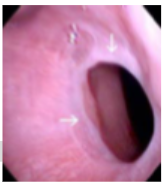
<p><span style="background-color: transparent; font-family: &quot;Times New Roman&quot;, serif;">*Rare</span></p><p><span style="background-color: transparent; font-family: &quot;Times New Roman&quot;, serif;">*<strong>F, 30-50 yrs, Scandanavian/N. European</strong></span></p><p><span style="background-color: transparent; font-family: &quot;Times New Roman&quot;, serif;">*Significant <strong>increased risk for oral and esophageal carcinoma</strong></span><br></p><p><span style="background-color: transparent; font-family: &quot;Times New Roman&quot;, serif;"><u>Clinical Features:</u></span></p><p><span style="background-color: transparent; font-family: &quot;Times New Roman&quot;, serif;">*<strong>TRIAD:</strong></span></p><p><span style="background-color: transparent; font-family: &quot;Times New Roman&quot;, serif;"><strong>&nbsp;&nbsp;1. Dysphagia/Esophageal Webs (</strong></span><span style="background-color: transparent; font-family: &quot;Noto Sans Symbols&quot;, sans-serif;"><strong>🡪</strong></span><span style="background-color: transparent; font-family: &quot;Times New Roman&quot;, serif;"><strong>dysphasia)<br>&nbsp; 2. Atrophic Glossitis</strong></span></p><p><span style="background-color: transparent; font-family: &quot;Times New Roman&quot;, serif;"><strong>&nbsp;&nbsp;3. Iron Deficiency (hypochromic/microcytic) Anemia</strong></span></p><p><span style="background-color: transparent; font-family: &quot;Times New Roman&quot;, serif;">*Angular cheilitis, koilonychia, burning sensation, GERD, esophagitis</span></p><p></p><p><span style="background-color: transparent; font-family: &quot;Times New Roman&quot;, serif;"><u>Treatment:</u></span></p><p><span style="background-color: transparent; font-family: &quot;Times New Roman&quot;, serif;">*Dietary iron supplementation</span></p><p><span style="background-color: transparent; font-family: &quot;Times New Roman&quot;, serif;">*+/- esophageal dilation</span></p>
9
New cards

pernicious anemia- etiology

*Poor absorption of cobalamin (B12, extrinsic factor)

  1. Lack of intrinsic factor (necessary for B12 absorption) 

     - usually due to autoimmune destruction of parietal cells of stomach

     - absorption of cobalamin cannot occur without IF!

  2. Poor absorption of Cobalamin

     - GI bypass surgery

     - Strict vegetarian diet (food sources = eggs, meat, poultry, shellfish, milk, milk products)

10
New cards

pernicious anemia clinical features

*More common in elderly

*Fatigue, weakness, lightheadedness

*Paresthesia, tingling, numbness of extremities

*Atrophy of gastric mucosa

*Increased risk of gastric carcinoma (1-2%)

ORAL:

*Burning sensation of tongue, lips, buccal mucosa

*Oral mucosal atrophy and erythema

*Atrophic glossitis

*”Beefy red tongue”

*Yellow-tinged mucosa
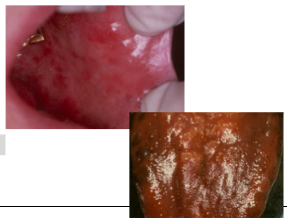
<p><span style="background-color: transparent; font-family: &quot;Times New Roman&quot;, serif;">*More common in <strong>elderly</strong></span></p><p><span style="background-color: transparent; font-family: &quot;Times New Roman&quot;, serif;">*Fatigue, weakness, lightheadedness</span></p><p><span style="background-color: transparent; font-family: &quot;Times New Roman&quot;, serif;">*<strong>Paresthesia, tingling, numbness of extremities</strong></span></p><p><span style="background-color: transparent; font-family: &quot;Times New Roman&quot;, serif;">*Atrophy of gastric mucosa</span></p><p><span style="background-color: transparent; font-family: &quot;Times New Roman&quot;, serif;">*<strong>Increased risk of gastric carcinoma</strong> (1-2%)</span><br></p><p><span style="background-color: transparent; font-family: &quot;Times New Roman&quot;, serif;">ORAL:</span></p><p><span style="background-color: transparent; font-family: &quot;Times New Roman&quot;, serif;"><strong>*Burning sensation of tongue, lips, buccal mucosa</strong></span></p><p><span style="background-color: transparent; font-family: &quot;Times New Roman&quot;, serif;"><strong>*Oral mucosal atrophy and erythema</strong></span></p><p><span style="background-color: transparent; font-family: &quot;Times New Roman&quot;, serif;"><strong>*Atrophic glossitis</strong></span></p><p><span style="background-color: transparent; font-family: &quot;Times New Roman&quot;, serif;"><strong>*”Beefy red tongue”</strong></span></p><p><span style="background-color: transparent; font-family: &quot;Times New Roman&quot;, serif;"><strong>*Yellow-tinged mucosa</strong></span></p>
11
New cards

pernicious anemia diagnosis

*CBC (Increased MCV)

*Peripheral blood smear: megaloblastic (seen in marrow), macrocytic (seen in peripheral blood)

*Low serum cobalamin

*Schilling Test: measures radiolabeled Cobalamin absorption & excretion rates

12
New cards

pernicious anemia treatment

*Monthly intramuscular injections of Cobalamin

*High-dose oral cobalamin

*Periodic evaluation by GI doctor (increased risk of gastric carcinoma)

13
New cards

aplastic anemia etiology

*Failure of precursor cells in bone marrow to mature into all types of blood cells

  - environmental toxins (benzene)

  - drugs (chloramphenicol)

  - infection (non-A, non-B, non-C, non-G hepatitis)

  - genetic disorders (Fanconi’s anemia, dyskeratosis congenital)

  - idiopathic

*Risk of developing recurrent aplastic anemia and acute leukemia

14
New cards

aplastic anemia clinical features

SYSTEMIC:

1. Anemia → fatigue, lightheadedness, weakness

2. Neutropenia → bacterial & fungal infections

3. Thrombocytopenia → bleeding, bruising

ORAL:

1. Anemia → mucosal pallor

2. Neutropenia → oral ulcerations with minimal peripheral erythema

3. Thrombocytopenia → gingival hemorrhage, mucosal petechiae, purpura

*Also see ecchymoisis of eye and mouth
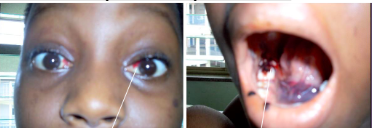
<p><span style="background-color: transparent; font-family: &quot;Times New Roman&quot;, serif;"><u>SYSTEMIC</u>:</span></p><p><span style="background-color: transparent; font-family: &quot;Times New Roman&quot;, serif;">1. <strong>Anemia</strong> → fatigue, lightheadedness, weakness</span></p><p><span style="background-color: transparent; font-family: &quot;Times New Roman&quot;, serif;">2. <strong>Neutropenia</strong> → bacterial &amp; fungal infections</span></p><p><span style="background-color: transparent; font-family: &quot;Times New Roman&quot;, serif;">3.<strong> Thrombocytopenia</strong> → bleeding, bruising</span></p><p></p><p><span style="background-color: transparent; font-family: &quot;Times New Roman&quot;, serif;"><u>ORAL</u>:</span></p><p><span style="background-color: transparent; font-family: &quot;Times New Roman&quot;, serif;">1. Anemia → <strong>mucosal pallor</strong></span></p><p><span style="background-color: transparent; font-family: &quot;Times New Roman&quot;, serif;">2. Neutropenia → <strong>oral ulcerations with minimal peripheral erythema</strong></span></p><p><span style="background-color: transparent; font-family: &quot;Times New Roman&quot;, serif;">3. Thrombocytopenia → <strong>gingival hemorrhage, mucosal petechiae, purpura</strong></span><br></p><p><span style="background-color: transparent; font-family: &quot;Times New Roman&quot;, serif;">*Also see ecchymoisis of eye and mouth</span></p>
15
New cards

aplastic anemia diagnosis

*Pancytopenia (>2 of the following): 

  - <10,000 rbcs /mm3

  - < 500 wbcs/mm3

  - < 20,000 platelets/mm3

16
New cards

aplastic anemia treatment

*Discontinue inciting agent (if drug or toxin)

*Supportive therapy (Abx, blood transfusions)

*Androgenic steroids

*Bone marrow transplant

*Immunosuppressive therapy (Cyclosporine)

Prognosis is guarded – risk of recurrent aplastic anemia and acute leukemia

17
New cards

sickle cell anemia etiology

*AR genetic disorder of Hb synthesis

*Hb molecule prone to molecular aggregation in deoxygenated state → Hb forms long, inflexible chains → rbcs assume rigid, curved shape

*Reduced O2 carrying capacity of sickled rbcs

*Sickled rbcs aggregate and block capillaries

*One allele affected → 40-50% abnormal Hb, sickling only under certain conditions (low O2)

*Both alleles affected → most abnormal Hb
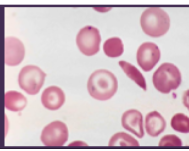
<p><span style="background-color: transparent; font-family: &quot;Times New Roman&quot;, serif;">*AR genetic disorder of Hb synthesis</span></p><p><span style="background-color: transparent; font-family: &quot;Times New Roman&quot;, serif;">*Hb molecule prone to <strong>molecular aggregation in deoxygenated state</strong> → Hb forms long, inflexible chains → rbcs assume <strong>rigid, curved shape</strong></span></p><p></p><p><span style="background-color: transparent; font-family: &quot;Times New Roman&quot;, serif;">*Reduced O2 carrying capacity of sickled rbcs</span></p><p><span style="background-color: transparent; font-family: &quot;Times New Roman&quot;, serif;">*<strong>Sickled rbcs aggregate and block capillaries</strong></span></p><p><span style="background-color: transparent; font-family: &quot;Times New Roman&quot;, serif;">*One allele affected → 40-50% abnormal Hb, sickling only under certain conditions (low O2)</span></p><p><span style="background-color: transparent; font-family: &quot;Times New Roman&quot;, serif;">*Both alleles affected → most abnormal Hb</span></p>
18
New cards

sickle cell anemia epidemiology

*Trait: 8% of AA

*Disease: 1:350-400 AA

*Geographic predilection – where malaria is endemic (Africa, Mediterranean, Asia)

  → sickle cell trait = resistance to malaria

19
New cards

clinical features of sickle cell anemia

SYSTEMIC:

*Chronic hemolytic anemia

*Ischemia, infarction, ulcers of distal extremities

*Infections (due to destruction of spleen)

*Impaired kidney function

*Ocular damage

*CNS damage/stroke

*Sickle Cell Crisis = severe sickling of rbcs

  - precipitated by hypoxia, infection, hypothermia, dehydration

  - extreme pain from ischemia and infarction of tissues

  - mostly affect long bones, lungs, and abdomen

  - pulmonary involvement = acute chest syndrome

ORAL:

*Reduced trabecular pattern

*Enlarged marrow spaces

*“Hair-on-end” on skull x-ray

*Increased prevalence of osteomyelitis

*Spontaneous, asymptomatic pulpal necrosis
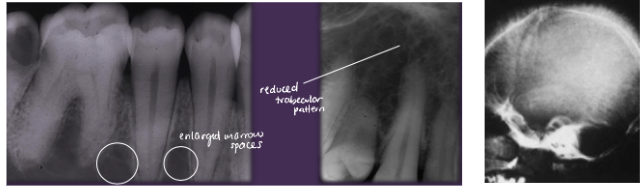
<p><span style="background-color: transparent; font-family: &quot;Times New Roman&quot;, serif;"><u>SYSTEMIC</u>:</span></p><p><span style="background-color: transparent; font-family: &quot;Times New Roman&quot;, serif;">*Chronic hemolytic anemia</span></p><p><span style="background-color: transparent; font-family: &quot;Times New Roman&quot;, serif;">*Ischemia, infarction, ulcers of distal extremities</span></p><p><span style="background-color: transparent; font-family: &quot;Times New Roman&quot;, serif;">*Infections (due to destruction of spleen)</span></p><p><span style="background-color: transparent; font-family: &quot;Times New Roman&quot;, serif;">*Impaired kidney function</span></p><p><span style="background-color: transparent; font-family: &quot;Times New Roman&quot;, serif;">*Ocular damage</span></p><p><span style="background-color: transparent; font-family: &quot;Times New Roman&quot;, serif;">*CNS damage/stroke</span></p><p><span style="background-color: transparent; font-family: &quot;Times New Roman&quot;, serif;">*<strong>Sickle Cell Crisis</strong> = severe sickling of rbcs</span></p><p><span style="background-color: transparent; font-family: &quot;Times New Roman&quot;, serif;">&nbsp;&nbsp;- <strong>precipitated by hypoxia, infection, hypothermia, dehydration</strong></span></p><p><span style="background-color: transparent; font-family: &quot;Times New Roman&quot;, serif;">&nbsp;&nbsp;- extreme pain from ischemia and infarction of tissues</span></p><p><span style="background-color: transparent; font-family: &quot;Times New Roman&quot;, serif;">&nbsp;&nbsp;- mostly affect long bones, lungs, and abdomen</span></p><p><span style="background-color: transparent; font-family: &quot;Times New Roman&quot;, serif;">&nbsp;&nbsp;- pulmonary involvement = acute chest syndrome<br></span></p><p><span style="background-color: transparent; font-family: &quot;Times New Roman&quot;, serif;"><u>ORAL</u>:</span></p><p><span style="background-color: transparent; font-family: &quot;Times New Roman&quot;, serif;">*Reduced trabecular pattern</span></p><p><span style="background-color: transparent; font-family: &quot;Times New Roman&quot;, serif;">*Enlarged marrow spaces</span></p><p><span style="background-color: transparent; font-family: &quot;Times New Roman&quot;, serif;"><strong>*“Hair-on-end” on skull x-ray</strong></span></p><p><span style="background-color: transparent; font-family: &quot;Times New Roman&quot;, serif;">*Increased prevalence of osteomyelitis</span></p><p><span style="background-color: transparent; font-family: &quot;Times New Roman&quot;, serif;">*<strong>Spontaneous, asymptomatic pulpal necrosis</strong></span></p>
20
New cards

sickle cell anemia treatment

*Avoid precipitating events

*Supportive care (fluids, rest, anelgesics)

*Hydroxyurea (inhibits polymerization of abnormal Hb, reduces adherence of RBCs to vessel walls)

*Bone marrow transplant

*Genetic counseling

21
New cards

hemoglobinopathies- thalassemia etiology

*AR genetic disorder characterized by reduced synthesis of alpha-globin or beta-globin chains of Hb molecule

*Hb structure:

  - tetramer of 2 alpha and 2 beta chains

  - 4 genes → alpha chain; 2 genes → beta chain

*Defective production of 1 chain → reduced amounts of Hb and abnormal rbcs

*Abnormal rbcs sequestered in spleen & destroyed → hemolytic anemia

22
New cards

thalassemia epidemiology

*Geographic predilection: Mediterranean, Africa, India, SE Asia

*Thalassemia trait = malaria resistance

23
New cards

beta-thalassemia genetics

*remember: 4 genes code for alpha, 2 for beta 

*Beta-Thalassemia Minor:

  - 1 beta globin gene defective

  - clinically insignificant disease

*Beta-Thalassemia Major (Cooley’s Anemia)

  - 2 beta globin genes defective

24
New cards

beta-thalassemia clinical features

Thalassemia Major

*Manifestations at ~1 yr

*Hemolytic anemia

*Increased hematopoiesis with bone marrow hyperplasia 

and enlarged marrow spaces

*”Hair-on-end” appearance on skull xray

*Enlargement of liver & spleen, lymphadenopathy

*Enlargement of maxilla and mandible (“chipmunk faces”)

*Altered trabecular pattern
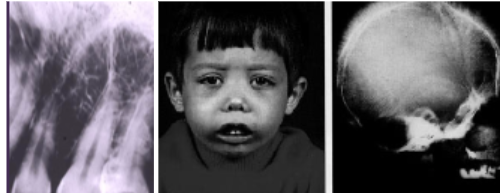
<p><span style="background-color: transparent; font-family: &quot;Times New Roman&quot;, serif;">Thalassemia Major</span></p><p><span style="background-color: transparent; font-family: &quot;Times New Roman&quot;, serif;">*Manifestations at ~1 yr</span></p><p><span style="background-color: transparent; font-family: &quot;Times New Roman&quot;, serif;">*Hemolytic anemia</span></p><p><span style="background-color: transparent; font-family: &quot;Times New Roman&quot;, serif;">*<strong>Increased hematopoiesis with bone marrow hyperplasia&nbsp;</strong></span></p><p><span style="background-color: transparent; font-family: &quot;Times New Roman&quot;, serif;"><strong>and enlarged marrow spaces</strong></span></p><p><span style="background-color: transparent; font-family: &quot;Times New Roman&quot;, serif;">*”<strong>Hair-on-end” </strong>appearance on skull xray</span></p><p><span style="background-color: transparent; font-family: &quot;Times New Roman&quot;, serif;">*Enlargement of liver &amp; spleen, lymphadenopathy</span></p><p><span style="background-color: transparent; font-family: &quot;Times New Roman&quot;, serif;"><strong>*Enlargement of maxilla and mandible (“chipmunk faces”)</strong></span></p><p><span style="background-color: transparent; font-family: &quot;Times New Roman&quot;, serif;"><strong>*Altered trabecular pattern</strong></span></p>
25
New cards

beta-thalassemia treatment

*Blood transfusions every 2-3 weeks

  - complicated by iron overload

*Bone marrow transplant

*Surgical Recontouring for abnormal faces

26
New cards

beta-thalassemia prognosis

*Without therapy: tissue hypoxia, bacterial infections, cardiac failure by 1 yo

*With therapy: relatively normal lifespan

27
New cards

alpha-thalassemia genetics

*remember: 4 genes code for alpha, 2 for beta 

*No disease – 1 gene defective

*Alpha Thalassemia Trait – 2 genes defective

*HbH Disease – 3 genes defective

*Hydrops Fetalis – 4 genes defective  (fatal within a few hours of birth)

28
New cards

alpha-thalassemia clinical features

*Alpha Thalassemia Trait

  - mild anemia, may be clinically insignificant

*HbH Disease

  - more severe hemolytic anemia, splenomegaly

29
New cards

alpha-thalassemia treatment

*Iron and Folic Acid supplementation

  - caution: iron overload (hemochromatosis)

*General Supportive care

  - transfusions, may be needed periodically

*Splenectomy – risk of infection

*Severe cases: allogeneic hematopoetic stem cell transplant (curative)

30
New cards

polycythemia vera etiology

*Idiopathic disorder characterized by increased mass of rbcs 

and abnormal proliferation of marrow stem cells  

*Myeloproliferative Disease

*Increase in wbcs and platelets

*Cells function normally, just in excess (very crowded smear)

→ % of rbcs in blood may be so high 

blood ceases to flow in some smaller vessels and capillaries
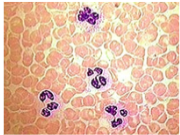
<p><span style="background-color: transparent; font-family: &quot;Times New Roman&quot;, serif;">*Idiopathic disorder characterized by <strong>increased mass of rbcs&nbsp;</strong></span></p><p><span style="background-color: transparent; font-family: &quot;Times New Roman&quot;, serif;"><strong>and abnormal proliferation of marrow stem cells</strong>&nbsp;&nbsp;</span></p><p><span style="background-color: transparent; font-family: &quot;Times New Roman&quot;, serif;">*Myeloproliferative Disease</span></p><p><span style="background-color: transparent; font-family: &quot;Times New Roman&quot;, serif;">*Increase in wbcs and platelets</span></p><p><span style="background-color: transparent; font-family: &quot;Times New Roman&quot;, serif;">*Cells function normally, just in excess (very crowded smear)</span></p><p><span style="background-color: transparent; font-family: &quot;Times New Roman&quot;, serif;">→ % of rbcs in blood may be so high&nbsp;</span></p><p><span style="background-color: transparent; font-family: &quot;Times New Roman&quot;, serif;">→ <strong>blood ceases to flow in some smaller vessels and capillaries</strong></span></p>
31
New cards

polycythemia vera clinical features

*Older adults ~ 60 yrs

*Symptoms: nonspecific – HA, weakness, dizziness, visual disturbances, sweating, weight loss

*Ruddy complexion

*Pruritis – 40%

*Transient ischemic attacks, stroke, heart attacks – related to thrombosis

*Erythema and burning of hands and feet, gangrene and necrosis (related to thrombosis)


ORAL:

*Excessive hemorrhage – including gingiva
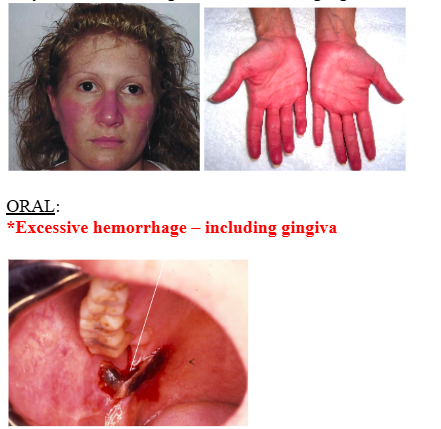
<p><span style="background-color: transparent; font-family: &quot;Times New Roman&quot;, serif;">*<strong>Older adults ~ 60 yrs</strong></span></p><p><span style="background-color: transparent; font-family: &quot;Times New Roman&quot;, serif;">*Symptoms: nonspecific – HA, weakness, dizziness, visual disturbances, sweating, weight loss</span></p><p><span style="background-color: transparent; font-family: &quot;Times New Roman&quot;, serif;">*<strong>Ruddy complexion</strong></span></p><p><span style="background-color: transparent; font-family: &quot;Times New Roman&quot;, serif;">*<strong>Pruritis – 40%</strong></span></p><p><span style="background-color: transparent; font-family: &quot;Times New Roman&quot;, serif;">*Transient ischemic attacks, stroke, heart attacks – related to thrombosis</span></p><p><span style="background-color: transparent; font-family: &quot;Times New Roman&quot;, serif;">*Erythema and burning of hands and feet, gangrene and necrosis (related to thrombosis)</span></p><p><br><span style="background-color: transparent; font-family: &quot;Times New Roman&quot;, serif;"><u>ORAL</u>:</span></p><p><span style="background-color: transparent; font-family: &quot;Times New Roman&quot;, serif;"><strong>*Excessive hemorrhage – including gingiva</strong></span></p>
32
New cards

polycythemia vera treatment

*Phlebotomy – removal of blood (risk of thrombosis)

*Aspirin therapy – to reduce thrombotic events

*Myelosuppressive Therapy/Chemotherpeutic Drugs (risk of leukemia)

33
New cards

polycythemia vera prognosis

*Fair: average survival 10-12 years after diagnosis

*2-10% develop acute leukemia

34
New cards

leukemia etiology

*Malignant proliferation of hematopoetic stem cell derivatives (may be component of a syndrome – Down, Bloom, Klinefelter)

*Increased risk associated with exposure to certain environmental agents (pesticides, benzene, ionizing radiation)

*Generally bone marrow involvement

Classification:

  1. Acute Myeloid broad age range

  2. Chronic Myeloid – primarily affects adults

                 - Philadelphia Chromosome – translocation of long arms of chromosomes

  1. Acute Lymphoblastic – primarily affects children

Chronic Lymphoblastic – primarily affects adults

35
New cards

clinical features of leukemia

*Due to reduction of rbcs and wbcs caused by crowding out of normal marrow cells by malignant leukemic cells → myelophthisic anemia

SYSTEMIC:

*Anemia → fatigue

*Neutropenia → ulcerations, bacterial, fungal, viral infections

*Thrombocytopenia → bleeding, bruising

ORAL:

*Mucosal pallor

*Mucosal petechiae, purpura

*Ulcerations

*Fungal infections (eg candidiasis)

*Viral Infections (eg herpetic lesions)

*Gingival Leukemic Infiltrate = tumor-like collection of leukemic cells (granulocytic sarcoma or extramedullary myeloid leukemia, old term = chloroma), usually myeloid, type, spontaneous bleeding (no spontaneous bleeding in benign hyperplasia)
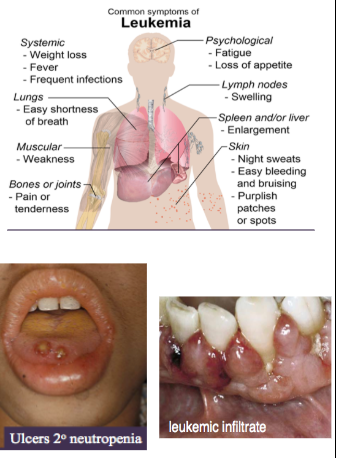
<p><span style="background-color: transparent; font-family: &quot;Times New Roman&quot;, serif;">*Due to reduction of rbcs and wbcs caused by&nbsp;crowding out of normal marrow cells by&nbsp;malignant leukemic cells → <strong>myelophthisic anemia</strong></span><br></p><p><span style="background-color: transparent; font-family: &quot;Times New Roman&quot;, serif;"><u>SYSTEMIC</u>:</span></p><p><span style="background-color: transparent; font-family: &quot;Times New Roman&quot;, serif;">*Anemia → fatigue</span></p><p><span style="background-color: transparent; font-family: &quot;Times New Roman&quot;, serif;">*Neutropenia → ulcerations, bacterial, fungal, viral infections</span></p><p><span style="background-color: transparent; font-family: &quot;Times New Roman&quot;, serif;">*Thrombocytopenia → bleeding, bruising</span><br></p><p><span style="background-color: transparent; font-family: &quot;Times New Roman&quot;, serif;"><u>ORAL</u>:</span></p><p><span style="background-color: transparent; font-family: &quot;Times New Roman&quot;, serif;"><strong>*Mucosal pallor</strong></span></p><p><span style="background-color: transparent; font-family: &quot;Times New Roman&quot;, serif;"><strong>*Mucosal petechiae, purpura</strong></span></p><p><span style="background-color: transparent; font-family: &quot;Times New Roman&quot;, serif;"><strong>*Ulcerations</strong></span></p><p><span style="background-color: transparent; font-family: &quot;Times New Roman&quot;, serif;"><strong>*Fungal infections (eg candidiasis)</strong></span></p><p><span style="background-color: transparent; font-family: &quot;Times New Roman&quot;, serif;"><strong>*Viral Infections (eg herpetic lesions)</strong></span></p><p><span style="background-color: transparent; font-family: &quot;Times New Roman&quot;, serif;"><strong>*Gingival Leukemic Infiltrate = tumor-like&nbsp;collection of leukemic cells (granulocytic sarcoma or extramedullary myeloid leukemia,&nbsp;old term = chloroma), usually <u>myeloid, type, </u>spontaneous bleeding (no spontaneous&nbsp;bleeding in benign hyperplasia)</strong></span></p>
36
New cards

treatment of leukemia

*Chemotherapy + radiation

*Bone marrow transplant

*Supportive care (blood transfusions, Abx)

*Encourage optimal oral hygiene

37
New cards

leukemia prognosis

*Depend on type, age, other factors

*5 year survival rates:

  - older patients with AML = 10-20%

  - children with ALL = 70%

38
New cards

lymphoma etiology

*Group of malignant solid tumors involving cells of the lymphoreticular or immune system (T/B Cells)

*Most arise within lymph node (vs leukemias which begin in bone marrow and are characterized by malignant cells circulating in peripheral blood)

*Unknown etiology – viruses?

*2 major categories:

  - Hodgkin’s Disease

  - Non-Hodgkin’s Lymphoma

39
New cards

Non-Hodgkin’s lymphoma epidemiology

*Lymphoma of oral cavity is rare (more often Non-Hodgkin’s type: 3-5%) 

  - oral lesions rarely initial presentation

*Primarily affects adults (66 yrs)

*Male 

*Increased incidence in AIDS

40
New cards

Non-Hodgkin’s Lymphoma clinical features

*Most common presentation: painless, persistent enlargement of lymph nodes

*Extra nodal disease can occur → mainly presents in soft tissue

*Usually in patients >40 y/o

*Increased incidence in AIDS patients


ORAL:

*Enlarged tonsil, painless palatal swelling, or gingival mass (may mimic inflammatory disease)

*Tumor isnontender, diffuse, boggy, discolored swelling (+/- ulcerated)

*Rarely can occur in jaw bones
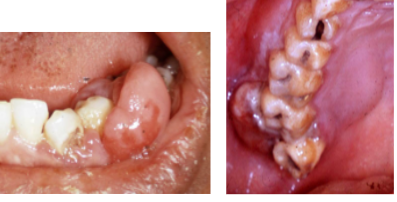
<p><span style="background-color: transparent; font-family: &quot;Times New Roman&quot;, serif;">*Most common presentation: <strong>painless, persistent enlargement of lymph nodes</strong></span></p><p><span style="background-color: transparent; font-family: &quot;Times New Roman&quot;, serif;">*Extra nodal disease can occur → mainly presents in soft tissue</span></p><p><span style="background-color: transparent; font-family: &quot;Times New Roman&quot;, serif;">*Usually in patients &gt;40 y/o</span></p><p><span style="background-color: transparent; font-family: &quot;Times New Roman&quot;, serif;">*Increased incidence in AIDS patients</span></p><p><br></p><p><span style="background-color: transparent; font-family: &quot;Times New Roman&quot;, serif;"><u>ORAL</u>:</span></p><p><span style="background-color: transparent; font-family: &quot;Times New Roman&quot;, serif;"><strong>*Enlarged tonsil, painless palatal swelling, or gingival mass (may mimic inflammatory disease)</strong></span></p><p><span style="background-color: transparent; font-family: &quot;Times New Roman&quot;, serif;"><strong>*Tumor isnontender, diffuse, boggy,</strong> <strong>discolored swelling (+/- ulcerated)</strong></span></p><p><span style="background-color: transparent; font-family: &quot;Times New Roman&quot;, serif;"><strong>*Rarely can occur in jaw bones</strong></span></p>
41
New cards

Non-Hodgkin’s Lymphoma pathology

-diffuse sheet of inflammatory cells
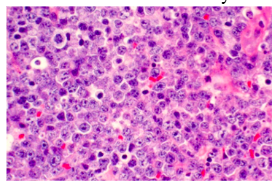
<p>-diffuse sheet of inflammatory cells</p>
42
New cards

Non-Hodgkin’s Lymphoma treatment

-radiation and/or chemotherapy

43
New cards

Non-Hodgkin’s Lymphoma prognosis

-5 year survival ~50%

44
New cards

Burkitt’s lymphoma epidemiology

*Unique high grade non-Hodgkin’s Lymphoma, very rapid growth

*t(8:14)

*2 types: 

  - African – 6 years, 2x M, EBV found in 90%

  - American – 11 years, no gender predeliction, EBV found in 10% of American

45
New cards

Burkitt’s lymphoma clinical features

African Type:

*Primarily involves jaw bones (most often maxilla) with secondary visceral involvement

American Type:

*Primarily presents as abdominal swelling  - only 15% jaw involvement → Jaw involvement in both types = rapidly growing mass, teeth become mobile and can exfoliate

Radiograph:

*Destructive, ragged, “moth-eaten” radiolucency

*Teeth “floating in air”

Histology:

*Diffuse small lymphocytes with “starry sky”

  - sky = lymphocytes

  - stars – macrophages
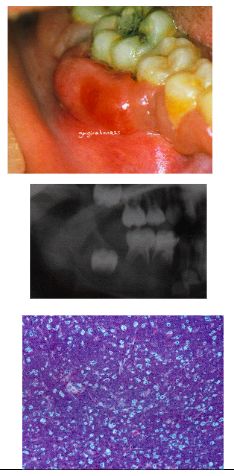
<p><span style="background-color: transparent; font-family: &quot;Times New Roman&quot;, serif;"><u>African Type:</u></span></p><p><span style="background-color: transparent; font-family: &quot;Times New Roman&quot;, serif;">*<strong>Primarily involves jaw bones (most often maxilla</strong>) with secondary visceral involvement</span></p><p><span style="background-color: transparent; font-family: &quot;Times New Roman&quot;, serif;"><u>American Type:</u></span></p><p><span style="background-color: transparent; font-family: &quot;Times New Roman&quot;, serif;">*<strong>Primarily presents as abdominal swelling</strong>&nbsp; - only 15% jaw involvement → <strong>Jaw involvement in both types = rapidly growing mass, teeth become mobile and can exfoliate</strong></span><br></p><p><span style="background-color: transparent; font-family: &quot;Times New Roman&quot;, serif;"><u>Radiograph</u>:</span></p><p><span style="background-color: transparent; font-family: &quot;Times New Roman&quot;, serif;"><strong>*Destructive, ragged, “moth-eaten” radiolucency</strong></span></p><p><span style="background-color: transparent; font-family: &quot;Times New Roman&quot;, serif;"><strong>*Teeth “floating in air”</strong></span><br></p><p><span style="background-color: transparent; font-family: &quot;Times New Roman&quot;, serif;"><u>Histology</u>:</span></p><p><span style="background-color: transparent; font-family: &quot;Times New Roman&quot;, serif;">*Diffuse small lymphocytes with <strong>“starry sky”</strong></span></p><p><span style="background-color: transparent; font-family: &quot;Times New Roman&quot;, serif;">&nbsp;&nbsp;- sky = lymphocytes</span></p><p><span style="background-color: transparent; font-family: &quot;Times New Roman&quot;, serif;">&nbsp;&nbsp;- stars – macrophages</span></p>
46
New cards

Burkitt’s lymphoma treatment

-chemotherapy

47
New cards

Burkitt’s lymphoma prognosis

-depends on volume of tumor at initiation of chemo → tumor often surgically debulked first

-survival rate ~70%

48
New cards

extranodal NK/T-cell lymphoma (angiocentric T cell lymphoma, midline lethal granuloma) clinical features

*Rare, affects mainly adults

*Most frequent in Asian, Guatemalan, & Peruvian 

*Destruction of midline structures of palate and nasal fossa

*Pain, nasal stuffiness, epistaxis, swelling of palate, 

ulceration, oral-antral communication
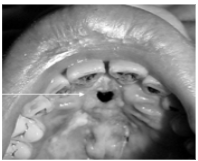
<p><span style="background-color: transparent; font-family: &quot;Times New Roman&quot;, serif;">*Rare, affects mainly <strong>adults</strong></span></p><p><span style="background-color: transparent; font-family: &quot;Times New Roman&quot;, serif;">*Most frequent in <strong>Asian, Guatemalan, &amp; Peruvian</strong>&nbsp;</span></p><p></p><p><span style="background-color: transparent; font-family: &quot;Times New Roman&quot;, serif;">*<strong>Destruction of midline structures of palate and nasal fossa</strong></span></p><p><span style="background-color: transparent; font-family: &quot;Times New Roman&quot;, serif;">*Pain, nasal stuffiness, epistaxis, swelling of palate,&nbsp;</span></p><p><span style="background-color: transparent; font-family: &quot;Times New Roman&quot;, serif;">ulceration, oral-antral communication</span></p>
49
New cards

extranodal NK/T-cell lymphoma treatment and prognosis

*Tumor responds well to radiation

*Good prognosis with early treatment

*Untreated → secondary infection, hemorrhage, involvement of vital structures → death

50
New cards

neutropenia etiology

*Decreased number of circulating neutrophils (<1500/mm3)

*Decreased production or increased destructed of neutrophils

*Congenital or acquired

*Benign Ethnic Neutropenia: several ethnic groups (African, Middle eastern) will consistently have neutrophil counts that would qualify as neutropenia, yet are otherwise healthy

51
New cards

causes of acquired neutropenia

*Destruction of bone marrow by malignancy or metabolic disease

*Drugs (chemotherapy, penicillins, sulfonamides, diuretics, tranquilizers, phenothiazines)

*Nutritional deficiencies (B12, folate)

*Viral Infections (hepatitis, rubella, measles, HIV)

*Bacterial Infections (TB)

*Autoimmune Diseases (SLE)

52
New cards

neutropenia clinical features

*Bacterial > Viral/Fungal infections

  - may demonstrate reduced suppuration/abscess formation

  - Common infection site = middle ear, oral cavity, perirectal area

ORAL:

*Infection of oral mucosa may be initial sign!

*Ulcerations (minimal peripheral erythema, usually gingiva, 

biopsies show neutrophilic infiltrate)

*Premature periodontal disease
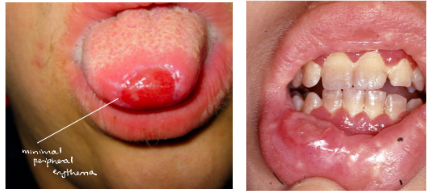
<p><span style="background-color: transparent; font-family: &quot;Times New Roman&quot;, serif;">*<strong>Bacterial</strong> &gt; Viral/Fungal infections</span></p><p><span style="background-color: transparent; font-family: &quot;Times New Roman&quot;, serif;">&nbsp;&nbsp;- may demonstrate reduced suppuration/abscess formation</span></p><p><span style="background-color: transparent; font-family: &quot;Times New Roman&quot;, serif;">&nbsp;&nbsp;- Common infection site = middle ear, oral cavity, perirectal area</span><br></p><p><span style="background-color: transparent; font-family: &quot;Times New Roman&quot;, serif;">ORAL:</span></p><p><span style="background-color: transparent; font-family: &quot;Times New Roman&quot;, serif;"><strong>*<u>Infection of oral mucosa may be initial sign!</u></strong></span></p><p><span style="background-color: transparent; font-family: &quot;Times New Roman&quot;, serif;"><strong>*Ulcerations</strong> (minimal peripheral erythema, usually gingiva,&nbsp;</span></p><p><span style="background-color: transparent; font-family: &quot;Times New Roman&quot;, serif;">biopsies show neutrophilic infiltrate)</span></p><p><span style="background-color: transparent; font-family: &quot;Times New Roman&quot;, serif;"><strong>*Premature periodontal disease</strong></span></p>
53
New cards

neutropenia treatment

*Abx (for infections)

*Encourage optimal oral hygiene

*G-CSF – promotes growth and differentiation of neutrophils

54
New cards

cyclic neutropenia etiology

*Idiopathic periodic reductions in neutrophil counts

*May be related to defect in bone marrow stem cells

*Most sporadic, some inherited (AD)

*Neutrophil count lowest (nadir) for 3-5 days in ~21 day cycles

*Incidence 1/1,000,000

*Diagnosed in childhood

  - diagnosed with sequential complete blood counts (2-3x/week for 8 weeks)

  - neutrophil count <500/mm3 for 3-5 days for at least 3 successive 21 day cycles

55
New cards

cyclic neutropenia clinical features

*Related to neutrophil count at nadir

  - recurrent fever, cervical lymphadenopathy, pharyngitis, malaise, ulcerations of GI tract

ORAL:

*Ulceration of mucosa with minor trauma 

   - gingiva, lips, tongue, buccal mucosa

   - with reduced neutrophilic infiltrate

*Severe periodontal bone loss

*Tooth mobility

*Marked gingival recession
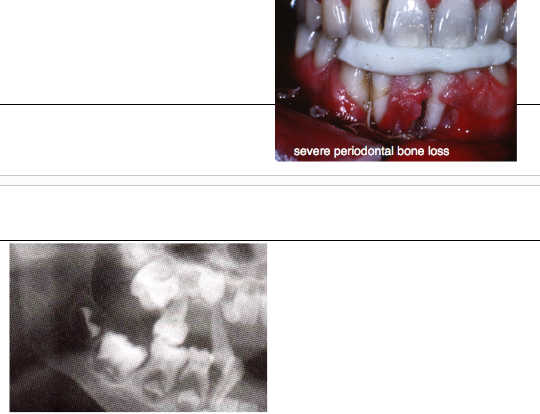
<p><span style="background-color: transparent; font-family: &quot;Times New Roman&quot;, serif;">*Related to neutrophil count at nadir</span></p><p><span style="background-color: transparent; font-family: &quot;Times New Roman&quot;, serif;">&nbsp;&nbsp;- recurrent fever, cervical lymphadenopathy, pharyngitis, malaise, ulcerations of GI tract</span><br></p><p><span style="background-color: transparent; font-family: &quot;Times New Roman&quot;, serif;">ORAL:</span></p><p><span style="background-color: transparent; font-family: &quot;Times New Roman&quot;, serif;"><strong>*Ulceration of mucosa with minor trauma&nbsp;</strong></span></p><p><span style="background-color: transparent; font-family: &quot;Times New Roman&quot;, serif;"><strong>&nbsp;&nbsp;&nbsp;- <u>gingiva</u>, lips, tongue, buccal mucosa</strong></span></p><p><span style="background-color: transparent; font-family: &quot;Times New Roman&quot;, serif;">&nbsp;&nbsp;&nbsp;- with reduced neutrophilic infiltrate</span></p><p><span style="background-color: transparent; font-family: &quot;Times New Roman&quot;, serif;"><strong>*Severe periodontal bone loss</strong></span></p><p><span style="background-color: transparent; font-family: &quot;Times New Roman&quot;, serif;"><strong>*Tooth mobility</strong></span></p><p><span style="background-color: transparent; font-family: &quot;Times New Roman&quot;, serif;"><strong>*Marked gingival recession</strong></span></p>
56
New cards

cyclic neutropenia treatment

*ABx (for infections)

*Encourage optimal oral hygiene

*G-CSF several times weekly → reduced duration of nadir and severity of infections/ulcerations

57
New cards

agranulocytosis etiology

*Absence of cells of granulocytic series – especially neutrophils

*Decreased production or increased destruction

*Most drug-induced, some idiopathic

58
New cards

agranulocytosis clinical features

*Bacterial infections, malaise, sore throat, fever (a few days after drug is taken)

ORAL:

*Necrotizing, punched-out, deep mucosal ulcerations 

  - buccal mucosa, tongue, palate

  - sparse inflammation and abundant bacterial colonies

*Gingivitis resembling necrotizing ulcerative gingivitis (NUG)
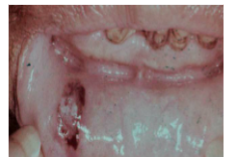
<p><span style="background-color: transparent; font-family: &quot;Times New Roman&quot;, serif;">*Bacterial infections, malaise, sore throat, fever (a few days after drug is taken)</span><br></p><p><span style="background-color: transparent; font-family: &quot;Times New Roman&quot;, serif;"><u>ORAL</u>:</span></p><p><span style="background-color: transparent; font-family: &quot;Times New Roman&quot;, serif;">*<strong>Necrotizing, punched-out, deep mucosal ulcerations&nbsp;</strong></span></p><p><span style="background-color: transparent; font-family: &quot;Times New Roman&quot;, serif;"><strong>&nbsp;&nbsp;- buccal mucosa, tongue, palate</strong></span></p><p><span style="background-color: transparent; font-family: &quot;Times New Roman&quot;, serif;">&nbsp;&nbsp;- sparse inflammation and abundant bacterial colonies</span></p><p><span style="background-color: transparent; font-family: &quot;Times New Roman&quot;, serif;">*<strong>Gingivitis resembling necrotizing ulcerative gingivitis&nbsp;(NUG)</strong></span></p>
59
New cards

agranulocytosis treatment

*Discontinue offending drug (count returns to normal in 10-14 days, longer for chemotherapeutic drugs)

*Abx (for infections)

*Encourage optimal oral hygiene

*Chlorhexidine mouth rinses

*G-CSF when counts don’t return to normal

60
New cards

multiple myeloma etiology

*Malignant neoplasm of plasma cells 

*Involves many bones in the body: vertebrae, ribs, skull, jaw (5-30%)

*40+ years
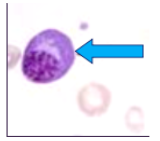
<p><span style="background-color: transparent; font-family: &quot;Times New Roman&quot;, serif;">*<strong>Malignant neoplasm of plasma cells</strong>&nbsp;</span></p><p><span style="background-color: transparent; font-family: &quot;Times New Roman&quot;, serif;">*Involves many bones in the body: vertebrae, ribs, skull, jaw (5-30%)</span></p><p><span style="background-color: transparent; font-family: &quot;Times New Roman&quot;, serif;">*<strong>40+ years</strong></span></p>
61
New cards

multiple myeloma clinical features

SYSTEMIC:

*Most common: skeletal pain – due to bone lysis by accumulation of tumor cells → multiple punched out radiolucencies with ill-defined margins/lack sclerotic border → pathological fractures

*Renal failure

*Severe bacterial infections

*Clotting defects → dental management considerations (bisphosphonate exposure?)

*Histology: sheets of plasma cells in various degrees of differentiation

ORAL:

*Jaw lesions → pain, swelling, numbness, tooth mobility

*Amyloid deposits throughout body: tongue, vestibule
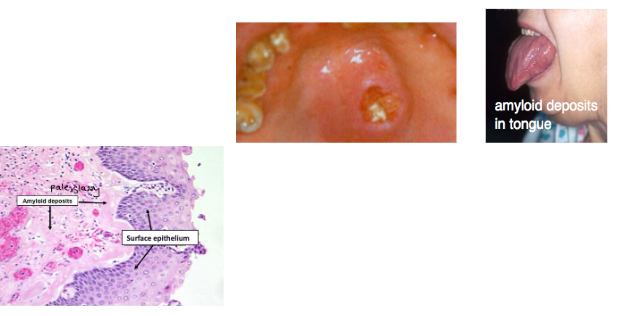
<p><span style="background-color: transparent; font-family: &quot;Times New Roman&quot;, serif;"><u>SYSTEMIC</u>:</span></p><p><span style="background-color: transparent; font-family: &quot;Times New Roman&quot;, serif;">*<strong>Most common: skeletal pain – due to bone&nbsp;lysis by accumulation of tumor cells </strong>→ multiple punched out radiolucencies with ill-defined margins/lack sclerotic border → pathological fractures</span></p><p><span style="background-color: transparent; font-family: &quot;Times New Roman&quot;, serif;">*Renal failure</span></p><p><span style="background-color: transparent; font-family: &quot;Times New Roman&quot;, serif;">*<strong>Severe bacterial infections</strong></span></p><p><span style="background-color: transparent; font-family: &quot;Times New Roman&quot;, serif;">*<strong>Clotting defects → dental management considerations&nbsp;(bisphosphonate exposure?)</strong></span></p><p><span style="background-color: transparent; font-family: &quot;Times New Roman&quot;, serif;">*Histology: sheets of plasma cells in&nbsp;various degrees of differentiation</span><br></p><p><span style="background-color: transparent; font-family: &quot;Times New Roman&quot;, serif;"><u>ORAL</u>:</span></p><p><span style="background-color: transparent; font-family: &quot;Times New Roman&quot;, serif;"><strong>*Jaw lesions → pain, swelling, numbness, tooth mobility</strong></span></p><p><span style="background-color: transparent; font-family: &quot;Times New Roman&quot;, serif;"><strong>*Amyloid deposits throughout body: tongue, vestibule</strong></span></p>
62
New cards

multiple myeloma histology

*sheets of plasma cells in various degrees of differentiation

*plasma cells have eccentric nucleus, perinuclear halo, clockface nucleus
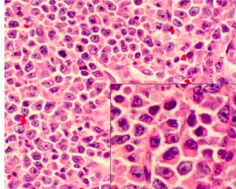
<p><span style="background-color: transparent; font-family: &quot;Times New Roman&quot;, serif;">*sheets of plasma cells in various degrees of differentiation</span></p><p><span style="background-color: transparent; font-family: &quot;Times New Roman&quot;, serif;">*plasma cells have eccentric nucleus, perinuclear halo, clockface nucleus</span></p>
63
New cards

multiple myeloma treatment

*Chemotherapy

*Radiation for local symptomatic lesions

*Stem cell transplant

64
New cards

multiple myeloma prognosis

*Poor prognosis

*Average survival: 2-3 yrs with chemo/radiation

*Younger patients have better prognosis

*Better with stem cell transplant (~25% remission)

Note: dental management considerations – increased risk of hemorrhage nad increased susceptibility to infection, bisphosphonate exposure?

65
New cards

Langerhans Cell Histiocytosis (LCH)

*Clonal proliferation of Langerhans Cells = type of APC usually seen in suprabasal layer of epidermis/mucosa

*Pulmonary Langerhans Cell Histiocytosis: unique form that occurs almost exclusively in cigarette smokers

  - now considered a form of smoking-related interstitial lung disease

  - some recover after quitting

  - other develop pulmonary fibrosis, pulmonary HTN

66
New cards

LCH diagnosis

*Biopsy: diffuse infiltration of lymphocytes, plasma cells, eosinophils, 

  - large pale staining “histiocytes”/Langerhans Cells indented kidney bean shaped nuclei

*Immunostaining to identify 

Langerhans Cells: S-100+, CD1-a+

*Electron Microscopy: former gold standard 

  - Birbeck Granules (rod shaped structures in cytoplasm)
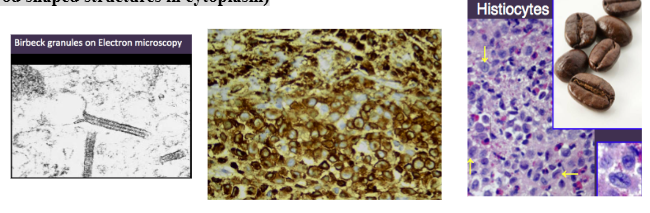
<p><span style="background-color: transparent; font-family: &quot;Times New Roman&quot;, serif;">*Biopsy: diffuse infiltration of lymphocytes, plasma cells, eosinophils,&nbsp;</span></p><p><span style="background-color: transparent; font-family: &quot;Times New Roman&quot;, serif;">&nbsp;&nbsp;- <strong>large pale staining “histiocytes”/Langerhans Cells&nbsp;indented kidney bean shaped nuclei</strong></span></p><p><span style="background-color: transparent; font-family: &quot;Times New Roman&quot;, serif;">*Immunostaining to identify&nbsp;</span></p><p><span style="background-color: transparent; font-family: &quot;Times New Roman&quot;, serif;">Langerhans Cells: <strong>S-100+, CD1-a+</strong></span></p><p><span style="background-color: transparent; font-family: &quot;Times New Roman&quot;, serif;">*Electron Microscopy: former gold standard&nbsp;</span></p><p><span style="background-color: transparent; font-family: &quot;Times New Roman&quot;, serif;">&nbsp;&nbsp;- <strong>Birbeck Granules&nbsp;(rod shaped structures in cytoplasm)</strong></span></p>
67
New cards

Letter-Siwe disease (multifocal multisystem) clinical features

*Occurs before age 3

*Most acute form

*Skin rash, enlarged spleen, liver, lymph nodes
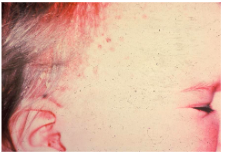
<p><span style="background-color: transparent; font-family: &quot;Times New Roman&quot;, serif;">*Occurs <strong>before age 3</strong></span></p><p><span style="background-color: transparent; font-family: &quot;Times New Roman&quot;, serif;">*<strong>Most acute</strong> form</span></p><p><span style="background-color: transparent; font-family: &quot;Times New Roman&quot;, serif;">*<strong>Skin rash</strong>, enlarged spleen, liver, lymph nodes</span></p>
68
New cards

Letter-Siwe disease oral manifestations

*Ulcerated gingival lesions 

*Diffuse bone destruction with loss of teeth

*Significant oral involvement may not occur due to rapid course → death
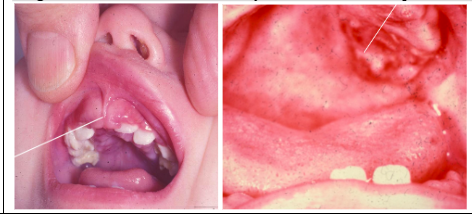
<p><span style="background-color: transparent; font-family: &quot;Times New Roman&quot;, serif;"><strong>*Ulcerated gingival lesions&nbsp;</strong></span></p><p><span style="background-color: transparent; font-family: &quot;Times New Roman&quot;, serif;"><strong>*Diffuse bone destruction with loss of teeth</strong></span></p><p><span style="background-color: transparent; font-family: &quot;Times New Roman&quot;, serif;">*Significant oral involvement may not occur due to rapid course → death</span></p>
69
New cards

Hand-Schuller-Christian disease (multifocal unisystem) clinical features

*Children: 5yrs – adolescence

*Chronic

*50% spontaneous remission

*Skeletal and Extraskeletal lesions

*Classic Triad (25%)

  1. Single/multiple punched out lesions of skull and/or jaws

  2. Uni or Bilateral exopthalmus

  3. Diabetes Incipitus

ORAL:

*Lesions: sore mouth, gingival ulcers, halitosis, gingivitis, loose teeth and premature loss, loss of alveolar bone  - Mimics advanced periodontal disease
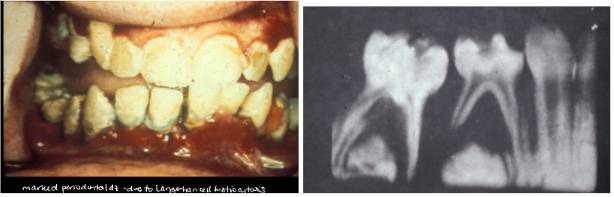
<p><span style="background-color: transparent; font-family: &quot;Times New Roman&quot;, serif;">*Children: <strong>5yrs – adolescence</strong></span></p><p style="text-align: justify;"><span style="background-color: transparent; font-family: &quot;Times New Roman&quot;, serif;">*<strong>Chronic</strong></span></p><p style="text-align: justify;"><span style="background-color: transparent; font-family: &quot;Times New Roman&quot;, serif;">*50% spontaneous remission</span></p><p style="text-align: justify;"><span style="background-color: transparent; font-family: &quot;Times New Roman&quot;, serif;">*Skeletal and Extraskeletal lesions</span></p><p style="text-align: justify;"><span style="background-color: transparent; font-family: &quot;Times New Roman&quot;, serif;"><strong>*Classic Triad (25%)</strong></span></p><p style="text-align: justify;"><span style="background-color: transparent; font-family: &quot;Times New Roman&quot;, serif;">&nbsp;&nbsp;1. Single/multiple punched out lesions of skull and/or jaws</span></p><p style="text-align: justify;"><span style="background-color: transparent; font-family: &quot;Times New Roman&quot;, serif;">&nbsp;&nbsp;2. Uni or Bilateral exopthalmus</span></p><p style="text-align: justify;"><span style="background-color: transparent; font-family: &quot;Times New Roman&quot;, serif;">&nbsp;&nbsp;3. Diabetes Incipitus</span></p><p></p><p style="text-align: justify;"><span style="background-color: transparent; font-family: &quot;Times New Roman&quot;, serif;"><u>ORAL</u>:</span></p><p><span style="background-color: transparent; font-family: &quot;Times New Roman&quot;, serif;"><strong>*Lesions: sore mouth, gingival ulcers, halitosis, gingivitis, loose teeth and premature loss, loss of alveolar bone&nbsp; - <u>Mimics advanced periodontal disease</u></strong></span></p>
70
New cards

Hand-Schuller-Christian disease treatment

*Curettage, Excision, chemo, radiation

71
New cards

eosinophilic granuloma (unifocal) clinical features

*Older children & Young adults

*Some cases of spontaneous regression

*Solitary or multiple lesions in bone   

  - skull & mandible most common sites

*Radiograph: irregular radiolucent areas

  - can mimic periodontal disease or periapical cysts/granulomas

*Some cases with skin involvement but NO visceral involvement

*Looks like periodontal disease but unresponsive to scaling
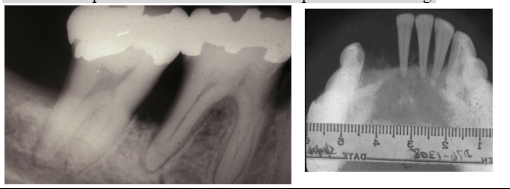
<p><span style="background-color: transparent; font-family: &quot;Times New Roman&quot;, serif;">*<strong>Older children &amp; Young adults</strong></span></p><p><span style="background-color: transparent; font-family: &quot;Times New Roman&quot;, serif;">*Some cases of spontaneous regression</span></p><p><span style="background-color: transparent; font-family: &quot;Times New Roman&quot;, serif;">*<strong>Solitary or multiple lesions in bone</strong>&nbsp;&nbsp;&nbsp;</span></p><p><span style="background-color: transparent; font-family: &quot;Times New Roman&quot;, serif;">&nbsp;&nbsp;- <strong>skull &amp; mandible most common sites</strong></span></p><p><span style="background-color: transparent; font-family: &quot;Times New Roman&quot;, serif;"><strong>*Radiograph: irregular radiolucent areas</strong></span></p><p><span style="background-color: transparent; font-family: &quot;Times New Roman&quot;, serif;"><strong>&nbsp;&nbsp;- can mimic periodontal disease or</strong> <strong>periapical cysts/granulomas</strong></span></p><p><span style="background-color: transparent; font-family: &quot;Times New Roman&quot;, serif;">*Some cases with skin involvement but NO visceral involvement</span></p><p><span style="background-color: transparent; font-family: &quot;Times New Roman&quot;, serif;">*Looks like periodontal disease but unresponsive to scaling</span></p>
72
New cards

eosinophilic granuloma treatment

*Curettage, steroid injections

*Very good prognosis

73
New cards

thrombocytopenia etiology

*Deficiency of circulating platelets (<100,000/mm3)

*Platelets: necessary for normal hemostasis & clot formation

*Decreased production of platelets

  - infiltration of bone marrow by malignant cells (leukemia)

  - chemotherapeutic drugs

*Increased destruction of platelets

  - immunologic drug reaction

  - viral infection, vaccination → autoantibodies against plt

*Sequestration of platelets in spleen

  - some conditions that cause splenomegaly can cause platelets to be sequestered in spleen (portal HTN)

74
New cards

thrombotic thrombocytopenia purpura (TTP) and idiopathic (immune) thrombocytopenic purpura (ITP)

A. Thrombotic Thrombocytopenia Purpura (TTP)

  - Increased destruction of platelets

  - Consumption of platelets by abnormal clot formation

B. Idiopathic (Immune) Thrombocytopenic Purpura (ITP)

  - Usually occurs after non-specific viral infection

  - Most cases resolve spontaneously in 4-6 weeks

75
New cards

clinical features of thrombocytopenia

*Increased bleeding, even with minor trauma

*Platelets <10,000/mm3 → risk of GI, GU, pulmonary, intracranial hemorrhage

ORAL:

*Bleeding of oral mucosa, even with minor trauma

*Spontaneous gingival hemorrhage
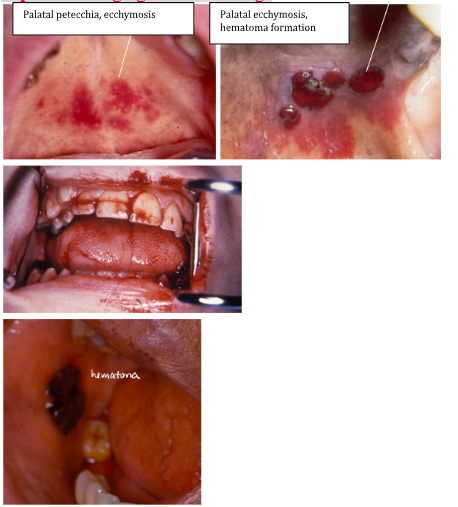
<p><span style="background-color: transparent; font-family: &quot;Times New Roman&quot;, serif;">*<strong>Increased bleeding</strong>, even with minor trauma</span></p><p><span style="background-color: transparent; font-family: &quot;Times New Roman&quot;, serif;">*Platelets &lt;10,000/mm3 → risk of GI, GU, pulmonary, intracranial hemorrhage</span></p><p></p><p><span style="background-color: transparent; font-family: &quot;Times New Roman&quot;, serif;"><u>ORAL</u>:</span></p><p><span style="background-color: transparent; font-family: &quot;Times New Roman&quot;, serif;"><strong>*Bleeding of oral mucosa, even with minor trauma</strong></span></p><p><span style="background-color: transparent; font-family: &quot;Times New Roman&quot;, serif;"><strong>*Spontaneous gingival hemorrhage</strong></span></p>
76
New cards

thrombocytopenia treatment

*Discontinue offending drug if drug-related

*Platelet transfusions