Lewis Ch. 25 - Integumentary Problems
 Studied by 0 people
 Call Kai
 Learn
Learn Practice Test
 Spaced Repetition
 Match
Match Flashcards
 Knowt Play
1/39

There's no tags or description
Looks like no tags are added yet.
Name | Mastery | Learn | Test | Matching | Spaced | Call with Kai |
|---|
No analytics yet
Send a link to your students to track their progress
40 Terms
Which information should the nurse include when teaching patients about decreasing the risk for sun damage to the skin?
a. Use a sunscreen with an SPF of at least 8 to 10 for adequate protection.
b. Water resistant sunscreens will provide good protection when swimming.
c. Increase sun exposure by no more than 10 minutes a day to avoid skin damage.
d. Try to stay out of the sun between the hours of 10 AM and 2 PM (regular time).
d. Try to stay out of the sun between the hours of 10 AM and 2 PM (regular time).
The risk for skin damage from the sun is highest with exposure between 10 AM and 2 PM. No sunscreen is completely water resistant. Sunscreens classified as water resistant sunscreens still need to be reapplied after swimming. Sunscreen with an SPF of at least 15 is recommended for people at normal risk for skin cancer. Although gradually increasing sun exposure may decrease the risk for burning, the risk for skin cancer is not decreased
Which information should the nurse include when teaching a patient who has just received a prescription for ciprofloxacin (Cipro) to treat a urinary tract infection?
a. Use a sunscreen with a high SPF when exposed to the sun.
b. Sun exposure may decrease the effectiveness of the medication.
c. Photosensitivity may result in an artificial-looking tan appearance.
d. Wear sunglasses to avoid eye damage while taking this medication.
a. Use a sunscreen with a high SPF when exposed to the sun.
The patient should stay out of the sun. If that is not possible, teach them to wear sunscreen when taking medications that can cause photosensitivity. The other statements are not accurate
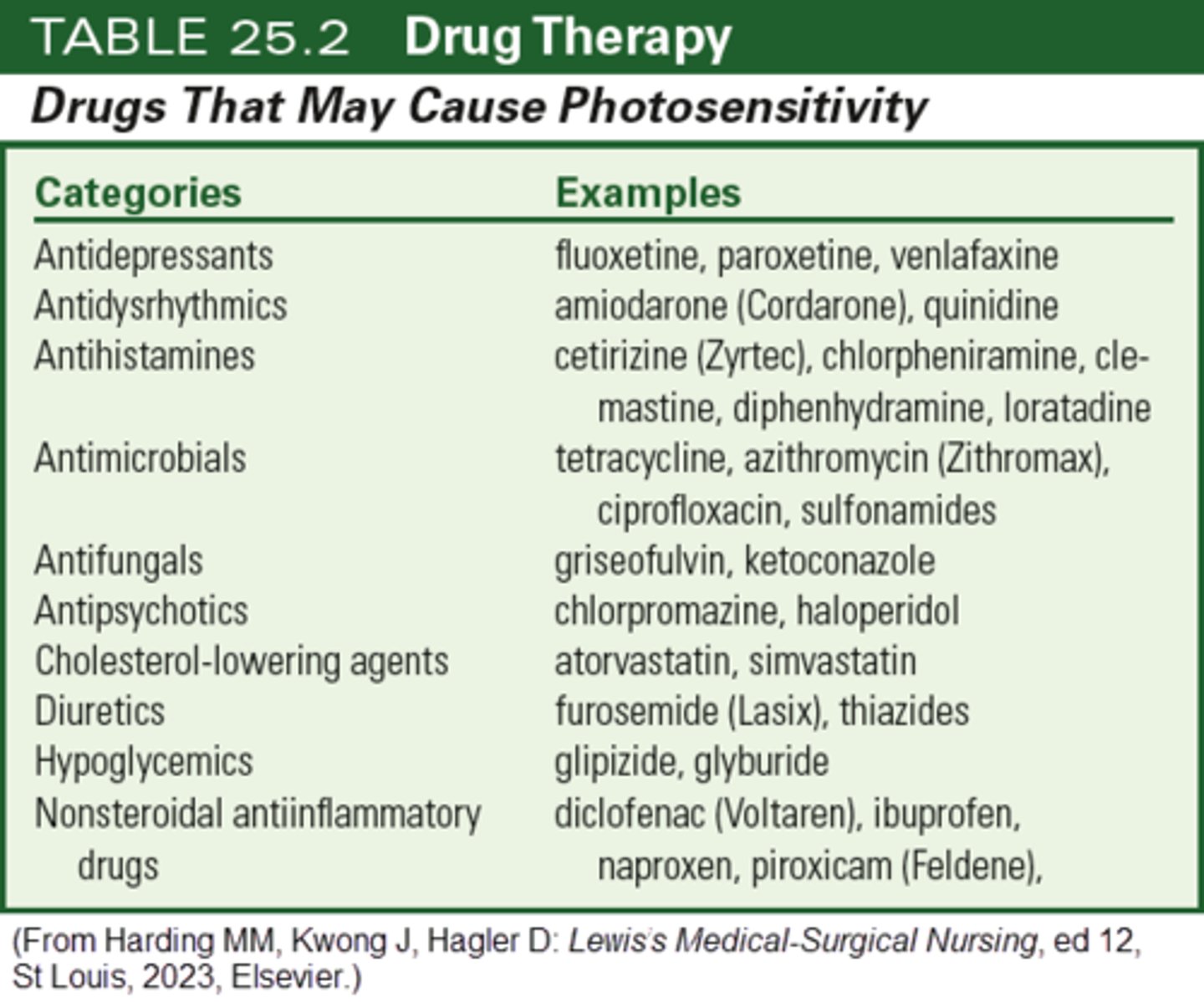
A nurse develops a teaching plan for a patient diagnosed with basal cell carcinoma (BCC). Which information should the nurse include in the teaching plan?
a. Treatment plans include watchful waiting.
b. Screening for metastasis will be important.
c. Low dose systemic chemotherapy is used to treat BCC.
d. Minimizing sun exposure will reduce risk for future BCC.
d. Minimizing sun exposure will reduce risk for future BCC.
BCC is frequently associated with sun exposure and preventive measures should be taken for future sun exposure. BCC is a locally invasive malignancy arising from epidermal basal cells. It spreads locally (almost never spreading beyond the skin), and does not metastasize to distant tissues. Since BCC can cause local tissue destruction, treatment is indicated. Local (not systemic) chemotherapy may be used to treat BCC. BCC is the most common type of skin cancer and also the least deadly.
Pg 474
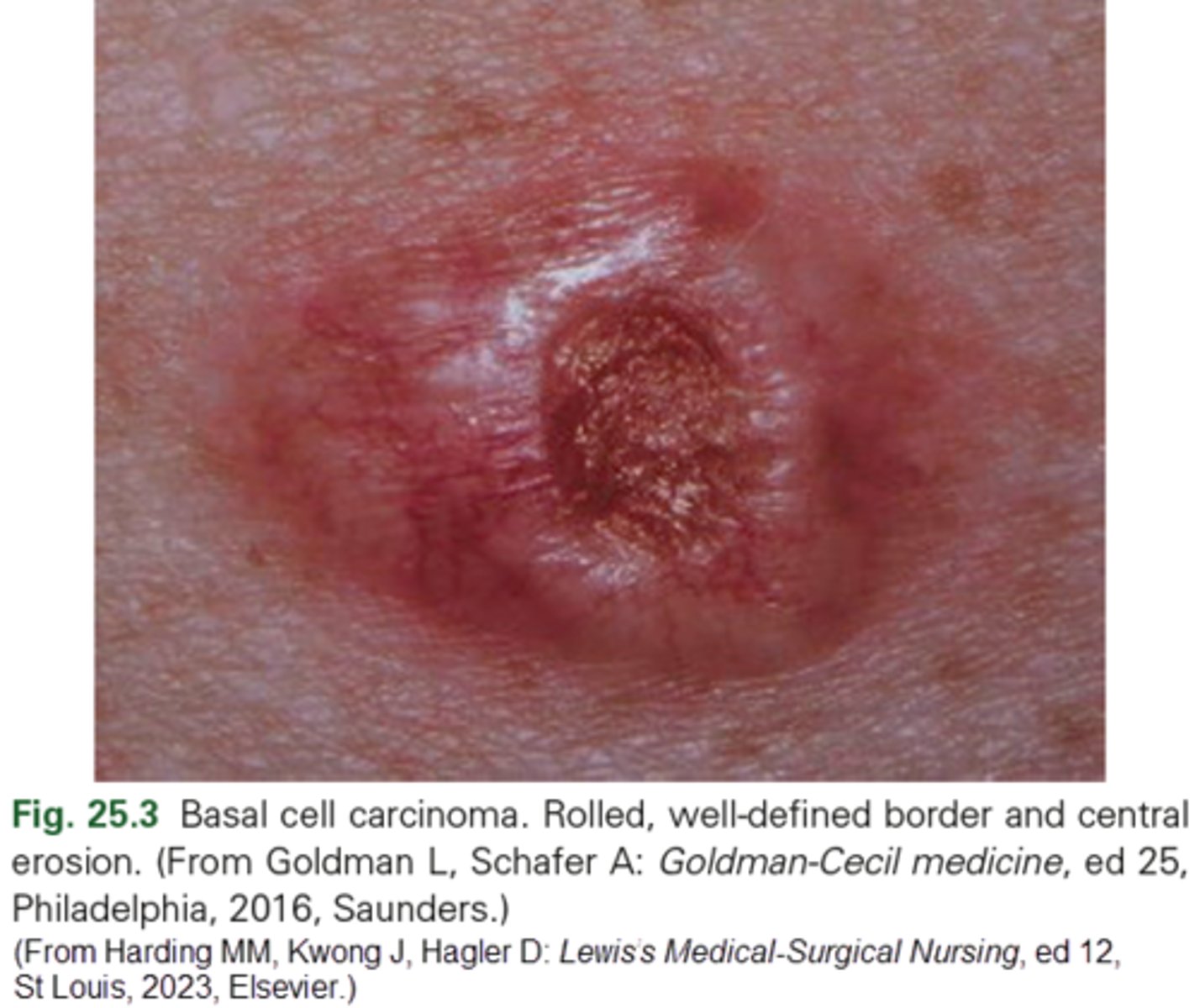
The nurse is teaching the client about the new topical agent the HCP just prescribed. Which topical agent produces a drying effect of the skin?
a. Gel
b. Paste
c. Cream
d. Ointment
b. Paste
A paste is a mixture of ointment and powder. The moisture from the paste is absorbed into the skin, which dries the affected areas. Pg 488
A patient in the dermatology clinic has a thin, scaly erythematous plaque on the right cheek. Which action should the nurse take?
a. Prepare the patient for a biopsy.
b. Teach about the use of corticosteroid creams.
c. Explain how to apply tretinoin (Retin-A) to the face.
d. Discuss the need for topical application of antibiotics.
a. Prepare the patient for a biopsy.
Because the appearance of the lesion suggests actinic keratosis or possible squamous cell carcinoma (SCC), the appropriate treatment would be excision and biopsy. Over-the-counter (OTC) corticosteroids, topical antibiotics, and Retin-A would not be used for this lesion
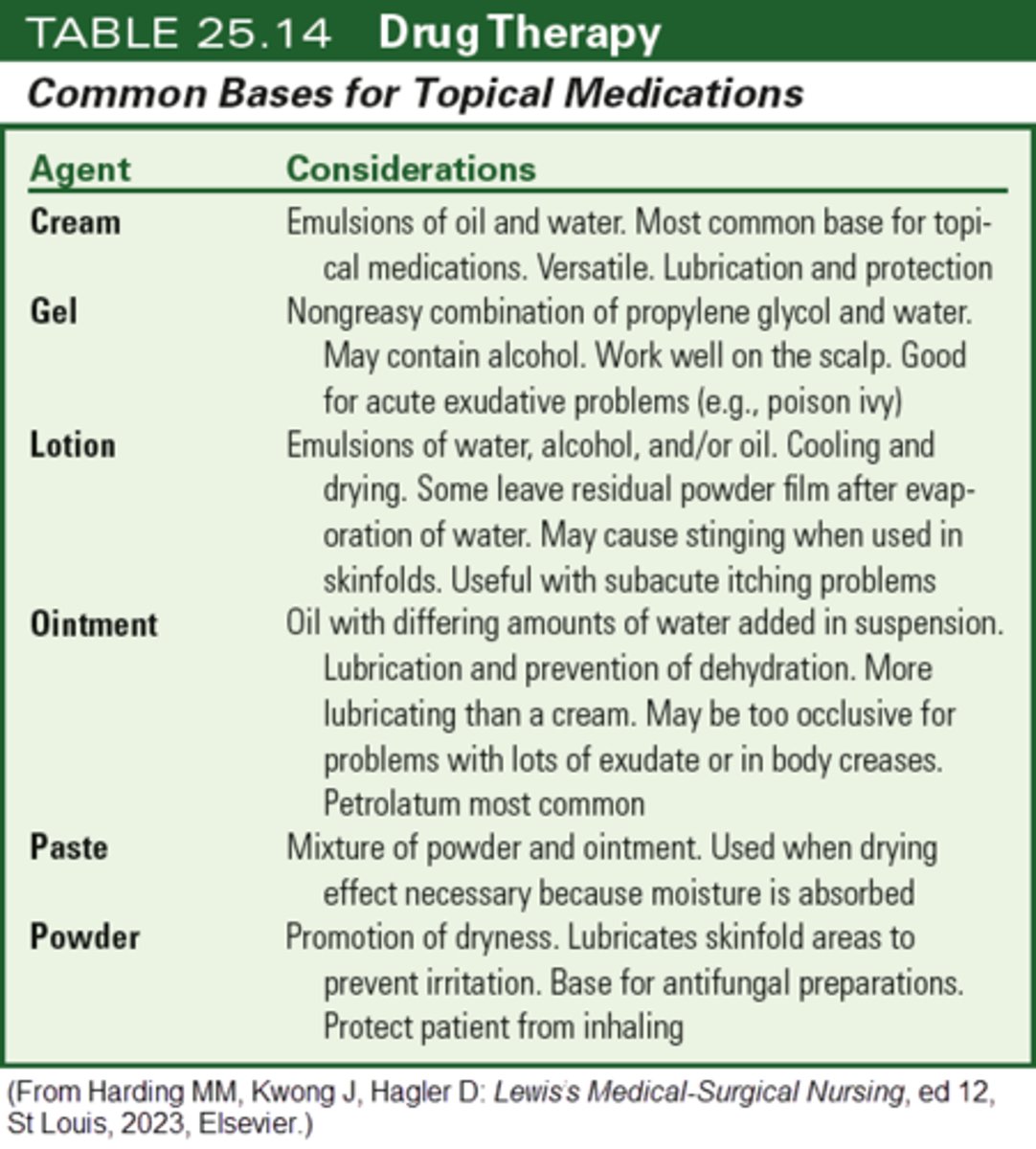
The nurse has confirmed that the patient is indeed pregnant. The soon to be mother has concerns about her beauty routines. Which cosmetic topical procedure is teratogenic?
a. Chemical peels
b. a-Hydroxy acids
c. Tretinoin
d. Microdermabrasion
c. Tretinoin
Tretinoin is a teratogenic drug that can cause congenital abnormalities and should not be used during pregnancy. The others may cause redness and/or photosensitivity but will not harm the fetus. Pg 490
A patient has the following risk factors for melanoma. Which risk factor should the nurse assign as the priority focus of patient teaching?
a. The patient has multiple dysplastic nevi.
b. The patient is fair-skinned and has blue eyes.
c. The patient's mother died of a malignant melanoma.
d. The patient uses a tanning booth throughout the winter.
d. The patient uses a tanning booth throughout the winter.
Because the only risk factor that the patient can change is the use of a tanning booth, the nurse should focus teaching about melanoma prevention on this factor. The other factors also will contribute to increased risk for melanoma
Which treatment may be included in the plan of care for a patient who was stung by a bee? Select all that apply.
a. Antihistamine
b. Cool compress
c. Warm compress
d. Antipruritic ointment
e. Liquid nitrogen therapy
a. Antihistamine
b. Cool compress
d. Antipruritic ointment
Pg 481
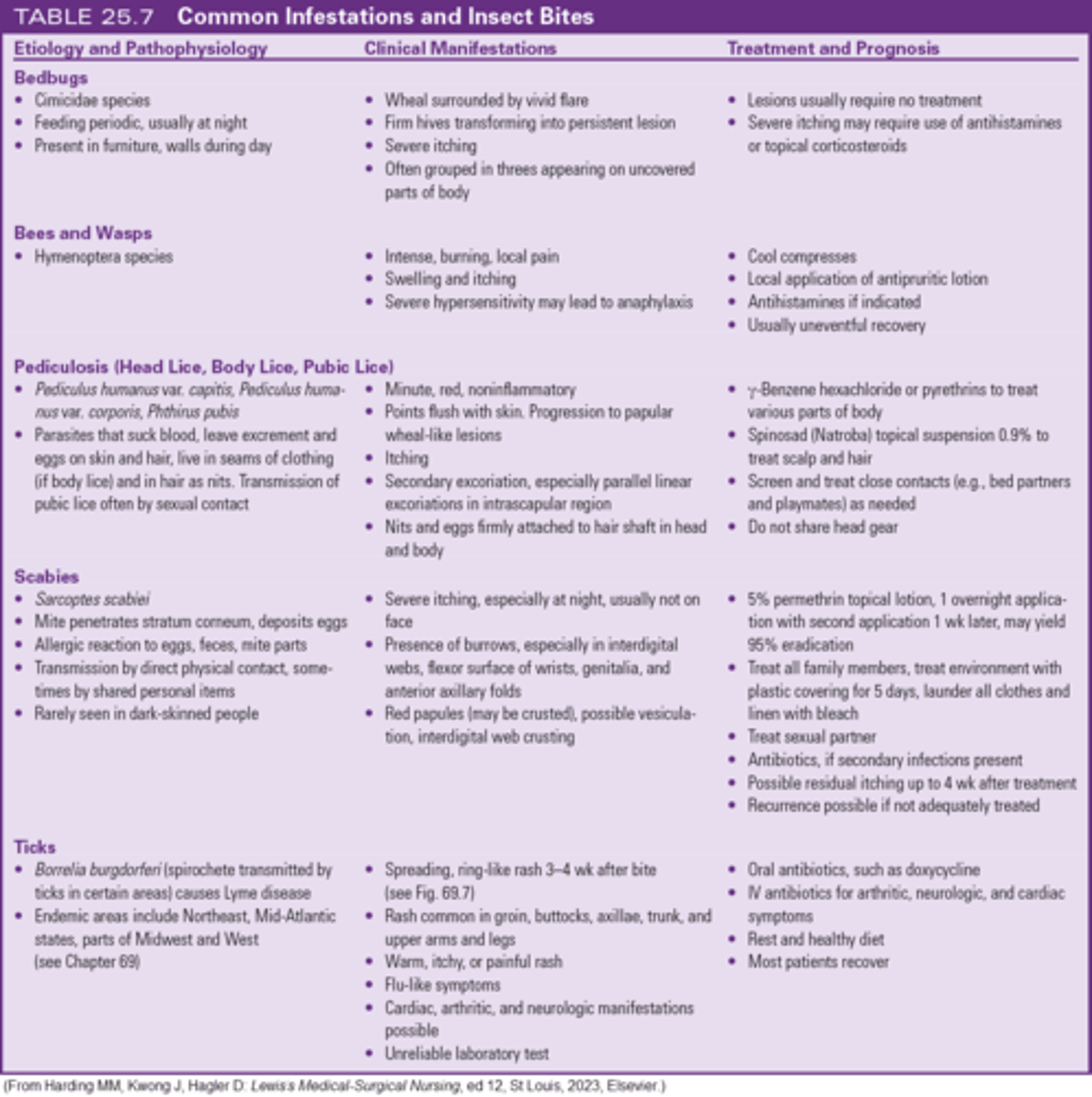
The health care provider diagnoses impetigo in a patient who has crusty vesicopustular lesions on the lower face. Which instructions should the nurse include in the teaching plan?
a. Clean the infected areas with soap and water.
b. Apply alcohol-based cleansers on the lesions.
c. Avoid use of antibiotic ointments on the lesions.
d. Use petroleum jelly (Vaseline) to soften crusty areas.
a. Clean the infected areas with soap and water.
The treatment for impetigo includes softening of the crusts with warm saline soaks and then soap-and-water removal. Alcohol-based cleansers and use of petroleum jelly are not recommended for impetigo. Antibiotic ointments, such as mupirocin (Bactroban), may be applied to the lesions
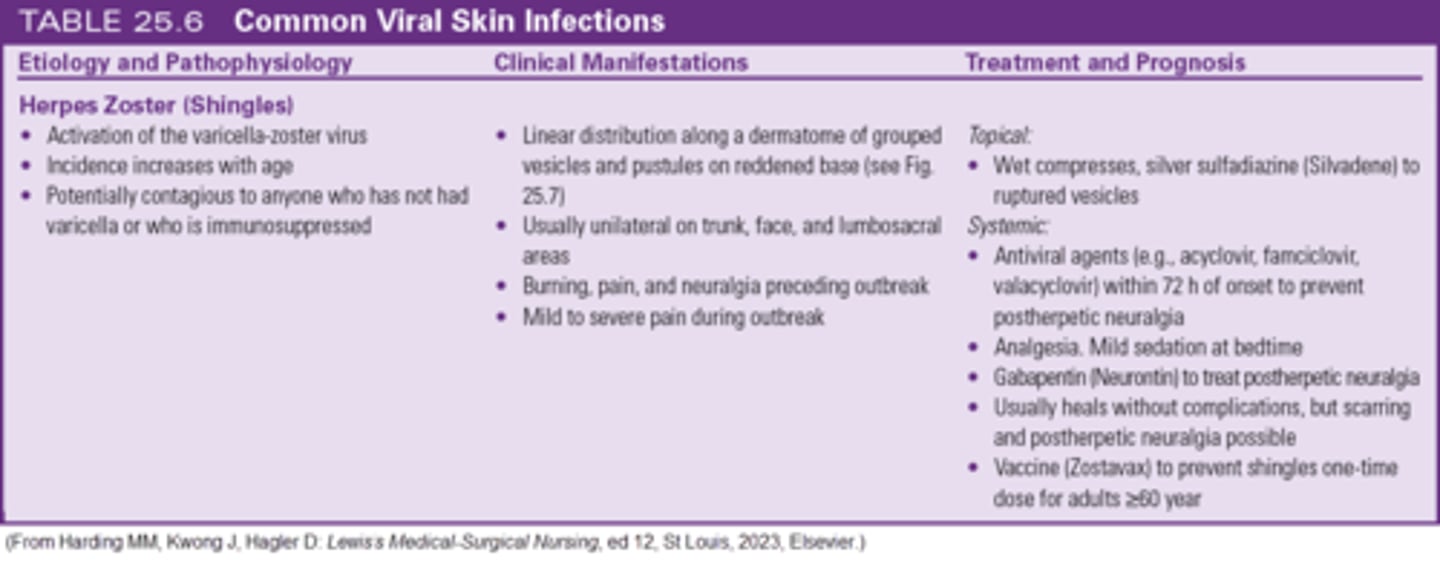
Acyclovir may be prescribed for the patient with shingles to prevent which condition?
a. Acute pain
b. Restlessness
c. Postherpetic neuralgia
d. Worsening of symptoms
c. Postherpetic neuralgia
Following the onset of symptoms of shingles (herpes zoster), antiviral agents such as acyclovir should be administered within 72 hours to prevent postherpectic neuralgia. Pg 480
Part of the patients care plan includes care for a skin suture. Which treatment will the nurse use?
a. Clean daily with saline solution
b. Cover with a wet sterile dressing
c. Apply an antibiotic and leave open to the air
d. Administer diphenhydramine to treat inflammation
c. Apply an antibiotic and leave open to the air
The best method of caring for a skin suture involves a topical antibiotic and exposing the wound to that air or covered with a dry dressing. The incision lines must be cleaned daily with plain tap water. The wound should be covered with a dry sterile dressing, not wet. Any inflammation or sign of infection should be reported to the HCP, who would advise the patient whether to use antihistamines. Pg 489
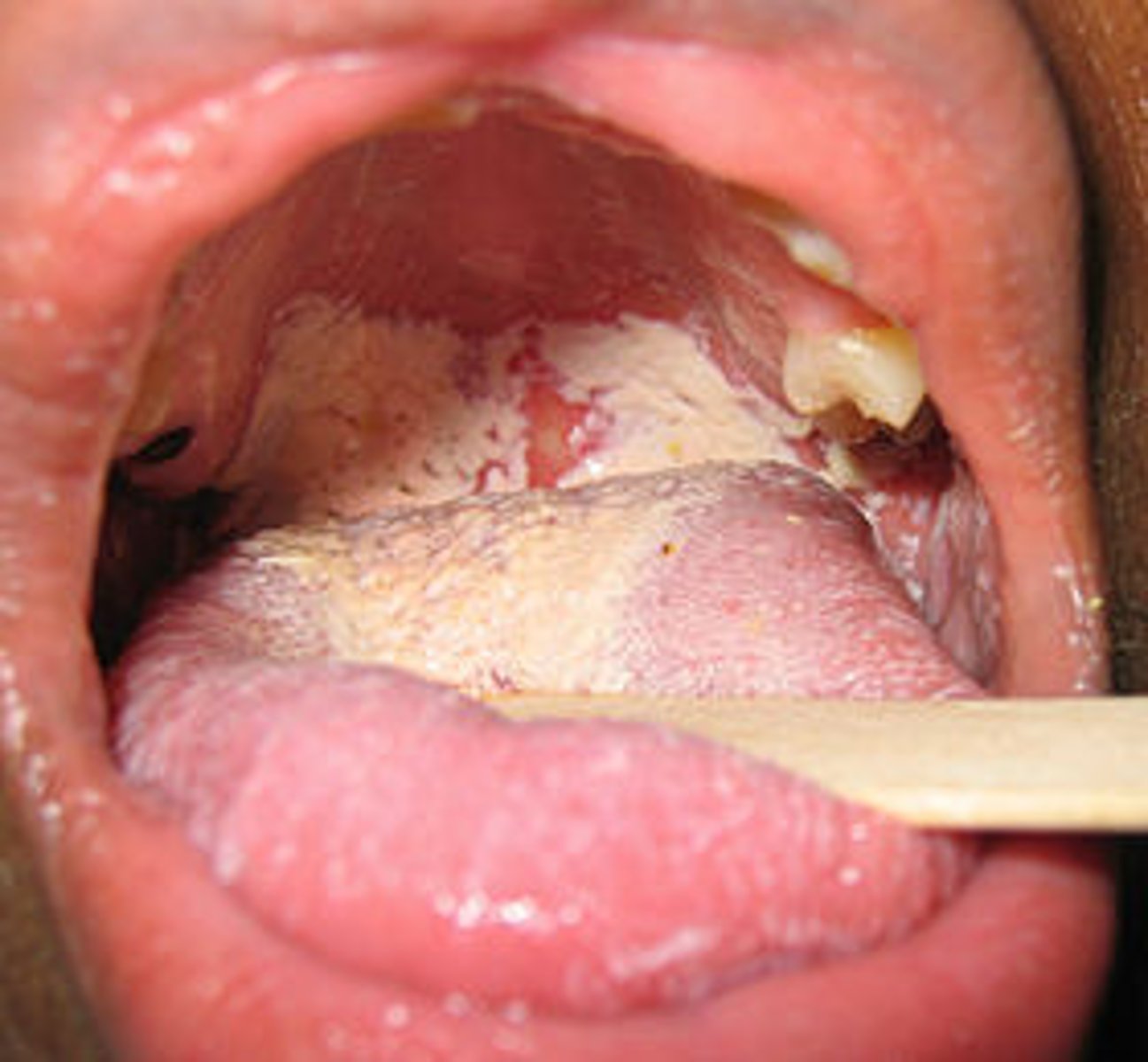
The nurse notes the presence of white lesions that resemble milk curds in the back of a patient's throat. Which question by the nurse is appropriate at this time?
a. "Do you have a productive cough?"
b. "How often do you brush your teeth?"
c. "Are you taking any medications at present?"
d. "Have you ever had an oral herpes infection?"
c. "Are you taking any medications at present?"
The appearance of the lesions is consistent with an oral candidiasis (thrush) infection, which can occur in patients who are taking medications such as immunosuppressants or antibiotics. Candidiasis is not associated with poor oral hygiene or lower respiratory infections. The lesions do not look like an oral herpes infection
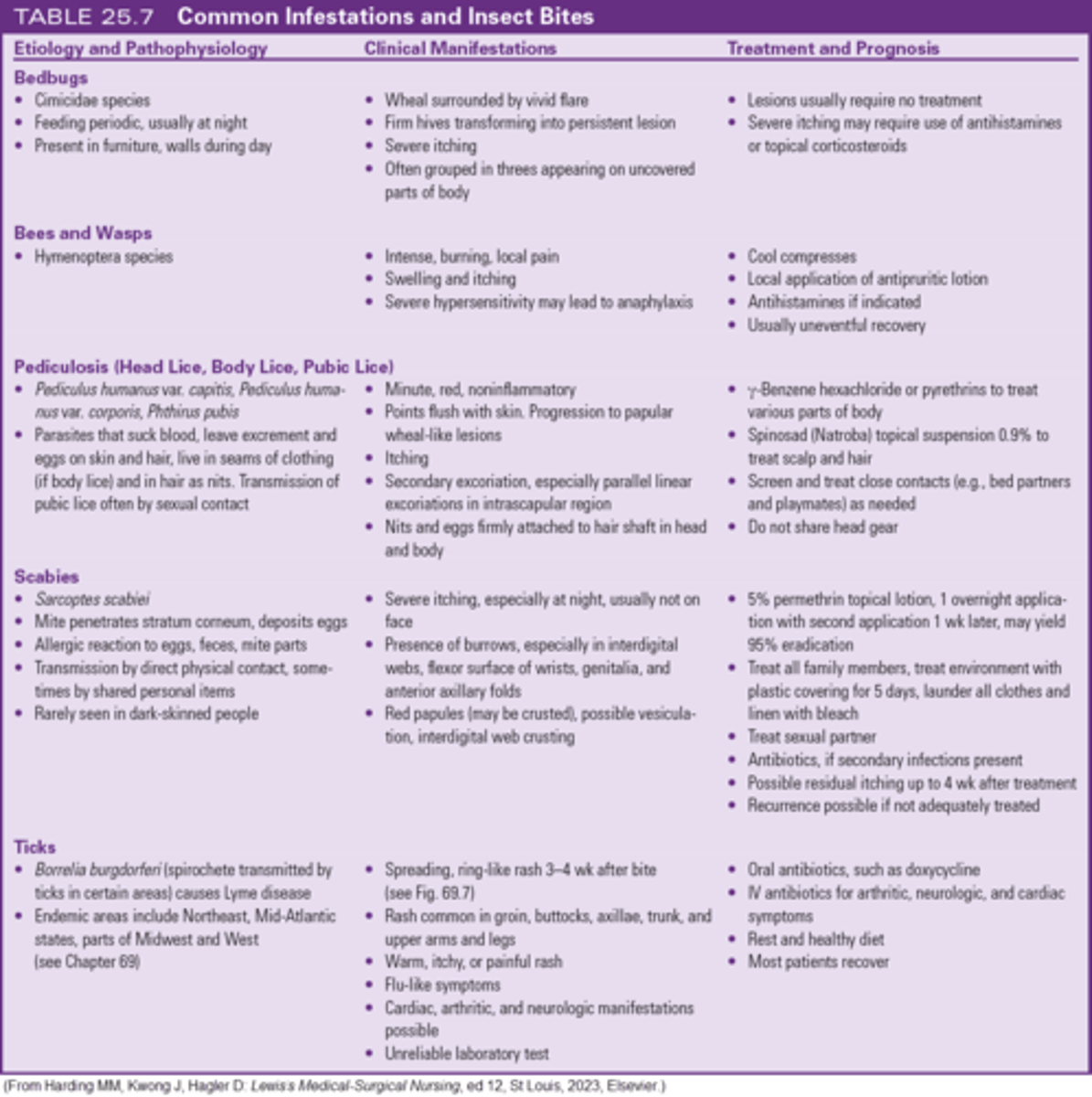
A teenaged male patient who wrestles in high school is examined by the nurse in the clinic. Which assessment finding would prompt the nurse to teach the patient about the importance of not sharing headgear to prevent the spread of pediculosis?
a. Ringlike rashes with red, scaly borders over the entire scalp
b. Papular, wheal-like lesions with white deposits on the hair shaft
c. Patchy areas of alopecia with small vesicles and excoriated areas
d. Red, hivelike papules and plaques with sharply circumscribed borders
b. Papular, wheal-like lesions with white deposits on the hair shaft
Pediculosis (lice infestation) is characterized by wheal-like lesions with parasites that attach eggs to the base of the hair shaft. The other descriptions are more characteristic of other types of skin disorders
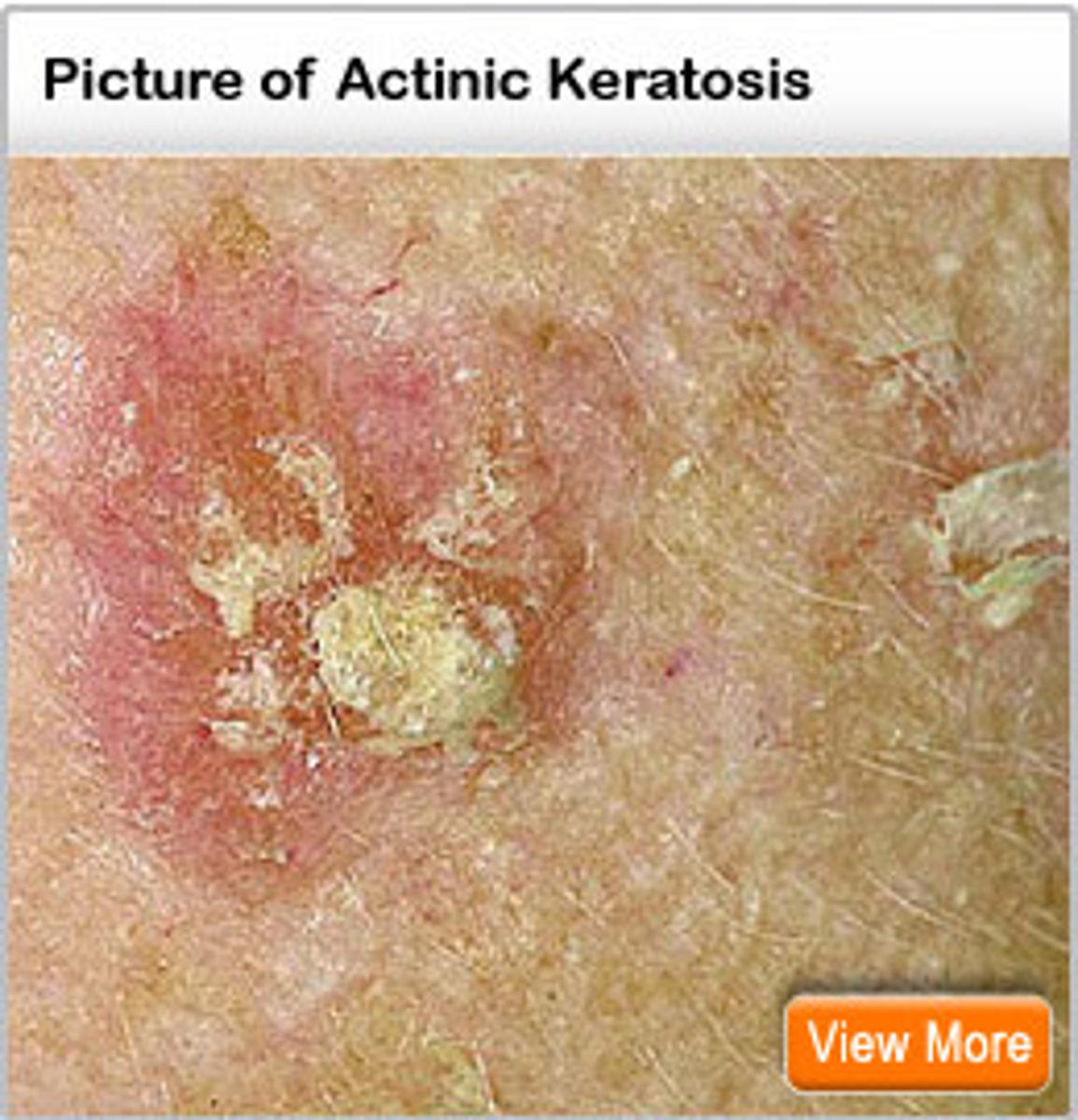
The health care provider prescribes topical 5-FU for a patient with actinic keratosis on the left cheek. The nurse should include which statement in the patient's instructions?
a. "5-FU will shrink the lesion so that less scarring occurs once the lesion is excised."
b. "You may develop nausea and anorexia, but good nutrition is important during treatment."
c. "You will need to avoid crowds because of the risk for infection caused by chemotherapy."
d. "Your cheek area will be painful and develop eroded areas that will take weeks to heal."
d. "Your cheek area will be painful and develop eroded areas that will take weeks to heal."
Topical 5-FU causes an initial reaction of erythema, itching, and erosion that lasts 4 weeks after application of the medication is stopped. The medication is topical, so there are no systemic effects such as increased infection risk, anorexia, or nausea
A patient with atopic dermatitis has been using a high-potency topical corticosteroid ointment for several weeks. The nurse should assess for which adverse effect?
a. Thinning of the affected skin
b. Alopecia of the affected areas
c. Reddish-brown discoloration of the skin
d. Dryness and scaling in the areas of treatment
a. Thinning of the affected skin
Thinning of the skin indicates that atrophy, a possible adverse effect of topical corticosteroids, is occurring. The health care provider should be notified so that the medication can be changed or tapered. Alopecia, red-brown discoloration, and dryness/scaling of the skin are not adverse effects of topical corticosteroid use
A patient is undergoing psoralen plus ultraviolet A light (PUVA) therapy for treatment of psoriasis. What action should the nurse take to prevent adverse effects from this procedure?
a. Cleanse the skin carefully with an antiseptic soap.
b. Shield any unaffected areas with lead-lined drapes.
c. Have the patient use protective eyewear while receiving PUVA.
d. Apply petroleum jelly to the areas surrounding the psoriatic lesions.
c. Have the patient use protective eyewear while receiving PUVA.
The eyes should be shielded from UV light (UVL) during and after PUVA therapy to prevent the development of cataracts. The patient should be taught about the effects of UVL on unaffected skin, but lead-lined drapes, use of antiseptic soap, and petroleum jelly are not used to prevent skin damage
A patient with an enlarging, irregular mole that is 7 mm in diameter is scheduled for outpatient treatment. The nurse should plan to prepare the patient for which procedure?
a. Curettage
b. Cryosurgery
c. Punch biopsy
d. Surgical excision
d. Surgical excision
The description of the mole is consistent with malignancy, so excision and biopsy are indicated. Curettage and cryosurgery are not used if malignancy is suspected. A punch biopsy would not be done for a lesion greater than 5 mm in diameter.
Which surgical therapy would the nurse expect the HCP to use for the removal of small, soft skin tumors or superficial lesions?
a. Excision
b. Curettage
c. Skin scraping
d. Punch biopsy
b. Curettage
Curettage is the removal or scooping of tissue and is useful for removing many types of small, soft skin tumors and superficial sessions, such as warts, actinic keratoses, and small basal and squamous cell carcinomas.
Excision is the complete removal of a lesion and is considered only if the lesion to be removed involves the dermis. Performed with a scalpel blade, a skin scraping is used to obtain a sample of surface cells for microscopic inspection and diagnosis. A punch biopsy is used to obtain a tissue sample for histologies study or to remove small lesions. Pg 484
Which information will the nurse include when teaching an older patient about skin care?
a. Dry the skin thoroughly before applying lotions.
b. Bathe and wash hair daily with soap and shampoo.
c. Use warm water and a moisturizing soap when bathing.
d. Use antibacterial soaps when bathing to avoid infection.
c. Use warm water and a moisturizing soap when bathing.
Warm water and moisturizing soap will avoid overdrying the skin. Because older patients have dryer skin, daily bathing and shampooing are not necessary and may dry the skin unnecessarily. Antibacterial soaps are not necessary. Lotions should be applied while the skin is still damp to seal moisture in
What is the best method to prevent the spread of infection when the nurse is changing the dressing over a wound infected with Staphylococcus aureus?
a. Change the dressing using sterile gloves.
b. Soak the dressing in sterile normal saline.
c. Apply antibiotic ointment over the wound.
d. Wash hands and properly dispose of soiled dressings.
d. Wash hands and properly dispose of soiled dressings.
Careful hand washing and the safe disposal of soiled dressings are the best means of preventing the spread of skin problems. Sterile glove and sterile saline use during wound care will not necessarily prevent spread of infection. Applying antibiotic ointment will treat the bacteria but not necessarily prevent the spread of infection
The nurse is interviewing a patient with contact dermatitis. Which finding indicates a need for patient teaching?
a. The patient applies corticosteroid cream to pruritic areas.
b. The patient uses Neosporin ointment on minor cuts or abrasions.
c. The patient adds oilated oatmeal (Aveeno) to the bath water every day.
d. The patient takes diphenhydramine (Benadryl) at night if itching occurs.
b. The patient uses Neosporin ointment on minor cuts or abrasions.
Neosporin can cause contact dermatitis. The other medications are being used appropriately by the patient
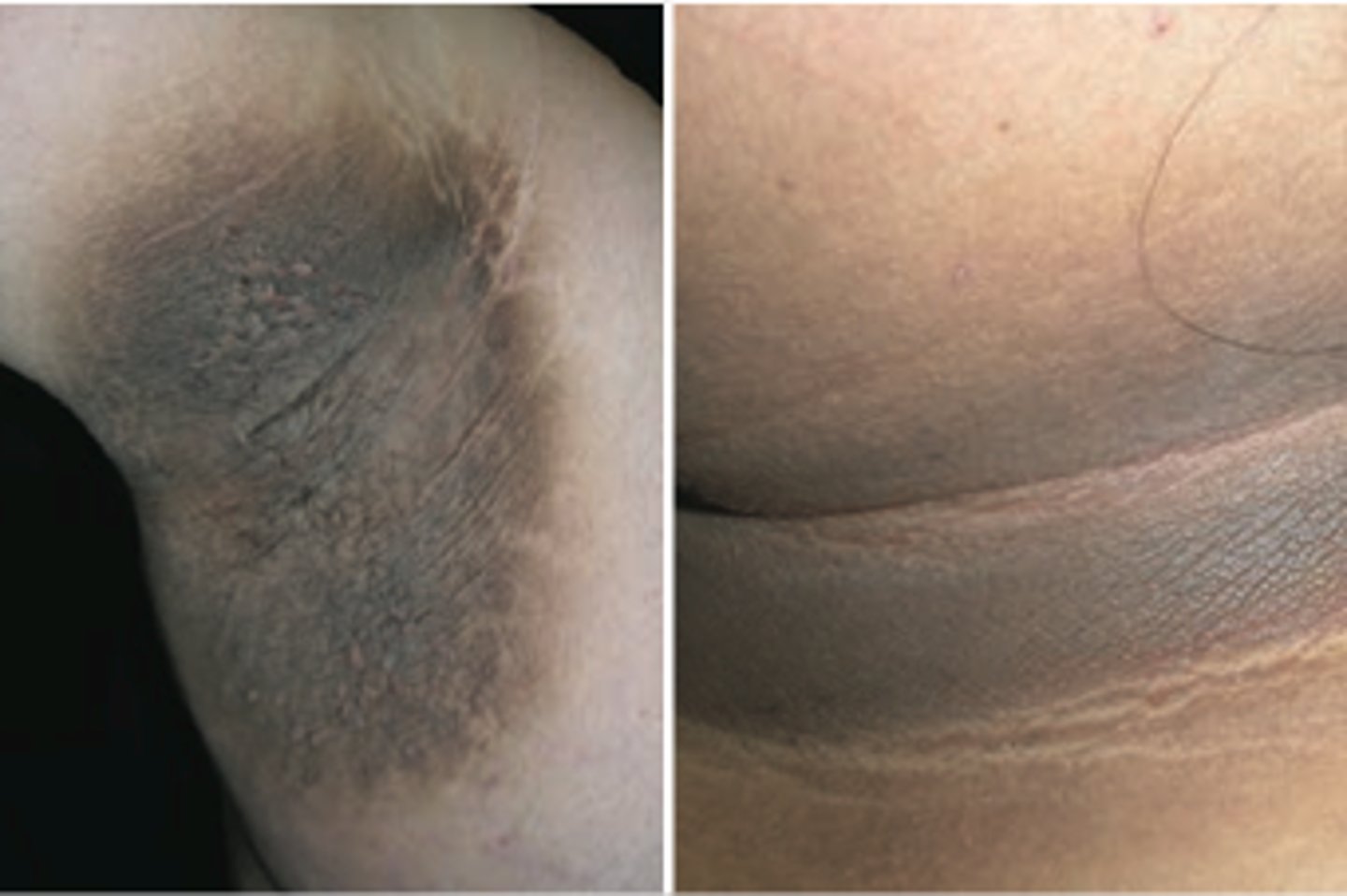
The nurse notes darker skin pigmentation in the skinfolds of a middle-aged patient who has a body mass index of 40 kg/m2. What is the nurse's best action?
a. Teach the patient about the treatment of fungal infection.
b. Discuss the use of drying agents to minimize infection risk.
c. Instruct the patient about the use of mild soap to clean skinfolds.
d. Ask the patient about type 2 diabetes or if there is a family history of it.
d. Ask the patient about type 2 diabetes or if there is a family history of it.
The presence of acanthosis nigricans in skinfolds suggests either having type 2 diabetes or being at an increased risk for it. The description of the patient's skin does not indicate problems with fungal infection, poor hygiene, or the need to dry the skinfolds better
When assessing a new patient at the outpatient clinic, the nurse notes dry, scaly skin; thin hair; and thick, brittle nails. What is the nurse's best action?
a. Instruct the patient about the importance of nutrition in skin health.
b. Make a referral to a podiatrist so that the nails can be safely trimmed.
c. Consult with the health care provider about the need for further diagnostic testing.
d. Teach the patient about using moisturizing creams and lotions to decrease dry skin.
c. Consult with the health care provider about the need for further diagnostic testing.
The patient has clinical manifestations that could be caused by systemic problems such as malnutrition or hypothyroidism, so further diagnostic evaluation is indicated. Patient teaching about nutrition, addressing the patient's dry skin, and referral to a podiatrist may also be needed, but the priority is to rule out underlying disease that may be causing these manifestations
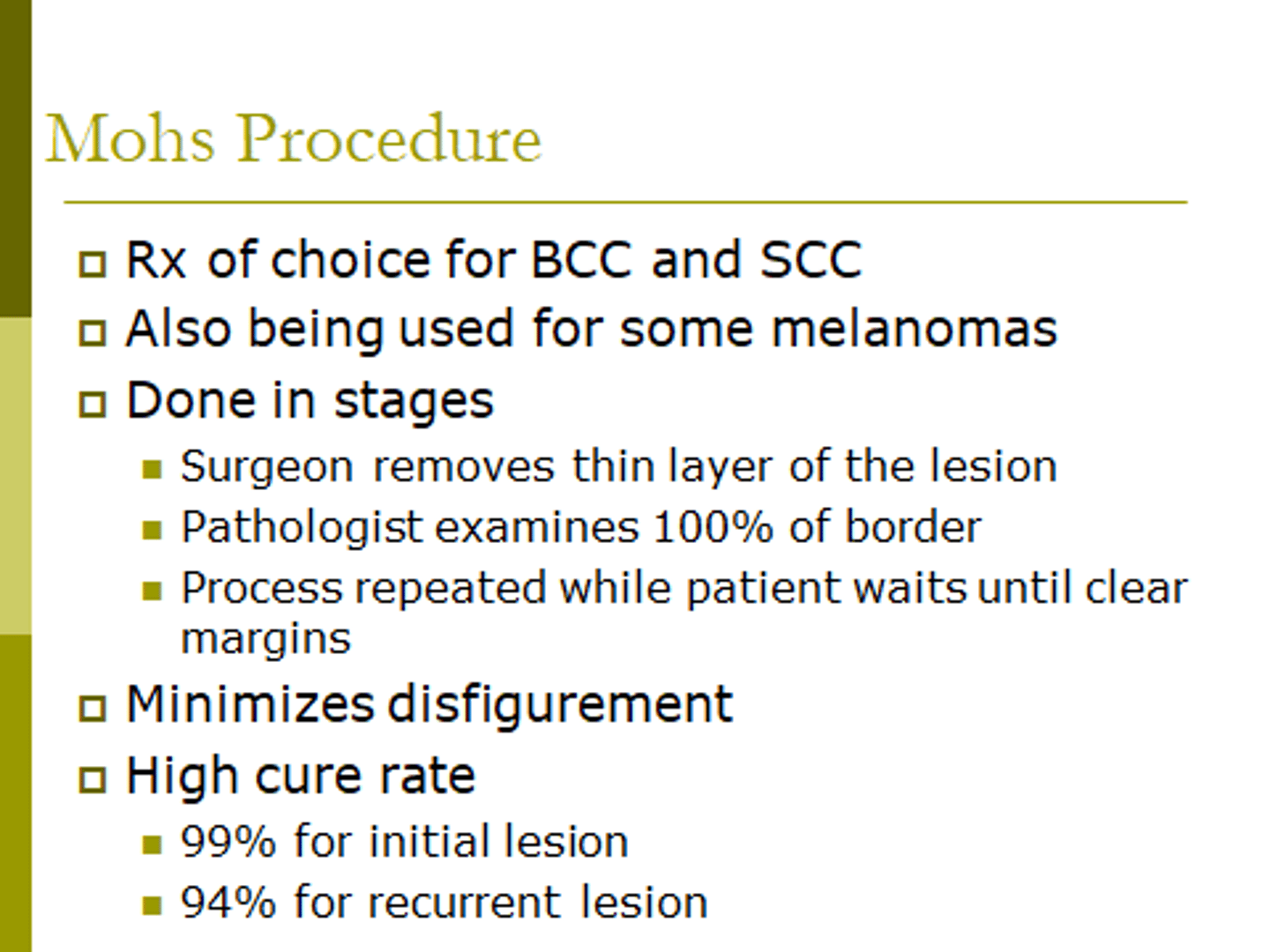
An older adult patient with a squamous cell carcinoma (SCC) on the lower arm has a Mohs procedure in the dermatology clinic. Which nursing action will be included in the postoperative plan of care?
a. Describe the use of topical fluorouracil on the incision.
b. Teach how to use sterile technique to clean the suture line.
c. Schedule daily appointments for wet-to-dry dressing changes.
d. Teach about the use of cold packs to reduce bruising and swelling.
d. Teach about the use of cold packs to reduce bruising and swelling.
Application of cold packs to the incision after the surgery will help decrease bruising and swelling at the site. Since the Mohs procedure results in complete excision of the lesion, topical fluorouracil is not needed after surgery. After the Mohs procedure the edges of the wound can be left open to heal or the edges can be approximated and sutured together. The suture line can be cleaned with tap water. No debridement with wet-to-dry dressings is indicated
A patient with atopic dermatitis has a new prescription for pimecrolimus (Elidel). After teaching the patient about the medication, which statement by the patient indicates that further teaching is needed?
a. "After I apply the medication, I can go ahead and get dressed as usual."
b. "I will need to minimize my time in the sun while I am using the Elidel."
c. "I will rub the medication gently onto the skin every morning and night."
d. "If the medication burns when I apply it, I will wipe it off and call the doctor."
d. "If the medication burns when I apply it, I will wipe it off and call the doctor."
The patient should be taught that transient burning at the application site is an expected effect of pimecrolimus and that the medication should be left in place. The other statements by the patient are accurate and indicate that patient teaching has been effective
The nurse instructs a patient about application of corticosteroid cream to an area of contact dermatitis on the right leg. Which patient action indicates that further teaching is needed?
a. The patient takes a tepid bath before applying the cream.
b. The patient spreads the cream using a downward motion.
c. The patient applies a thick layer of the cream to the affected skin.
d. The patient covers the area with a dressing after applying the cream.
c. The patient applies a thick layer of the cream to the affected skin.
Creams and ointments should be applied in a thin layer to avoid wasting the medication. The other actions by the patient indicate that the teaching has been successful
The nurse is caring for a patient diagnosed with furunculosis. Which nursing action could the nurse delegate to unlicensed assistive personnel (UAP)?
a. Applying antibiotic cream to the groin.
b. Obtaining cultures from ruptured lesions.
c. Evaluating the patient's personal hygiene.
d. Cleaning the skin with antimicrobial soap.
d. Cleaning the skin with antimicrobial soap.
Cleaning the skin is within the education and scope of practice for UAP. Administration of medication, obtaining cultures, and evaluation are higher-level skills that require the education and scope of practice of licensed nursing personnel
The nurse assesses a patient who has just arrived in the post anesthesia recovery area (PACU) after a blepharoplasty. Which assessment data should be reported to the surgeon immediately?
a. The patient complains of incisional pain.
b. The patient's heart rate is 110 beats/minute.
c. The patient is unable to detect when the eyelids are touched.
d. The skin around the incision is pale and cold when palpated.
d. The skin around the incision is pale and cold when palpated.
Blepharoplasty (BLEF-uh-roe-plas-tee) is a type of surgery that removes excess skin from the eyelids.
Pale, cool skin indicates a possible decrease in circulation, so the surgeon should be notified immediately. The other assessment data indicate a need for ongoing assessment or nursing action. A heart rate of 110 beats/minute may be related to the stress associated with surgery. Assessment of other vital signs and continued monitoring are appropriate. Because local anesthesia would be used for the procedure, numbness of the incisional area is expected immediately after surgery. The nurse should monitor for return of feeling
A patient who has severe refractory psoriasis on the face, neck, and extremities is socially withdrawn because of the appearance of the lesions. Which action should the nurse take first?
a. Discuss the possibility of enrolling in a worker-retraining program.
b. Encourage the patient to volunteer to work on community projects.
c. Suggest that the patient use cosmetics to cover the psoriatic lesions.
d. Ask the patient to describe the impact of psoriasis on quality of life.
d. Ask the patient to describe the impact of psoriasis on quality of life.
The nurse's initial actions should be to assess the impact of the disease on the patient's life and to allow the patient to verbalize feelings about the psoriasis. Depending on the assessment findings, other actions may be appropriate
The nurse working in the dermatology clinic assesses a young adult female patient who is taking isotretinoin (Accutane) to treat severe cystic acne. Which assessment finding is most indicative of a need for further questioning of the patient?
a. The patient recently had an intrauterine device removed.
b. The patient already has some acne scarring on her forehead.
c. The patient has also used topical antibiotics to treat the acne.
d. The patient has a strong family history of rheumatoid arthritis.
a. The patient recently had an intrauterine device removed.
Because isotretinoin is teratogenic, contraception is required for women who are using this medication. The nurse will need to determine whether the patient is using other birth control methods. More information about the other patient data may also be needed, but the other data do not indicate contraindications to isotretinoin use
There is one opening in the schedule at the dermatology clinic, and 4 patients are seeking appointments today. Which patient will the nurse schedule for the available opening?
a. 38-year old with a 7-mm nevus on the face that has recently become darker
b. 62-year-old with multiple small, soft, pedunculated papules in both axillary areas
c. 42-year-old with complaints of itching after using topical fluorouracil on the nose
d. 50-year-old with concerns about skin redness after having a chemical peel 3 days ago
a. 38-year old with a 7-mm nevus on the face that has recently become darker
The description of the lesion is consistent with possible malignant melanoma. This patient should be assessed as soon as possible by the health care provider. Itching is common after using topical fluorouracil and redness is an expected finding a few days after a chemical peel. Skin tags are common, benign lesions after midlife
A nurse is teaching a patient with contact dermatitis of the arms and legs about ways to decrease pruritus. Which information should the nurse include in the teaching plan (select all that apply)?
a. Cool, wet cloths or dressings can be used to reduce itching.
b. Take cool or tepid baths several times daily to decrease itching.
c. Add oil to your bath water to aid in moisturizing the affected skin.
d. Rub yourself dry with a towel after bathing to prevent skin maceration.
e. Use of an over-the-counter (OTC) antihistamine can reduce scratching.
a. Cool, wet cloths or dressings can be used to reduce itching.
b. Take cool or tepid baths several times daily to decrease itching.
e. Use of an over-the-counter (OTC) antihistamine can reduce scratching.
Cool or tepid baths, cool dressings, and OTC antihistamines all help reduce pruritus and scratching. Adding oil to bath water is not recommended because of the increased risk for falls. The patient should use the towel to pat (not rub) the skin dry
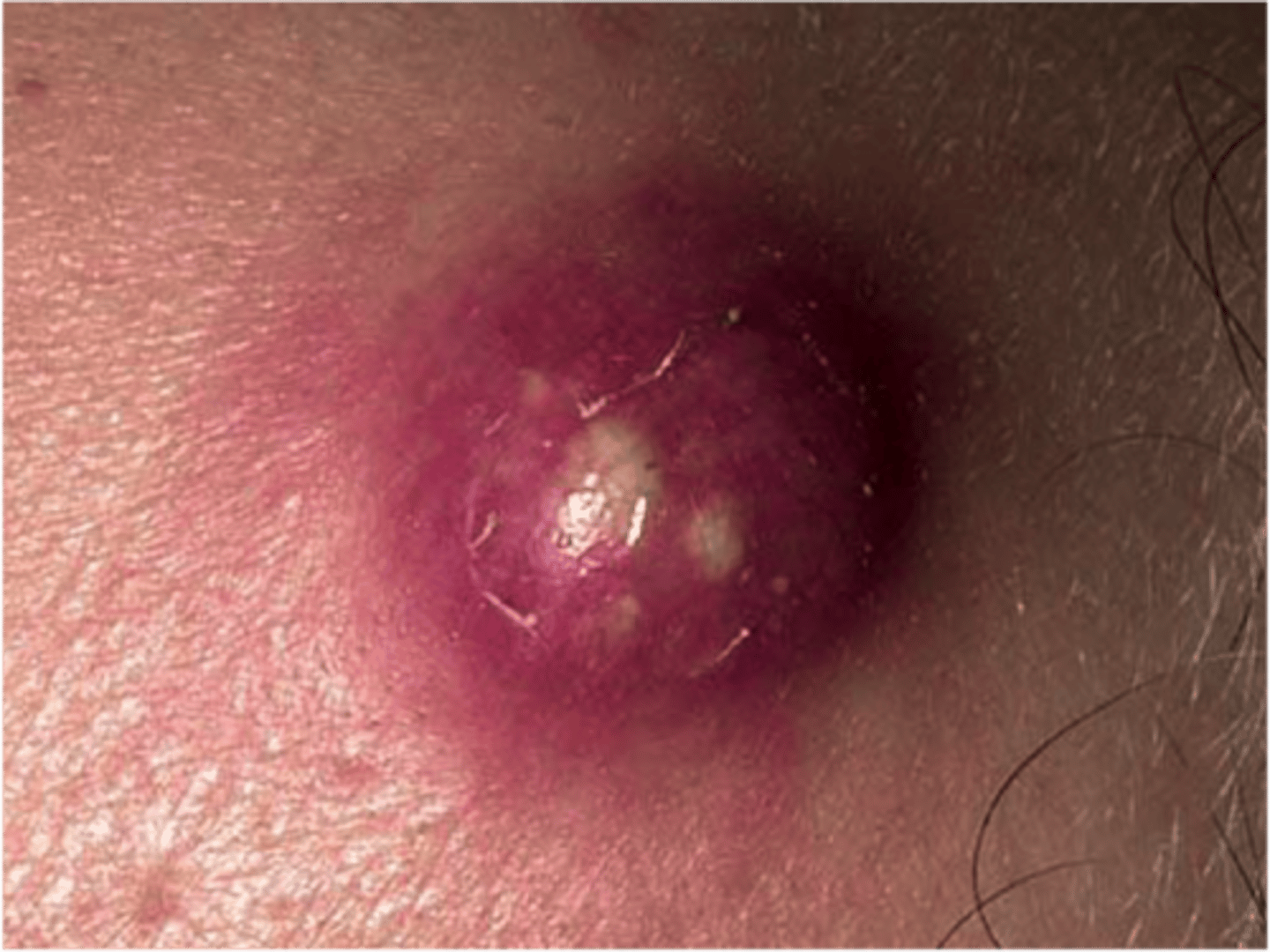
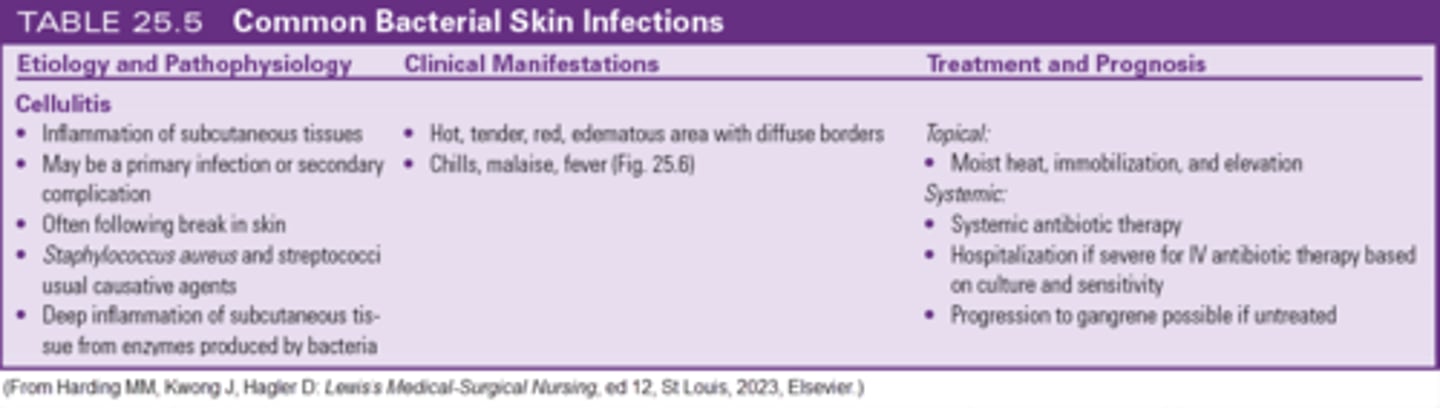
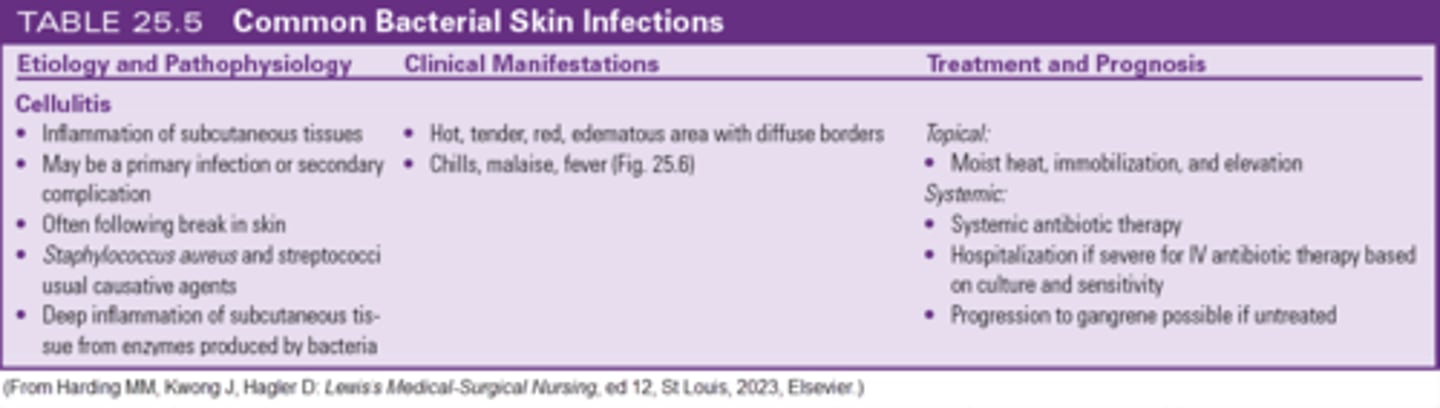
A patient who presents with chills, malaise, and a body temperature of 100F (37.8C) and who has a hot, tender, reddened, edematous area with a diffuse border one leg may have which skin infection?
a. Impetigo
b. Cellulitis
c. Carbuncle
d. Furunculosis
b. Cellulitis
Cellulitis is marked by a hot, tender, reddened, edematous area with a diffuse border resulting from inflammation of subcutaneous tissue. Untreated cellulitis may progress to gangrene.
A patient who has pustules with thick, hone-colored crusting may have impetigo, which, if left untreated, may cause glomerulonephritis. A patient with many pustules in an erythematous area may have carbuncle. Furunculosis is mostly seen in patients with obesity, diabetes, and chronic illness; the affected patient may have a tender, erythematous area around a hair follicle, along with regional adenopathy and increased body temperature. Pg 478
The nurse will include which intervention for the patient newly admitted with cellulitis of the right foot?
a. Apply warm, moist heat
b. Encourage frequent ambulation
c. Wrap the foot snugly in blankets
d. Maintain foot in a dependent position
a. Apply warm, moist heat
The application of warm, moist heat speeds the resolution of inflammation and infection when accompanied by appropriate antibiotic therapy. It does this by increasing local circulation to the affected area to bring macrophages to the area and carry off cellular debris. Immobilization and elevation are also used. Snug blankets would not be helpful and would decrease circulation to this sensitive tissue. Elevation and immobilization would be beneficial for healing, so the nurse should not encourage frequent ambulating or maintenance of the foot in a dependent position. Pg 478
Which nursing intervention would improve the comfort of a patient with herpes zoster?
a. Direct sunlight
b. Dry heating pad
c. Cool, wet dressing
d. Petroleum jelly applied to the lesions
c. Cool, wet dressing
The application of any form of warmth may increase the sensitivity of nerve endings and worsen the pain. Application of petroleum jelly to lesions is a comfort measure for herpes simplex virus type 1 or 2. Pg 480
Methotrexate may be prescribed to treat which condition?
a. A benign adipose tumor
b. Autoimmune chronic dermatitis
c. Inflammatory disorder of sebaceous glands
d. An increase in normal melanocytes in the basal layer of the epidermis
b. Autoimmune chronic dermatitis
The skin condition associated with autoimmune chronic dermatitis is psoriasis, which involves excessively rapid turnover of the cells. Methotrexate slows down the rapid division of skin cells that is a hallmark of psoriasis. Pp. 485- 486
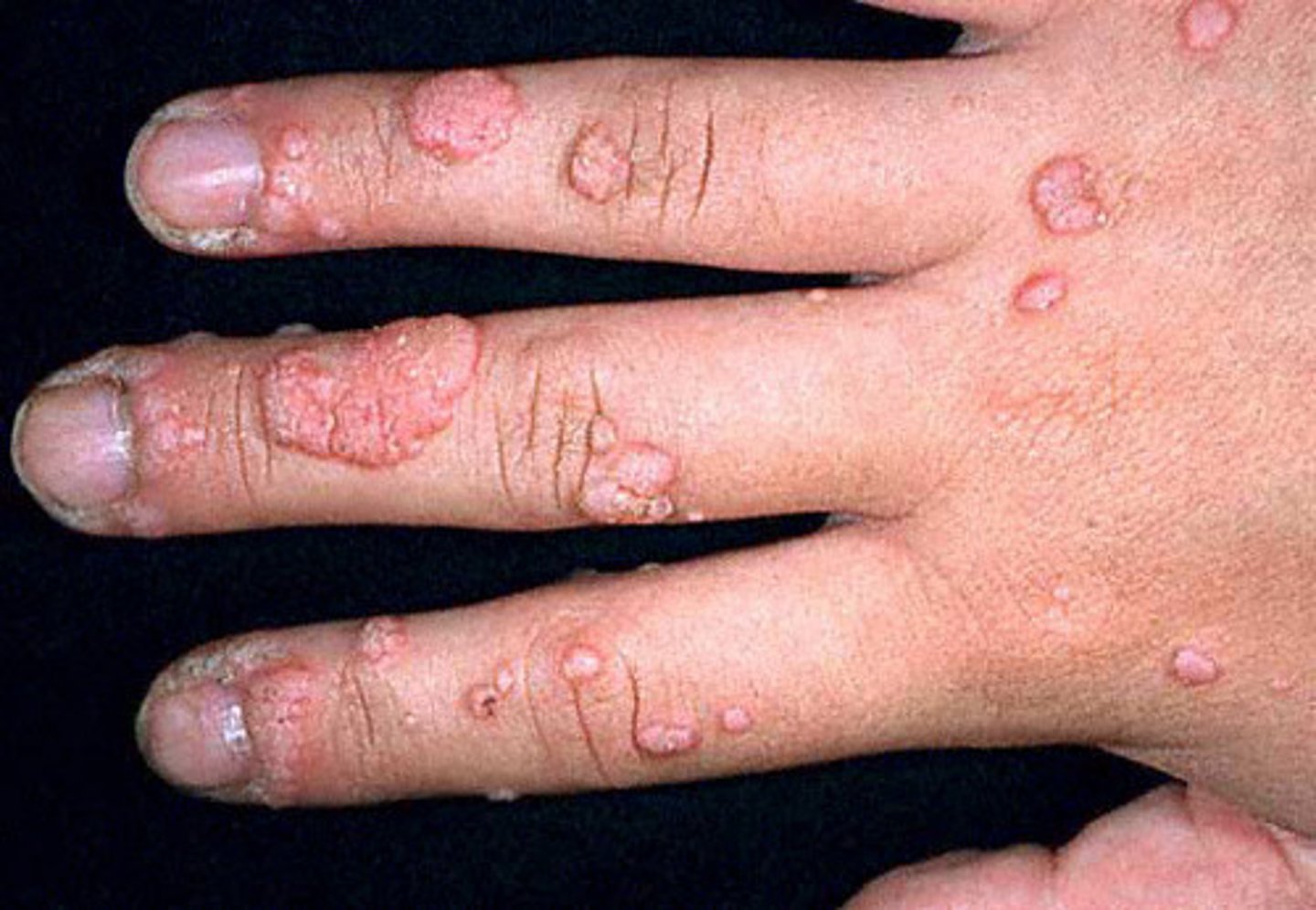
Which diagnosis does the nurse expect for a patient with circumscribed, hypertrophic, flesh-colored papules on the knee?
a. Plantar warts
b. Herpes zoster
c. Verruca vulgaris
d. Herpes simplex virus type I
c. Verruca vulgaris
Caused by HPV, mildly contagious by autoinoculation. Clinical manifestations: circumscribed, hypertrophic, flesh colored Papules limited to epidermis, painful on lateral compression. See Table 25.6 pg 480
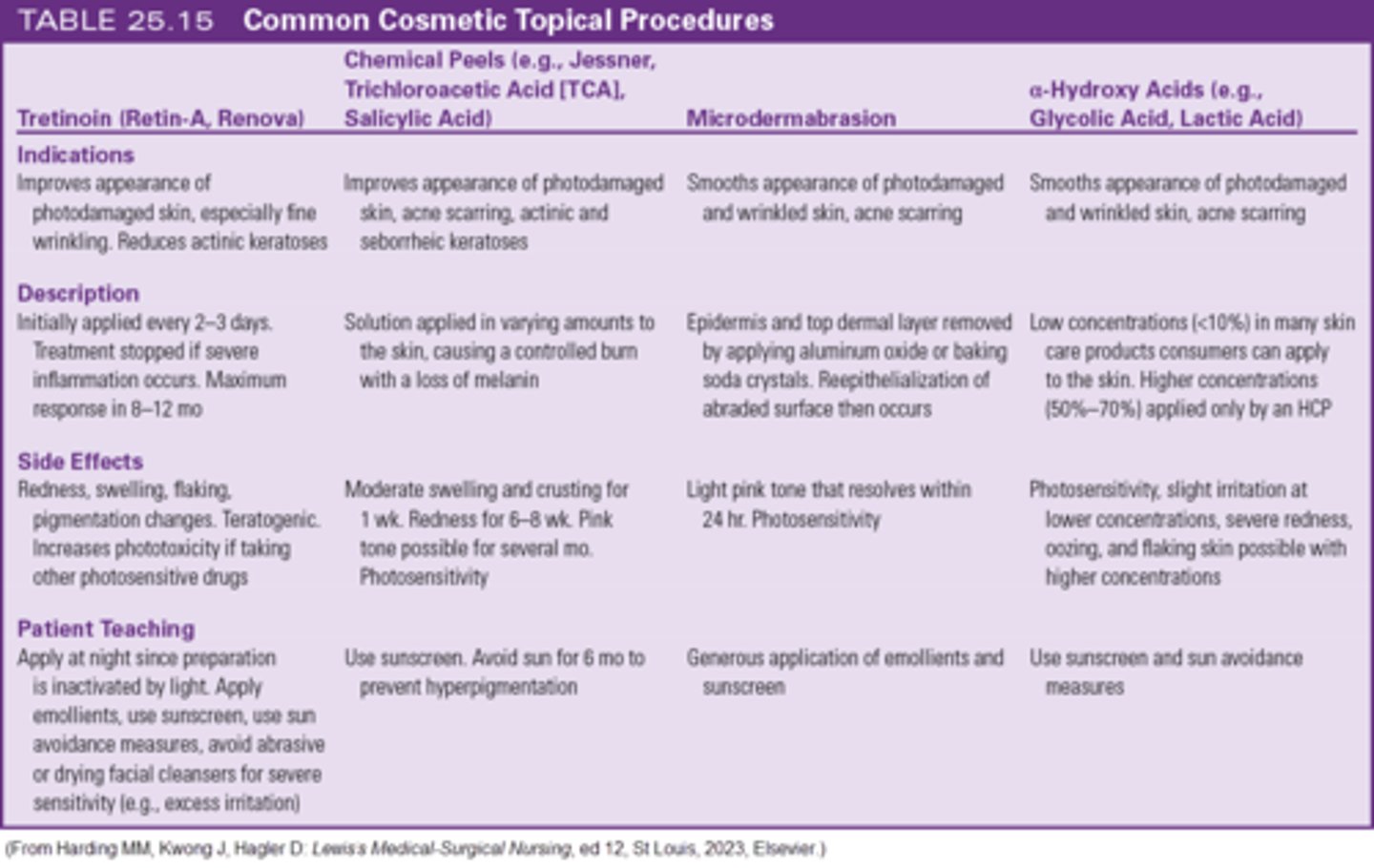
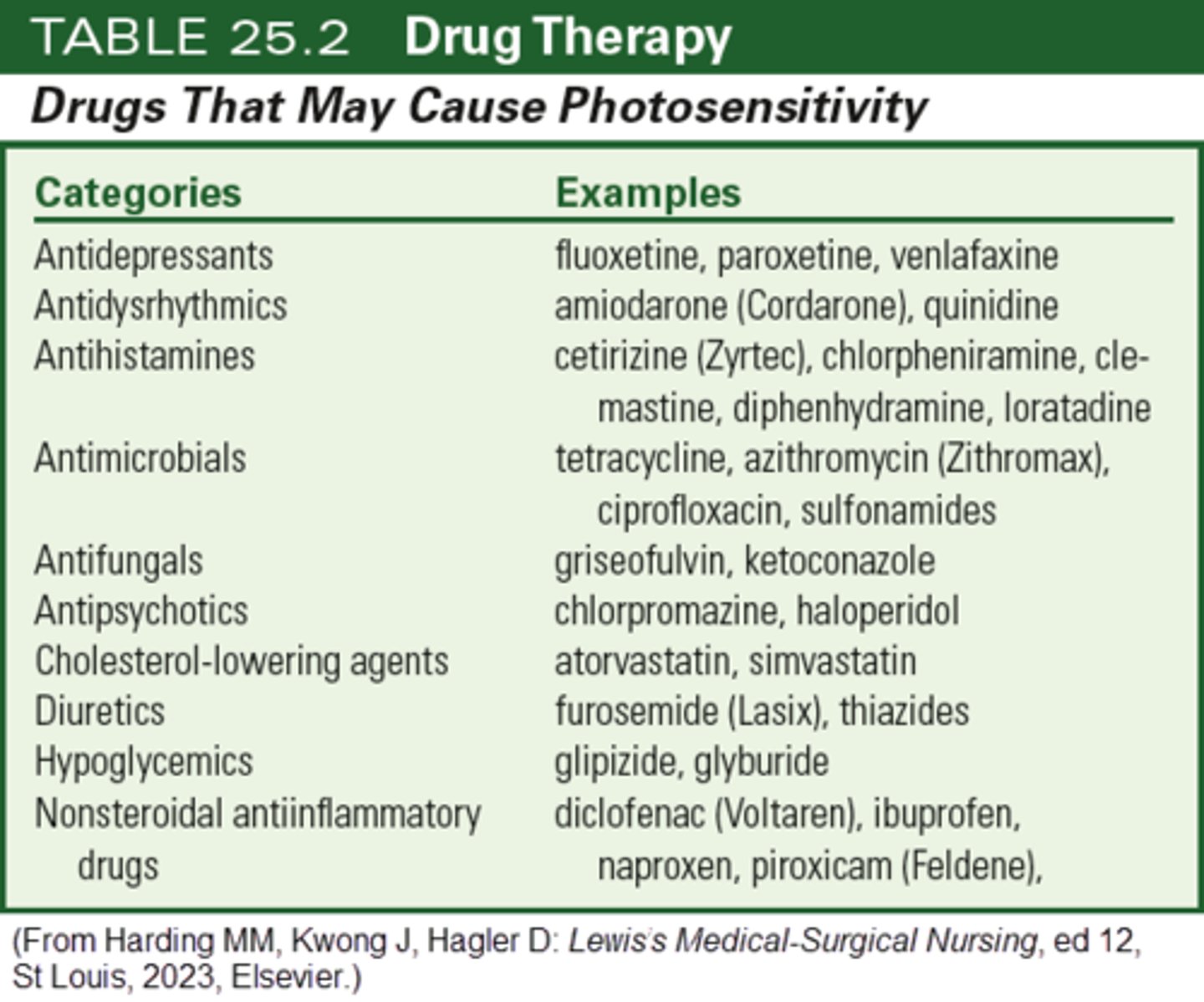
Which medications would require the nurse to teach about photosensitivity? Select all that apply.
a. Ibuprofen
b. Furosemide
c. Venlafaxine
d. Haloperidol
e. Azithromycin
f. Hydrochlorothiazide
b. Furosemide
c. Venlafaxine
d. Haloperidol
e. Azithromycin
f. Hydrochlorothiazide
Certain drugs potential the sun's effects, even with brief exposure. The chemicals in these drugs absorb light when exposed to natural sunlight and release energy that harms cells and tissues. Pg 472
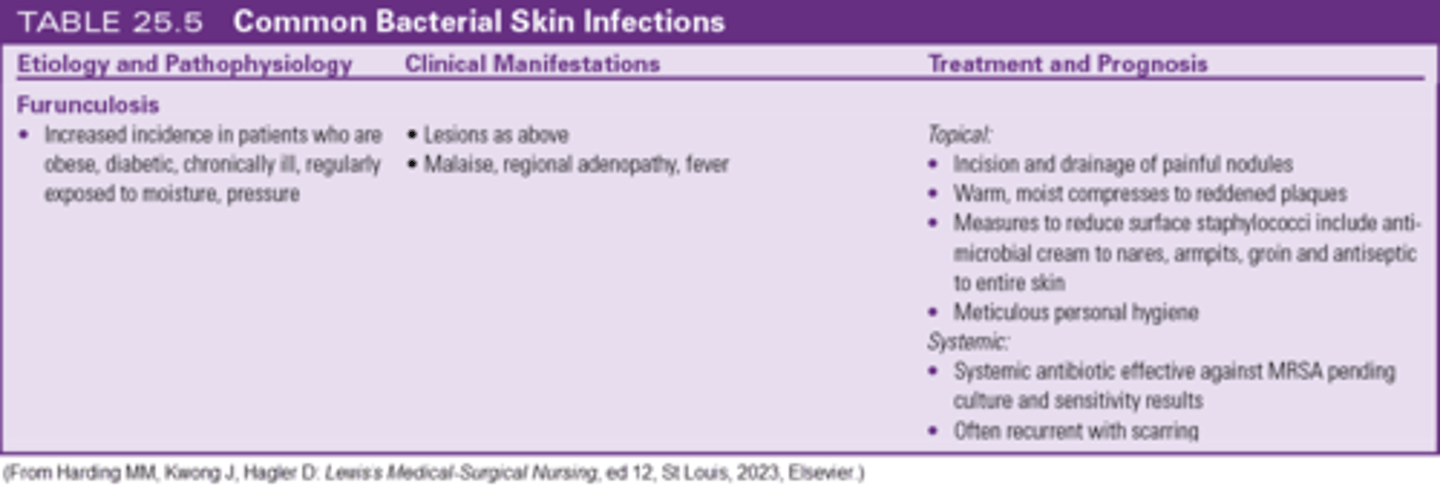
A patient with obesity who has a diagnosis of diabetes has an increased risk for which bacterial skin infection?
a. Cellulitis
b. Impetigo
c. Carbuncle
d. Furunculosis
d. Furunculosis
Patients with obesity and diabetes are at increased risk for furunculosis because of the likelihood of skin folds containing excess moisture. Therefore the nurse should teach the patient about the possibility of furunculosis. Pg 478
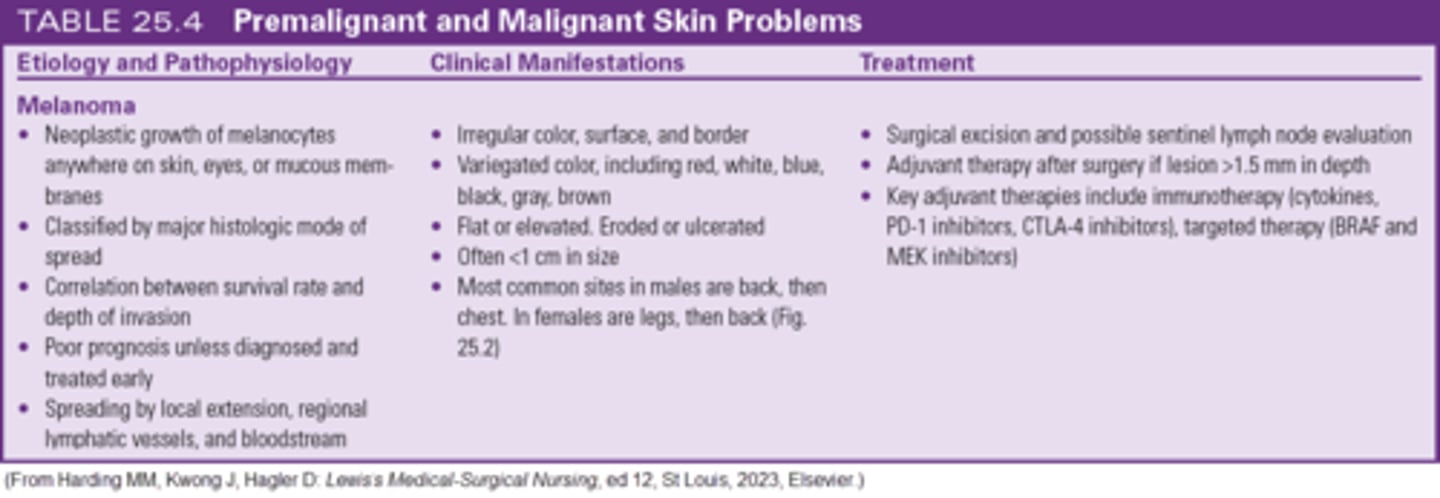
Which type of skin cancer has a higher risk for metastasis and poor prognosis unless it is treated early?
a. Myeloma
b. Melanoma
c. Basal cell carcinoma
d. Squamous cell carcinoma
b. Melanoma
Malignant melanoma has a higher risk for metastasis than does basal cell or squamous cell carcinoma because of its invasiveness. There is a poor prognosis unless melanoma is diagnosed and treated early.
Myeloma is a Hematologic malignancy, not a skin cancer. Basal cell and squamous cell carcinomas are typically superficial, localized lesions that respond well to treatment and have high cure rates. Pp 475- 476
 Note
Note  Flashcards (105)