Cell Signaling and Receptors
 Studied by 0 people
 Call Kai
 Learn
Learn Practice Test
 Spaced Repetition
 Match
Match Flashcards
 Knowt Play
1/20

There's no tags or description
Looks like no tags are added yet.
Name | Mastery | Learn | Test | Matching | Spaced | Call with Kai |
|---|
No analytics yet
Send a link to your students to track their progress
21 Terms
chemical messengers
-Chemical messengers (hormones, neurotransmitters, etc.) bind to proteins called receptors
*for communication, to active homeostasis loops, etc.
-Most chemical messengers are water-soluble and bind to receptors located at the plasma membrane
*travel easily in blood and ECF; bc can’t cross the membrane
-Some messengers, like steroids, are lipid-soluble and bind to an intracellular receptor
*can go through the membrane
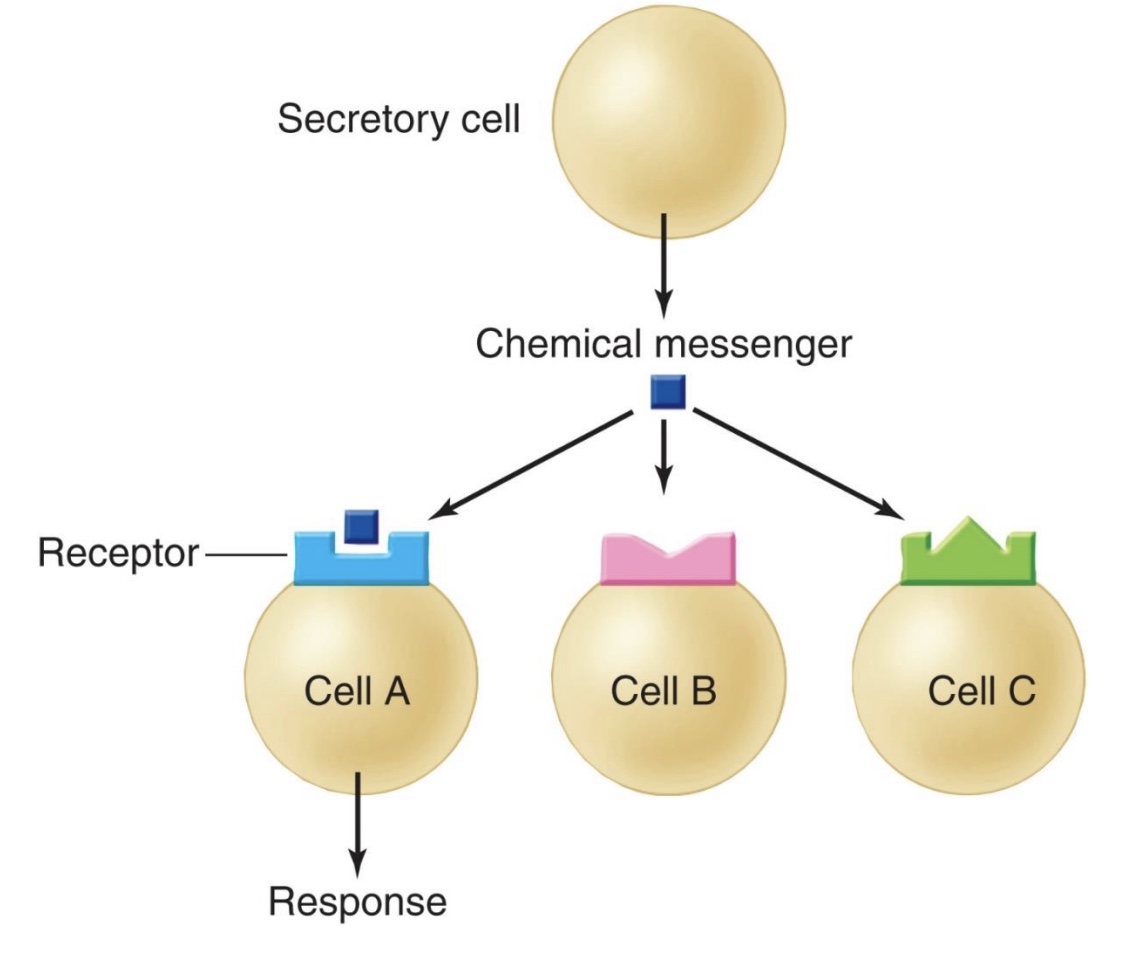
receptor specificity
-Cells only respond if they have the correct receptor (“lock and key”)
-Chemical messengers can activate multiple receptor types, with each having a different response
Receptor Terminology
-ligand
-endogenous ligand
-agonist
-antagonist
-Ligand: a molecule that binds to a receptor
natural or synthetic (ex: drugs); activate or block
-Endogenous ligand: hormone or neurotransmitter produced by the body (naturally produced)
-Agonist: a molecule that binds to a receptor and activates it
usually natural, most hormones and NT; ex: epinephrine
-Antagonist: a molecule that binds to a receptor and blocks it, preventing activation by an agonist and other binding
usually a drug; ex: beta-blocker prevents epinephrine from binding
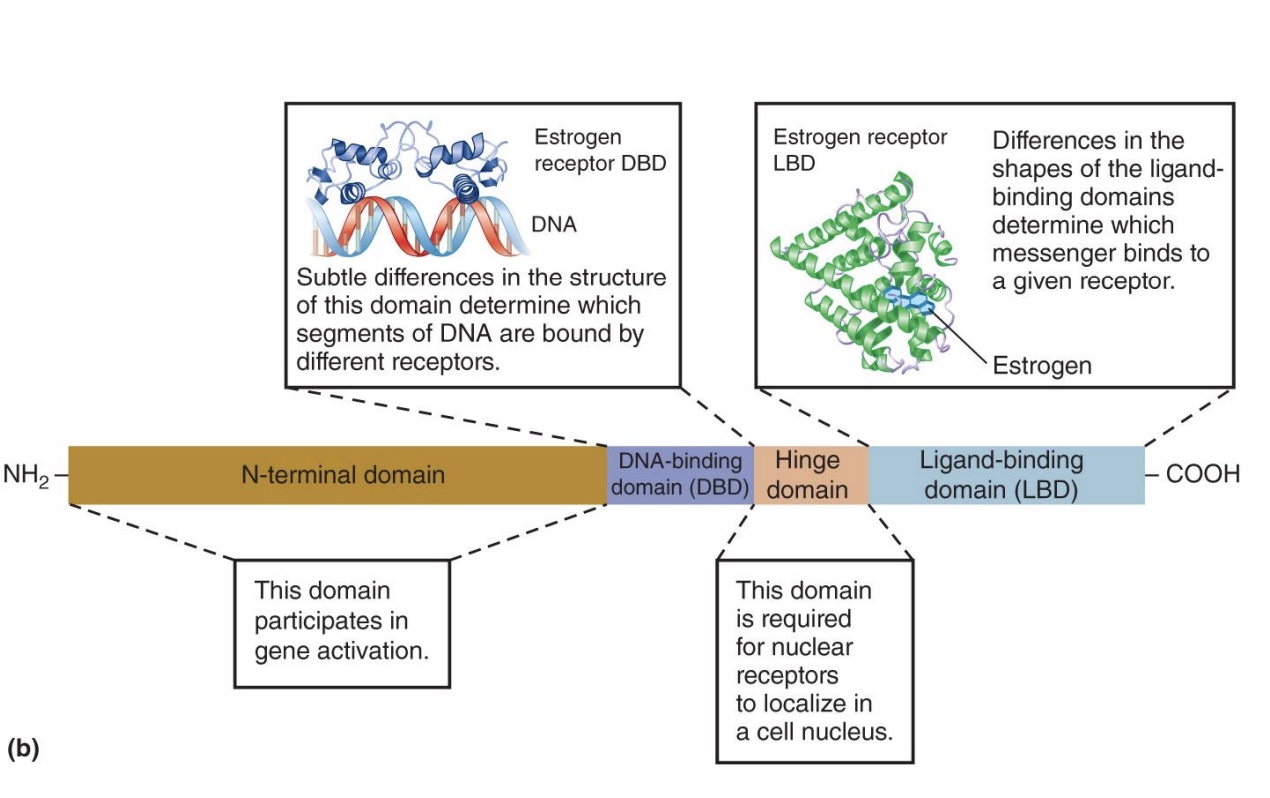
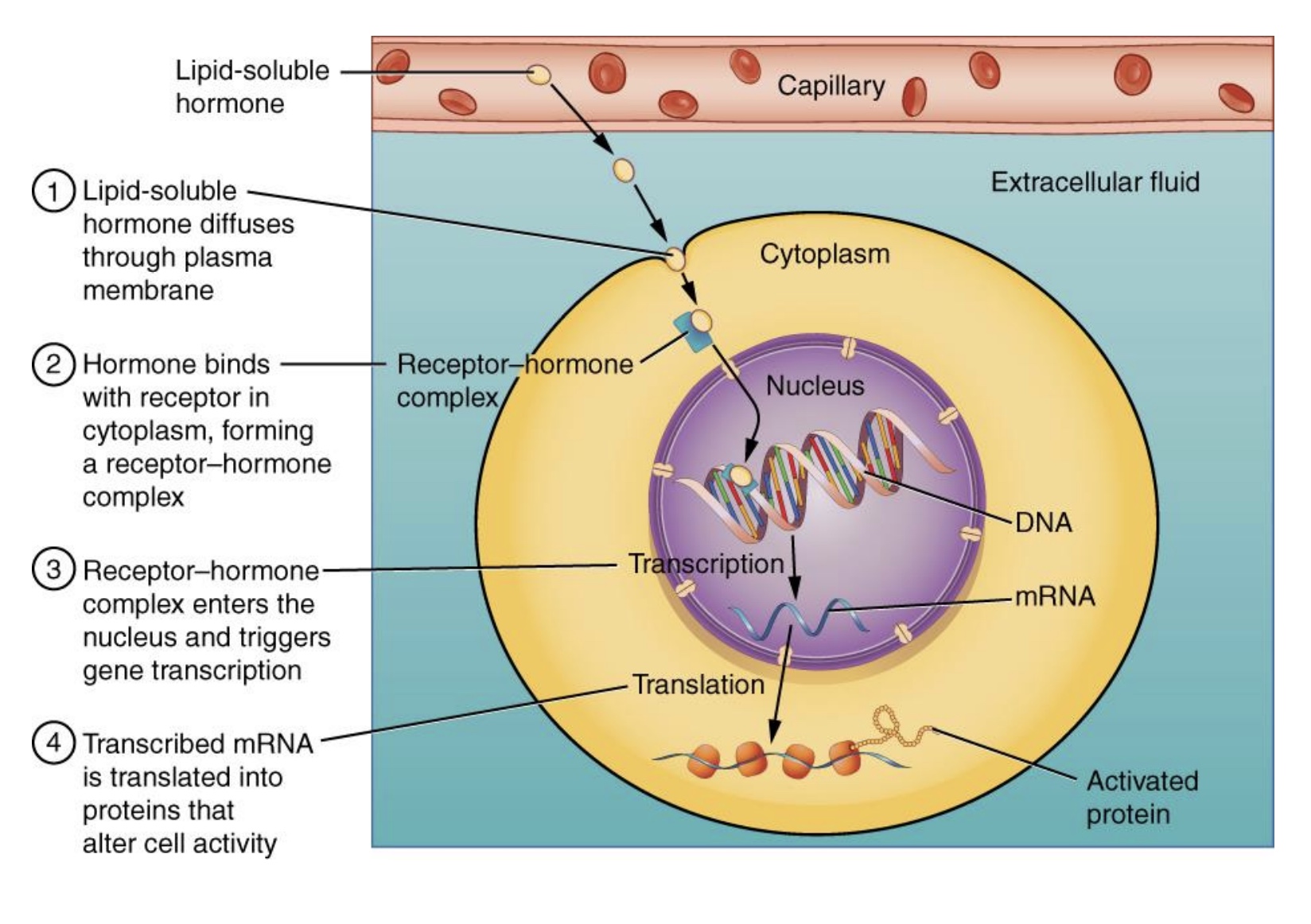
nuclear receptor
-Inactive receptor can be found in cytosol or nucleus
for lipid soluble messengers, usually steroid hormones (ex: cortisol)
-Activated receptor translocates to nucleus and binds DNA
switch genes on or off/changes transcription of RNA
*picture: “N-terminal” protein; DNA-binding site; ligand-binding site
pathways initiated by lipid-soluble messengers
-usually slower effects (bc takes time to make proteins)
*lipid often bound to a protein to travel
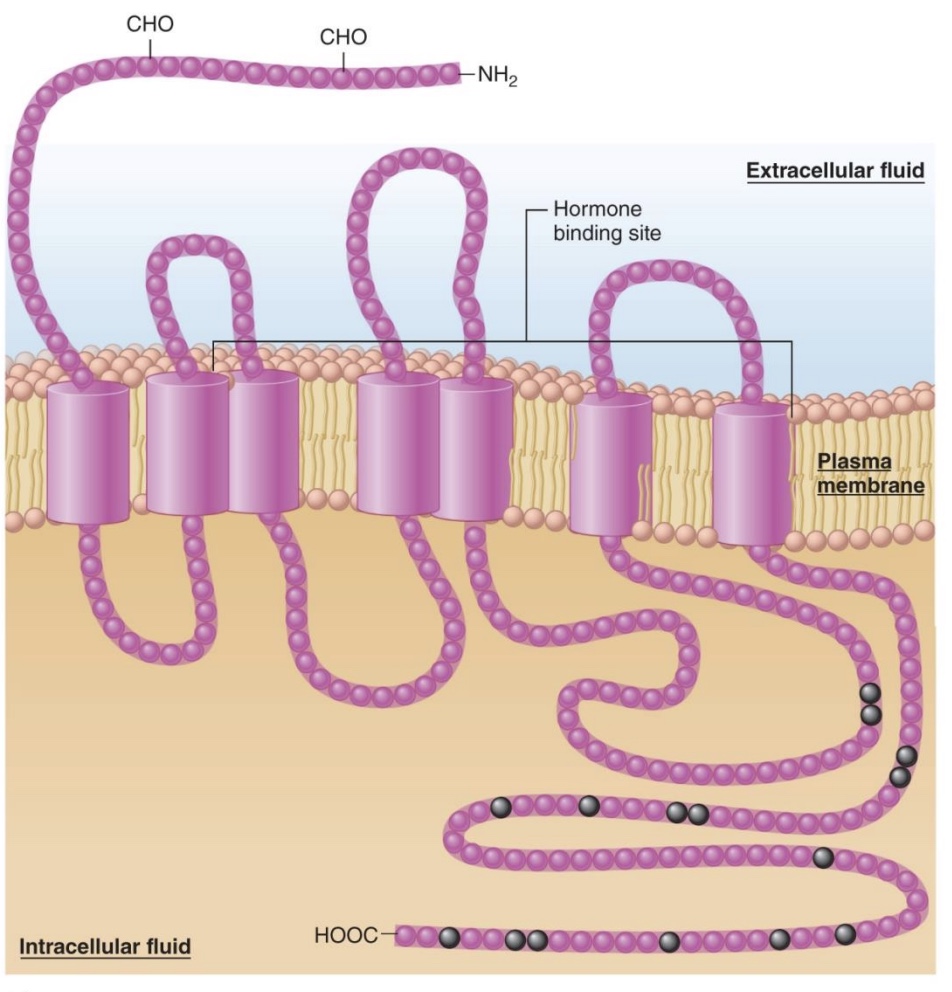
Transmembrane receptors
-Protein structure crosses the membrane one or more times
-Extracellular domain binds to signaling molecule
-Intracellular domain activates signaling pathway inside cell
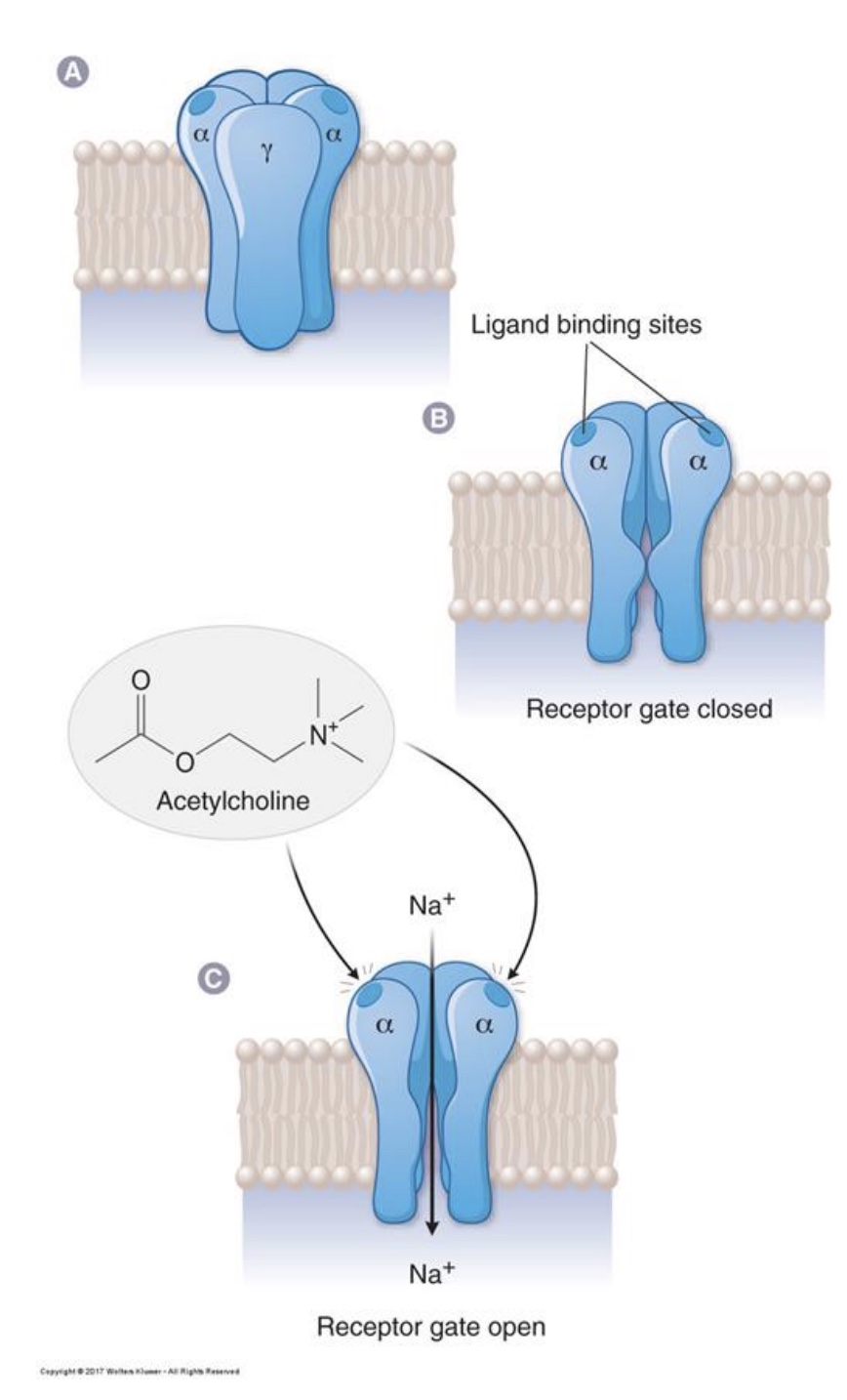
-Alternatively, some transmembrane receptors form channels that allow ion flux (ex: ligand-gated ion channels)
*picture: G-protein (know bc 7 transmembrane structures)
Ligand-Gated Ion channels
-Agonist (ligand) binding causes channel to open (or close)
-Main effect is change in membrane potential
(+) ions in: depolarizes cell (can generate AP)
(-) ions in: hyperpolarizes cell
(+) ions out: hyperpolarizes cell
-ex: nicotinic acetylcholine receptor (Ach=ligand); just “ion-channel”=voltage gated
Enzyme-linked receptors
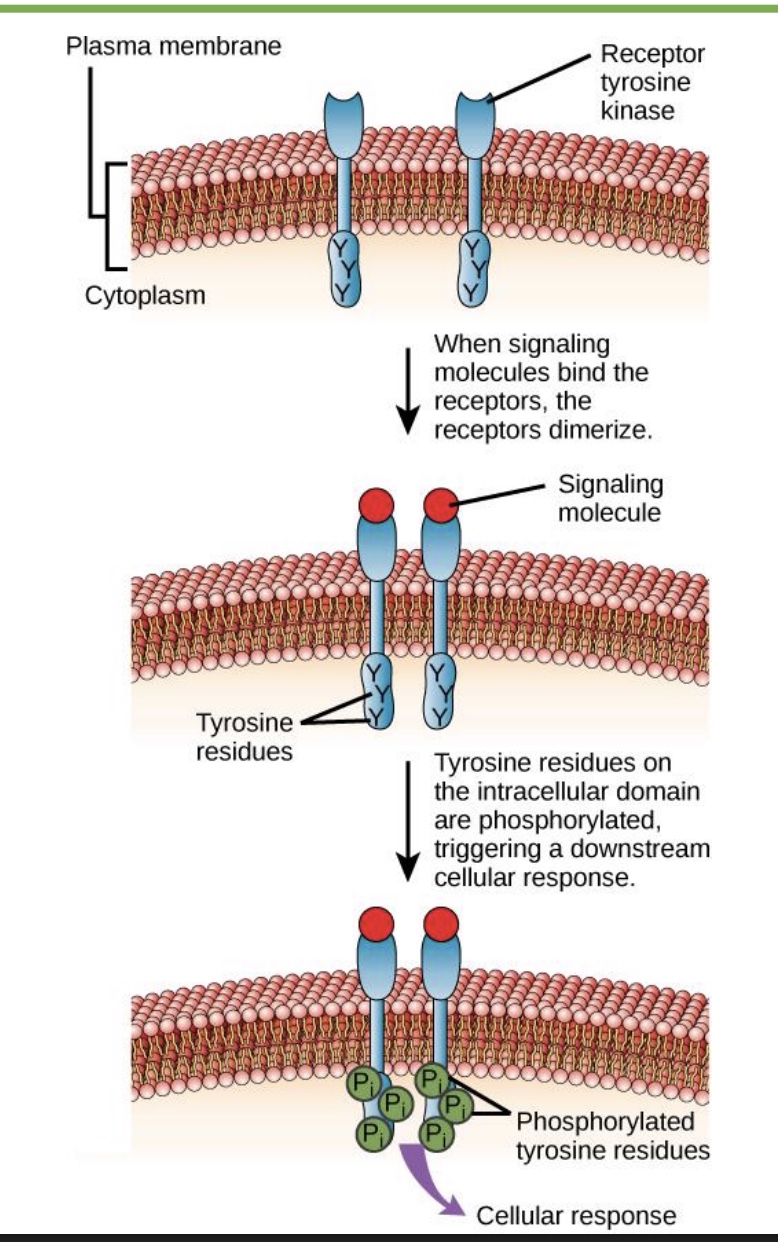
-Example: receptor tyrosine kinase
extracellular receptor; tyrosine intracellular; kinase adds phosphate
-Receptor has enzyme activity that phosphorylates target proteins in cell
phosphorylates tyrosine (on/off switch)
-other ex: Insulin receptor
Receptors that Interact with Cytoplasmic Kinases
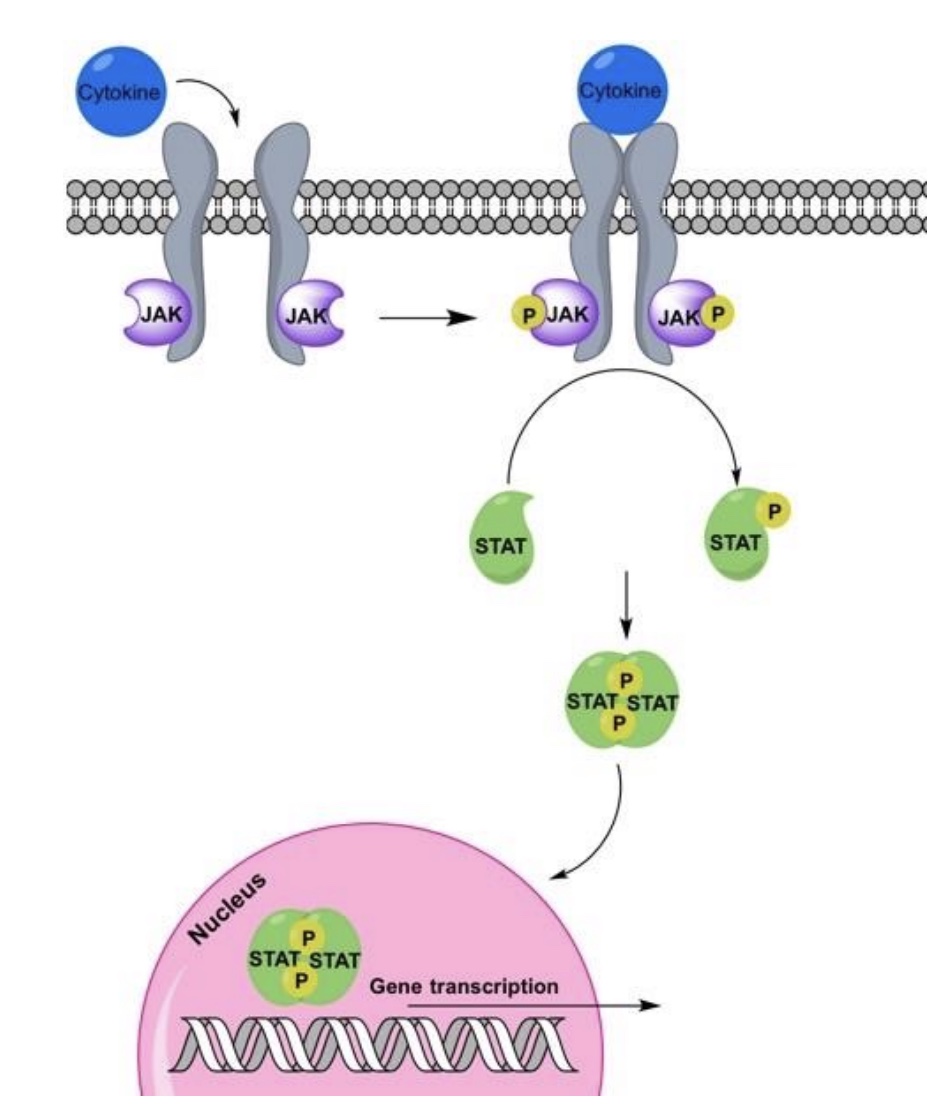
-JAK/STAT pathways (*full name)
-Receptor activates Janus kinase (JAK) which goes on to phosphorylate proteins in the cytoplasm
-Often transcription factors that go to nucleus
“stat”: transcription factor protein that goes to the nucleus, similar to steroids
-usually slower
-ex: growth hormone
G Protein-Coupled Receptors (GPCRs)
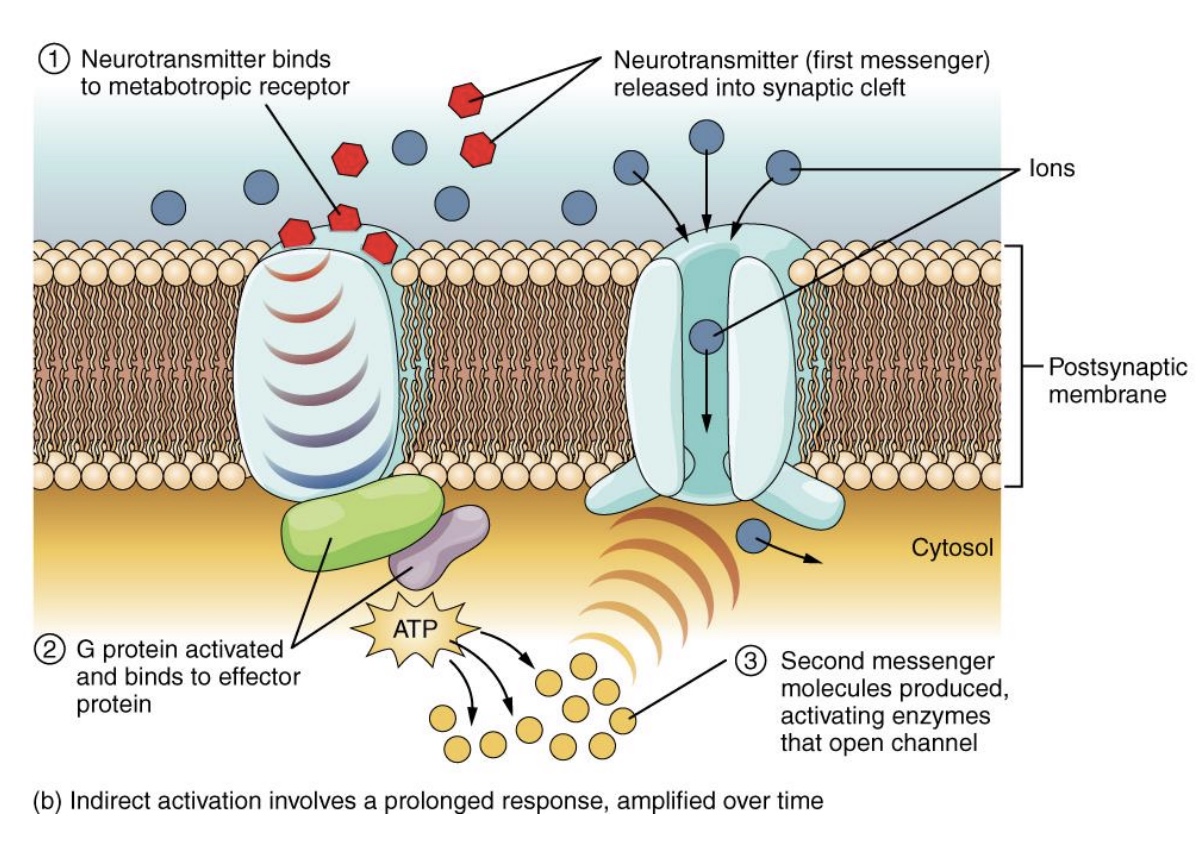
-G protein is located on cytoplasmic surface of plasma membrane
-Three subunits; Activated alpha subunit binds GTP and dissociates from beta and gamma
-Goes on to activate enzymes and ion channels
*common for NT and hormones (ex: epi and norepi, dopamine); G protein doesn’t directly cause a response
G Protein Classifications
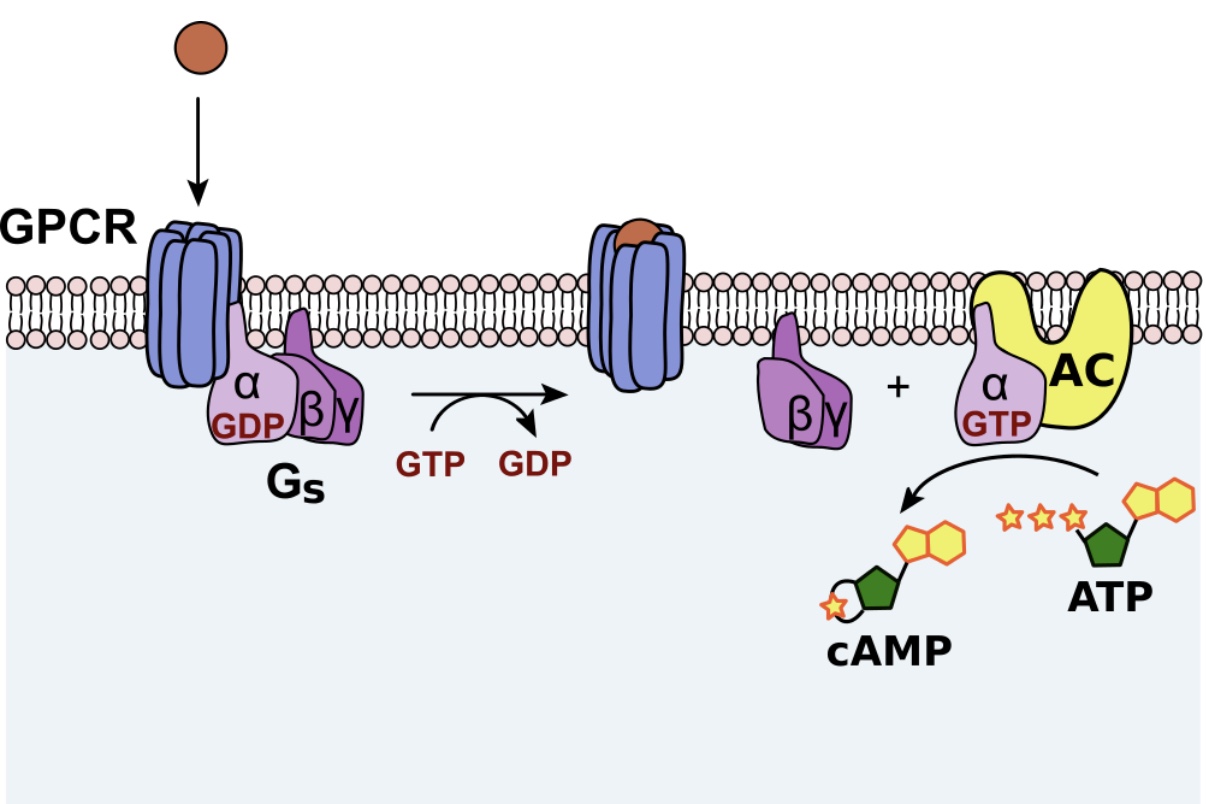
-Gs: stimulates adenylyl cyclase, increases cAMP
-Gi: inhibits adenylyl cyclase, decreases cAMP
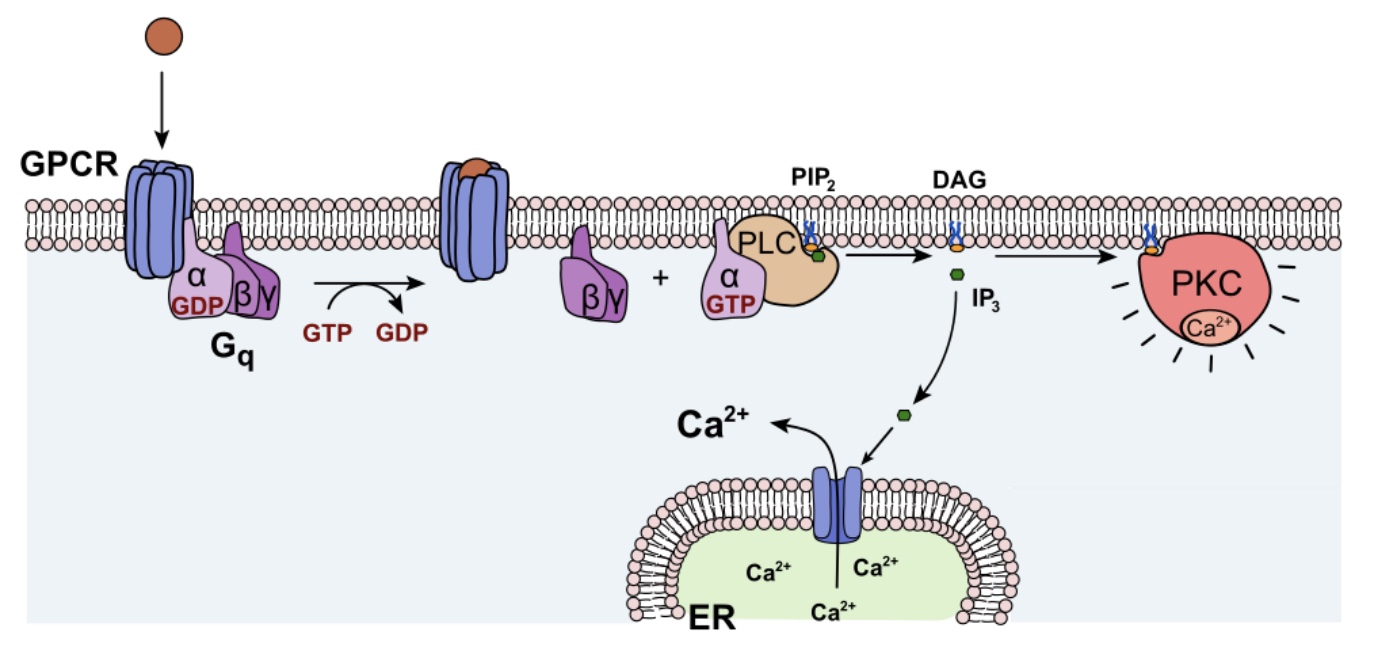
-Gq: activates PLC, leading to increases in IP3 , DAG and Ca2+ (second messengers)
Gs-coupled receptors
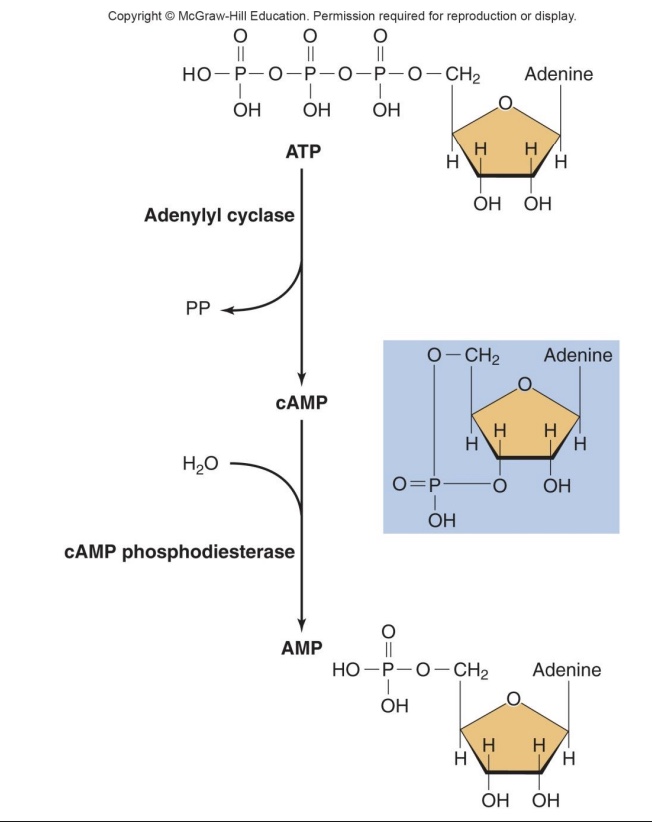
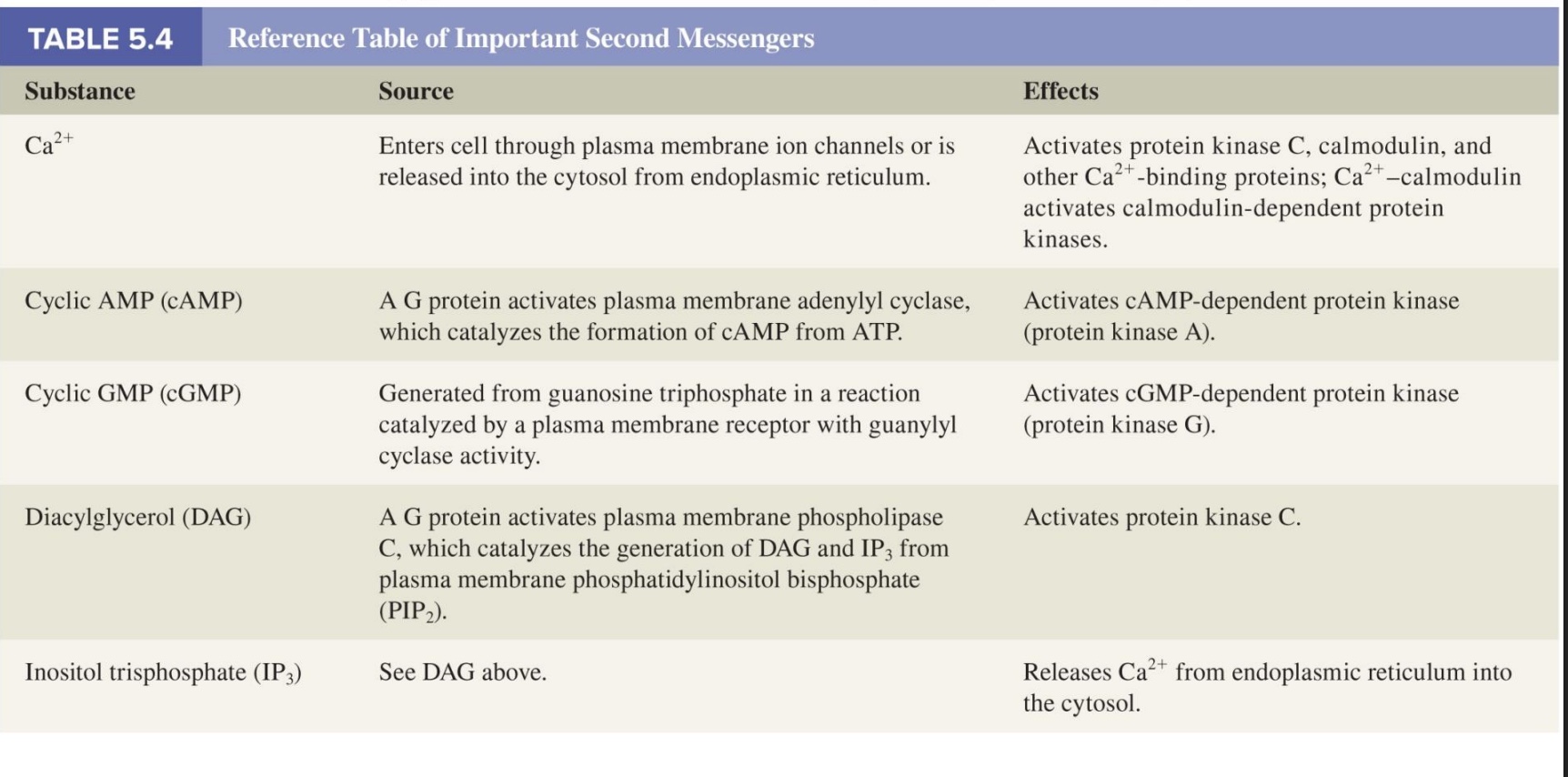
-Adenylyl (adenylate) cyclase: enzyme that makes cyclic adenosine monophosphate (cAMP) from ATP (ATP → cAMP)
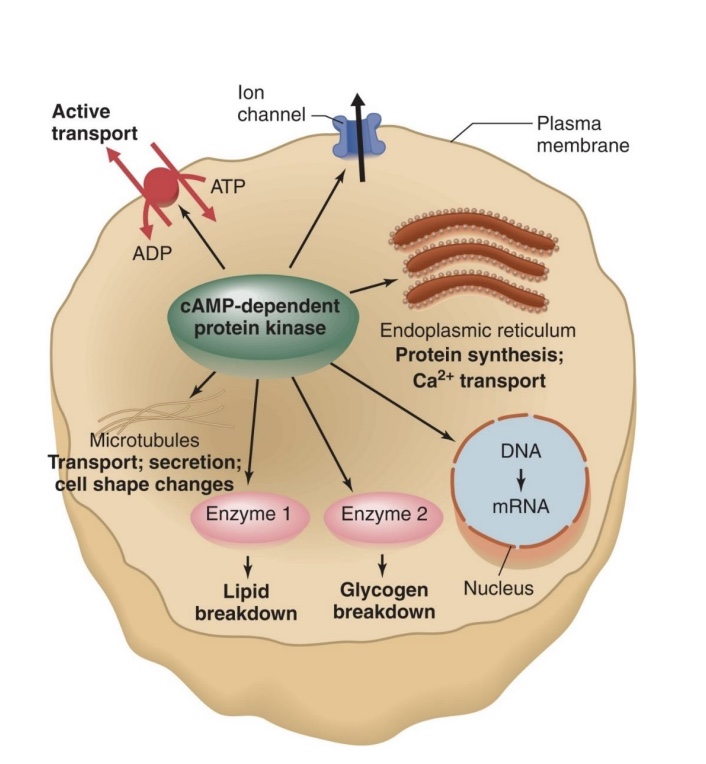
-cAMP is a second messenger that activates cAMP-dependent protein kinase (PKA)
formation and breakdown of cAMP
-adenyl cyclase: catalyzes reaction, increase cAMP
-cAMP phosphdiesteraste: terminates the response, decreases cAMP
signal ampplification
-purpose of 2nd messengers
-low [ ] of 1st messenger (stays outside, water soluble) leads to lots of the final product
-ex: NT and synapse; hormones in blood
![<p>-purpose of 2nd messengers</p><p>-low [ ] of 1st messenger (stays outside, water soluble) leads to lots of the final product</p><p>-ex: NT and synapse; hormones in blood</p>](https://knowt-user-attachments.s3.amazonaws.com/16cd5c4d-f879-42f7-a9d2-7177788953c5.jpg)
actions of cAMP-depdenent kinases
-know an do a lot of things depending on the cell
Gq-coupled receptors
-Activated Gq activates an enzyme called phospholipase C (PLC)
-PLC catalyzes the breakdown of a plasma membrane phospholipid known as phosphatidylinositol bisphosphate, abbreviated PIP2 , to diacylglycerol (DAG) and inositol trisphosphate (IP3 )
IP3 causes Ca2+ release from the endoplasmic reticulum
DAG activates protein kinase C (PKC)
*mainly for Ca2+ signaling in cells; Ca2+=2nd messenger; PIP2=ligand, IP3 in EPR
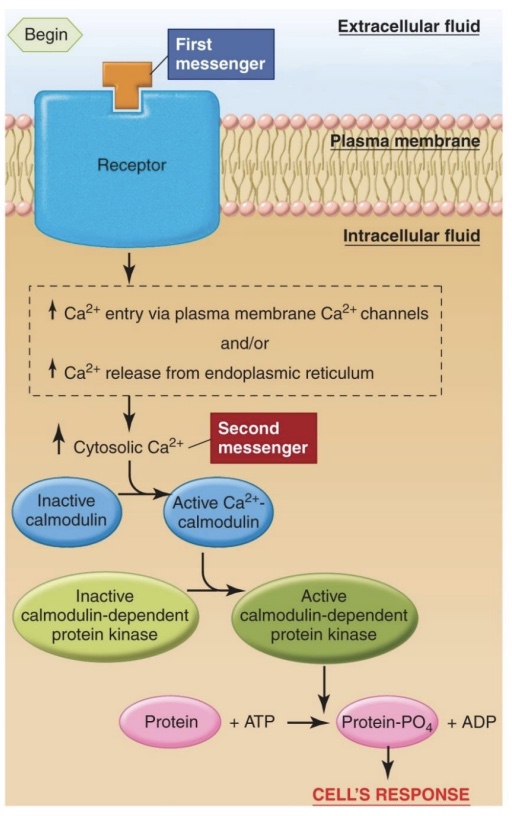
Ca2+ as a second messenger: calmodulin and calmodulin-dependent protein kinase
-increase Ca2+ from plasma membrane channels OR the EPR → increased cytosolic Ca2+
-Ca2+ binds to calmodulin and activates it → activating calmodulin-dependent protein kinase
Summary of important 2nd messengers
*cAMP and cGMP similar idea
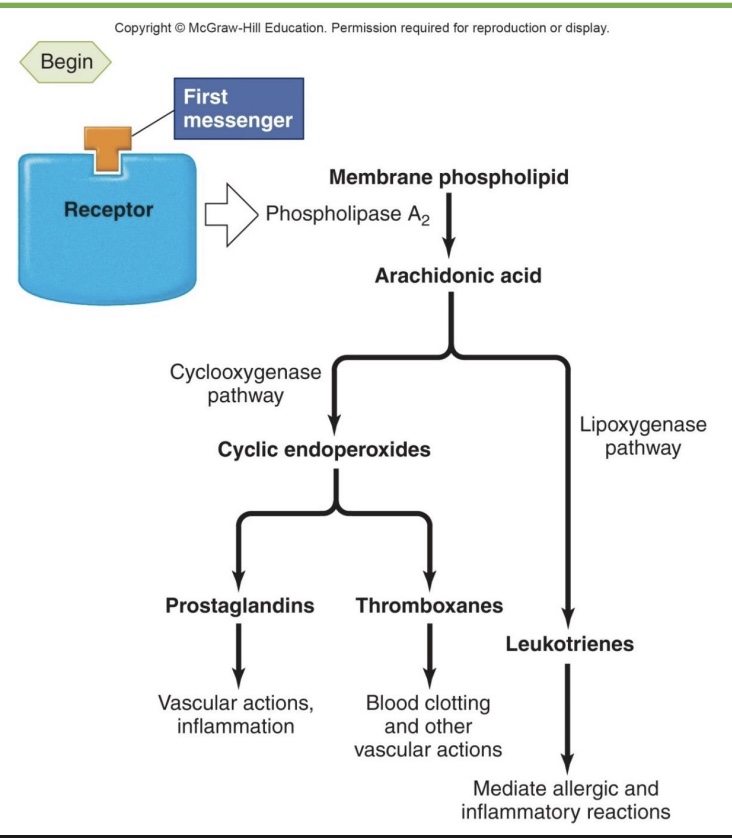
Arachidonic Acid and Eicosanoids
-phospholipase A2: cuts off lipids tails
-Arachidonic acid: 20C chain from cut off tail
*then can do option a or b…
a) Cyclooxygenase pathway (aspirin blocks this)
Prostaglandins: inflammation
Thrombaxnes: blood clotting (platlete activity)
b) Leukotrienes: allergic and inflammatory reactions, asthma
How are signal transduction pathways turned off?
-Agonist diffuses away from receptor (*usually reversible binding and weak bond)
-Second messenger can be degraded by enzymes (*ex: phosphoaesteas)
-Calcium pumped back into endoplasmic reticulum (*at rest: low Ca2+ in cytosol bc of this)
-Longer term decreases in signaling
Phosphorylation of receptor (*P turns it off)
Internalization of receptor (*receptor removed from membrane)
Downregulation: decreased synthesis of receptor protein (*if receptor overally activated)
Comparison of receptor types (summary)
LGIC, RTK, JAK and GPCR
-Located on cell membrane
-Transduce an extracellular signal into an intracellular signal
Membrane potential
Phosphorylation
Generation of second messenger
-Can lead to gene transcription changes as a downstream effect (*steps between)
Nuclear receptors
-Located in cytosol, translocate to nucleus when ligand binds
-Main effect is (direct) regulation of gene transcription
 Note
Note  Flashcards (20)