Chapter 4 microbio
 Studied by 0 people
 Call Kai
 Learn
Learn Practice Test
 Spaced Repetition
 Match
Match Flashcards
 Knowt Play
1/64

Earn XP
Description and Tags
exam 1
Name | Mastery | Learn | Test | Matching | Spaced | Call with Kai |
|---|
No analytics yet
Send a link to your students to track their progress
65 Terms
eukaryotic cell has what and how does it compare to bacteria?
eukaryotic cell has nuclei which makes it more complex than bacteria. it also has membrane bound organelles.
how did complex multicellular organisms evolve?
over time cells aggregated—> cells within colonies became specialized—> complex multicellular organisms evolved which is how we got here
eukaryotic flagella:
external structure for movement
diff from bacteria flagellum= around 10 times thicker
structurally more complex as it has microtubules—> makes it look diff from prokaryotic (bacterial and archaea) flagella
eukaryotic cilia:
external structure for movement
not as common
similar to flagellum structure but smaller and exist in a greater amount
found only in a single group of protozoa and some animal cells
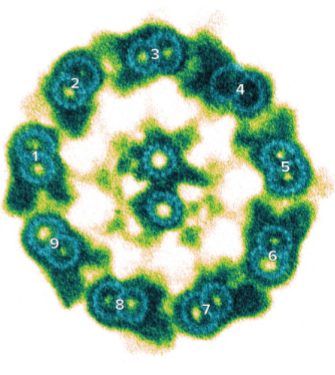
microtubules
inside flagella= extend along length of flagellum
9 pairs of microtubules surround a pair of flagellum
9+2 arrangement (in picture, notice the two flagellum in center)
also exist in cilia
Protozoa and helminth cell wall:
neither possess a true cell wall. Instead…
Protozoa= pellicle (not the same one in biofilms)
helminth= cuticle or integument
both structures do exactly what a cell wall would do
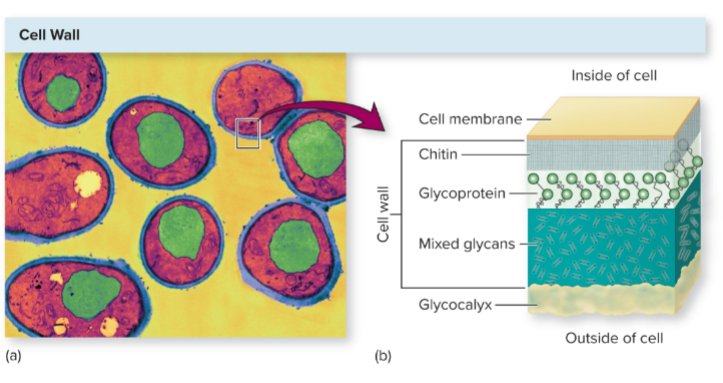
fungi cell wall:
made up of…
chitin= polymer of glucose
glycoprotein
mixed glycans= capsules
humans don’t make these structures for their cell wall
fungi also have sterols (specifically ergosterol) like humans which makes it hard to distinguish during treatments like chemotherapy; basically means it’s hard to harm the fungi without harming host
cell membrane has different…
sterols
sterols provide stability, think of cholesterol
important in cells that don’t have cell wall
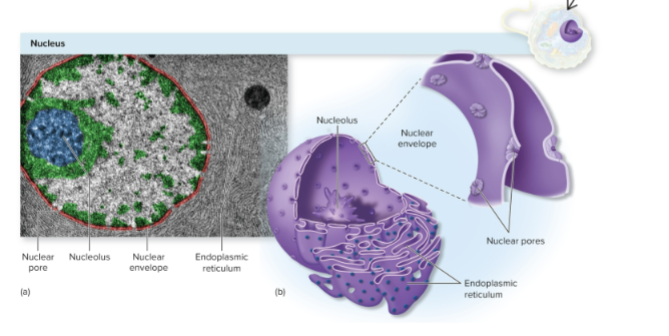
nucleus:
where transcription happens
nuclear envelope= nuclear membrane= double layer membrane made of 2 phospholipid bilayers.
endoplasmic reticulum= extensions of nuclear envelope; where proteins get made
nuclear pore= big, protein-based channel that is the primary gateway for transport
nucleolus= nonmembrane bound structure inside the nucleus—> produces and assembles rRNA and proteins
rough endoplasmic reticulum (rough ER)
where protein translation happens
as transcription being made, it’s already being translated= translation and transcription happen at the same time
Golgi apparatus:
Golgi body gets modified in here
Golgi apparatus modifies, sorts, and packages proteins and lipids from ER into vesicles for final transport
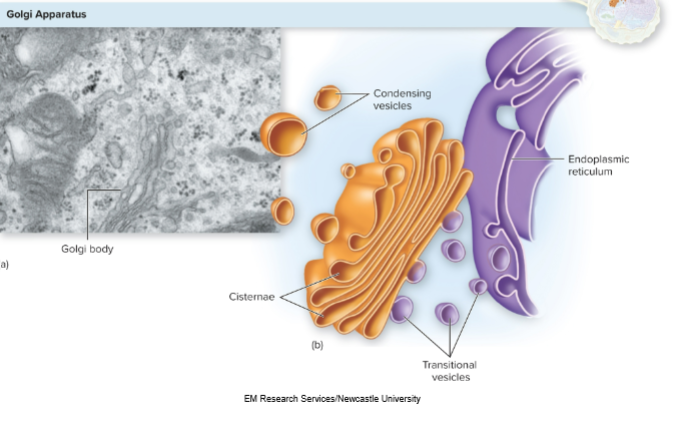
transport process:
condensing vesicles fuse with cytoplasmic membrane to release contents
what is natures assembly line made up of and what is the sequence? (cell’s protein production and processing pathway)
nucleus, ER, and Golgi Apparatus
DNA—> RNA—> ribosomes/RER (through nuclear pores)
transcription happens when you copy DNA to RNA, DNA is copied into mRNA which then exits via the nuclear pore)
Ribosomes (often attached to the RER) read the mRNA and translate it into a protein
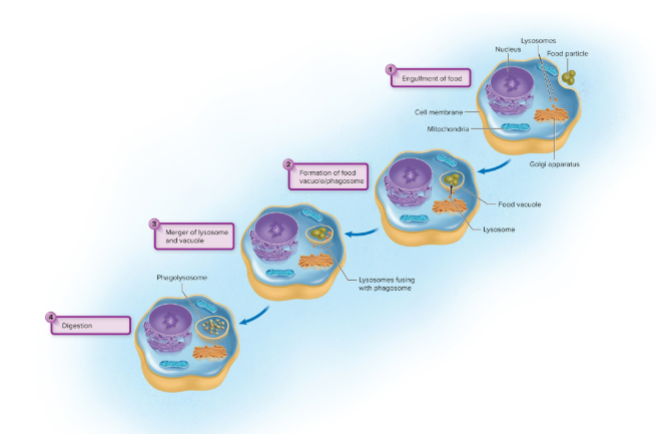
Lysosomes in phagocytosis
lysosome= small organelle w/vesicles and oxygen radical species (oxygen radical species= super toxic, only to be used as tool to kill bacteria)
1) engulfment of food by cytoplasmic membrane (could also be pathogen instead of food)
2) food vacuole/phagosome formed= lysosome inside food vacuole is called a phagolysosome
3) lysosome and vacuole merge/join—> if it’s breaking down food or pathogen, there’s extra steps
4) digestion
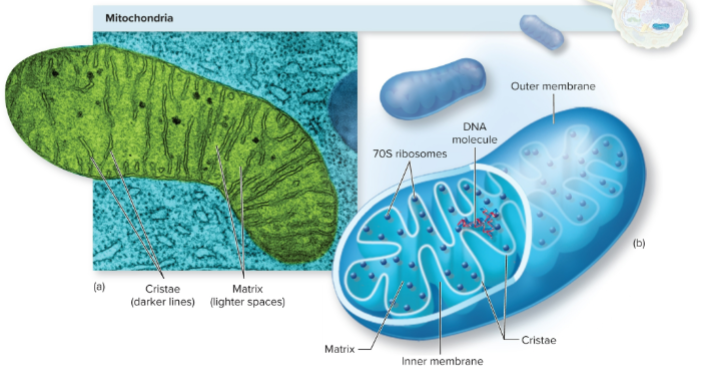
mitochondria:
why we believe 2 cells fused at some point—> mitochondria and chloroplasts are evidence for the endosymbiotic theory
has its own DNA—> “could almost be another organism”
provides energy
prokaryotes use cytoplasmic membrane to make energy/ATP
cristae= inner membrane folds
matrix= inside the cristae
has 70s ribosome
eukaryotic ribosomes:
large subunit is 60s, small is 40s—> 60s+40s= 80s
present throughout cell
cytoplasm and cytoskeleton
Attached to the rough endoplasmic reticulum
Appear inside mitochondria and chloroplasts
eukaryotic cytoskeleton:
more complex than bacteria one
cytoskeleton ability to remodel is really important
white blood cells remodel for important immune functions
Bacterial/Archaeal cell characteristics
Genetics:
has nucleic acids
has chromosomes
Reproduction
may or may not produce sex cells
binary fission
Biosynthesis (converts simple precursor molecules (amino acids, sugars, nucleotides) into complex macromolecules (proteins, DNA, lipids) to sustain life)
independent
has ribosomes
Respiration- none
Photosynthesis
may or may not have pigments
Motility/locomotor structures
may or may not have flagella
Shape/protection
membrane
cell wall
may or may not have glycocalyx (protective, barrier-forming, and signaling layer)
Complexity of function= yes
size= .5to 3 micrometers
eukaryotic cells characteristics:
Genetics:
has nucleic acids
has chromosomes
has true nucleus
has nuclear envelope
Reproduction
mitosis
produces sex cells
binary fission
Biosynthesis (converts simple precursor molecules (amino acids, sugars, nucleotides) into complex macromolecules (proteins, DNA, lipids) to sustain life)
independent
Golgi apparatus
endoplasmic reticulum
has ribosomes
Respiration
mitochondria
Photosynthesis
may or may not have pigments
may or may not have chloroplasts
Motility/locomotor structures
may or may not have flagella
may or not have cilia
Shape/protection
membrane
may or may not have cell wall
may or may not have glycocalyx (protective, barrier-forming, and signaling layer)
Complexity of function= yes
size= 2- 300 micrometers
viruses characteristics:
Genetics:
has nucleic acids
Shape/protection
may have membrane (called an envelope if present)
no cell wall (have capsids instead)
Complexity of function= may or may not be
size= .2micrometers
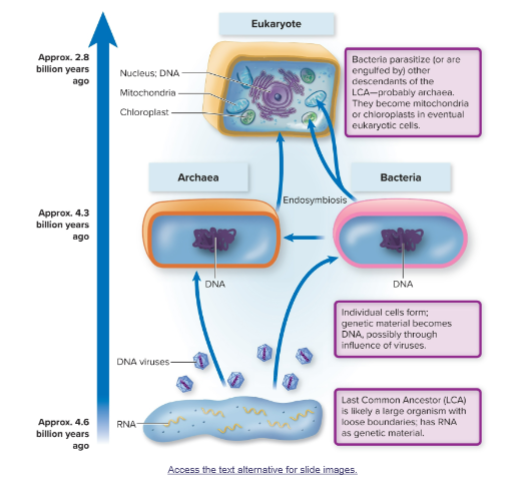
endosymbiosis:
symbiotic relationship where one organism lives inside body/cell if another—> explains origin of eukaryotic cell in which ancestral prokaryotes were engulfed by larger cells
led to mitochondria and chloroplast formation
bacteria engulfed by other descendants of last common ancestor (LCA) and become mitochondria/chloroplasts in eventual eukaryotic cells
Which of the following characteristics is evidence that
mitochondria evolved from bacterial cells?
A. Circular chromosome
B. Bacteria-like ribosomes
C. Capable of independent division
D. All of the choices are correct
D. All of the choices are correct
mitochondria= DNA arranged in circular chromosome and replicate on their own (w/o host cell)
Which of the following organelles is responsible for protein
modification and distribution in the cell?
A. Nucleus
B. Golgi apparatus
C. Endoplasmic reticulum
D. Mitochondrion
E. Ribosome
B. Golgi apparatus
fungal cells:
can pose lot of damage to aquatic environments
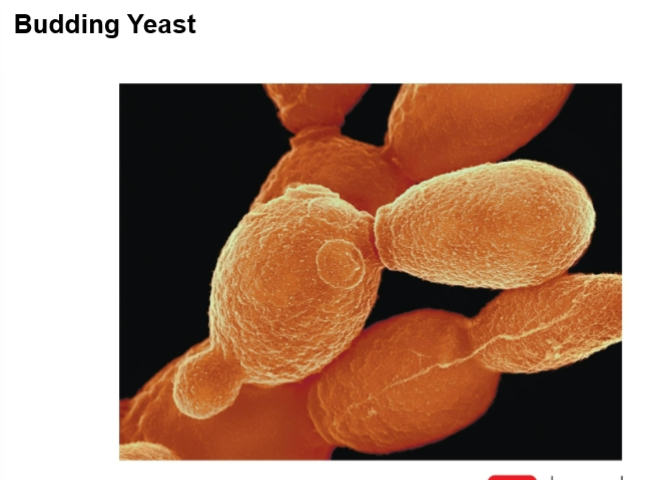
2 basic cell forms:
yeast= single cell, microscopic; oval/spherical in shape
pseudohyphae= chains of elongated, budding yeast cells that don’t detach after division; can’t see with the naked eye, you need a microscope
hyphae= branching, thread-like tubular filaments
some types of hyphae fungi can be deadly
hyphae of molds:
long, single cell chains that can be tightly/loosley woven
hyphae of mold=haploid
septate hyphae= cross walls called septa that divide hyphae into individual cells
nonseptate hyphae= 1 tube that shares nuclei= no septa to create divisions
humans don’t have this because it causes catastrophic events for us
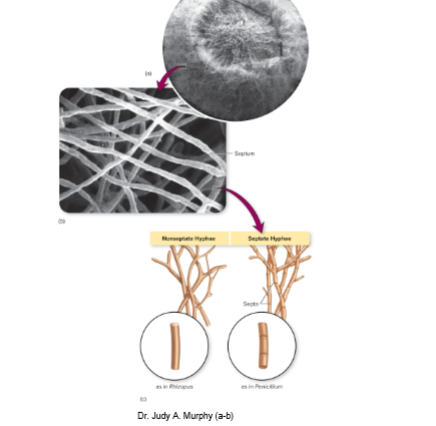
dimorphic fungus:
switch between 2 growth forms based on temperature
mold in environment/soil is at cooler temps
yeast in host cell is at warmer temps
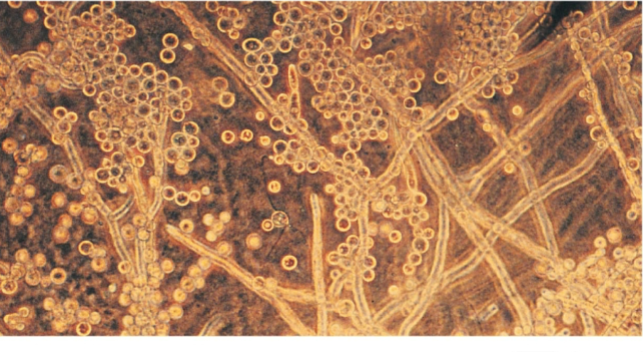
3 types of fungal disease: community acquired infection
infection from day to day life, not hospital setting
EX. covid, flu, pneumonia
3 types of fungal disease: hospital associated infection
infections patient get while they’re in the hospital for other conditions
diff from opportunistic because this happens regardless of immune status of patient
3 types of fungal disease: opportunistic infection
patient has predisposing infections that have weakened the immune system and made them an easy target (think getting kicked while you’re already down)
EX. vaginal yeast infection= everyone has candida fungi but if lactobacillus bacteria (good bacteria) is disturbed by something such as antibiotics, the candida can take advantage and grow
this is the system of opportunistic infection
fungi and human disease:
Nearly 300 species of fungi can cause human disease
Reactions – allergies and toxins
all fungi are degraders and can grow on basically anything
fungi make toxins that can make ppl really sick
as long as they have something to break down, they’ll thrive
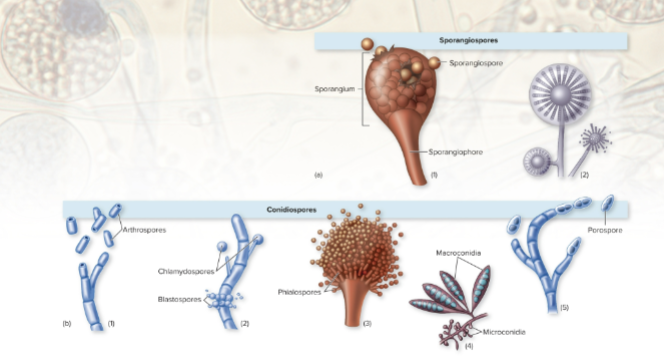
Asexual mold spores and the 2 major types
mold make spores for reproduction not survival like bacterial endospores
1) Sporangiospores= develop inside sac-like structure called sporangium
2) Conidiospores= exposed, naked spores produced in chains on conidiophores (specialized fungal stalks)
**major diff= enclosed vs. naked
From which sources can fungi derive nutrients?
A. Dead plants and animals
B. Living tissues
C. Rubber
D. Petroleum products
E. All of the choices are correct
E. All of the choices are correct
dead plants/animals= decomposed by fungi
living tissue= parasitic fungi
Protozoa:
unicellular eukaryotes
single celled
“primitive animals”
Most are harmless, living in water and soil
A few species are pathogens responsible for many infections
single cell organism
can enter humans easier than multicellular organisms
easy to gauge their temp
below room temp= will be in a community
above room temp= will be in a person
many protozoa do sexual reproduction
protozoa life cycle:
2 stages:
1) trophozoite= mature
form that does the reproduction= form that actively causes infection
some trophozoites turn into cyst while others only have the trophozoite form
transmitted by direct contact or some type of vector
active, motile, and feeding stage
2) cyst= infectious stage—> out in the environment and present in contaminated food or water= spreads disease
Dormant, resting stage
Resistant
cyst is survival structure and is meant to endure deprivation
Can be dispersed
**apicomplexans= don’t have their own locomotion so they depend on other vectors
apical complex= Used to attach to and penetrate host cells
life cycle of protozoa:
1) trophozoite= active, reproducing, feeding stage (flexible membrane)
2) cell rounds up and loses motility
3) mature cyst= dormant, resting stage
4) cyst wall breaks open
5) trophozoite is reactivated
**trophozoite vs. cyst= 2 very diff life forms even though they are the same organism
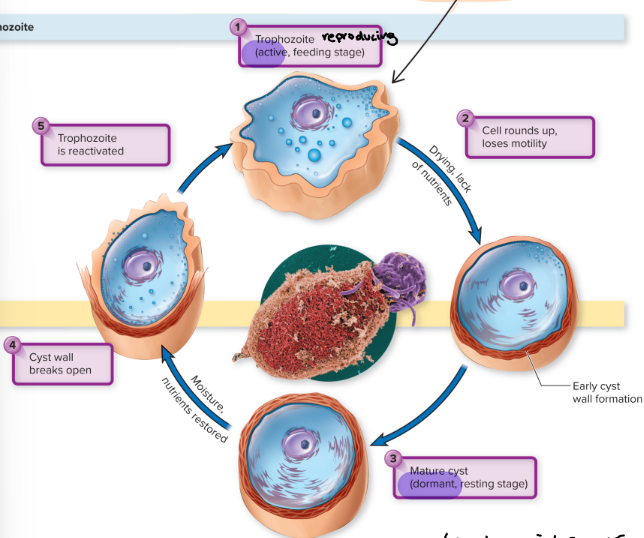
protozoa transmission:
Some protozoan groups exist only in the trophozoite phase
Many alternate between the trophozoite and cyst stage, depending on the habitat
protozoan parasites
Trichomonas vaginalis
Entamoeba histolytica and Giardia lamblia
some protozoans don’t go in wild, they are passed person to person
protozoa reproduction
all reproduce via simple, asexual mitotic cell division or multiple fission
most protozoa also do sexual reproduction
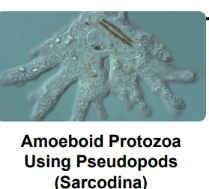
major pathogenic protozoa: amoeboid protozoa (move and feed by changing shape, specifically through the extension of temporary, flowing cytoplasmic projections known as pseudopods)
**grouped based on how they move
Entamoeba histolytica
disease: Amoebiasis (intestinal and other symptoms)
reservoir/source (where do we find them when they’re not infecting people): humans, water, food
Naegleria, Acanthamoeba
disease: brain infection
reservoir/source: water
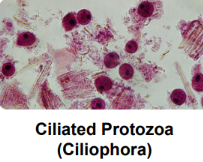
major pathogenic protozoa: Ciliated protozoa
Balantidium coli= only ciliated protozoa pathogenic of people
disease: Balantidiasis (intestinal and other
symptoms)
reservoir/source: pigs, cattles, primates
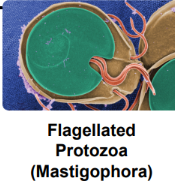
major pathogenic protozoa: Flagellated protozoa
Giardia lamblia
disease: Giardiasis (intestinal distress)
reservoir/source: Animals, water, and food
Trichomonas vaginalis
disease: Trichomoniasis (vaginal symptoms)
reservoir/source: Human
Trypanosoma brucei, T.cruzi
disease: Trypanosomiasis (intestinal distress and widespread organ damage)
reservoir/source: animals, vector-borne (diseases transmitted to humans or animals by living organisms)
Leishmania donovani, L.tropica, L. brasiliensis
disease: Leishmaniasis (either skin lesions or widespread involvement of internal organs)
reservoir/source: animals, vector-borne
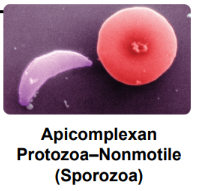
major pathogenic protozoa: Apicomplexan protozoa= uses gliding motility, lets them invade host cells without cilia, flagella, or pseudopodia
Plasmodium vivax, P. falciparum, P. malariae
disease: Malaria (cardiovascular and other symptoms)
reservoir/source: human, vector-borne
Toxoplasma gondii
disease: Toxoplasmosis (flulike illness or silent infection)
reservoir/source: animals, vector-borne
Cryptosporidium
disease: Cryptosporidiosis (intestinal and other symptoms)
reservoir/source: water, food
Cyclospora cayetanensis
disease: Cyclosporiasis (intestinal and other symptoms)
reservoir/source: water, fresh produce
The active, feeding, and motile stage of the protozoan life
cycle is the blank stage.
A. cyst
B. endospore
C. trophozoite
D. merozoite
E. All of the choices are correct
C. trophozoite
helminths:
microscopic
2 categories based on section through the worm being flat or circular:
1) flatworms (phylum Platyhelminthes)
divided into cestodes (tapeworms) and trematodes (flukes)
2) roundworms (phylum Nematoda)
aka Aschelminthes (ex. earthworm)
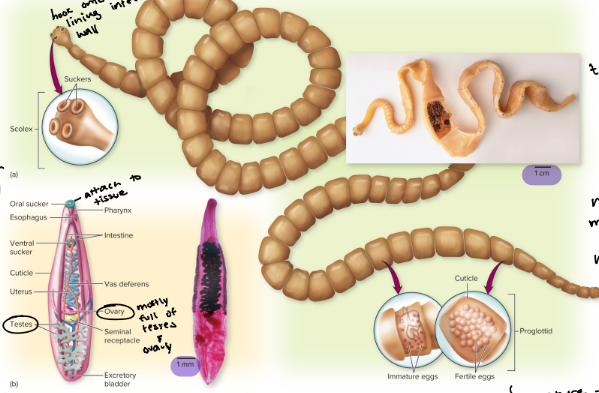
pathogenic flatworms
Tapeworm:
very well developed reproductive system
they are hermaphrodites
tapeworm= absorbs
scolex has suckers that will hook onto tissue lining of intestinal wall
not motile, can’t move by themselves
not much of a nervous system
sectioning has eggs, will be able to see fertile mature eggs on cuticle
cuticle matures as you move from the scolex
mature eggs break off and end up in our soil or water and that’s how they infect people
person consumes the tapeworm and the eggs hatch in the intestinal lining
becuz they living in intestine, they dont have their own digestive system, they just mooching off host
Flukes:
very small
very thin
have pharynx, esophagus, and intestine
oral sucker will attach to tissue
mostly full of testes and ovary
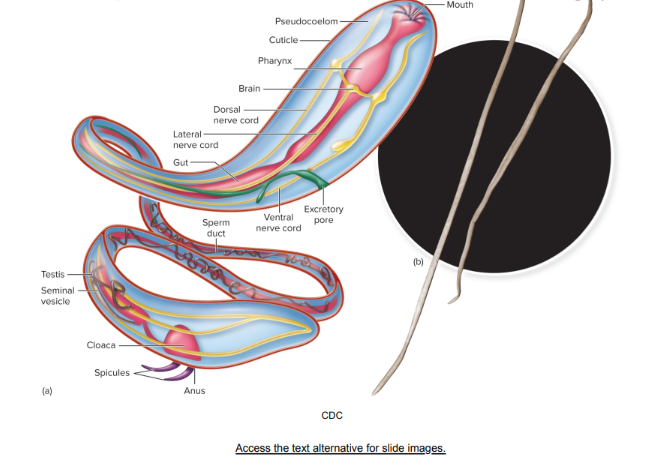
pathogenic roundworm:
mostly full of testis and ovaries because they mostly just reproduce
has mouth and digestive tract
male is smaller than female
In pathogenic helminths, the most developed organ is the
________ tract
reproductive
helminth Reproduction comparison
fertilized egg, larval, and adult stages—> worm
Roundworms: sexes are separate and different in appearance
Flukes: sexes can be separate or hermaphroditic (have both male and female sex organs)
Tapeworms: generally hermaphroditi= self fertilizing
Helminth life cycle:
transmit= 1st step= transmission via fecal matter or orally
intermediate (secondary) host= 2nd step= sometimes is humans
definitive (final) host= host where reproduction takes place; not always humans
Transport host= intermediate that experiences no parasitic development
Sources for human infection= contaminated food, soil,
water, or infected animal
Examples of Helminths and How They Are Transmitted: intestinal roundworms (nematodes)
Infective in egg (embryo) stage:
Ascaris lumbricoides
disease or worm: Ascariasis
host requirement: Humans
spread to humans via: Fecal pollution of soil with eggs
Enterobius vermicularis
disease or worm: Pinworm
host requirement: Humans
spread to humans via: Close contact
Infective in larval stage:
Trichinella spiralis= wiped out after standardizing food given to pigs (stopped feeding pigs straight trash and started an actual diet)
disease or worm: Trichina worm
required host: Pigs, wild mammals
spread to humans via: Consumption of meat containing larvae
Examples of Helminths and How They Are Transmitted: tissue roundworms (nematodes)
note they are not spread fecally or orally
Onchocerca volvulus
disease or worm: River blindness
required host: Humans, black flies
spread to humans via: Fly bite
Dracunculus medinensis
disease or worm: Guinea worm
required host: Humans and Cyclops (an aquatic
invertebrate)
spread to humans via: Ingestion of water containing Cyclops
Examples of Helminths and How They Are Transmitted: flatworms—flukes
Schistosoma japonicum
disease or worm: Blood fluke
required host: Humans and snails
spread to humans via: Skin penetration of larval stage
Examples of Helminths and How They Are Transmitted: flatworms—tapeworms
Taenia solium
disease or worm: Pork tapeworm
required host: Humans, swine
spread to humans via: Consumption of undercooked or raw pork
Diphyllobothrium latum
disease or worm: Fish tapeworm
required host: Humans, fish
spread to humans via: Consumption of undercooked or raw fish
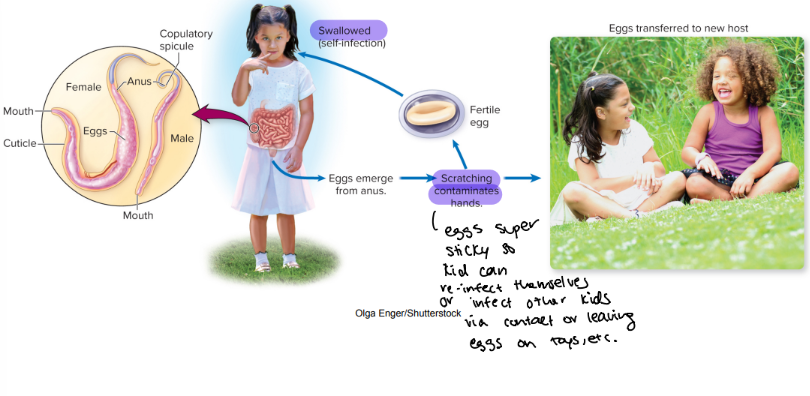
life cycle of the pinworm (intestinal roundworms)
most common helminth but it is benign
common where small kids congregate—> day care
hatch in the small intestine but mainly live, mature, and mate in the large intestine (colon) and rectum
sexual reproduction
eggs are super sticky so kid can re-infect themselves or infect other kids via contact or leaving eggs on toys/surfaces
eggs emerge from anus—> scratching but contaminates hands—> eggs stuck on hands now—> swallowed= self infection, contact with another kid= cross infection
itching due to female worms laying eggs around the anus at night
Distribution and Importance of Parasitic Worms
~ 50 species of helminths cause human diseases
Distributed in all areas of the world, not just developing areas
more common in tropical areas
Differentiate among the flagellar structures of bacteria,
eukaryotes, and archaea
bacteria= motion is rotating, not membrane bound, structure is helical filament
eukaryotes= motion is whip-like bending, membrane bound, 9+2 microtubule
archaea= motion is rotating, not membrane bound, structure grows from base
List similarities and differences between eukaryotic and
bacterial cytoplasmic membranes
Similarities
Phospholipid bilayer
Selective permeability
Embedded proteins
Bacterial Membrane
No sterols
Single membrane
Simpler organization
Eukaryotic Membrane
Sterols present (cholesterol)
More complex signaling
Key difference:
Sterols + energy production site.
how do the nucleus, endoplasmic reticulum, and
Golgi apparatus act together with vesicles during the
transport process
Nucleus → makes mRNA with instructions for proteins.
Rough ER → ribosomes build and fold proteins.
Vesicles → carry proteins from ER to Golgi.
Golgi apparatus → modifies, sorts, and repackages proteins.
Vesicles → deliver proteins to the cell membrane, lysosomes, or outside the cell.
List two detrimental and two beneficial activities of fungi
(from the viewpoint of humans)
Beneficial activities of fungi:
Food production – used in making bread, cheese, and beer.
Medicine – source of antibiotics like penicillin.
Detrimental activities of fungi:
Cause diseases – e.g., athlete’s foot, ringworm.
Spoil food – mold
List three general features of fungal anatomy.
chitin
mixed glycans
glycocalyx
Differentiate among the terms heterotroph, saprobe, and
parasite.
heterotroph = can’t make its own food and relies on other organisms= general consumer
saprobe = type of heterotroph that eats dead matter
parasite = type of heterotroph that eats living host.
Explain the relationship between fungal hyphae and the
production of a mycelium
Fungal hyphae= thread-like filaments that grow and branch. When many hyphae intertwine and form a network, they create a mycelium, which is the main body of the fungus.
hyphae → network = mycelium.
Describe the protozoan characteristics that illustrate why
protozoa are informally placed into a single group
Unicellular eukaryotes
Heterotrophic
Motile – move using cilia, flagella, or pseudopodia.
Lack cell wall – unlike plants and fungi.
Mostly aquatic
three means of locomotion exhibited by protozoa.
cilia, flagella, pseudopodia= temporary extensions of the cell body for crawling or engulfing food
Explain why a cyst stage might be useful to a protozoan.
cyst allows protozoan to survive harsh conditions and then re-emerge as a trophozoite when conditions are safe
Adulthood and mating of helminths occurs in the blank.
A. larvae
B. intermediate host
C. cyst
D. definitive host
E. egg
D. definitive host
 Note
Note  Flashcards (44)