Cell Cycle, Mitosis, and Meiosis: Key Concepts for Biology
 Call Kai
 Learn
Learn Practice Test
 Spaced Repetition
 Match
Match Flashcards
 Knowt Play
1/73

There's no tags or description
Looks like no tags are added yet.
Name | Mastery | Learn | Test | Matching | Spaced | Call with Kai |
|---|
No analytics yet
Send a link to your students to track their progress
74 Terms
What distinguishes living organisms from nonliving matter?
The ability to reproduce, specifically through cell division.
What are the three key roles of cell division in multicellular organisms?
Development from a single egg cell, growth, and repair.
What is the cell cycle?
The life of a cell from its formation to its own division.
What is the result of cell division?
Genetically identical daughter cells.
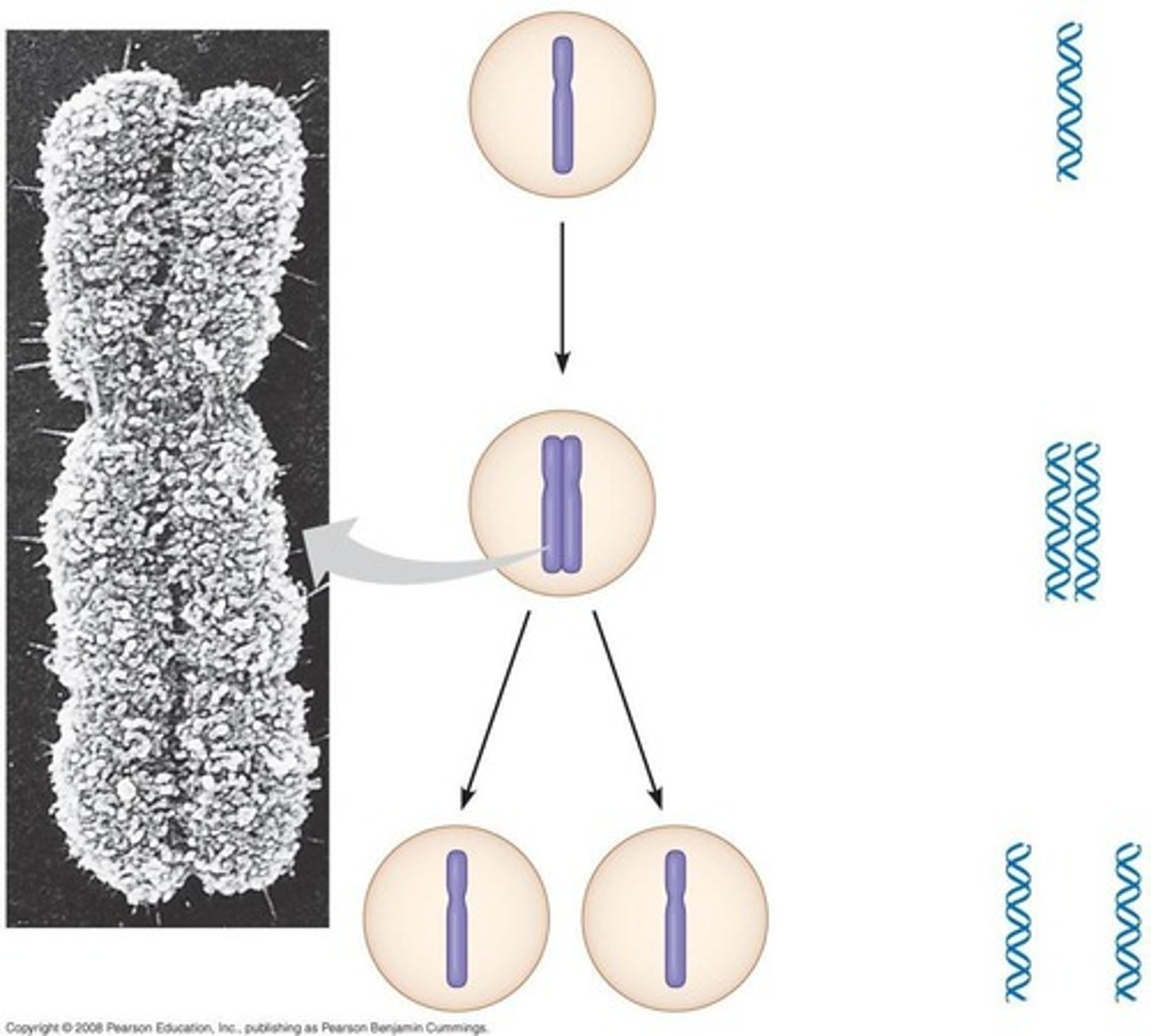
What must cells do before they divide?
Duplicate their genetic material to ensure each daughter cell receives an exact copy.
What constitutes an individual's genome?
The full genetic code containing all the genes in a cell.
How is DNA organized in eukaryotic cells?
DNA is packaged into chromosomes.
What is chromatin?
The combined DNA and protein material in a cell.
What is a karyotype?
A sorted set of microscope photos of all the chromosomes in a cell.
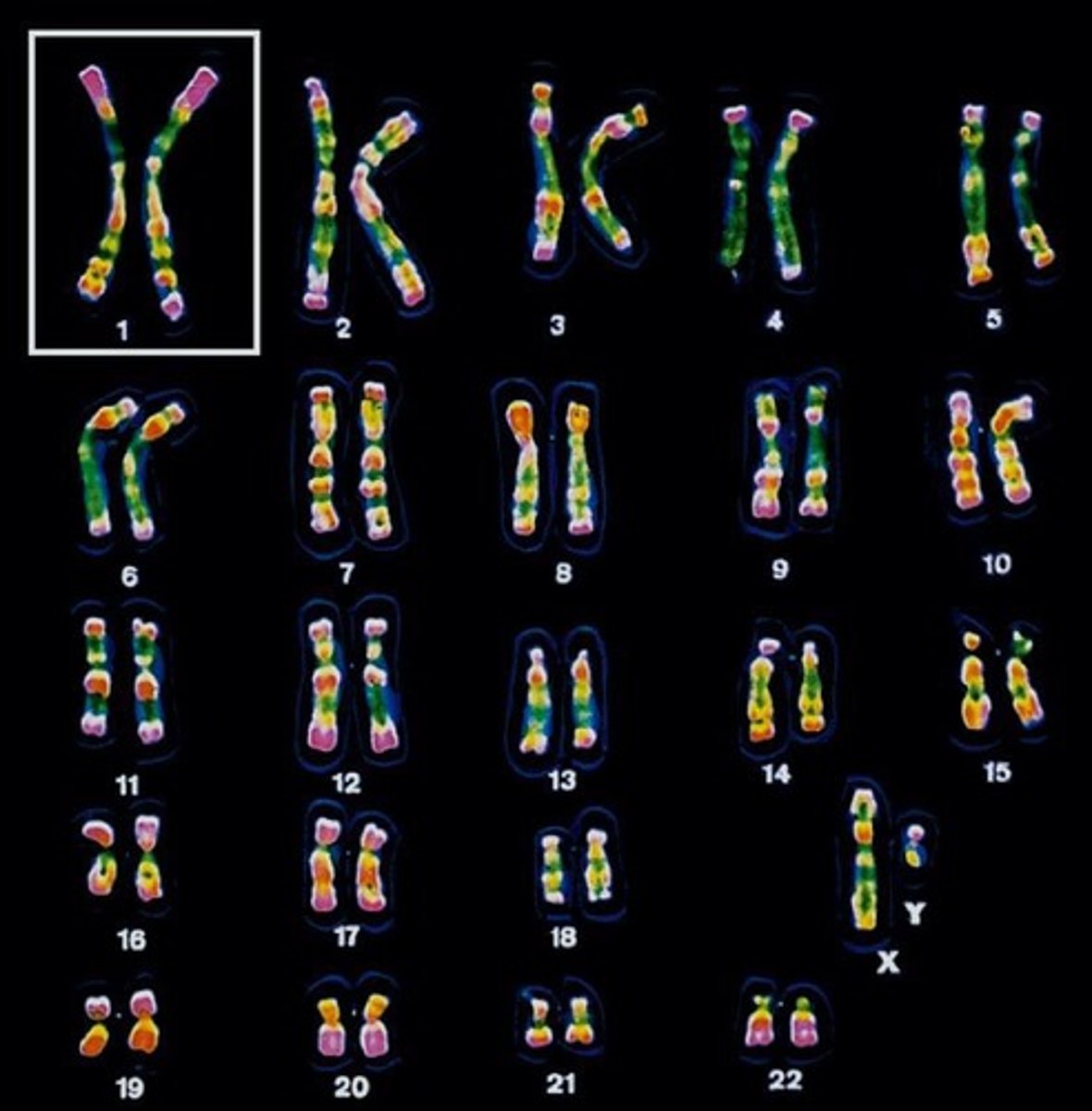
How many chromosomes do humans have?
46 chromosomes, or 23 pairs.
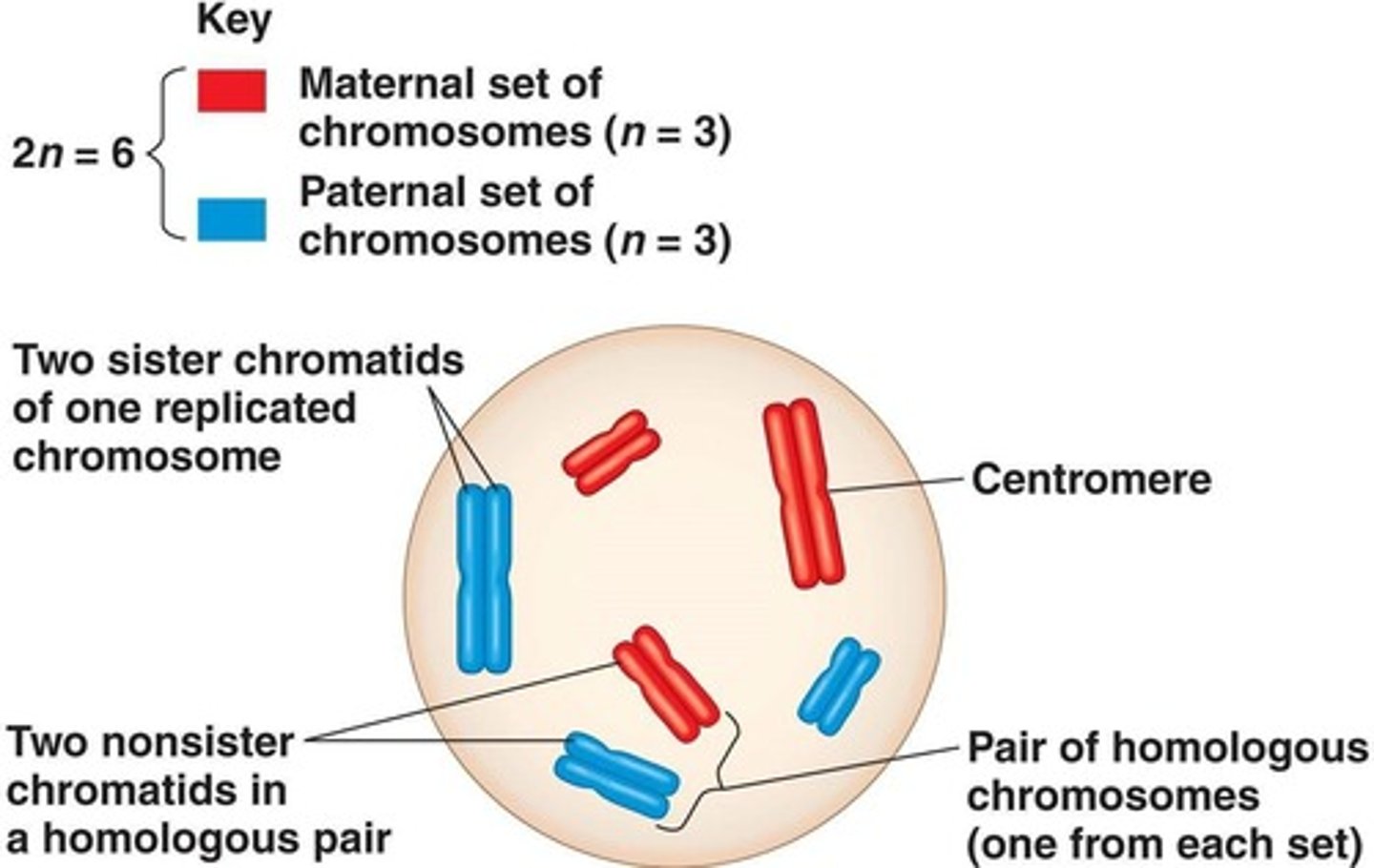
What are sister chromatids?
Connected copies of a duplicated chromosome.
What is the centromere?
The narrow 'waist' of the duplicated chromosome where the two sister chromatids are attached.
What are somatic cells?
Typical body cells that contain the full genome.
What are gametes?
Reproductive cells (sperm and eggs) that contain half the chromosomes of somatic cells.
What is meiosis?
A variation of cell division that produces nonidentical daughter cells with half the number of chromosomes.
What are the two main phases of the cell cycle?
Interphase and the Mitotic (M) phase.
What occurs during interphase?
Cell growth and copying of chromosomes in preparation for cell division.
What are the subphases of interphase?
G1 phase, S phase, and G2 phase.
During which phase are chromosomes duplicated?
During the S phase of interphase.
What happens during the G1 phase of interphase?
The cell grows and performs its normal functions.
What happens during the G2 phase of interphase?
The cell continues to grow and prepares for mitosis.
What is mitosis?
The separation of duplicated chromosomes.
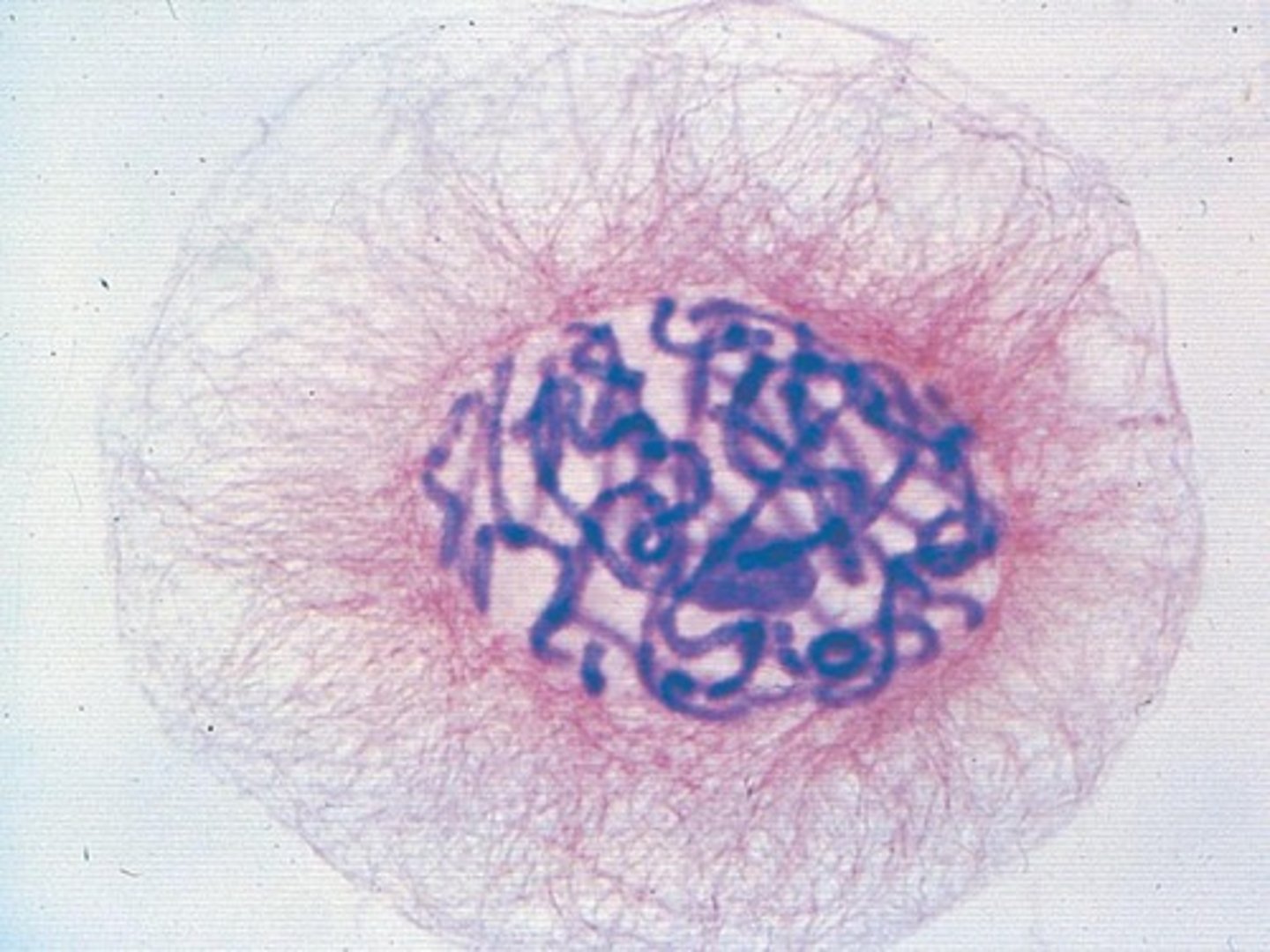
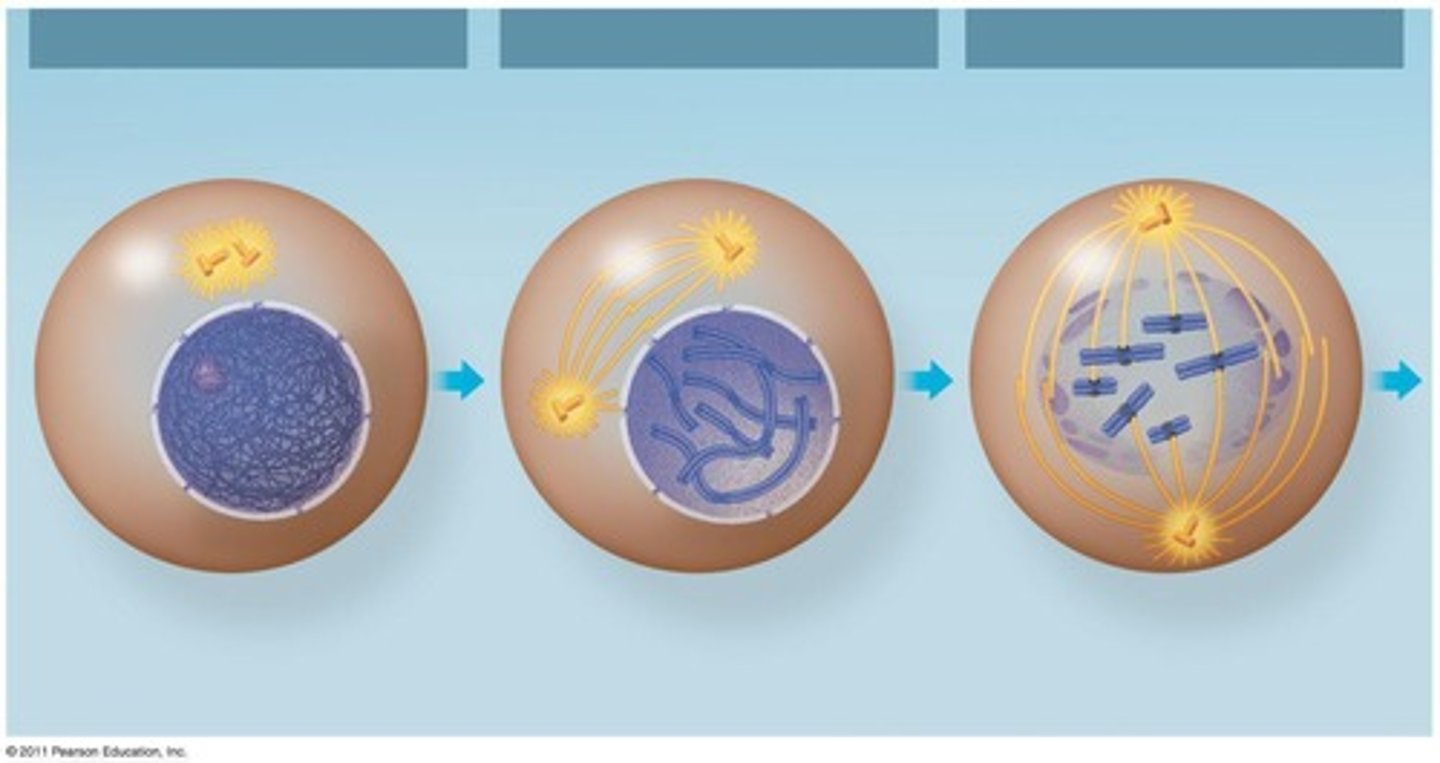
List the five phases of mitosis.
Prophase, Prometaphase, Metaphase, Anaphase, Telophase.
What process overlaps the latter stages of mitosis?
Cytokinesis.
What occurs during prophase?
Chromatin condenses into discrete duplicated chromosomes.
What happens during prometaphase?
The nuclear envelope fragments and kinetochores form at the centromeres.
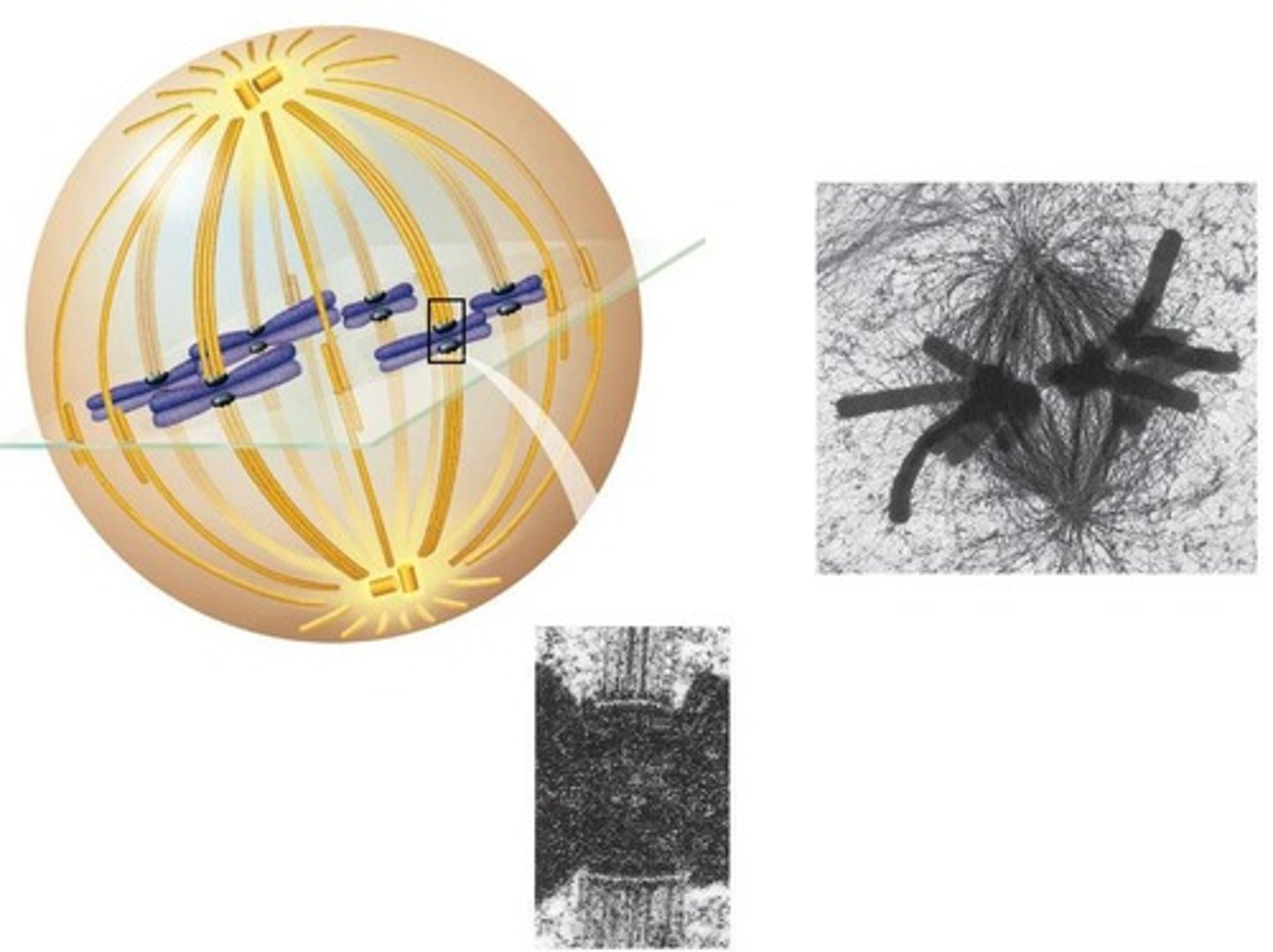
Define the metaphase plate.
An imaginary plane where chromosomes align during metaphase.
What occurs during anaphase?
Sister chromatids separate and move towards opposite centrosomes.
What happens during telophase?
Two daughter nuclei form and chromosomes become less condensed.
How does cytokinesis occur in animal cells?
By cleavage, forming a cleavage furrow.
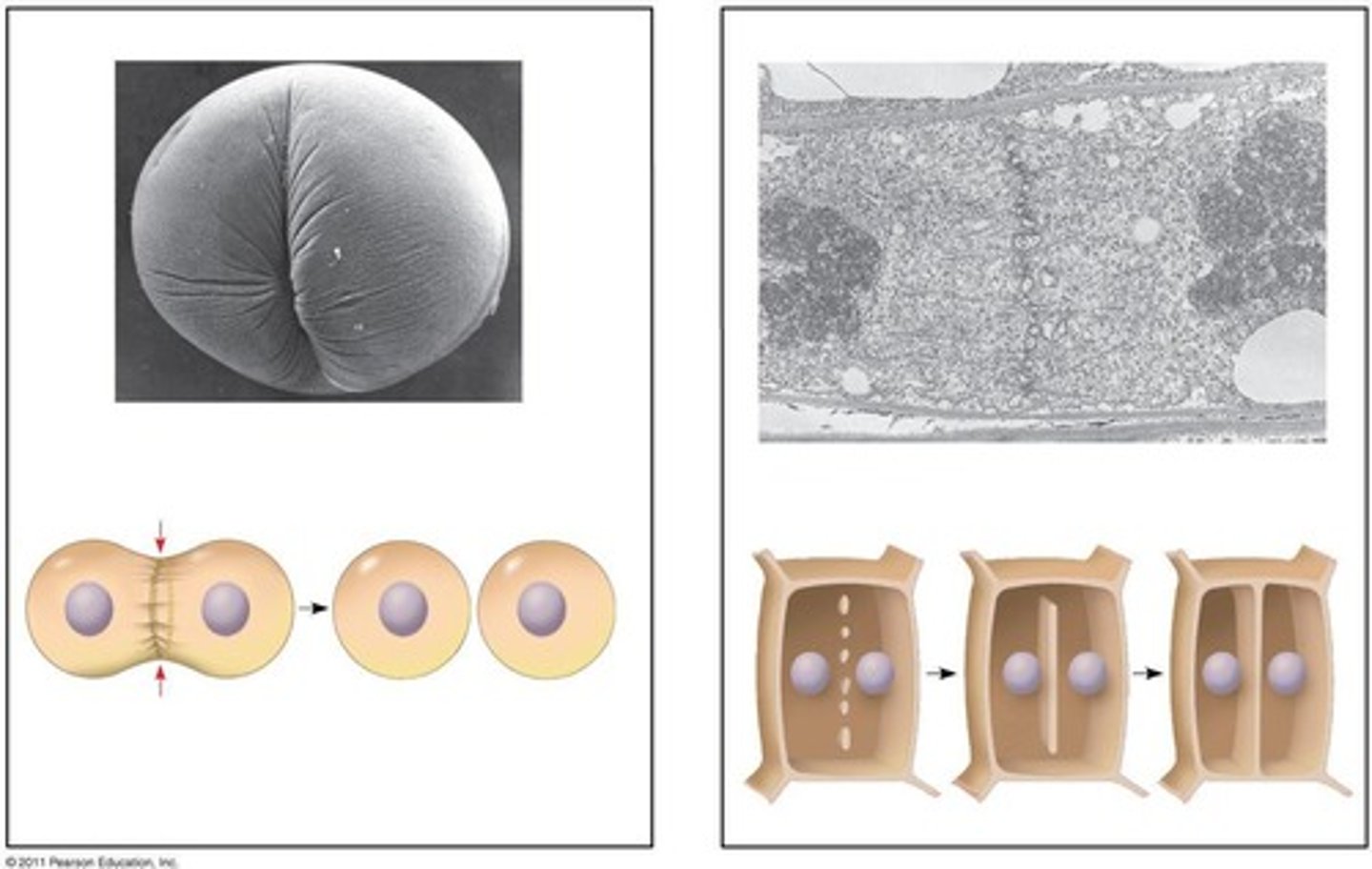
How does cytokinesis occur in plant cells?
By forming a cell plate.
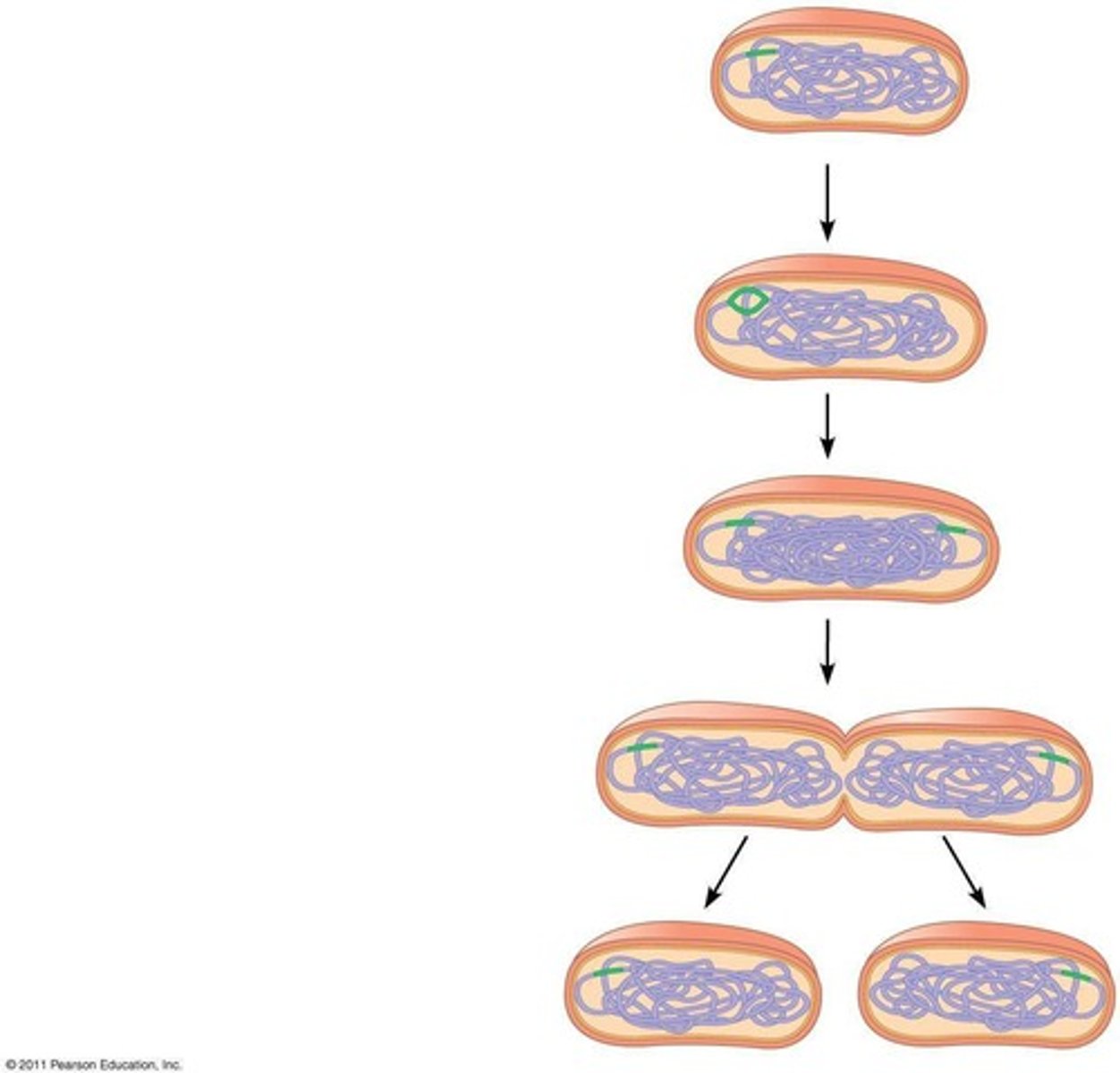
What is binary fission?
A type of cell division in prokaryotes where the chromosome replicates and the cell divides.
What is the role of the mitotic spindle?
To control chromosome movement during mitosis.
What is the G1 checkpoint?
A point in the cell cycle where the cell receives a go-ahead signal to proceed.
What happens if a cell does not receive a go-ahead signal at the G1 checkpoint?
It exits the cycle and enters a nondividing state called G0 phase.
What are internal signals in the cell cycle?
Molecular signals that regulate the cell cycle, such as kinetochores not attached to spindle microtubules.
What are external signals in the cell cycle?
Growth factors that stimulate other cells to divide.
How do cancer cells differ in cell cycle regulation?
They may not need growth factors, can produce their own, or have abnormal control mechanisms.
What is the significance of the G2 checkpoint?
It ensures that all DNA is replicated and undamaged before mitosis begins.
What is the function of kinetochores?
To attach spindle microtubules to chromosomes during cell division.
What is the structure of the mitotic spindle made of?
Microtubules that organize chromosome movement.
What is the role of centrosomes during mitosis?
To organize the mitotic spindle and facilitate chromosome movement.
What happens to the nuclear envelope during prometaphase?
It fragments to allow spindle microtubules to access the chromosomes.
What is the contractile ring?
A structure made of microfilaments that helps in the cleavage of animal cells during cytokinesis.
What is the outcome of binary fission?
Two daughter cells result from the division of one prokaryotic cell.
What is the role of growth factors in cell division?
They are proteins released by cells that stimulate other cells to divide.
What is the significance of checkpoints in the cell cycle?
They ensure that the cell only proceeds to the next phase when conditions are favorable.
What is the difference between centrosomes and centromeres?
Centrosomes organize the mitotic spindle; centromeres are the regions where sister chromatids are joined.
What does heredity refer to?
The accurate transmission of traits from one generation to the next.
What is variation in genetics?
The differences in appearance among offspring compared to their parents and siblings.
What are genes?
Units of trait heredity, segments of DNA that code for functional proteins, located at specific points on chromosomes called loci.
What is a homologous pair of chromosomes?
Chromosomes that carry versions of genes controlling the same inherited characteristics.
What determines sex in humans?
The presence of sex chromosomes: females have XX and males have XY.
What is the SRY gene?
A gene on the Y chromosome that codes for the development of testes, with the default being development as female.
What is fertilization?
The fusion of a sperm from a male and an egg from a female, creating a diploid zygote.
What occurs during mitosis of the zygote?
It generates all somatic cells of the body.
What happens during meiosis I?
Homologous chromosomes are separated.
What happens during meiosis II?
Sister chromatids are separated.
What is crossing over?
A genetic rearrangement that occurs between segments of homologous chromosomes during prophase I of meiosis.
What is a tetrad?
A paired homologous, duplicated chromosome that lines up at the metaphase plate during meiosis I.
What is the outcome of meiosis?
The production of haploid gametes (sperm or egg).
What is the law of independent assortment?
Each pair of chromosomes segregates independently of each other pair during gamete formation.
What is random fertilization?
The process that produces a zygote with any of about 64 trillion diploid combinations in humans.
What is the difference between daughter cells of mitosis and meiosis?
Daughter cells of mitosis are diploid (2n), while those of meiosis are haploid (n).
What is the role of chiasmata in meiosis?
Chiasmata are points where homologous chromosomes connect and exchange genetic material during crossing over.
What happens during anaphase I of meiosis?
Homologous pairs move toward opposite poles, while sister chromatids remain together.
What occurs during telophase I and cytokinesis of meiosis?
Each daughter cell has the haploid number of chromosomes, with sister chromatids still connected.
What is the significance of genetic variation in sexual reproduction?
It is produced through independent assortment, crossing over, and random fertilization.
What are recombinant chromosomes?
Chromosomes that carry genes derived from two different parents due to crossing over.
What is the diploid number of chromosomes in humans?
The diploid number is 46, or 2n = 23 pairs.
What is a gametophyte?
A haploid multicellular organism that produces gametes.
What is a sporophyte?
A diploid multicellular organism that produces spores.
How does meiosis contribute to evolution?
By increasing genetic diversity through the production of varied gametes.
What is the significance of the alternation of generations in plants?
It involves both diploid and haploid stages being multicellular.

