Ratification of the U.S. constitution
 Call Kai
 Learn
Learn Practice Test
 Spaced Repetition
 Match
Match Flashcards
 Knowt Play
1/9

There's no tags or description
Looks like no tags are added yet.
Name | Mastery | Learn | Test | Matching | Spaced | Call with Kai |
|---|
No analytics yet
Send a link to your students to track their progress
10 Terms
Amendment
A change to the United States Constitution
Great Compromise
Also known as the Connecticut Compromise, a major compromise at the Constitutional Convention that created a two-house legislature, with the Senate having equal representation for all states and the HOR having representation proportional to state populations.
Electoral College
The system the U.S. uses to choose the president. Instead of voters directly electing the president, each state gets a certain number of electoral votes based on its representation in Congress. In most states, the candidate who wins the popular vote in that state gets all of that state’s electoral votes. To win the presidency, a candidate needs 270 out of 538 electoral votes.
Three-Fifths Compromise
An agreement added to the Constitution that would count each enslaved person as three-fifths of a white person for purposes of representation in the HOR.
Article I - Legislative Branch
The section of the Constitution that creates the legislative branch, establishes Congress, and lists many of its powers, including making laws, taxing, spending, and regulating commerce.
Article II
The section of the Constitution that creates the executive branch and explains the powers of the president, including enforced laws, serving as commanderin chief, and appointing officials and judges.
Article III
The section of the Constitution that creates the judicial branch, establishes the SCOTUS, and gives the federal courts the power to interpret laws and decide cases under the Constitution.
Article V
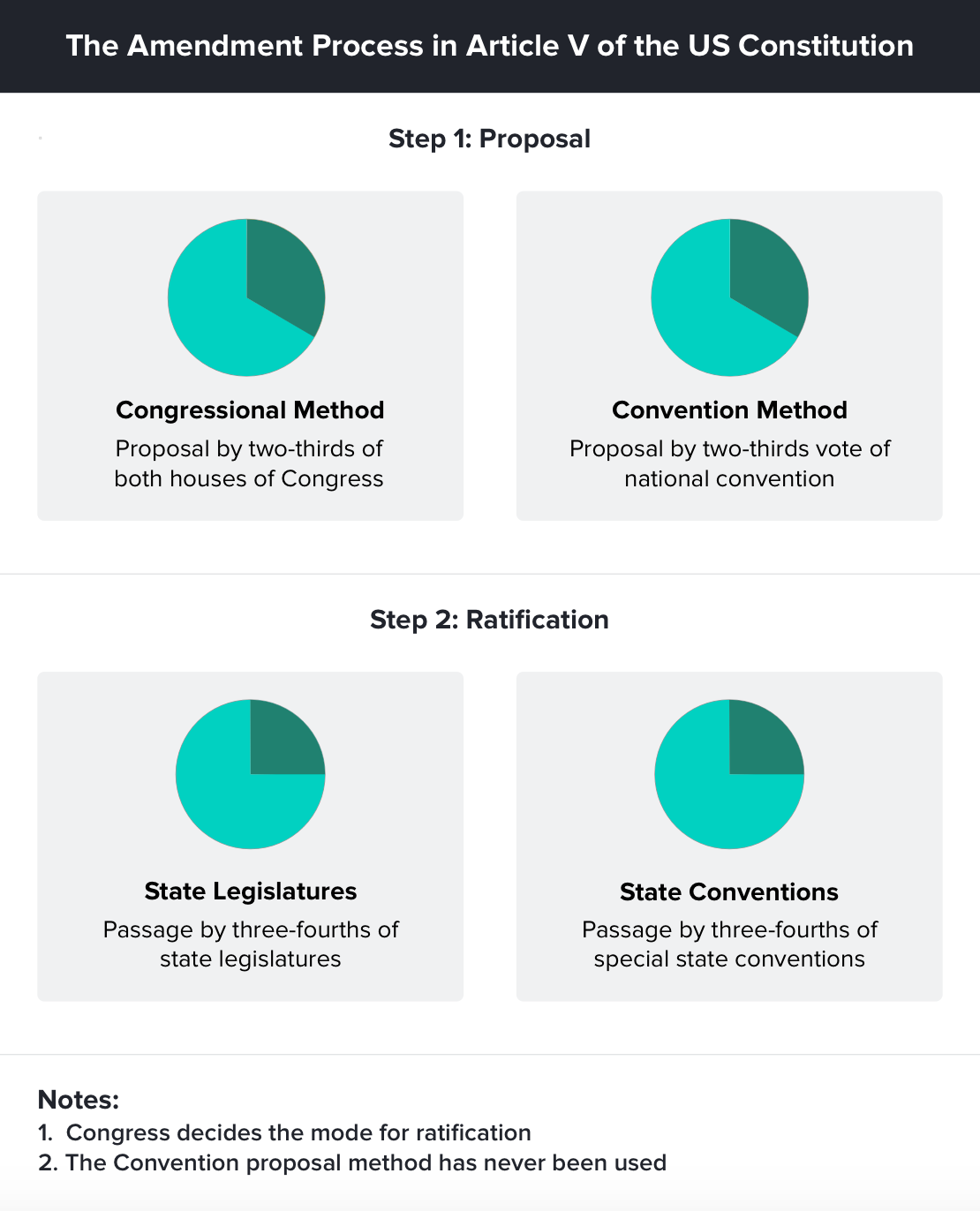
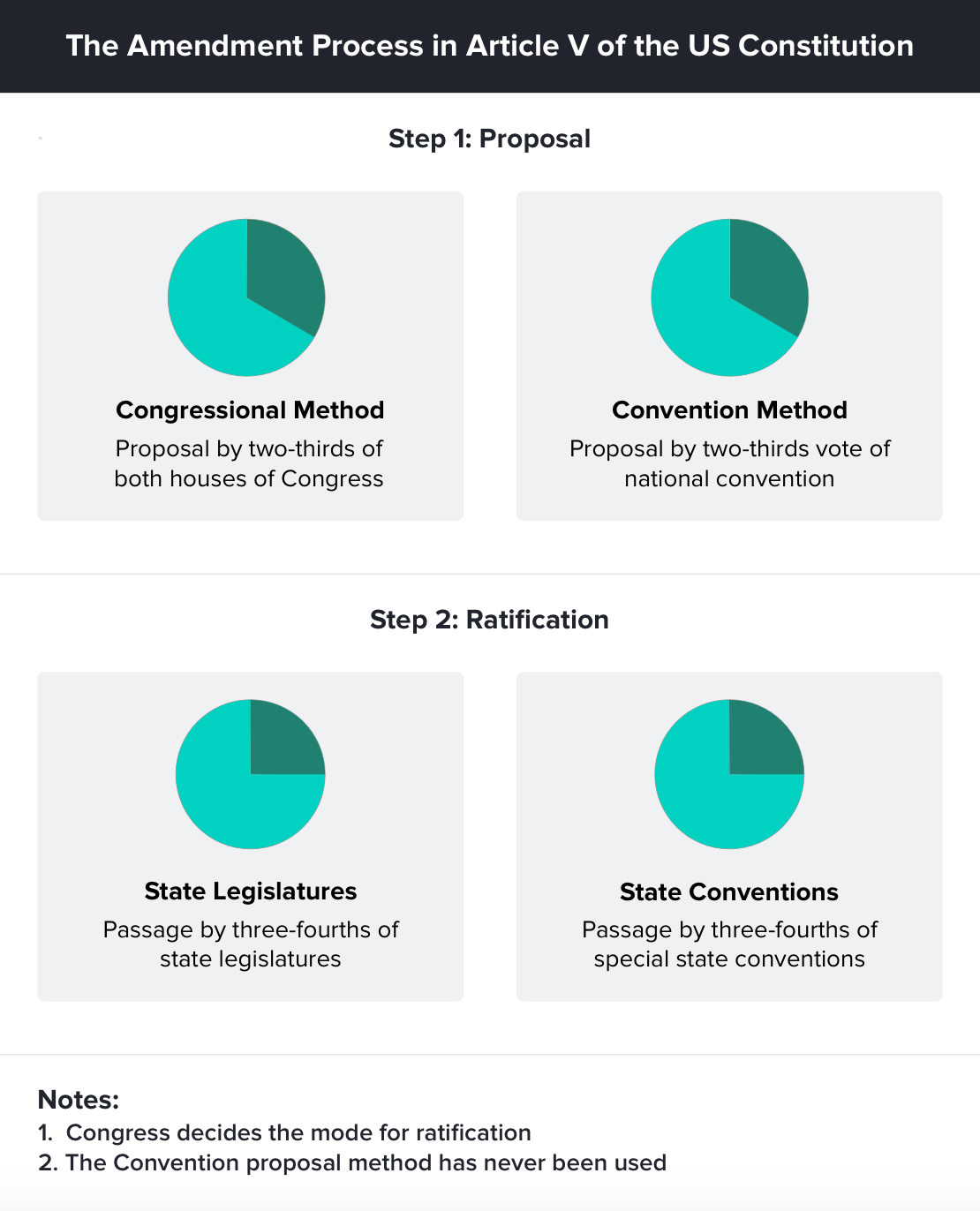
The section of the Constitution that details how to amend the Constittuion, either through a congressional proposal or a convention of the states, with final ratification from three-fourths of the states.
Article VI
The section of the Constitution that contains the supremacy clause, establishing that the Constitution and federal laws are the supreme law of the land over state laws.
Explore top notes

Explore top flashcards
