Bone Shapes and Surface Features
 Call Kai
 Learn
Learn Practice Test
 Spaced Repetition
 Match
Match Flashcards
 Knowt Play
1/29

There's no tags or description
Looks like no tags are added yet.
Name | Mastery | Learn | Test | Matching | Spaced | Call with Kai |
|---|
No analytics yet
Send a link to your students to track their progress
30 Terms
The primary components of the skeletal system are:
bones, cartilages, and ligaments
Functions of the skeletal system include:
support, storage of minerals and lipids, blood cell production, protection, and leverage
Long bones
bones that are longer than they are wide; found in the arms, legs, hands, and feet
Short bones
bones that are equal in width and length, found in the wrists and ankles
Irregular bones
odd shaped bones needed to connect other bones; found in vertebrae and pelvis
Flat bones
thinner bones that can be flat and curved; found in the roof of skull and ribs
Sesamoid bones
Found inside tendons; patella and hyoid
Sutural bones
tiny bones within sutures
Bone markings
projections, depressions, and openings found at articulations, sites of ligaments attachment, and blood vessel and nerve routes
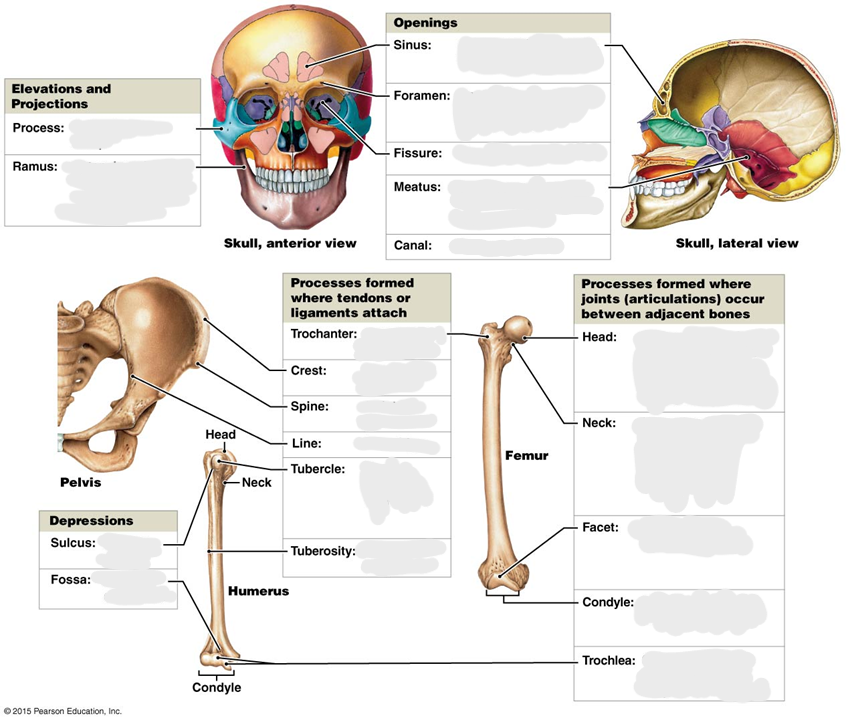
Process
projections that come off the surface of the bone
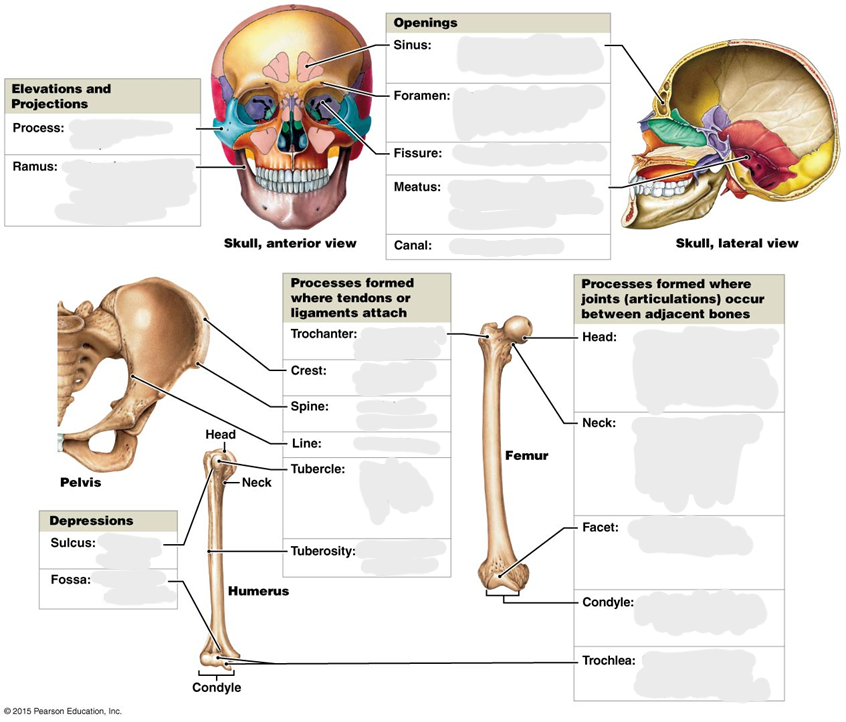
Ramus
where the bone forms an angle
PLA
Process for Ligament Attachment
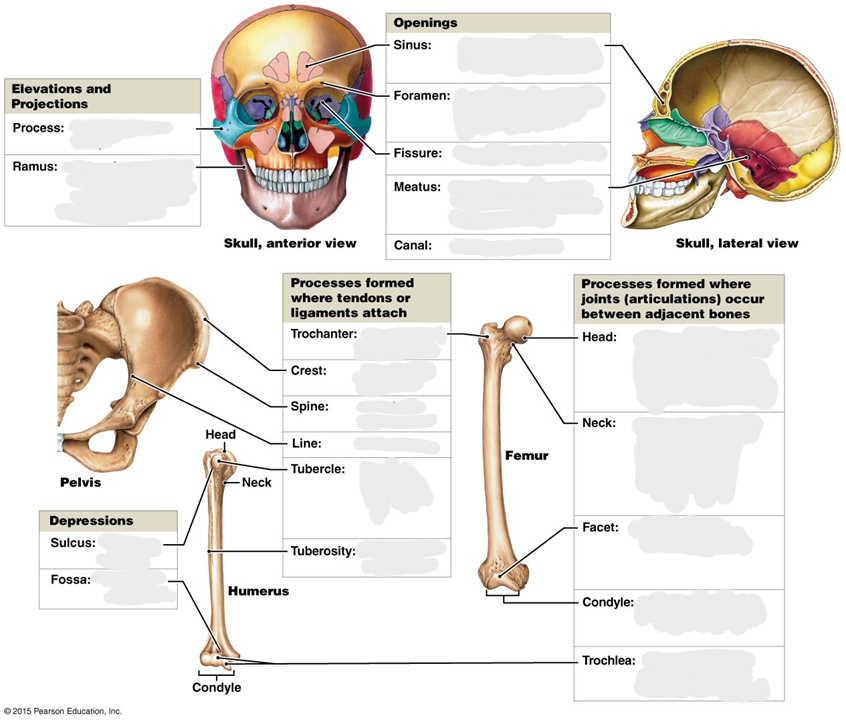
Trochanter
PLA; large, rough projection
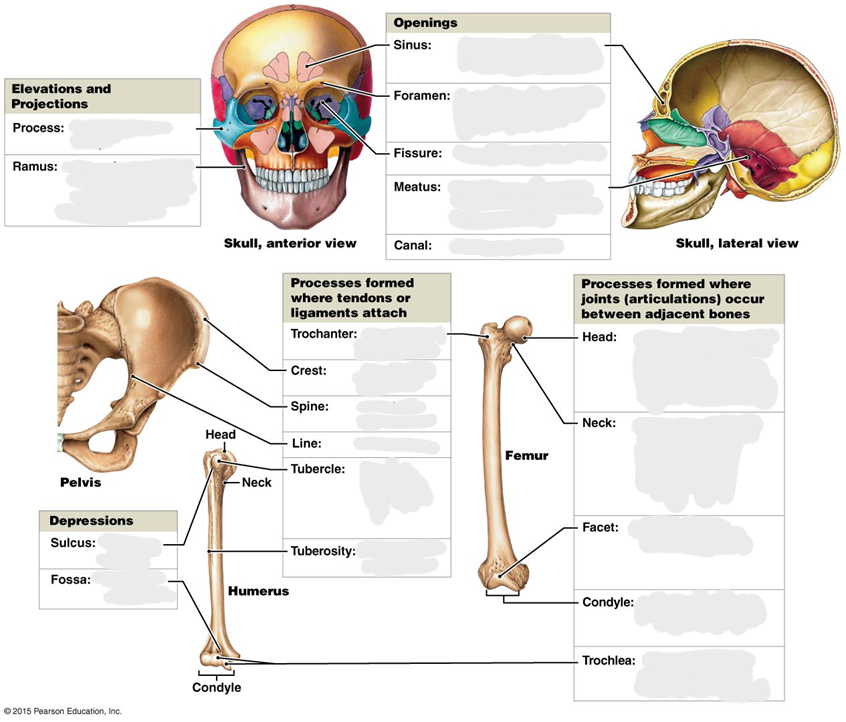
Tuberosity
PLA; smaller rough projection
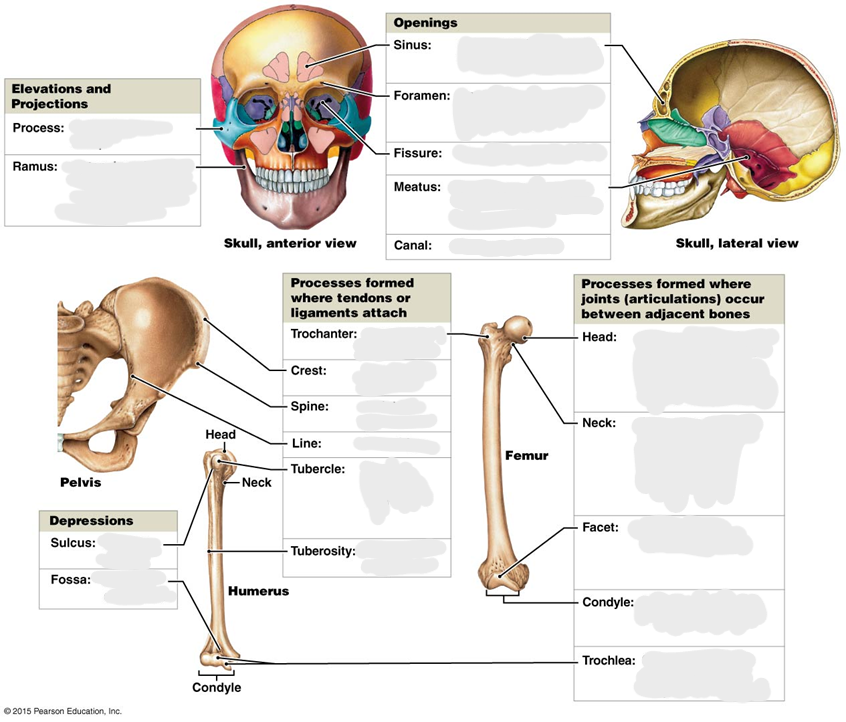
Tubercle
PLA; small rounded projection
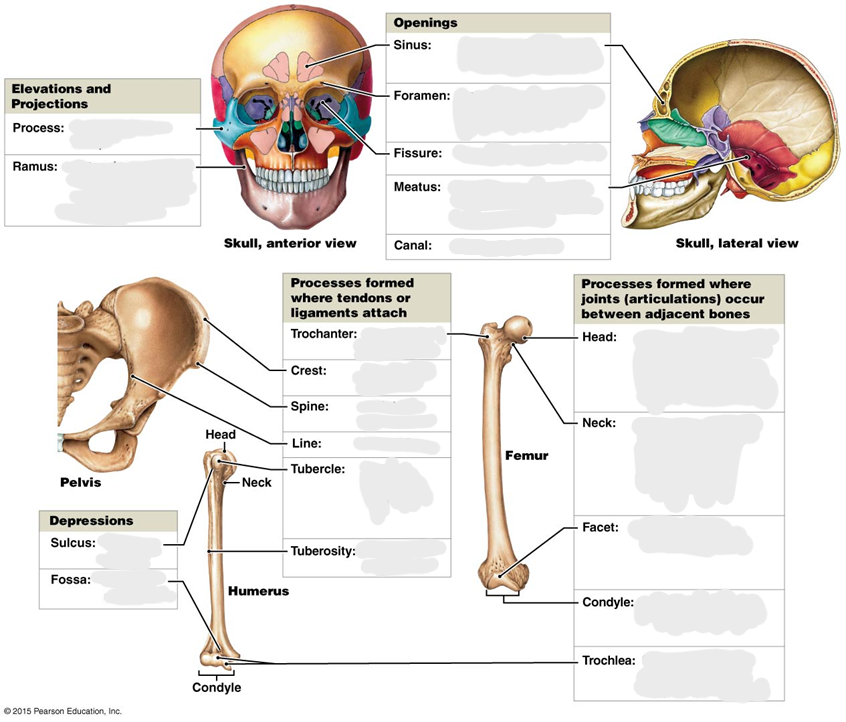
Crest
PLA; prominent ridge
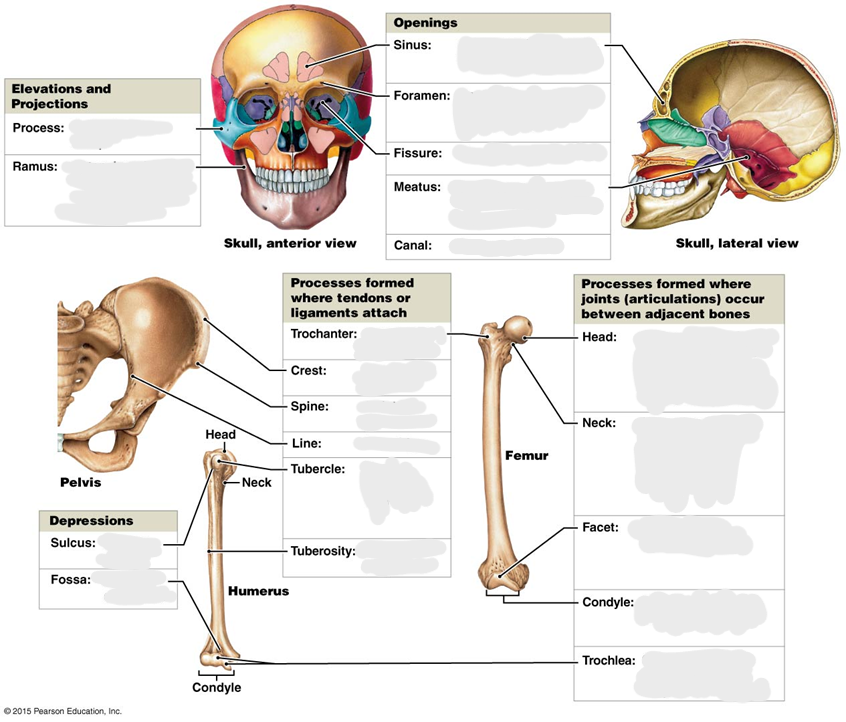
Line
PLA; low ridge
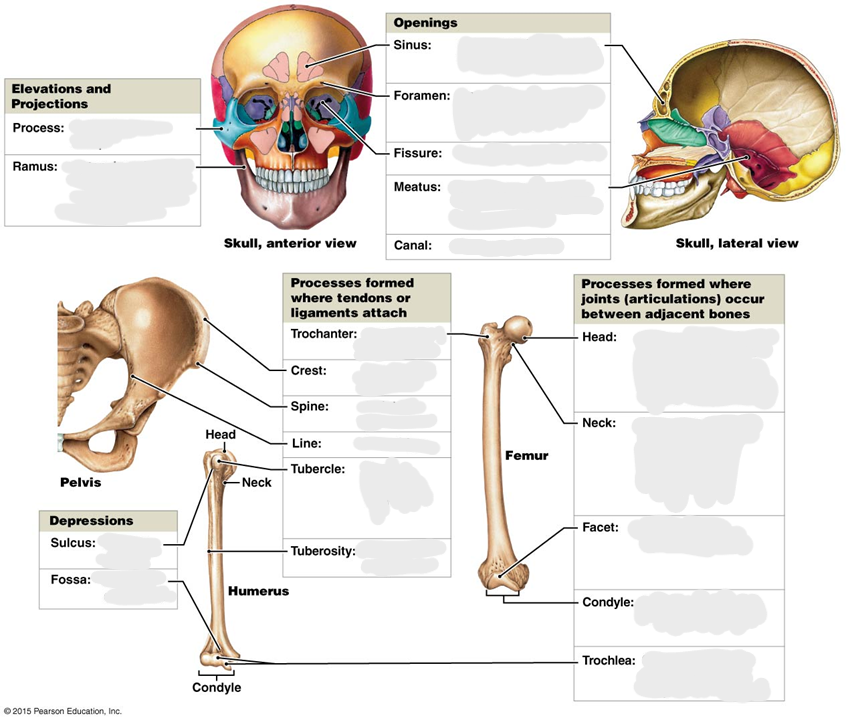
Spine
PLA; pointed process
PFA
Process for Articulation
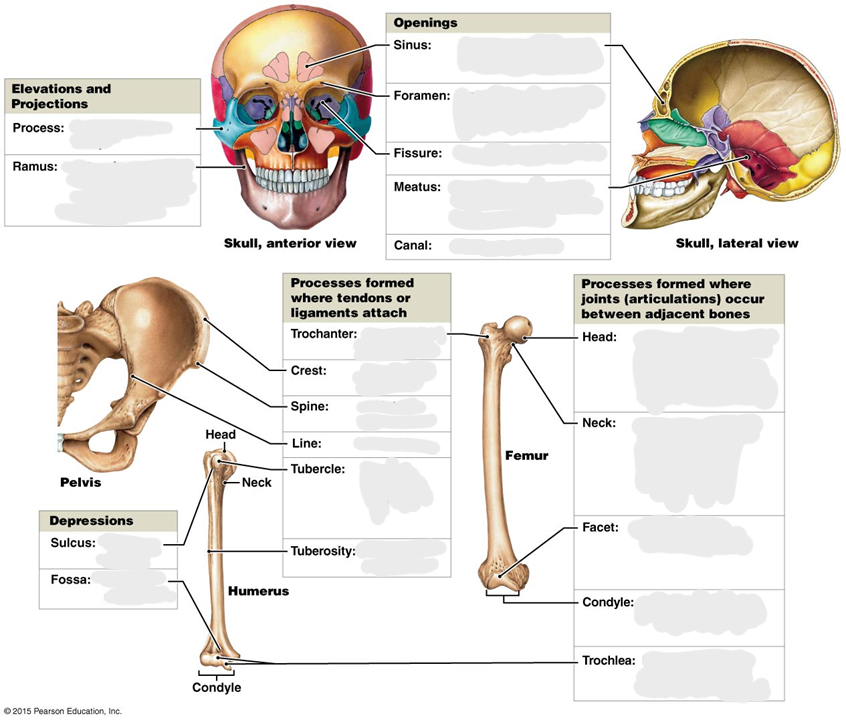
Head
PFA; expanded knob separated from the shaft by a narrower neck
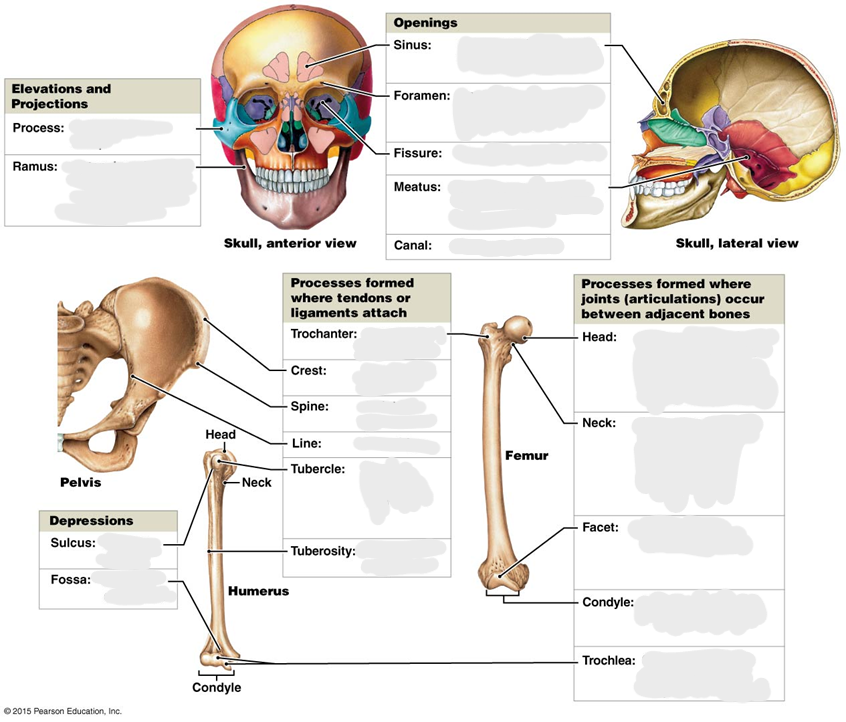
Neck
PFA; narrow connection between the epiphysis and diaphysis
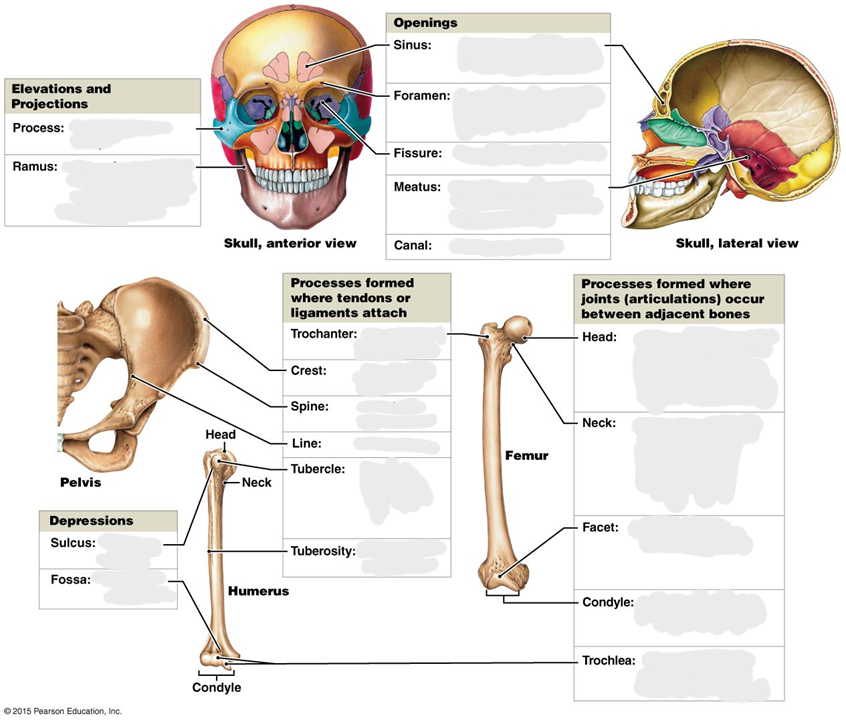
Condyle
PFA; smooth, concave articular process
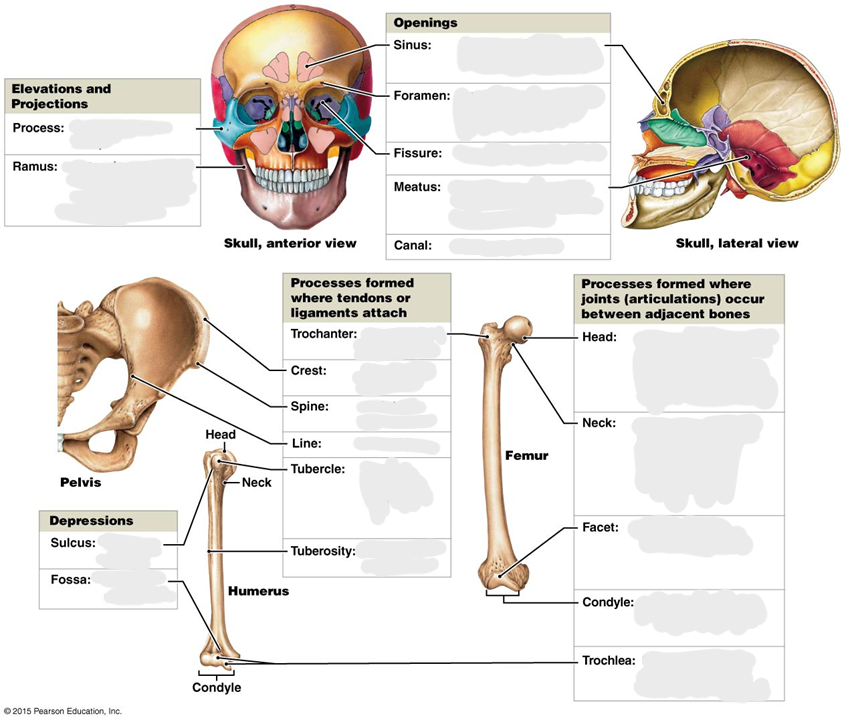
Trochlea
PFA; smooth, grooved articular process shaped like a pulley
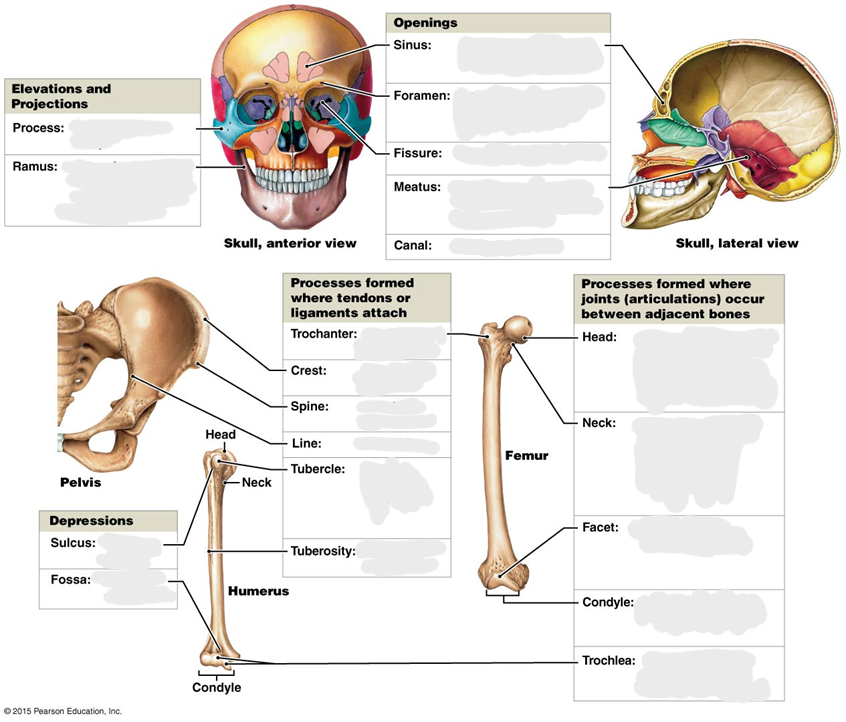
Facet
PFA; small, flat articular surface
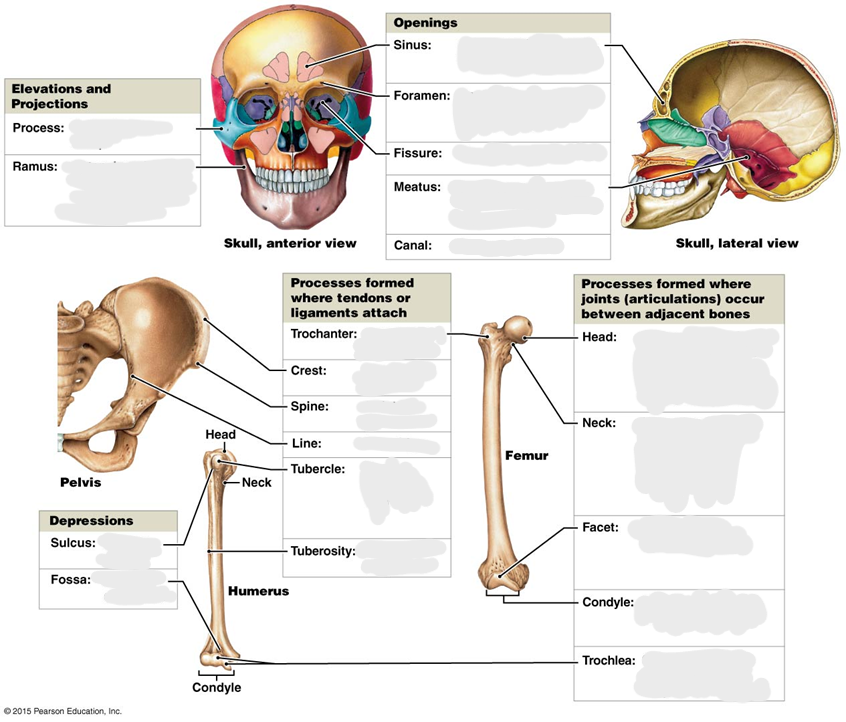
Fossa
shallow depression
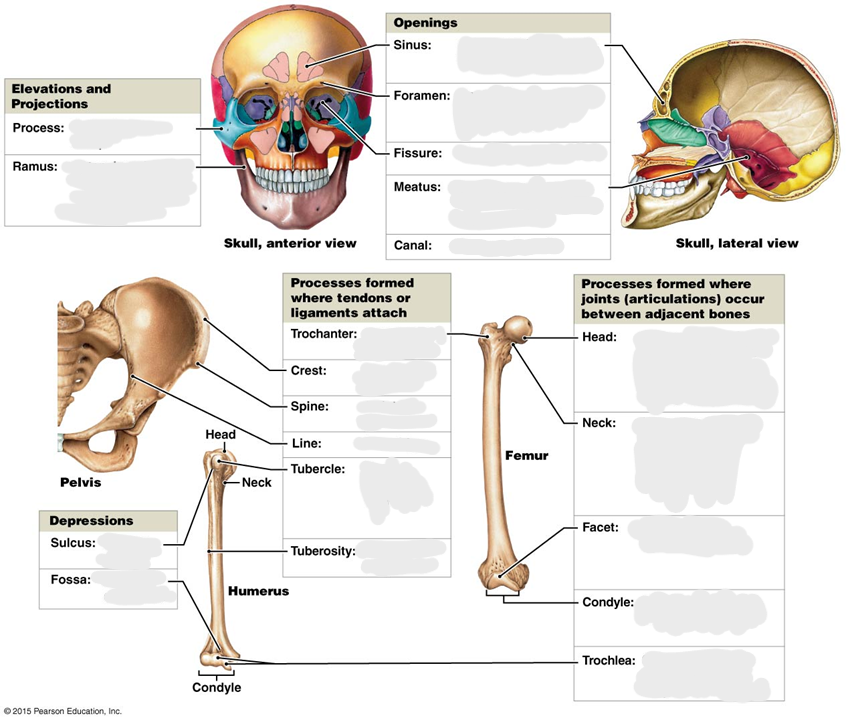
Sulcus
narrow groove
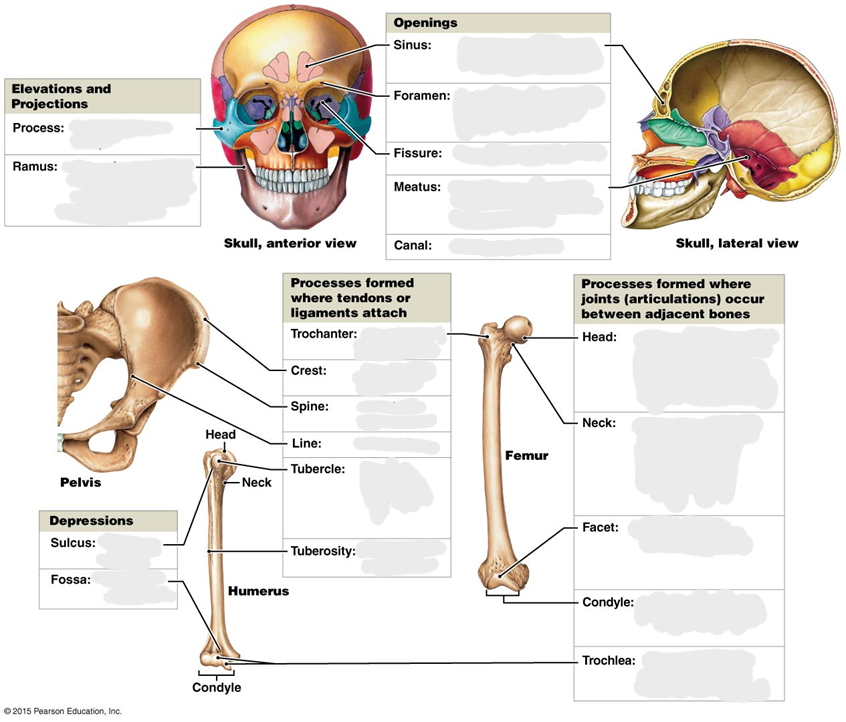
Foramen
round or oval opening, usually for blood vessels
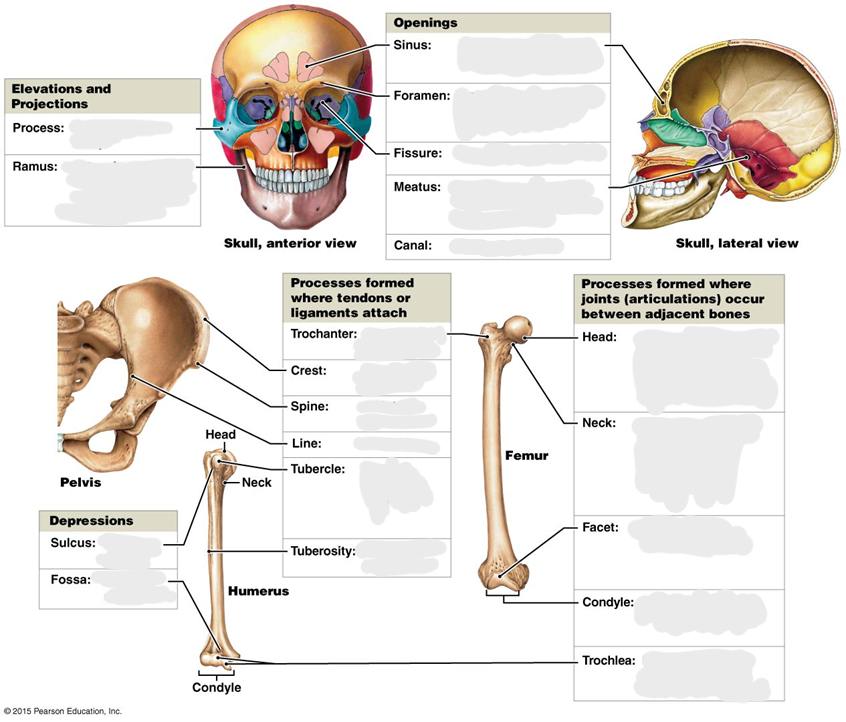
Canal(meatus)
tube-like passage or channel
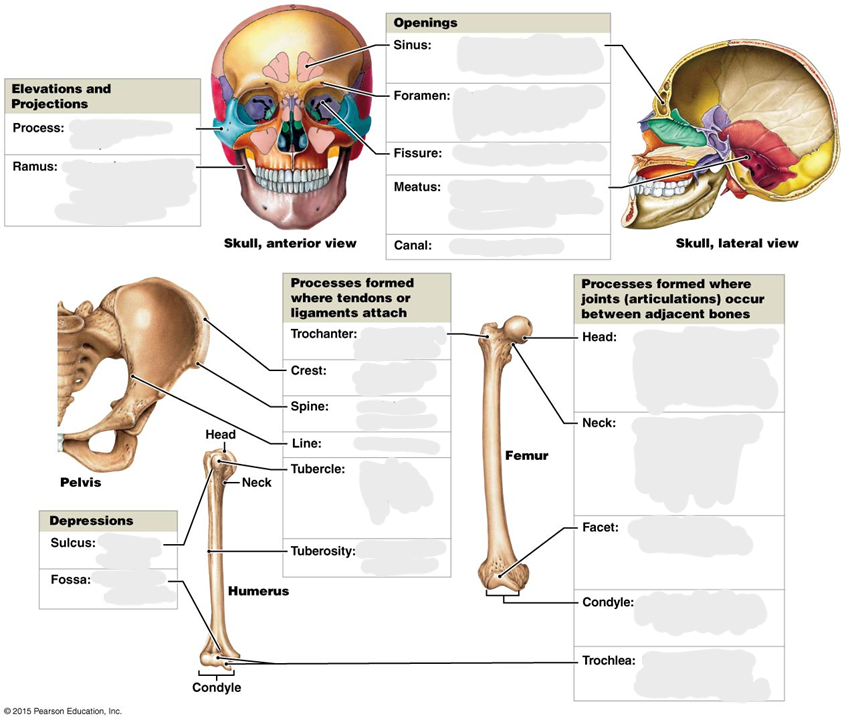
Fissure
elongated openings in the skull
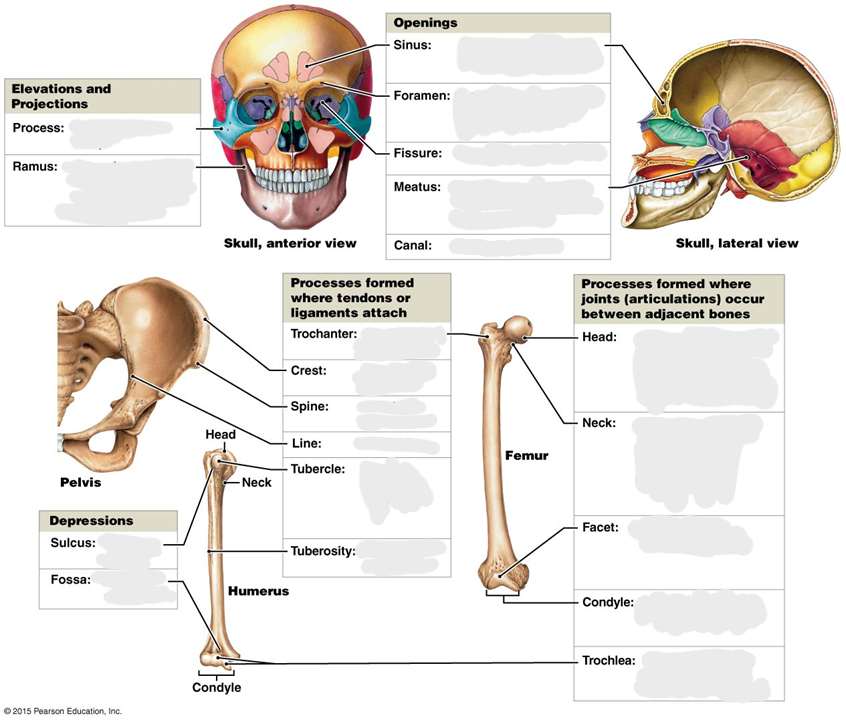
Sinus(antrum)
chambers within bone filled with air

