1780 Prelim 2
 Call Kai
 Learn
Learn Practice Test
 Spaced Repetition
 Match
Match Flashcards
 Knowt Play
1/134

There's no tags or description
Looks like no tags are added yet.
Name | Mastery | Learn | Test | Matching | Spaced | Call with Kai |
|---|
No analytics yet
Send a link to your students to track their progress
135 Terms
Life history
the pattern of investment an organism makes in growth and reproduction. Life history traits include an organism’s age at first reproduction, the duration and schedule of reproduction, the number and size of offspring produced, and life span.
traits
In genetics, a specific form of a character: eye color is a character; brown eyes and blue eyes are traits.
inclusive fitness
describes an individual’s combined fitness, including its own reproduction as well as any increase in the reproduction of its relatives due specifically to its own actions
direct fitness
It is the genetic contribution of an individual to the next generation through their own offspring (personal fitness).
Mechanism: Traits providing higher direct fitness (more surviving offspring) are favored, increasing the frequency of those genes in the population.
indirect fitness
the component of an organism's evolutionary success (inclusive fitness) gained by helping non-descendant relatives (e.g., siblings, cousins) survive and reproduce, thus promoting the transmission of shared genes. It explains the evolution of altruism and social behaviors like cooperative breeding,
antagonistic pleiotropy
is the condition that occurs when a mutation with beneficial effects for one trait also causes detrimental effects on other traits.
allele for p53 tumor-suppressor protein. People with this allele have a reduced likelihood of dying early in life from cancer, but age more quickly
senescence
refers to the deterioration in the biological functions of an organism as it ages.
kin selection
is selection arising from the indirect fitness benefits of helping relatives.
During evolution, positive selection on individuals that results from their helping the survival of relatives (kin) that possess the same gene alleles by descent from a common ancestor. (Contrast with direct fitness.)
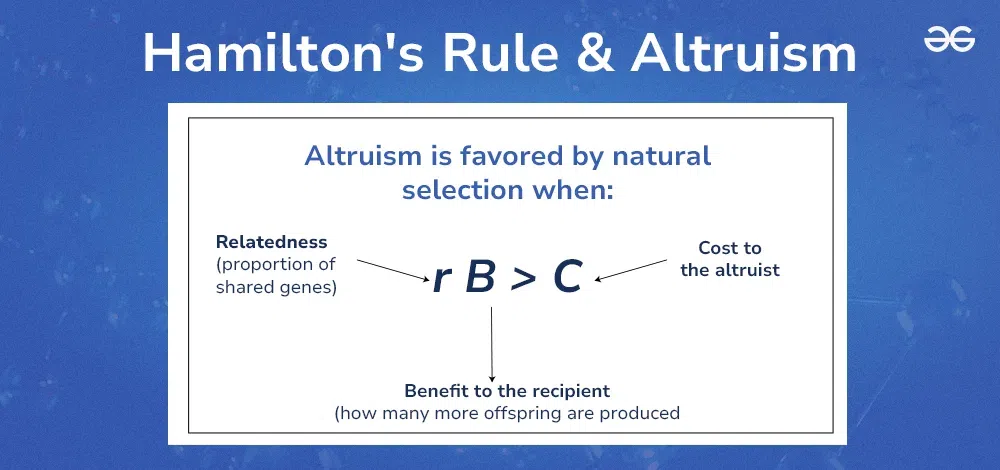
Hamilton's rule
Relatedness R): The probability that a gene in the donor is shared with the recipient. Parents/offspring are related, siblings are, and cousins are
Benefit B): The number of additional offspring equivalent the recipient gains due to the altruistic act.
Cost C): The number of offspring equivalent the donor loses by undertaking the act.
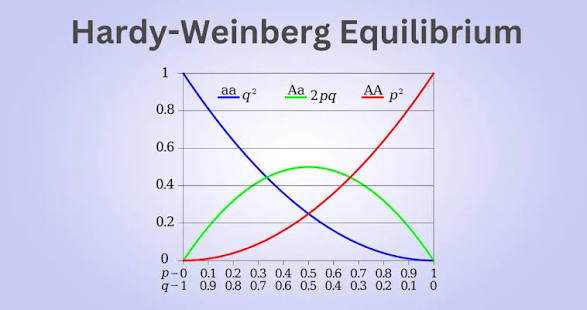
Hardy-Weinberg equilibrium
allele and genotype frequencies in a population remain constant from generation to generation in the absence of evolutionary influences
p2 is the frequency of dominant homozygous genotype
2pq is the frequency of heterozygous genotype and
q2 is the frequency of recessive homozygous genotype
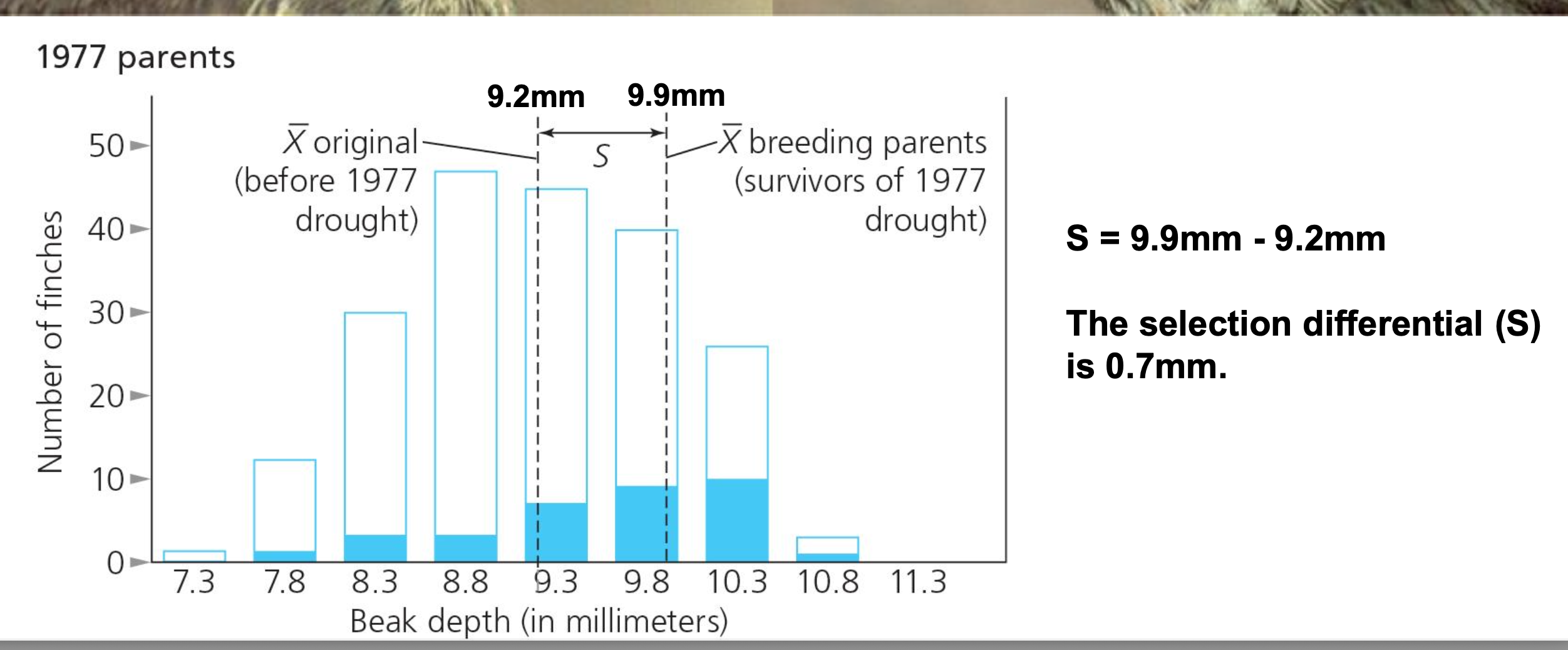
selection differential, response to selection
_____ is a measure of the strength of phenotypic selection. The selection differential describes the difference between the mean of the reproducing members of the population that contribute offspring to the next generation and the mean of all members of a population.
heritability,
The degree to which phenotypes are determined by individual genes transmitted from parents, rather than by interactions between different genes or between alleles of the same genes.
directional selection,
favors individuals on one end of the distribution of phenotypes present in a population.
Selection in which phenotypes at one extreme of the population distribution are favored. (Contrast with disruptive selection, stabilizing selection.)
stabilizing selection,
favors individuals in the middle of the distribution of phenotypes present in a population (for example, by acting against individuals at either extreme).
Selection against the extreme phenotypes in a population, so that the intermediate types are favored. (Contrast with directional selection, disruptive selection.)
disruptive selection
favors individuals at the tails of the distribution of phenotypes present in a population (for example, by acting against individuals with intermediate trait values).
Selection in which phenotypes at both extremes of the population distribution are favored.
sexual selection
refers to differential reproductive success resulting from the competition for fertilization, which can occur through competition among individuals of the same sex (or through attraction to the opposite sex
Selection by one sex of characteristics in individuals of the opposite sex. Also, the favoring of characteristics in one sex as a result of competition among individuals of that sex for mates.
sexual dimorphism,
a difference in form between males and females of a species, including color, body size, and the presence or absence of structures used in courtship displays (elaborate tail plumes, ornaments, pigmented skin patches) or in contests (antlers, tusks, spurs, horns).
operational sex ratio,
the ratio of male to female individuals who are available for reproducing at any given time.
paradox of sex, intrasexual selection, intersexual selection,
Paradox of sex: the evolutionary enigma of why most eukaryotes reproduce sexually despite the massive 50% efficiency advantage of asexual reproduction
Intersexual selection occurs when members of the limiting sex (generally females) actively discriminate among suitors of the less limited sex (generally males). Often called female choice.
Intrasexual selection occurs when members of the less limiting sex (generally males) compete with each other over reproductive access to the limiting sex (generally females). Often called male–male competition.
antagonistic coevolution
an evolutionary "arms race" between species where adaptation in one (e.g., increased predator speed) triggers counter-adaptation in another (e.g., increased prey speed), driving rapid, reciprocal evolutionary change. This process is fueled by negative fitness interactions like predation, parasitism, or sexual conflict, often adhering to the "Red Queen hypothesis
reinforcement
the increase of reproductive isolation between hybridizing populations through selection against hybrid offspring
fusion
If divergence results in no prezygotic or postzygotic isolation, and populations that come into secondary contact interbreed, then they can become one
primary hybrid zone
secondary hybrid zone
Where the ranges of two genetically differentiated
populations meet, interbreed, and create hybrid
offspring.
Feature | Primary Hybrid Zone | Secondary Hybrid Zone |
|---|---|---|
Origin | In situ (continuous range) | Secondary contact |
Prior History | No geographical isolation | Geographic isolation (allopatry) |
Maintenance | Environmental gradients | Tension/dispersal |
Commonality | Less common | More common |
metapopulation
______ is a group of spatially separated populations of the same species that interact at some level (for example, exchange alleles).
A “population of populations”—the group of spatially separated populations that occurs within a defined geographic area.
isolating barrier
An _______ refers to an aspect of the environment, genetics, behavior, physiology, or ecology of a species that reduces or impedes gene flow from individuals of other species. can be geographic or reproductive.
speciation
the evolutionary process by which new species arise. Speciation causes one evolutionary lineage to split into two or more lineages (cladogenesis).
The process of splitting one biological lineage into two biological lineages that evolve independently from one another.
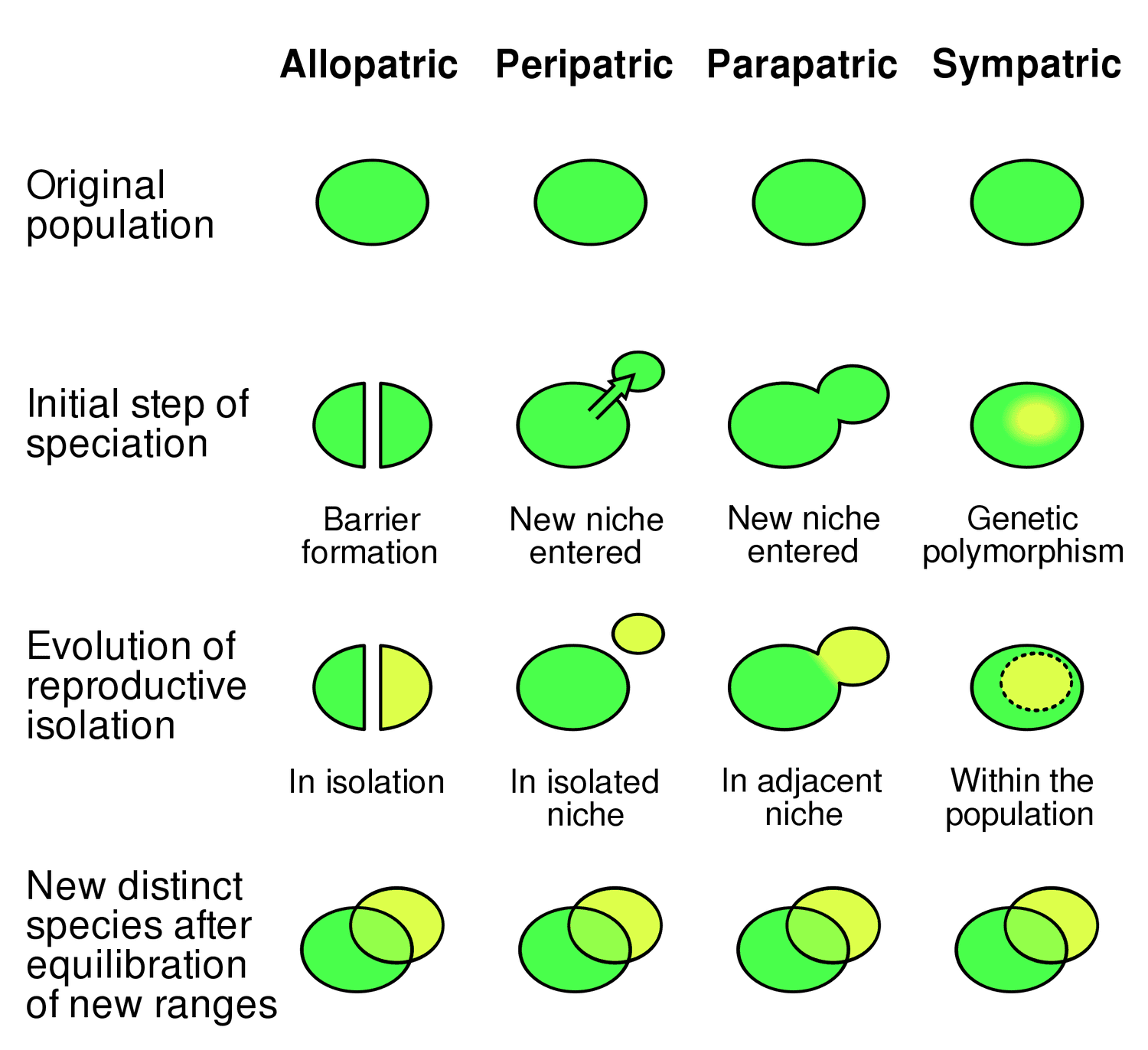
allopatric vs sympatric
Geographic Barrier: Allopatric requires physical separation; Sympatric does not.
Examples:
Allopatric: Grand Canyon squirrels or Galapagos finches separated by geographical barriers.
Sympatric: Polyploid plants, or insects specialized to feed on specific host plants within the same range. (behavioral/temporal)
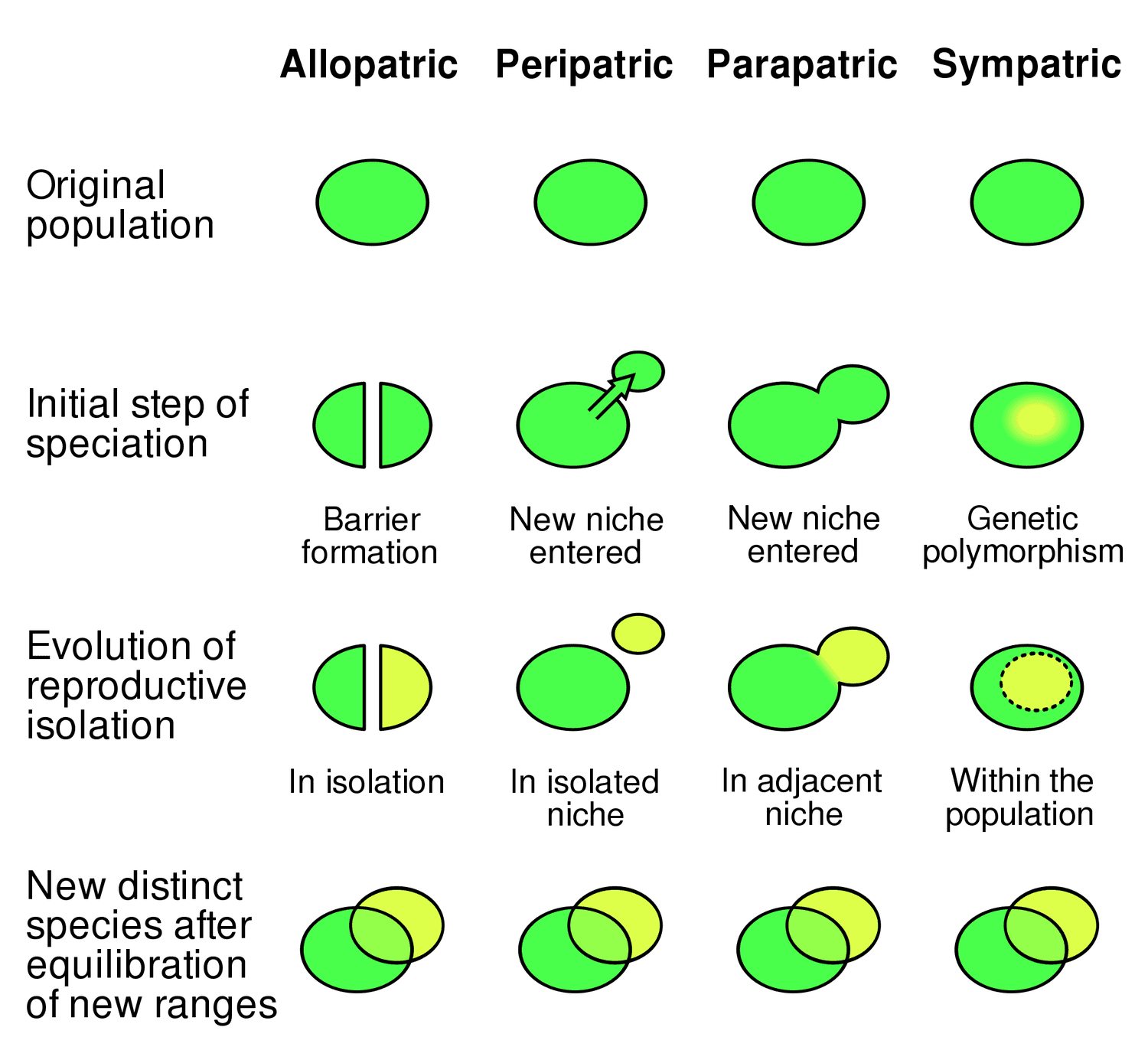
parapatric,
the evolution of new species within a spatially extended population that still has some gene flow.
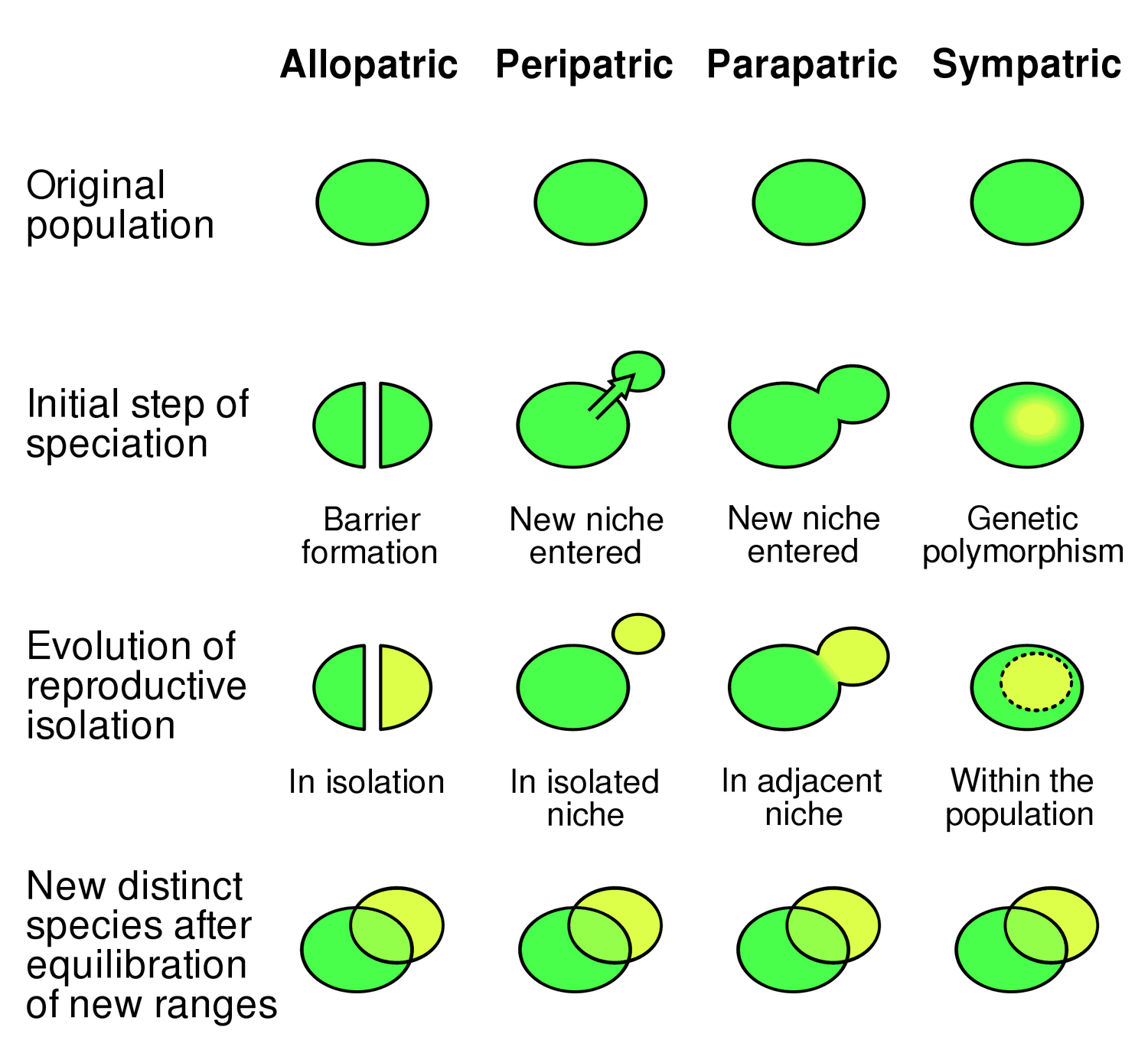
peripatric,
a mode of allopatric speciation where a new species evolves from a very small, isolated population located at the edge of a larger, central population's range
reproductive isolation
occurs when reproductive barriers prevent or strongly limit reproduction between populations. The result is that few or no genes are exchanged between the populations.
gametic incompatibility
occurs when sperm or pollen from one species fails to penetrate and fertilize the egg or ovule of another species
prezygotic reproductive barriers
Habitat Isolation: Species live in the same area but occupy different habitats, making encounters unlikely.
Temporal Isolation: Species breed at different times of day, seasons, or years.
Behavioral Isolation: Unique courtship rituals or mating signals prevent mating between species
Mechanical Isolation: Morphological or structural differences prevent successful mating or pollen transfer.
Gametic Isolation: Sperm from one species cannot fertilize the eggs of another due to chemical incompatibilities.
postzygotic reproductive barriers
reproductive isolation mechanisms that occur after fertilization, preventing hybrid zygotes from developing into viable, fertile adults. These barriers, caused by genetic incompatibilities, maintain species separation through hybrid inviability (early death), sterility (e.g., mules), or hybrid breakdown (weak, sterile, or inviable F2 generation)
stomata
Land plants also evolved __, which are pores or openings in the leaves that can open and close and therefore regulate gas and water exchange
chlorophylls a and b
Chlorophyll a is the primary photosynthetic pigment in all oxygen-producing photoautotrophs (plants, algae, cyanobacteria), essential for converting light to chemical energy .
Chlorophyll b is an accessory pigment in plants and green algae (added after red algae) that broadens light absorption: increases the range of wavelengths a plant can use for photosynthesis
waxy cuticle
In plants, a waxy layer on the outer body surface that retards water loss. Starts in land plants (and retention of embryo)
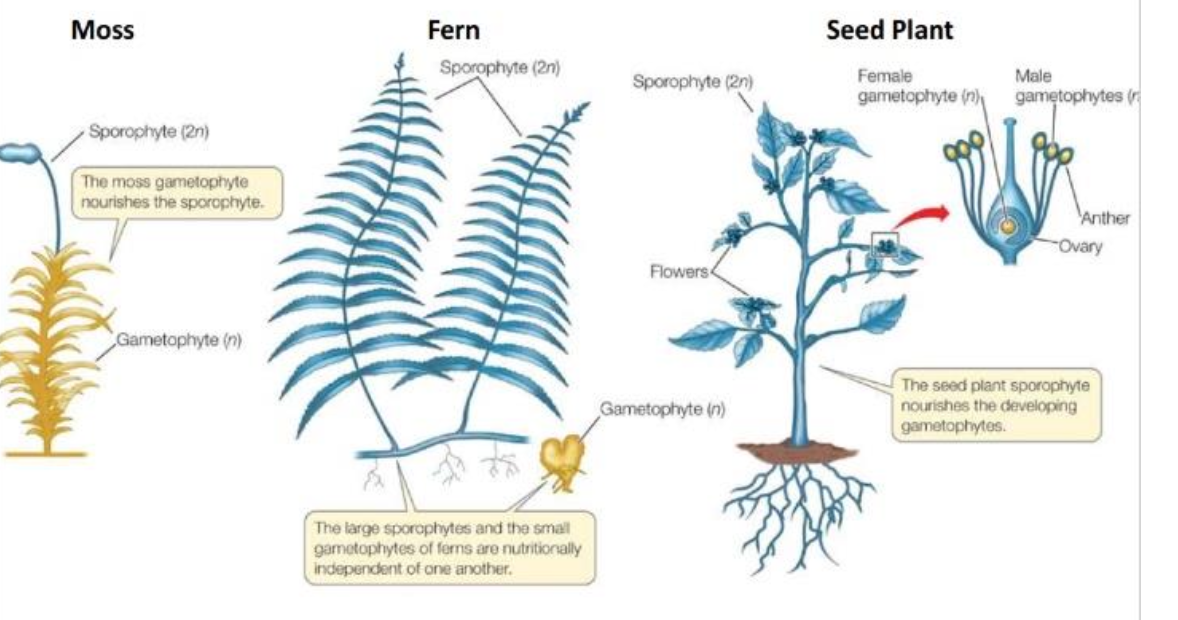
alternation of generations
The sporophyte is diploid (2n)
The sporophyte will grow up and then make spores through meiosis. The spores will be haploid (n).
then the haploid spores will grow to become multicellular and then release single celled haploid gametes The gametes go through fertilization and make a diploid zygote that will grow up to be a sporophyte.
sporophyte
In plants and protists with alternation of generations, the diploid phase that produces the spores.
spore
(1) Any asexual reproductive cell capable of developing into an adult organism without gametic fusion. In plants, haploid spores develop into gametophytes, diploid spores into sporophytes. (2) In prokaryotes, a resistant cell capable of surviving unfavorable periods.
gametophyte, gamete
Gamete: The mature sexual reproductive cell: the egg or the sperm.
Gametophyte: In plants and photosynthetic protists with alternation of generations, the multicellular haploid phase that produces the gametes.
microphylls
____ are small, simple leaves with a single, unbranched vascular vein and no leaf gap in the stem vascular cylinder. Primarily found in lycophytes (club mosses, sphenophytes), they represent an early evolutionary step from simple enations
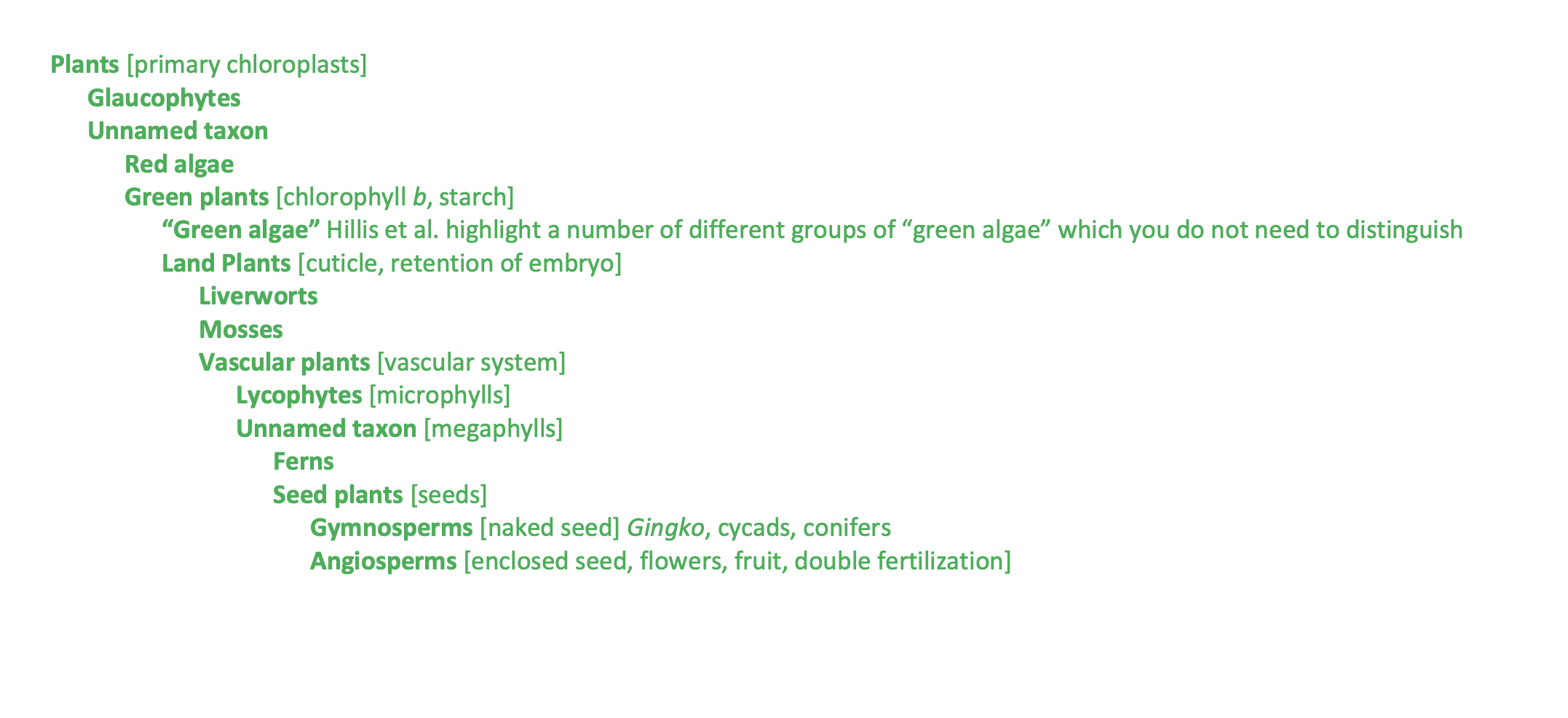
megaphylls
_____ are large, complex leaves with branching vascular systems (veins) found in ferns, gymnosperms, and angiosperms. Unlike microphylls, they possess leaf gaps in the stem vasculature. They evolved from branched stem systems (telomes) and are highly efficient for photosynthesis.
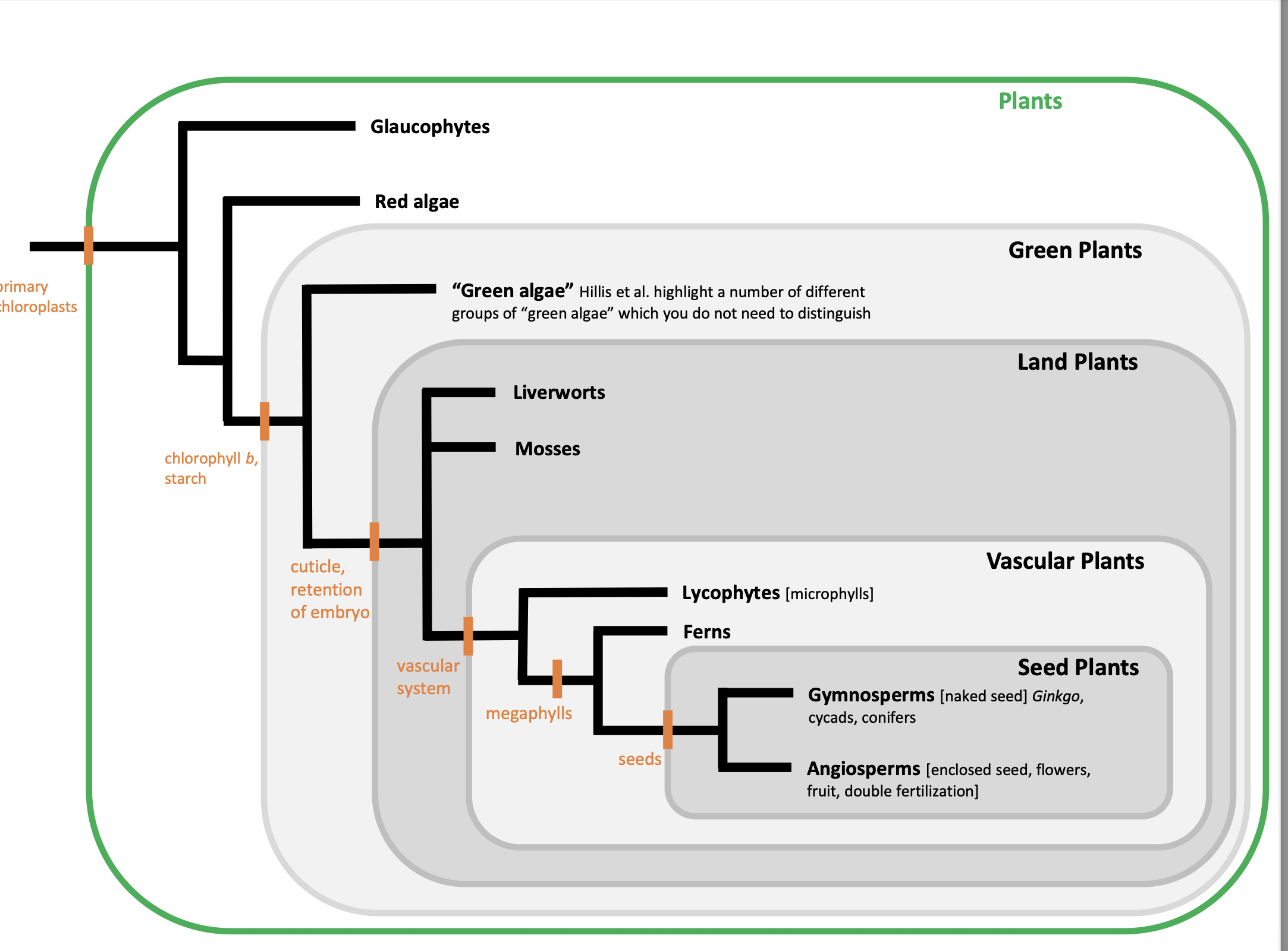
enclosed seed, naked seed
naked seed: Naked seeds (gymnosperms) are exposed, usually borne on cones or scales without a covering of tissue.while naked seeds are found in conifers.
Enclosed seeds: (angiosperms) develop inside an ovary, typically ripening within a fruit, which provides protection and aids in dispersal. Enclosed seeds (e.g., apples, beans). the ripened ovaries are part of the sporophyte mother plant.
GAMETOPHYTE DEVELOPS WITHIN SPOROPHYTE TISSUE
xylem
STRUCTURAL SUPPORT, WATER & NUTRIENT MOVEMENT
In vascular plants, the tissue that conducts water and minerals; xylem consists, in various plants, of tracheids, vessel elements, fibers, and other highly specialized cells.
Wood is secondary Xylem tissue
phloem
distributes products of photosynthesis.
pollen, fruit, seeds
In seed plants, microscopic grains that contain the male gametophyte and gamete.
simple fruit: A fruit derived from a single ovary
the non-seed plants alln need water for fertilization. The sperm must swim through water to get to the egg.
In seed plants, the sperm is carried through the air in a pollen grain.
double fertilization
In angiosperms, a process in which the nuclei of two sperm fertilize one egg. One sperm’s nucleus combines with the egg nucleus to produce a zygote, while the other combines with the same egg’s two polar nuclei to produce the first cell of the triploid endosperm (the tissue that will nourish the growing plant embryo).
stamen
A male (pollen-producing) unit of a flower, usually composed of an anther, which bears the pollen, and a filament, which is a stalk supporting the anther.
anther
A pollen-bearing portion of the stamen of a flower.
ovary
A female organ, in plants or animals, that produces ova (eggs).
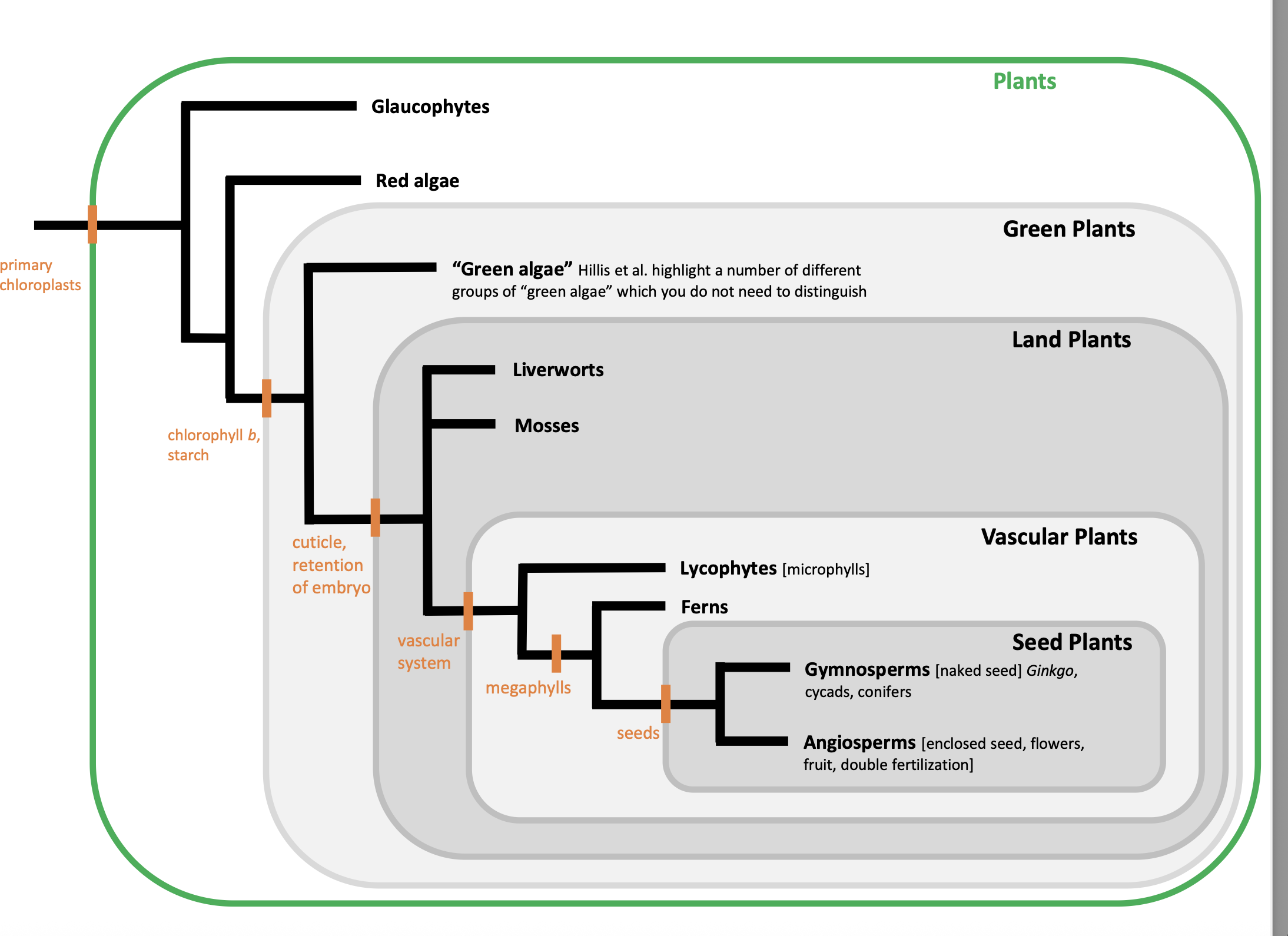
glaucophytes
unicellular, asexual reproductions.earliest divergence
They are characterized by plastids called muroplasts, which retain a bacterial peptidoglycan wall
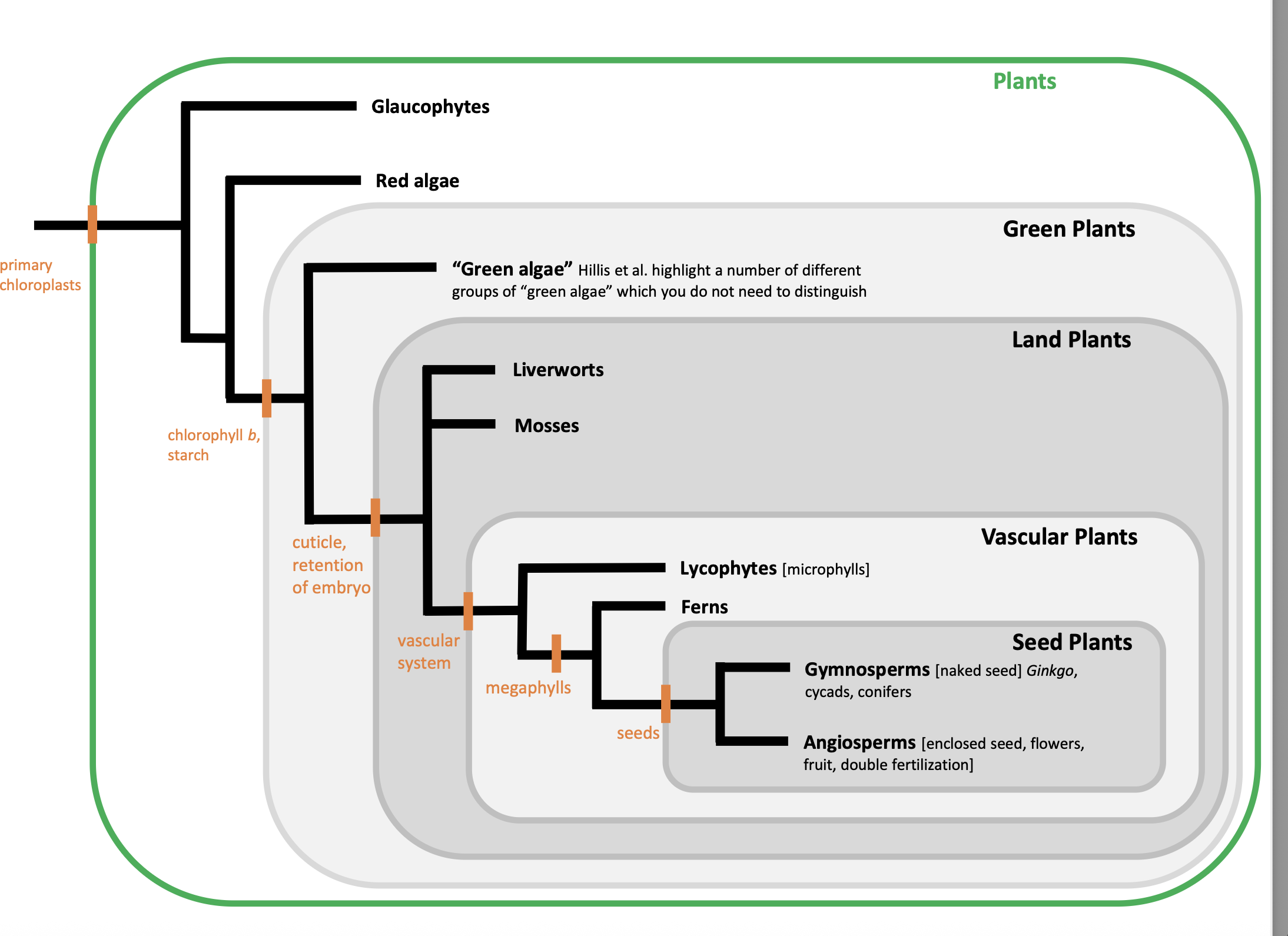
primary chloorplast
_________ are photosynthetic organelles found in plants, red algae, and glaucophytes, originating from a single ancestral endosymbiotic event where a eukaryote engulfed a cyanobacterium.
endosperm
A specialized triploid seed tissue found only in angiosperms; contains stored nutrients for the developing embryo.
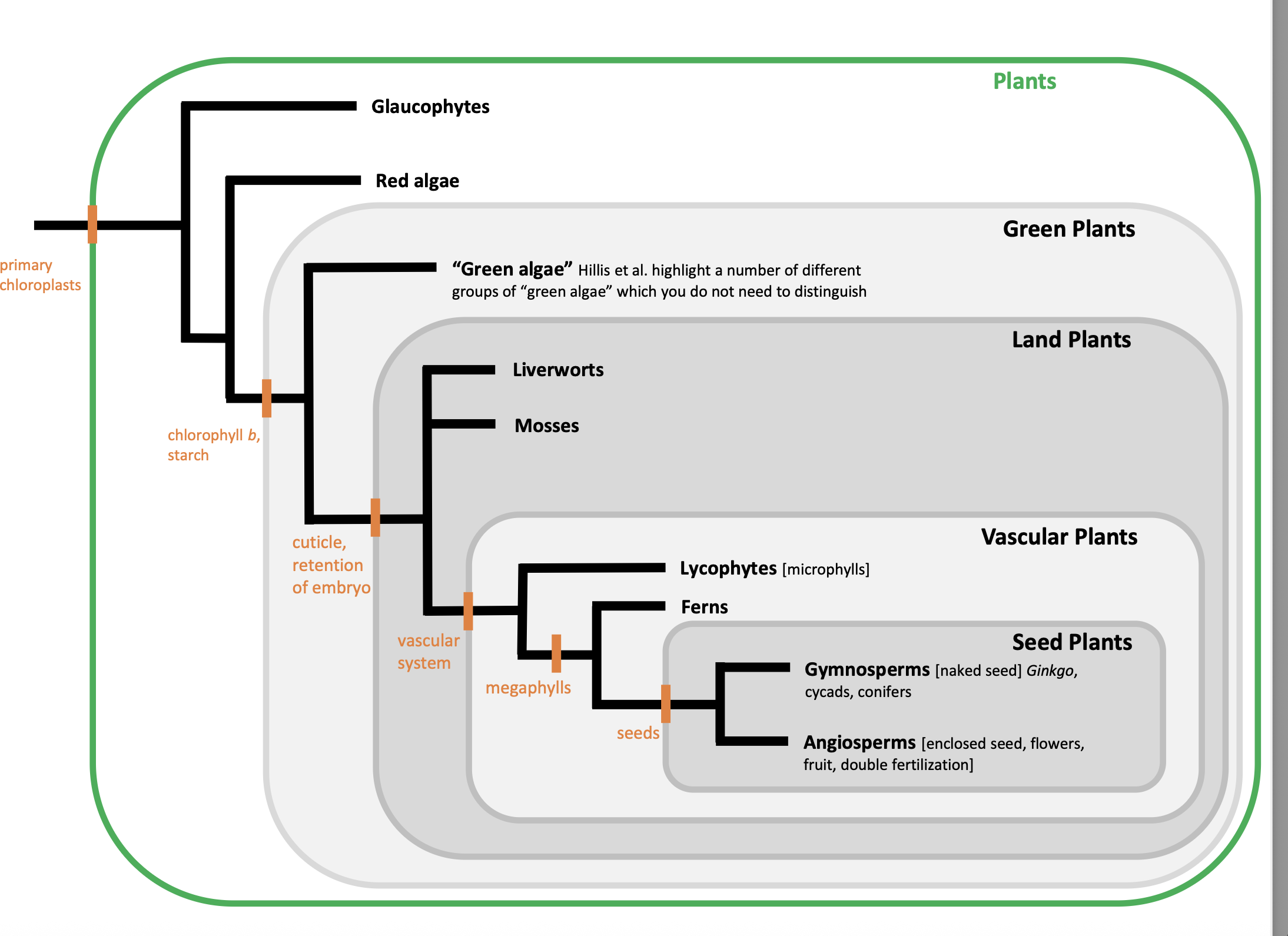
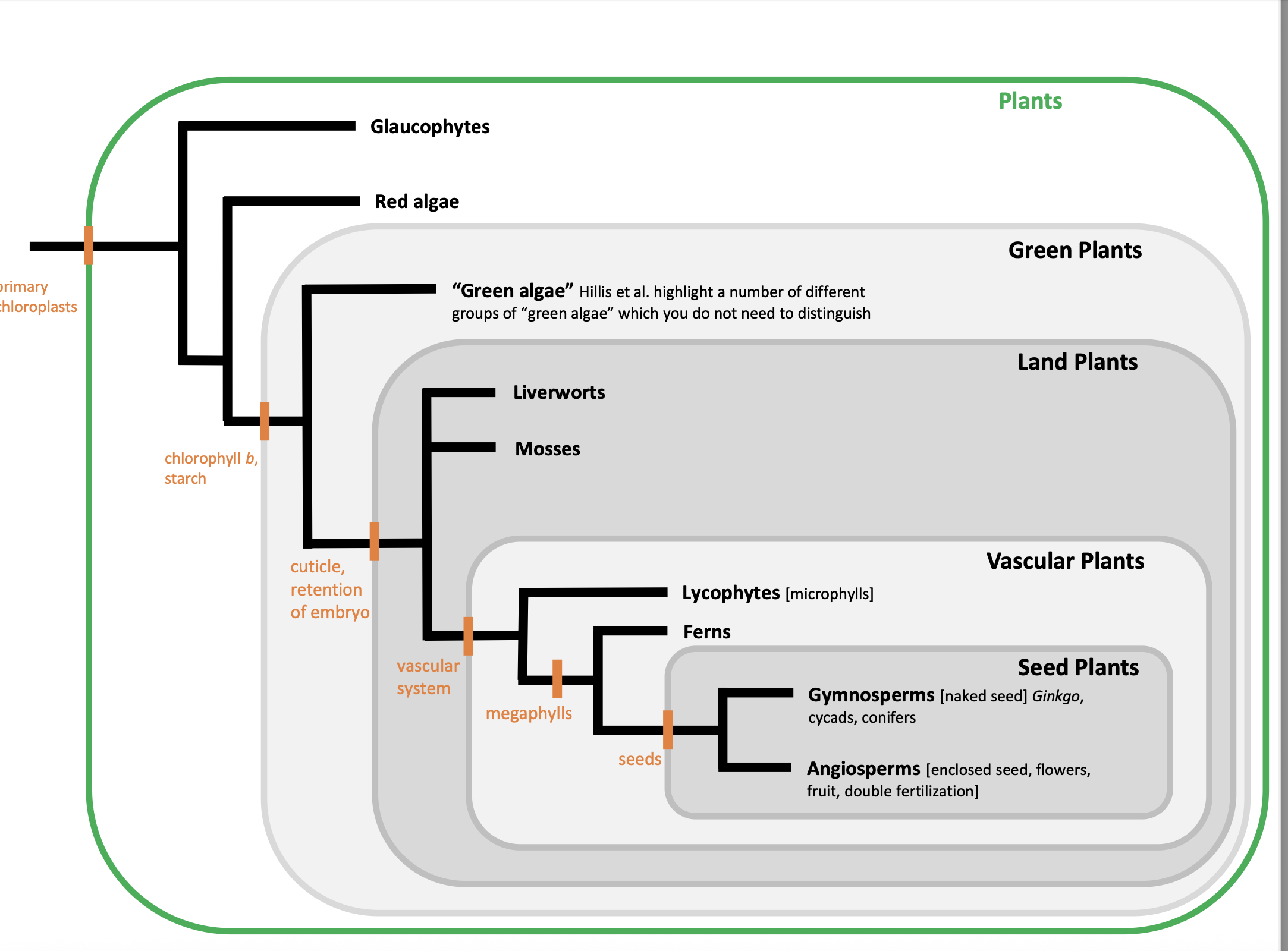
“Green algae”
a paraphyletic group that forms a polytomy at the base of the green plant clade. has chlrophyl b and starch
sister to land plants, uni or multicellular
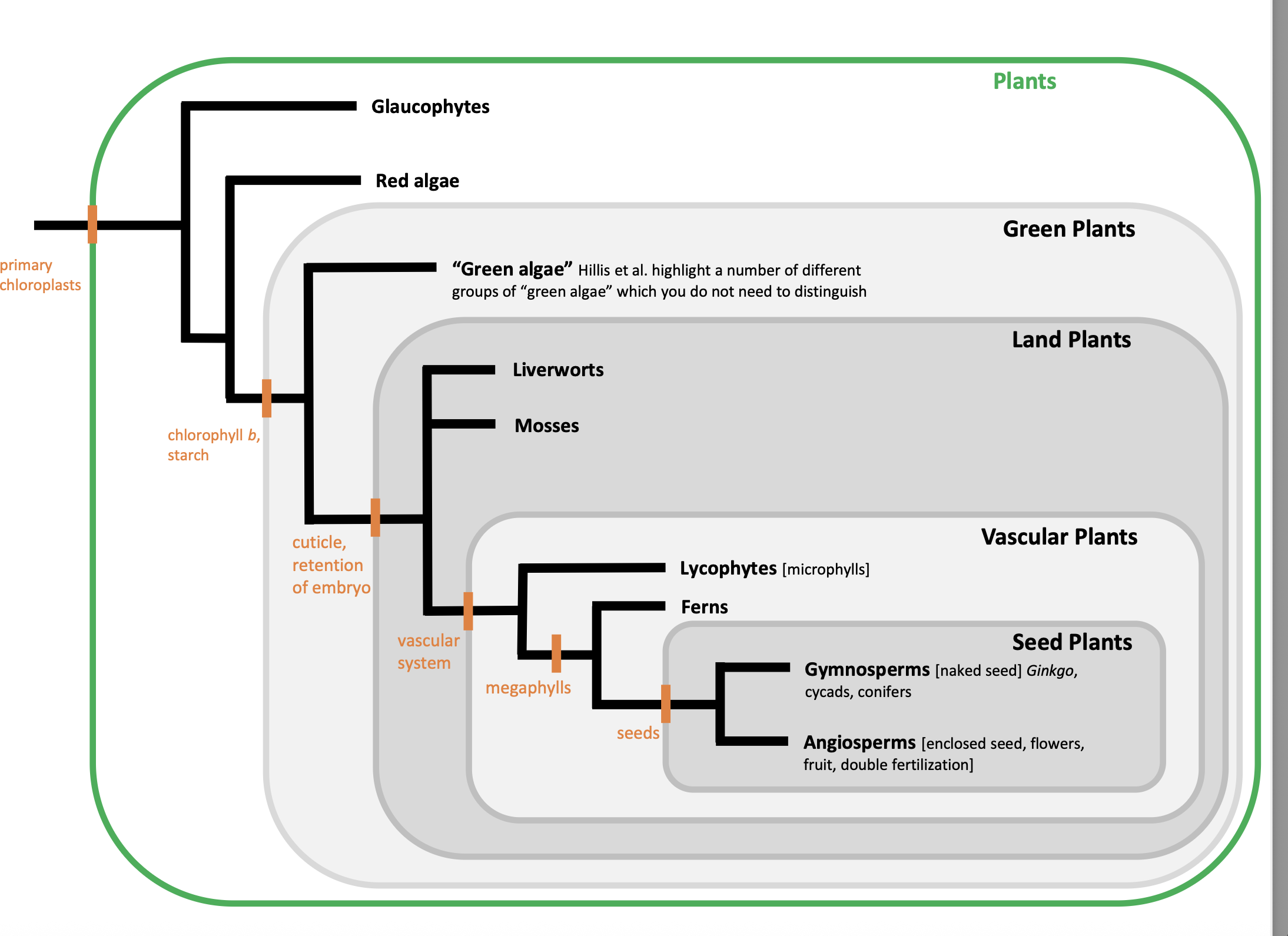
Red algae
eukaryotic, non-flagellated cells characterized by chloroplasts with unstacked thylakoids, phycobiliprotein pigments (phycoerythrin), and a cell wall often composed of cellulose, agar, or carrageenan.
Green Plants
_____ are a monophyletic group originating over a billion years ago from algal ancestors. (green algae)
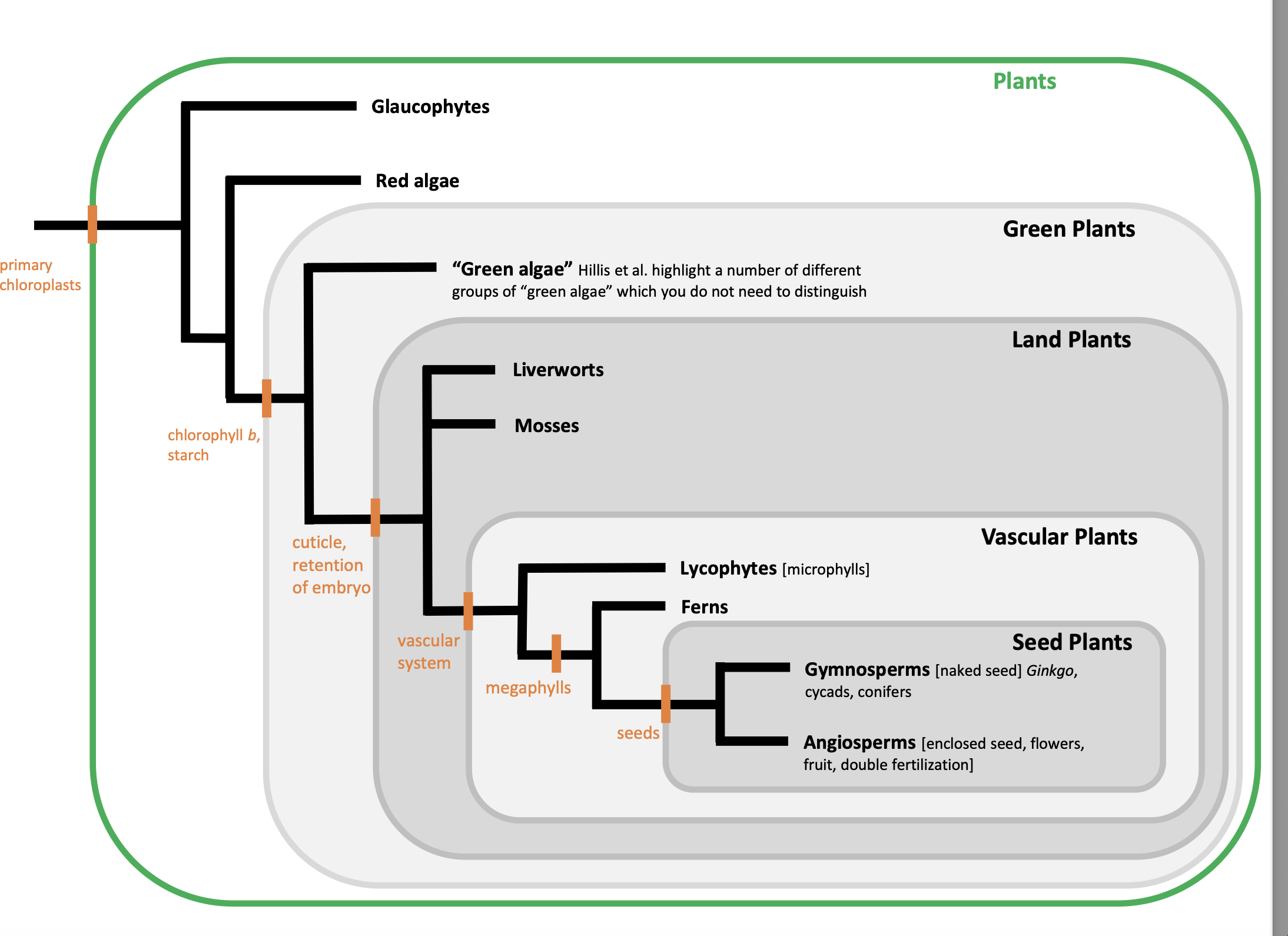
Land plants
primary chloroplasts, chlorophyll b & starch, alternation of generations (sporophyte/gametophyte)
separate by: cuticle, retention of embryo
sister to green algae
aquatic algae fertilization is external through the release of gametes
into the water and the fertilized egg is not protected by the plant. Another
synapomorphy of land plants is the retention of the embryo, which is often
protected by different means, such as a latex like cover in some non-
vascular plants and seeds in the seed plants.
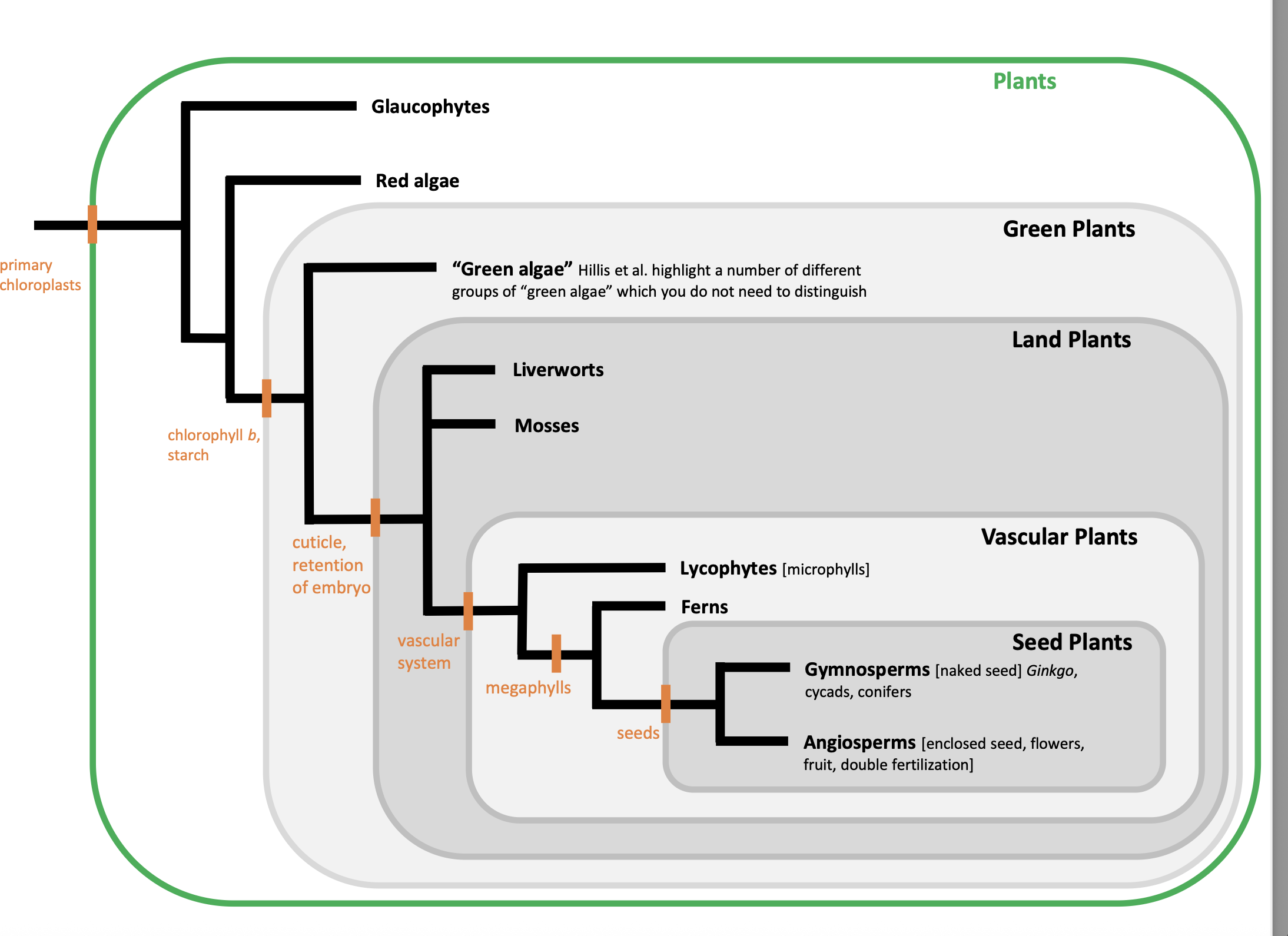
(Liverworts and Mosses) = non-vascular land plants,
Non-vascular plants (liverworts, hornworts, mosses) rely on osmosis for transport, the haploid gametophyte is large
the gametophyte generation is the one that lives the longest and is the most prevalent. It is usually the one that we see. The sporophyte is attached to the gametophyte and it is small and dependent on the gametophyte.
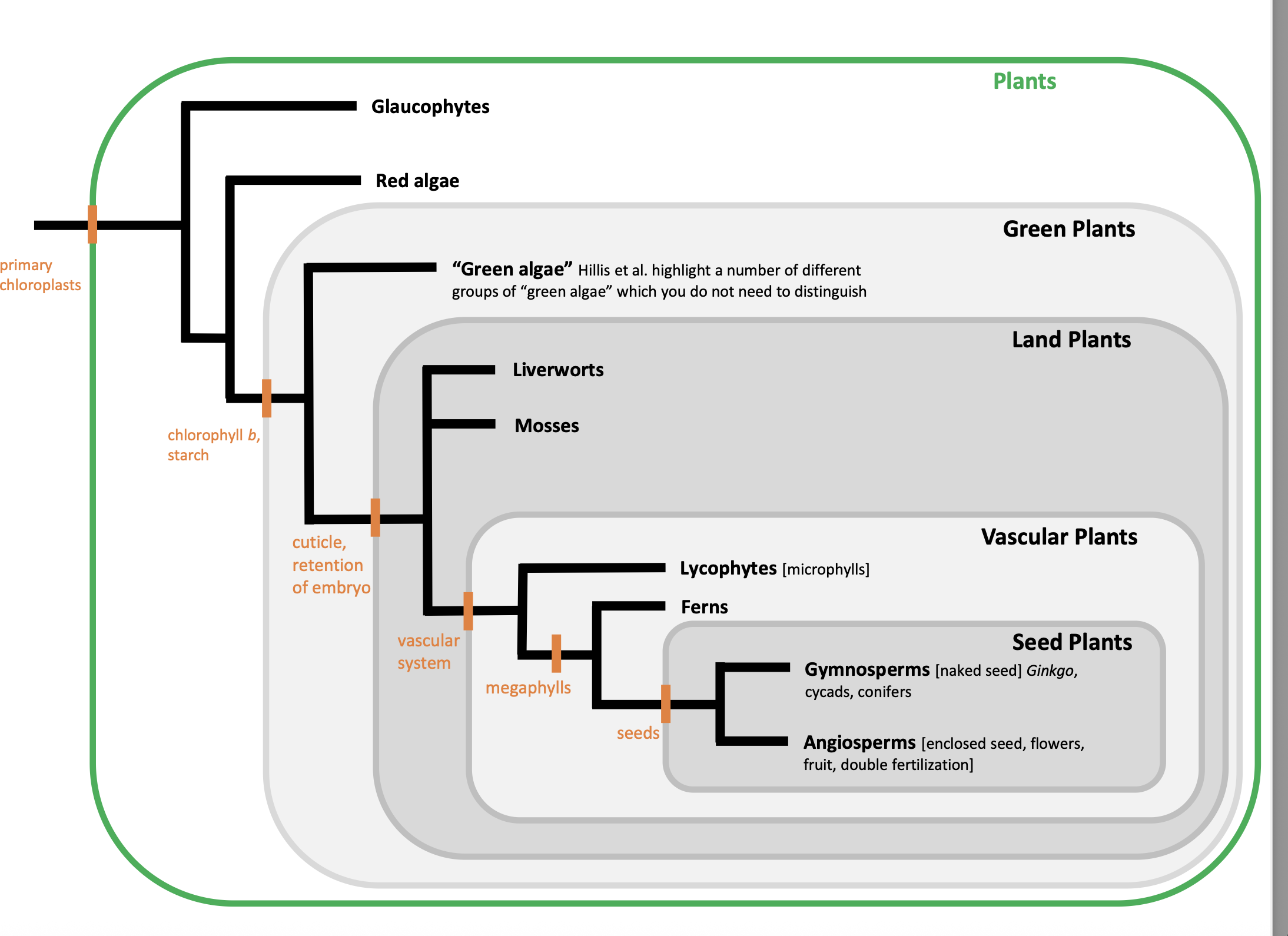
Vascular Plants
Lycophytes (microphylls) and ferns (megaphylls), Gymnosperms, Angiosperms, sporophyte is large. all have xylem and phloem, gives us tall redwood trees!
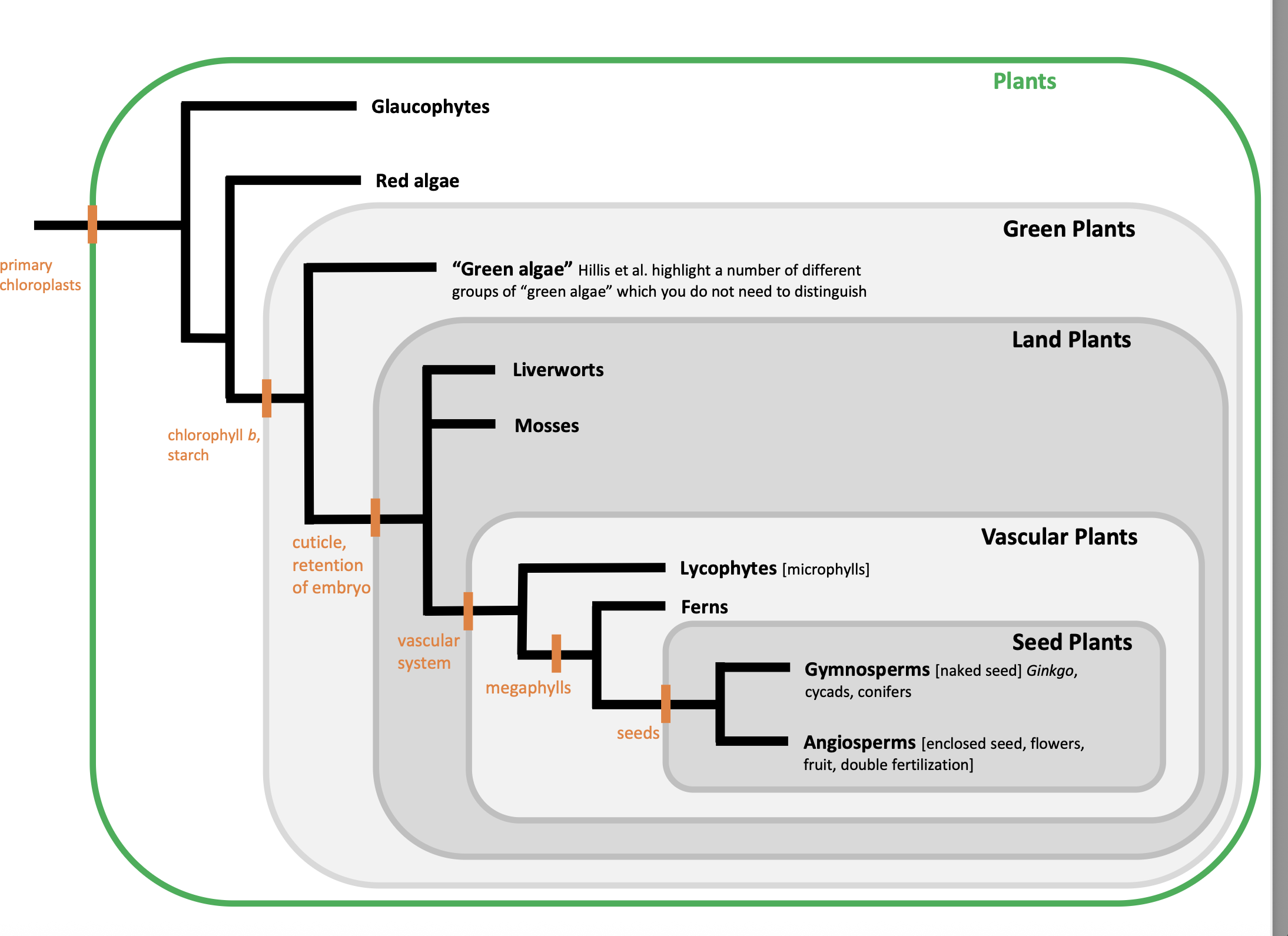
Lycophytes
____ are the most basal of the vascular plants, but they do have a well-developed vascular system, which once allowed them to be very tall. They were one of the dominant species in the forests of the Carboniferous. Like other vascular plants, they have a large sporophyte. The gametophyte is free living, but smaller than the sporophyte.
Ferns
_____ developed true roots, stems, and megaphylls (large leaves), distinguishing them from earlier, simpler plants. Sister group to seed plants. gametophyte free living, smaller than sporophyte
Seed Plants
angiosperms & gymnosperm
primary chloroplasts, chlorophyl b & starch, cuticle&retention of embryo, vascular plants, megaphylls,
separated by seeds
Gymnosperms
woody, perennial seed-producing plants—such as conifers, cycads, and ginkgo—characterized by "naked seeds" that develop on cone scales rather than within a fruit. As vascular plants that do not produce flowers,
non-random mating
where individuals choose mates based on specific traits, physical proximity, or genetic similarity rather than mating randomly. It causes evolution within populations, often driven by sexual selection (preferring certain traits) or assortative mating (choosing similar mates), which can increase homozygosity
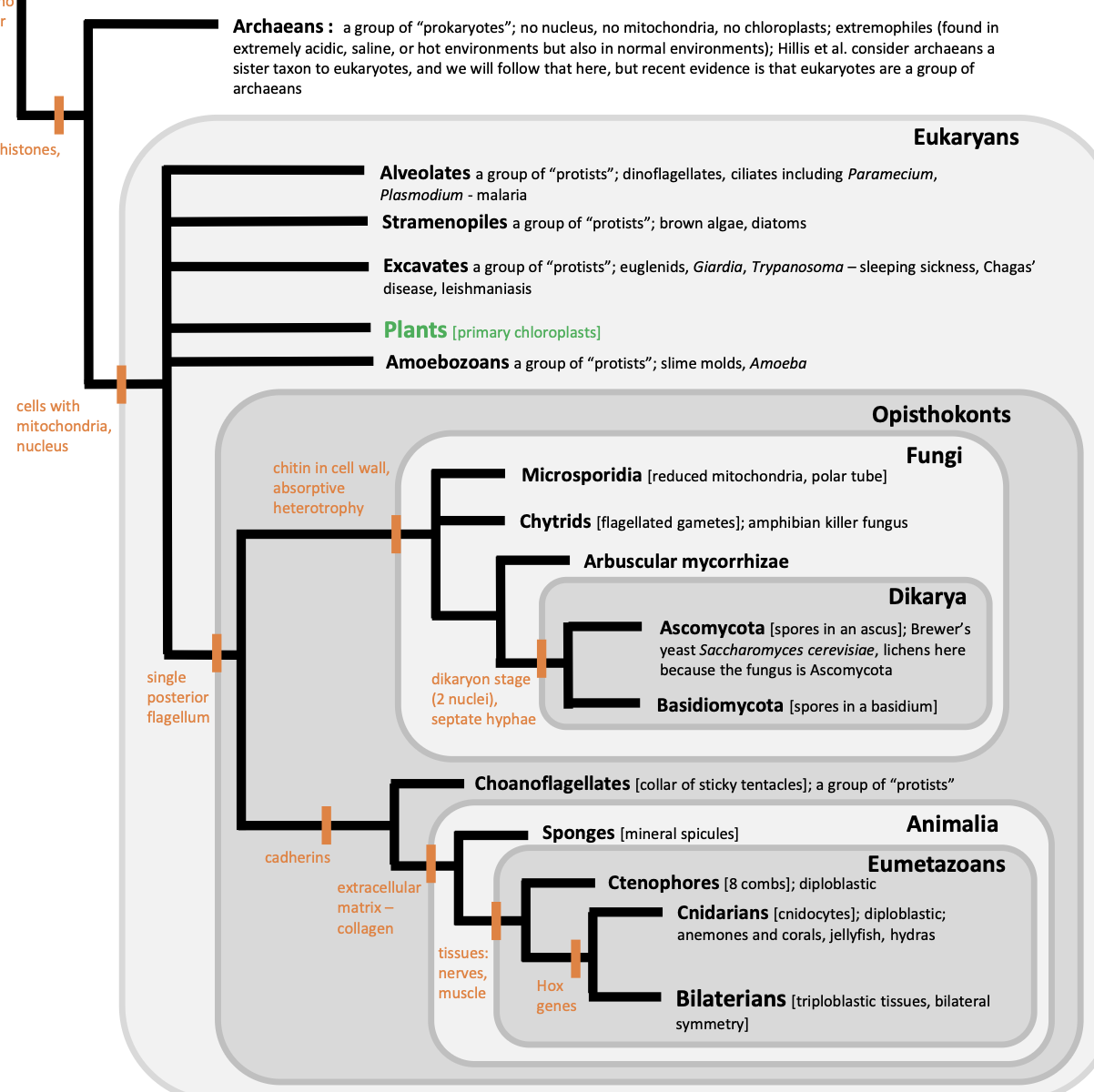
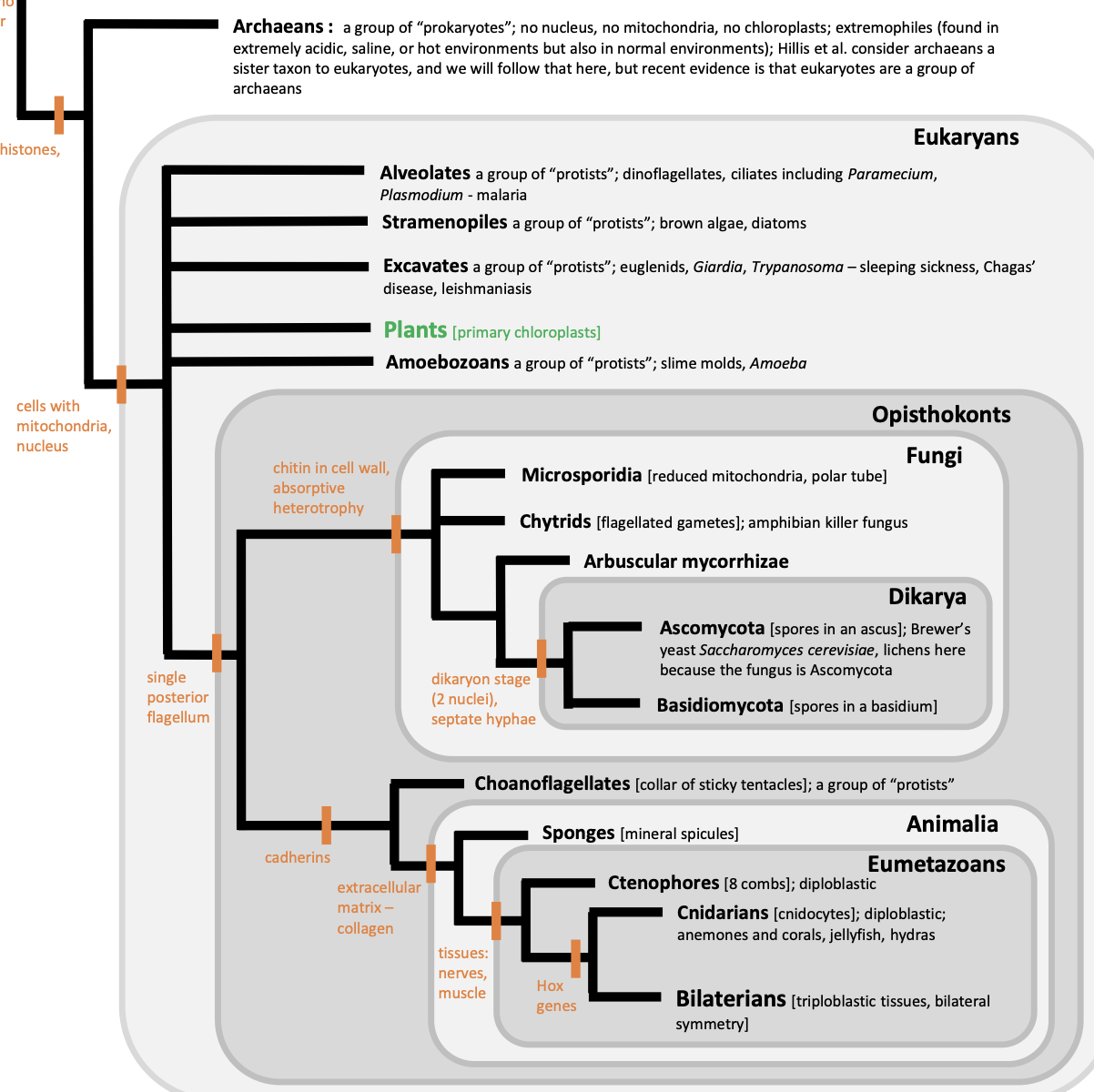
animals
a monophyletic lineage—a group descending from a single common ancestor—characterized by multicellularity, collagen, and specialized tissues.
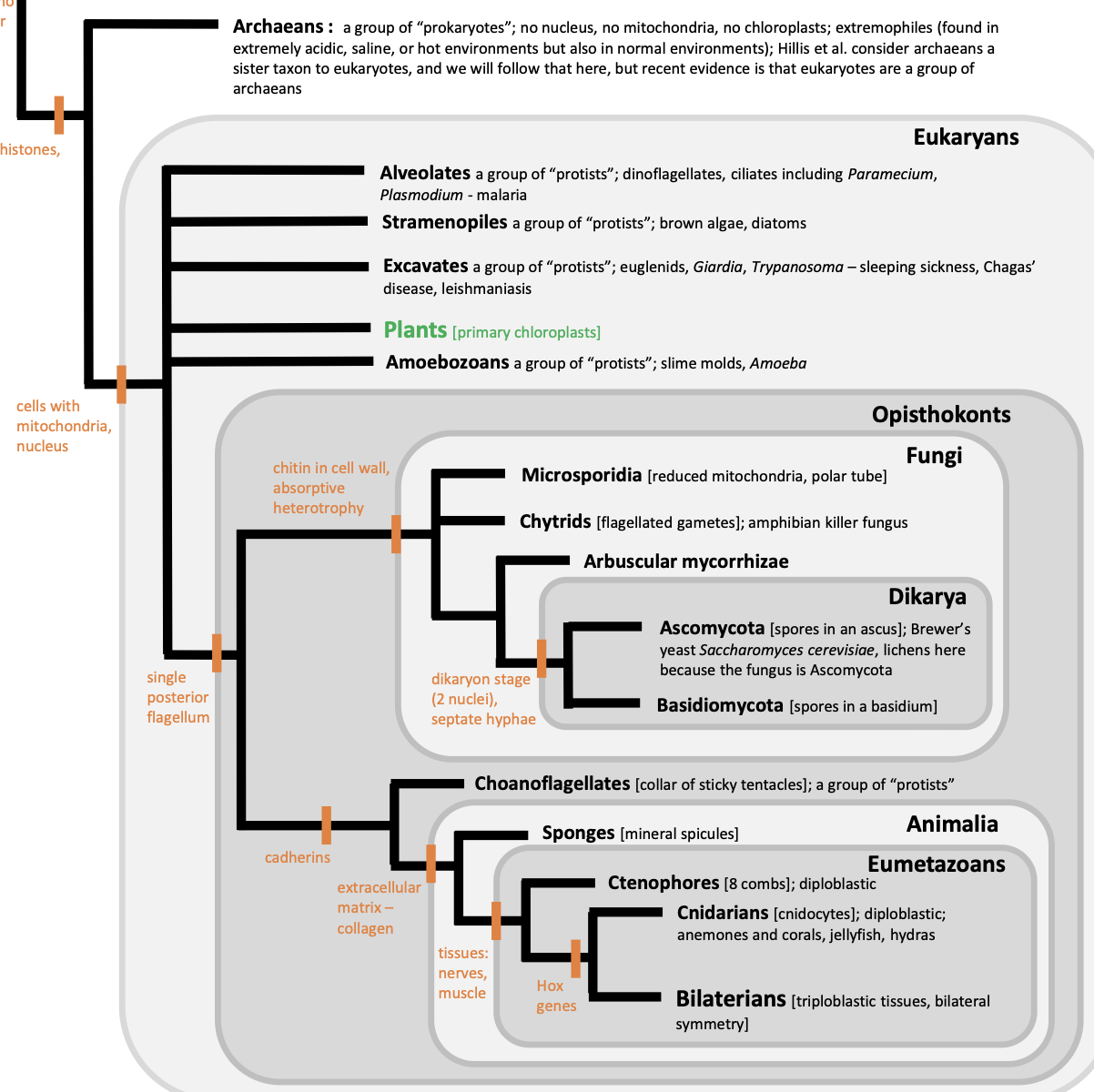
arbuscular mycorrhizal fungi,
soil fungi (forming symbiotic relationships with 90% of land plants,
The hyphae transport water and soil nutrients to the plant – this greatly increases the
surface area by which the plant can acquire water and nutrients.
Ascomycota
producing sexual spores (ascospores) inside specialized sac-like in their ascus. Septate hypae separates.
Cup fungie, morrels, truffels, yeast, molds, lichens
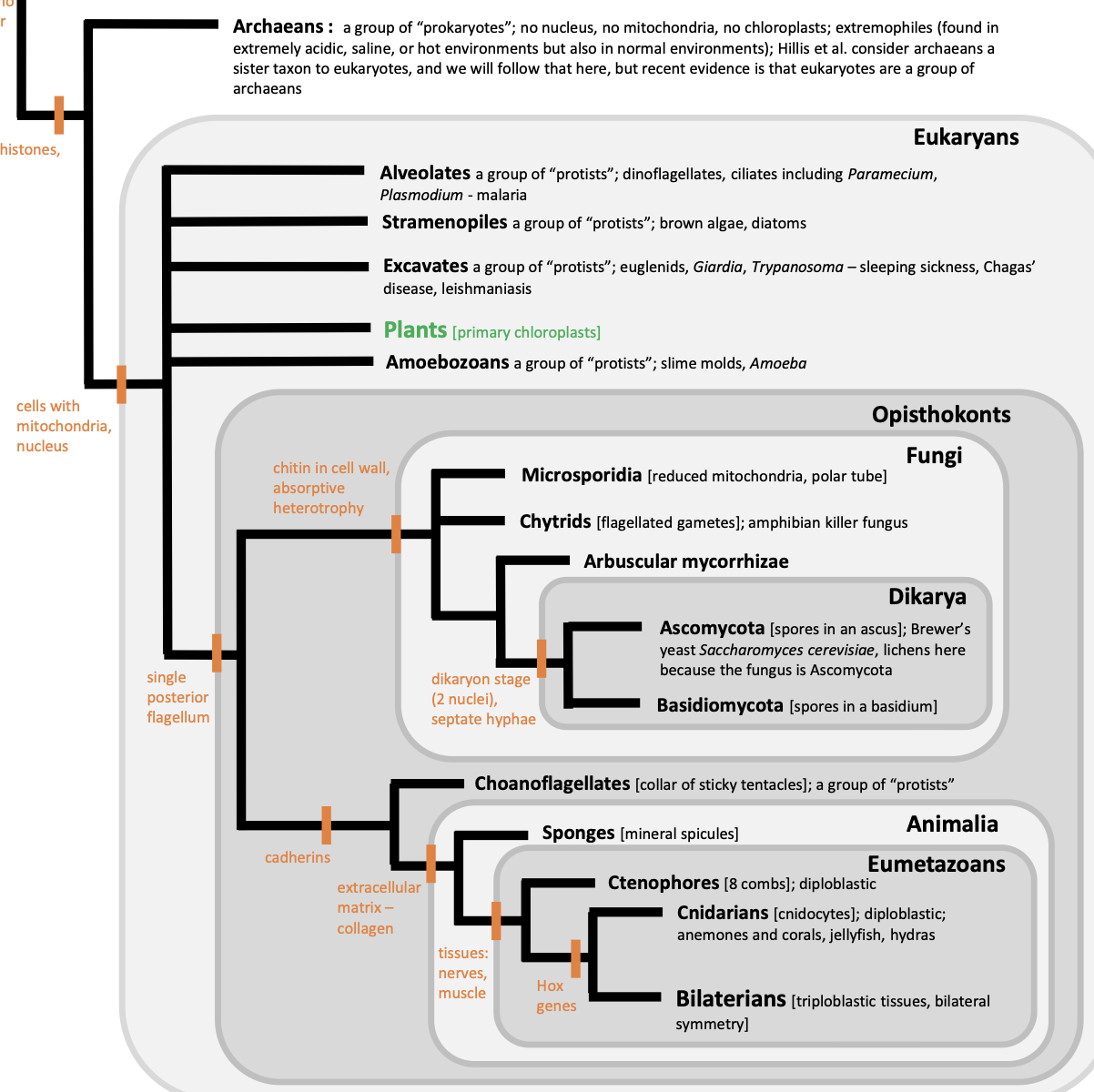
Basidiomycota
filamentous fungi composed of hyphae, spores in basidium, club fungi. Septate hypae separates
rusts and smuts (plant pathogens), mushrooms, and brackets (mushrooms on side of trees and stuff). spores look like clubs
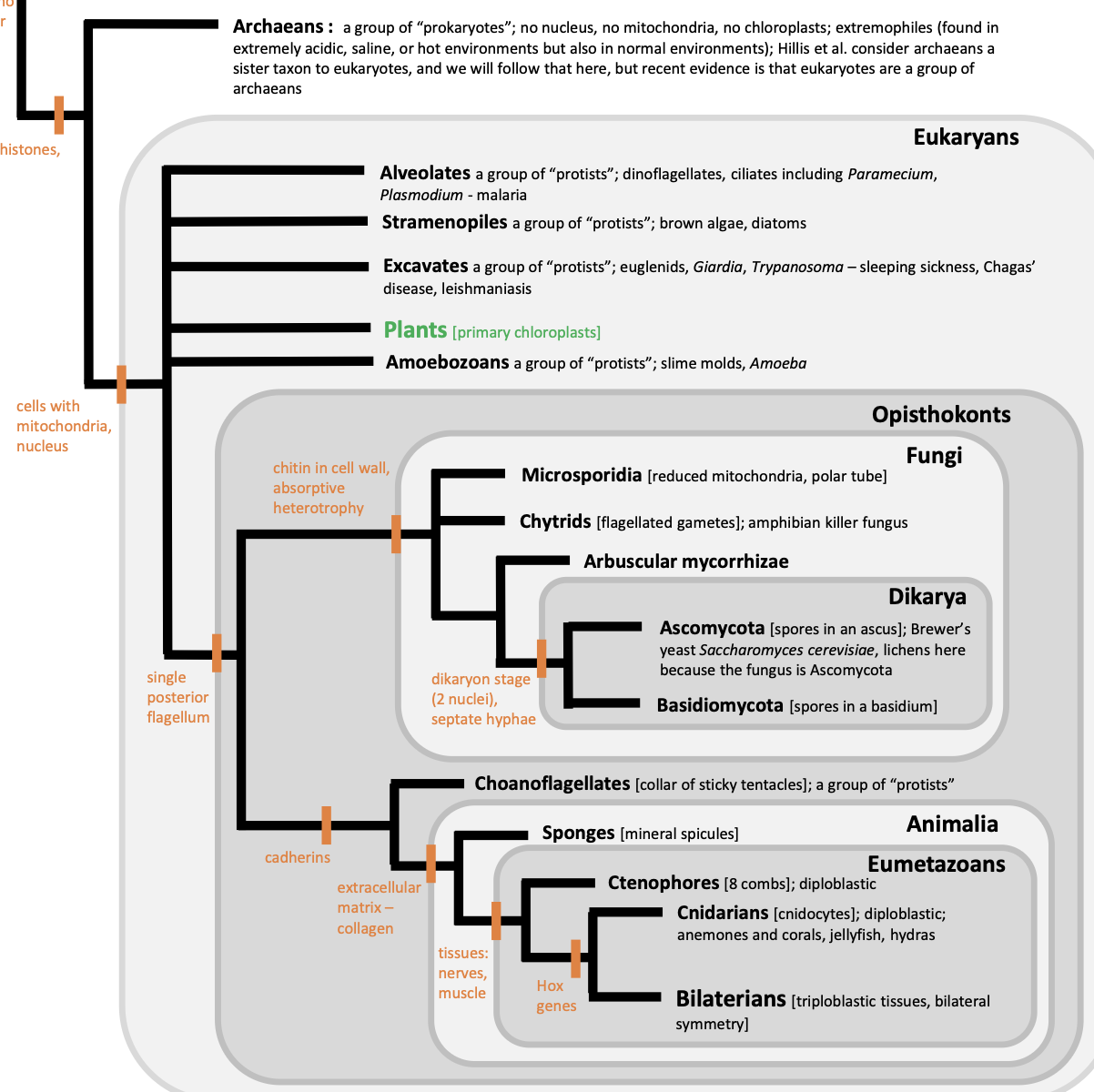
“chytrids”
a fungi, primarily characterized by single posterior flagellum. They are mostly aquatic or found in wet soil, featuring chitinous cell walls, and often operate as saprotrophs or parasites on algae, plants, and amphibians. flagellum found in chytrid fungal spore phase
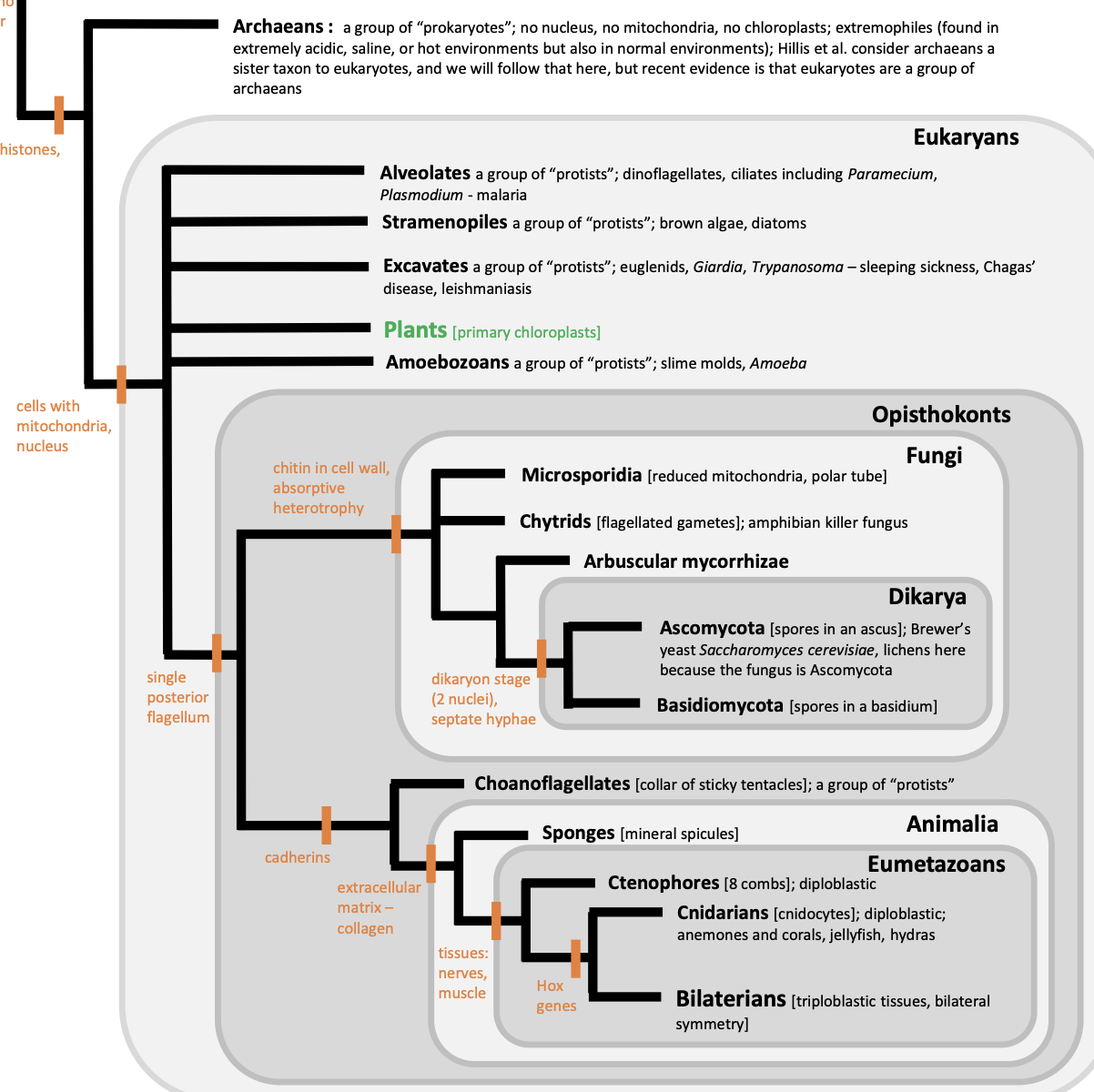
Dikarya
encompassing Ascomycota and Basidiomycota (higher fungi), unfused haploid nuclei.
defined by the absence of flagella, septate hyphae with rigid chitinous cell wall:
Another unique feature of the dikarya is that they have septate hyphae. Their
hyphae are divided into compartments by septa and this means that they can
control the movement of cytoplasm, organelles and nutrients within the
fungal body
spores are released from the ascus as the tip of the ascus bursts under pressure,
the spores are released from the basidium passively by simply falling off it.
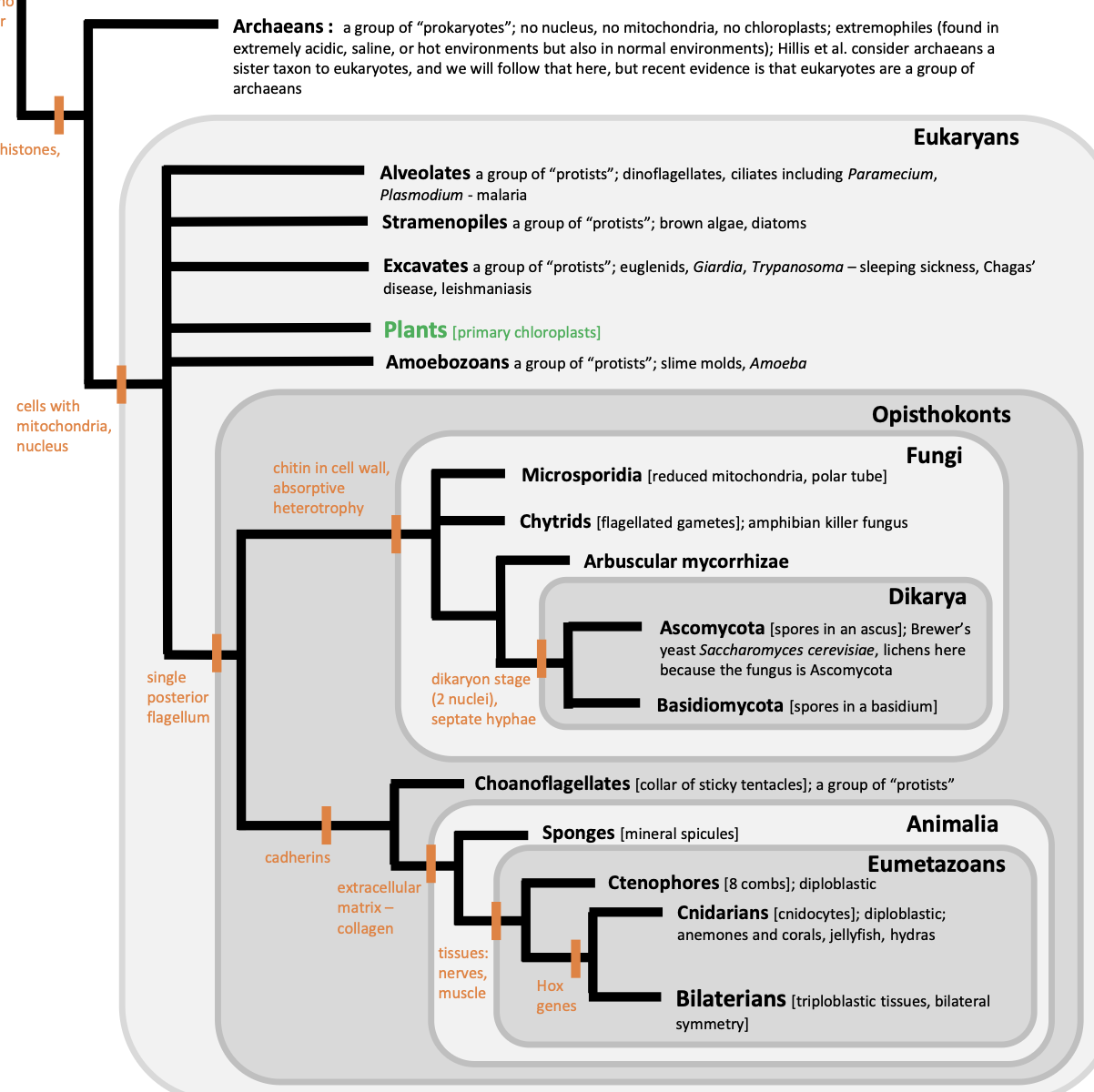
fungi
parasites . any of a group of spore-producing organisms feeding
chitin in walls and absorbative heterotrophy (microsporidia, chytrids, arbuscular fungi, then dikarya)
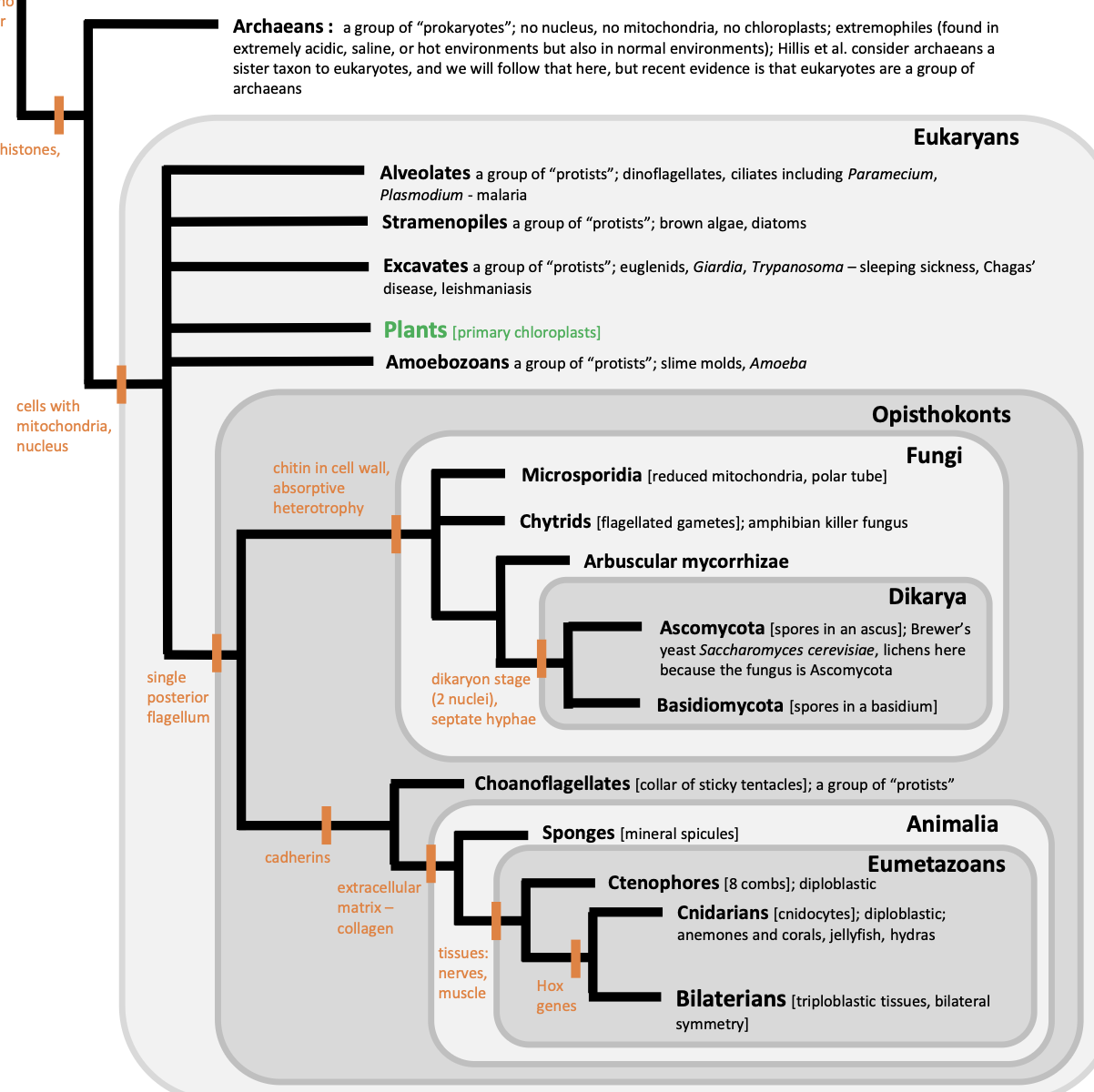
lichens
An organism resulting from the symbiotic association of a fungus and either a cyanobacterium or a unicellular alga. Lives in extreme environments; pioneer species
Microsporida
spore-forming parasitic unicellular fungi. reduced mitochondria, coiled polar tube (infects host cell). pathogen for fish, humans, arthropods
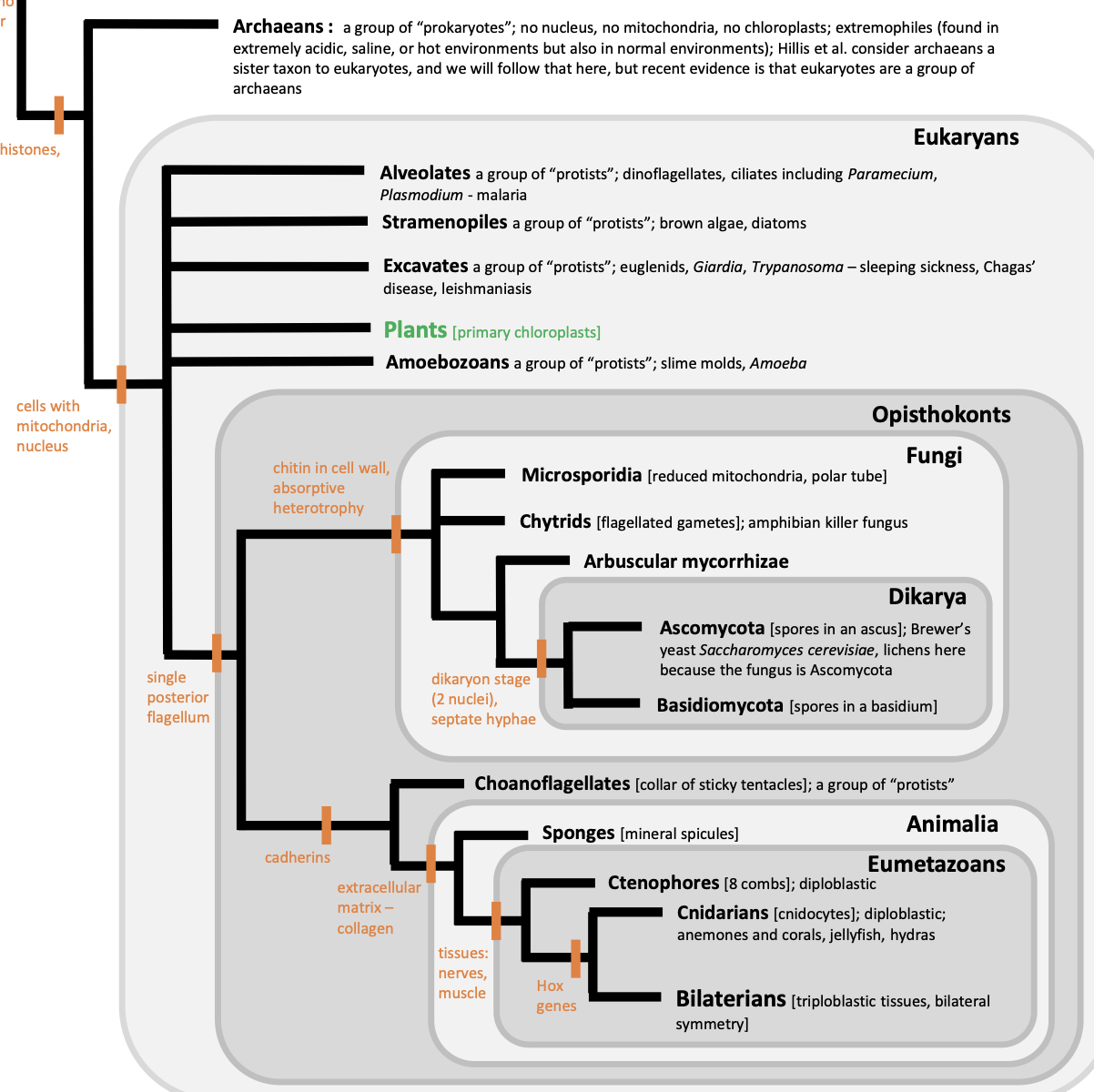
Opisthokonts
a group that includes animals (Metazoa), fungi, and several unicellular lineages such as Choanoflagellata and Ichthyospora
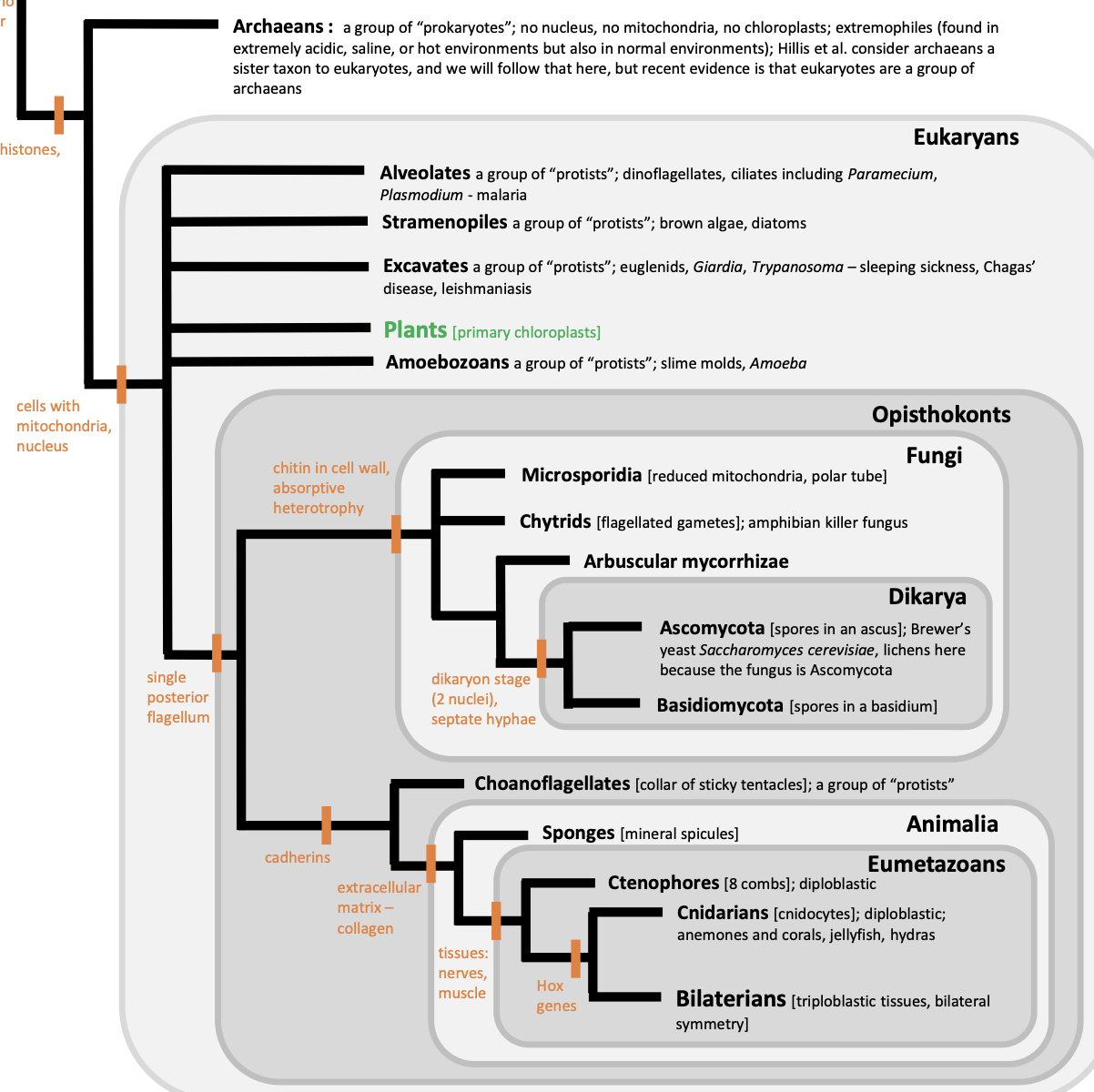
Saccharomyces cerevisiae
Brewer’s yeast - switch between asexual and sexual reproduction
A: In asexual populations, deleterious mutations (red) often hitchhiked to fixation with beneficial mutations (blue).
B: In sexual populations, beneficial alleles could be fixed by selection, whereas deleterious alleles were rapidly purged from the population.
absorptive heterotroph
organisms, primarily fungi, that obtain nutrients by secreting digestive enzymes directly into their environment to break down organic matter externally, subsequently absorbing the smaller molecules. Unlike animals, they do not ingest food, but rely on this external digestion (saprobic or parasitic) to recycle nutrients
ASCUS
Atypical Squamous Cells of Undetermined Significance:
means cells look slightly different; "undetermined significance" means the cause is unclear.
Causes: Common causes include HPV infection, yeast infections, inflammation, or low hormone levels
chitin
Polysaccharide found in exoskeletons of arthropods and fungal walls. Provides rigidity and protection to organisms.
hyphae
the fundamental branching, thread-like tubular filaments that constitute the vegetative body, or mycelium, of multicellular fungi, typically made of chitin.
function by secreting digestive enzymes to absorb nutrients from the environment, growing apically at their tips.
mycelium
____ is the vegetative, root-like network of fungi composed of a mass of e hyphae utrient Cycling: Breaks down organic matter (dead wood, leaves) into soil nutrients.
fruiting structure
complex, multicellular, spore-producing organs of fungi (such as mushrooms, bracket fungi, or truffles) designed for reproduction and spore dispersal. Emerging from mycelium, these structures—including ascocarps and basidiocarps—vary in shape, color, and size, and often signify advanced decay in trees.
mating types parasite
A particular strain of a species that is incapable of sexual reproduction with another member of the same strain but capable of sexual reproduction with members of other strains of the same species.
saprobe
Groups of fungi that act as decomposers
symbiosis
Close, long term interaction between different species
Pre-mating
Isolating barriers that impede gene flow before sperm of pollen can be transferred to other species
Behavioral isolation
Differences in behavior that prevent members of different species from mating, such as a lack of attraction
Ecological isolation
Isolating barriers that are consequences of the ecology of different species
Mechanical isolation
Reproductive structures (genitalia in animals, pollination structures in flowering plants) do not fit together mechanically, making it difficult for fertilization to occur
Habitat isolation
Species breed in different places or habitats
Temporal isolation
Species breed at different times
Pollinator isolation
Flowering plants rely on different species for pollination or apply pollen to different parts of the same pollinating animal
Post-mating (presyzgotic)
Isolating barrirs that impede gene flow after sperm or pollen has been transferred but before fertilization has occurred
Copulatory behavioral isolation
Behavior of an individual during copulation is insufficient to allow normal fertilization
Gametic isolation
Transferred gametes unable to fertilize eggs
natural selection and zygotics
Natural selection leads from postzygotic to prezygotic
isolation, and formation of new species
Natural selection will occur when:
1. Individuals are variable in some trait(s)
2. At least some of this variation is
heritable
3. Individuals with some trait values survive or reproduce better than others
Intrinsic
Postzygotic isolation reflects a developmental problem in hybrids that is relatively independent of the environment
Extrinsic
Postzygotic isolation depends on the environment
Hybrid Inviability
Hybrids die before or shortly after birth
Hybrid sterility
Physiological sterility:Hybrids suffer problems in the reproductive system or gametes
Behavior sterility: Hybrids suffer neurological or physiological defects that prevent them from finding mates
Ecological inviability
Hybrids develop normally, but they suffer lower viability because they cannot find an appropriate ecological niche
extrinsic, where hybrids are viable but unadapted to parental environments

