2.1 hbs review
 Call Kai
 Learn
Learn Practice Test
 Spaced Repetition
 Match
Match Flashcards
 Knowt Play
1/50

There's no tags or description
Looks like no tags are added yet.
Name | Mastery | Learn | Test | Matching | Spaced | Call with Kai |
|---|
No analytics yet
Send a link to your students to track their progress
51 Terms
Gyri
the raised ridges or folds on the cerebrum, manage high-level processing (motor, sensory).
Sulci
the sunken grooves or valleys between them, serve as structural landmarks, separating brain lobes and housing blood vessels.
Cerebrum
Covers the top of the head to ear level, managing high-level functions like thought, memory, and voluntary action. Contains Gyri and Sulci
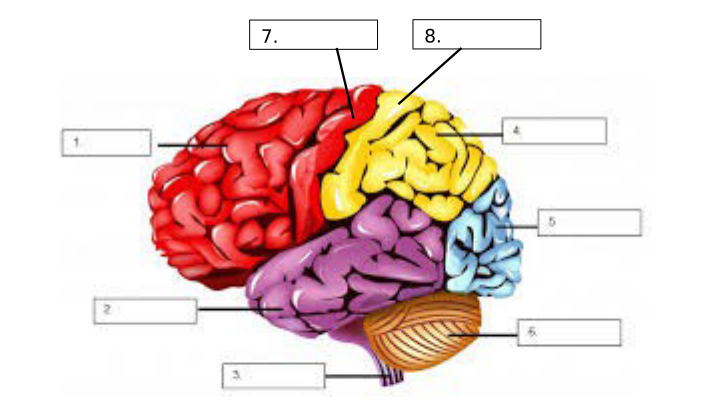
lobe #1 name and function
Frontal Lobe - Responsible for decision making, language production(broca’s area), emotional traits, and short-term memory. Who you are as a person.
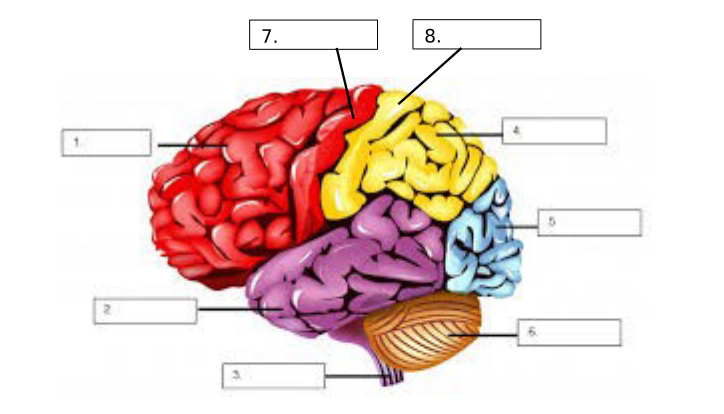
lobe #2 name and function
Temporal Lobe - Responsible for language processing(wernicke’s area), primary auditory cortex. Left temporal lobe is primarily for linguistic processing, while the right is facial recognition.
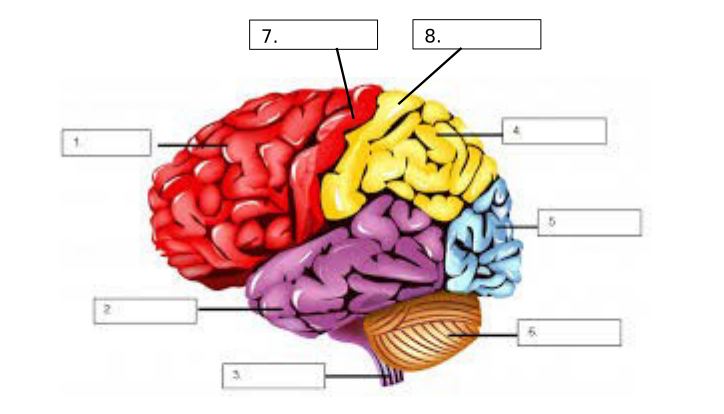
what is #3 and what does it contain(what are their functions)
The brain stem - Midbrain, Pons, Medulla oblongata. Controls vital, autonomic functions
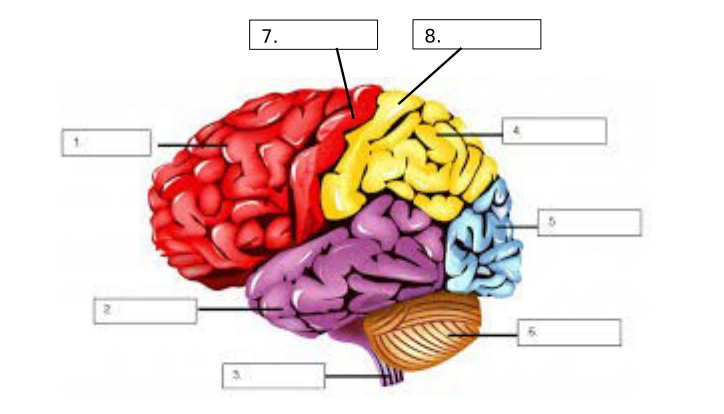
lobe #4 name and function
Parietal Lobe - Interprets and processes sensory information, not smell. Essential for spatial awareness, navigation, object recognition, and body positioning.
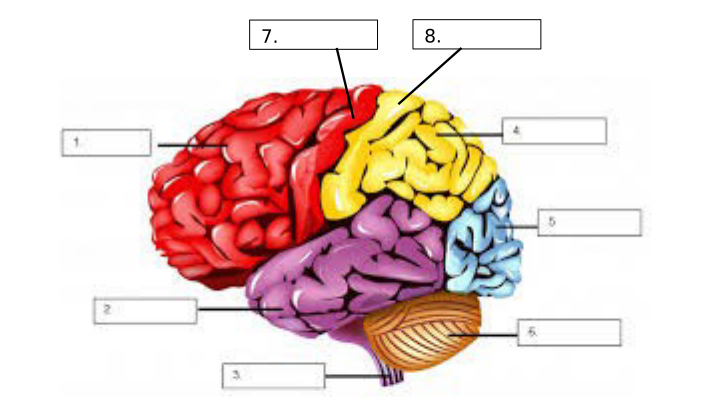
lobe #5 name and function
Occiptial Lobe - Processes visual information
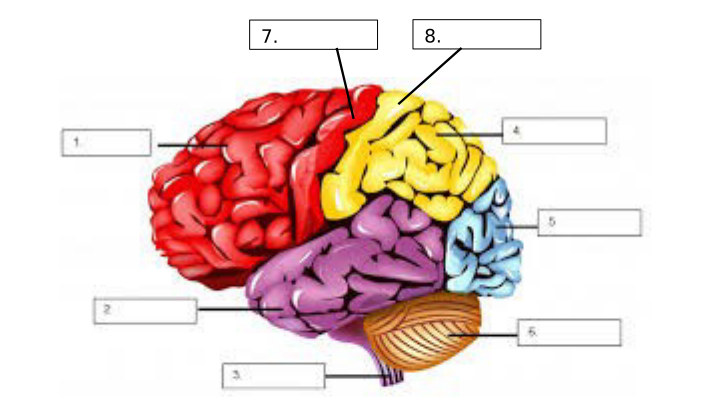
lobe #6 name and function
Cerebellum - essential for balance and coordination.
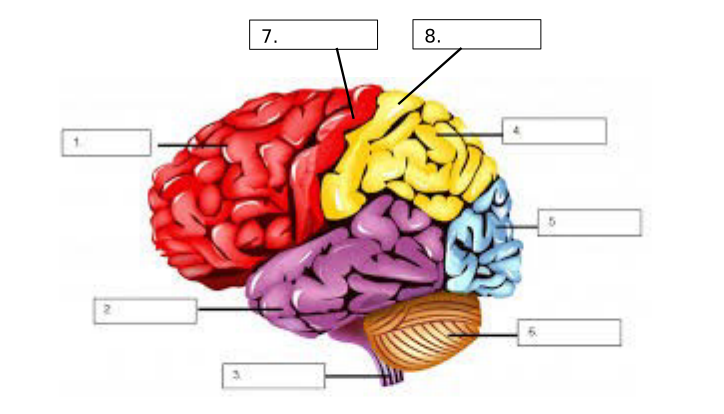
#7 name and function
Primary Motor Cortex - Responsible for initiation, execution, and control of voluntary movements.
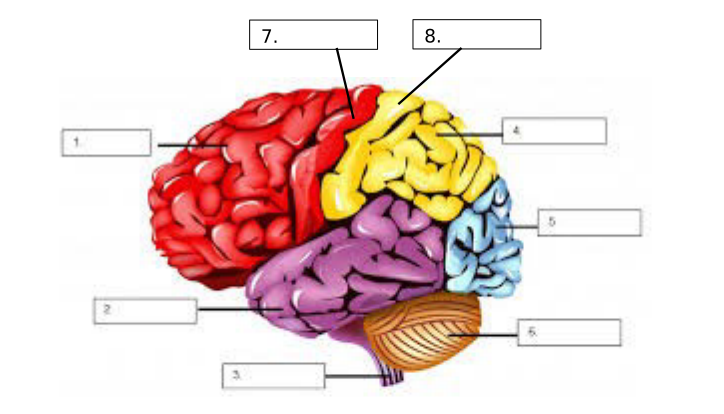
#8 name and function
Primary Somatosensory Cortex - Responsible for interpreting touch, pain, temperature, and proprioception(understanding the body’s position, movement, and orientation in space without looking).
Broca’s Area
Located in the frontal lobe, responsible for speech production, language processing, and grammatical syntax.
Olfactory Bulbs
Little bulbs beneath the brain that are responsible for receiving and processing odor information, acts as a crucial filtering system.
Neuron
responsible for receiving, integrating, and transmitting information throughout the body using electrical and chemical signals.
Glial Cells
non-neuronal cells that provide essential structural support, nutrition, protection, and immune defense for neurons in the central and peripheral nervous systems.
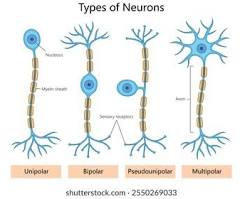
multipolar neuron
one axon with multiple dendrites, common.
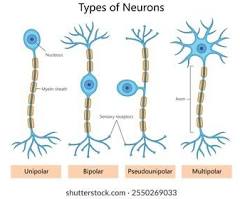
bipolar neuron
one dendrite and one axon, 2 different processes, rare.
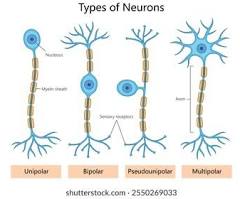
unipolar
one process, rare.
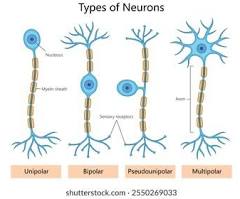
pseudounipolar
one process splitting into two, common.
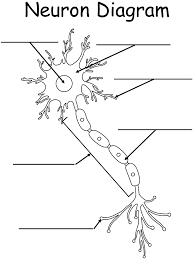
what is the circle
nucleus
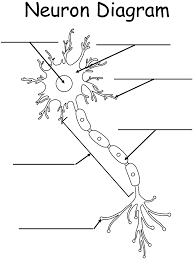
what is around the nucleus
the cell body(soma)
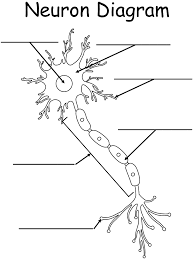
what are the dangly bits off the soma
dendrites
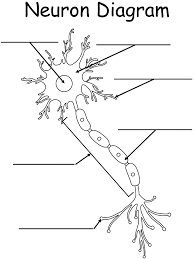
what is the long thing with the stuff on it
the axon
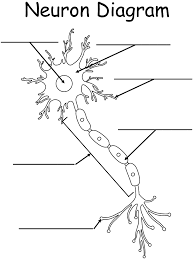
what are the things that wrap around the axon
myelin sheaths
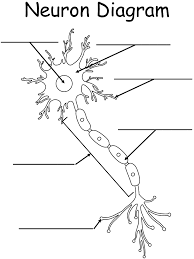
what are the end bits
Synapses
motor neuron location and function
In the CNS, and controls voluntary and involuntary movements.
sensory neuron location and function
in the PNS, converts external and internal stimuli into electrical signals to the CNS for processing.
interneuron location and function
In the CNS, connects sensory and motor neurons.
Acetylcholine functions and associated disease
Muscle Contraction, Learning, Memory. Linked to Alzheimer’s
Dopamine functions and associated diseases(2)
Pleasure, motivation, mood, attention, memory, movement. Low = Parkinson’s, High = Schizophrenia.
GABA functions and associated disease
Primary inhibitory neurotransmitter. Low = Anxiety, and Seizures.
Glutamate
Primary excitatory neurotransmitter. High = Stroke, neurodegeneration.
Epinephrine and Norepinephrine(adrenaline) functions and associated disease
Fight or Flight, attention, arousal, alertness. Imbalance = Anxiety, Depression.
Serotonin functions and associated disease
Regulates mood, sleep, and appetite. Low = Depression.
Agonist Mechanism
Mimics a neurotransmitter and activates the receptors
Antagonist Mechanism
Blocks the receptor so the neurotransmitters cant bind.
Inverse Agonist Mechanism
Binds to receptors and causes opposite effect of normal activation.
Reuptake Inhibitor Mechanism
Blocks reabsorption of a neurotransmitter causing an increase in its effect in the synapse.
Reaction definition
Voluntary action and requires conscious thought
Reflex Definition
Automatic, involuntary, doesn’t reach the brain fast enough.
Cognitive Decline
A condition causing memory loss, reduced/slower thinking or other impairment in mental capabilities due to aging.
Differential Diagnosis
a systematic method doctors use to identify a disease by comparing symptoms against a list of potential causes. A process of elimination.
Fibromyalgia/Central Sensitization Syndrome
Widespread musculoskeletal pain with fatigue, sleep, and mood issues. Abnormal Pain perception processing.
Epilepsy
Abnormal electrical discharges from neurons in the brain causing seizures.
Multiple Sclerosis
Fatigue, loss of muscle control, speech, swallowing issues, depression. Progressive destruction of the myelin sheath of neurons in CNS.
Huntington’s Disease
Memory loss, loss of balance. Neuron waste in certain areas of the brain. Autosomal dominantly inherited.
Parkinson’s Disease
Tremors in hands, slow movement, loss of balance. Loss of dopamine-secreting cells in midbrain.
Devic’s Disease (Neuromyelitis)
Immune attacks on the optic nerve, inflammation of optic nerve/spinal cord nerves and damage to myelin.
ALS (Lou Gerhig’s Disease)
Muscle weakness, tripping, slurred speech. Motor neurons die and muscles atrophy.
Alzheimer’s Disease
Memory loss and confusion. Loss of neurons that liberate acetylcholine. Amyloid plaque build up.
Charcot-Marie-Tooth Disease
Weakness and loss of muscle mass, high foot arches and decreases sensation in legs and feet. Caused by gene defect that codes for proteins that affect neurons.

