(Unfinished) AQA AS and A Level Chemistry
 Call Kai
 Learn
Learn Practice Test
 Spaced Repetition
 Match
Match Flashcards
 Knowt Play
1/296

Earn XP
Description and Tags
This set will (hopefully) contain everything you need to know for AQA AS and A Level Chemistry, however currently it is not finished. Note that there are various skills you should be able to do in the exam that can’t really be translated into flashcards, so I would recommend that you do practice questions and/or past papers in addition to using this. | Physical chemistry: Atomic structure: Cards 1-41. Amount of substance: Cards 42-90. Bonding: Cards 91-170. Energetics: Cards 171-195. Kinetics: Cards 196-215. Chemical equilibria, Le Chatelier’s principle and Kc: Cards 216-227. Oxidation, reduction and redox equations: Cards 228-236. | Inorganic chemistry: Periodicity: Cards 237-242. Group 2, the alkaline earth metals: Cards 243-261. Group 7(17), the halogens: 262-297. | Organic chemistry: Introduction to organic chemistry: (not started) Alkanes: (not started) Halogenoalkanes: (not started) Alkenes: (not started) Alcohols: (not started) Organic analysis: (not started) | Mathematical requirements: (not started) Practical skills: (not started) | Note: The very first line in the subject content is “Appreciate that knowledge and understanding of atomic structure has evolved over time”. To me, this is not clear at all as to how much you need to know about various models of the atom. I have included one card which simply rephrases that sentence, and a few more which cover the content regarding the development of the model of the atom needed for AQA GCSE chemistry (or physics). You can choose whether or not to study those cards based on how likely you think it is that they could be assessed, because I honestly don’t know.
Chemistry
Atoms
aqa
a level
as
chemistry
science
physical
inorganic
organic
required practical
physical chemistry
atomic structure
fundamental particles
mass number and isotopes
electron configuration
amount of substance
relative atomic mass and relative molecular mass
the mole and the Avogadro constant
the ideal gas equation
empirical and molecular formula
balanced equations and associated calculations
bonding
ionic bonding
nature of covalent and dative covalent bonds
metallic bonding
bonding and physical properties
shapes of simple molecules and ions
bond polarity
forces between molecules
energetics
enthalpy change
calorimetry
applications of Hess’s law
bond enthalpies
kinetics
collision theory
Maxwell-Boltzmann distribution
effect of temperature on reaction rate
effect of concentration and pressure
catalysts
chemical equilibria, Le Chatelier’s principle and Kc
chemical equilibria and Le Chatelier’s principle
equilibrium constant Kc for homogeneous systems
oxidation, reduction and redox equations
inorganic chemistry
periodicity
classification
physical properties of Period 3 elements
Group 2, the alkaline earth metals
Group 7(17), the halogens
trends in properties
uses of chlorine and chlorate(I)
organic chemistry
introduction to organic chemistry
nomenclature
reaction mechanisms
isomerism
alkanes
fractional distillation of crude oil
modification of alkanes by cracking
combustion of alkanes
chlorination of alkanes
halogenoalkanes
nucleophilic substitution
elimination
ozone depletion
alkenes
structure, bonding and reactivity
addition reactions of alkenes
addition polymers
alcohols
alcohol production
oxidation of alcohols
elimination
organic analysis
identification of functional groups by test-tube reactions
mass spectrometry
infrared spectroscopy
297 Terms
Has knowledge and understanding of atomic structure stayed the same, or evolved over time?
Evolved over time
What was thought about atoms before the discovery of the electron?
They were thought to be tiny spheres that could not be divided
What led to the plum pudding model of the atom?
The discovery of the electron
What did the plum pudding model of the atom suggest?
That the atom is a ball of positive charge with negative electrons embedded in it
How and why did the new evidence from the alpha particle scattering experiment lead to a change in the atomic model?
Most of the alpha particles passed straight through the gold foil without changing direction. This told the scientists that atoms are mainly empty space. Some alpha particles were deflected. This told the scientists that the centre of the atom must have a positive charge - alpha particles are positive, so any alpha particle that comes close to the positive centre of an atom was repelled and changed direction. Some alpha particles simply bounced straight back off the foil. This told the scientists that the mass of an atom must be concentrated in the nucleus. This nuclear model replaced the plum pudding model.
How was the nuclear model of the atom adapted after the alpha particle scattering experiment?
Niels Bohr suggested that electrons orbit the nucleus at specific distances. The theoretical calculations of Bohr agreed with experimental observations.
Later experiments led to the idea that the positive charge of any nucleus could be subdivided into a whole number of smaller particles, each particle having the same amount of positive charge. The name proton was given to these particles.
The experimental work of James Chadwick provided the evidence to show the existence of neutrons within the nucleus. This was about 20 years after the nucleus became an accepted scientific idea.
What is the relative charge of a proton?
+1
What is the relative charge of a neutron?
0
What is the relative charge of an electron?
-1
What is the relative mass of a proton?
1
What is the relative mass of a neutron?
1
What is the relative mass of an electron?
~1/1836
What is the basic structure of an atom?
An atom consists of a nucleus containing protons and neutrons surrounded by electrons.
What letter is used to represent the mass number of an element?
A
What letter is used to represent the atomic (proton) number of an element?
Z
How is the number of protons in an atom or ion determined?
Number of protons = atomic number
How is the number of neutrons in an atom or ion determined?
Number of neutrons = mass number - atomic number
How is the number of electrons in an atom or ion determined?
Number of electrons = atomic number - charge
What are isotopes?
Atoms of the same element that contain the same number of protons but a different number of neutrons
How are particles ionised in a simple time of flight (TOF) mass spectrometer? Write an equation to represent this process for a general element X.
In electron impact ionisation, the sample is vaporised and then bombarded with high energy electrons fired from an electron gun. An electron is knocked off each particle, forming a 1+ ion. X(g) → X⁺(g) + e⁻
In electrospray ionisation, the sample is dissolved in a volatile solvent. The solvent is injected into the mass spectrometer using a hypodermic needle, producing a fine mist. The needle is attached to a high voltage power supply, so as the sample is injected, the particles are ionised by gaining a proton from the solvent. X(g) + H⁺ → XH⁺(g)
How are ions accelerated in a simple time of flight (TOF) mass spectrometer?
Using an electric field. The ions are all accelerated to have the same kinetic energy.
How are ions detected in a simple time of flight (TOF) mass spectrometer?
After drifting down the flight tube, the ions hit a negatively charged detector and gain an electron. This discharges the ion, and causes a current to be produced. The size of the current is proportional to the abundance of each ion.
What can the information given in a mass spectrum be used to do?
Identify elements and determine relative molecular mass
What is on the x-axis of a mass spectrum?
The mass-to-charge ratio of the ion
What is on the y-axis of a mass spectrum?
The relative abundance of the ion
What does the number of peaks on a mass spectrum of a monatomic element represent?
The number of isotopes
Why does the mass spectrum of a diatomic element contain more peaks than there are isotopes of that element? How can the relative heights of the peaks be determined (where possible)?
When a molecule of a diatomic element is ionised, a diatomic molecular ion is created. These ions are not very stable, and so some will fragment to create an atom and a monatomic ion. The atoms will not be detected as they have no charge, and the monatomic ions will create peaks in the mass spectrum like those of monatomic elements.
The diatomic ions will create peaks with higher m/z values. The relative heights of these peaks can be determined by considering the probabilities of all the combinations of isotopes that could be present in the diatomic ion.
The relative heights of the peaks corresponding to the monatomic ions cannot be compared with those of the diatomic ions without knowing what proportion of the diatomic ions fragmented.
How is relative atomic mass calculated from isotopic abundance?

How many orbitals are there in an s sub-shell?
1
How many orbitals are there in a p sub-shell?
3
How many orbitals are there in a d sub-shell?
5
What general rules can be used to work out electron configurations of atoms?
Orbitals with the lowest energy are filled first.
Each orbital can hold up to two electrons with opposite spins.
If there are multiple orbitals with the same energy, electrons are put into individual orbitals before they are paired.
In what order are atomic orbitals filled by electrons (up to Z = 36)?
1s, 2s, 2p, 3s, 3p, 4s, 3d, 4p
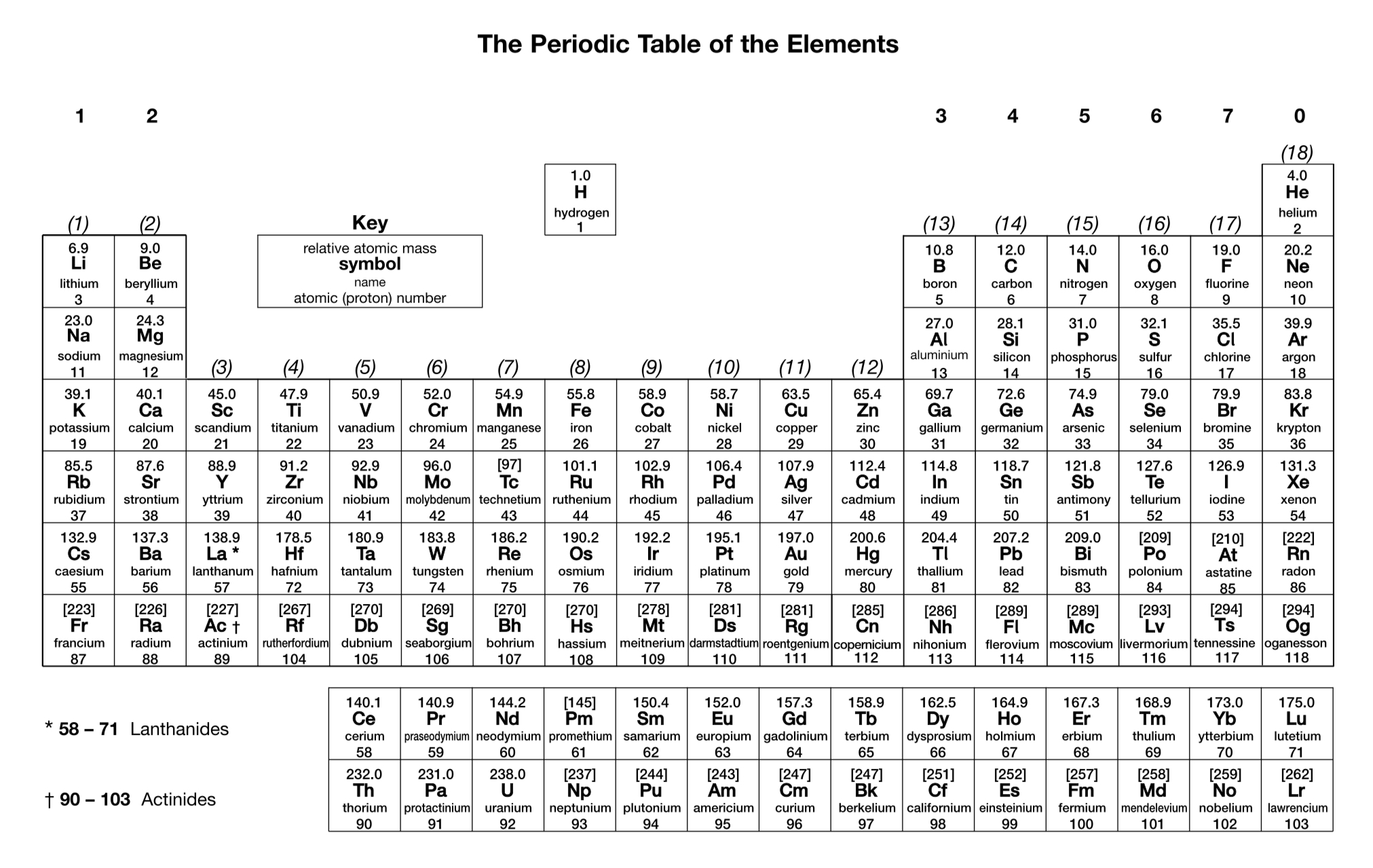
What exceptions are there to the general rules used to work out the electron configurations of atoms (up to Z = 36)? Write the correct electron configurations of the relevant elements.
Chromium: 1s² 2s² 2p⁶ 3s² 3p⁶ 3d⁵ 4s¹
Copper: 1s² 2s² 2p⁶ 3s² 3p⁶ 3d¹⁰ 4s¹
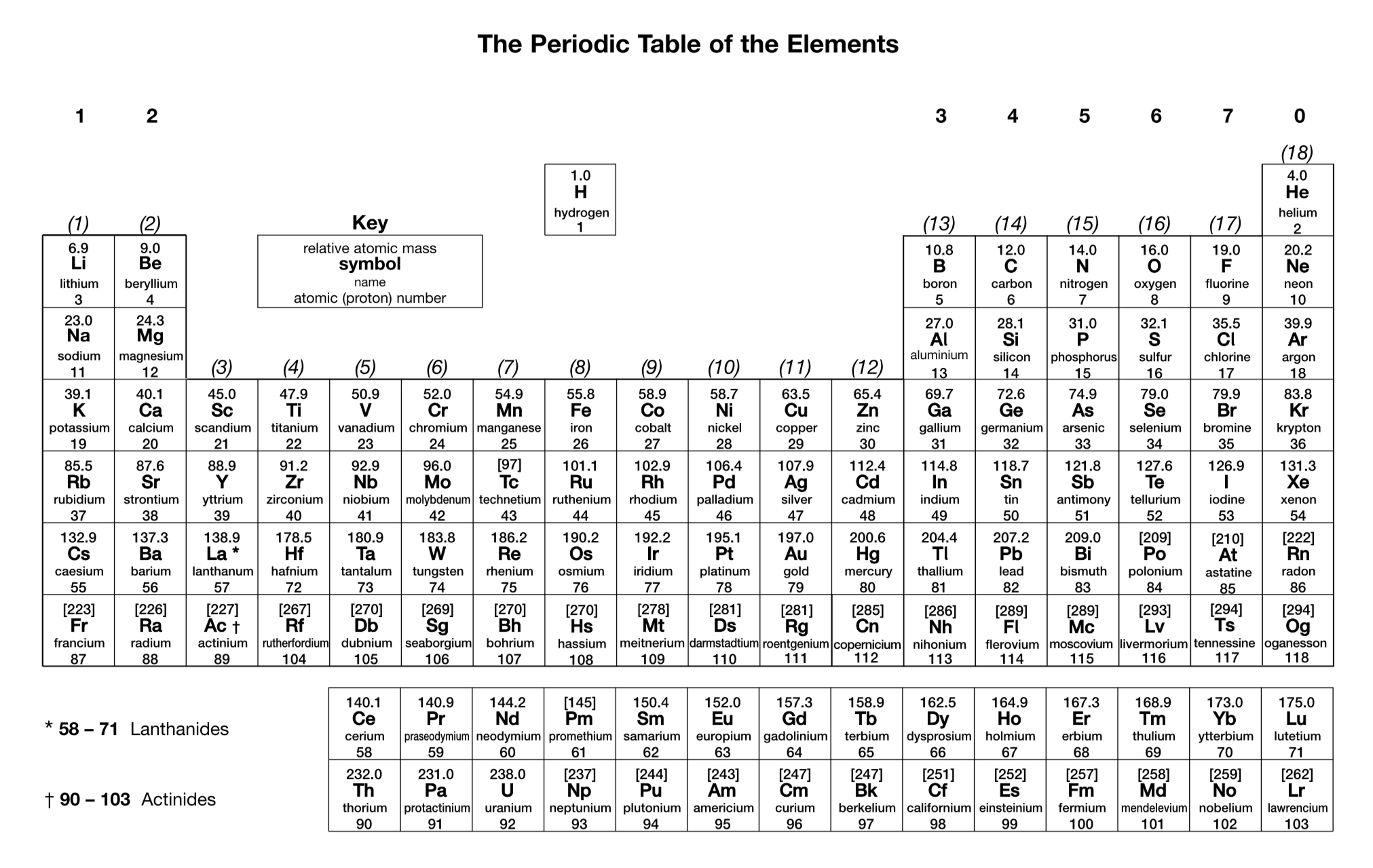
How is the electron configuration of an ion worked out?
Negative ions are formed by adding electrons to the outer sub-shell.
Positive s- and p-block ions are formed by removing electrons from the outer sub-shell.
Positive d-block ions are formed by removing electrons from the 4s sub-shell before the 3d sub-shell.
What is first ionisation energy?
The energy needed to remove one mole of electrons from one mole of atoms in their gaseous state to form one mole of 1+ ions in their gaseous state
Write an equation, including state symbols, to represent the process in which the first ionisation energy of a general element X is measured.
X(g) → X⁺(g) + e⁻
Write an equation, including state symbols, to represent the process in which successive ionisation energies of a general element X are measured.
For the nth ionisation energy: X⁽ⁿ ⁻ ¹⁾⁺(g) → Xⁿ⁺(g) + e⁻
How do successive ionisation energies give evidence for electron configuration in shells?
There is a gradual increase in the successive ionisation energies of an element. This is because each time an outer electron is removed, the remaining electrons in the outer shell are pulled slightly closer to the nucleus. This means that there is a greater attraction between the outer electrons and the nucleus, and this causes the ionisation energy to gradually increase.
There is a large increase in ionisation energy when all of the outer shell electrons are removed. This is because the next electron is removed from an electron shell closer to the nucleus, where electrons experience much less shielding. This means that these electrons have a greater attraction to the nucleus compared to the electrons in the old outer shell. This causes the corresponding ionisation energy to be much greater than the previous one.
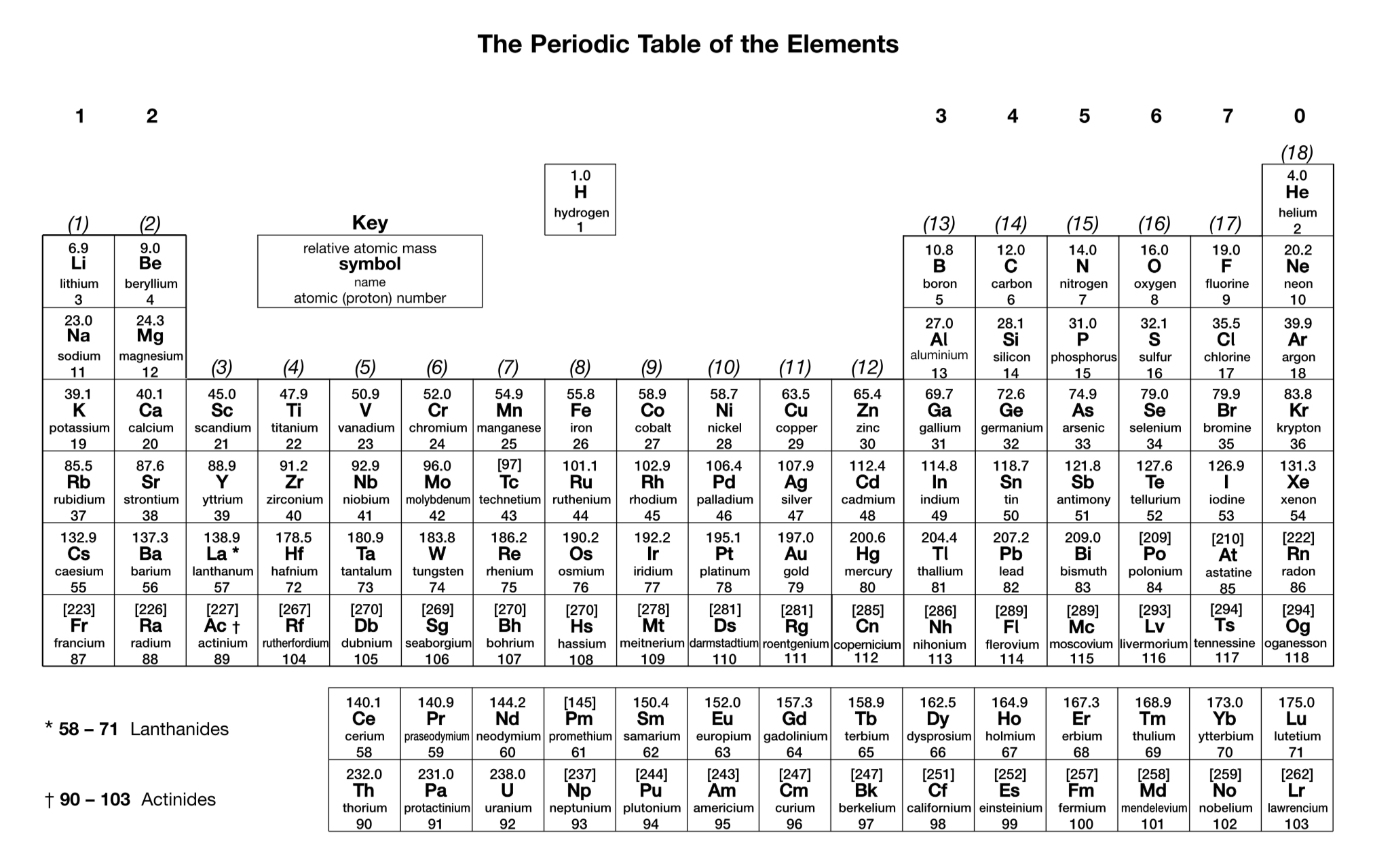
How do first ionisation energies in Period 3 give evidence for electron configuration in sub-shells?
Moving across Period 3, the nuclear charge increases as the number of protons increases. This increases the attraction between the nucleus and the outer electrons. Because of this, the atomic radius decreases across a period. Both the increased nuclear charge and the decreased atomic radius mean that the outer electrons are more attracted to the nucleus. This causes the first ionisation energy to increase across the period. In all of these elements, an outer electron is being removed from the third electron shell, so the shielding effect due to the inner electron shells is similar for each element.
However, there is a decrease in first ionisation energy going from magnesium to aluminium. For magnesium, an outer electron is being removed from the 3s sub-shell. However, for aluminium, the outer electron is now in the 3p sub-shell, which has a higher energy than the 3s sub-shell. This means that it takes less energy to remove the outer electron of aluminium compared to the outer electron of magnesium. This is why aluminium has a lower first ionisation energy than magnesium.
There is also a decrease in first ionisation energy going from phosphorus to sulfur. In phosphorus, each electron is in a separate 3p orbital. However, in sulfur, one of the 3p orbitals contains a pair of electrons, which repel each other. This means that it takes less energy to remove one of these electrons than if the electrons were in separate orbitals. So because of this, the first ionisation energy of sulfur is less than phosphorus.
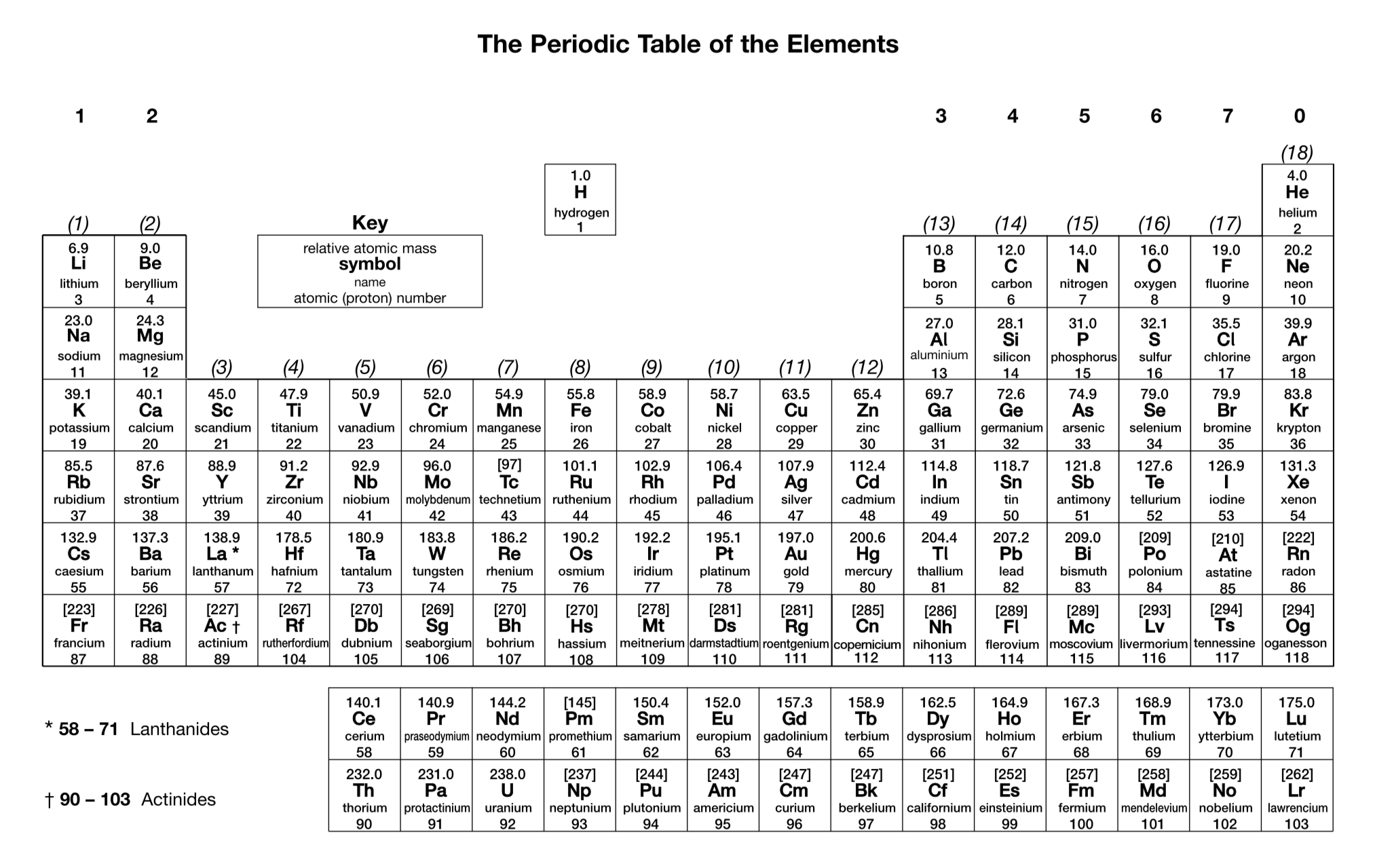
How do first ionisation energies in Group 2 give evidence for electron configuration in shells?
The first ionisation energy decreases going down Group 2. This is because, moving down a group, the atomic radius increases. This means that the outer electron shell is further away from the nucleus. The number of internal energy levels also increases. This means that there is more shielding between the nucleus and the outer electrons. Both of these factors mean that going down a group, the attraction between the nucleus and the outer electrons decreases. This causes the first ionisation energy to decrease. Although the nuclear charge increases moving down a group, this is offset by the two aforementioned factors.
What is relative atomic mass (Aᵣ)?
The mean mass of an atom of an element compared with 1/12th the mass of an atom of carbon-12, weighted for the abundance of each isotope of that element
What is relative molecular mass (Mᵣ)?
The weighted mean mass of a molecule, compared with 1/12th the mass of an atom of carbon-12
Which term is used for ionic compounds: ‘relative molecular mass’ or ‘relative formula mass’?
Relative formula mass
What is the definition of the Avogadro constant?
The number of particles in a mole
How is the number of particles present in a sample of a substance found from the number of moles of those particles?
Number of particles = number of moles × the Avogadro constant
What equation links the mass of a substance, its Mᵣ and the amount of it in moles?
Number of moles = mass (g) ÷ Mᵣ
What equation links amount of substance in a solution, concentration and volume?
Concentration (mol dm⁻³) = amount of substance (mol) ÷ volume (dm³)
What is the ideal gas equation? Include the SI units of each quantity.
pV = nRT
Pressure (Pa) × volume (m³) = amount of substance (mol) × gas constant (J K⁻¹ mol⁻¹) × temperature (K)
Which equations can be used to experimentally determine the Mᵣ of an unknown volatile liquid?
The ideal gas equation (pV = nRT)
Mᵣ = mass (g) ÷ number of moles
How do you convert a volume in dm³ to m³?
Divide by 1000
How do you convert a volume in cm³ to m³?
Divide by 1,000,000
How do you convert a temperature in °C to K?
Add 273
What is empirical formula?
The simplest whole number ratio of atoms of each element in a compound
What is molecular formula?
The actual number of atoms of each element in a compound
How can the empirical formula of a substance be found from data giving its composition by mass or percentage by mass?
Find the number of moles of each element by dividing the mass by the Aᵣ. Find the simplest whole number ratio of the numbers of moles by dividing by the smallest number and multiplying if necessary. The numbers in the ratio are the numbers to be used in the empirical formula.
How can the molecular formula of a substance be found from its empirical formula and relative molecular mass?
Calculate the relative molecular mass of the empirical formula. Divide the relative molecular mass of the compound by the relative molecular mass of the empirical formula. Multiply each number in the empirical formula by this number.
How do you balance an equation?
Write down the unbalanced equation. Count the numbers of each type of atom on both sides of the equation. Adjust the coefficients to balance the atoms one at a time until there is an equal number of each atom on both sides of the equation.
How do you balance an ionic equation?
Write down the unbalanced equation. Count the numbers of each type of atom on both sides of the equation, and work out the overall charge on each side. Adjust the coefficients to balance the atoms one at a time until there is an equal number of each atom on both sides of the equation, and the overall charges on each side are equal.
How do you convert a full equation to an ionic equation?
Break down the reactants and products into their respective ions. Cancel the spectator ions (the ions that do not take part in the reaction) on both sides to give the ionic equation.
How is the mass of a reactant or product calculated, given the number of moles of another reactant or product, and that any other reactants are in excess?
The ratio between two coefficients in the balanced equation for the reaction is the ratio of the number of moles of the corresponding two substances. Use this ratio to calculate the number of moles of the desired substance, and calculate its mass using mass (g) = number of moles × Mᵣ.
How is the mass of a reactant or product calculated, given the number of moles of two reactants, and that any other reactants are in excess?
The ratio between two coefficients in the balanced equation for the reaction is the ratio of the number of moles of the corresponding two substances. Use this ratio to calculate the number of moles of one of the reactants that would react with all the available moles of the other. The reactant not in excess is the limiting reagent. Use the molar ratio between the limiting reagent and the desired substance to calculate the number of moles of the desired substance, and calculate its mass using mass (g) = number of moles × Mᵣ.
How can the volume of a gas taking part in a reaction at constant pressure and temperature be found, given the volume of another gaseous reactant or product, and that any other reactants are in excess?
The molar ratio between two substances is the ratio of their volumes.
How is percentage yield calculated?
Percentage yield = (actual yield) ÷ (maximum theoretical yield) × 100%
How is percentage atom economy calculated?
Percentage atom economy = (molecular mass of desired product) ÷ (sum of molecular masses of all reactants) × 100%
What are the economic advantages of developing chemical processes with a high atom economy?
There is less waste to separate and dispose of, which lowers costs. More product can be made from the same raw materials, which increases profit.
What are the environmental and ethical advantages of developing chemical processes with a high atom economy?
Less waste and pollution are produced, and finite raw materials are conserved. This reduces the harm to the environment and makes the reaction more sustainable.
How can the number of moles of water of crystallisation in a hydrated salt be found when it is heated to constant mass, and the masses of the hydrated and anhydrous salts are obtained?
Calculate the mass of the water removed by subtracting the mass of the anhydrous salt from the mass of the hydrated salt. Calculate the number of moles of the anhydrous salt and of the water. Find the ratio between the number of moles of the anhydrous salt and that of the water - this should be in the form 1 : n, where n is the number of moles of water of crystallisation.
Describe how to make up a volumetric solution containing a known mass of a substance.
1. Place a weighing boat on a 2 d.p. balance.
2. Add approximately the required mass of the substance to the weighing boat, and record its mass.
3. Transfer the substance to a beaker and reweigh the weighing boat.
4. Calculate the difference in mass between the full and empty weighing boats.
5. Add around 100 cm³ of distilled water to the beaker, and use a glass rod to stir the contents of the beaker until all the solid has dissolved.
6. Use a funnel to transfer the solution to a 250 cm³ volumetric flask.
7. Rinse the beaker and stirring rod with a small amount of distilled water, and transfer this rinse water into the volumetric flask.
8. Slowly fill the volumetric flask with distilled water, so that the level is just below the 250 cm³ mark.
9. Use a pipette to add drops of distilled water until the bottom of the meniscus is on the 250 cm³ mark, viewing at eye level.
10. Place a stopper on the flask and invert it several times to ensure that the solution is mixed.
When making up a volumetric solution, why is the mass of the solute measured by weighing by difference?
This gives a more accurate measurement of the mass added, as small traces of the solute will stick to the weighing boat and not be transferred to the beaker.
When making up a volumetric solution, why are the beaker and stirring rod rinsed and the washings added to the volumetric flask?
Some of the substance may have been left behind in the beaker or on the stirring rod, so this ensures it all goes in the flask.
When making up a volumetric solution, why is a pipette used to add drops of distilled water when the volumetric flask is nearly at the 250 cm³ mark?
To ensure that the solution does not overshoot the 250 cm³ mark
When measuring volumes, why must you view the meniscus at eye level?
To eliminate parallax error to ensure the exact volume has been measured
Describe how to carry out a simple acid-base titration and obtain a mean titre.
1. Rinse a pipette with the chosen alkali.
2. Rinse a conical flask with distilled water.
3. Slowly draw the alkali into the pipette using a pipette filler. Fill the pipette past the mark and slowly release drops of the alkali so that the bottom of the meniscus lies on the mark, viewing at eye level.
4. Release the alkali into the conical flask. Touch the surface of the alkali with the pipette.
5. Add a few drops of a suitable indicator to the conical flask.
6. Rinse a burette with the chosen acid, and clamp the burette.
7. Use a funnel to slowly fill the burette with acid until it is just above the 0 cm³ line. Remove the funnel.
8. Open the burette tap, and close it when the bottom of the meniscus lies on the 0 cm³ line, viewing at eye level.
9. Place the conical flask onto a white tile below the burette.
10. Open the burette tap and slowly release acid into the conical flask. Swirl the conical flask at the same time.
11. When the indicator changes colour to show the end point, close the burette tap and read the level of the acid on the burette.
12. Subtract the initial volume from the final volume to give the titre for this trial.
13. Rinse the conical flask and repeat steps 1-12, but when approaching the end point, add the acid drop by drop. Repeat until two concordant titres (titres within 0.1 cm³) are obtained.
14. Calculate the mean of the concordant titres.
(Note: Usually, the acid is placed in the burette and the alkali is placed in the pipette/conical flask, but it can be the other way around.)
What is a suitable indicator for titrations involving a strong acid? State its colour in acidic conditions, in alkaline conditions and at the end point.
Methyl orange is red in acidic conditions and yellow in alkaline conditions. It is orange at the end point.
What is a suitable indicator for titrations involving a strong base? State its colour in acidic conditions, in alkaline conditions and at the end point.
Phenolphthalein is colourless in acidic conditions and pink in alkaline conditions. At the end point, a pale pink colour appears or disappears.
When carrying out a titration, why are the pipette and burette rinsed with the substances that will be put in them?
Otherwise, the acid or alkali may be diluted by residual water, or they may react with substances left from a previous titration
When carrying out a titration, why is the conical flask rinsed with distilled water?
Otherwise, the acid or alkali may react with substances left from a previous titration
When carrying out a titration, why is a conical flask used instead of a beaker?
It is easier to swirl the mixture in a conical flask without spilling the contents
When carrying out a titration, why should you fill the pipette past the graduated mark and slowly release drops to reach the mark?
The level of the liquid drops when the pipette is removed, so otherwise, the volume would be less than required
When carrying out a titration, when transferring a solution from the pipette to the conical flask, why should you touch the surface of the solution with the pipette?
To ensure the correct volume of solution is transferred
When carrying out a titration, why are only a few drops of indicator added?
Indicators are usually weak acids, so if too much is added it would decrease the accuracy of the result
When carrying out a titration, why is the funnel removed from the burette after adding the acid or alkali?
Small drops of liquid could fall from the funnel during the titration, resulting in an inaccurate burette reading
When carrying out a titration, why is the burette filled past the 0 cm³ line and the tap opened until the bottom of the meniscus reaches the 0 cm³ line?
This ensures that the jet space of the burette is filled before starting the titration. If it filled during the titration, this would give an inaccurate titre reading.
When carrying out a titration, why is a white tile placed underneath the conical flask?
To make it easier to observe the colour change
When carrying out a titration, why is the conical flask swirled?
To mix the acid and alkali
When carrying out a titration, why is a rough titration carried out first?
To find the approximate volume of solution needed from the burette to reach the end point
When carrying out a titration, why is the solution from the burette added drop by drop near the end point?
To avoid overshooting the end point, which would decrease the accuracy
When carrying out a titration, why is the titration repeated until two concordant results are obtained?
Repeating allows anomalous titres to be spotted and discounted
How can the number of moles of water of crystallisation in a hydrated salt be found when a titration is carried out, and the mass of the hydrated salt used in the titration and the volume and concentration of the other reactant are obtained?
Calculate the number of moles of the other reactant using number of moles = concentration × volume. Use the balanced equation to calculate the number of moles of the salt. Calculate the Mᵣ of the hydrated salt using Mᵣ = mass (g) ÷ number of moles. Subtract the Mᵣ of the anhydrous salt from the Mᵣof the hydrated salt to give the mass of water per mole of hydrated salt. Divide this by the Mᵣ of water to give the number of moles of water of crystallisation.
What is ionic bonding?
Electrostatic attraction between oppositely charged ions in a lattice
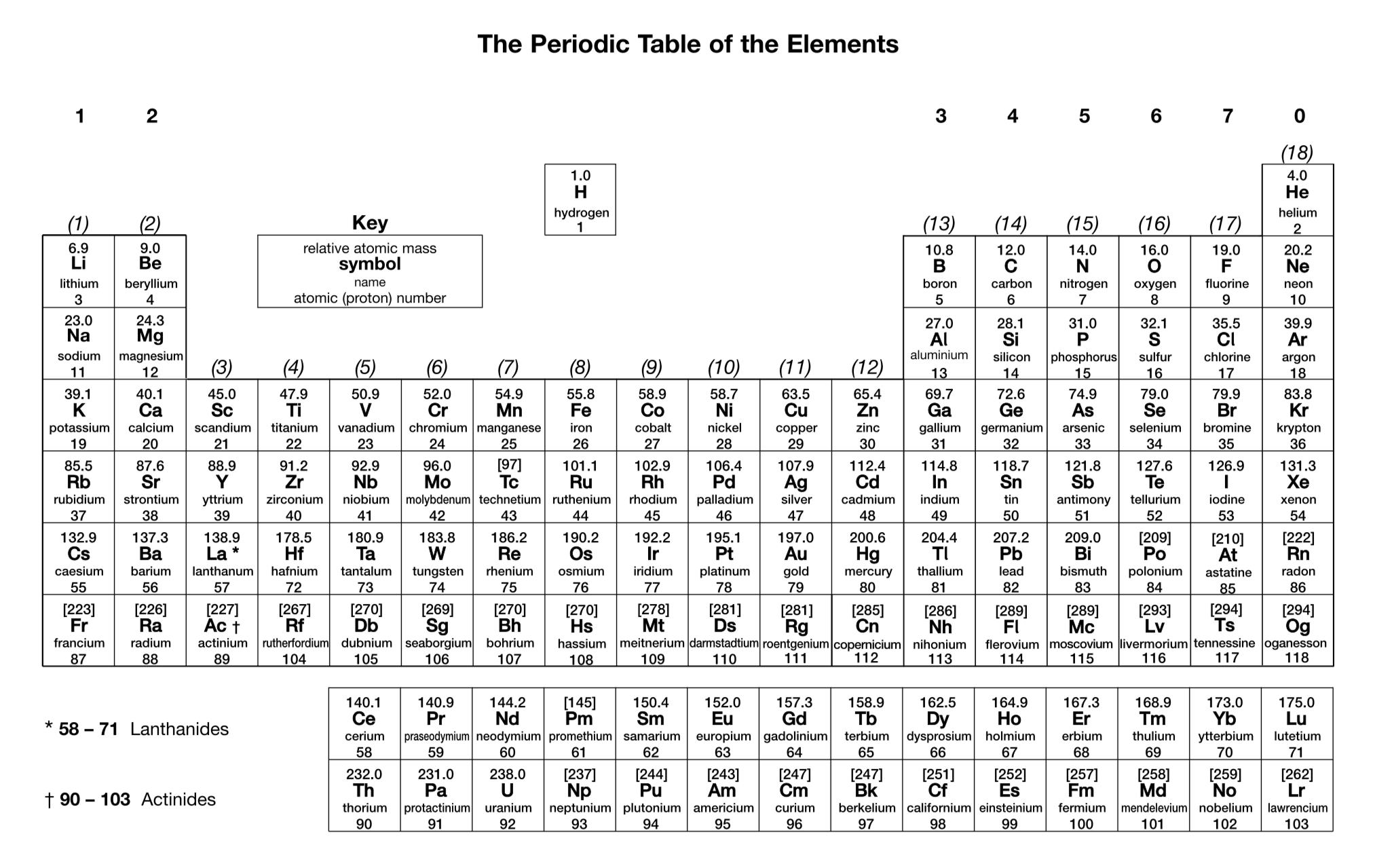
What is the formula of a sulfate ion?
SO₄²⁻
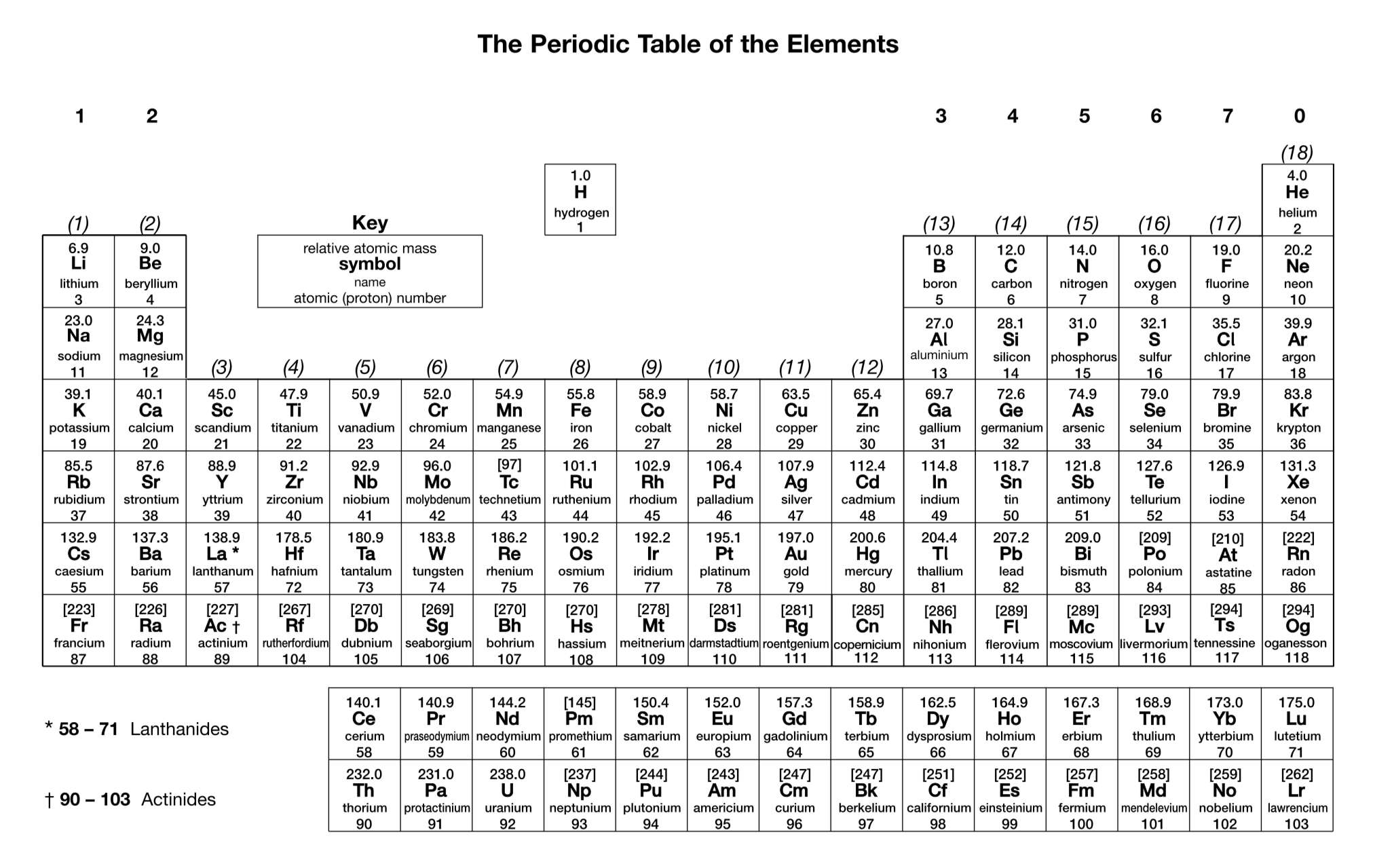
What is the formula of a hydroxide ion?
OH⁻
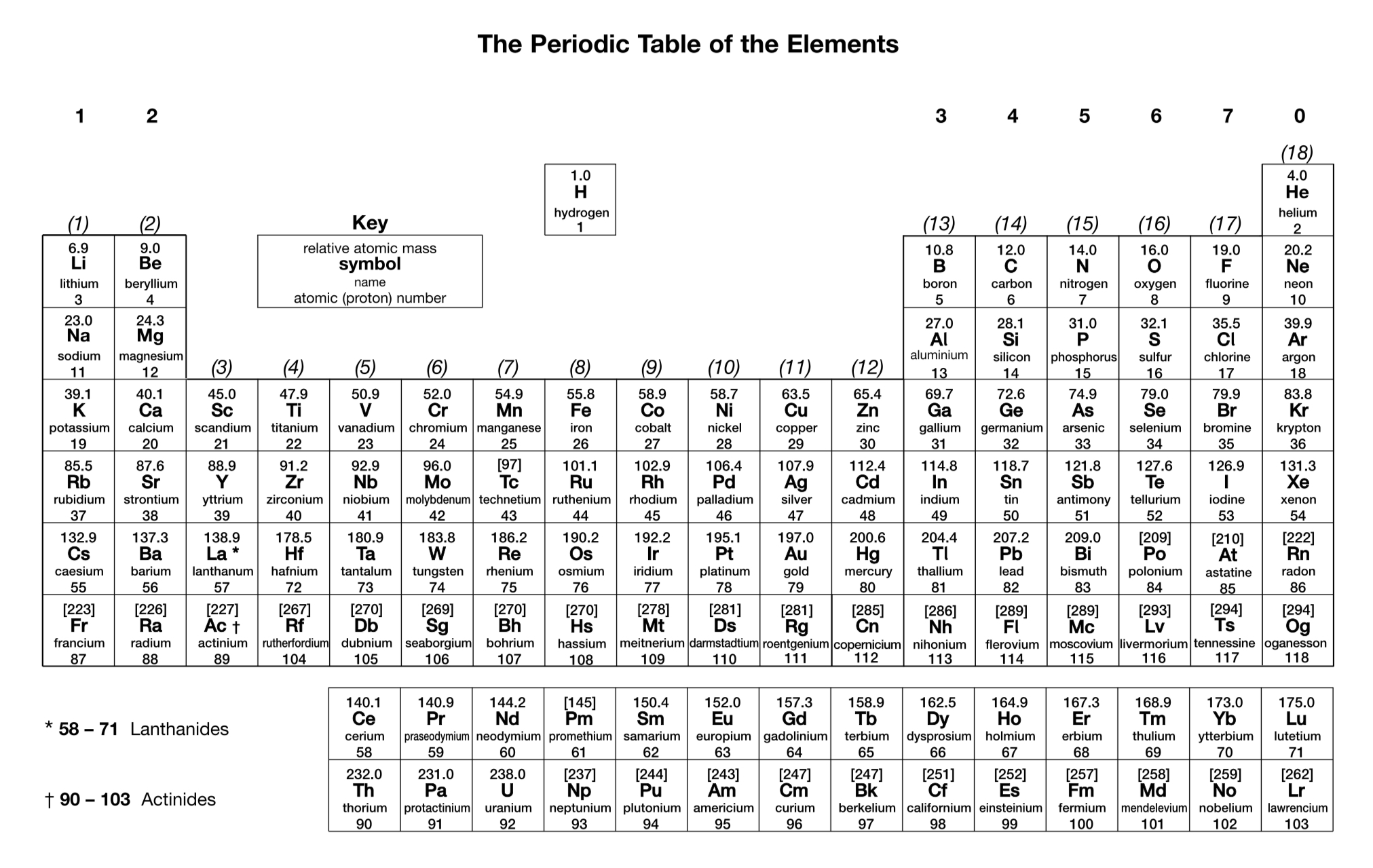
What is the formula of a nitrate ion?
NO₃⁻
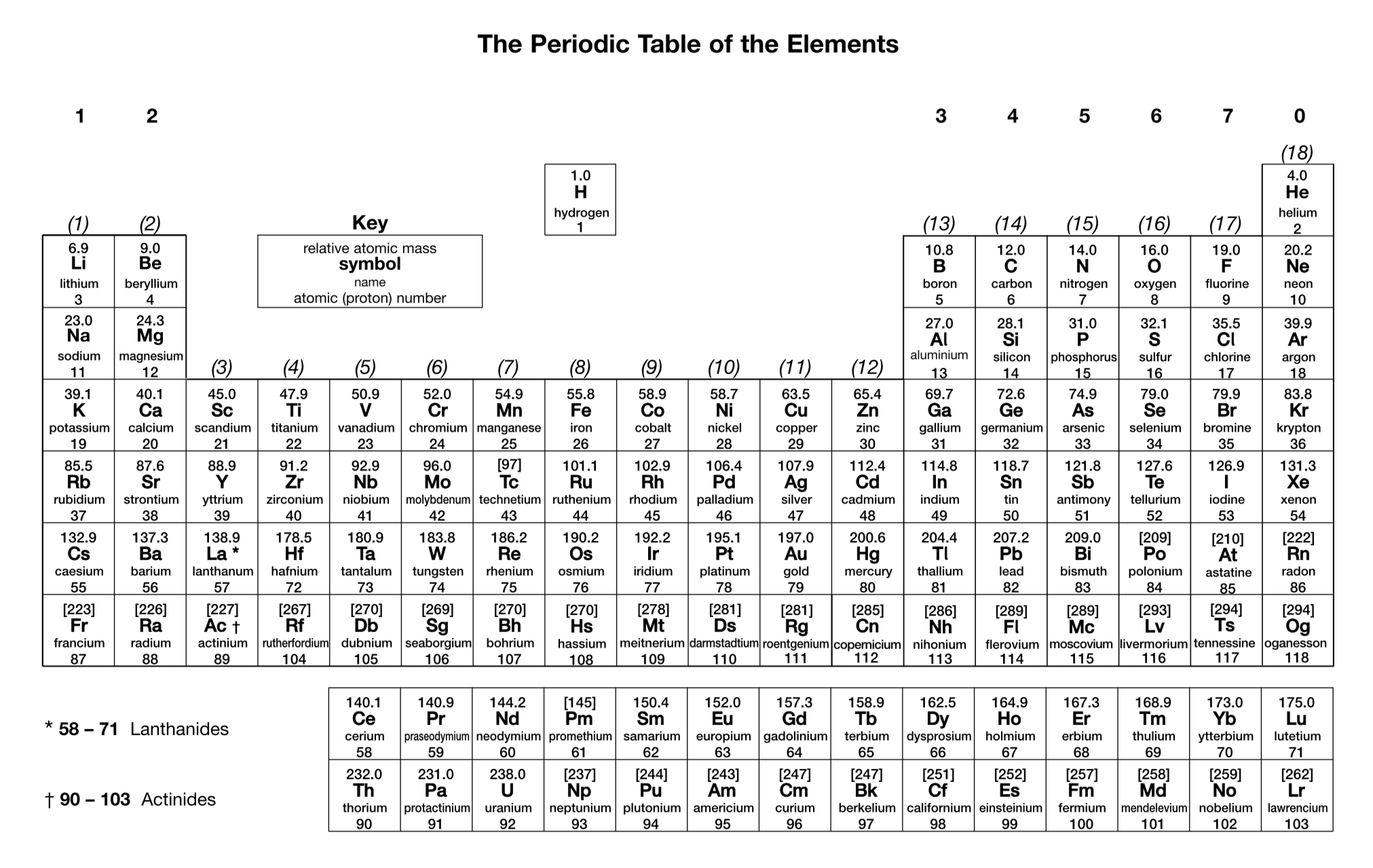
What is the formula of a carbonate ion?
CO₃²⁻
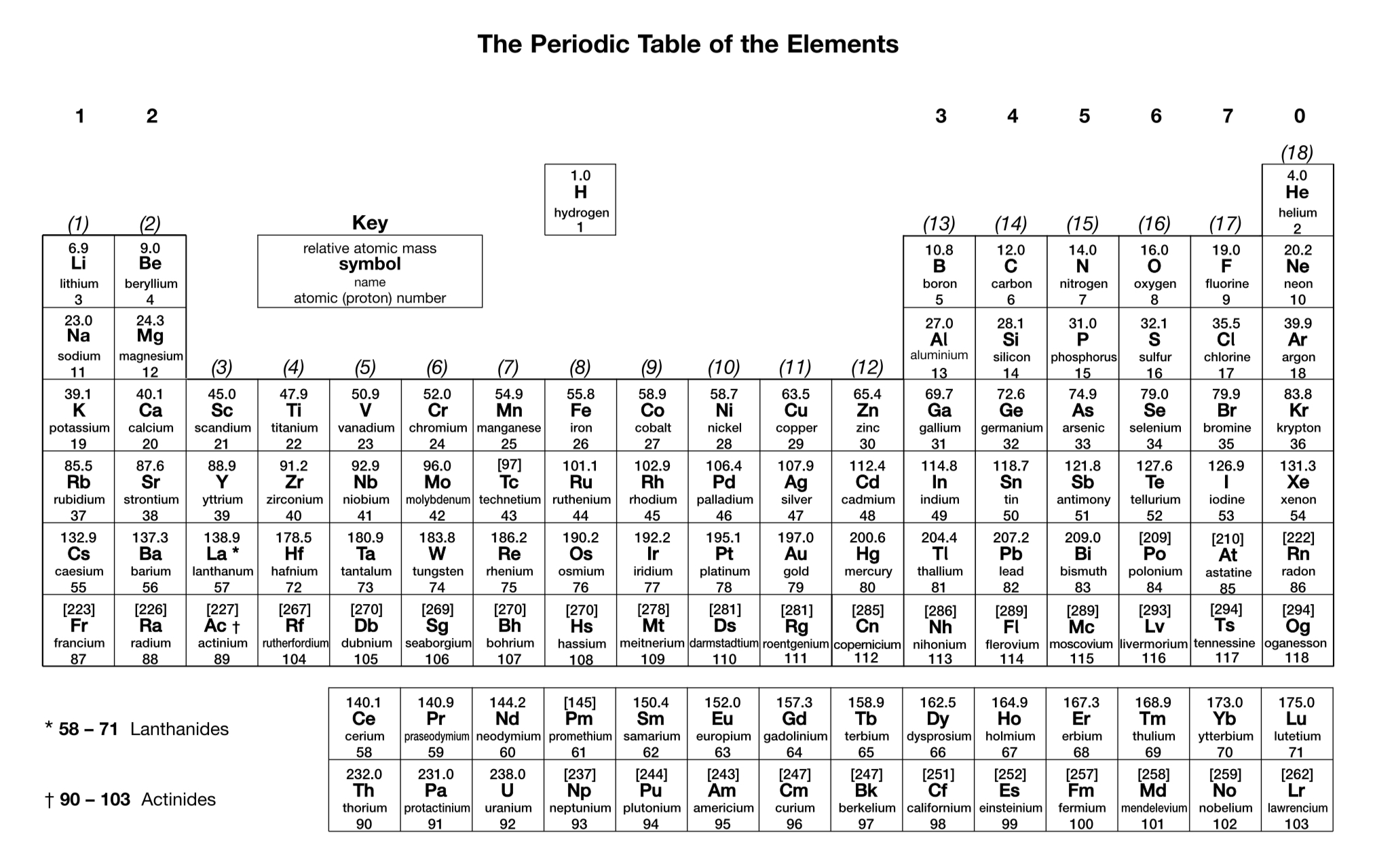
What is the formula of an ammonium ion?
NH₄⁺
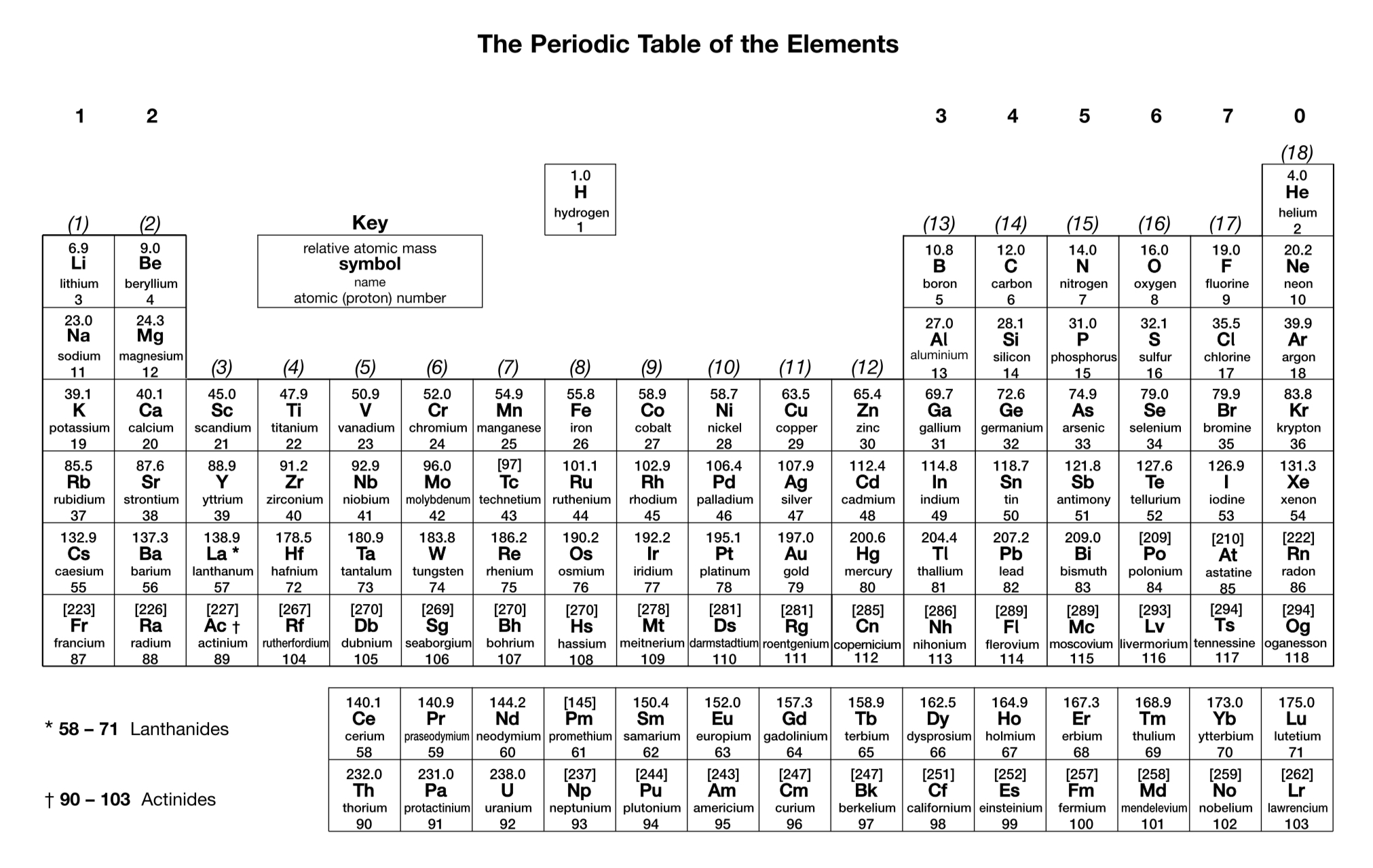
What is the charge on a hydrogen ion?
1+
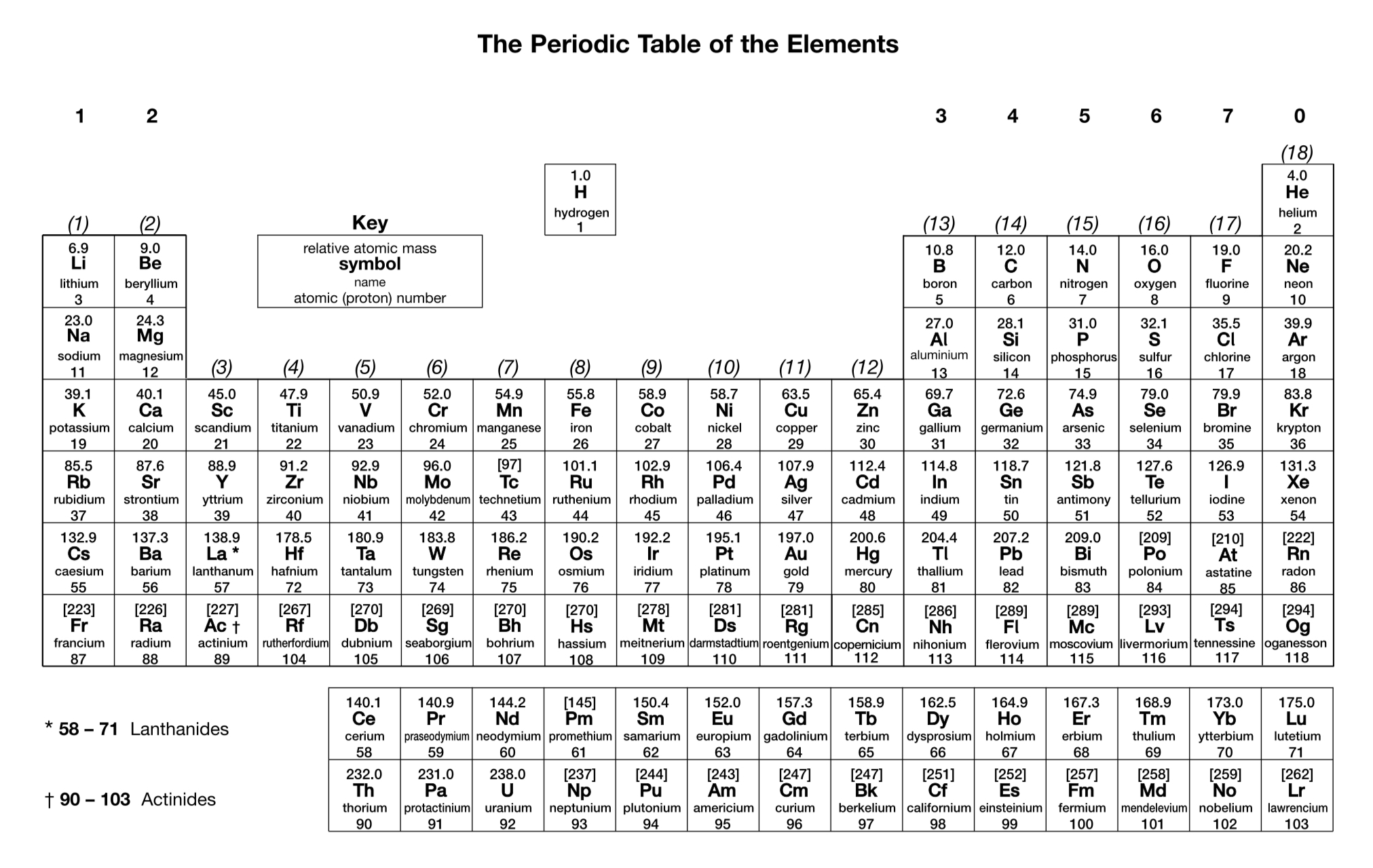
What is the charge on a simple ion of a Group 1 element?
1+
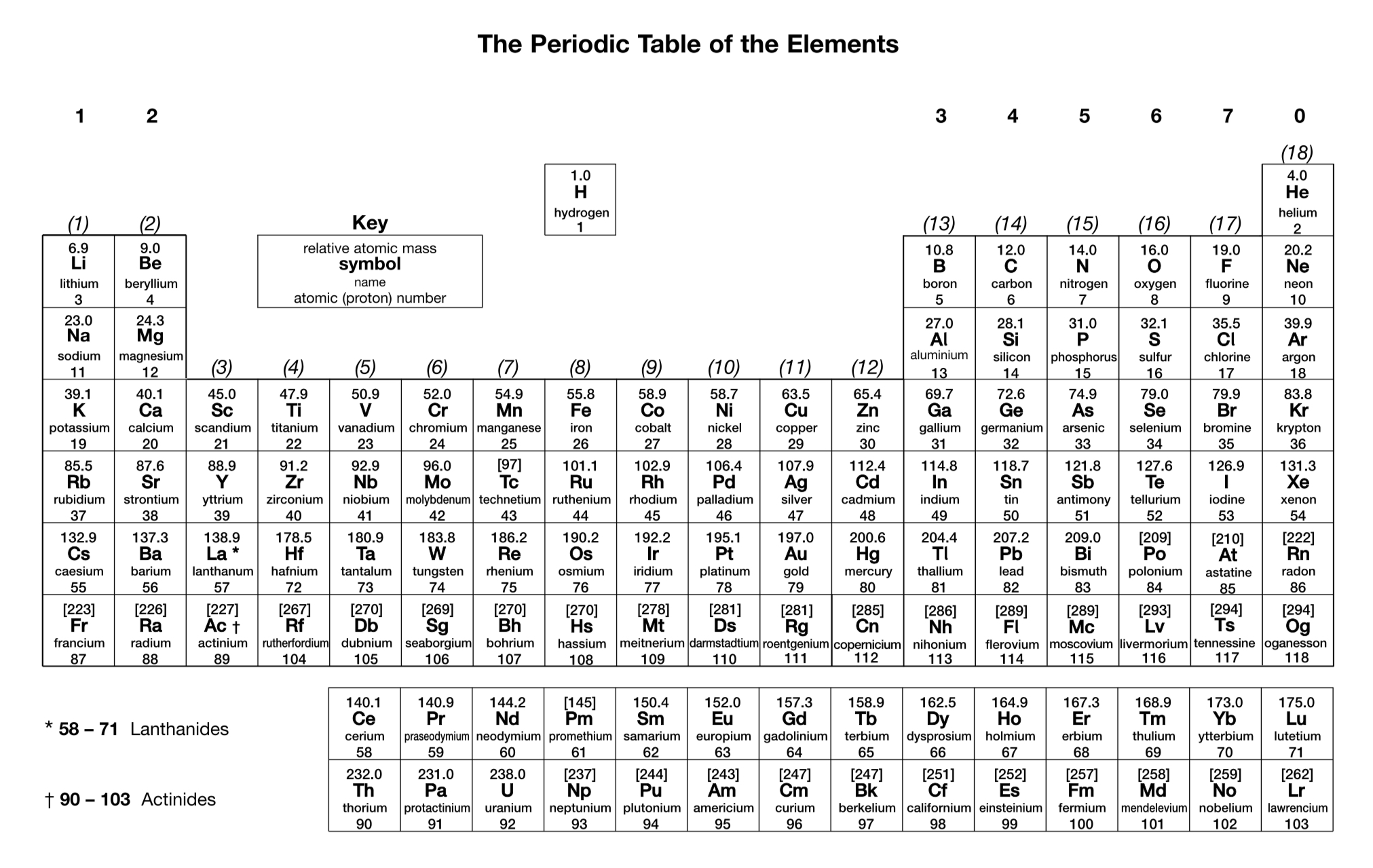
What is the charge on a simple ion of a Group 2 element?
2+
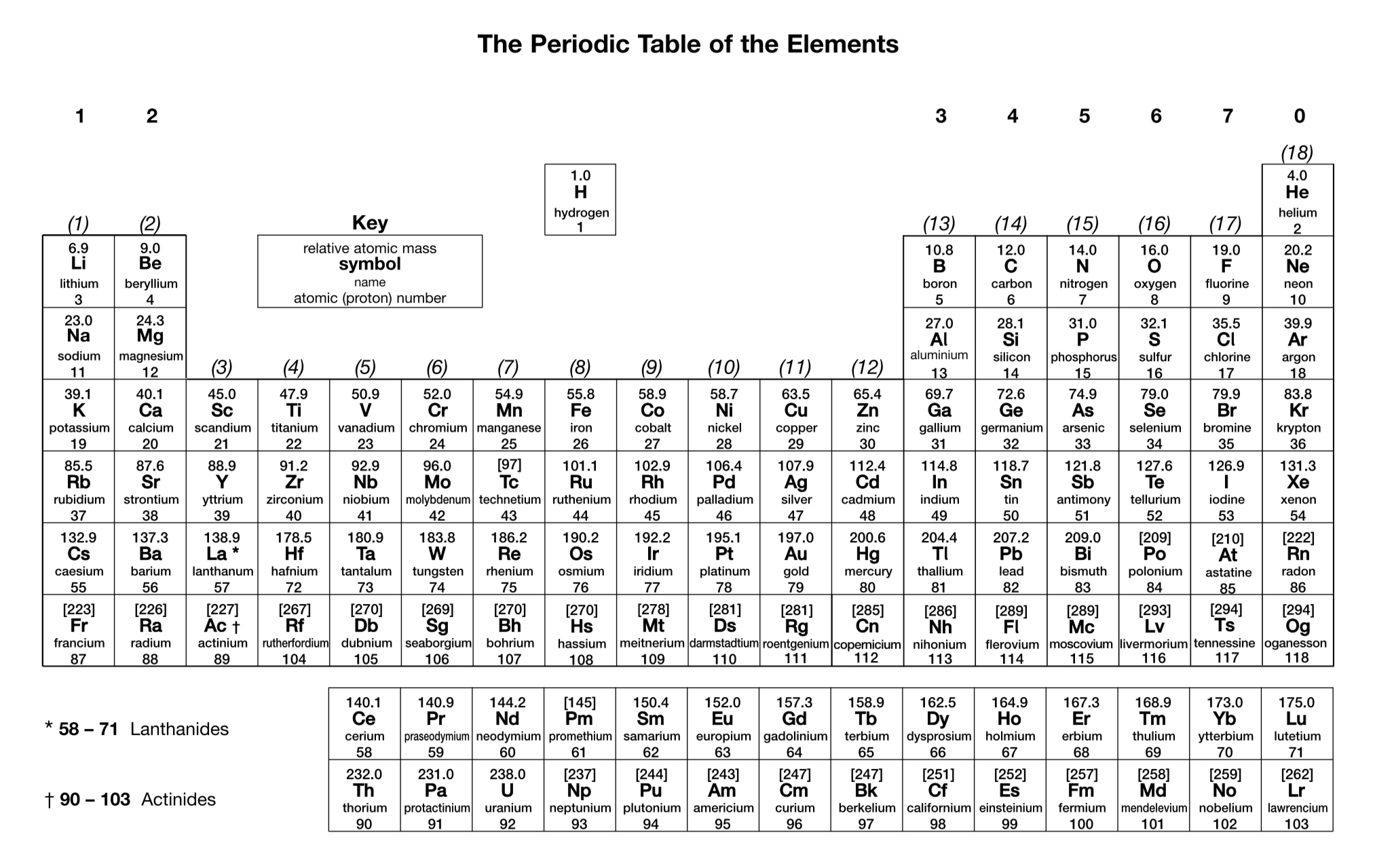
What is the charge on an aluminium ion?
3+