love and sexuality
 Studied by 0 people
 Call with Kai
 Learn
Learn Practice Test
 Spaced Repetition
 Match
Match Flashcards
 Knowt Play
1/30

There's no tags or description
Looks like no tags are added yet.
Name | Mastery | Learn | Test | Matching | Spaced | Call with Kai |
|---|
No analytics yet
Send a link to your students to track their progress
31 Terms
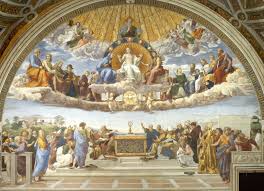
fresco of disputa
Name of the Artist: Raphael
Title of the work: Fresco of the Disputa
Approximate date: 1512
Patron (if known): Julius II
Original or current location: Stanza Della Segnatura in the vatican (library)
ormal and contextual analysis:
(Historical and cultural context, patronage and intended function, iconography and subject matter, stylistic features and visual language, relevant conceptual insights derived from lectures and readings)
Raphael painted 4 allegories that represent the main fields of study in renaissance
By looking at the wall you would know where the books are as the painting is located in the study room of the pope
This is the wall of theology
The protagonist is God (the father)
Underneath him is Christ (his son) and the holy ghost
The holy trinity
Immediately below is an instrument made of gold that is supposed to represent the body of Christ
Other figures are present → the virgin mary, moses, st peter and four angels holding the gospels
Immediately below them are those who expanded the biblical structures (theologians) and can identity them by looking at the name over their heads
Asserting the monotheistic religion is the truth
Christ is standing on the clouds and the sun rays illuminate with gold
The angels looks like they are moving toward the audience
Christ is standing with open arms looking forward as if this is given truth
school of athens
Name of the Artist: Raphael
Title of the work: Schools of Athens
Approximate date: 1512
Patron (if known): Julius II
Original or current location: Stanza Della Segnatura
Formal and contextual analysis:
(Historical and cultural context, patronage and intended function, iconography and subject matter, stylistic features and visual language, relevant conceptual insights derived from lectures and readings)
Protagonists
Plato (left); Aristotle (right)
Plato is pointing up (transcental) and aristotle is pointing down/forward (scientific)
This is the way early modern christian represented them
Platonic philosophy → about the ideal, archetype
Idea of beauty
Idea of love
Plato is viewed to have prepared the path for christianity and invited the coming of christ
The renaissance mind was saving plato
Aristotle is reminding to stay down to earth
The renaissance is not only reviving them but reconciling them
The renaissance reinjected ideas of plato and aristotle back into the world?
Raphael included himself
Michelangelo is in the shape of one of the people in the sistine chapel
Antiquity vs christianity
Christ is waiting for plato and aristotle the way philosophy is incorporated in christian society
The painting of theology and philosophy are interconnected
Early modern period
sistine cieling the creaiton of adam, the creation of eve, the original sin and expulsion
artist: michelangelo Date: 1508-12
Patron: Pope Julisus the Second
Original or current location: Sistine Chapel in Rome
9 narrairves
Mike was a young man and in his early 30’s
-orginally he rejected the offer because he is not a painter (only did one painting before)
-but the Pope was insistent and confiscated his documents so he couldn’t go back to Florence (his hometown)
-which is why he completed this in only 4 years
-he suffered a lot because he had to wait long times for materials for paint such as blue, paper was also not that easy to get and worked with candles at night where he almost went blind because drops of color would enter his eyes
COA: god left hand embrassing women an baby (jesus and mary new adam and eve), christ looking outside , looks like human brain
COE: adam in lethargic stance embrassing dead tree (jesus’ cross)
Origina sin +expulsion: sexual arosal eve + head
contropposto
Contrapposto (Italian pronunciation: [kontrapˈposto] 'counterpoise'), in the visual arts, is a human figure standing with most of its weight on one foot, so that its shoulders and arms twist off-axis from the hips and legs in the axial plane”
-Eve screaming and covering herself in shame: Adam is also covering his consciousness in shame genitals are shown ostentatiously is to represent how sin is going to spread around humanity through procreation: OSTENTATIOUSLY: in a pretentious or showy way designed to impress
-Adam and Eve have aged and they are embarrassed, covering themselves with fig leaves
- Since their genitals betray their will, Adam and Eve learn what betrayal is about
-Lapius (fall), pre-lapisian (before the OG sin) and post-lapisian (after the OG sin)
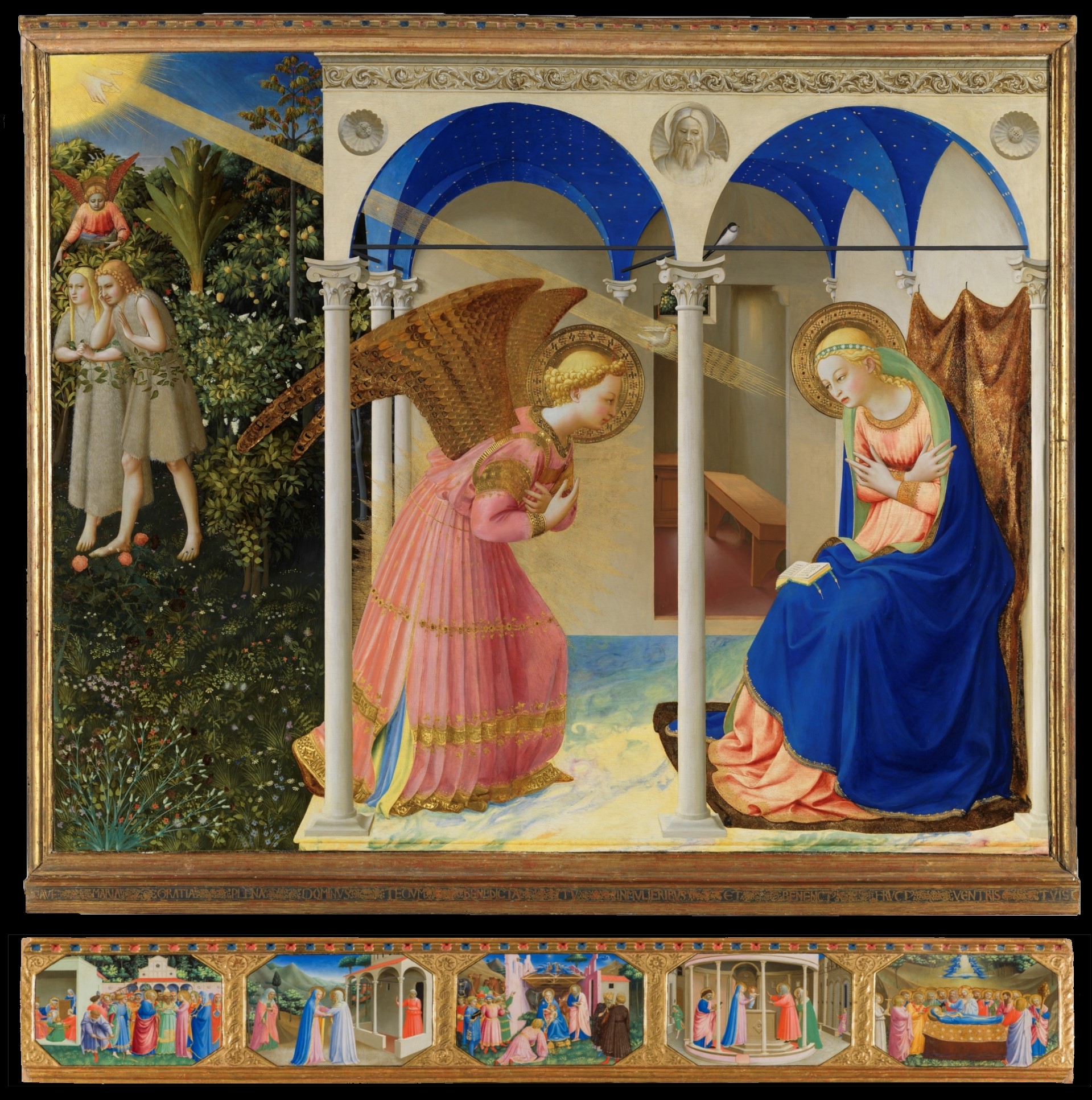
annuciation
Name of the artist: Fra Angelico
Title of the work: Annunciation
Approximate date: 1449
Patron (if known)
Original or current location: setting in Palestine?
Formal and contextual analysis, including:
Historical and cultural context:
-The Arch Angel Gabriel visits a virgin reading the bible and during that visit he told her she was going to conceive the son of god, Christ
Patronage and intended function:
Iconography and subject matter:
Stylistic features and visual language:
-Holy ghost and the hands of God in the form of a dove
-Mary conceiving Christ in her womb and Adam and Eve being expelled from the Garden of Eden (long period of time in between but one is related to the other) - Mary is the new Eve conceiving the new Adam
-God is called the word, and the word is turning flesh in Mary’s womb
-Eve was instructed by the Devil and Mary is being instructed by angel but it is the word always that is activated- with Adam and Eve in the background being expelled this conceptually shows the start of salvation
-God is looking down and the words coming out of Mary’s mouth are reversed because they are being seen by God - it's about words written in gold
-Adam and Eve are fully dressed cause this is in an older people and nude was not acceptable anymore
annunciation ear
Filippo Lippi
Title: Annunciation
Date: 1450The annunciation is happening through the ear: holy ghost is speaking to Mary directly through the ear: this is resemblance of how the conception of Christ was discussed (she remained a virgin cause she conceived of Christ by listening)
^^ the incarnation of god is the word that turns into flesh
(sometimes the annunciation is shown in a bedroom, the place where children are conceived and yet Christ is conceived through the ear)
Annunciation bedroom
Name: Rogier Van der Weyden
Title: Annunciation
Date: 1455Historical and cultural context:
-vists the virgin mary in her bedroom (an intimate space)
-the book the virgin mary is holding is bigger to show that the virgin Mary knew how to read (this was important for the time because it showed that if the Virgin Mary read than women should read and should learn) - lead to the legitimacy - to literacy
-Her mother taught her how to read which lead wealthy women who knew how to read and write passed their knowledge to their daughters
-becomes symbolic because she is reading the old testament as she begins the new testament
Patronage and intended function
Iconography and subject matter:
Stylistic features and visual language:
-the bed, the curtain and how its placed is almost in a knot (an allegory of conception)- the only literature they had about conception was the rediscovery of Aristotle (compared it to the making of cheese- milk from cheese) - the enzyme turns the milk into cheese - believed that women’s blood would have transformed the seed of a man
-the holy ghost is entering through the window and almost trespassing (like an enzyme through milk, turning that milk into a substance)
annunciation outside
Name: Leonardo
Title: Annunciation
Date: 1475Iconography and subject matter:
-the womb of the virgin is emphasized here
annunciation 2 part
Giovanni de Magistris
Title: Annunciation
Date: 1540
Patron:
Original or current location: Castello di Bracciano
Stylistic features and visual language:
-the first word that comes out of the angels mouth is AVE and in the reverse that means EVE
-the virgin Mary is introduced with the reverse of EVE because she is the reverse of EVE
-interesting how the bedroom of the virgin Mary is actually a library
-the closed closest is the old testament and the open one is the new testament
-(the patrons of paintings could be a nun, that could want to empower women and other nuns)
-giving her lily which is the symbol of purity and in the process of bloom (it is the idea that the virgin Mary remained a virgin before, during, and after the conception of Christ)
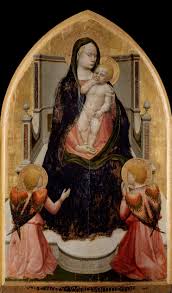
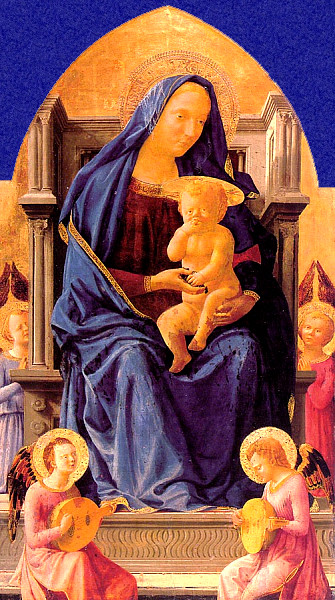
Pisa Polyptych and San Giovenale Altarpiece
Masaccio, Pisa Polyptych and San Giovenale Altarpiece
Title: Pisa Polyptych and San Giovenale Altarpiece
Date: early 15th century
Christ in both pieces is eating (grapes, red grapes): vs. Adam eating apples: red grapes are the symbol of blood a symbol that he will redeem the gesture of Adam eating the apple
-the body of Christ is completely naked and one of the first examples of Christ’s genitals (part of the early theology and painting)
-Eve and Adam when they eat the forbidden fruit is ingesting sin (one of the sins is also gluttony) - the gesture of eating is also similar to the gesture of blessing (ICONOGRAPHY)
tondo Doni
round painting Name: Michelangelo
Title: Tondo Doni
Date: 1503-1507
Patron: The Doni Family
-Tondo means round shape painting - commissioned as a gift for the wife when she had her first child
-Tondo pieces are gifts usually for wives when they are pregnant- trays used to serve a women after giving birth and also used sometimes to place the child over the tray immediately after the birth (a blessing so the woman and child will survive) - these are domestic paintings bought by aristocratic families
Patronage and intended function:
The Doni Family: Angelo Doni and Mattienla Doni
Iconography and subject matter:
-The virgin Mary in the foreground holding her son and there is an old man (maybe Joseph?) the husband of Mary but not the father of Christ
-Jospeh is standing in a higher position of Mary and Christ (Mike always leaves room for speculation- is this really Joseph?)
-Mary seems to be emphasizing the genitals of Christ (shows the incarnation and shows that these genitals are in a prelapsian state) (Christ unlike everyone else did not contract sin because his father was God but his mother is without the stain of procreation)
-Mary is without the stain of procreation because her mother was sterile and she conceived of Mary when she was 60 so she was conceived by means of a miracle (divine intervention) (god was the creator)
-By showing the genitals the theological perspective is that this is a prelapsian representation of sexuality
-Christ is playing with a pomegranate: (an apple with seeds): apple is a symbol of the tree of knowledge and the seed is the symbol of his blood
-To show that Christ is the new Adam, that he is complete in all his parts, and his genitals have not contracted the original sin
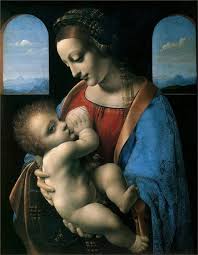
litta madona
da vinci
Date: 1490
-breastfeeding was more public than it is today
-you would have seen woman breastfeeding everywhere (breastfeeding adoption)- The Madonna is the human side of Christ and the human side of Christ is going to lead him to his suffering
-this painting shows that he was breastfeed like all the other babies but at the same time when you realize that Christ is human, you reflect that he will die on the Christ (legs point to the fact that they will be crossed on the cross, Mary holding his side of the body where he was pierced- foreshadowing)
-playing with a bird (ROBIN), a robin is supposed to have a red dot, like Christ when pierced
Circumcision
Name: Giovanni Bellini
Title: Circumcision
Date: 1500Iconography and subject matter:
-the first drop of blood, that he will accept the circumcision and he will accept the sacrifice of the original sin
-shows that he is conscious, suffering the pain of a wound
-gentials explain a lot about the theology of Christ
Adoration of Magi
Name: Gentile da Fabriano
Title: Adoration of the Magi
Date: 1423-1423: The three kings came in the 6th of January came to visit the place where Christ was born
-Christ seems to invite the first king to look at his genitals to check that he is the son of god and that he was complete in all parts
-The genitals of Christ are represented in a theological way (the only representation of genitals in this time period)
-Confession is an important tool in the church: the real you finds a voice to come out but in the past it was consolation cause you could be yourself in that moment
-pivotal expressions of identity of the Middle Ages and Early Modern Period
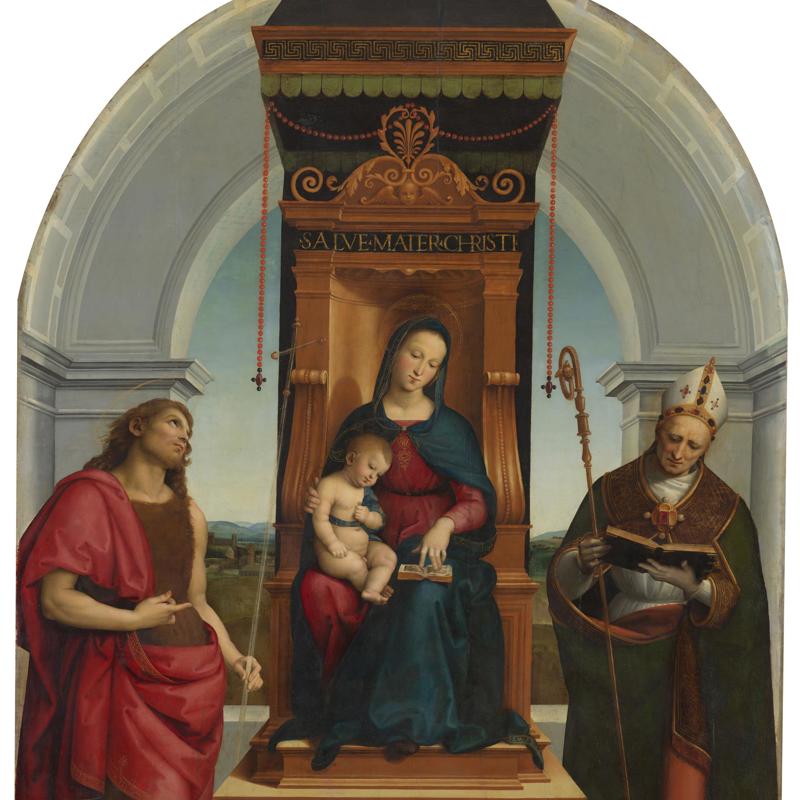
Sacra Conversazione
Raphael, Ansidei Maddona
Title: Sacra Conversazione
Date: 1500
-this painting is called the Holy Painting
-Christ child and the virgin Mary
-Saint Augustine and Saint John
-the way a worshipper will pray in front of this painting, I will ask a saint to recommend my soul to Christ and the Virgin Mary
-they are there to converse with us
-Christ is reading and is sitting more maturely for his age of a few months with the mother emphasizing his genitals
-Augustine says regular babies are so imbued with sin that they cannot stand still and him standing still and standing shows a baby who is conscious and reading about his death
-with crossed legs
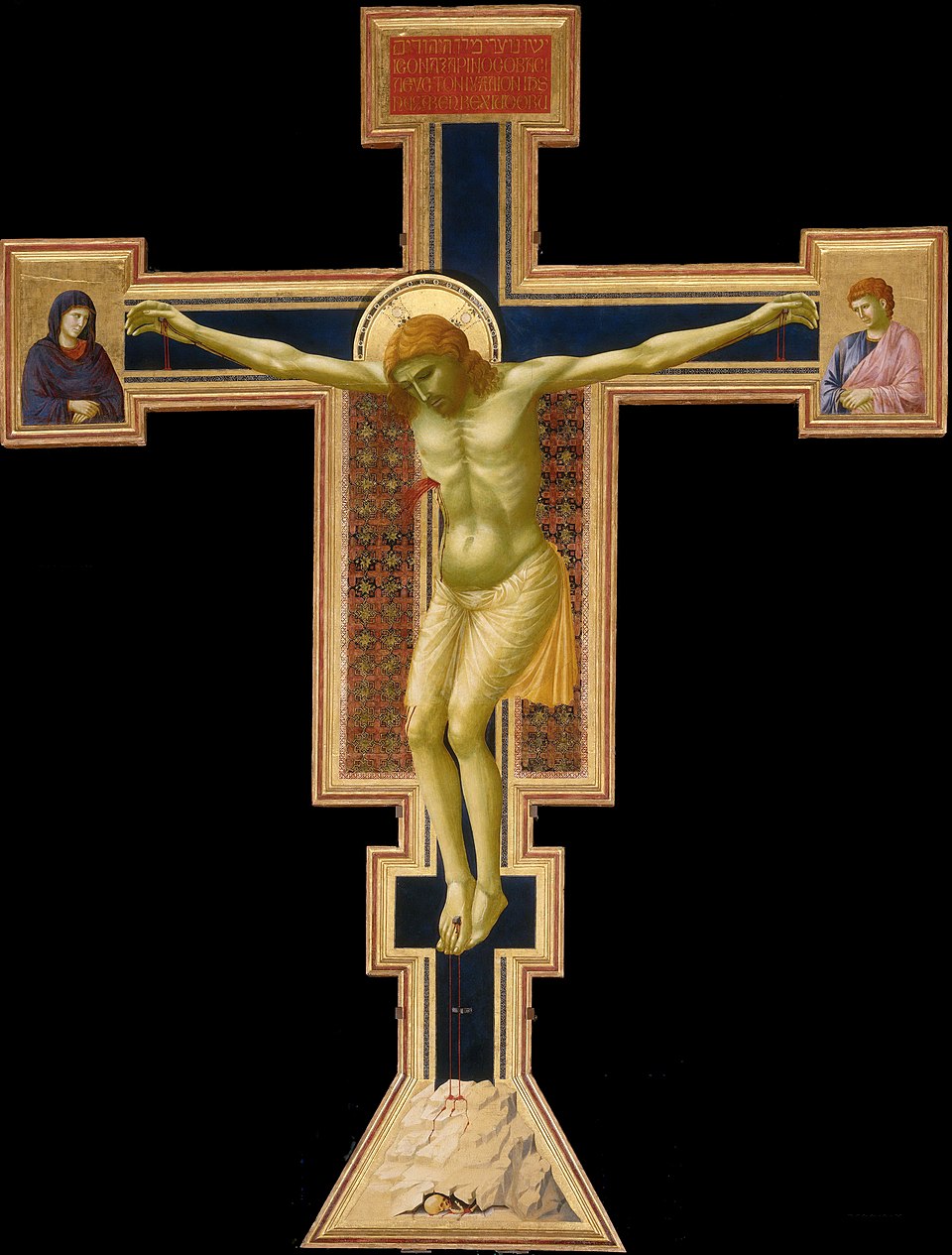
crucifixion
Giotto
1320
his is the moment that Christ is promising the possibility of salvation of the original sin
-the wound on his chest by the spear from Roman soldier St. Longinus
-the blood descends and touches the ground in Jeresulam
-the moment Christ’s blood touched the scalp of Adam, Adam’s sin was redeemed
deposition
Van der Weyden
1435
skull next to a crucifixion means Adam and the pouring of the blood from the new Adam
David
michelangelo 1504
originally made for florence on top of the duomo
looking to the river the protector of florence
larger hands and head to enphasize strenght an dpower
santa cicilia
stefano maderno
1600
basilica of santa cicilia
she was decapitated and body found intact inthe catacomes
doesnt matter that we cant see the beauty of her face bc god can
her hands show 3 and 1 (3 in 1= the father, the son, and holy spirit)
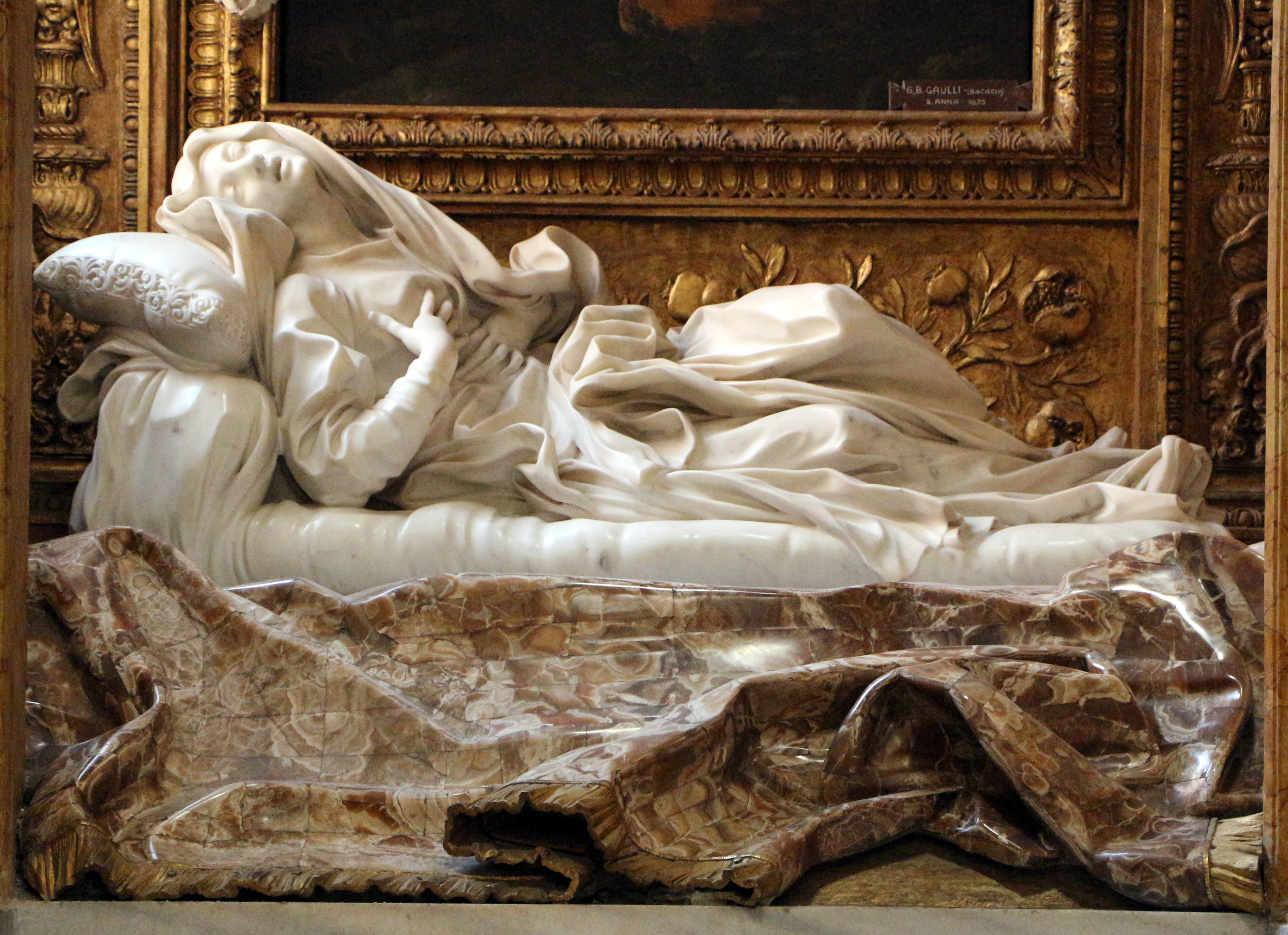
Ludovica Albertoni
Bernini
Albertoni Altieri Chapel, San Francesco a Ripa, 1671
-she could not be nominated as a saint bc she was married 1520
-she was widowed and became a franciscan nun dedicated her life to the poor of treatevvere
-she hid her moment in food
-the family sponserd a poet to dedicate poetry to her “flights of love”
Christ resided in her bosom
Draperet that surrounds her
-levitating goijg towards good/ Christ
Nuns well cultivated /could read
Primavera,
Sandro Botticelli, 1482? patron: Lorenzo di Pier Francesco de Medici
intertextuality
-epithalamium: poem read on wedding day
florence city of flowers
emphasis of fertility and uterus
zephr wind god and chloris/flora spring god, venus , the 3 graces beauty, chastity and pleasure
birth of venus
boticelli:
Venus Anadyomene), 1485
first femal nude since antiquity
ideolized body—> model perpitrated throughout western world associated with lackof biologyu
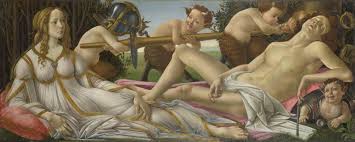
venus and mars
Botticelli, Venus and Mars, 1483, Vespucci Family?
post sex
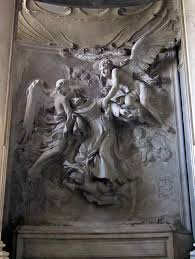
Saint Francis in Ecstasy
Bernini, Raimondi Chapel, (by Baratta), 1640
Rimonde family acquire a private chapel in Rome a Franciscan church
Sistine chapel comodo sby sisxtus the 4th
Two windows above the alter
Rey’s of light from either side
Laverna is where Francis had ibis vision —> LA and SF remnents
Out of body experience > annulled consciousness > received stigmata
Pathology or miracle
Subject to overwhelming God
risen christ
Michelangelo, Two Versions of the Risen Christ, Santa Maria sopra Minerva and in San Vincenzo in Bassano Romano, c. 1520, Metello Vari
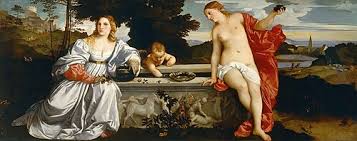
Sacred and Profane Love
Titian, e, 1514 originally for Niccolo Aureli and Laura Bagarotto
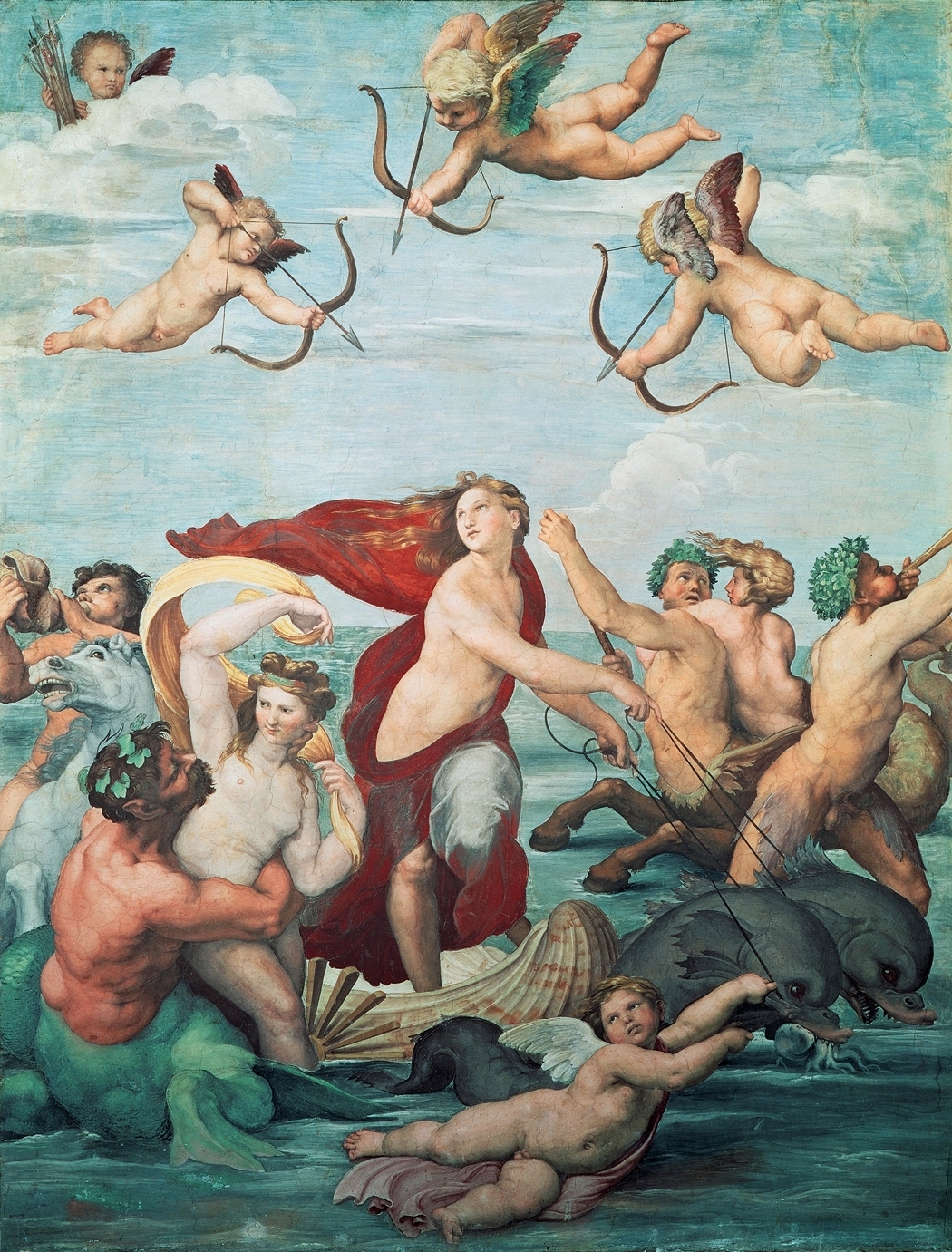
Galatea,
Raphael, Villa Farnesina, 1512
Gale tea inspired by birth of venus
Polythemus falls in love with her
Galetea I. Love with someone else
Polythemus kills her lover bc jealous
Considered Mona Lisa of Rome
Rafael wrote letter to Balthazar Castile one (he invented gender norms told them how to dress)
Polyphemus,
Sebastiano del Piombo, Villa Farnesina, 1512
Polythemus red her like Key G parolee story to the rejection of his first love
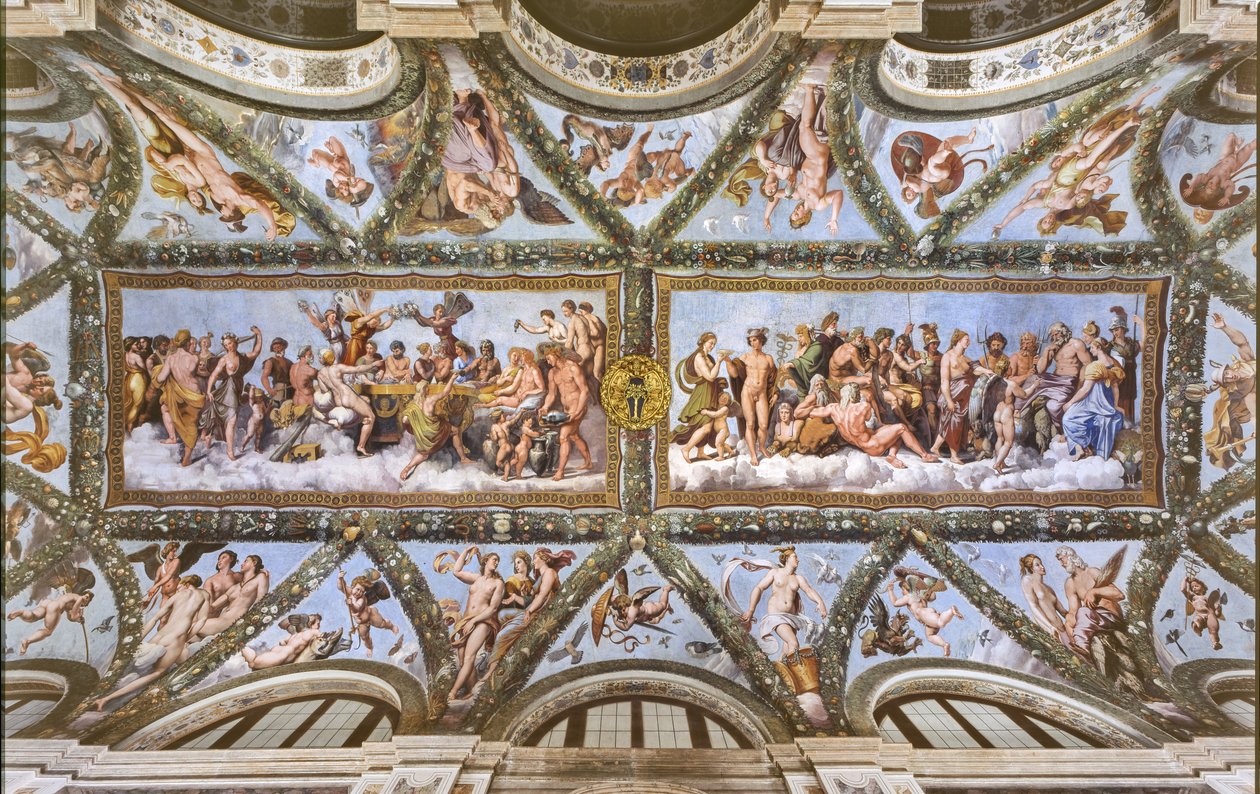
Ceiling of Loggia of Love and Psyche,
School of Raphael, Villa Farnesina, 1517
Loga of Cupid and syche
Completely open to the elements
Iconography
Inspired by antiquity antique text called the golden ass written by apoleus love story about Cupid and syche a mortal - tappresties of earthly scenes are lost -schye most beautiful women in earth
Cupid wounded himself with his own arrow and he fell in love with her instead of killing her
Problem created tormpil among gods if sche can overcome trials to become god —she did it
Love conquers all including the gods Jupiter
Same time her married his wife who entered the society of Rome
Cucumber being pointed at (festoons) Augustino presenting himself of a fertile man ready to elevate status
Part of self fashioning of augustino cegee
Social mobility and metinorfesoud is possible
Money was the shit of the devil banker had to prove their intelligence
Voluptuous is the kid born form Cupid and syche
Room of Alexander the Great (Alexander and Roxane)
Sodoma, , Villa Farnesina, 1518
The sack of Rome Charles the 5th mercenary soldiers from Switzerland they destroyed Rome to punish it bc they called it a curripted Babylon due to revival of antiquity
Martin Luther + general of Augustinian theologian Martin Luther split form
Rome and feared protostant ism =counterreformation
Sodema small room based on a drawing provided by Rafael
Alaxabder the great pictured
Marriage between alaxabder the great and Roxanne
Soldiers burned furniture and paintings in 1528
Elphrasis : descriptions of paintings
Room of Illusion,
Pavement continues in painting terraces
Metimorfisoud of Ovid
Daphne loves Apollo but has been wounded be arrow of hate and asked to be transformed into loro Tree 🌲 Apollo became poet due to his unrequited love
Metimorfusous ans paining based on disre
Peruzzi, , Villa Farnesina, 1518
 Note
Note  Flashcards (121)