Water Engineering
 Call Kai
 Learn
Learn Practice Test
 Spaced Repetition
 Match
Match Flashcards
 Knowt Play
1/28

There's no tags or description
Looks like no tags are added yet.
Name | Mastery | Learn | Test | Matching | Spaced | Call with Kai |
|---|
No analytics yet
Send a link to your students to track their progress
29 Terms
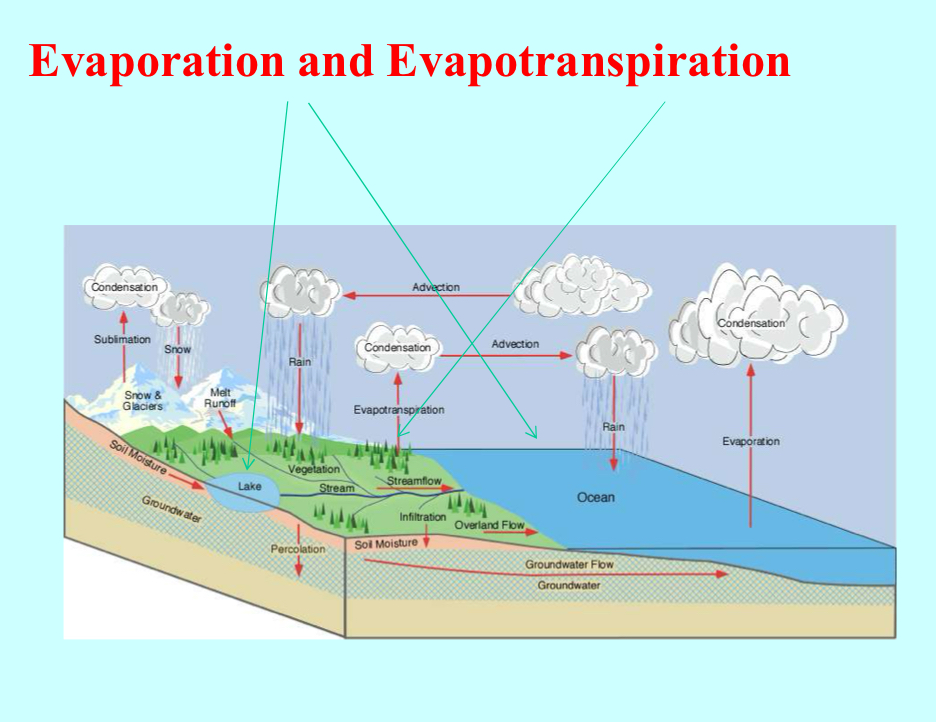
Hydrology
occurrence, distribution, movement, and properties of the water of the earth
Hydrological cycle
the continuous movement of water on, above and below the surface of the Earth
Key Hydrological Processes
Precipitation
Runoff
Infiltration
Subsurface Flow
Evaporation & Transpiration
Precipitation
Condensation of atmospheric water vapour deposited on Earths surface. Mostly rain (snow, hail, fog drip, sleet etc)
Runoff
Water moves across land
includes surface runoff and channel runoff
may infiltrate into ground, evaporate into air, become stored in lakes/reservoir or extracted for human use
Infiltration
flow of water from ground surface into soil
becomes soil moisture or groundwater
Subsurface flow
flow of water beneath ground surface
eg in aquifers
Evaporation & Transpiration (Evapotranspiration)
Evaporation - vaporisation of liquid (to gas)
Transpiration - evaporation of water from aerial parts of plants
Catchment (drainage basin/river basin/watershed)
an extent of land where water from rain or snow melt drains downhill into a body of water
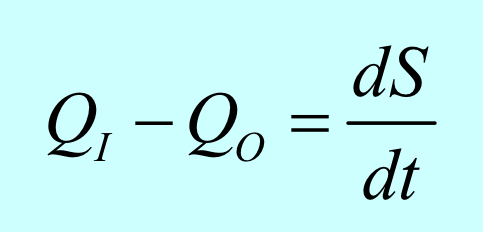
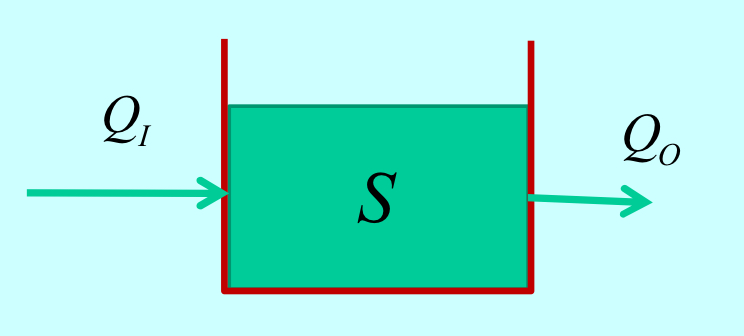
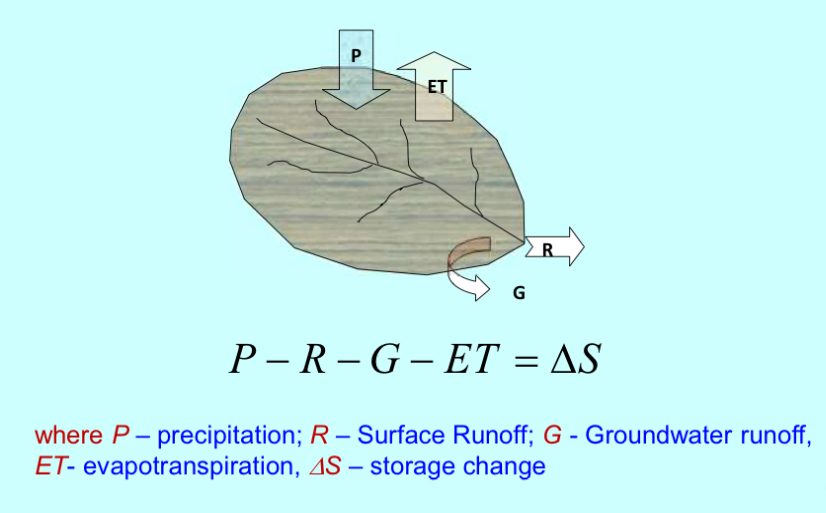
Water balance in a system
Q: input/output flow rate
S: storage
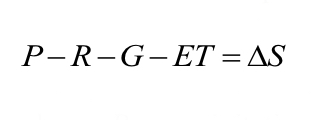
Catchment water balance
energy required to vaporise water
(specific latent heat for water vaporisation)
2.5 × 10^6 J/kg
(condensation energy release)
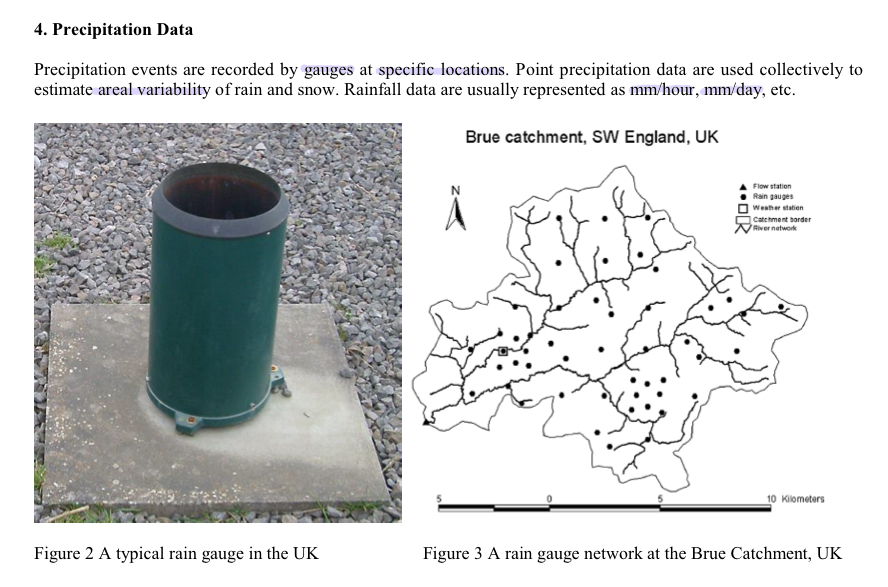
Precipitation events are recorded by (1) at (2).
Point precipitation data are used to estimate (3).
Rainfall data units (4)
gauges
specific locations
areal variability of rain/snow
mm/hour, mm/day etc
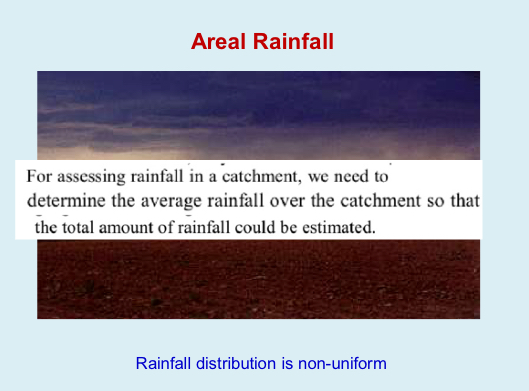
Methods of estimating areal rainfall
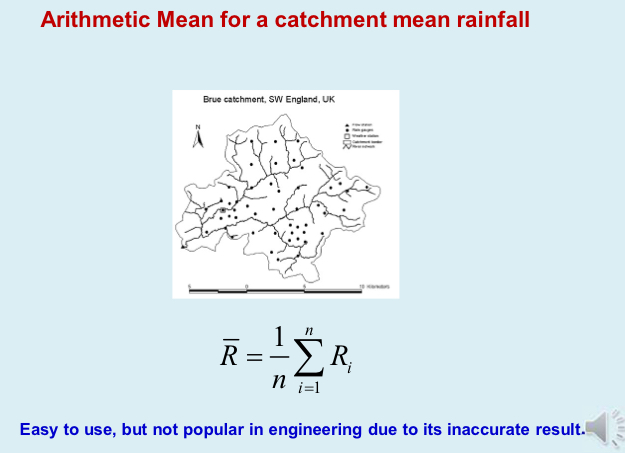
Arithmetic Mean
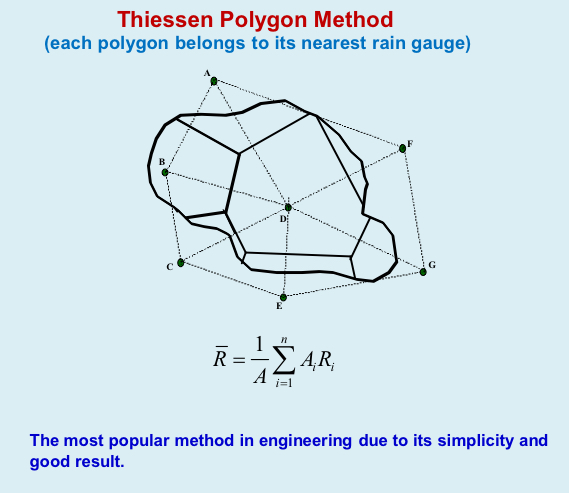
Thiessen Polygon Method
Arithmetic Mean
simple method when gauges are uniformly distributed
unpopular due to inaccurate result
Thiessen Polygon Method assumes…
(given on formula sheet but not expected to do calcs)
…at any point in catchment, rainfall is same at nearest rain gauge. so depth applied out to distance halfway to next gauge in any direction.
Double Mass Curve
Checks data quality of a specific rain gauge (not needed for exam?)
Flux
flux= flow rate/area
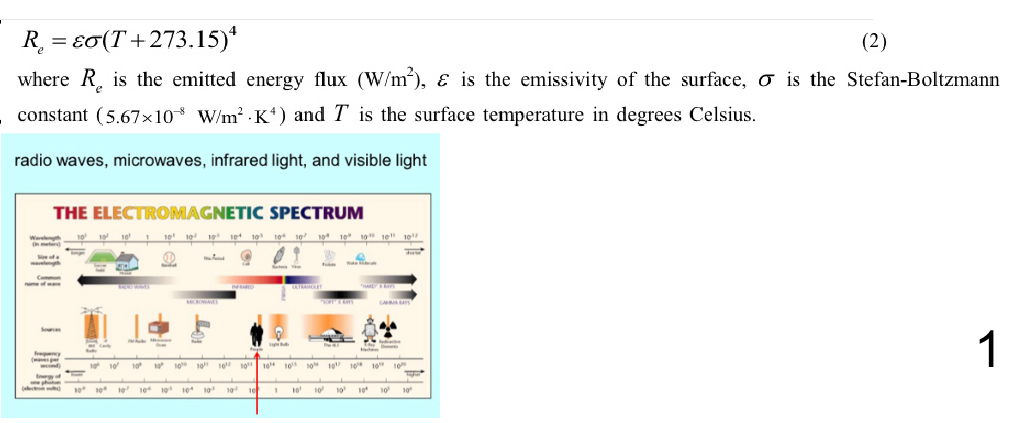
Radiation emission
radiation is continuously emitted from all bodies at rates linked with their surface temperature
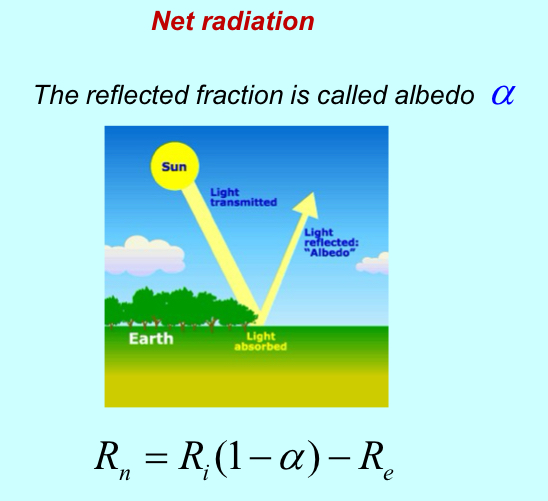
Net radiation
When radiation strikes a surface it is partially reflected and partially absorbed.
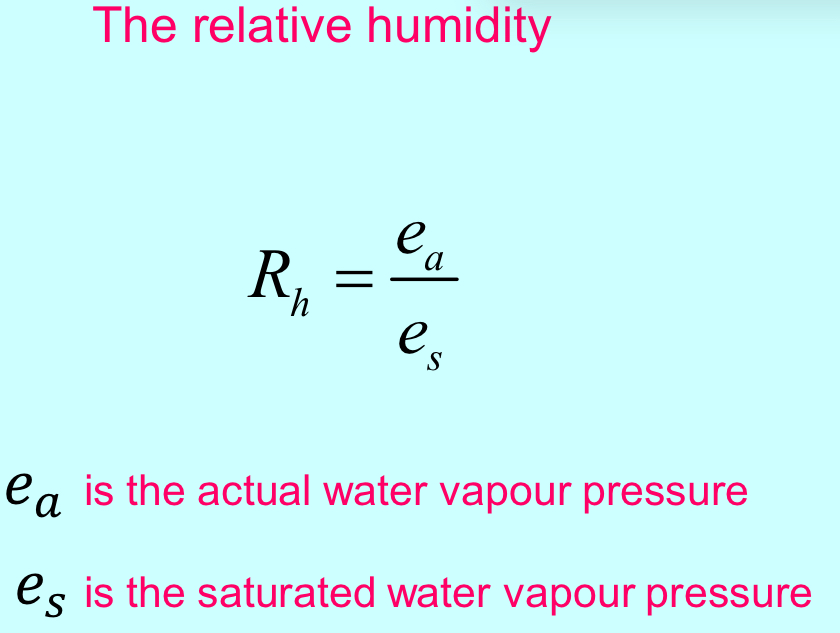
Vapour Pressure, e
Saturated vapour pressure, e_s
e: the partial pressure contributed by water vapour
e_s: when pressure is in equilibrium
Relative humidity:
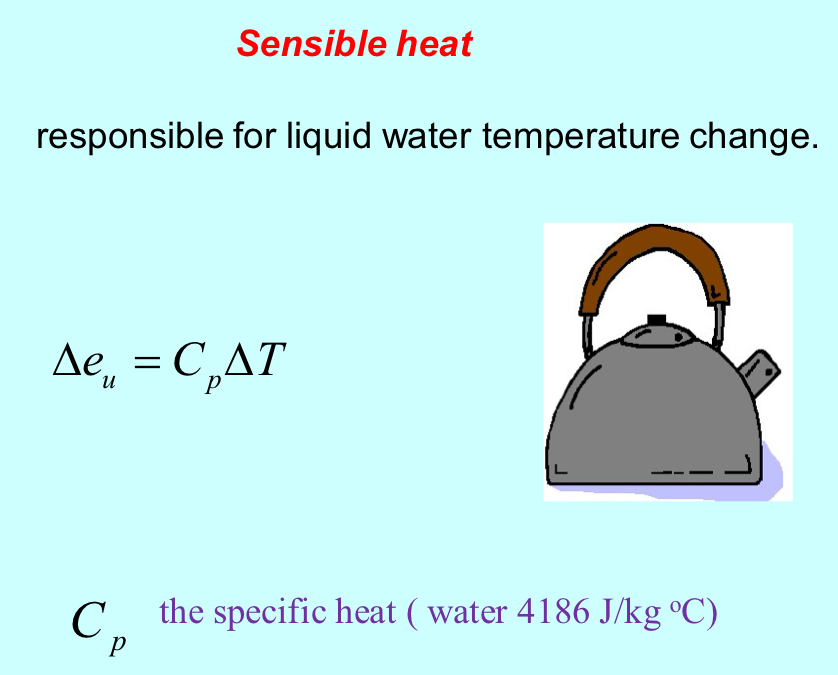
Sensible heat
responsible for liquid water temperature change
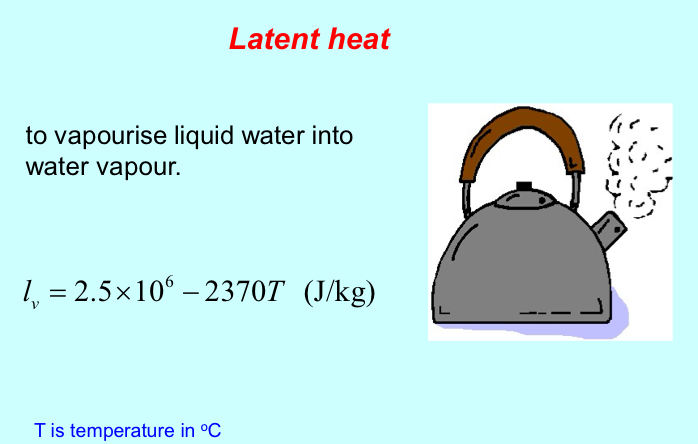
Latent Heat
used to vaporise liquid water into water vapour. Varies slightly with temp (vaporisation under higher temp needs less energy)
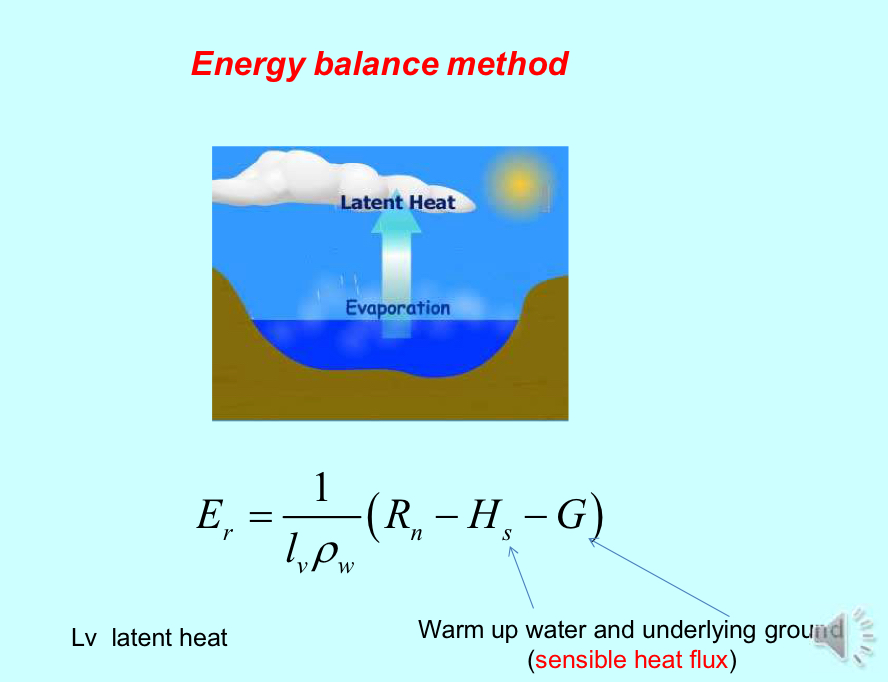
Evaporation from open water surface is influenced by 2 factors:
energy input
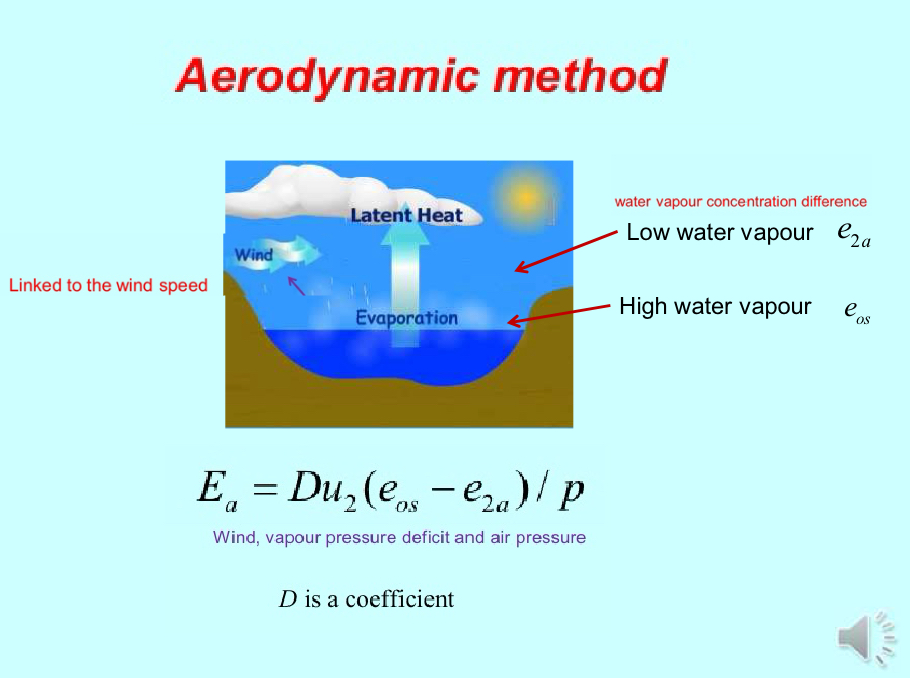
vapour transport
Energy Input provides…
latent heat for vaporisation
energy balance method used when transport is not limiting
Vapour Transport helps…
to move the vapour away from the surface
aerodynamic method is used when energy supply is not limiting
What weather variables are needed for calculating evaporation from open water surface with the combined method?
??
What are the factors that influence actual evapotranspiration on land?
evapotranspiration on land - combination of evaporation from soil surface and transpiration from vegetation
factors - energy and water transport, availability of soil water
What are the potential evapotranspiration and reference transpiration? Describe their relationship with actual evapotranspiration.
Potential evapotranspiration - when water availability is not a limiting factor
Reference transpiration -

