N5 Biology
 Call Kai
 Learn
Learn Practice Test
 Spaced Repetition
 Match
Match Flashcards
 Knowt Play
1/78

There's no tags or description
Looks like no tags are added yet.
Name | Mastery | Learn | Test | Matching | Spaced | Call with Kai |
|---|
No analytics yet
Send a link to your students to track their progress
79 Terms
Function of Cytoplasm
Site of chemical reactions
Function of Ribosome
Site of protein synthesis
Function of Nucleus
Controls cell activities
Function of Mitochondria
Site of Respiration
Function of Cell Membrane
Controls what enters and leaves the cell
Function of Cell Wall
Supports and protects the cell
Function of Chloroplasts
Site of photosynthesis
Function of Vacuole
Contains cell sap
Is bacterial cell wall composed of cellulose
No
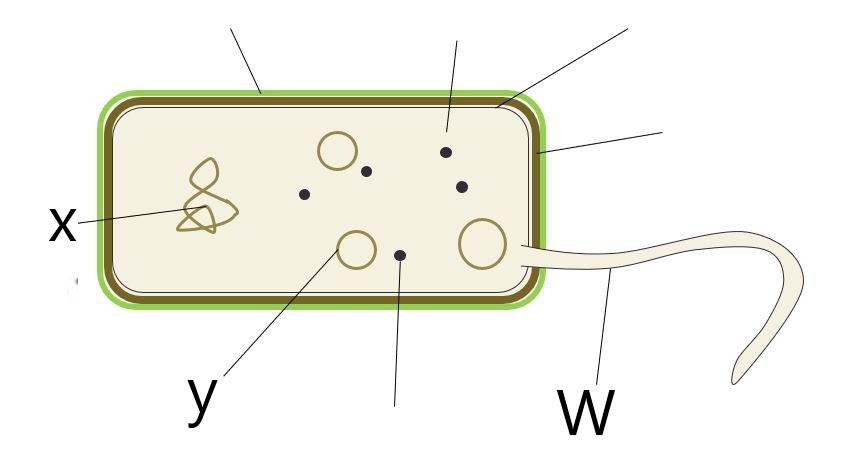
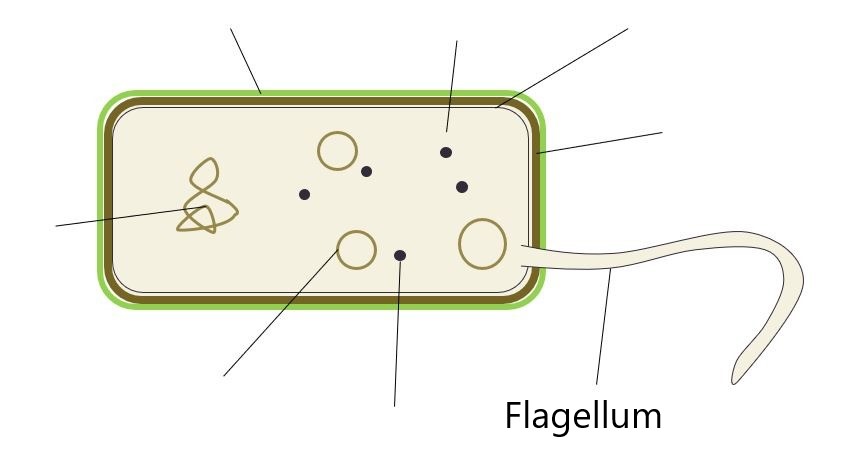
Identify structure X
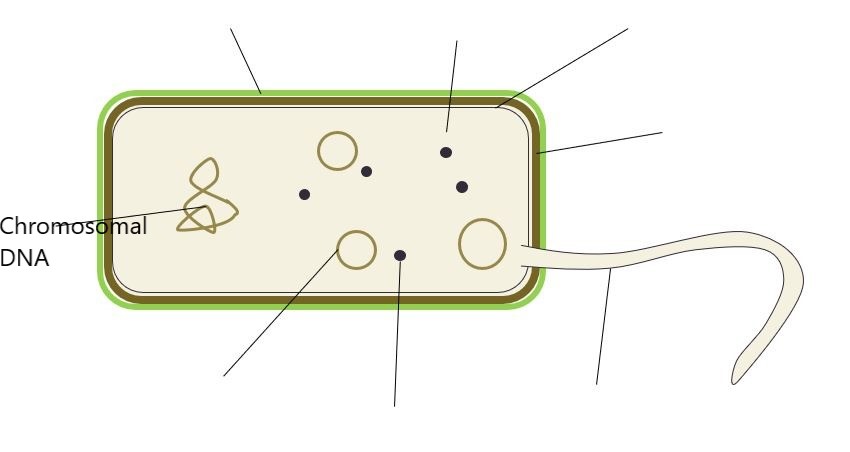
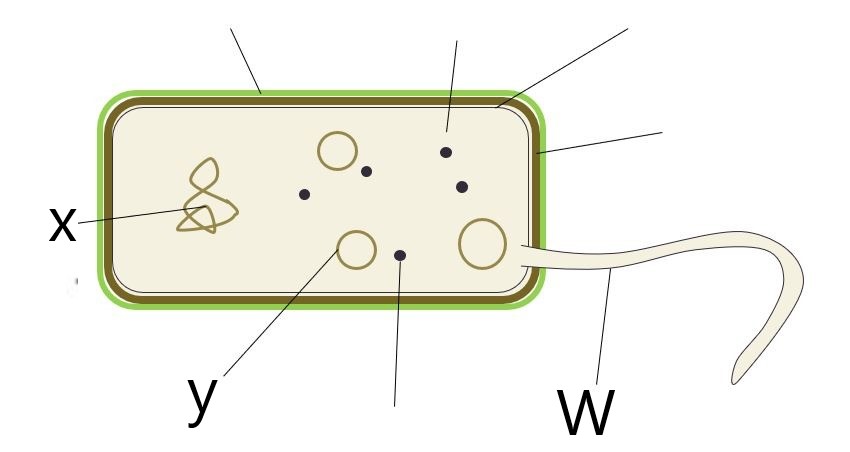
Identify Structure Y
Plasmid
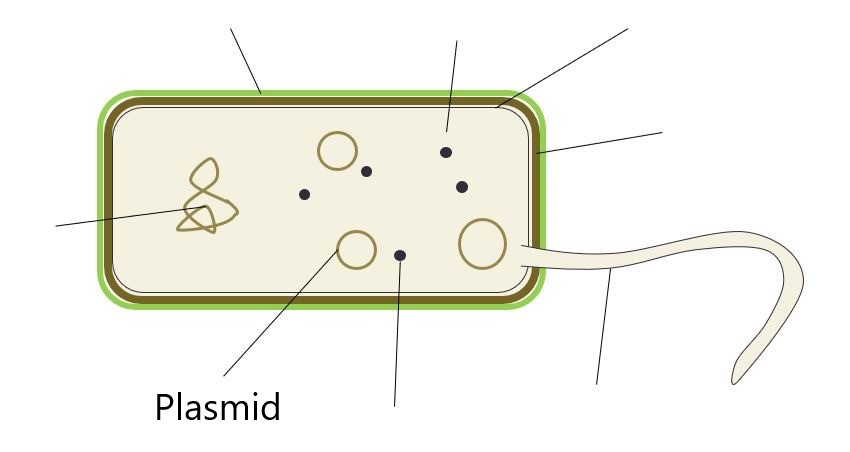
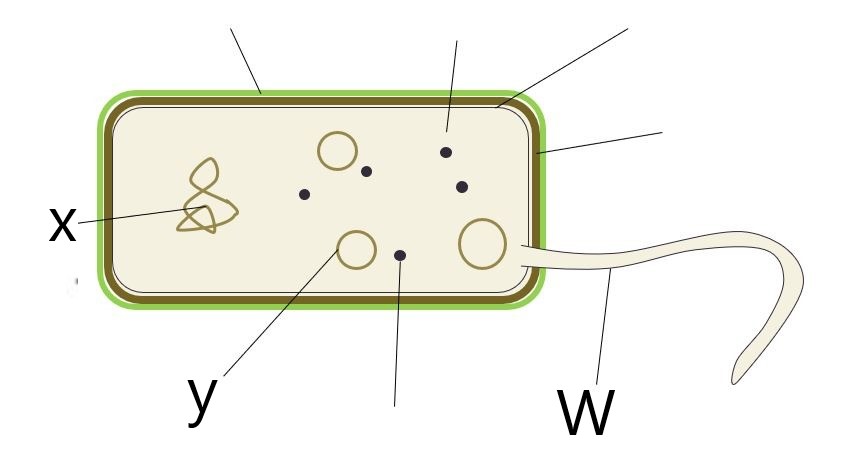
Identify Structure W
Flagellum
What is the cell wall of a fungal cell made of
chitin
Does fungal cells have chloroplasts
No
Describe two differences between a Plant cell and an Animal cell
One difference between a plant and an Animal cell is that plant cells have cell wall but animal cells doesn’t
Another difference between a plant and an animal cell is that plant cell have chloroplasts but animal cells doesn’t
What is the cell membrane often described as?
The cell membrane is often described as being selective permeable
What does selective permeable mean?
It means that it only allows some molecules to enter and exit the cell
What are the two different ways of passive transport?
Diffusion and Osmosis
What is the difference between passive and active transport?
Active transport requieres energy to take place but passive transport doesn’t
What is diffusion?
Diffusion is the movement of molecules from a high concentration area to a low concentration area down a concentration gradient
What is osmosis?
Osmosis is the movement of water molecules from an area of high water concentration to a low water concentration area through a selective permeable membrane down a concentration gradient.
What would happen if water molecules go inside a animal cell?
The cell may burst
What would happen if water molecules move out of an animal cell?
The cell may shrivel and shrink
What would happen if a plant cell is placed in a high water concentration solution?
The cell vacuole swells and the cell is said to be Turgid
What would happen if a plant cell is placed in a low water concentration solution?
The cell membrane pulls away from the cell wall, the vacuole shrinks and the cell is said to be Plasmolised
What is active transport
Active transport is the movement of molecules and ions from a low concentration area to a high concentration area against a concentration gradient
What matches with Adenine
Thymine
What matches with Cytosine
Guanine
What are proteins made from
Proteins are made from chains of amino acids
What is the small section of DNA that codes for a protein?
Gene
What is the structure of DNA
Double stranded helix (held by complementary base pairs)
What does mRNA
Messenger RNA
What is mRNA
mRNA is a molecule which carries a complementary copy of the genetic code from the DNA, in the nucleus, to a ribosome, where the protein is assembled from amino acids
What is the cell membrane made of?
Proteins and Phospholipids
Percentage change formula
(final-original)/original*100
What are proteins assembled from?
Proteins are assembled from free amino acids in the cytoplasm in structures called ribosomes
Where can amino acids be found?
In the cytoplasm
What does the order of the bases of the mRNA strand code for?
A specific amino acid
Example of a substance moved through the cell membrane by Diffusion
Oxigen or Carbon Dioxide
Example of a substance moved through the cell membrane by Osmosis
Water
Example of a substance moved through the cell membrane by Active trasnport
Sodium, Potassium
Types of proteins
Structural
Hormones
Antibodies
Receptors
Enzymes
Transport
Structure of Structural proteins
Fibrious
Structure of Enzymes
Globular
Structure of Hormones
Globular
Structure of Antibodies
Globular
Structure of Receptor Proteins
Globular
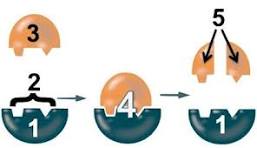
Identify 1
Enzyme
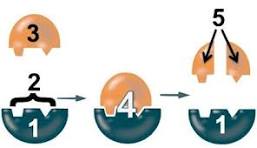
Identify 2
Active Site
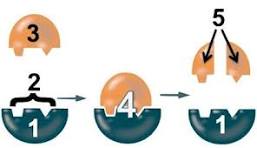
Identify 3
Substrate
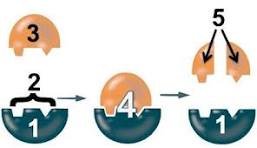
Identify 4
Enzyme/Substrate complex
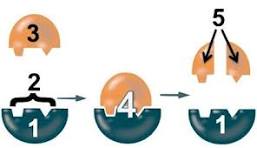
Identify 5
Product
What is an enzyme?
An enzyme is a biological catalyst found in all living cells, that speeds up chemical reactions by lowering the activation energy and remains unchangeable.
What is the substance that acts on an enzyme called?
The substance an enzyme acts on is called a substrate
Where does the substrate bind up with the enzyme
In the active site
What happens in degradation
One substrate joins with the complementary enzyme to form two smaller products
What is the substrate for Catalase and what product(s) are form?
Hydrogen Peroxide to form Oxygen and water
What happens in synthesis?
Two (smaller) substrates join with the complementary enzyme to build up a bigger product
How is the temperature/pH at which an enzyme is most active known as?
Optimum tempetature/pH
What will happen at high temperatures?
The enzyme will denature
What happens if the enzyme is denatured?
If the enzyme is denatured the substrate can no longer fit into the active site

