dna strucutre
 Call Kai
 Learn
Learn Practice Test
 Spaced Repetition
 Match
Match Flashcards
 Knowt Play
1/59

There's no tags or description
Looks like no tags are added yet.
Name | Mastery | Learn | Test | Matching | Spaced | Call with Kai |
|---|
No analytics yet
Send a link to your students to track their progress
60 Terms
DNA structure ex 1
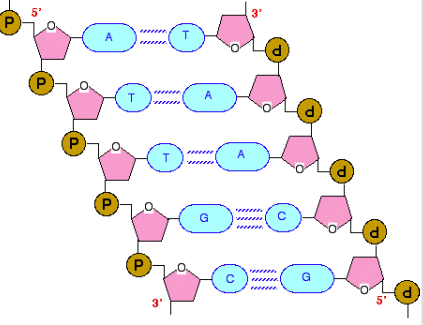
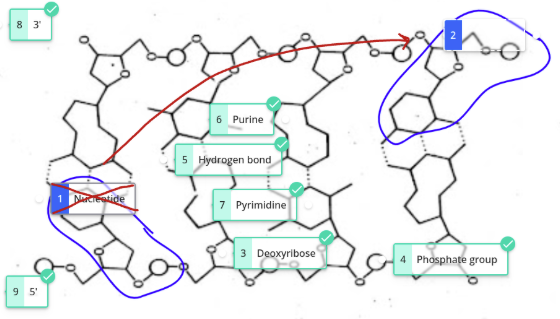
DNA structure ex 1
Rosalind Franklin
tried deducing the structure of DNA through x-ray diffraction + produced the photographs
found DNA is twisted and has a double helix structure (w/ nitrogenous bases stacked in the center)
Erwin Chargaff
analyzed the percentage of adenine, thymine, guanine, cytosine in DNA w/ different organisms
Erwin Chargaff’s Rule
in organisms,
adenine = thymine (percentage)
cytosine = guanine (percentage)
Watson/Crick
worked together to build a DNA model and use variations of the helix for their models (which was unsuccessful)
Warson found adenine could form hydrogen bonds with thymine
Maurice Wilkins
tried deducing the structure of DNA through x-ray diffraction
what are complementary base pairing?
specific bases bond to each other and revolves around DNA
adenine & thymine
guanine & cytosine
purines
2 rings (hydrogen bonds)
adenine/guanine
pyrimidines
1 ring (hydrogen bond)
thymine/cytosine
directionality of DNA
5’3 to 3’5 on one side vertically and flipped on the other
directionality based on carbon atoms
c4 into c5 is 5’
c2 into c3 is 3’
what is the goal of DNA replication?
to make identical copies of your genes (interphase)
eukaryotes in dna replication
multiple origins
prokaryotes in dna replication
1 origin
what is the role of complementary base pairing in dna replication?
allows for the creation of daughter strands through complementary base pairing
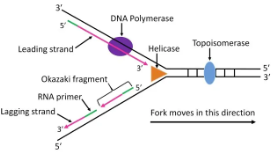
topiomerase role
unwinds dna
helicase role
unzips dna
primase role
inserts temporary primers onto parent dna
dna polymerase role
builder, base pairs + builds new dna
nuclase role
removes temporary primers from dna
ligase role
glue, forms bonds between sugars/phosphates
topiomerase order in dna replication
1
helicase order in dna replication
2
primase order in dna replication
3
dna polymerase order in dna replication
4
nuclase order in dna replication
5
ligase order in dna replication
6
what is the difference between a leading and lagging strand?
lagging - discontinuous, lagging BEHIND
leading - continuous, ahead
leading v lagging strand
why is dna replication semi-conservative?
because it has one old strand and 1 new strand when dna is replicated (where dna polymerase then proofreads the new strand for mistakes)
what are the major parts of the cell cycle?
G1
S
G2
M
what is the order of the cell cycle and which are apart of interphase?
G1, S, G2 (interphase, 1-3)
M (4)
G1
cell increase in size
prepares to replicate it’s DNA
cellular contents (excluding chromosomes are duplicated)
S
cell replicates its dna so the cell now has 2 sets of chromosomes
each of the 46 chromosomes are duplicated by the cell
G2
cell continues growing and prepares to divide
cell double checks the duplication of chromosomes for any errors
makes any needed repairs/fixes
M
cell stops growing and divides into 2 daughter cells (each have same # of chromosomes)
what makes up the m-phase from beginning to end?
prophase
metaphase
anaphase
telophase
cytokinesis
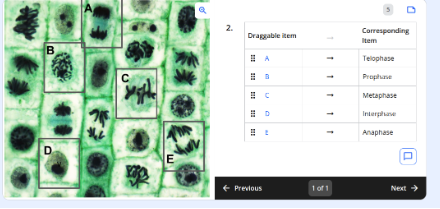
phases of mitosis ex 1
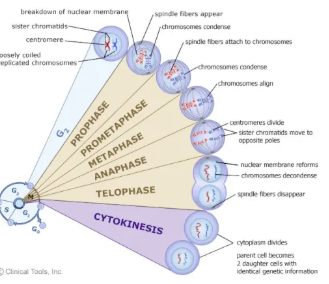
phases of mitosis ex 2
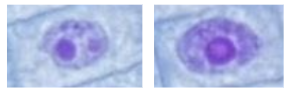
interphase ex
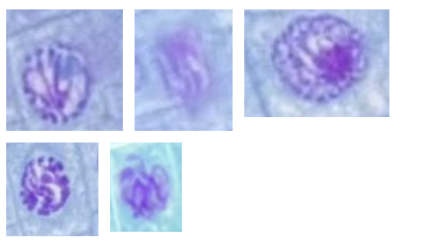
prophase ex
metaphase ex
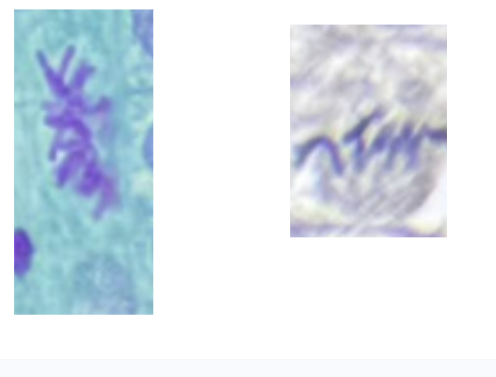
anaphase ex
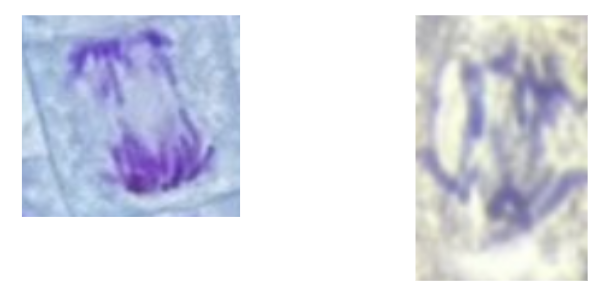
telophase/cytokinesis ex
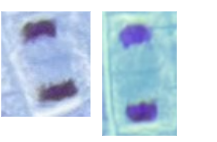
why do cells divide?
to replace old, dead or damaged cells
to grow the organism/cell
G1 checkpoint
checks that there’s no DNA damage
checks theres enough resources for the cell
S checkpoint
checks for errors during DNA replication
G2 checkpoint
checks to makes sure there’s no DNA w/ damage
checks that chromosome sets are complete and that theres enough cell components
m checkpoint
checks that all sister chromatids are attached to mitotic spindle
what happens if the cell cannot pass the checkpoint(s)?
it may either go to G0 (if in G1) where it will pause and stay alive but not actively prepare to divide
can also go through apoptosis (self destruct) if the cell is a danger to other cells
how is the cell cycle controlled?
through internal/external regulators
through CDKS/cyclins
internal regulators
inside the cell, proteins that help the cells divide at a correct rate under the right conditions
external regulators
signals from the outside of the cell that regulates the cell cycle based on environmental conditions and other factors
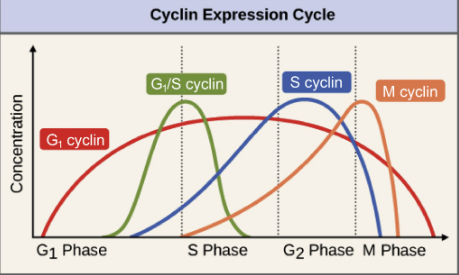
CDKs
enzymes that interact w/ cellular components related to the cell cycle
usually present in the cell inactively + is only activated when it binds to cyclins
cyclins
proteins that are made and broken down at certain times during the cell cycle (levels rise and fall depending on where in the cell cycle)
attaches to and activates CDKs
what happens after CDKs/Cylins bind together?
shape of CDK changes, which signals that they are now active (active cyclin-CDK complex) which allows them to interact w/ specific molecules in the cell and allow the cycle to keep going
what are MPFs?
a cyclin/CDK complex made up of cyclin B and CDK1
regulates the entry from G2 to M phase
MPF activity decrease towards the end of mitosis b/c of the break down of cyclin B
cyclin/cdk concentration through cell cycle
what is the role of p53 in the cell cyle?
it prevents mutations that are in some DNA from being passed to daughter cells
what happens if there is a loss of control of the cell cycle?
possible spread of cancer cells b/c there is no checkpoints/regulators within the cell
if there is a rapid dividing of cells, then it it more likely for there to be cancer cells which will spread
Explore top notes

