Phylum Platyhelminthes. Order Tricladida,Polycladida and Class cestoda
 Call Kai
 Learn
Learn Practice Test
 Spaced Repetition
 Match
Match Flashcards
 Knowt Play
1/116

There's no tags or description
Looks like no tags are added yet.
Name | Mastery | Learn | Test | Matching | Spaced | Call with Kai |
|---|
No analytics yet
Send a link to your students to track their progress
117 Terms
Bilateria: Cephalization
Clear head and tail ends with sensory processing
Problems with Turbellaria as a Clade?
No common ancestor with all descendants
Some are related more to parasitic groups
Order Polycladida, Tricladida
Circular, Ciliated epidermis
Regeneration
Free swimming
Clade Neodermata
Mostly parasitic
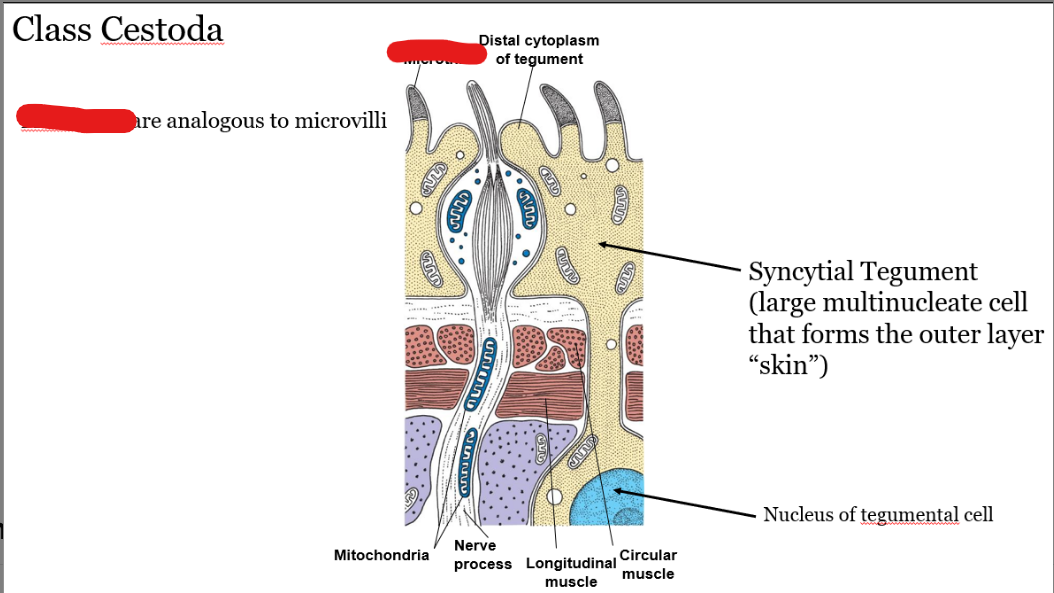
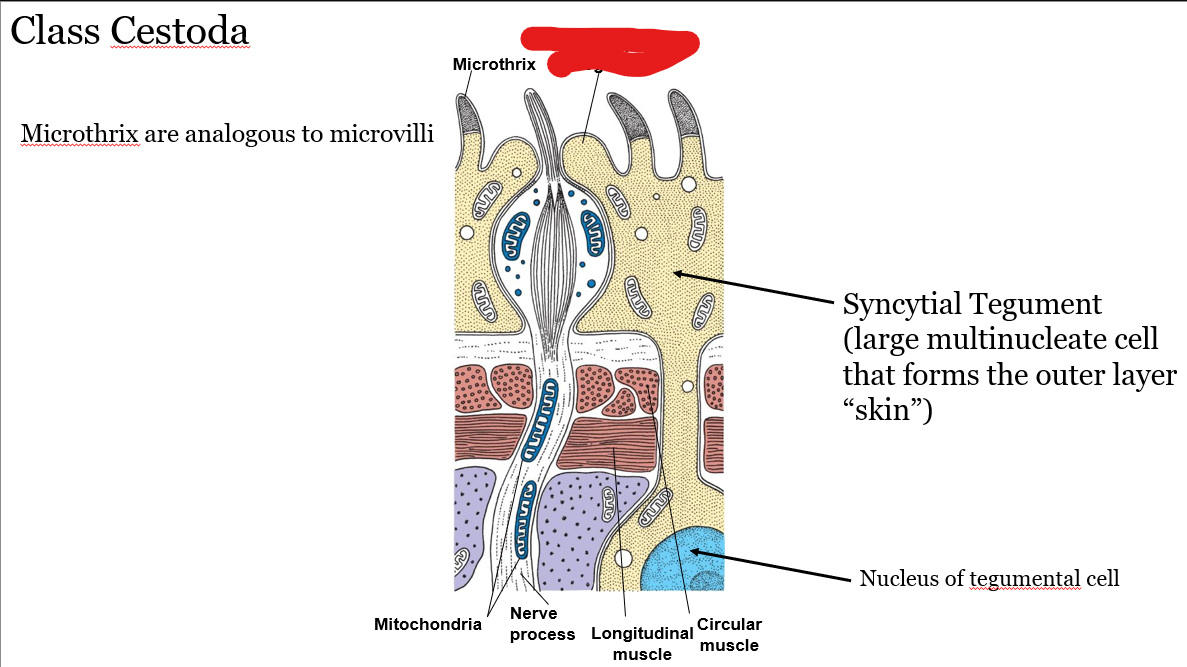
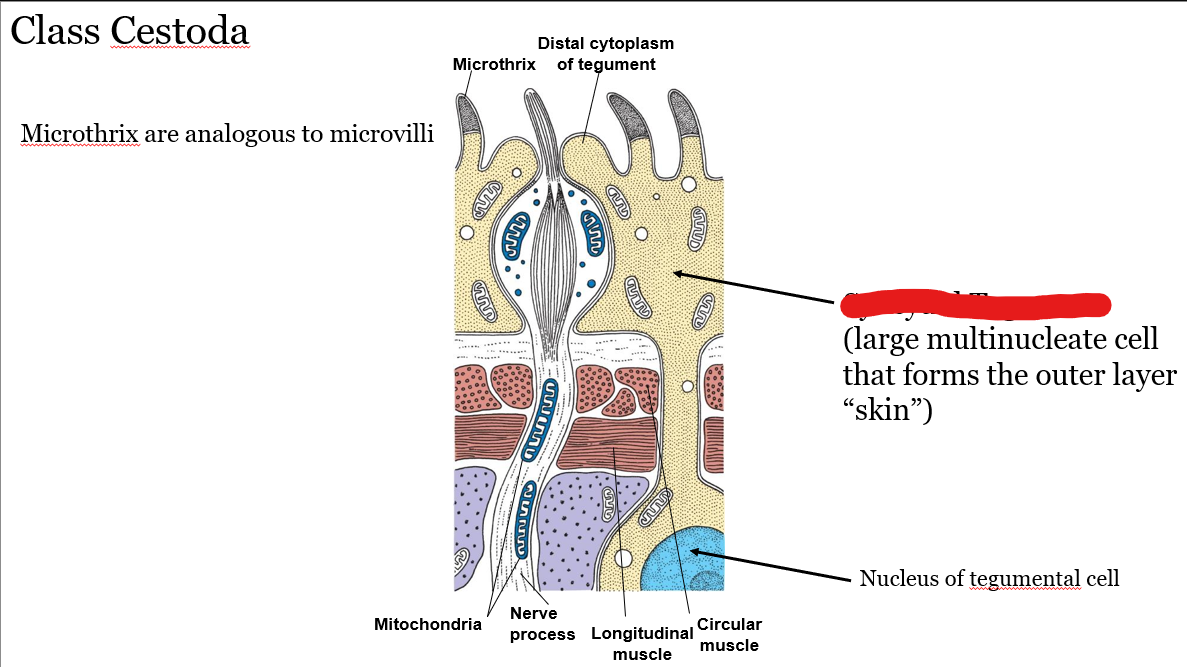
Syncytial tegument(Tough outer skin layer used)
Complex life cycle
Tricladida Movement
Cilia, Muscular
Rhabdites(Tricladida)
Used for protection and mucus secretion in epidermis
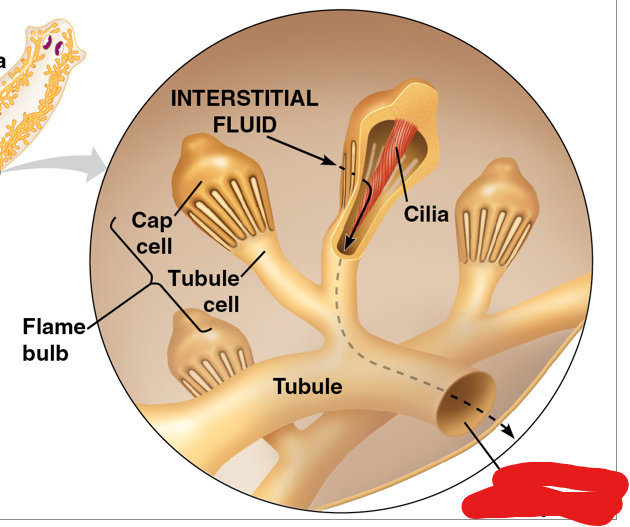
Waste removal system(Tricladida)
Protonephridal System
Nephron (Tri)
Osmoregulation and excretion of nitrogenous waste
Sensory organs in (Tri-cluh-di-duh)
Ocelli- Eyespots
Statocysts-Helps with gravity orientation
Rheoreceptors- Sense water currents/Pressure change
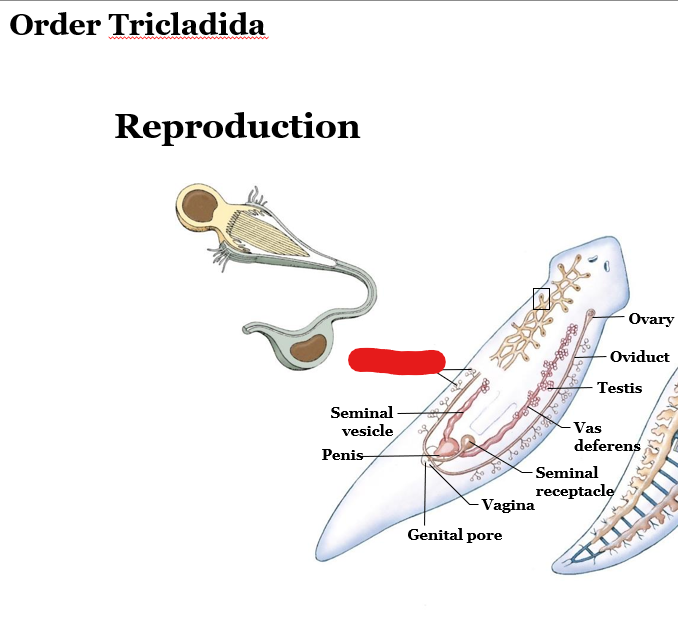
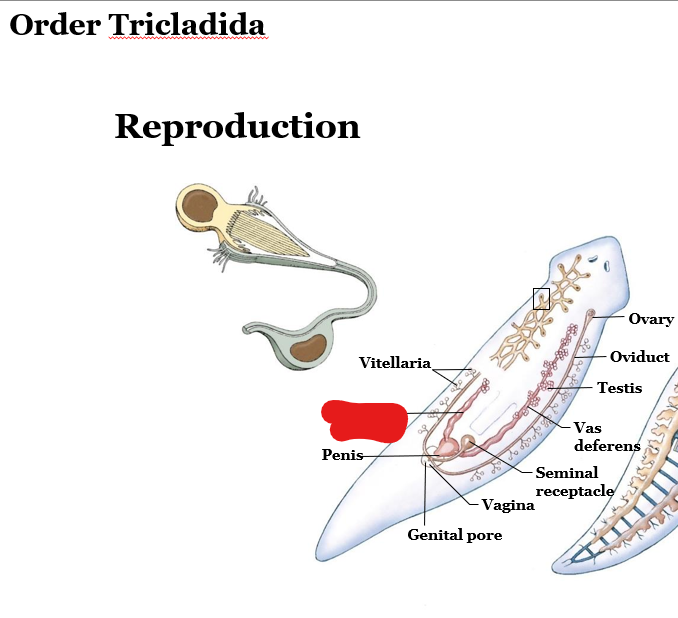
Reproduction(Tri)
Fission(Asexual)
Regeneration(Asexual)
Hermaphrodite (Sexual)
NeoBlast
Responsible for Tricladida regen
Order polycladida classes?
Class Trematoda(Flukes)
Class Monogena
Class Cestoda(Tapeworms)
Class Trematoda life cycle
Snail eats miracidium→ Sporocyst hatches into Redia then Cercaria→ Metacecaria cyst in fish muscle→ Human eats fish, turning into Adult fluke in Human
Class monogena life cycle
Juvenile→Adult (Lay eggs or live birth)
Class Cestoda (Beef tapeworm) Life cycle
Gravid Proglotid → Shelled Larva→ Invaginated Cysticercus
→ Evaginated Cysticercus→ Adult Tapeworm
Phylum Rotifera
Pseudocoelomate
Body covered with cuticles
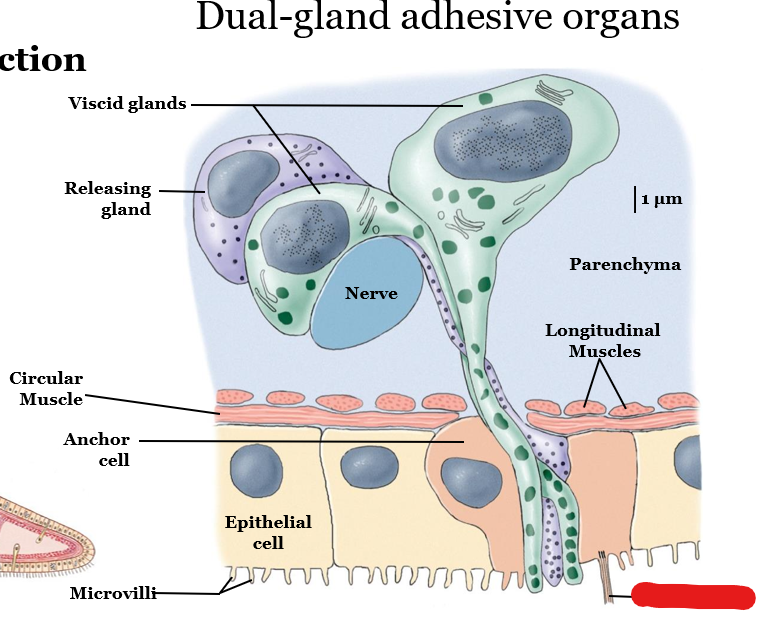
Dual gland ahesive organ
Allows worm to stick and unstick itself
Viscid Glad
Makes sticky
Releasing Gland
Makes sticky unsticky
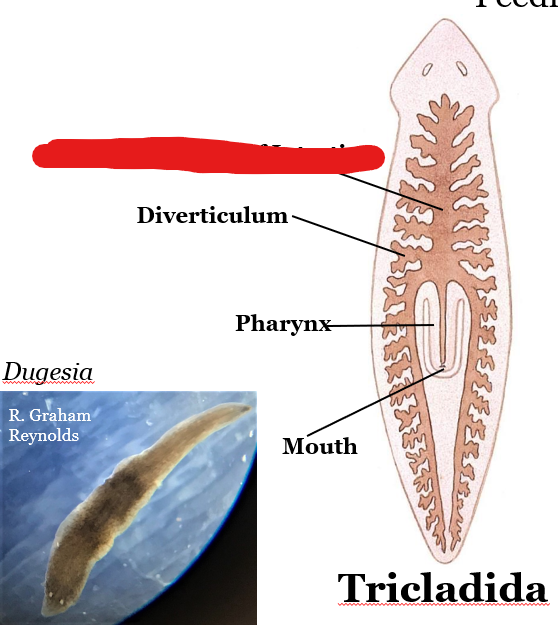
Anterior Branch of Intestine
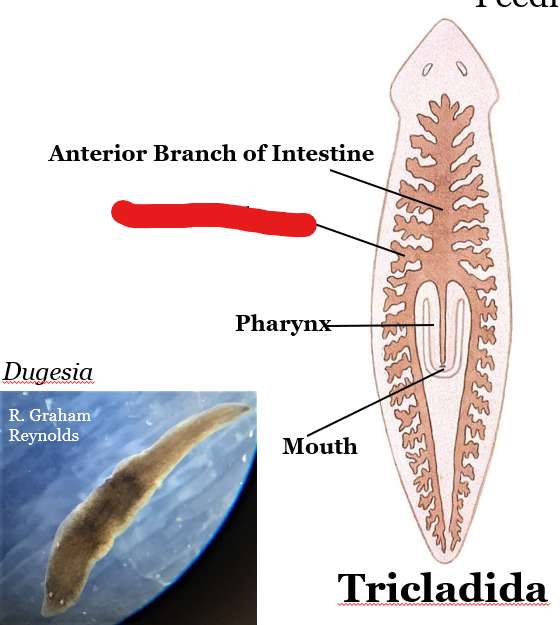
Diverticulum
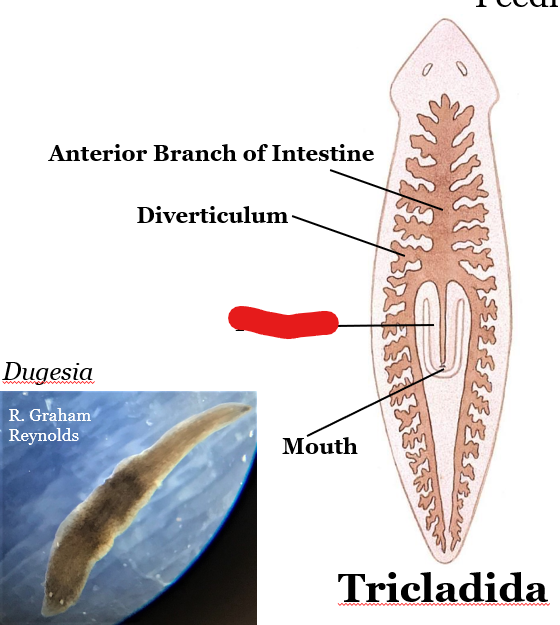
Pharynx
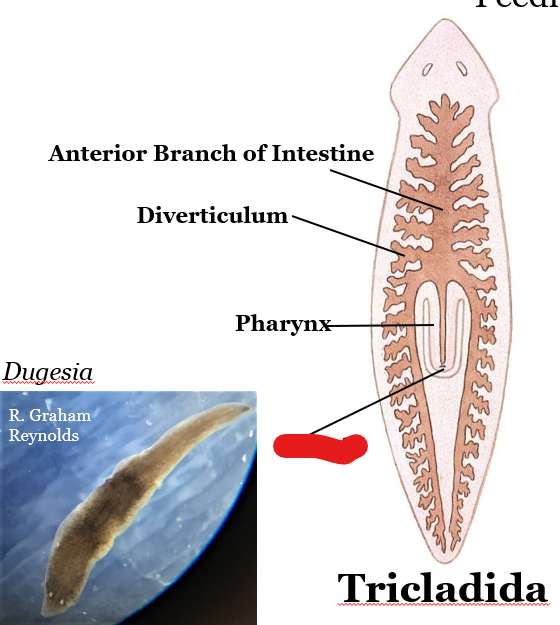
Mouth
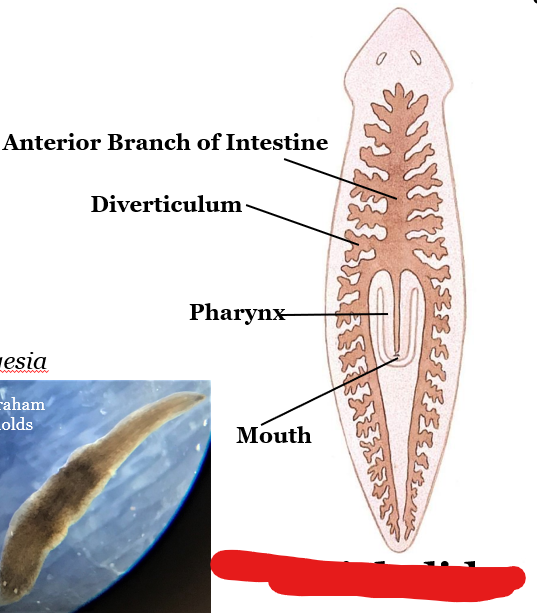
Tricladida
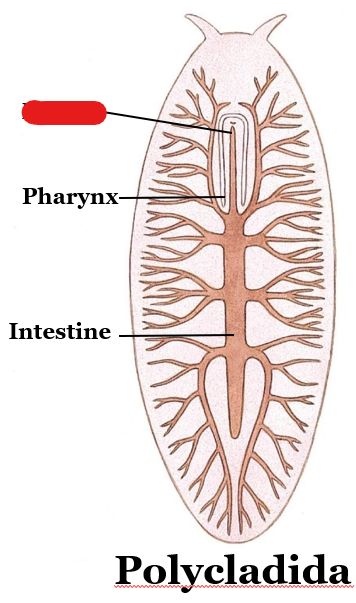
Mouth
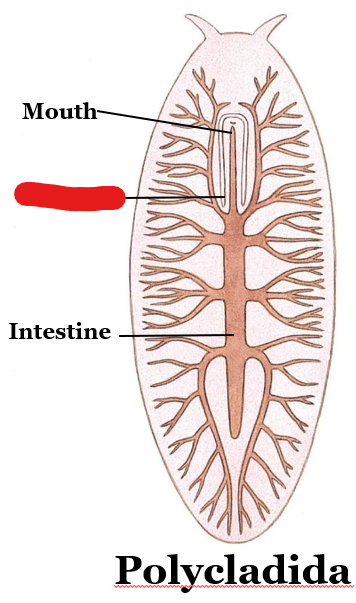
Pharynx
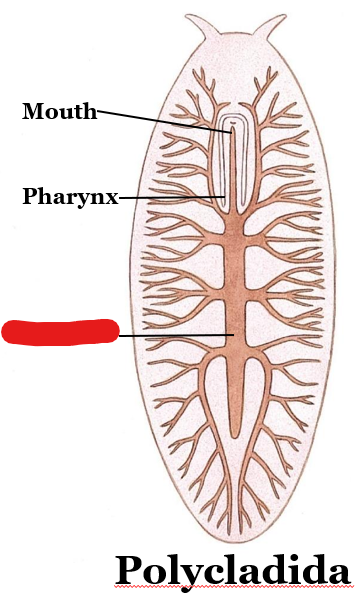
Intestine
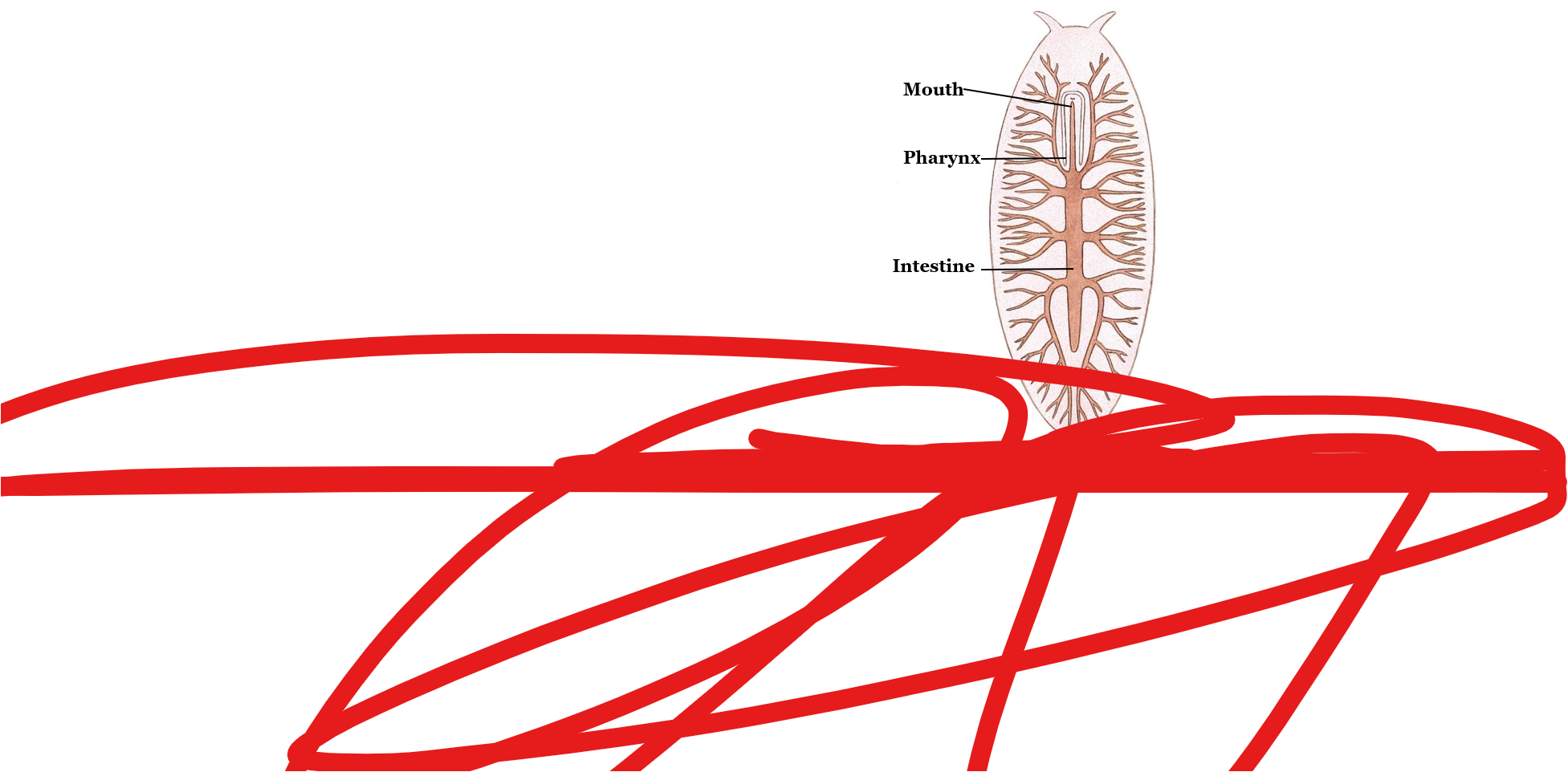
Polycladida
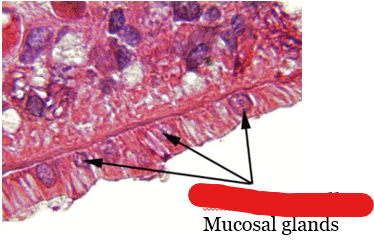
Rhabdite Cells
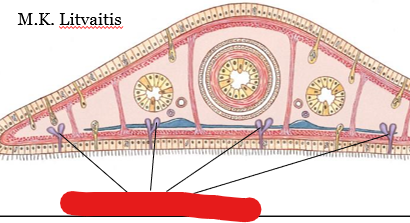
Dual glad adhesives
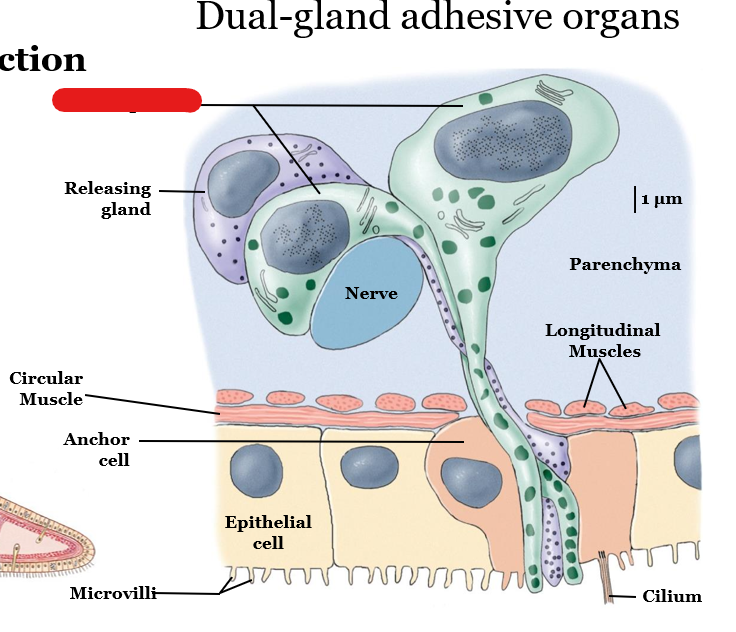
Viscid Glands
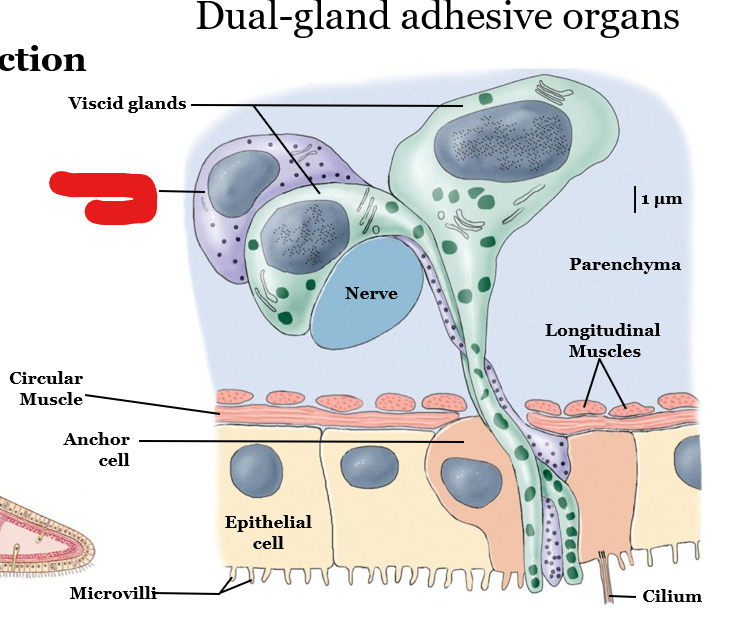
Releasing Gland
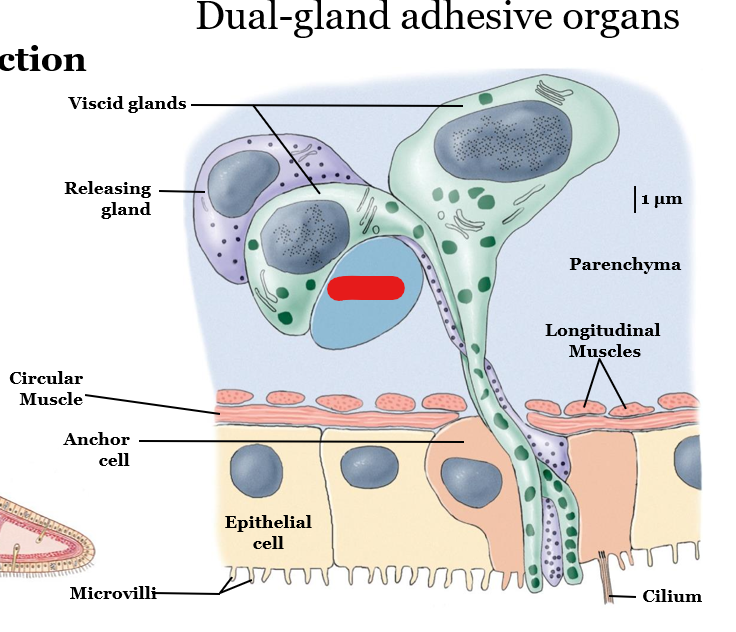
Nerve
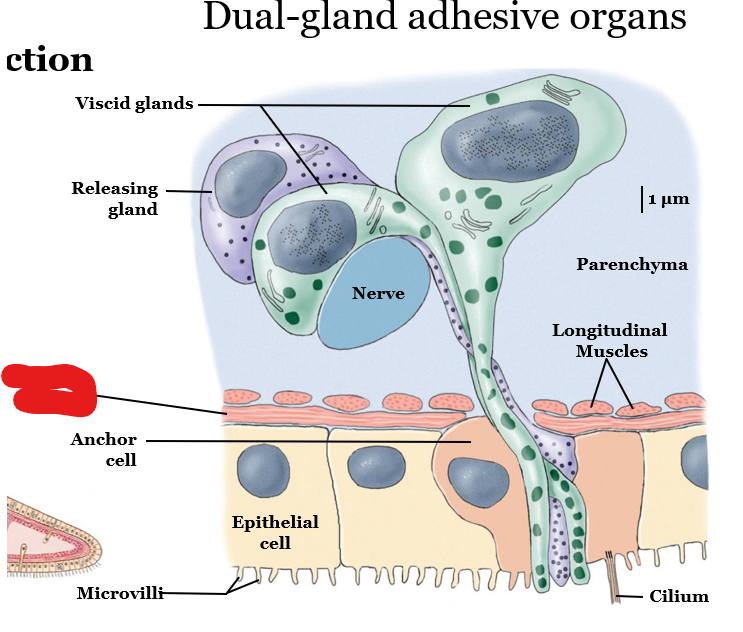
Circular Muscle
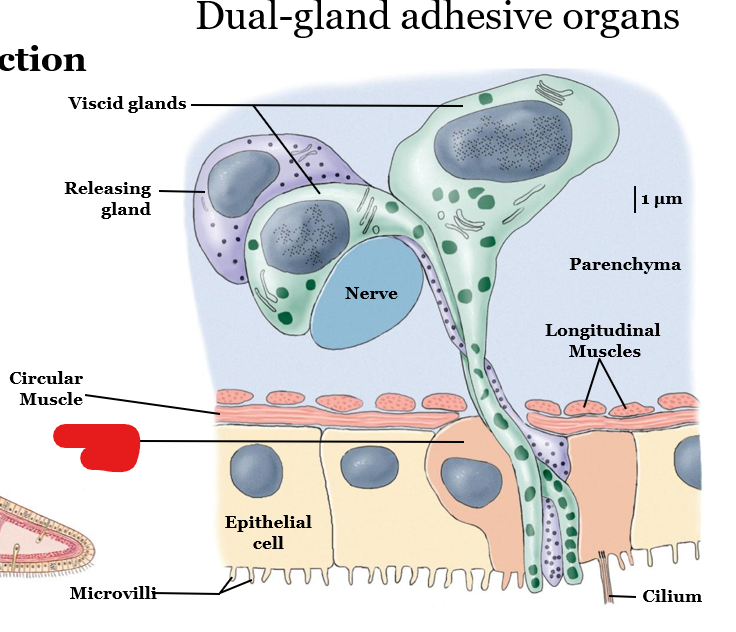
Anchor Cell
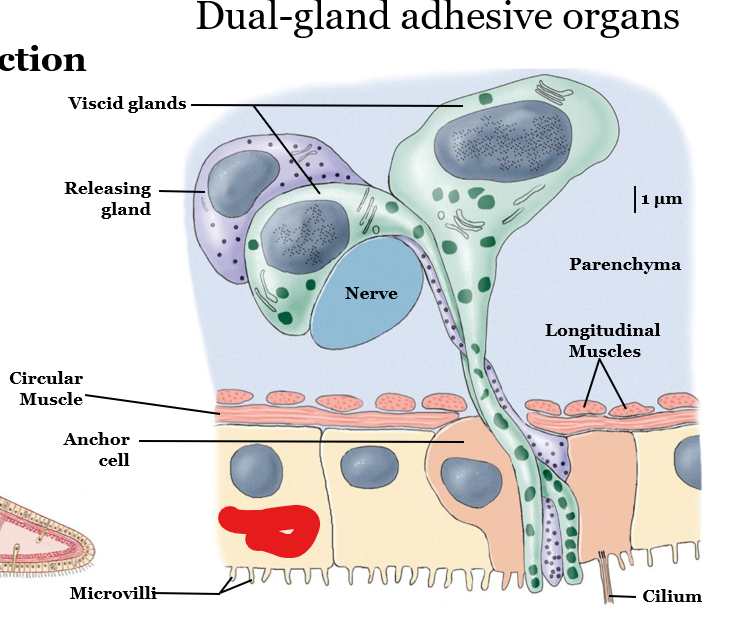
Epithelial Cell
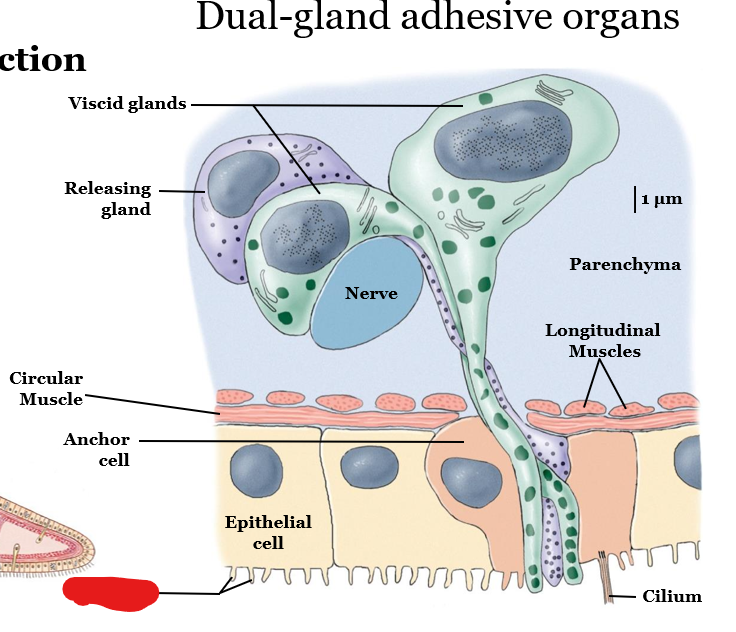
Microvilli
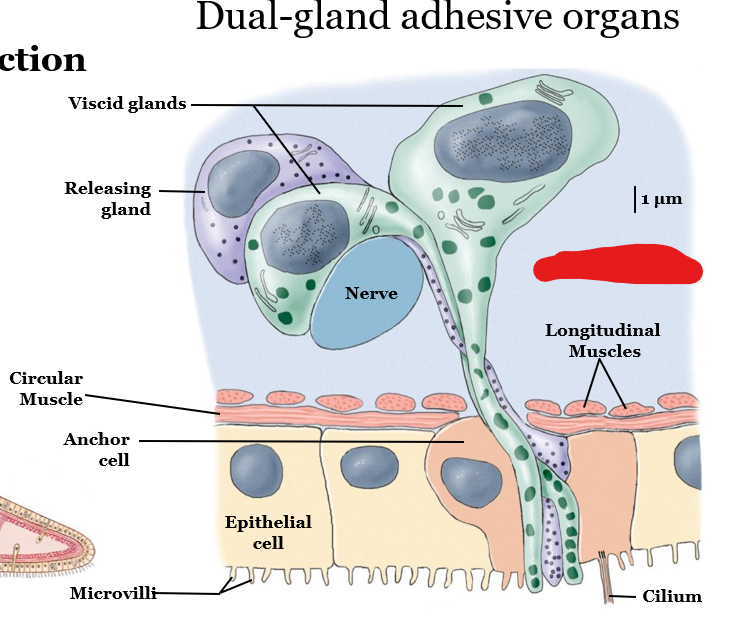
Parenchyma
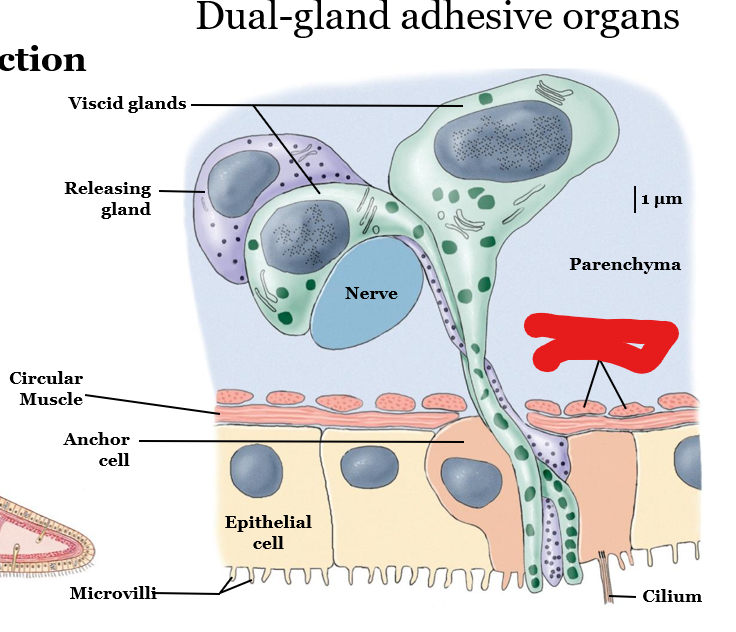
Longitudinal Muscles
Cilium
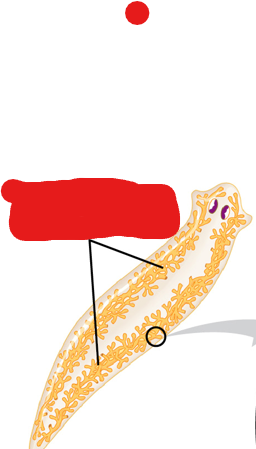
Tubules of protonephridia
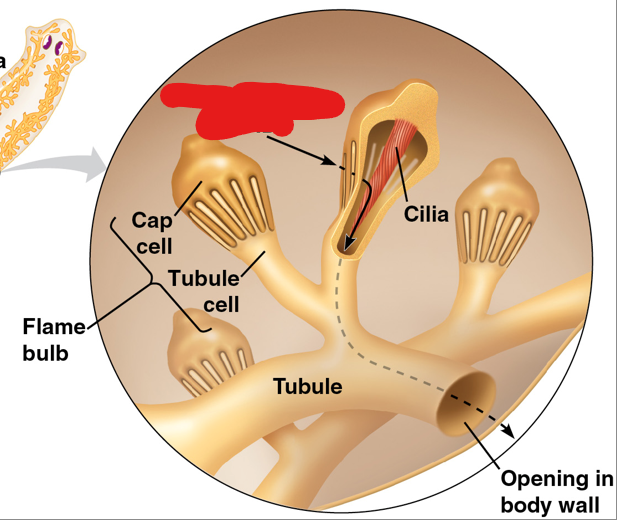
Interstitial Fluid
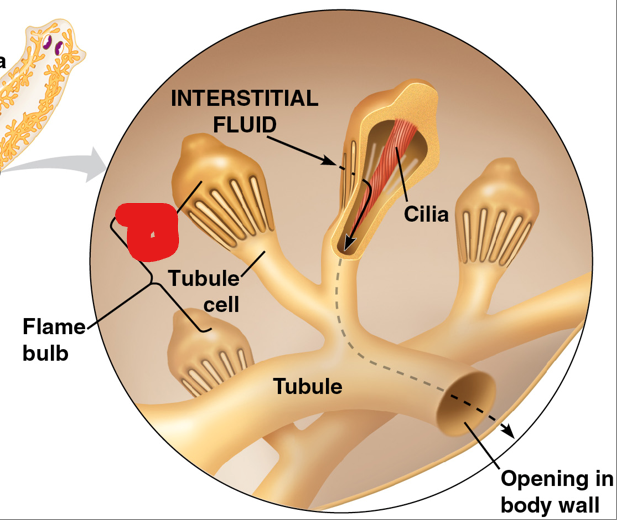
Cap Cell
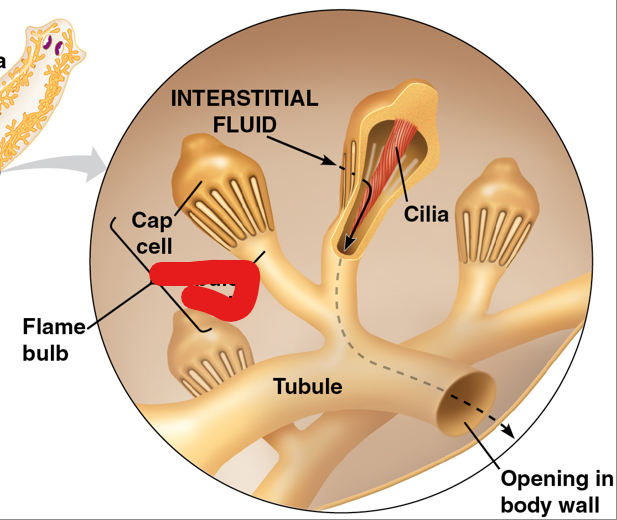
Tubule Cell
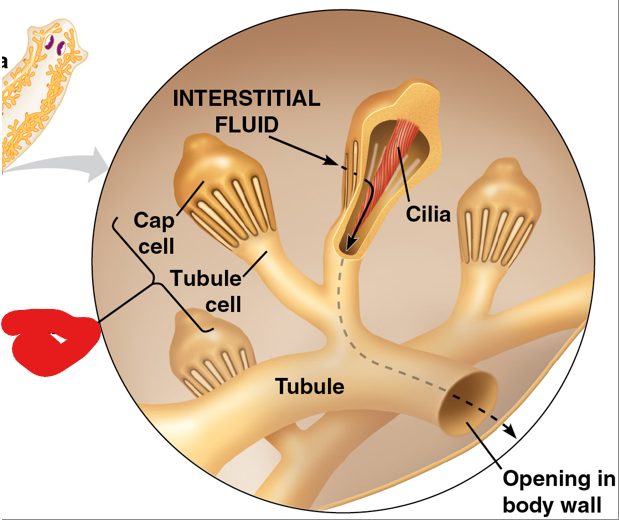
Flame blulb
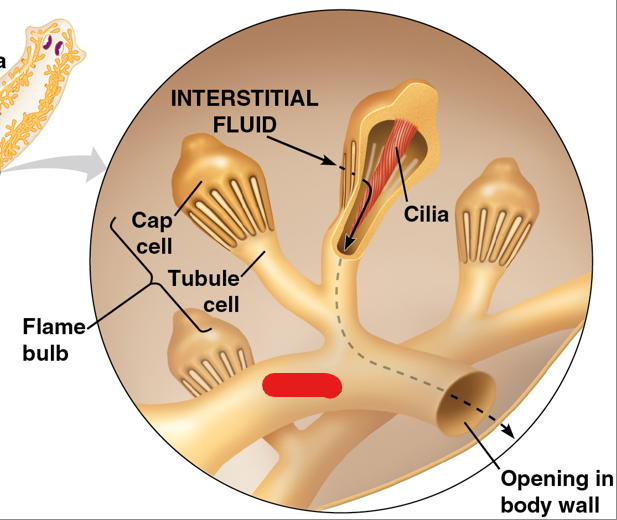
Tubule
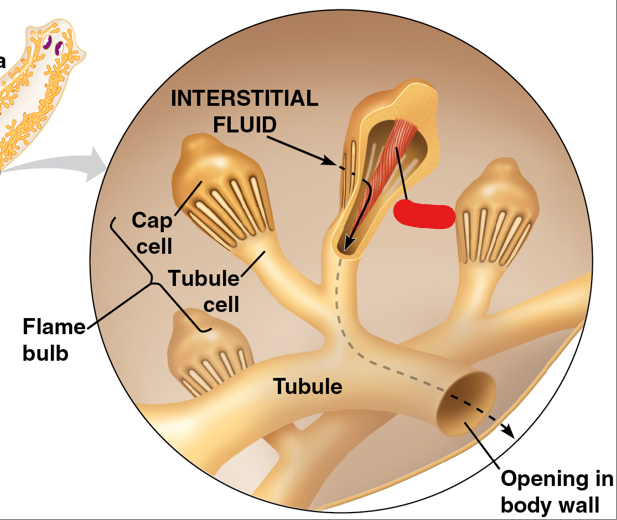
Cilia
Opening in body wall
Vitellaira
Seminal Vesicle
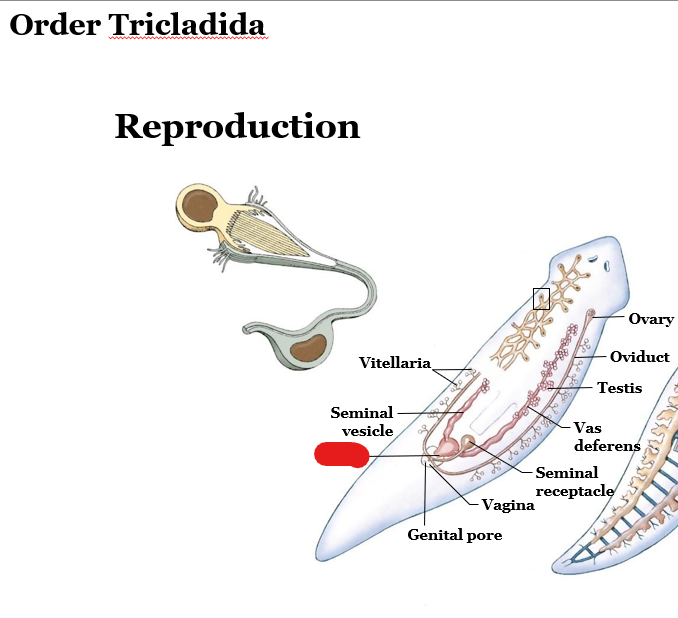
Penis
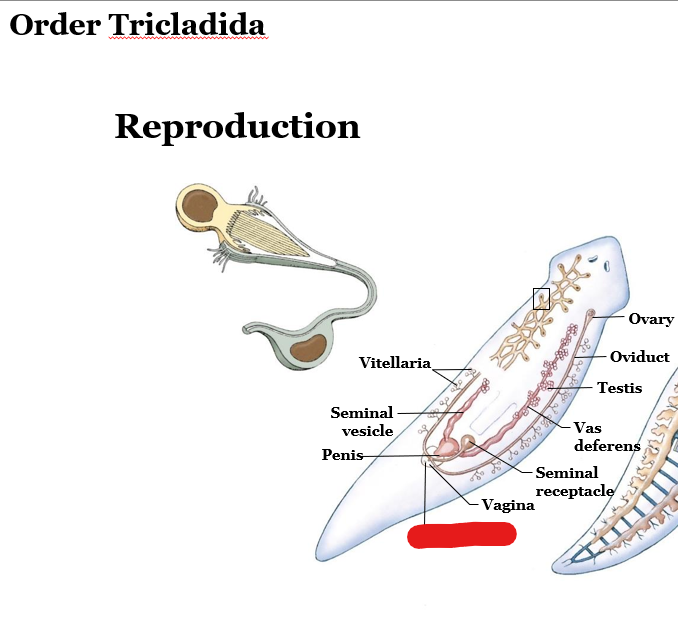
Genital pore
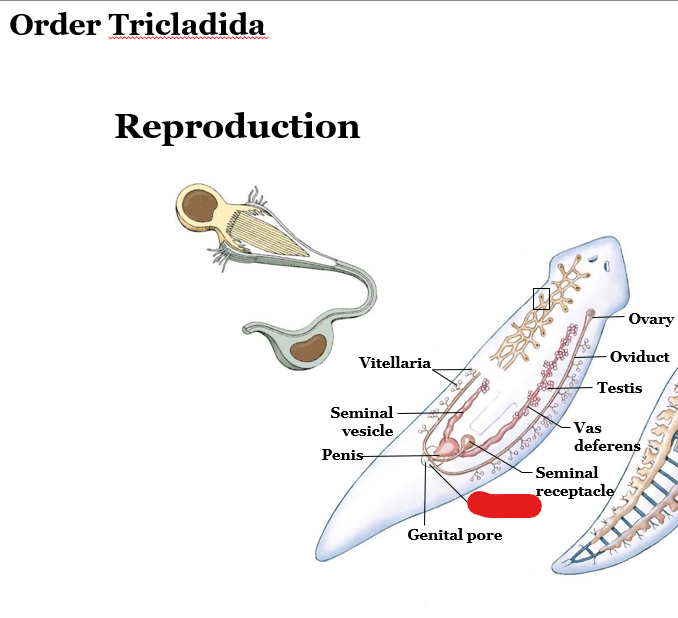
Vagina
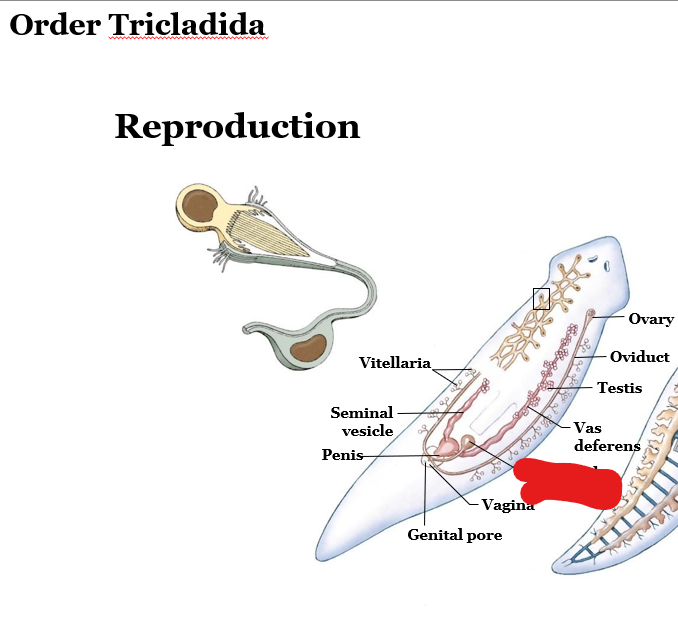
Seminal receptacle
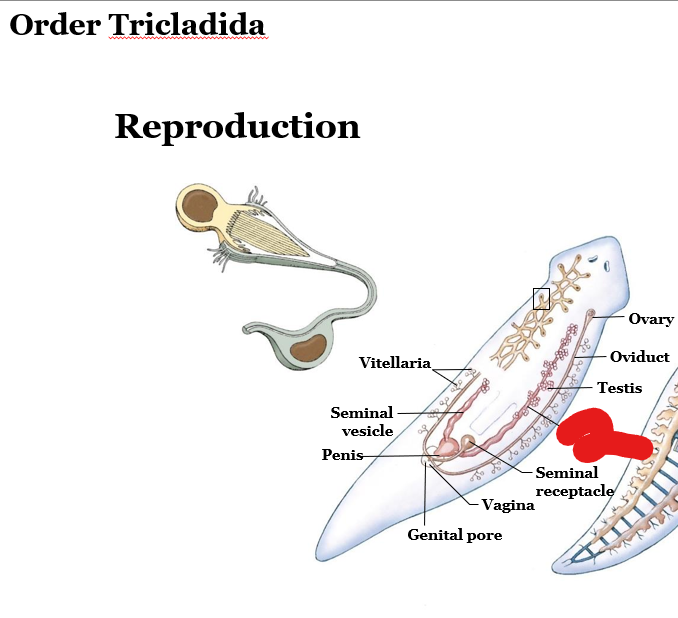
Vas deferenes
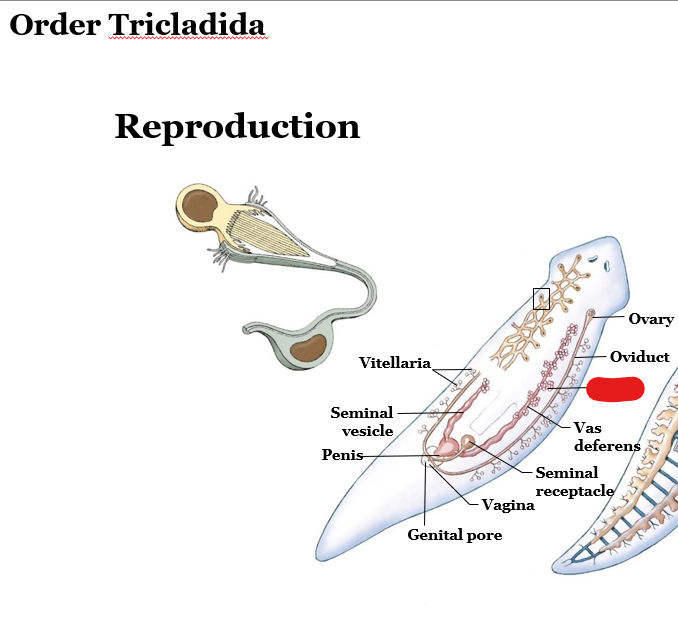
Testis
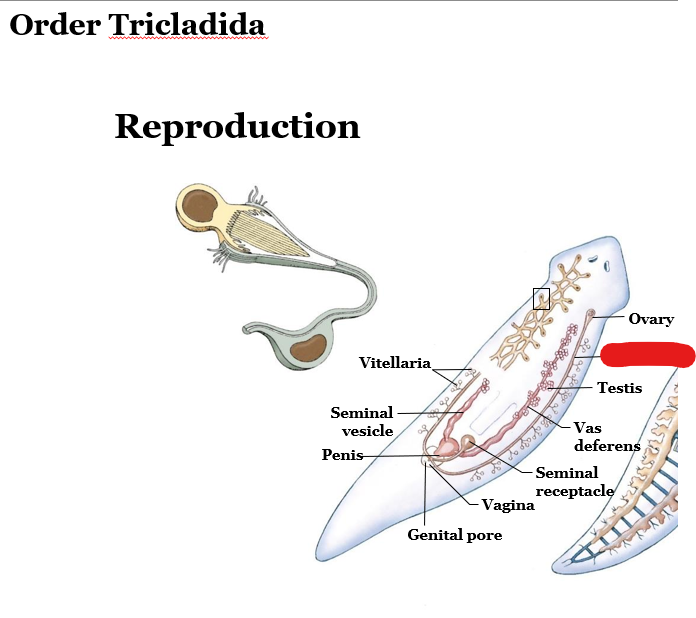
Oviduct
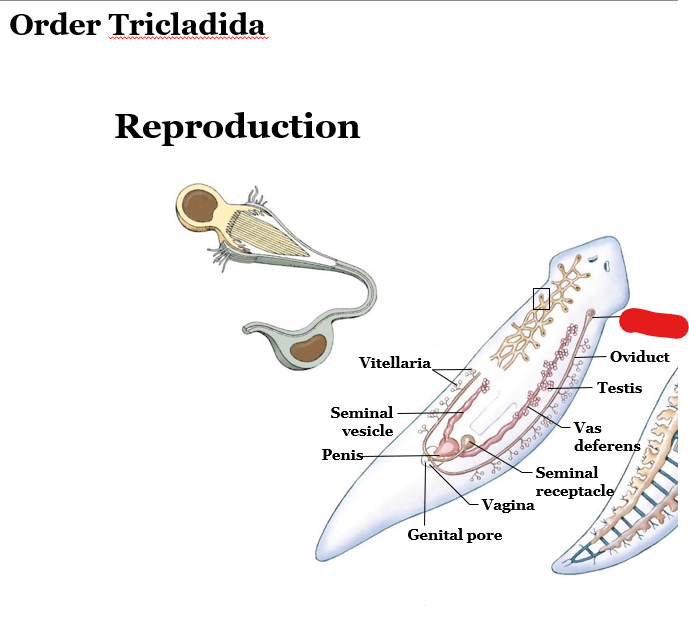
Ovary
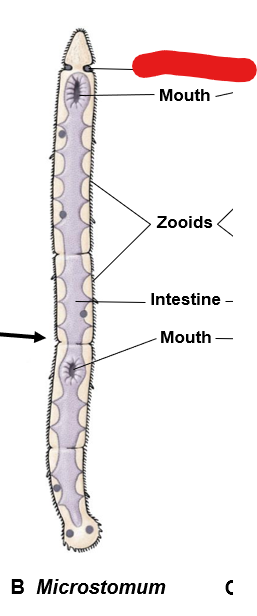
Ciliated Pits
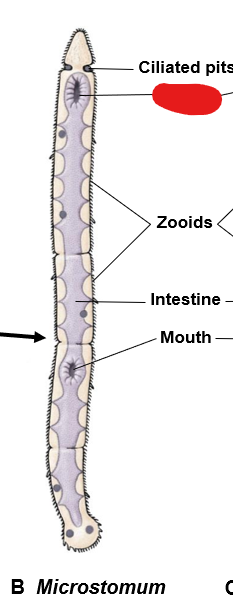
Mouth
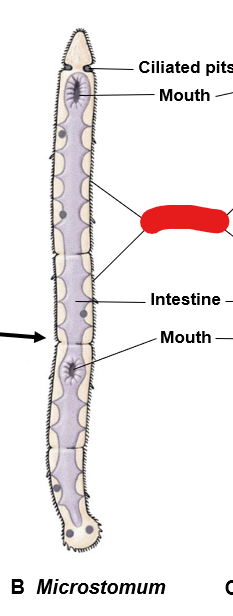
Zooids
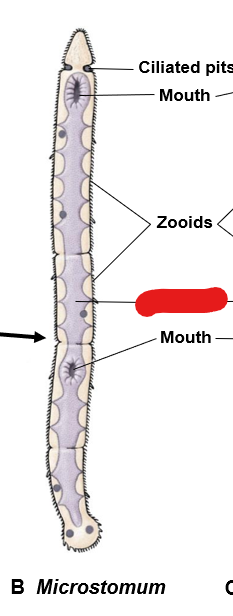
Intestine
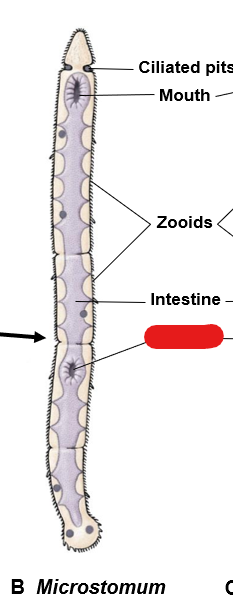
Mouth
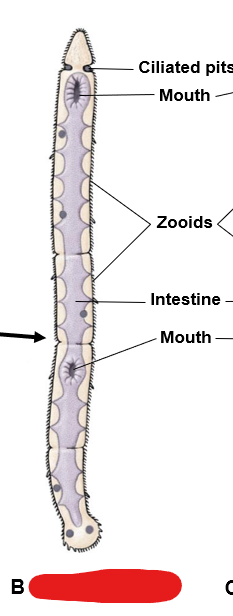
Microstomum
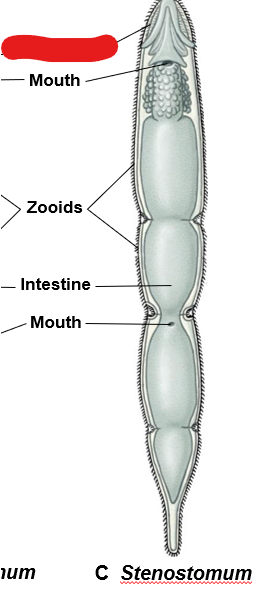
Ciliated Pits
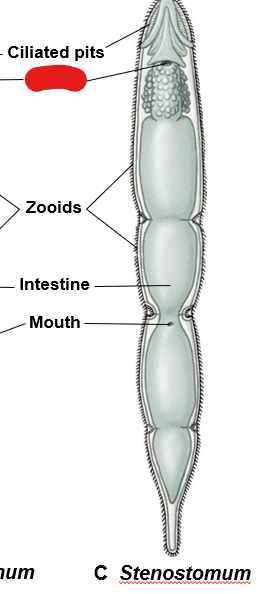
Mouth
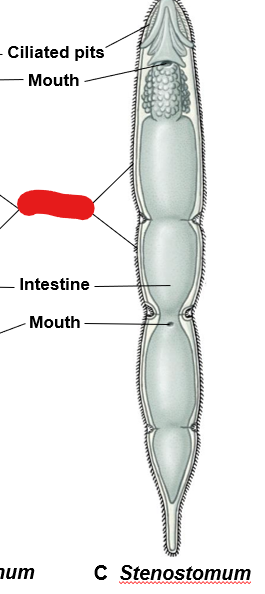
Zooids
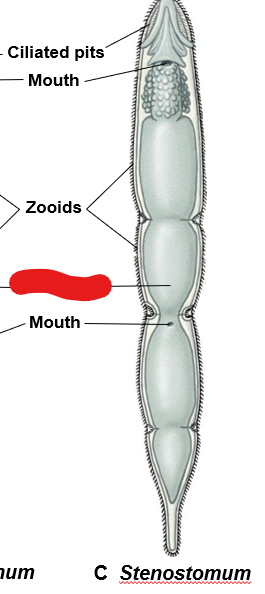
Intestine
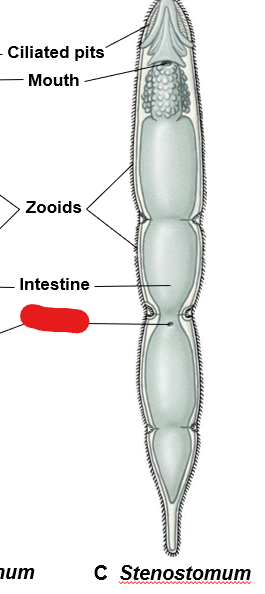
Mouth
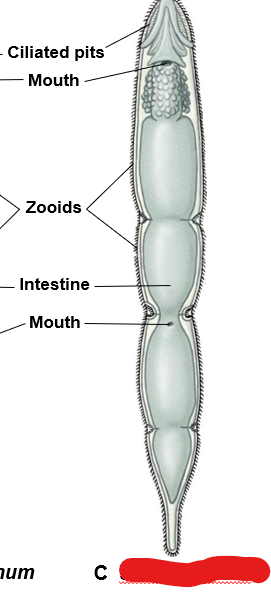
Stenostomum
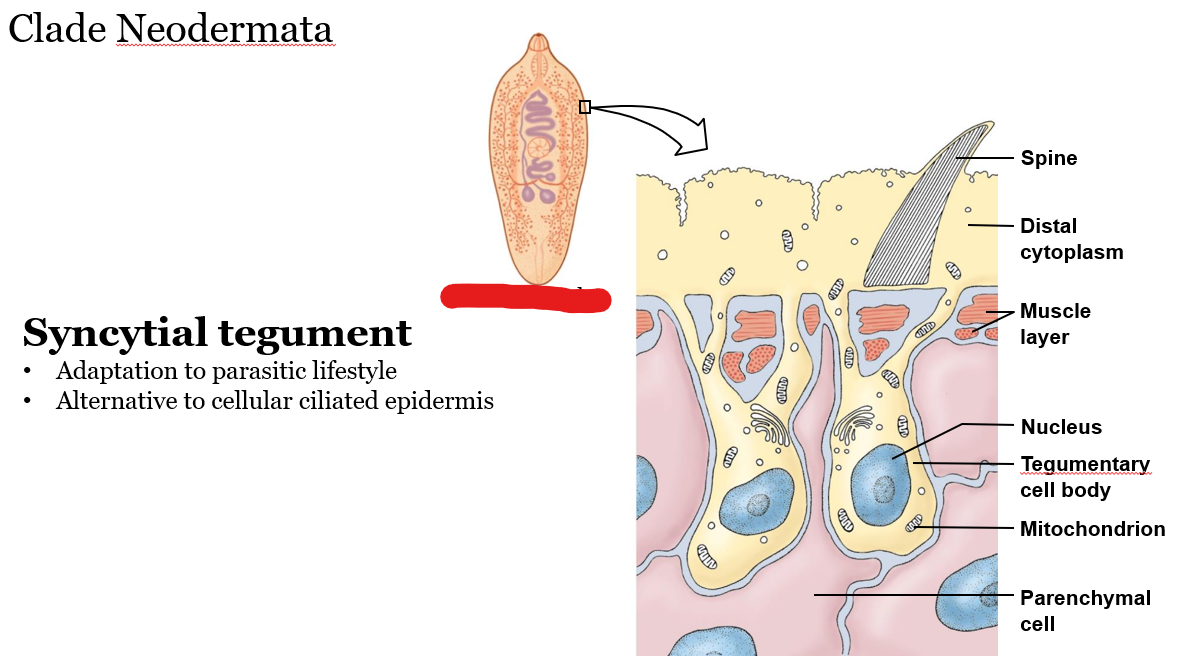
Class Trematoda
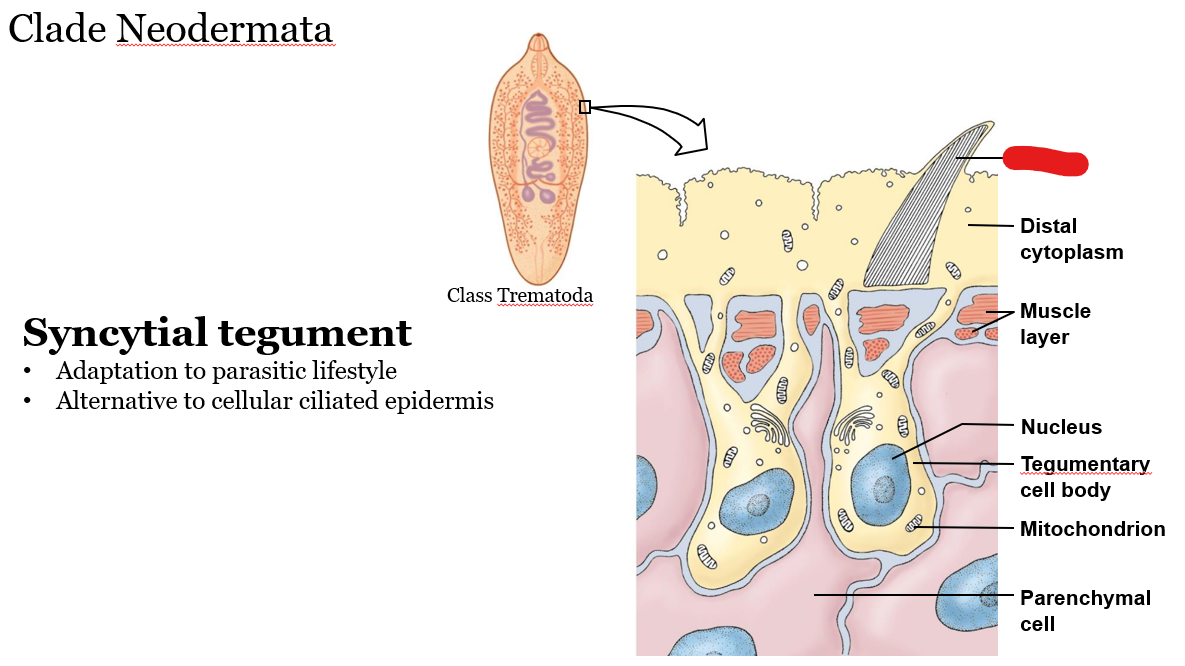
Spine
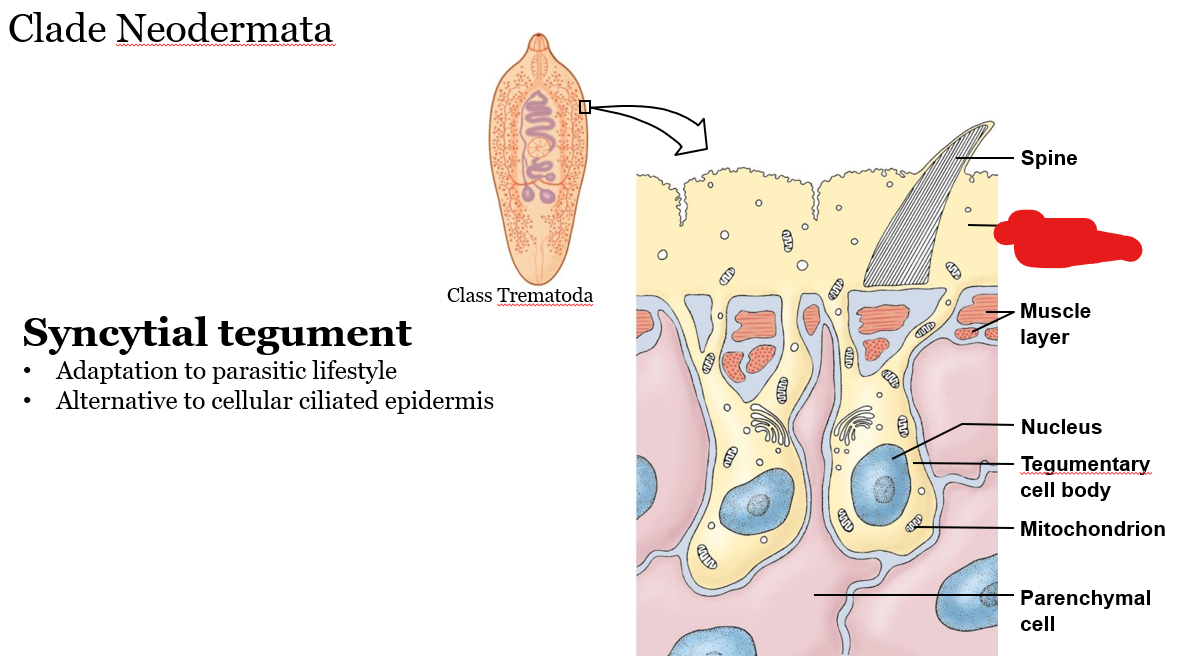
Distal Cytoplasm
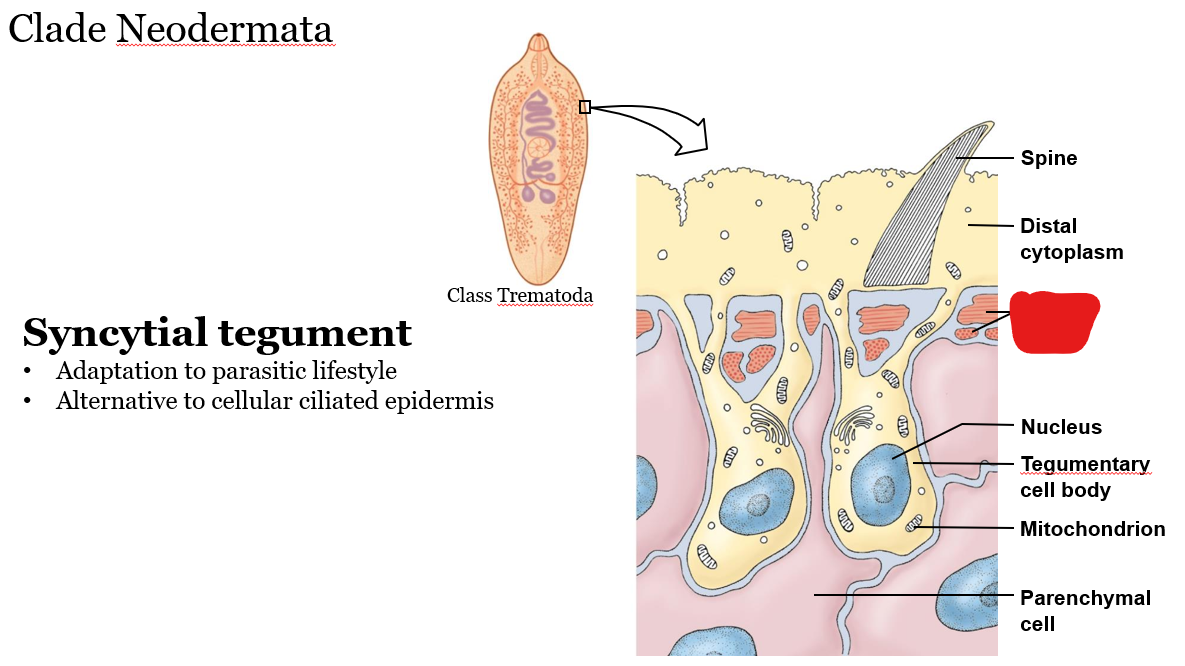
Muscle layer
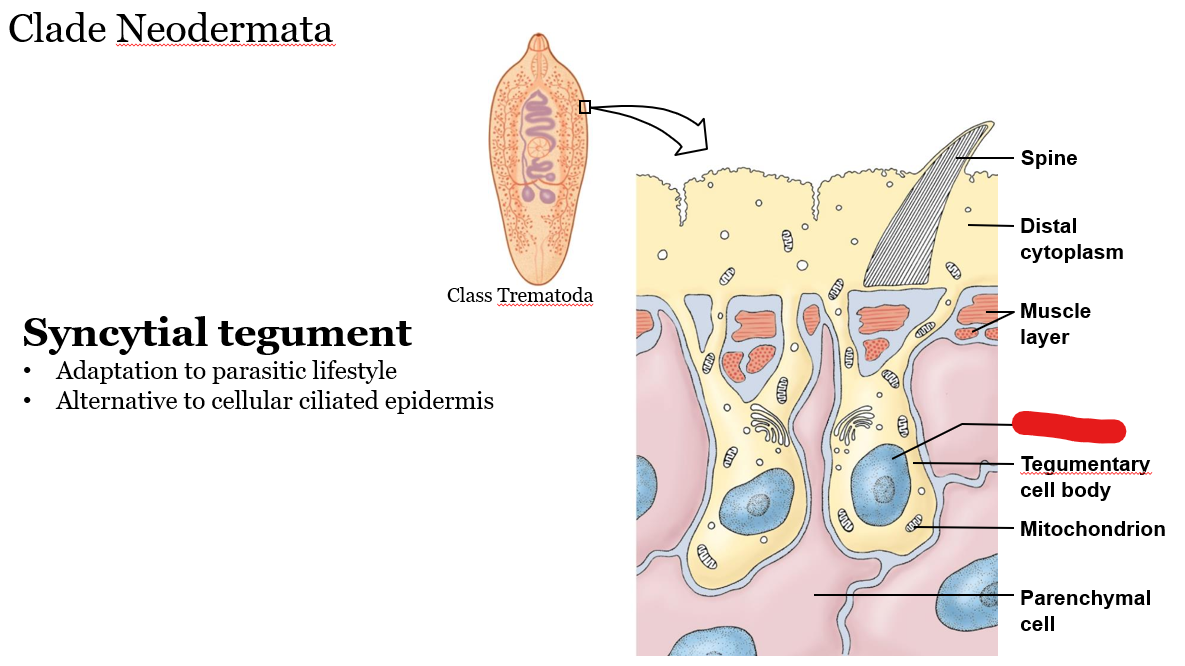
Nucleus
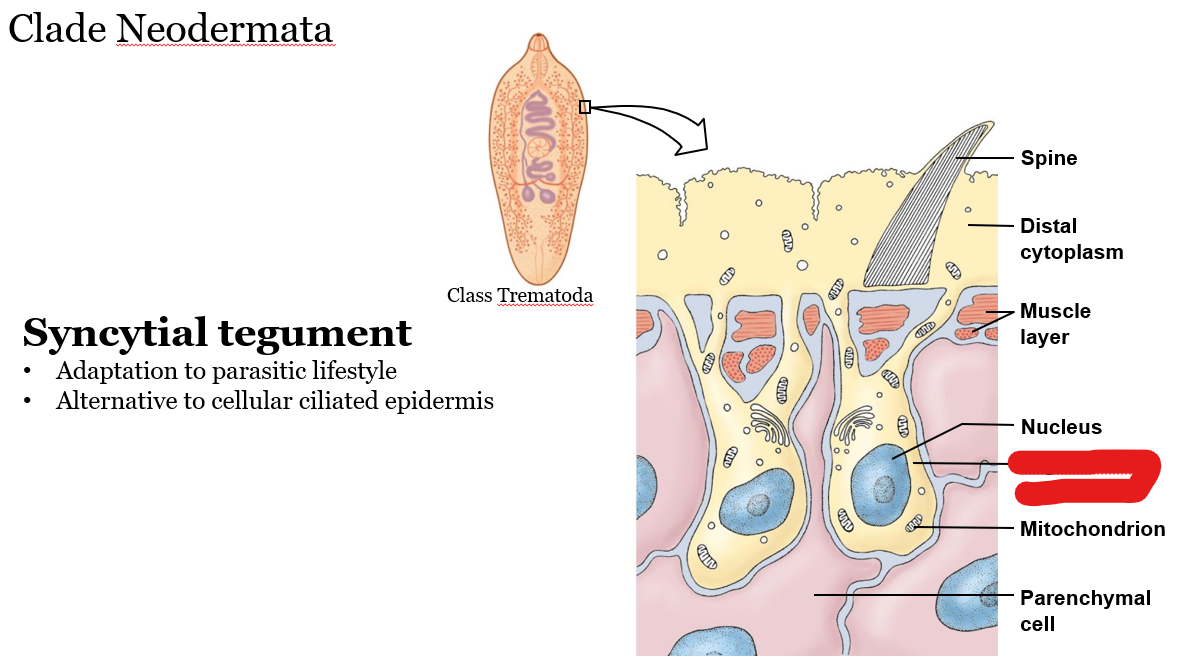
Tegumentary Cell body
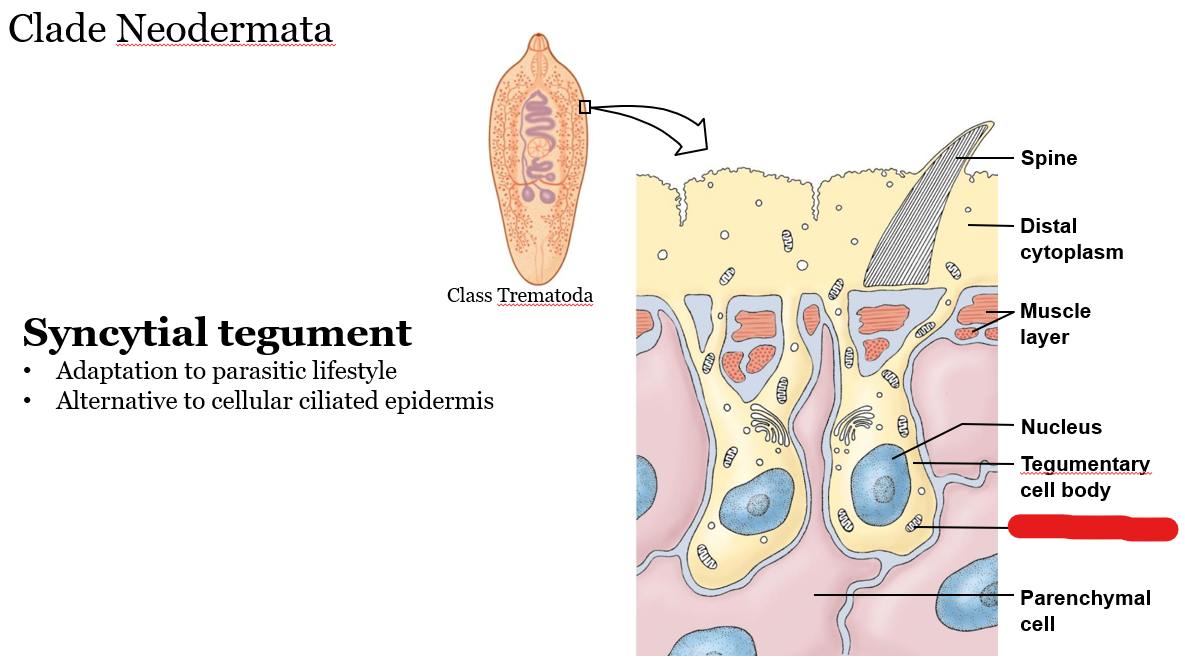
Mitochondrion
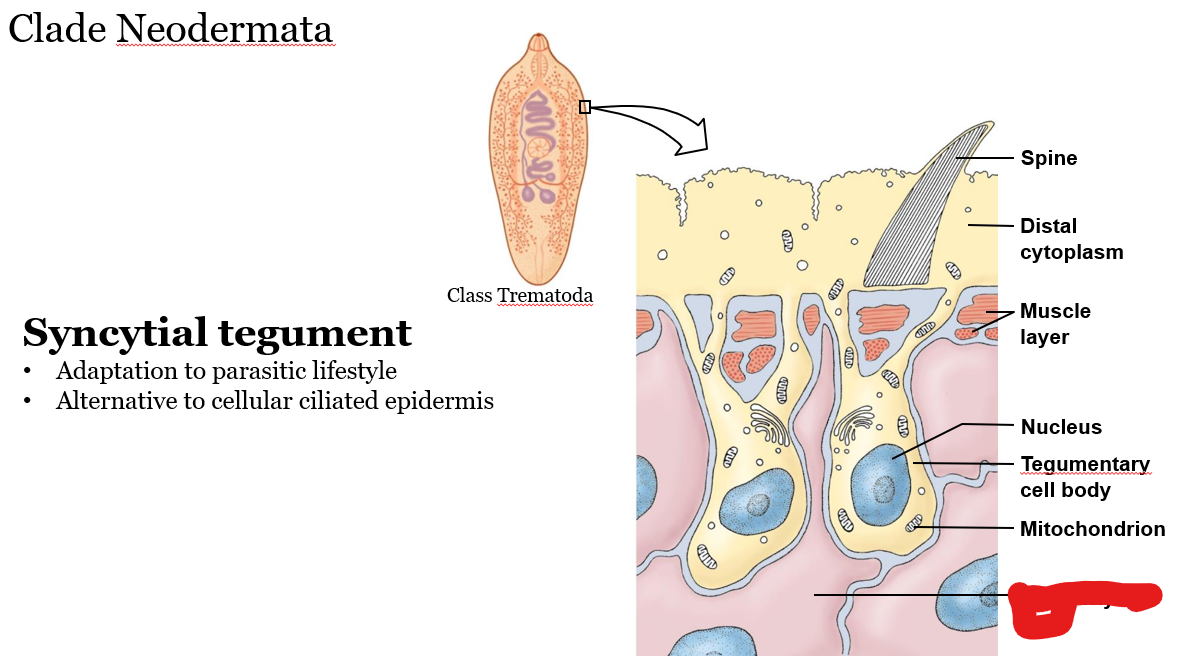
Parenchymal Cell
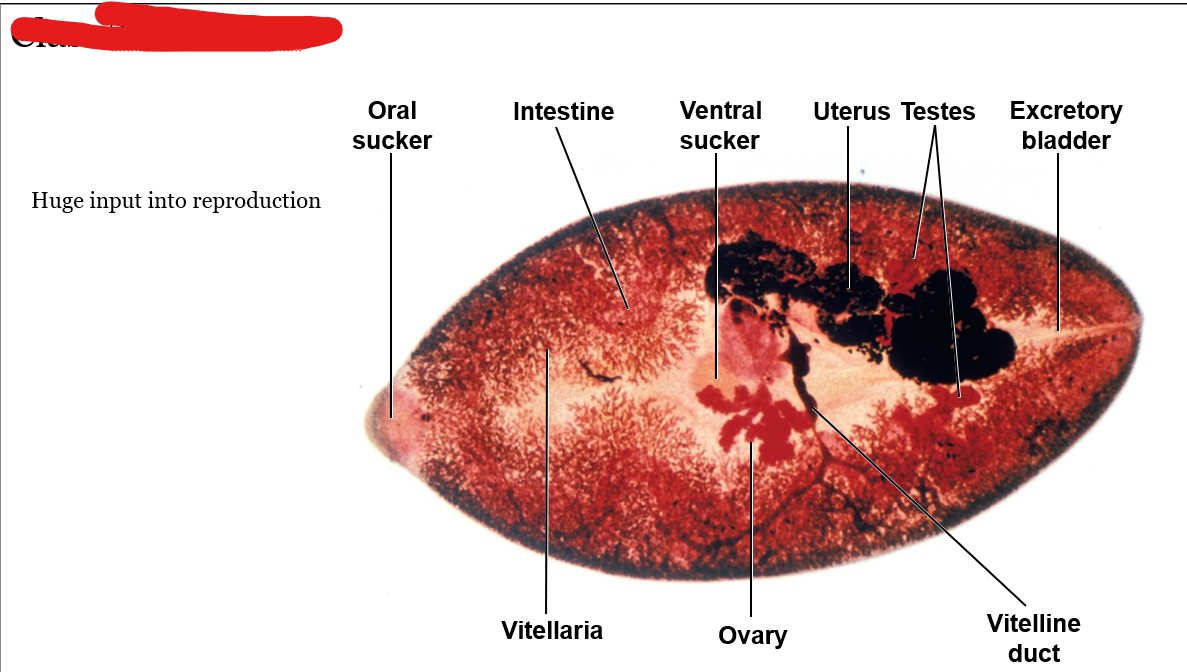
Class Trematoda
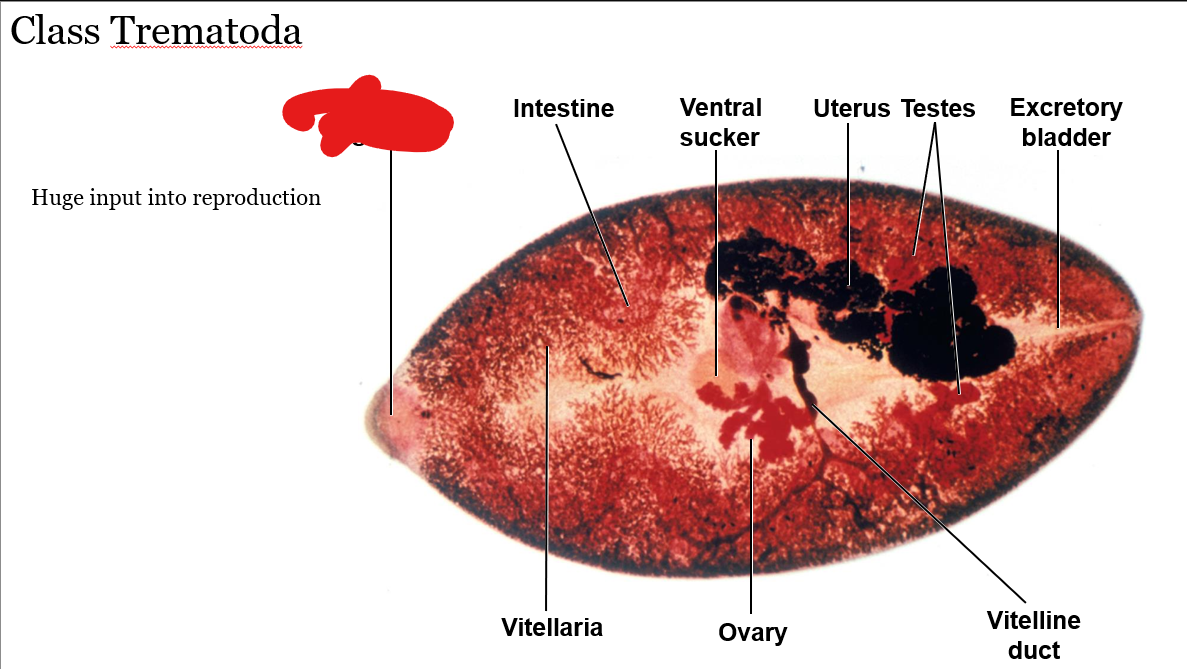
Oral Sucker
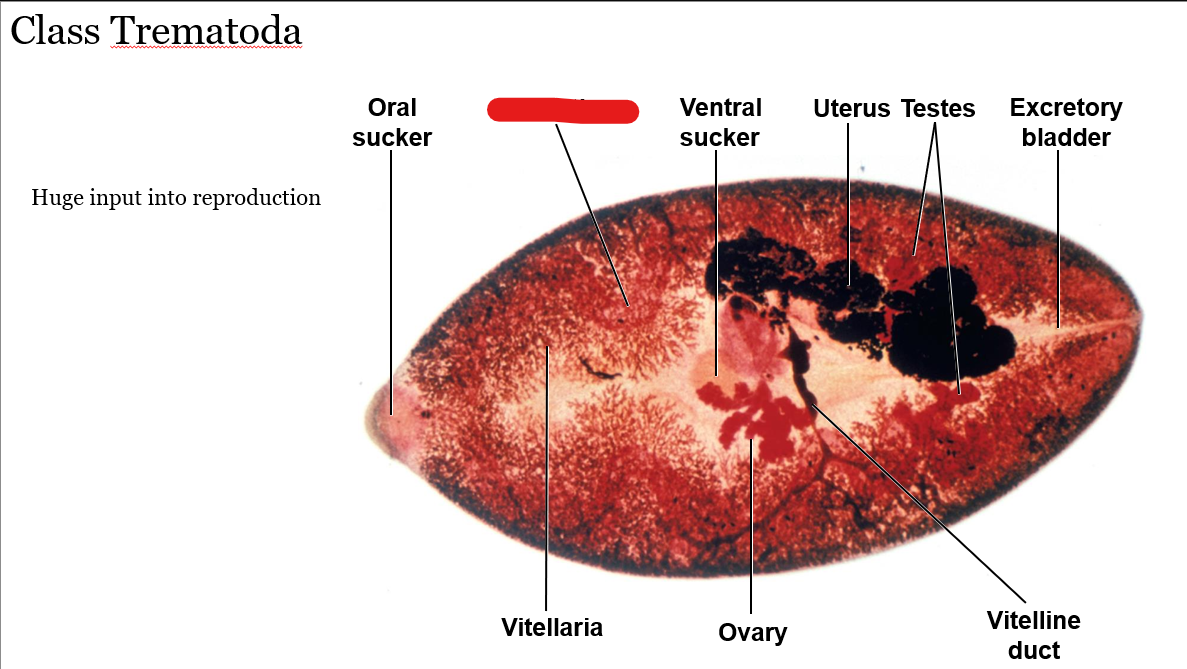
Intestine
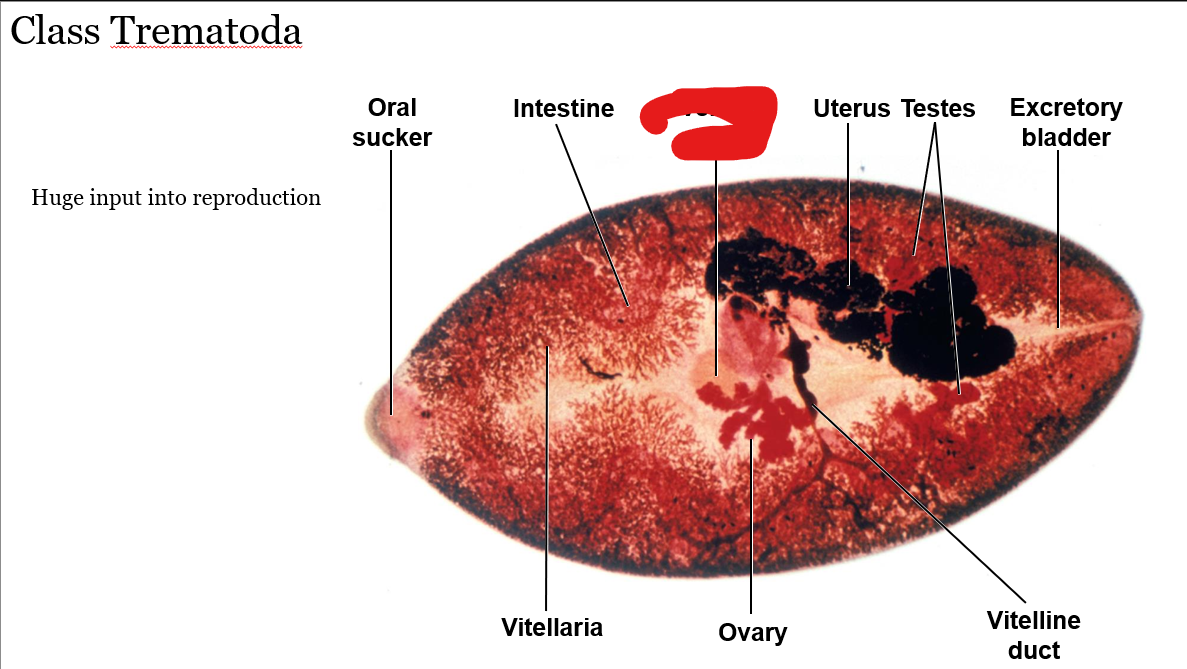
Ventral Sucker
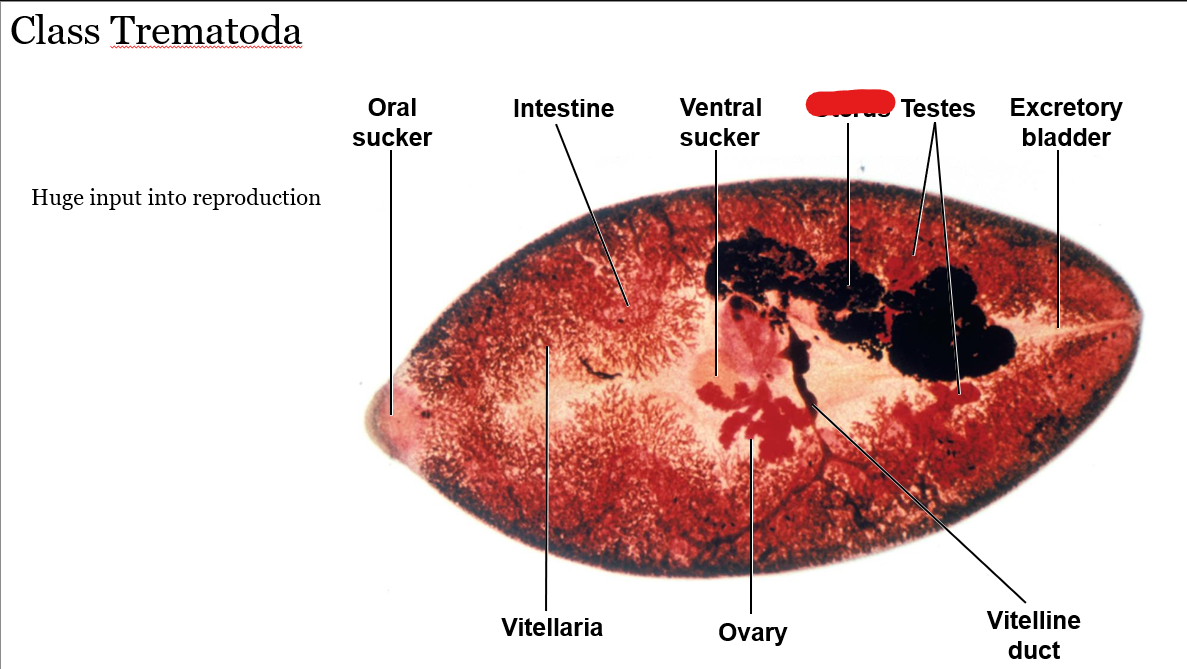
Uterus
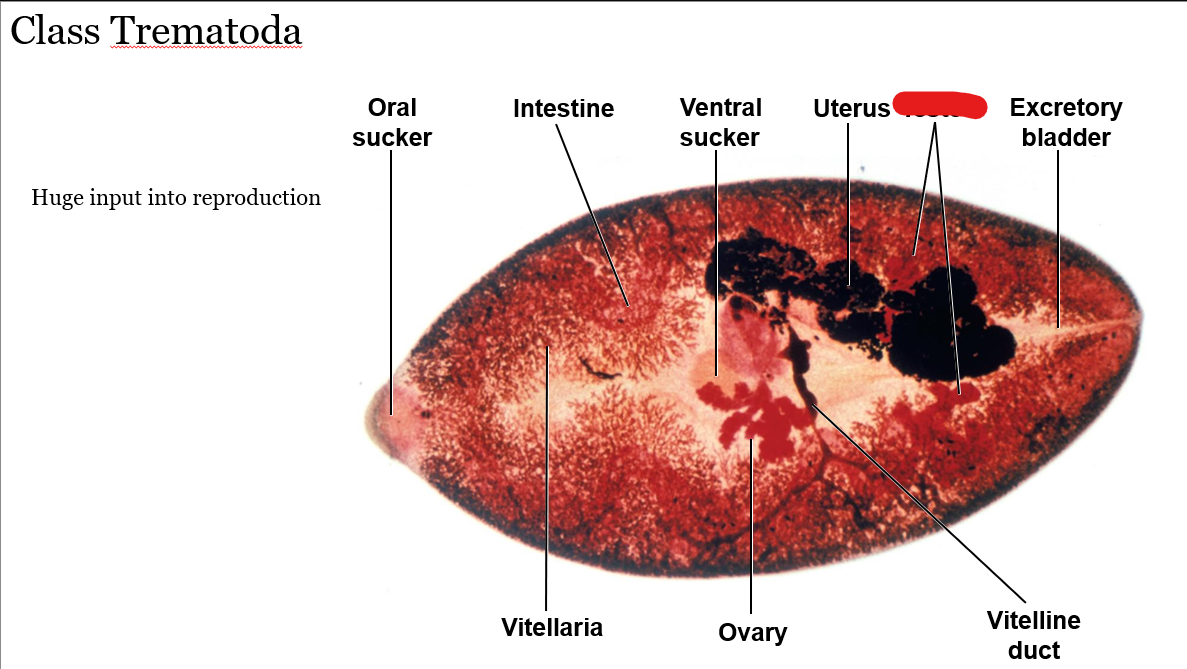
Testes
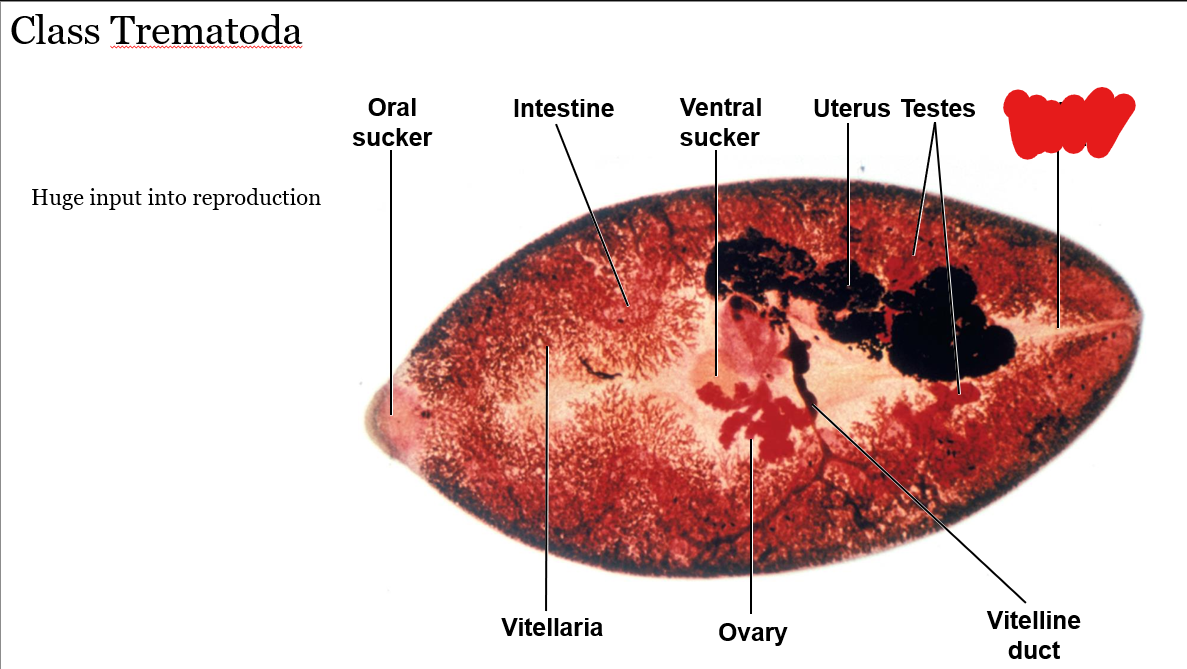
Excretory Bladder
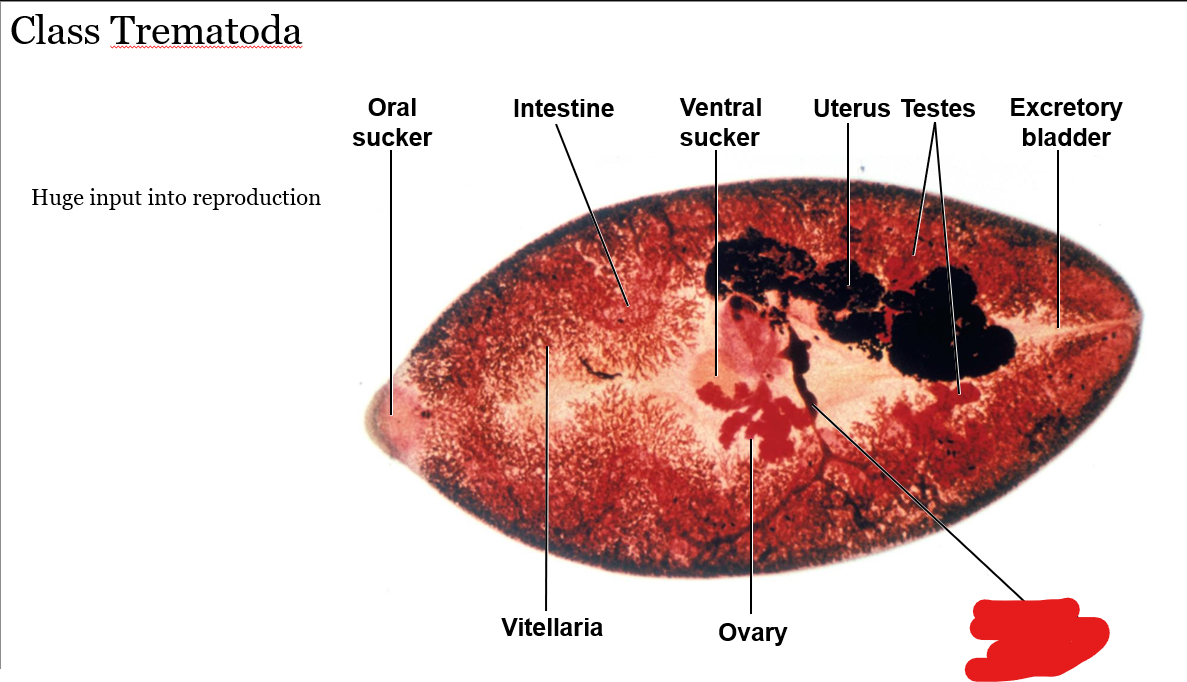
Vitelline Duct
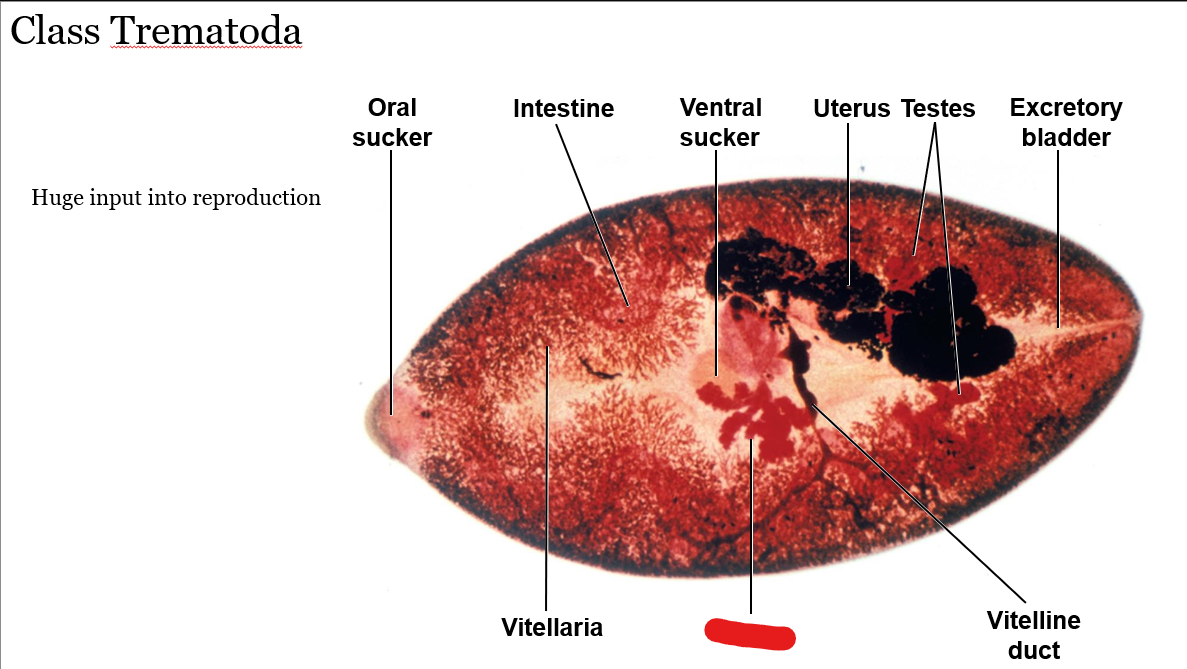
Ovary
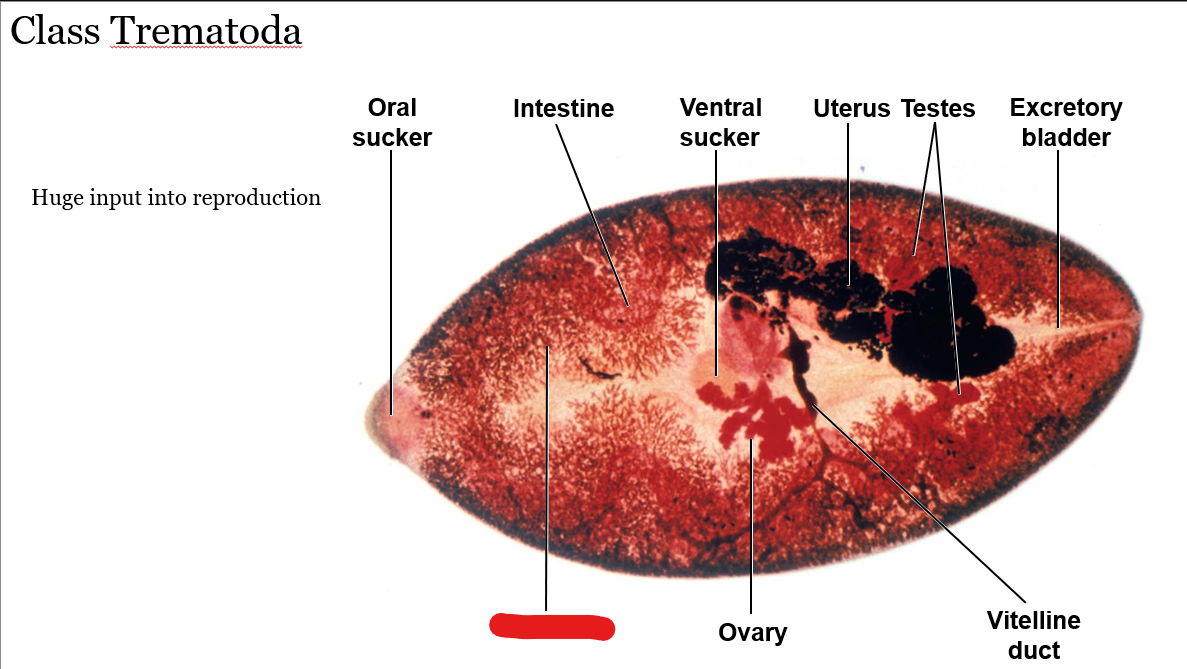
Vitellaria
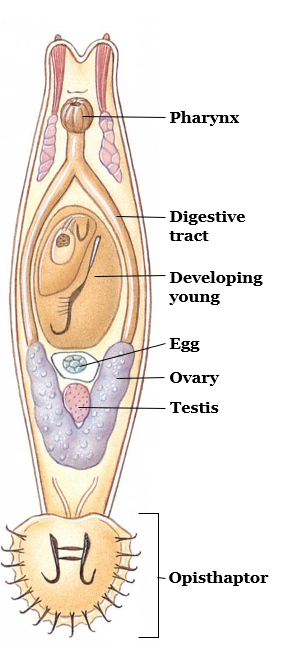
Class Monogenea
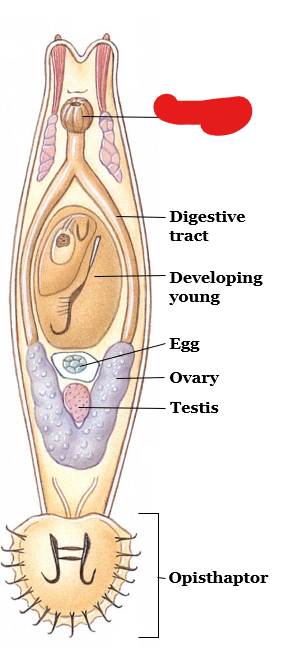
Pharynx
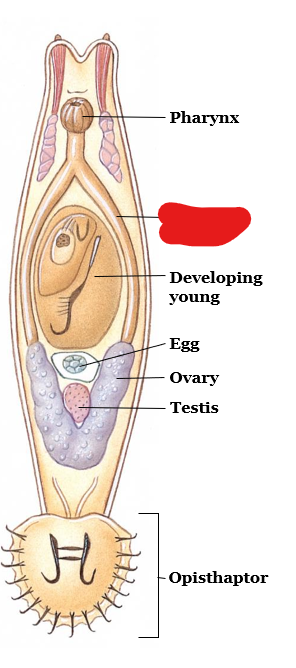
Digestive Tract
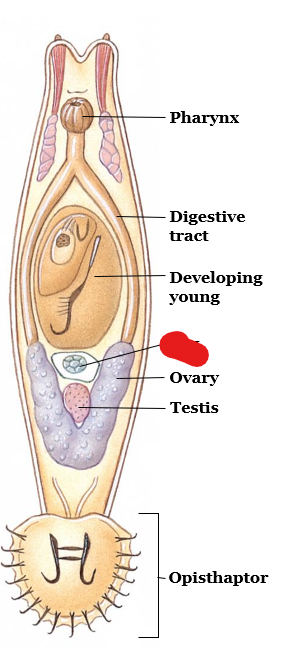
Egg
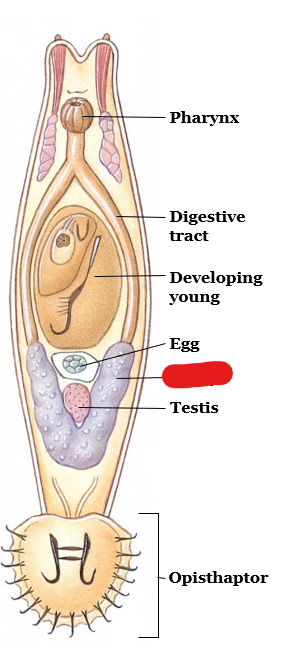
Ovary
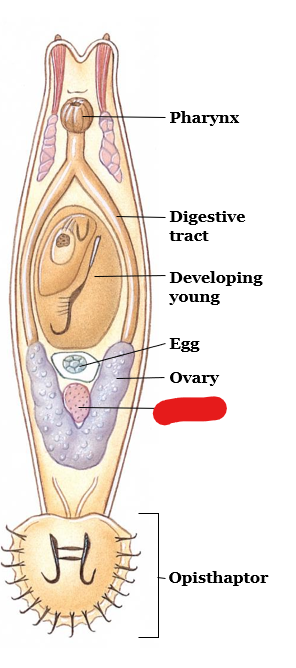
Testis
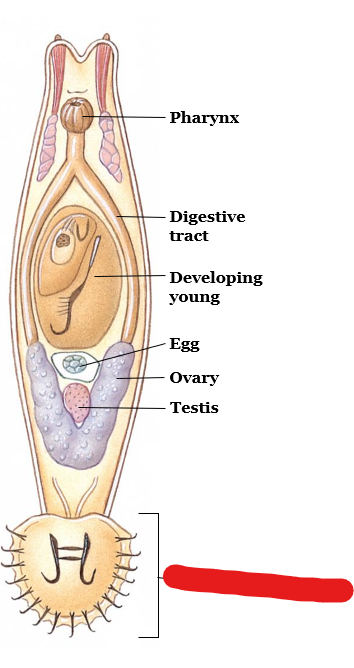
Opisthaptor
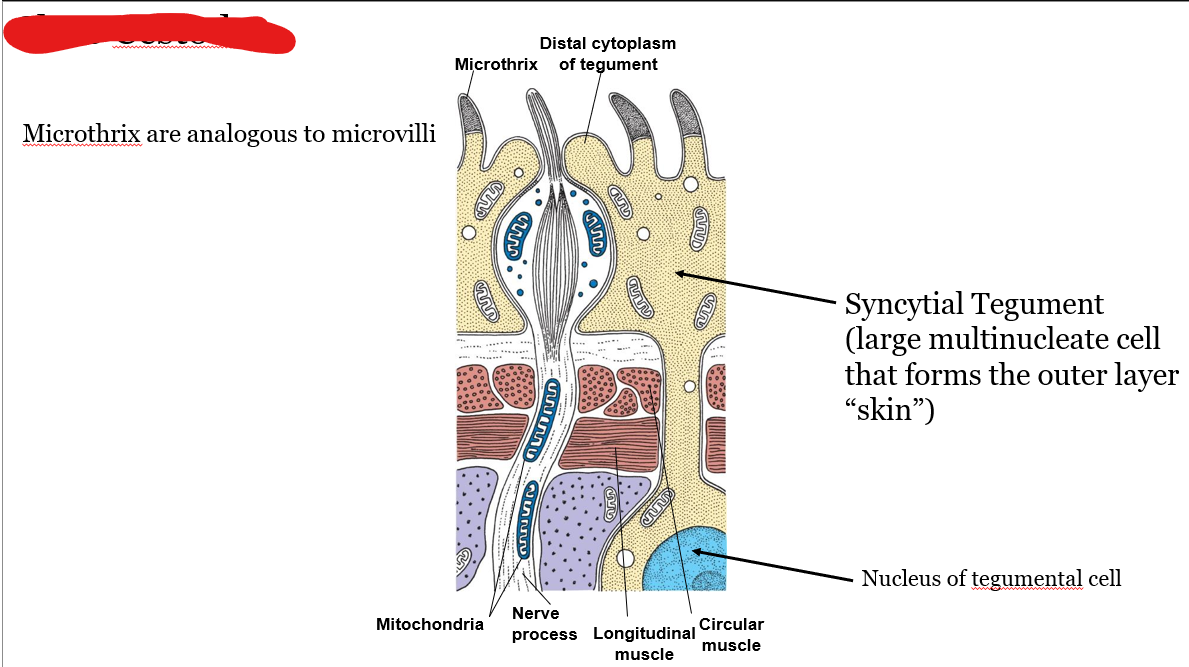
Class Cestoda
Microthrix
Distal Cytoplasm of tegument
Syncytial Tegument
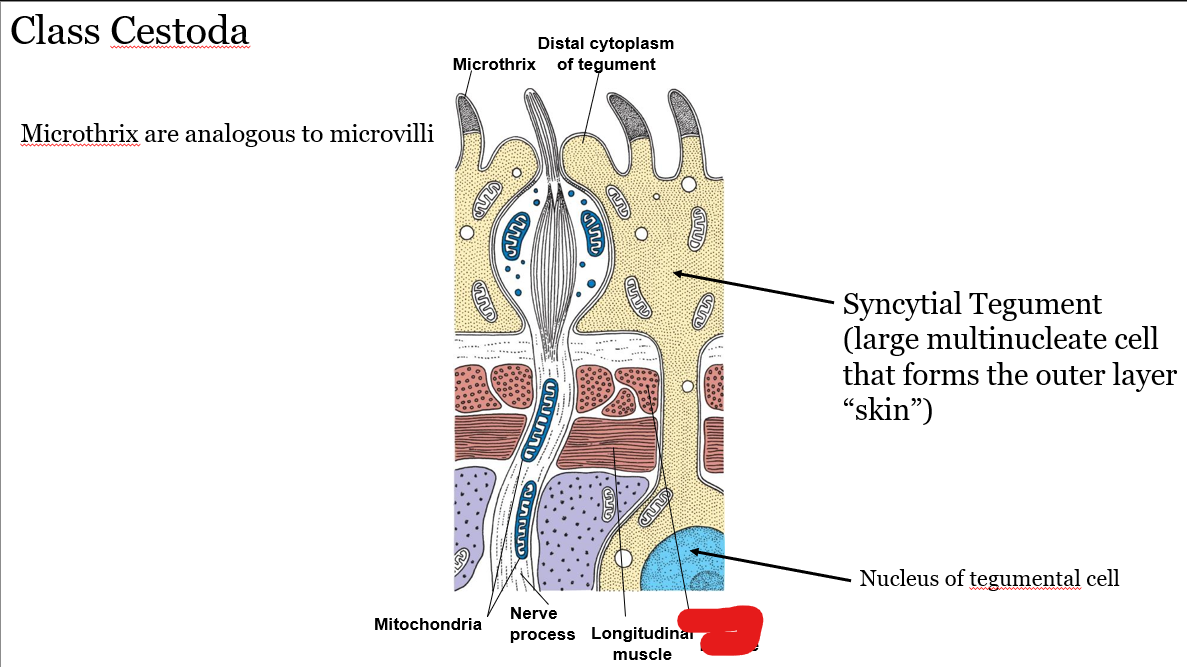
Circular Muscle

