bio 112 lecture 19: animal diversity 2
 Call Kai
 Learn
Learn Practice Test
 Spaced Repetition
 Match
Match Flashcards
 Knowt Play
1/32

There's no tags or description
Looks like no tags are added yet.
Name | Mastery | Learn | Test | Matching | Spaced | Call with Kai |
|---|
No analytics yet
Send a link to your students to track their progress
33 Terms
diploblastic animals
embryonically have two tissue layers:
sponges
cnidarians
ctenophores
sponges
simplest of living animals; contain three layers: epidermis (exterior protection), mesohyl (mid-layer), and choanocytes (interior)
cnidarians
common body plan with tentacles that surround a mouth; mouth leads to a gastric cavity and waste is excreted through the mouth
three layers: ectoderm, mesoglea (makes up the main structural parts of the organism), and endoderm
cnidarian specialized cells
epithelium: cells lining all body compartments
nerves: simple neural net (no brain)
light-sensitive cells (simple eyes)
pseudo-muscles: no true muscle cells, but they do have cells that allow for movement
rudimentary gonads
nematocysts: harpoon-like cells used for feeding that inject prey with toxin
ctenophores
no head, no real forward directionality, have simple stomach, move using the coordinated beating of cilia
protostome animals
embryonically have three tissue layers:
annelids
mollusks: gastropods, cephalopods, bivalves
nematodes
arthropods
annelids
bilaterally symmetrical segmented worms; cylindrical body with repeated segments
contain: true organs and muscles and organ systems (nervous, digestive, closed circulatory system, nitrogenous waste)
mollusks
have bilateral symmetry and animals with more complex organs
gastropods
marine, freshwater, and terrestrial
have modified coelom that has become small cavities around organs
move by a singular foot
evolved shells
have brains
cephalopods
intelligent predators with a unique body plan, have brain
jet propulsion system or siphon (move in the opposite direction of their head)
arms and tentacles to capture prey (helped gain speed when hunting)
bivalves
similiar anatomy to gastropods and cephalopods EXCEPT no head (and therefore no brain)
still have a collection of internal organs and mouth
filter feeders (not as intelligent as gastropods and cephalopods)
nematodes
most numerous animals, microscopic, all internal organs are loosely stored in their body; has polysaccharide-rich cuticle that protects them
arthropods
most diverse phylum:
chelicerates
myriapods
crustaceans
insects
insects
desiccation resistant egges
wings
specialized respiratory system
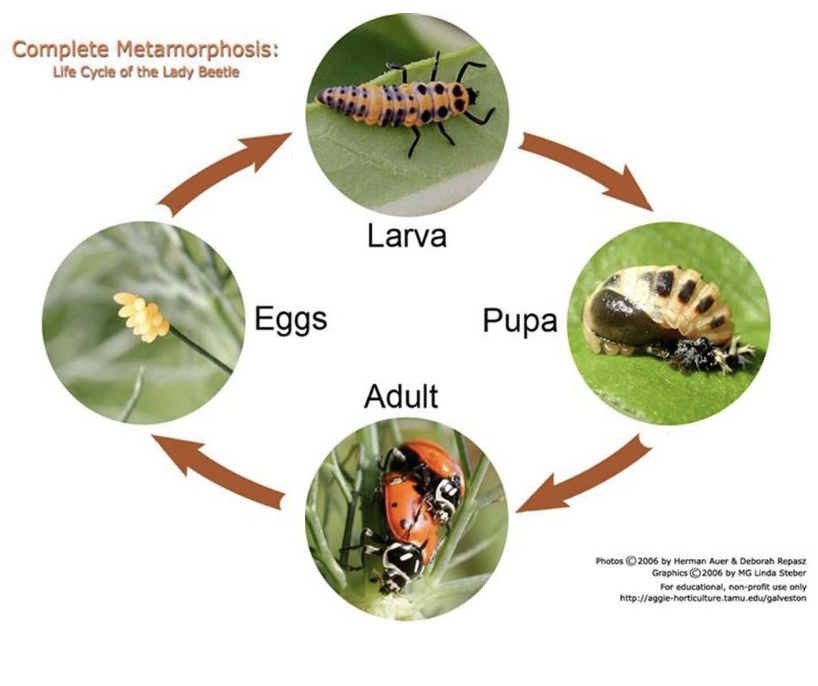
metamorphosis
metamorphosis
major change from one developmental stage to another; separates life into eating stage and reproductive stage, and changes entire body plan to best accommodate both activities
respiration in insects
spiracles: pores in the exoskeleton
tracheae: internal system of tubes that directs oxygen and removes carbon dioxide
deuterostome animals
digestive tract builds itself from anus to the mouth:
hemichordates
echinoderms
chordates
hemichordates
acorn worms and pterobranchs
pharyngeal slits: function in feeding and respiration
dorsal nerve cord: ventral or lateral in all previously seen organisms
echinoderms
sea stars, urchins, sea cucumbers
water vascular system: permit bulk flow of oxygen and nutrients
tube feet: projection of water vascular system used for locomotion and feeding
pentaradial symmetry (and bilaterally symmetrical)
exoskeleton of porous calcite
chordates
cephalochordates
tunicates
vertebrates
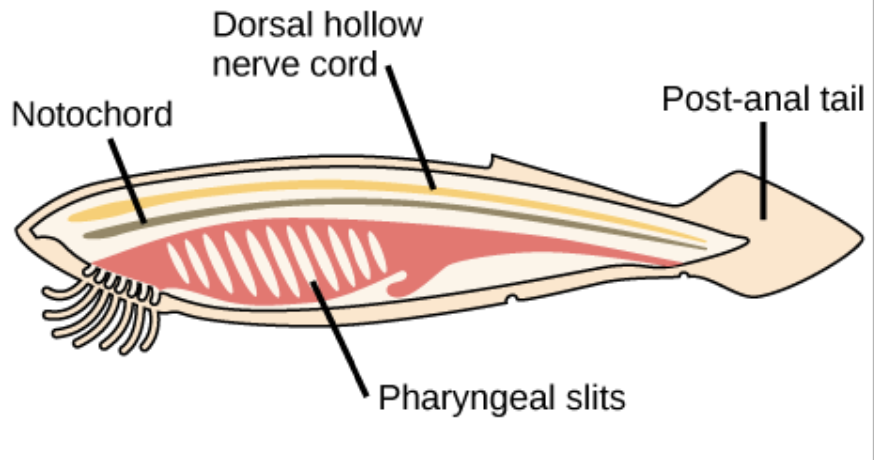
defining chordate characteristics
pharyngeal slits (shared trait among all deuterostomes)
notochord: stiff rod of collagen along the back
neural tube: early feature of embryonic development; becomes dorsal nerve cord
myotomes: muscle segments
tail
cephalochordates
*has key chordate traits
lacks brain and eyes
no lateral appendages
no mineralized skeleton
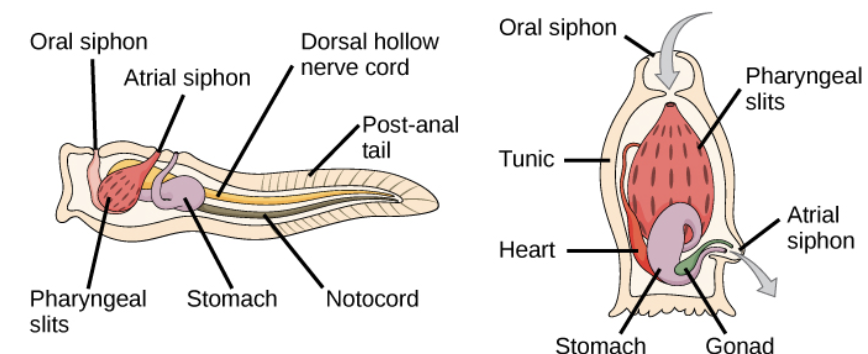
tunicates
*has key chordate traits
adult filter feeding form only have pharyngeal slits
vertebrates
backbones
cranium, developed brain
eyes, mouth
internal skeleton
coelom
closed circulatory system
pharyngeal slits
fish
most diverse group of vertebrates:
jawless fish
cartilaginous fish
bony fish
ray-finned fishes
lobe-finned fishes
tetrapods
amphibians
reptiles
birds
mammals
amphibians
aquatic larval form; adult form with simple lungs; go from aquatic larval form to a terrestrial adult form
amniotes
includes:
reptiles
birds
mammals
*evolved amniotic egg (shelled egg) to reproduce without water
birds
evolved from dinosaur ancestors
lack teeth, scales —> feathers, hollow bones
circular breathing
mammals
covered in hair, produce milk to feed young:
monotremes
marsupials
placentals
monotremes
earliest group, lay eggs
marsupials
premature birth; mother keeps their young internally without an egg in a pouch (*lacks female reproductive system)
placentals
create temporary organ (placenta) to nourish the embryo (offspring are almost fully mature immediately after birth)

