Current Classification of Periodontal and Peri-Implant Diseases
 Call Kai
 Learn
Learn Practice Test
 Spaced Repetition
 Match
Match Flashcards
 Knowt Play
1/14

There's no tags or description
Looks like no tags are added yet.
Name | Mastery | Learn | Test | Matching | Spaced | Call with Kai |
|---|
No analytics yet
Send a link to your students to track their progress
15 Terms
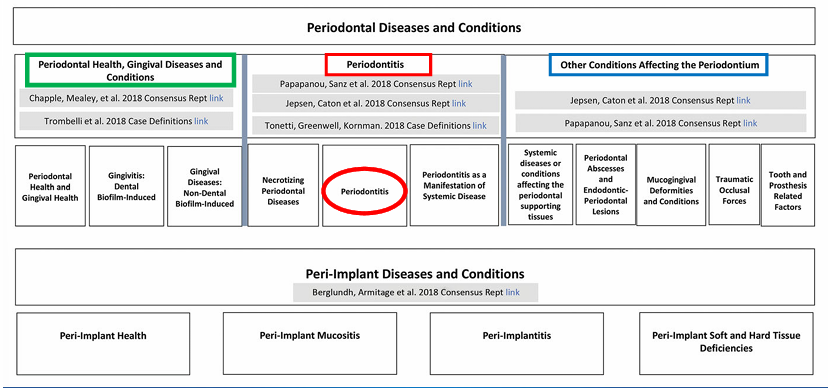
classification of periodontal and peri-implant diseases and conditions
1999 classification
-recognized 2 major forms of periodontitis:
-chronic periodontitis (the common phenotype)
-aggressive periodontitis (the infrequent phenotype- tended to be younger pts)
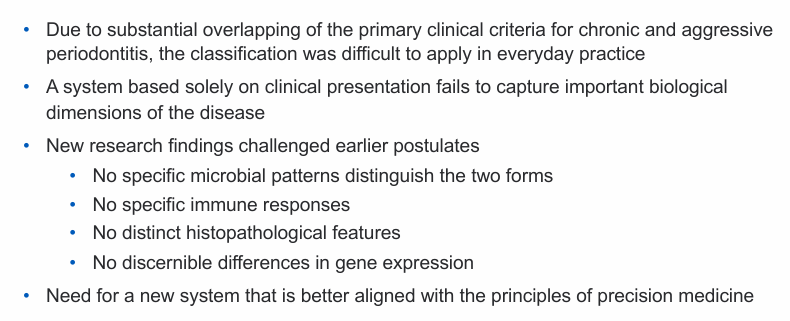
why was a new classification necessary?
what constitutes a periodontitis case?
-definition based on clinical attachment loss (CAL)
-interdental CAL is present at 2 or more non-adjacent teeth
-observed CAL canNOT be ascribed to other causes (trauma-induced gingival recession, dental caries extending beyond the cervical area, endodontic lesion draining through the crevice, root fracture, surgical trauma)
-buccal or lingual CAL >/=3mm is present concurrent with a pocket of >/=3mm at 2 or more teeth
why not based on alveolar bone loss?
-because bone loss needs to engage a substantial extent of the buccal-lingual/palatal dimension to be visible on a radiograph
-incipient stages of periodontitis would be missed
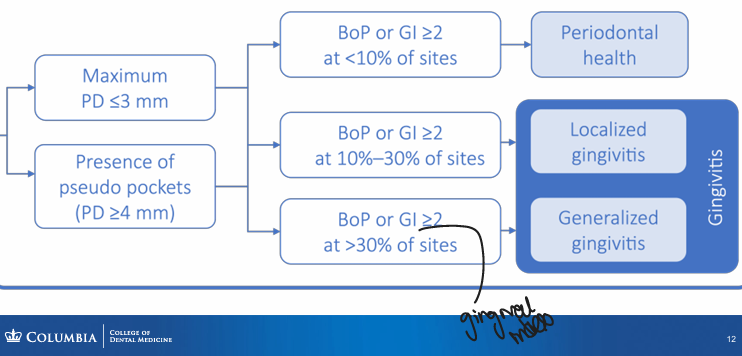
in the absence of discernible attachment loss that qualifies a case as a periodontitis case
two-vector framework of periodontitis case
-assigns a stage and grade
-takes into account the multi-factorial etiology of the disease & incorporates the disease severity and extent, the complexity of the required treatment, and the history of/risk for disease progression
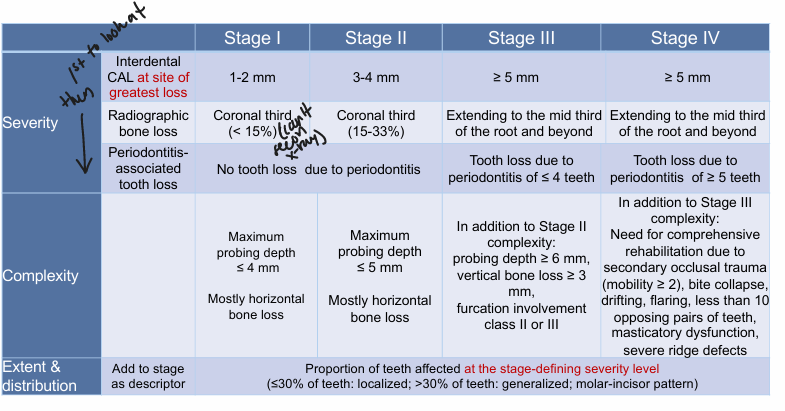
stage
-reflects the severity and extent of the disease, expressed through attachment loss, bone loss, and tooth loss that has occurred as a result of periodontitis
-incorporates an assessment of the complexity of treatment required
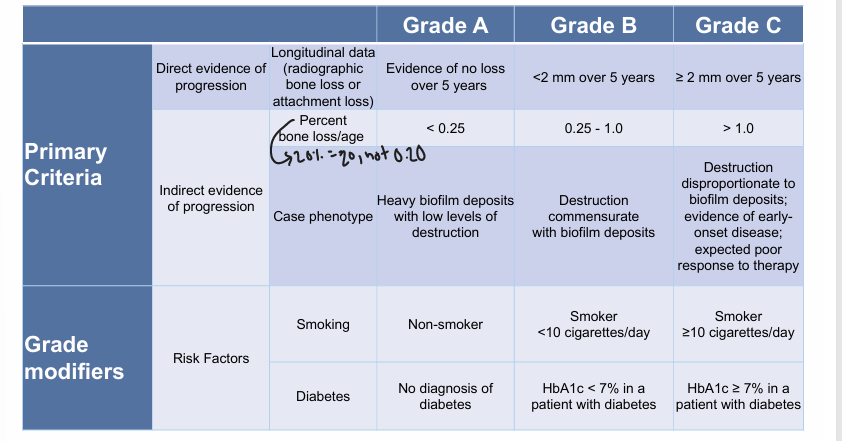
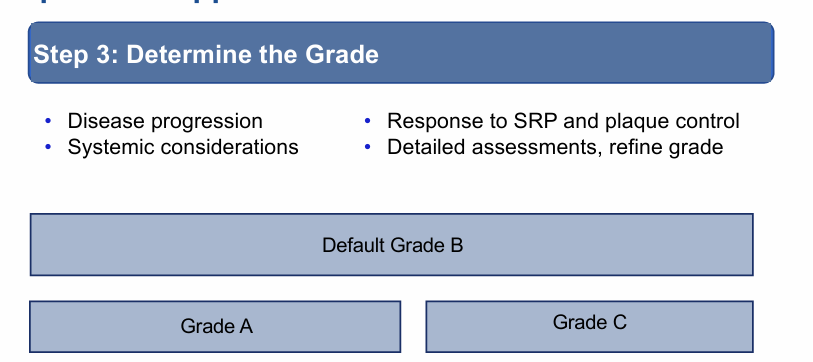
grade
-incorporates additional biological dimensions of the disease
-observed or inferred rate of progression
-risk for further deterioration due to exposures or comorbidities (smoking, diabetes, compliance) that may affect treatment outcomes
stage I/II/III/IV
grade A/B/C
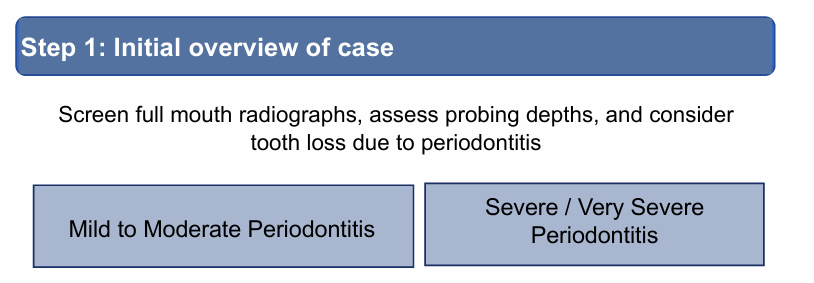
practical approach- step 1
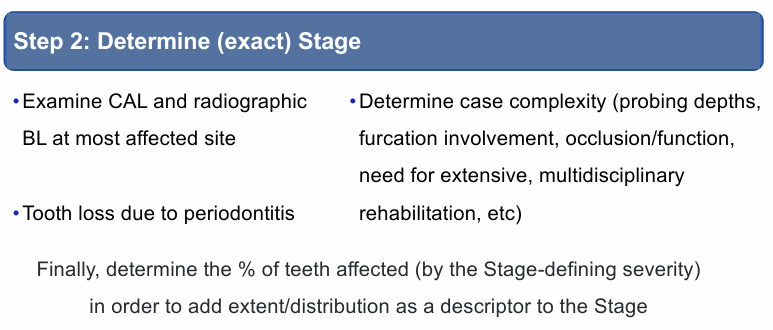
practical approach- step 2
practical approach- step 3
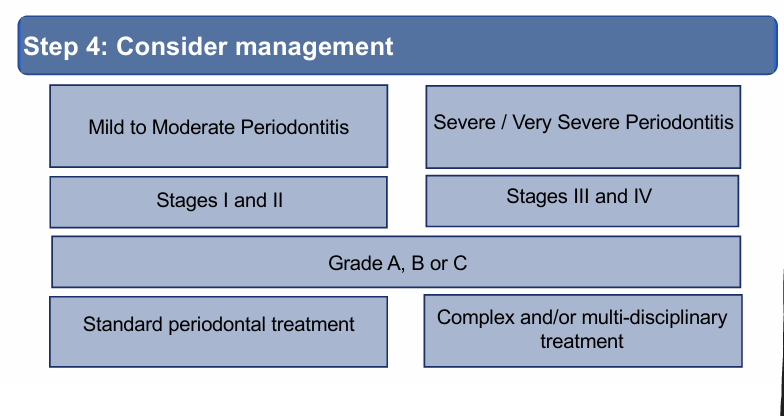
practical approach- step 4